Approach to Demyelinating
Diseases
Dr Shobhit Gupta
When to suspect Demyelinating
Disease
• Demyelination should be considered in any patient
with unexplained neurologic deficits.
Primary demyelinating disorders are suggested by the
following:
• Diffuse or multifocal deficits
• Sudden or subacute onset, particularly in young adults
• Onset within weeks of an infection or vaccination
• Deficits that wax and wane
• Symptoms suggesting a specific demyelinating disorder
(eg, unexplained optic neuritis or internuclear
ophthalmoplegia suggesting multiple sclerosis)
• Demyelinating diseases of the CNS:
• acquired conditions characterized by preferential damage to previously
normal myelin
• commonly result from immune-mediated injury
• also viral infection of oligodendrocytes as in progressive multifocal
leukoencephalopathy, drugs and other toxic agents.
• Dysmyelinating diseases of the CNS
(leukodystrophy.) :
• myelin is not formed properly or has abnormal turnover kinetics
• associated with mutations affecting the
• proteins required for formation of normal myelin or
• in mutations that affect the synthesis or degradation of myelin lipids
Demyelinating Disease of PNS
• Guillain–Barré syndrome
• Chronic inflammatory demyelinating
polyneuropathy
• Anti-MAG peripheral neuropathy
• Charcot–Marie–Tooth disease
• Progressive inflammatory neuropathy
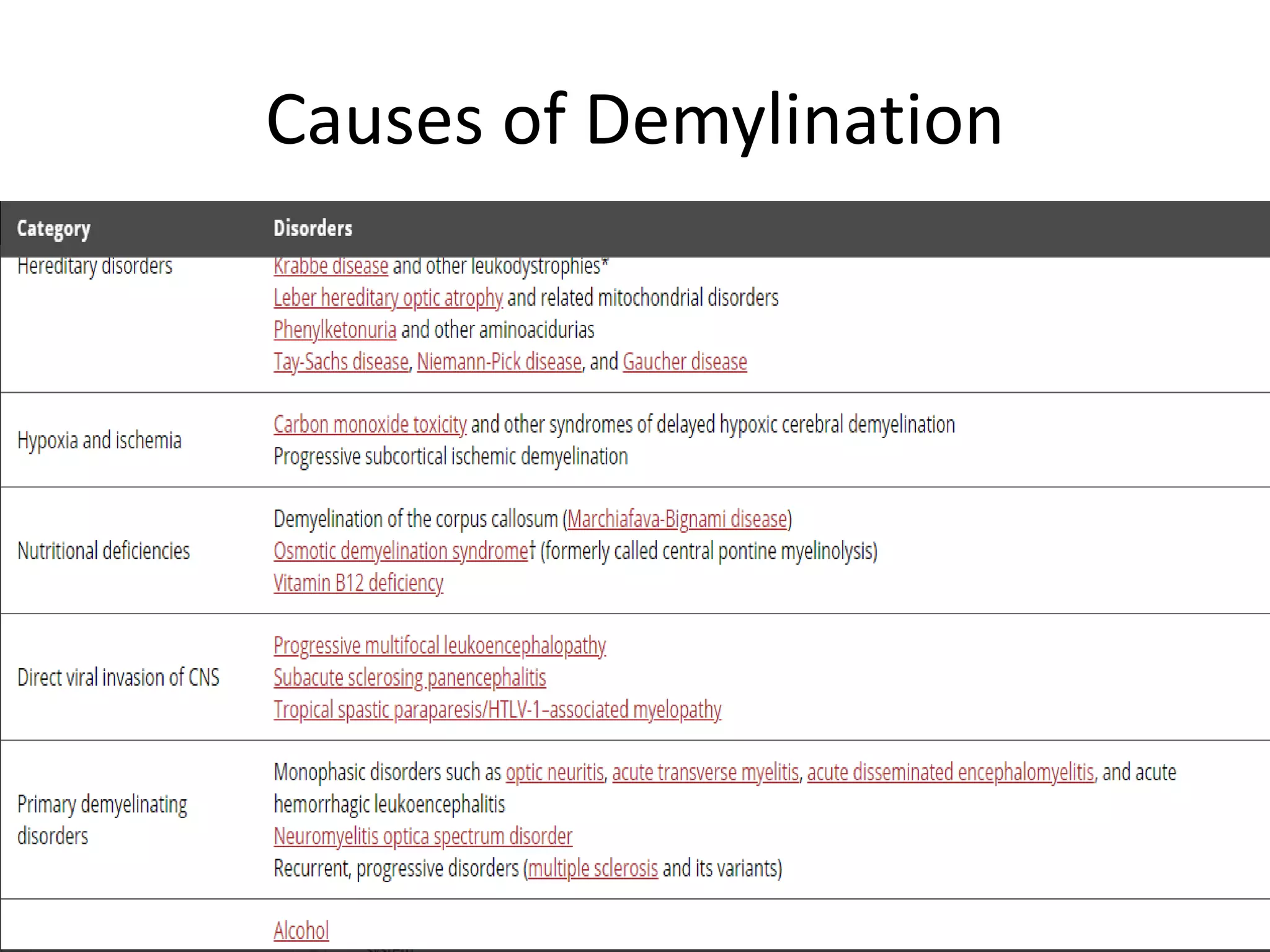
Causes of Demylination
Demylinating Disorders
• Immune mediated attack on white matter
including brain, optic nerve or spinal chord
• characterized clinically by
• localization of neurologic deficits (i.e., single site, such as spinal
cord [transverse myelitis], optic nerves [optic neuritis] or brainstem,
vs polyregional demyelination);
• the presence vs absence of encephalopathy; and
• disease course (i.e., monophasic vs repeated attacks involving
either the same or new CNS regions).
CIS
• first monofocal or multifocal CNS demyelinating
event
• encephalopathy absent, unless caused by fever
• episode should last for at least 24 h and should
occur in the absence of fever or infection and
with no clinical features of encephalopathy
• involve the optic nerve, brainstem, cerebellum,
spinal cord, or cerebral hemisphere
Acute Disseminated Encephalomyelitis
ADEM
• • Acute monophasic course
• • Immune-mediated inflammatory disorder, triggered by
inflammatory response to viral infections and vaccination
• • Affects children more commonly than adults
• • Best viewed as a “syndrome” rather than a specific
disorder
• Clinical presentation
• • Headaches, vomiting, drowsiness, fever, lethargy
(uncommon MS)
• • Self-limiting, good outcome
Proposed 2012 IPMSSG criteria
Pediatric ADEM
• • First polyfocal, clinical CNS event (presumend
inflammatory demyelinating)
• • Encephalopathy (cannot be explained by fever)
• • No new clinical and MRI findings ≥ 3 months after onset
• • Brain MRI abnormal in acute phase (3 months) Typical
MRI
• • Diffuse, poorly demarcated, large (>1-2 cm) lesions
(cerebral WM)
• • T1 hipointense lesions rare
• • Deep GM lesions can be present
Recurrent ADEM
• Defined previously as a new event of ADEM
with recurrence of initial symptoms and sign
• 3 or more months after the first ADEM
• Without involvement of new clinical history,
examination or imaging
• Now substituted under multiphasic ADEM
Multiphasic Demyelinating
encephalomyelitis
• ADEM F/b new clinical event also meeting
criteria for ADEM
• But involving new anatomic areas of CNS as
confirmed by history, Neurologic examination
and neuroimaging.
• Event must develop within 3 months of initial
event.
MS
• Any of the following:
• Two or more nonencephalopathic CNS clinical
events separated by more than 30 days, involving
more than1 area of the CNS
• Single clinical event and MRI features rely on 2017
Revised McDonald criteria for DIS and DIT (but
criteria relative for DIT for a single attack and
single MRI only apply to children ages 2-12 yr and
only apply to cases without an ADEM onset)
Revised McDonald MRI criteria
RED Flags for possibility of alternate
diagnosis than MS
(1) family history of neurological disease,
(2) a well-demarcated spinal level in the absence of
disease above the foramen magnum,
(3) prominent back pain that persists,.
(4) symptoms and signs that can be attributed to
one anatomical site,
(5) patients who are older than age 60 or younger
than age 15 at onset,
(6) progressive disease
e Miller et al., 2008
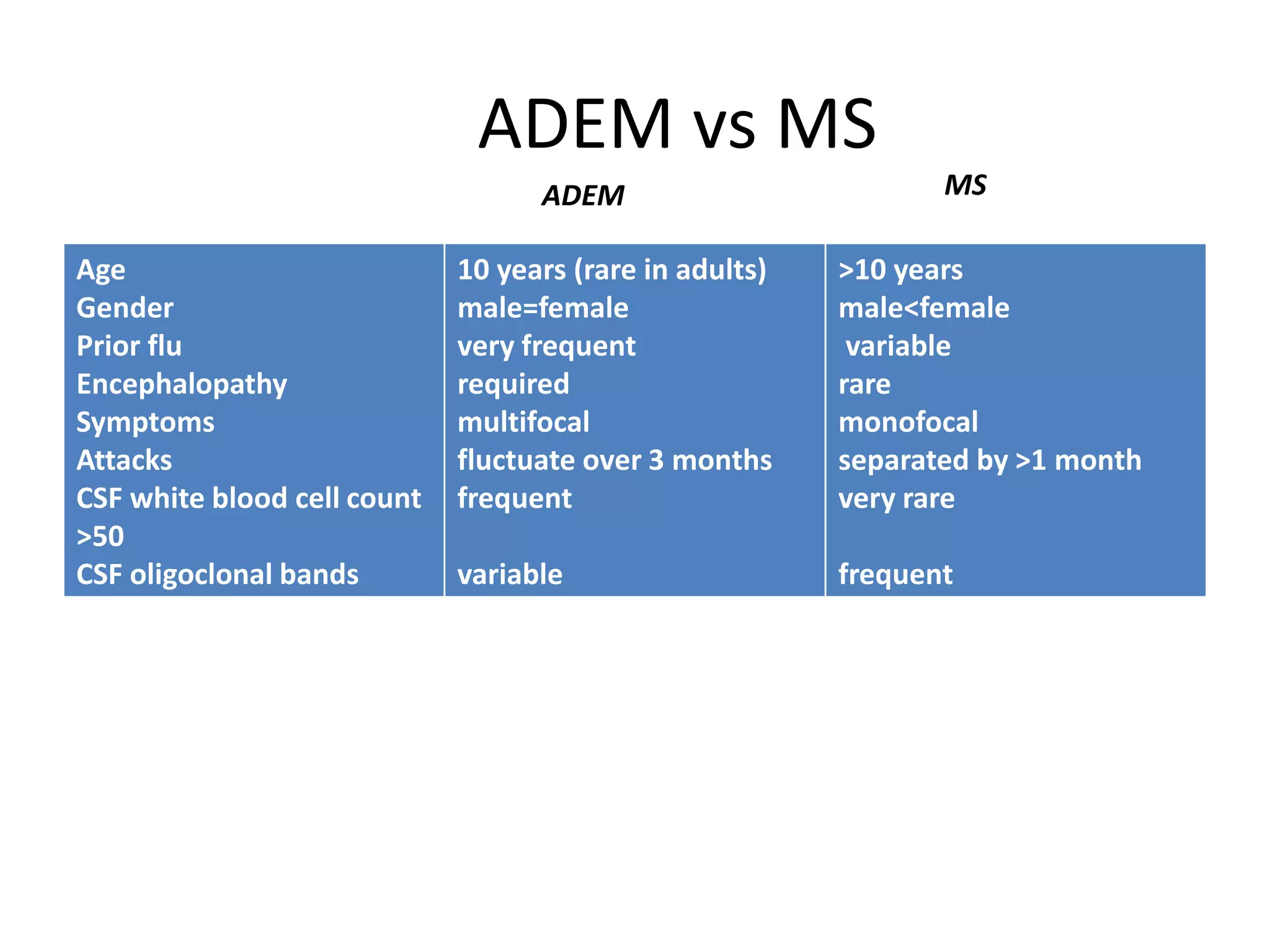
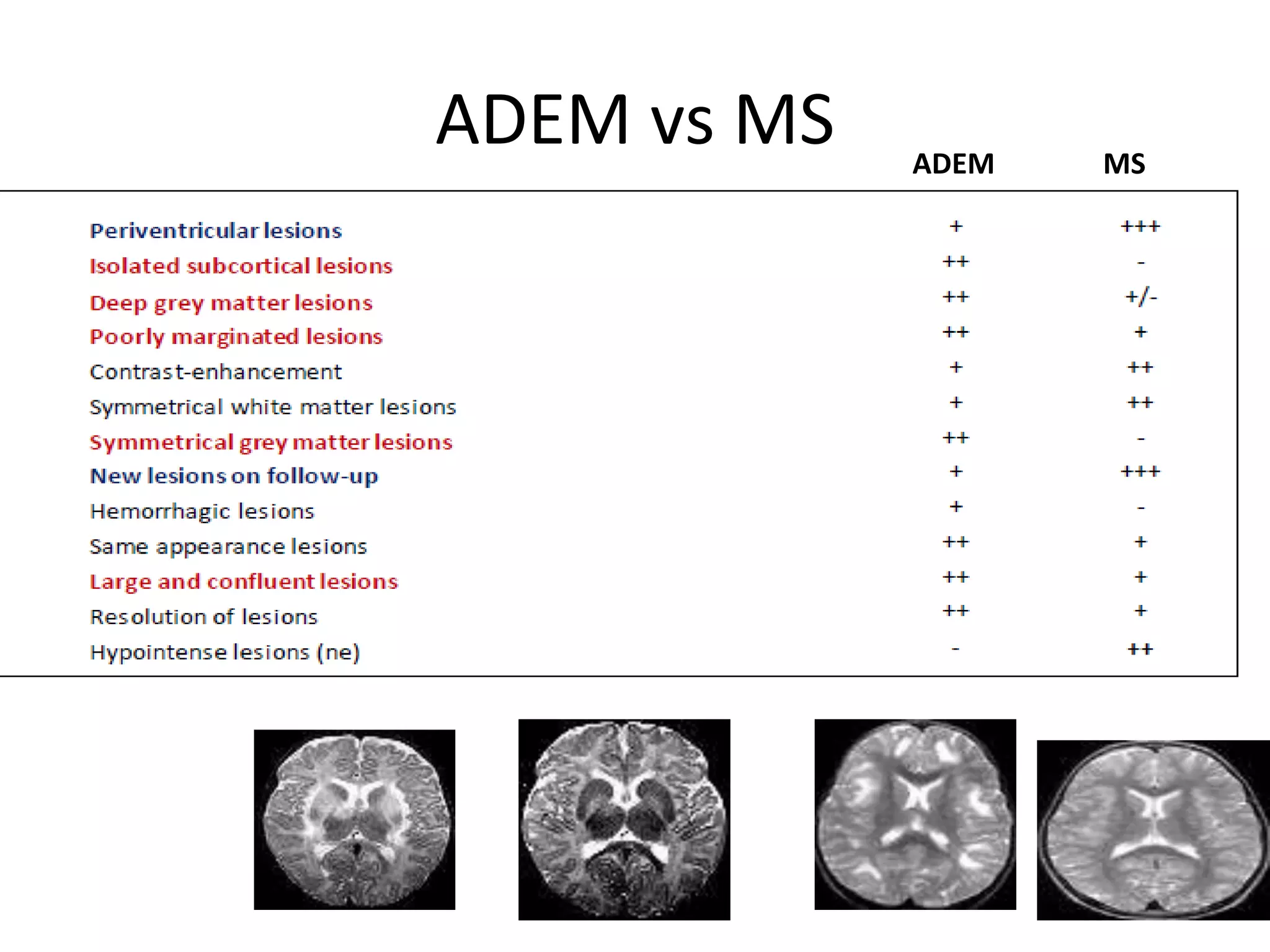
ADEM vs MS
Age
Gender
Prior flu
Encephalopathy
Symptoms
Attacks
CSF white blood cell count
>50
CSF oligoclonal bands
10 years (rare in adults)
male=female
very frequent
required
multifocal
fluctuate over 3 months
frequent
variable
>10 years
male<female
variable
rare
monofocal
separated by >1 month
very rare
frequent
ADEM MS
ADEM vs MS ADEM MS
MS Diagnostic Criteria After ADEM
• 3 requirements for 2nd clinical event
• • Nonencephalopathic
• • ≥ 3 months after incident neurologic illness
• •Associated with new MRI findings
(disseminated in space)
ADEM vs MS
Evolution
MS
ADEM
ADEM
MS if ≥ 2
• 2 or more PV lesions
• Black holes
• Absence of diffuse bilateral lesions
MS
ADEM
ADEM
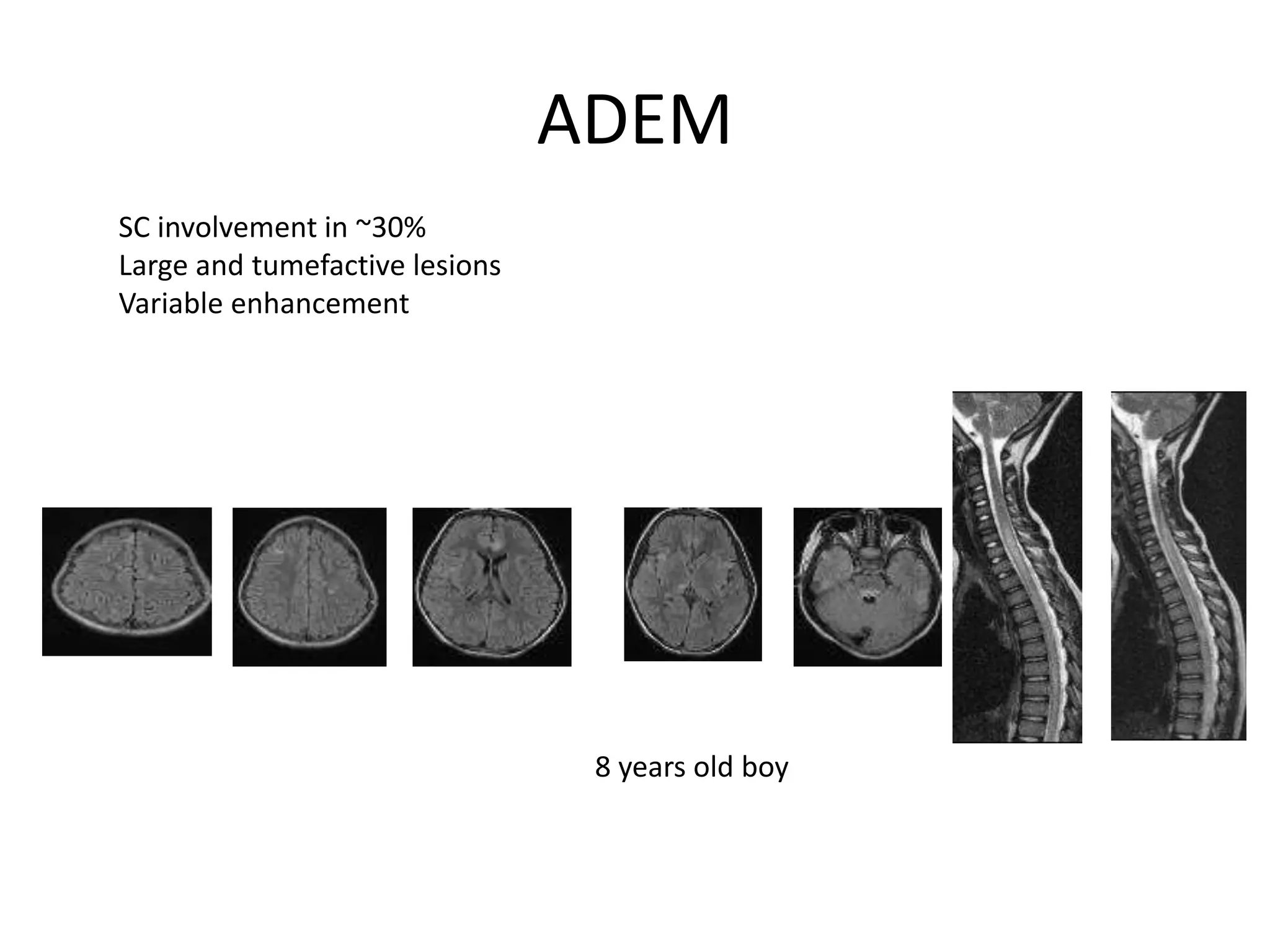
SC involvement in ~30%
Large and tumefactive lesions
Variable enhancement
8 years old boy
Acute Haemorragic
leukoencephalitis(Hurst disease)
• Considered as hyperacute or fulminanat form of
ADEM
• Seen in young age group
• Charectorized by fever, neckstiffness, progressive
neurologic deficit, coma and death within few
days.
• Occurs after viral respiratory tract infection,
sepsis, ulcerative colitis
• CSF: elevation of IgG and polymorphonucleated
cell pleocytosis (in contrast to lymphocytic
pleocytosis in the CSF noted in typical ADEM)
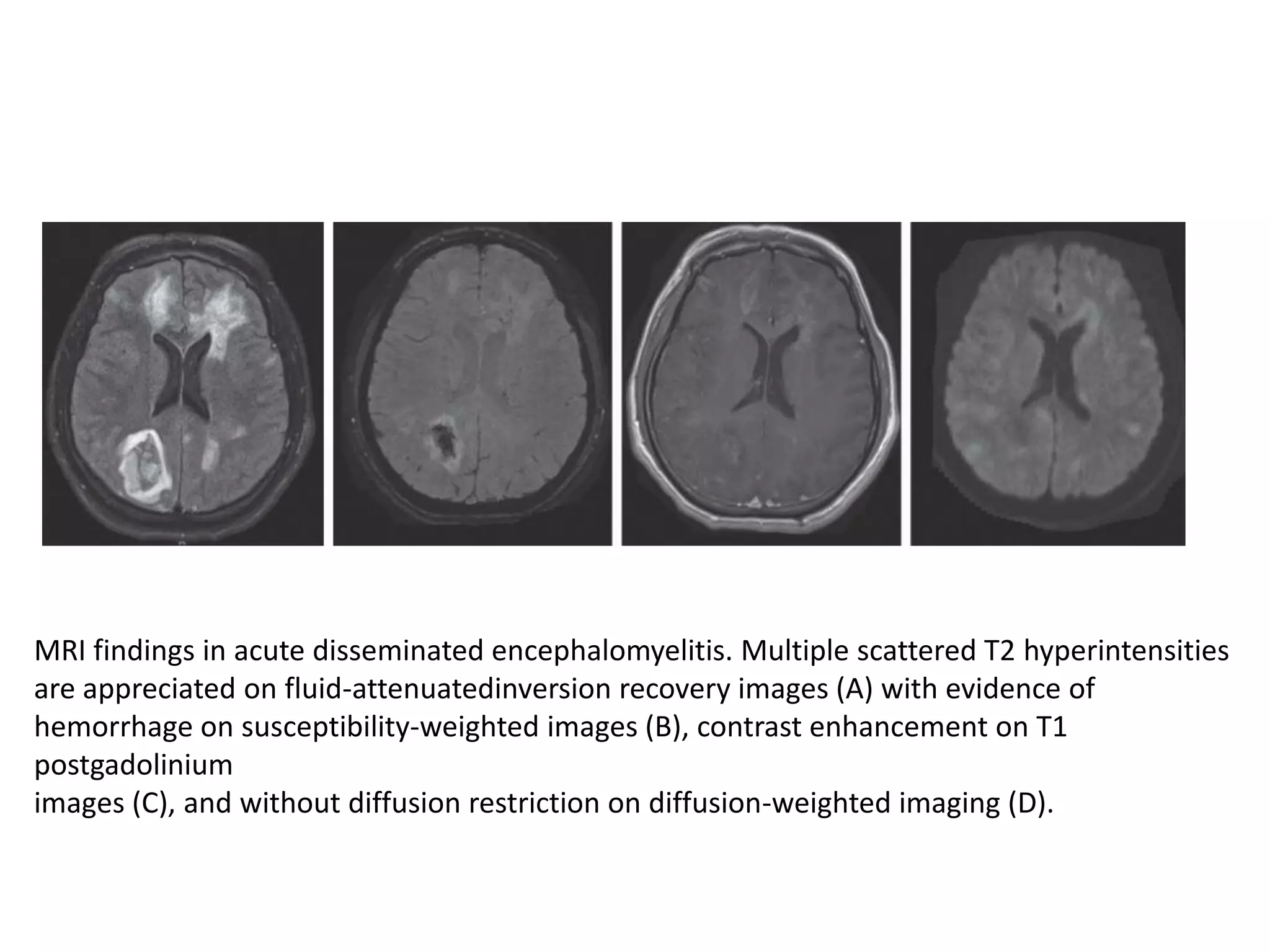
MRI findings in acute disseminated encephalomyelitis. Multiple scattered T2 hyperintensities
are appreciated on fluid-attenuatedinversion recovery images (A) with evidence of
hemorrhage on susceptibility-weighted images (B), contrast enhancement on T1
postgadolinium
images (C), and without diffusion restriction on diffusion-weighted imaging (D).
AQP4 Channelopathy AB Disease’
NMO •
Aquaporin 4
• most abundant CNS water channel
• concentrated in astrocytic foot processes
Antibodies to AQP4 → astrocytopathy
AQP4 Channelopathy
• Female > 80%
• Non-Caucasian predominance
• Relapsing if untreated
• Severe disability and high mortality
• Associated with other auto-immunity
• Onset with both ON + TM uncommon
NMO-IgG Seronegative’
Some NMO patients remain seronegative for NMO-IgG (12-24%)
• Male predominance
• Younger patients
• Milder clinical presentation:
• lower relapse rate, lower disability, lower number of severe attacks
• Simultaneous occurrence of ON and transverse myelitis (33% vs 6%)
• No differences in brain MRI
• Shorter SC lesions
• Spinal cord confinement
• Some NMOneg could suffer either atypical ADEM or MS
• Hyun et al. Mukt Scler J 2014; Bernard-Valnet et al. Eur J Neurol 201
NMO
• SC lesions
• • Extent > 3 segments
• • Central grey matter
• • Swelling
• • Partial enhancement
• • Atrophy & cavity formation
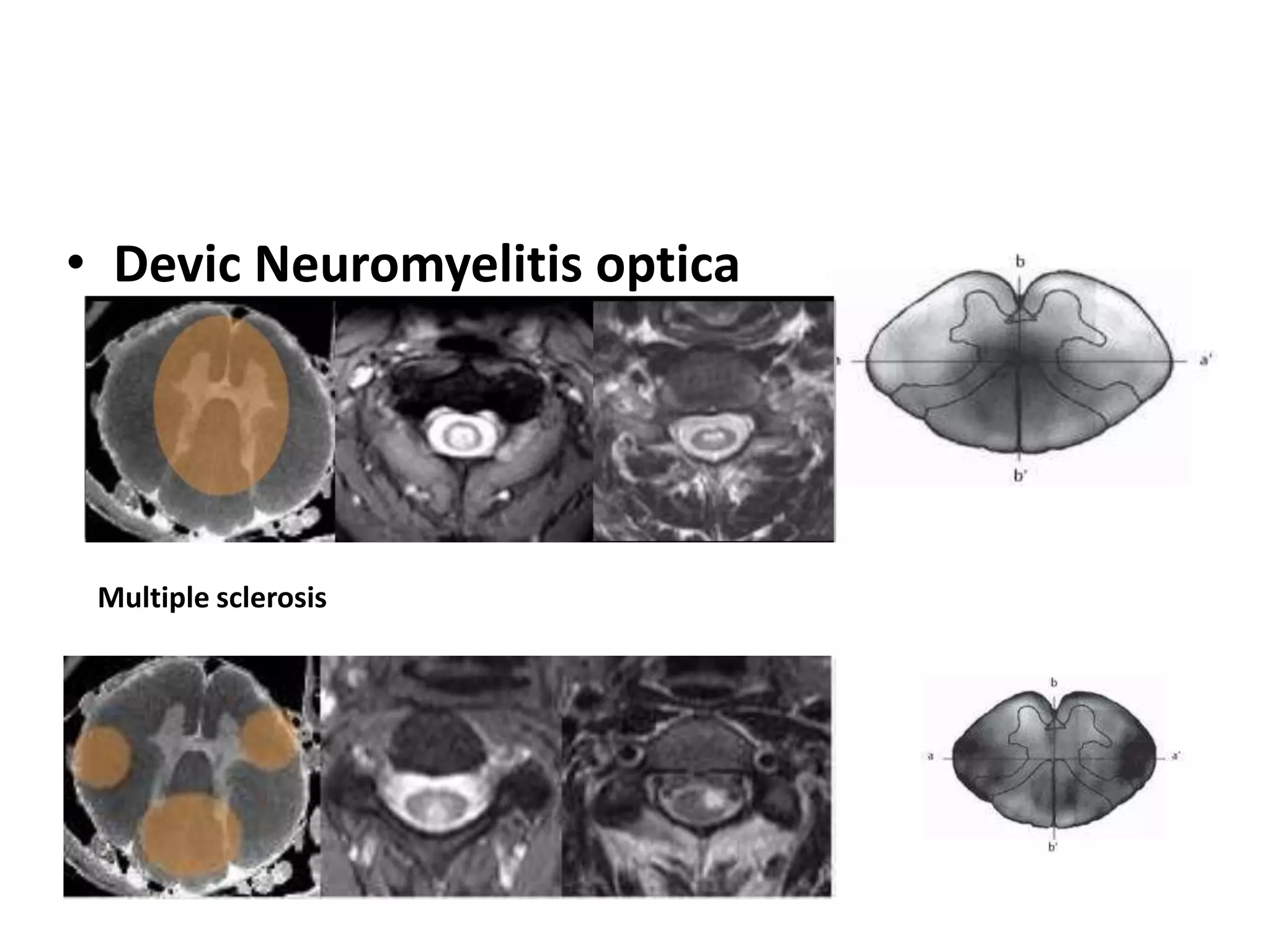
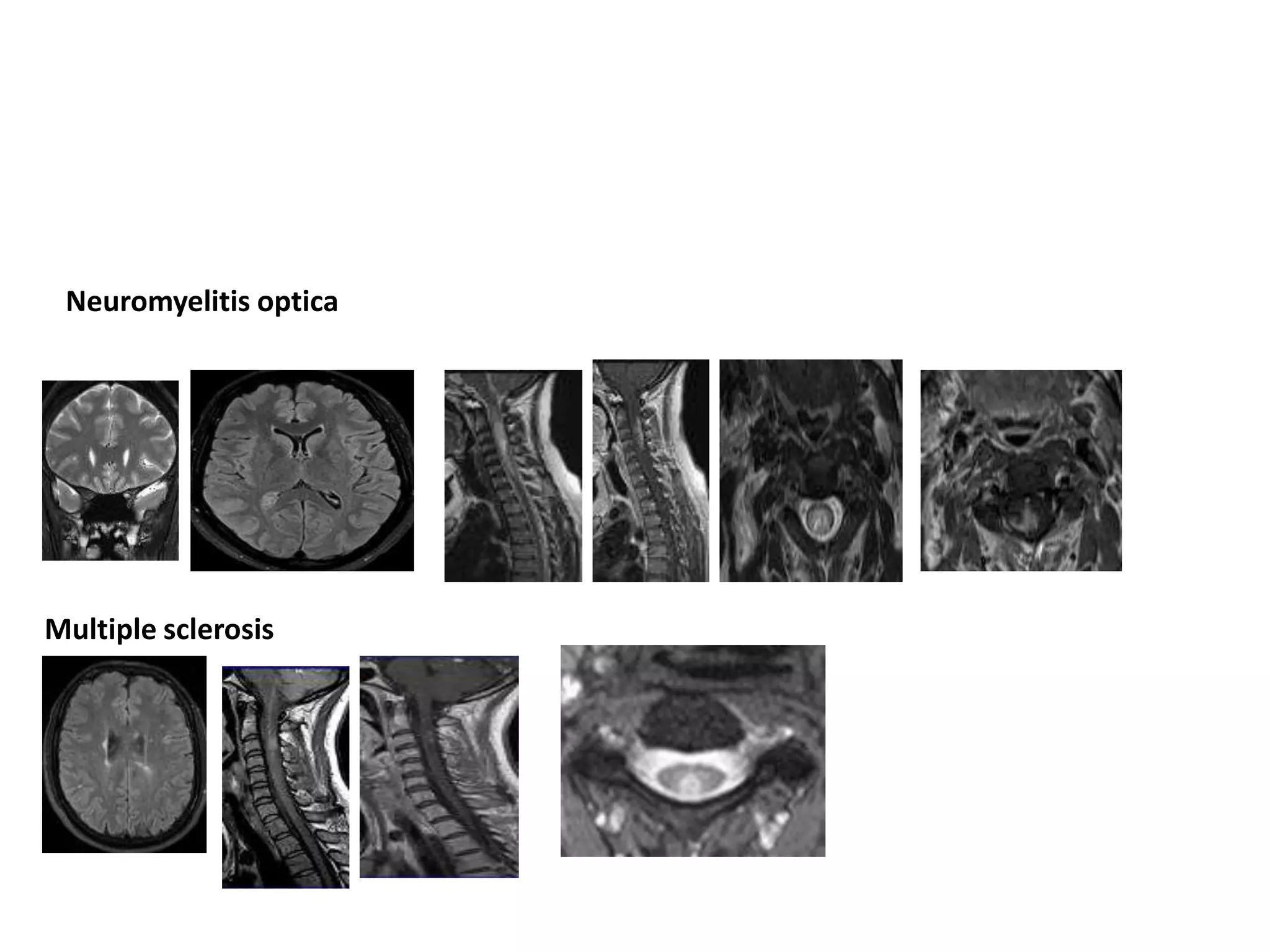
• Devic Neuromyelitis optica
Multiple sclerosis
Spinal cord MRI in NMO
• Central necrosis: pseudosyringomyelia
Neuromyelitis optica
Multiple sclerosis
NMO
• Specific brain lesions
• •Medullary periaqueductal grey
• •Bilat hypothalamus
NMO
• Brain lesions
• •Present 60%
• •Location PV ( AQP4 expression)
• •Extensive
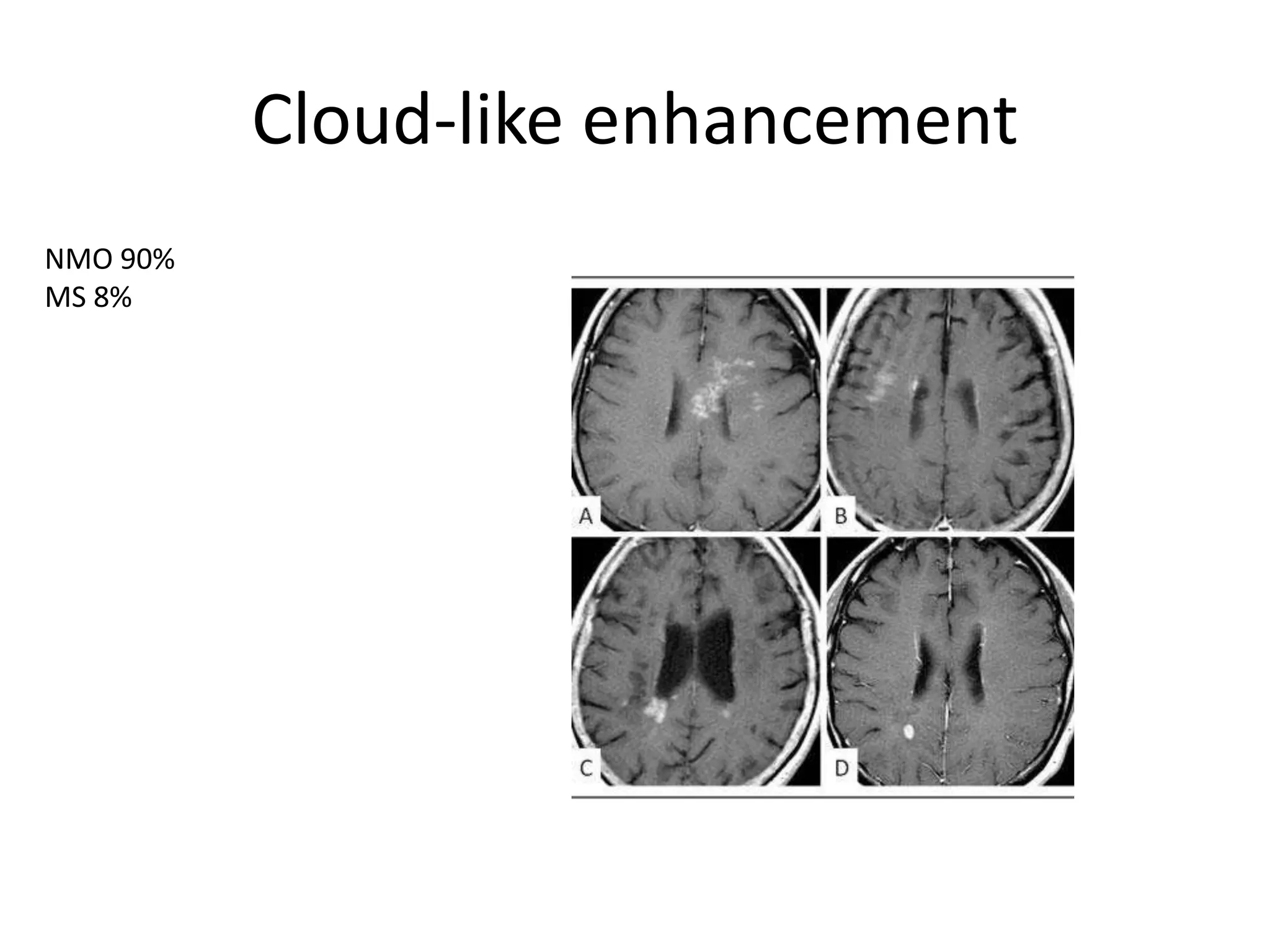
• •Multiple, patchy, enhancing (cloud-like
enhancement) in 90% of pat with CE
• •CC Splenium; diffuse; oedematous,
heterogenous
Cloud-like enhancement
NMO 90%
MS 8%
Cortical lesions
NMO 0
MS 67%
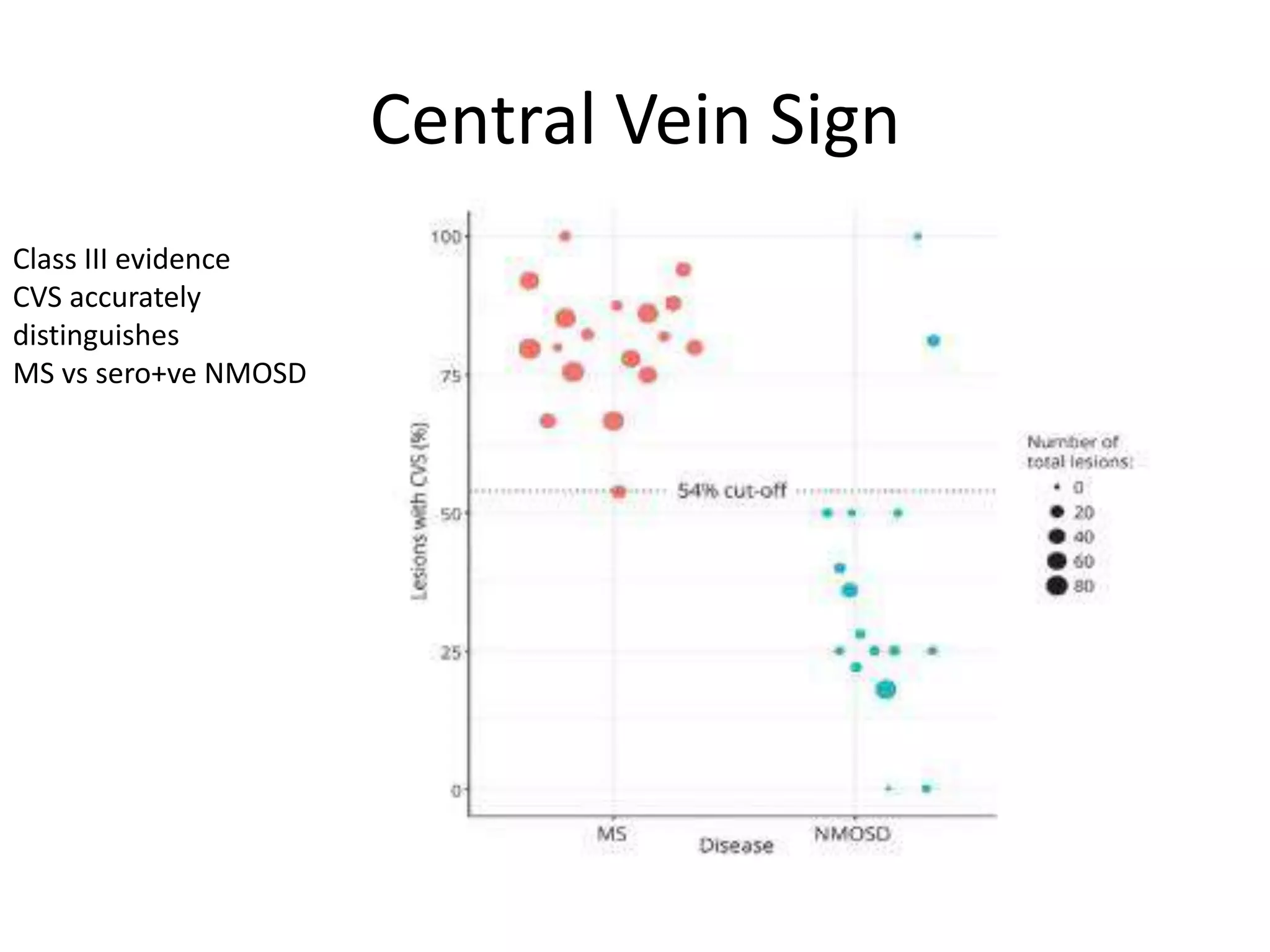
Central Vein Sign
Class III evidence
CVS accurately
distinguishes
MS vs sero+ve NMOSD
NMO: 2015 diagnostic criteria
MR requirements (AQP4-IgG -ve/unknown
Acute optic neuritis
Brain Normal / unspecific
Optic nerve >1/2 ON length or optic chiasm
NMO: 2015 diagnostic criteria
MR requirements (AQP4-IgG -ve/unknown)
Acute myelitis
Intramedullary lesions ≥ 3 contiguos segments
(LETM) ≥ 3 contiguous segments SC atrophy
(history of myelitis
NMO: 2015 diagnostic criteria
MR requirements (AQP4-IgG -ve/unknown)
Acute brainstem syndrom
Periependymal brainstem lesions
Myelin Oligodendrocyte Glycoprotein
(MOG)-AB Disease
• Female : Male equal
• No non-caucasian
predominance
• ~ 50% monophasic
• Better outcome than AQP4-Ab
disease
• Not associated with other
auto-immunity
• Onset with both ON + TM
common
• Overlap with ADEM
(monophasic & relapsing)
MOG-AB Disease
AQP4-ab vs MOG-ab
De Seze Brain 2017
Multiple CNS
site affected
With
encehalopathy
ADEM
Without
encephalop
athy
Polyfocal CIS
Optic Neuritis
and Transverse
Myelitis
NMO
Single CNS
site affected
Monofocal
CIS
Transversemyelitis
Optic Neuritis
others
First episode of demylination
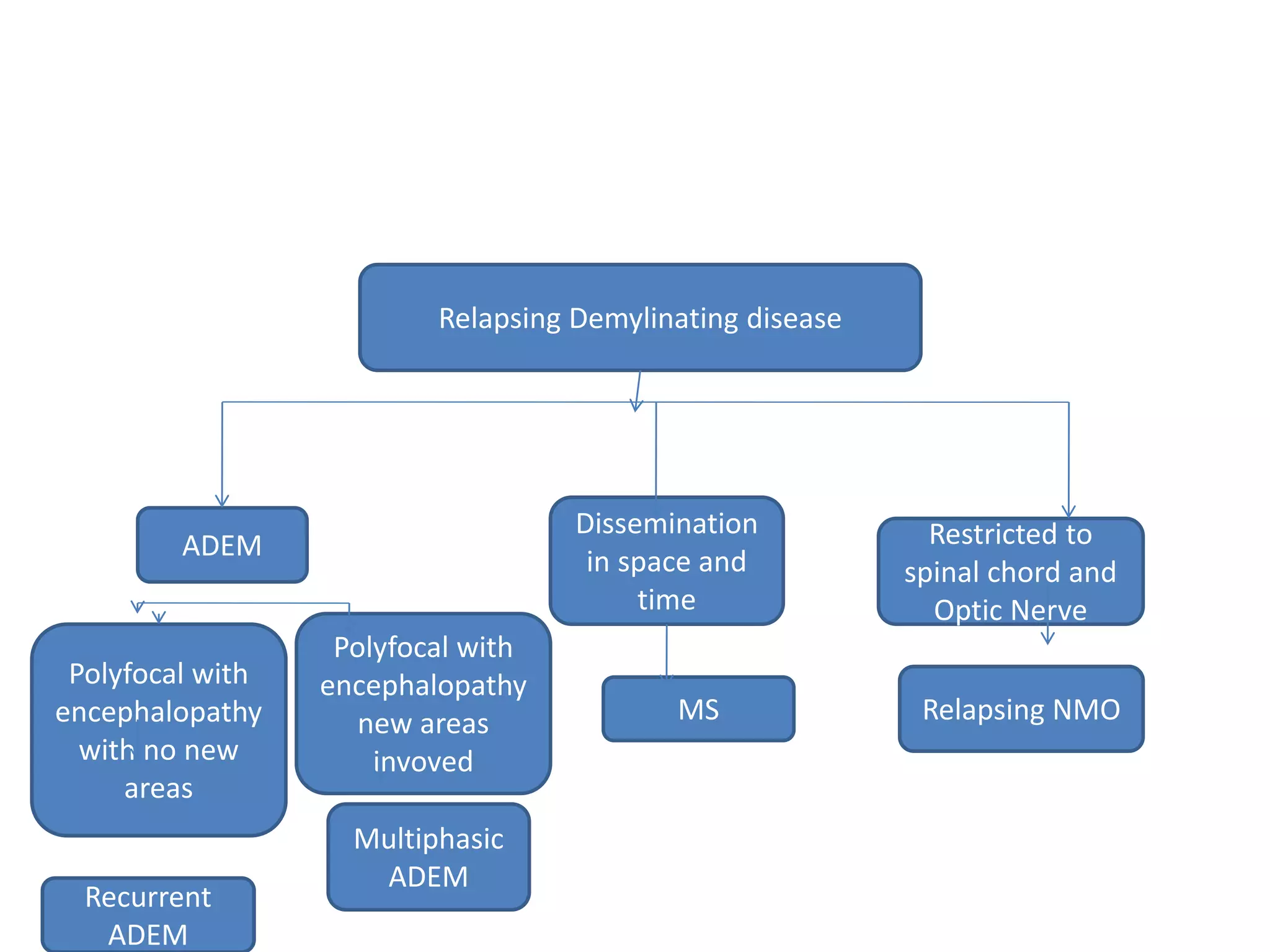
Relapsing Demylinating disease
ADEM
Polyfocal with
encephalopathy
with no new
areas
Polyfocal with
encephalopathy
new areas
invoved
Recurrent
ADEM
Multiphasic
ADEM
Dissemination
in space and
time
MS
Restricted to
spinal chord and
Optic Nerve
Relapsing NMO
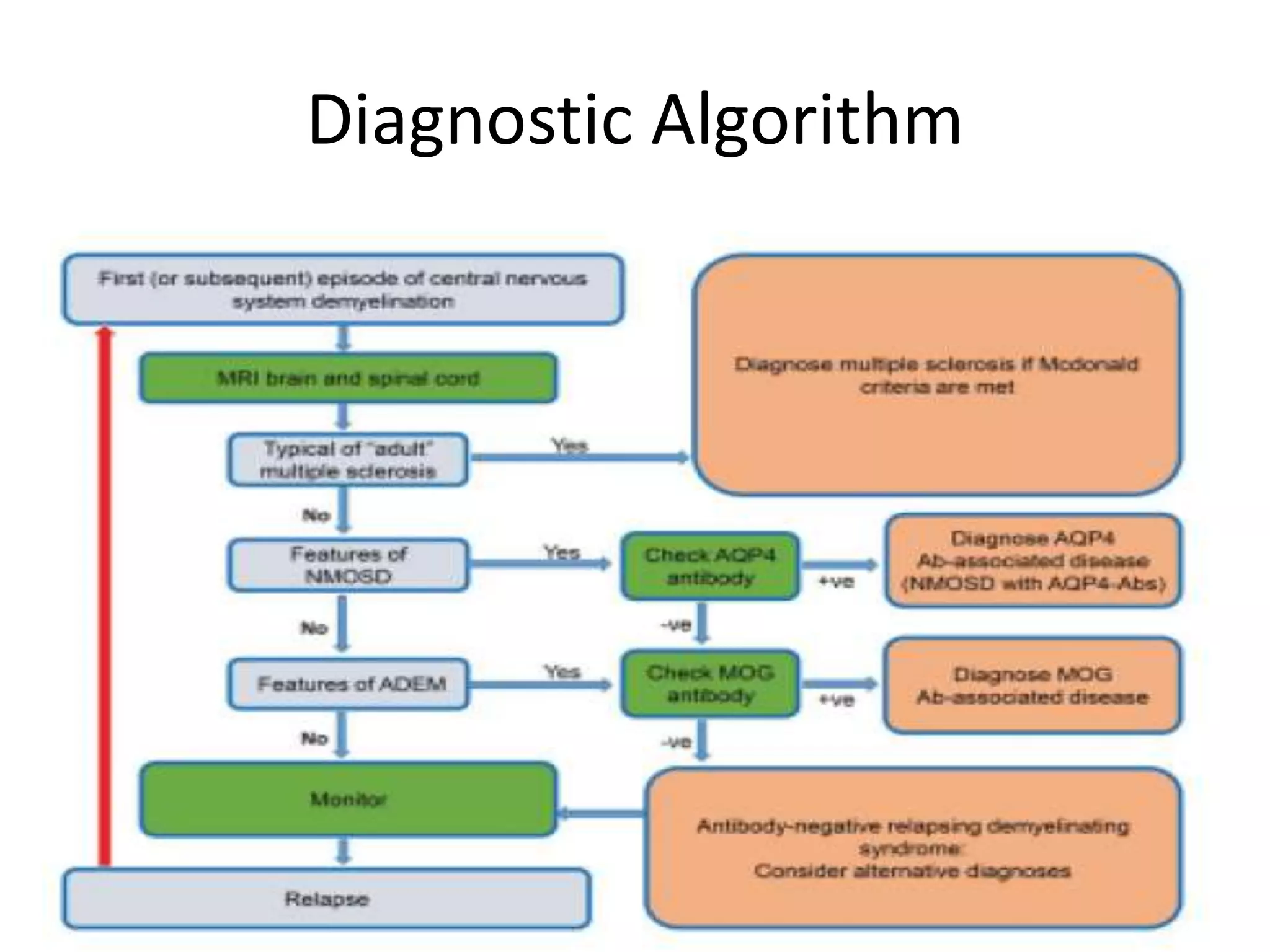
Diagnostic Algorithm
Case
• A 34-year-old man presented with 3 days of gradual worsening,
paresthesia starting at his right chest and ending at his toes on his right
side. He had no additional history of medical problems or prior neurologic
symptoms. Neurologic examination revealed diminished pinprick from the
T4 dermatome and below on the right side and mild diminished vibration
in the right first toe. General and neurologic examinations were otherwise
unremarkable. MRI of his thoracic spinal cord demonstrated a T2-
hyperintense contrast-enhancing lesion at the T4 vertebral disk level
visualized on both sagittal and axial images. Brain MRI demonstrated six
T2-hyperintense lesions, including one ovoid periventricular lesion, with
the remainder located in the subcortical or deep white matter. None
demonstrated contrast enhancement. Cervical spinal cord MRI was
normal. Serum evaluation for inflammatory, metabolic, and infectious
diagnoses other than MS was nonrevealing. CSF evaluation demonstrated
four oligoclonal bands restricted to the CSF, a white blood cell count of 3
cells/mm3 with lymphocytic predominance, and protein elevation to 65;
the CSF was otherwise normal.
Approach to demyelinating diseases

Approach to demyelinating diseases

  • 1.
  • 2.
    When to suspectDemyelinating Disease • Demyelination should be considered in any patient with unexplained neurologic deficits. Primary demyelinating disorders are suggested by the following: • Diffuse or multifocal deficits • Sudden or subacute onset, particularly in young adults • Onset within weeks of an infection or vaccination • Deficits that wax and wane • Symptoms suggesting a specific demyelinating disorder (eg, unexplained optic neuritis or internuclear ophthalmoplegia suggesting multiple sclerosis)
  • 3.
    • Demyelinating diseasesof the CNS: • acquired conditions characterized by preferential damage to previously normal myelin • commonly result from immune-mediated injury • also viral infection of oligodendrocytes as in progressive multifocal leukoencephalopathy, drugs and other toxic agents. • Dysmyelinating diseases of the CNS (leukodystrophy.) : • myelin is not formed properly or has abnormal turnover kinetics • associated with mutations affecting the • proteins required for formation of normal myelin or • in mutations that affect the synthesis or degradation of myelin lipids
  • 4.
    Demyelinating Disease ofPNS • Guillain–Barré syndrome • Chronic inflammatory demyelinating polyneuropathy • Anti-MAG peripheral neuropathy • Charcot–Marie–Tooth disease • Progressive inflammatory neuropathy
  • 5.
  • 7.
    Demylinating Disorders • Immunemediated attack on white matter including brain, optic nerve or spinal chord • characterized clinically by • localization of neurologic deficits (i.e., single site, such as spinal cord [transverse myelitis], optic nerves [optic neuritis] or brainstem, vs polyregional demyelination); • the presence vs absence of encephalopathy; and • disease course (i.e., monophasic vs repeated attacks involving either the same or new CNS regions).
  • 8.
    CIS • first monofocalor multifocal CNS demyelinating event • encephalopathy absent, unless caused by fever • episode should last for at least 24 h and should occur in the absence of fever or infection and with no clinical features of encephalopathy • involve the optic nerve, brainstem, cerebellum, spinal cord, or cerebral hemisphere
  • 9.
    Acute Disseminated Encephalomyelitis ADEM •• Acute monophasic course • • Immune-mediated inflammatory disorder, triggered by inflammatory response to viral infections and vaccination • • Affects children more commonly than adults • • Best viewed as a “syndrome” rather than a specific disorder • Clinical presentation • • Headaches, vomiting, drowsiness, fever, lethargy (uncommon MS) • • Self-limiting, good outcome
  • 10.
    Proposed 2012 IPMSSGcriteria Pediatric ADEM • • First polyfocal, clinical CNS event (presumend inflammatory demyelinating) • • Encephalopathy (cannot be explained by fever) • • No new clinical and MRI findings ≥ 3 months after onset • • Brain MRI abnormal in acute phase (3 months) Typical MRI • • Diffuse, poorly demarcated, large (>1-2 cm) lesions (cerebral WM) • • T1 hipointense lesions rare • • Deep GM lesions can be present
  • 11.
    Recurrent ADEM • Definedpreviously as a new event of ADEM with recurrence of initial symptoms and sign • 3 or more months after the first ADEM • Without involvement of new clinical history, examination or imaging • Now substituted under multiphasic ADEM
  • 12.
    Multiphasic Demyelinating encephalomyelitis • ADEMF/b new clinical event also meeting criteria for ADEM • But involving new anatomic areas of CNS as confirmed by history, Neurologic examination and neuroimaging. • Event must develop within 3 months of initial event.
  • 13.
    MS • Any ofthe following: • Two or more nonencephalopathic CNS clinical events separated by more than 30 days, involving more than1 area of the CNS • Single clinical event and MRI features rely on 2017 Revised McDonald criteria for DIS and DIT (but criteria relative for DIT for a single attack and single MRI only apply to children ages 2-12 yr and only apply to cases without an ADEM onset)
  • 14.
  • 15.
    RED Flags forpossibility of alternate diagnosis than MS (1) family history of neurological disease, (2) a well-demarcated spinal level in the absence of disease above the foramen magnum, (3) prominent back pain that persists,. (4) symptoms and signs that can be attributed to one anatomical site, (5) patients who are older than age 60 or younger than age 15 at onset, (6) progressive disease e Miller et al., 2008
  • 16.
    ADEM vs MS Age Gender Priorflu Encephalopathy Symptoms Attacks CSF white blood cell count >50 CSF oligoclonal bands 10 years (rare in adults) male=female very frequent required multifocal fluctuate over 3 months frequent variable >10 years male<female variable rare monofocal separated by >1 month very rare frequent ADEM MS
  • 17.
    ADEM vs MSADEM MS
  • 18.
    MS Diagnostic CriteriaAfter ADEM • 3 requirements for 2nd clinical event • • Nonencephalopathic • • ≥ 3 months after incident neurologic illness • •Associated with new MRI findings (disseminated in space)
  • 19.
  • 20.
    ADEM MS if ≥2 • 2 or more PV lesions • Black holes • Absence of diffuse bilateral lesions MS ADEM
  • 21.
    ADEM SC involvement in~30% Large and tumefactive lesions Variable enhancement 8 years old boy
  • 22.
    Acute Haemorragic leukoencephalitis(Hurst disease) •Considered as hyperacute or fulminanat form of ADEM • Seen in young age group • Charectorized by fever, neckstiffness, progressive neurologic deficit, coma and death within few days. • Occurs after viral respiratory tract infection, sepsis, ulcerative colitis • CSF: elevation of IgG and polymorphonucleated cell pleocytosis (in contrast to lymphocytic pleocytosis in the CSF noted in typical ADEM)
  • 23.
    MRI findings inacute disseminated encephalomyelitis. Multiple scattered T2 hyperintensities are appreciated on fluid-attenuatedinversion recovery images (A) with evidence of hemorrhage on susceptibility-weighted images (B), contrast enhancement on T1 postgadolinium images (C), and without diffusion restriction on diffusion-weighted imaging (D).
  • 24.
    AQP4 Channelopathy ABDisease’ NMO • Aquaporin 4 • most abundant CNS water channel • concentrated in astrocytic foot processes Antibodies to AQP4 → astrocytopathy
  • 25.
    AQP4 Channelopathy • Female> 80% • Non-Caucasian predominance • Relapsing if untreated • Severe disability and high mortality • Associated with other auto-immunity • Onset with both ON + TM uncommon
  • 27.
    NMO-IgG Seronegative’ Some NMOpatients remain seronegative for NMO-IgG (12-24%) • Male predominance • Younger patients • Milder clinical presentation: • lower relapse rate, lower disability, lower number of severe attacks • Simultaneous occurrence of ON and transverse myelitis (33% vs 6%) • No differences in brain MRI • Shorter SC lesions • Spinal cord confinement • Some NMOneg could suffer either atypical ADEM or MS • Hyun et al. Mukt Scler J 2014; Bernard-Valnet et al. Eur J Neurol 201
  • 28.
    NMO • SC lesions •• Extent > 3 segments • • Central grey matter • • Swelling • • Partial enhancement • • Atrophy & cavity formation
  • 29.
    • Devic Neuromyelitisoptica Multiple sclerosis
  • 30.
    Spinal cord MRIin NMO • Central necrosis: pseudosyringomyelia
  • 31.
  • 32.
    NMO • Specific brainlesions • •Medullary periaqueductal grey • •Bilat hypothalamus
  • 33.
    NMO • Brain lesions ••Present 60% • •Location PV ( AQP4 expression) • •Extensive • •Multiple, patchy, enhancing (cloud-like enhancement) in 90% of pat with CE • •CC Splenium; diffuse; oedematous, heterogenous
  • 34.
  • 35.
  • 36.
    Central Vein Sign ClassIII evidence CVS accurately distinguishes MS vs sero+ve NMOSD
  • 37.
    NMO: 2015 diagnosticcriteria MR requirements (AQP4-IgG -ve/unknown Acute optic neuritis Brain Normal / unspecific Optic nerve >1/2 ON length or optic chiasm
  • 38.
    NMO: 2015 diagnosticcriteria MR requirements (AQP4-IgG -ve/unknown) Acute myelitis Intramedullary lesions ≥ 3 contiguos segments (LETM) ≥ 3 contiguous segments SC atrophy (history of myelitis
  • 39.
    NMO: 2015 diagnosticcriteria MR requirements (AQP4-IgG -ve/unknown) Acute brainstem syndrom Periependymal brainstem lesions
  • 40.
    Myelin Oligodendrocyte Glycoprotein (MOG)-ABDisease • Female : Male equal • No non-caucasian predominance • ~ 50% monophasic • Better outcome than AQP4-Ab disease • Not associated with other auto-immunity • Onset with both ON + TM common • Overlap with ADEM (monophasic & relapsing)
  • 41.
  • 42.
    AQP4-ab vs MOG-ab DeSeze Brain 2017
  • 44.
    Multiple CNS site affected With encehalopathy ADEM Without encephalop athy PolyfocalCIS Optic Neuritis and Transverse Myelitis NMO Single CNS site affected Monofocal CIS Transversemyelitis Optic Neuritis others First episode of demylination
  • 45.
    Relapsing Demylinating disease ADEM Polyfocalwith encephalopathy with no new areas Polyfocal with encephalopathy new areas invoved Recurrent ADEM Multiphasic ADEM Dissemination in space and time MS Restricted to spinal chord and Optic Nerve Relapsing NMO
  • 47.
  • 48.
    Case • A 34-year-oldman presented with 3 days of gradual worsening, paresthesia starting at his right chest and ending at his toes on his right side. He had no additional history of medical problems or prior neurologic symptoms. Neurologic examination revealed diminished pinprick from the T4 dermatome and below on the right side and mild diminished vibration in the right first toe. General and neurologic examinations were otherwise unremarkable. MRI of his thoracic spinal cord demonstrated a T2- hyperintense contrast-enhancing lesion at the T4 vertebral disk level visualized on both sagittal and axial images. Brain MRI demonstrated six T2-hyperintense lesions, including one ovoid periventricular lesion, with the remainder located in the subcortical or deep white matter. None demonstrated contrast enhancement. Cervical spinal cord MRI was normal. Serum evaluation for inflammatory, metabolic, and infectious diagnoses other than MS was nonrevealing. CSF evaluation demonstrated four oligoclonal bands restricted to the CSF, a white blood cell count of 3 cells/mm3 with lymphocytic predominance, and protein elevation to 65; the CSF was otherwise normal.

Editor's Notes

  • #49  patient presented with objective evidence of a single attack of myelitis MRI dissemination in space and dissemination in time according to 2017 McDonald criteria, because the symptomatic thoracic spinal cord lesion can count toward both MRI demonstration of dissemination in space and dissemination in time the periventricular and spinal cord lesions demonstrated MRI dissemination in space, and the presence of contrast-enhancing and nonenhancing lesions demonstrated dissemination in time