INTRODUCTION
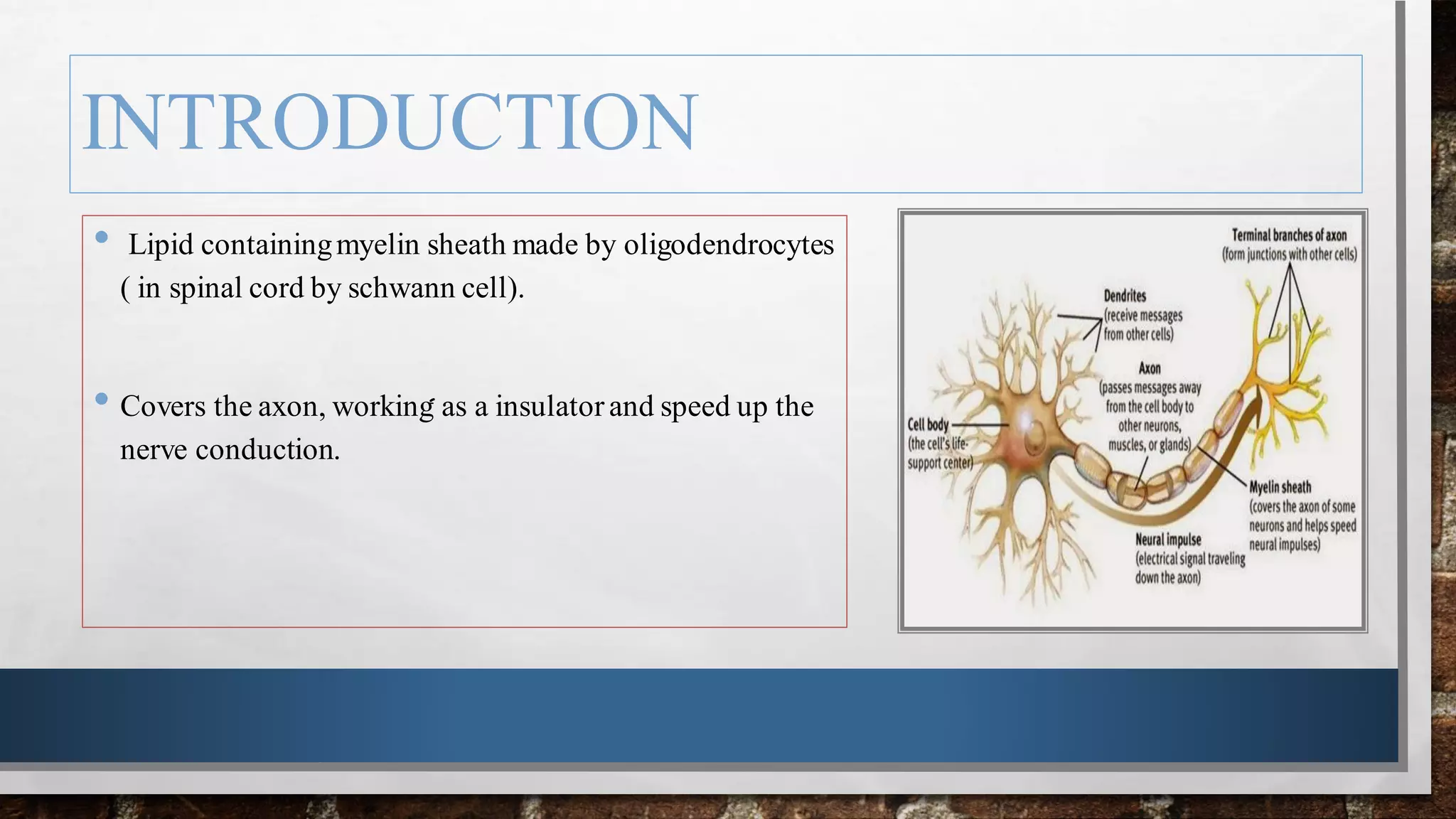
• Lipid containingmyelin sheath made by oligodendrocytes
( in spinal cord by schwann cell).
• Covers the axon, working as a insulator and speed up the
nerve conduction.
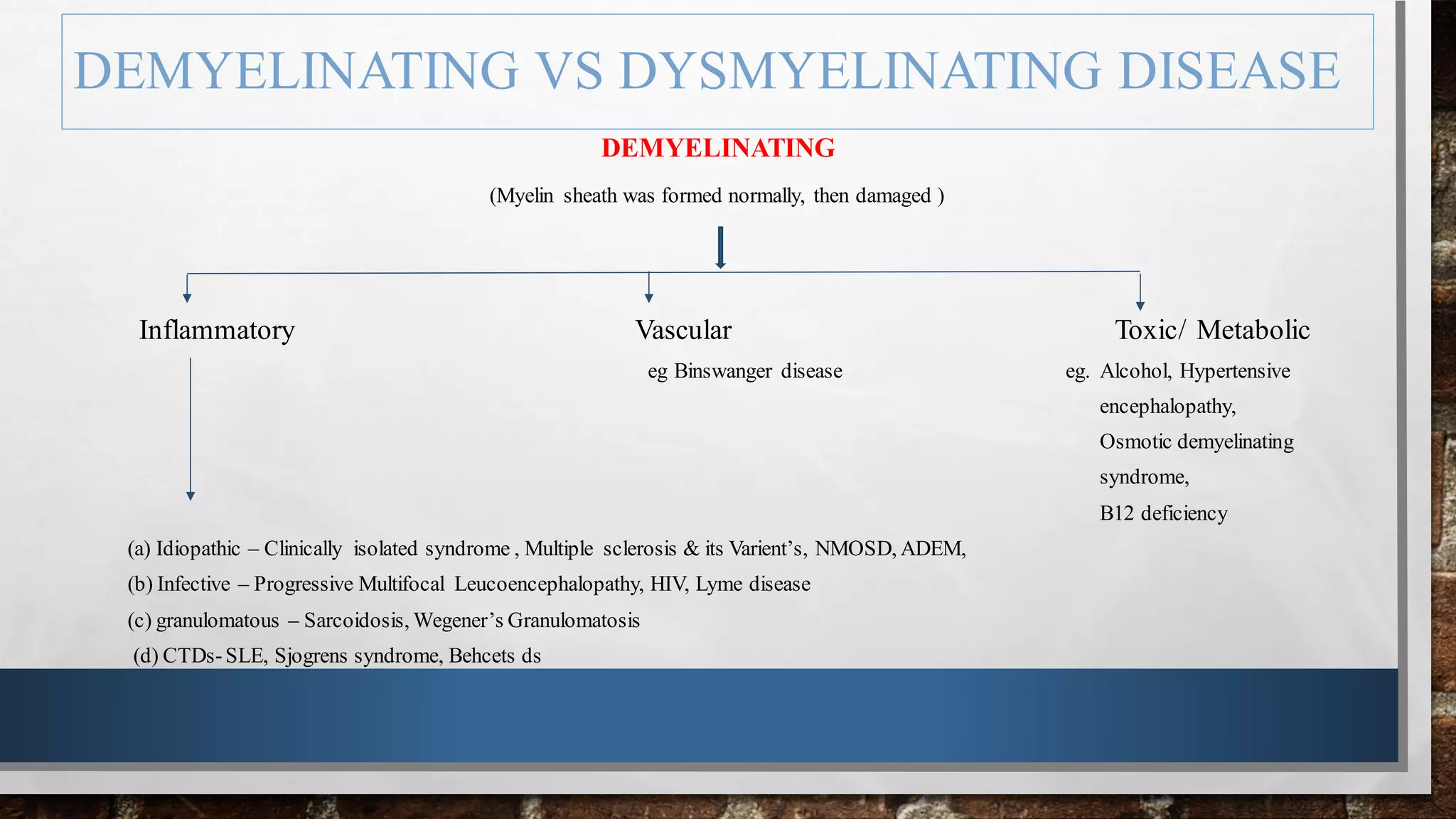
DEMYELINATING VS DYSMYELINATING DISEASE
DEMYELINATING
(Myelin sheath was formed normally, then damaged )
Inflammatory Vascular Toxic/ Metabolic
eg Binswanger disease eg. Alcohol, Hypertensive
encephalopathy,
Osmotic demyelinating
syndrome,
B12 deficiency
(a) Idiopathic – Clinically isolated syndrome , Multiple sclerosis & its Varient’s, NMOSD, ADEM,
(b) Infective – Progressive Multifocal Leucoencephalopathy, HIV, Lyme disease
(c) granulomatous – Sarcoidosis, Wegener’s Granulomatosis
(d) CTDs-SLE, Sjogrens syndrome, Behcets ds
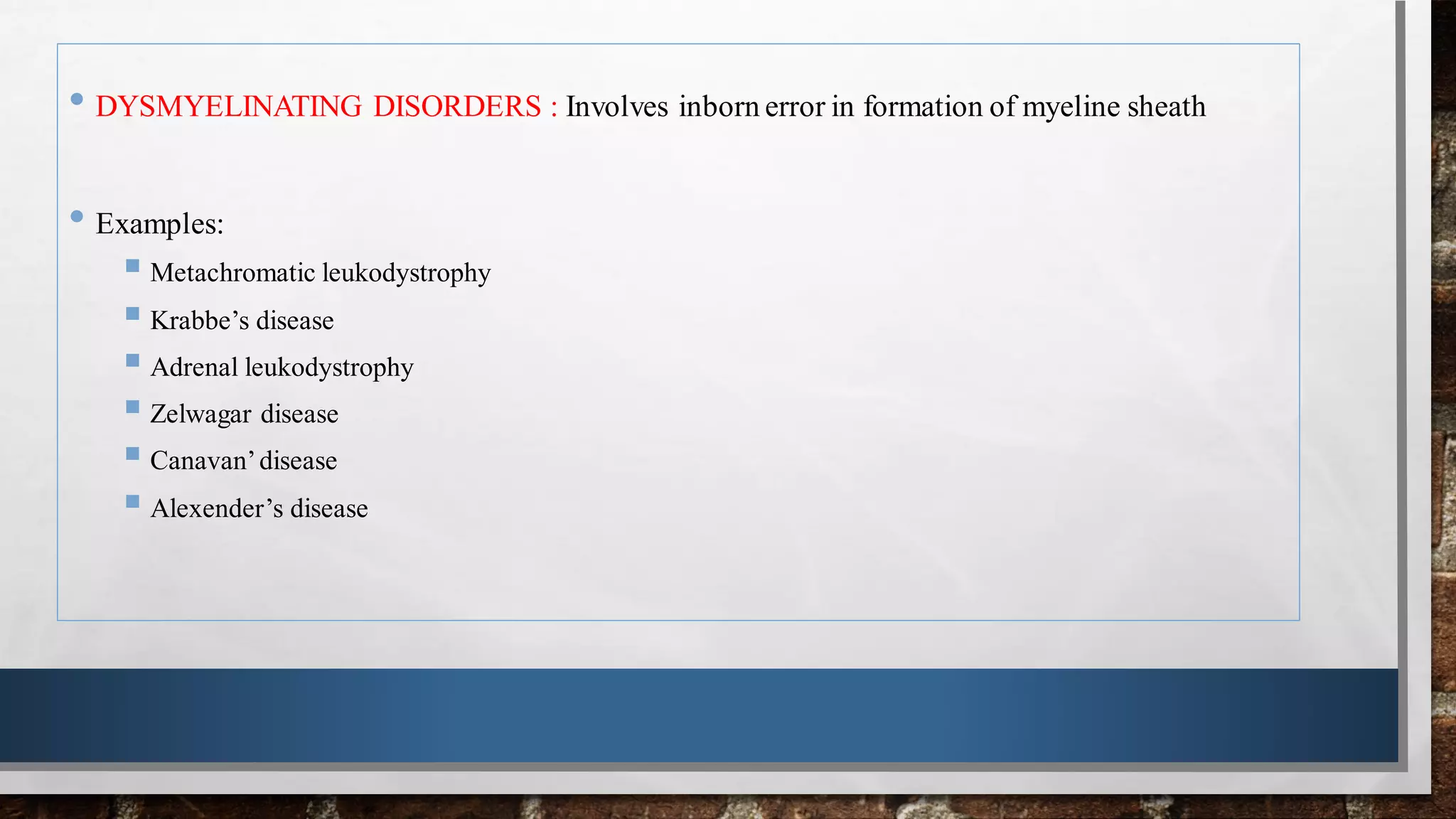
• DYSMYELINATING DISORDERS : Involves inborn error in formation of myeline sheath
• Examples:
▪ Metachromatic leukodystrophy
▪ Krabbe’s disease
▪ Adrenal leukodystrophy
▪ Zelwagar disease
▪ Canavan’disease
▪ Alexender’s disease
APPROACH
DIAGNOSTIC TOOLS
HISTORY
Other
Neurophysiologic studies:
(visual, auditory and
somatosensory )
Hematologic and
biochemical analysis of
peripheral blood (complete
blood count, erythrocyte
sedimentation rate (ESR)
Coagulogram, C reactive
protein, PROTIEN S
Immunologic analysis
(ANCA, ANA,C3, C4)
Thyroid gland hormones;
Vitamin B12 and folic acid;
Serologic analysis for HIV,
hepatitis B and C
VDRL, TPHA
MRI BRAIN/SPINE
CSF
EXAMINATION
Sign & symtomps suggestive of
demyelination
HISTORY
EXAMINATION
STEP 1
STEP 2
STEP 3
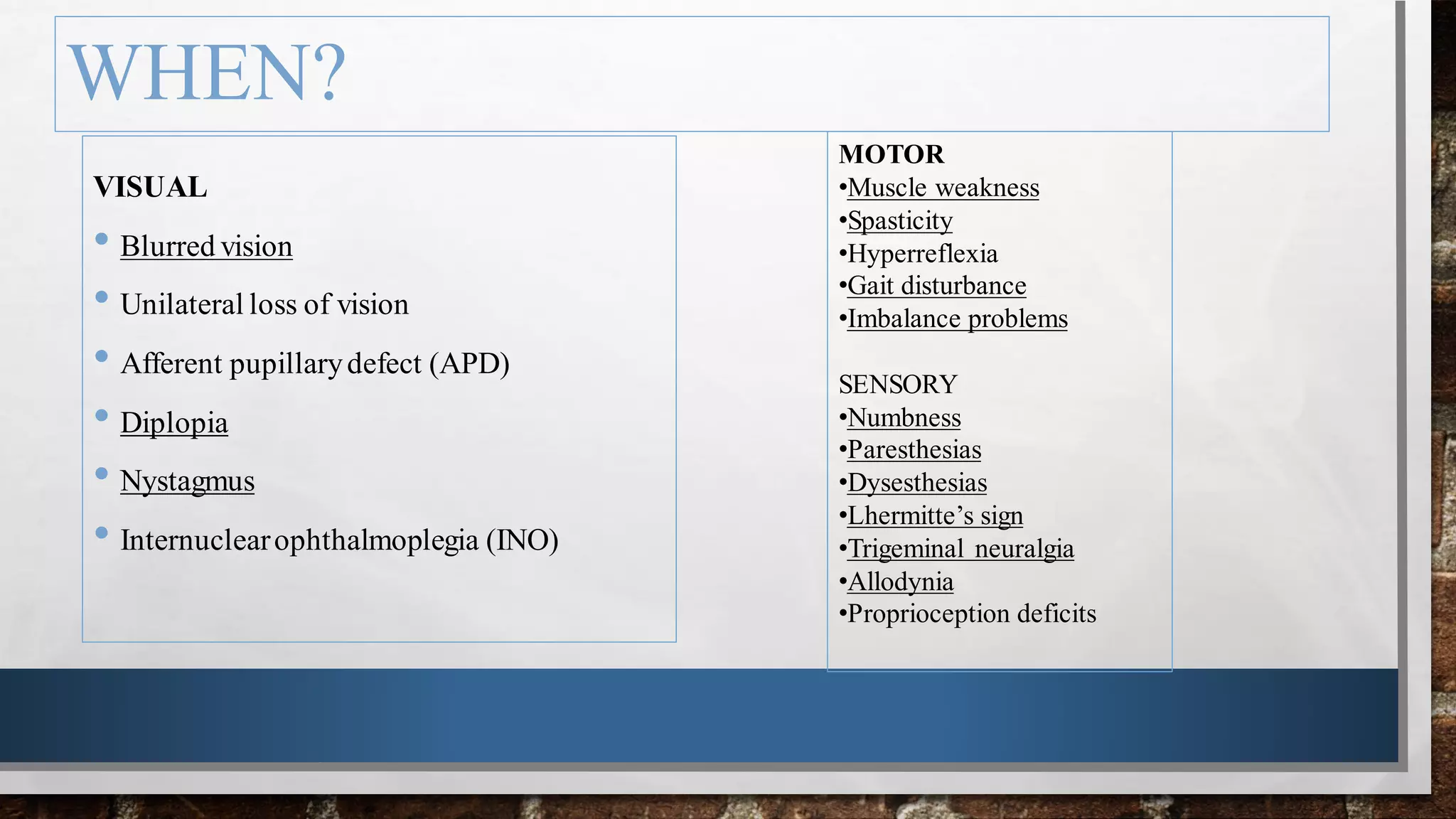
WHEN?
VISUAL
• Blurred vision
• Unilateral loss of vision
• Afferent pupillarydefect (APD)
• Diplopia
• Nystagmus
• Internuclearophthalmoplegia (INO)
MOTOR
•Muscle weakness
•Spasticity
•Hyperreflexia
•Gait disturbance
•Imbalance problems
SENSORY
•Numbness
•Paresthesias
•Dysesthesias
•Lhermitte’s sign
•Trigeminal neuralgia
•Allodynia
•Proprioception deficits
Cerebellar: tremor , ataxia ,
incoordination
Genitourinary
• Urgency/frequency/retention
• Incontinence
• Frequent UTI
• Constipation
• Impotence
• Anorgasmia
• Dyspareunia
Neuropsychiatric
•Cognitive impairment
•Depression
•Irritability
•Anxiety
Other symptoms
•Prominent intractable fatigue with
no other cause
•Dizziness and vertigo
HISTORY
• Age , Gender
• Family history
• H/o vaccination
• H/o recent infection
• H/o alcoholand any other drug intake
EXAMINATION
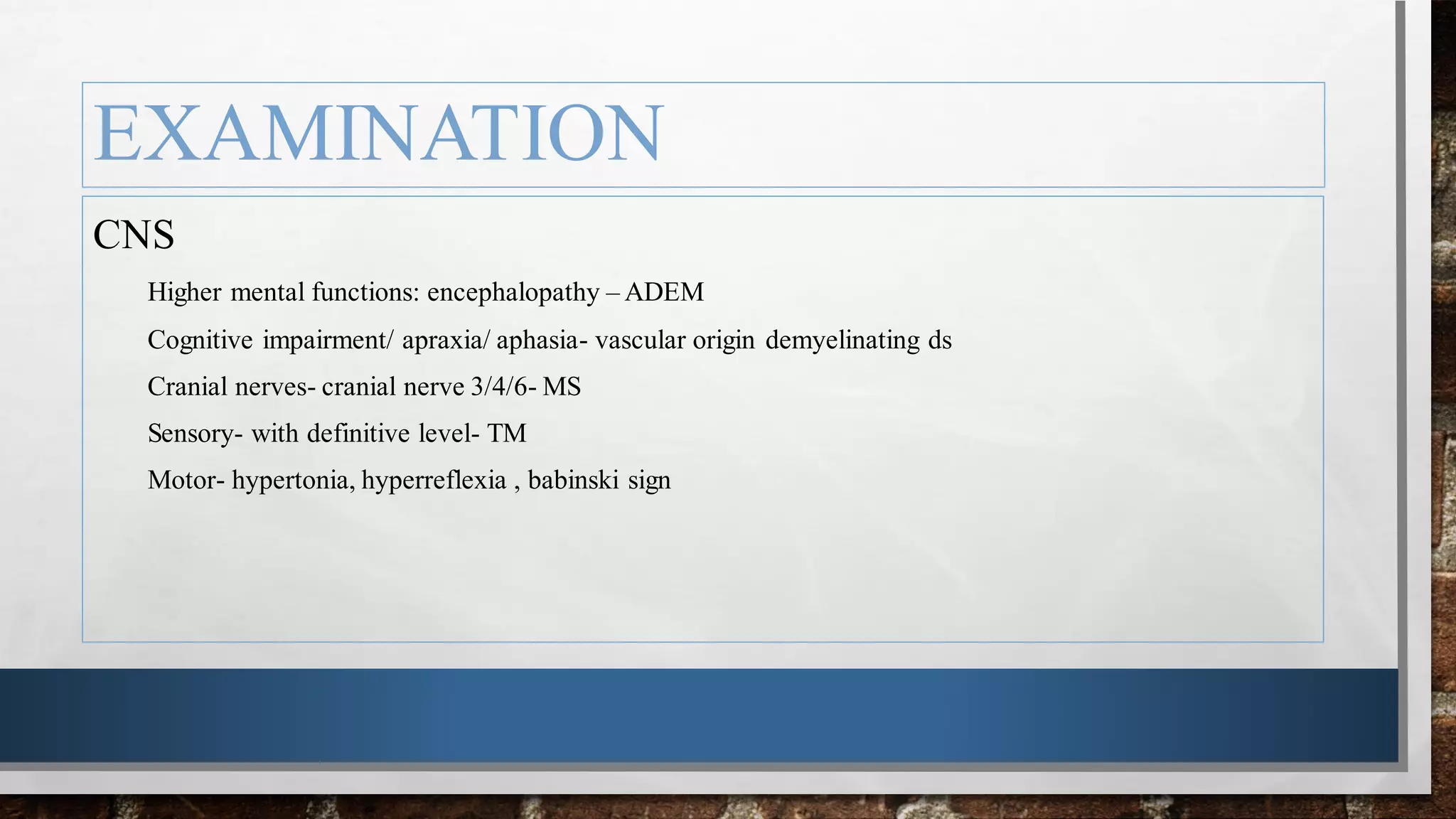
CNS
Higher mental functions: encephalopathy – ADEM
Cognitive impairment/ apraxia/ aphasia- vascular origin demyelinating ds
Cranial nerves- cranial nerve 3/4/6- MS
Sensory- with definitive level- TM
Motor- hypertonia, hyperreflexia , babinski sign
Initial diagnostic workup (i.e MRI BRAIN & Spine, Infectious, Rheumatological workup
If no red flag suggesting alternate
(infectious,neoplastic,metabolic,genetic) diagnosis
If red flag present
Look for another causes
MONOPHASIC RECURRENT
ALTERED MENTAL STATUS
YES YES
NO NO
MRI BRAIN & SPINE: LARGE
CONFLUENT WHITW MATTER
LESION
MRI SPINE LESION OR OPTIC
NERVE ALONE
Mc DONALD CRITERIA ON
MRI
MRI BRAIN: HYPOTHALAMUS/
AREA POSTREMA
LETM & AQP4Ab
ADEM ON/TM/CIS
MULTIPHASIC
ADEM
MS NMOSD
STEP 4
CIS
• The first neurologic attack of an acute inflammatory demyelinating event in central nervous
system, lasting at least 24hrs in absence of fever/infection (Polaman et al, 2011)
• This definition also provides no DIS nor DIT by MRI brain and cervical cord.
Arch Neuropsychiatr 2015; 52: (Supplement 1):
S1-S11 • DOI: 10.5152/npa.2015.12608
Unilateral visual loss,
Pain,
Afferent pupil defect,
Retrobulbar or mild
disc swelling, Visual
loss does not progress
beyond two weeks
Arch Neuropsychiatr 2015; 52: (Supplement 1):
S1-S11 • DOI: 10.5152/npa.2015.12608
Unilateral visual loss,
Pain,
Afferent pupil defect,
Retrobulbar or mild
disc swelling, Visual
loss does not progress
beyond two weeks
Bilateral visual loss
No pain,
Retinal exudates,
Retinal hemorrhages,
Severe disc swelling,
No visual recovery
after one month
Arch Neuropsychiatr 2015; 52: (Supplement 1):
S1-S11 • DOI: 10.5152/npa.2015.12608
Arch Neuropsychiatr 2015; 52: (Supplement 1): S1-S11 • DOI:
10.5152/npa.2015.12608
Arch Neuropsychiatr 2015; 52: (Supplement 1):
S1-S11 • DOI: 10.5152/npa.2015.12608
MULTIPLE
SCLEROSIS
vs
NMOSD
M
EPIDEMIOLOGY
F:M RATIO
AGE OF ONSET
PREVALENCE
MS
Moderate female predominance
(2:1)
Median of 29 years, uncommon
in children and >50 years
5-10 Per 100000
NMOSD
High female predominance (9:1–
3:1).
Mean of 40–45 years, with wide
distribution from young children
to elderly
3.5 Per 100000
Ther Adv Neurol Disord. 2017 Jul; 10(7): 265–289.
Published online 2017 May 24. doi: 10.1177/1756285617709723
CLINICAL FEATURE
OPTIC NEURITIS
Visual field defect otherthan
cecocentralscotoma (per se,
complete blindness
Severe visual loss (bilaterally
⩽0.1) in the chronic stage
MS
Uncommon
Uncommon (4.2% in 11 years of
disease onset)
NMOSD
Relatively common (up to 25%)
Common (50% in 10 years of
disease onset)
Ther Adv Neurol Disord. 2017 Jul; 10(7): 265–289.
Published online 2017 May 24. doi: 10.1177/1756285617709723
CLINICAL FEATURE
MYELITIS
Severe myelitis causing complete
paraplegia
Painful tonic spasm associated
with myelitis
BRAIN
Intractable hiccup and nausea
(associated with area postrema
lesions)
MS
Rare
Rare
Rare
NMOSD
Relatively common (30–70% at
first attack)
Relatively common (up to 25%)
Relatively common (12–17%)
Ther Adv Neurol Disord. 2017 Jul; 10(7): 265–289.
Published online 2017 May 24. doi: 10.1177/1756285617709723
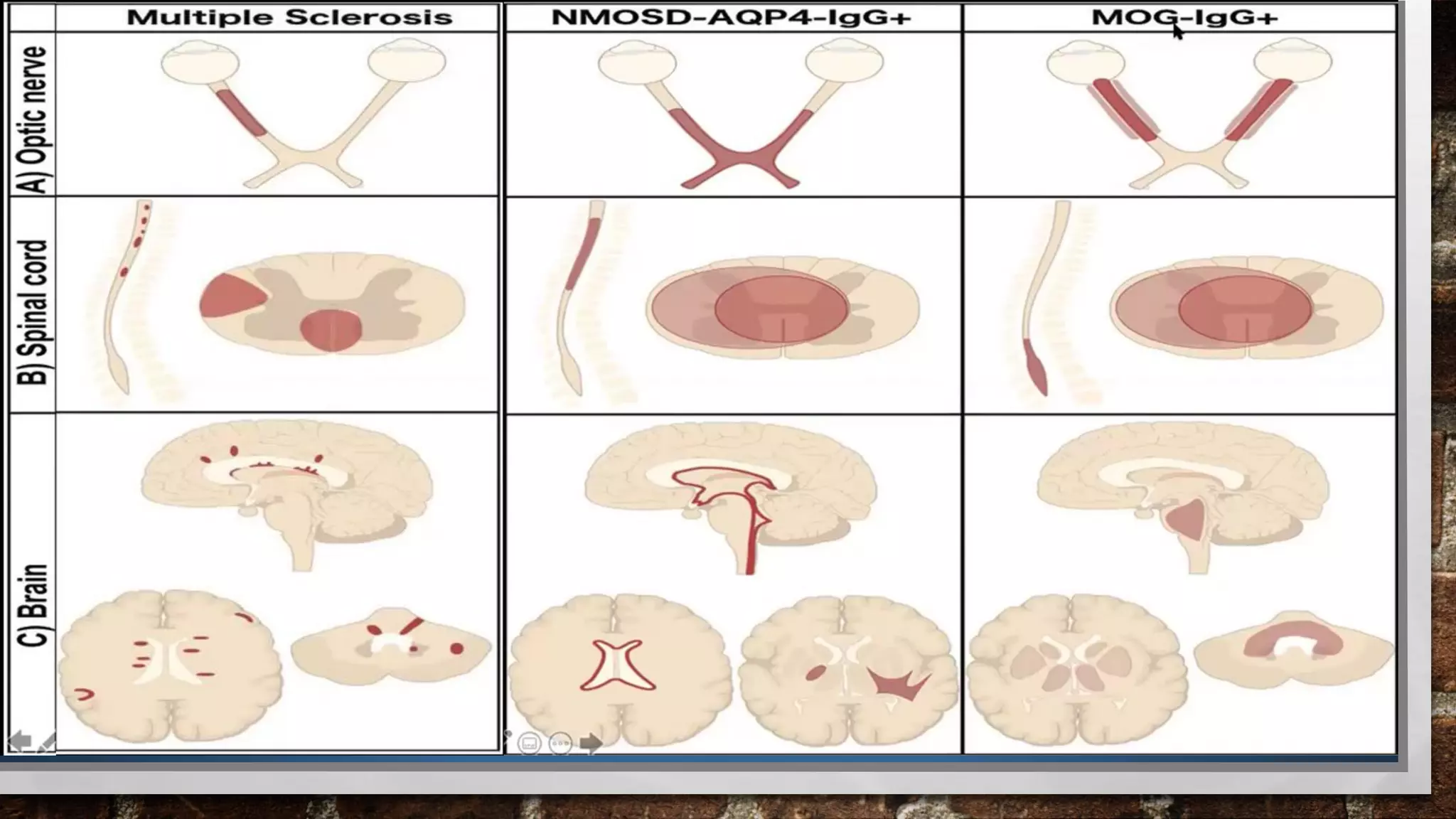
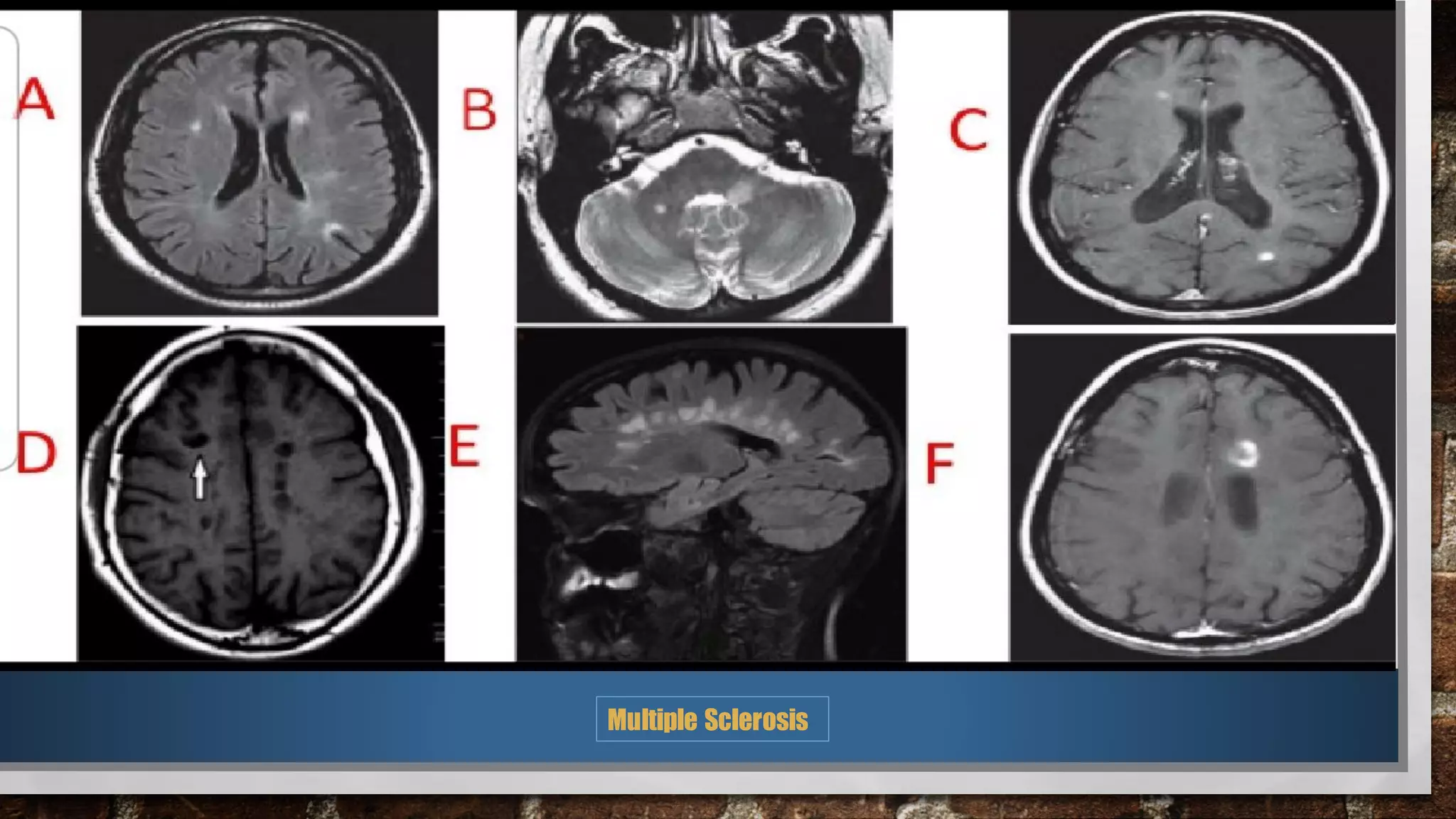
RADIOIMAGING
• MRI has role in diagnosis as well as prognosis
• T1 image
• T2 image
• FLAIR image for diagnosing demyelinatinglesions
• T1 with Gadoliniumenhancement image
Multiple Sclerosis
Multiple Sclerosis
NMOSD
NMOSD
Area postrema
3rd ventricle Internalcapsule Lateral ventrciles
NMOSD
Pattern of CNS atrophy
CSF
Pleocytosis
Oligoclonal bands
OPTICAL COHERENCE
TOMOGRAPHY
Retinal nerve fiber layer
thickness reduction
MS
Severe atrophy of Brain
Mild to moderate
Present in most patients (up to
97% with repeated test); rarely
disappear in follow-up sampling
Mostly in temporal quadrant
NMOSD
Of spinal cord
Can be severe (up to 1,000/mm
3
)
Can be present in some patients
(33–43%); mostly disappear in
follow-up sampling
Mostly in superior/inferior
quadrant
Ther Adv Neurol Disord. 2017 Jul; 10(7): 265–289.
Published online 2017 May 24. doi: 10.1177/1756285617709723
RED FLAGS TO MS
•Normal MRI
•No abnormal findings on
neurological exam
•Bilateral vision loss
•Peripheral neuropathy
•Rigidity; sustained dystonia
•Seizures
•Headache
•Early dementia
•Abrupt onset of symptoms
•Cortical deficits (aphasia,
apraxia, alexia, neglect)
•Intractable hiccups
•Onset before age 10 or after age
50
ADEM
• Monophasic(90%) but relapse can occur in within 1st 3months
• Antigen-antibodycomplex mediated( with in 2wk after antigen challenge)
• Children(<15yrs)
• No gender predilection
• Incidence: 0.4/100000person years
• C/f : encephalopathy, fever, headache , seizure, multiplefocal deficit , meningeal sign
• Anti- MOG AB are presents in 50%
• CSF : pleocytosis
• MRI brain : lesions are multiple , b/l, larger with poorly defined Margins ( ms – oval shaped,
discrete) with same intensity
Site- brainstem, thalamus, deep gray matter
• In more severe cases – petechial hemorrhages can be seen (Hurts disease)
• Spinal cord – confluentlesionswith swelling
INFECTIVE
CASE
25 year old male hiv + having generalized weakness
HIV ENCEPHALOPATHY
• Syndrome of cognitive, behavioural and motor abnormalitydue to direct effect of hiv
• In 15-20%
• Lower CD4 count, longer duration, older age are at higher risk
• MRI brain: diffuse b/l, symmetrical periventricularhyperintensitieswithout mass effect/
enhancement
Atrophyis a hallmark
CASE
• 55year old male , HIV + ……noncompliant to HAART
PMLE
• Progressive demyelinating disorders caused by jc virus
• CD4 < 100
• MRI brain: confluentasymmetric t2 hyperintensitiesin peripheral white matter and subcortical U-
fibres
No mass effect, no enhancement
CASE
• 24 year old female with autoimmune disorder and intractableseizures
CNS LUPUS
• SLE is a multisystem autoimmune vasculopathywith CNS involvement in upto 75%
• Image: focal area of cortical and subcorticalt2, extensively confluenthyperintensities
Vasculitis/infarcts
• May have superimposed PRES
CASE
• 42 yrs old female k/c/o HTN with persistent headache
PRES
• Dysfunction in cerebrovascular regulation
• Etiology : HTN, preeclampsia/eclampsia, chemotherapy
• MRI brain: patchycortical and subcorticalhyperintensities
✓95% in parieto-occipital lesions, b/l but asymmetric
✓+/- Basal ganglia, pons, cerebellum
✓+/- Hemorrhage
• Usually dwi is normal
CASE
• 72 years old female , with altered mental status.
ODS
• Acute demyelination caused by rapid shift in osmolality ( rapid correction of hyponatremia)
• 65% pons, 35%extra-pontine( basal ganglia, thalami, white matter)
• T2 hyperintensityclassically spares corticospinaltracts and periphery
TAKE HOME MESSAGE
Thus a sound knowledge of clinical and paraclinical characteristicallows clinician to differentiate
various demyelinating disorders.
THANK YOU

'Approach to cns demyelinating disorders

  • 2.
    INTRODUCTION • Lipid containingmyelinsheath made by oligodendrocytes ( in spinal cord by schwann cell). • Covers the axon, working as a insulator and speed up the nerve conduction.
  • 3.
    DEMYELINATING VS DYSMYELINATINGDISEASE DEMYELINATING (Myelin sheath was formed normally, then damaged ) Inflammatory Vascular Toxic/ Metabolic eg Binswanger disease eg. Alcohol, Hypertensive encephalopathy, Osmotic demyelinating syndrome, B12 deficiency (a) Idiopathic – Clinically isolated syndrome , Multiple sclerosis & its Varient’s, NMOSD, ADEM, (b) Infective – Progressive Multifocal Leucoencephalopathy, HIV, Lyme disease (c) granulomatous – Sarcoidosis, Wegener’s Granulomatosis (d) CTDs-SLE, Sjogrens syndrome, Behcets ds
  • 4.
    • DYSMYELINATING DISORDERS: Involves inborn error in formation of myeline sheath • Examples: ▪ Metachromatic leukodystrophy ▪ Krabbe’s disease ▪ Adrenal leukodystrophy ▪ Zelwagar disease ▪ Canavan’disease ▪ Alexender’s disease
  • 5.
  • 6.
    DIAGNOSTIC TOOLS HISTORY Other Neurophysiologic studies: (visual,auditory and somatosensory ) Hematologic and biochemical analysis of peripheral blood (complete blood count, erythrocyte sedimentation rate (ESR) Coagulogram, C reactive protein, PROTIEN S Immunologic analysis (ANCA, ANA,C3, C4) Thyroid gland hormones; Vitamin B12 and folic acid; Serologic analysis for HIV, hepatitis B and C VDRL, TPHA MRI BRAIN/SPINE CSF EXAMINATION
  • 7.
    Sign & symtompssuggestive of demyelination HISTORY EXAMINATION STEP 1 STEP 2 STEP 3
  • 8.
    WHEN? VISUAL • Blurred vision •Unilateral loss of vision • Afferent pupillarydefect (APD) • Diplopia • Nystagmus • Internuclearophthalmoplegia (INO) MOTOR •Muscle weakness •Spasticity •Hyperreflexia •Gait disturbance •Imbalance problems SENSORY •Numbness •Paresthesias •Dysesthesias •Lhermitte’s sign •Trigeminal neuralgia •Allodynia •Proprioception deficits
  • 9.
    Cerebellar: tremor ,ataxia , incoordination Genitourinary • Urgency/frequency/retention • Incontinence • Frequent UTI • Constipation • Impotence • Anorgasmia • Dyspareunia Neuropsychiatric •Cognitive impairment •Depression •Irritability •Anxiety Other symptoms •Prominent intractable fatigue with no other cause •Dizziness and vertigo
  • 11.
    HISTORY • Age ,Gender • Family history • H/o vaccination • H/o recent infection • H/o alcoholand any other drug intake
  • 12.
    EXAMINATION CNS Higher mental functions:encephalopathy – ADEM Cognitive impairment/ apraxia/ aphasia- vascular origin demyelinating ds Cranial nerves- cranial nerve 3/4/6- MS Sensory- with definitive level- TM Motor- hypertonia, hyperreflexia , babinski sign
  • 13.
    Initial diagnostic workup(i.e MRI BRAIN & Spine, Infectious, Rheumatological workup If no red flag suggesting alternate (infectious,neoplastic,metabolic,genetic) diagnosis If red flag present Look for another causes MONOPHASIC RECURRENT ALTERED MENTAL STATUS YES YES NO NO MRI BRAIN & SPINE: LARGE CONFLUENT WHITW MATTER LESION MRI SPINE LESION OR OPTIC NERVE ALONE Mc DONALD CRITERIA ON MRI MRI BRAIN: HYPOTHALAMUS/ AREA POSTREMA LETM & AQP4Ab ADEM ON/TM/CIS MULTIPHASIC ADEM MS NMOSD STEP 4
  • 14.
    CIS • The firstneurologic attack of an acute inflammatory demyelinating event in central nervous system, lasting at least 24hrs in absence of fever/infection (Polaman et al, 2011) • This definition also provides no DIS nor DIT by MRI brain and cervical cord.
  • 16.
    Arch Neuropsychiatr 2015;52: (Supplement 1): S1-S11 • DOI: 10.5152/npa.2015.12608
  • 17.
    Unilateral visual loss, Pain, Afferentpupil defect, Retrobulbar or mild disc swelling, Visual loss does not progress beyond two weeks Arch Neuropsychiatr 2015; 52: (Supplement 1): S1-S11 • DOI: 10.5152/npa.2015.12608
  • 18.
    Unilateral visual loss, Pain, Afferentpupil defect, Retrobulbar or mild disc swelling, Visual loss does not progress beyond two weeks Bilateral visual loss No pain, Retinal exudates, Retinal hemorrhages, Severe disc swelling, No visual recovery after one month Arch Neuropsychiatr 2015; 52: (Supplement 1): S1-S11 • DOI: 10.5152/npa.2015.12608
  • 19.
    Arch Neuropsychiatr 2015;52: (Supplement 1): S1-S11 • DOI: 10.5152/npa.2015.12608
  • 20.
    Arch Neuropsychiatr 2015;52: (Supplement 1): S1-S11 • DOI: 10.5152/npa.2015.12608
  • 21.
  • 22.
  • 24.
    EPIDEMIOLOGY F:M RATIO AGE OFONSET PREVALENCE MS Moderate female predominance (2:1) Median of 29 years, uncommon in children and >50 years 5-10 Per 100000 NMOSD High female predominance (9:1– 3:1). Mean of 40–45 years, with wide distribution from young children to elderly 3.5 Per 100000 Ther Adv Neurol Disord. 2017 Jul; 10(7): 265–289. Published online 2017 May 24. doi: 10.1177/1756285617709723
  • 25.
    CLINICAL FEATURE OPTIC NEURITIS Visualfield defect otherthan cecocentralscotoma (per se, complete blindness Severe visual loss (bilaterally ⩽0.1) in the chronic stage MS Uncommon Uncommon (4.2% in 11 years of disease onset) NMOSD Relatively common (up to 25%) Common (50% in 10 years of disease onset) Ther Adv Neurol Disord. 2017 Jul; 10(7): 265–289. Published online 2017 May 24. doi: 10.1177/1756285617709723
  • 26.
    CLINICAL FEATURE MYELITIS Severe myelitiscausing complete paraplegia Painful tonic spasm associated with myelitis BRAIN Intractable hiccup and nausea (associated with area postrema lesions) MS Rare Rare Rare NMOSD Relatively common (30–70% at first attack) Relatively common (up to 25%) Relatively common (12–17%) Ther Adv Neurol Disord. 2017 Jul; 10(7): 265–289. Published online 2017 May 24. doi: 10.1177/1756285617709723
  • 27.
    RADIOIMAGING • MRI hasrole in diagnosis as well as prognosis • T1 image • T2 image • FLAIR image for diagnosing demyelinatinglesions • T1 with Gadoliniumenhancement image
  • 29.
  • 30.
  • 31.
  • 32.
  • 33.
    Area postrema 3rd ventricleInternalcapsule Lateral ventrciles NMOSD
  • 34.
    Pattern of CNSatrophy CSF Pleocytosis Oligoclonal bands OPTICAL COHERENCE TOMOGRAPHY Retinal nerve fiber layer thickness reduction MS Severe atrophy of Brain Mild to moderate Present in most patients (up to 97% with repeated test); rarely disappear in follow-up sampling Mostly in temporal quadrant NMOSD Of spinal cord Can be severe (up to 1,000/mm 3 ) Can be present in some patients (33–43%); mostly disappear in follow-up sampling Mostly in superior/inferior quadrant Ther Adv Neurol Disord. 2017 Jul; 10(7): 265–289. Published online 2017 May 24. doi: 10.1177/1756285617709723
  • 35.
    RED FLAGS TOMS •Normal MRI •No abnormal findings on neurological exam •Bilateral vision loss •Peripheral neuropathy •Rigidity; sustained dystonia •Seizures •Headache •Early dementia •Abrupt onset of symptoms •Cortical deficits (aphasia, apraxia, alexia, neglect) •Intractable hiccups •Onset before age 10 or after age 50
  • 39.
    ADEM • Monophasic(90%) butrelapse can occur in within 1st 3months • Antigen-antibodycomplex mediated( with in 2wk after antigen challenge) • Children(<15yrs) • No gender predilection • Incidence: 0.4/100000person years
  • 40.
    • C/f :encephalopathy, fever, headache , seizure, multiplefocal deficit , meningeal sign • Anti- MOG AB are presents in 50% • CSF : pleocytosis • MRI brain : lesions are multiple , b/l, larger with poorly defined Margins ( ms – oval shaped, discrete) with same intensity Site- brainstem, thalamus, deep gray matter • In more severe cases – petechial hemorrhages can be seen (Hurts disease) • Spinal cord – confluentlesionswith swelling
  • 42.
  • 43.
    CASE 25 year oldmale hiv + having generalized weakness
  • 44.
    HIV ENCEPHALOPATHY • Syndromeof cognitive, behavioural and motor abnormalitydue to direct effect of hiv • In 15-20% • Lower CD4 count, longer duration, older age are at higher risk • MRI brain: diffuse b/l, symmetrical periventricularhyperintensitieswithout mass effect/ enhancement Atrophyis a hallmark
  • 45.
    CASE • 55year oldmale , HIV + ……noncompliant to HAART
  • 46.
    PMLE • Progressive demyelinatingdisorders caused by jc virus • CD4 < 100 • MRI brain: confluentasymmetric t2 hyperintensitiesin peripheral white matter and subcortical U- fibres No mass effect, no enhancement
  • 47.
    CASE • 24 yearold female with autoimmune disorder and intractableseizures
  • 49.
    CNS LUPUS • SLEis a multisystem autoimmune vasculopathywith CNS involvement in upto 75% • Image: focal area of cortical and subcorticalt2, extensively confluenthyperintensities Vasculitis/infarcts • May have superimposed PRES
  • 50.
    CASE • 42 yrsold female k/c/o HTN with persistent headache
  • 53.
    PRES • Dysfunction incerebrovascular regulation • Etiology : HTN, preeclampsia/eclampsia, chemotherapy • MRI brain: patchycortical and subcorticalhyperintensities ✓95% in parieto-occipital lesions, b/l but asymmetric ✓+/- Basal ganglia, pons, cerebellum ✓+/- Hemorrhage • Usually dwi is normal
  • 54.
    CASE • 72 yearsold female , with altered mental status.
  • 55.
    ODS • Acute demyelinationcaused by rapid shift in osmolality ( rapid correction of hyponatremia) • 65% pons, 35%extra-pontine( basal ganglia, thalami, white matter) • T2 hyperintensityclassically spares corticospinaltracts and periphery
  • 59.
    TAKE HOME MESSAGE Thusa sound knowledge of clinical and paraclinical characteristicallows clinician to differentiate various demyelinating disorders.
  • 60.