Applications of PARALLEL
PROCESSING computers in
Engineering design and
automation
Done by,
S.PRAVEENKUMAR,
BE-EEE,
PSG TECH.
Computational aerodynamics
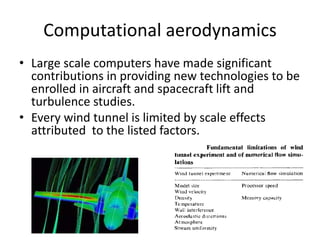
• Large scale computers have made significant
contributions in providing new technologies to be
enrolled in aircraft and spacecraft lift and
turbulence studies.
• Every wind tunnel is limited by scale effects
attributed to the listed factors.
Experiments Vs simulations
• Whereas computer flow simulations have none of
the physical constraints, but have their own
computational speed and memory capacity.
• To overcome the limitations ,two gigaflops
supercomputers, known as, Numerical
Aerodynamic Simulation Facilities, have been
proposed by control data corporations.
• These are specialized machines capable of
simulating complete aircraft designs for both US
government and commercial aircraft companies.
Artificial intelligence and automation
• It is the intelligence exhibited by machines or
softwares.(i.e. computers emulate human
behaviour)
• By using intelligent I/O interfaces for directly
communicating with humans in images, speech
and functions.
• Since the I/O subsystems handling large amount
of data's and processing such data is not done
sequentially, so parallel computing is used.
Functions of I/O subsystems
• The new gen commuters possess highly
intelligent I/O subsystems capable of doing these
functions.
 Image processing
 Pattern recognisation
 Natural language processing
 Speech understanding
 Intelligent robotics
 Machine interference
 Knowledge and reasoning
Need
• The projected computing power of such
system is upto 100M to 1G logical inference
per second(LIPS).
• Time for execution of 1LIPS is equal to 1000
machine instructions.
• So the device should be able to execute
1mega million instructions/second.
• So to build such a super computer we depend
on parallel processing.
Remote sensing applications
• It includes remotely sensed data obtained
from satellites and radars.
• Consider, earth resource data obtained via
satellite it may includes huge amount of
pictorial information need to be processed
simultaneously.
• This data has tremendous applications in
agriculture, forestry, and water resource.
Reality
• A single frame of LANDSAT image contains
30M bytes.
• For a small village to be covered it takes 10
such images at a particular instant.
• For entire earth surface it produces such new
set of images for every 15 days.
Massively Parallel Processor
• To handle this tremendous data NASA has
ordered MPP for earth resource processing.
• This MPP has a peak computing rate of 6B 8-
bit integer operations per second.
• This provides real time, time varying scene
analysis.

Applications of PARALLEL PROCESSING

  • 1.
    Applications of PARALLEL PROCESSINGcomputers in Engineering design and automation Done by, S.PRAVEENKUMAR, BE-EEE, PSG TECH.
  • 2.
    Computational aerodynamics • Largescale computers have made significant contributions in providing new technologies to be enrolled in aircraft and spacecraft lift and turbulence studies. • Every wind tunnel is limited by scale effects attributed to the listed factors.
  • 3.
    Experiments Vs simulations •Whereas computer flow simulations have none of the physical constraints, but have their own computational speed and memory capacity. • To overcome the limitations ,two gigaflops supercomputers, known as, Numerical Aerodynamic Simulation Facilities, have been proposed by control data corporations. • These are specialized machines capable of simulating complete aircraft designs for both US government and commercial aircraft companies.
  • 4.
    Artificial intelligence andautomation • It is the intelligence exhibited by machines or softwares.(i.e. computers emulate human behaviour) • By using intelligent I/O interfaces for directly communicating with humans in images, speech and functions. • Since the I/O subsystems handling large amount of data's and processing such data is not done sequentially, so parallel computing is used.
  • 5.
    Functions of I/Osubsystems • The new gen commuters possess highly intelligent I/O subsystems capable of doing these functions.  Image processing  Pattern recognisation  Natural language processing  Speech understanding  Intelligent robotics  Machine interference  Knowledge and reasoning
  • 6.
    Need • The projectedcomputing power of such system is upto 100M to 1G logical inference per second(LIPS). • Time for execution of 1LIPS is equal to 1000 machine instructions. • So the device should be able to execute 1mega million instructions/second. • So to build such a super computer we depend on parallel processing.
  • 7.
    Remote sensing applications •It includes remotely sensed data obtained from satellites and radars. • Consider, earth resource data obtained via satellite it may includes huge amount of pictorial information need to be processed simultaneously. • This data has tremendous applications in agriculture, forestry, and water resource.
  • 8.
    Reality • A singleframe of LANDSAT image contains 30M bytes. • For a small village to be covered it takes 10 such images at a particular instant. • For entire earth surface it produces such new set of images for every 15 days.
  • 9.
    Massively Parallel Processor •To handle this tremendous data NASA has ordered MPP for earth resource processing. • This MPP has a peak computing rate of 6B 8- bit integer operations per second. • This provides real time, time varying scene analysis.