Doubling Farmers’ income by-
Incorporating APICULTURE
and HORTICULTURE
A presentation by ASHU KUMARI
I.D. : 14030
Under the guidance of- Prof O. P. Mishra
- Prof. B Jirli
Honey was the first sweet food tasted by the ancient Indian inhabiting rock shelters and
forests.
The raw materials for the beekeeping industry are mainly pollen and nectar that come from
flowering plants.
Both the natural and cultivated vegetation in India constitute an immense potential for
development of beekeeping.
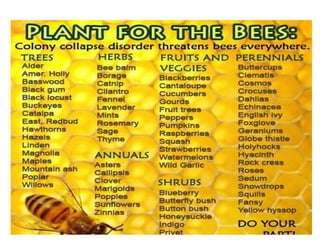
About 500 flowering plant species, both wild and cultivated, are useful as major or minor
sources of nectar and pollen.
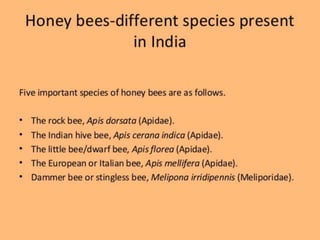
There are at least four species of true honey bees and three species of the stingless bees.
Several sub-species and races of these are known to exist. In recent years the exotic honey
bee has been introduced. Together these represent a wide variety of bee fauna that can be
utilized for the development of honey industry in the country.
There are several types of indigenous and traditional hives including logs, clay pots, wall
niches, baskets and boxes of different sizes and shapes.
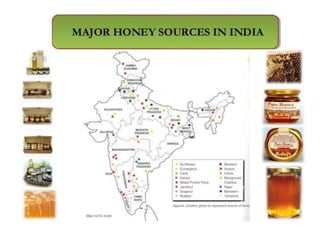
Varieties: Rapeseed / Mustard Honey, Eucalyptus Honey, Lychee Honey, Sunflower Honey,
Karanj / Pongamea Honey, Multi-flora Himalayan Honey, Acacia Honey, Wild Flora Honey,
Multi and Mono floral Honey are some of the major varieties of Natural Honey. Areas of
Production: North East Region of India and Maharashtra are the key areas for natural honey
production. India Facts and Figures : The country has exported 38177.08 MT of Natural Honey
to the world for the worth of Rs. 705.87 crore during the year of 2015-16.
INTRODUCTION
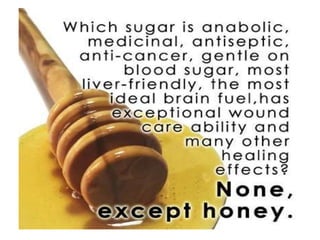
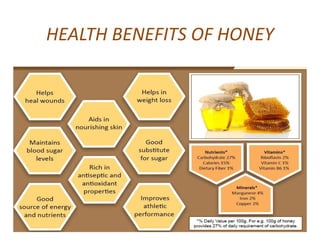
HEALTH BENEFITS OF HONEY
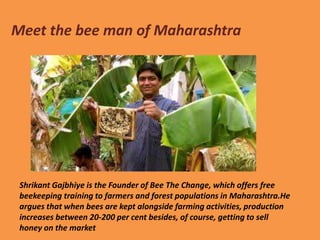
Meet the bee man of Maharashtra
Shrikant Gajbhiye is the Founder of Bee The Change, which offers free
beekeeping training to farmers and forest populations in Maharashtra.He
argues that when bees are kept alongside farming activities, production
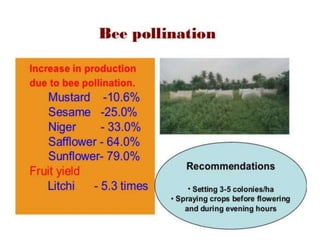
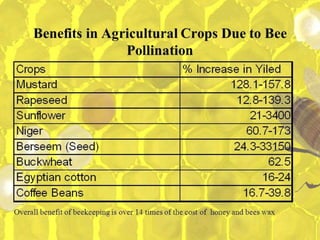
increases between 20-200 per cent besides, of course, getting to sell
honey on the market
UTMT provides small holding farmers with equipment for beekeeping, and has a
buy-back arrangement with them for the honey they collect. It also provides access
to the market, by creating a premium brand for single origin honey. Single origin
honey, unlike blended honey, is specific to a region’s flora and fauna and therefore
has a unique taste. This high-quality organic honey is collected from farmer
cooperatives and packaged for direct sale to customers.
UTMT has been able to increase farmers’ income by 40%.
This has also increased their agricultural productivity and
income. The annual purchase of honey has risen from 500
kg in the first year to about 15,000 kg in the year 2013.
Small endeavours for big
changes
UNDER THE MANGO TREE (UTMT)
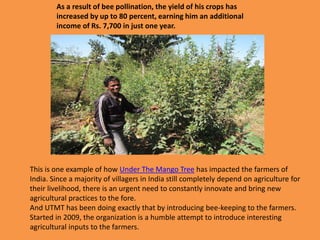
As a result of bee pollination, the yield of his crops has
increased by up to 80 percent, earning him an additional
income of Rs. 7,700 in just one year.
This is one example of how Under The Mango Tree has impacted the farmers of
India. Since a majority of villagers in India still completely depend on agriculture for
their livelihood, there is an urgent need to constantly innovate and bring new
agricultural practices to the fore.
And UTMT has been doing exactly that by introducing bee-keeping to the farmers.
Started in 2009, the organization is a humble attempt to introduce interesting
agricultural inputs to the farmers.
Support from the Government
National Bee Board
(Department of Agriculture & Cooperation)
Ministry of agriculture
Government of india
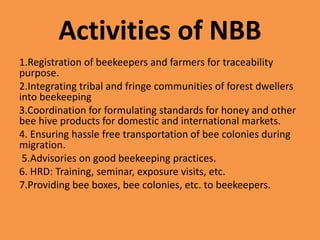
Activities of NBB
1.Registration of beekeepers and farmers for traceability
purpose.
2.Integrating tribal and fringe communities of forest dwellers
into beekeeping
3.Coordination for formulating standards for honey and other
bee hive products for domestic and international markets.
4. Ensuring hassle free transportation of bee colonies during
migration.
5.Advisories on good beekeeping practices.
6. HRD: Training, seminar, exposure visits, etc.
7.Providing bee boxes, bee colonies, etc. to beekeepers.
Apiculture and horticulture

Apiculture and horticulture

  • 1.
    Doubling Farmers’ incomeby- Incorporating APICULTURE and HORTICULTURE A presentation by ASHU KUMARI I.D. : 14030 Under the guidance of- Prof O. P. Mishra - Prof. B Jirli
  • 3.
    Honey was thefirst sweet food tasted by the ancient Indian inhabiting rock shelters and forests. The raw materials for the beekeeping industry are mainly pollen and nectar that come from flowering plants. Both the natural and cultivated vegetation in India constitute an immense potential for development of beekeeping. About 500 flowering plant species, both wild and cultivated, are useful as major or minor sources of nectar and pollen. There are at least four species of true honey bees and three species of the stingless bees. Several sub-species and races of these are known to exist. In recent years the exotic honey bee has been introduced. Together these represent a wide variety of bee fauna that can be utilized for the development of honey industry in the country. There are several types of indigenous and traditional hives including logs, clay pots, wall niches, baskets and boxes of different sizes and shapes. Varieties: Rapeseed / Mustard Honey, Eucalyptus Honey, Lychee Honey, Sunflower Honey, Karanj / Pongamea Honey, Multi-flora Himalayan Honey, Acacia Honey, Wild Flora Honey, Multi and Mono floral Honey are some of the major varieties of Natural Honey. Areas of Production: North East Region of India and Maharashtra are the key areas for natural honey production. India Facts and Figures : The country has exported 38177.08 MT of Natural Honey to the world for the worth of Rs. 705.87 crore during the year of 2015-16. INTRODUCTION
  • 13.
  • 21.
    Meet the beeman of Maharashtra Shrikant Gajbhiye is the Founder of Bee The Change, which offers free beekeeping training to farmers and forest populations in Maharashtra.He argues that when bees are kept alongside farming activities, production increases between 20-200 per cent besides, of course, getting to sell honey on the market
  • 22.
    UTMT provides smallholding farmers with equipment for beekeeping, and has a buy-back arrangement with them for the honey they collect. It also provides access to the market, by creating a premium brand for single origin honey. Single origin honey, unlike blended honey, is specific to a region’s flora and fauna and therefore has a unique taste. This high-quality organic honey is collected from farmer cooperatives and packaged for direct sale to customers. UTMT has been able to increase farmers’ income by 40%. This has also increased their agricultural productivity and income. The annual purchase of honey has risen from 500 kg in the first year to about 15,000 kg in the year 2013. Small endeavours for big changes UNDER THE MANGO TREE (UTMT)
  • 23.
    As a resultof bee pollination, the yield of his crops has increased by up to 80 percent, earning him an additional income of Rs. 7,700 in just one year. This is one example of how Under The Mango Tree has impacted the farmers of India. Since a majority of villagers in India still completely depend on agriculture for their livelihood, there is an urgent need to constantly innovate and bring new agricultural practices to the fore. And UTMT has been doing exactly that by introducing bee-keeping to the farmers. Started in 2009, the organization is a humble attempt to introduce interesting agricultural inputs to the farmers.
  • 24.
    Support from theGovernment National Bee Board (Department of Agriculture & Cooperation) Ministry of agriculture Government of india
  • 25.
    Activities of NBB 1.Registrationof beekeepers and farmers for traceability purpose. 2.Integrating tribal and fringe communities of forest dwellers into beekeeping 3.Coordination for formulating standards for honey and other bee hive products for domestic and international markets. 4. Ensuring hassle free transportation of bee colonies during migration. 5.Advisories on good beekeeping practices. 6. HRD: Training, seminar, exposure visits, etc. 7.Providing bee boxes, bee colonies, etc. to beekeepers.