The document discusses thoracic aortic aneurysms (TAAs), including:
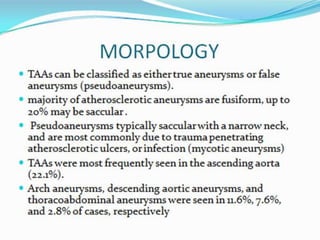
1. TAAs can be true aneurysms involving all vessel layers, or pseudoaneurysms where the intimal and medial layers are disrupted. Common types are fusiform and saccular.
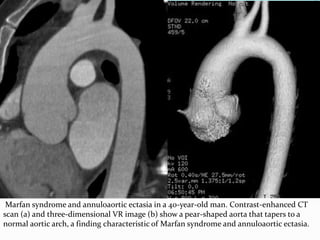
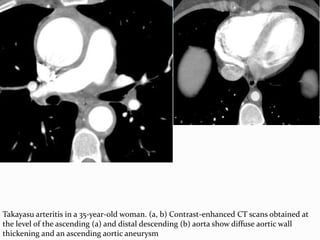
2. Etiologies include atherosclerosis, cystic medial necrosis from conditions like Marfan syndrome, infections, vasculitides, trauma, and congenital factors.
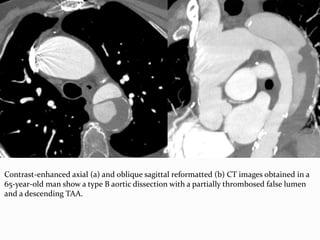
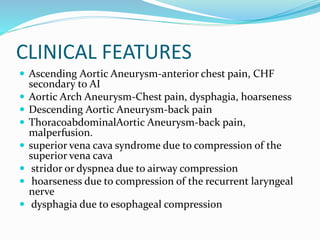
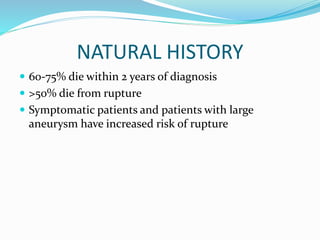
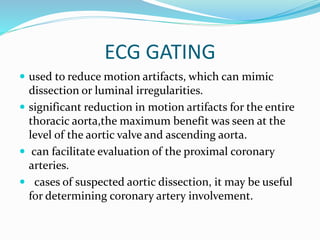
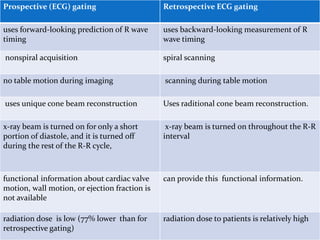
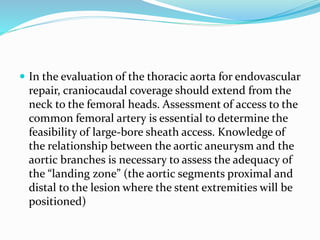
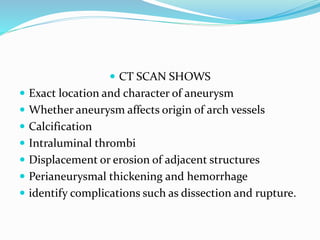
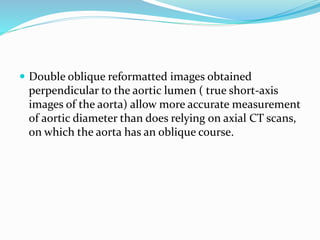
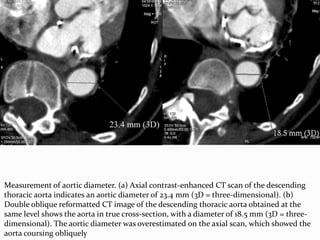
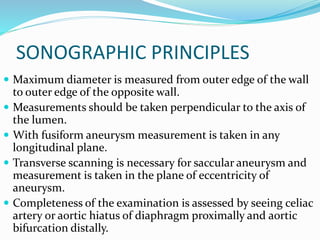
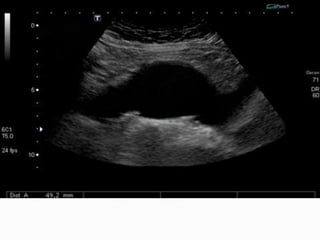
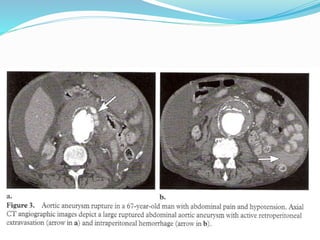
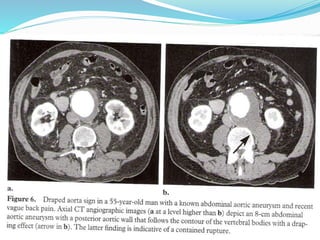
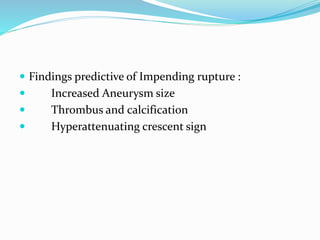
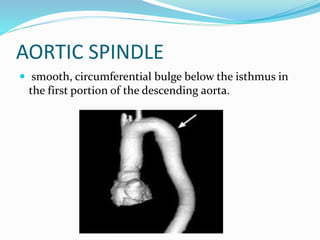
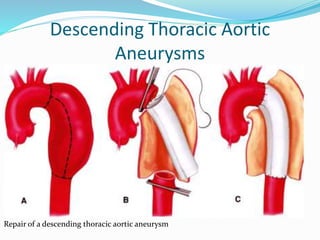
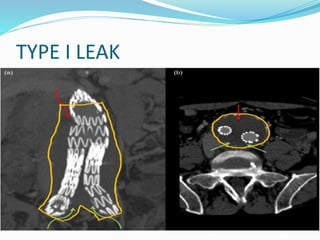
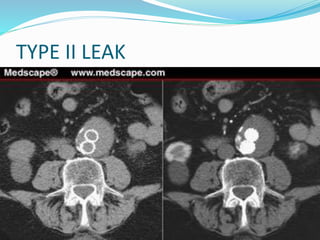
3. Imaging plays a key role in evaluating TAAs to characterize morphology, size, relationships to other structures, and signs of rupture risk. Management depends on aneurysm location and size.