Surgery of Aortic Aneurysm
Raja Lahiri
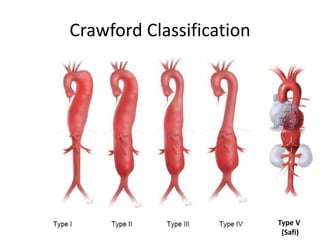
Crawford Classification
Type V
(Safi)
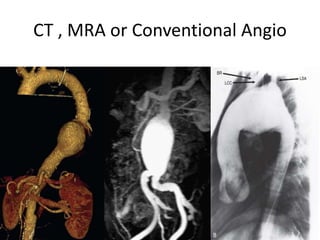
CT , MRA or Conventional Angio
• CT Angio:
– provides information about size, location, and extent
of disease
– useful for detecting intramural hematoma and
penetrating arteriosclerotic ulcers
– useful for determining severity and extent of
thickening of the aortic wall
– Disadvantage of CT is that it requires use of contrast
medium
– Radiation-induced malignancy in patients with
thoracic aortic disease who require periodic CT
imaging is a concern
• MR Angio:
– Standard techniques do not require contrast agents
– A single study can provide information similar to that
obtained from a combination of echo, CT, and
angiography
– disadvantages of MRI include a longer time to
complete the study, greater cost, inaccessibility to
patients who are connected to ventilators
– contraindication in patients with metallic implants,
pacemakers, and defibrillators
• Aortography:
– It provides information about location of
aneurysms, particularly in relation to major
branches of the aorta
– defines areas of relatively normal aorta proximal
and distal to aneurysms
– disadvantage of aortography is that the size of
large aneurysms may be underestimated because
of the presence of thrombus
– Contrast induced nephropathy
Open or Endovascular?
Evaluation & Decision Making
• The decision to operate is based on 3 factors:
– Risk of aneurysm’s rupture
– Risk associated with aneurysm repair
– Patient’s life expectancy
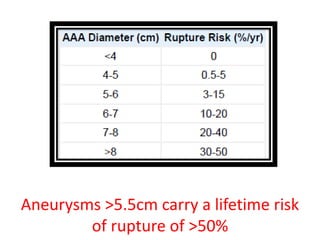
Aneurysms >5.5cm carry a lifetime risk
of rupture of >50%
Shape is also important!!
• Eccentric or Saccular aneurysm at a greater
risk of rupture than a diffused fusiform
aneurysm
• Symmetry is as important as size
• Wall stress substantially increased with
asymmetric bulge
• Localised ‘blebs’ increase risk of rupture
• Association of intraluminal thrombus with
rupture risk is debatable
EVAR v/s Open repair
• Dutch Randomised Endovascular Aneurysm
Management (DREAM) and EVAR-1 trials
randomised patients with AAA>5.5cm to EVAR &
Open repair
• Both trials show lower 30-day mortality for EVAR
• Higher rate of secondary intervention in the EVAR
group
• Significant reduction in aneurysm related death
at 4 year in EVAR group
ACC Guidelines (2014)
• Patients with AAAs measuring 5.5 cm or larger
should undergo repair to eliminate the risk of
rupture. (Class I, Level of Evidence: B)
• Patients with AAAs measuring 4.0 to 5.4 cm in
diameter should be monitored by ultrasound
or computed tomographic scans every 6 to 12
months to detect expansion. (Class I, Level of
Evidence: A)
ACC Guidelines (Contd.)
• In patients with the clinical triad of abdominal
and/or back pain, a pulsatile abdominal mass,
and hypotension, immediate surgical
evaluation is indicated. (Class I, Level of
Evidence: B)
• In patients with symptomatic aortic
aneurysms, repair is indicated regardless of
diameter. (Class I, Level of Evidence: C)
ACC Guidelines (Contd.)
• Open or endovascular repair of AAAs and/or common
iliac aneurysms is indicated in patients who are good
surgical candidates. (Class I, Level of Evidence: A)
• Open aneurysm repair is reasonable to perform in
patients who are good surgical candidates but who
cannot comply with the periodic long-term surveillance
required after endovascular repair. (Class IIa, Level of
Evidence: C)
• Endovascular repair of aortic aneurysms in patients
who are at high surgical or anesthetic risk as
determined by the presence of coexisting severe
cardiac, pulmonary, and/or renal disease is of uncertain
effectiveness. (Class IIb, Level of Evidence: B)
Endovascular Aneurysm Repair (EVAR)
• In surgical aneurysm repair, the open aneurysm
imposes an absolute intolerance for leakage that
does not apply in EVAR.
• An endoluminal graft connects the nondilated
arteries proximal to an aneurysm to the
nondilated arteries distal to the aneurysm,
thereby excluding the aneurysm’s walls from the
arterial circulation, reducing the pressure within
its sac, preventing dilatation and rupture.
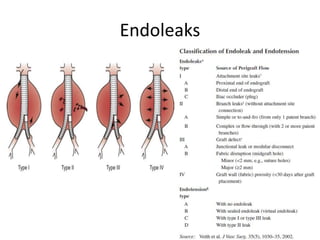
Endoleaks
Physiologic Differences
• Benefits: Less effect on
– Pulmonary function
– Cardiac function
– Renal function
– Intestinal perfusion
– Catecholamine levels
• Disadvantage:
– SIRS: Fever, malaise, elevated IL-6, CRP & TNF
– Possibly caused by disruption of mural thrombus
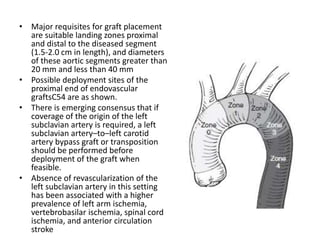
• Major requisites for graft placement
are suitable landing zones proximal
and distal to the diseased segment
(1.5-2.0 cm in length), and diameters
of these aortic segments greater than
20 mm and less than 40 mm
• Possible deployment sites of the
proximal end of endovascular
graftsC54 are as shown.
• There is emerging consensus that if
coverage of the origin of the left
subclavian artery is required, a left
subclavian artery–to–left carotid
artery bypass graft or transposition
should be performed before
deployment of the graft when
feasible.
• Absence of revascularization of the
left subclavian artery in this setting
has been associated with a higher
prevalence of left arm ischemia,
vertebrobasilar ischemia, spinal cord
ischemia, and anterior circulation
stroke
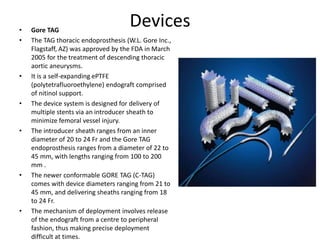
Devices• Gore TAG
• The TAG thoracic endoprosthesis (W.L. Gore Inc.,
Flagstaff, AZ) was approved by the FDA in March
2005 for the treatment of descending thoracic
aortic aneurysms.
• It is a self-expanding ePTFE
(polytetrafluoroethylene) endograft comprised
of nitinol support.
• The device system is designed for delivery of
multiple stents via an introducer sheath to
minimize femoral vessel injury.
• The introducer sheath ranges from an inner
diameter of 20 to 24 Fr and the Gore TAG
endoprosthesis ranges from a diameter of 22 to
45 mm, with lengths ranging from 100 to 200
mm .
• The newer conformable GORE TAG (C-TAG)
comes with device diameters ranging from 21 to
45 mm, and delivering sheaths ranging from 18
to 24 Fr.
• The mechanism of deployment involves release
of the endograft from a centre to peripheral
fashion, thus making precise deployment
difficult at times.
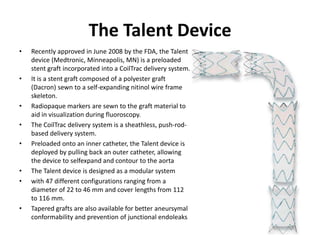
The Talent Device
• Recently approved in June 2008 by the FDA, the Talent
device (Medtronic, Minneapolis, MN) is a preloaded
stent graft incorporated into a CoilTrac delivery system.
• It is a stent graft composed of a polyester graft
(Dacron) sewn to a self-expanding nitinol wire frame
skeleton.
• Radiopaque markers are sewn to the graft material to
aid in visualization during fluoroscopy.
• The CoilTrac delivery system is a sheathless, push-rod-
based delivery system.
• Preloaded onto an inner catheter, the Talent device is
deployed by pulling back an outer catheter, allowing
the device to selfexpand and contour to the aorta
• The Talent device is designed as a modular system
• with 47 different configurations ranging from a
diameter of 22 to 46 mm and cover lengths from 112
to 116 mm.
• Tapered grafts are also available for better aneursymal
conformability and prevention of junctional endoleaks
The Valiant Device
• The Valiant device (Medtronic, Minneapolis, MN) has recently gained FDA approval.
• It is similar to the Talent device, with modifications made to improve trackability,
conformability, and deployment
• Device lengths have been increased to a maximum of 230 mm (130 mm for Talent).
• As it is a sheathless modular system, each piece requires an individual deployment through
the access vessel, resulting in multiple exchanges in the artery
• The connecting bar present in the Talent device has been removed in the Valiant device for
improved conformability.
• The number of bare springs at the proximal and distal ends of the device has been increased
from 5 to 8 in the Valiant device to improve circumferential force distribution and fixation
along the aorta wall.
• Valiant device is introduced in a new delivery system, the Captivia Delivery System. As
opposed to a simple pullback unsheathing mechanism, the deployment of the Captivia
Delivery System includes a gearing, ratchet-like mechanism in the handle to allow easy
deployment and to significantly reduce the force required for deployment without
compromising precision.
• The Valiant device is a modular design with 88 different configurations ranging from a
diameter of 22 to 46 mm and cover lengths from 100 to 212 mm
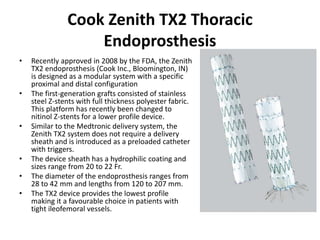
Cook Zenith TX2 Thoracic
Endoprosthesis
• Recently approved in 2008 by the FDA, the Zenith
TX2 endoprosthesis (Cook Inc., Bloomington, IN)
is designed as a modular system with a specific
proximal and distal configuration
• The first-generation grafts consisted of stainless
steel Z-stents with full thickness polyester fabric.
This platform has recently been changed to
nitinol Z-stents for a lower profile device.
• Similar to the Medtronic delivery system, the
Zenith TX2 system does not require a delivery
sheath and is introduced as a preloaded catheter
with triggers.
• The device sheath has a hydrophilic coating and
sizes range from 20 to 22 Fr.
• The diameter of the endoprosthesis ranges from
28 to 42 mm and lengths from 120 to 207 mm.
• The TX2 device provides the lowest profile
making it a favourable choice in patients with
tight ileofemoral vessels.
Bolton Relay Endoprosthesis
• Bolton Relay (Bolton Medical, Sunrise, FL) device became
the fourth thoracic endovascular device available in the US.
• The device structure is based on a nitinol stent with a multi-
filament woven polyester.
• Device lengths range from 100 to 250 mm and diameters
range from 22 to 46 mm.
• Straight and tapered configurations are available.
• The device utilizes a hydrophilic coating to aid in improved
advancement through access vessels and the aorta.
• Deployment of the device is staged by utilizing a tip
clasping mechanism that enables precise positioning within
the landing zone and mitigation of the wind sock effect.
• Complications unique to endovascular stent-grafting
include-
– endoleak
– retrograde type A aortic dissection
– Aneurysm expansion and rupture
– stent-graft collapse
– graft migration
– aortic valve perforation by a guidewire
– dilatation of proximal and distal landing zones
– injury to femoral and external iliac arteries
– erosion of the aorta resulting in aortobronchial or
aortoesophageal fistulas.
• Periodic surveillance imaging studies are mandatory
and add to overall cost of the procedure.
• Durability of the currently available devices beyond 10
years is unknown.
• Endovascular stent-grafting should be considered for
elderly patients with important comorbidity and
limited life expectancy if the risk of intervention is
judged to be lower than that for nonoperative or open
surgical management.
• The precise role of endovascular stent-grafting in
younger patients at lower risk for open operation
remains incompletely defined.
Preparations for Thoracoabdominal
Aortic Surgery
• After anesthesia induction, venous access is obtained
with a large-bore central catheter and several large
peripheral catheters
• A radial arterial catheter is inserted for monitoring
blood pressure and withdrawing blood samples. This is
placed in the right radial artery in patients with
descending thoracic or thoracoabdominal aortic
disease
• If a lateral thoracotomy or thoracoabdominal incision is
used, a double lumen endotracheal tube is inserted
• Cerebrospinal fluid drainage is performed in patients
with extensive descending thoracic aortic disease and
thoracoabdominal aneurysms
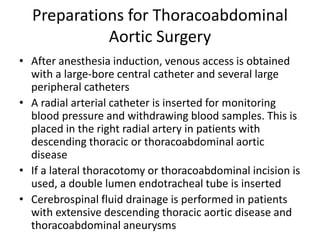
• After standard preparations
are completed, the patient
is placed in the right lateral
decubitus position with the
left hip rotated posteriorly
so that the left femoral
artery and vein are
accessible for cannulation.
• A left posterolateral
thoracotomy incision is
made, and the pleural space
is entered through the top
of the bed of the
nonresected fifth or sixth
rib
• If the entire descending
thoracic aorta is involved, a
longer incision is made,
curving slightly inferiorly at
the anterior portion
Thoracic Aorta
replacement
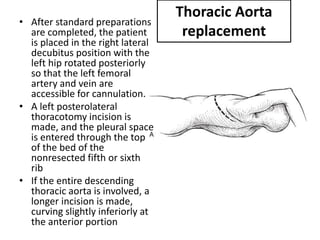
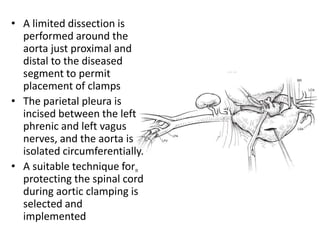
• A limited dissection is
performed around the
aorta just proximal and
distal to the diseased
segment to permit
placement of clamps
• The parietal pleura is
incised between the left
phrenic and left vagus
nerves, and the aorta is
isolated circumferentially.
• A suitable technique for
protecting the spinal cord
during aortic clamping is
selected and
implemented
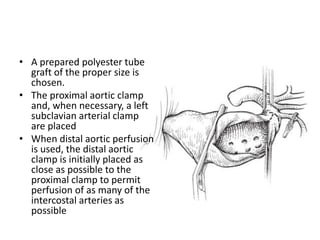
• A prepared polyester tube
graft of the proper size is
chosen.
• The proximal aortic clamp
and, when necessary, a left
subclavian arterial clamp
are placed
• When distal aortic perfusion
is used, the distal aortic
clamp is initially placed as
close as possible to the
proximal clamp to permit
perfusion of as many of the
intercostal arteries as
possible
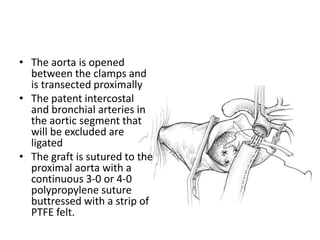
• The aorta is opened
between the clamps and
is transected proximally
• The patent intercostal
and bronchial arteries in
the aortic segment that
will be excluded are
ligated
• The graft is sutured to the
proximal aorta with a
continuous 3-0 or 4-0
polypropylene suture
buttressed with a strip of
PTFE felt.
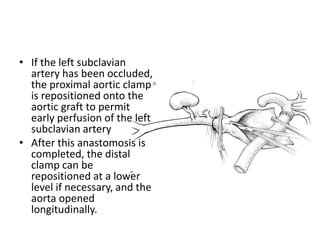
• If the left subclavian
artery has been occluded,
the proximal aortic clamp
is repositioned onto the
aortic graft to permit
early perfusion of the left
subclavian artery
• After this anastomosis is
completed, the distal
clamp can be
repositioned at a lower
level if necessary, and the
aorta opened
longitudinally.
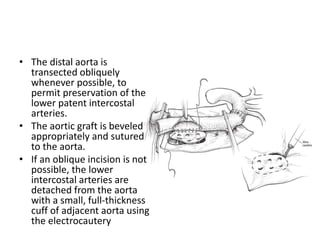
• The distal aorta is
transected obliquely
whenever possible, to
permit preservation of the
lower patent intercostal
arteries.
• The aortic graft is beveled
appropriately and sutured
to the aorta.
• If an oblique incision is not
possible, the lower
intercostal arteries are
detached from the aorta
with a small, full-thickness
cuff of adjacent aorta using
the electrocautery
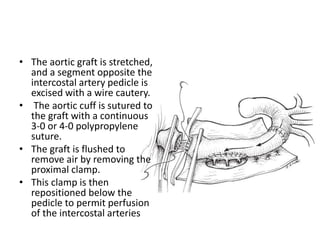
• The aortic graft is stretched,
and a segment opposite the
intercostal artery pedicle is
excised with a wire cautery.
• The aortic cuff is sutured to
the graft with a continuous
3-0 or 4-0 polypropylene
suture.
• The graft is flushed to
remove air by removing the
proximal clamp.
• This clamp is then
repositioned below the
pedicle to permit perfusion
of the intercostal arteries
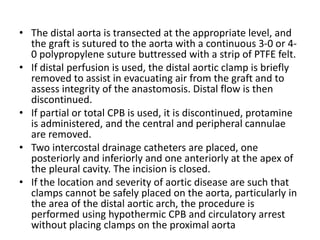
• The distal aorta is transected at the appropriate level, and
the graft is sutured to the aorta with a continuous 3-0 or 4-
0 polypropylene suture buttressed with a strip of PTFE felt.
• If distal perfusion is used, the distal aortic clamp is briefly
removed to assist in evacuating air from the graft and to
assess integrity of the anastomosis. Distal flow is then
discontinued.
• If partial or total CPB is used, it is discontinued, protamine
is administered, and the central and peripheral cannulae
are removed.
• Two intercostal drainage catheters are placed, one
posteriorly and inferiorly and one anteriorly at the apex of
the pleural cavity. The incision is closed.
• If the location and severity of aortic disease are such that
clamps cannot be safely placed on the aorta, particularly in
the area of the distal aortic arch, the procedure is
performed using hypothermic CPB and circulatory arrest
without placing clamps on the proximal aorta
Thoracoabdominal Aorta Replacement
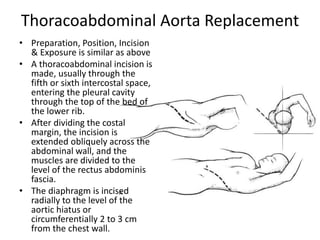
• Preparation, Position, Incision
& Exposure is similar as above
• A thoracoabdominal incision is
made, usually through the
fifth or sixth intercostal space,
entering the pleural cavity
through the top of the bed of
the lower rib.
• After dividing the costal
margin, the incision is
extended obliquely across the
abdominal wall, and the
muscles are divided to the
level of the rectus abdominis
fascia.
• The diaphragm is incised
radially to the level of the
aortic hiatus or
circumferentially 2 to 3 cm
from the chest wall.
• The peritoneum is incised in the left gutter, and
stomach, intestines, spleen, and left kidney are
retracted anteriorly and to the right
• Because of the prevalence and clinical
importance of paralysis of the lower extremities
(paraplegia or paraparesis) following operations
on the thoracoabdominal aorta, distal perfusion
with some degree of systemic hypothermia
(passive or induced), or regional hypothermia of
the spinal cord induced by irrigation of the
epidural space, is employed.
• Drainage of cerebrospinal fluid is also used
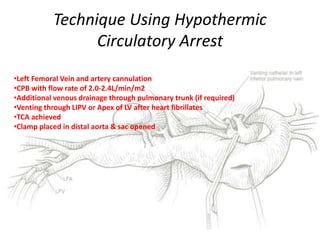
Technique Using Hypothermic
Circulatory Arrest
•Left Femoral Vein and artery cannulation
•CPB with flow rate of 2.0-2.4L/min/m2
•Additional venous drainage through pulmonary trunk (if required)
•Venting through LIPV or Apex of LV after heart fibrillates
•TCA achieved
•Clamp placed in distal aorta & sac opened
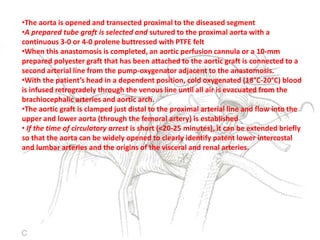
•The aorta is opened and transected proximal to the diseased segment
•A prepared tube graft is selected and sutured to the proximal aorta with a
continuous 3-0 or 4-0 prolene buttressed with PTFE felt
•When this anastomosis is completed, an aortic perfusion cannula or a 10-mm
prepared polyester graft that has been attached to the aortic graft is connected to a
second arterial line from the pump-oxygenator adjacent to the anastomosis.
•With the patient’s head in a dependent position, cold oxygenated (18°C-20°C) blood
is infused retrogradely through the venous line until all air is evacuated from the
brachiocephalic arteries and aortic arch.
•The aortic graft is clamped just distal to the proximal arterial line and flow into the
upper and lower aorta (through the femoral artery) is established
• If the time of circulatory arrest is short (<20-25 minutes), it can be extended briefly
so that the aorta can be widely opened to clearly identify patent lower intercostal
and lumbar arteries and the origins of the visceral and renal arteries.
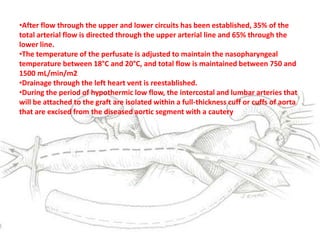
•After flow through the upper and lower circuits has been established, 35% of the
total arterial flow is directed through the upper arterial line and 65% through the
lower line.
•The temperature of the perfusate is adjusted to maintain the nasopharyngeal
temperature between 18°C and 20°C, and total flow is maintained between 750 and
1500 mL/min/m2
•Drainage through the left heart vent is reestablished.
•During the period of hypothermic low flow, the intercostal and lumbar arteries that
will be attached to the graft are isolated within a full-thickness cuff or cuffs of aorta
that are excised from the diseased aortic segment with a cautery
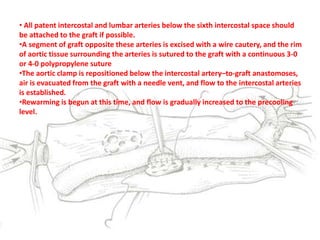
• All patent intercostal and lumbar arteries below the sixth intercostal space should
be attached to the graft if possible.
•A segment of graft opposite these arteries is excised with a wire cautery, and the rim
of aortic tissue surrounding the arteries is sutured to the graft with a continuous 3-0
or 4-0 polypropylene suture
•The aortic clamp is repositioned below the intercostal artery–to-graft anastomoses,
air is evacuated from the graft with a needle vent, and flow to the intercostal arteries
is established.
•Rewarming is begun at this time, and flow is gradually increased to the precooling
level.
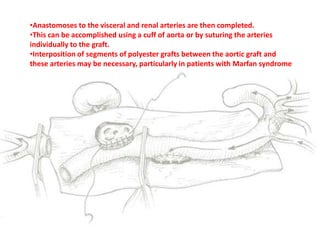
•Anastomoses to the visceral and renal arteries are then completed.
•This can be accomplished using a cuff of aorta or by suturing the arteries
individually to the graft.
•Interposition of segments of polyester grafts between the aortic graft and
these arteries may be necessary, particularly in patients with Marfan syndrome
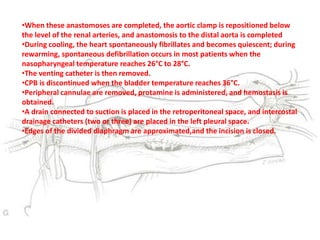
•When these anastomoses are completed, the aortic clamp is repositioned below
the level of the renal arteries, and anastomosis to the distal aorta is completed
•During cooling, the heart spontaneously fibrillates and becomes quiescent; during
rewarming, spontaneous defibrillation occurs in most patients when the
nasopharyngeal temperature reaches 26°C to 28°C.
•The venting catheter is then removed.
•CPB is discontinued when the bladder temperature reaches 36°C.
•Peripheral cannulae are removed, protamine is administered, and hemostasis is
obtained.
•A drain connected to suction is placed in the retroperitoneal space, and intercostal
drainage catheters (two or three) are placed in the left pleural space.
•Edges of the divided diaphragm are approximated,and the incision is closed.
Technique Using Left Heart Bypass
• A widely used alternative technique is left heart bypass
(left atrium to left femoral artery) and mild (32°C-33°C)
permissive hypothermia
• The common femoral artery and the left atrium (or
alternatively, the left inferior or superior pulmonary vein)
are cannulated and partial cardiac bypass established using
an in-line centrifugal pump.
• Bypass flows are adjusted to maintain a mean arterial
pressure in the lower circulation of 60 to 70 mmHg while
normal arterial pressure and central venous pressure are
maintained in the upper circulation.
• Flows between 750 and 1500 mL/min/m2 are generally
required.
• The aorta is clamped proximal to the diseased aortic
segment, and a second clamp is placed on the
descending aorta in the midportion.
• This maneuver maintains perfusion of the lower
intercostal arteries, kidneys, abdominal organs, and
lower extremities.
• As the operation proceeds, the distal aortic clamp is
sequentially moved to lower positions to maintain
distal perfusion.
• If distal clamping is not possible, separate balloon-
tipped perfusion catheters can be introduced into the
celiac, superior mesenteric, and renal arteries and
connected to a cannula from the perfusion circuit to
provide oxygenated blood to these organs.
• The procedure is then completed as mentioned above
Special features of Postoperative care
• Patients who have undergone thoracic or
thoracoabdominal aorta replacement receive the same
care given to patients after major cardiac operations
• Close attention to pulmonary subsystem management
is mandatory following thoracotomy
• Because renal blood flow is often reduced or absent for
a time during and early after repair, renal function
must also be carefully monitored early postoperatively
• Although most patients in whom paraplegia or
paraparesis develops after operations on the
descending thoracic or thoracoabdominal aorta have
evidence of ischemic injury upon awakening from
anesthesia, this complication sometimes develops later
postoperatively
• Prompt initiation of cerebrospinal fluid drainage
may, in some instances, reverse the neurologic
deficit, and if a drain is not already in place, it
should be inserted when signs of spinal cord
ischemia develop postoperatively.
• Avoiding prolonged periods of hypotension is also
essential to ensure optimal spinal cord perfusion.
• Because additional aortic disease frequently
develops in patients who have had operations on
the thoracic aorta, periodic evaluation is an
important feature of their postoperative care.
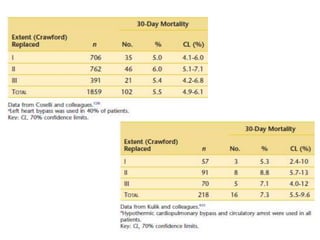
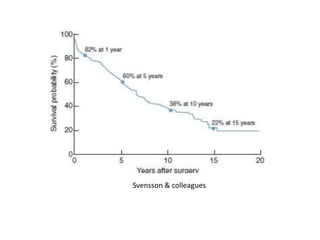
Svensson & colleagues
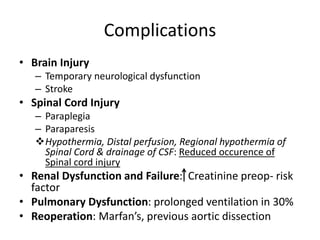
Complications
• Brain Injury
– Temporary neurological dysfunction
– Stroke
• Spinal Cord Injury
– Paraplegia
– Paraparesis
Hypothermia, Distal perfusion, Regional hypothermia of
Spinal Cord & drainage of CSF: Reduced occurence of
Spinal cord injury
• Renal Dysfunction and Failure: Creatinine preop- risk
factor
• Pulmonary Dysfunction: prolonged ventilation in 30%
• Reoperation: Marfan’s, previous aortic dissection
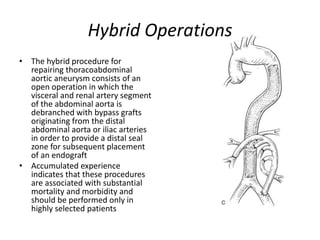
Hybrid Operations
• The hybrid procedure for
repairing thoracoabdominal
aortic aneurysm consists of an
open operation in which the
visceral and renal artery segment
of the abdominal aorta is
debranched with bypass grafts
originating from the distal
abdominal aorta or iliac arteries
in order to provide a distal seal
zone for subsequent placement
of an endograft
• Accumulated experience
indicates that these procedures
are associated with substantial
mortality and morbidity and
should be performed only in
highly selected patients
THANK YOU

Aortic aneurysm

  • 1.
    Surgery of AorticAneurysm Raja Lahiri
  • 2.
  • 3.
    CT , MRAor Conventional Angio
  • 4.
    • CT Angio: –provides information about size, location, and extent of disease – useful for detecting intramural hematoma and penetrating arteriosclerotic ulcers – useful for determining severity and extent of thickening of the aortic wall – Disadvantage of CT is that it requires use of contrast medium – Radiation-induced malignancy in patients with thoracic aortic disease who require periodic CT imaging is a concern
  • 5.
    • MR Angio: –Standard techniques do not require contrast agents – A single study can provide information similar to that obtained from a combination of echo, CT, and angiography – disadvantages of MRI include a longer time to complete the study, greater cost, inaccessibility to patients who are connected to ventilators – contraindication in patients with metallic implants, pacemakers, and defibrillators
  • 6.
    • Aortography: – Itprovides information about location of aneurysms, particularly in relation to major branches of the aorta – defines areas of relatively normal aorta proximal and distal to aneurysms – disadvantage of aortography is that the size of large aneurysms may be underestimated because of the presence of thrombus – Contrast induced nephropathy
  • 7.
    Open or Endovascular? Evaluation& Decision Making • The decision to operate is based on 3 factors: – Risk of aneurysm’s rupture – Risk associated with aneurysm repair – Patient’s life expectancy
  • 8.
    Aneurysms >5.5cm carrya lifetime risk of rupture of >50%
  • 9.
    Shape is alsoimportant!! • Eccentric or Saccular aneurysm at a greater risk of rupture than a diffused fusiform aneurysm • Symmetry is as important as size • Wall stress substantially increased with asymmetric bulge • Localised ‘blebs’ increase risk of rupture • Association of intraluminal thrombus with rupture risk is debatable
  • 10.
    EVAR v/s Openrepair • Dutch Randomised Endovascular Aneurysm Management (DREAM) and EVAR-1 trials randomised patients with AAA>5.5cm to EVAR & Open repair • Both trials show lower 30-day mortality for EVAR • Higher rate of secondary intervention in the EVAR group • Significant reduction in aneurysm related death at 4 year in EVAR group
  • 11.
    ACC Guidelines (2014) •Patients with AAAs measuring 5.5 cm or larger should undergo repair to eliminate the risk of rupture. (Class I, Level of Evidence: B) • Patients with AAAs measuring 4.0 to 5.4 cm in diameter should be monitored by ultrasound or computed tomographic scans every 6 to 12 months to detect expansion. (Class I, Level of Evidence: A)
  • 12.
    ACC Guidelines (Contd.) •In patients with the clinical triad of abdominal and/or back pain, a pulsatile abdominal mass, and hypotension, immediate surgical evaluation is indicated. (Class I, Level of Evidence: B) • In patients with symptomatic aortic aneurysms, repair is indicated regardless of diameter. (Class I, Level of Evidence: C)
  • 13.
    ACC Guidelines (Contd.) •Open or endovascular repair of AAAs and/or common iliac aneurysms is indicated in patients who are good surgical candidates. (Class I, Level of Evidence: A) • Open aneurysm repair is reasonable to perform in patients who are good surgical candidates but who cannot comply with the periodic long-term surveillance required after endovascular repair. (Class IIa, Level of Evidence: C) • Endovascular repair of aortic aneurysms in patients who are at high surgical or anesthetic risk as determined by the presence of coexisting severe cardiac, pulmonary, and/or renal disease is of uncertain effectiveness. (Class IIb, Level of Evidence: B)
  • 14.
    Endovascular Aneurysm Repair(EVAR) • In surgical aneurysm repair, the open aneurysm imposes an absolute intolerance for leakage that does not apply in EVAR. • An endoluminal graft connects the nondilated arteries proximal to an aneurysm to the nondilated arteries distal to the aneurysm, thereby excluding the aneurysm’s walls from the arterial circulation, reducing the pressure within its sac, preventing dilatation and rupture.
  • 15.
  • 16.
    Physiologic Differences • Benefits:Less effect on – Pulmonary function – Cardiac function – Renal function – Intestinal perfusion – Catecholamine levels • Disadvantage: – SIRS: Fever, malaise, elevated IL-6, CRP & TNF – Possibly caused by disruption of mural thrombus
  • 17.
    • Major requisitesfor graft placement are suitable landing zones proximal and distal to the diseased segment (1.5-2.0 cm in length), and diameters of these aortic segments greater than 20 mm and less than 40 mm • Possible deployment sites of the proximal end of endovascular graftsC54 are as shown. • There is emerging consensus that if coverage of the origin of the left subclavian artery is required, a left subclavian artery–to–left carotid artery bypass graft or transposition should be performed before deployment of the graft when feasible. • Absence of revascularization of the left subclavian artery in this setting has been associated with a higher prevalence of left arm ischemia, vertebrobasilar ischemia, spinal cord ischemia, and anterior circulation stroke
  • 18.
    Devices• Gore TAG •The TAG thoracic endoprosthesis (W.L. Gore Inc., Flagstaff, AZ) was approved by the FDA in March 2005 for the treatment of descending thoracic aortic aneurysms. • It is a self-expanding ePTFE (polytetrafluoroethylene) endograft comprised of nitinol support. • The device system is designed for delivery of multiple stents via an introducer sheath to minimize femoral vessel injury. • The introducer sheath ranges from an inner diameter of 20 to 24 Fr and the Gore TAG endoprosthesis ranges from a diameter of 22 to 45 mm, with lengths ranging from 100 to 200 mm . • The newer conformable GORE TAG (C-TAG) comes with device diameters ranging from 21 to 45 mm, and delivering sheaths ranging from 18 to 24 Fr. • The mechanism of deployment involves release of the endograft from a centre to peripheral fashion, thus making precise deployment difficult at times.
  • 19.
    The Talent Device •Recently approved in June 2008 by the FDA, the Talent device (Medtronic, Minneapolis, MN) is a preloaded stent graft incorporated into a CoilTrac delivery system. • It is a stent graft composed of a polyester graft (Dacron) sewn to a self-expanding nitinol wire frame skeleton. • Radiopaque markers are sewn to the graft material to aid in visualization during fluoroscopy. • The CoilTrac delivery system is a sheathless, push-rod- based delivery system. • Preloaded onto an inner catheter, the Talent device is deployed by pulling back an outer catheter, allowing the device to selfexpand and contour to the aorta • The Talent device is designed as a modular system • with 47 different configurations ranging from a diameter of 22 to 46 mm and cover lengths from 112 to 116 mm. • Tapered grafts are also available for better aneursymal conformability and prevention of junctional endoleaks
  • 20.
    The Valiant Device •The Valiant device (Medtronic, Minneapolis, MN) has recently gained FDA approval. • It is similar to the Talent device, with modifications made to improve trackability, conformability, and deployment • Device lengths have been increased to a maximum of 230 mm (130 mm for Talent). • As it is a sheathless modular system, each piece requires an individual deployment through the access vessel, resulting in multiple exchanges in the artery • The connecting bar present in the Talent device has been removed in the Valiant device for improved conformability. • The number of bare springs at the proximal and distal ends of the device has been increased from 5 to 8 in the Valiant device to improve circumferential force distribution and fixation along the aorta wall. • Valiant device is introduced in a new delivery system, the Captivia Delivery System. As opposed to a simple pullback unsheathing mechanism, the deployment of the Captivia Delivery System includes a gearing, ratchet-like mechanism in the handle to allow easy deployment and to significantly reduce the force required for deployment without compromising precision. • The Valiant device is a modular design with 88 different configurations ranging from a diameter of 22 to 46 mm and cover lengths from 100 to 212 mm
  • 21.
    Cook Zenith TX2Thoracic Endoprosthesis • Recently approved in 2008 by the FDA, the Zenith TX2 endoprosthesis (Cook Inc., Bloomington, IN) is designed as a modular system with a specific proximal and distal configuration • The first-generation grafts consisted of stainless steel Z-stents with full thickness polyester fabric. This platform has recently been changed to nitinol Z-stents for a lower profile device. • Similar to the Medtronic delivery system, the Zenith TX2 system does not require a delivery sheath and is introduced as a preloaded catheter with triggers. • The device sheath has a hydrophilic coating and sizes range from 20 to 22 Fr. • The diameter of the endoprosthesis ranges from 28 to 42 mm and lengths from 120 to 207 mm. • The TX2 device provides the lowest profile making it a favourable choice in patients with tight ileofemoral vessels.
  • 22.
    Bolton Relay Endoprosthesis •Bolton Relay (Bolton Medical, Sunrise, FL) device became the fourth thoracic endovascular device available in the US. • The device structure is based on a nitinol stent with a multi- filament woven polyester. • Device lengths range from 100 to 250 mm and diameters range from 22 to 46 mm. • Straight and tapered configurations are available. • The device utilizes a hydrophilic coating to aid in improved advancement through access vessels and the aorta. • Deployment of the device is staged by utilizing a tip clasping mechanism that enables precise positioning within the landing zone and mitigation of the wind sock effect.
  • 23.
    • Complications uniqueto endovascular stent-grafting include- – endoleak – retrograde type A aortic dissection – Aneurysm expansion and rupture – stent-graft collapse – graft migration – aortic valve perforation by a guidewire – dilatation of proximal and distal landing zones – injury to femoral and external iliac arteries – erosion of the aorta resulting in aortobronchial or aortoesophageal fistulas.
  • 24.
    • Periodic surveillanceimaging studies are mandatory and add to overall cost of the procedure. • Durability of the currently available devices beyond 10 years is unknown. • Endovascular stent-grafting should be considered for elderly patients with important comorbidity and limited life expectancy if the risk of intervention is judged to be lower than that for nonoperative or open surgical management. • The precise role of endovascular stent-grafting in younger patients at lower risk for open operation remains incompletely defined.
  • 25.
    Preparations for Thoracoabdominal AorticSurgery • After anesthesia induction, venous access is obtained with a large-bore central catheter and several large peripheral catheters • A radial arterial catheter is inserted for monitoring blood pressure and withdrawing blood samples. This is placed in the right radial artery in patients with descending thoracic or thoracoabdominal aortic disease • If a lateral thoracotomy or thoracoabdominal incision is used, a double lumen endotracheal tube is inserted • Cerebrospinal fluid drainage is performed in patients with extensive descending thoracic aortic disease and thoracoabdominal aneurysms
  • 26.
    • After standardpreparations are completed, the patient is placed in the right lateral decubitus position with the left hip rotated posteriorly so that the left femoral artery and vein are accessible for cannulation. • A left posterolateral thoracotomy incision is made, and the pleural space is entered through the top of the bed of the nonresected fifth or sixth rib • If the entire descending thoracic aorta is involved, a longer incision is made, curving slightly inferiorly at the anterior portion Thoracic Aorta replacement
  • 27.
    • A limiteddissection is performed around the aorta just proximal and distal to the diseased segment to permit placement of clamps • The parietal pleura is incised between the left phrenic and left vagus nerves, and the aorta is isolated circumferentially. • A suitable technique for protecting the spinal cord during aortic clamping is selected and implemented
  • 28.
    • A preparedpolyester tube graft of the proper size is chosen. • The proximal aortic clamp and, when necessary, a left subclavian arterial clamp are placed • When distal aortic perfusion is used, the distal aortic clamp is initially placed as close as possible to the proximal clamp to permit perfusion of as many of the intercostal arteries as possible
  • 29.
    • The aortais opened between the clamps and is transected proximally • The patent intercostal and bronchial arteries in the aortic segment that will be excluded are ligated • The graft is sutured to the proximal aorta with a continuous 3-0 or 4-0 polypropylene suture buttressed with a strip of PTFE felt.
  • 30.
    • If theleft subclavian artery has been occluded, the proximal aortic clamp is repositioned onto the aortic graft to permit early perfusion of the left subclavian artery • After this anastomosis is completed, the distal clamp can be repositioned at a lower level if necessary, and the aorta opened longitudinally.
  • 31.
    • The distalaorta is transected obliquely whenever possible, to permit preservation of the lower patent intercostal arteries. • The aortic graft is beveled appropriately and sutured to the aorta. • If an oblique incision is not possible, the lower intercostal arteries are detached from the aorta with a small, full-thickness cuff of adjacent aorta using the electrocautery
  • 32.
    • The aorticgraft is stretched, and a segment opposite the intercostal artery pedicle is excised with a wire cautery. • The aortic cuff is sutured to the graft with a continuous 3-0 or 4-0 polypropylene suture. • The graft is flushed to remove air by removing the proximal clamp. • This clamp is then repositioned below the pedicle to permit perfusion of the intercostal arteries
  • 33.
    • The distalaorta is transected at the appropriate level, and the graft is sutured to the aorta with a continuous 3-0 or 4- 0 polypropylene suture buttressed with a strip of PTFE felt. • If distal perfusion is used, the distal aortic clamp is briefly removed to assist in evacuating air from the graft and to assess integrity of the anastomosis. Distal flow is then discontinued. • If partial or total CPB is used, it is discontinued, protamine is administered, and the central and peripheral cannulae are removed. • Two intercostal drainage catheters are placed, one posteriorly and inferiorly and one anteriorly at the apex of the pleural cavity. The incision is closed. • If the location and severity of aortic disease are such that clamps cannot be safely placed on the aorta, particularly in the area of the distal aortic arch, the procedure is performed using hypothermic CPB and circulatory arrest without placing clamps on the proximal aorta
  • 34.
    Thoracoabdominal Aorta Replacement •Preparation, Position, Incision & Exposure is similar as above • A thoracoabdominal incision is made, usually through the fifth or sixth intercostal space, entering the pleural cavity through the top of the bed of the lower rib. • After dividing the costal margin, the incision is extended obliquely across the abdominal wall, and the muscles are divided to the level of the rectus abdominis fascia. • The diaphragm is incised radially to the level of the aortic hiatus or circumferentially 2 to 3 cm from the chest wall.
  • 35.
    • The peritoneumis incised in the left gutter, and stomach, intestines, spleen, and left kidney are retracted anteriorly and to the right • Because of the prevalence and clinical importance of paralysis of the lower extremities (paraplegia or paraparesis) following operations on the thoracoabdominal aorta, distal perfusion with some degree of systemic hypothermia (passive or induced), or regional hypothermia of the spinal cord induced by irrigation of the epidural space, is employed. • Drainage of cerebrospinal fluid is also used
  • 36.
    Technique Using Hypothermic CirculatoryArrest •Left Femoral Vein and artery cannulation •CPB with flow rate of 2.0-2.4L/min/m2 •Additional venous drainage through pulmonary trunk (if required) •Venting through LIPV or Apex of LV after heart fibrillates •TCA achieved •Clamp placed in distal aorta & sac opened
  • 37.
    •The aorta isopened and transected proximal to the diseased segment •A prepared tube graft is selected and sutured to the proximal aorta with a continuous 3-0 or 4-0 prolene buttressed with PTFE felt •When this anastomosis is completed, an aortic perfusion cannula or a 10-mm prepared polyester graft that has been attached to the aortic graft is connected to a second arterial line from the pump-oxygenator adjacent to the anastomosis. •With the patient’s head in a dependent position, cold oxygenated (18°C-20°C) blood is infused retrogradely through the venous line until all air is evacuated from the brachiocephalic arteries and aortic arch. •The aortic graft is clamped just distal to the proximal arterial line and flow into the upper and lower aorta (through the femoral artery) is established • If the time of circulatory arrest is short (<20-25 minutes), it can be extended briefly so that the aorta can be widely opened to clearly identify patent lower intercostal and lumbar arteries and the origins of the visceral and renal arteries.
  • 38.
    •After flow throughthe upper and lower circuits has been established, 35% of the total arterial flow is directed through the upper arterial line and 65% through the lower line. •The temperature of the perfusate is adjusted to maintain the nasopharyngeal temperature between 18°C and 20°C, and total flow is maintained between 750 and 1500 mL/min/m2 •Drainage through the left heart vent is reestablished. •During the period of hypothermic low flow, the intercostal and lumbar arteries that will be attached to the graft are isolated within a full-thickness cuff or cuffs of aorta that are excised from the diseased aortic segment with a cautery
  • 39.
    • All patentintercostal and lumbar arteries below the sixth intercostal space should be attached to the graft if possible. •A segment of graft opposite these arteries is excised with a wire cautery, and the rim of aortic tissue surrounding the arteries is sutured to the graft with a continuous 3-0 or 4-0 polypropylene suture •The aortic clamp is repositioned below the intercostal artery–to-graft anastomoses, air is evacuated from the graft with a needle vent, and flow to the intercostal arteries is established. •Rewarming is begun at this time, and flow is gradually increased to the precooling level.
  • 40.
    •Anastomoses to thevisceral and renal arteries are then completed. •This can be accomplished using a cuff of aorta or by suturing the arteries individually to the graft. •Interposition of segments of polyester grafts between the aortic graft and these arteries may be necessary, particularly in patients with Marfan syndrome
  • 41.
    •When these anastomosesare completed, the aortic clamp is repositioned below the level of the renal arteries, and anastomosis to the distal aorta is completed •During cooling, the heart spontaneously fibrillates and becomes quiescent; during rewarming, spontaneous defibrillation occurs in most patients when the nasopharyngeal temperature reaches 26°C to 28°C. •The venting catheter is then removed. •CPB is discontinued when the bladder temperature reaches 36°C. •Peripheral cannulae are removed, protamine is administered, and hemostasis is obtained. •A drain connected to suction is placed in the retroperitoneal space, and intercostal drainage catheters (two or three) are placed in the left pleural space. •Edges of the divided diaphragm are approximated,and the incision is closed.
  • 42.
    Technique Using LeftHeart Bypass • A widely used alternative technique is left heart bypass (left atrium to left femoral artery) and mild (32°C-33°C) permissive hypothermia • The common femoral artery and the left atrium (or alternatively, the left inferior or superior pulmonary vein) are cannulated and partial cardiac bypass established using an in-line centrifugal pump. • Bypass flows are adjusted to maintain a mean arterial pressure in the lower circulation of 60 to 70 mmHg while normal arterial pressure and central venous pressure are maintained in the upper circulation. • Flows between 750 and 1500 mL/min/m2 are generally required.
  • 43.
    • The aortais clamped proximal to the diseased aortic segment, and a second clamp is placed on the descending aorta in the midportion. • This maneuver maintains perfusion of the lower intercostal arteries, kidneys, abdominal organs, and lower extremities. • As the operation proceeds, the distal aortic clamp is sequentially moved to lower positions to maintain distal perfusion. • If distal clamping is not possible, separate balloon- tipped perfusion catheters can be introduced into the celiac, superior mesenteric, and renal arteries and connected to a cannula from the perfusion circuit to provide oxygenated blood to these organs. • The procedure is then completed as mentioned above
  • 44.
    Special features ofPostoperative care • Patients who have undergone thoracic or thoracoabdominal aorta replacement receive the same care given to patients after major cardiac operations • Close attention to pulmonary subsystem management is mandatory following thoracotomy • Because renal blood flow is often reduced or absent for a time during and early after repair, renal function must also be carefully monitored early postoperatively • Although most patients in whom paraplegia or paraparesis develops after operations on the descending thoracic or thoracoabdominal aorta have evidence of ischemic injury upon awakening from anesthesia, this complication sometimes develops later postoperatively
  • 45.
    • Prompt initiationof cerebrospinal fluid drainage may, in some instances, reverse the neurologic deficit, and if a drain is not already in place, it should be inserted when signs of spinal cord ischemia develop postoperatively. • Avoiding prolonged periods of hypotension is also essential to ensure optimal spinal cord perfusion. • Because additional aortic disease frequently develops in patients who have had operations on the thoracic aorta, periodic evaluation is an important feature of their postoperative care.
  • 47.
  • 48.
    Complications • Brain Injury –Temporary neurological dysfunction – Stroke • Spinal Cord Injury – Paraplegia – Paraparesis Hypothermia, Distal perfusion, Regional hypothermia of Spinal Cord & drainage of CSF: Reduced occurence of Spinal cord injury • Renal Dysfunction and Failure: Creatinine preop- risk factor • Pulmonary Dysfunction: prolonged ventilation in 30% • Reoperation: Marfan’s, previous aortic dissection
  • 49.
    Hybrid Operations • Thehybrid procedure for repairing thoracoabdominal aortic aneurysm consists of an open operation in which the visceral and renal artery segment of the abdominal aorta is debranched with bypass grafts originating from the distal abdominal aorta or iliac arteries in order to provide a distal seal zone for subsequent placement of an endograft • Accumulated experience indicates that these procedures are associated with substantial mortality and morbidity and should be performed only in highly selected patients
  • 50.