Tigran Garabedyan, DO PGY3 ARMC
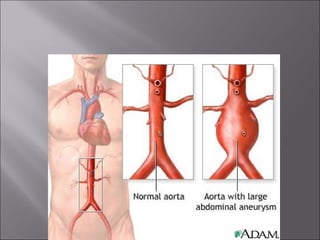
Definition:  pathological dilatation of the normal aortic lumen involving one or several segments Fusiform -circumferential  (common) , Saccular- outpouching of a segment Pseudoaneurysm:  well-defined collection of blood and connective tissue outside the vessel wall
 
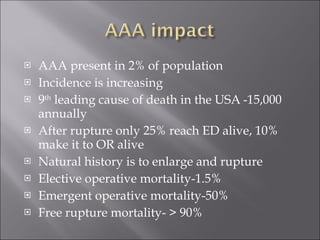
AAA present in 2% of population Incidence is increasing 9 th  leading cause of death in the USA -15,000 annually After rupture only 25% reach ED alive, 10% make it to OR alive Natural history is to enlarge and rupture Elective operative mortality-1.5% Emergent operative mortality-50% Free rupture mortality- > 90%
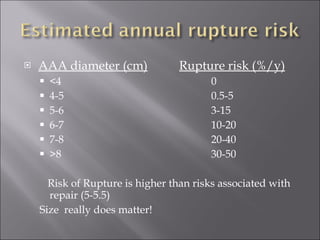
AAA diameter (cm) Rupture risk (%/y) <4 0 4-5 0.5-5 5-6 3-15 6-7 10-20 7-8 20-40 >8 30-50 Risk of Rupture is higher than risks associated with repair (5-5.5) Size  really does matter!
Age (M>55 y/o; F>70 y/o) Male Atherosclerosis – especially PVD Gene (Marfan, Ehlers-Danlos syndrome) Aneurisms of the femoral or popliteal Smoking- 7 fold risk, 90% OF AAA are smokers Family history- 4 fold risk
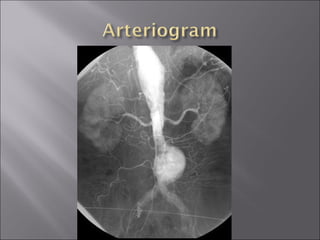
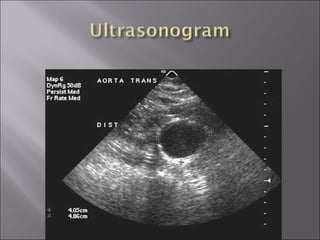
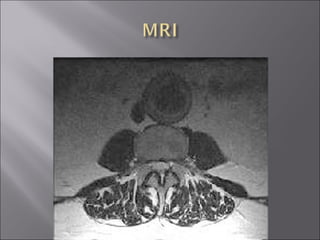
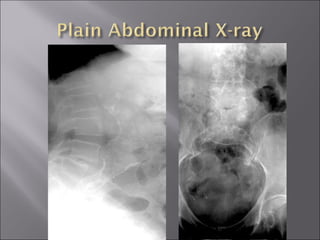
Pain: most common, at hypogastrium or back, not affected by movement 75 % asymptomatic Rupture triad : abdominal or back pain; palpable/ pulsatile abdominal mass; hypotension (<1/3 cases) Bruit (+/-) Abdomianl echo, CT, MRA, aortography
Vague abdominal pain Blue toe syndrome Palpable mass Popliteal aneurism- 64% have AAA
Classic triad Acute onset abdominal and flank pain Shock Palpable abdominal mass Additional Symptoms Death Tachycardia Diaphoresis Back pain Abdominal distention/tenderness
The USPSTF recommends: Men 65-75 year old who have ever smoked Men and women older than 50 with a family history Against screening women Women 60-85 year old with cardiac risk factors
Surgical indication:  rupture; size >5.5cm; expanding rapidly (>1.5 cm/year) Coronary angiography Medication control:  Hyperlipidemia, hypertension, cigarette smoking cessation CT follow up every 3—6 months
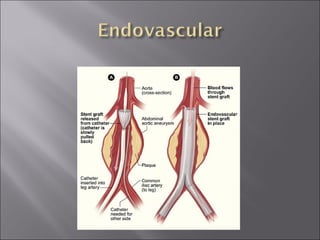
Surgical repair vs Endovascular repair Depends on “anatomic features of AAA Endovascular Aneurism “neck”, relationship to renal arteries Iliac arterial size Hospital stay 2-3 days Small incision in groin Back to normal activity in about a week Yearly CT angiograms post-op
 
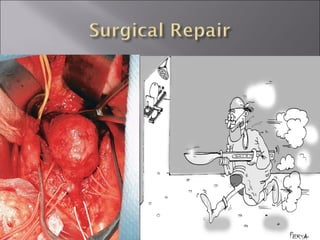
Surgical In 2010, non-endovascular candidates Younger patients Patient preference Hospital stay 5-7 days, 1-2 in ICU High mortality Big incision No yearly follow-ups post -op


Recognize AAA potential ABC’s Treat shock Compensated Uncompensated Drive fast
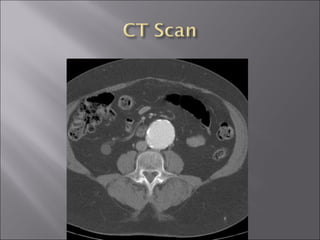
Initiate triage Index of suspicion BP management Clinical imaging Treat like major trauma Ultrasound CAT scan Massive resuscitation protocol Immediate operative intervention
Recognition, Recognition, Recognition Rapid transport Prompt effective treatment “ Trauma mindset” Physician/facility experience & expertise Outcome measures
Uptodate Medscape Tintinalli Google Thank you!

Aortic abdominal aneurism

  • 1.
  • 2.
    Definition: pathologicaldilatation of the normal aortic lumen involving one or several segments Fusiform -circumferential (common) , Saccular- outpouching of a segment Pseudoaneurysm: well-defined collection of blood and connective tissue outside the vessel wall
  • 3.
  • 4.
    AAA present in2% of population Incidence is increasing 9 th leading cause of death in the USA -15,000 annually After rupture only 25% reach ED alive, 10% make it to OR alive Natural history is to enlarge and rupture Elective operative mortality-1.5% Emergent operative mortality-50% Free rupture mortality- > 90%
  • 5.
    AAA diameter (cm)Rupture risk (%/y) <4 0 4-5 0.5-5 5-6 3-15 6-7 10-20 7-8 20-40 >8 30-50 Risk of Rupture is higher than risks associated with repair (5-5.5) Size really does matter!
  • 6.
    Age (M>55 y/o;F>70 y/o) Male Atherosclerosis – especially PVD Gene (Marfan, Ehlers-Danlos syndrome) Aneurisms of the femoral or popliteal Smoking- 7 fold risk, 90% OF AAA are smokers Family history- 4 fold risk
  • 7.
    Pain: most common,at hypogastrium or back, not affected by movement 75 % asymptomatic Rupture triad : abdominal or back pain; palpable/ pulsatile abdominal mass; hypotension (<1/3 cases) Bruit (+/-) Abdomianl echo, CT, MRA, aortography
  • 8.
    Vague abdominal painBlue toe syndrome Palpable mass Popliteal aneurism- 64% have AAA
  • 9.
    Classic triad Acuteonset abdominal and flank pain Shock Palpable abdominal mass Additional Symptoms Death Tachycardia Diaphoresis Back pain Abdominal distention/tenderness
  • 10.
    The USPSTF recommends:Men 65-75 year old who have ever smoked Men and women older than 50 with a family history Against screening women Women 60-85 year old with cardiac risk factors
  • 11.
    Surgical indication: rupture; size >5.5cm; expanding rapidly (>1.5 cm/year) Coronary angiography Medication control: Hyperlipidemia, hypertension, cigarette smoking cessation CT follow up every 3—6 months
  • 12.
    Surgical repair vsEndovascular repair Depends on “anatomic features of AAA Endovascular Aneurism “neck”, relationship to renal arteries Iliac arterial size Hospital stay 2-3 days Small incision in groin Back to normal activity in about a week Yearly CT angiograms post-op
  • 13.
  • 14.
    Surgical In 2010,non-endovascular candidates Younger patients Patient preference Hospital stay 5-7 days, 1-2 in ICU High mortality Big incision No yearly follow-ups post -op
  • 15.
  • 16.
  • 17.
  • 18.
  • 19.
  • 20.
  • 21.
    Recognize AAA potentialABC’s Treat shock Compensated Uncompensated Drive fast
  • 22.
    Initiate triage Indexof suspicion BP management Clinical imaging Treat like major trauma Ultrasound CAT scan Massive resuscitation protocol Immediate operative intervention
  • 23.
    Recognition, Recognition, RecognitionRapid transport Prompt effective treatment “ Trauma mindset” Physician/facility experience & expertise Outcome measures
  • 24.

Editor's Notes