CLSI 2021
Dr Chinmoy Sahu
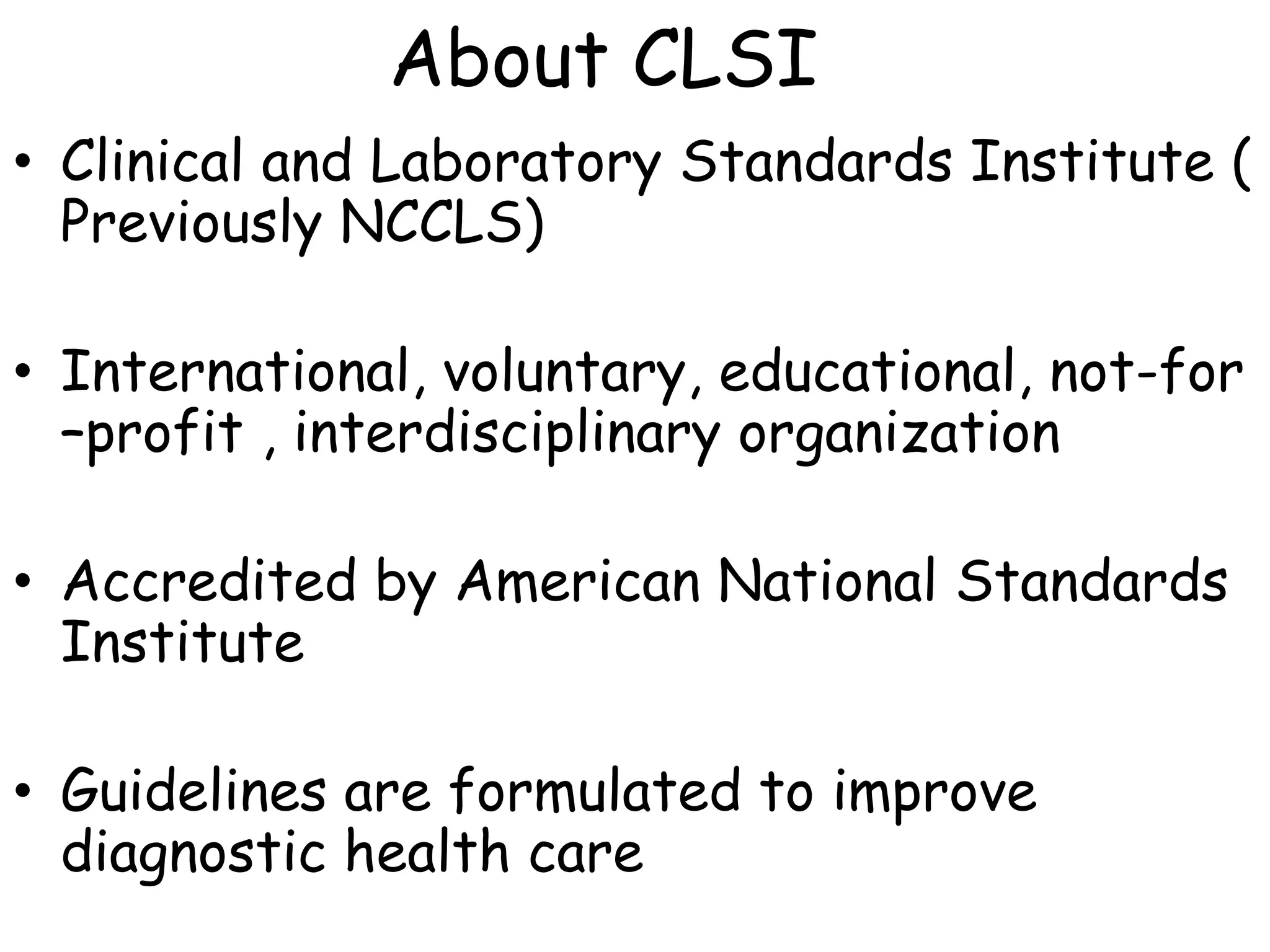
About CLSI
• Clinical and Laboratory Standards Institute (
Previously NCCLS)
• International, voluntary, educational, not-for
–profit , interdisciplinary organization
• Accredited by American National Standards
Institute
• Guidelines are formulated to improve
diagnostic health care
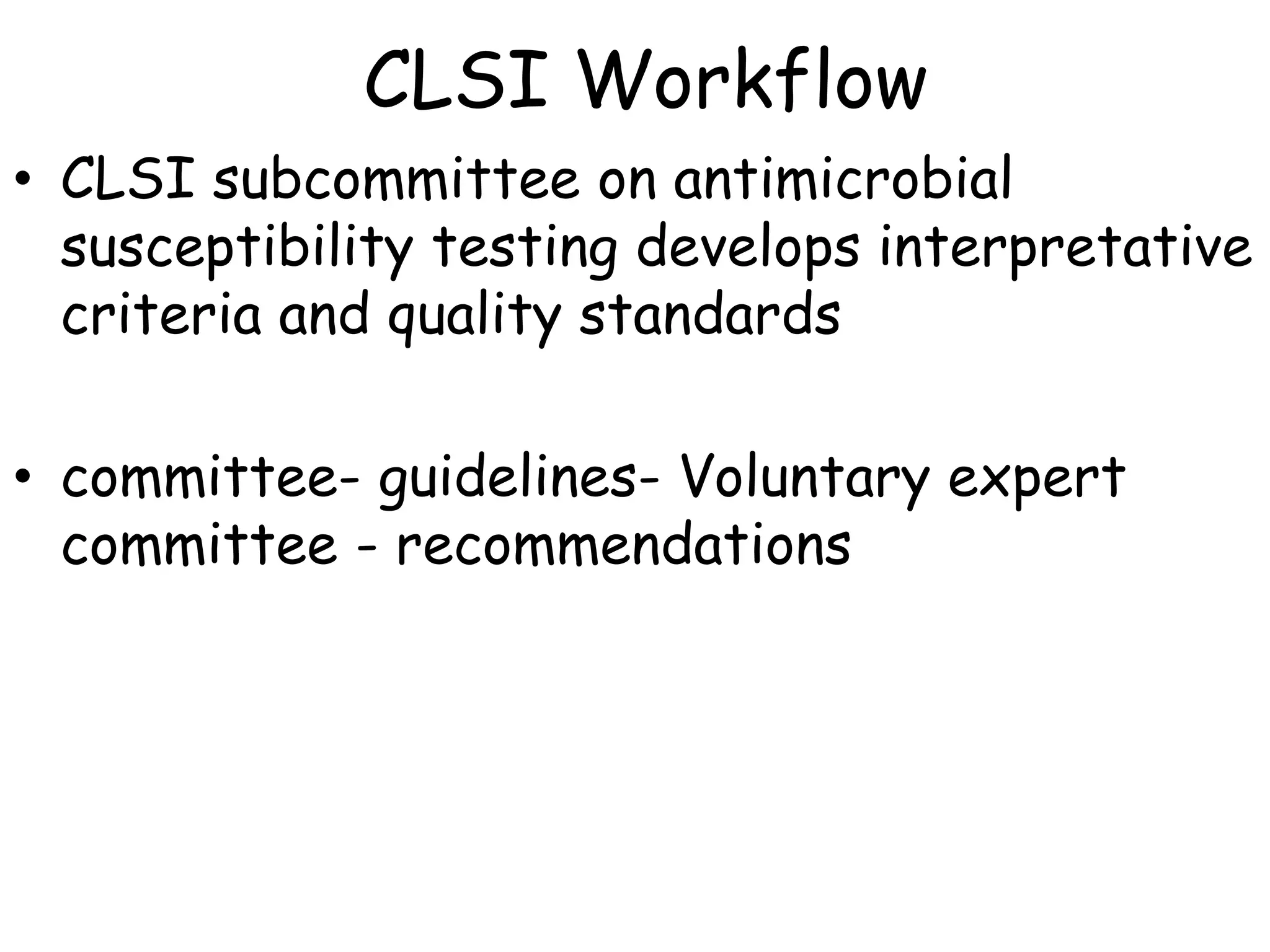
CLSI Workflow
• CLSI subcommittee on antimicrobial
susceptibility testing develops interpretative
criteria and quality standards
• committee- guidelines- Voluntary expert
committee - recommendations
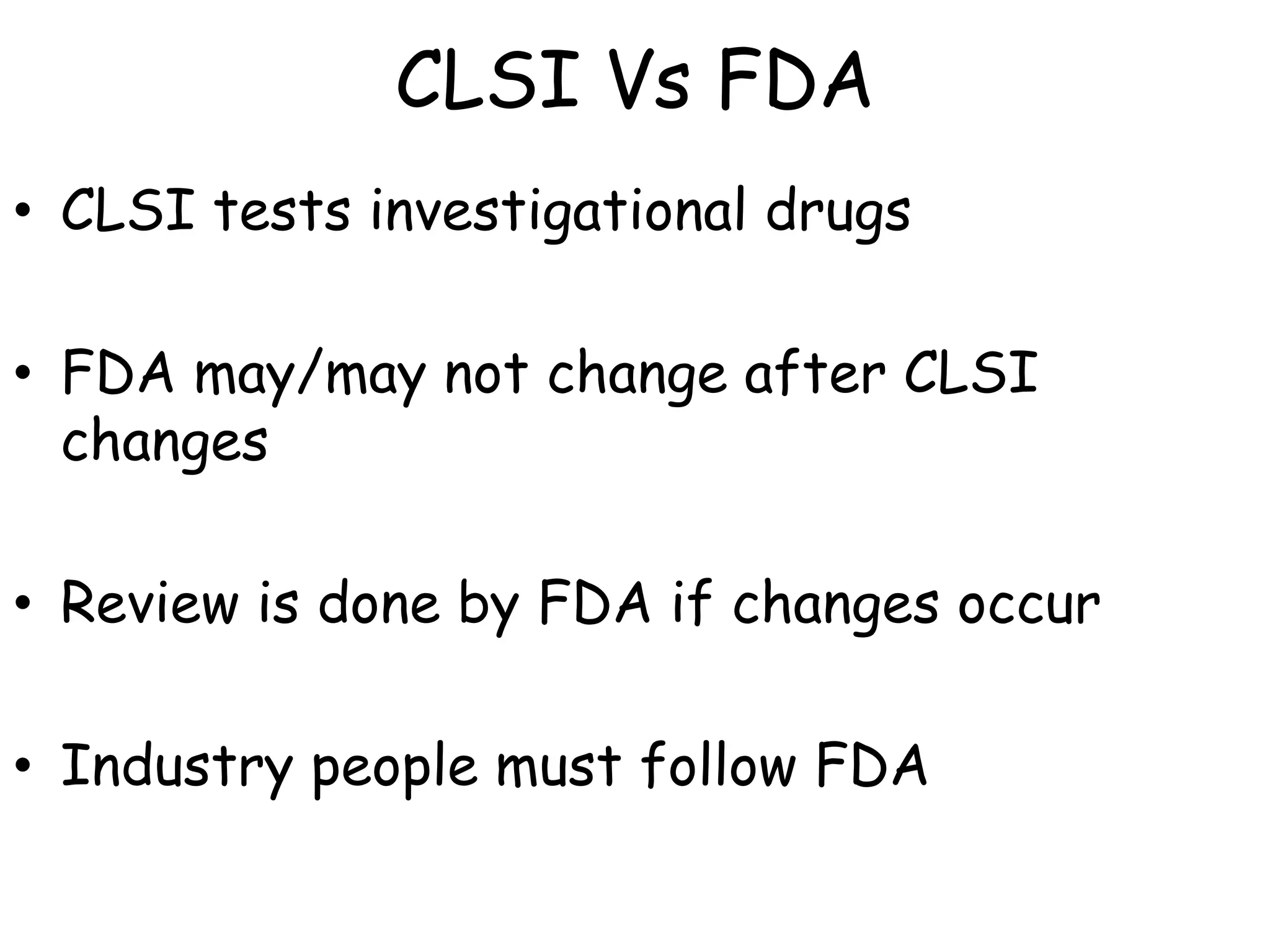
CLSI Vs FDA
• CLSI tests investigational drugs
• FDA may/may not change after CLSI
changes
• Review is done by FDA if changes occur
• Industry people must follow FDA
EUCAST is organised by
 European Society for Clinical Microbiology and Infectious
Diseases (ESCMID),
 European Centre for Disease Prevention and Control
(ECDC),
 Active national antimicrobial breakpoint committees in
Europe.
EUCAST was established by ESCMID in 1997,->
restructured in 2001-2002 and has been in operation in its
current form since 2002.
Financed by
- ESCMID
- National Breakpoint committees in Europe
Europe had a number of different breakpoints – setting
authorities….and therefore different breakpoints…..
Breakpoint committees 2016
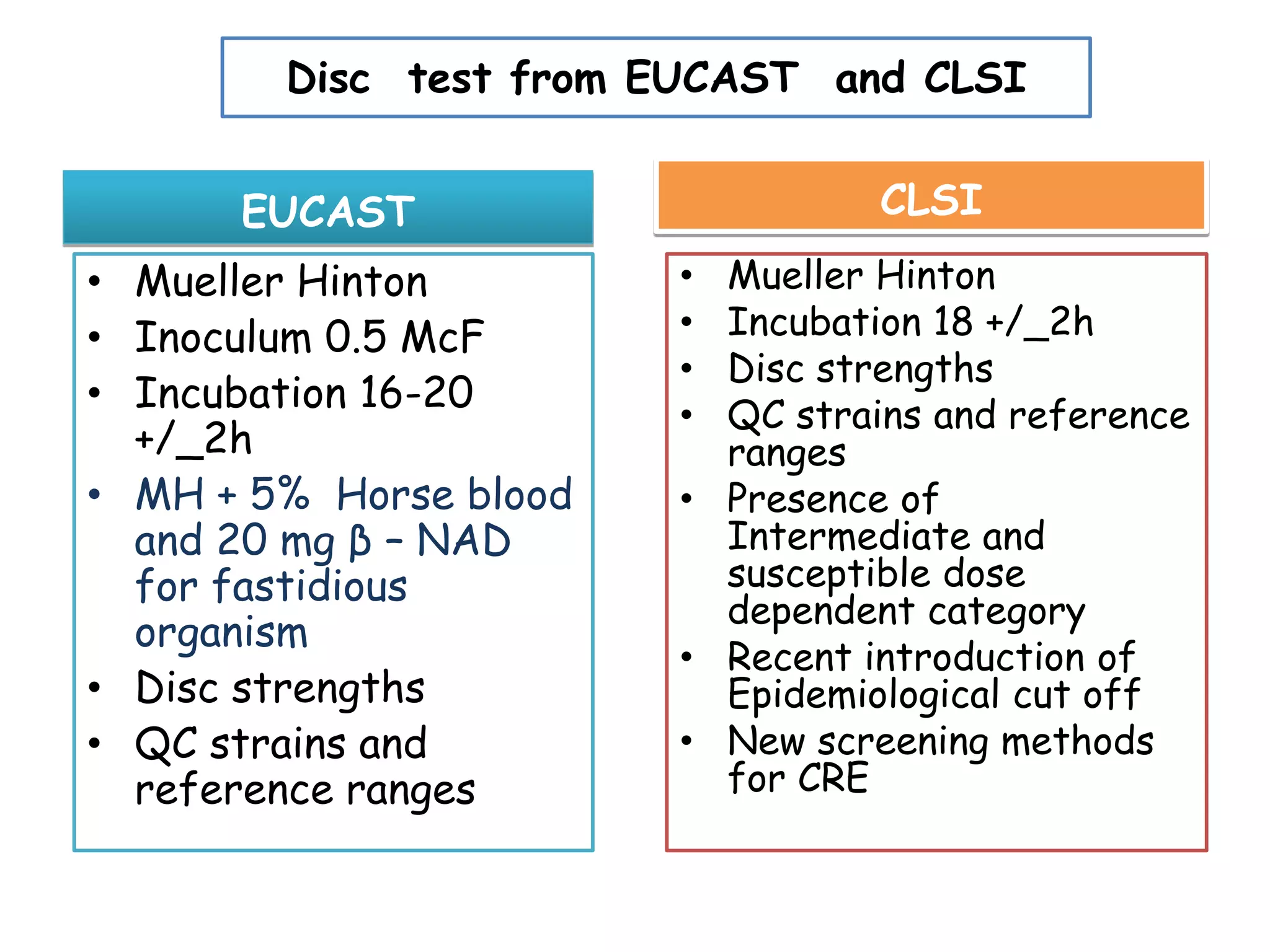
Disc test from EUCAST and CLSI
EUCAST
• Mueller Hinton
• Inoculum 0.5 McF
• Incubation 16-20
+/_2h
• MH + 5% Horse blood
and 20 mg β – NAD
for fastidious
organism
• Disc strengths
• QC strains and
reference ranges
CLSI
• Mueller Hinton
• Incubation 18 +/_2h
• Disc strengths
• QC strains and reference
ranges
• Presence of
Intermediate and
susceptible dose
dependent category
• Recent introduction of
Epidemiological cut off
• New screening methods
for CRE
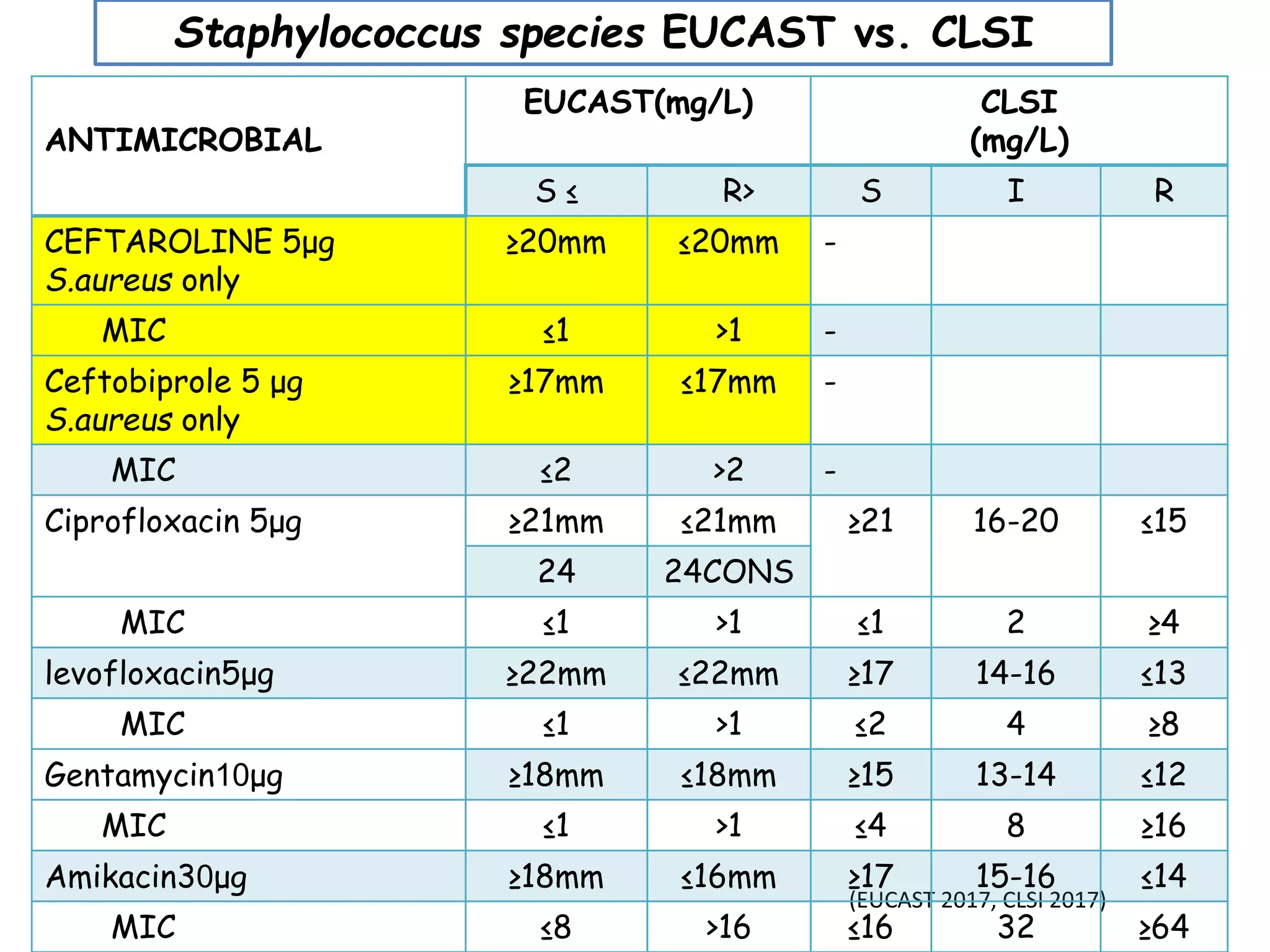
Staphylococcus species EUCAST vs. CLSI
(EUCAST 2017, CLSI 2017)
ANTIMICROBIAL
EUCAST(mg/L) CLSI
(mg/L)
S ≤ R> S I R
CEFTAROLINE 5μg
S.aureus only
≥20mm ≤20mm -
MIC ≤1 >1 -
Ceftobiprole 5 μg
S.aureus only
≥17mm ≤17mm -
MIC ≤2 >2 -
Ciprofloxacin 5μg ≥21mm ≤21mm ≥21 16-20 ≤15
24 24CONS
MIC ≤1 >1 ≤1 2 ≥4
levofloxacin5μg ≥22mm ≤22mm ≥17 14-16 ≤13
MIC ≤1 >1 ≤2 4 ≥8
Gentamycin10μg ≥18mm ≤18mm ≥15 13-14 ≤12
MIC ≤1 >1 ≤4 8 ≥16
Amikacin30μg ≥18mm ≤16mm ≥17 15-16 ≤14
MIC ≤8 >16 ≤16 32 ≥64
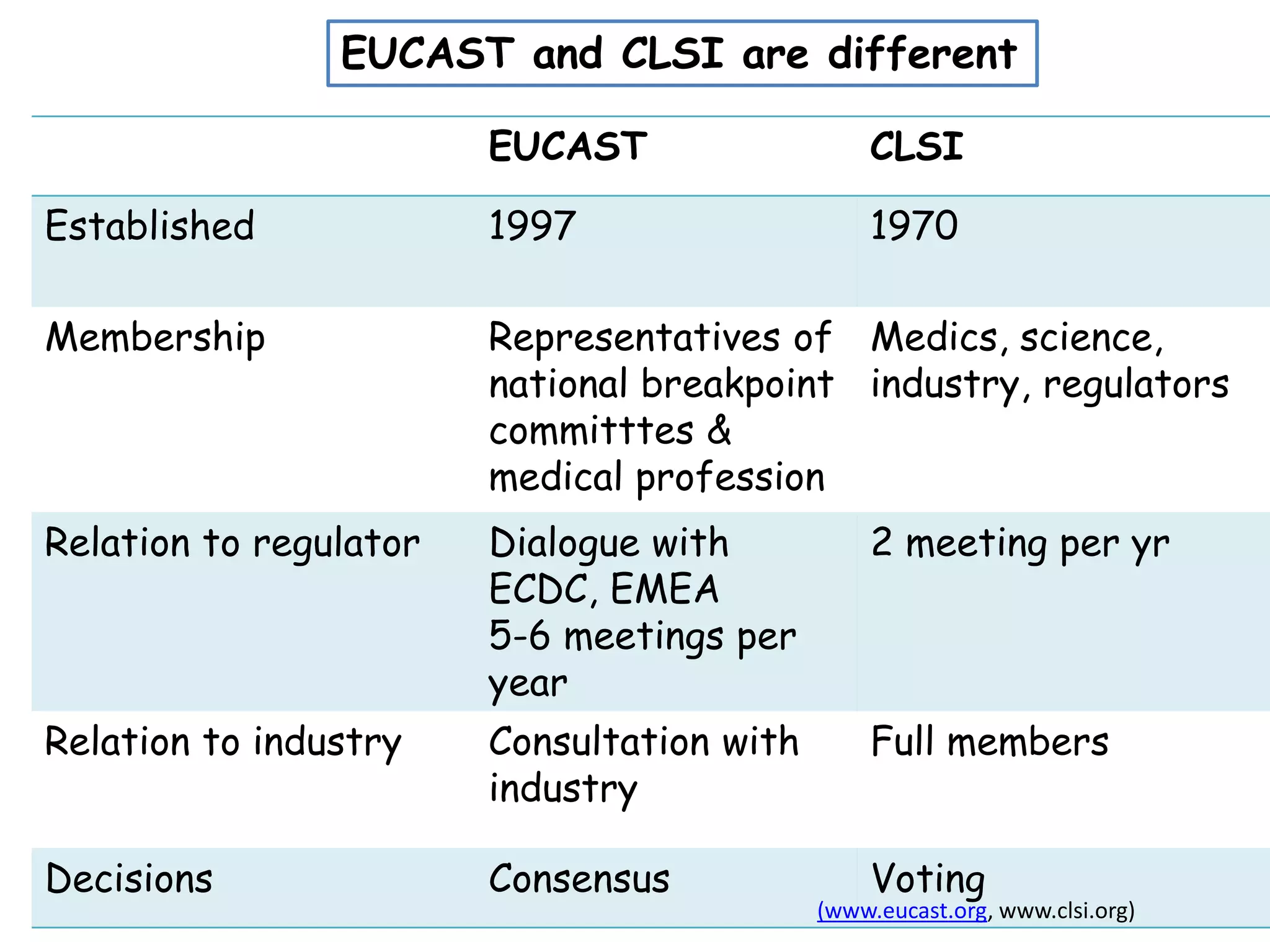
EUCAST and CLSI are different
EUCAST CLSI
Established 1997 1970
Membership Representatives of
national breakpoint
committtes &
medical profession
Medics, science,
industry, regulators
Relation to regulator Dialogue with
ECDC, EMEA
5-6 meetings per
year
2 meeting per yr
Relation to industry Consultation with
industry
Full members
Decisions Consensus Voting
(www.eucast.org, www.clsi.org)
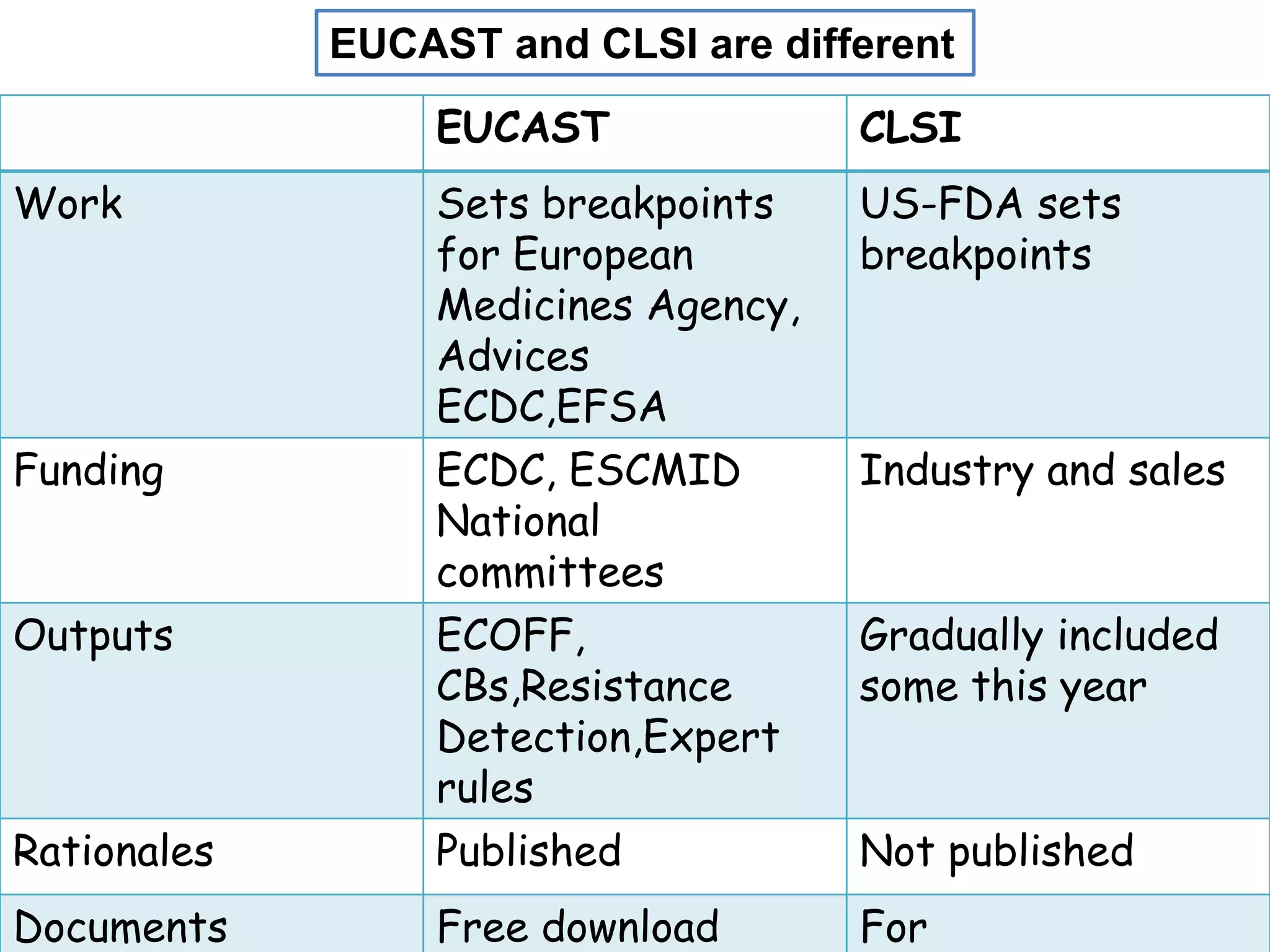
EUCAST and CLSI are different
EUCAST CLSI
Work Sets breakpoints
for European
Medicines Agency,
Advices
ECDC,EFSA
US-FDA sets
breakpoints
Funding ECDC, ESCMID
National
committees
Industry and sales
Outputs ECOFF,
CBs,Resistance
Detection,Expert
rules
Gradually included
some this year
Rationales Published Not published
Documents Free download For
CLSI Vs FDA
• CLSI tests investigational drugs
• FDA may/may not change after CLSI
changes
• Review is done by FDA if changes occur
• Industry people must follow FDA
General points
• Group A – routine primary testing
• Group B- primary testing but selectively ( group A
resistant, polymicrobial infections, drug allergy,
intolerance)
• Group C- multidrug resistant drugs very common
• Group U- primarily urinary use only
• Group O- clinical indication but not routinely tested
in USA
• Group Inv. – not approved by FDA
General points
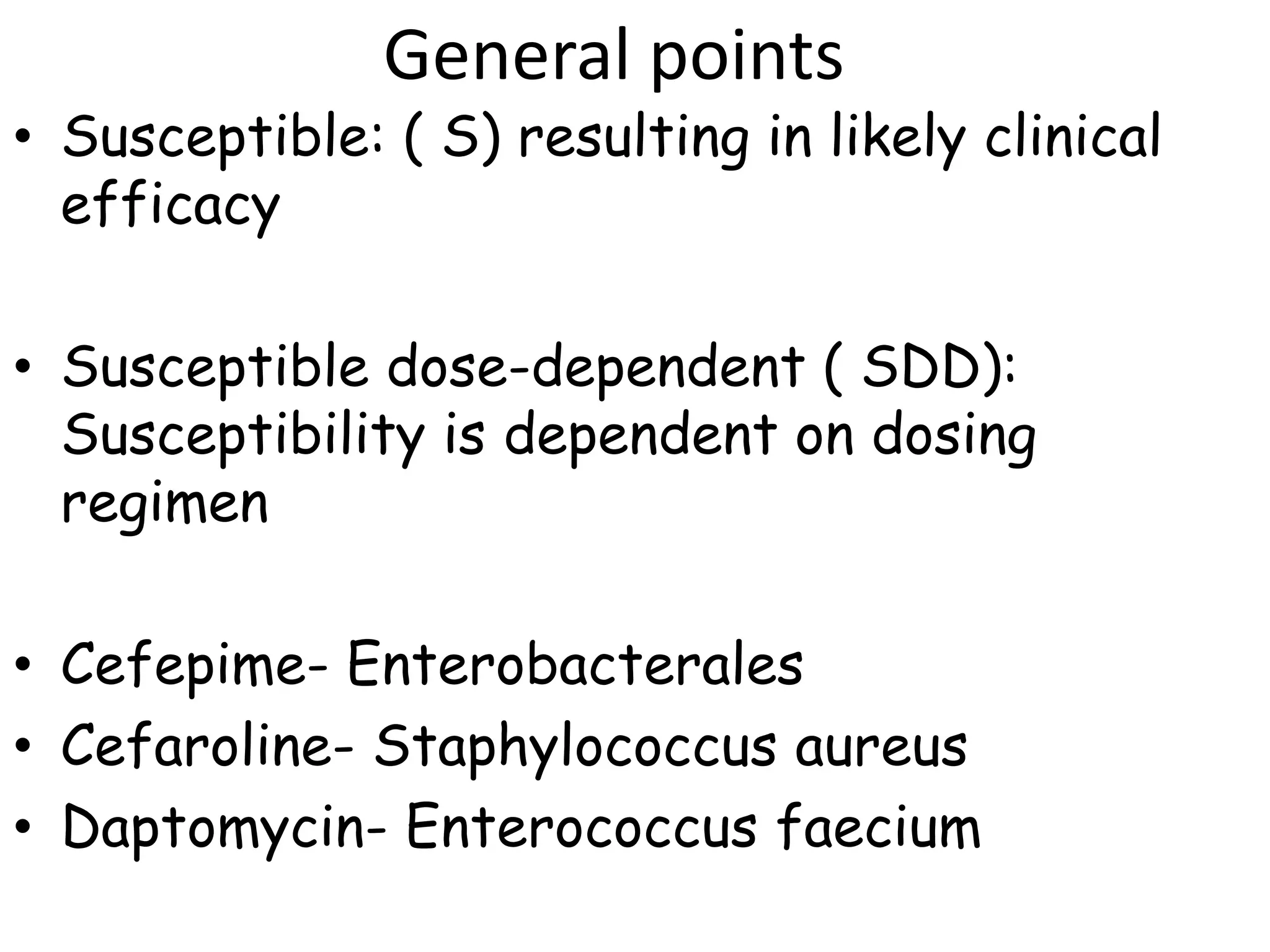
• Susceptible: ( S) resulting in likely clinical
efficacy
• Susceptible dose-dependent ( SDD):
Susceptibility is dependent on dosing
regimen
• Cefepime- Enterobacterales
• Cefaroline- Staphylococcus aureus
• Daptomycin- Enterococcus faecium
• Intermediate (I): response lower than
susceptible isolates
• Resistant: ( R) Isolates not inhibited by
usually achievable concentrations or
specific resistance mechanisms
• Nonsusceptible: (NS): absence or rare
occurrence of resistant strains
Definitions
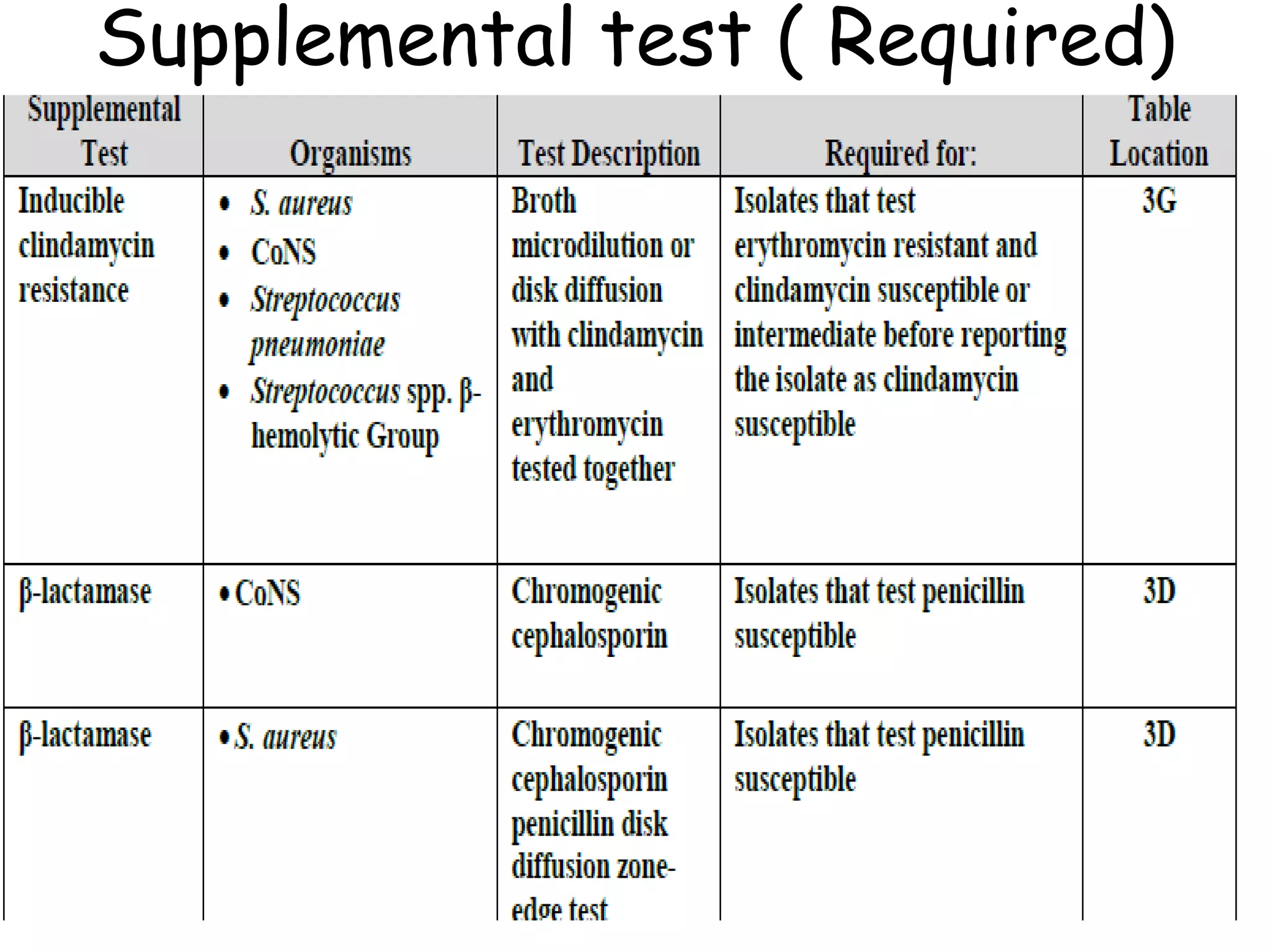
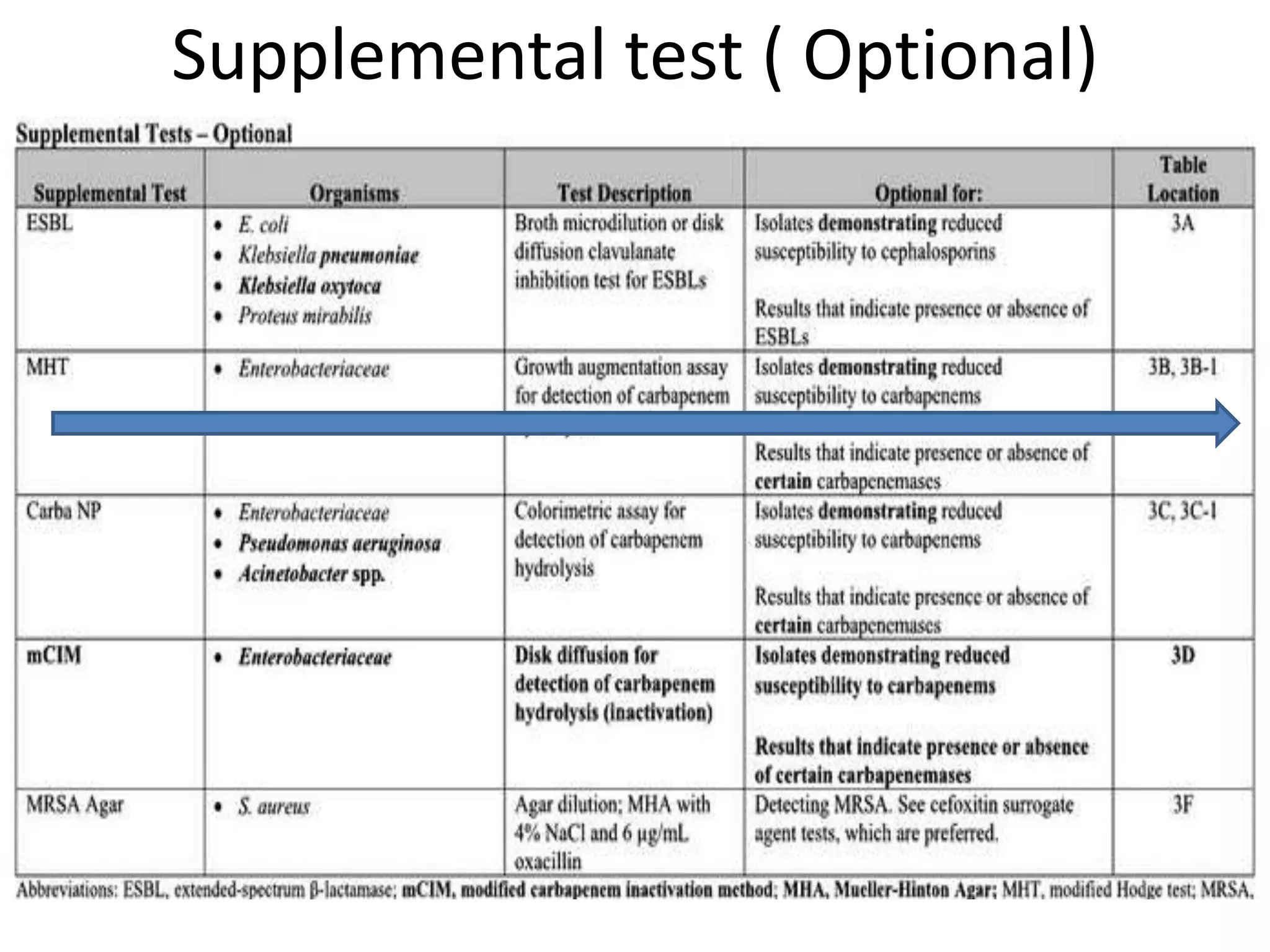
• Routine test: tests for routine clinical testing
• Supplemental test: methods other than routine
disk diffusion and dilution
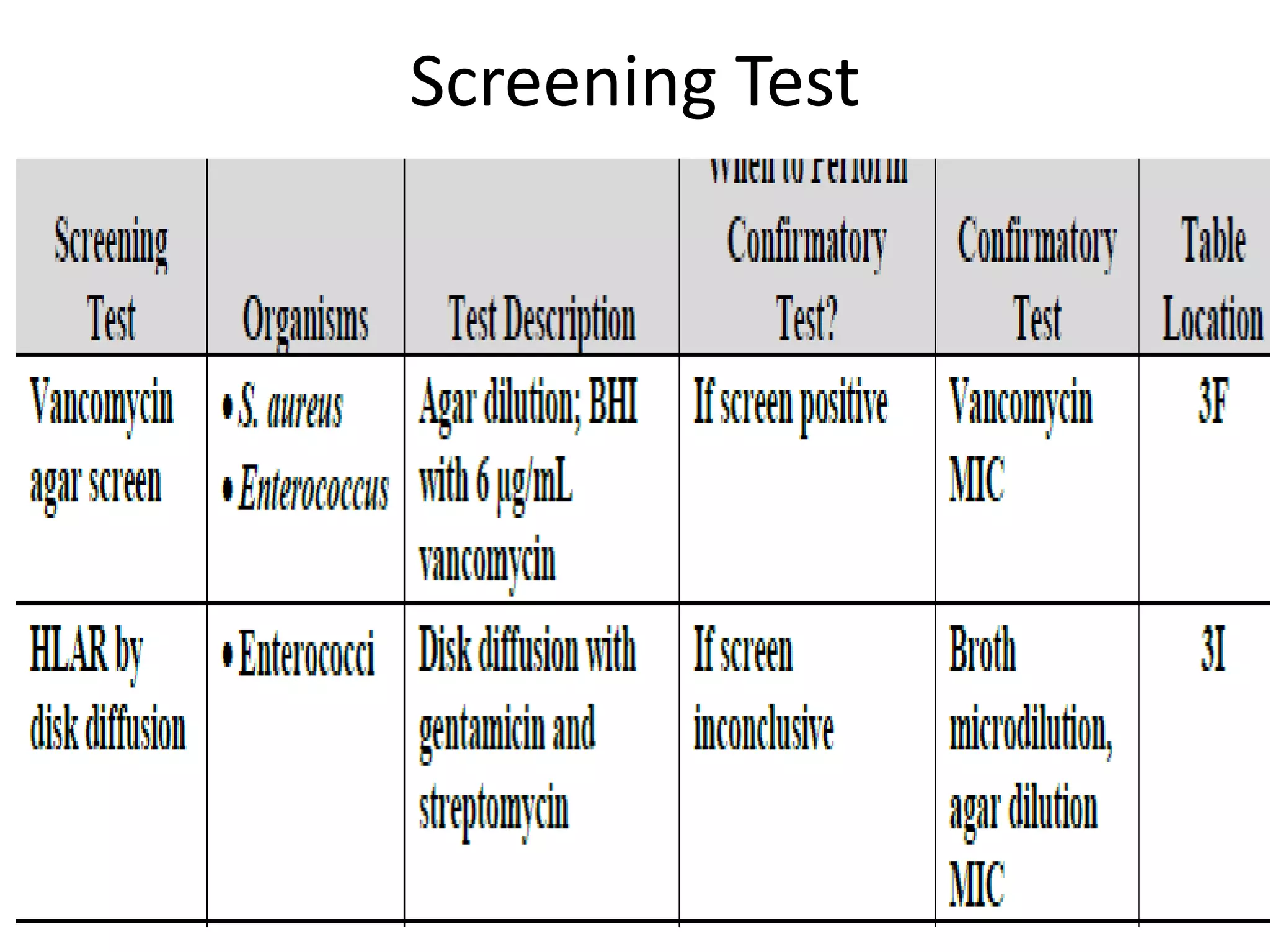
• Screening tests: presumptive tests and need
additional testing
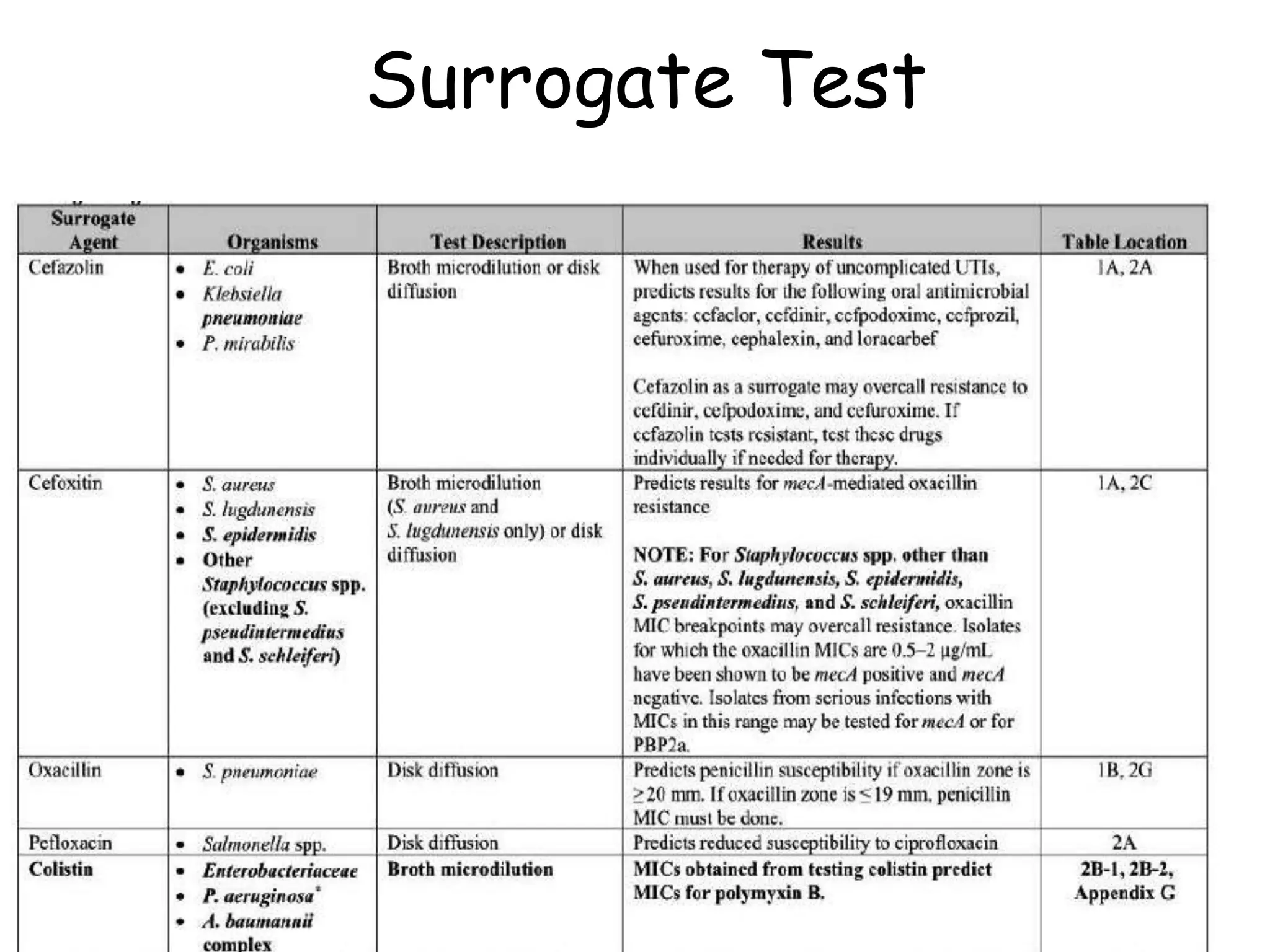
• Surrogate agent testing: replaces drug of
interest
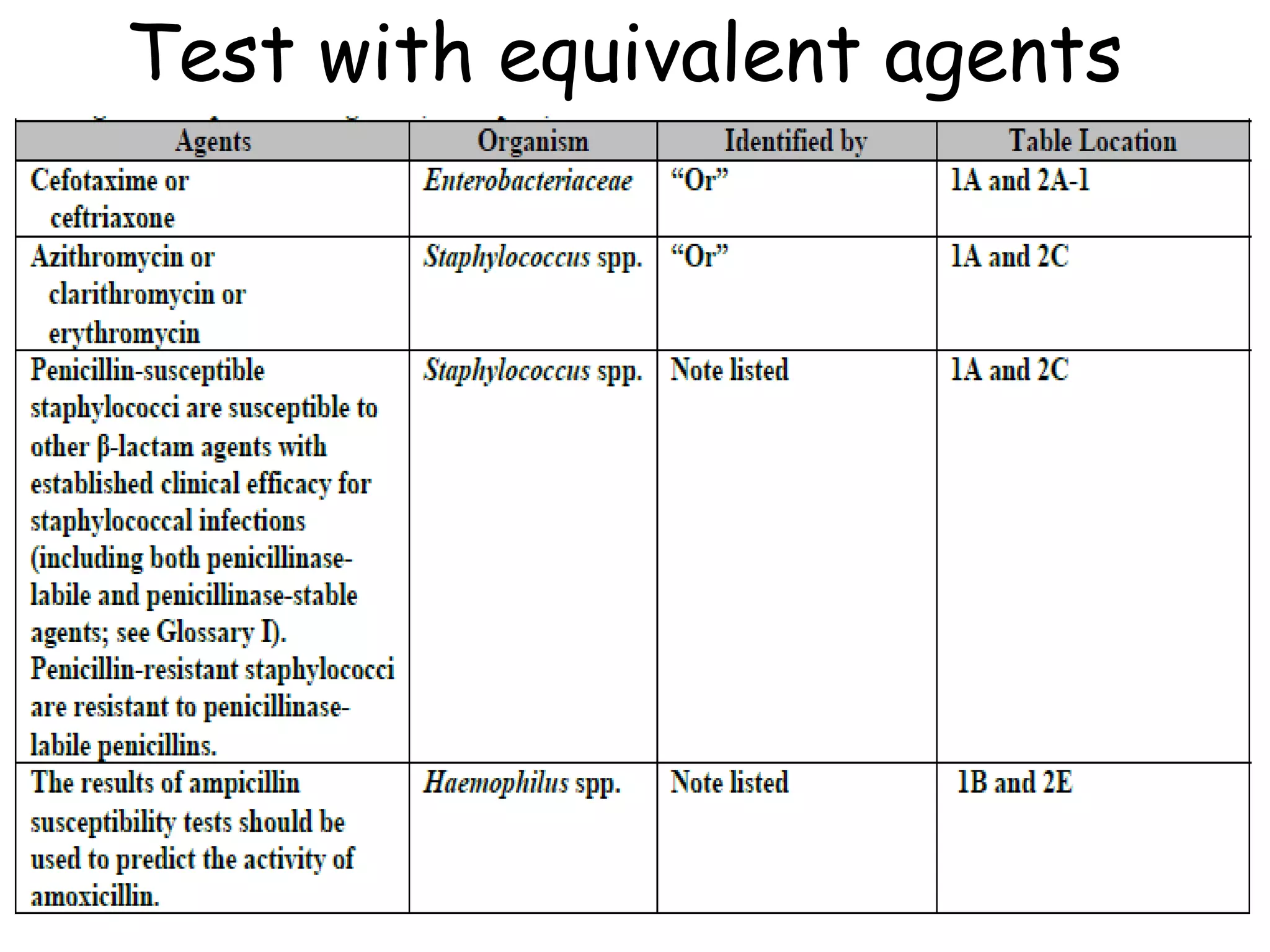
• Equivalent agent testing: predicts result of
closely related drugs of same class
Supplemental test ( Required)
Supplemental test ( Optional)
Supplemental Test
• Colistin agar test: Enterobacterales and Pseudomonas
aeruginosa: determining colistin resistance
• Colistin broth disk elution test:Enterobacterales and
Pseudomonas aeruginosa: determining colistin resistance
Screening Test
Surrogate Test
Test with equivalent agents
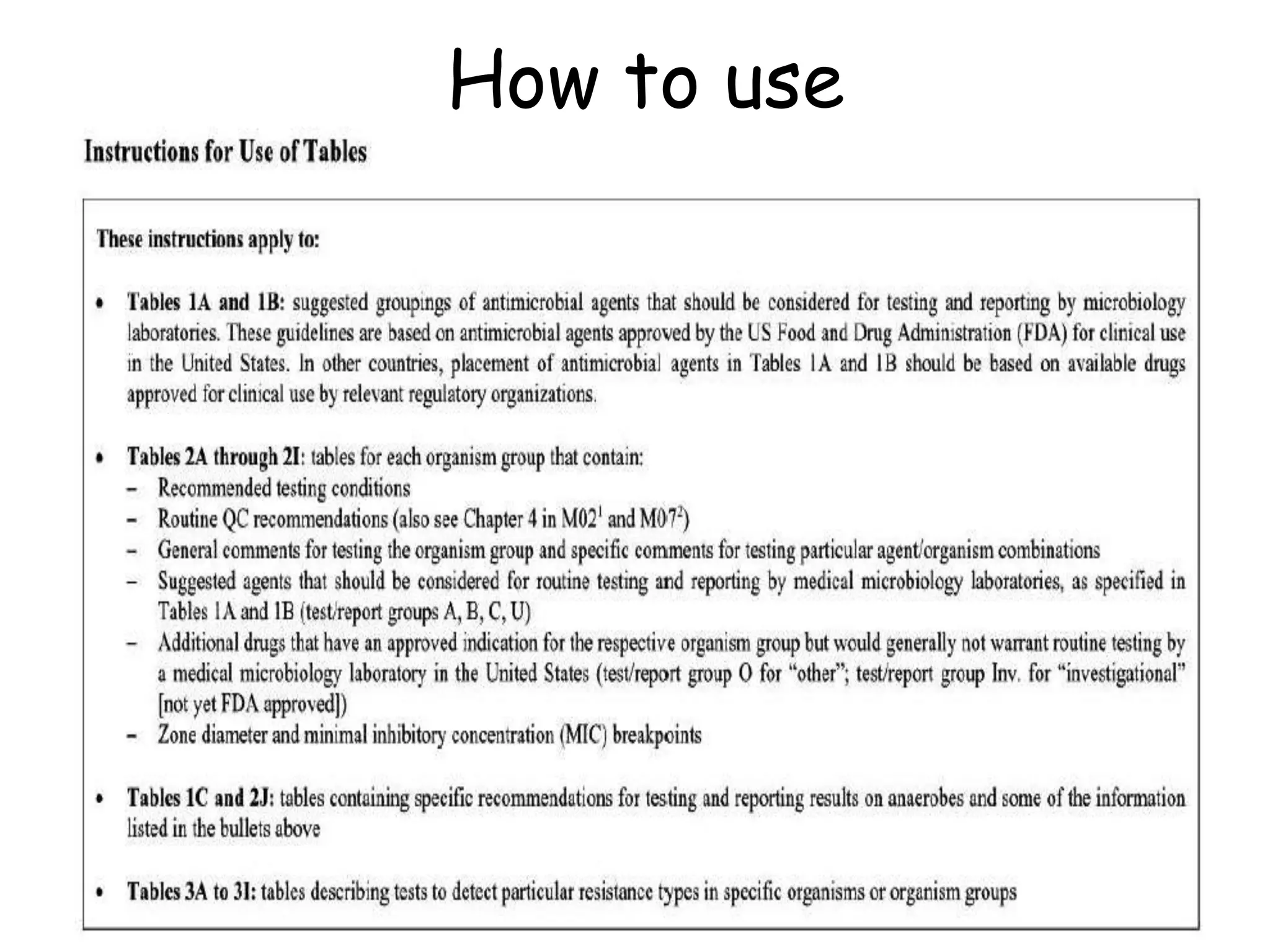
How to use
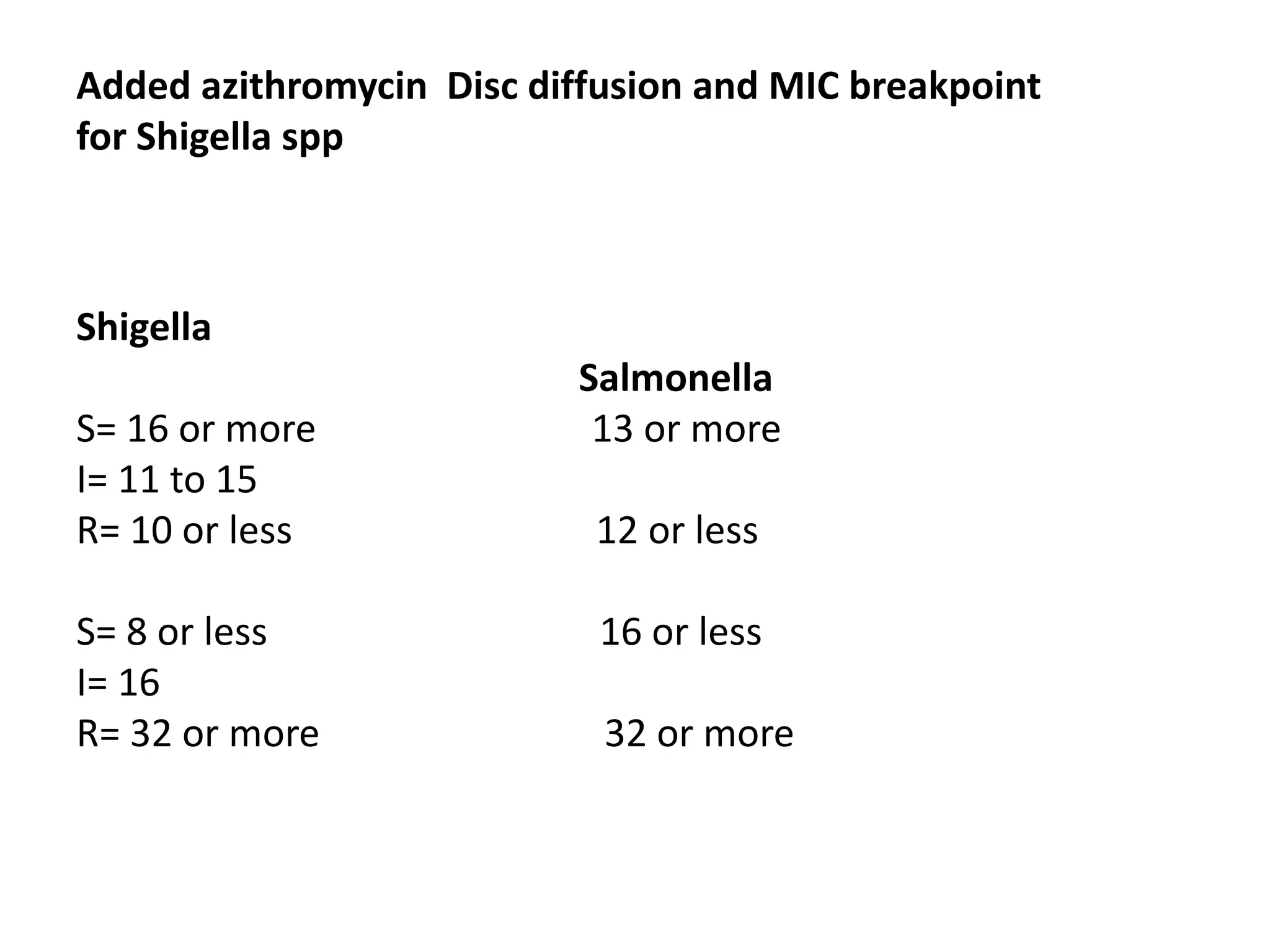
Added azithromycin Disc diffusion and MIC breakpoint
for Shigella spp
Shigella
Salmonella
S= 16 or more 13 or more
I= 11 to 15
R= 10 or less 12 or less
S= 8 or less 16 or less
I= 16
R= 32 or more 32 or more
Treatment of Shigella
1. First line: Fluroquinolones
2. Second line: Beta lactams, Cephalosporins
Now azithromycin can be used as second line agent where
resistance to fluroquinolones high and among macrolides,
azithromycin preferred
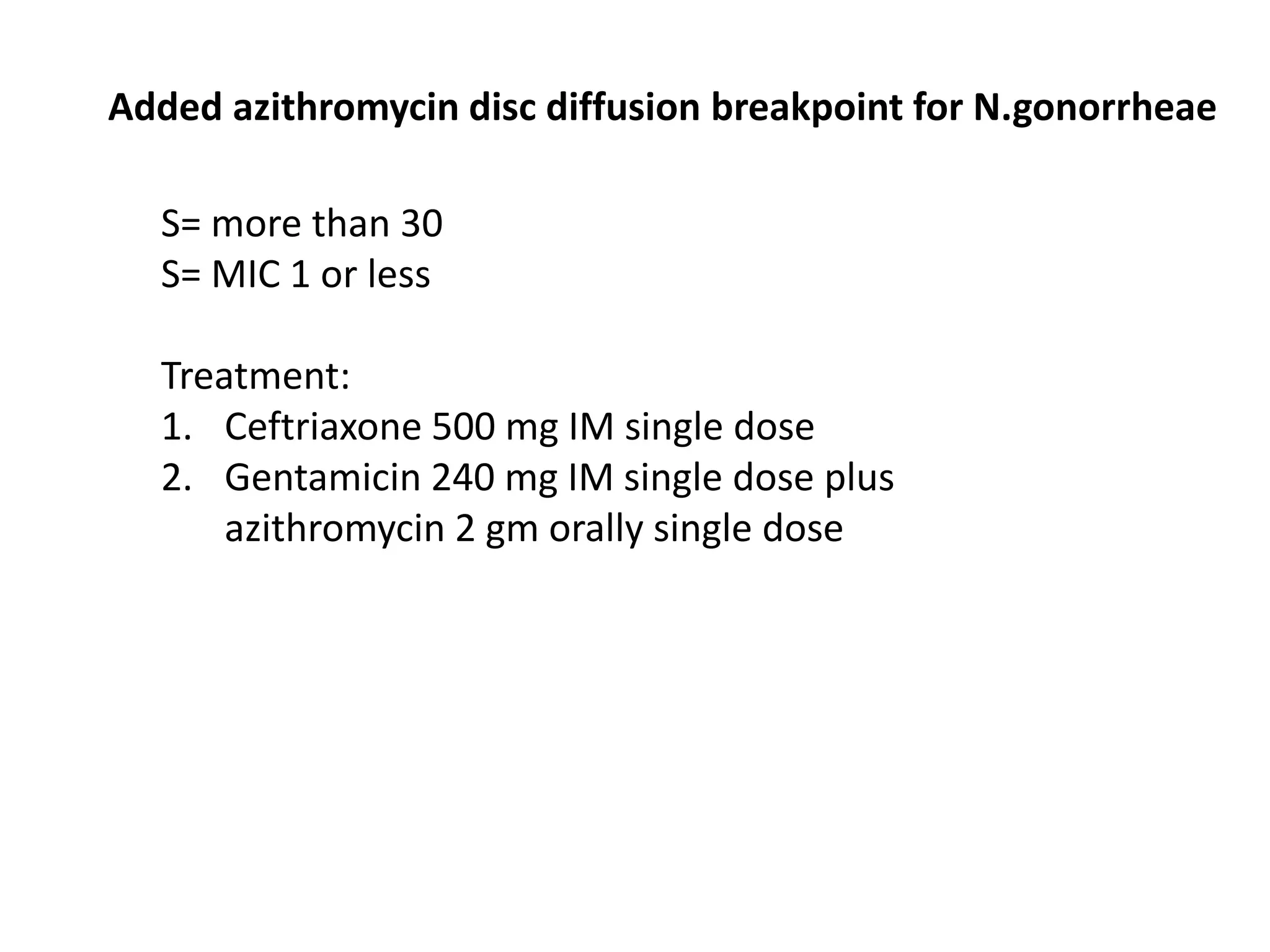
Added azithromycin disc diffusion breakpoint for N.gonorrheae
S= more than 30
S= MIC 1 or less
Treatment:
1. Ceftriaxone 500 mg IM single dose
2. Gentamicin 240 mg IM single dose plus
azithromycin 2 gm orally single dose
Added Imipenem-relebactam disc diffusion and MIC
breakpoint for
Enterobacterales and Pseudomonas aeruginosa
MIC breakpoints for Anaerobes
Enterobacterales Pseudomonas aeruginosa
S= 25 or more S= 23 or more
I= 21-24 I= 20-22
R= 20 or less R= 19 or less
S= 1/4 S= 2/4
I= 2/4 S= 4/4
R= 4/4 or more S= 8/4
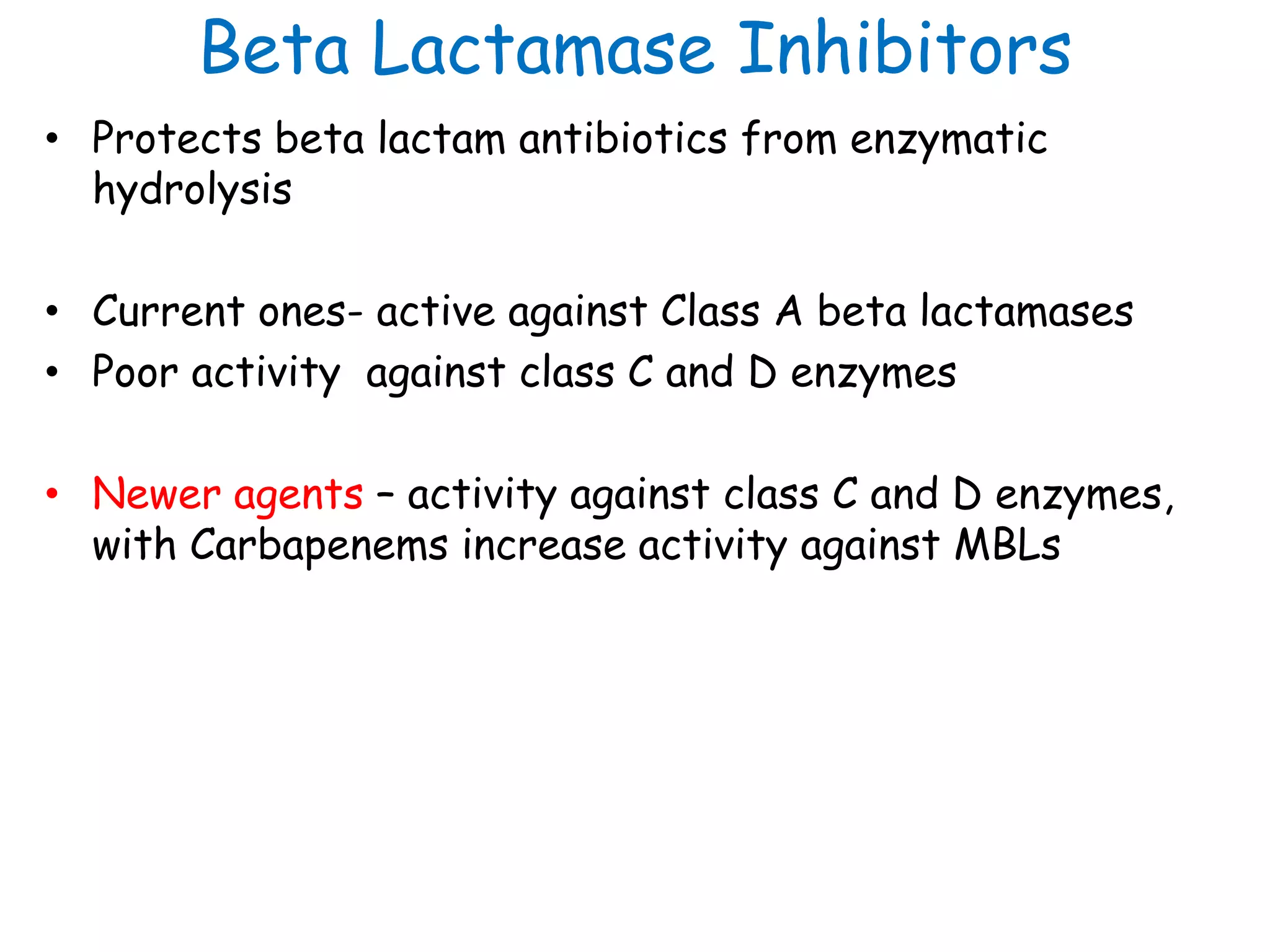
Beta Lactamase Inhibitors
• Protects beta lactam antibiotics from enzymatic
hydrolysis
• Current ones- active against Class A beta lactamases
• Poor activity against class C and D enzymes
• Newer agents – activity against class C and D enzymes,
with Carbapenems increase activity against MBLs
Relebactam
There are six betalactamse inhibitors:
Sulbactam, clavulanic acid, tazobactam, avibactam,
vaborbactam,
Relebactam
•Relebactam inhibits class A carbapenemases but
not class B or D Oxa
•Used for MDR Gram negative organisms
•Imipenem-relebactam used in cUTI, cIAI, VAP
Added ceftolozane-tazobactam MIC
breakpoints for H.influenzae
and H.parainfluenzae
S= 0.5/4 or less
Treatment : ceftriaxone or cefotaxime for
meningitis
azithromycin or quinolones for mild
infections
Ceftolozane/Tazobactam
• Novel oxyimino-aminothiazolyl cephalosporin
and betalastamse inhibitor combination
• MOA- novel cephalosporin and inhibitor
combination
• Organism profile – P. aeruginosa (
cephalosprin and carbapenem resistant ones)
• E.coli and Klebsiella
Ceftolozane/Tazobactam
• Clinical Uses- complicated intrabdominal
infections , complicated UTI
• Advantages : Good antipseudomonal activity
• Status- FDA approved ( 2014)
Added Lefamulin disc diffusion and MIC testing for
Staphylococcus spp, H.influenzae,
H.parainfluenzae and S.pneumoniae
H.Influenzae
H.parainfluenzae
S= 17 or more
S= MIC 2 or less
S. aureus
S= 23 or more
S= MIC 0.25 or less
S.pneumoniae
S= 17 or more
S= 0.5 or more
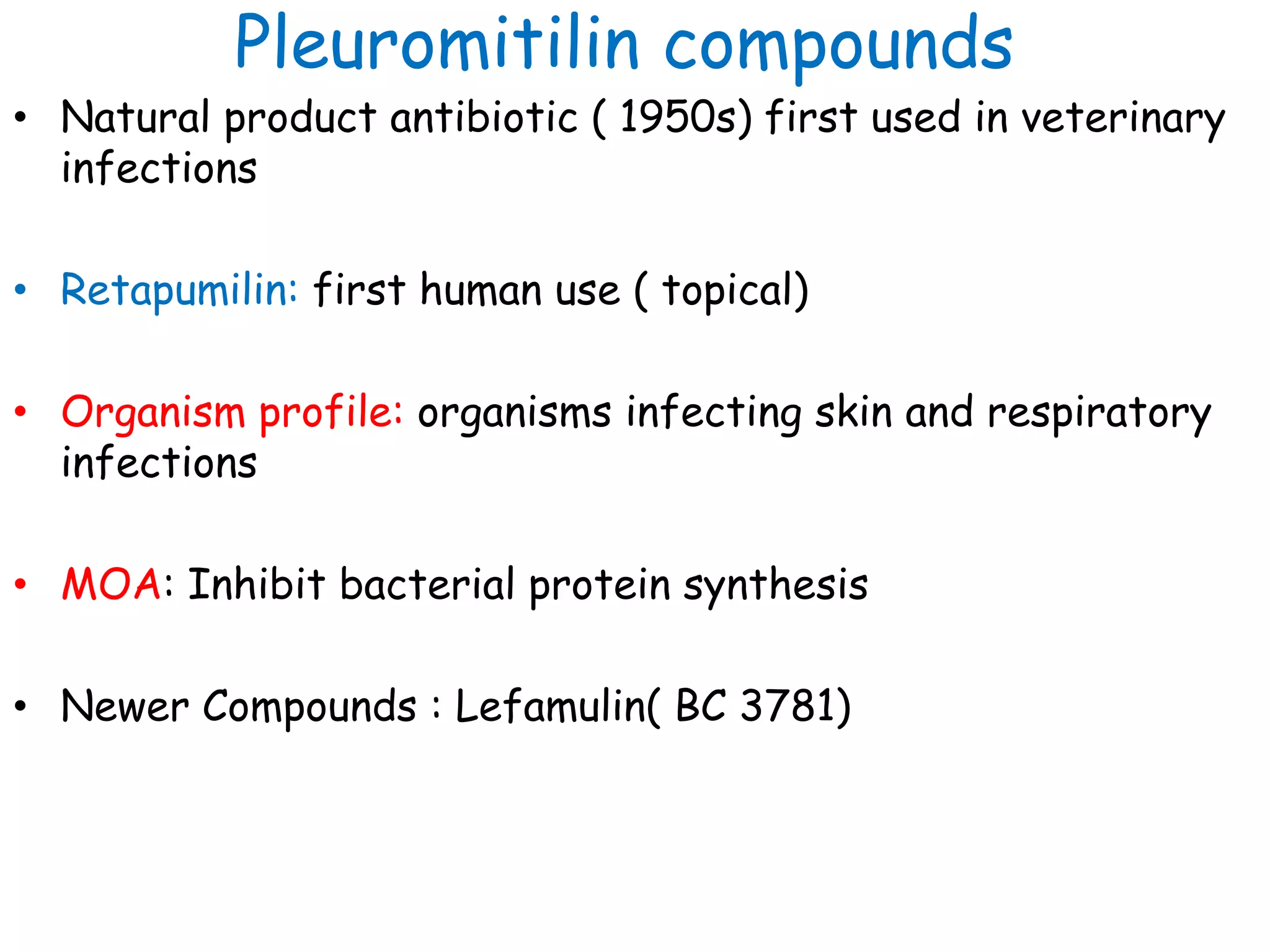
Pleuromitilin compounds
• Natural product antibiotic ( 1950s) first used in veterinary
infections
• Retapumilin: first human use ( topical)
• Organism profile: organisms infecting skin and respiratory
infections
• MOA: Inhibit bacterial protein synthesis
• Newer Compounds : Lefamulin( BC 3781)
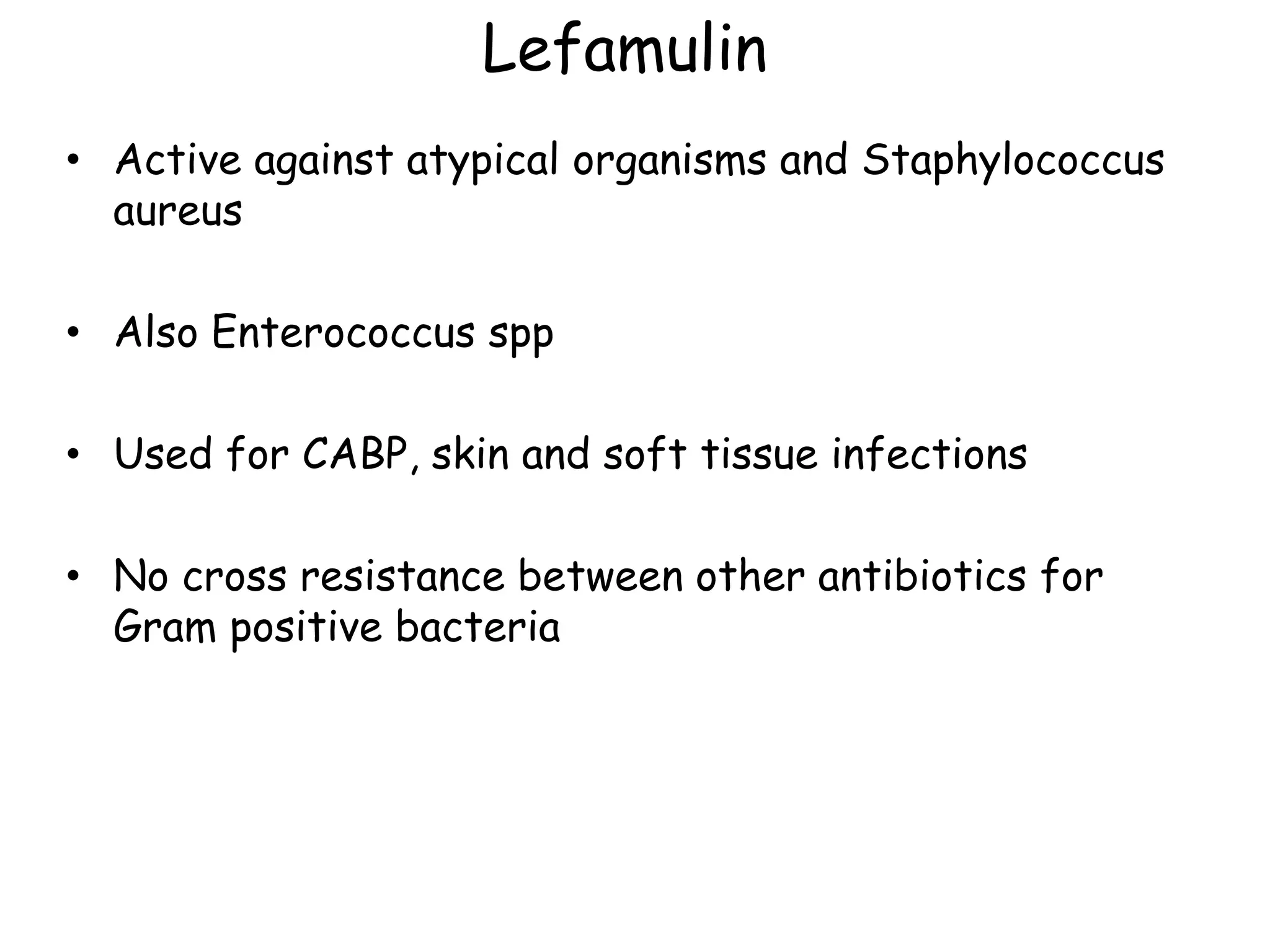
Lefamulin
• Active against atypical organisms and Staphylococcus
aureus
• Also Enterococcus spp
• Used for CABP, skin and soft tissue infections
• No cross resistance between other antibiotics for
Gram positive bacteria
Separated breakpoints of oral and parenteral cefazolin
Oral cutoff ( Surrogate
test for other oral agents
like cefaclor, cefpodoxime
for UTI)
S= 15 or more
R= 14 or less
S= 16 or less
R= 32 or more
Parenteral
cutoff
S= 23 or more
I= 20 -22
R= 19 or less
S= 2 or less
I= 4
R = 8 or more
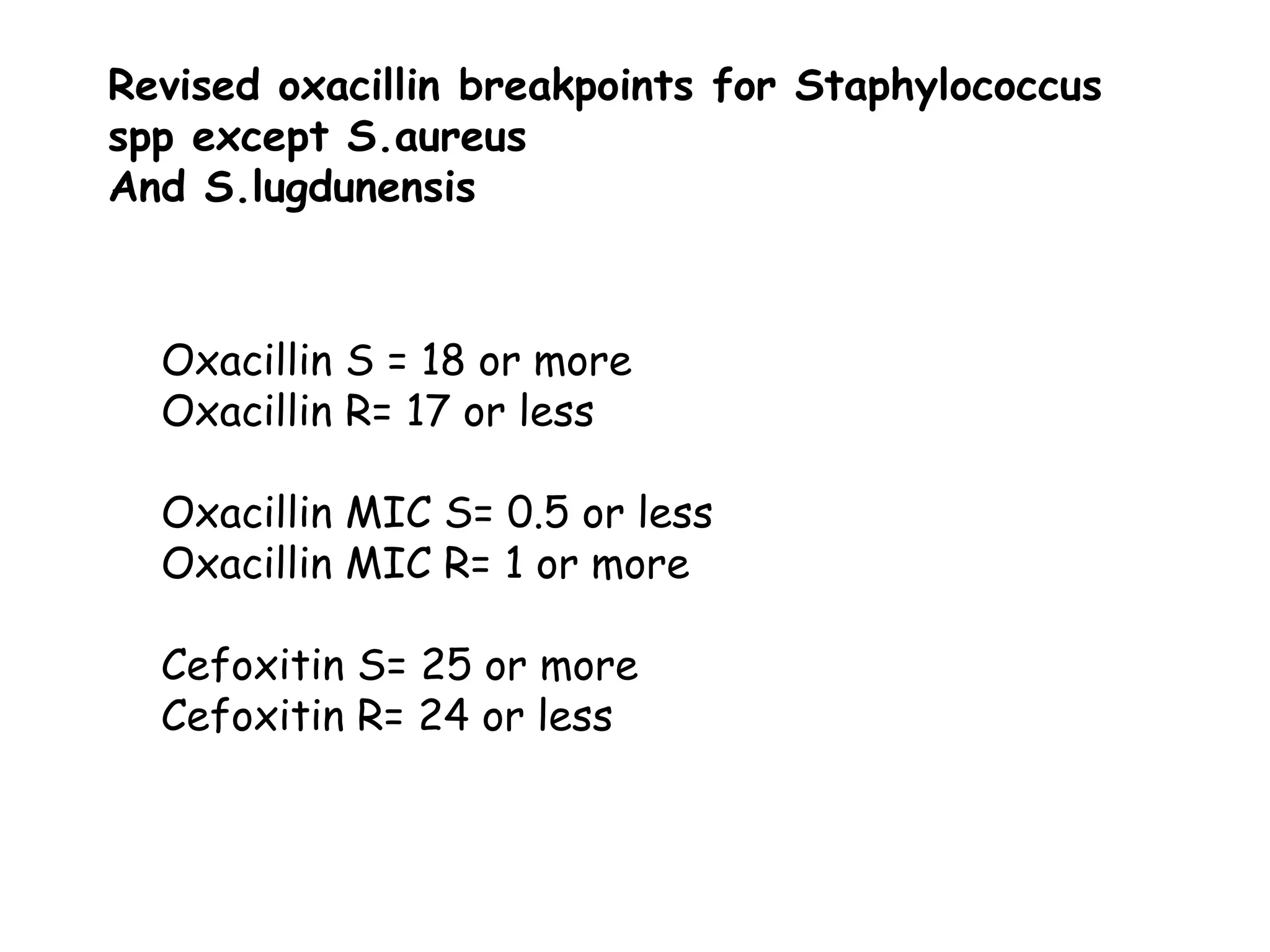
Revised oxacillin breakpoints for Staphylococcus
spp except S.aureus
And S.lugdunensis
Oxacillin S = 18 or more
Oxacillin R= 17 or less
Oxacillin MIC S= 0.5 or less
Oxacillin MIC R= 1 or more
Cefoxitin S= 25 or more
Cefoxitin R= 24 or less
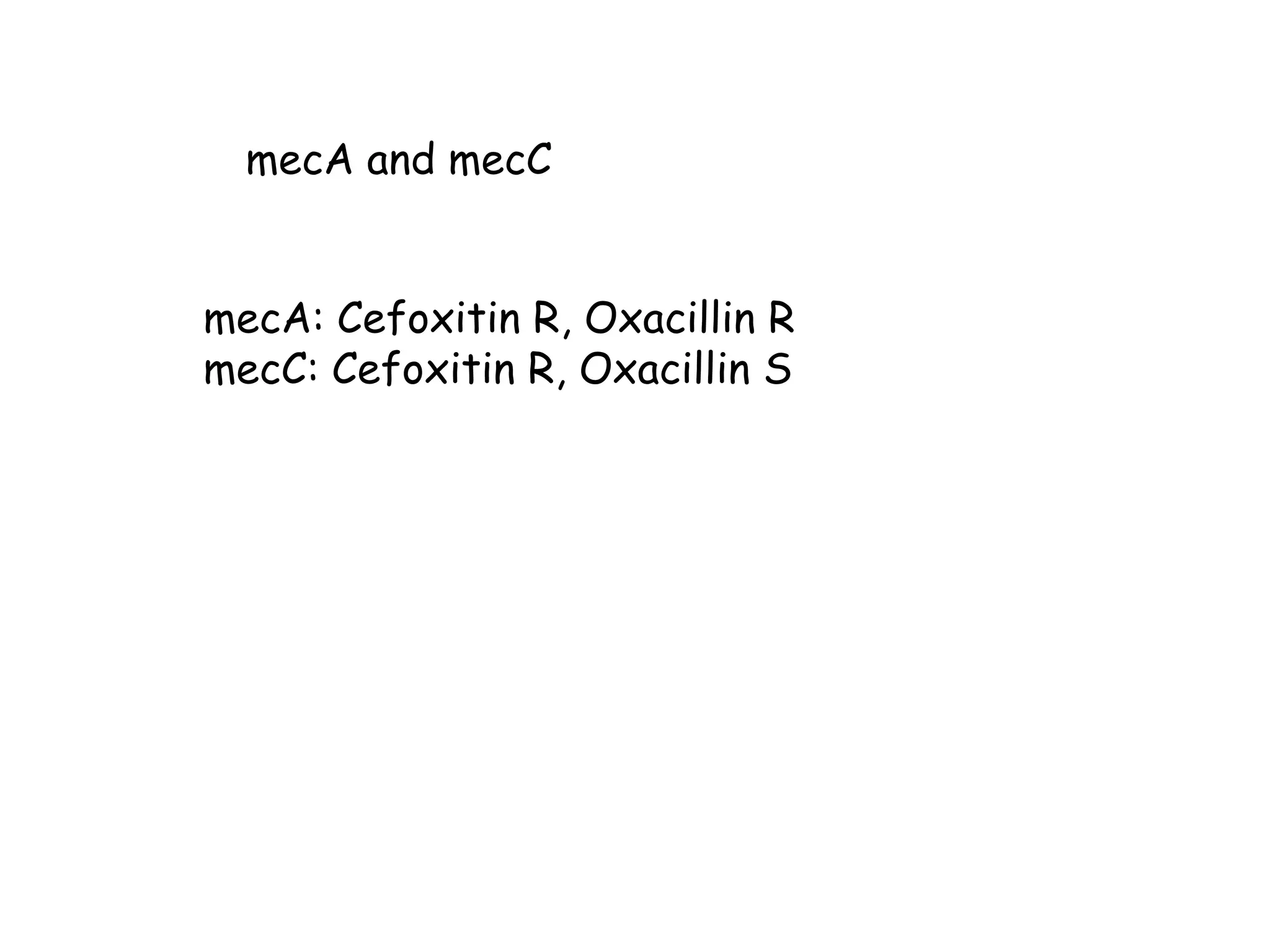
mecA and mecC
mecA: Cefoxitin R, Oxacillin R
mecC: Cefoxitin R, Oxacillin S
Clarified the interpretative category of
intermediate
S: sensitive
I: Intermediate ( ˄ concentrates in urine): ampicillin,
ticarcillin, TZP, carbapenems, ceftaroline,
cefalosporins, aminoglycosides, fluoroquinolones
SDD: Susceptible dose dependent
R: Resistant
NS: Not susceptible
Statement for isolates for which there are not
current CLSI cut off
Only the microorganism listed in the table should be
reported. If FDA susceptibility test interpretative
criteria ( STIC) is there, it can be used
Warning of reporting of antibiotics for use in CSF isolate
Agents only given by oral route, 1st and 2nd generation
cephalosporins, cephamycins,
Doripenem, imipenem, ertapenem, lefamulin, clindamycin,
macrolides, tetracyclines,
Fluoroquinolones: should not be reported in CSF
Positive blood cultures as inoculum
Ampicillin, aztreonam, ceftazidime, ceftriaxone, tobramycin,
Trimethoprim-sulfamethoxazole: can be reported
Staphylococcus aureus testing for linezolid and tedizolid
Organisms that are susceptible to linezolid also
susceptible to tedizolid
But organisms that are resistant to linezolid may be
susceptible to tedizolid
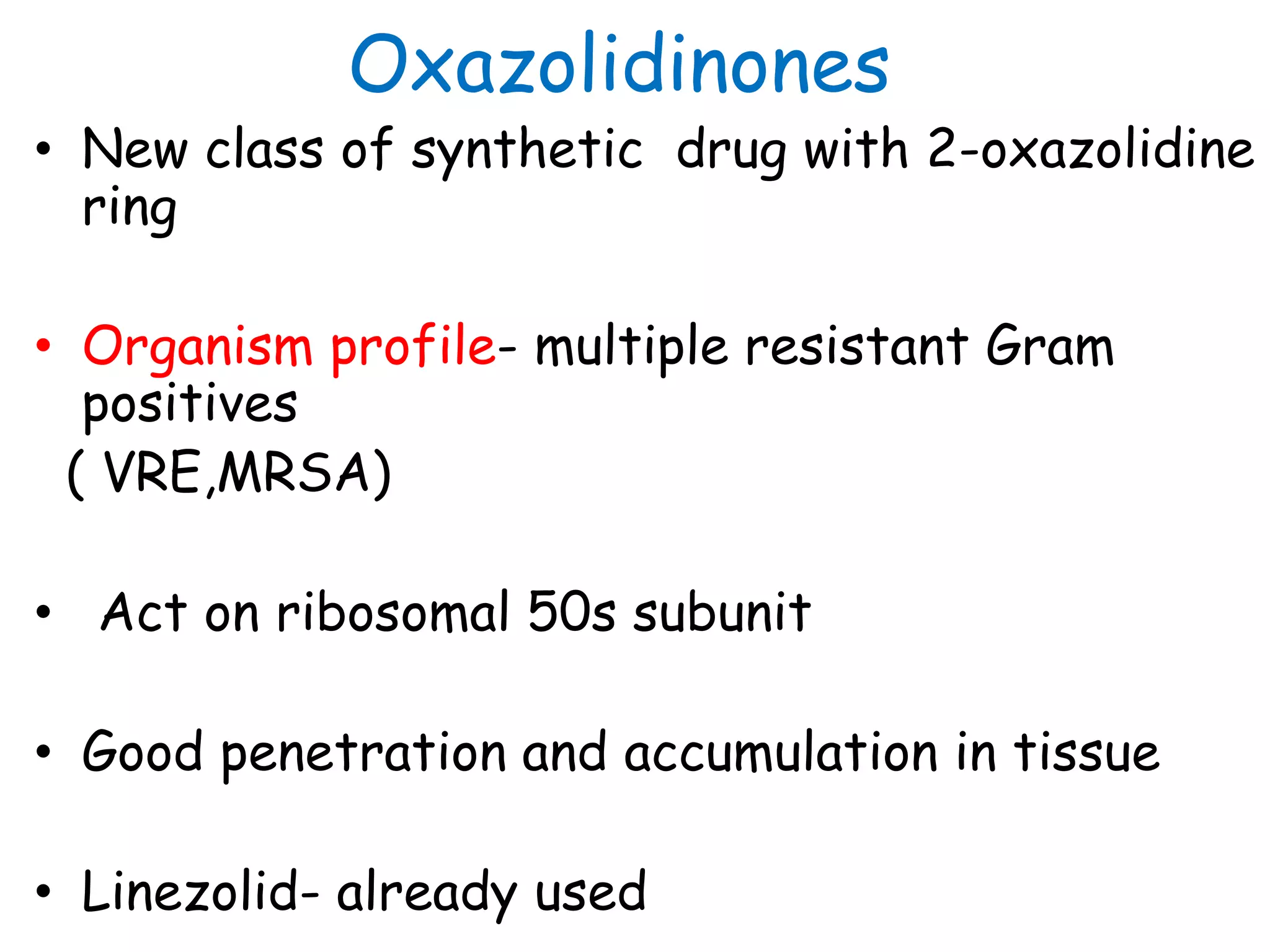
Oxazolidinones
• New class of synthetic drug with 2-oxazolidine
ring
• Organism profile- multiple resistant Gram
positives
( VRE,MRSA)
• Act on ribosomal 50s subunit
• Good penetration and accumulation in tissue
• Linezolid- already used
Tedizolid phosphate
• After oral or IV administration rapidly
change to active form
• Organism profile: better activity than
Linezolid in Staphylococcus, Streptococcus,
Enterococcus
• Active against Linezolid and Daptomycin
reistant bacteria
• PK/PD: once daily administration
• Safety profile: no myelosuppression
Tedizolid phosphate
• No inhibition of Monoamine Oxidase
• Clinical Use: for SSTIs
• Status: FDA approved ( 2014)
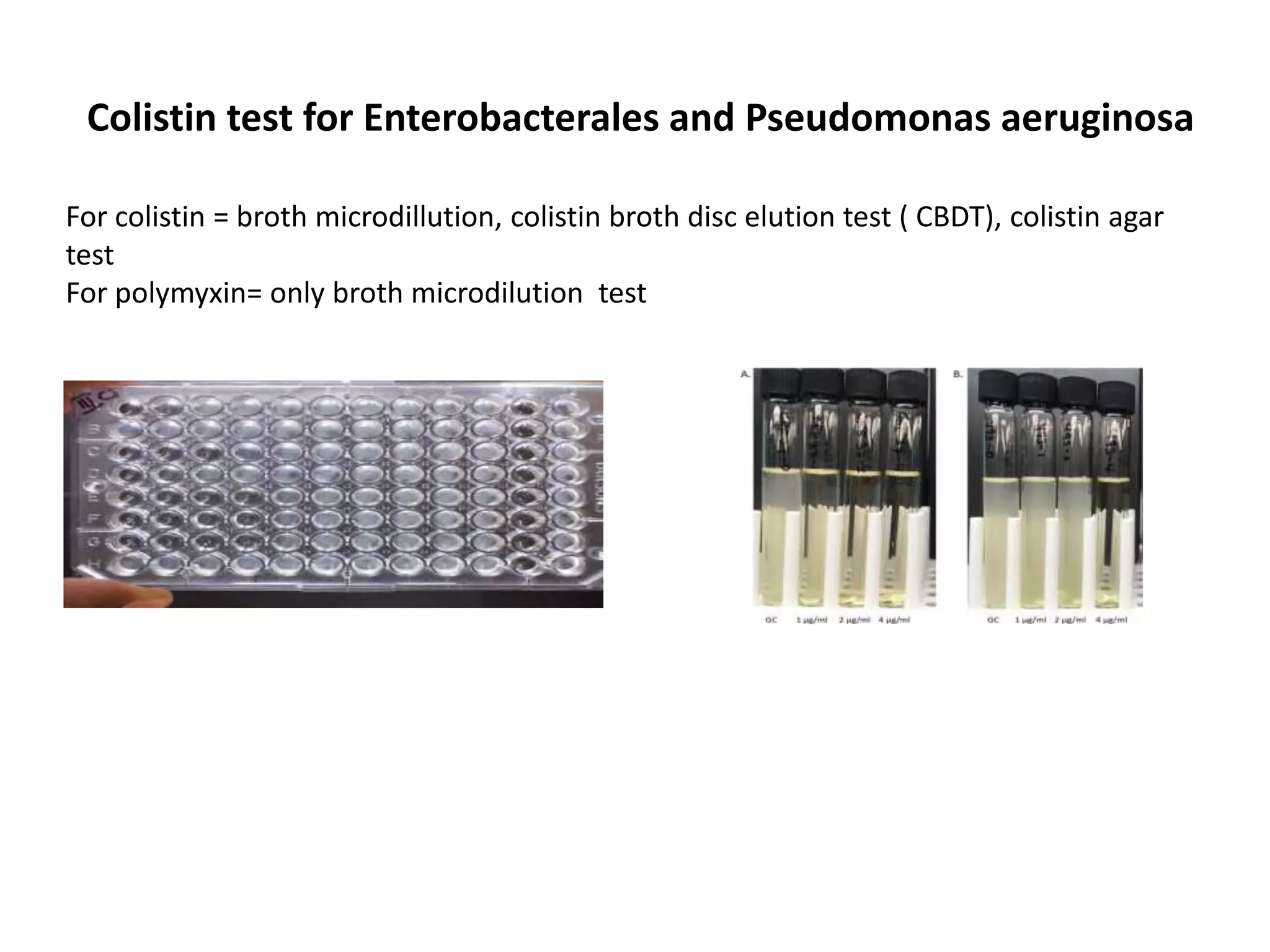
Colistin test for Enterobacterales and Pseudomonas aeruginosa
For colistin = broth microdillution, colistin broth disc elution test ( CBDT), colistin agar
test
For polymyxin= only broth microdilution test
Colistin interpretation
For Enterobacterales and Pseudomonas
aeruginosa
I = 2 or less
R= 4 or more
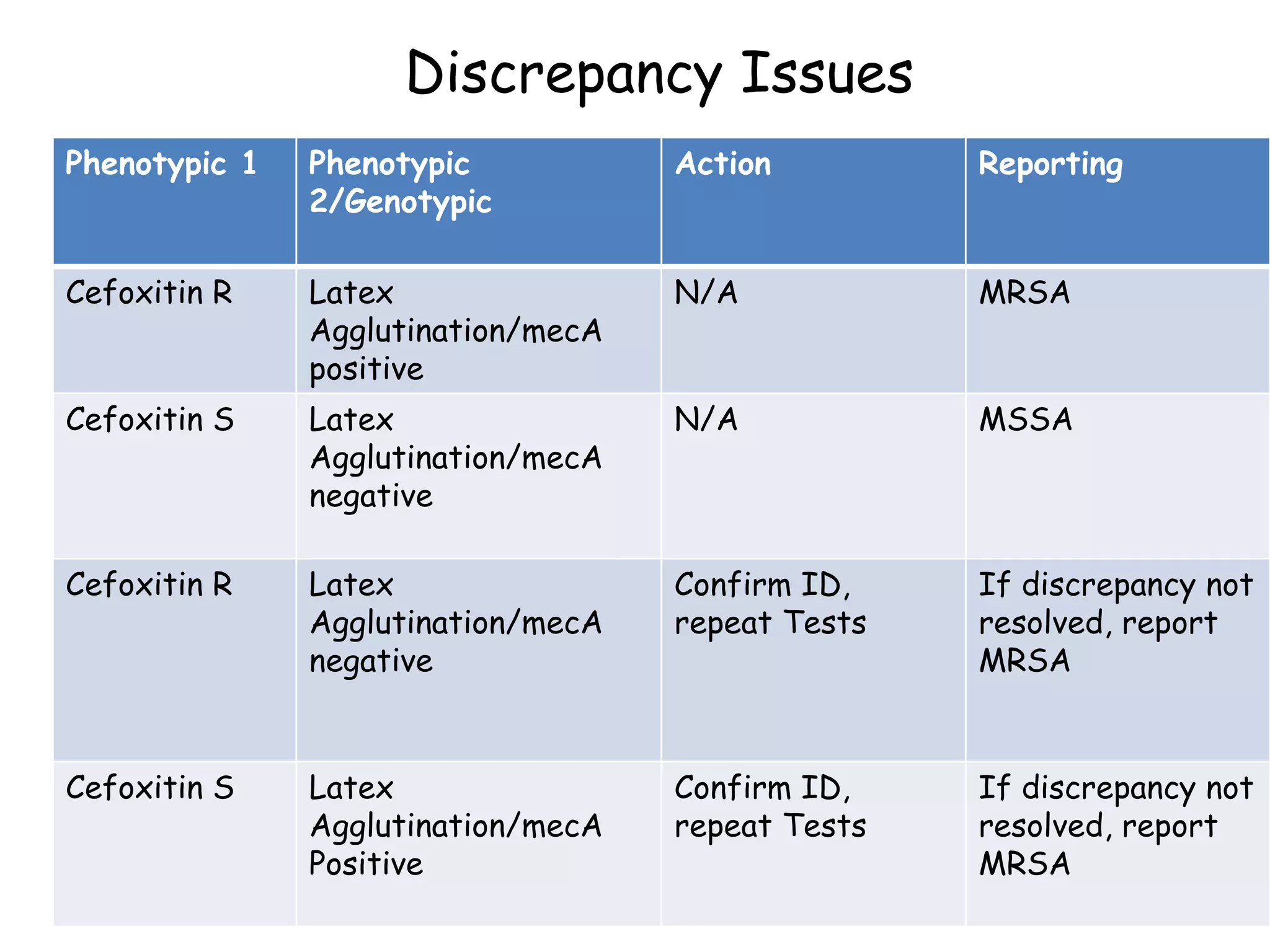
Discrepancy Issues
Table
Phenotypic 1 Phenotypic
2/Genotypic
Action Reporting
Cefoxitin R Latex
Agglutination/mecA
positive
N/A MRSA
Cefoxitin S Latex
Agglutination/mecA
negative
N/A MSSA
Cefoxitin R Latex
Agglutination/mecA
negative
Confirm ID,
repeat Tests
If discrepancy not
resolved, report
MRSA
Cefoxitin S Latex
Agglutination/mecA
Positive
Confirm ID,
repeat Tests
If discrepancy not
resolved, report
MRSA
Thank You

CLSI 2021.pptx

  • 1.
  • 2.
    About CLSI • Clinicaland Laboratory Standards Institute ( Previously NCCLS) • International, voluntary, educational, not-for –profit , interdisciplinary organization • Accredited by American National Standards Institute • Guidelines are formulated to improve diagnostic health care
  • 3.
    CLSI Workflow • CLSIsubcommittee on antimicrobial susceptibility testing develops interpretative criteria and quality standards • committee- guidelines- Voluntary expert committee - recommendations
  • 4.
    CLSI Vs FDA •CLSI tests investigational drugs • FDA may/may not change after CLSI changes • Review is done by FDA if changes occur • Industry people must follow FDA
  • 5.
    EUCAST is organisedby  European Society for Clinical Microbiology and Infectious Diseases (ESCMID),  European Centre for Disease Prevention and Control (ECDC),  Active national antimicrobial breakpoint committees in Europe. EUCAST was established by ESCMID in 1997,-> restructured in 2001-2002 and has been in operation in its current form since 2002. Financed by - ESCMID - National Breakpoint committees in Europe
  • 6.
    Europe had anumber of different breakpoints – setting authorities….and therefore different breakpoints….. Breakpoint committees 2016
  • 7.
    Disc test fromEUCAST and CLSI EUCAST • Mueller Hinton • Inoculum 0.5 McF • Incubation 16-20 +/_2h • MH + 5% Horse blood and 20 mg β – NAD for fastidious organism • Disc strengths • QC strains and reference ranges CLSI • Mueller Hinton • Incubation 18 +/_2h • Disc strengths • QC strains and reference ranges • Presence of Intermediate and susceptible dose dependent category • Recent introduction of Epidemiological cut off • New screening methods for CRE
  • 8.
    Staphylococcus species EUCASTvs. CLSI (EUCAST 2017, CLSI 2017) ANTIMICROBIAL EUCAST(mg/L) CLSI (mg/L) S ≤ R> S I R CEFTAROLINE 5μg S.aureus only ≥20mm ≤20mm - MIC ≤1 >1 - Ceftobiprole 5 μg S.aureus only ≥17mm ≤17mm - MIC ≤2 >2 - Ciprofloxacin 5μg ≥21mm ≤21mm ≥21 16-20 ≤15 24 24CONS MIC ≤1 >1 ≤1 2 ≥4 levofloxacin5μg ≥22mm ≤22mm ≥17 14-16 ≤13 MIC ≤1 >1 ≤2 4 ≥8 Gentamycin10μg ≥18mm ≤18mm ≥15 13-14 ≤12 MIC ≤1 >1 ≤4 8 ≥16 Amikacin30μg ≥18mm ≤16mm ≥17 15-16 ≤14 MIC ≤8 >16 ≤16 32 ≥64
  • 9.
    EUCAST and CLSIare different EUCAST CLSI Established 1997 1970 Membership Representatives of national breakpoint committtes & medical profession Medics, science, industry, regulators Relation to regulator Dialogue with ECDC, EMEA 5-6 meetings per year 2 meeting per yr Relation to industry Consultation with industry Full members Decisions Consensus Voting (www.eucast.org, www.clsi.org)
  • 10.
    EUCAST and CLSIare different EUCAST CLSI Work Sets breakpoints for European Medicines Agency, Advices ECDC,EFSA US-FDA sets breakpoints Funding ECDC, ESCMID National committees Industry and sales Outputs ECOFF, CBs,Resistance Detection,Expert rules Gradually included some this year Rationales Published Not published Documents Free download For
  • 11.
    CLSI Vs FDA •CLSI tests investigational drugs • FDA may/may not change after CLSI changes • Review is done by FDA if changes occur • Industry people must follow FDA
  • 12.
    General points • GroupA – routine primary testing • Group B- primary testing but selectively ( group A resistant, polymicrobial infections, drug allergy, intolerance) • Group C- multidrug resistant drugs very common • Group U- primarily urinary use only • Group O- clinical indication but not routinely tested in USA • Group Inv. – not approved by FDA
  • 13.
    General points • Susceptible:( S) resulting in likely clinical efficacy • Susceptible dose-dependent ( SDD): Susceptibility is dependent on dosing regimen • Cefepime- Enterobacterales • Cefaroline- Staphylococcus aureus • Daptomycin- Enterococcus faecium
  • 14.
    • Intermediate (I):response lower than susceptible isolates • Resistant: ( R) Isolates not inhibited by usually achievable concentrations or specific resistance mechanisms • Nonsusceptible: (NS): absence or rare occurrence of resistant strains
  • 15.
    Definitions • Routine test:tests for routine clinical testing • Supplemental test: methods other than routine disk diffusion and dilution • Screening tests: presumptive tests and need additional testing • Surrogate agent testing: replaces drug of interest • Equivalent agent testing: predicts result of closely related drugs of same class
  • 16.
  • 17.
  • 18.
    Supplemental Test • Colistinagar test: Enterobacterales and Pseudomonas aeruginosa: determining colistin resistance • Colistin broth disk elution test:Enterobacterales and Pseudomonas aeruginosa: determining colistin resistance
  • 19.
  • 20.
  • 21.
  • 22.
  • 23.
    Added azithromycin Discdiffusion and MIC breakpoint for Shigella spp Shigella Salmonella S= 16 or more 13 or more I= 11 to 15 R= 10 or less 12 or less S= 8 or less 16 or less I= 16 R= 32 or more 32 or more
  • 24.
    Treatment of Shigella 1.First line: Fluroquinolones 2. Second line: Beta lactams, Cephalosporins Now azithromycin can be used as second line agent where resistance to fluroquinolones high and among macrolides, azithromycin preferred
  • 25.
    Added azithromycin discdiffusion breakpoint for N.gonorrheae S= more than 30 S= MIC 1 or less Treatment: 1. Ceftriaxone 500 mg IM single dose 2. Gentamicin 240 mg IM single dose plus azithromycin 2 gm orally single dose
  • 26.
    Added Imipenem-relebactam discdiffusion and MIC breakpoint for Enterobacterales and Pseudomonas aeruginosa MIC breakpoints for Anaerobes Enterobacterales Pseudomonas aeruginosa S= 25 or more S= 23 or more I= 21-24 I= 20-22 R= 20 or less R= 19 or less S= 1/4 S= 2/4 I= 2/4 S= 4/4 R= 4/4 or more S= 8/4
  • 27.
    Beta Lactamase Inhibitors •Protects beta lactam antibiotics from enzymatic hydrolysis • Current ones- active against Class A beta lactamases • Poor activity against class C and D enzymes • Newer agents – activity against class C and D enzymes, with Carbapenems increase activity against MBLs
  • 28.
    Relebactam There are sixbetalactamse inhibitors: Sulbactam, clavulanic acid, tazobactam, avibactam, vaborbactam, Relebactam •Relebactam inhibits class A carbapenemases but not class B or D Oxa •Used for MDR Gram negative organisms •Imipenem-relebactam used in cUTI, cIAI, VAP
  • 29.
    Added ceftolozane-tazobactam MIC breakpointsfor H.influenzae and H.parainfluenzae S= 0.5/4 or less Treatment : ceftriaxone or cefotaxime for meningitis azithromycin or quinolones for mild infections
  • 30.
    Ceftolozane/Tazobactam • Novel oxyimino-aminothiazolylcephalosporin and betalastamse inhibitor combination • MOA- novel cephalosporin and inhibitor combination • Organism profile – P. aeruginosa ( cephalosprin and carbapenem resistant ones) • E.coli and Klebsiella
  • 31.
    Ceftolozane/Tazobactam • Clinical Uses-complicated intrabdominal infections , complicated UTI • Advantages : Good antipseudomonal activity • Status- FDA approved ( 2014)
  • 32.
    Added Lefamulin discdiffusion and MIC testing for Staphylococcus spp, H.influenzae, H.parainfluenzae and S.pneumoniae H.Influenzae H.parainfluenzae S= 17 or more S= MIC 2 or less S. aureus S= 23 or more S= MIC 0.25 or less S.pneumoniae S= 17 or more S= 0.5 or more
  • 33.
    Pleuromitilin compounds • Naturalproduct antibiotic ( 1950s) first used in veterinary infections • Retapumilin: first human use ( topical) • Organism profile: organisms infecting skin and respiratory infections • MOA: Inhibit bacterial protein synthesis • Newer Compounds : Lefamulin( BC 3781)
  • 34.
    Lefamulin • Active againstatypical organisms and Staphylococcus aureus • Also Enterococcus spp • Used for CABP, skin and soft tissue infections • No cross resistance between other antibiotics for Gram positive bacteria
  • 35.
    Separated breakpoints oforal and parenteral cefazolin Oral cutoff ( Surrogate test for other oral agents like cefaclor, cefpodoxime for UTI) S= 15 or more R= 14 or less S= 16 or less R= 32 or more Parenteral cutoff S= 23 or more I= 20 -22 R= 19 or less S= 2 or less I= 4 R = 8 or more
  • 36.
    Revised oxacillin breakpointsfor Staphylococcus spp except S.aureus And S.lugdunensis Oxacillin S = 18 or more Oxacillin R= 17 or less Oxacillin MIC S= 0.5 or less Oxacillin MIC R= 1 or more Cefoxitin S= 25 or more Cefoxitin R= 24 or less
  • 37.
    mecA and mecC mecA:Cefoxitin R, Oxacillin R mecC: Cefoxitin R, Oxacillin S
  • 38.
    Clarified the interpretativecategory of intermediate S: sensitive I: Intermediate ( ˄ concentrates in urine): ampicillin, ticarcillin, TZP, carbapenems, ceftaroline, cefalosporins, aminoglycosides, fluoroquinolones SDD: Susceptible dose dependent R: Resistant NS: Not susceptible
  • 39.
    Statement for isolatesfor which there are not current CLSI cut off Only the microorganism listed in the table should be reported. If FDA susceptibility test interpretative criteria ( STIC) is there, it can be used
  • 40.
    Warning of reportingof antibiotics for use in CSF isolate Agents only given by oral route, 1st and 2nd generation cephalosporins, cephamycins, Doripenem, imipenem, ertapenem, lefamulin, clindamycin, macrolides, tetracyclines, Fluoroquinolones: should not be reported in CSF
  • 41.
    Positive blood culturesas inoculum Ampicillin, aztreonam, ceftazidime, ceftriaxone, tobramycin, Trimethoprim-sulfamethoxazole: can be reported
  • 42.
    Staphylococcus aureus testingfor linezolid and tedizolid Organisms that are susceptible to linezolid also susceptible to tedizolid But organisms that are resistant to linezolid may be susceptible to tedizolid
  • 43.
    Oxazolidinones • New classof synthetic drug with 2-oxazolidine ring • Organism profile- multiple resistant Gram positives ( VRE,MRSA) • Act on ribosomal 50s subunit • Good penetration and accumulation in tissue • Linezolid- already used
  • 44.
    Tedizolid phosphate • Afteroral or IV administration rapidly change to active form • Organism profile: better activity than Linezolid in Staphylococcus, Streptococcus, Enterococcus • Active against Linezolid and Daptomycin reistant bacteria • PK/PD: once daily administration • Safety profile: no myelosuppression
  • 45.
    Tedizolid phosphate • Noinhibition of Monoamine Oxidase • Clinical Use: for SSTIs • Status: FDA approved ( 2014)
  • 46.
    Colistin test forEnterobacterales and Pseudomonas aeruginosa For colistin = broth microdillution, colistin broth disc elution test ( CBDT), colistin agar test For polymyxin= only broth microdilution test
  • 48.
    Colistin interpretation For Enterobacteralesand Pseudomonas aeruginosa I = 2 or less R= 4 or more
  • 49.
    Discrepancy Issues Table Phenotypic 1Phenotypic 2/Genotypic Action Reporting Cefoxitin R Latex Agglutination/mecA positive N/A MRSA Cefoxitin S Latex Agglutination/mecA negative N/A MSSA Cefoxitin R Latex Agglutination/mecA negative Confirm ID, repeat Tests If discrepancy not resolved, report MRSA Cefoxitin S Latex Agglutination/mecA Positive Confirm ID, repeat Tests If discrepancy not resolved, report MRSA
  • 50.

Editor's Notes

  • #7  BSAC British Society for Antimicrobial Chemotherapy (UK) CA-SFM Comité de l ́Antibiogramme de la Société Francaise de Microbiologie (France) CRG Commissie Richtlijnen Gevoeligheidsbepalingen (Netherlands) DIN Deutsches Institute for Normung eV. (Germany) FESCI Federation of European Societies of Chemotherapy and Infection NWGA (AFA) Norwegian Working Group for Antibiotics (Arbeidsgruppen for antibiotikaspørsmål) (Norway) SRGA -The Swedish Reference Group of Antibiotics (SRGA) SWAB Stichting Werkgroep Antibioticabeleid (Netherlands) Structure There were originally six National Breakpoint Committees: BSAC (UK), CA- SFM (France), CRG (The Netherlands), DIN (Germany), NWGA (Norway) and SRGA (Sweden). The DIN breakpoint committee has been replaced by the German NAC and CRG is now incorporated into Stichting Werkgroep Antibioticabeleid (SWAB). Each national breakpoint committee consists of 10-20 experts within the fields of clinical microbiology, infectious diseases and pharmacology. Some have additional experts from other medical specialties, from veterinary medicine and from the pharmaceutical and antimicrobial susceptibility testing industry.
  • #9 No difference for susceptible isolates • VISA reported resistant by EUCAST and intermediate by CLSI • No difference for VanA-mediated vancomycin resistance • hVISA no difference as not detected by either guidelines
  • #10 EUCAST are generally more conservative with >50% of all breakpoints lower. when EUCAST is higher its mainly to avoid splitting the wild type and thereby reduce the test error . Clsi uses the intermediate category to reduce test errors and prevent VME,ME
  • #11 EFSA- FULL FORM- EUCAST Susceptible less than equal to x mg/L Resistant > y mg/L.Intermediate is inferred. CLSISusceptible- less than equal to < x μg/mL Resistant more than equal to y μg/mL .Intermediate and sdd spelt out. EUCAST breakpoints lower than CLSI - are updated as pharmacodynamic understanding advances - CLSI has found changes more difficult , FDA more so CLSI “I” as a buffer zone between S & R to minimize errors in MIC/zone correlation