Antidote
Prepared by: www.mcqsinpharmacology.com
Treatment of Poisoning:
Supportive care
Activated charcoal for serious
oral poisonings
Occasional use of specific
antidotes or dialysis
Only rare use of gastric
emptying
• The proper use of antidotes in the
intensive care setting, when
combined with aggressive supportive
care, may significantly reduce the
morbidity and mortality associated
with many severe poisonings.
 www.mcqsinpharmacology.com
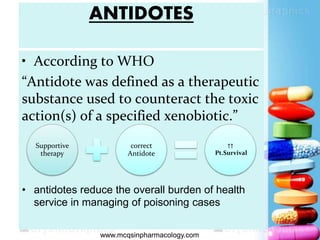
ANTIDOTES
• According to WHO
“Antidote was defined as a therapeutic
substance used to counteract the toxic
action(s) of a specified xenobiotic.”
• antidotes reduce the overall burden of health
service in managing of poisoning cases
Supportive
therapy
correct
Antidote
↑↑
Pt.Survival
 www.mcqsinpharmacology.com
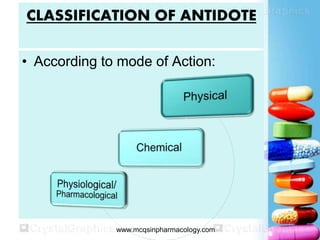
CLASSIFICATION OF ANTIDOTE
• According to mode of Action:
 www.mcqsinpharmacology.com
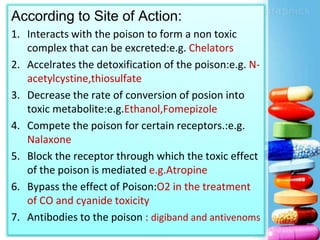
According to Site of Action:
1. Interacts with the poison to form a non toxic
complex that can be excreted:e.g. Chelators
2. Accelrates the detoxification of the poison:e.g. N-
acetylcystine,thiosulfate
3. Decrease the rate of conversion of posion into
toxic metabolite:e.g.Ethanol,Fomepizole
4. Compete the poison for certain receptors.:e.g.
Nalaxone
5. Block the receptor through which the toxic effect
of the poison is mediated e.g.Atropine
6. Bypass the effect of Poison:O2 in the treatment
of CO and cyanide toxicity
7. Antibodies to the poison : digiband and antivenoms
Physical Antidote:
Agent use to interfere with poison
through physical properties, not
change their nature
a) Adsorbing: The main example is
activated charcol
b) Coating: A mixture of egg & milk
make a coat over the mucosa.
c) Dissolving: 10% alcohol or glycine
for carbolic acid
 www.mcqsinpharmacology.com
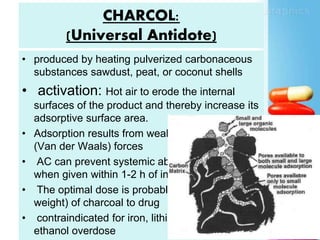
CHARCOL:
(Universal Antidote)
• produced by heating pulverized carbonaceous
substances sawdust, peat, or coconut shells
• activation: Hot air to erode the internal
surfaces of the product and thereby increase its
adsorptive surface area.
• Adsorption results from weak intermolecular
(Van der Waals) forces
• AC can prevent systemic absorption of drugs
when given within 1-2 h of ingestion
• The optimal dose is probably a 40:1 ratio (by
weight) of charcoal to drug
• contraindicated for iron, lithium, potassium, and
ethanol overdose
Chemical Antidote:
• Interact specifically with a toxicant,
or neutralize the toxicant.
e.g. metal chelators combine with metals to form
complexes that can then be eliminated by the
kidneys
Mainly act by two mechanisms:
 Complex Formation:
Antidote make complex with the toxicant making it
unavailable to cross the membrane or to interact
with receptors
 DMSA(dimercaprol and dimercaptosuccinic
acid are sulfohydral compounds that bind metal
such as arsenic acid ,lead.
 www.mcqsinpharmacology.com
 Sp. Binding agents like EDTA, defroxamine and
D-pencillamine act by chelation of metal
forming more water soluble complex
 Antivenins and antibodies against digitoxin are
immunologicaly genrated agents that bind
specifically to the toxin or venom
 Metabolic conversion:
Detoxification to less toxic product
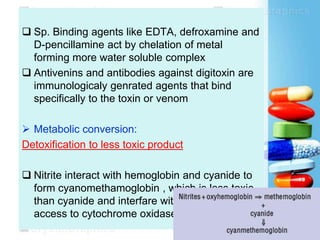
 Nitrite interact with hemoglobin and cyanide to
form cyanomethamoglobin , which is less toxic
than cyanide and interfare with the cyanide
access to cytochrome oxidase system.
Pharmacological antidote:
• counteract the effects of a poison by producing the opposite
pharmacological effects, e.g., ACHE inhibitors atropine
• Pharmacologic antidotes may
neutralize or antagonize the effects
of a toxicant.
• This type of antidote may act by
following 5 mechanism.
 www.mcqsinpharmacology.com
1. Preventing the formation of toxic
metabolites:
More effective when given immediately before
toxic metabolic activation
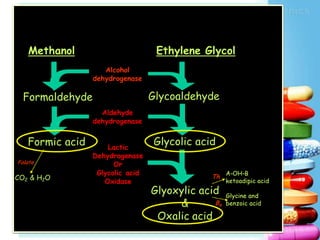
Example:
Ethanol and 4-methylpyrazole(4-MP) which
compete with the alcohol dehydrogenase which
prevent the formation of toxic intermediate from
ethylene glycol.
2. By Facilitation Of More Rapid Or Complete
Elimination Of A Toxicant :
Change the physiochemical nature of toxin,
allowing better glomerular filtration and prohibt
tubular reabsorption.
eg., molybdenum and sulfate for copper toxicity by
making water soluble complex,
3. By competing with the Toxicant’s action at a
receptor site:
a) Antagonism:
Competitive antagonism:
 Naloxone/Naltrexone: Opioid dependence,
longer action and affinity for mu receptor.
 Flumenazil: Antagonist for Benzodiazepine
 Atropine: organophosphate, carbamate and
other parasympathomimetic antidote.
It is also used to correct bradycardia caused by
morphine, digitalis, beta blockers etc
 www.mcqsinpharmacology.com
Non Competitive Antagonism:
 Calcium gluconate:
Used for Calcium channel blocker especialy
Verapamil
 Black widow spider bite
 Lead colic
 Oxalic acid
Paralidoxime :ChE activator act by breaking Alkyl
phosphate ChE bond. It is used in
organophosphate toxicity.
Diacetyl Monoxyime(DAM): action same as PAM
but with more BBB penetration.
Physostigmine: Counteract the anticholinergic
effect
 www.mcqsinpharmacology.com
4. By blocking receptors responsible for the
toxic effect :
The physiologic effect induced by a toxin is
prevented by an antidote, although the toxicant is
unchanged and may still be active.
Example:
atropine blocks the physiologic effect of
acetylcholine at cholinergic synapse and
neuromuscular junction ,and in organophosphate
toxicity
 www.mcqsinpharmacology.com
5. By aiding in the restoration of normal
function:
The antidote promotes return to normal function
by repairing a defect or enhancing a function that
correct the effect of poison.
Example:
Methylene blue:
In nitrite poisoning, methylene blue interact with
reduced NADPH to reduce the ferric iron of
methemoglobin back to ferrous ion in hemoglobin,
which can again transport oxygen
Acetylcysteine :
Acetylcysteien supplies the precursor amino acids
for glutathione, which serves as biologic
antioxident against acetaminphen toxicosis
 www.mcqsinpharmacology.com
Thanks
Questions ??
 www.mcqsinpharmacology.com
References:
• http://www.merckmanuals.com/professional/injuri
es_poisoning/poisoning/general_principles_of_p
oisoning.html
• J Med Toxicol. 2010 June; 6(2): 190–198.
Activated Charcoal for Acute Poisoning: One
Toxicologist’s Journey Kent R. Olson
• http://www.mdpoison.com/healthcareprofessiona
ls/toxtidbits.html
• NVMS Toxiology by Grey D. Osweiller
 www.mcqsinpharmacology.com

Antidote

  • 1.
  • 2.
    Treatment of Poisoning: Supportivecare Activated charcoal for serious oral poisonings Occasional use of specific antidotes or dialysis Only rare use of gastric emptying
  • 3.
    • The properuse of antidotes in the intensive care setting, when combined with aggressive supportive care, may significantly reduce the morbidity and mortality associated with many severe poisonings.  www.mcqsinpharmacology.com
  • 4.
    ANTIDOTES • According toWHO “Antidote was defined as a therapeutic substance used to counteract the toxic action(s) of a specified xenobiotic.” • antidotes reduce the overall burden of health service in managing of poisoning cases Supportive therapy correct Antidote ↑↑ Pt.Survival  www.mcqsinpharmacology.com
  • 5.
    CLASSIFICATION OF ANTIDOTE •According to mode of Action:  www.mcqsinpharmacology.com
  • 6.
    According to Siteof Action: 1. Interacts with the poison to form a non toxic complex that can be excreted:e.g. Chelators 2. Accelrates the detoxification of the poison:e.g. N- acetylcystine,thiosulfate 3. Decrease the rate of conversion of posion into toxic metabolite:e.g.Ethanol,Fomepizole 4. Compete the poison for certain receptors.:e.g. Nalaxone 5. Block the receptor through which the toxic effect of the poison is mediated e.g.Atropine 6. Bypass the effect of Poison:O2 in the treatment of CO and cyanide toxicity 7. Antibodies to the poison : digiband and antivenoms
  • 7.
    Physical Antidote: Agent useto interfere with poison through physical properties, not change their nature a) Adsorbing: The main example is activated charcol b) Coating: A mixture of egg & milk make a coat over the mucosa. c) Dissolving: 10% alcohol or glycine for carbolic acid  www.mcqsinpharmacology.com
  • 8.
    CHARCOL: (Universal Antidote) • producedby heating pulverized carbonaceous substances sawdust, peat, or coconut shells • activation: Hot air to erode the internal surfaces of the product and thereby increase its adsorptive surface area. • Adsorption results from weak intermolecular (Van der Waals) forces • AC can prevent systemic absorption of drugs when given within 1-2 h of ingestion • The optimal dose is probably a 40:1 ratio (by weight) of charcoal to drug • contraindicated for iron, lithium, potassium, and ethanol overdose
  • 9.
    Chemical Antidote: • Interactspecifically with a toxicant, or neutralize the toxicant. e.g. metal chelators combine with metals to form complexes that can then be eliminated by the kidneys Mainly act by two mechanisms:  Complex Formation: Antidote make complex with the toxicant making it unavailable to cross the membrane or to interact with receptors  DMSA(dimercaprol and dimercaptosuccinic acid are sulfohydral compounds that bind metal such as arsenic acid ,lead.  www.mcqsinpharmacology.com
  • 10.
     Sp. Bindingagents like EDTA, defroxamine and D-pencillamine act by chelation of metal forming more water soluble complex  Antivenins and antibodies against digitoxin are immunologicaly genrated agents that bind specifically to the toxin or venom  Metabolic conversion: Detoxification to less toxic product  Nitrite interact with hemoglobin and cyanide to form cyanomethamoglobin , which is less toxic than cyanide and interfare with the cyanide access to cytochrome oxidase system.
  • 11.
    Pharmacological antidote: • counteractthe effects of a poison by producing the opposite pharmacological effects, e.g., ACHE inhibitors atropine • Pharmacologic antidotes may neutralize or antagonize the effects of a toxicant. • This type of antidote may act by following 5 mechanism.  www.mcqsinpharmacology.com
  • 12.
    1. Preventing theformation of toxic metabolites: More effective when given immediately before toxic metabolic activation Example: Ethanol and 4-methylpyrazole(4-MP) which compete with the alcohol dehydrogenase which prevent the formation of toxic intermediate from ethylene glycol. 2. By Facilitation Of More Rapid Or Complete Elimination Of A Toxicant : Change the physiochemical nature of toxin, allowing better glomerular filtration and prohibt tubular reabsorption. eg., molybdenum and sulfate for copper toxicity by making water soluble complex,
  • 13.
    3. By competingwith the Toxicant’s action at a receptor site: a) Antagonism: Competitive antagonism:  Naloxone/Naltrexone: Opioid dependence, longer action and affinity for mu receptor.  Flumenazil: Antagonist for Benzodiazepine  Atropine: organophosphate, carbamate and other parasympathomimetic antidote. It is also used to correct bradycardia caused by morphine, digitalis, beta blockers etc  www.mcqsinpharmacology.com
  • 14.
    Non Competitive Antagonism: Calcium gluconate: Used for Calcium channel blocker especialy Verapamil  Black widow spider bite  Lead colic  Oxalic acid Paralidoxime :ChE activator act by breaking Alkyl phosphate ChE bond. It is used in organophosphate toxicity. Diacetyl Monoxyime(DAM): action same as PAM but with more BBB penetration. Physostigmine: Counteract the anticholinergic effect  www.mcqsinpharmacology.com
  • 15.
    4. By blockingreceptors responsible for the toxic effect : The physiologic effect induced by a toxin is prevented by an antidote, although the toxicant is unchanged and may still be active. Example: atropine blocks the physiologic effect of acetylcholine at cholinergic synapse and neuromuscular junction ,and in organophosphate toxicity  www.mcqsinpharmacology.com
  • 16.
    5. By aidingin the restoration of normal function: The antidote promotes return to normal function by repairing a defect or enhancing a function that correct the effect of poison. Example: Methylene blue: In nitrite poisoning, methylene blue interact with reduced NADPH to reduce the ferric iron of methemoglobin back to ferrous ion in hemoglobin, which can again transport oxygen Acetylcysteine : Acetylcysteien supplies the precursor amino acids for glutathione, which serves as biologic antioxident against acetaminphen toxicosis  www.mcqsinpharmacology.com
  • 19.
  • 20.
  • 21.
    References: • http://www.merckmanuals.com/professional/injuri es_poisoning/poisoning/general_principles_of_p oisoning.html • JMed Toxicol. 2010 June; 6(2): 190–198. Activated Charcoal for Acute Poisoning: One Toxicologist’s Journey Kent R. Olson • http://www.mdpoison.com/healthcareprofessiona ls/toxtidbits.html • NVMS Toxiology by Grey D. Osweiller  www.mcqsinpharmacology.com