ANTACID
Welcome
To
My presentation
Name: MD. Zahirul Islam
Roll:333
Batch:12th
Department of pharmacy
World University of Bangladesh
Presentation
of
Antacid
Antacid
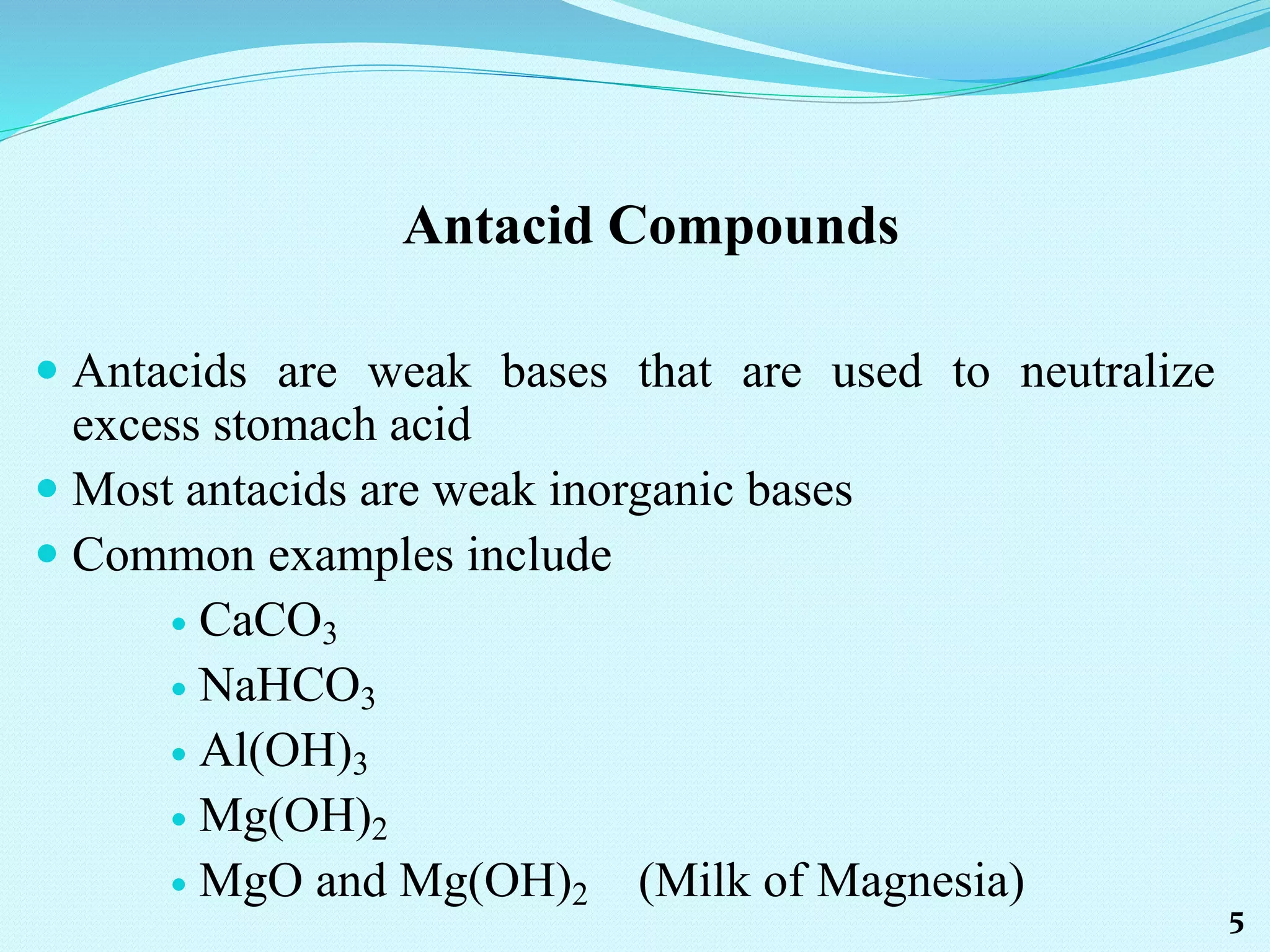
Antacid Compounds
 Antacids are weak bases that are used to neutralize
excess stomach acid
 Most antacids are weak inorganic bases
 Common examples include
 CaCO3
 NaHCO3
 Al(OH)3
 Mg(OH)2
 MgO and Mg(OH)2 (Milk of Magnesia)
5
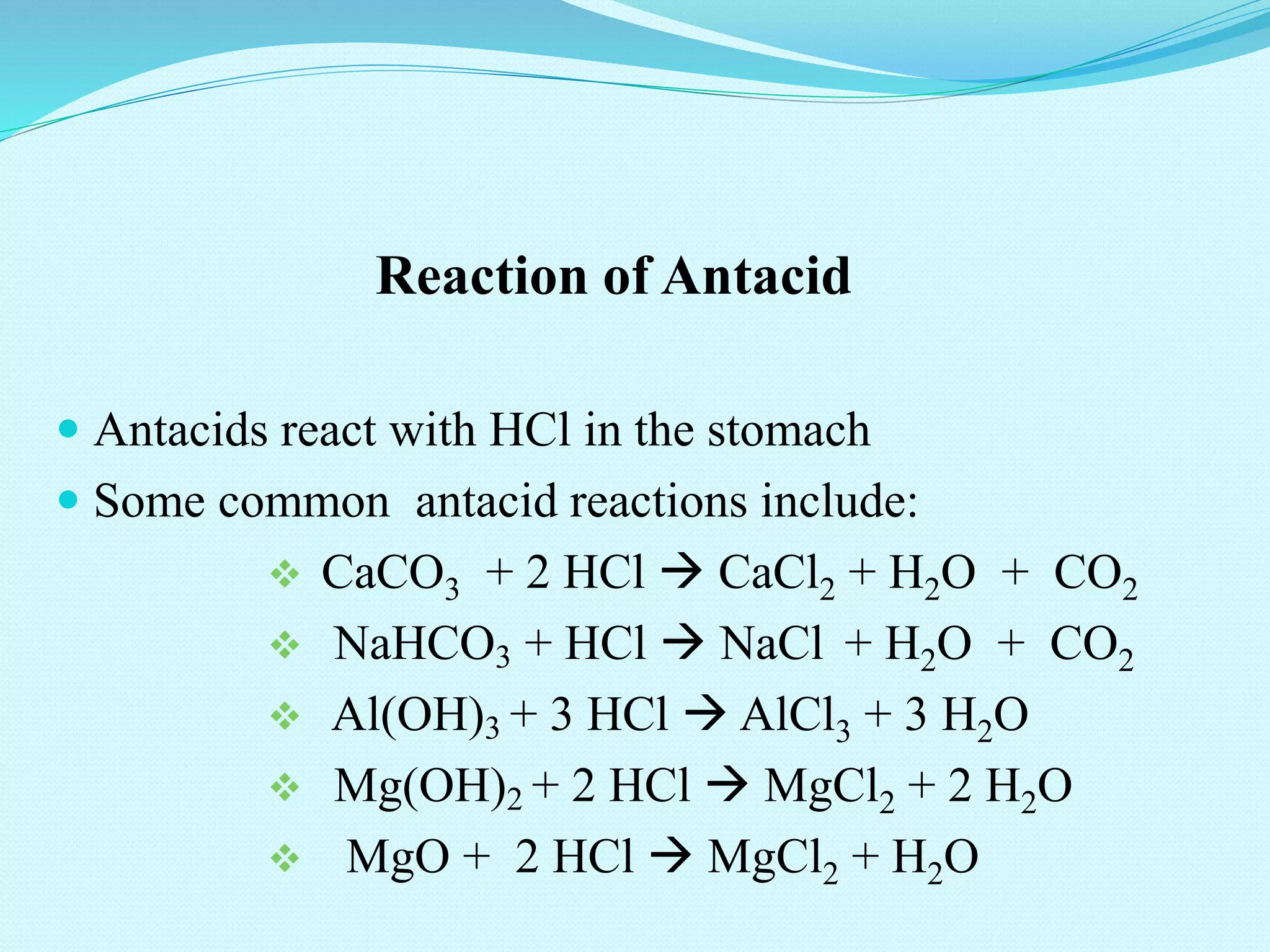
Reaction of Antacid
 Antacids react with HCl in the stomach
 Some common antacid reactions include:
 CaCO3 + 2 HCl  CaCl2 + H2O + CO2
 NaHCO3 + HCl  NaCl + H2O + CO2
 Al(OH)3 + 3 HCl  AlCl3 + 3 H2O
 Mg(OH)2 + 2 HCl  MgCl2 + 2 H2O
 MgO + 2 HCl  MgCl2 + H2O
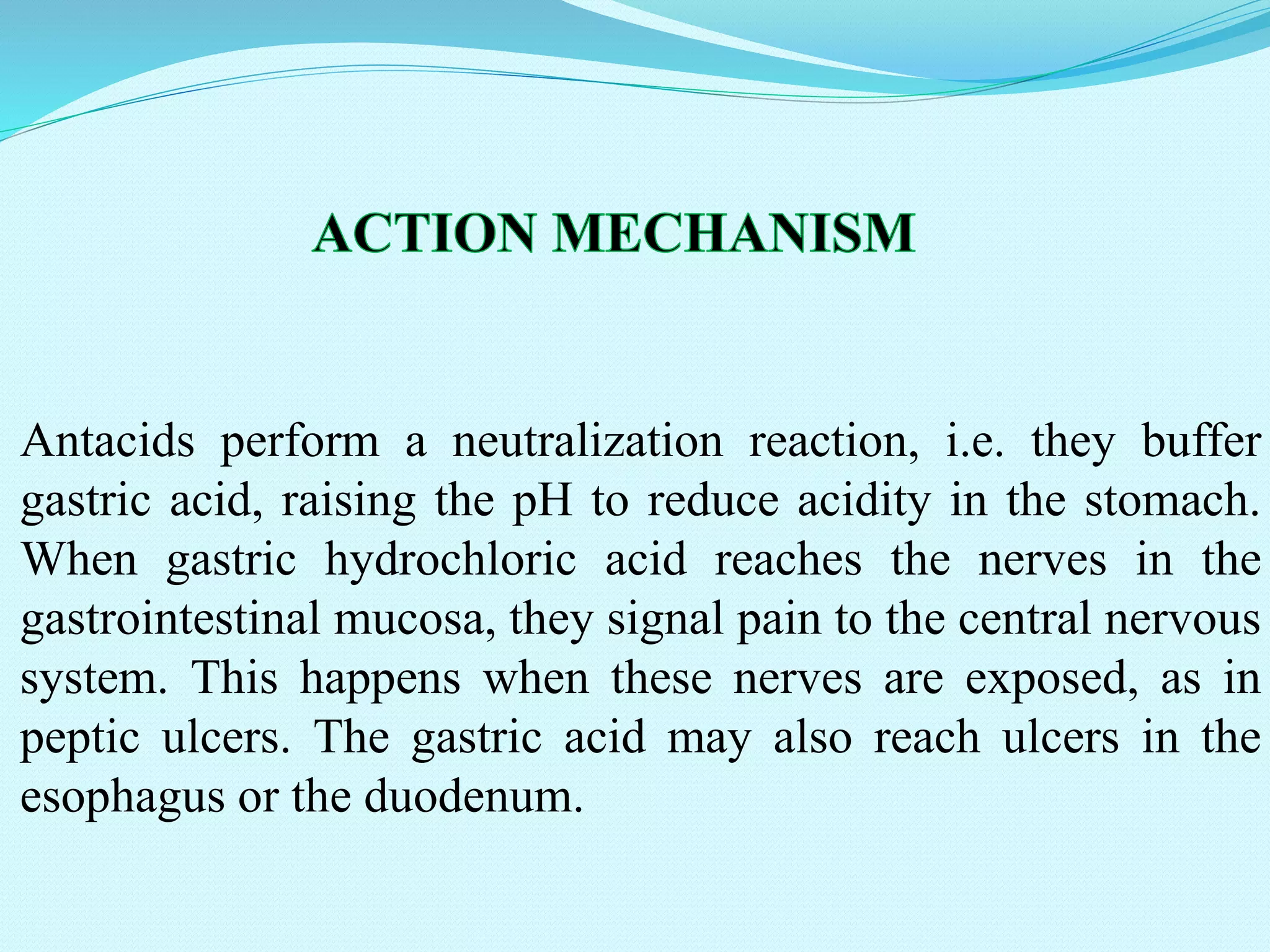
Antacids perform a neutralization reaction, i.e. they buffer
gastric acid, raising the pH to reduce acidity in the stomach.
When gastric hydrochloric acid reaches the nerves in the
gastrointestinal mucosa, they signal pain to the central nervous
system. This happens when these nerves are exposed, as in
peptic ulcers. The gastric acid may also reach ulcers in the
esophagus or the duodenum.
Causes Of Excessive Release Of Acids In The
Stomach
 Alcohol Consumption.
 Eating Certain Foods.
 Smoking.
 Certain Drugs i.e. Aspirin.
 Stress.
Requirement TO Form The Antacid
Burettes, pipettes, titration flasks, measuring flasks,
beakers, weight box, fractional weights, sodium
hydroxide, sodium carbonate, hydrochloric acid,
phenolphthalein.
 Capsules.
 Tablets.
 Powder.
 Chewable Tablet.
 Suspension.
1. Alka-Seltzer – NaHCO3 and/or KHCO3
2. Equate – Al(OH)3 and Mg(OH)2
3. Gaviscon – Al(OH)3
4. Maalox (liquid) – Al(OH)3 and Mg(OH)2
5. Maalox (tablet) – CaCO3
6. Milk of Magnesia – Mg(OH)2
7. Pepto-Bismol – HOC6H4COO
8. Pepto-Bismol Children’s – CaCO3
9. Rolaids – CaCO3 and Mg(OH)2
10. Tums – CaCO3
11. Mylanta
Some drugs used as antacids are :
1. Aluminium hydroxide
2. Magnesium hydroxide
3. Calcium carbonate
4. Sodium bicarbonate
5. Bismuth subsalicylate
6. Histamine
7. Cimetidine
1.ALUMINIUM HYDROXIDE
2.MAGNESIUM HYDROXIDE
3.CALCIUM CARBONATE
4.SODIUM BICARBONATE
5.BISMUTH SUBSALICYLATE
Uses of Antacid
 It bring down the percentage of Acidity in our Stomach and
prevent mucus lining in the stomach.
 It prevent from HEART BURN (acid from stomach rising
into esophagus) that can to our stomach lining.
 It also prevent from the ULCER(damage to lining of
stomach wall, resulting in loss of tissues and inflammation).
Side Effect Of Antacid
 Magnesium Compounds may cause diarrhea
 Aluminum Compounds may cause constipation and they
also may interfere with the adsorption of phosphates in the
formation of bones. This is more likely to be true if they are
taken for an extended period of time
 Carbonates may generate carbon dioxide leading to
bloating and flatulence.
 Calcium compounds containing may also increase
calcium output in the urine, which might be
associated with kidney stones.
 Sodium : Increased intake of sodium may be
deleterious for arterial hypertension, heart failure
and many renal diseases.
Who Cannot Take Antacid
Patient with kidney failure or heart burn diseases Sodium
Bicarbonate has high Sodium content and is not appropriate
for people who are on salt restricted diet or have congestive
heart failure high blood pressure or kidney problem .In
pregnant if a lady is pregnant Antacid are Safetous for heart
burn symptoms but do not use Antacid.
Indications when we take Antacid
 When heart burn is there then we take Antacid to reduce the
heartburn.
 Treatment with antacids alone is symptomatic and only
justified for minor symptoms.
 The utility of many combinations of antacids is not clear,
although the combination of magnesium and aluminium
salts may prevent alteration of bowel habits.
 A typical feeling of restlessness.
 Indigestion.
 Feeling of nausea (wanting to throw up) and actual
vomiting.
ANTACID

ANTACID

  • 1.
  • 2.
  • 3.
    Name: MD. ZahirulIslam Roll:333 Batch:12th Department of pharmacy World University of Bangladesh Presentation of Antacid
  • 4.
  • 5.
    Antacid Compounds  Antacidsare weak bases that are used to neutralize excess stomach acid  Most antacids are weak inorganic bases  Common examples include  CaCO3  NaHCO3  Al(OH)3  Mg(OH)2  MgO and Mg(OH)2 (Milk of Magnesia) 5
  • 6.
    Reaction of Antacid Antacids react with HCl in the stomach  Some common antacid reactions include:  CaCO3 + 2 HCl  CaCl2 + H2O + CO2  NaHCO3 + HCl  NaCl + H2O + CO2  Al(OH)3 + 3 HCl  AlCl3 + 3 H2O  Mg(OH)2 + 2 HCl  MgCl2 + 2 H2O  MgO + 2 HCl  MgCl2 + H2O
  • 7.
    Antacids perform aneutralization reaction, i.e. they buffer gastric acid, raising the pH to reduce acidity in the stomach. When gastric hydrochloric acid reaches the nerves in the gastrointestinal mucosa, they signal pain to the central nervous system. This happens when these nerves are exposed, as in peptic ulcers. The gastric acid may also reach ulcers in the esophagus or the duodenum.
  • 8.
    Causes Of ExcessiveRelease Of Acids In The Stomach  Alcohol Consumption.  Eating Certain Foods.  Smoking.  Certain Drugs i.e. Aspirin.  Stress.
  • 9.
    Requirement TO FormThe Antacid Burettes, pipettes, titration flasks, measuring flasks, beakers, weight box, fractional weights, sodium hydroxide, sodium carbonate, hydrochloric acid, phenolphthalein.
  • 10.
     Capsules.  Tablets. Powder.  Chewable Tablet.  Suspension.
  • 11.
    1. Alka-Seltzer –NaHCO3 and/or KHCO3 2. Equate – Al(OH)3 and Mg(OH)2 3. Gaviscon – Al(OH)3 4. Maalox (liquid) – Al(OH)3 and Mg(OH)2 5. Maalox (tablet) – CaCO3 6. Milk of Magnesia – Mg(OH)2 7. Pepto-Bismol – HOC6H4COO 8. Pepto-Bismol Children’s – CaCO3 9. Rolaids – CaCO3 and Mg(OH)2 10. Tums – CaCO3 11. Mylanta
  • 12.
    Some drugs usedas antacids are : 1. Aluminium hydroxide 2. Magnesium hydroxide 3. Calcium carbonate 4. Sodium bicarbonate 5. Bismuth subsalicylate 6. Histamine 7. Cimetidine
  • 13.
    1.ALUMINIUM HYDROXIDE 2.MAGNESIUM HYDROXIDE 3.CALCIUMCARBONATE 4.SODIUM BICARBONATE 5.BISMUTH SUBSALICYLATE
  • 14.
    Uses of Antacid It bring down the percentage of Acidity in our Stomach and prevent mucus lining in the stomach.  It prevent from HEART BURN (acid from stomach rising into esophagus) that can to our stomach lining.  It also prevent from the ULCER(damage to lining of stomach wall, resulting in loss of tissues and inflammation).
  • 15.
    Side Effect OfAntacid  Magnesium Compounds may cause diarrhea  Aluminum Compounds may cause constipation and they also may interfere with the adsorption of phosphates in the formation of bones. This is more likely to be true if they are taken for an extended period of time  Carbonates may generate carbon dioxide leading to bloating and flatulence.
  • 16.
     Calcium compoundscontaining may also increase calcium output in the urine, which might be associated with kidney stones.  Sodium : Increased intake of sodium may be deleterious for arterial hypertension, heart failure and many renal diseases.
  • 17.
    Who Cannot TakeAntacid Patient with kidney failure or heart burn diseases Sodium Bicarbonate has high Sodium content and is not appropriate for people who are on salt restricted diet or have congestive heart failure high blood pressure or kidney problem .In pregnant if a lady is pregnant Antacid are Safetous for heart burn symptoms but do not use Antacid.
  • 18.
    Indications when wetake Antacid  When heart burn is there then we take Antacid to reduce the heartburn.  Treatment with antacids alone is symptomatic and only justified for minor symptoms.  The utility of many combinations of antacids is not clear, although the combination of magnesium and aluminium salts may prevent alteration of bowel habits.  A typical feeling of restlessness.  Indigestion.  Feeling of nausea (wanting to throw up) and actual vomiting.