



• Antibiotics are chemicals that
kill or inhibit the growth of
bacteria and are used to treat
bacterial infections.
• They are produced in nature
by soil bacteria and fungi.
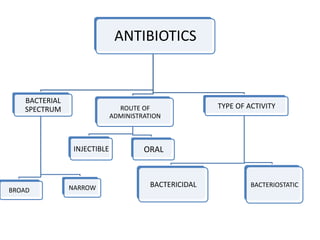
ANTIBIOTICS
BACTERIAL
SPECTRUM
BROAD NARROW
ROUTE OF
ADMINISTRATION
INJECTIBLE ORAL
TYPE OF ACTIVITY
BACTERICIDAL BACTERIOSTATIC
• An antibiotic is given for the treatment of an
infection caused by bacteria.
• Antibiotics target microorganisms such as
bacteria, fungi and parasites. However, they
are not effective against viruses.
• If you have an infection it is important to
know whether it is caused by bacteria or a
virus.
– The upper respiratory tract infections,
such as the common cold and sore throats are
generally caused by viruses - antibiotics do not
work against these viruses.
• Antibiotics take advantage of the difference between
the structure of the bacterial cell and the host’s cell.
• They prevent the bacterial cells from multiplying,so
that the bacterial population remains the same,
allowing the host’s defence mechanism to fight the
infection or kill the bacteria
• Penicillin G will destroy only a few species
of bacteria and is known as a narrow
spectrum antibiotic.
• Tetracycline is effective against a wide
range of organisms and is known as a broad
spectrum antibiotic.
How to use Antibiotics??
• Antibiotics are usually taken by mouth (orally);
injection, or applied directly to the affected part of the
body.
• Most antibiotics start having an effect on an infection
within a few hours.we should complete the whole
course of the medication to prevent the infection from
coming back.
It is crucial that you follow the instructions by the
Doctor correctly if you want the medication to be
effective.
• If you are taking metronidazole do not
consume alcohol.
• Dairy products should not be consumed if
you are taking tetracyclines.
• If antibiotics are overused or used
incorrectly there is a risk that the
bacteria will become resistant - the
antibiotic becomes less effective
against that type of bacterium..
• Antibiotics may be given before
surgery. This is called 'prophylactic'
use of antibiotics. They are
commonly used before bowel and
orthopedic surgery.
Side-effects of
antibiotics ..• Feeling and being sick.
• Fungal infections of the mouth, digestive tract
and vagina.
• Formation of kidney stones (sulphonamides).
• Abnormal blood clotting (cephalosporins).
• Sensitivity to sun (tetracyclines.)
• Blood disorders (trimethoprim).
• Deafness (when taking erythromycin and the
aminoglycosides).
Some patients may develop an allergic
reaction to antibiotics - especially
penicillins.
• Side effects might include a rash, swelling of the
tongue and face, and difficulty breathing.
it may be immediate or delayed
hypersensitivity reactions.
sometimes fatal - they are called
anaphylactic reactions.
• Bacteria are termed drug-resistant when they are
no longer inhibited by an antibiotic to which they
were previously sensitive.
• They spread of antibacterial-resist bacteria grow
due to over-use and misuse of antibiotics.
• If a strain of a bacterial species acquires
resistance to an antibiotic, it will still survive
after the treatment.
• As the bacterial cell with acquired resistance
multiplies, this resistance is passed on to its
offspring.
***some bacterial cells can divide every 20
minutes; therefore in only 8 hours bacterial cells
carry resistance to the antibiotic could……
• Antibiotic resistance can either be inherent or
acquired.
• Some bacteria are naturally resistant to some
antibiotics due to their physiological
characteristics. This is inherent resistance.
• Acquired resistance occurs when a bacterium
that was originally sensitive to an antibiotic
develops resistance.
– For example resistance genes can be transferred from
one plasmid to another plasmid or chromosome, or
resistance can occur due to a random spontaneous
chromosomal mutation.
Extreme caution
•You have reduced liver or
kidney function.
•You are pregnant
•You are breastfeeding
Antibiotics
Antibiotics
Antibiotics
Antibiotics

Antibiotics

  • 2.
    • Antibiotics arechemicals that kill or inhibit the growth of bacteria and are used to treat bacterial infections. • They are produced in nature by soil bacteria and fungi.
  • 3.
  • 4.
    • An antibioticis given for the treatment of an infection caused by bacteria. • Antibiotics target microorganisms such as bacteria, fungi and parasites. However, they are not effective against viruses. • If you have an infection it is important to know whether it is caused by bacteria or a virus. – The upper respiratory tract infections, such as the common cold and sore throats are generally caused by viruses - antibiotics do not work against these viruses.
  • 5.
    • Antibiotics takeadvantage of the difference between the structure of the bacterial cell and the host’s cell. • They prevent the bacterial cells from multiplying,so that the bacterial population remains the same, allowing the host’s defence mechanism to fight the infection or kill the bacteria • Penicillin G will destroy only a few species of bacteria and is known as a narrow spectrum antibiotic. • Tetracycline is effective against a wide range of organisms and is known as a broad spectrum antibiotic.
  • 6.
    How to useAntibiotics?? • Antibiotics are usually taken by mouth (orally); injection, or applied directly to the affected part of the body. • Most antibiotics start having an effect on an infection within a few hours.we should complete the whole course of the medication to prevent the infection from coming back. It is crucial that you follow the instructions by the Doctor correctly if you want the medication to be effective. • If you are taking metronidazole do not consume alcohol. • Dairy products should not be consumed if you are taking tetracyclines.
  • 7.
    • If antibioticsare overused or used incorrectly there is a risk that the bacteria will become resistant - the antibiotic becomes less effective against that type of bacterium.. • Antibiotics may be given before surgery. This is called 'prophylactic' use of antibiotics. They are commonly used before bowel and orthopedic surgery.
  • 8.
    Side-effects of antibiotics ..•Feeling and being sick. • Fungal infections of the mouth, digestive tract and vagina. • Formation of kidney stones (sulphonamides). • Abnormal blood clotting (cephalosporins). • Sensitivity to sun (tetracyclines.) • Blood disorders (trimethoprim). • Deafness (when taking erythromycin and the aminoglycosides).
  • 9.
    Some patients maydevelop an allergic reaction to antibiotics - especially penicillins. • Side effects might include a rash, swelling of the tongue and face, and difficulty breathing. it may be immediate or delayed hypersensitivity reactions. sometimes fatal - they are called anaphylactic reactions.
  • 10.
    • Bacteria aretermed drug-resistant when they are no longer inhibited by an antibiotic to which they were previously sensitive. • They spread of antibacterial-resist bacteria grow due to over-use and misuse of antibiotics. • If a strain of a bacterial species acquires resistance to an antibiotic, it will still survive after the treatment. • As the bacterial cell with acquired resistance multiplies, this resistance is passed on to its offspring. ***some bacterial cells can divide every 20 minutes; therefore in only 8 hours bacterial cells carry resistance to the antibiotic could……
  • 11.
    • Antibiotic resistancecan either be inherent or acquired. • Some bacteria are naturally resistant to some antibiotics due to their physiological characteristics. This is inherent resistance. • Acquired resistance occurs when a bacterium that was originally sensitive to an antibiotic develops resistance. – For example resistance genes can be transferred from one plasmid to another plasmid or chromosome, or resistance can occur due to a random spontaneous chromosomal mutation.
  • 12.
    Extreme caution •You havereduced liver or kidney function. •You are pregnant •You are breastfeeding