Antebellum
America:
North vs. South
Setting the Scene – Unit Preview
 Mid-1800’s
 Differences between the North and the South
grew so strong that compromise no longer
seemed possible
 Tragically, Americans turned to civil war to
settle their disagreements.
 The long and bloody war resulted in defeat for
the South and victory for the Union
America Divided
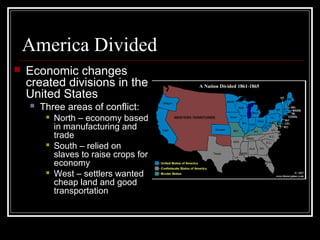
 Economic changes
created divisions in the
United States
 Three areas of conflict:
 North – economy based
in manufacturing and
trade
 South – relied on
slaves to raise crops for
economy
 West – settlers wanted
cheap land and good
transportation
ANTEBELLUM NORTH
Rise of Urbanism
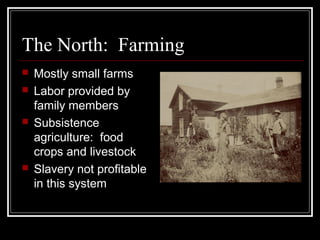
The North: Farming
 Mostly small farms
 Labor provided by
family members
 Subsistence
agriculture: food
crops and livestock
 Slavery not profitable
in this system
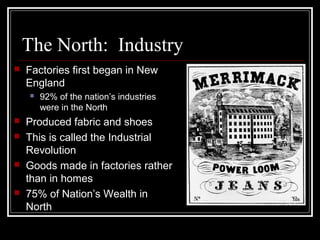
The North: Industry
 Factories first began in New
England
 92% of the nation’s industries
were in the North
 Produced fabric and shoes
 This is called the Industrial
Revolution
 Goods made in factories rather
than in homes
 75% of Nation’s Wealth in
North
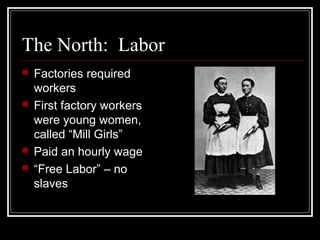
The North: Labor
 Factories required
workers
 First factory workers
were young women,
called “Mill Girls”
 Paid an hourly wage
 “Free Labor” – no
slaves
The North: Labor
 Wages were low
 Working hours long
 Working conditions
often dangerous
 Child labor
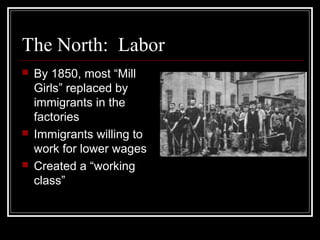
The North: Labor
 By 1850, most “Mill
Girls” replaced by
immigrants in the
factories
 Immigrants willing to
work for lower wages
 Created a “working
class”
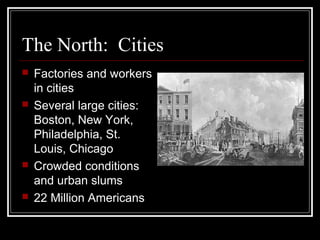
The North: Cities
 Factories and workers
in cities
 Several large cities:
Boston, New York,
Philadelphia, St.
Louis, Chicago
 Crowded conditions
and urban slums
 22 Million Americans
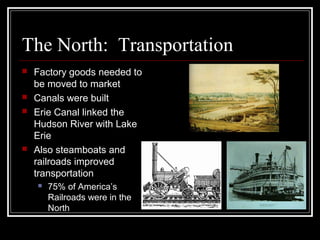
The North: Transportation
 Factory goods needed to
be moved to market
 Canals were built
 Erie Canal linked the
Hudson River with Lake
Erie
 Also steamboats and
railroads improved
transportation
 75% of America’s
Railroads were in the
North
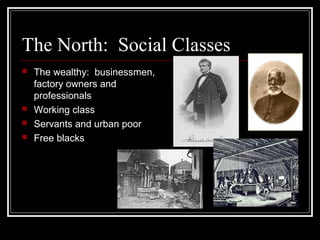
The North: Social Classes
 The wealthy: businessmen,
factory owners and
professionals
 Working class
 Servants and urban poor
 Free blacks
ANTEBELLUM SOUTH
Victorian Era America
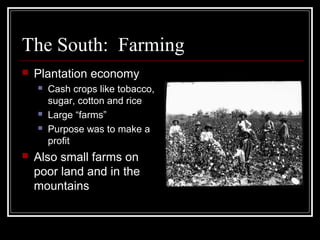
The South: Farming
 Plantation economy
 Cash crops like tobacco,
sugar, cotton and rice
 Large “farms”
 Purpose was to make a
profit
 Also small farms on
poor land and in the
mountains
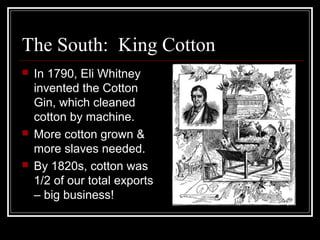
The South: King Cotton
 In 1790, Eli Whitney
invented the Cotton
Gin, which cleaned
cotton by machine.
 More cotton grown &
more slaves needed.
 By 1820s, cotton was
1/2 of our total exports
– big business!
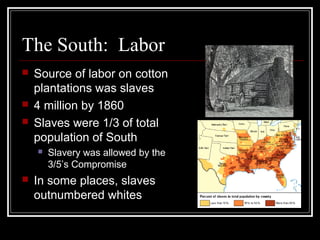
The South: Labor
 Source of labor on cotton
plantations was slaves
 4 million by 1860
 Slaves were 1/3 of total
population of South
 Slavery was allowed by the
3/5’s Compromise
 In some places, slaves
outnumbered whites
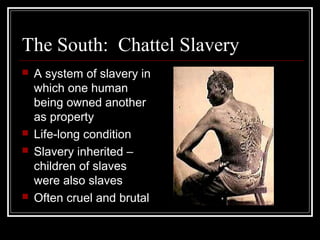
The South: Chattel Slavery
 A system of slavery in
which one human
being owned another
as property
 Life-long condition
 Slavery inherited –
children of slaves
were also slaves
 Often cruel and brutal
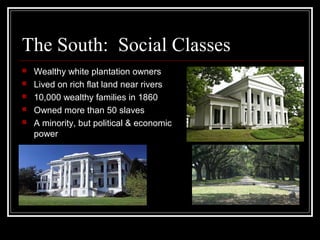
The South: Social Classes
 Wealthy white plantation owners
 Lived on rich flat land near rivers
 10,000 wealthy families in 1860
 Owned more than 50 slaves
 A minority, but political & economic
power
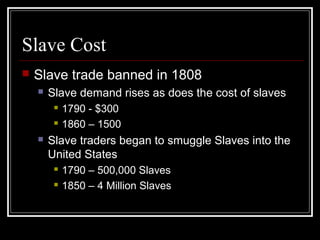
Slave Cost
 Slave trade banned in 1808
 Slave demand rises as does the cost of slaves
 1790 - $300
 1860 – 1500
 Slave traders began to smuggle Slaves into the
United States
 1790 – 500,000 Slaves
 1850 – 4 Million Slaves
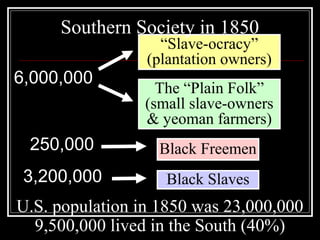
“Slave-ocracy”
(plantation owners)
The “Plain Folk”
(small slave-owners
& yeoman farmers)
6,000,000
Black Freemen
Black Slaves
250,000
U.S. population in 1850 was 23,000,000
9,500,000 lived in the South (40%)
3,200,000
Southern Society in 1850
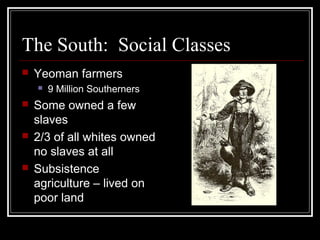
The South: Social Classes
 Yeoman farmers
 9 Million Southerners
 Some owned a few
slaves
 2/3 of all whites owned
no slaves at all
 Subsistence
agriculture – lived on
poor land
The South: Social Classes
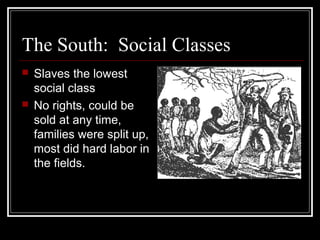
 Slaves the lowest
social class
 No rights, could be
sold at any time,
families were split up,
most did hard labor in
the fields.
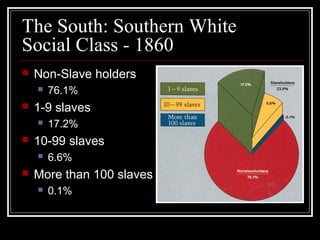
The South: Southern White
Social Class - 1860
 Non-Slave holders
 76.1%
 1-9 slaves
 17.2%
 10-99 slaves
 6.6%
 More than 100 slaves
 0.1%
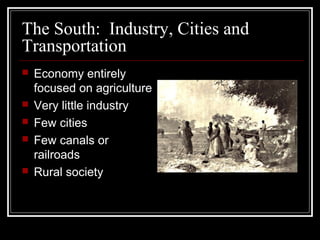
The South: Industry, Cities and
Transportation
 Economy entirely
focused on agriculture
 Very little industry
 Few cities
 Few canals or
railroads
 Rural society
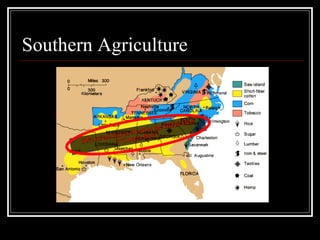
Southern Agriculture
50% of all slaves lived in the Black Belt
(“Cotton Belt”)
(“Cotton Belt”)
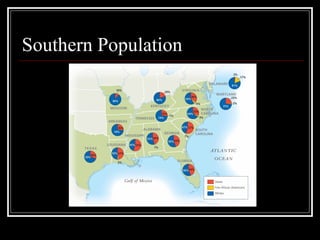
Southern Population

Antebellum america jwt

  • 1.
  • 2.
    Setting the Scene– Unit Preview  Mid-1800’s  Differences between the North and the South grew so strong that compromise no longer seemed possible  Tragically, Americans turned to civil war to settle their disagreements.  The long and bloody war resulted in defeat for the South and victory for the Union
  • 3.
    America Divided  Economicchanges created divisions in the United States  Three areas of conflict:  North – economy based in manufacturing and trade  South – relied on slaves to raise crops for economy  West – settlers wanted cheap land and good transportation
  • 4.
  • 5.
    The North: Farming Mostly small farms  Labor provided by family members  Subsistence agriculture: food crops and livestock  Slavery not profitable in this system
  • 6.
    The North: Industry Factories first began in New England  92% of the nation’s industries were in the North  Produced fabric and shoes  This is called the Industrial Revolution  Goods made in factories rather than in homes  75% of Nation’s Wealth in North
  • 7.
    The North: Labor Factories required workers  First factory workers were young women, called “Mill Girls”  Paid an hourly wage  “Free Labor” – no slaves
  • 8.
    The North: Labor Wages were low  Working hours long  Working conditions often dangerous  Child labor
  • 9.
    The North: Labor By 1850, most “Mill Girls” replaced by immigrants in the factories  Immigrants willing to work for lower wages  Created a “working class”
  • 10.
    The North: Cities Factories and workers in cities  Several large cities: Boston, New York, Philadelphia, St. Louis, Chicago  Crowded conditions and urban slums  22 Million Americans
  • 11.
    The North: Transportation Factory goods needed to be moved to market  Canals were built  Erie Canal linked the Hudson River with Lake Erie  Also steamboats and railroads improved transportation  75% of America’s Railroads were in the North
  • 12.
    The North: SocialClasses  The wealthy: businessmen, factory owners and professionals  Working class  Servants and urban poor  Free blacks
  • 13.
  • 14.
    The South: Farming Plantation economy  Cash crops like tobacco, sugar, cotton and rice  Large “farms”  Purpose was to make a profit  Also small farms on poor land and in the mountains
  • 15.
    The South: KingCotton  In 1790, Eli Whitney invented the Cotton Gin, which cleaned cotton by machine.  More cotton grown & more slaves needed.  By 1820s, cotton was 1/2 of our total exports – big business!
  • 16.
    The South: Labor Source of labor on cotton plantations was slaves  4 million by 1860  Slaves were 1/3 of total population of South  Slavery was allowed by the 3/5’s Compromise  In some places, slaves outnumbered whites
  • 17.
    The South: ChattelSlavery  A system of slavery in which one human being owned another as property  Life-long condition  Slavery inherited – children of slaves were also slaves  Often cruel and brutal
  • 18.
    The South: SocialClasses  Wealthy white plantation owners  Lived on rich flat land near rivers  10,000 wealthy families in 1860  Owned more than 50 slaves  A minority, but political & economic power
  • 19.
    Slave Cost  Slavetrade banned in 1808  Slave demand rises as does the cost of slaves  1790 - $300  1860 – 1500  Slave traders began to smuggle Slaves into the United States  1790 – 500,000 Slaves  1850 – 4 Million Slaves
  • 20.
    “Slave-ocracy” (plantation owners) The “PlainFolk” (small slave-owners & yeoman farmers) 6,000,000 Black Freemen Black Slaves 250,000 U.S. population in 1850 was 23,000,000 9,500,000 lived in the South (40%) 3,200,000 Southern Society in 1850
  • 21.
    The South: SocialClasses  Yeoman farmers  9 Million Southerners  Some owned a few slaves  2/3 of all whites owned no slaves at all  Subsistence agriculture – lived on poor land
  • 22.
    The South: SocialClasses  Slaves the lowest social class  No rights, could be sold at any time, families were split up, most did hard labor in the fields.
  • 23.
    The South: SouthernWhite Social Class - 1860  Non-Slave holders  76.1%  1-9 slaves  17.2%  10-99 slaves  6.6%  More than 100 slaves  0.1%
  • 24.
    The South: Industry,Cities and Transportation  Economy entirely focused on agriculture  Very little industry  Few cities  Few canals or railroads  Rural society
  • 25.
    Southern Agriculture 50% ofall slaves lived in the Black Belt 50% of all slaves lived in the Black Belt (“Cotton Belt”) (“Cotton Belt”)
  • 26.