AMERICAN SOCIETY &
ECONOMY TRANSFORMED
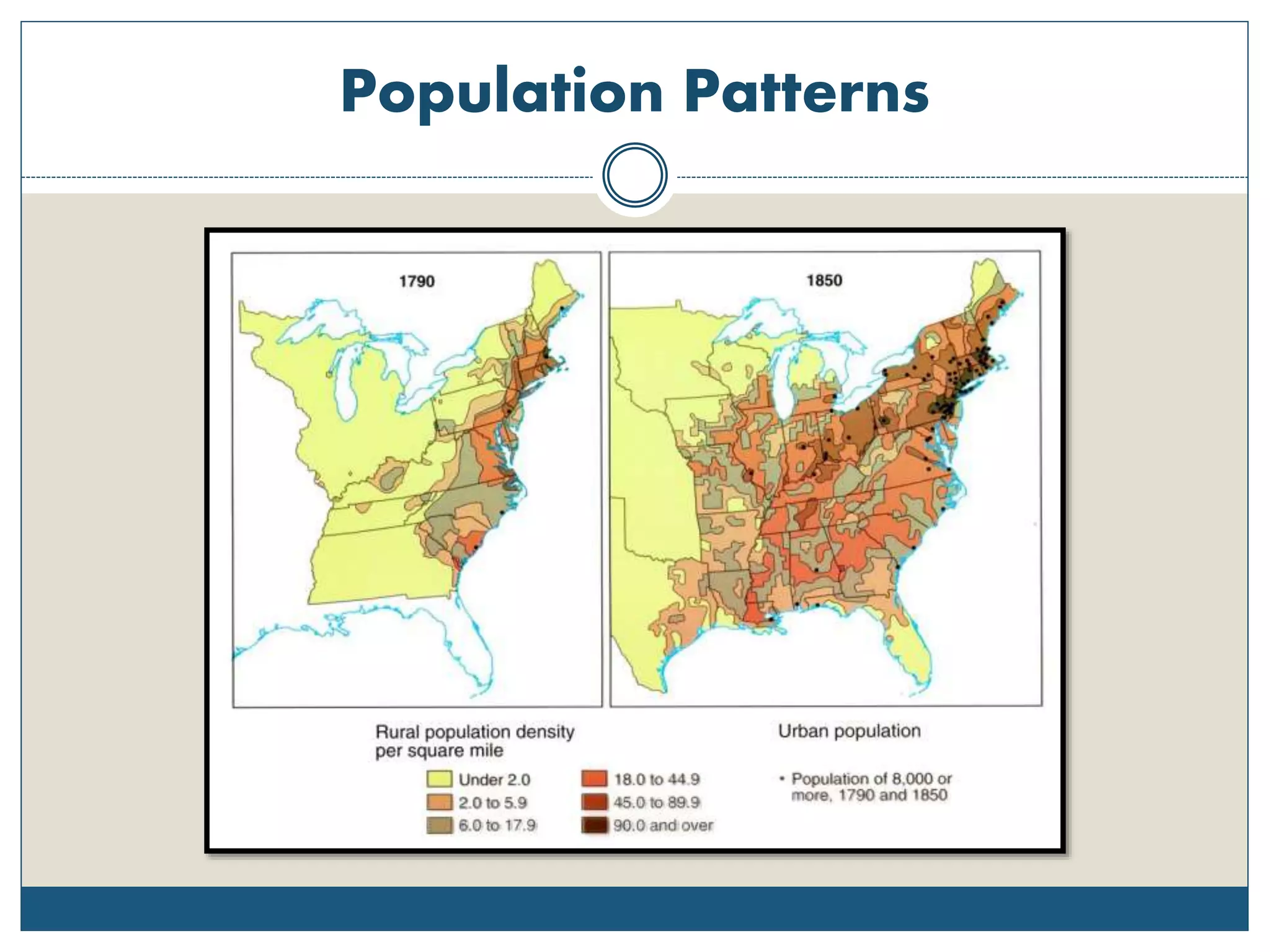
Population Patterns
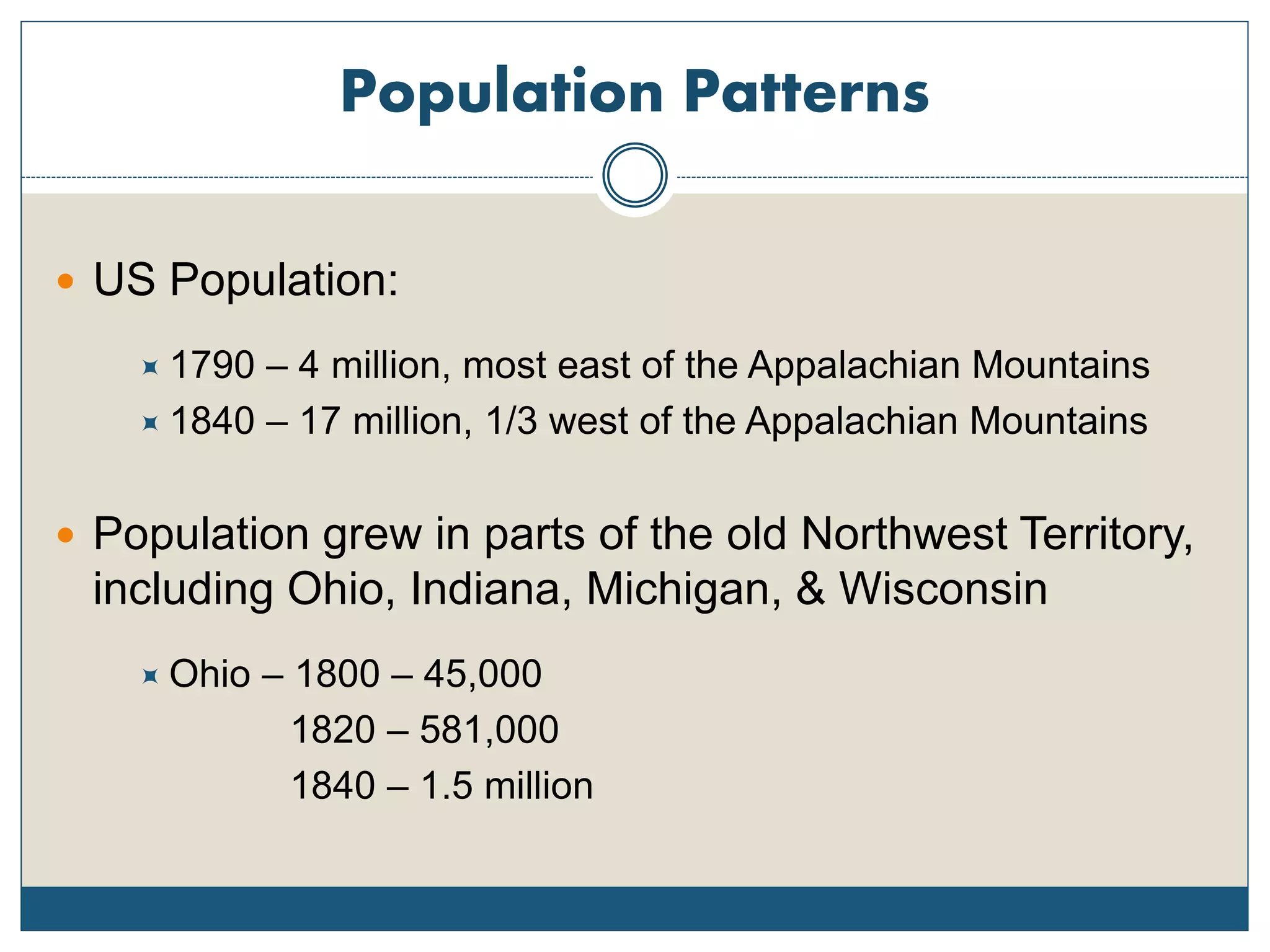
 US Population:
 1790 – 4 million, most east of the Appalachian Mountains
 1840 – 17 million, 1/3 west of the Appalachian Mountains
 Population grew in parts of the old Northwest Territory,
including Ohio, Indiana, Michigan, & Wisconsin
 Ohio – 1800 – 45,000
1820 – 581,000
1840 – 1.5 million
Population Patterns
Farm Economy
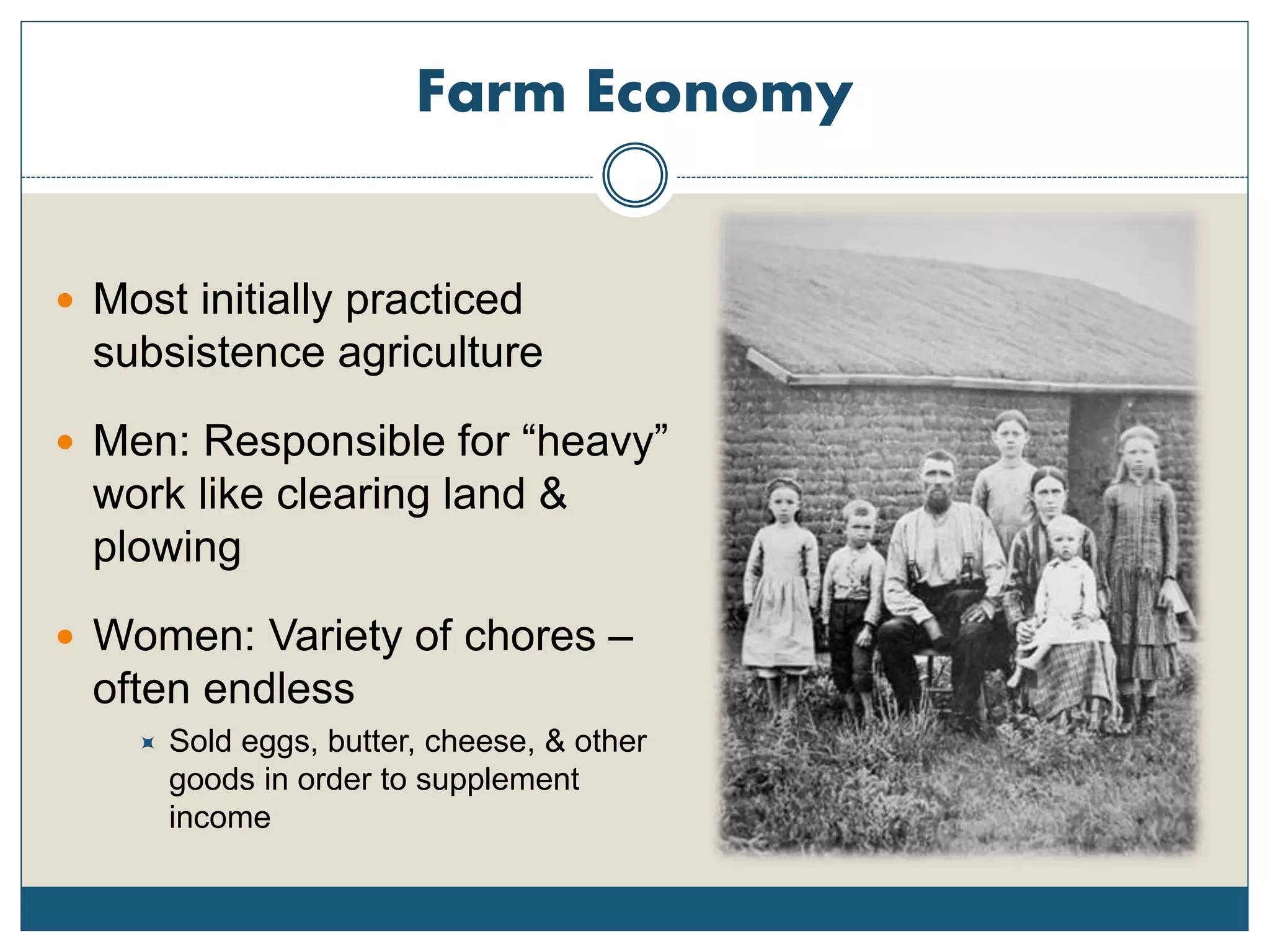
 Most initially practiced
subsistence agriculture
 Men: Responsible for “heavy”
work like clearing land &
plowing
 Women: Variety of chores –
often endless
 Sold eggs, butter, cheese, & other
goods in order to supplement
income
Old Northwest Territory
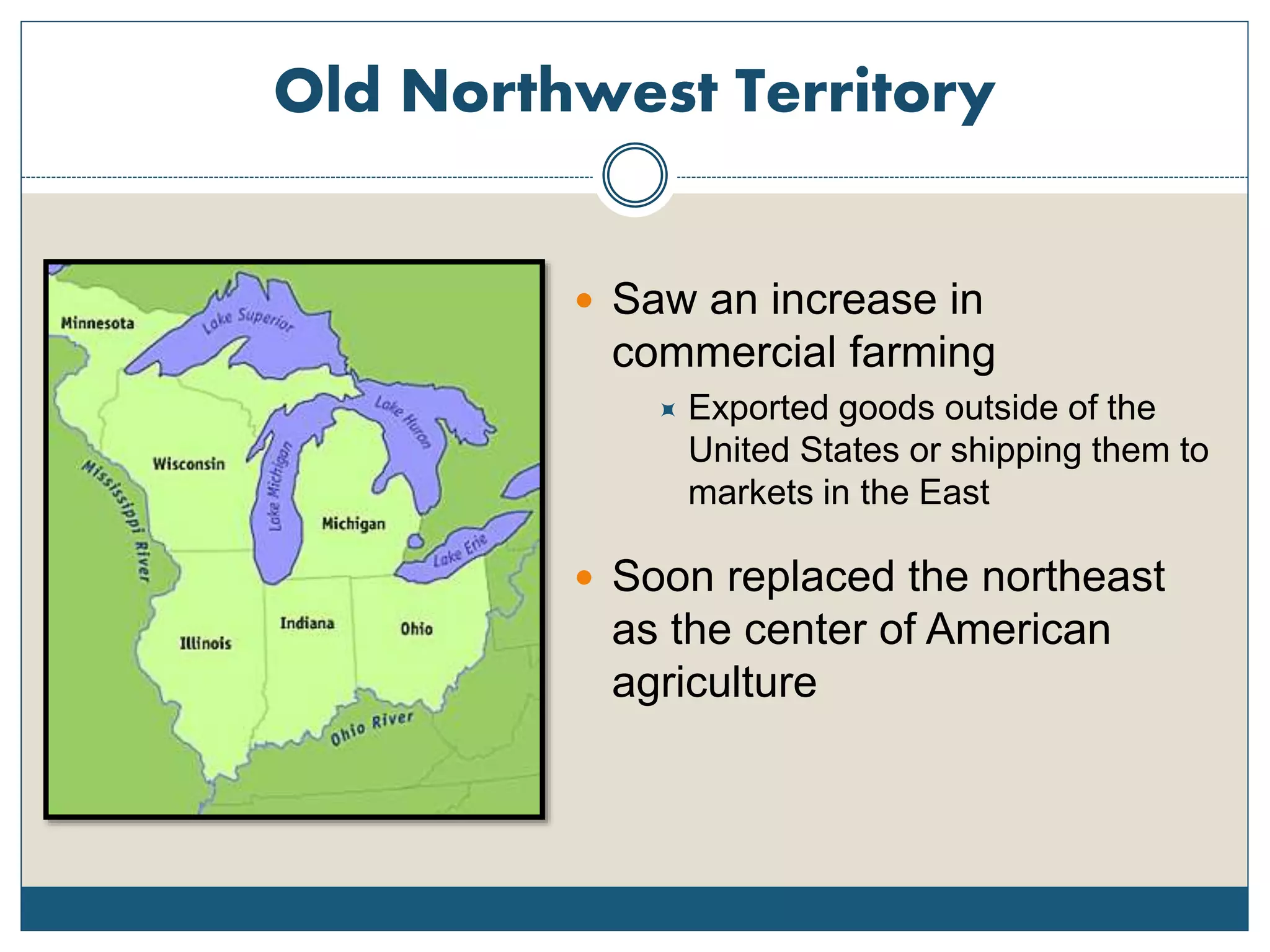
 Saw an increase in
commercial farming
 Exported goods outside of the
United States or shipping them to
markets in the East
 Soon replaced the northeast
as the center of American
agriculture
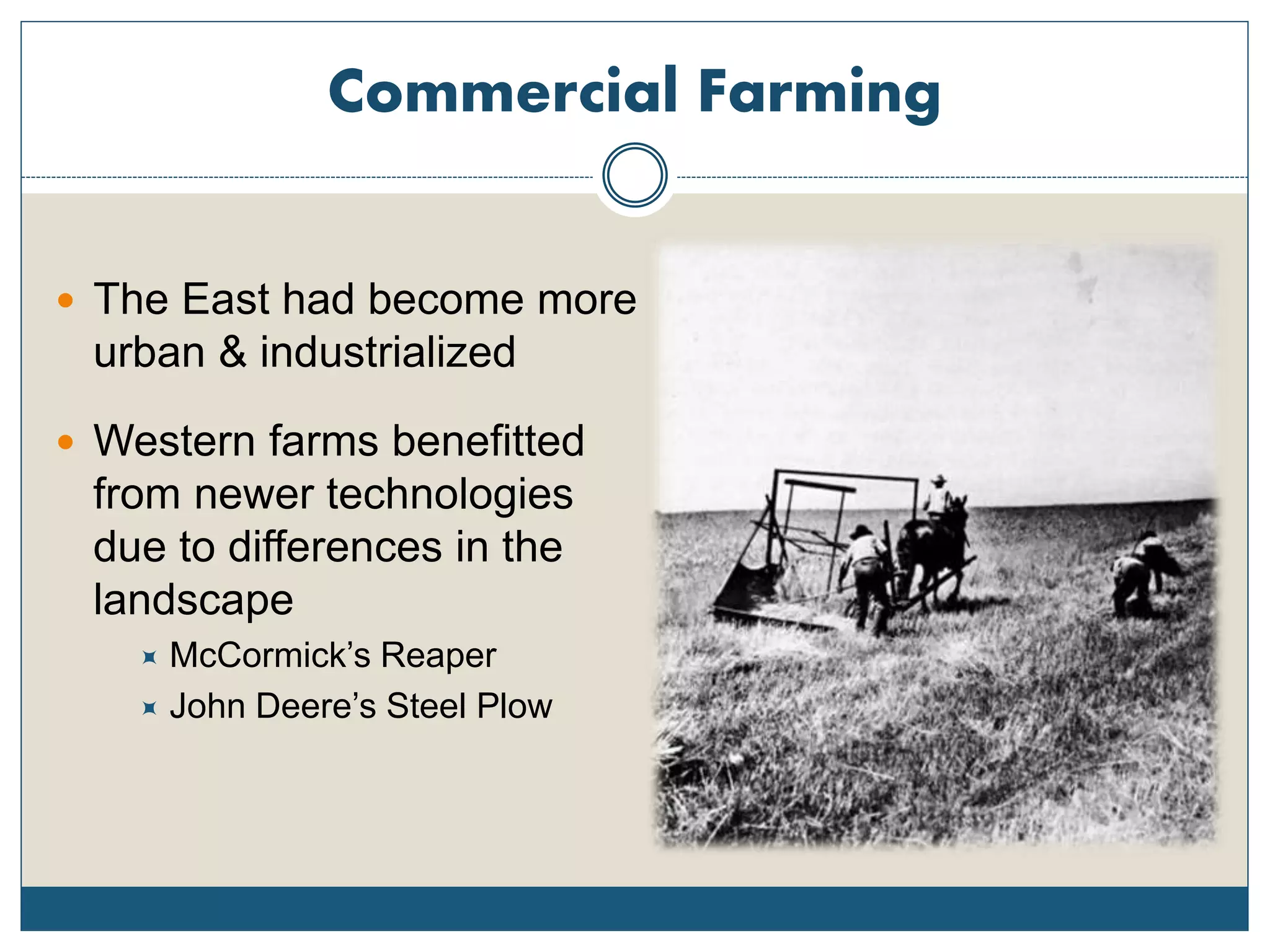
Commercial Farming
 The East had become more
urban & industrialized
 Western farms benefitted
from newer technologies
due to differences in the
landscape
 McCormick’s Reaper
 John Deere’s Steel Plow
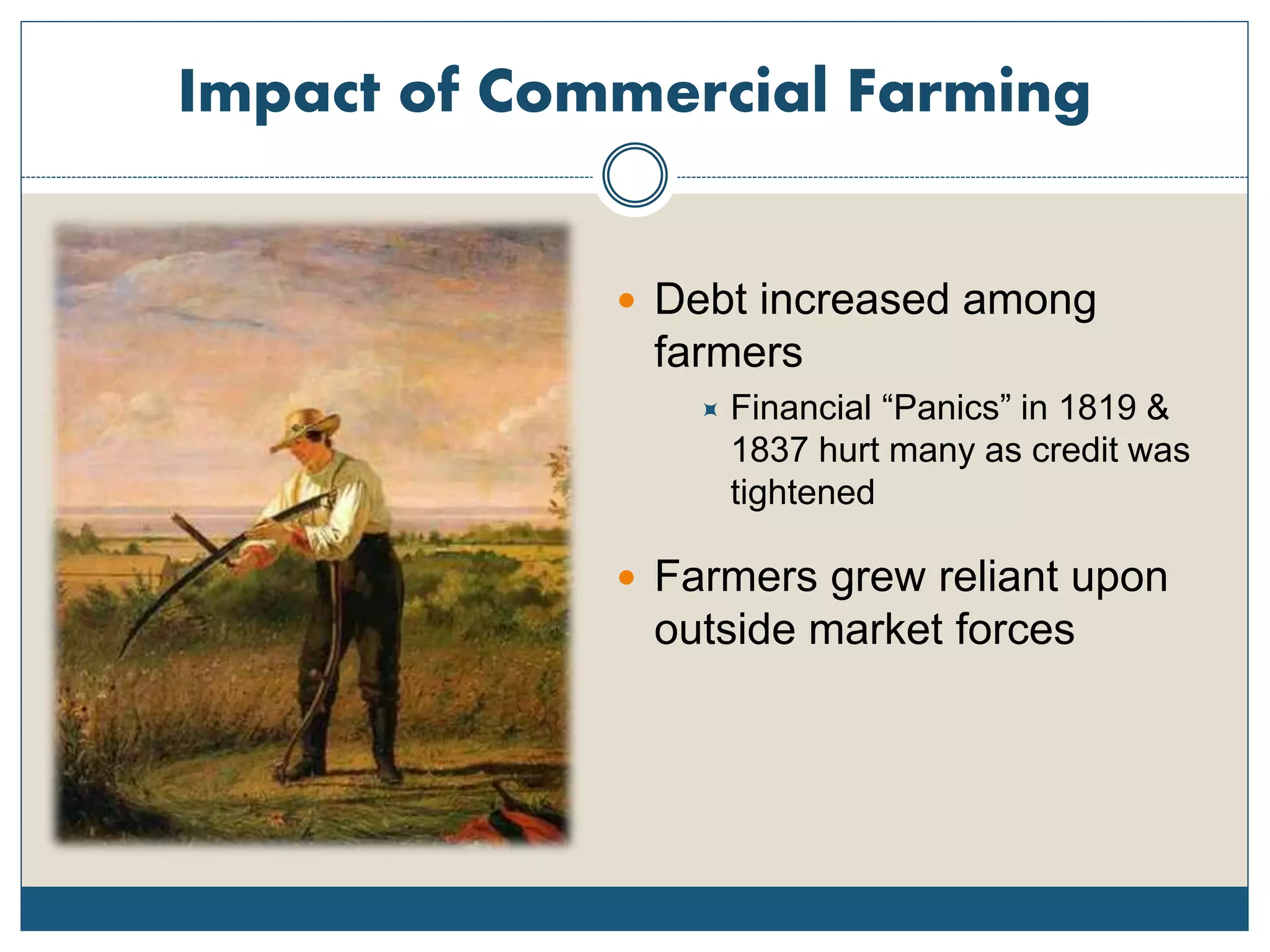
Impact of Commercial Farming
 Debt increased among
farmers
 Financial “Panics” in 1819 &
1837 hurt many as credit was
tightened
 Farmers grew reliant upon
outside market forces
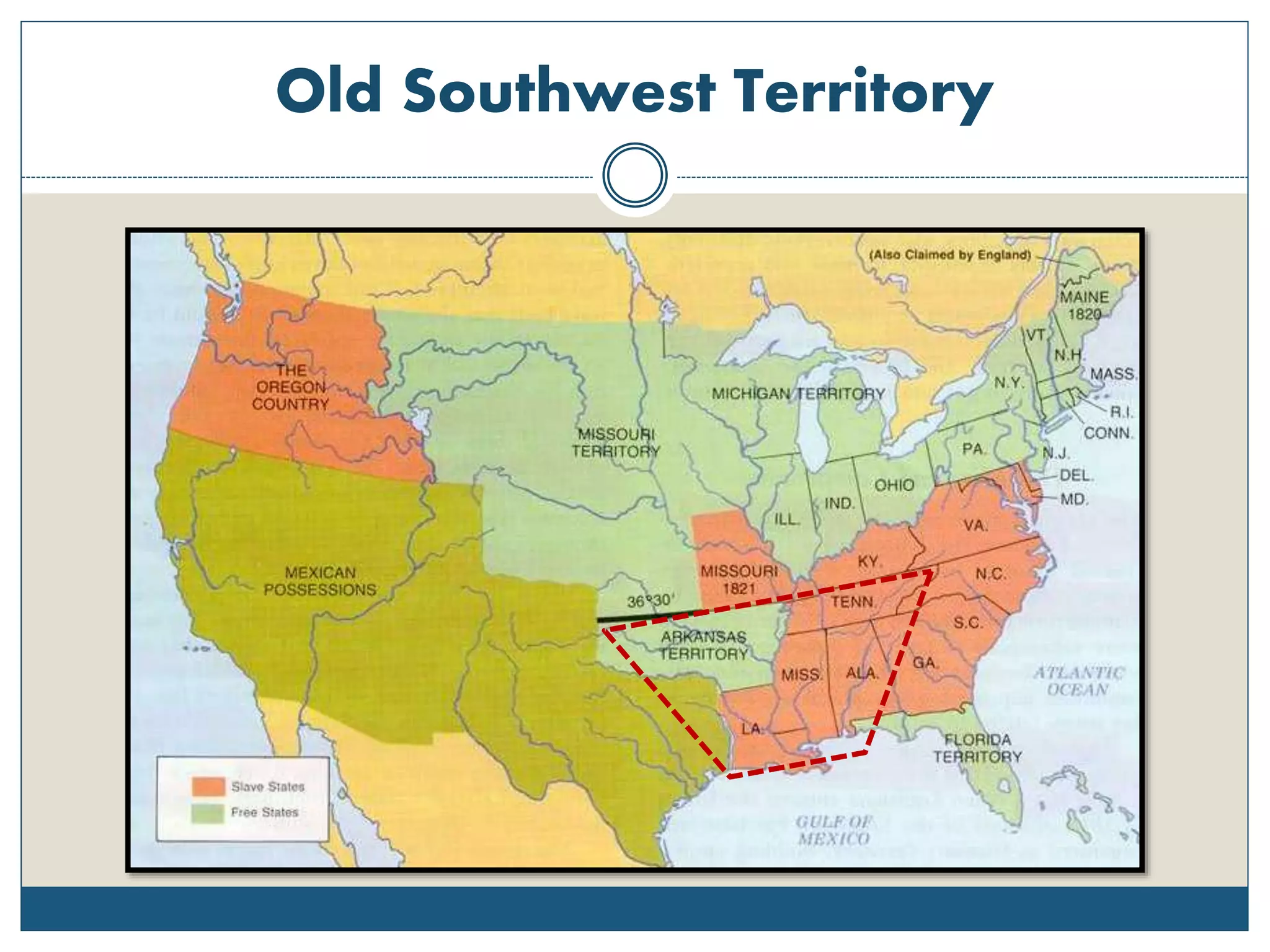
Old Southwest Territory
 Commercial farming &
technology also impacted
the old Southwest Territory
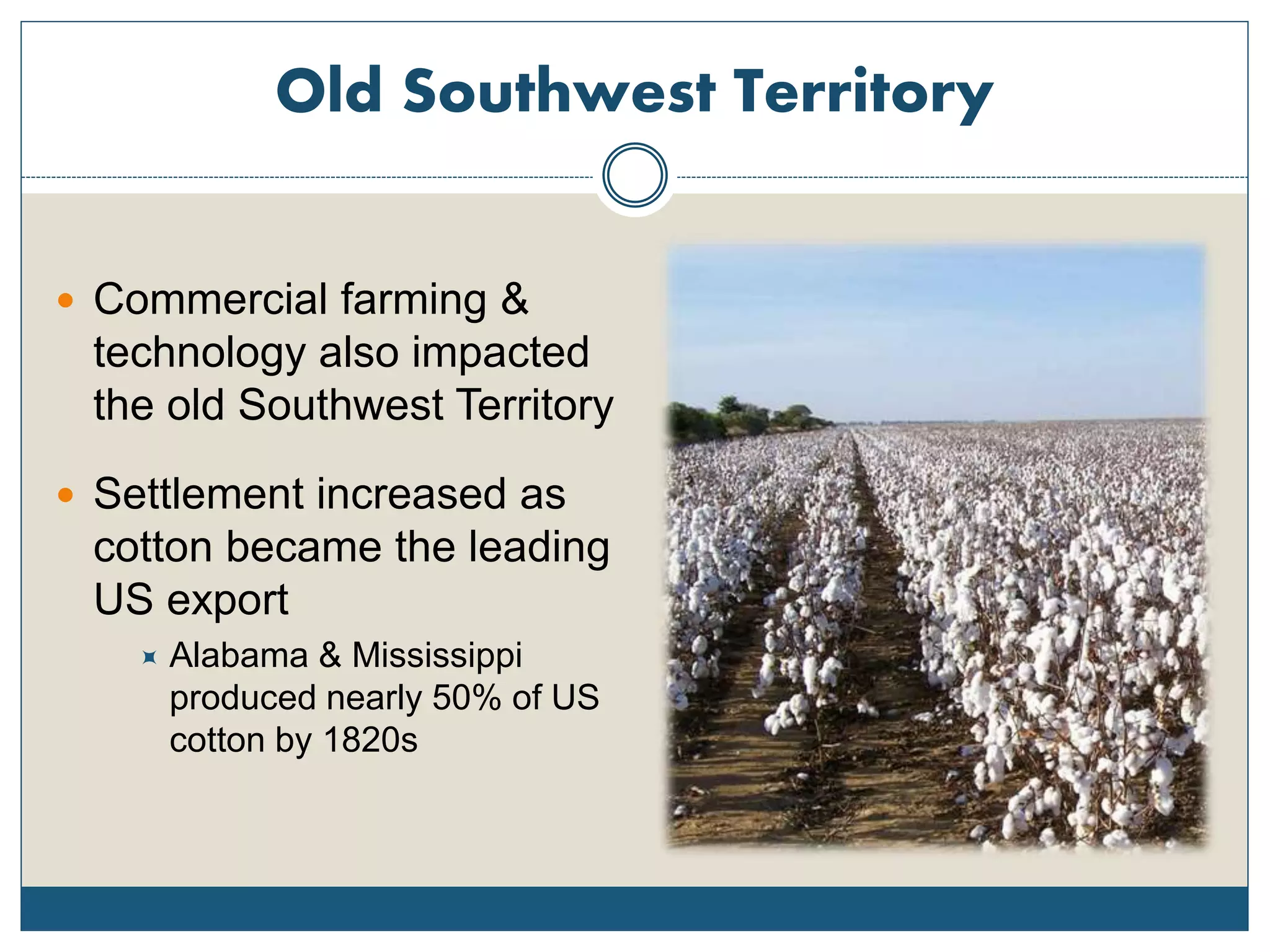
 Settlement increased as
cotton became the leading
US export
 Alabama & Mississippi
produced nearly 50% of US
cotton by 1820s
Impact of Commercial Farming
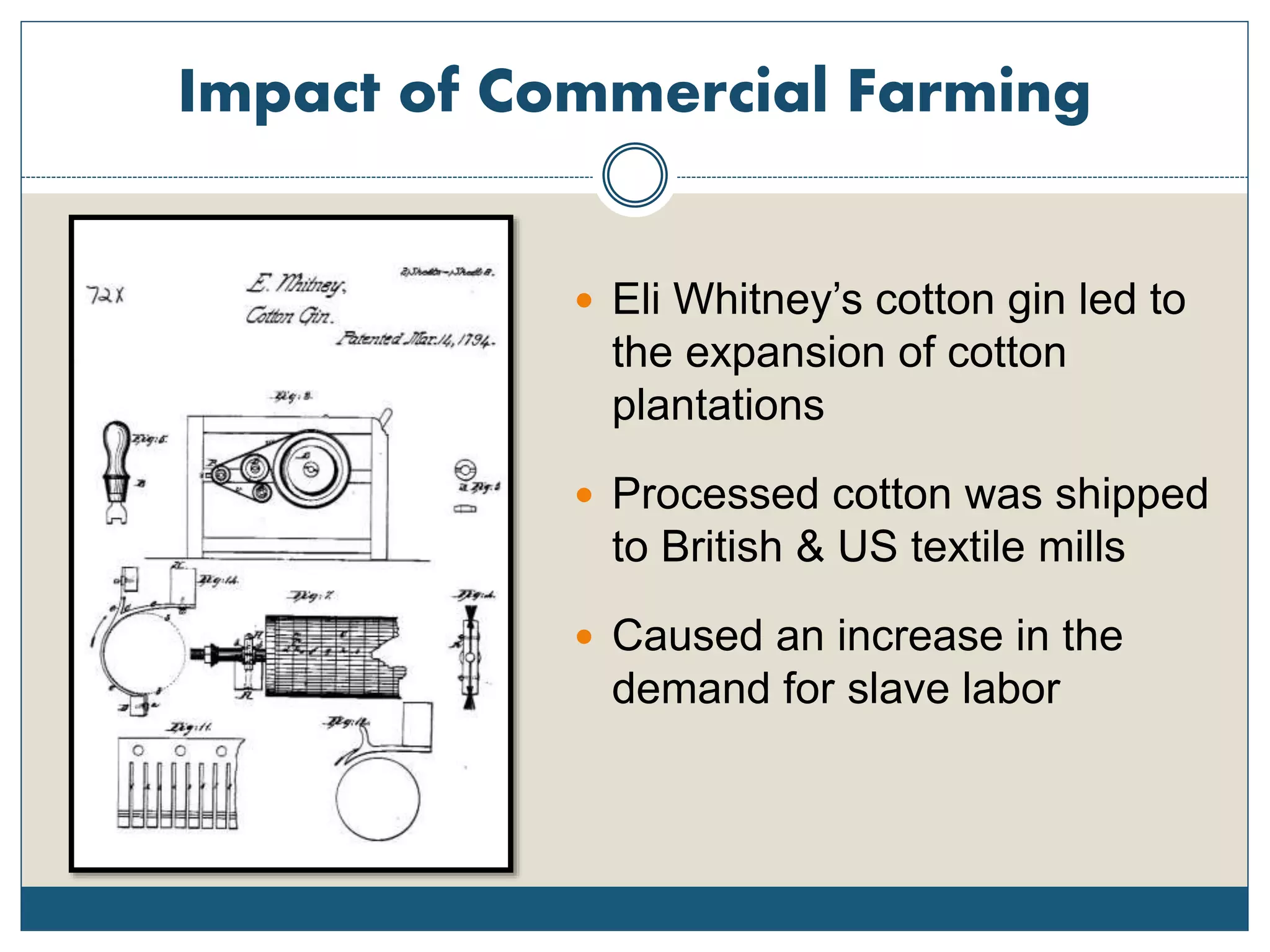
 Eli Whitney’s cotton gin led to
the expansion of cotton
plantations
 Processed cotton was shipped
to British & US textile mills
 Caused an increase in the
demand for slave labor
Transportation Changes
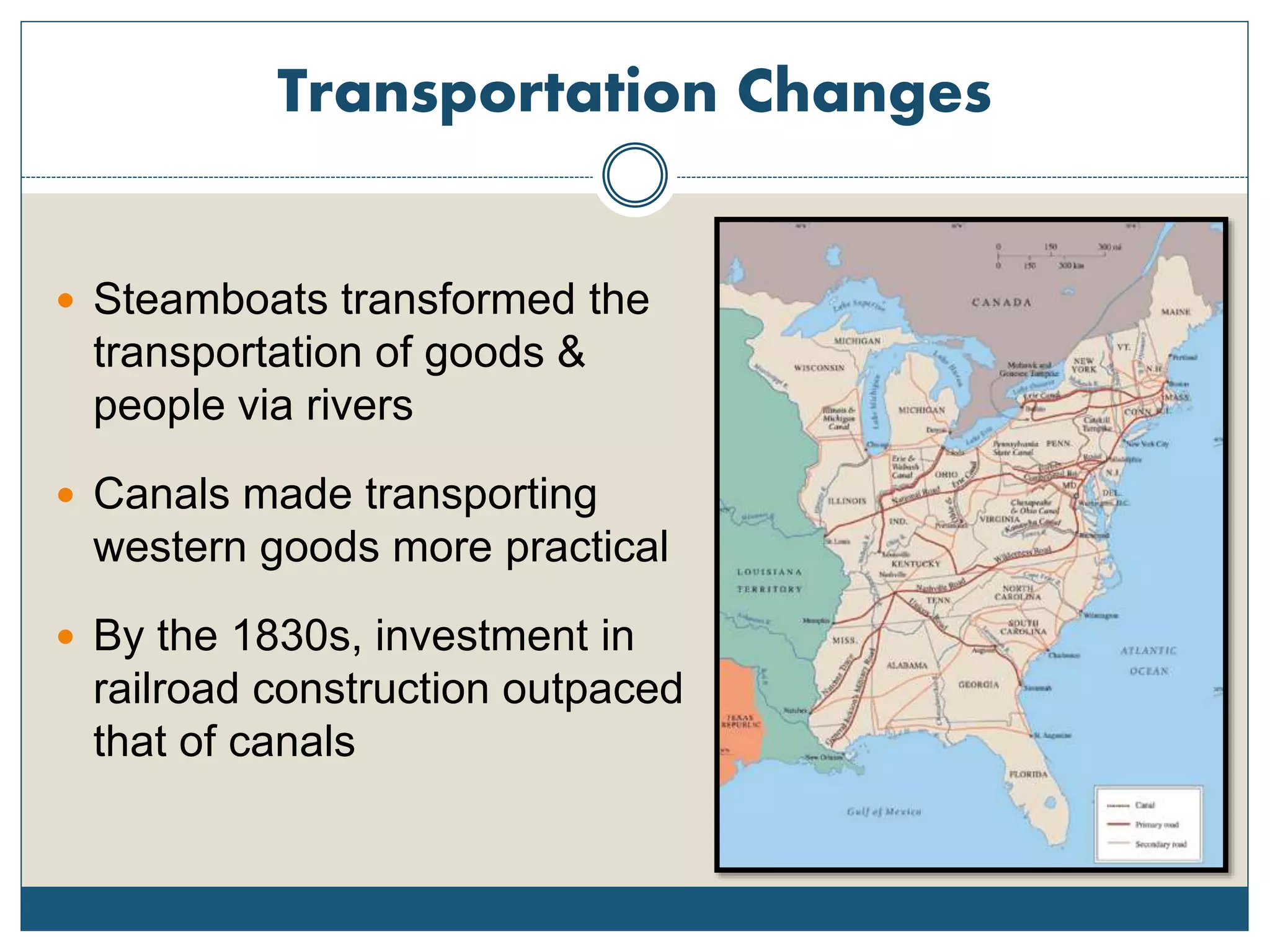
 Steamboats transformed the
transportation of goods &
people via rivers
 Canals made transporting
western goods more practical
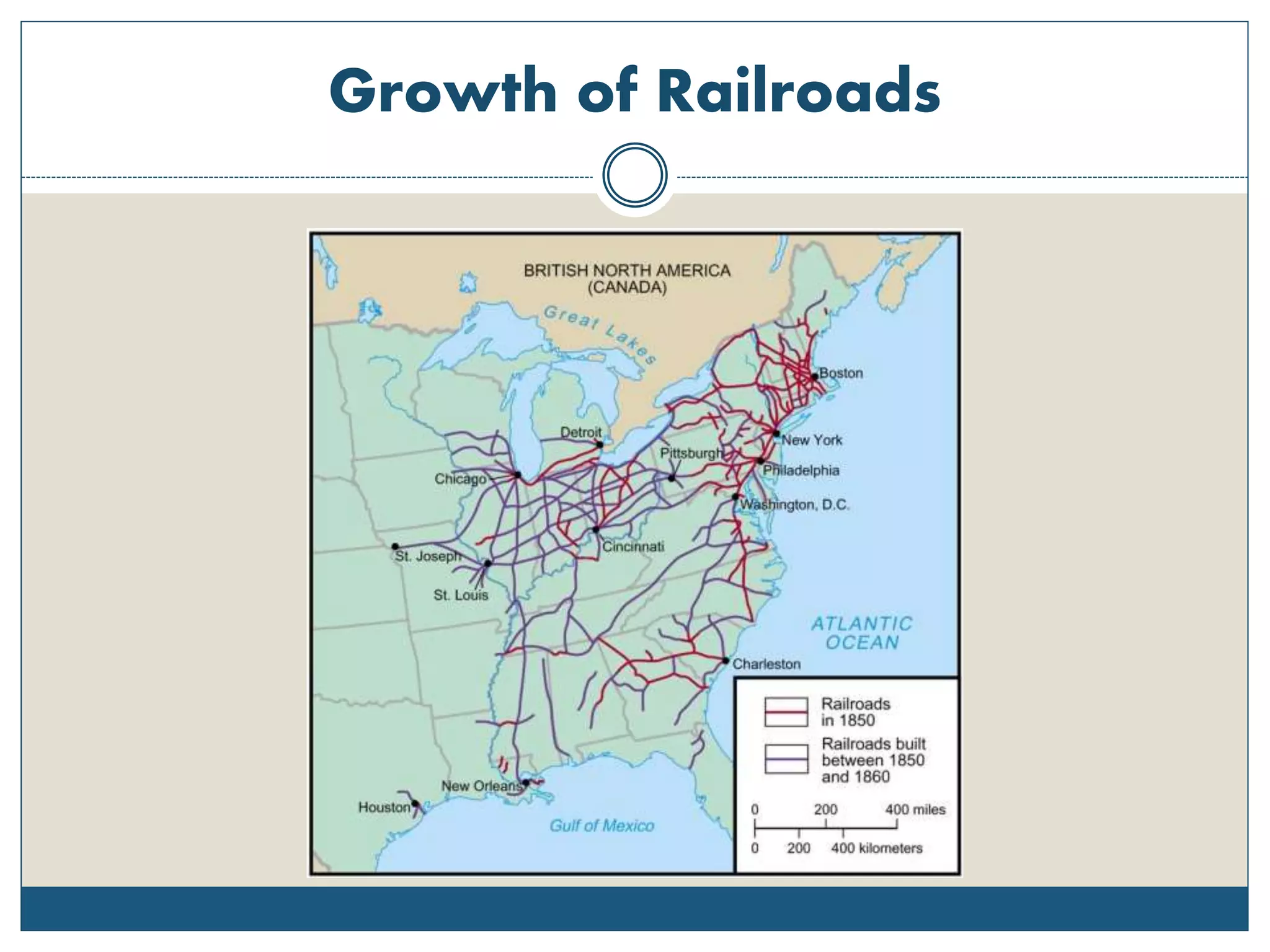
 By the 1830s, investment in
railroad construction outpaced
that of canals
Growth of Railroads
Rise of Industry
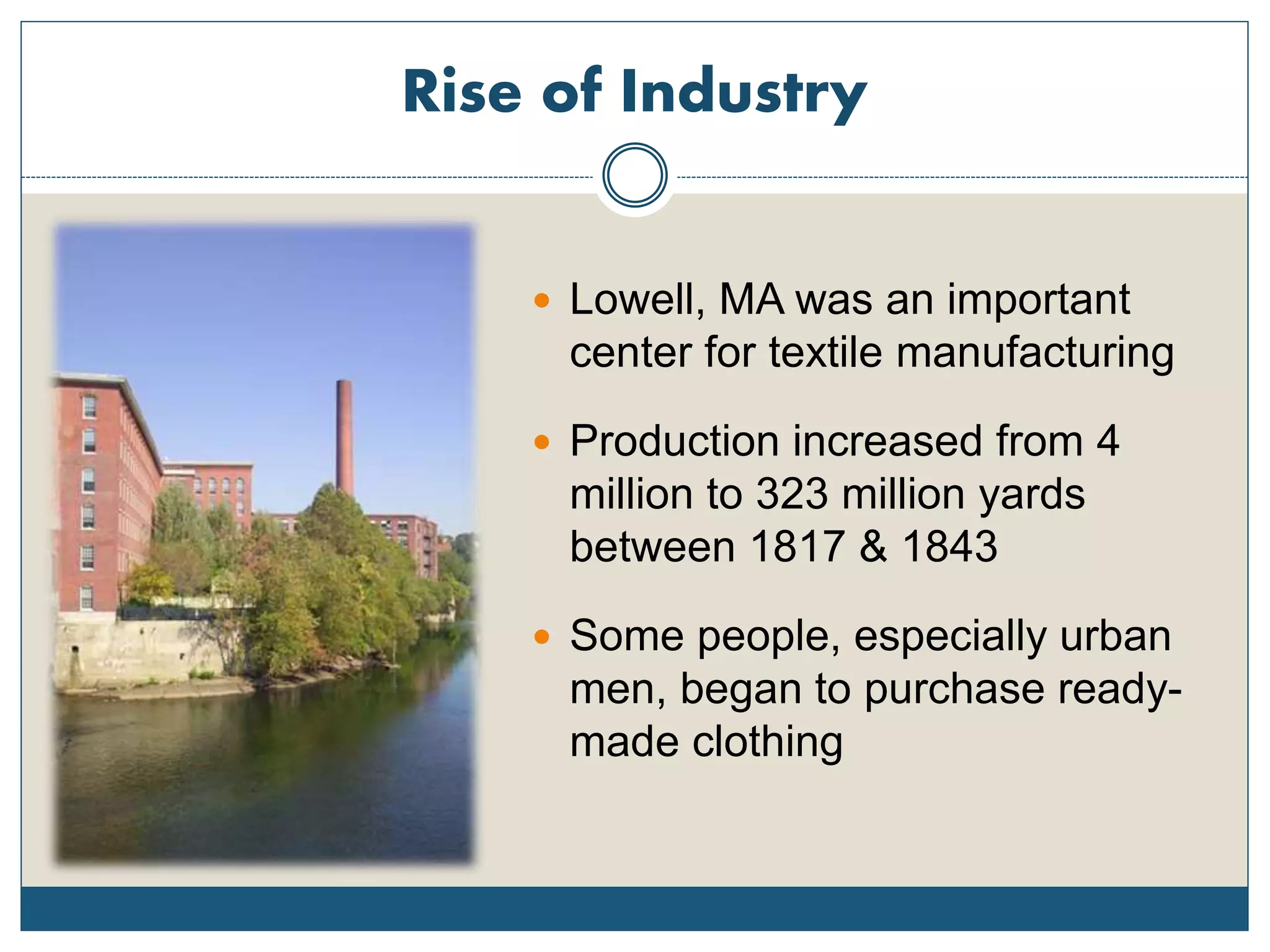
 Lowell, MA was an important
center for textile manufacturing
 Production increased from 4
million to 323 million yards
between 1817 & 1843
 Some people, especially urban
men, began to purchase ready-
made clothing
Rise of Industry
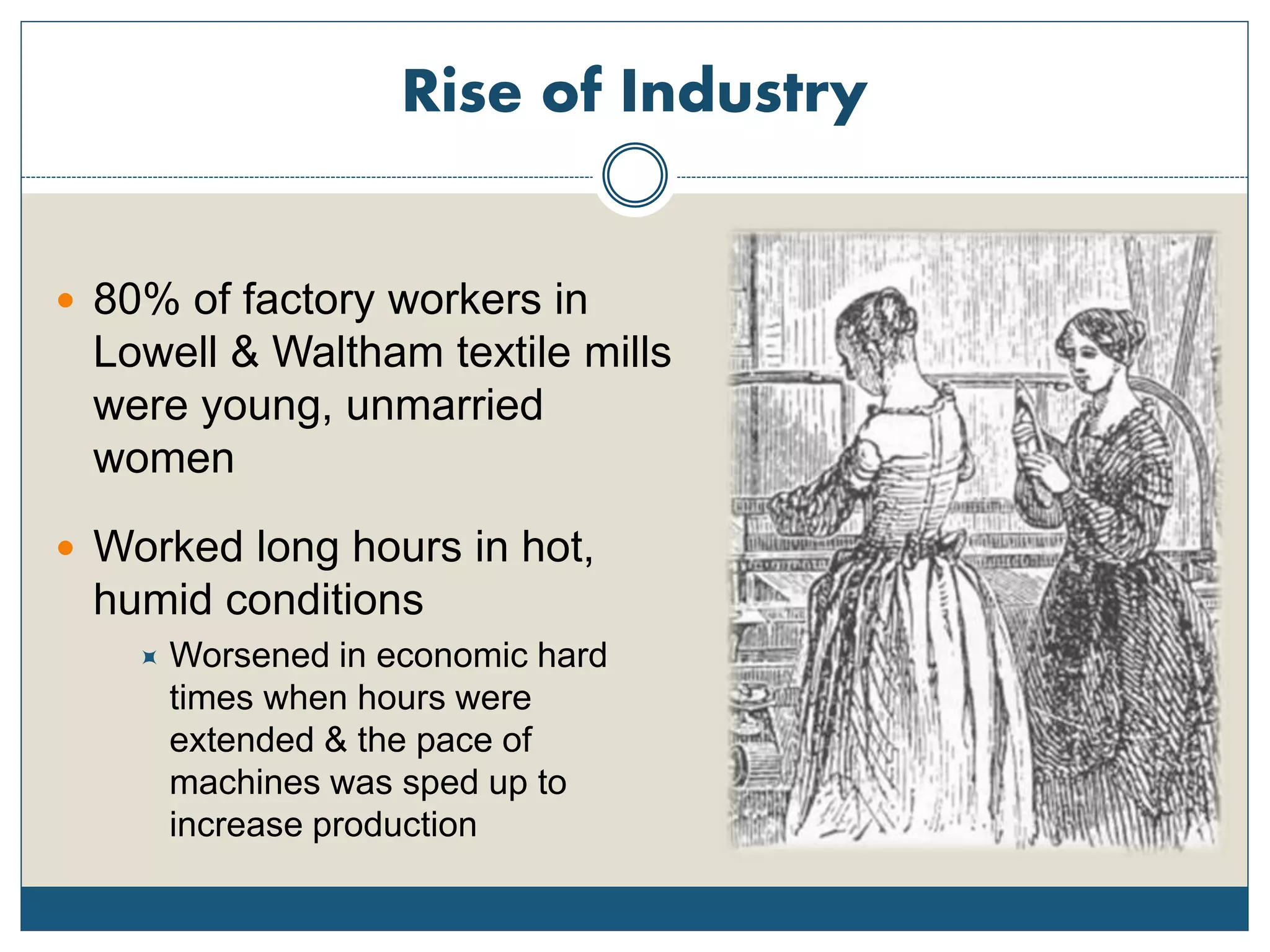
 80% of factory workers in
Lowell & Waltham textile mills
were young, unmarried
women
 Worked long hours in hot,
humid conditions
 Worsened in economic hard
times when hours were
extended & the pace of
machines was sped up to
increase production
Urbanization
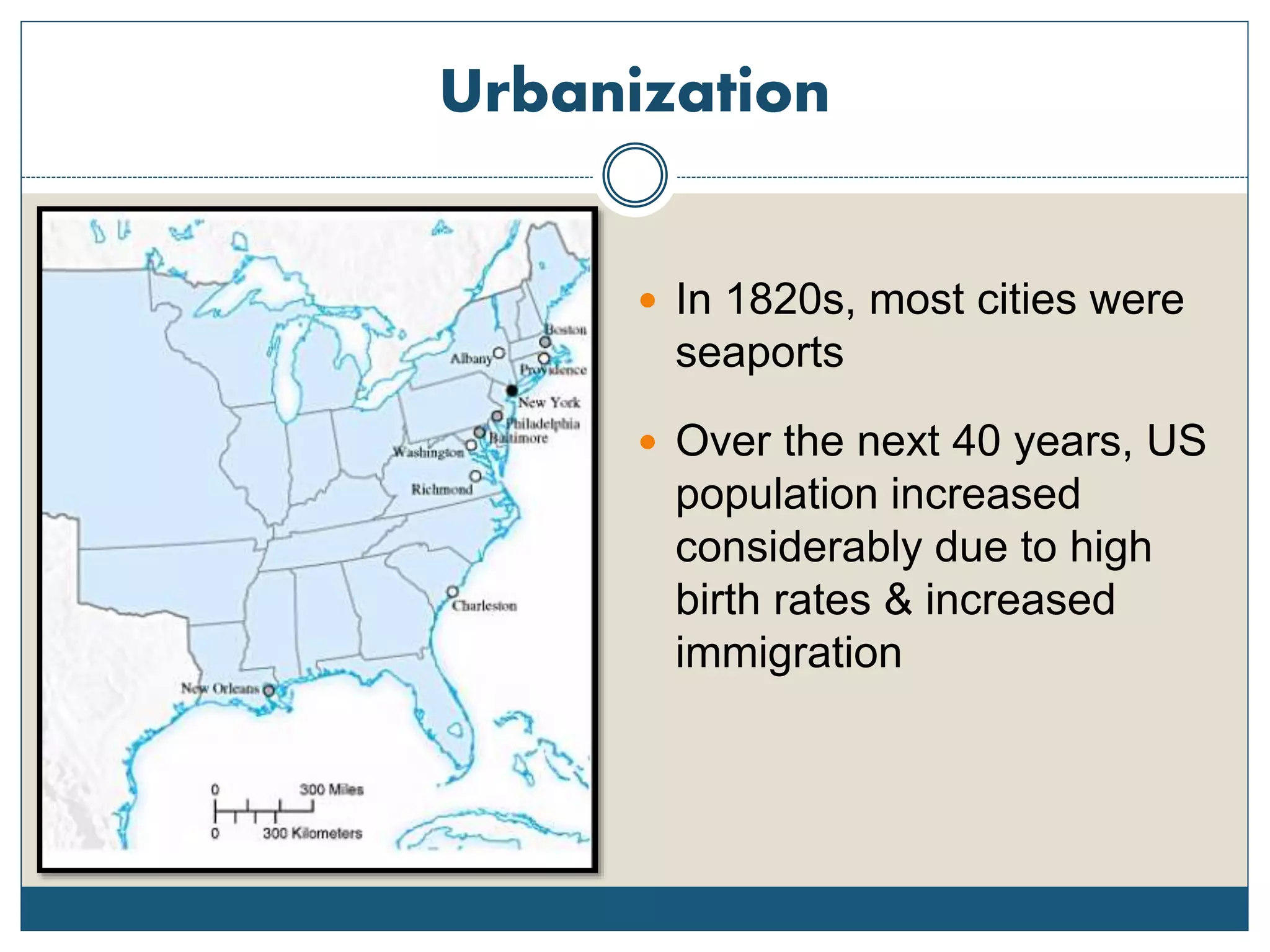
 In 1820s, most cities were
seaports
 Over the next 40 years, US
population increased
considerably due to high
birth rates & increased
immigration
Rise of Industry
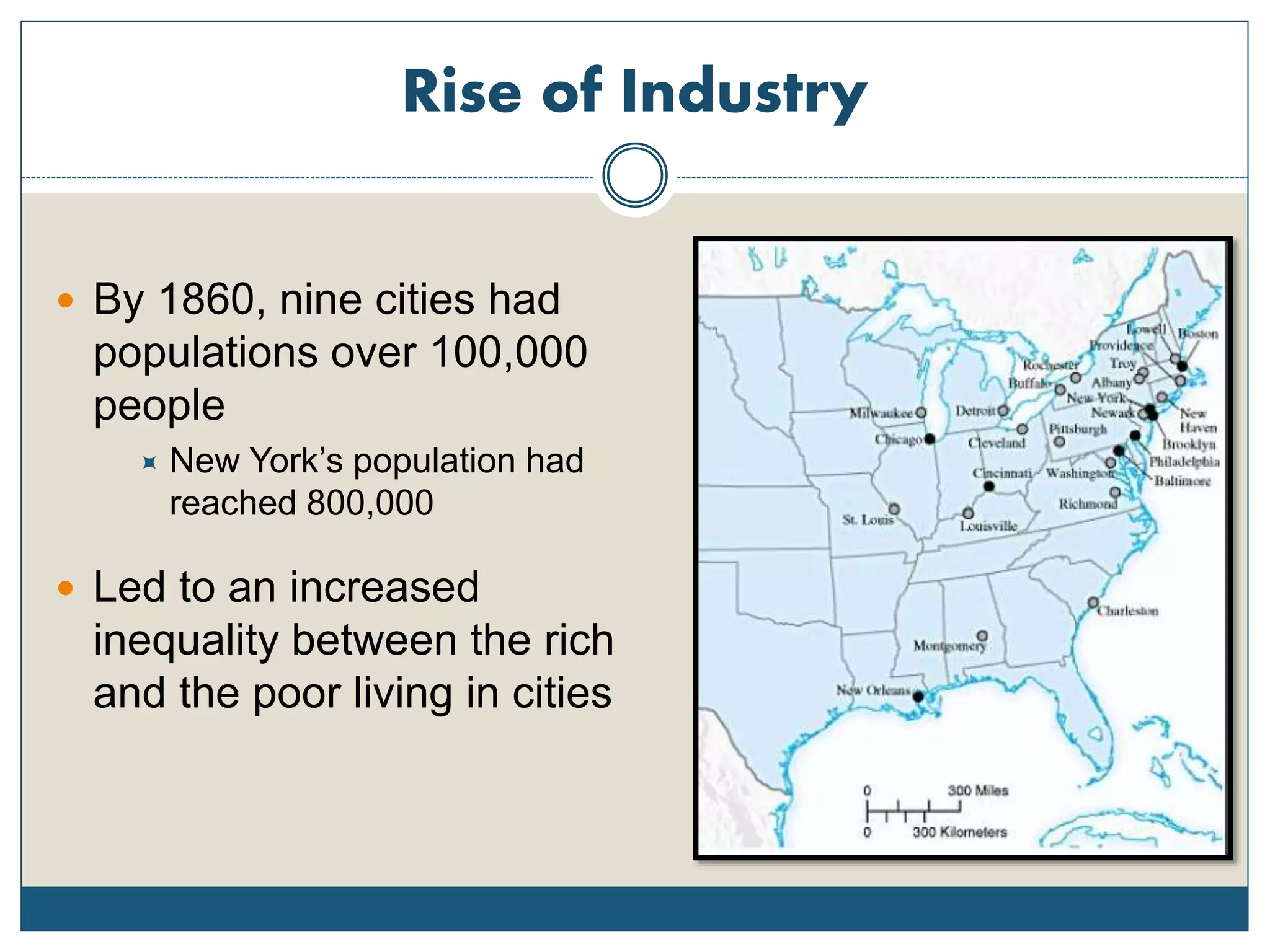
 By 1860, nine cities had
populations over 100,000
people
 New York’s population had
reached 800,000
 Led to an increased
inequality between the rich
and the poor living in cities
Gap Between Rich & Poor
 Case Study: Boston
 1833 – The richest 4% owned 59% of the city’s wealth
 1848 – They owned about 65%
 Case Study: New York
 1828 – The richest 4% owned 50% of the city’s wealth
 1848 – They owned about 65%
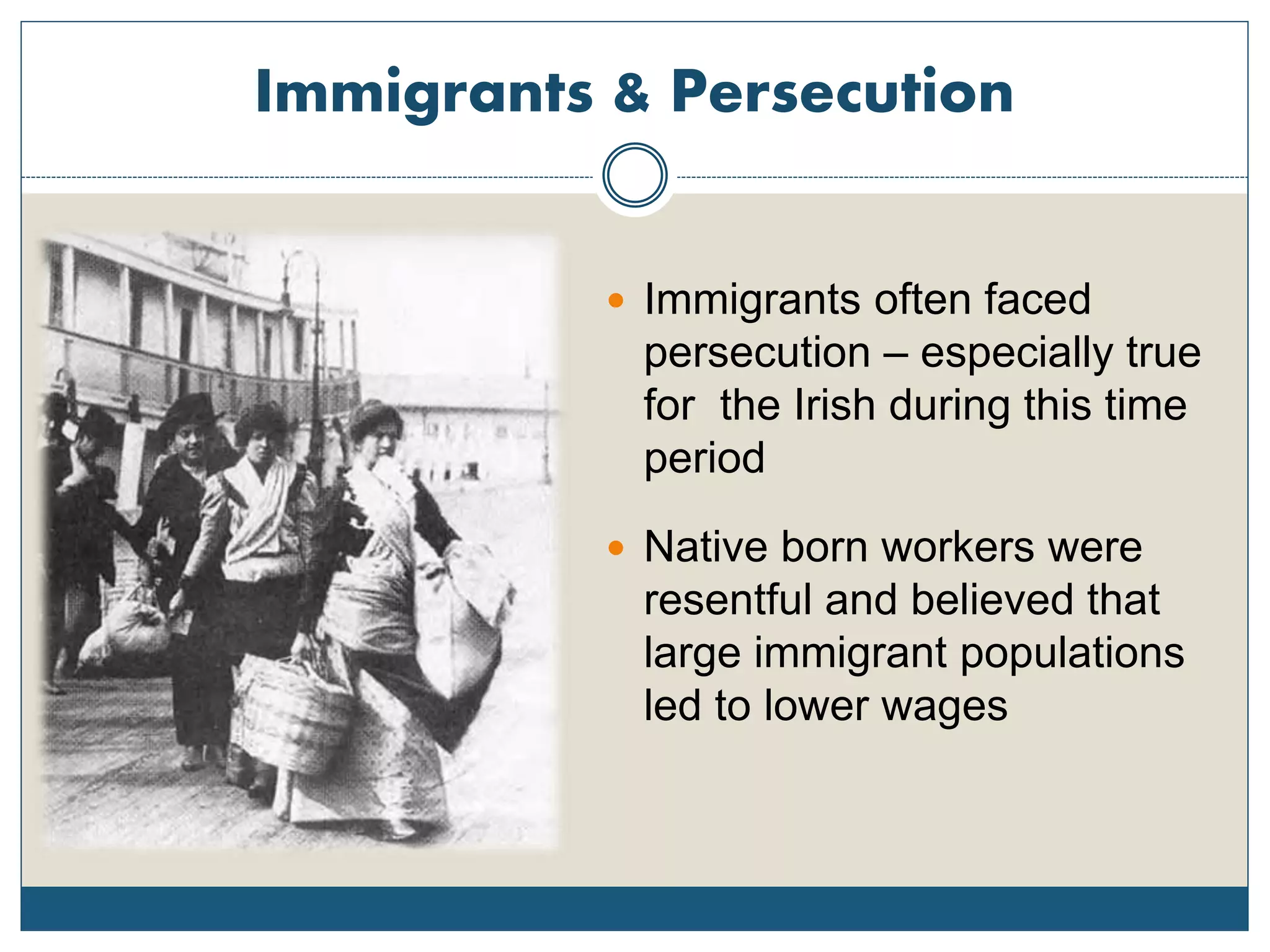
Immigrants & Persecution
 Immigrants often faced
persecution – especially true
for the Irish during this time
period
 Native born workers were
resentful and believed that
large immigrant populations
led to lower wages
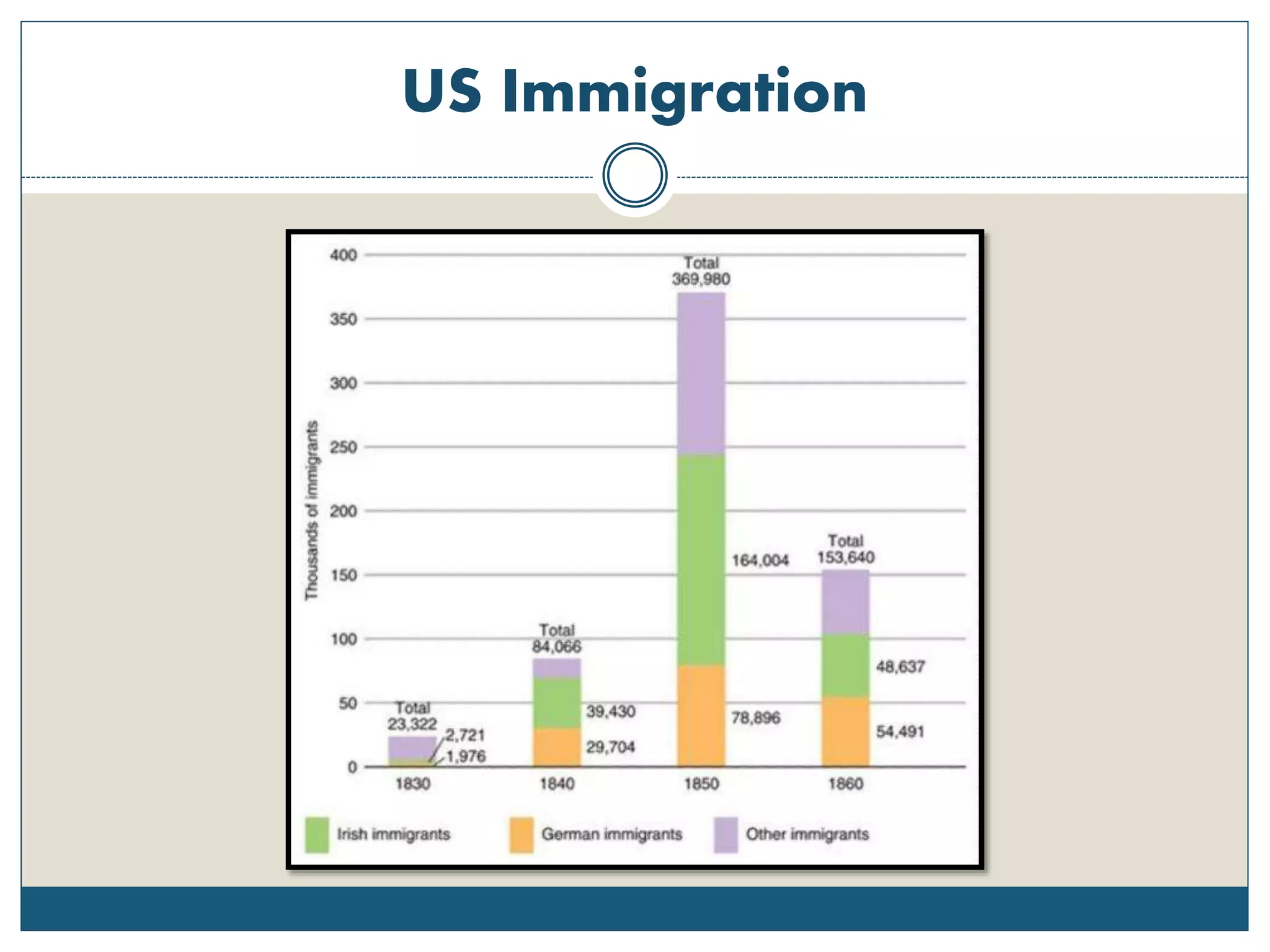
US Immigration

Chapter 14 Notes

  • 1.
  • 2.
    Population Patterns  USPopulation:  1790 – 4 million, most east of the Appalachian Mountains  1840 – 17 million, 1/3 west of the Appalachian Mountains  Population grew in parts of the old Northwest Territory, including Ohio, Indiana, Michigan, & Wisconsin  Ohio – 1800 – 45,000 1820 – 581,000 1840 – 1.5 million
  • 3.
  • 4.
    Farm Economy  Mostinitially practiced subsistence agriculture  Men: Responsible for “heavy” work like clearing land & plowing  Women: Variety of chores – often endless  Sold eggs, butter, cheese, & other goods in order to supplement income
  • 5.
    Old Northwest Territory Saw an increase in commercial farming  Exported goods outside of the United States or shipping them to markets in the East  Soon replaced the northeast as the center of American agriculture
  • 6.
    Commercial Farming  TheEast had become more urban & industrialized  Western farms benefitted from newer technologies due to differences in the landscape  McCormick’s Reaper  John Deere’s Steel Plow
  • 7.
    Impact of CommercialFarming  Debt increased among farmers  Financial “Panics” in 1819 & 1837 hurt many as credit was tightened  Farmers grew reliant upon outside market forces
  • 8.
  • 9.
    Old Southwest Territory Commercial farming & technology also impacted the old Southwest Territory  Settlement increased as cotton became the leading US export  Alabama & Mississippi produced nearly 50% of US cotton by 1820s
  • 10.
    Impact of CommercialFarming  Eli Whitney’s cotton gin led to the expansion of cotton plantations  Processed cotton was shipped to British & US textile mills  Caused an increase in the demand for slave labor
  • 11.
    Transportation Changes  Steamboatstransformed the transportation of goods & people via rivers  Canals made transporting western goods more practical  By the 1830s, investment in railroad construction outpaced that of canals
  • 12.
  • 13.
    Rise of Industry Lowell, MA was an important center for textile manufacturing  Production increased from 4 million to 323 million yards between 1817 & 1843  Some people, especially urban men, began to purchase ready- made clothing
  • 14.
    Rise of Industry 80% of factory workers in Lowell & Waltham textile mills were young, unmarried women  Worked long hours in hot, humid conditions  Worsened in economic hard times when hours were extended & the pace of machines was sped up to increase production
  • 15.
    Urbanization  In 1820s,most cities were seaports  Over the next 40 years, US population increased considerably due to high birth rates & increased immigration
  • 16.
    Rise of Industry By 1860, nine cities had populations over 100,000 people  New York’s population had reached 800,000  Led to an increased inequality between the rich and the poor living in cities
  • 17.
    Gap Between Rich& Poor  Case Study: Boston  1833 – The richest 4% owned 59% of the city’s wealth  1848 – They owned about 65%  Case Study: New York  1828 – The richest 4% owned 50% of the city’s wealth  1848 – They owned about 65%
  • 18.
    Immigrants & Persecution Immigrants often faced persecution – especially true for the Irish during this time period  Native born workers were resentful and believed that large immigrant populations led to lower wages
  • 19.