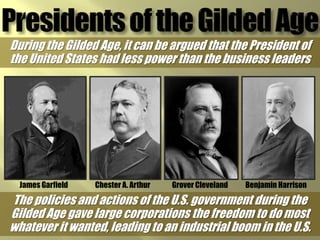
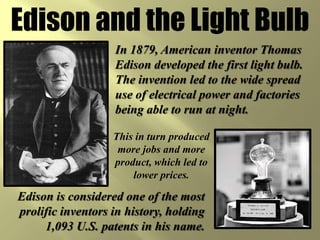
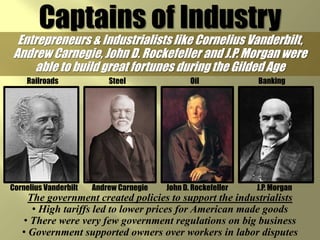
During the Gilded Age in the late 1800s, the United States government pursued policies of laissez-faire capitalism and low regulation of businesses. This allowed large industries to grow rapidly and inventors like Thomas Edison and Alexander Graham Bell to develop new technologies like the light bulb and telephone. Industrialists like Andrew Carnegie and John D. Rockefeller amassed great fortunes in steel and oil, though some viewed them as "robber barons". The period saw both rapid economic growth as well as inequality, as many workers struggled and some philosophers cited "social Darwinism" to justify the success of the wealthy.