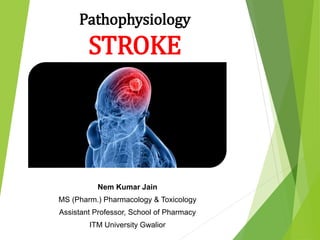
Pathophysiology
STROKE
Nem Kumar Jain
MS (Pharm.) Pharmacology & Toxicology
Assistant Professor, School of Pharmacy
ITM University Gwalior
Stroke
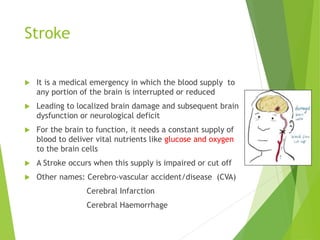
 It is a medical emergency in which the blood supply to
any portion of the brain is interrupted or reduced
 Leading to localized brain damage and subsequent brain
dysfunction or neurological deficit
 For the brain to function, it needs a constant supply of
blood to deliver vital nutrients like glucose and oxygen
to the brain cells
 A Stroke occurs when this supply is impaired or cut off
 Other names: Cerebro-vascular accident/disease (CVA)
Cerebral Infarction
Cerebral Haemorrhage
Epidemiology*
 According to the World Health Organization,
 15 million people suffer stroke worldwide each year.
 Of these, 5 million die and another 5 million are
permanently disabled.
 High blood pressure contributes to more than 12.7
million strokes worldwide.
 Europe averages approximately 650,000 stroke deaths each
year.
 Stroke is one of the leading causes of death and disability
in India. The estimated adjusted prevalence rate
of stroke range, 84-262/100,000 in rural and 334-
424/100,000 in urban areas.
*2018, WHO & NHS
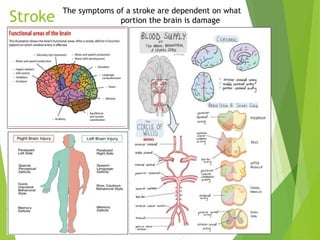
Stroke
The symptoms of a stroke are dependent on what
portion the brain is damage
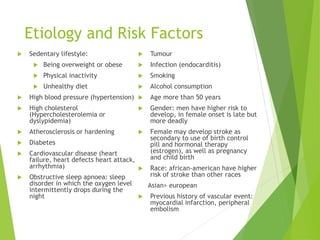
Etiology and Risk Factors
 Sedentary lifestyle:
 Being overweight or obese
 Physical inactivity
 Unhealthy diet
 High blood pressure (hypertension)
 High cholesterol
(Hypercholesterolemia or
dyslypidemia)
 Atherosclerosis or hardening
 Diabetes
 Cardiovascular disease (heart
failure, heart defects heart attack,
arrhythmia)
 Obstructive sleep apnoea: sleep
disorder in which the oxygen level
intermittently drops during the
night
 Tumour
 Infection (endocarditis)
 Smoking
 Alcohol consumption
 Age more than 50 years
 Gender: men have higher risk to
develop, in female onset is late but
more deadly
 Female may develop stroke as
secondary to use of birth control
pill and hormonal therapy
(estrogen), as well as pregnancy
and child birth
 Race: african-american have higher
risk of stroke than other races
Asian> european
 Previous history of vascular event:
myocardial infarction, peripheral
embolism
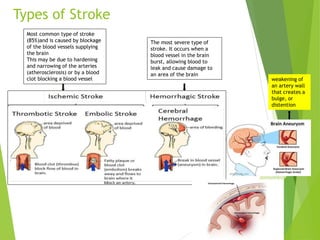
Types of Stroke
Most common type of stroke
(85%)and is caused by blockage
of the blood vessels supplying
the brain
This may be due to hardening
and narrowing of the arteries
(atherosclerosis) or by a blood
clot blocking a blood vessel
The most severe type of
stroke. It occurs when a
blood vessel in the brain
burst, allowing blood to
leak and cause damage to
an area of the brain
weakening of
an artery wall
that creates a
bulge, or
distention
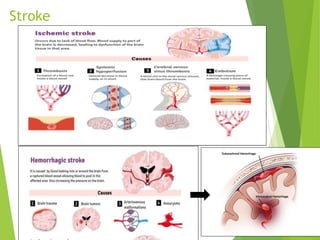
Stroke
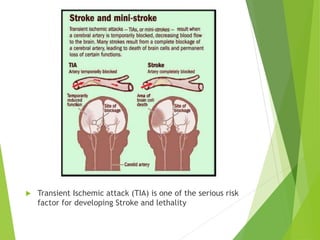
 Transient Ischemic attack (TIA) is one of the serious risk
factor for developing Stroke and lethality
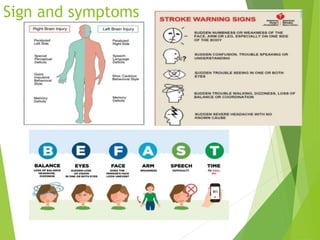
Sign and symptoms

Pathophysiology stroke

  • 1.
    Pathophysiology STROKE Nem Kumar Jain MS(Pharm.) Pharmacology & Toxicology Assistant Professor, School of Pharmacy ITM University Gwalior
  • 2.
    Stroke  It isa medical emergency in which the blood supply to any portion of the brain is interrupted or reduced  Leading to localized brain damage and subsequent brain dysfunction or neurological deficit  For the brain to function, it needs a constant supply of blood to deliver vital nutrients like glucose and oxygen to the brain cells  A Stroke occurs when this supply is impaired or cut off  Other names: Cerebro-vascular accident/disease (CVA) Cerebral Infarction Cerebral Haemorrhage
  • 3.
    Epidemiology*  According tothe World Health Organization,  15 million people suffer stroke worldwide each year.  Of these, 5 million die and another 5 million are permanently disabled.  High blood pressure contributes to more than 12.7 million strokes worldwide.  Europe averages approximately 650,000 stroke deaths each year.  Stroke is one of the leading causes of death and disability in India. The estimated adjusted prevalence rate of stroke range, 84-262/100,000 in rural and 334- 424/100,000 in urban areas. *2018, WHO & NHS
  • 4.
    Stroke The symptoms ofa stroke are dependent on what portion the brain is damage
  • 5.
    Etiology and RiskFactors  Sedentary lifestyle:  Being overweight or obese  Physical inactivity  Unhealthy diet  High blood pressure (hypertension)  High cholesterol (Hypercholesterolemia or dyslypidemia)  Atherosclerosis or hardening  Diabetes  Cardiovascular disease (heart failure, heart defects heart attack, arrhythmia)  Obstructive sleep apnoea: sleep disorder in which the oxygen level intermittently drops during the night  Tumour  Infection (endocarditis)  Smoking  Alcohol consumption  Age more than 50 years  Gender: men have higher risk to develop, in female onset is late but more deadly  Female may develop stroke as secondary to use of birth control pill and hormonal therapy (estrogen), as well as pregnancy and child birth  Race: african-american have higher risk of stroke than other races Asian> european  Previous history of vascular event: myocardial infarction, peripheral embolism
  • 6.
    Types of Stroke Mostcommon type of stroke (85%)and is caused by blockage of the blood vessels supplying the brain This may be due to hardening and narrowing of the arteries (atherosclerosis) or by a blood clot blocking a blood vessel The most severe type of stroke. It occurs when a blood vessel in the brain burst, allowing blood to leak and cause damage to an area of the brain weakening of an artery wall that creates a bulge, or distention
  • 7.
  • 8.
     Transient Ischemicattack (TIA) is one of the serious risk factor for developing Stroke and lethality
  • 9.