DR LEE OI WAH
PEGAWAI KESIHATAN KAWASAN II
PEJABAT KESIHATAN KAWASAN TAWAU
OVERVIEW OF CLINICAL
GOVERNANCE
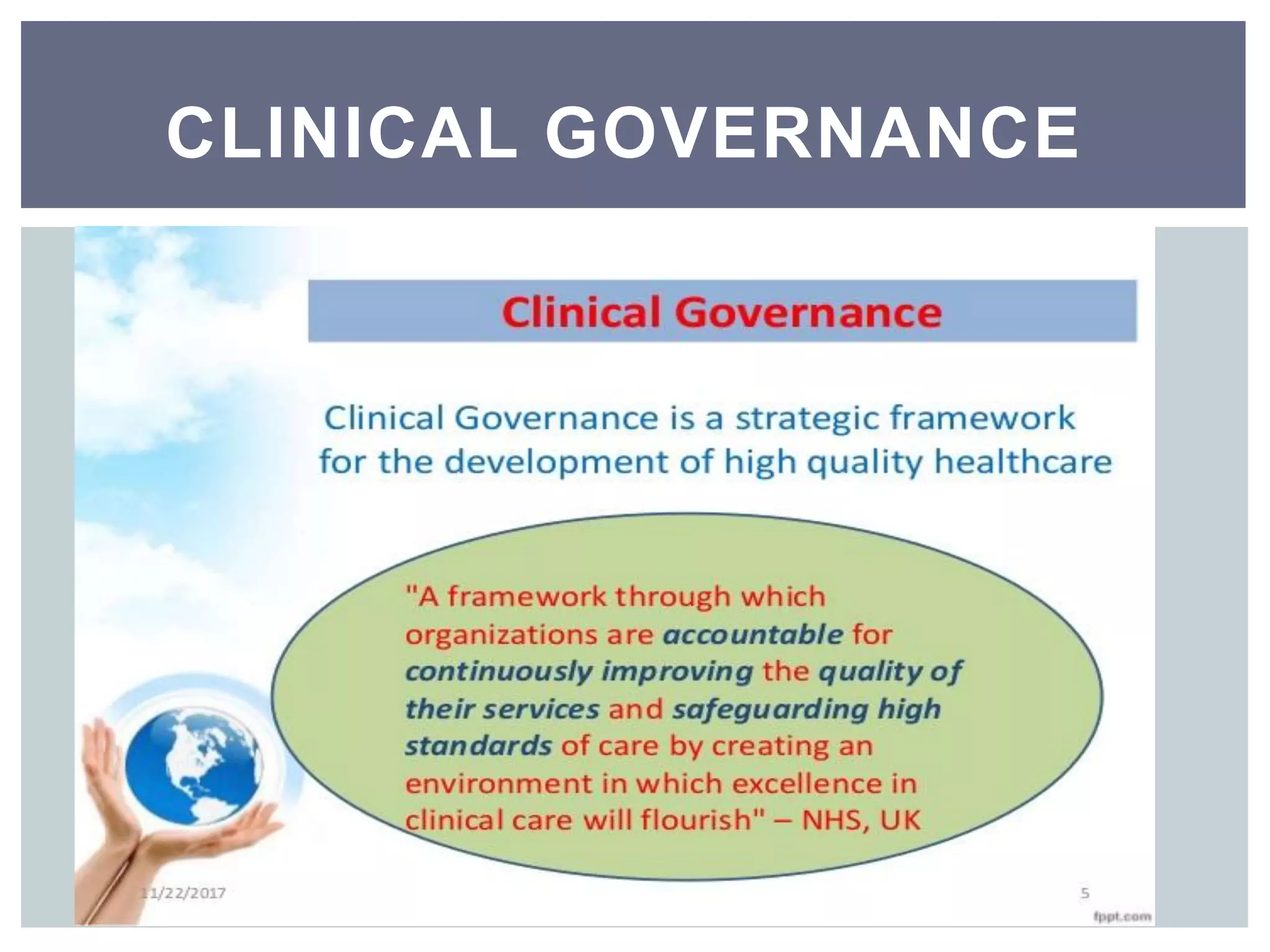
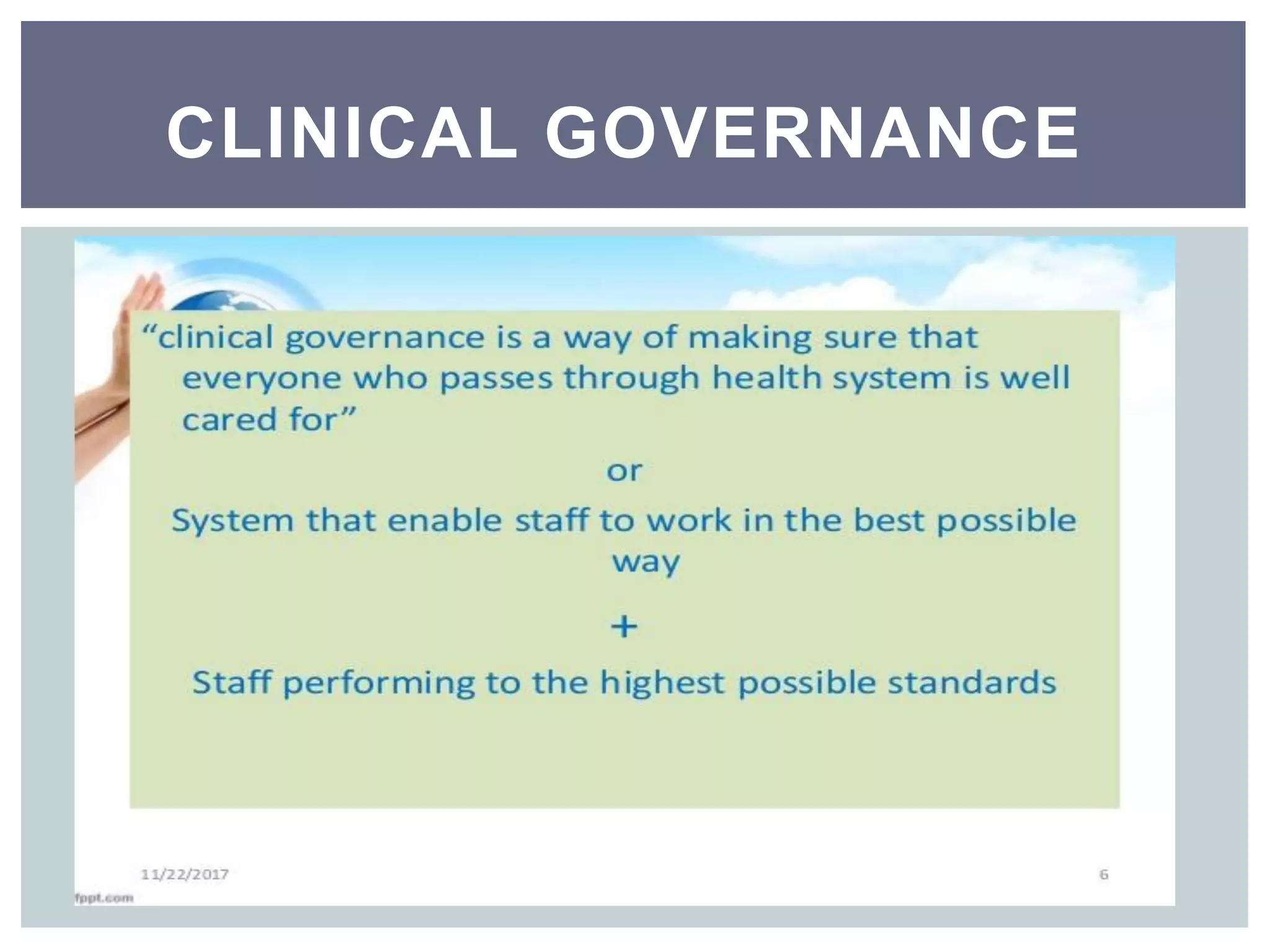
CLINICAL GOVERNANCE
CLINICAL GOVERNANCE
“The system by which the governing body,
managers, clinicians and staff share responsibility
and accountability for the quality of care,
continuously improving, minimising risks, and
fostering an environment of excellence in care for
consumers/patients/residents”
Australian Council on Healthcare Standards 2004
.
CLINICAL GOVERNANCE
WHAT MIGHT THAT MEAN IN
PRACTICE
 Put patients /clients/customers first and last
 Improve standards of working
 Learn from experience
 Enable staff and team
 Use information effectively
FRAMEWORK OF CG
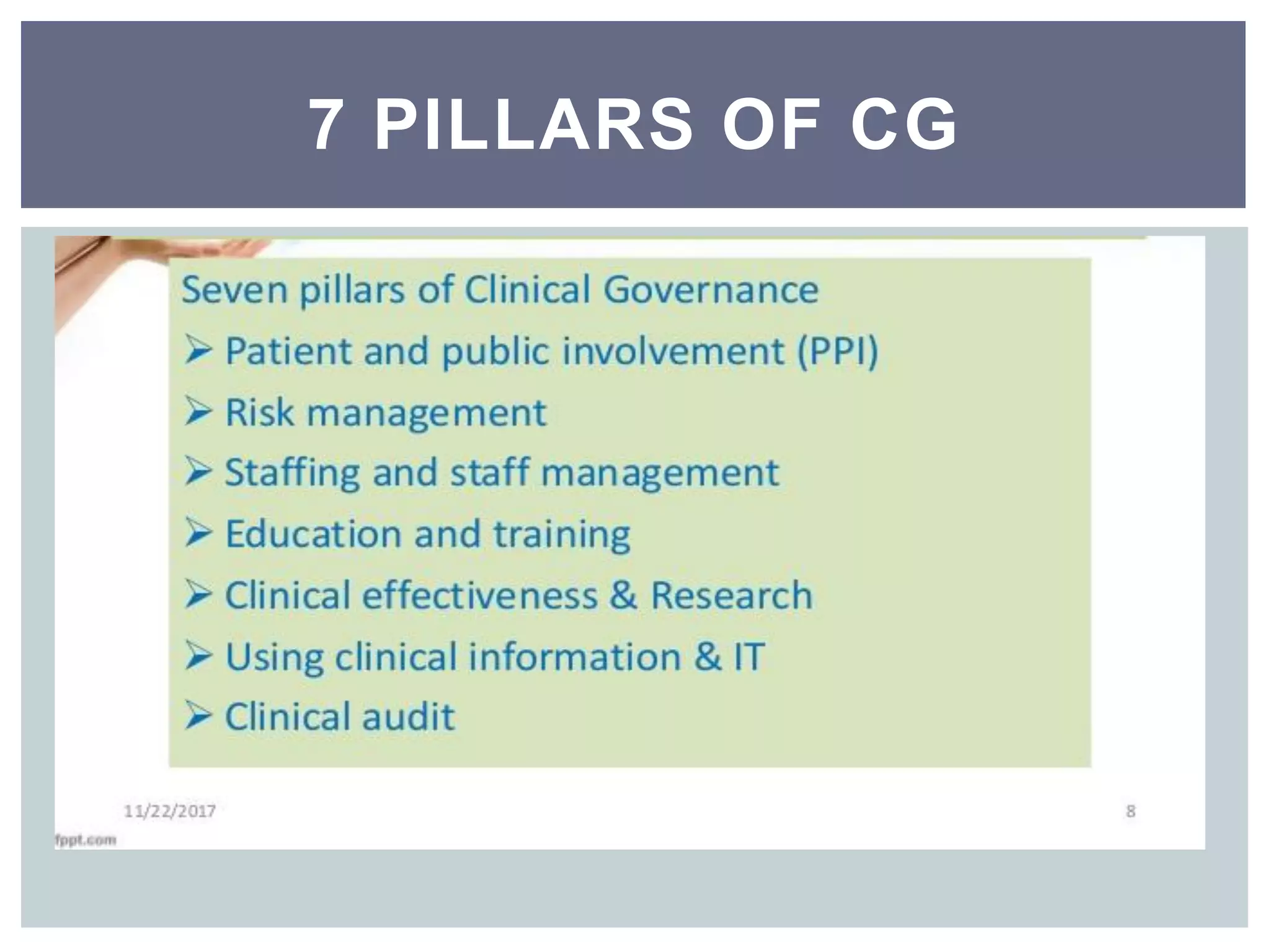
7 PILLARS OF CG
PATIENT AND PUBLIC
INVOLVEMENT(PPI)
NHMS
PATIENT SATISFACTION
SURVEY
COMPLAINTS
PATIENT’S RIGHT
COMPLAINTS
Implementing a complaints management system that includes
partnership with patients and carers
 Why?
 Complaints are an important improvement opportunity
 Consumers have a right to be engaged
 Consumers can contribute to finding system solutions
 What?
 Processes are in place to support the workforce to recognise and
report complaints .
 Systems are in place to analyse and implement improvements in
response to complaints .
 Feedback is provided to the workforce on the analysis of reported
complaints .
 Patient feedback and complaints are reviewed at the highest level
of governance in the organisation .
RISK MANAGEMENT
INCIDENT
REPORTING
MERS
WEHU/SSI
PATIENT SAFETY AND QUALITY INCIDENTS ARE
RECOGNISED, REPORTED AND ANALYSED AND
INFORMATION IS USED TO IMPROVE SAFETY
Implementing an incident management and investigation system
that includes reporting, investigating and analysing incidents
(including near misses), which all result in corrective actions
 Why?
 Research has shown that adverse patient events can be detected, and
their frequency reduced, using multiple detection methods and clinical
improvement strategies as part of an integrated clinical risk management
program.
 What?
 Establish processes are to support the workforce recognition and reporting
of incidents and near misses
 Establish systems to analyse and report on incidents
 Provide feedback on the analysis of reported incidents to the workforce
 Take action to reduce risks to patients identified through the incident
management system
 Review incidents and analysis of incidents at the highest level of
governance in the organisation
STAFF MANAGEMENT
EDUCATION AND TRAINING
CONTINUING PROFESSIONAL
DEVELOPMENT (CPD)
This is about developing a culture that encourages
lifelong learning ( the learning organization ) and is
an integral part of the job plan. Health organization
should commit, plan and act on ‘investment in
people’ if they are truly interested in delivering
quality clinical care
CLINICAL EFFECTIVENESS &
RESEARCH
CLINICAL EFFECTIVENESS &
RESEARCH
CPG SOP HTA
ACTION
RESEARCH
CLINICAL INFORMATION AND
USAGE OF IT
CLINICAL AUDIT
CLINICAL AUDIT
19/9/2019 PATRICIA LEE 22
19/9/2019 PATRICIA LEE 23
CONCLUSION
The key to effective governance is ensuring:
i. There is a positive organisational culture that values
performance and promotes continuous inquiry
ii. Systems of care are well-designed and performance is
monitored
a. A system is made up of inputs (e.g. equipment,
pharmaceuticals, skilled staff) and processes (policies,
procedures, the way things are done)
b. Systems need to be actively designed, monitored,
controlled and regularly reviewed
CONCLUSION
iii. There are systems to ensure people with the necessary
skills and competencies are appointed and supported at
all levels of the organisation
a. The right facilities and supports are available
b. Risk is identified and managed

Overview of clinical governance

  • 1.
    DR LEE OIWAH PEGAWAI KESIHATAN KAWASAN II PEJABAT KESIHATAN KAWASAN TAWAU OVERVIEW OF CLINICAL GOVERNANCE
  • 2.
  • 3.
    CLINICAL GOVERNANCE “The systemby which the governing body, managers, clinicians and staff share responsibility and accountability for the quality of care, continuously improving, minimising risks, and fostering an environment of excellence in care for consumers/patients/residents” Australian Council on Healthcare Standards 2004 .
  • 4.
  • 5.
    WHAT MIGHT THATMEAN IN PRACTICE  Put patients /clients/customers first and last  Improve standards of working  Learn from experience  Enable staff and team  Use information effectively
  • 6.
  • 7.
  • 9.
    PATIENT AND PUBLIC INVOLVEMENT(PPI) NHMS PATIENTSATISFACTION SURVEY COMPLAINTS PATIENT’S RIGHT
  • 10.
    COMPLAINTS Implementing a complaintsmanagement system that includes partnership with patients and carers  Why?  Complaints are an important improvement opportunity  Consumers have a right to be engaged  Consumers can contribute to finding system solutions  What?  Processes are in place to support the workforce to recognise and report complaints .  Systems are in place to analyse and implement improvements in response to complaints .  Feedback is provided to the workforce on the analysis of reported complaints .  Patient feedback and complaints are reviewed at the highest level of governance in the organisation .
  • 11.
  • 12.
    PATIENT SAFETY ANDQUALITY INCIDENTS ARE RECOGNISED, REPORTED AND ANALYSED AND INFORMATION IS USED TO IMPROVE SAFETY Implementing an incident management and investigation system that includes reporting, investigating and analysing incidents (including near misses), which all result in corrective actions  Why?  Research has shown that adverse patient events can be detected, and their frequency reduced, using multiple detection methods and clinical improvement strategies as part of an integrated clinical risk management program.  What?  Establish processes are to support the workforce recognition and reporting of incidents and near misses  Establish systems to analyse and report on incidents  Provide feedback on the analysis of reported incidents to the workforce  Take action to reduce risks to patients identified through the incident management system  Review incidents and analysis of incidents at the highest level of governance in the organisation
  • 13.
  • 14.
  • 15.
  • 16.
    CONTINUING PROFESSIONAL DEVELOPMENT (CPD) Thisis about developing a culture that encourages lifelong learning ( the learning organization ) and is an integral part of the job plan. Health organization should commit, plan and act on ‘investment in people’ if they are truly interested in delivering quality clinical care
  • 17.
  • 18.
  • 19.
  • 20.
  • 21.
  • 22.
  • 23.
  • 24.
    CONCLUSION The key toeffective governance is ensuring: i. There is a positive organisational culture that values performance and promotes continuous inquiry ii. Systems of care are well-designed and performance is monitored a. A system is made up of inputs (e.g. equipment, pharmaceuticals, skilled staff) and processes (policies, procedures, the way things are done) b. Systems need to be actively designed, monitored, controlled and regularly reviewed
  • 25.
    CONCLUSION iii. There aresystems to ensure people with the necessary skills and competencies are appointed and supported at all levels of the organisation a. The right facilities and supports are available b. Risk is identified and managed