Downloaded 159 times
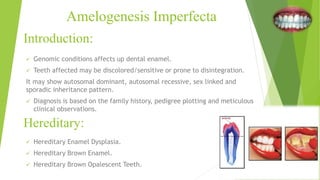
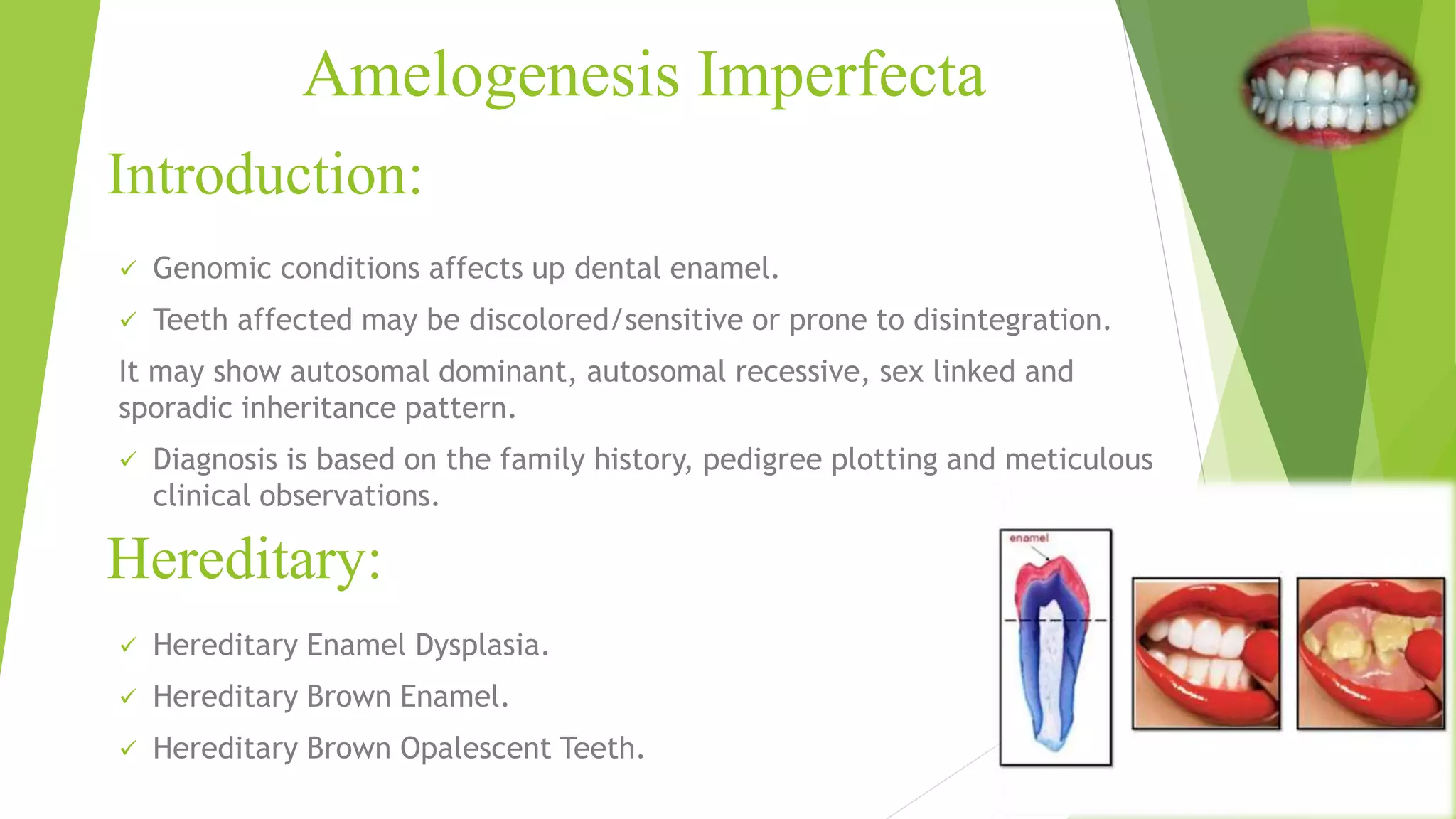
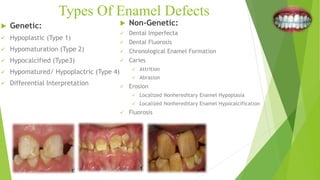

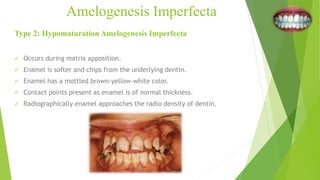
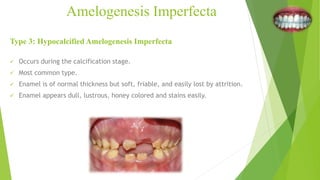
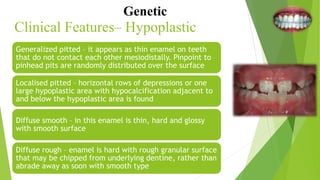
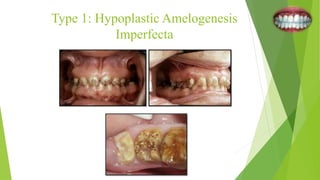
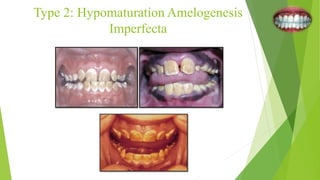
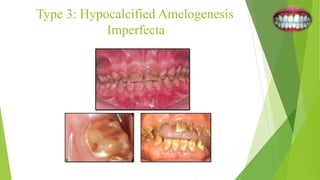
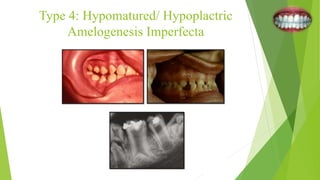
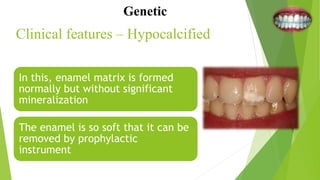
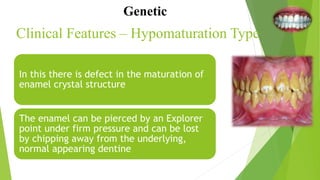
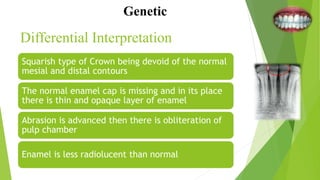
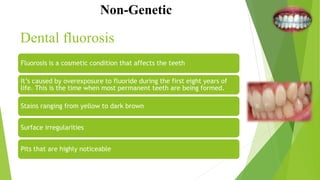
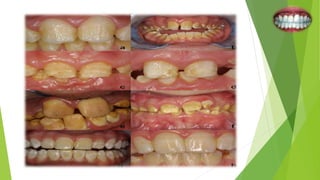

This document discusses genetic conditions that affect dental enamel formation called amelogenesis imperfecta. It describes four main types of enamel defects: hypoplastic (thin enamel), hypomaturation (soft enamel), hypocalcified (soft, friable enamel), and hypomatured/hypoplastic. The types are caused by defects in genes encoding enamel matrix proteins and result in discolored, sensitive teeth prone to disintegration. Amelogenesis imperfecta can be passed through autosomal dominant, recessive or sex-linked inheritance patterns. Diagnosis is based on family history, clinical observations and radiographs. Non-genetic conditions like dental fluorosis can also affect enamel formation.


