
11
presentation By
Aadil Ali Wani
Topic : Alkenes & Alkynes
1
Aadil Ali Wani
2
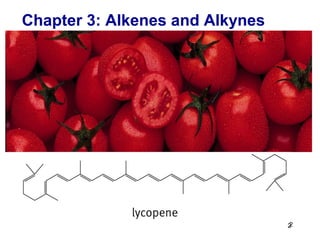
Chapter 3: Alkenes and Alkynes
2
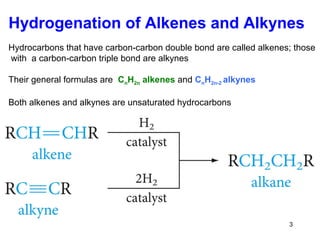
Hydrogenation of Alkenes and Alkynes
Hydrocarbons that have carbon-carbon double bond are called alkenes; those
with a carbon-carbon triple bond are alkynes
Their general formulas are CnH2n alkenes and CnH2n-2 alkynes
Both alkenes and alkynes are unsaturated hydrocarbons
3
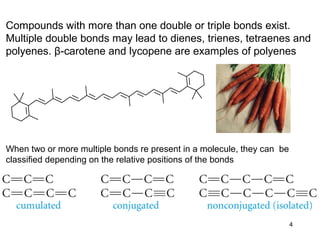
Compounds with more than one double or triple bonds exist.
Multiple double bonds may lead to dienes, trienes, tetraenes and
polyenes. β-carotene and lycopene are examples of polyenes
When two or more multiple bonds re present in a molecule, they can be
classified depending on the relative positions of the bonds
4
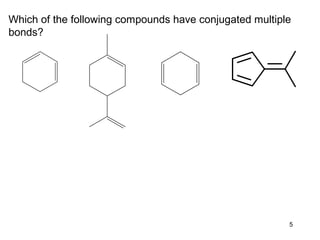
Which of the following compounds have conjugated multiple
bonds?
5
Nomenclature
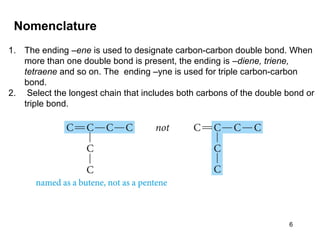
1. The ending –ene is used to designate carbon-carbon double bond. When
more than one double bond is present, the ending is –diene, triene,
tetraene and so on. The ending –yne is used for triple carbon-carbon
bond.
2. Select the longest chain that includes both carbons of the double bond or
triple bond.
6
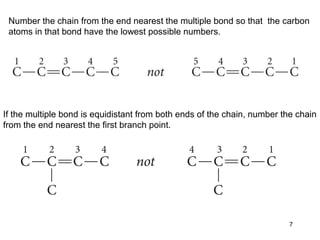
Number the chain from the end nearest the multiple bond so that the carbon
atoms in that bond have the lowest possible numbers.
If the multiple bond is equidistant from both ends of the chain, number the chain
from the end nearest the first branch point.
7
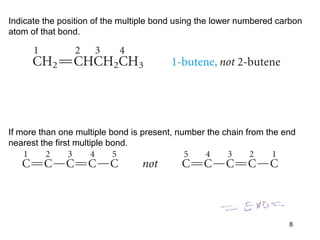
Indicate the position of the multiple bond using the lower numbered carbon
atom of that bond.
If more than one multiple bond is present, number the chain from the end
nearest the first multiple bond.
8
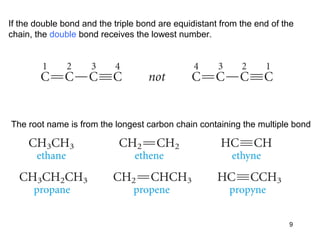
If the double bond and the triple bond are equidistant from the end of the
chain, the double bond receives the lowest number.
The root name is from the longest carbon chain containing the multiple bond
9
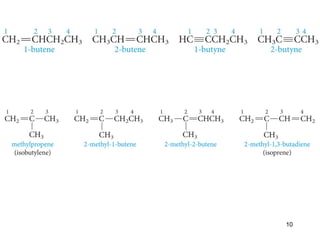
10
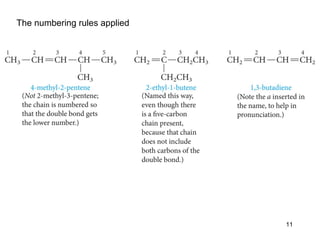
The numbering rules applied
11
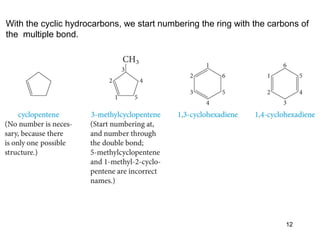
With the cyclic hydrocarbons, we start numbering the ring with the carbons of
the multiple bond.
12
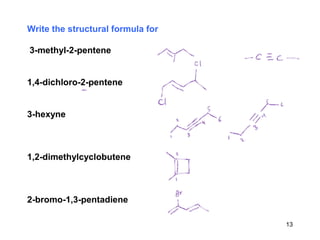
Write the structural formula for
3-methyl-2-pentene
1,4-dichloro-2-pentene
3-hexyne
1,2-dimethylcyclobutene
2-bromo-1,3-pentadiene
13
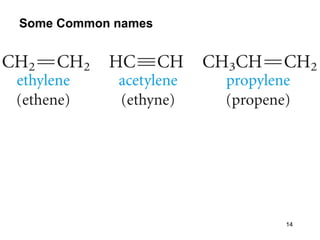
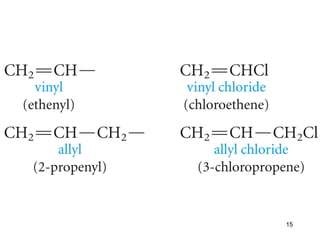
Some Common names
14
15
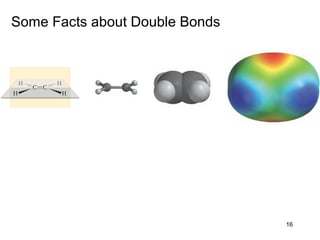
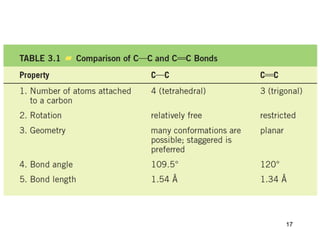
Some Facts about Double Bonds
16
17
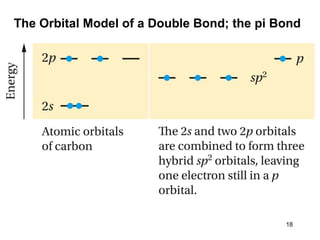
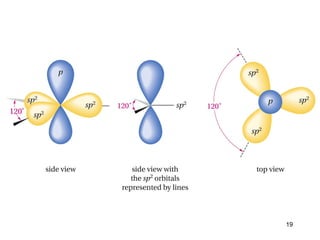
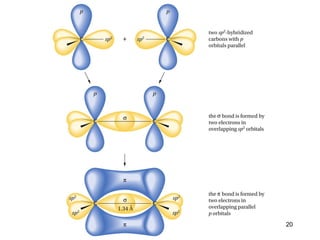
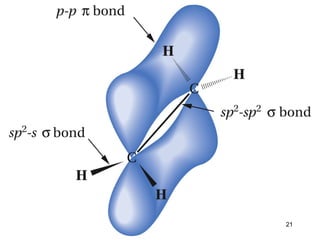
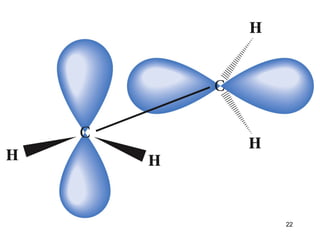
The Orbital Model of a Double Bond; the pi Bond
18
19
20
21
22
23
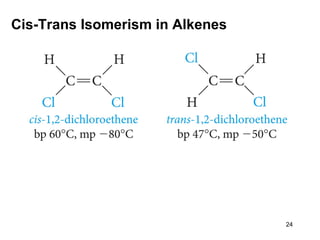
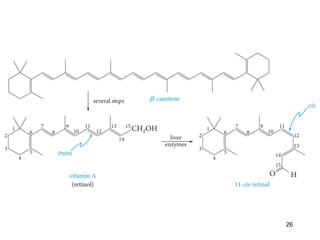
Cis-Trans Isomerism in Alkenes
24
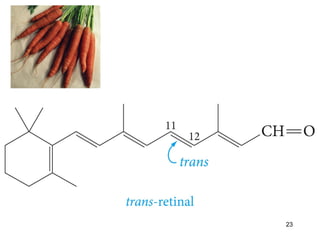
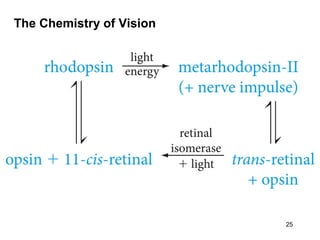
The Chemistry of Vision
25
26
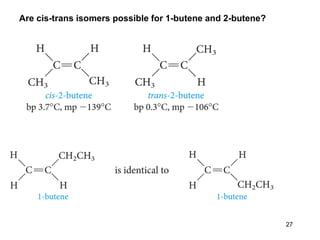
Are cis-trans isomers possible for 1-butene and 2-butene?
27
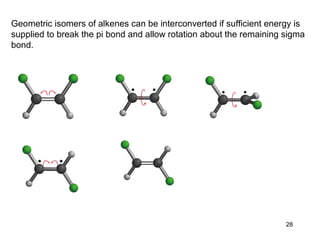
Geometric isomers of alkenes can be interconverted if sufficient energy is
supplied to break the pi bond and allow rotation about the remaining sigma
bond.
28
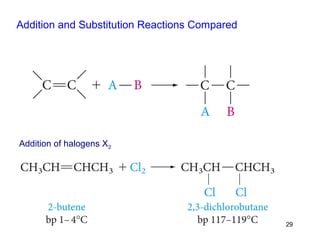
Addition and Substitution Reactions Compared
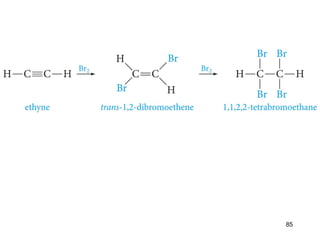
Addition of halogens X2
29
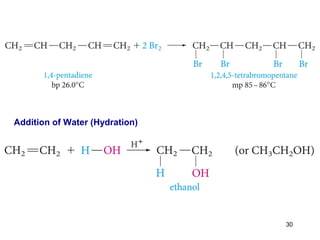
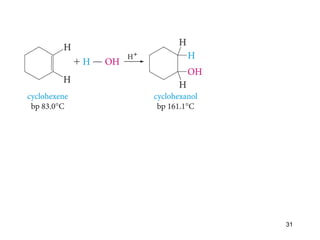
Addition of Water (Hydration)
30
31
32
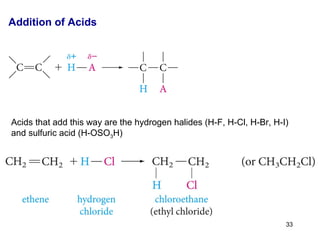
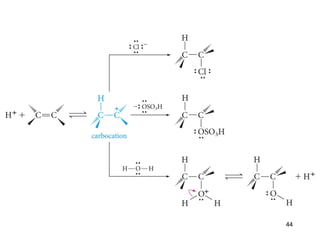
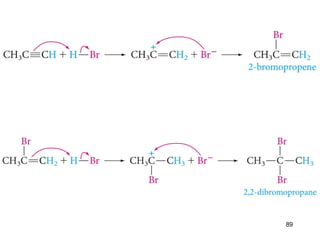
Addition of Acids
Acids that add this way are the hydrogen halides (H-F, H-Cl, H-Br, H-I)
and sulfuric acid (H-OSO3H)
33
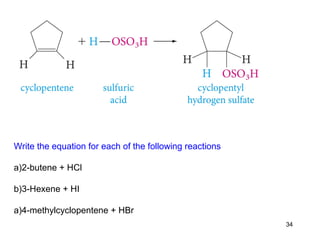
Write the equation for each of the following reactions
a)2-butene + HCl
b)3-Hexene + HI
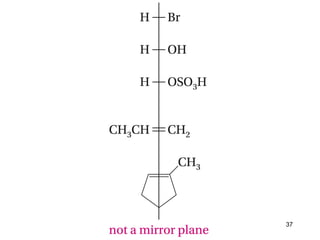
a)4-methylcyclopentene + HBr
34
35
36
37
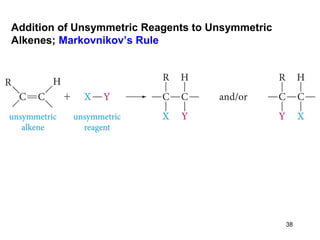
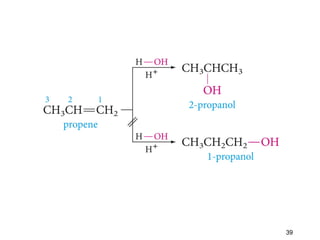
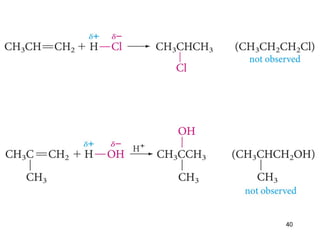
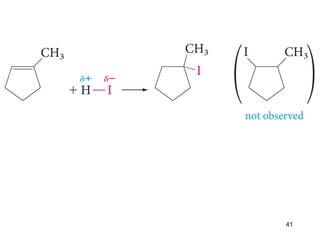
Addition of Unsymmetric Reagents to Unsymmetric
Alkenes; Markovnikov’s Rule
38
39
40
41
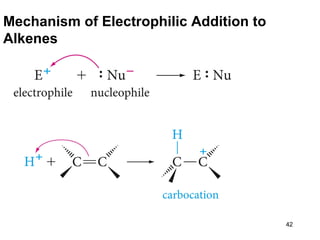
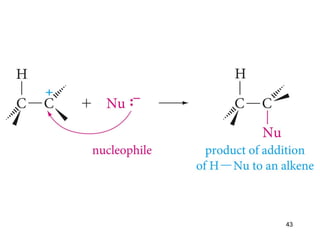
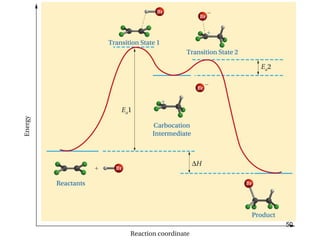
Mechanism of Electrophilic Addition to
Alkenes
42
43
44
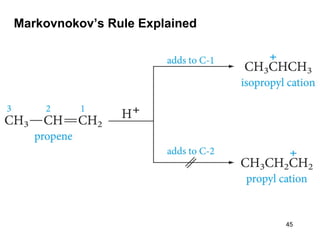
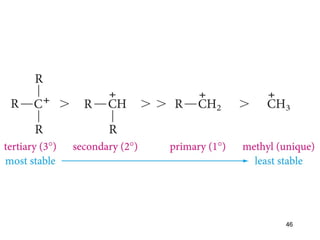
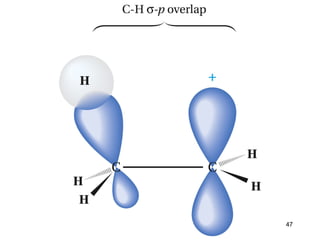
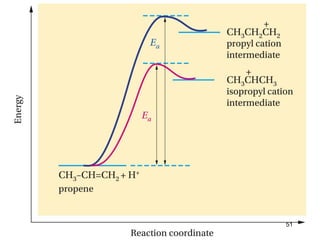
Markovnokov’s Rule Explained
45
46
47
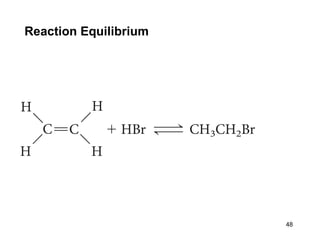
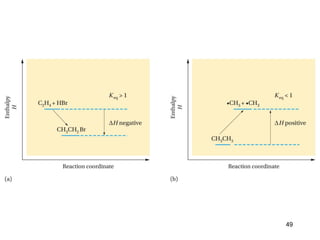
Reaction Equilibrium
48
49
50
51
52
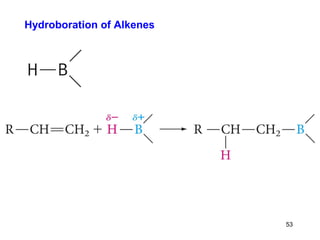
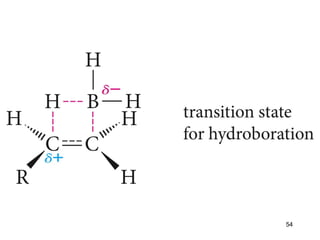
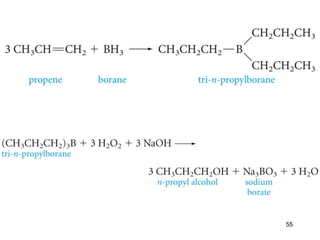
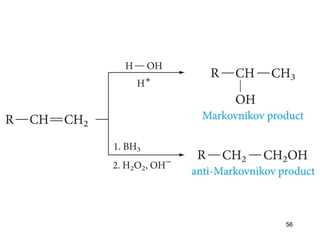
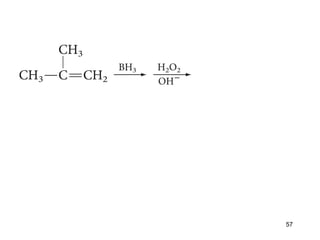
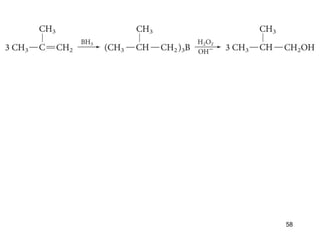
Hydroboration of Alkenes
53
54
55
56
57
58
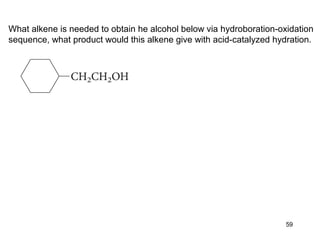
What alkene is needed to obtain he alcohol below via hydroboration-oxidation
sequence, what product would this alkene give with acid-catalyzed hydration.
59
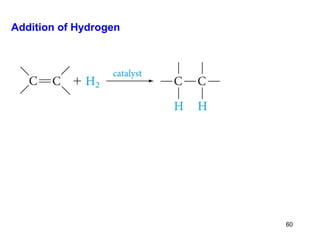
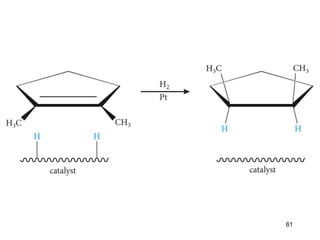
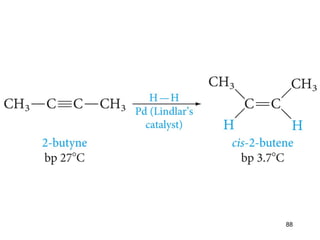
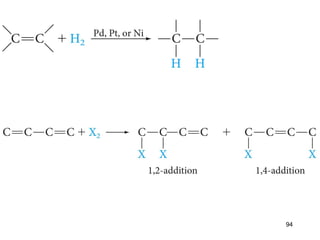
Addition of Hydrogen
60
61
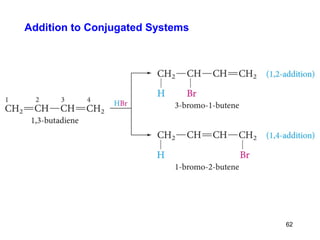
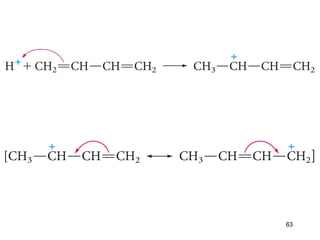
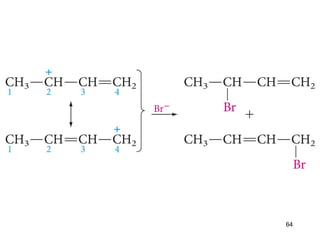
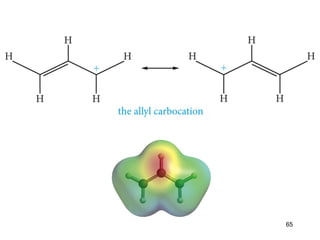
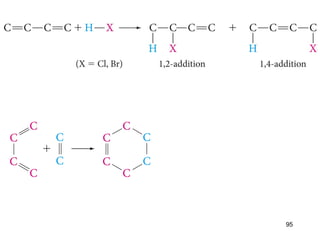
Addition to Conjugated Systems
62
63
64
65
66
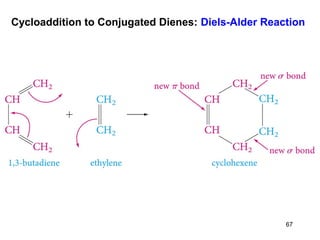
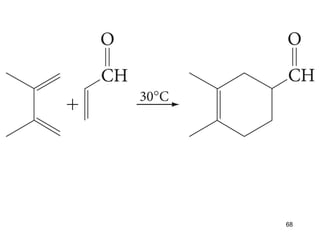
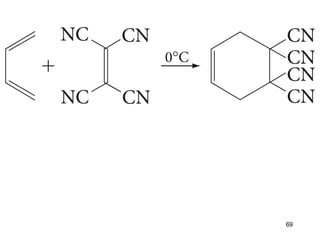
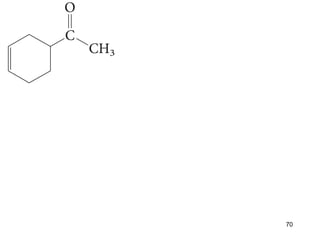
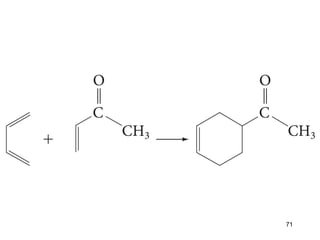
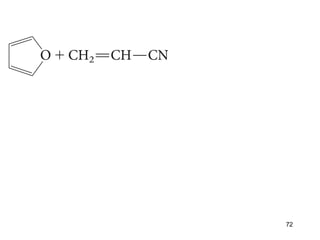
Cycloaddition to Conjugated Dienes: Diels-Alder Reaction
67
68
69
70
71
72
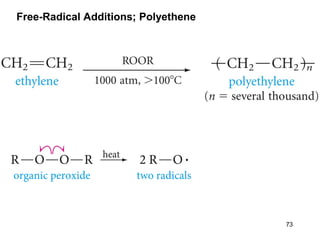
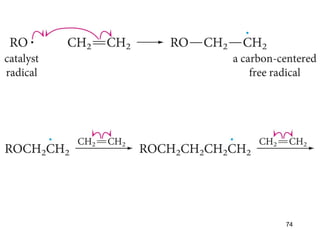
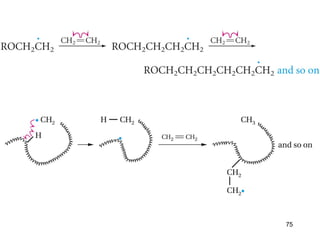
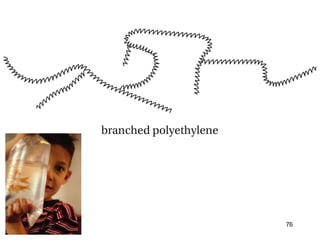
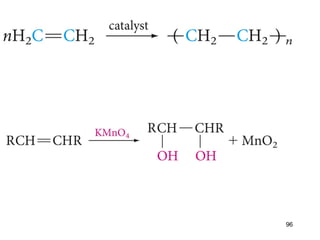
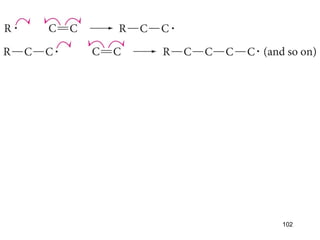
Free-Radical Additions; Polyethene
73
74
75
76
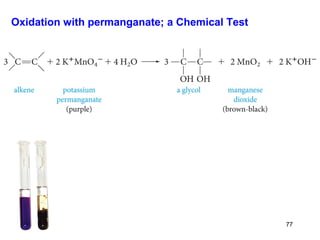
Oxidation with permanganate; a Chemical Test
77
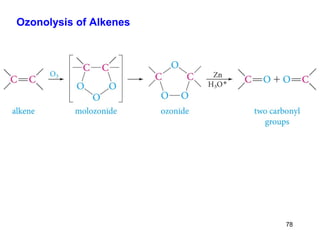
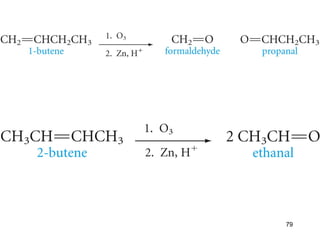
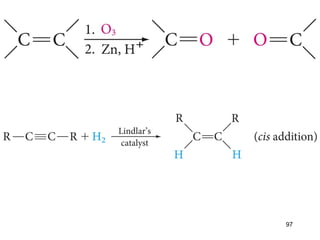
Ozonolysis of Alkenes
78
79
80
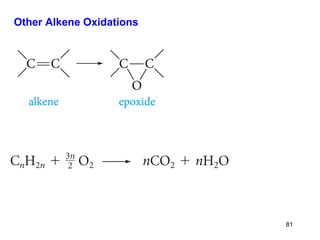
Other Alkene Oxidations
81
82
83
84
85
86
87
88
89
90
91
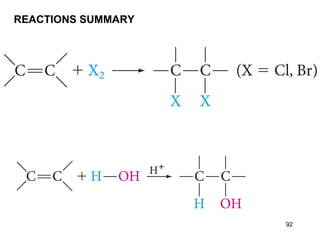
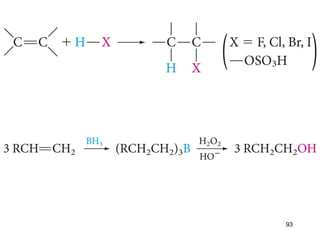
REACTIONS SUMMARY
92
93
94
95
96
97
98
99
100
101
102

Alkenes & Alkynes