Macroeconomic Policy Fundamentals Chapter 13
Discussion Topics Characteristics of money Federal Reserve System Changing the money supply Money market equilibrium Effects of monetary policy on economy The federal budget deficit The national debt Fiscal policy options
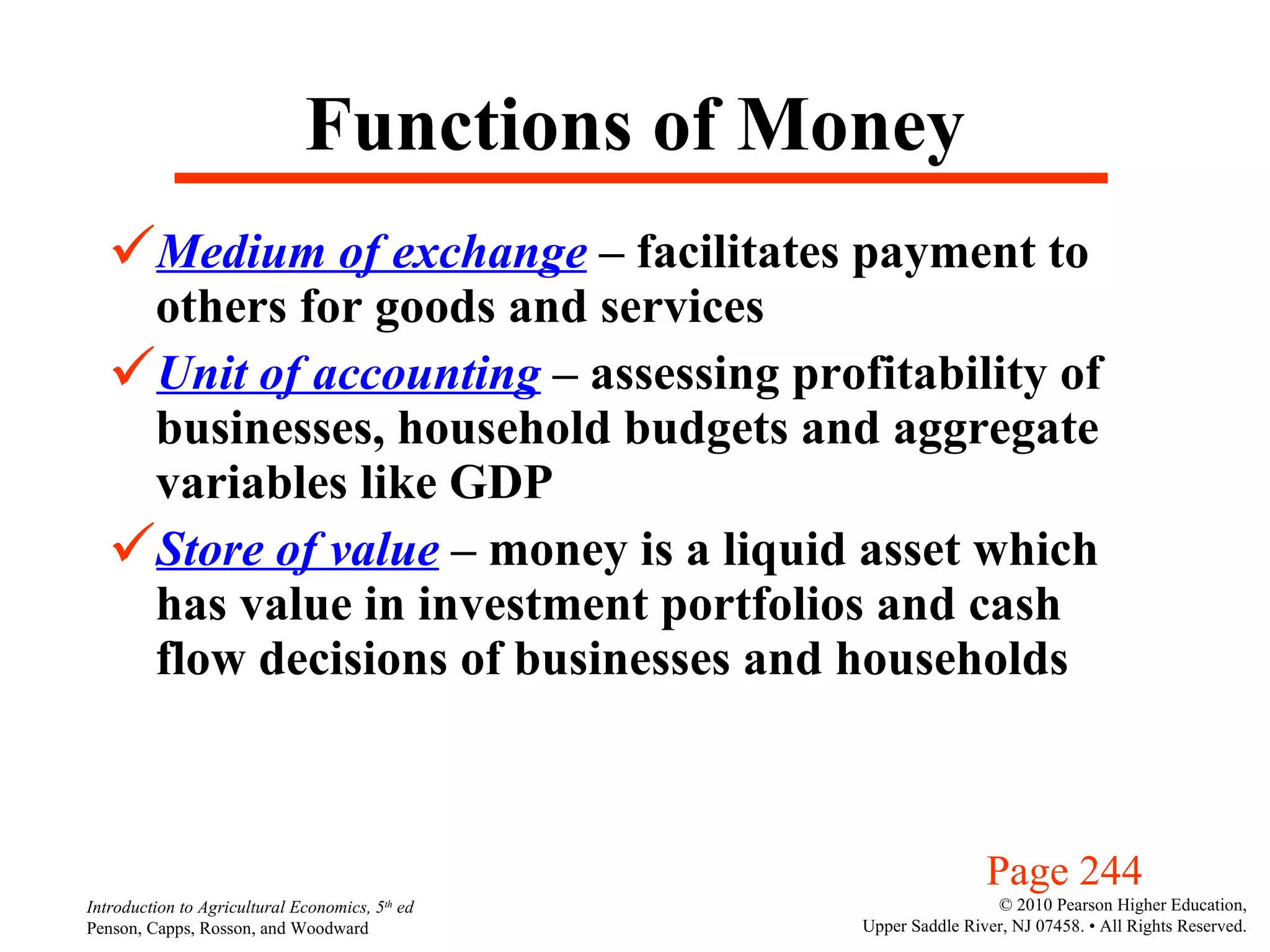
Functions of Money Medium of exchange  – facilitates payment to others for goods and services  Unit of accounting  – assessing profitability of businesses, household budgets and aggregate variables like GDP Store of value  – money is a liquid asset which has value in investment portfolios and cash flow decisions of businesses and households Page 244
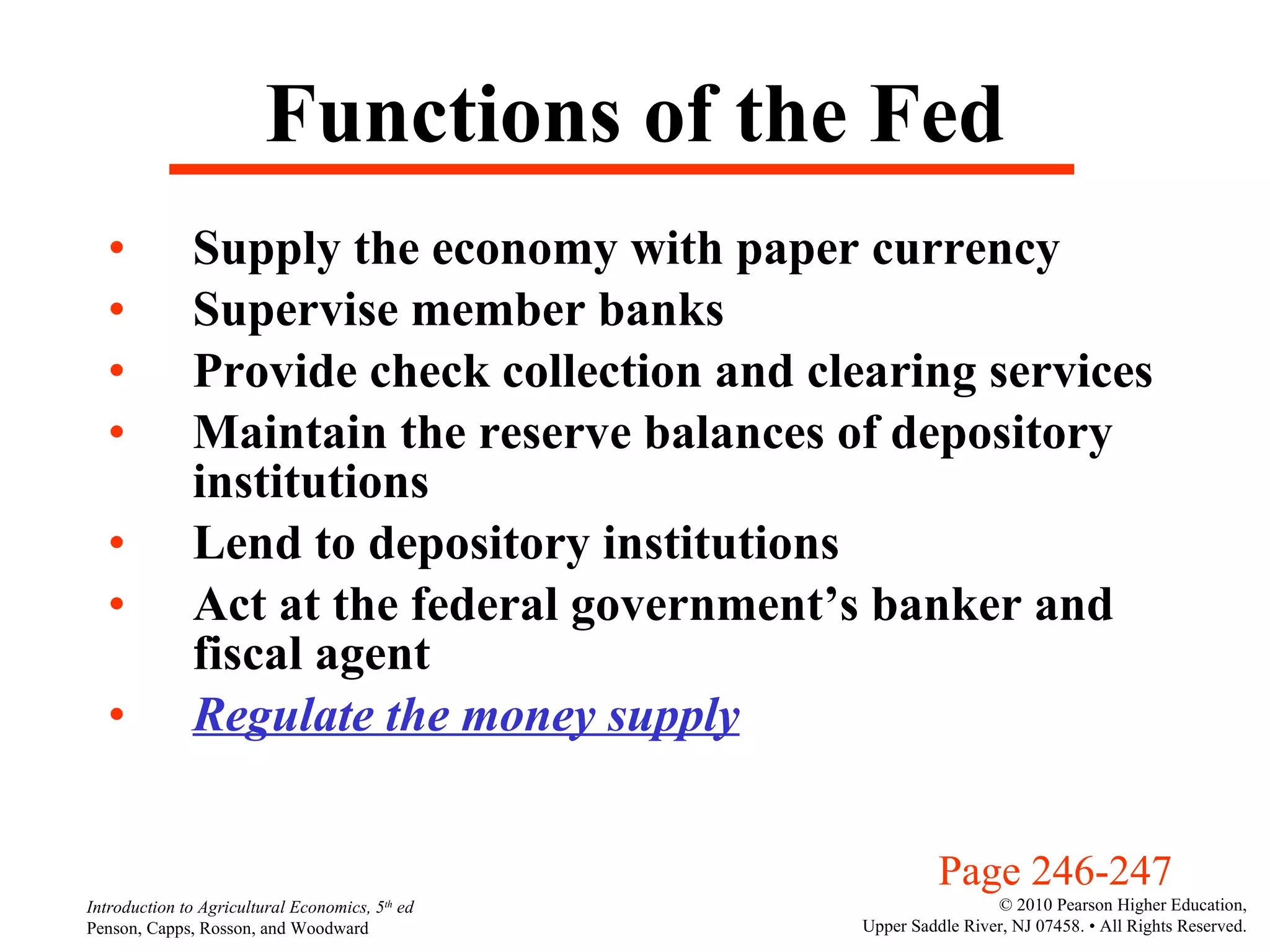
Functions of the Fed Supply the economy with paper currency Supervise member banks Provide check collection and clearing services Maintain the reserve balances of depository institutions Lend to depository institutions Act at the federal government’s banker and fiscal agent Regulate the money supply Page 246-247
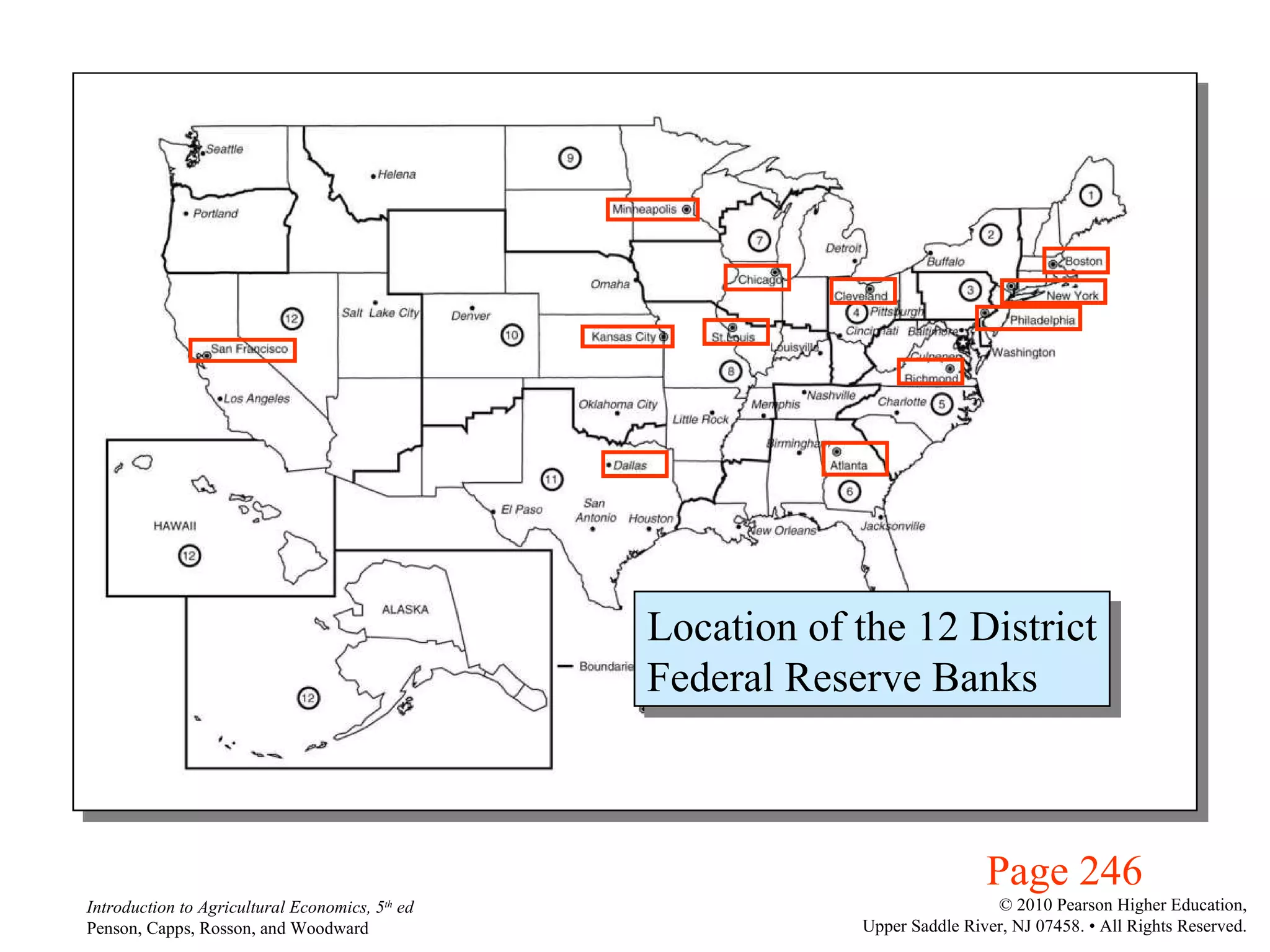
Page 246 Location of the 12 District Federal Reserve Banks
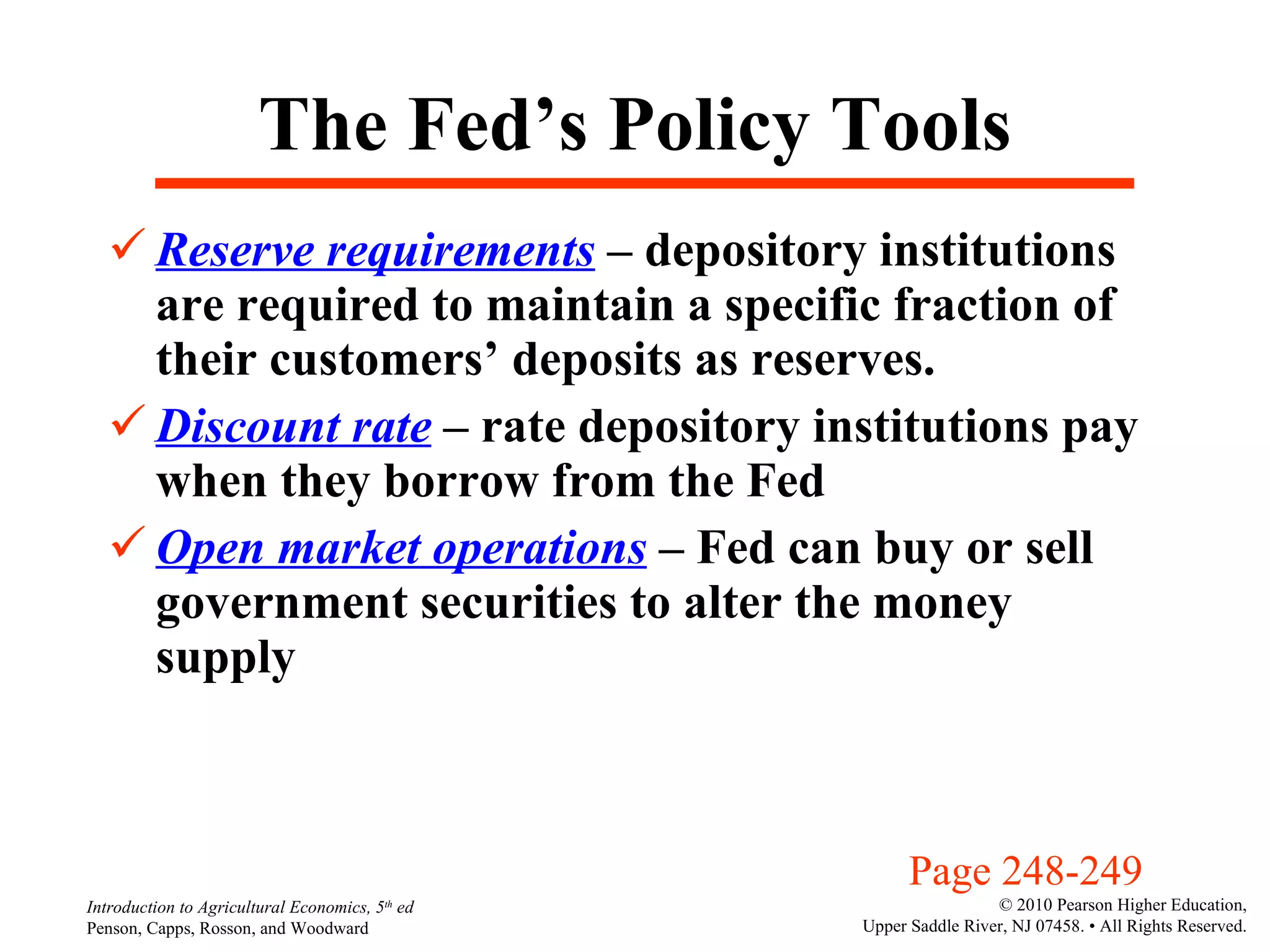
The Fed’s Policy Tools Reserve requirements  – depository institutions are required to maintain a specific fraction of their customers’ deposits as reserves. Discount rate  – rate depository institutions pay when they borrow from the Fed Open market operations  – Fed can buy or sell government securities to alter the money supply Page 248-249
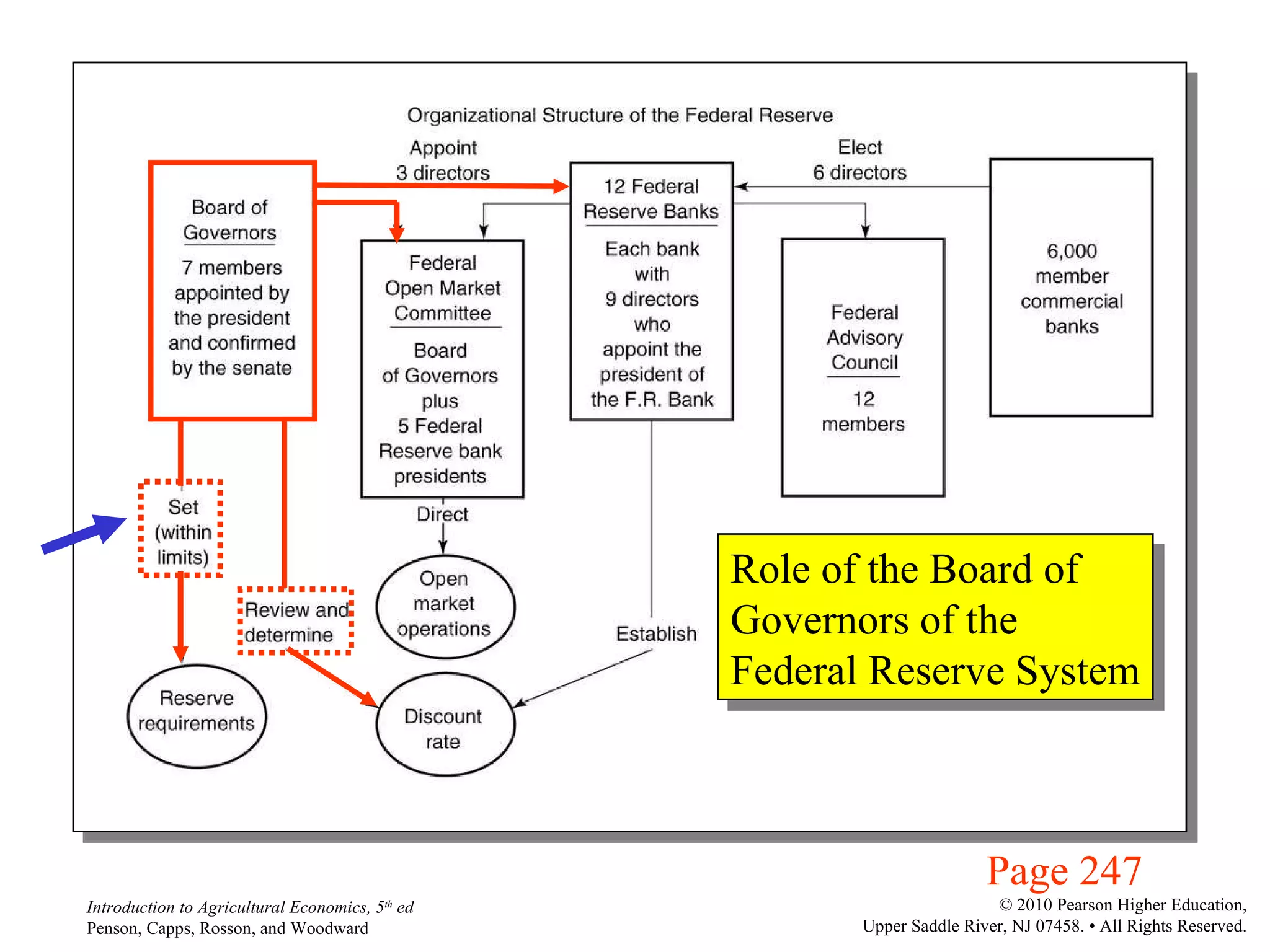
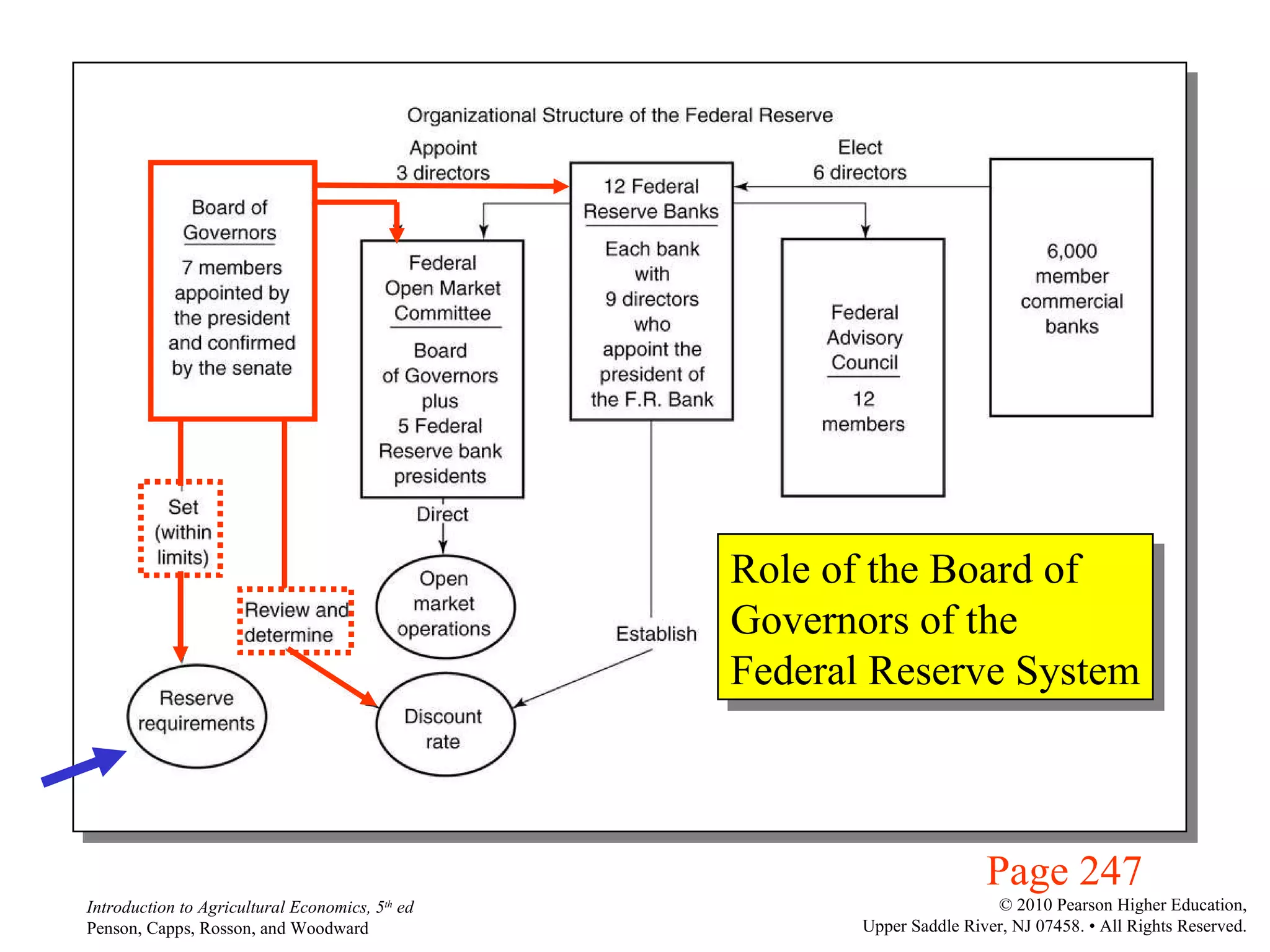
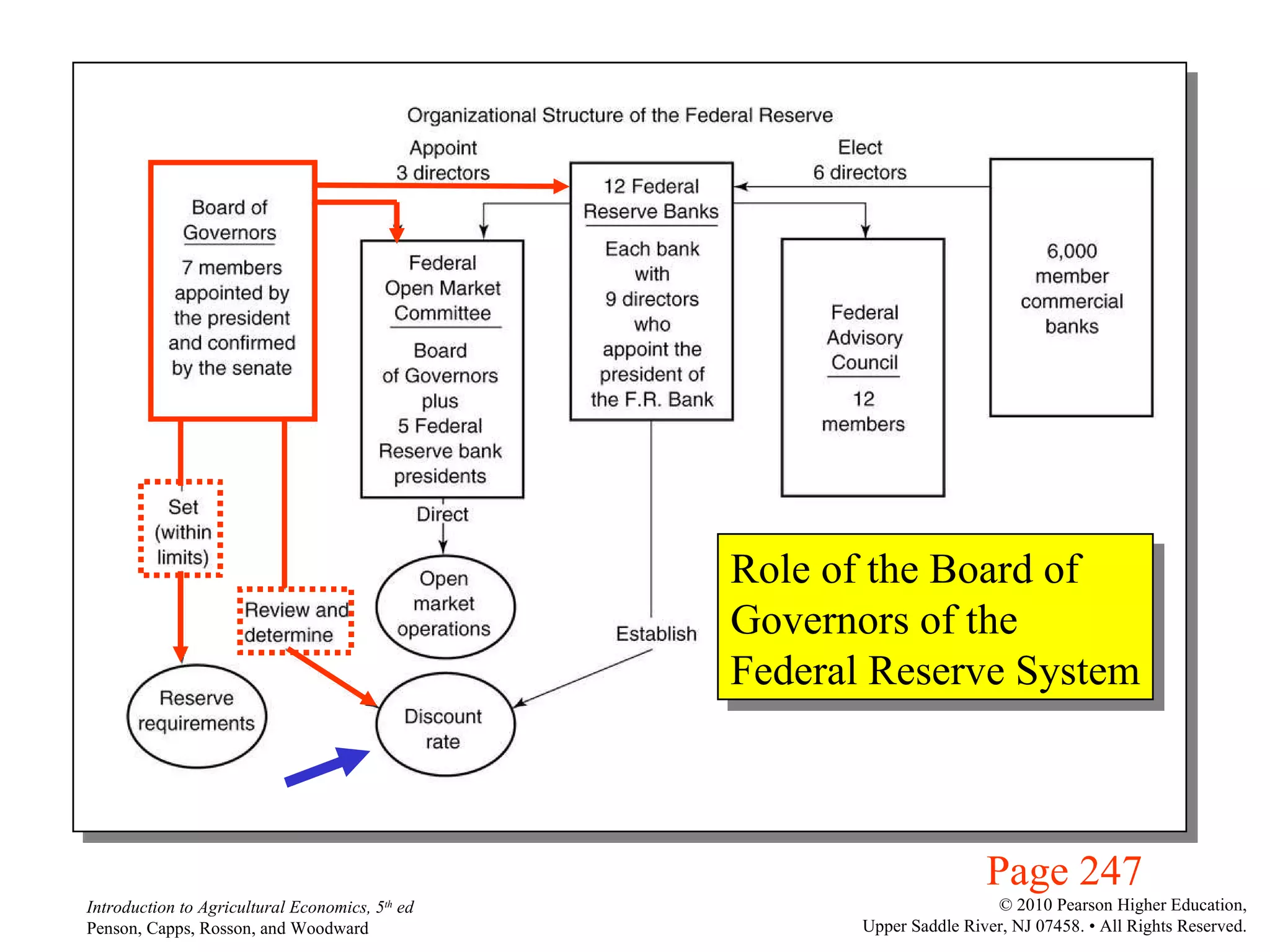
Page 247 Role of the Board of Governors of the Federal Reserve System
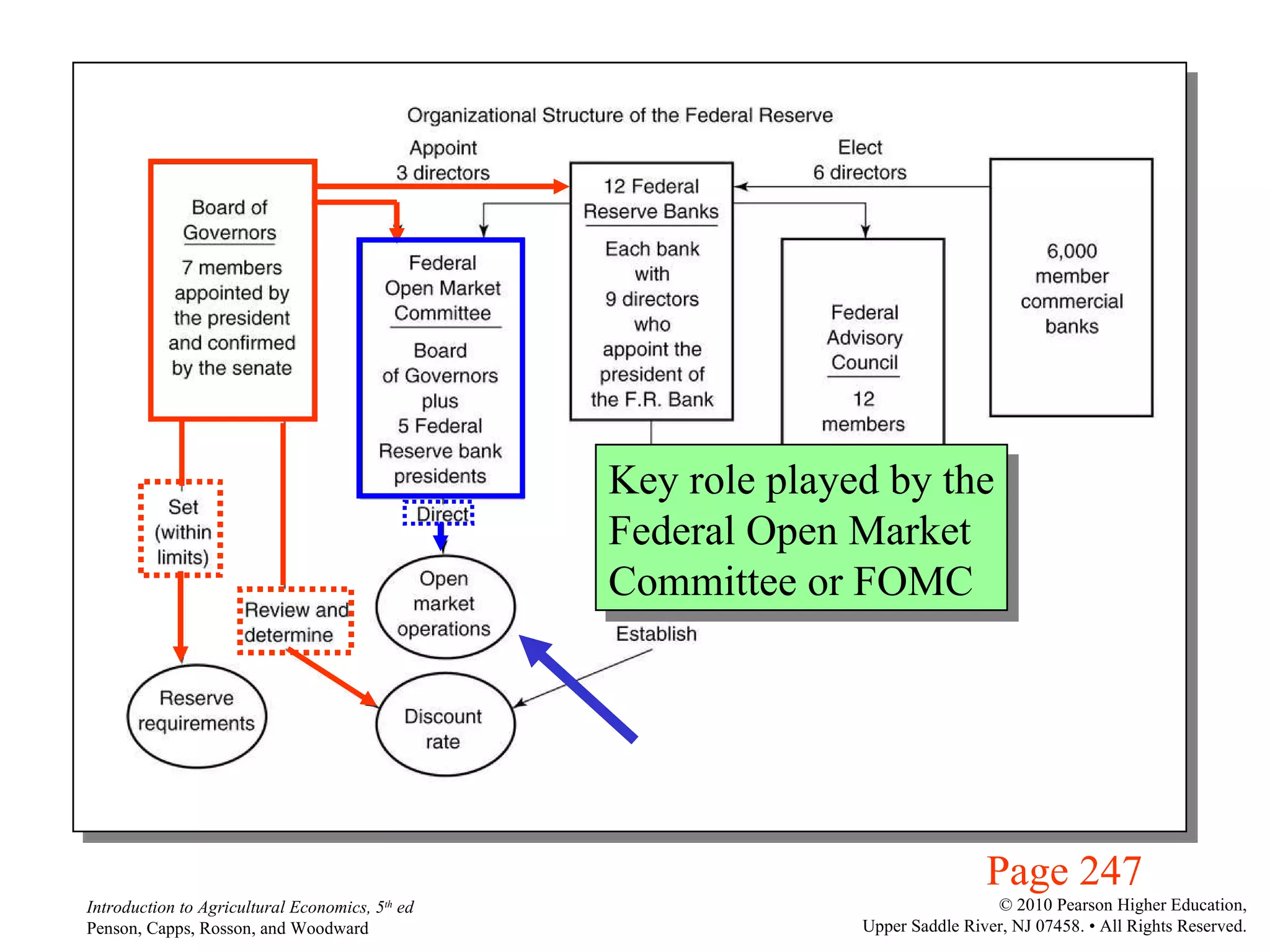
Page 247 Key role played by the Federal Open Market Committee or FOMC
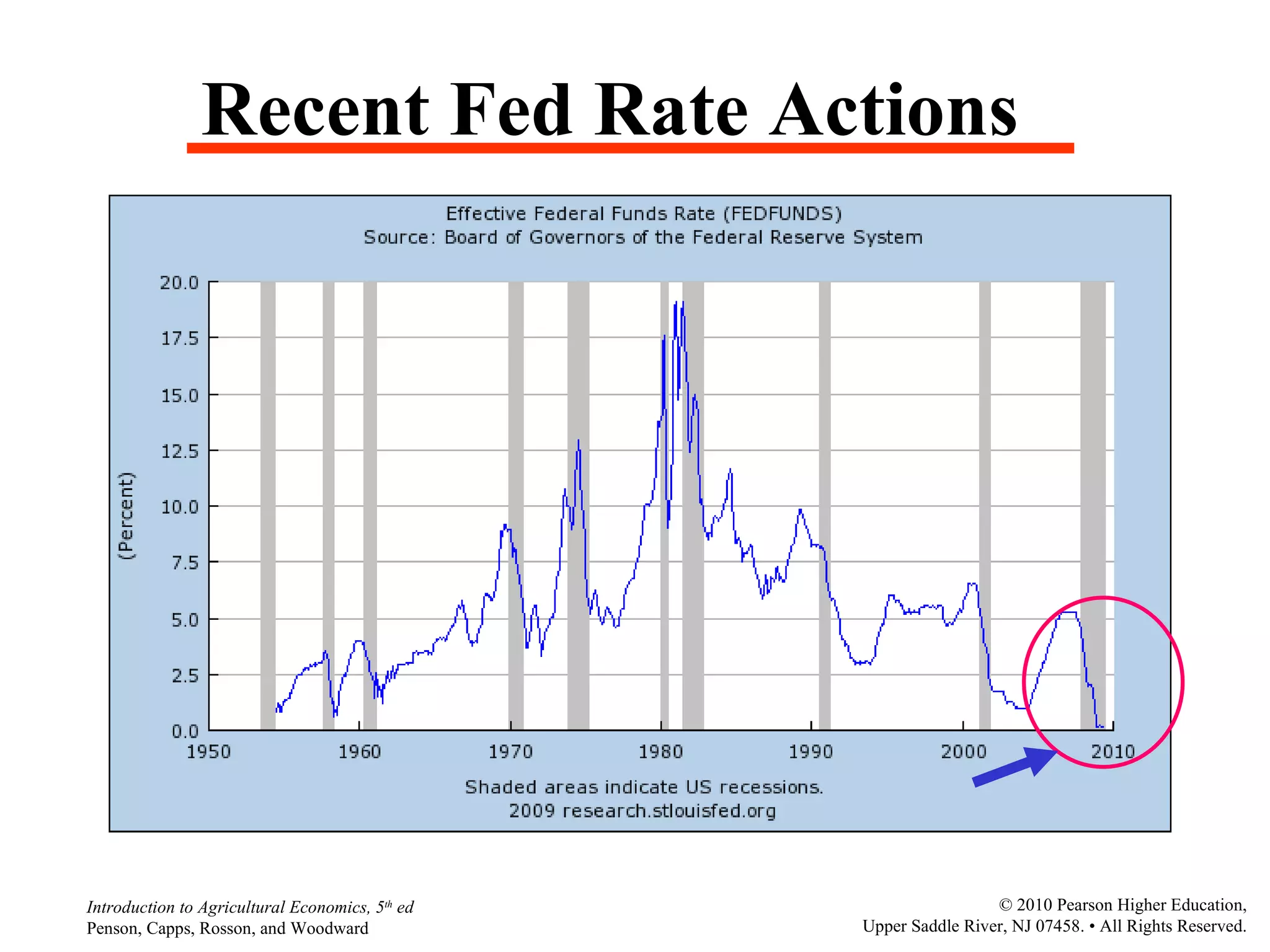
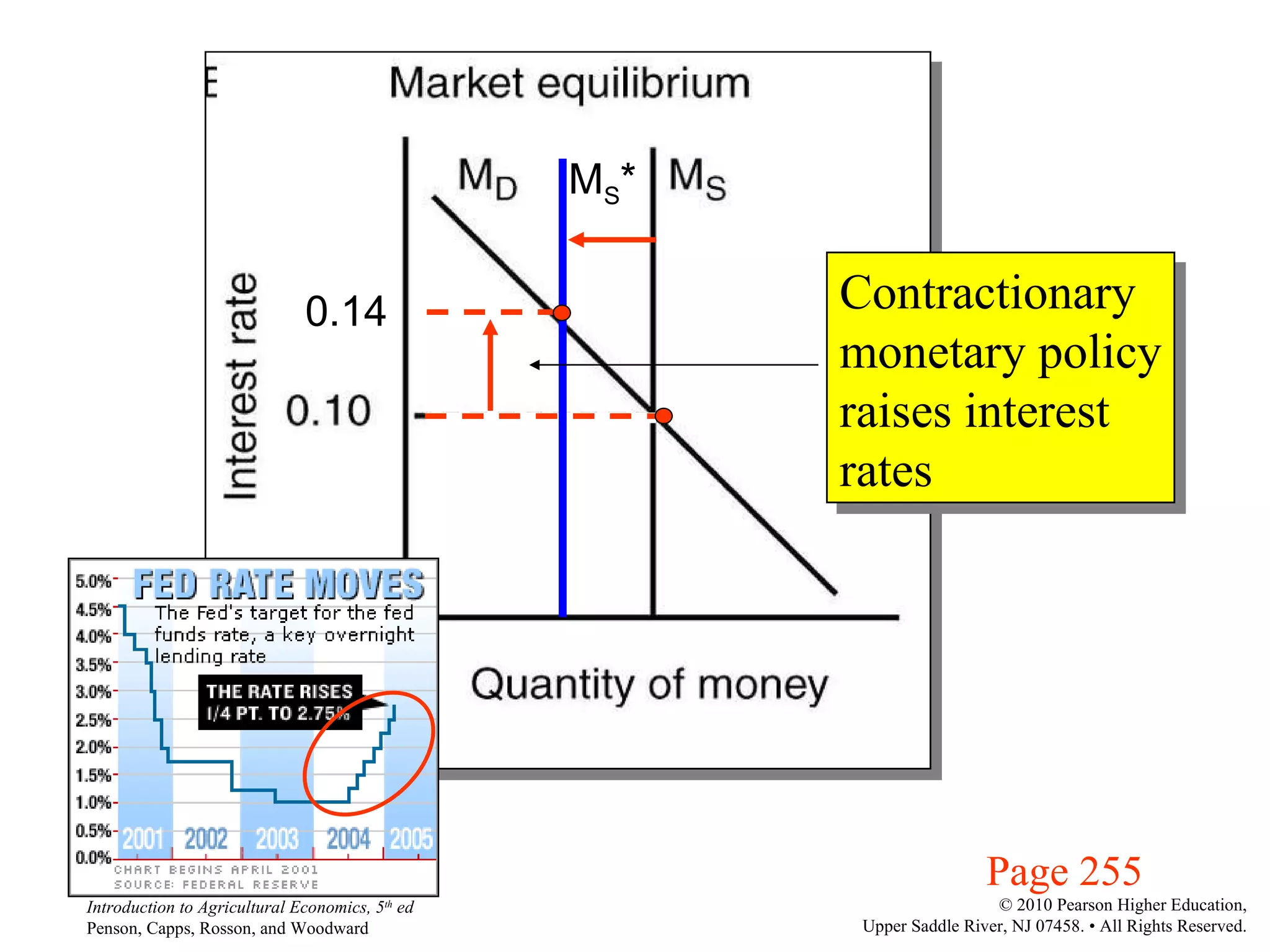
Recent Fed Rate Actions
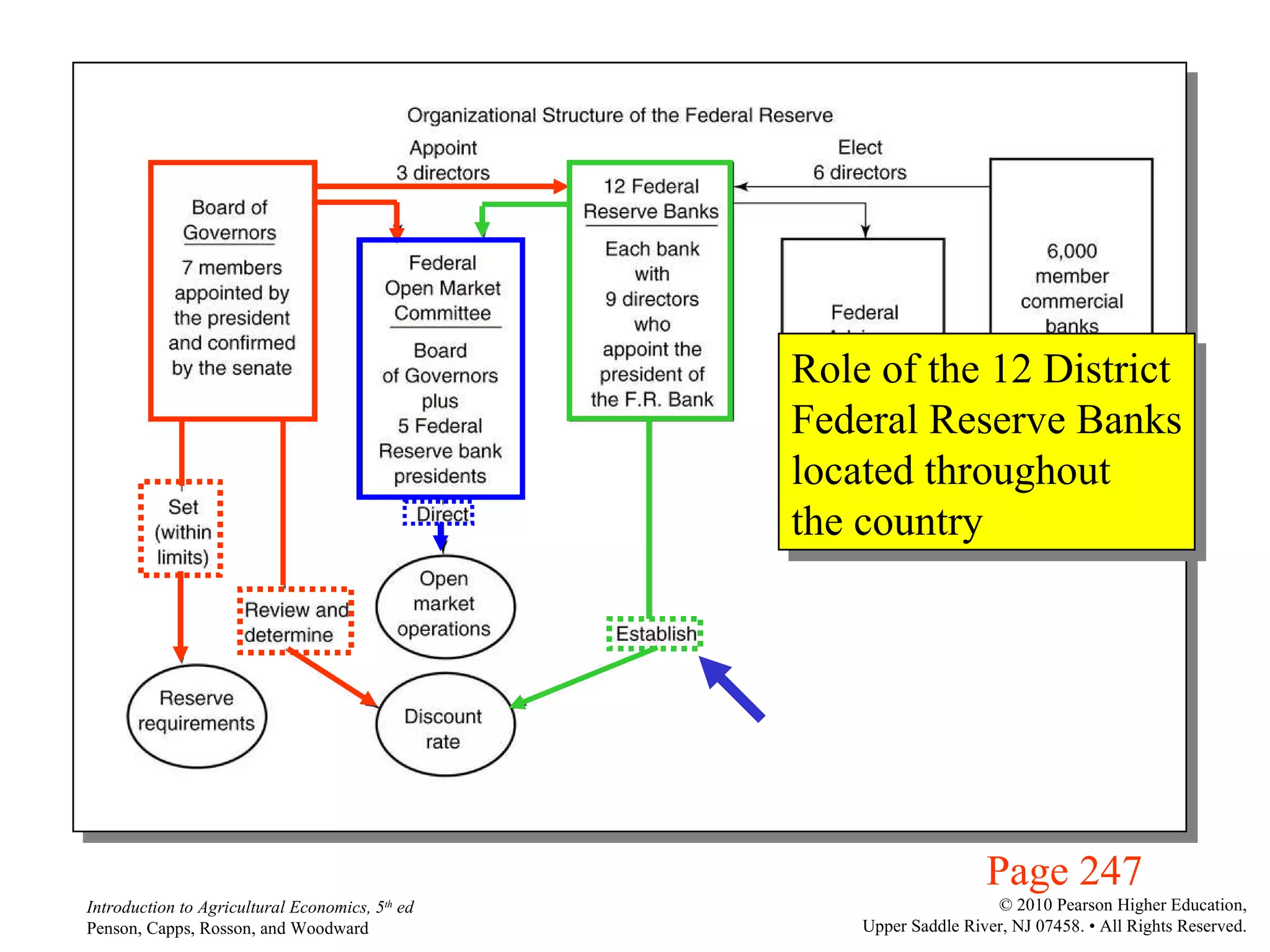
Page 247 Role of the 12 District Federal Reserve Banks located throughout the country
Determinants of the Money Supply
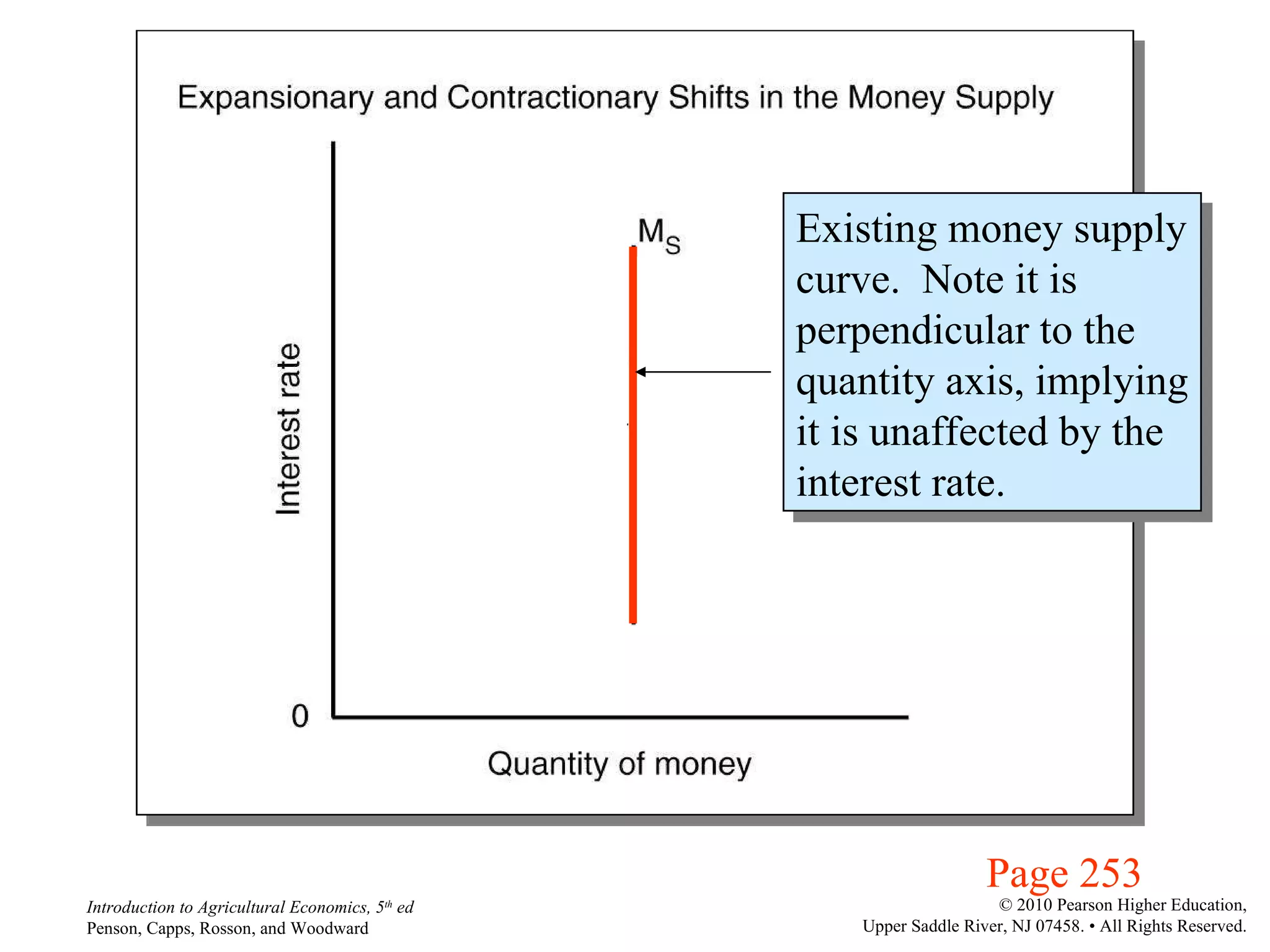
Page 253 Existing money supply curve.  Note it is perpendicular to the quantity axis, implying it is unaffected by the interest rate.
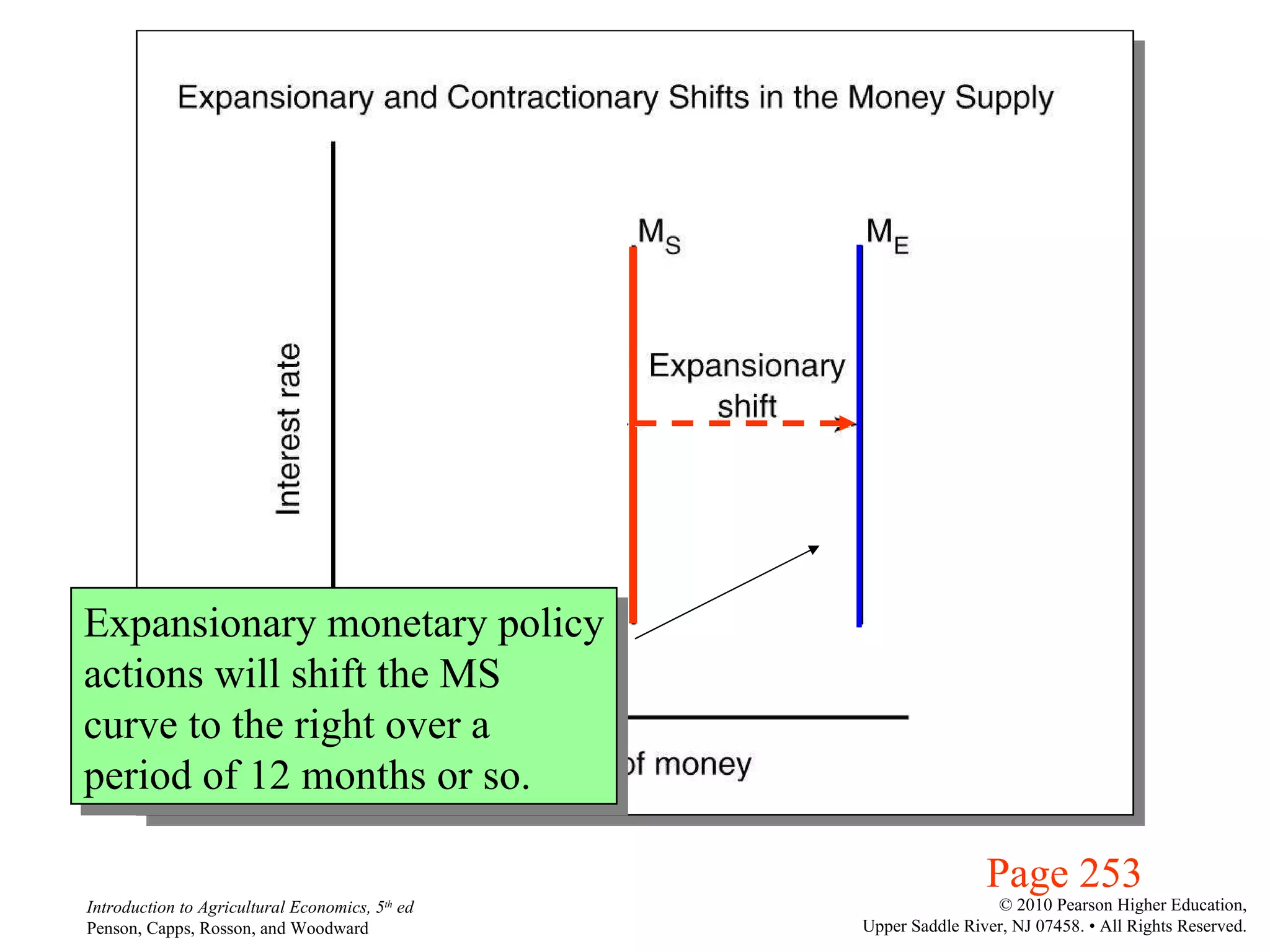
Page 253 Expansionary monetary policy actions will shift the MS curve to the right over a  period of 12 months or so.
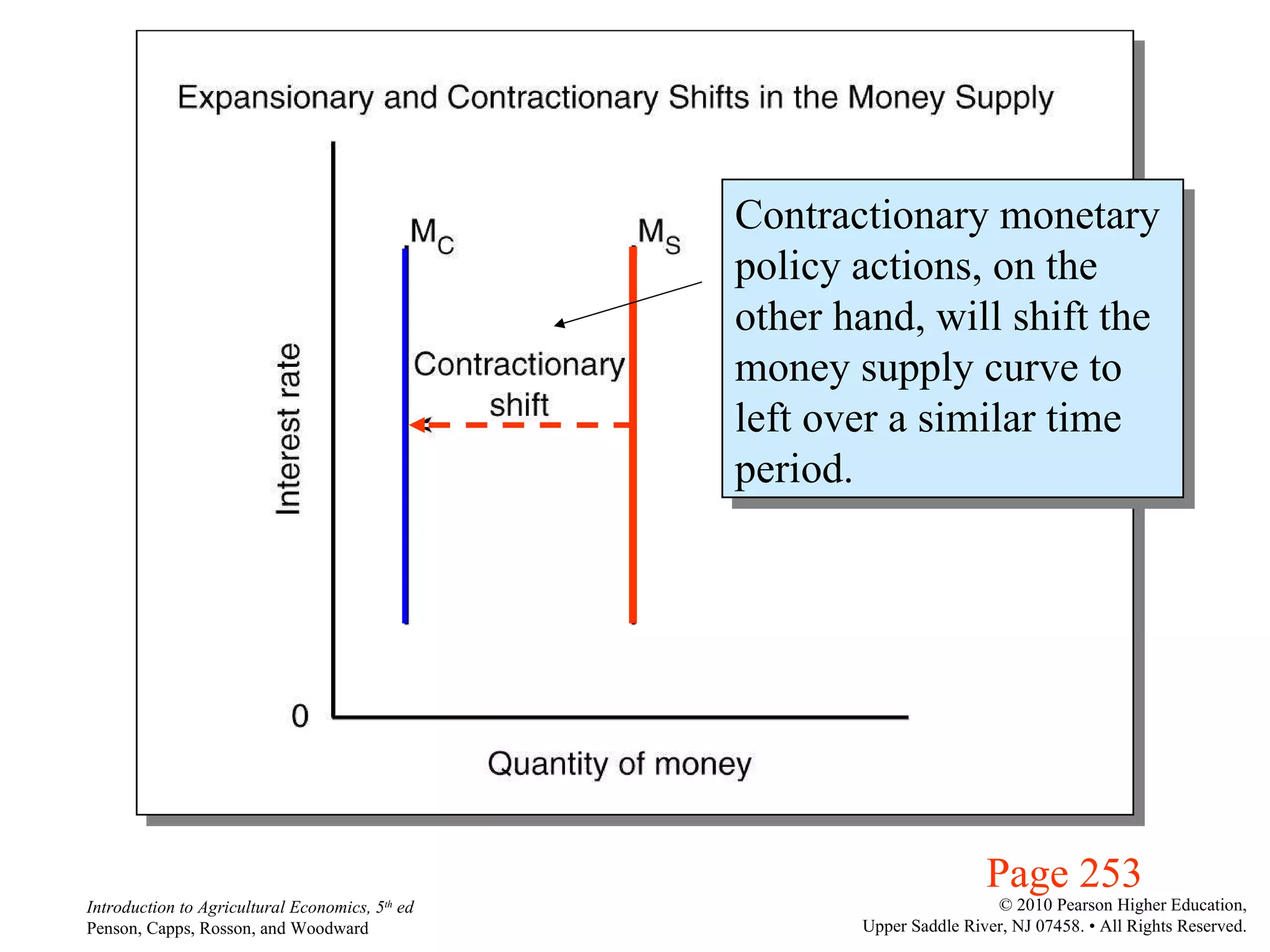
Page 253 Contractionary monetary  policy actions, on the other hand, will shift the money supply curve to  left over a similar time period.
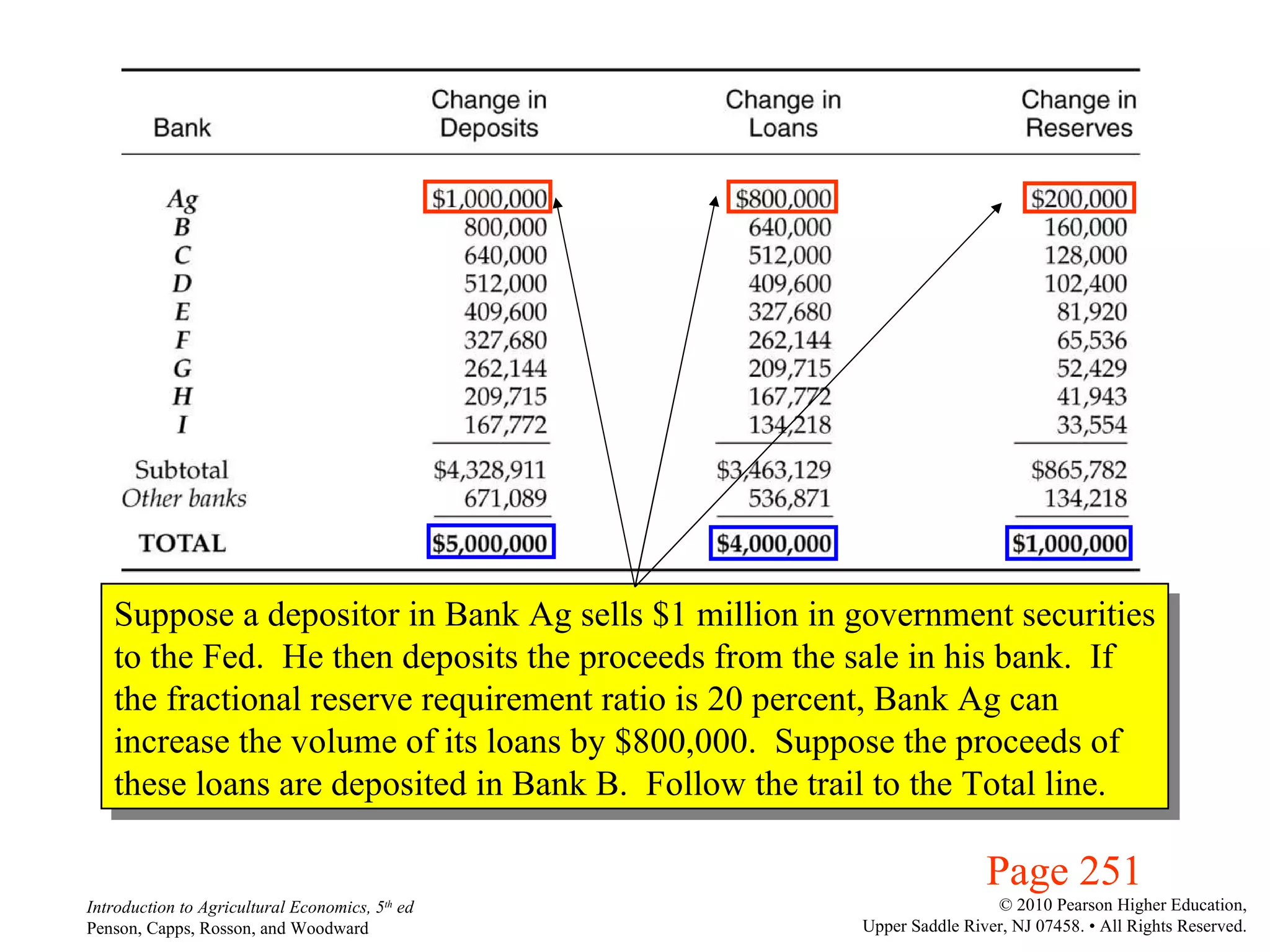
Page 251 Suppose a depositor in Bank Ag sells $1 million in government securities to the Fed.  He then deposits the proceeds from the sale in his bank.  If the fractional reserve requirement ratio is 20 percent, Bank Ag can increase the volume of its loans by $800,000.  Suppose the proceeds of  these loans are deposited in Bank B.  Follow the trail to the Total line.
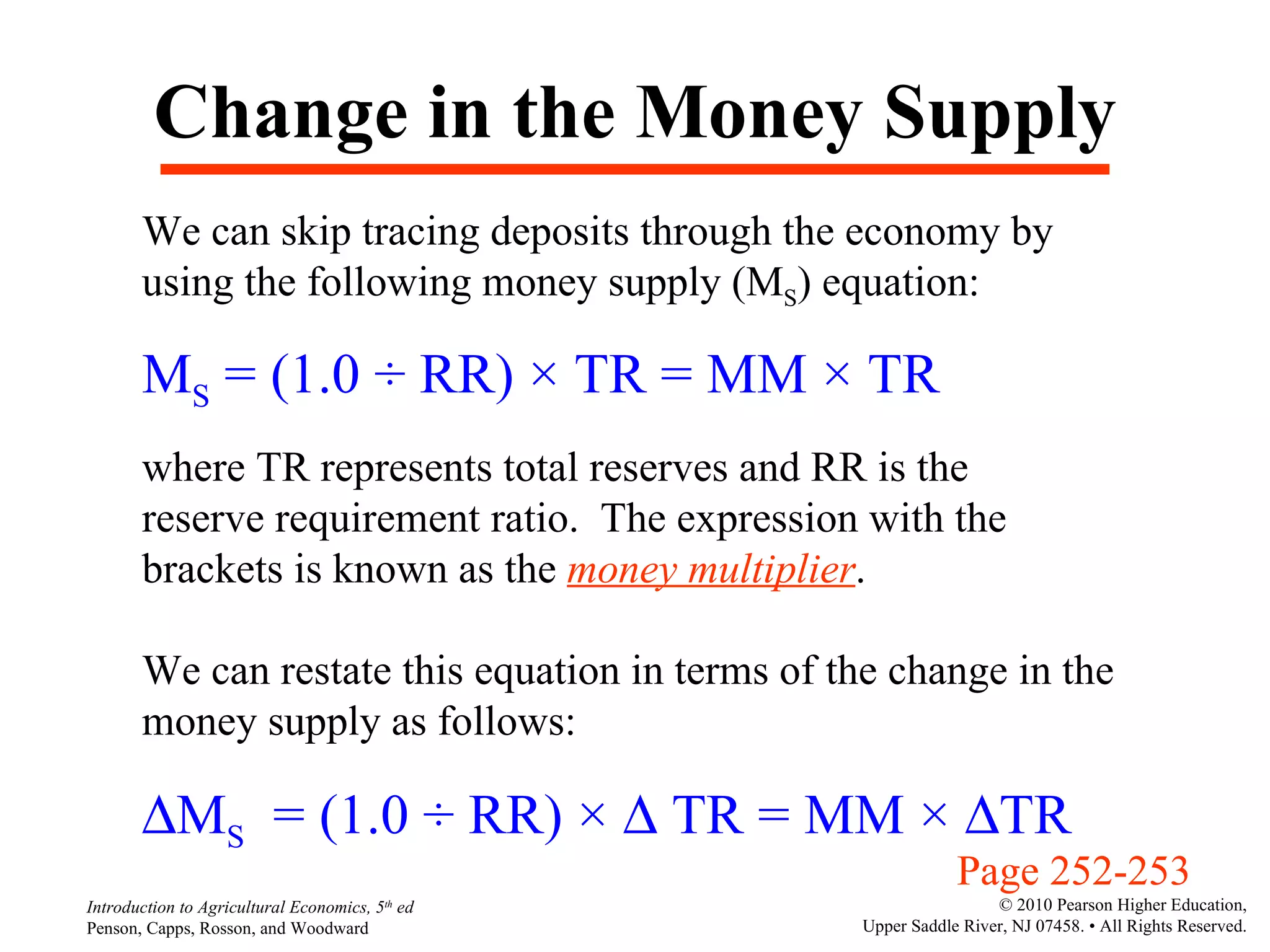
Change in the Money Supply We can skip tracing deposits through the economy by using the following money supply (M S ) equation: M S  = (1.0  ÷ RR) × TR = MM × TR where TR represents total reserves and RR is the reserve requirement ratio.  The expression with the brackets is known as the  money multiplier . We can restate this equation in terms of the change in the money supply as follows:  M S   =  (1.0  ÷ RR) ×    TR = MM ×   TR Page 252-253
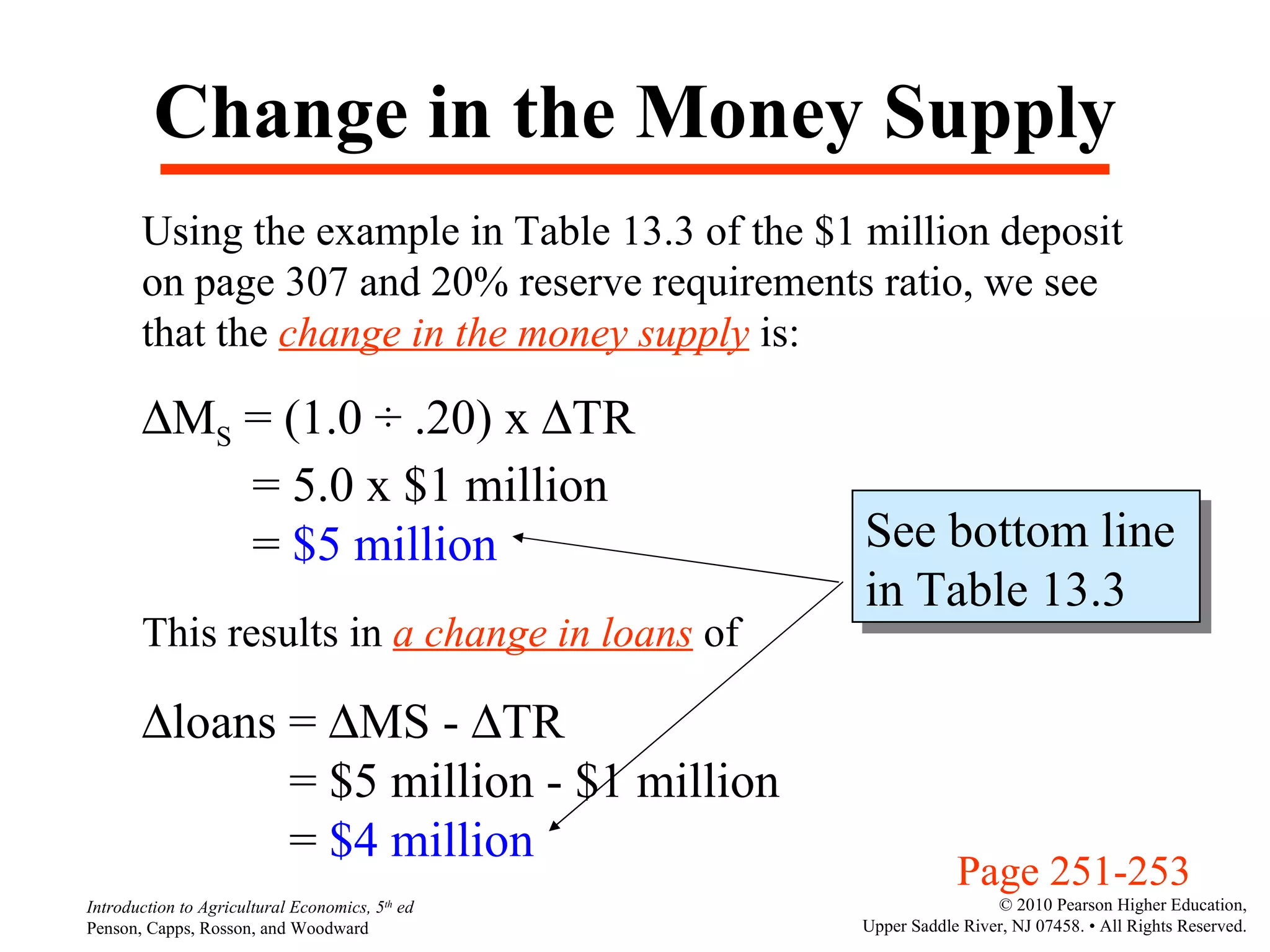
Change in the Money Supply Using the example in Table 13.3 of the $1 million deposit on page 307 and 20% reserve requirements ratio, we see that the  change in the money supply  is:  M S  =  (1.0  ÷ .20) x   TR  = 5.0 x $1 million  =  $5 million This results in  a change in loans  of  loans =   MS -   TR  =  $5 million - $1 million  =  $4 million See bottom line  in Table 13.3 Page 251-253
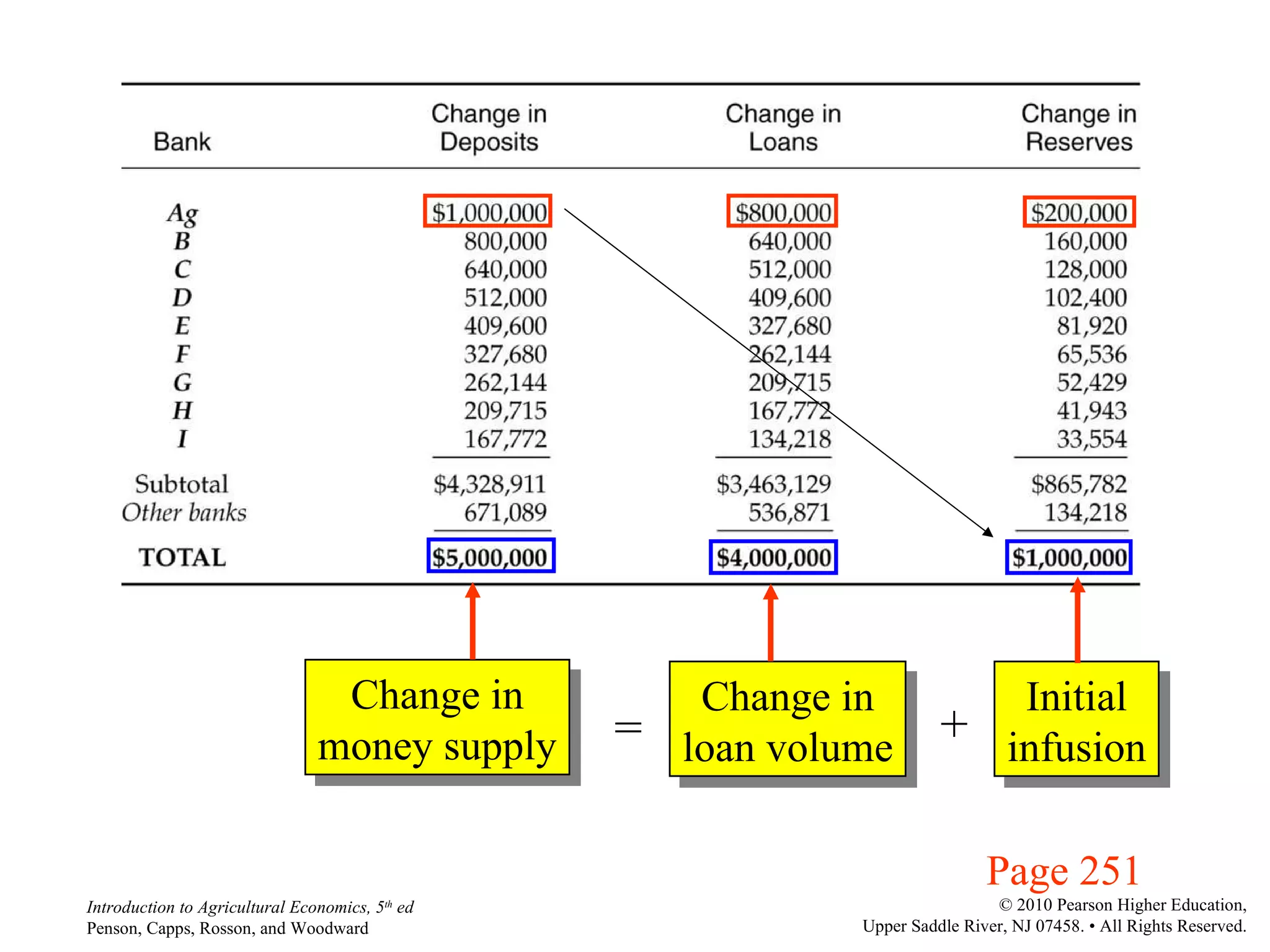
Page 251 Change in money supply Change in loan volume Initial infusion + =
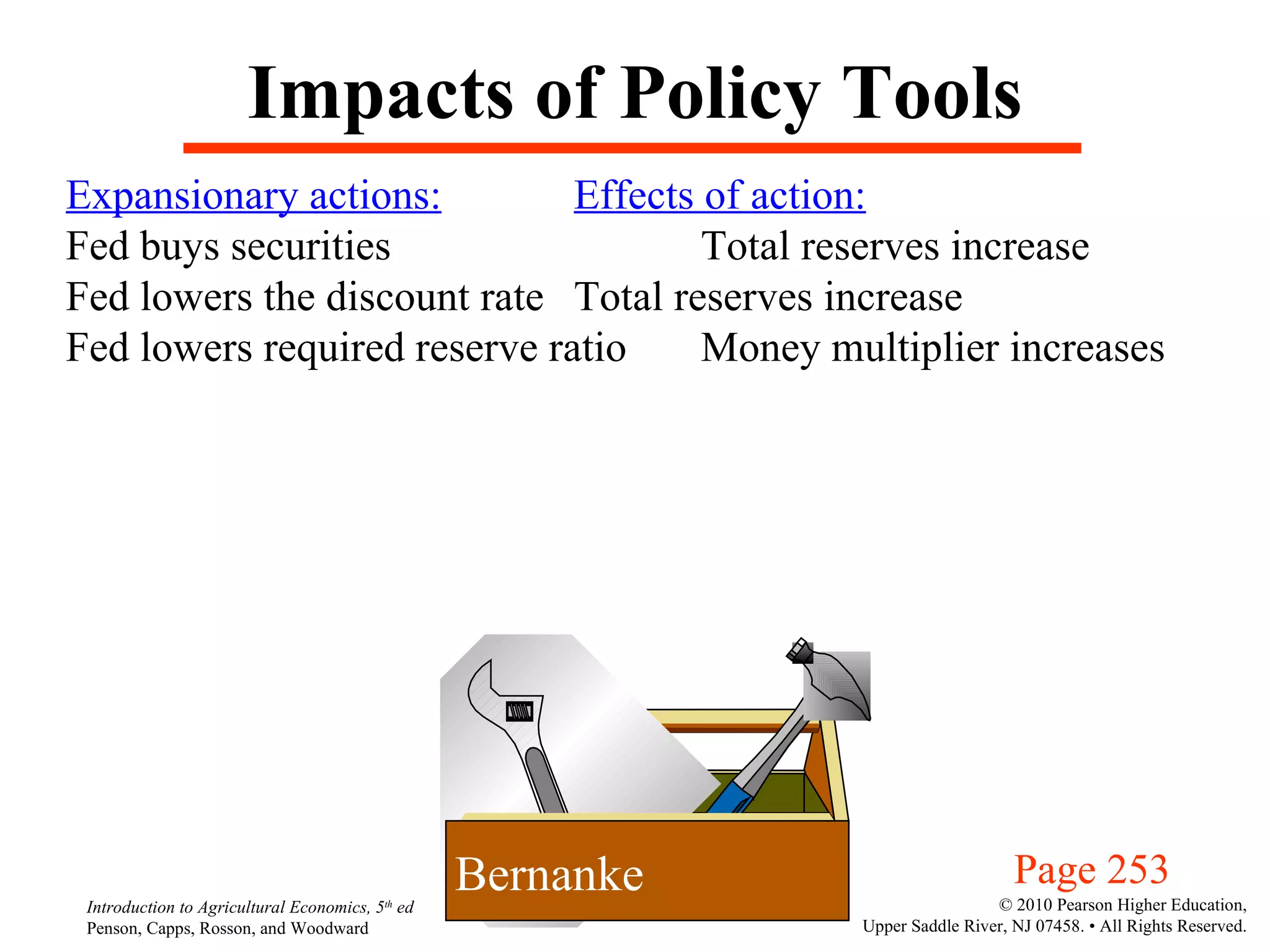
Impacts of Policy Tools Expansionary actions: Effects of action: Fed buys securities  Total reserves increase Fed lowers the discount rate Total reserves increase Fed lowers required reserve ratio Money multiplier increases Page 253 Bernanke
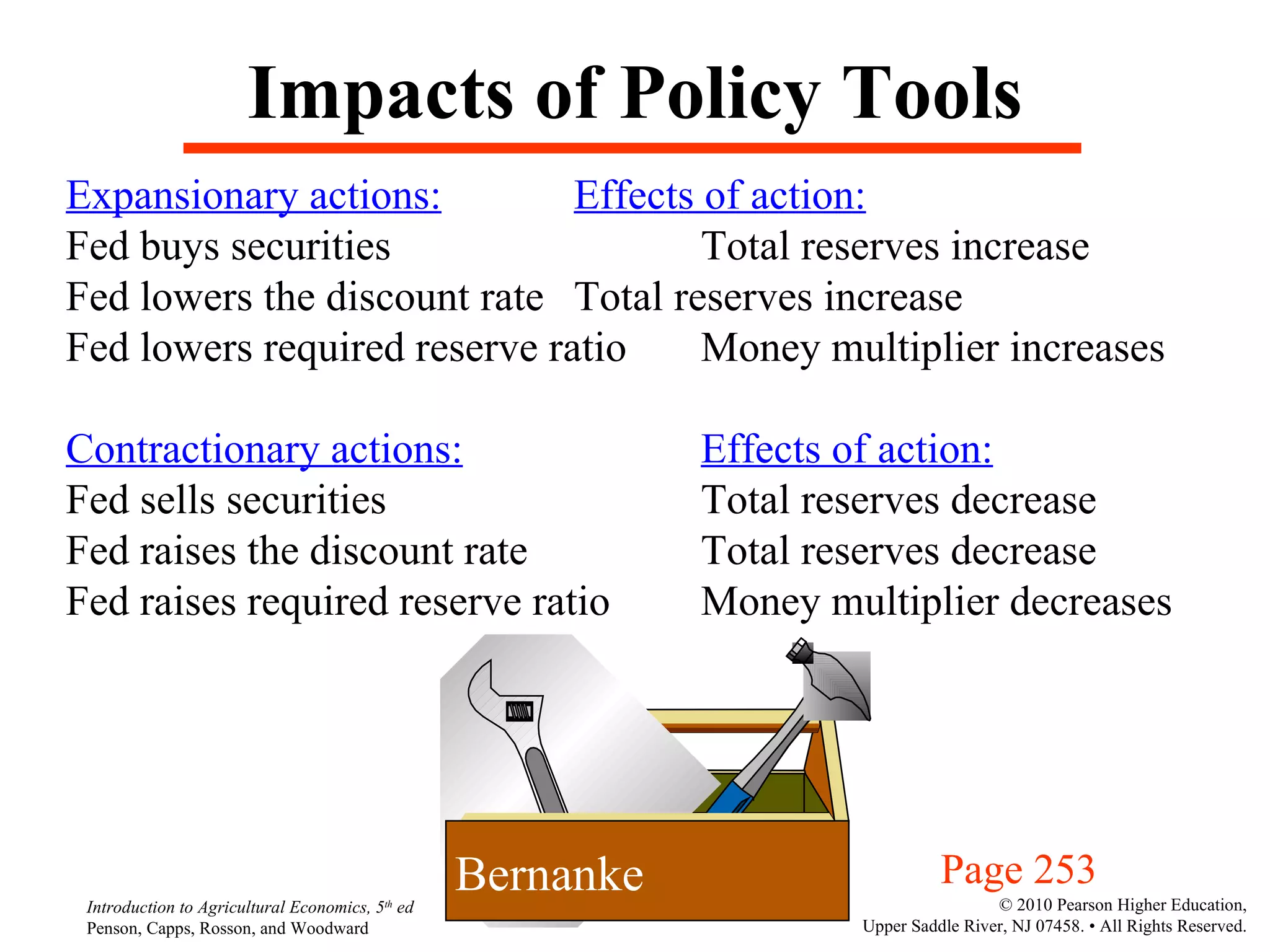
Impacts of Policy Tools Expansionary actions: Effects of action: Fed buys securities  Total reserves increase Fed lowers the discount rate Total reserves increase Fed lowers required reserve ratio Money multiplier increases Contractionary actions: Effects of action: Fed sells securities  Total reserves decrease Fed raises the discount rate Total reserves decrease Fed raises required reserve ratio Money multiplier decreases Page 253 Bernanke
Determinants of the Money Demand
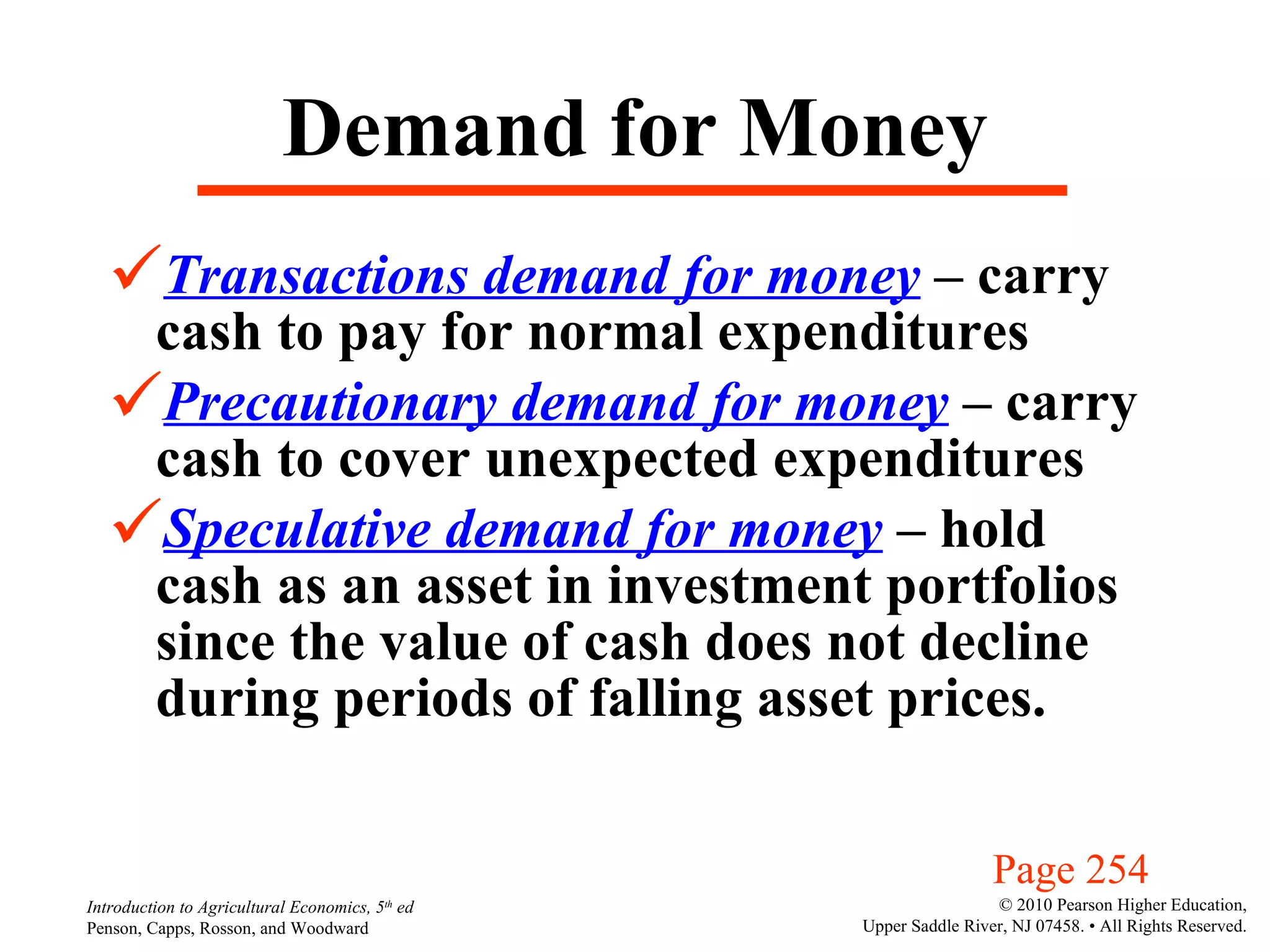
Demand for Money Transactions demand for money  – carry cash to pay for normal expenditures Precautionary demand for money  – carry cash to cover unexpected expenditures Speculative demand for money  – hold cash as an asset in investment portfolios since the value of cash does not decline during periods of falling asset prices. Page 254
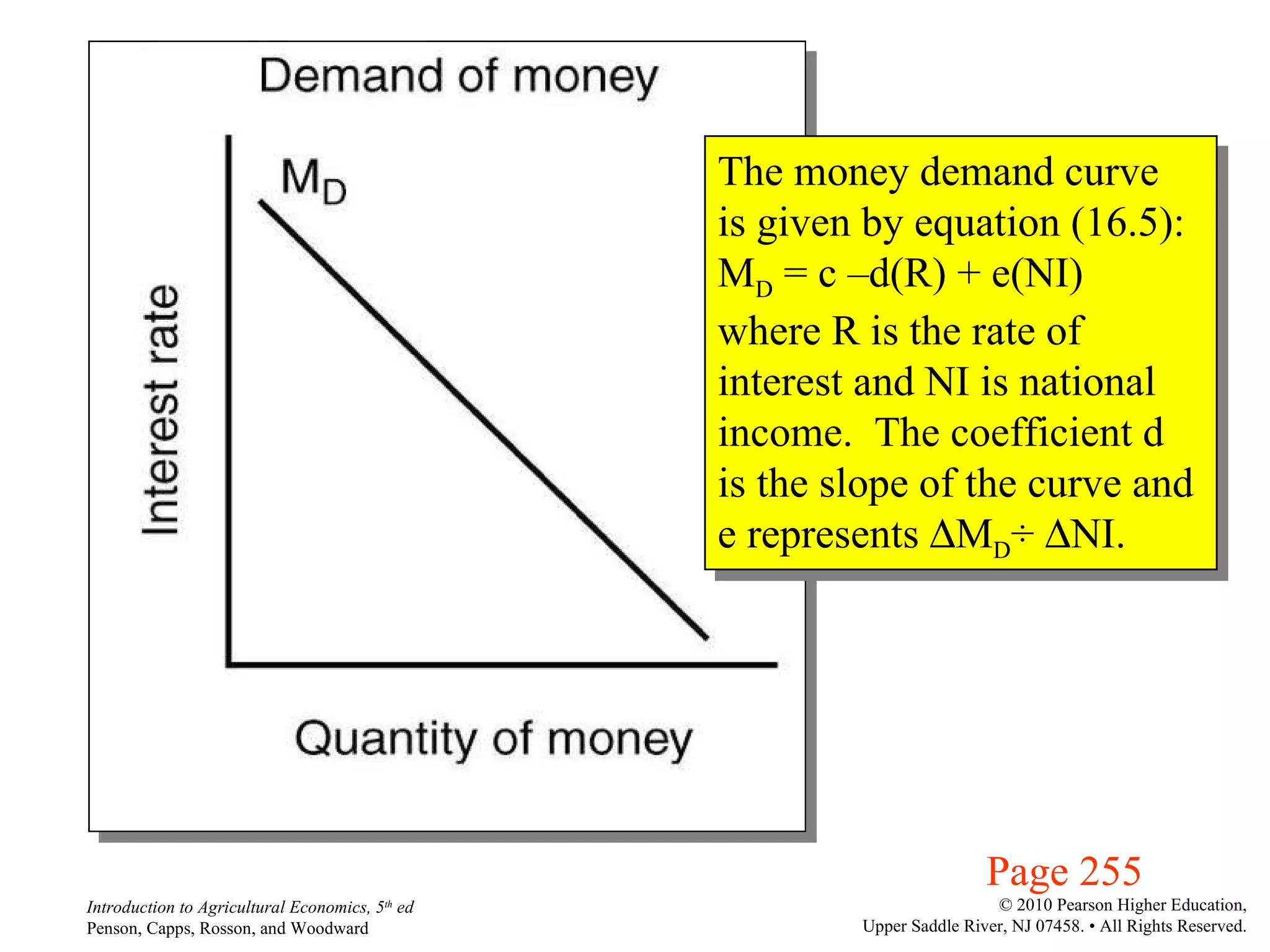
Page 255 The money demand curve  is given by equation (16.5): M D  = c –d(R) + e(NI) where R is the rate of  interest and NI is national income.  The coefficient d  is the slope of the curve and  e represents   M D ÷    NI.
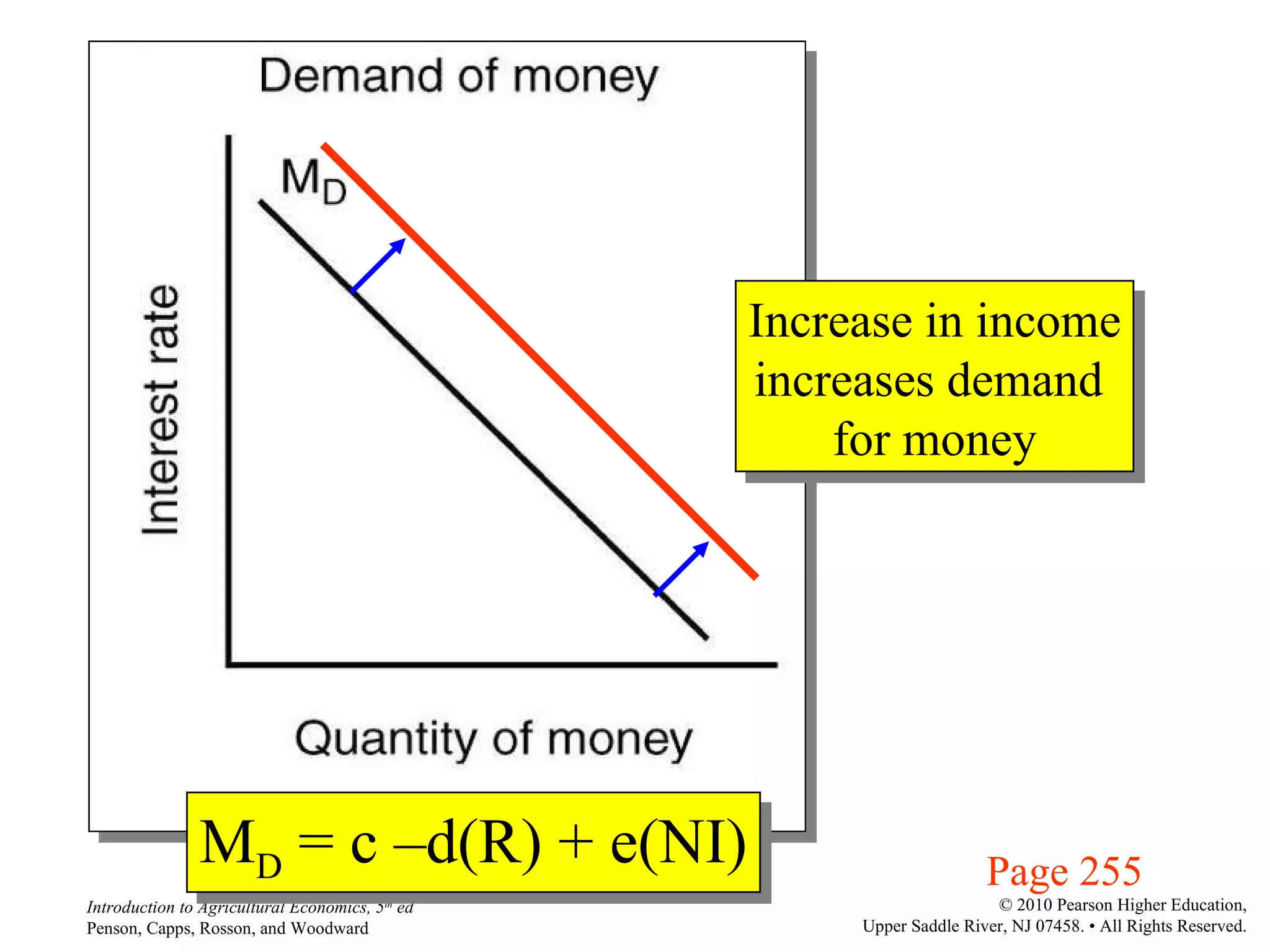
Page 255 M D  = c –d(R) + e(NI) Increase in income increases demand  for money
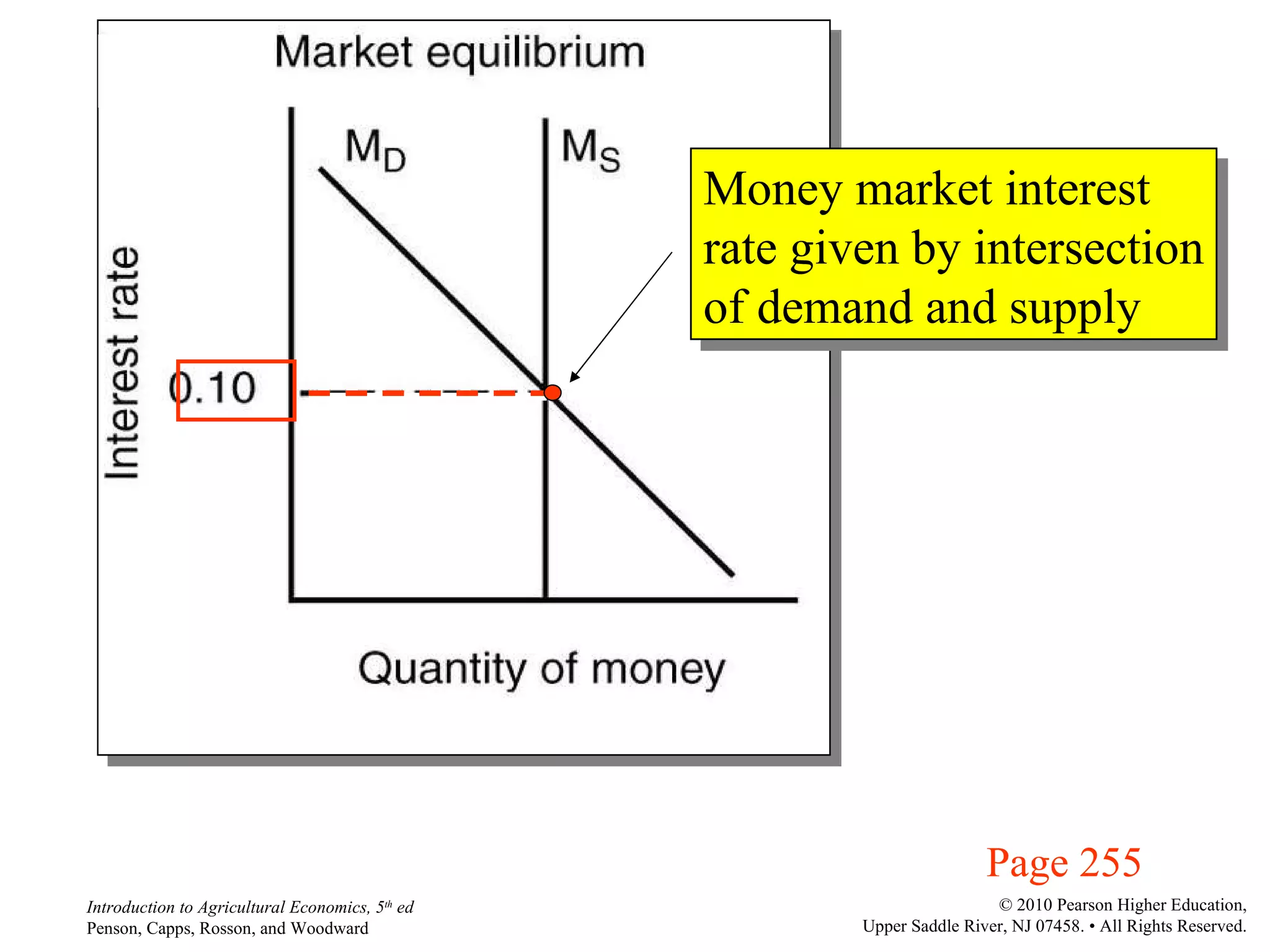
Page 255 Money market interest rate given by intersection of demand and supply
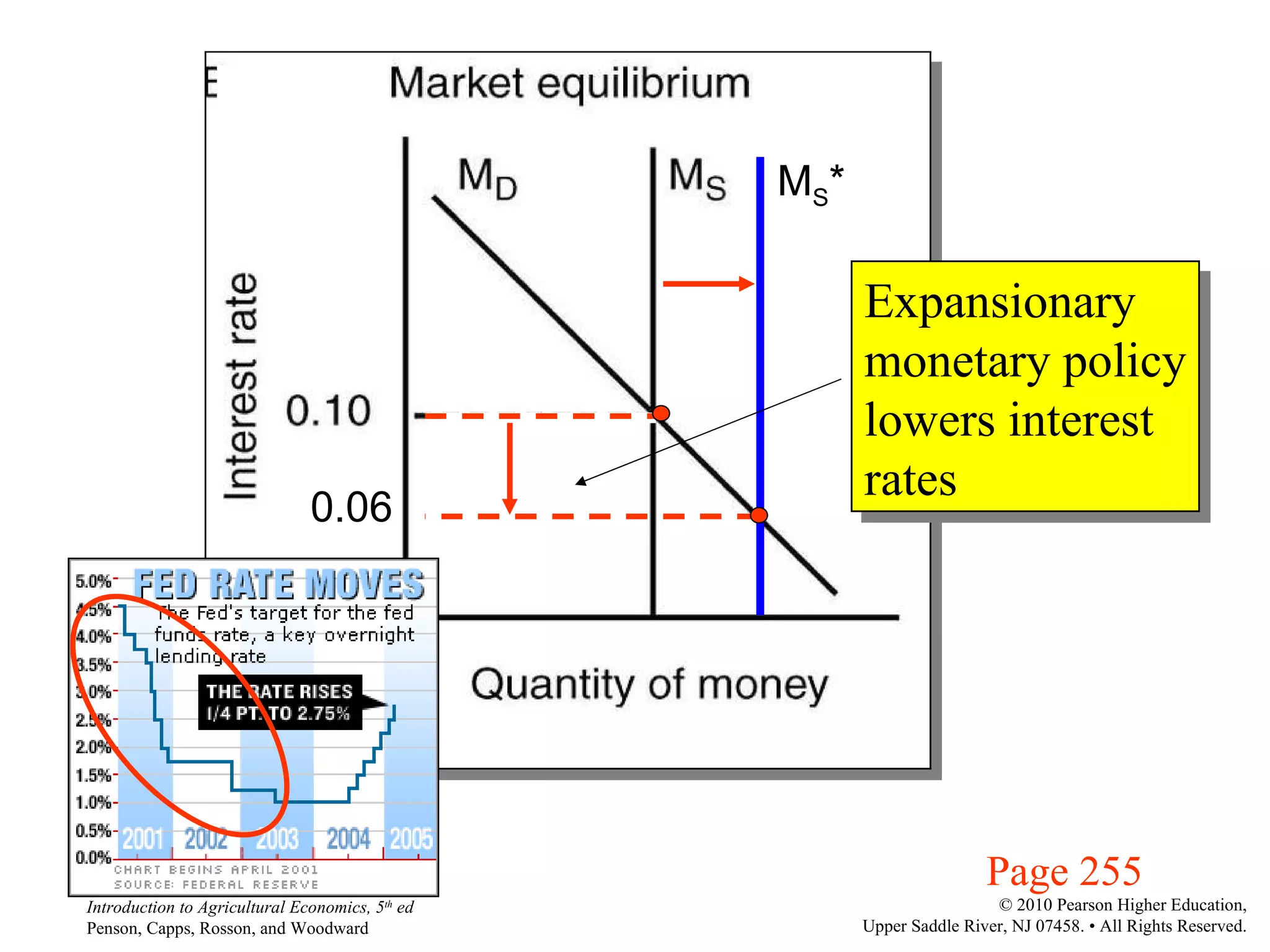
Page 255 M S * 0.06 Expansionary monetary policy lowers interest rates
Page 255 M S * 0.14 Contractionary monetary policy raises interest rates
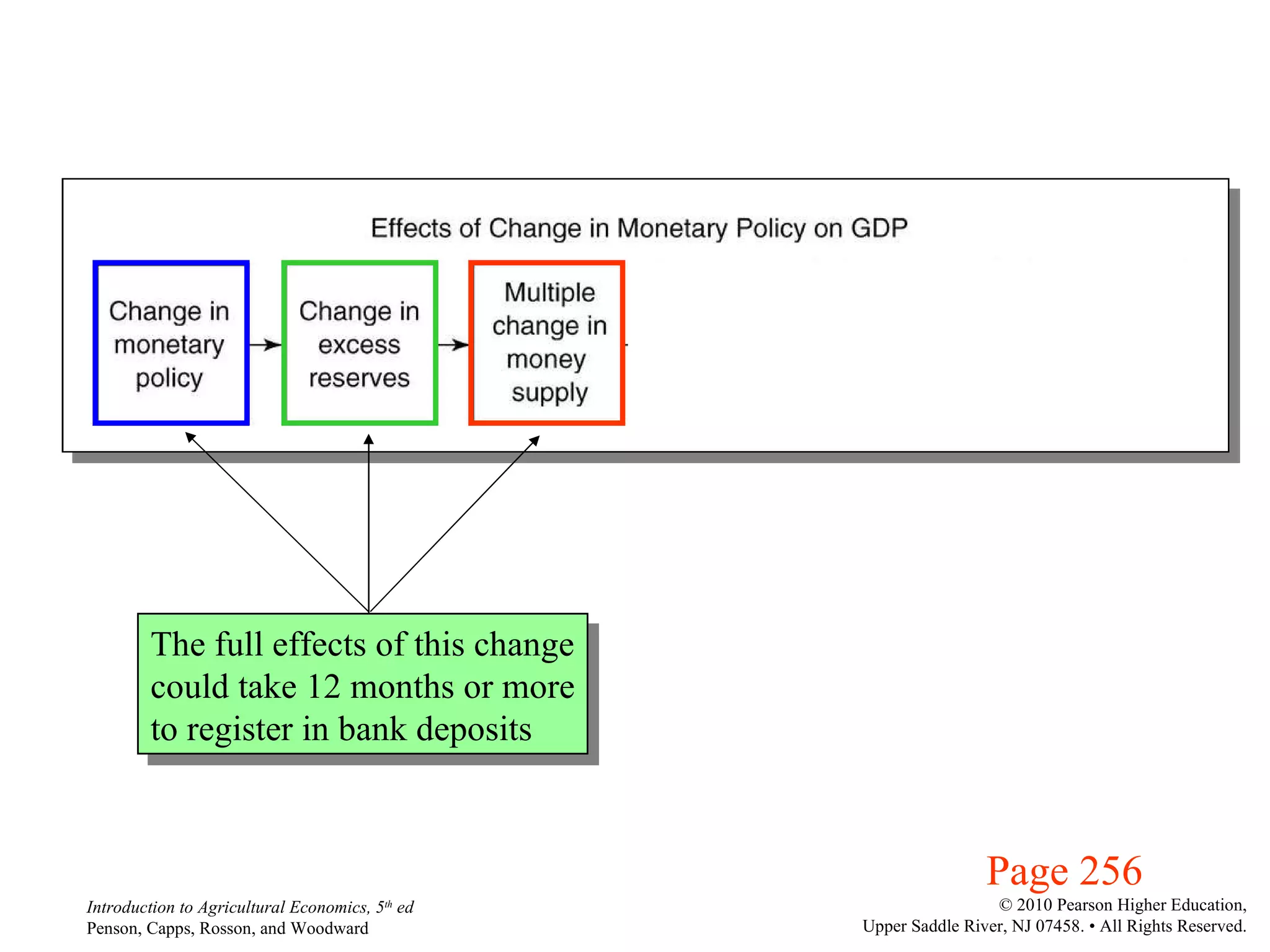
Page 256 The full effects of this change could take 12 months or more to register in bank deposits
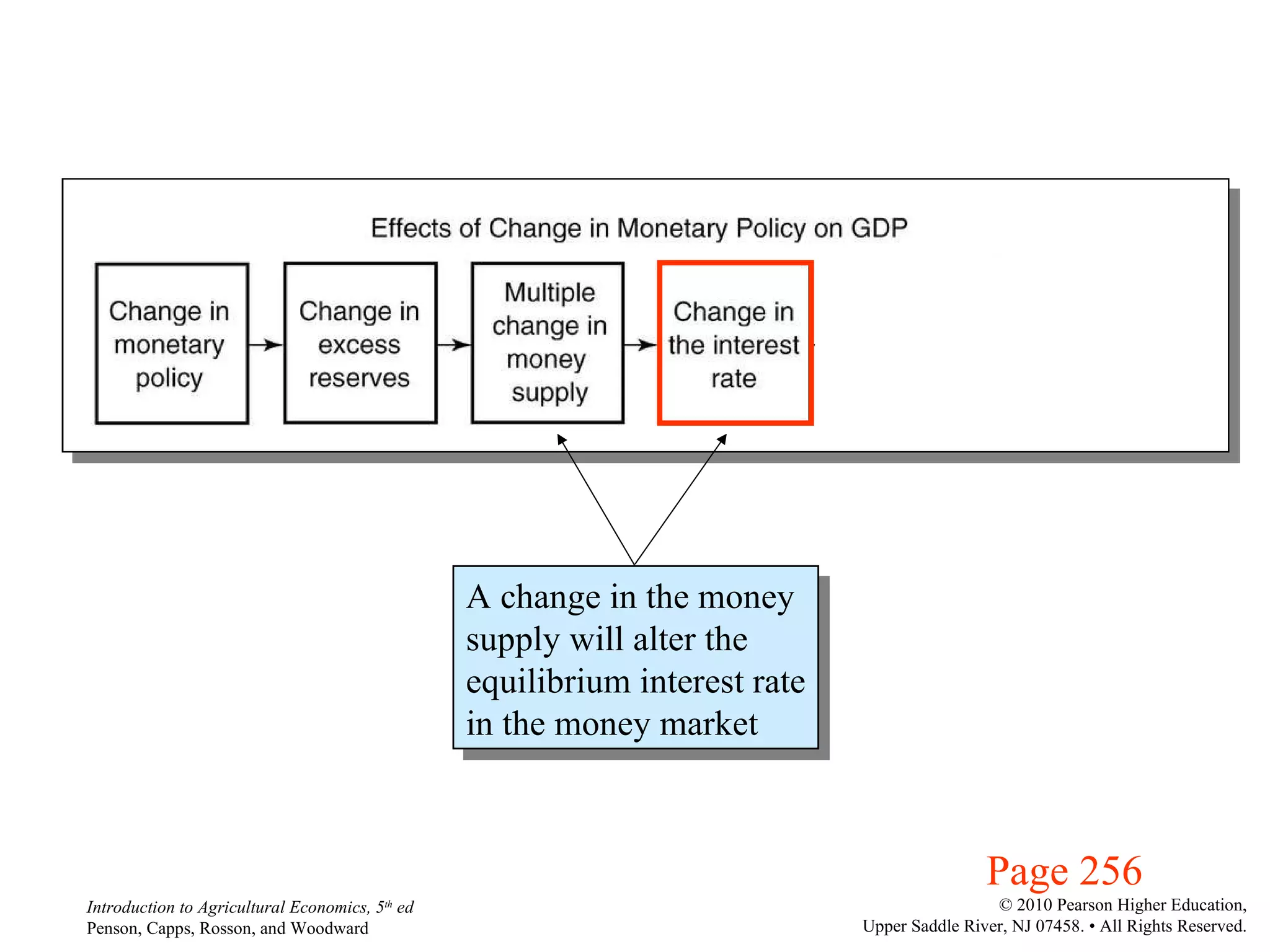
Page 256 A change in the money supply will alter the equilibrium interest rate in the money market
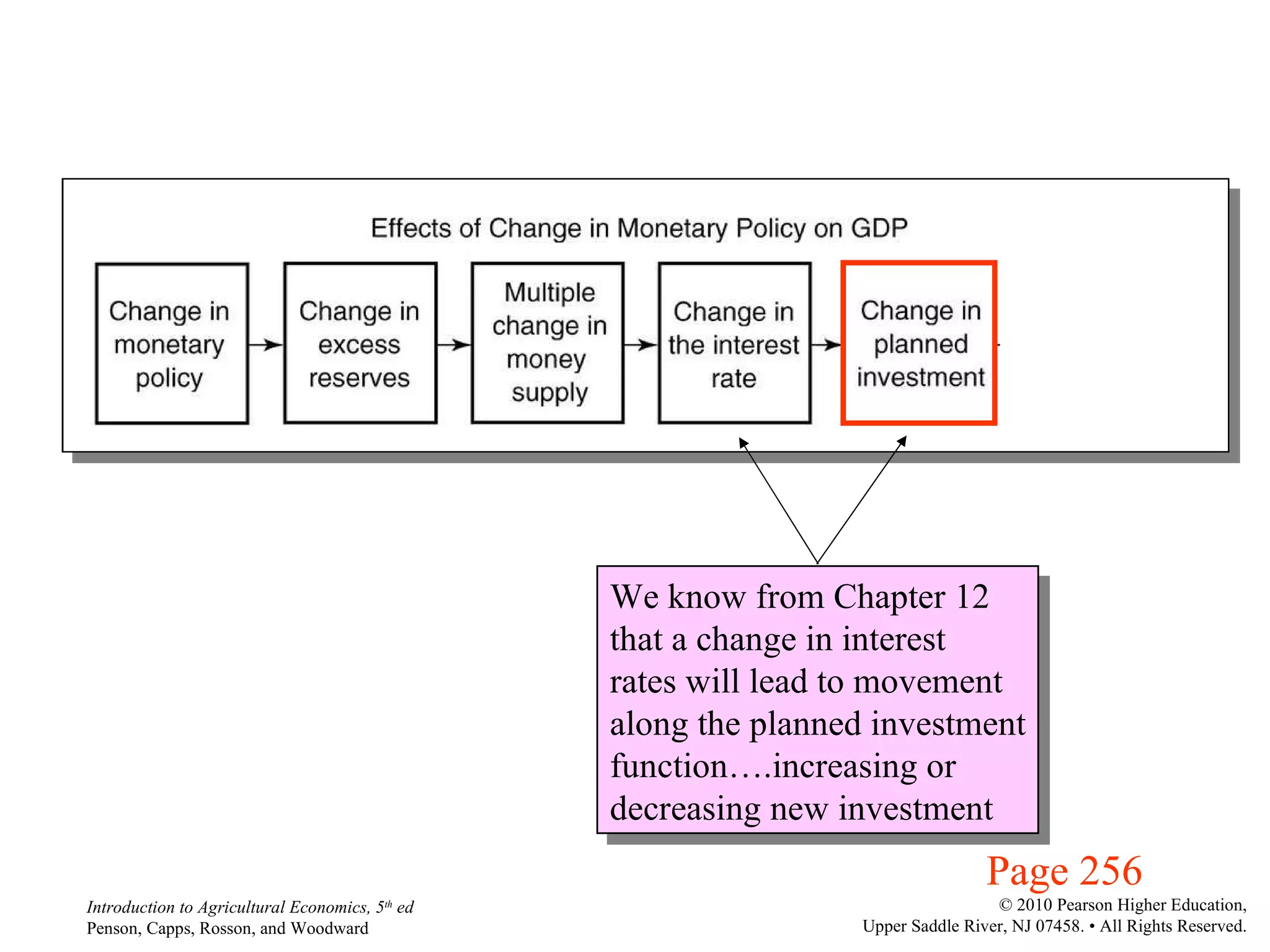
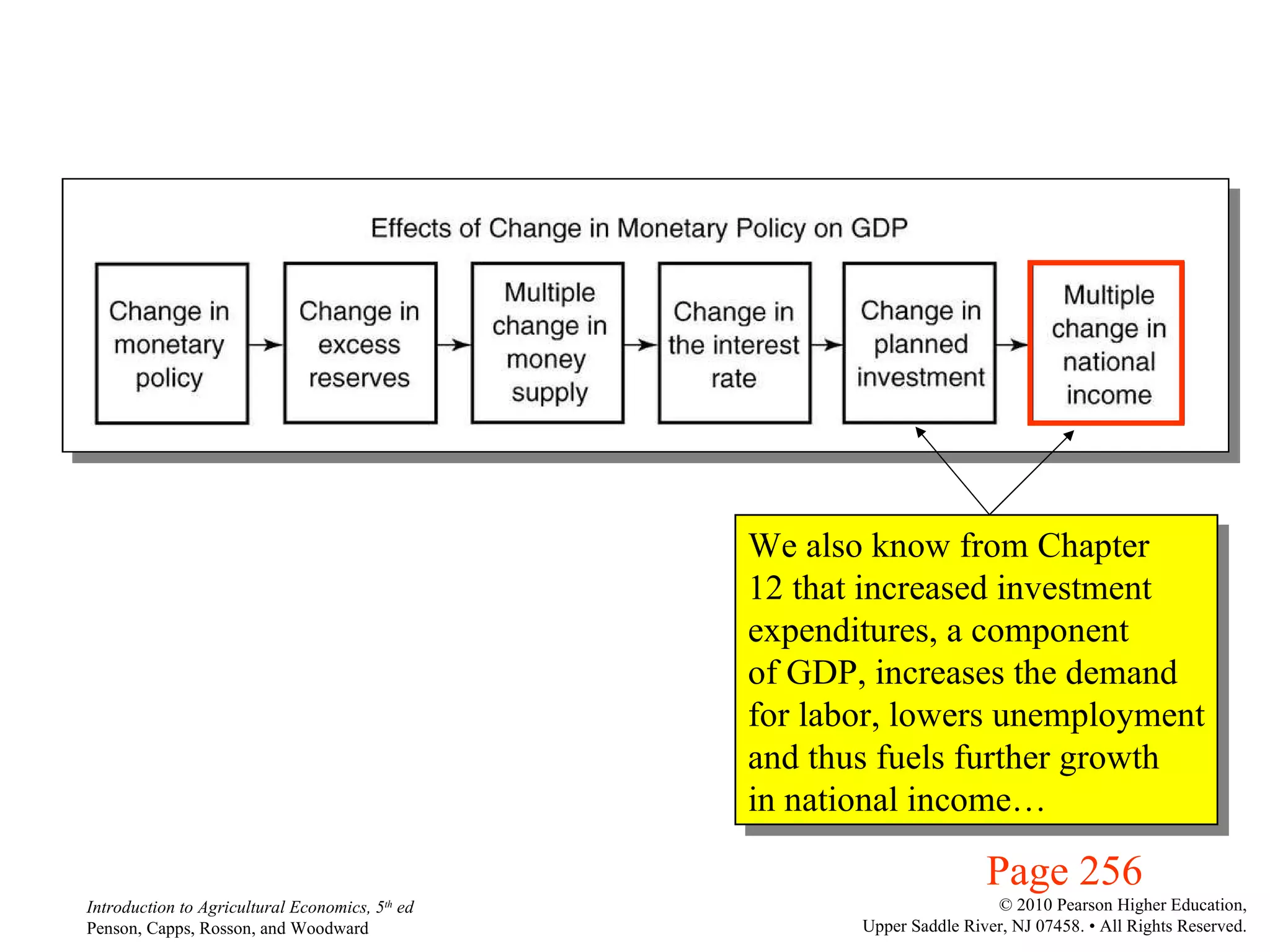
Page 256 We know from Chapter 12 that a change in interest  rates will lead to movement along the planned investment function….increasing or decreasing new investment
Page 256 We also know from Chapter 12 that increased investment expenditures, a component of GDP, increases the demand for labor, lowers unemployment and thus fuels further growth in national income…
Eliminating Recessionary and Inflationary Gaps
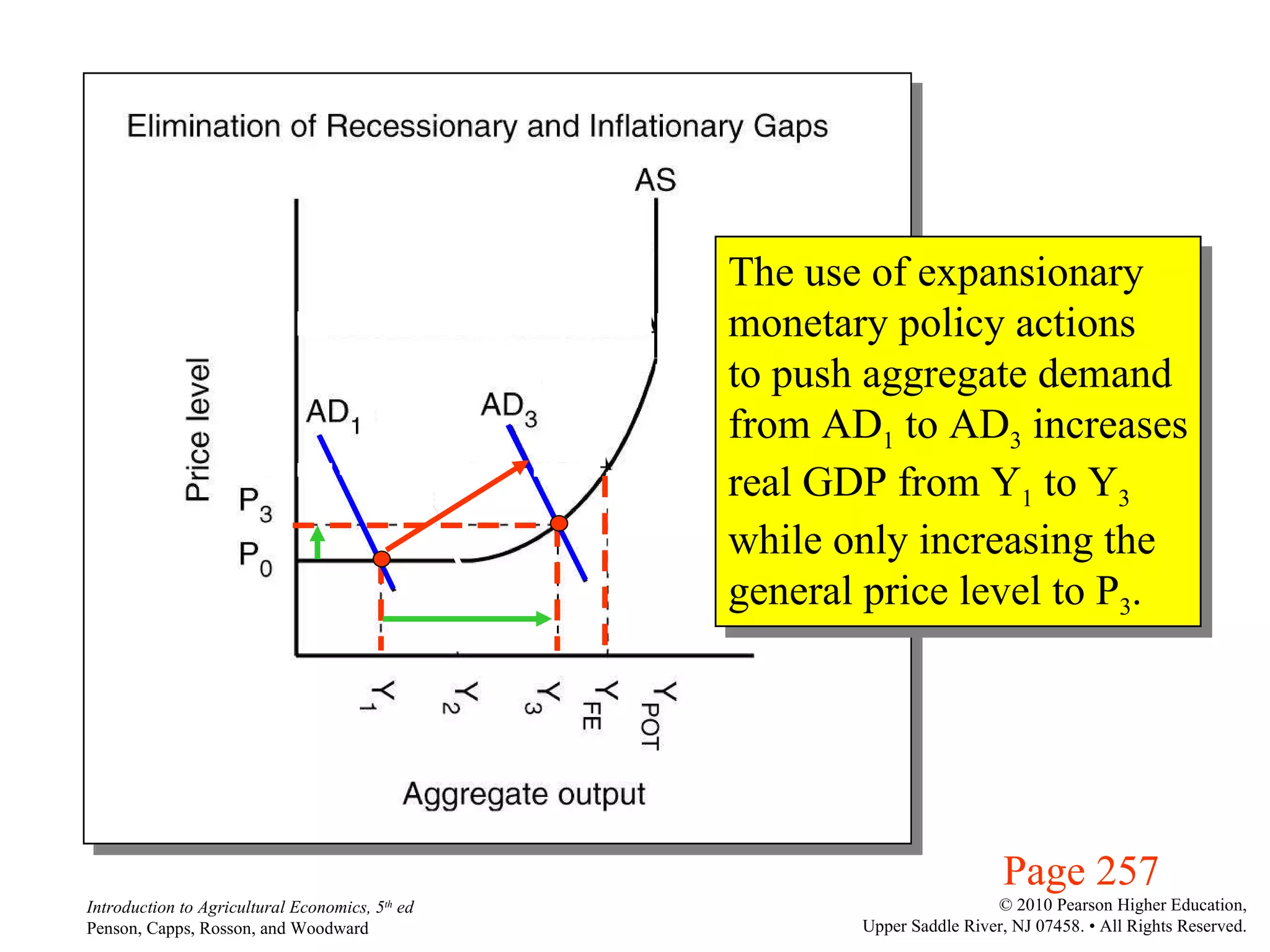
Page 257 What is the  magnitude of the recessionary gap?
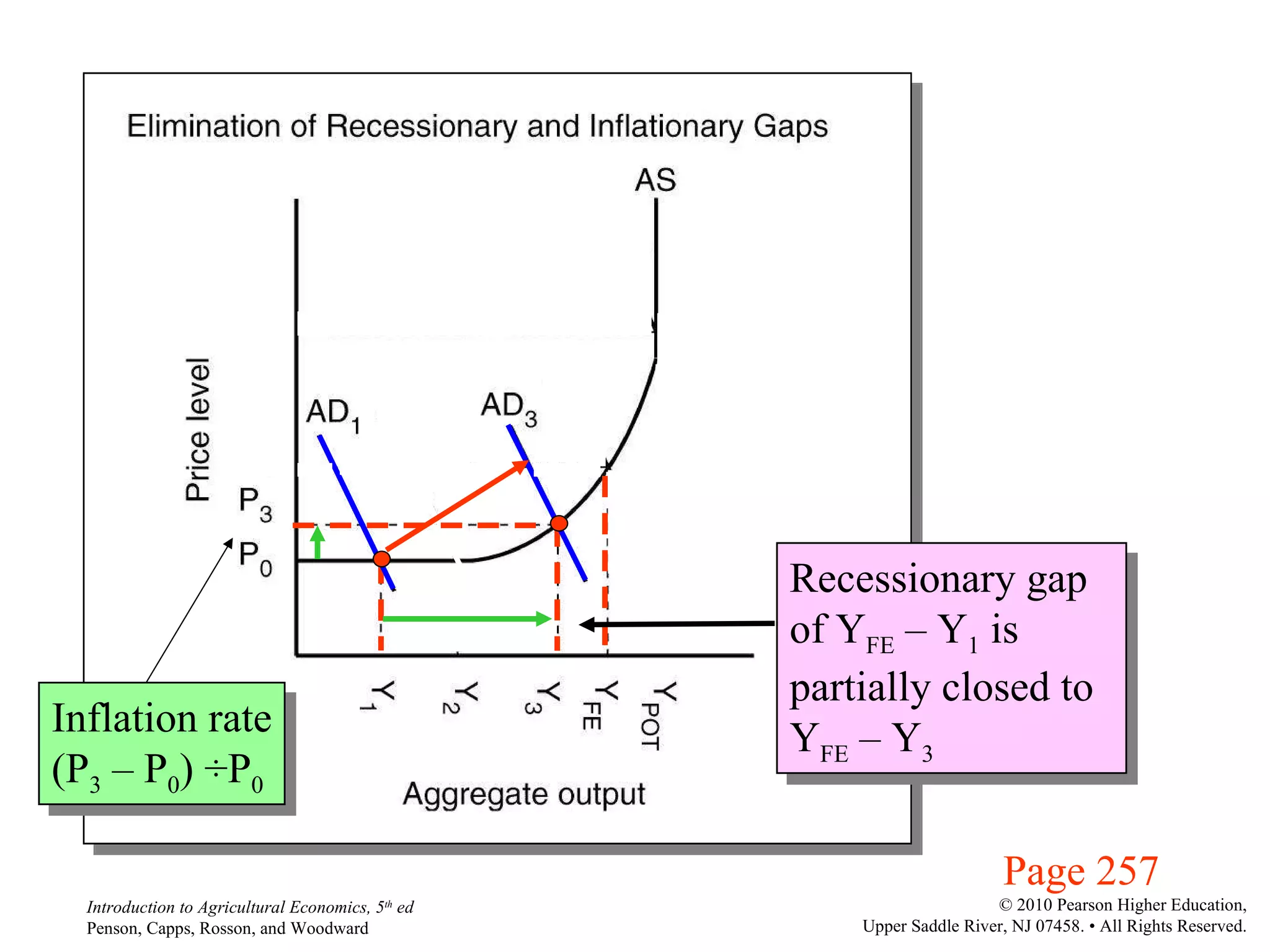
Page 257 What is the  magnitude of the recessionary gap? It is Y FE  – Y 1
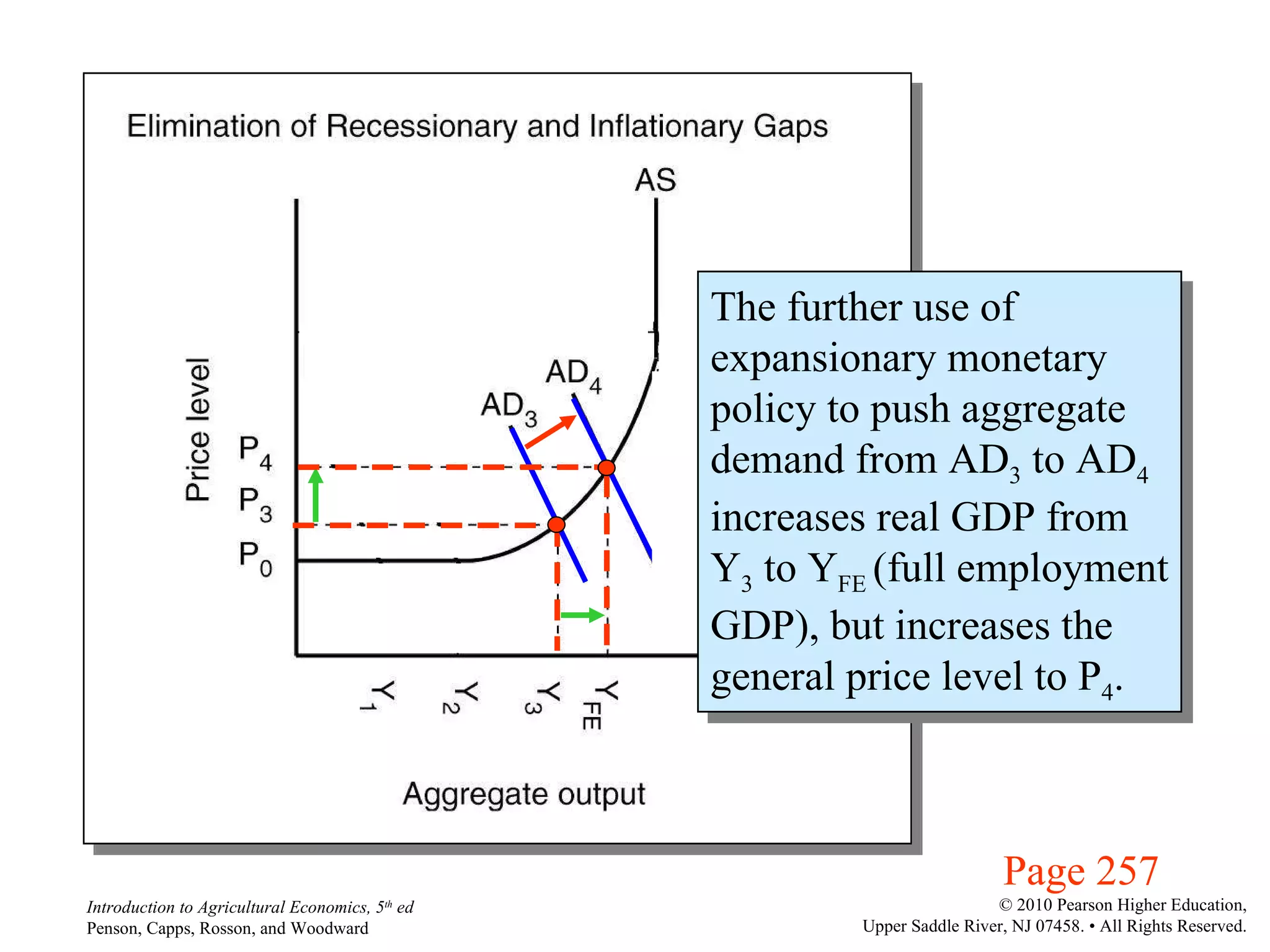
Page 257 The use of expansionary monetary policy actions to push aggregate demand from AD 1  to AD 3  increases real GDP from Y 1  to Y 3 while only increasing the general price level to P 3 .
Page 257 Inflation rate (P 3  – P 0 )  ÷ P 0 Recessionary gap of Y FE  – Y 1  is partially closed to Y FE  – Y 3
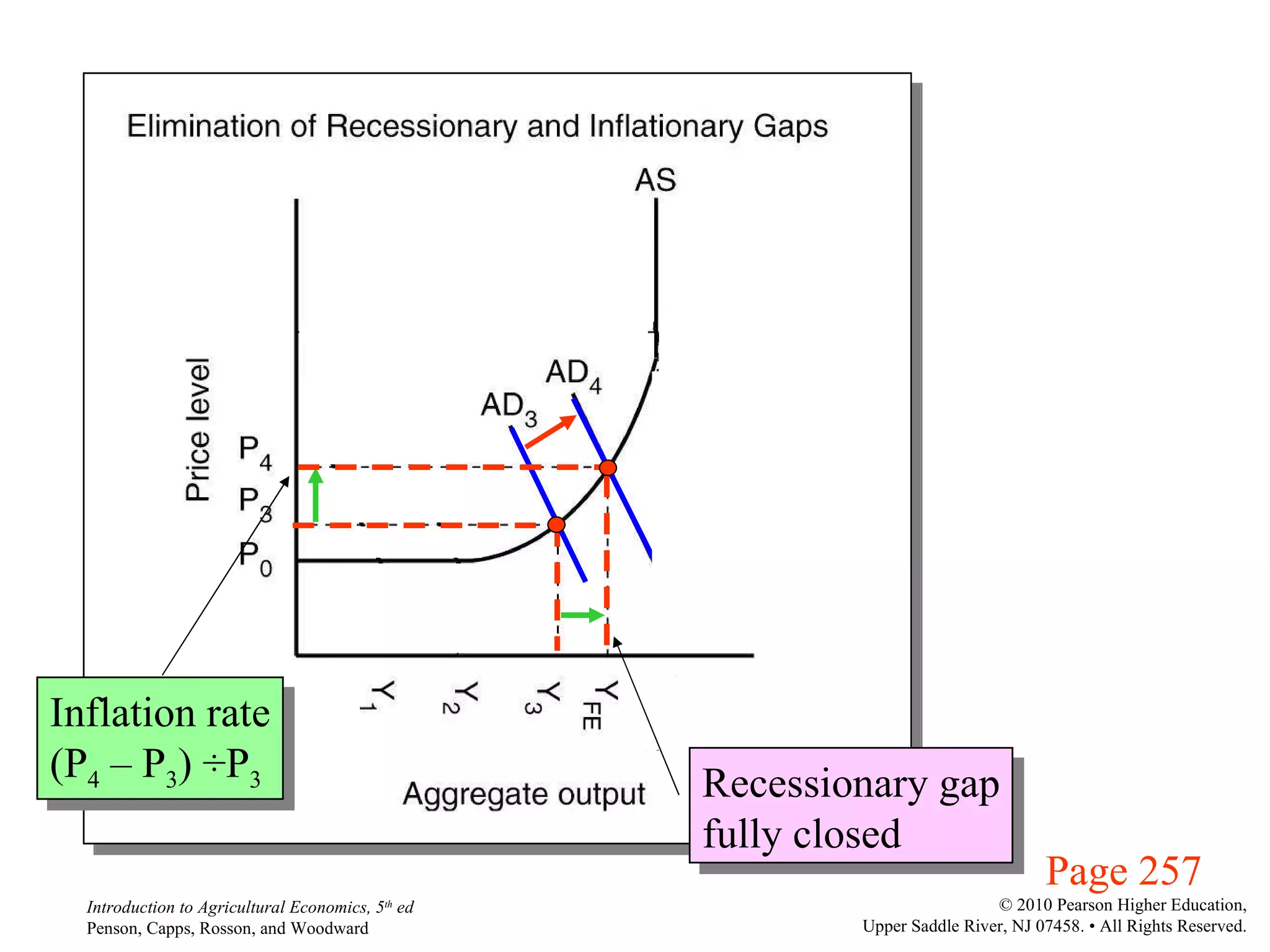
Page 257 The further use of  expansionary monetary  policy to push aggregate demand from AD 3  to AD 4   increases real GDP from  Y 3  to Y FE  (full employment GDP), but increases the  general price level to P 4 .
Page 257 Inflation rate (P 4  – P 3 )  ÷ P 3 Recessionary gap fully closed
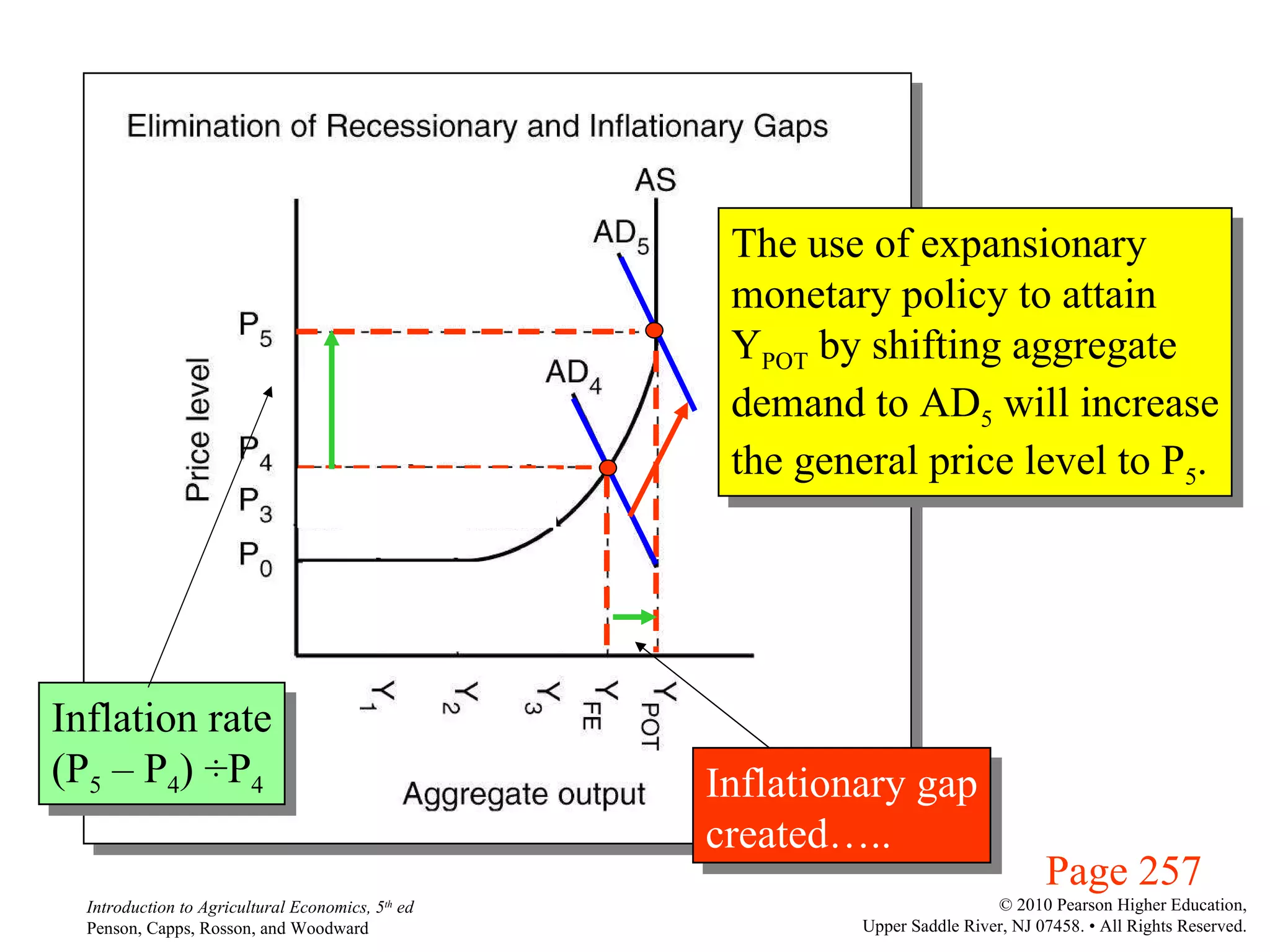
Page 257 The use of expansionary monetary policy to attain Y POT  by shifting aggregate demand to AD 5  will increase the general price level to P 5 . Inflation rate (P 5  – P 4 )  ÷ P 4 Inflationary gap created…..
Microeconomic Interest Rate Implications
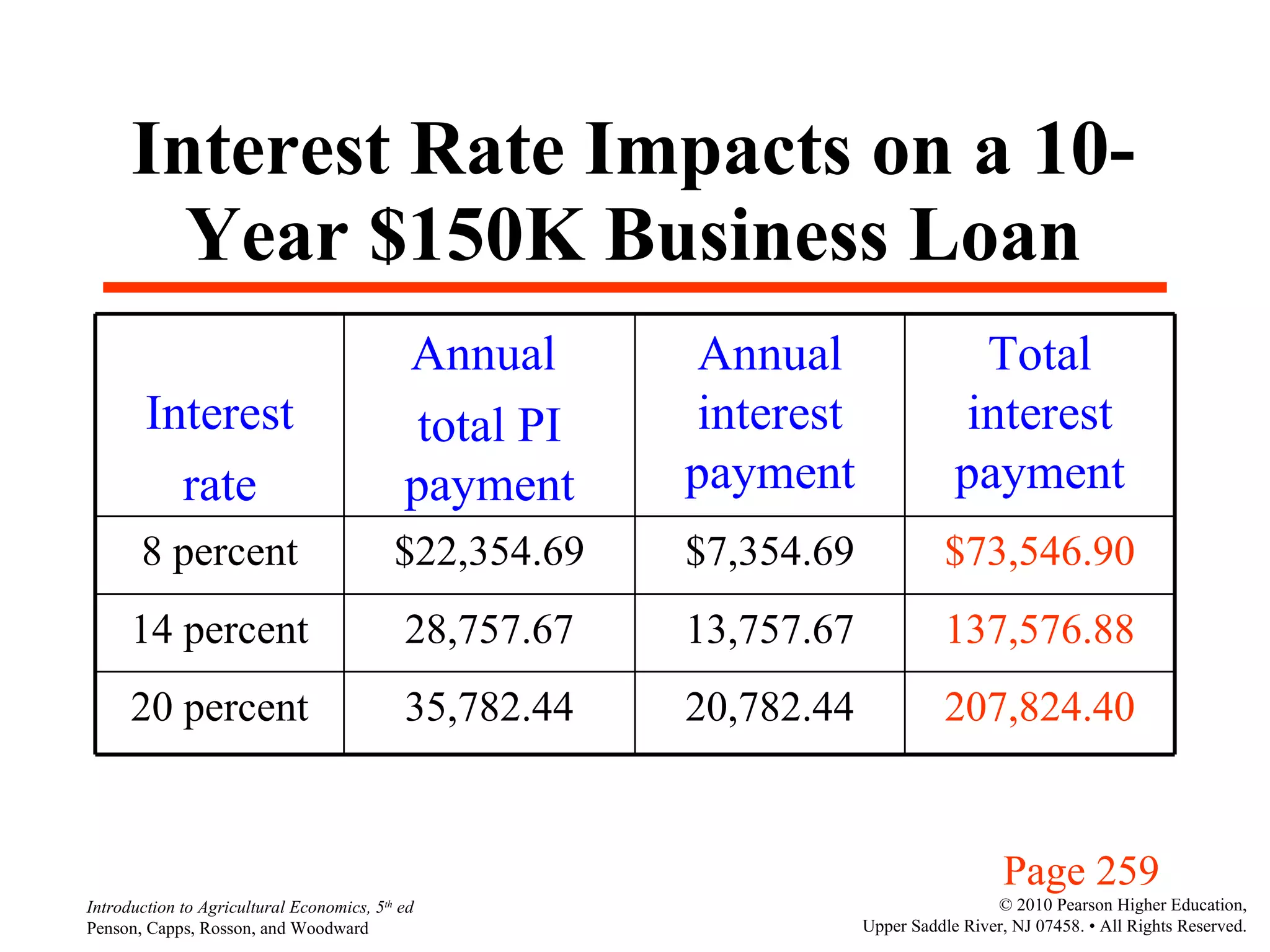
Interest Rate Impacts on a 10-Year $150K Business Loan Page 259 Interest rate Annual  total PI payment Annual interest payment Total interest payment 8 percent $22,354.69 $7,354.69 $73,546.90 14 percent 28,757.67 13,757.67 137,576.88 20 percent 35,782.44 20,782.44 207,824.40
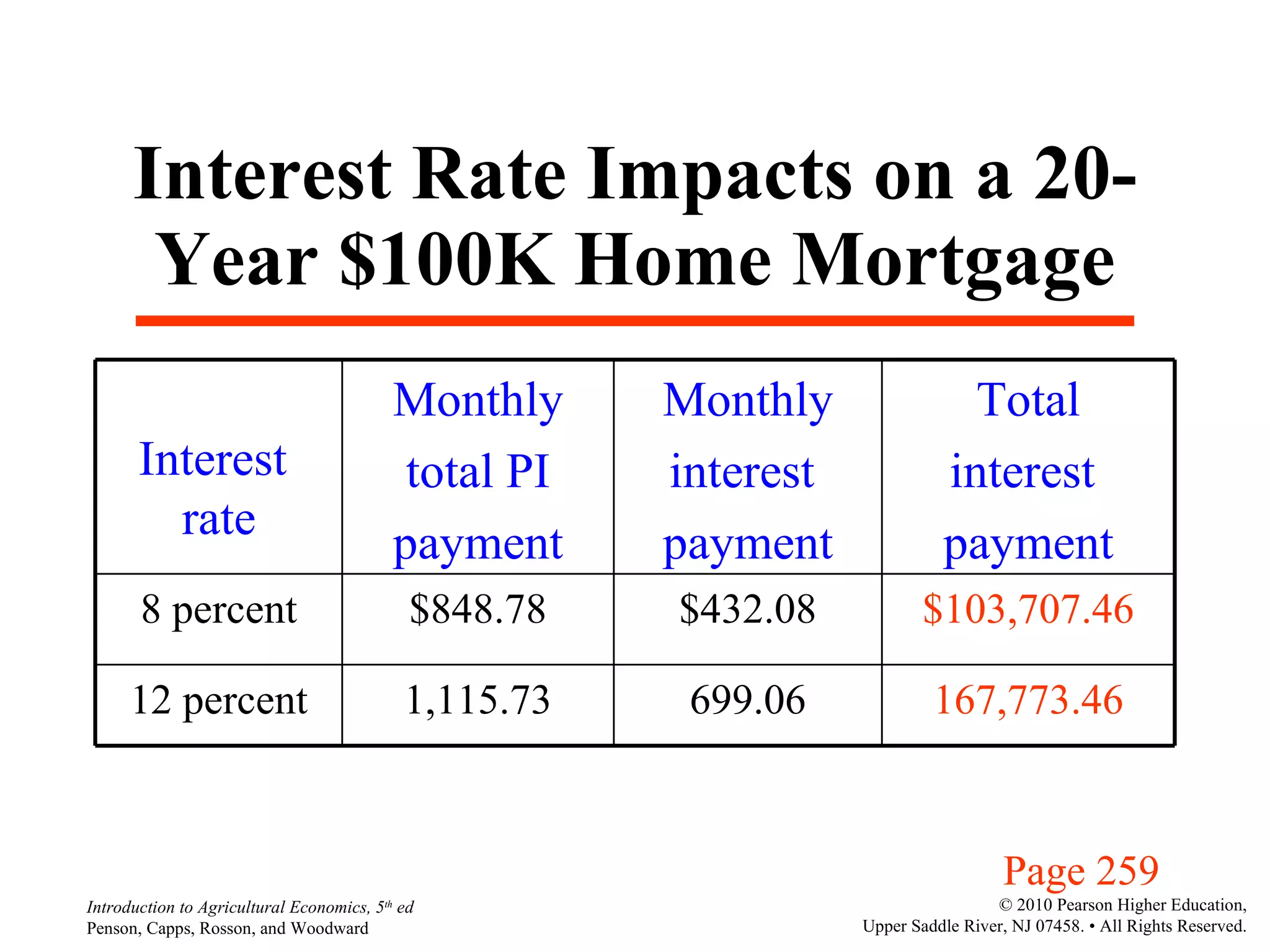
Interest Rate Impacts on a 20- Year $100K Home Mortgage Page 259 Interest  rate Monthly total PI payment Monthly interest  payment Total interest  payment 8 percent $848.78 $432.08 $103,707.46 12 percent 1,115.73 699.06 167,773.46
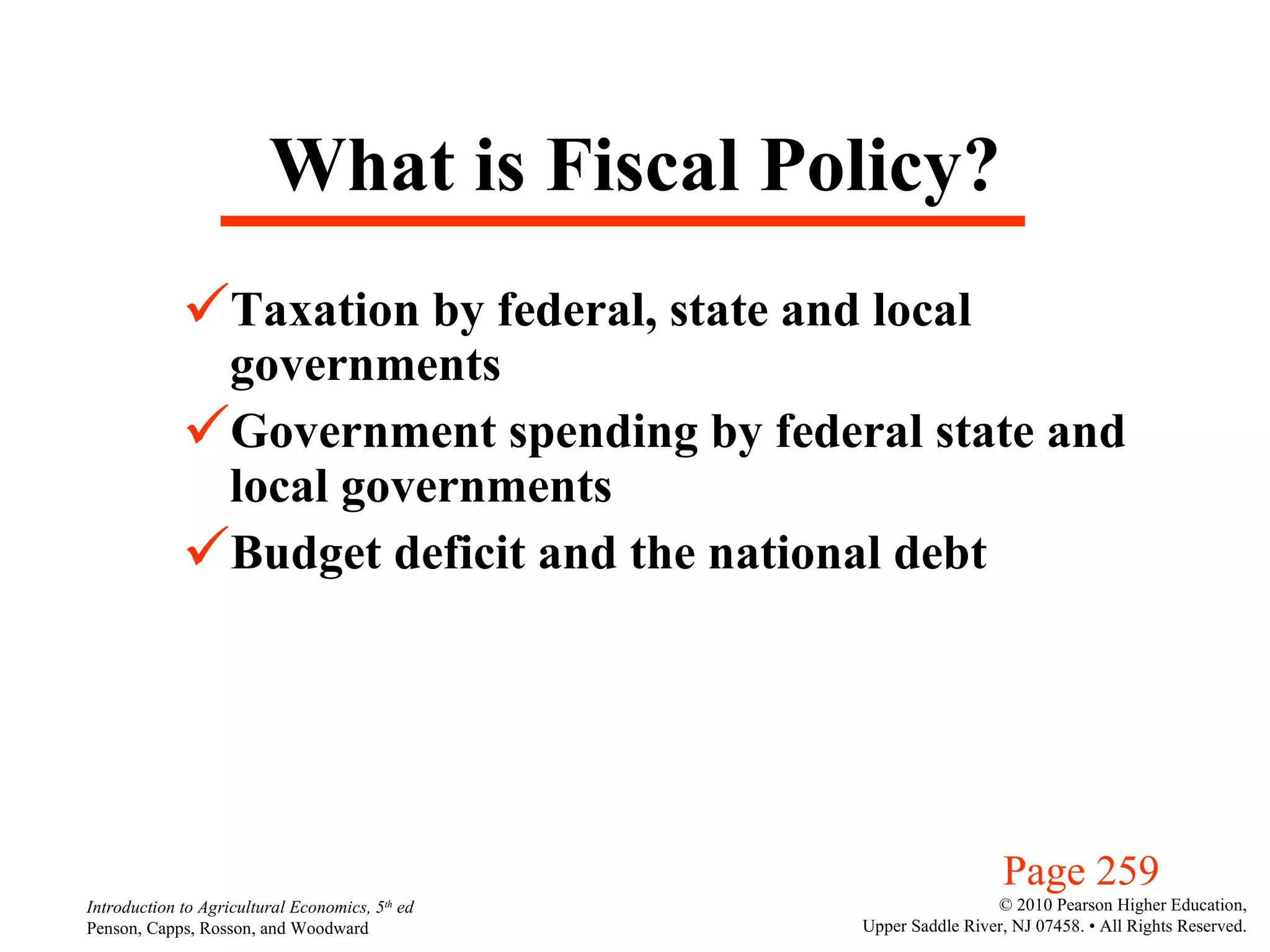
What is Fiscal Policy? Taxation by federal, state and local governments Government spending by federal state and local governments Budget deficit and the national debt Page 259
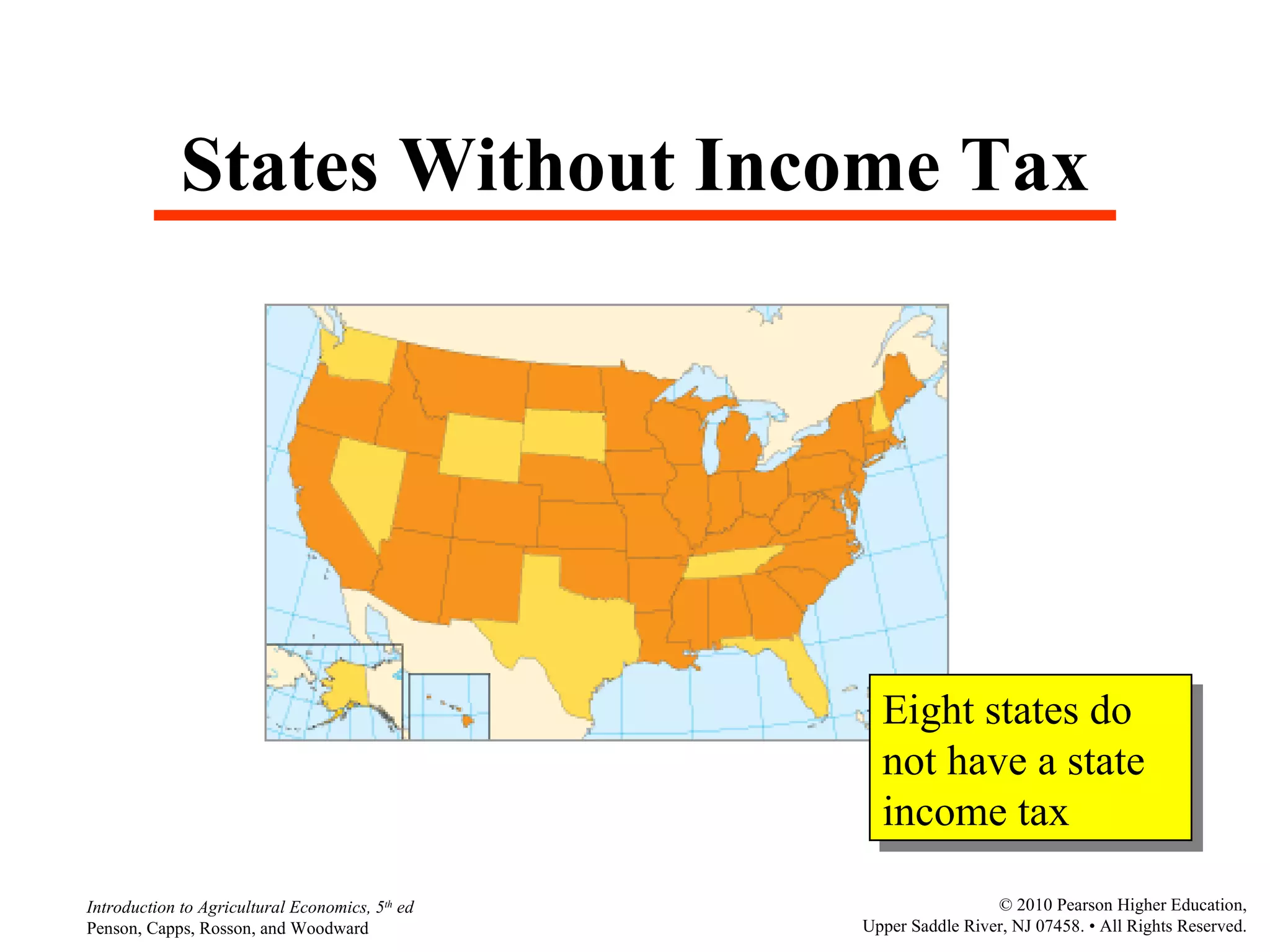
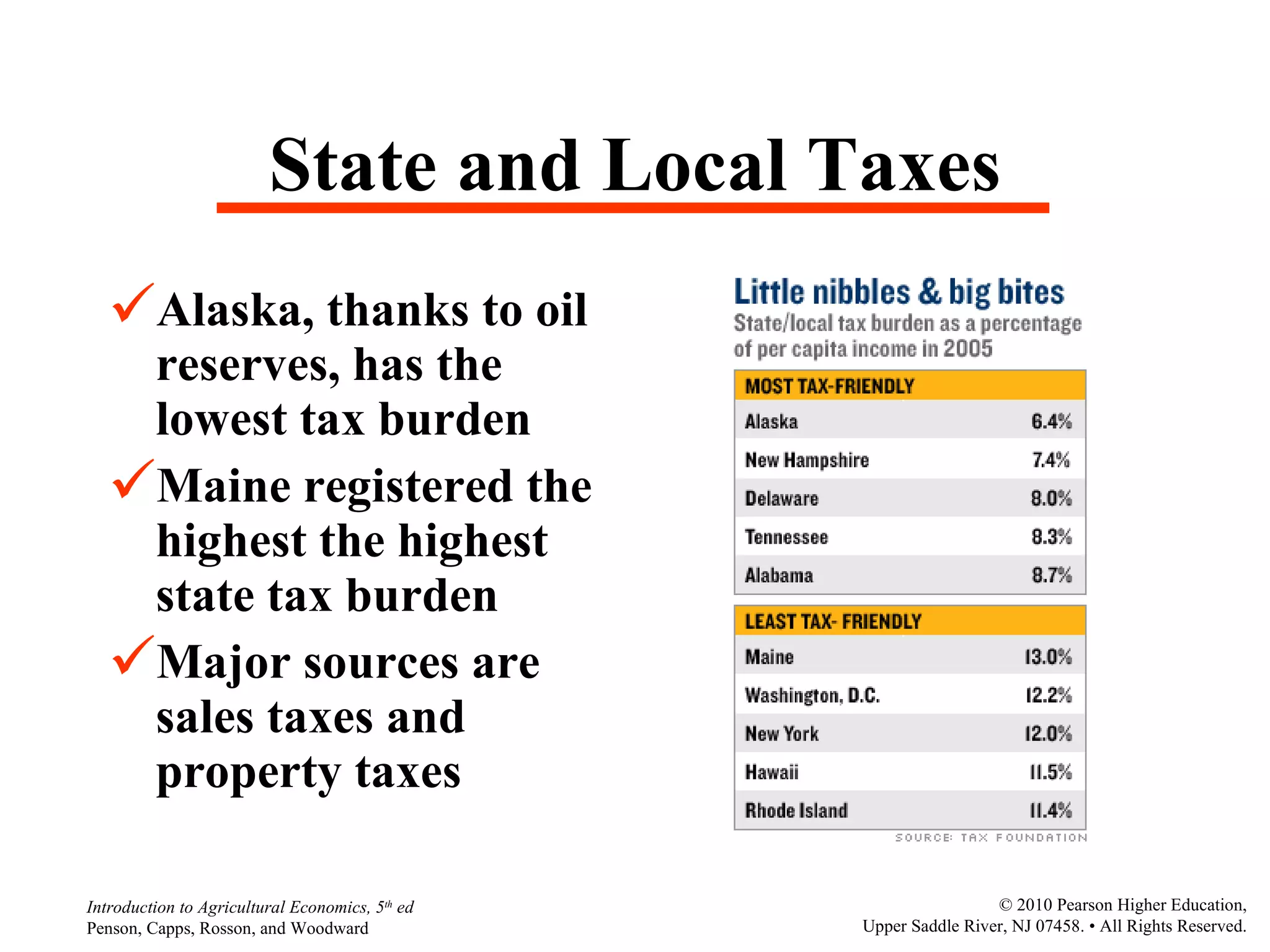
States Without Income Tax Eight states do not have a state income tax
State and Local Taxes Alaska, thanks to oil reserves, has the lowest tax burden Maine registered the highest the highest state tax burden Major sources are sales taxes and property taxes
Our focus is on fiscal policy at the federal level….
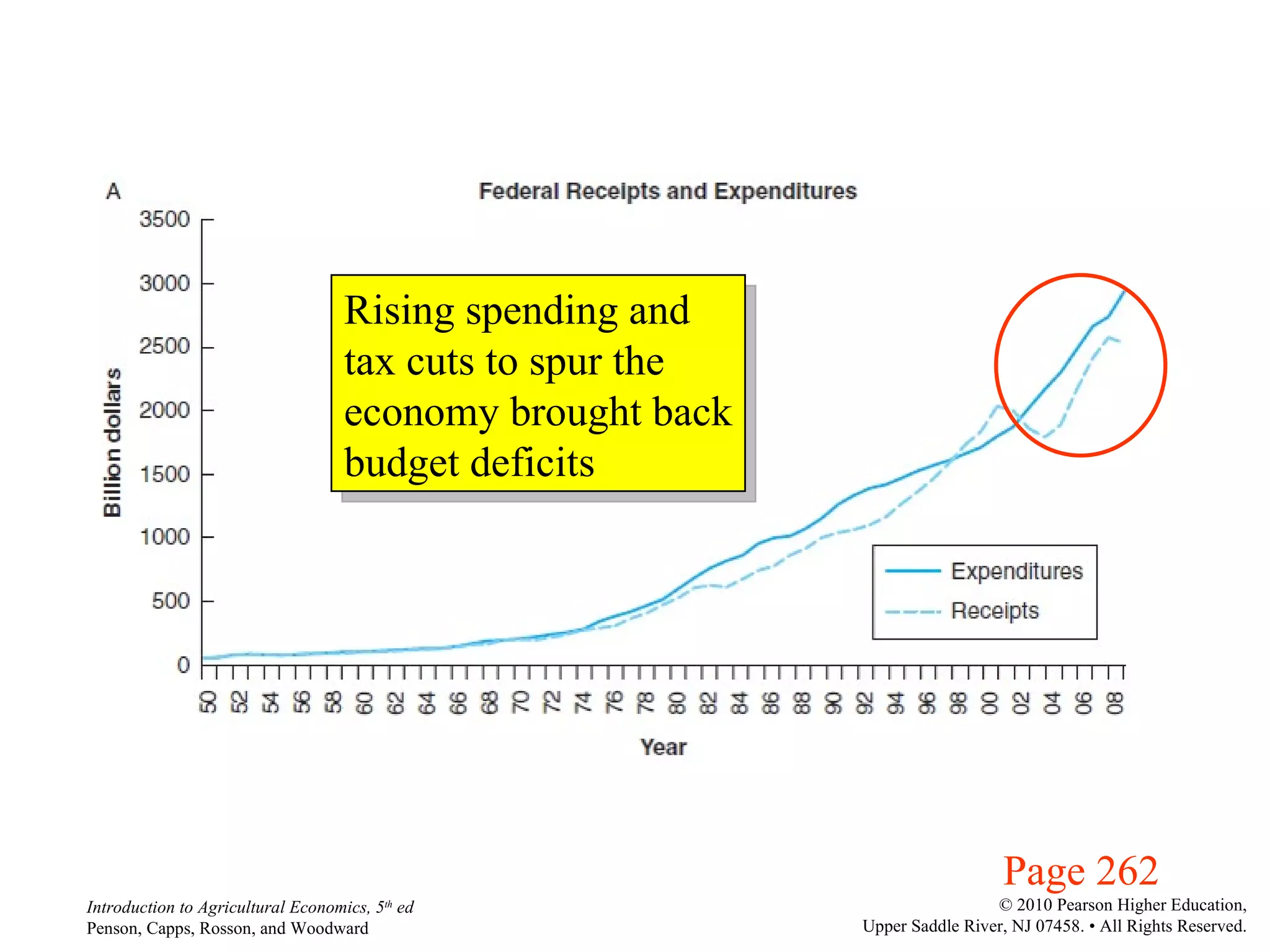
Page 262 Rising spending and tax cuts to spur the economy brought back budget deficits
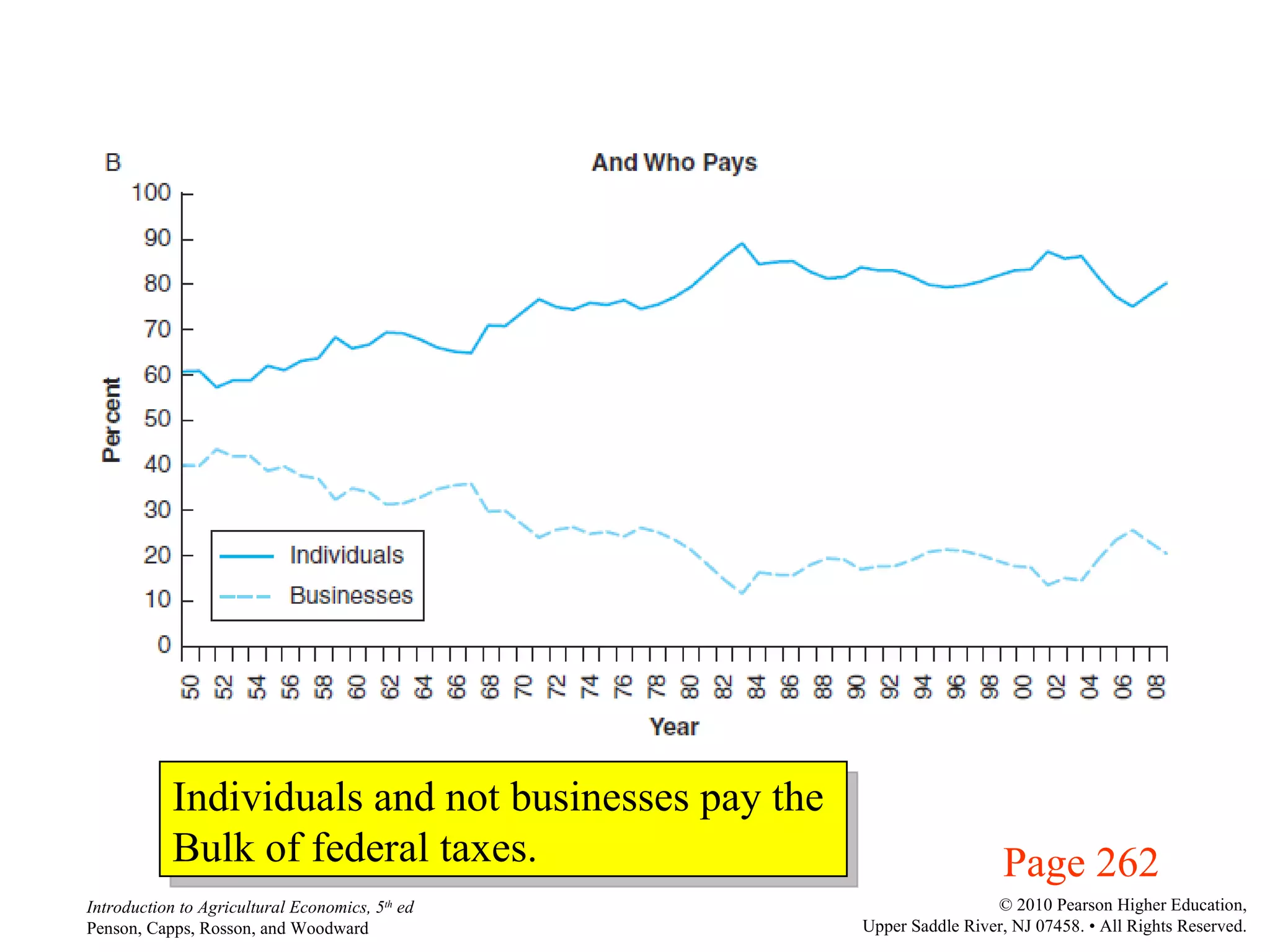
Page 262 Individuals and not businesses pay the  Bulk of federal taxes.
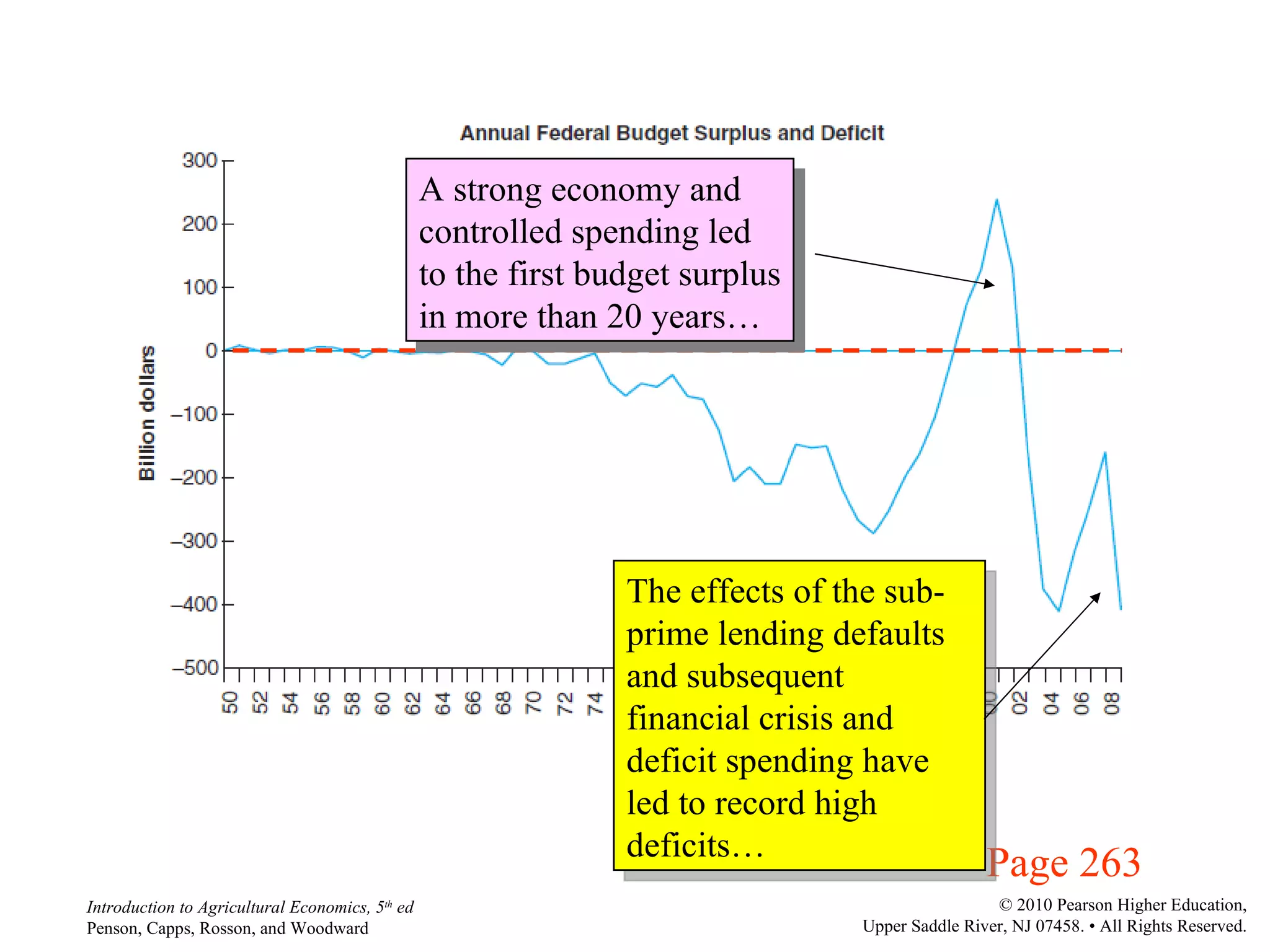
Page 263 A strong economy and controlled spending led to the first budget surplus in more than 20 years… The effects of the sub-prime lending defaults and subsequent financial crisis and deficit spending have led to record high deficits…
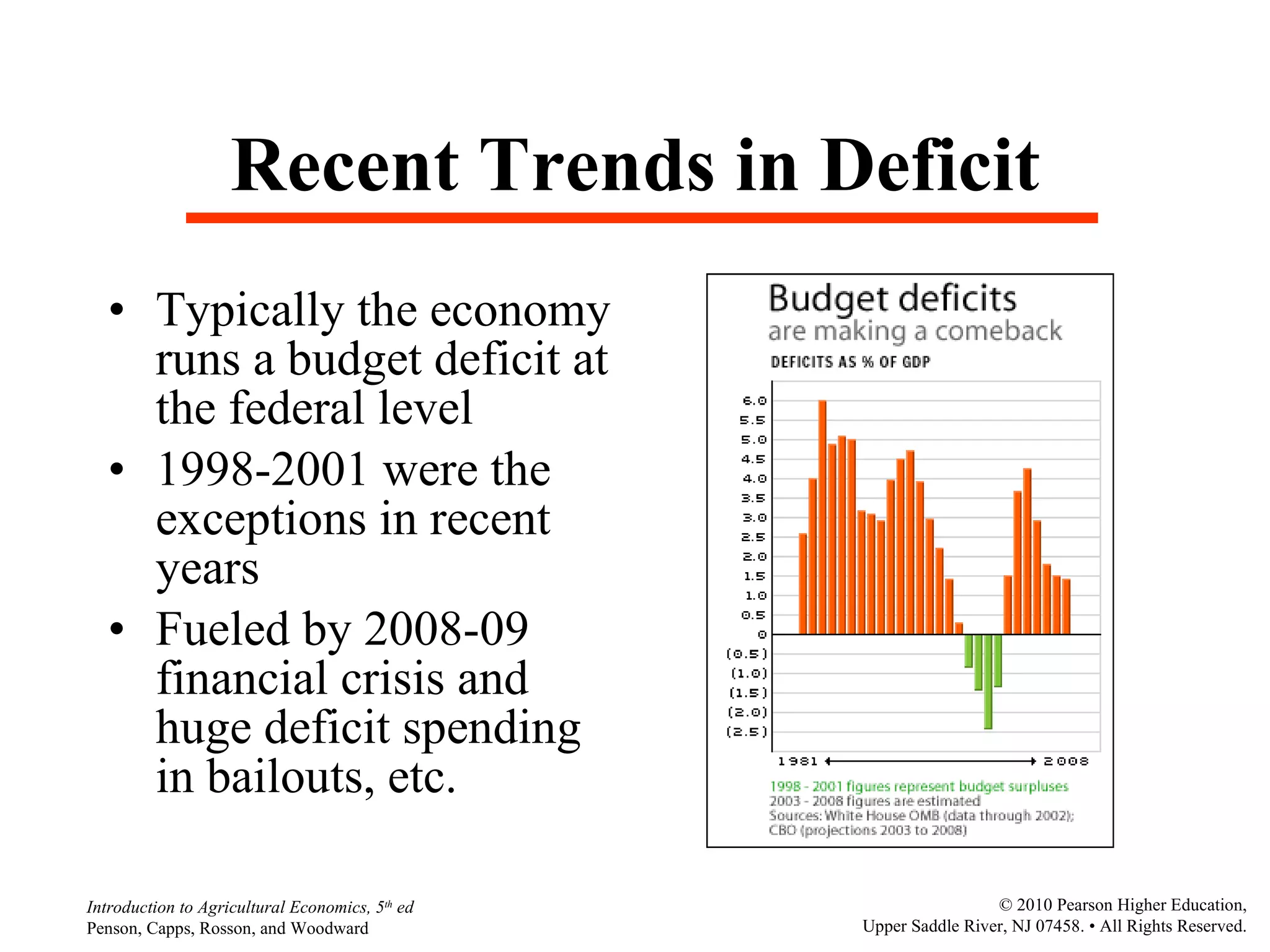
Recent Trends in Deficit Typically the economy runs a budget deficit at the federal level 1998-2001 were the exceptions in recent years Fueled by 2008-09 financial crisis and huge deficit spending in bailouts, etc.
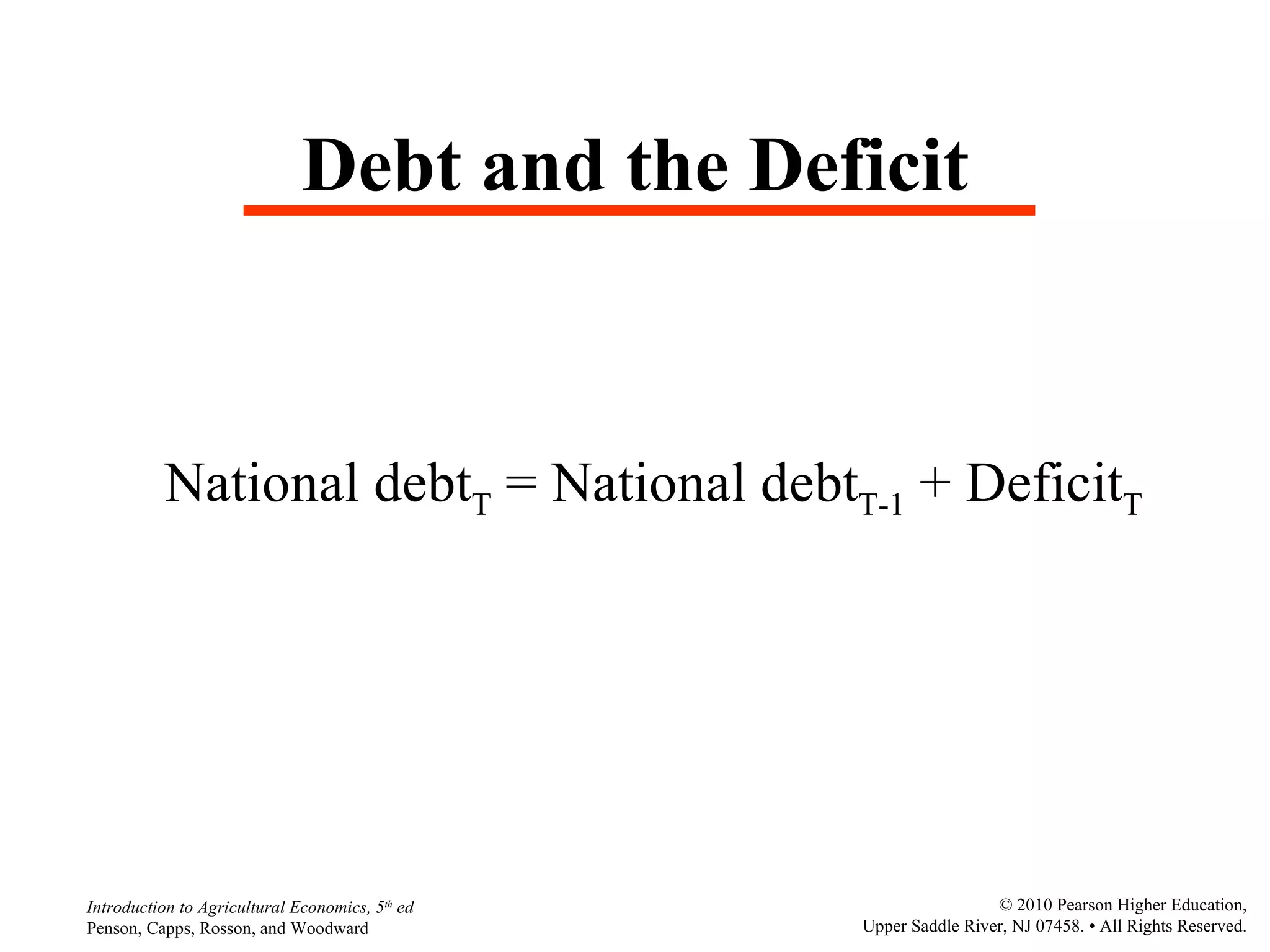
Debt and the Deficit National debt T  = National debt T-1  + Deficit T
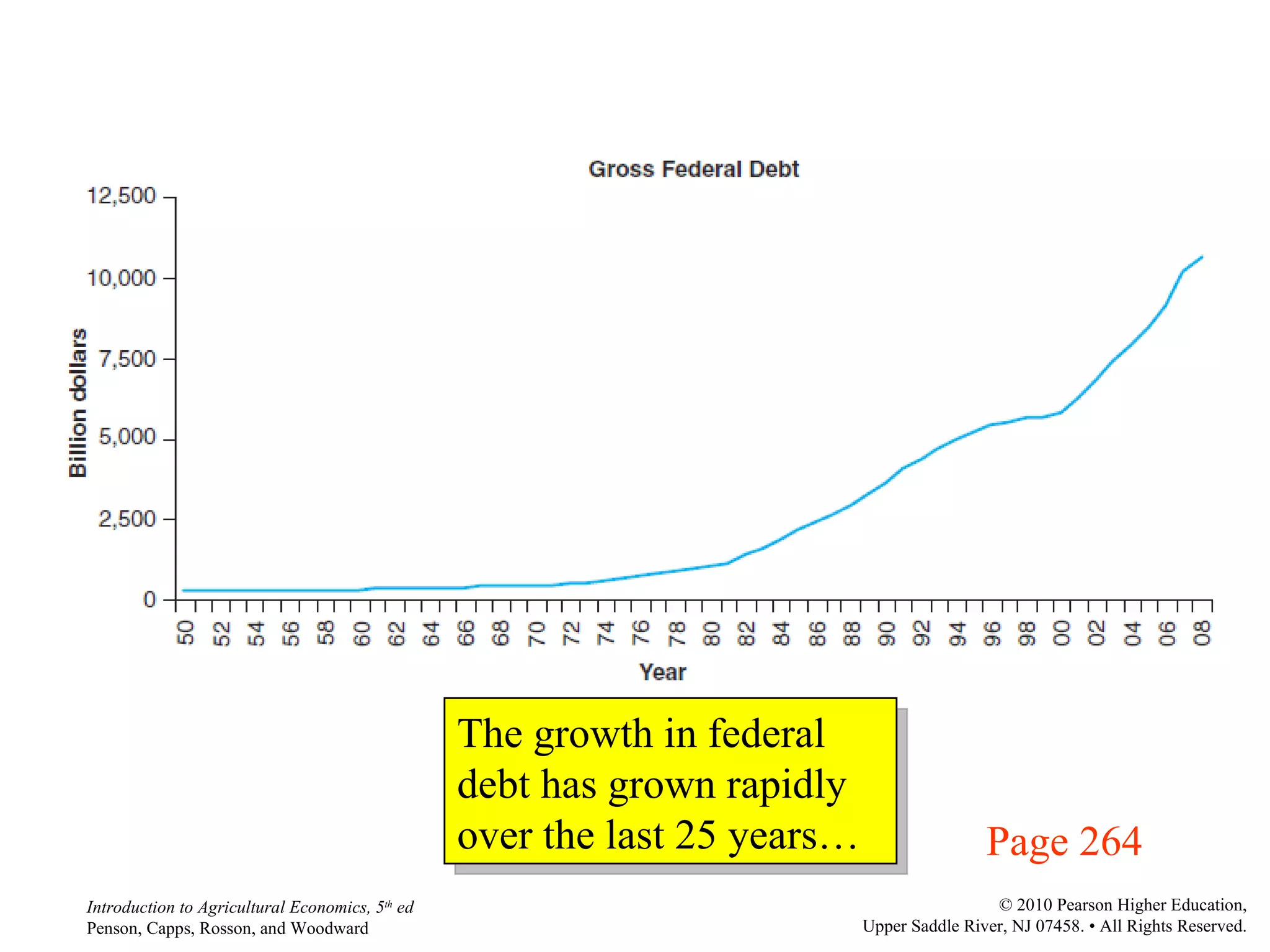
Page 264 The growth in federal debt has grown rapidly over the last 25 years…
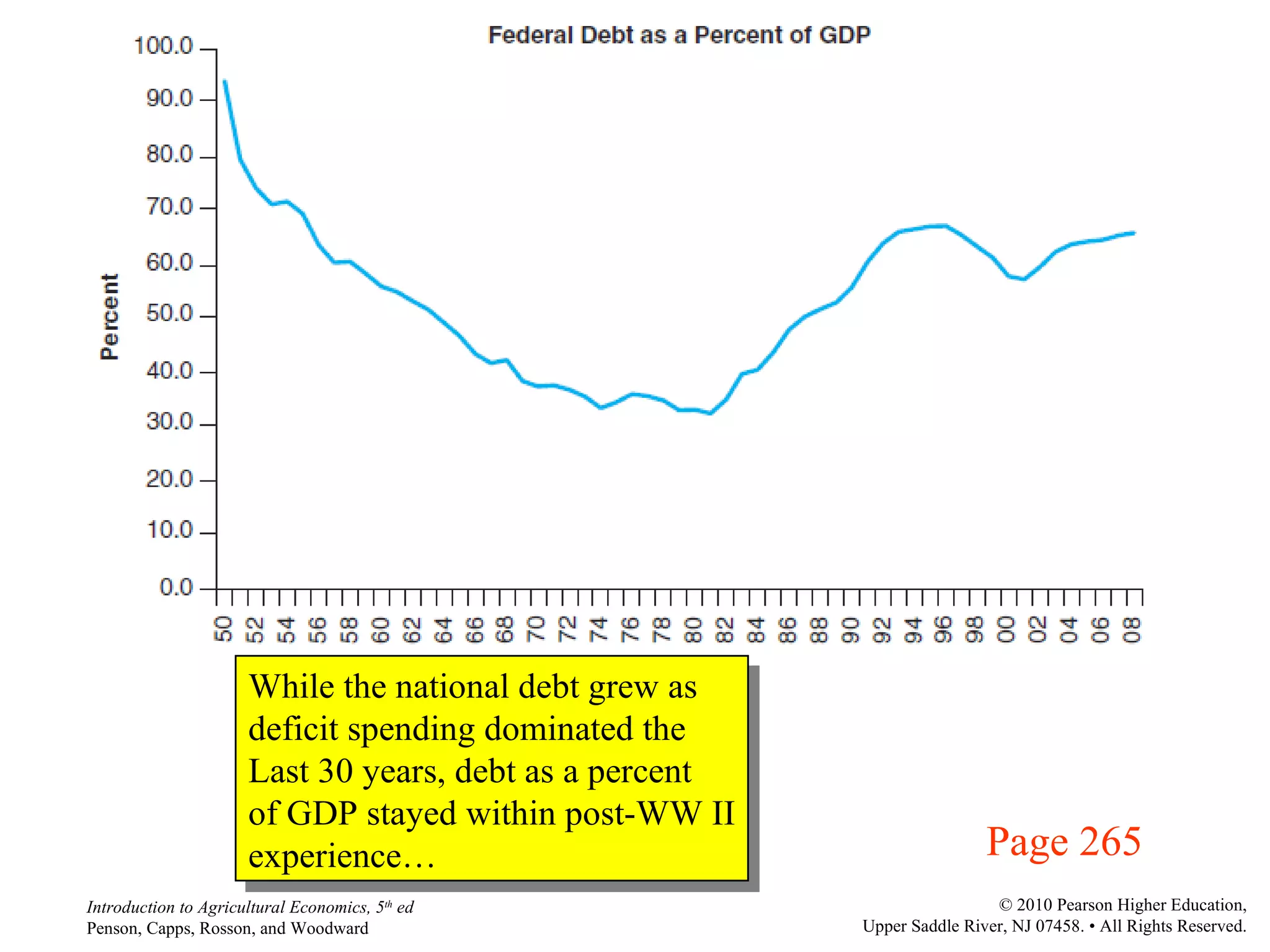
Page 265 While the national debt grew as  deficit spending dominated the Last 30 years, debt as a percent of GDP stayed within post-WW II experience…
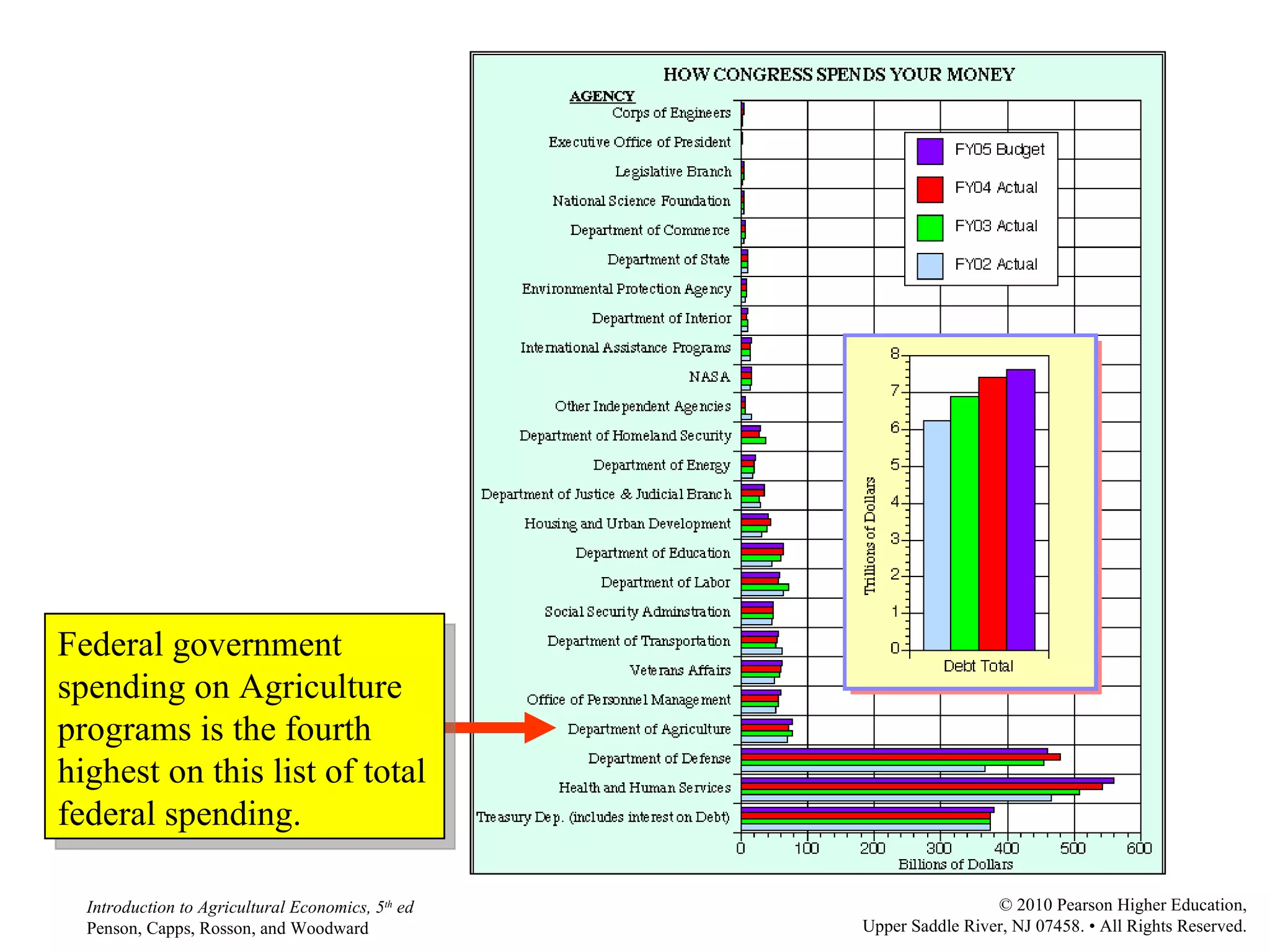
Federal government spending on Agriculture programs is the fourth highest on this list of total federal spending.
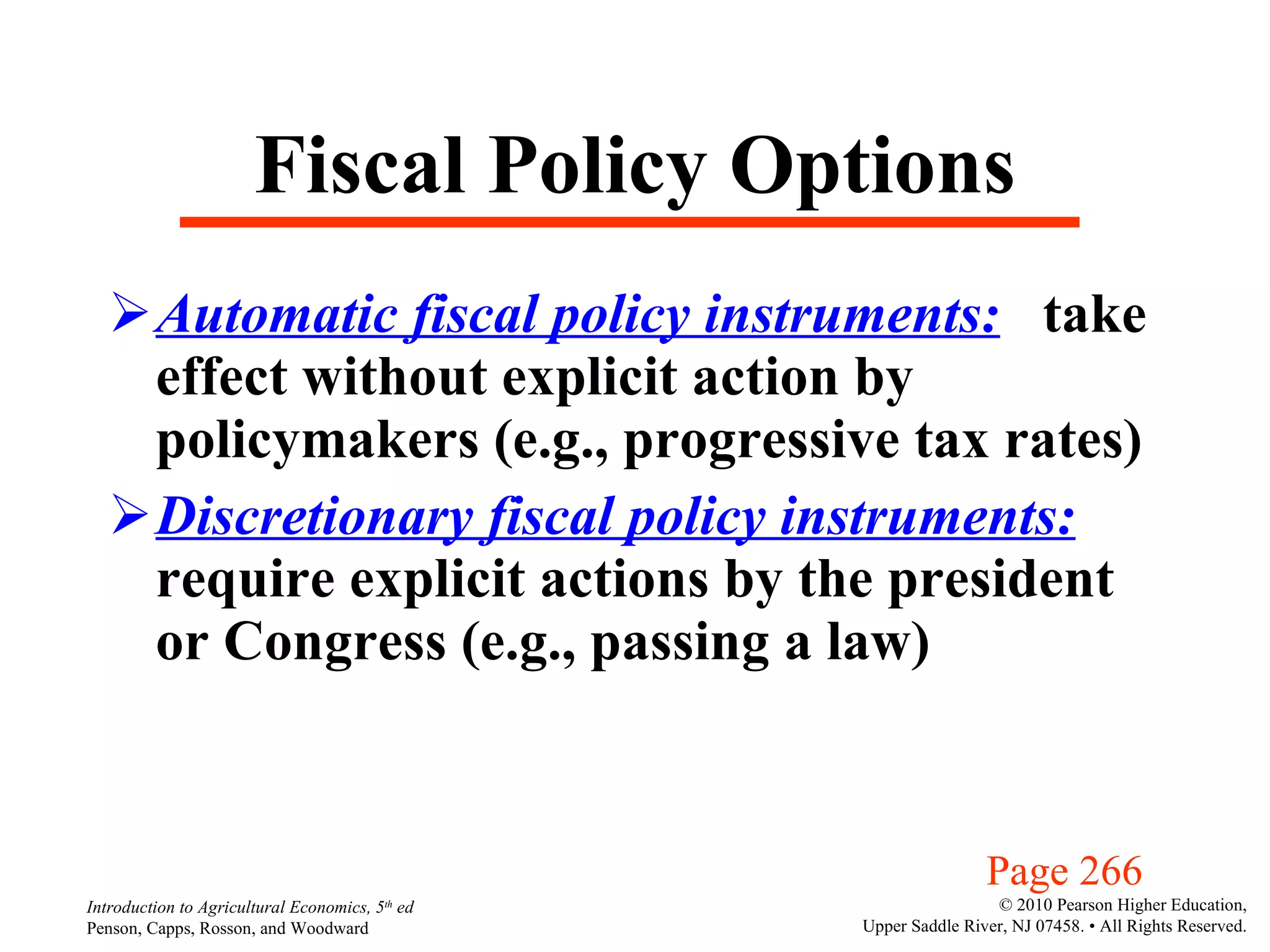
Fiscal Policy Options Automatic fiscal policy instruments:   take effect without explicit action by policymakers (e.g., progressive tax rates) Discretionary fiscal policy instruments:   require explicit actions by the president or Congress (e.g., passing a law) Page 266
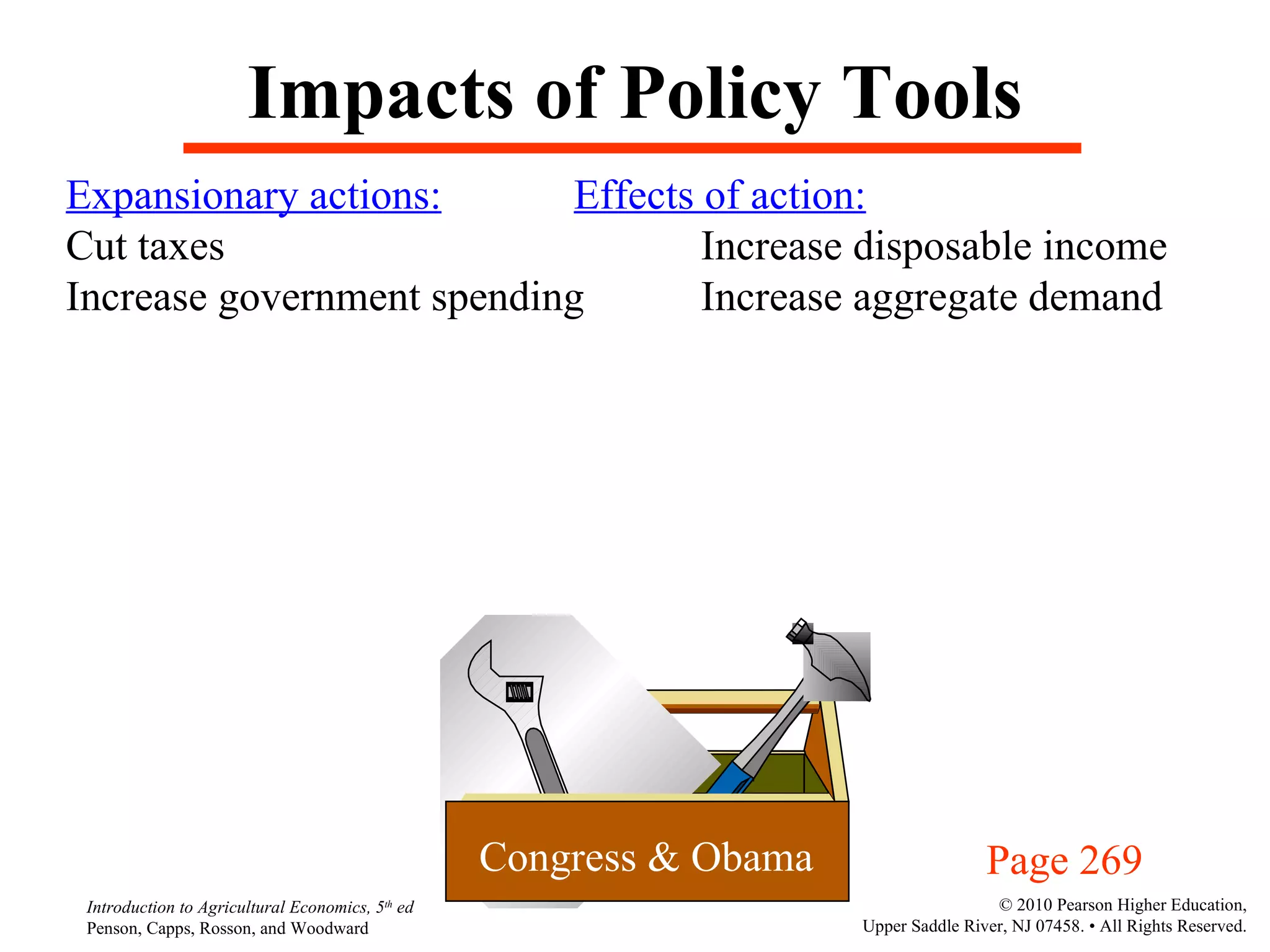
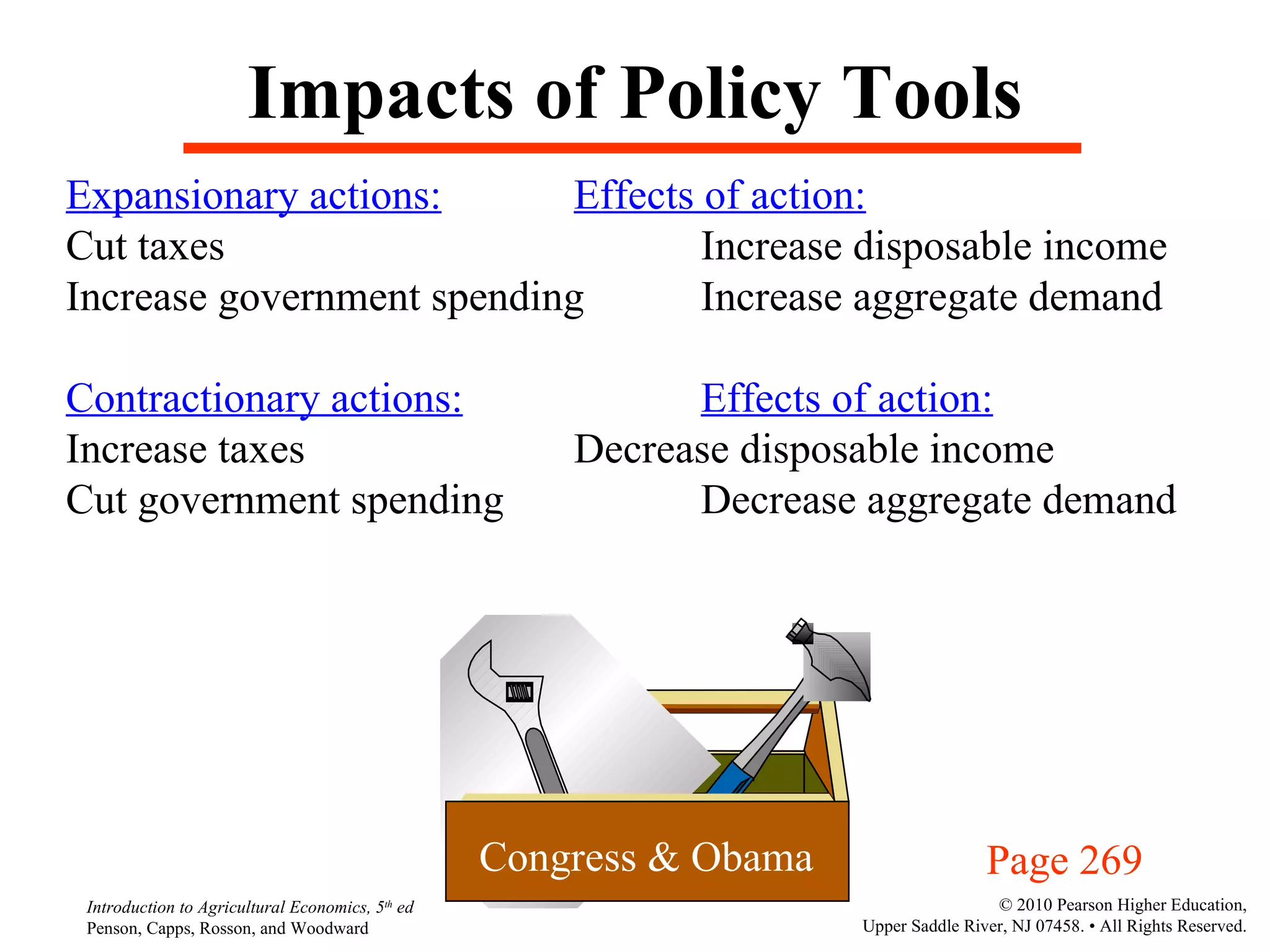
Impacts of Policy Tools Expansionary actions: Effects of action: Cut taxes   Increase disposable income Increase government spending Increase aggregate demand Congress & Obama Page 269
Impacts of Policy Tools Expansionary actions: Effects of action: Cut taxes   Increase disposable income Increase government spending Increase aggregate demand Contractionary actions: Effects of action: Increase taxes   Decrease disposable income Cut government spending Decrease aggregate demand Congress & Obama Page 269
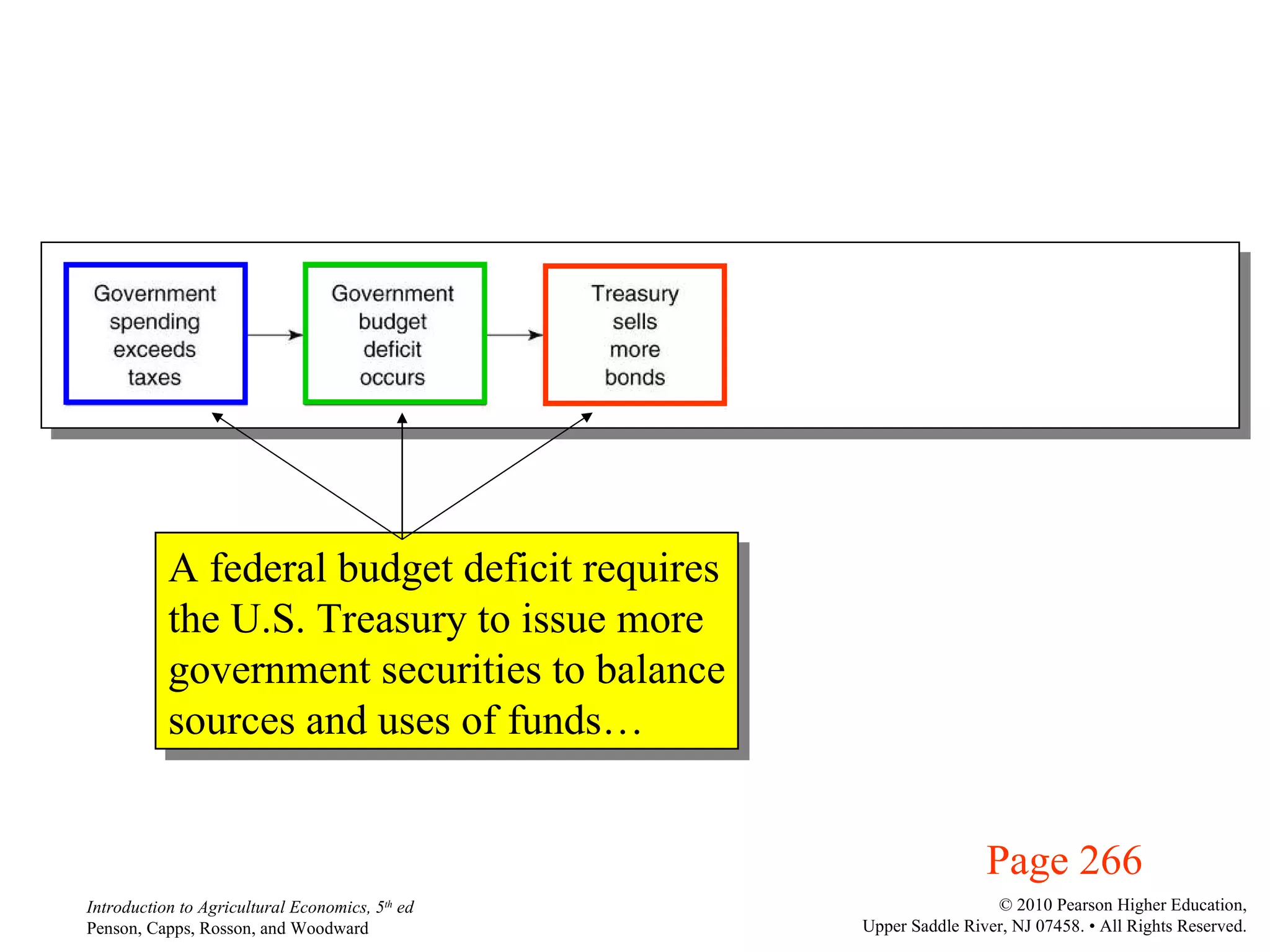
Page 266 A federal budget deficit requires the U.S. Treasury to issue more government securities to balance sources and uses of funds…
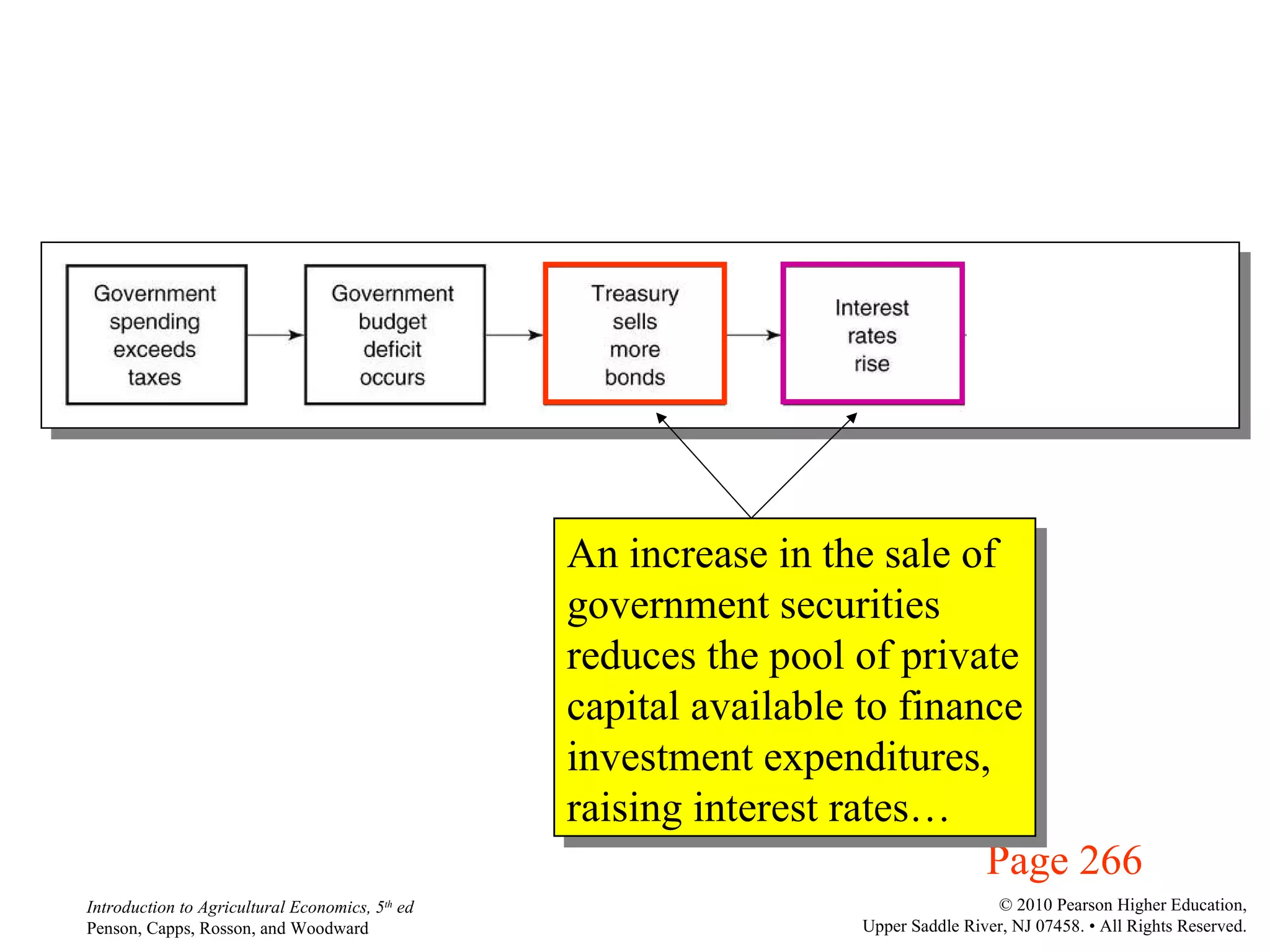
Page 266 An increase in the sale of government securities reduces the pool of private capital available to finance investment expenditures, raising interest rates…
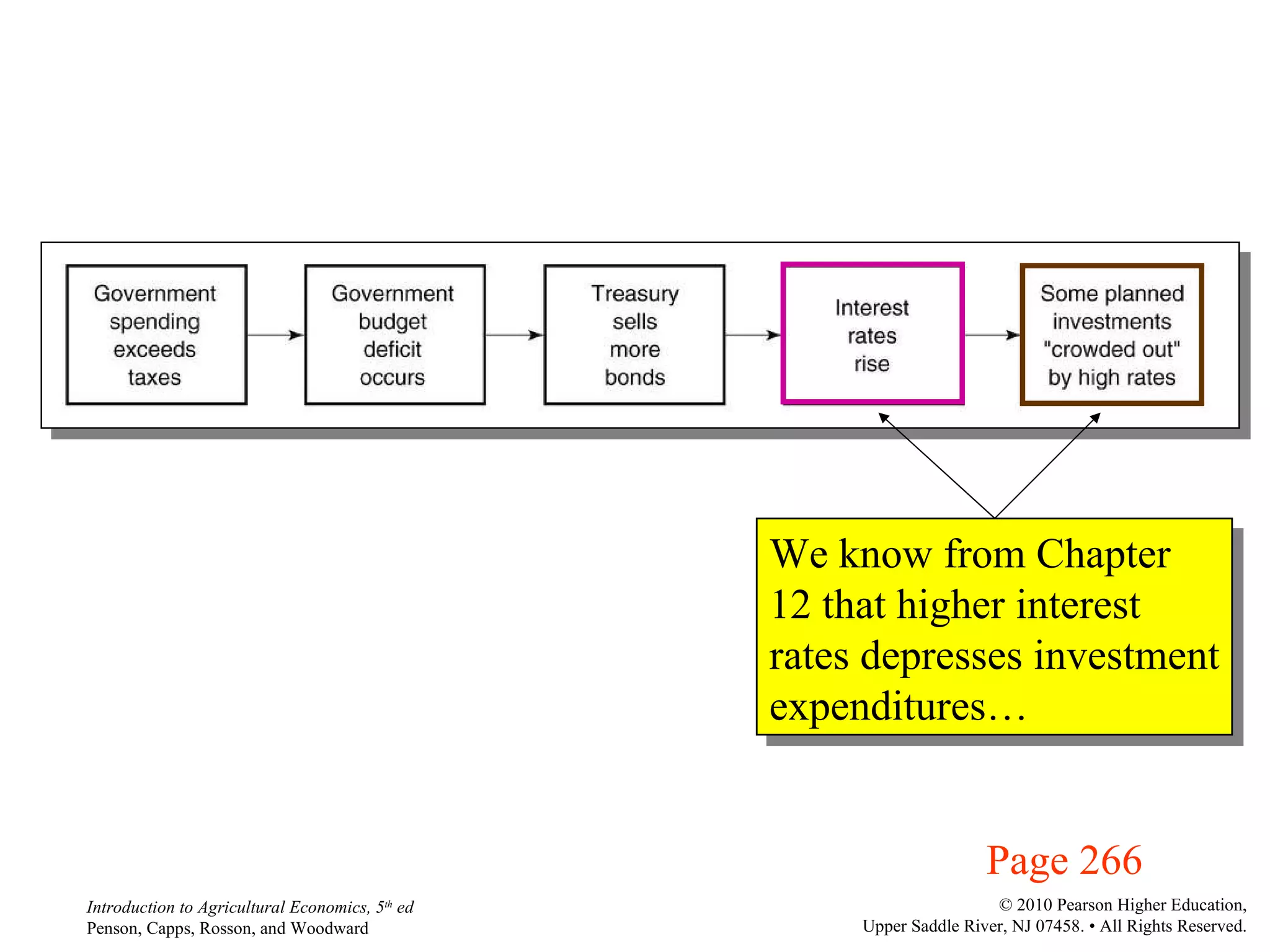
Page 266 We know from Chapter  12 that higher interest  rates depresses investment expenditures…
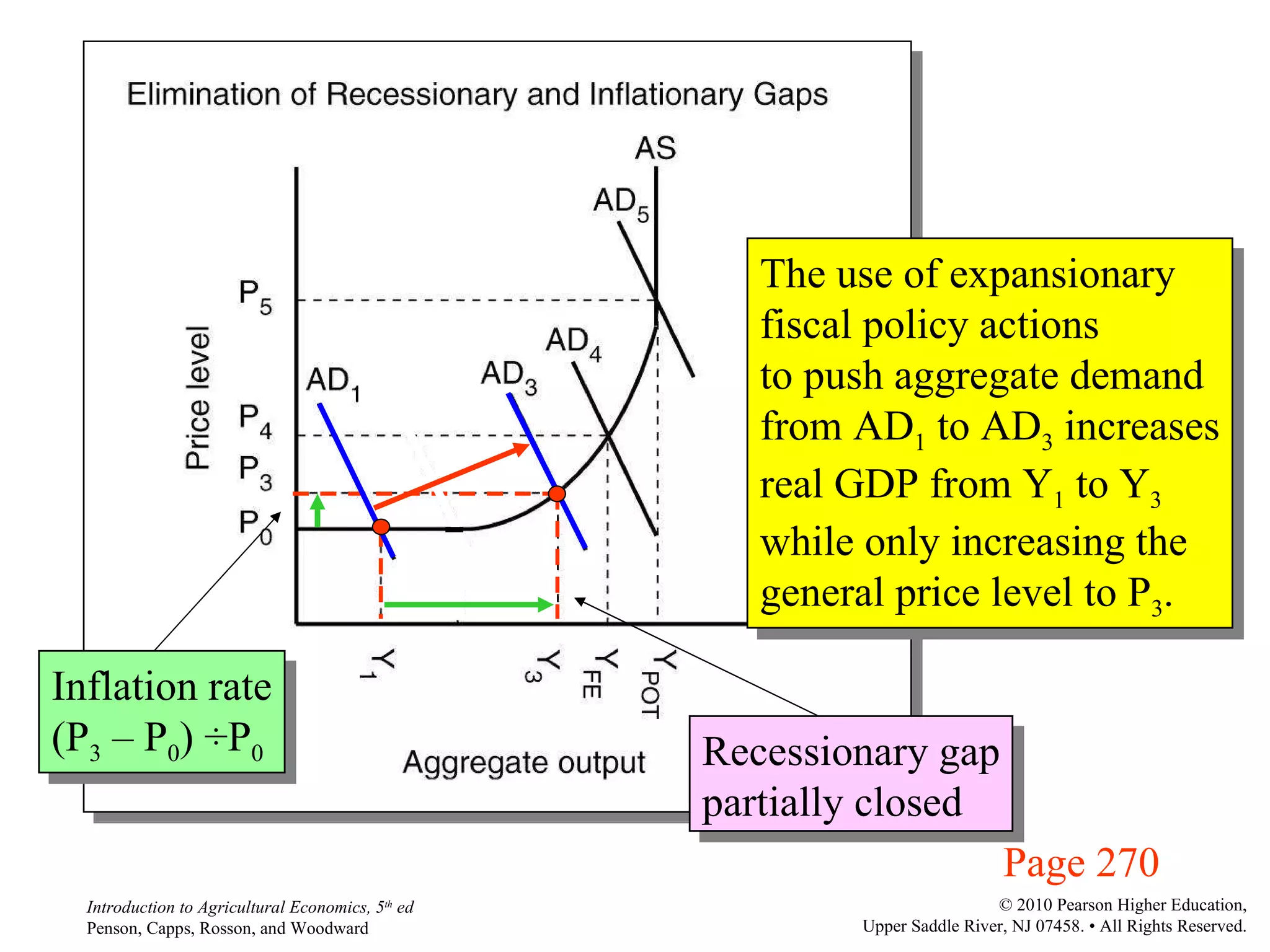
Page 270 The use of expansionary fiscal policy actions to push aggregate demand from AD 1  to AD 3  increases real GDP from Y 1  to Y 3 while only increasing the general price level to P 3 . Inflation rate (P 3  – P 0 )  ÷ P 0 Recessionary gap partially closed
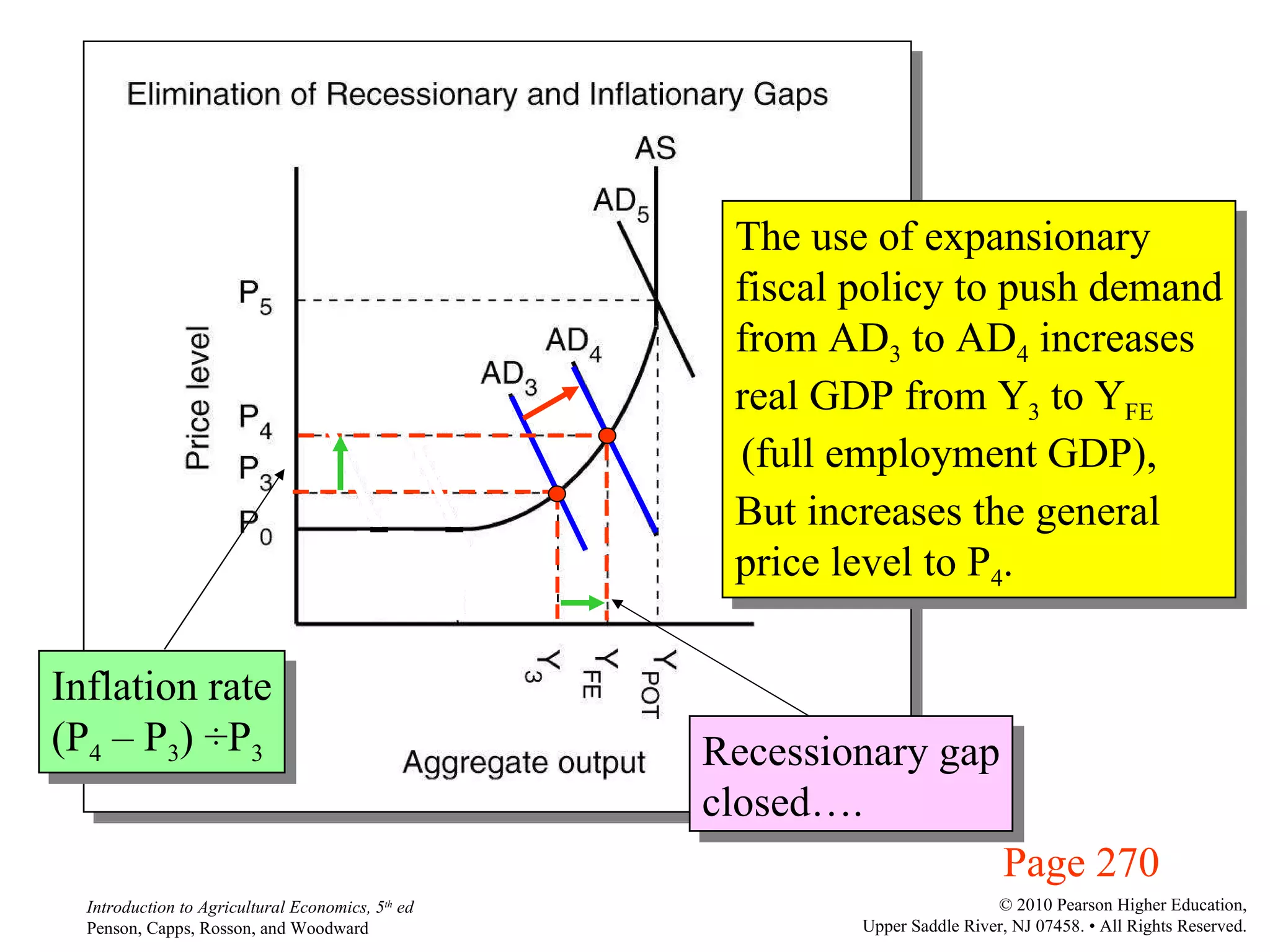
Page 270 The use of expansionary fiscal policy to push demand from AD 3  to AD 4  increases real GDP from Y 3  to Y FE (full employment GDP),  But increases the general  price level to P 4 .  Inflation rate (P 4  – P 3 )  ÷ P 3 Recessionary gap closed….
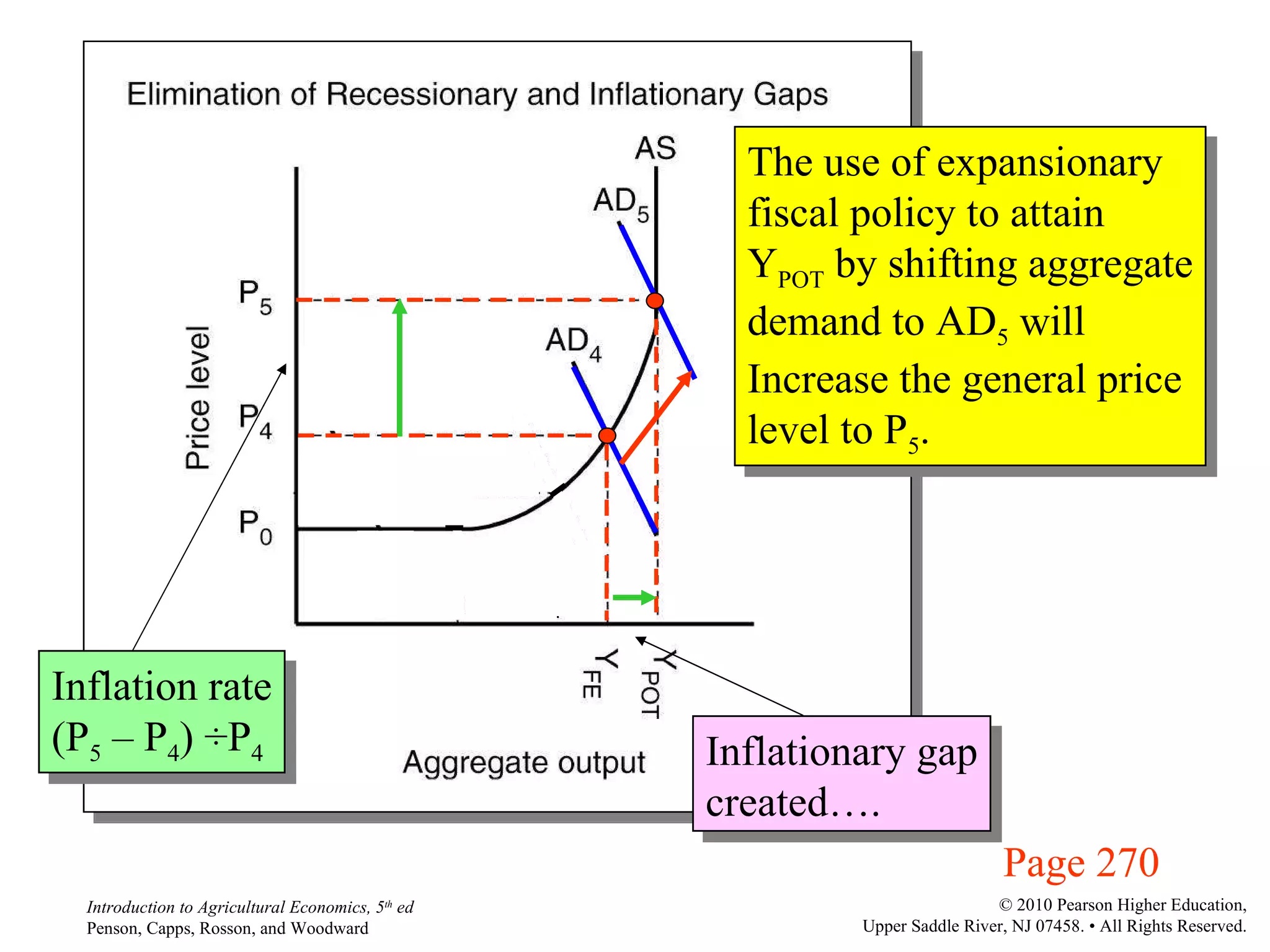
Page 270 The use of expansionary fiscal policy to attain Y POT  by shifting aggregate demand to AD 5  will  Increase the general price  level to P 5 . Inflation rate (P 5  – P 4 )  ÷ P 4 Inflationary gap created….
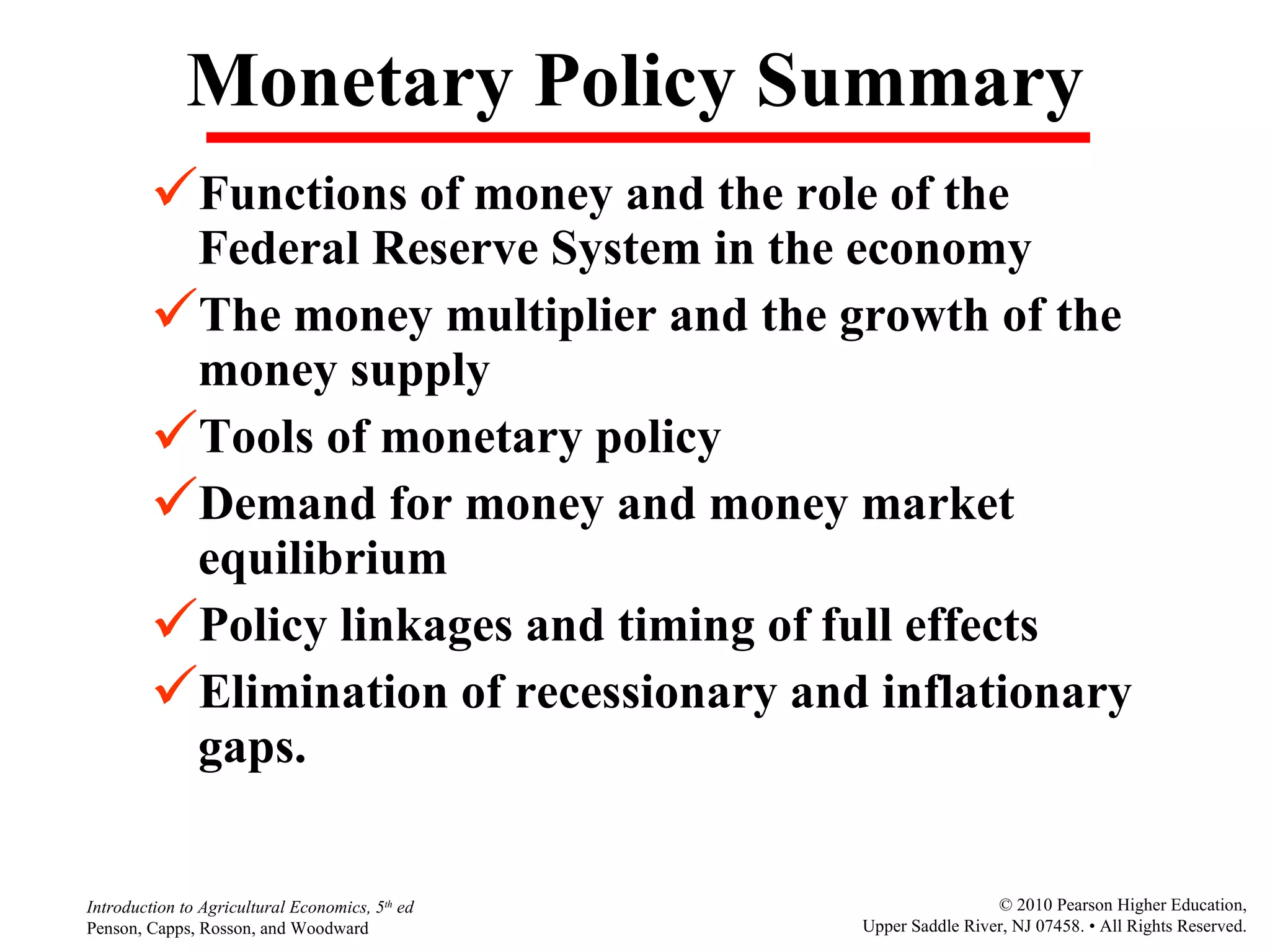
Monetary Policy Summary Functions of money and the role of the Federal Reserve System in the economy The money multiplier and the growth of the money supply Tools of monetary policy Demand for money and money market equilibrium Policy linkages and timing of full effects Elimination of recessionary and inflationary gaps.
Fiscal Policy Summary Difference between discretionary and automatic fiscal policy tools Expansionary and contractionary fiscal policy actions Application to eliminating recessionary and inflationary gaps Budget deficits, national debt and concept of “ crowding out ”
Chapter 14 focuses on the key consequences of   business fluctuations ….

Agri 2312 chapter 13 macroeconomic policy fundamentals

  • 1.
  • 2.
    Discussion Topics Characteristicsof money Federal Reserve System Changing the money supply Money market equilibrium Effects of monetary policy on economy The federal budget deficit The national debt Fiscal policy options
  • 3.
    Functions of MoneyMedium of exchange – facilitates payment to others for goods and services Unit of accounting – assessing profitability of businesses, household budgets and aggregate variables like GDP Store of value – money is a liquid asset which has value in investment portfolios and cash flow decisions of businesses and households Page 244
  • 4.
    Functions of theFed Supply the economy with paper currency Supervise member banks Provide check collection and clearing services Maintain the reserve balances of depository institutions Lend to depository institutions Act at the federal government’s banker and fiscal agent Regulate the money supply Page 246-247
  • 5.
    Page 246 Locationof the 12 District Federal Reserve Banks
  • 6.
    The Fed’s PolicyTools Reserve requirements – depository institutions are required to maintain a specific fraction of their customers’ deposits as reserves. Discount rate – rate depository institutions pay when they borrow from the Fed Open market operations – Fed can buy or sell government securities to alter the money supply Page 248-249
  • 7.
    Page 247 Roleof the Board of Governors of the Federal Reserve System
  • 8.
    Page 247 Roleof the Board of Governors of the Federal Reserve System
  • 9.
    Page 247 Roleof the Board of Governors of the Federal Reserve System
  • 10.
    Page 247 Keyrole played by the Federal Open Market Committee or FOMC
  • 11.
  • 12.
    Page 247 Roleof the 12 District Federal Reserve Banks located throughout the country
  • 13.
    Determinants of theMoney Supply
  • 14.
    Page 253 Existingmoney supply curve. Note it is perpendicular to the quantity axis, implying it is unaffected by the interest rate.
  • 15.
    Page 253 Expansionarymonetary policy actions will shift the MS curve to the right over a period of 12 months or so.
  • 16.
    Page 253 Contractionarymonetary policy actions, on the other hand, will shift the money supply curve to left over a similar time period.
  • 17.
    Page 251 Supposea depositor in Bank Ag sells $1 million in government securities to the Fed. He then deposits the proceeds from the sale in his bank. If the fractional reserve requirement ratio is 20 percent, Bank Ag can increase the volume of its loans by $800,000. Suppose the proceeds of these loans are deposited in Bank B. Follow the trail to the Total line.
  • 18.
    Change in theMoney Supply We can skip tracing deposits through the economy by using the following money supply (M S ) equation: M S = (1.0 ÷ RR) × TR = MM × TR where TR represents total reserves and RR is the reserve requirement ratio. The expression with the brackets is known as the money multiplier . We can restate this equation in terms of the change in the money supply as follows:  M S = (1.0 ÷ RR) ×  TR = MM ×  TR Page 252-253
  • 19.
    Change in theMoney Supply Using the example in Table 13.3 of the $1 million deposit on page 307 and 20% reserve requirements ratio, we see that the change in the money supply is:  M S = (1.0 ÷ .20) x  TR = 5.0 x $1 million = $5 million This results in a change in loans of  loans =  MS -  TR = $5 million - $1 million = $4 million See bottom line in Table 13.3 Page 251-253
  • 20.
    Page 251 Changein money supply Change in loan volume Initial infusion + =
  • 21.
    Impacts of PolicyTools Expansionary actions: Effects of action: Fed buys securities Total reserves increase Fed lowers the discount rate Total reserves increase Fed lowers required reserve ratio Money multiplier increases Page 253 Bernanke
  • 22.
    Impacts of PolicyTools Expansionary actions: Effects of action: Fed buys securities Total reserves increase Fed lowers the discount rate Total reserves increase Fed lowers required reserve ratio Money multiplier increases Contractionary actions: Effects of action: Fed sells securities Total reserves decrease Fed raises the discount rate Total reserves decrease Fed raises required reserve ratio Money multiplier decreases Page 253 Bernanke
  • 23.
    Determinants of theMoney Demand
  • 24.
    Demand for MoneyTransactions demand for money – carry cash to pay for normal expenditures Precautionary demand for money – carry cash to cover unexpected expenditures Speculative demand for money – hold cash as an asset in investment portfolios since the value of cash does not decline during periods of falling asset prices. Page 254
  • 25.
    Page 255 Themoney demand curve is given by equation (16.5): M D = c –d(R) + e(NI) where R is the rate of interest and NI is national income. The coefficient d is the slope of the curve and e represents  M D ÷  NI.
  • 26.
    Page 255 MD = c –d(R) + e(NI) Increase in income increases demand for money
  • 27.
    Page 255 Moneymarket interest rate given by intersection of demand and supply
  • 28.
    Page 255 MS * 0.06 Expansionary monetary policy lowers interest rates
  • 29.
    Page 255 MS * 0.14 Contractionary monetary policy raises interest rates
  • 30.
    Page 256 Thefull effects of this change could take 12 months or more to register in bank deposits
  • 31.
    Page 256 Achange in the money supply will alter the equilibrium interest rate in the money market
  • 32.
    Page 256 Weknow from Chapter 12 that a change in interest rates will lead to movement along the planned investment function….increasing or decreasing new investment
  • 33.
    Page 256 Wealso know from Chapter 12 that increased investment expenditures, a component of GDP, increases the demand for labor, lowers unemployment and thus fuels further growth in national income…
  • 34.
  • 35.
    Page 257 Whatis the magnitude of the recessionary gap?
  • 36.
    Page 257 Whatis the magnitude of the recessionary gap? It is Y FE – Y 1
  • 37.
    Page 257 Theuse of expansionary monetary policy actions to push aggregate demand from AD 1 to AD 3 increases real GDP from Y 1 to Y 3 while only increasing the general price level to P 3 .
  • 38.
    Page 257 Inflationrate (P 3 – P 0 ) ÷ P 0 Recessionary gap of Y FE – Y 1 is partially closed to Y FE – Y 3
  • 39.
    Page 257 Thefurther use of expansionary monetary policy to push aggregate demand from AD 3 to AD 4 increases real GDP from Y 3 to Y FE (full employment GDP), but increases the general price level to P 4 .
  • 40.
    Page 257 Inflationrate (P 4 – P 3 ) ÷ P 3 Recessionary gap fully closed
  • 41.
    Page 257 Theuse of expansionary monetary policy to attain Y POT by shifting aggregate demand to AD 5 will increase the general price level to P 5 . Inflation rate (P 5 – P 4 ) ÷ P 4 Inflationary gap created…..
  • 42.
  • 43.
    Interest Rate Impactson a 10-Year $150K Business Loan Page 259 Interest rate Annual total PI payment Annual interest payment Total interest payment 8 percent $22,354.69 $7,354.69 $73,546.90 14 percent 28,757.67 13,757.67 137,576.88 20 percent 35,782.44 20,782.44 207,824.40
  • 44.
    Interest Rate Impactson a 20- Year $100K Home Mortgage Page 259 Interest rate Monthly total PI payment Monthly interest payment Total interest payment 8 percent $848.78 $432.08 $103,707.46 12 percent 1,115.73 699.06 167,773.46
  • 45.
    What is FiscalPolicy? Taxation by federal, state and local governments Government spending by federal state and local governments Budget deficit and the national debt Page 259
  • 46.
    States Without IncomeTax Eight states do not have a state income tax
  • 47.
    State and LocalTaxes Alaska, thanks to oil reserves, has the lowest tax burden Maine registered the highest the highest state tax burden Major sources are sales taxes and property taxes
  • 48.
    Our focus ison fiscal policy at the federal level….
  • 49.
    Page 262 Risingspending and tax cuts to spur the economy brought back budget deficits
  • 50.
    Page 262 Individualsand not businesses pay the Bulk of federal taxes.
  • 51.
    Page 263 Astrong economy and controlled spending led to the first budget surplus in more than 20 years… The effects of the sub-prime lending defaults and subsequent financial crisis and deficit spending have led to record high deficits…
  • 52.
    Recent Trends inDeficit Typically the economy runs a budget deficit at the federal level 1998-2001 were the exceptions in recent years Fueled by 2008-09 financial crisis and huge deficit spending in bailouts, etc.
  • 53.
    Debt and theDeficit National debt T = National debt T-1 + Deficit T
  • 54.
    Page 264 Thegrowth in federal debt has grown rapidly over the last 25 years…
  • 55.
    Page 265 Whilethe national debt grew as deficit spending dominated the Last 30 years, debt as a percent of GDP stayed within post-WW II experience…
  • 56.
    Federal government spendingon Agriculture programs is the fourth highest on this list of total federal spending.
  • 57.
    Fiscal Policy OptionsAutomatic fiscal policy instruments: take effect without explicit action by policymakers (e.g., progressive tax rates) Discretionary fiscal policy instruments: require explicit actions by the president or Congress (e.g., passing a law) Page 266
  • 58.
    Impacts of PolicyTools Expansionary actions: Effects of action: Cut taxes Increase disposable income Increase government spending Increase aggregate demand Congress & Obama Page 269
  • 59.
    Impacts of PolicyTools Expansionary actions: Effects of action: Cut taxes Increase disposable income Increase government spending Increase aggregate demand Contractionary actions: Effects of action: Increase taxes Decrease disposable income Cut government spending Decrease aggregate demand Congress & Obama Page 269
  • 60.
    Page 266 Afederal budget deficit requires the U.S. Treasury to issue more government securities to balance sources and uses of funds…
  • 61.
    Page 266 Anincrease in the sale of government securities reduces the pool of private capital available to finance investment expenditures, raising interest rates…
  • 62.
    Page 266 Weknow from Chapter 12 that higher interest rates depresses investment expenditures…
  • 63.
    Page 270 Theuse of expansionary fiscal policy actions to push aggregate demand from AD 1 to AD 3 increases real GDP from Y 1 to Y 3 while only increasing the general price level to P 3 . Inflation rate (P 3 – P 0 ) ÷ P 0 Recessionary gap partially closed
  • 64.
    Page 270 Theuse of expansionary fiscal policy to push demand from AD 3 to AD 4 increases real GDP from Y 3 to Y FE (full employment GDP), But increases the general price level to P 4 . Inflation rate (P 4 – P 3 ) ÷ P 3 Recessionary gap closed….
  • 65.
    Page 270 Theuse of expansionary fiscal policy to attain Y POT by shifting aggregate demand to AD 5 will Increase the general price level to P 5 . Inflation rate (P 5 – P 4 ) ÷ P 4 Inflationary gap created….
  • 66.
    Monetary Policy SummaryFunctions of money and the role of the Federal Reserve System in the economy The money multiplier and the growth of the money supply Tools of monetary policy Demand for money and money market equilibrium Policy linkages and timing of full effects Elimination of recessionary and inflationary gaps.
  • 67.
    Fiscal Policy SummaryDifference between discretionary and automatic fiscal policy tools Expansionary and contractionary fiscal policy actions Application to eliminating recessionary and inflationary gaps Budget deficits, national debt and concept of “ crowding out ”
  • 68.
    Chapter 14 focuseson the key consequences of business fluctuations ….