The IS-LM Model (2)
Monetary and Fiscal Policy
   in the ISLM Model
         Chahir Zaki
    FEPS, Cairo University
   Second semester, 2012
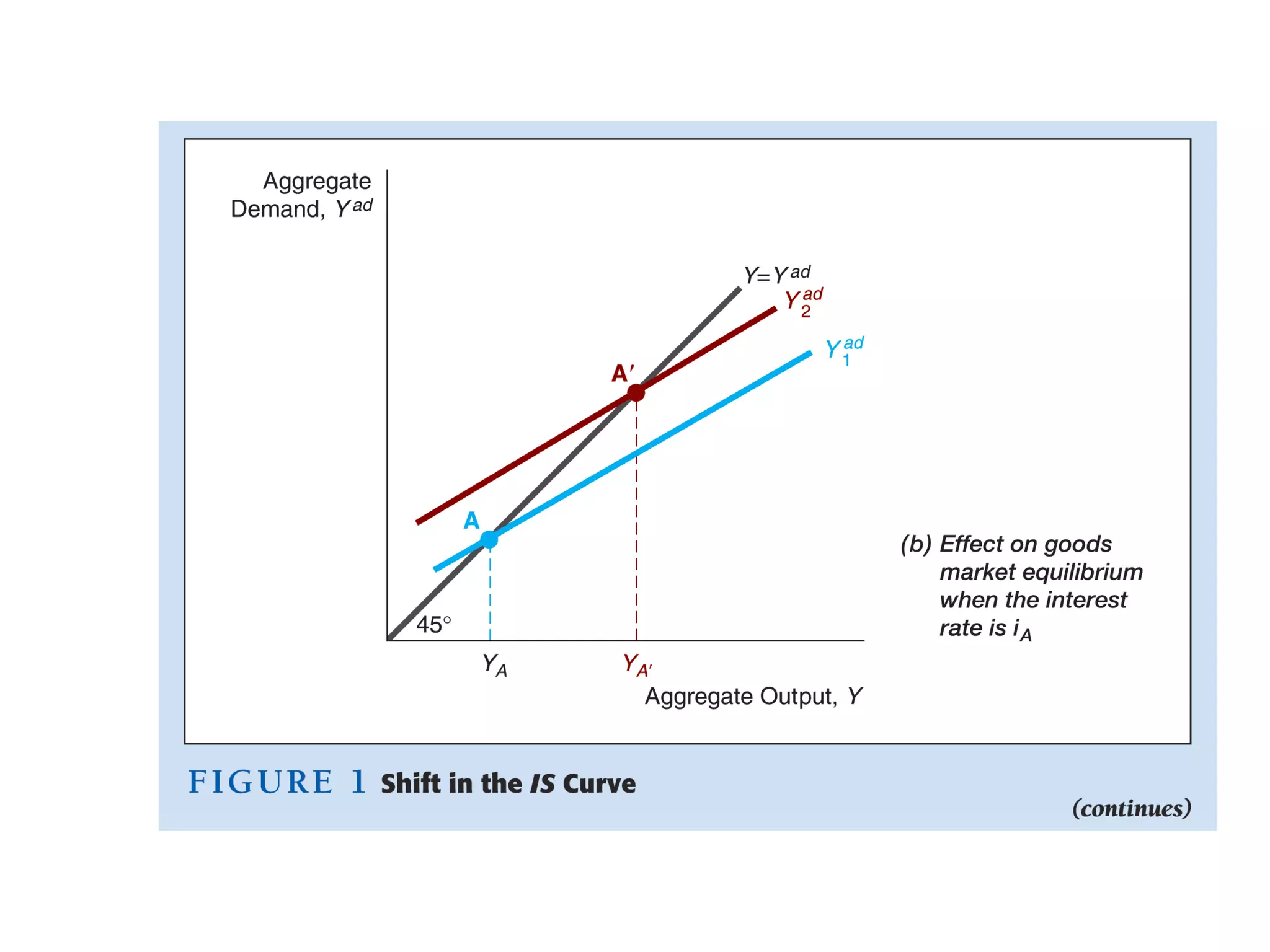
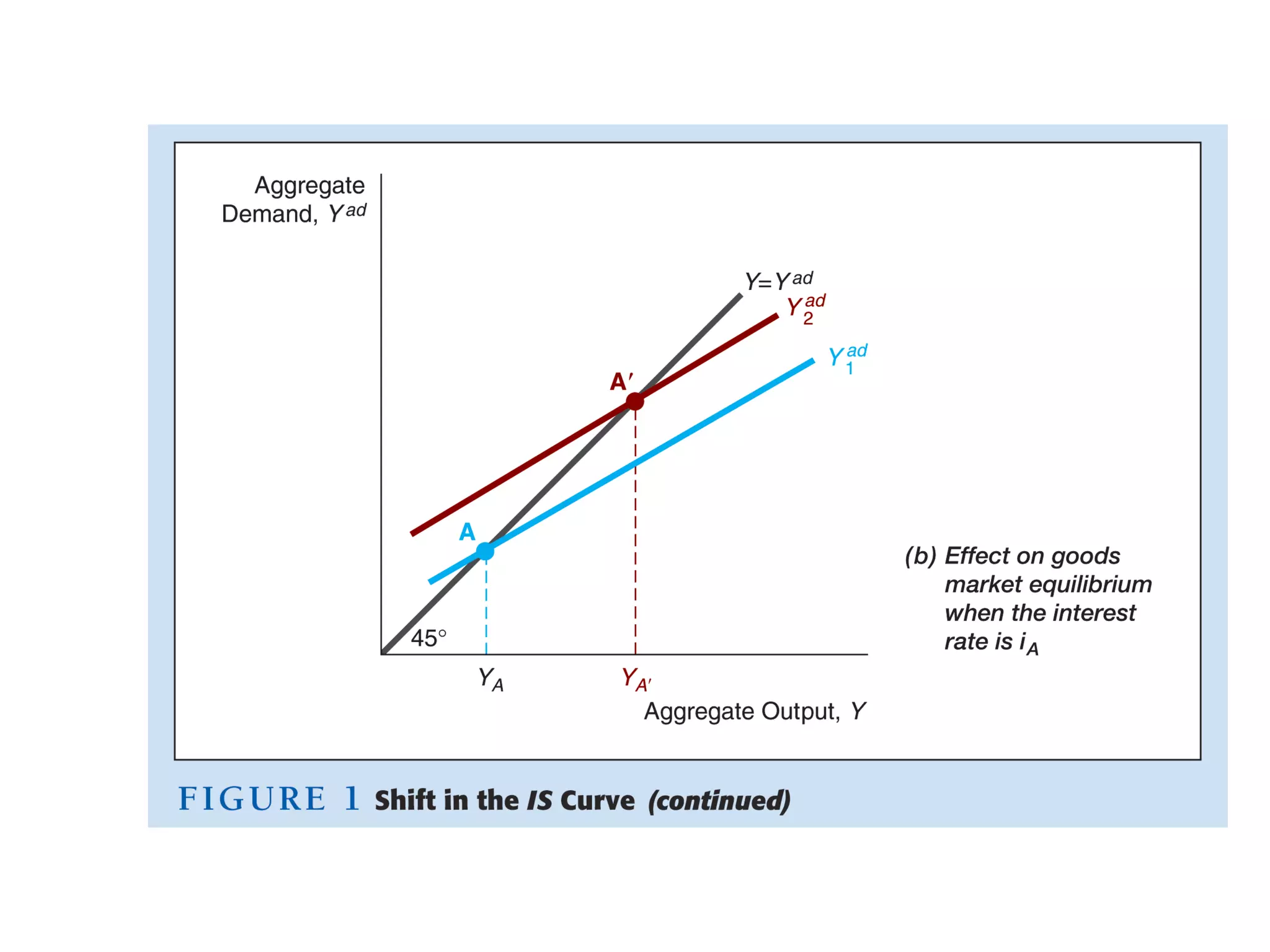
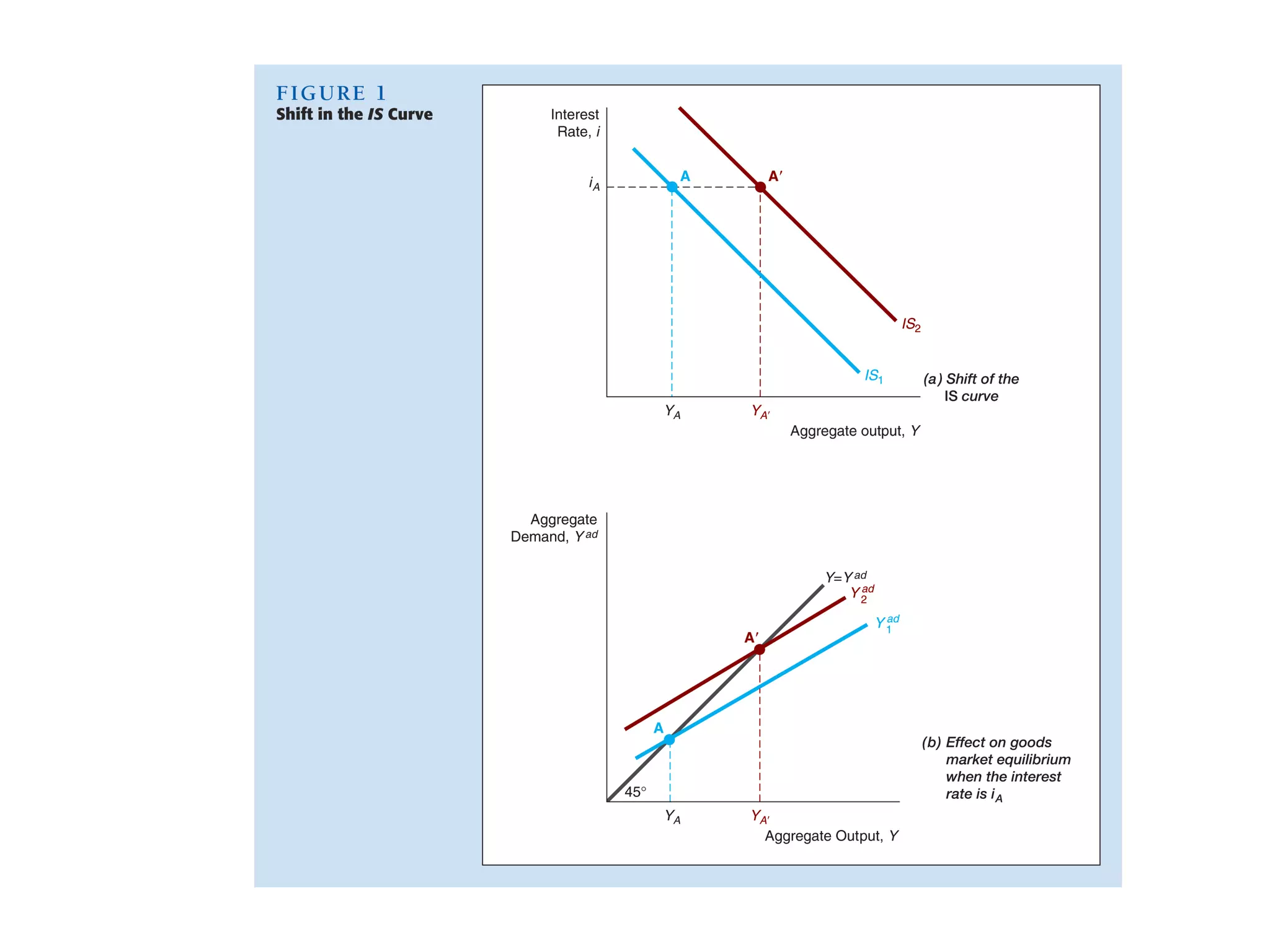
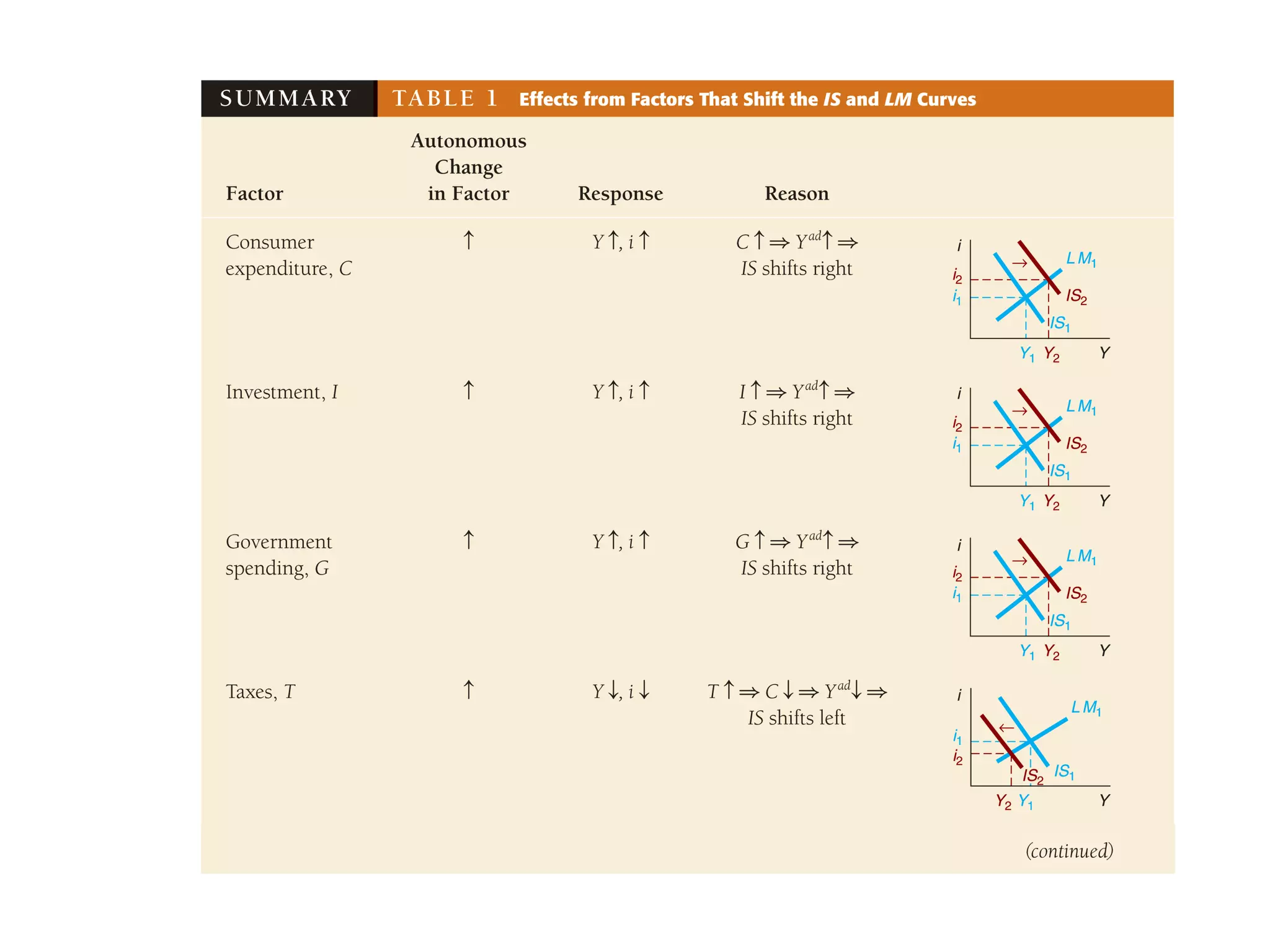
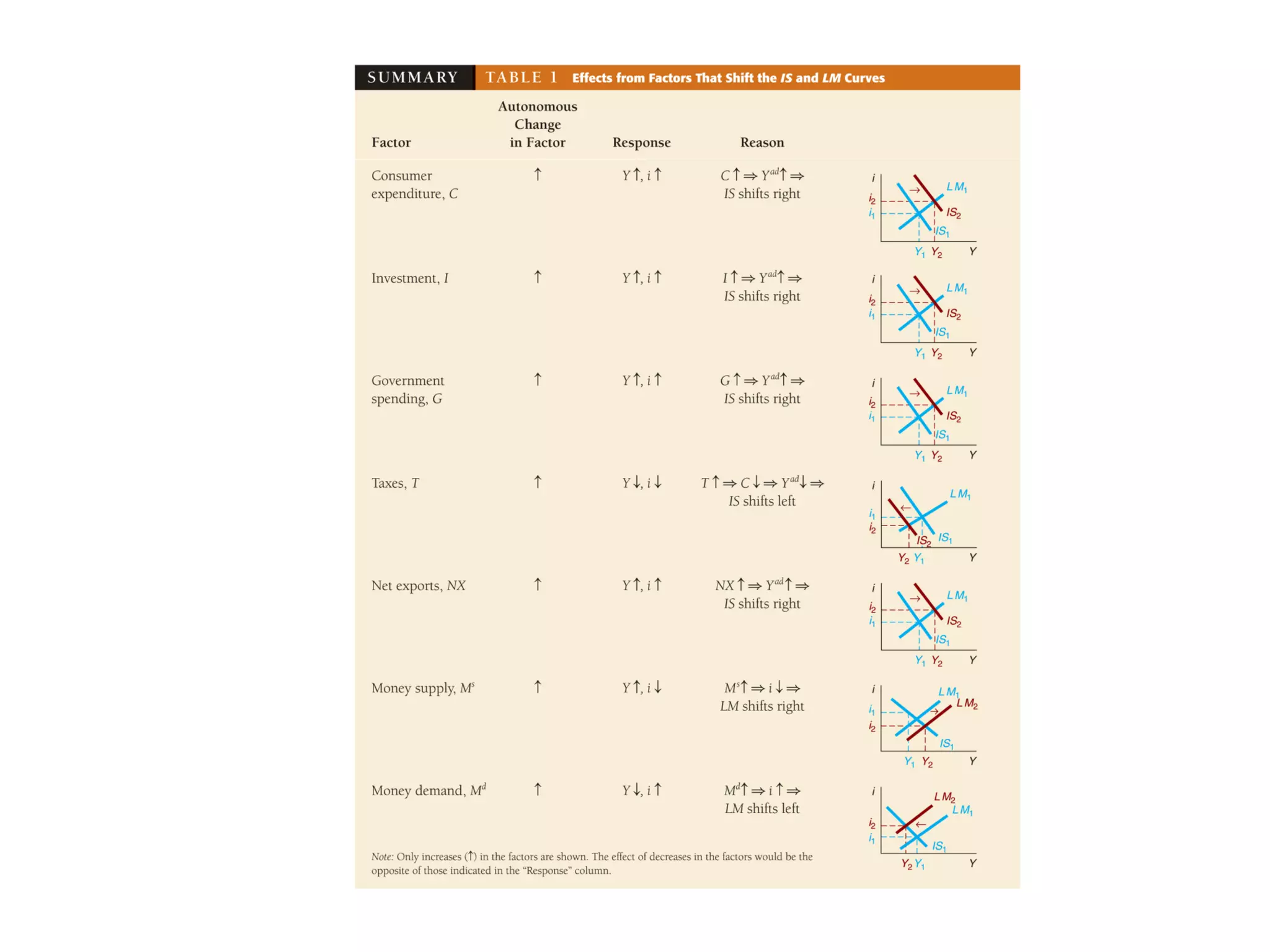
Factors that Shift the IS Curve
• A change in autonomous factors that is unrelated to
  the interest rate
   – Changes in autonomous consumer expenditure
   – Changes in planned investment spending unrelated to the
     interest rate
   – Changes in government spending
   – Changes in taxes
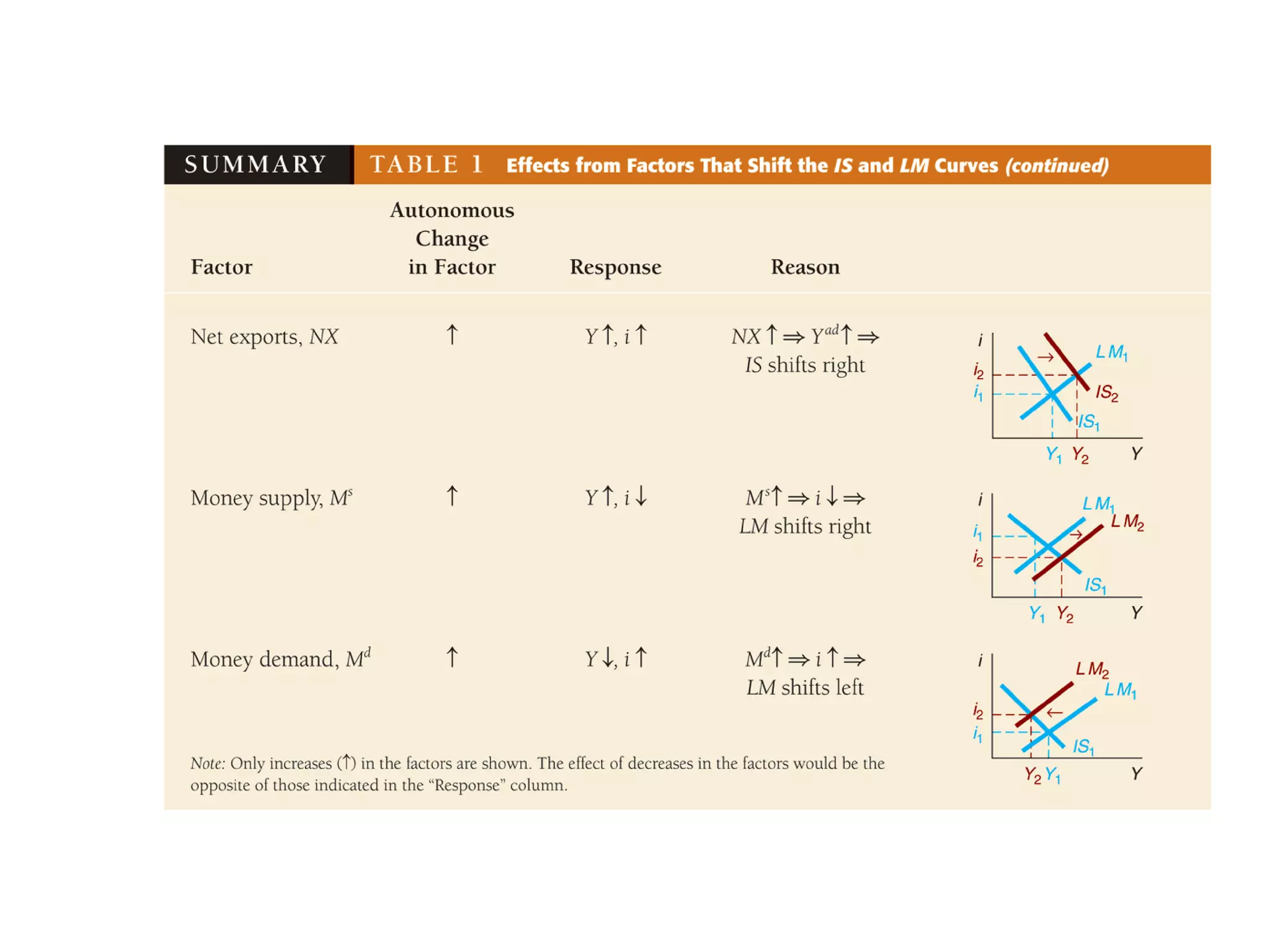
   – Changes in net exports unrelated to the
     interest rate
Factors that Shift the LM Curve
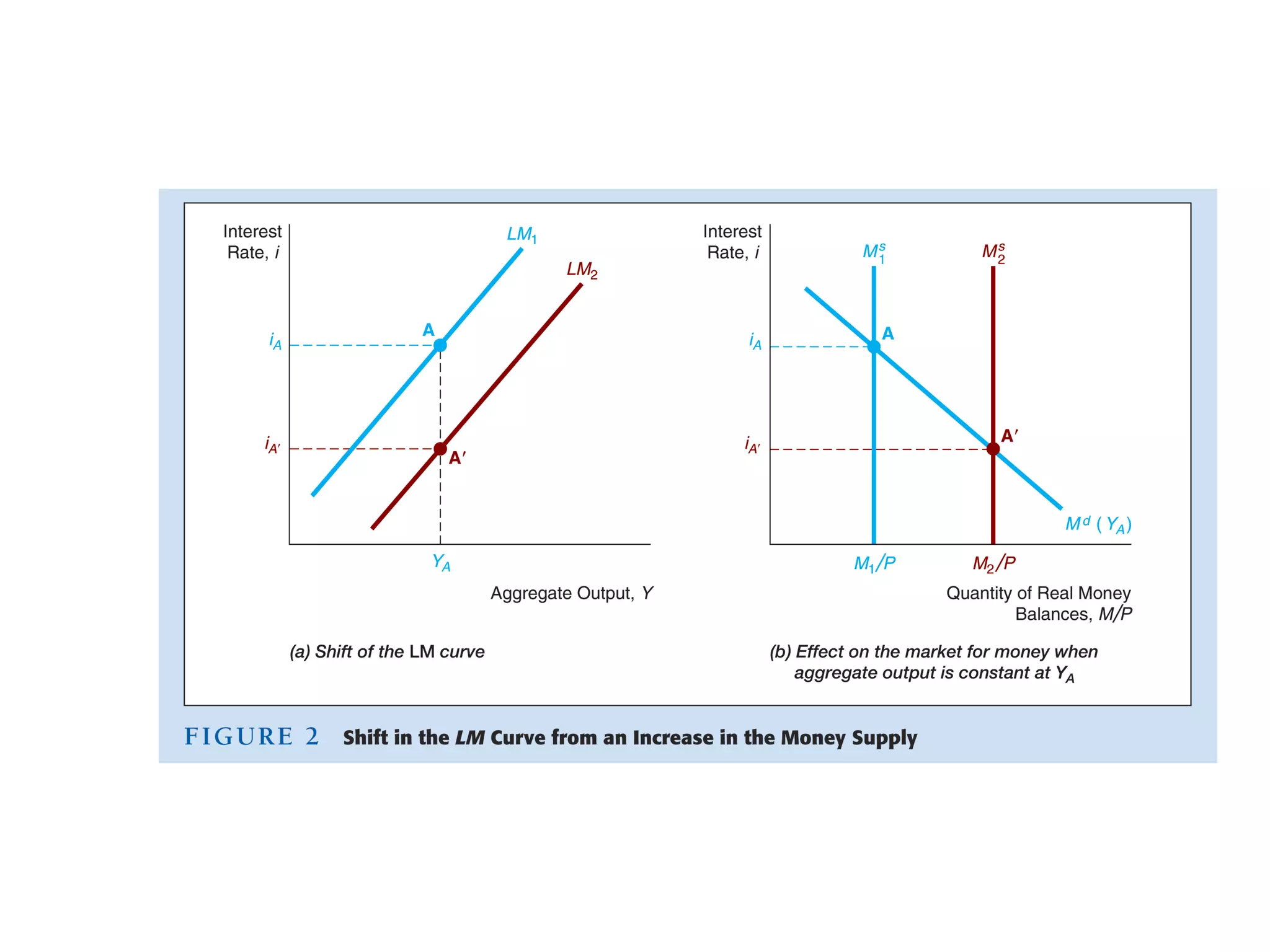
• Changes in the money supply
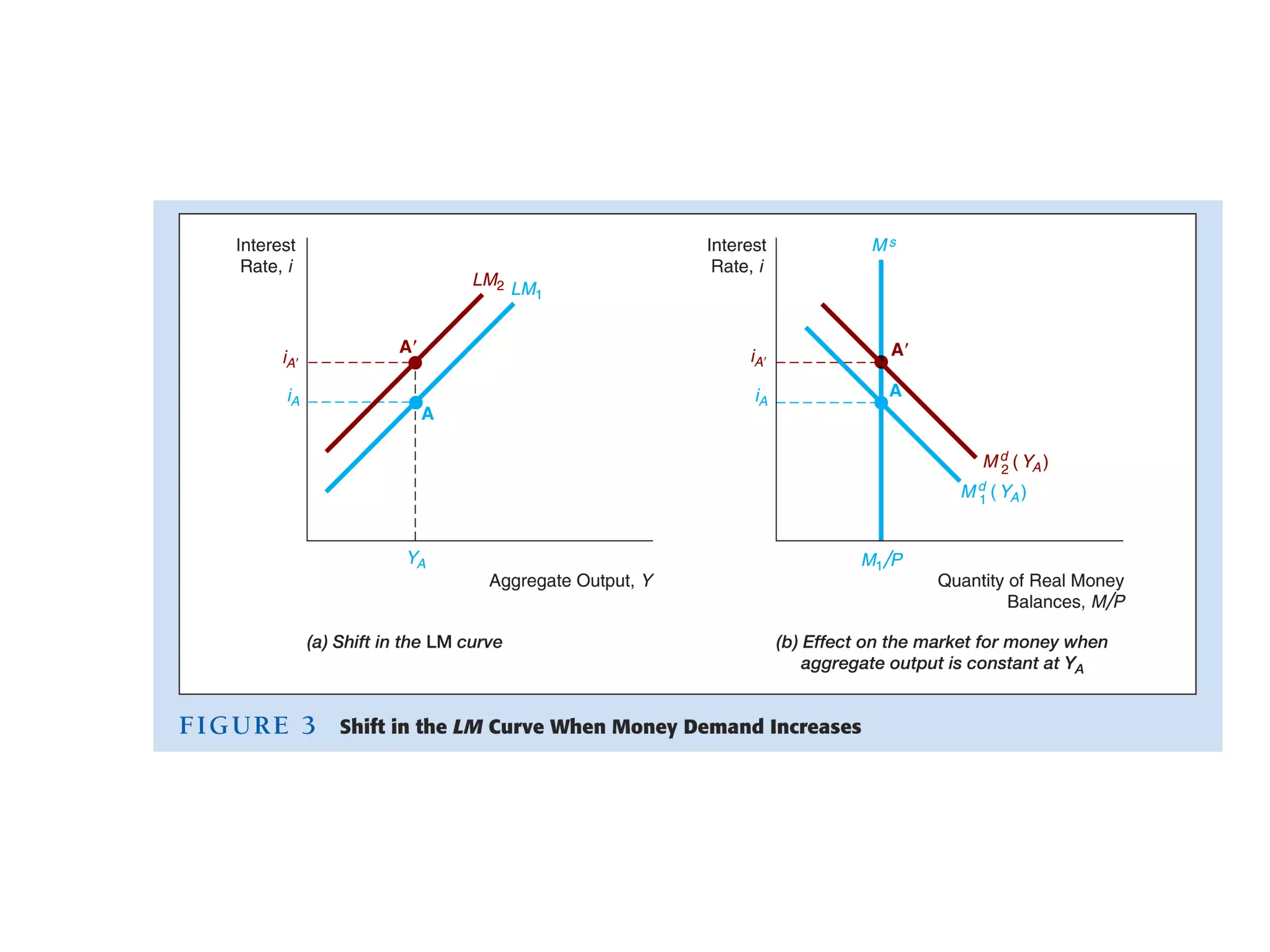
• Autonomous changes in money demand
Response to
       a Change in Monetary Policy
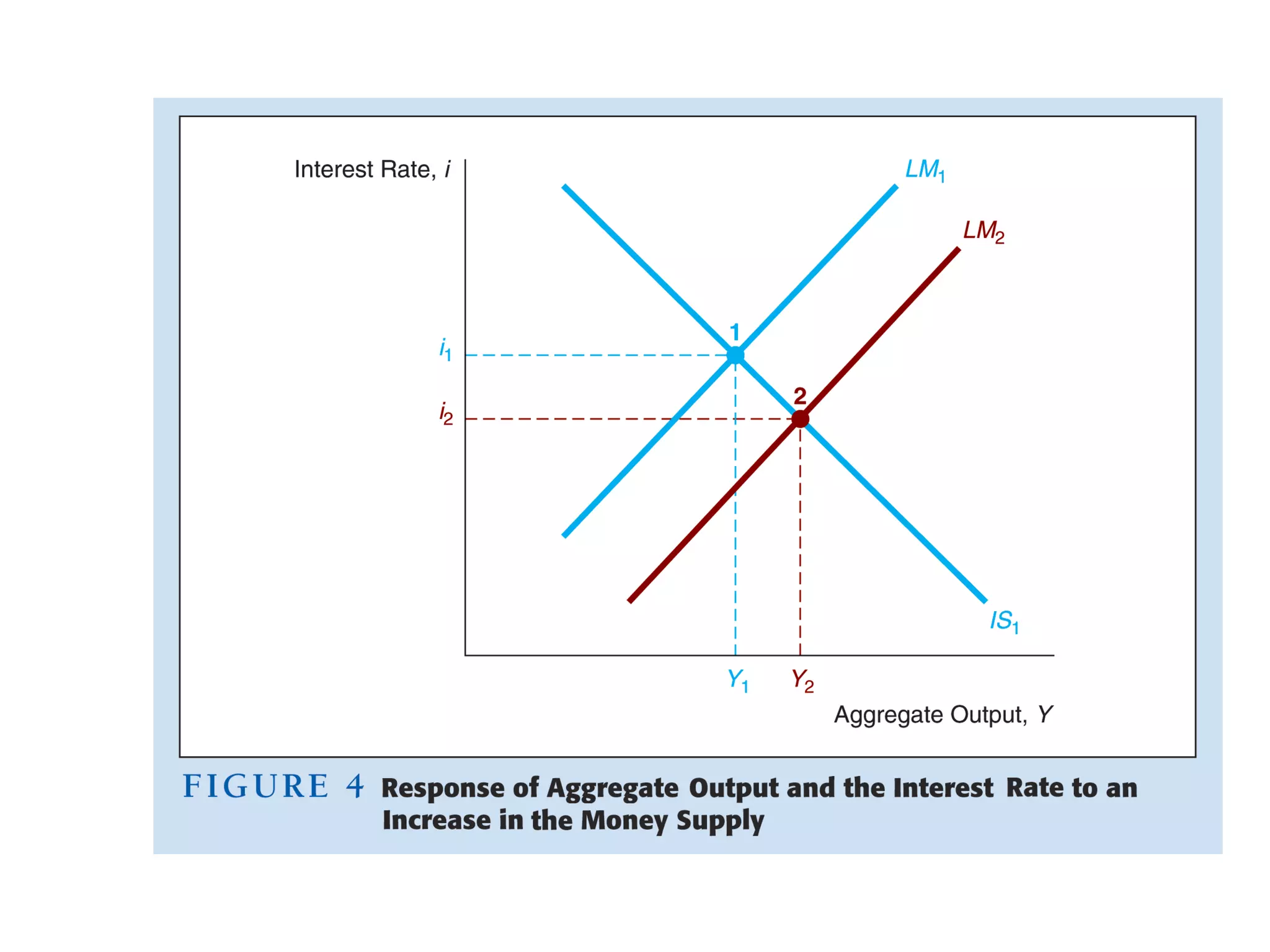
• An increase in the money supply creates an excess
  supply of money
• The interest rate declines
• Investment spending and net exports rise
• Aggregate demand rises
• Aggregate output rises
• The excess supply of money is eliminated
• Aggregate output is positively related to the money
  supply
Response to
         a Change in Fiscal Policy
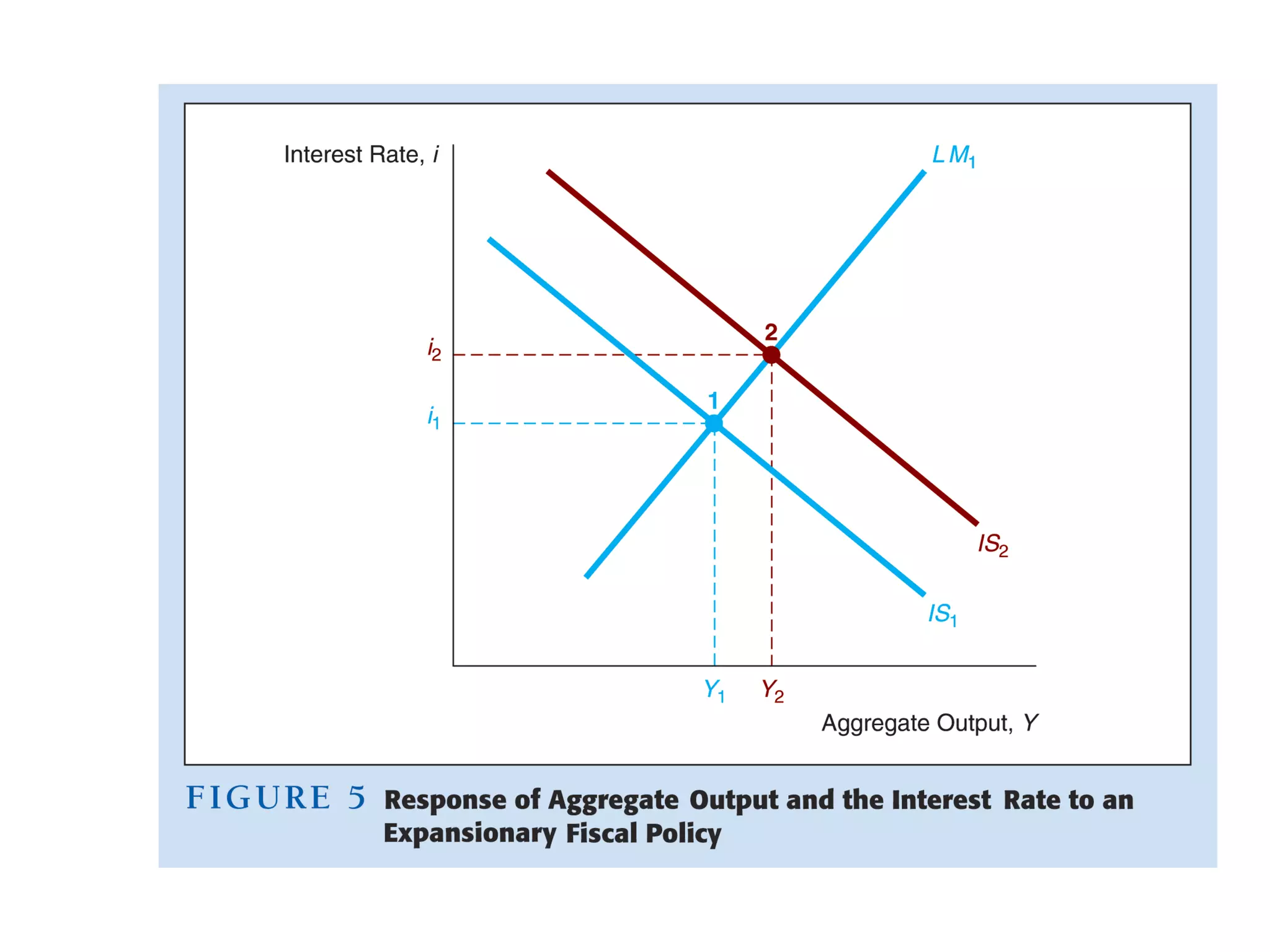
• An increase in government spending raises
  aggregate demand directly; a decrease in
  taxes makes more income available for
  spending
• The increase in aggregate demand cause
  aggregate output to rise
• A higher level of aggregate output increases
  the demand for money
Response to
    a Change in Fiscal Policy (cont’d)
• The excess demand for money pushes the
  interest rate higher
• The rise in the interest rate eliminates the
  excess demand for money
• Aggregate output and the interest rate are
  positively related to government spending and
  negatively related to taxes
Monetary versus Fiscal Policy
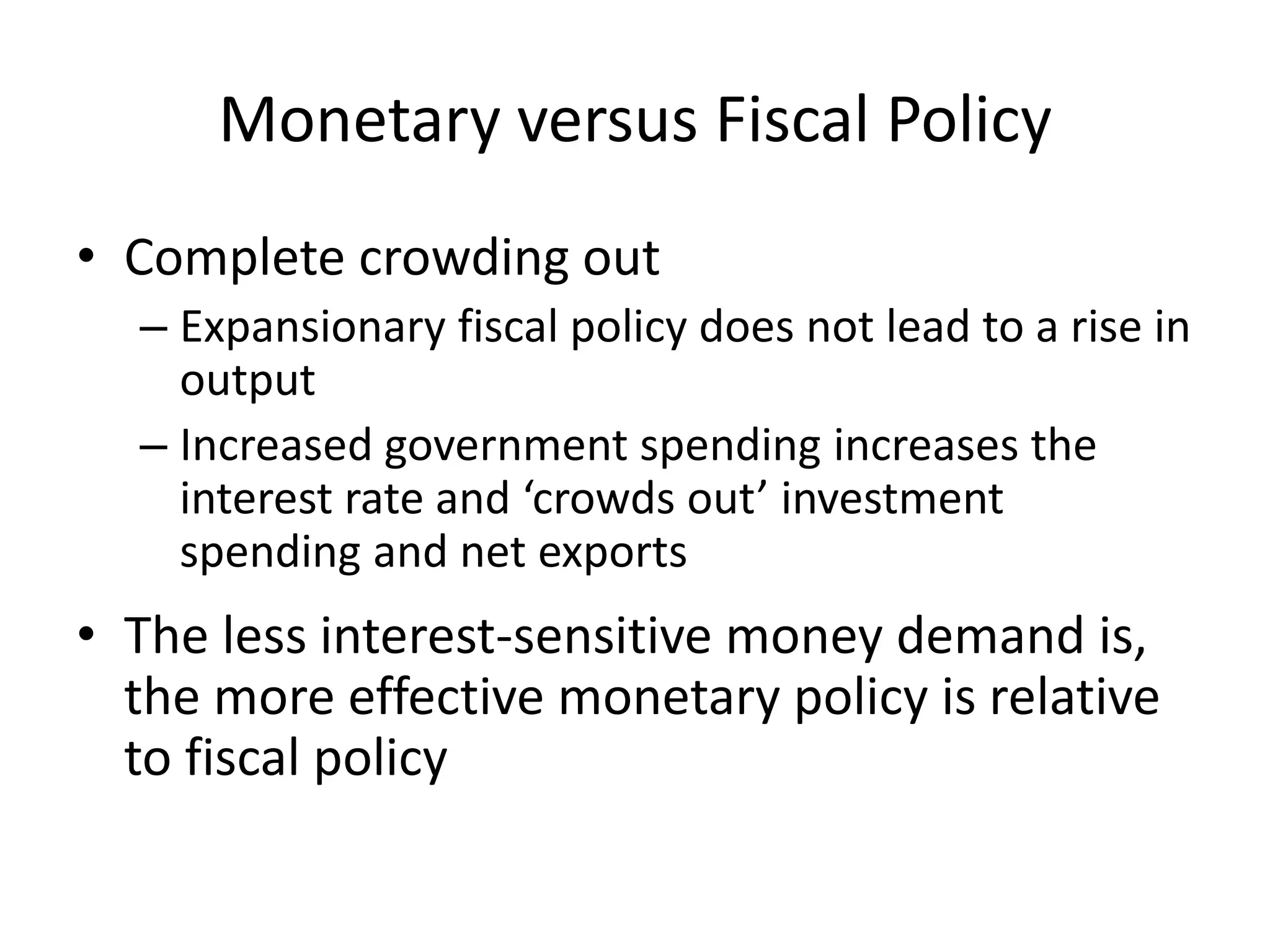
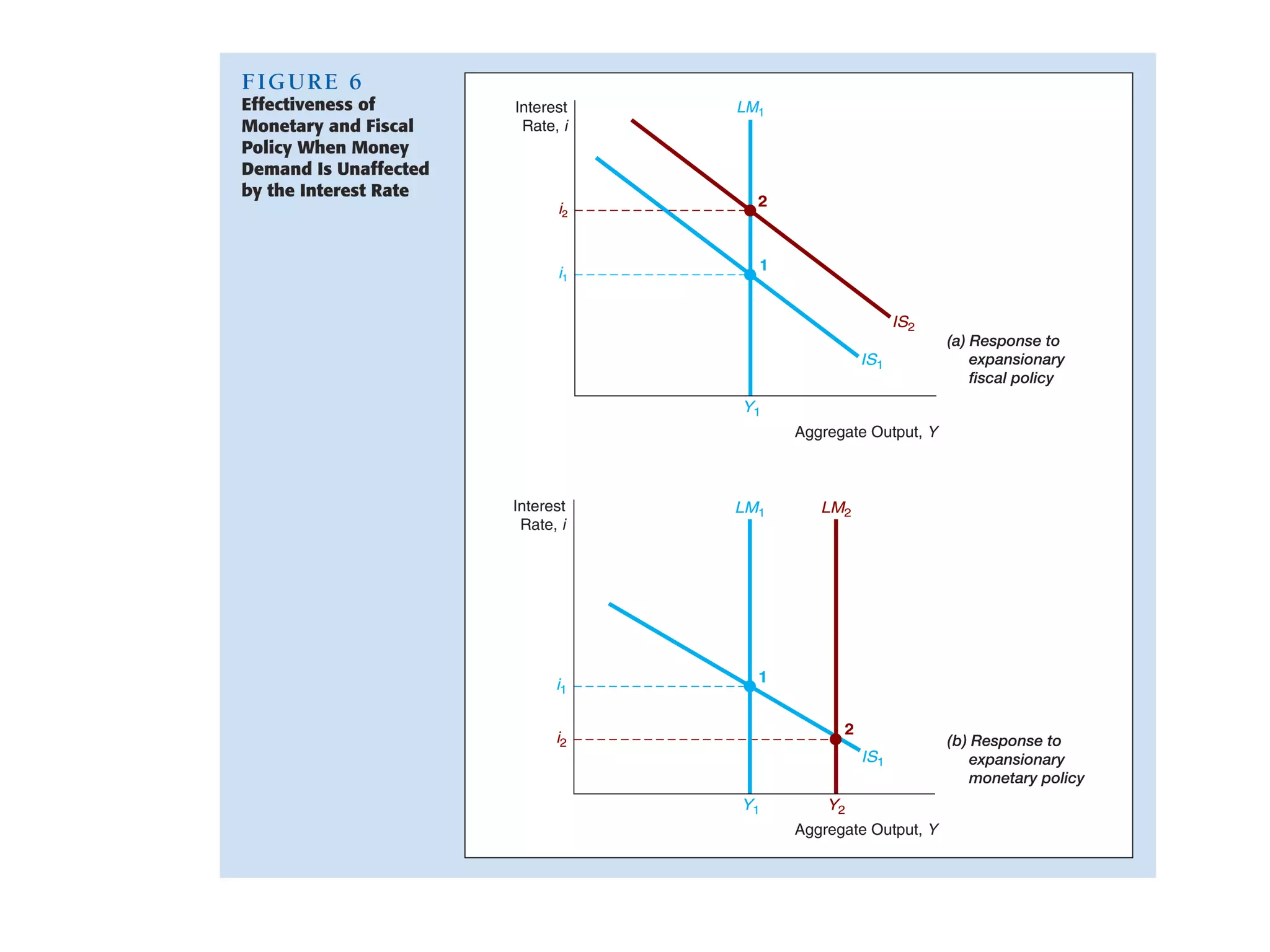
• Complete crowding out
  – Expansionary fiscal policy does not lead to a rise in
    output
  – Increased government spending increases the
    interest rate and ‘crowds out’ investment
    spending and net exports
• The less interest-sensitive money demand is,
  the more effective monetary policy is relative
  to fiscal policy
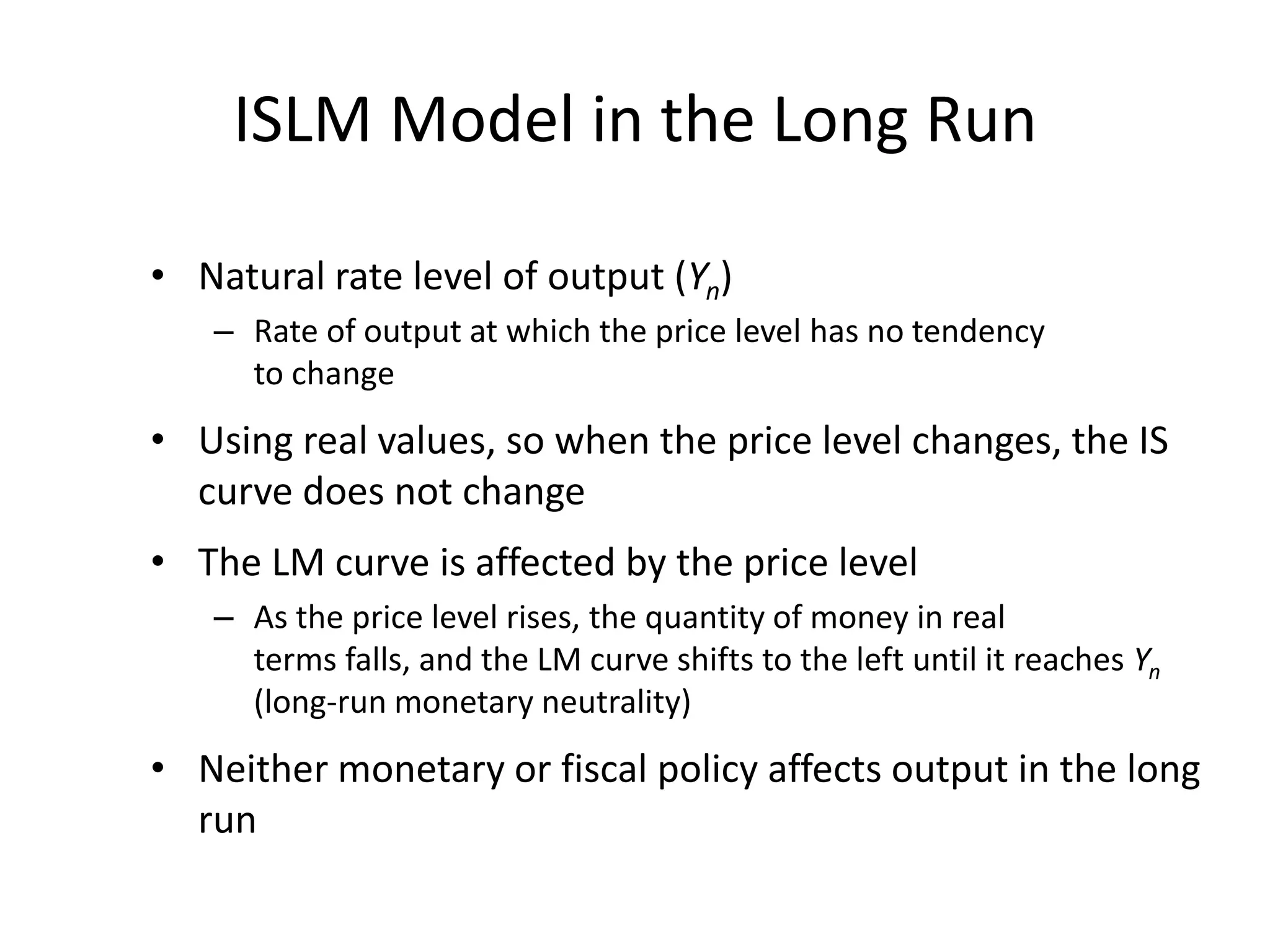
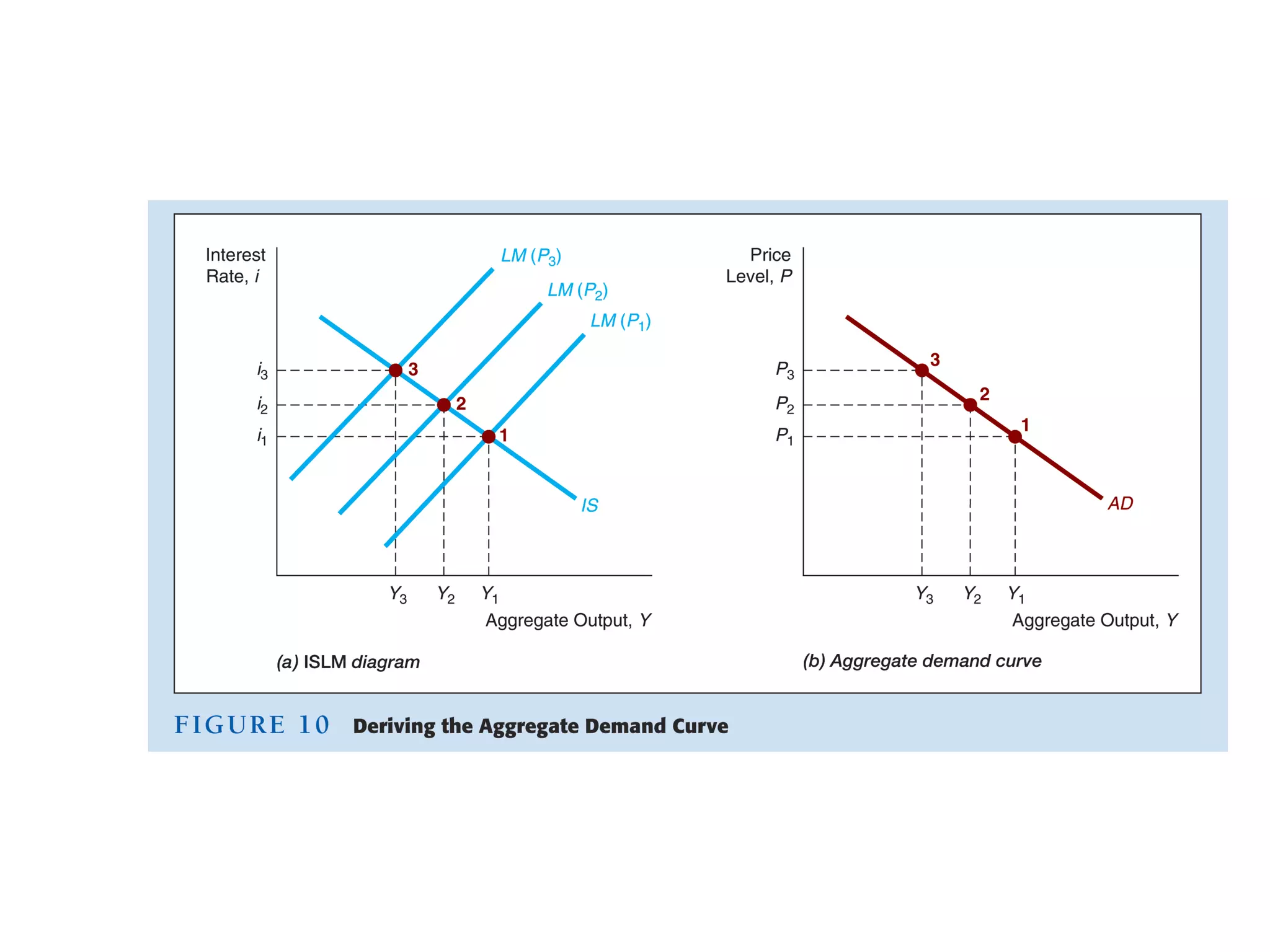
ISLM Model in the Long Run

• Natural rate level of output (Yn)
   – Rate of output at which the price level has no tendency
     to change
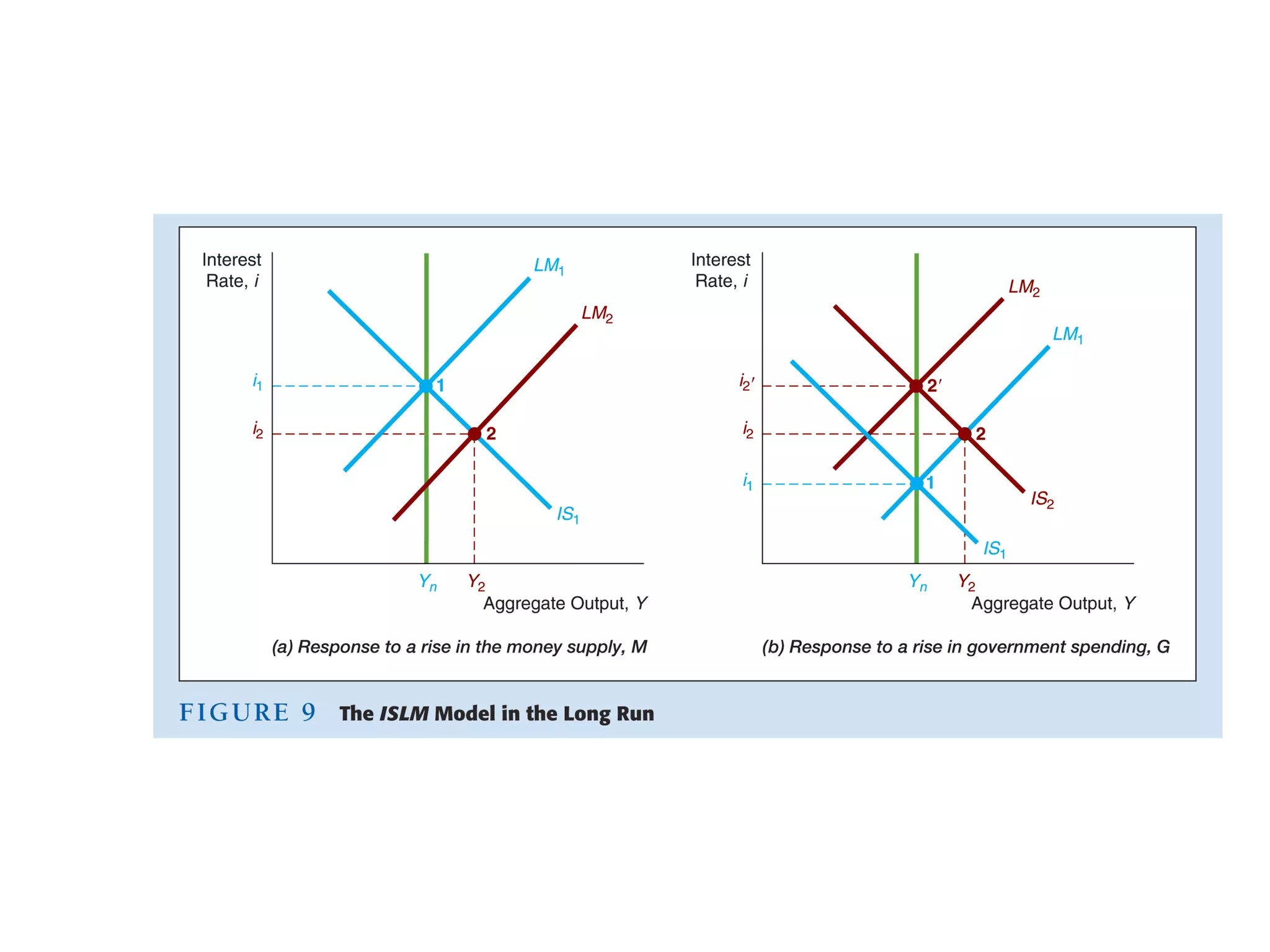
• Using real values, so when the price level changes, the IS
  curve does not change
• The LM curve is affected by the price level
   – As the price level rises, the quantity of money in real
     terms falls, and the LM curve shifts to the left until it reaches Yn
     (long-run monetary neutrality)
• Neither monetary or fiscal policy affects output in the long
  run
Shifts in the
        Aggregate Demand Curve
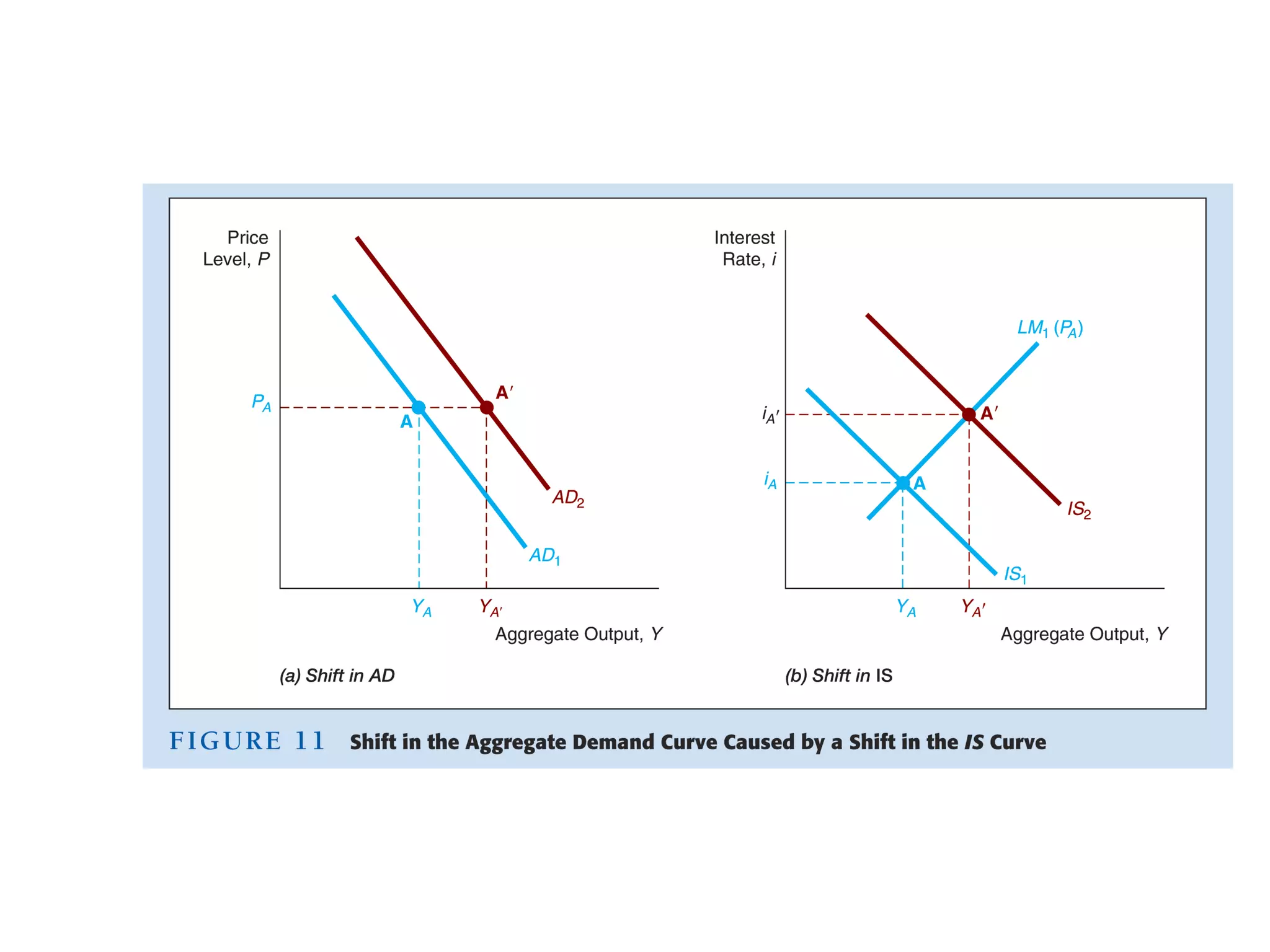
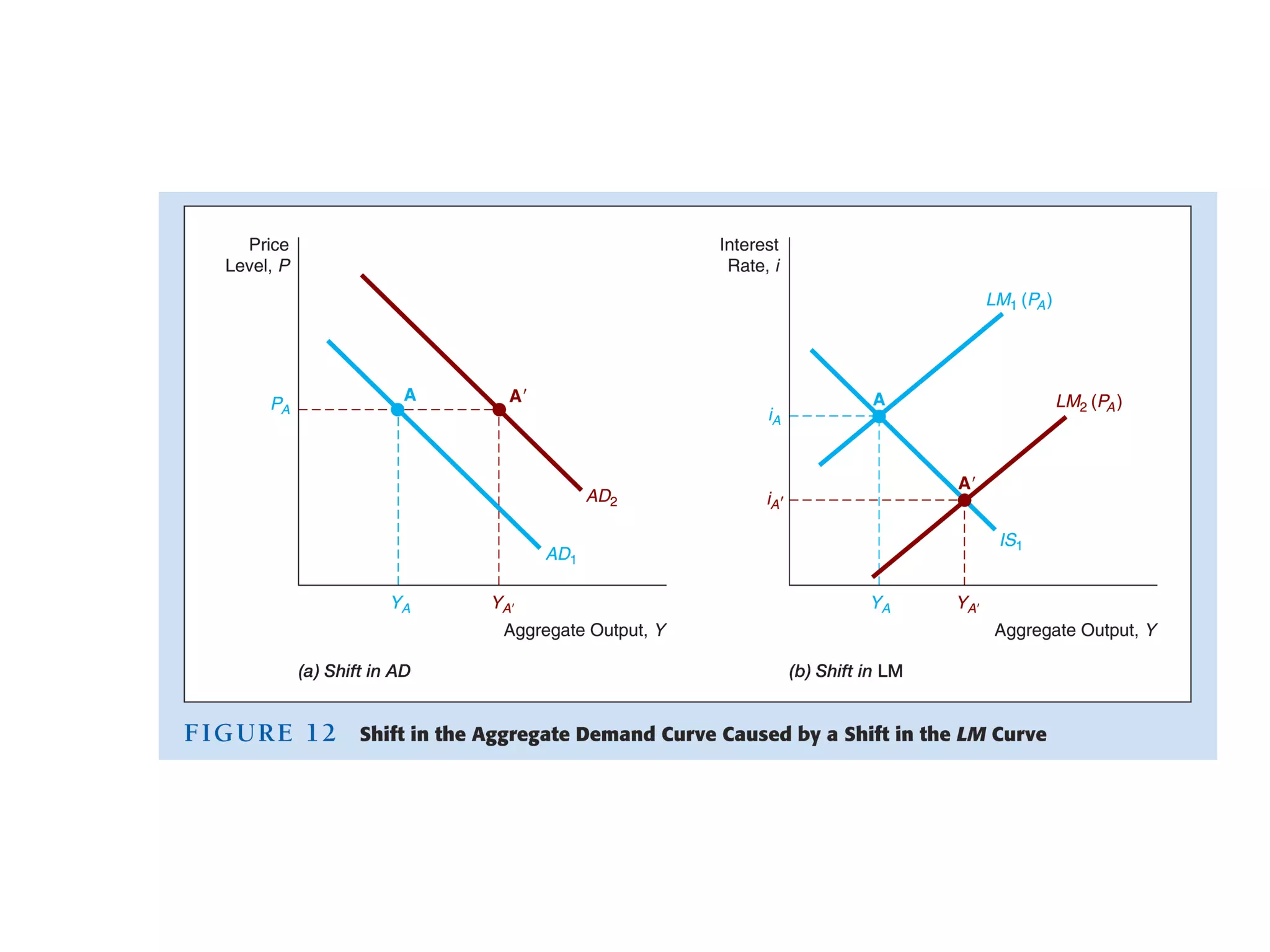
• ISLM analysis shows how the equilibrium level
  of aggregate output changes for a given price
  level
• A change in any factor except the price level,
  that causes the IS or LM curve to shift, causes
  the aggregate demand curve to shift
6 islm(2)
6 islm(2)

6 islm(2)

  • 1.
    The IS-LM Model(2) Monetary and Fiscal Policy in the ISLM Model Chahir Zaki FEPS, Cairo University Second semester, 2012
  • 2.
    Factors that Shiftthe IS Curve • A change in autonomous factors that is unrelated to the interest rate – Changes in autonomous consumer expenditure – Changes in planned investment spending unrelated to the interest rate – Changes in government spending – Changes in taxes – Changes in net exports unrelated to the interest rate
  • 6.
    Factors that Shiftthe LM Curve • Changes in the money supply • Autonomous changes in money demand
  • 9.
    Response to a Change in Monetary Policy • An increase in the money supply creates an excess supply of money • The interest rate declines • Investment spending and net exports rise • Aggregate demand rises • Aggregate output rises • The excess supply of money is eliminated • Aggregate output is positively related to the money supply
  • 11.
    Response to a Change in Fiscal Policy • An increase in government spending raises aggregate demand directly; a decrease in taxes makes more income available for spending • The increase in aggregate demand cause aggregate output to rise • A higher level of aggregate output increases the demand for money
  • 12.
    Response to a Change in Fiscal Policy (cont’d) • The excess demand for money pushes the interest rate higher • The rise in the interest rate eliminates the excess demand for money • Aggregate output and the interest rate are positively related to government spending and negatively related to taxes
  • 14.
    Monetary versus FiscalPolicy • Complete crowding out – Expansionary fiscal policy does not lead to a rise in output – Increased government spending increases the interest rate and ‘crowds out’ investment spending and net exports • The less interest-sensitive money demand is, the more effective monetary policy is relative to fiscal policy
  • 19.
    ISLM Model inthe Long Run • Natural rate level of output (Yn) – Rate of output at which the price level has no tendency to change • Using real values, so when the price level changes, the IS curve does not change • The LM curve is affected by the price level – As the price level rises, the quantity of money in real terms falls, and the LM curve shifts to the left until it reaches Yn (long-run monetary neutrality) • Neither monetary or fiscal policy affects output in the long run
  • 22.
    Shifts in the Aggregate Demand Curve • ISLM analysis shows how the equilibrium level of aggregate output changes for a given price level • A change in any factor except the price level, that causes the IS or LM curve to shift, causes the aggregate demand curve to shift