Adjective Clauses:
Review and Expansion4
Focus on Grammar 5
Part IV, Unit 11
By Ruth Luman, Gabriele Steiner, and BJ Wells
Copyright © 2006. Pearson Education, Inc. All rights reserved.
The Fearless Princess
A Fairytale
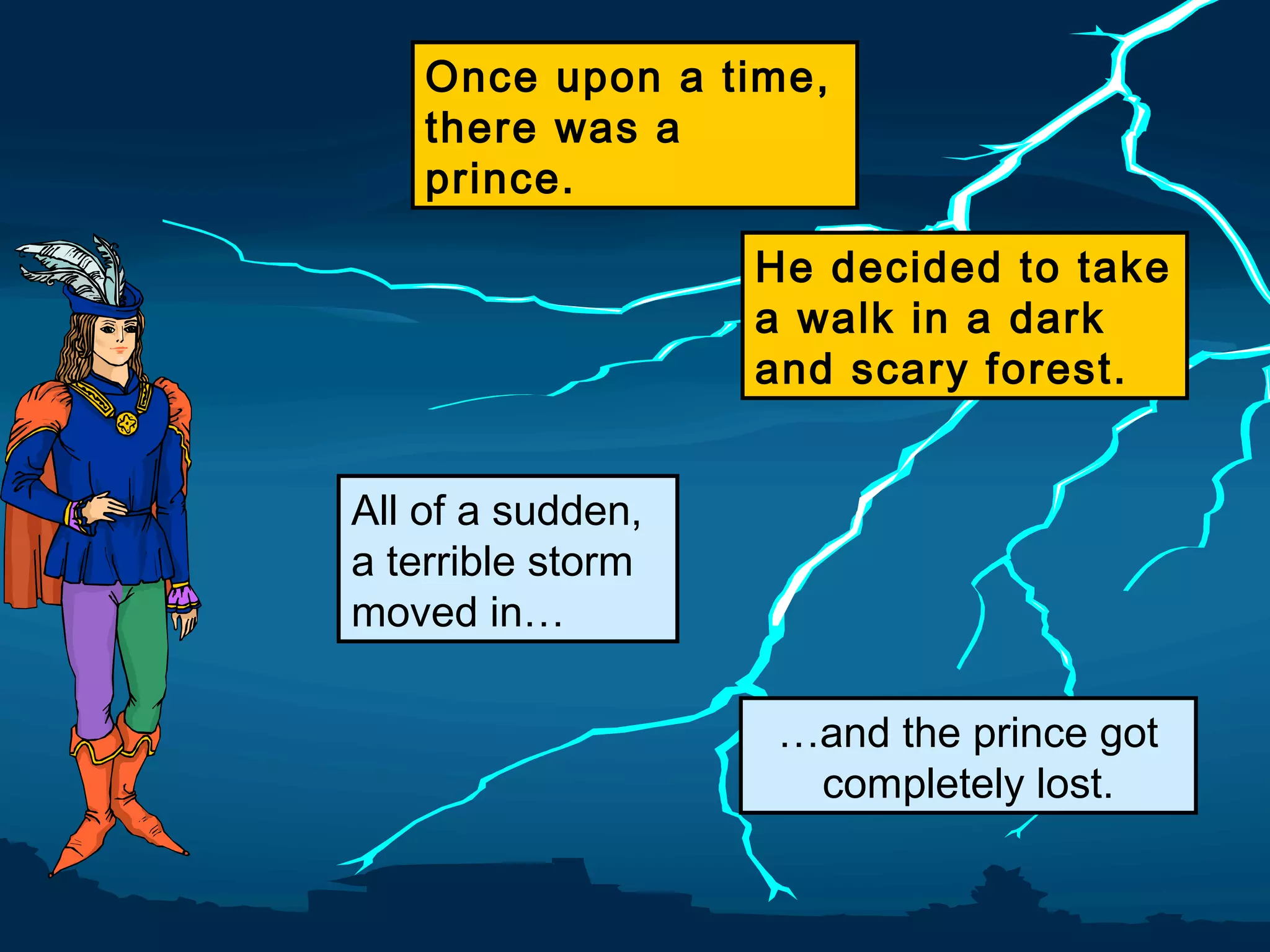
Once upon a time,
there was a
prince.
He decided to take
a walk in a dark
and scary forest.
All of a sudden,
a terrible storm
moved in…
…and the prince got
completely lost.
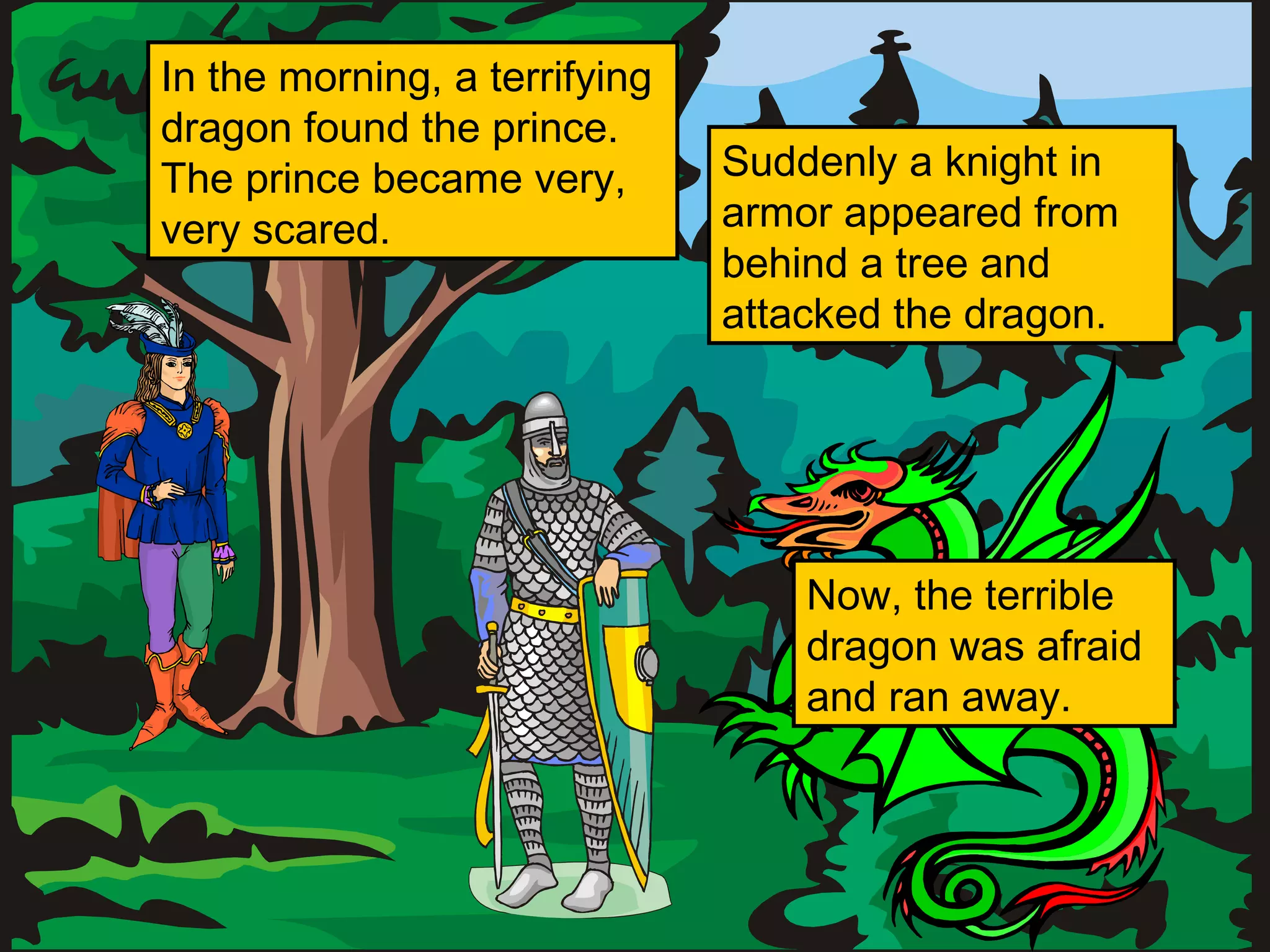
In the morning, a terrifying
dragon found the prince.
The prince became very,
very scared.
Suddenly a knight in
armor appeared from
behind a tree and
attacked the dragon.
Now, the terrible
dragon was afraid
and ran away.
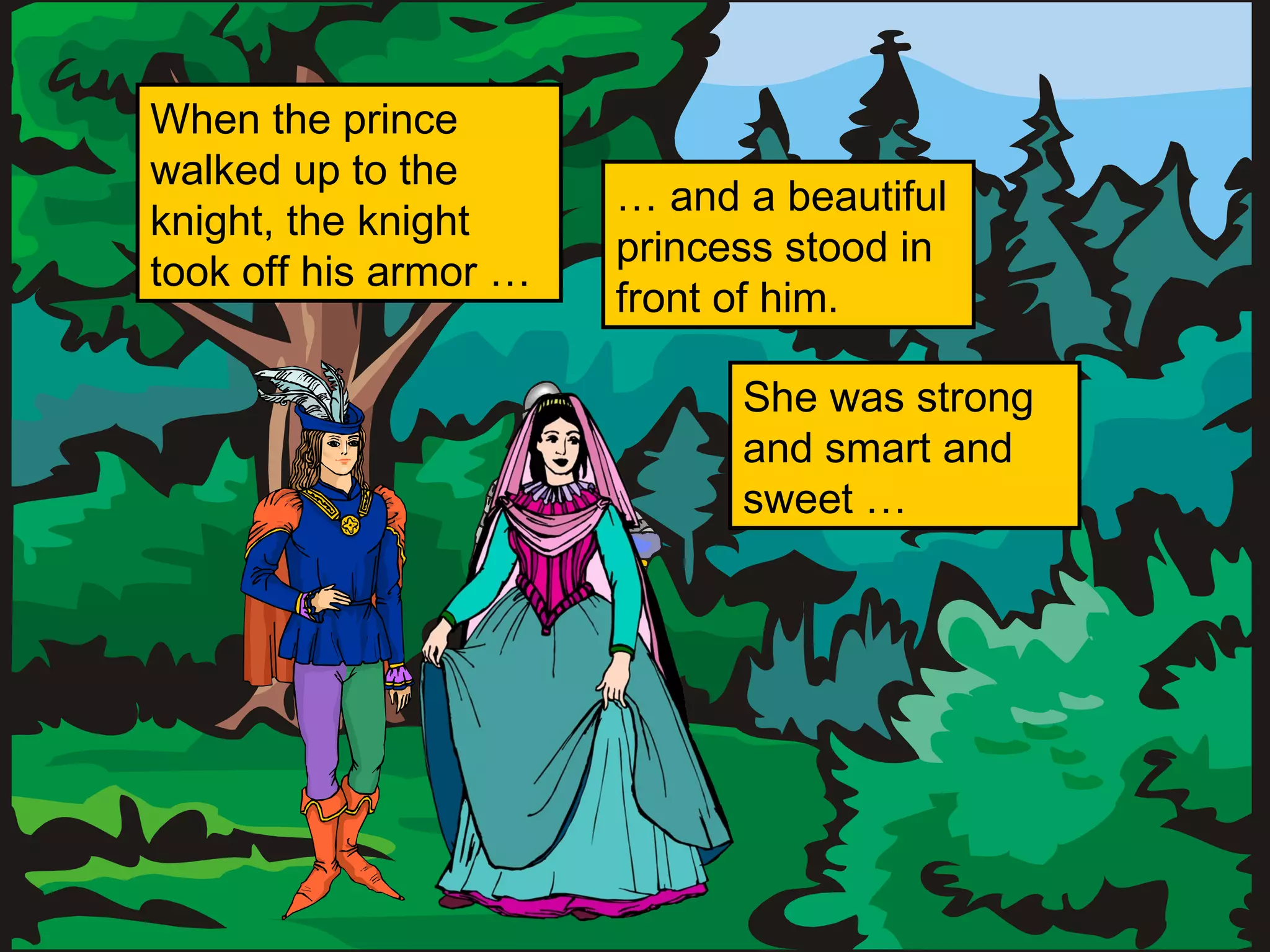
When the prince
walked up to the
knight, the knight
took off his armor …
… and a beautiful
princess stood in
front of him.
She was strong
and smart and
sweet …
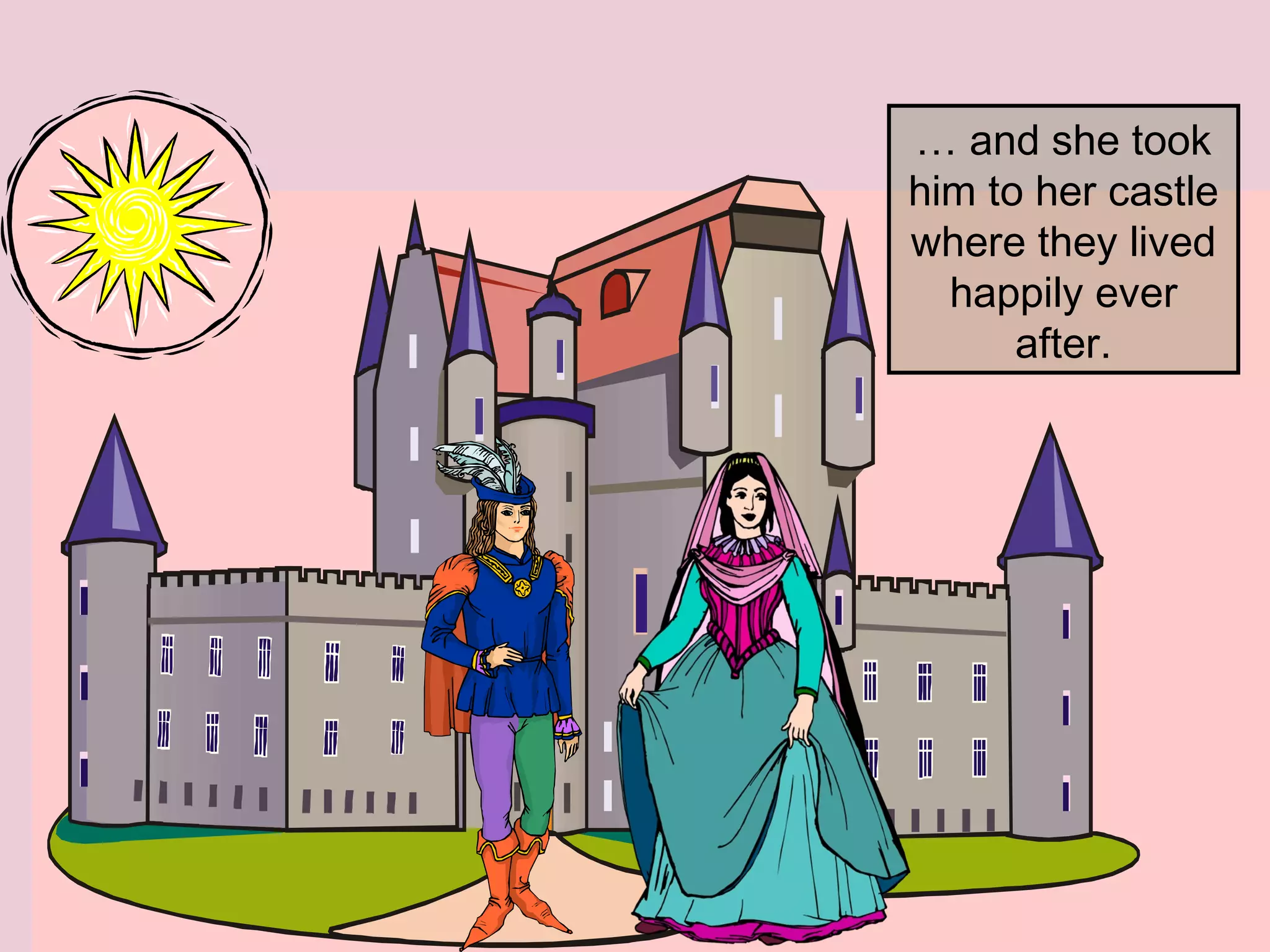
… and she took
him to her castle
where they lived
happily ever
after.
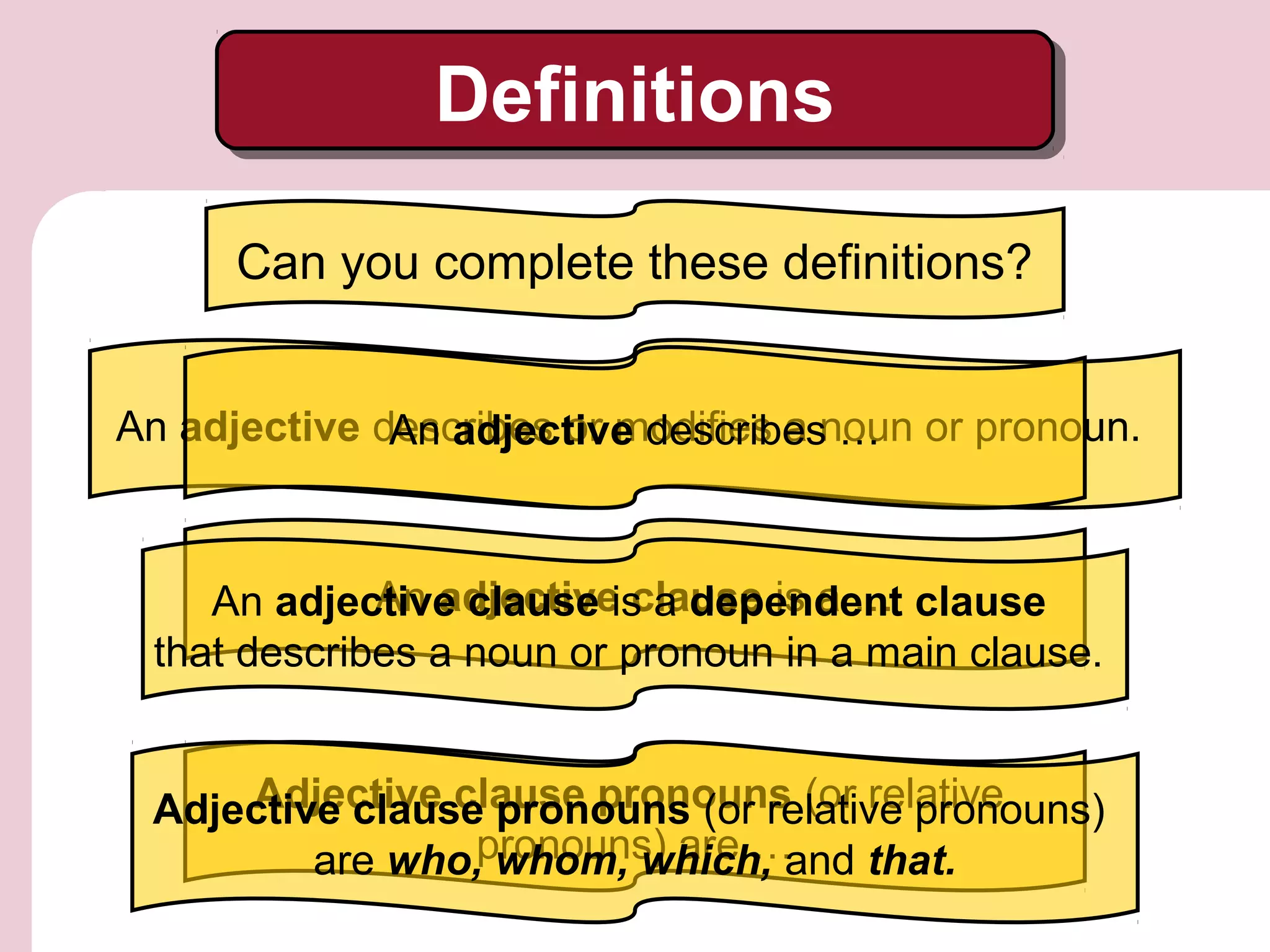
Can you complete these definitions?
An adjective clause is a …
Adjective clause pronouns (or relative
pronouns) are …
An adjective describes or modifies a noun or pronoun.
An adjective clause is a dependent clause
that describes a noun or pronoun in a main clause.
Adjective clause pronouns (or relative pronouns)
are who, whom, which, and that.
DefinitionsDefinitions
An adjective describes …
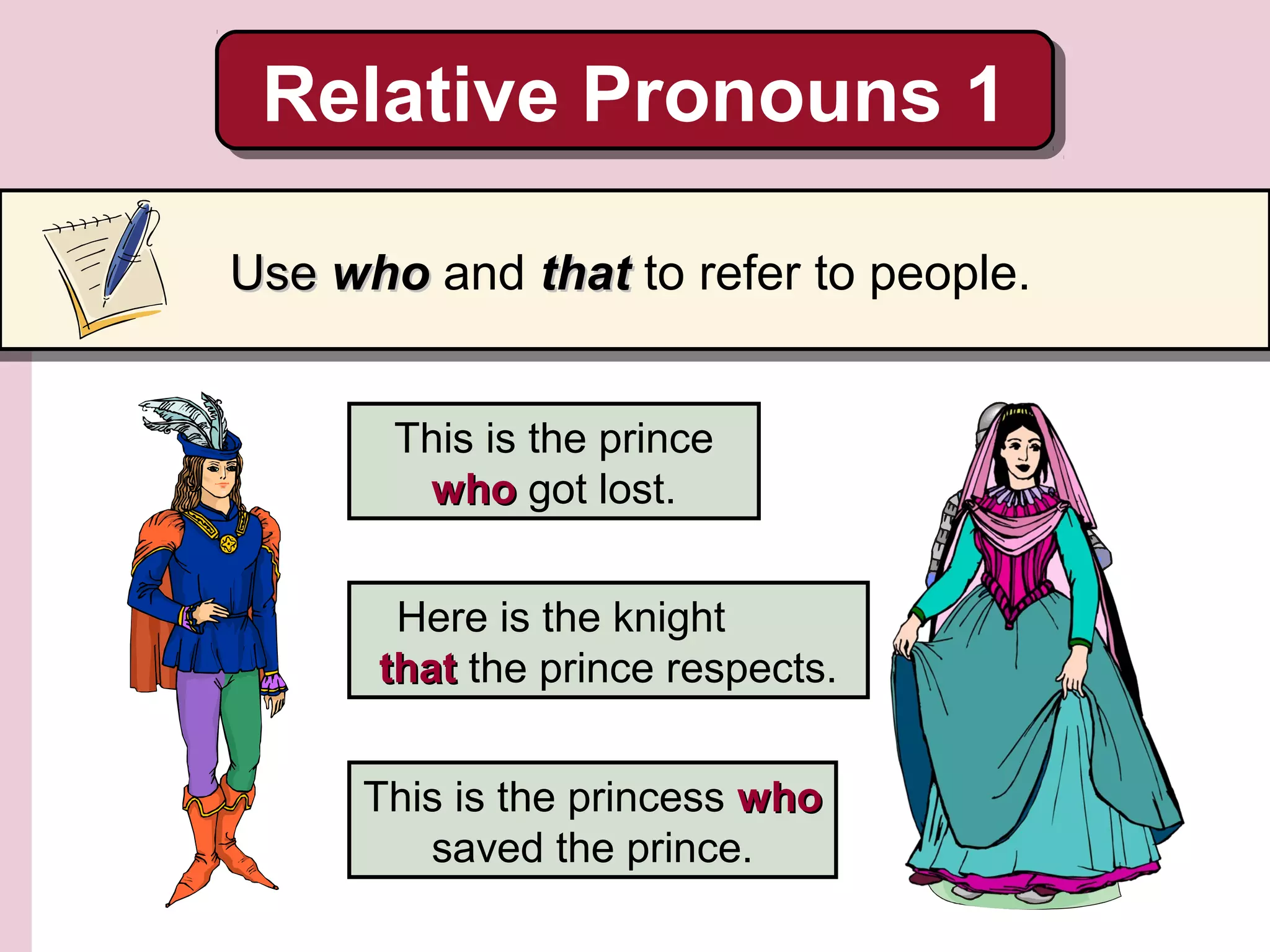
This is the prince
whowho got lost.
Here is the knight
thatthat the prince respects.
This is the princess whowho
saved the prince.
Relative Pronouns 1Relative Pronouns 1
UseUse whowho and thatthat to refer to people.
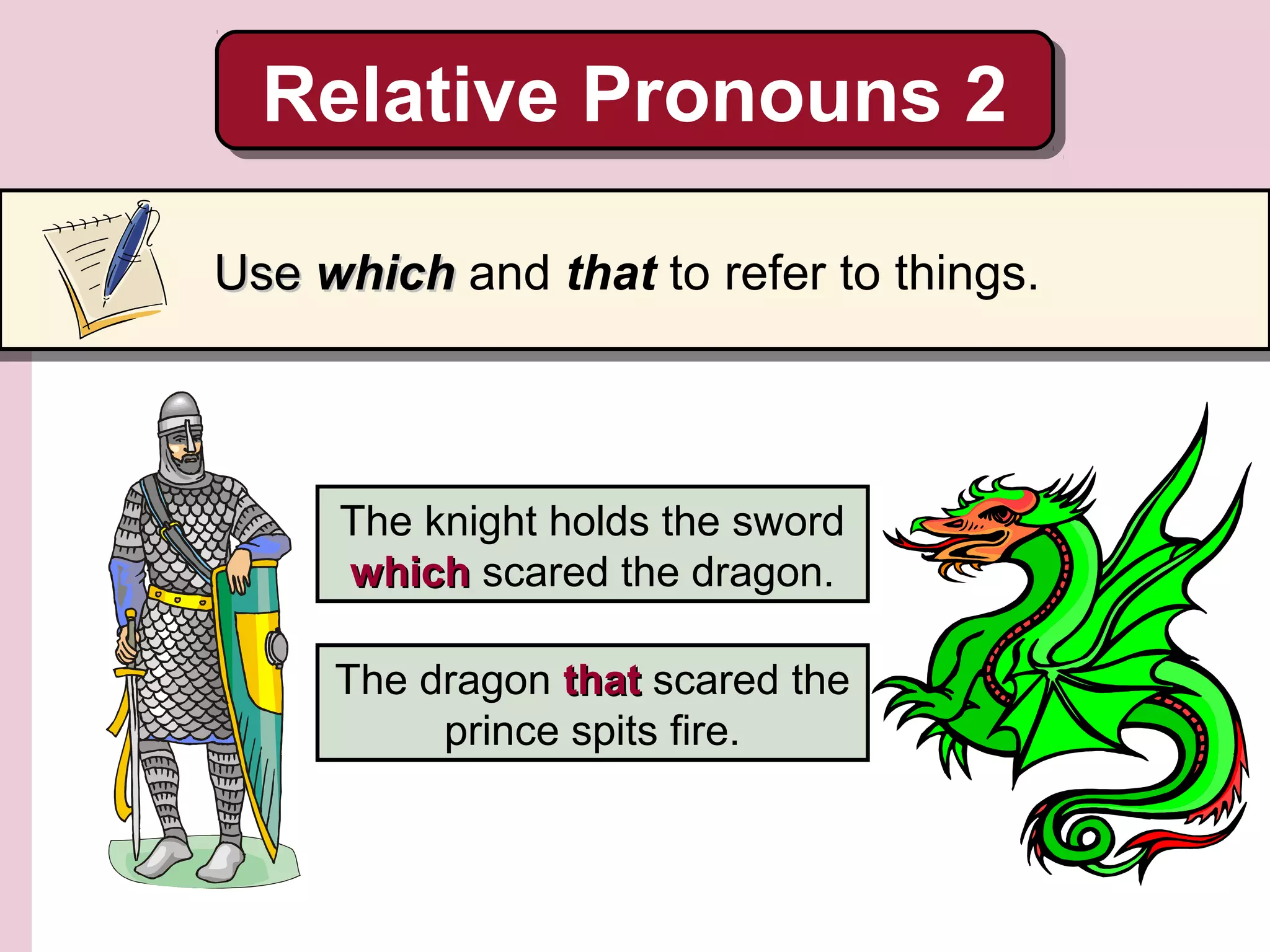
The knight holds the sword
whichwhich scared the dragon.
The dragon thatthat scared the
prince spits fire.
Relative Pronouns 2Relative Pronouns 2
UseUse whichwhich and that to refer to things.
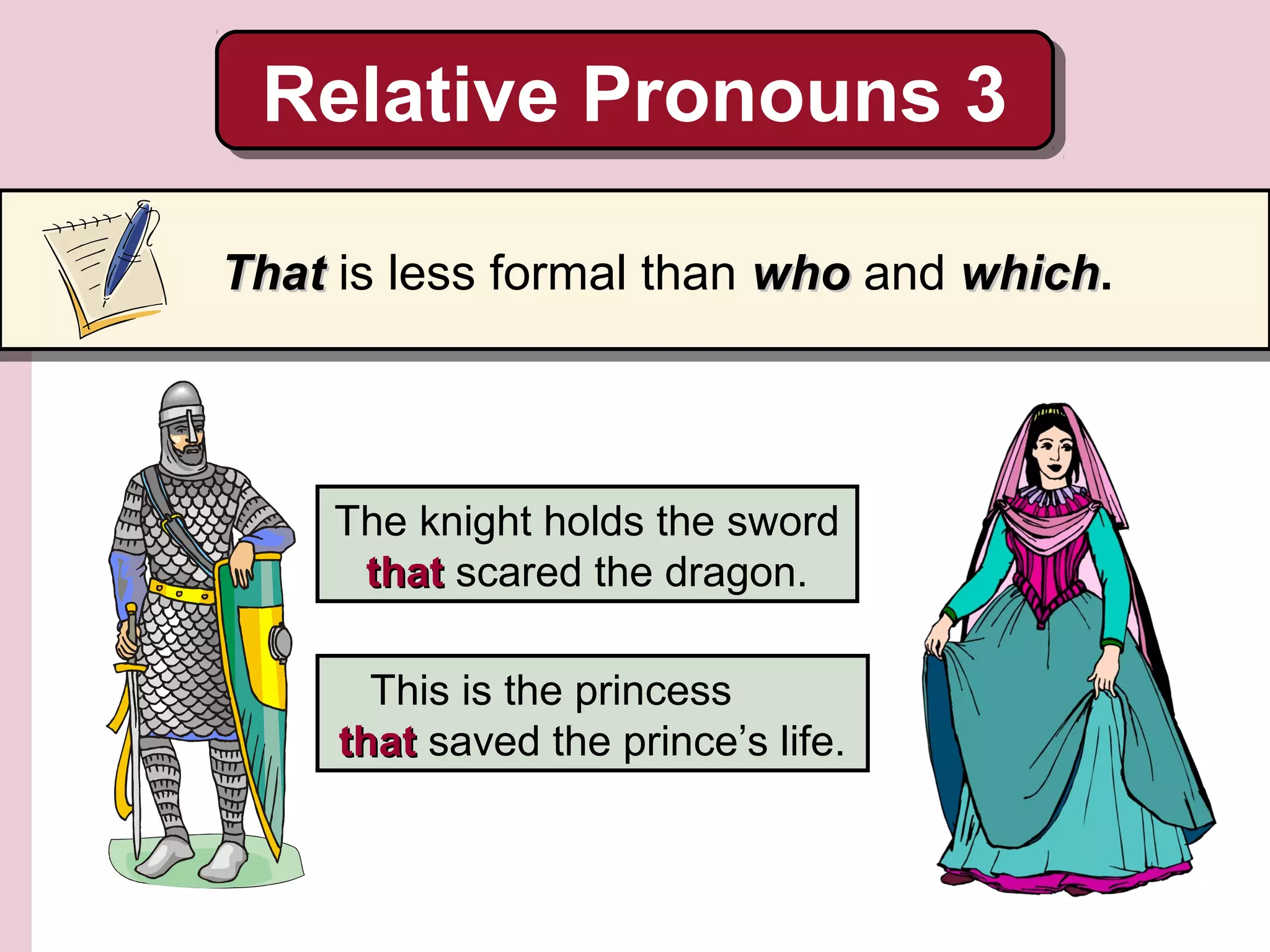
This is the princess
thatthat saved the prince’s life.
Relative Pronouns 3Relative Pronouns 3
The knight holds the sword
thatthat scared the dragon.
ThatThat is less formal than whowho and whichwhich.
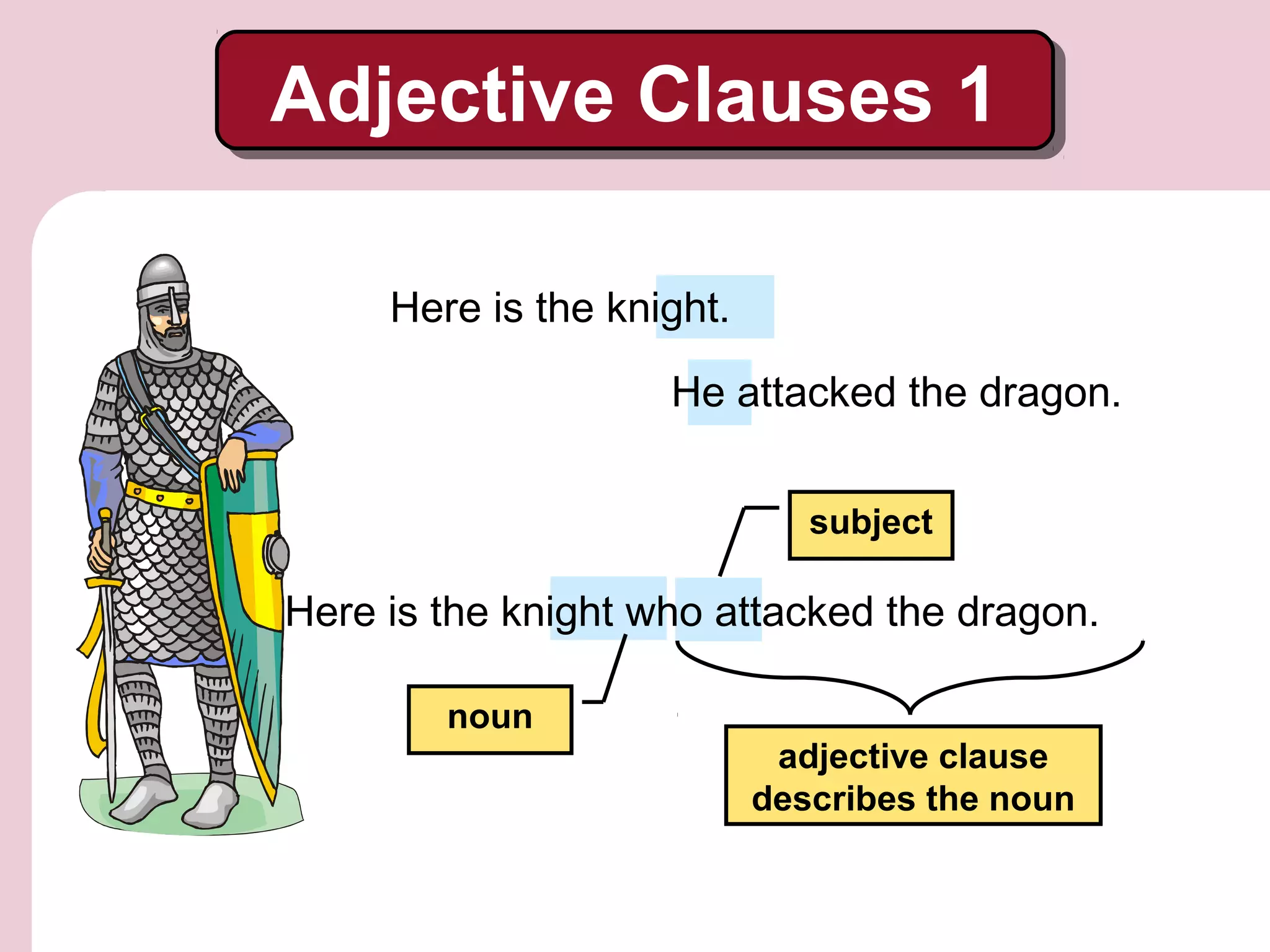
He attacked the dragon.
Here is the knight.
noun
adjective clause
describes the noun
Adjective Clauses 1Adjective Clauses 1
subject
Here is the knight who attacked the dragon.
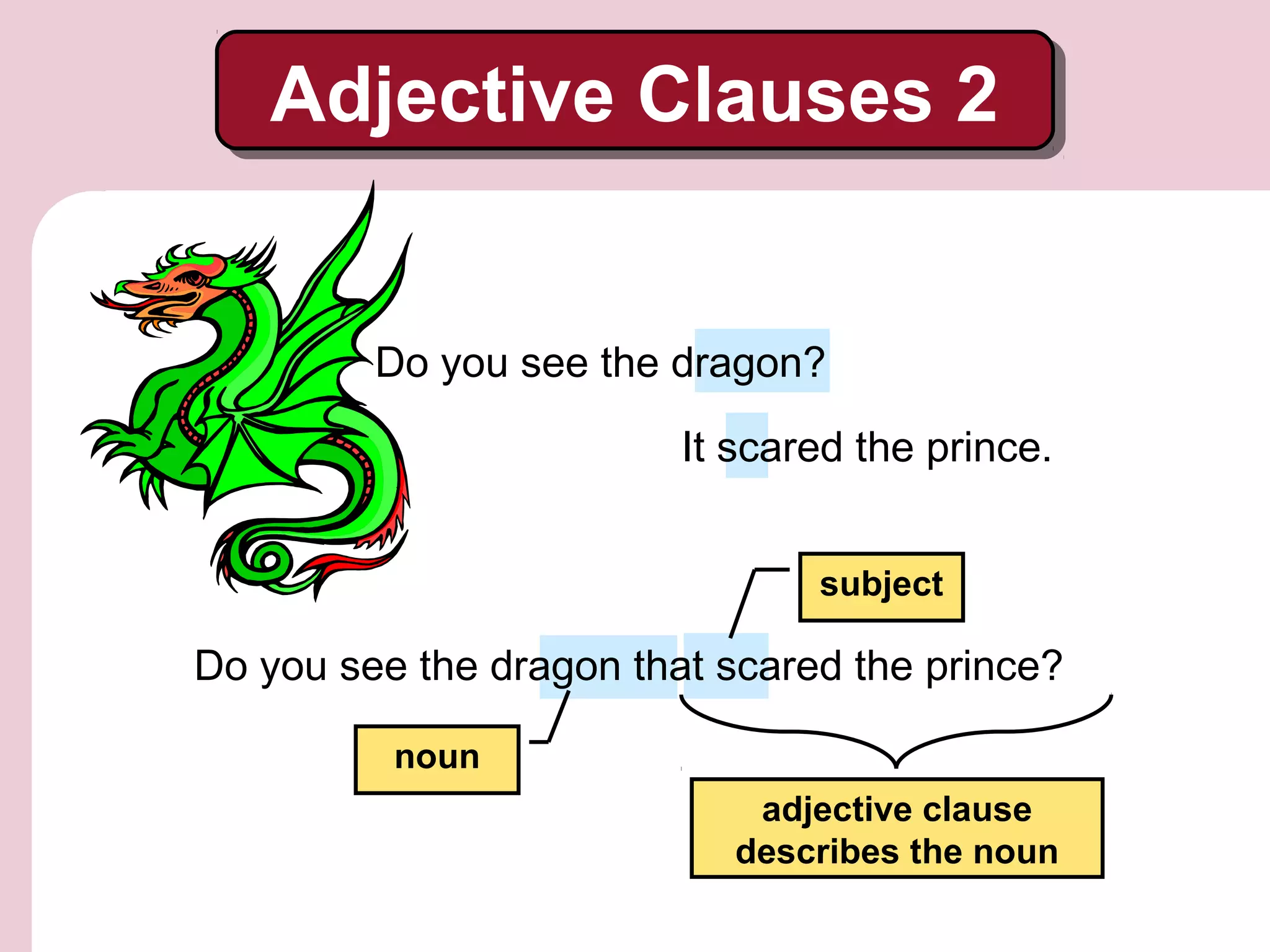
Do you see the dragon that scared the prince?
It scared the prince.
Do you see the dragon?
noun
Adjective Clauses 2Adjective Clauses 2
adjective clause
describes the noun
subject
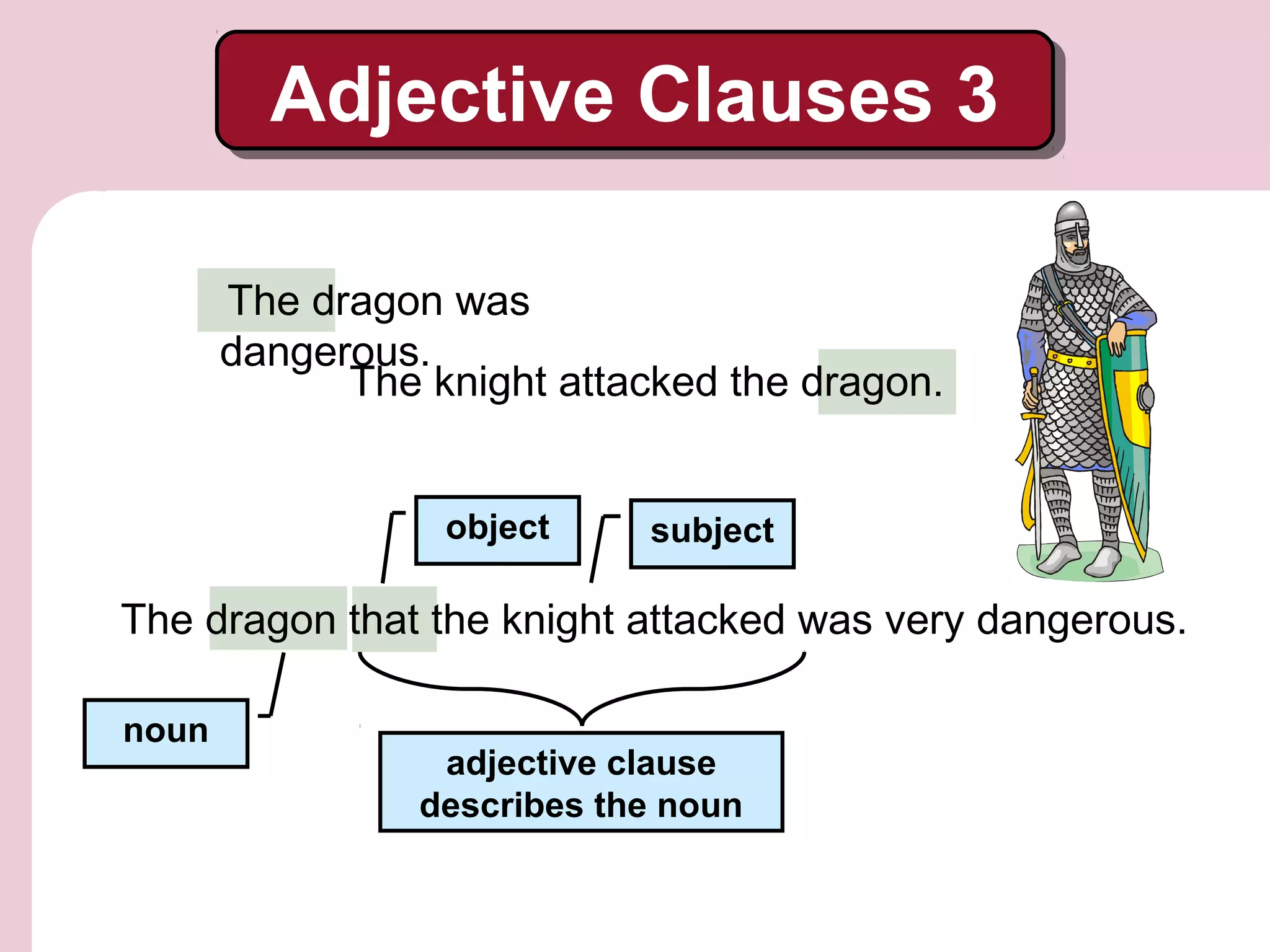
The dragon was
dangerous.
The knight attacked the dragon.
The dragon that the knight attacked was very dangerous.
noun
adjective clause
describes the noun
Adjective Clauses 3Adjective Clauses 3
subjectobject
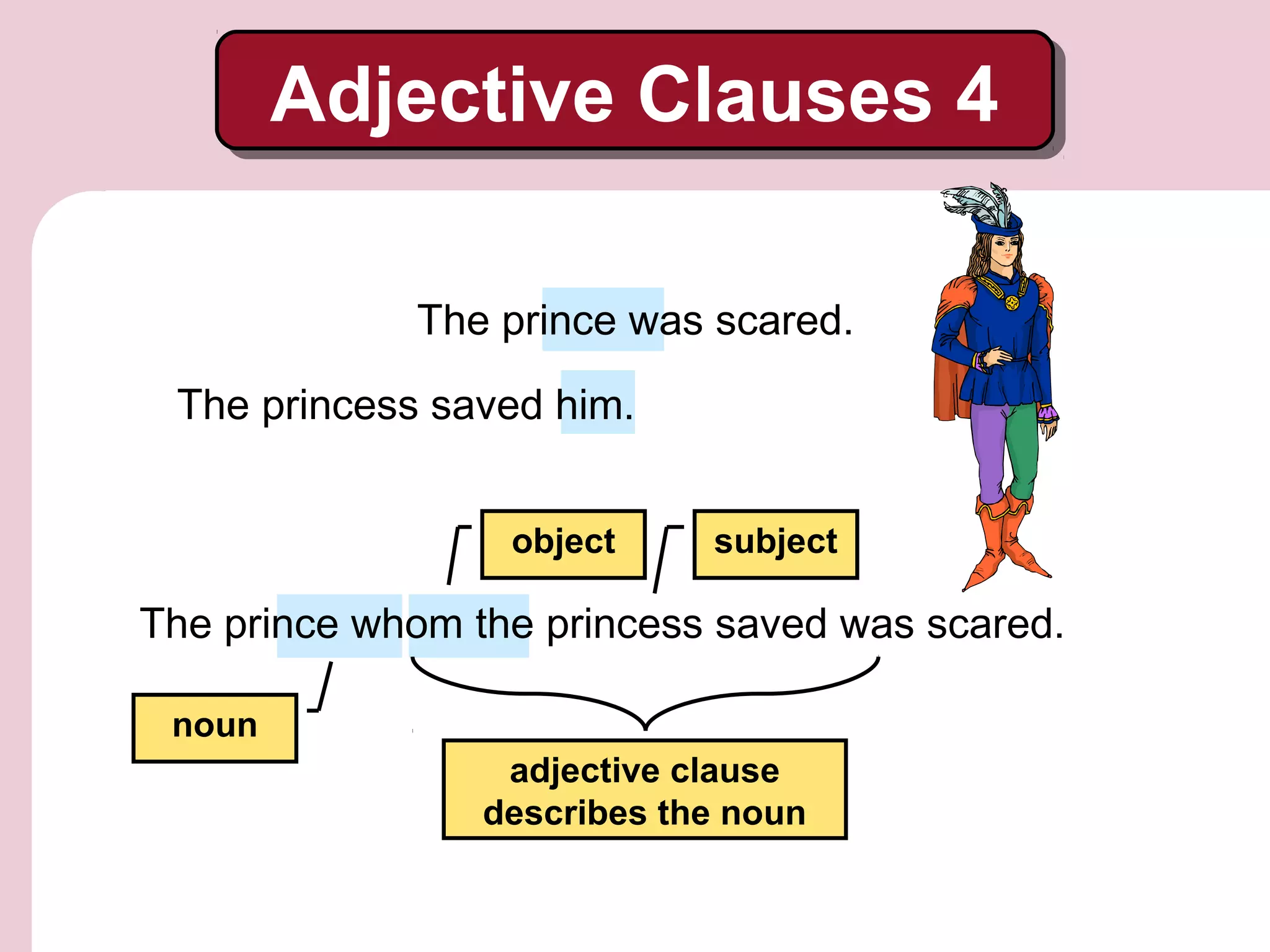
The prince was scared.
The princess saved him.
The prince whom the princess saved was scared.
noun
adjective clause
describes the noun
Adjective Clauses 4Adjective Clauses 4
subjectobject
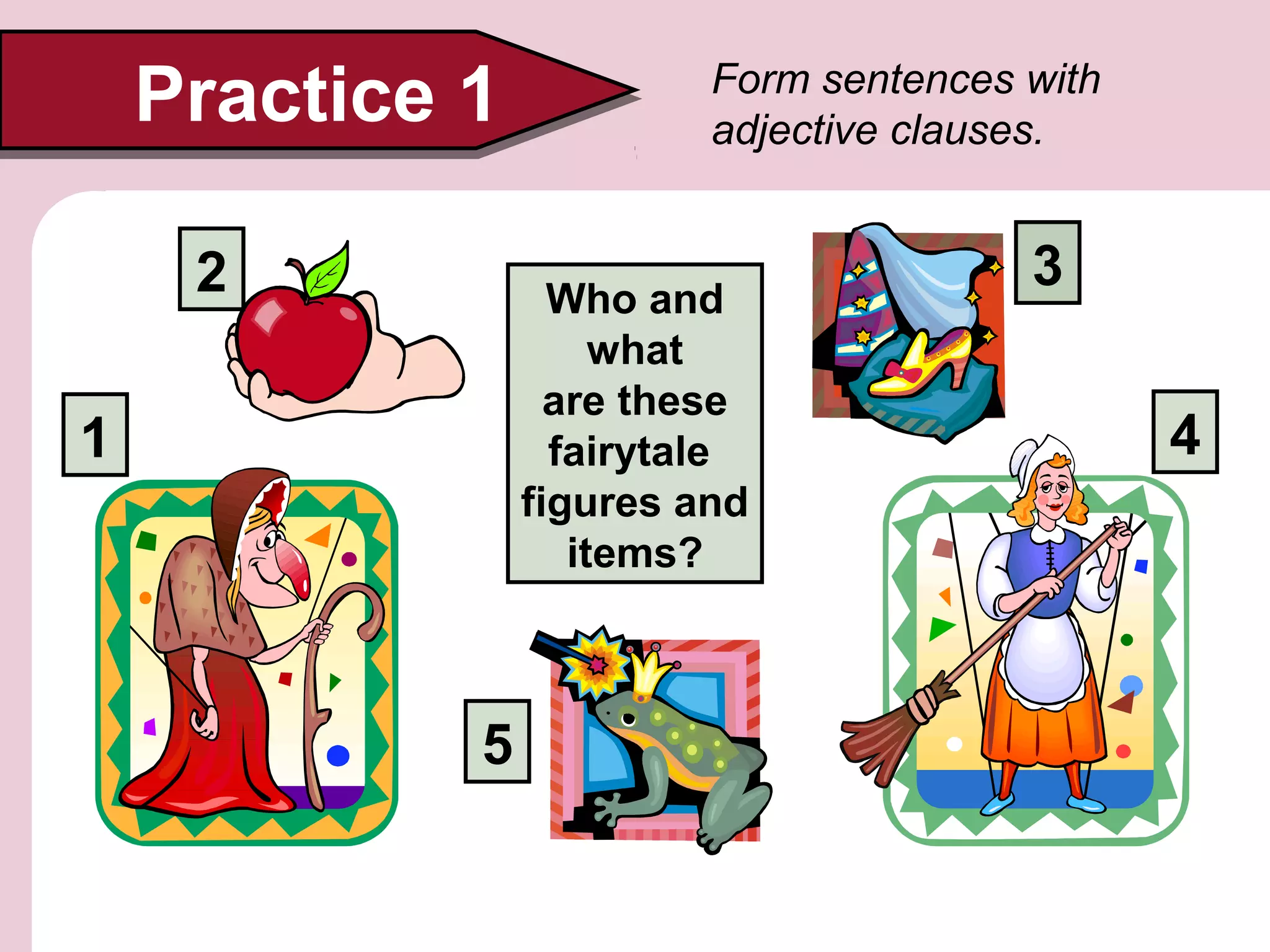
Who and
what
are these
fairytale
figures and
items?
Form sentences with
adjective clauses.Practice 1Practice 1
1
2 3
4
5
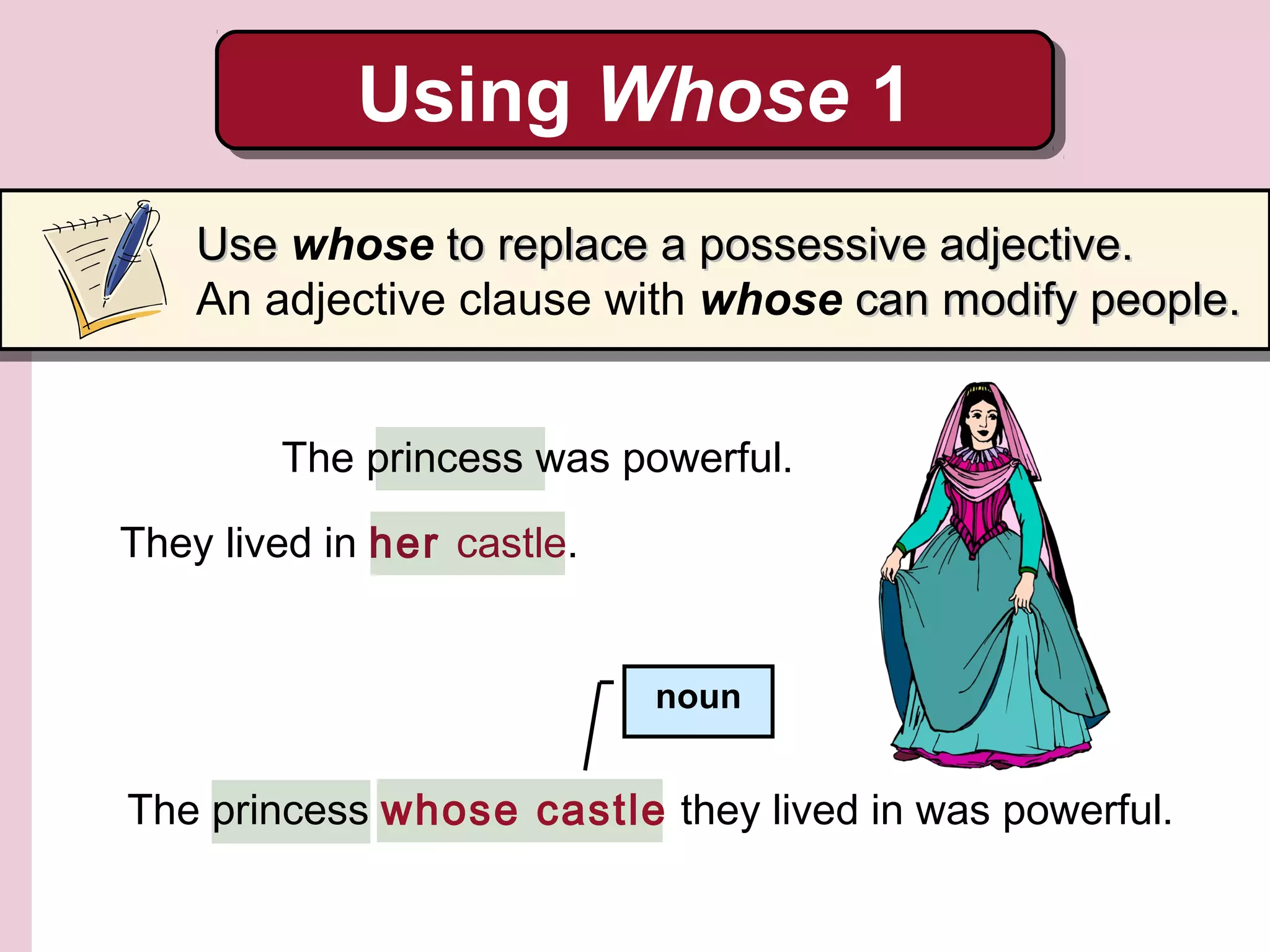
They lived in her castle.
The princess was powerful.
The princess whose castle they lived in was powerful.
noun
Using Whose 1Using Whose 1
UseUse whose toto replace a possessive adjective.replace a possessive adjective.
An adjective clause with whose can modify people.can modify people.
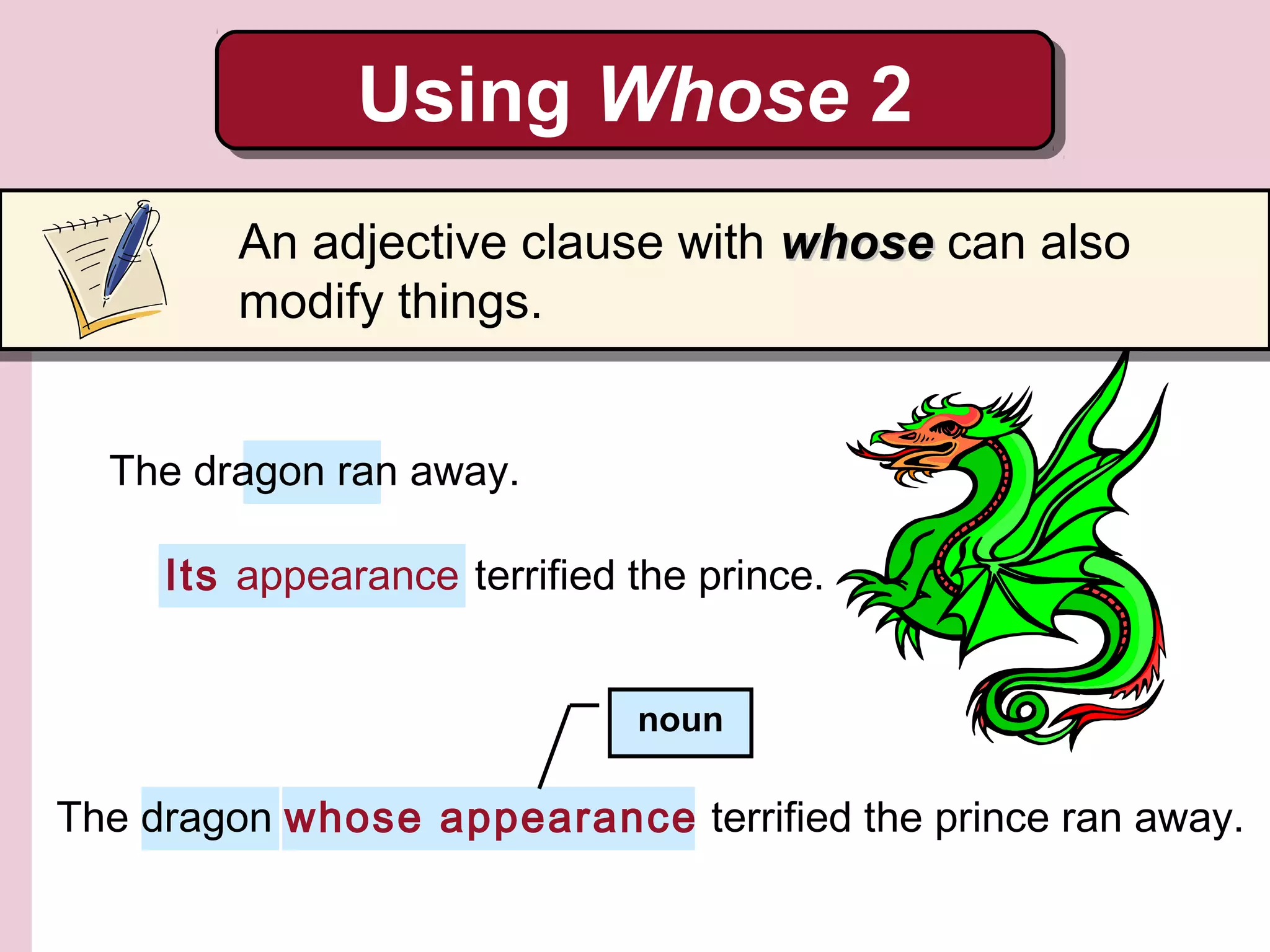
Its appearance terrified the prince.
The dragon whose appearance terrified the prince ran away.
noun
Using Whose 2Using Whose 2
An adjective clause with whosewhose can also
modify things.
The dragon ran away.
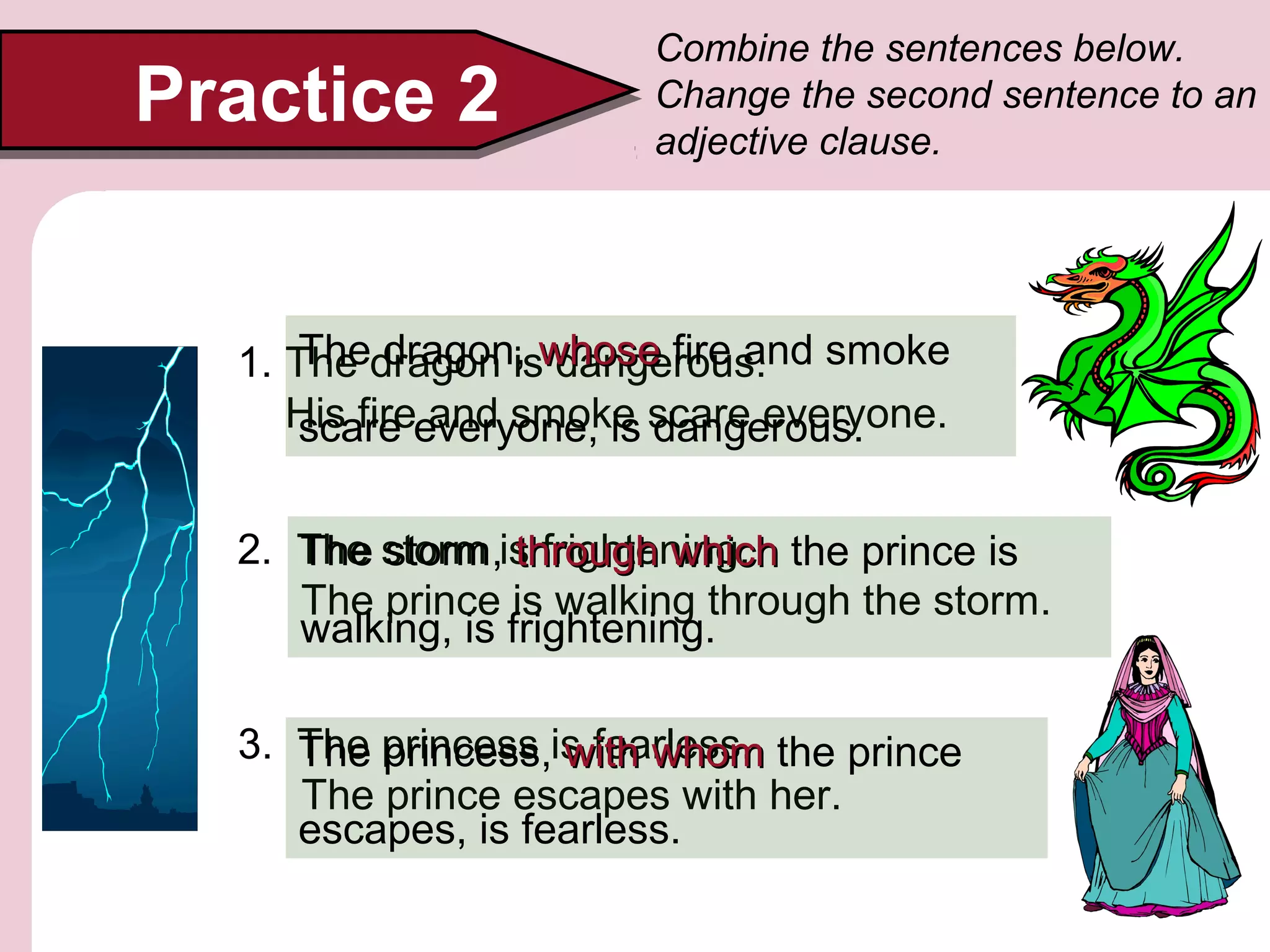
1. The dragon is dangerous.
His fire and smoke scare everyone.
Practice 2Practice 2
Combine the sentences below.
Change the second sentence to an
adjective clause.
2. The storm is frightening.
The prince is walking through the storm.
The storm, through whichthrough which the prince is
walking, is frightening.
3. The princess is fearless.
The prince escapes with her.
The princess, with whomwith whom the prince
escapes, is fearless.
The dragon, whosewhose fire and smoke
scare everyone, is dangerous.
Copyright © 2006 Pearson Education and
its licensors. All rights reserved.
ReferencesReferences

Adjective clause relative clause

  • 1.
    Adjective Clauses: Review andExpansion4 Focus on Grammar 5 Part IV, Unit 11 By Ruth Luman, Gabriele Steiner, and BJ Wells Copyright © 2006. Pearson Education, Inc. All rights reserved. The Fearless Princess A Fairytale
  • 2.
    Once upon atime, there was a prince. He decided to take a walk in a dark and scary forest. All of a sudden, a terrible storm moved in… …and the prince got completely lost.
  • 3.
    In the morning,a terrifying dragon found the prince. The prince became very, very scared. Suddenly a knight in armor appeared from behind a tree and attacked the dragon. Now, the terrible dragon was afraid and ran away.
  • 4.
    When the prince walkedup to the knight, the knight took off his armor … … and a beautiful princess stood in front of him. She was strong and smart and sweet …
  • 5.
    … and shetook him to her castle where they lived happily ever after.
  • 6.
    Can you completethese definitions? An adjective clause is a … Adjective clause pronouns (or relative pronouns) are … An adjective describes or modifies a noun or pronoun. An adjective clause is a dependent clause that describes a noun or pronoun in a main clause. Adjective clause pronouns (or relative pronouns) are who, whom, which, and that. DefinitionsDefinitions An adjective describes …
  • 7.
    This is theprince whowho got lost. Here is the knight thatthat the prince respects. This is the princess whowho saved the prince. Relative Pronouns 1Relative Pronouns 1 UseUse whowho and thatthat to refer to people.
  • 8.
    The knight holdsthe sword whichwhich scared the dragon. The dragon thatthat scared the prince spits fire. Relative Pronouns 2Relative Pronouns 2 UseUse whichwhich and that to refer to things.
  • 9.
    This is theprincess thatthat saved the prince’s life. Relative Pronouns 3Relative Pronouns 3 The knight holds the sword thatthat scared the dragon. ThatThat is less formal than whowho and whichwhich.
  • 10.
    He attacked thedragon. Here is the knight. noun adjective clause describes the noun Adjective Clauses 1Adjective Clauses 1 subject Here is the knight who attacked the dragon.
  • 11.
    Do you seethe dragon that scared the prince? It scared the prince. Do you see the dragon? noun Adjective Clauses 2Adjective Clauses 2 adjective clause describes the noun subject
  • 12.
    The dragon was dangerous. Theknight attacked the dragon. The dragon that the knight attacked was very dangerous. noun adjective clause describes the noun Adjective Clauses 3Adjective Clauses 3 subjectobject
  • 13.
    The prince wasscared. The princess saved him. The prince whom the princess saved was scared. noun adjective clause describes the noun Adjective Clauses 4Adjective Clauses 4 subjectobject
  • 14.
    Who and what are these fairytale figuresand items? Form sentences with adjective clauses.Practice 1Practice 1 1 2 3 4 5
  • 15.
    They lived inher castle. The princess was powerful. The princess whose castle they lived in was powerful. noun Using Whose 1Using Whose 1 UseUse whose toto replace a possessive adjective.replace a possessive adjective. An adjective clause with whose can modify people.can modify people.
  • 16.
    Its appearance terrifiedthe prince. The dragon whose appearance terrified the prince ran away. noun Using Whose 2Using Whose 2 An adjective clause with whosewhose can also modify things. The dragon ran away.
  • 17.
    1. The dragonis dangerous. His fire and smoke scare everyone. Practice 2Practice 2 Combine the sentences below. Change the second sentence to an adjective clause. 2. The storm is frightening. The prince is walking through the storm. The storm, through whichthrough which the prince is walking, is frightening. 3. The princess is fearless. The prince escapes with her. The princess, with whomwith whom the prince escapes, is fearless. The dragon, whosewhose fire and smoke scare everyone, is dangerous.
  • 18.
    Copyright © 2006Pearson Education and its licensors. All rights reserved. ReferencesReferences