Advance Database Management Systems : 5
Data Models Schemas Instances and States
Prof Neeraj Bhargava
Vaibhav Khanna
Department of Computer Science
School of Engineering and Systems Sciences
Maharshi Dayanand Saraswati University Ajmer
Slide 2- 2
Data Models
• Data Model:
– A set of concepts to describe the structure of a database, the
operations for manipulating these structures, and certain
constraints that the database should obey.
• Data Model Structure and Constraints:
– Constructs are used to define the database structure
– Constructs typically include elements (and their data types) as
well as groups of elements (e.g. entity, record, table), and
relationships among such groups
– Constraints specify some restrictions on valid data; these
constraints must be enforced at all times
Slide 2- 3
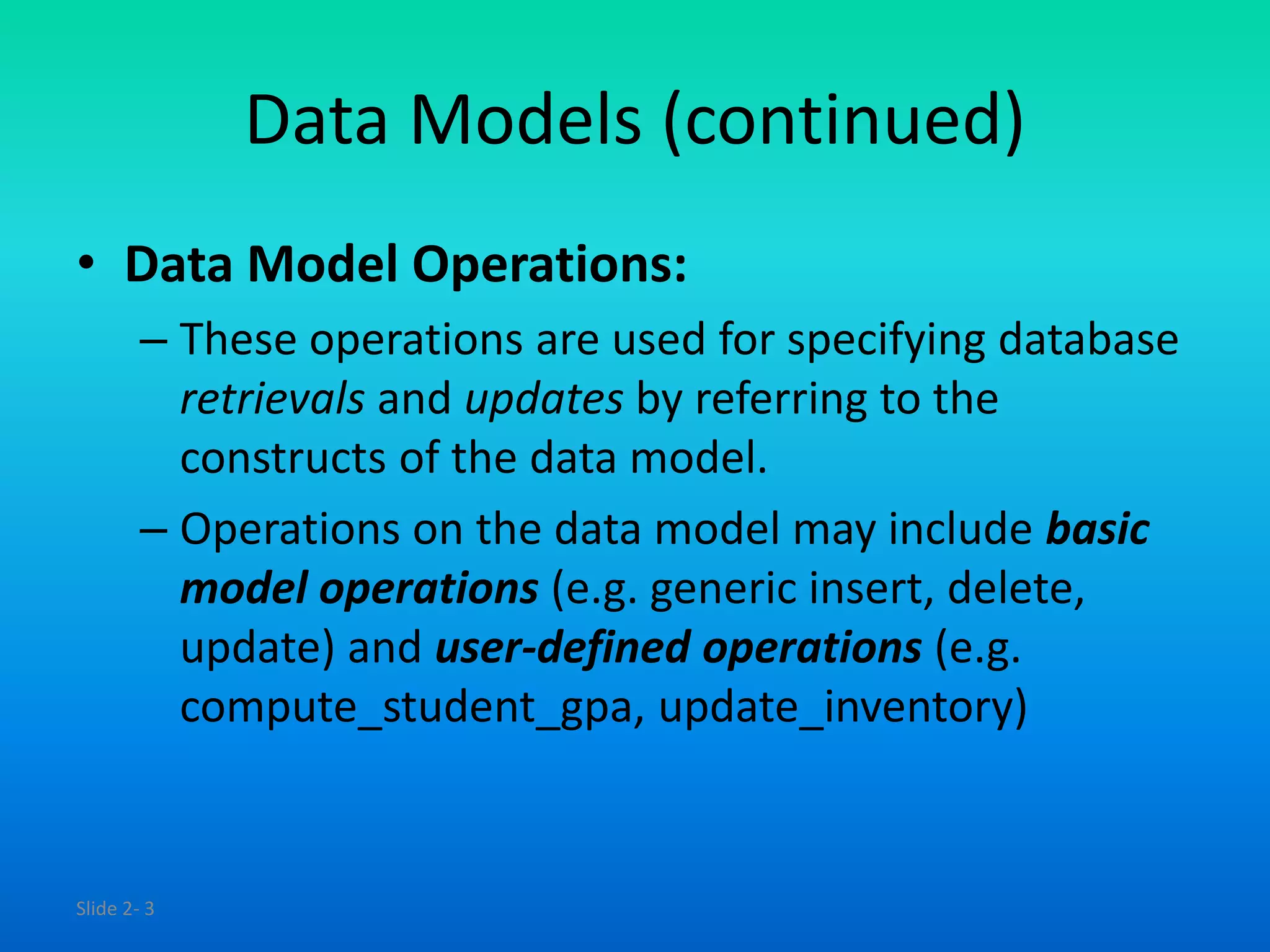
Data Models (continued)
• Data Model Operations:
– These operations are used for specifying database
retrievals and updates by referring to the
constructs of the data model.
– Operations on the data model may include basic
model operations (e.g. generic insert, delete,
update) and user-defined operations (e.g.
compute_student_gpa, update_inventory)
Slide 2- 4
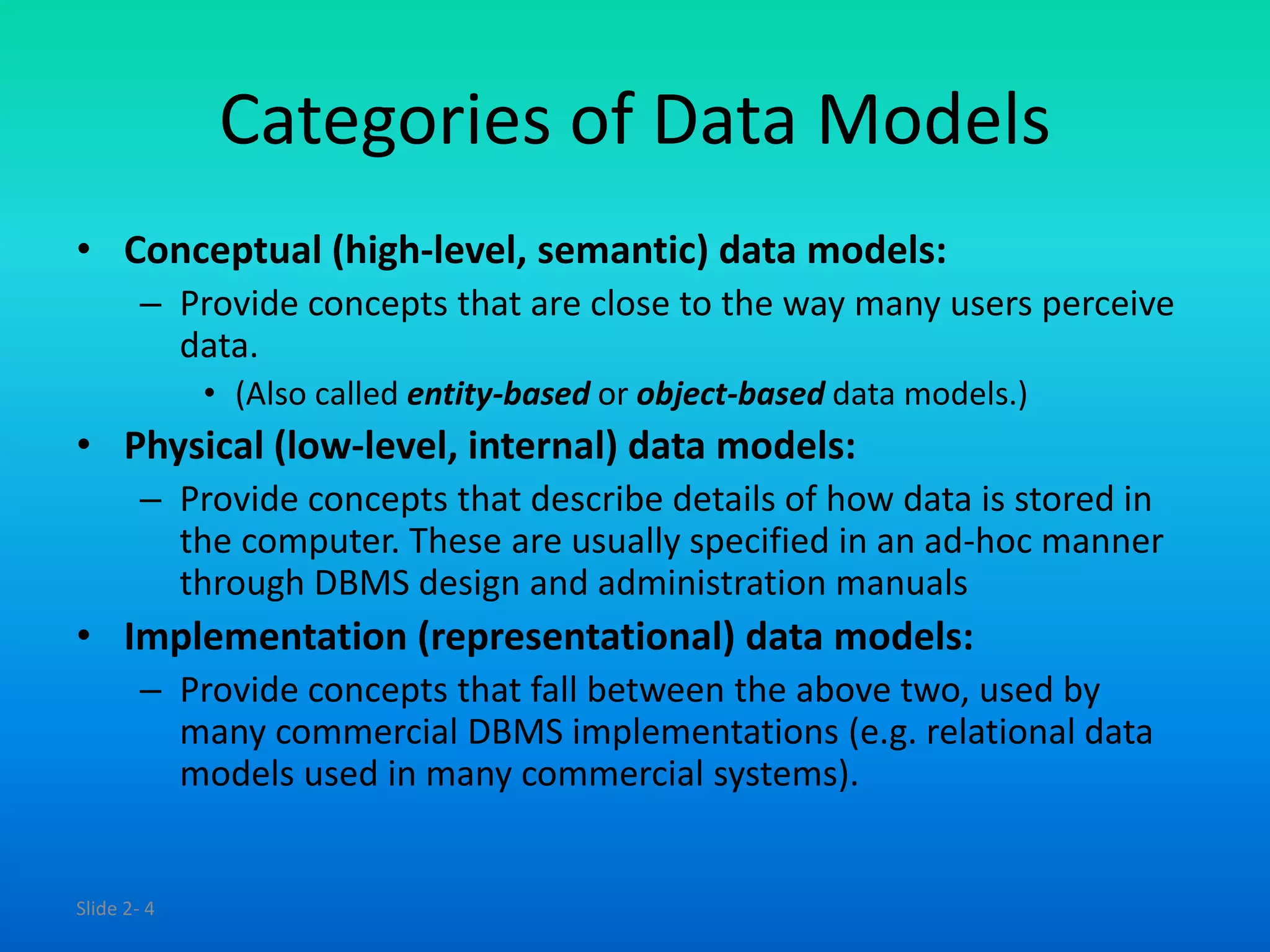
Categories of Data Models
• Conceptual (high-level, semantic) data models:
– Provide concepts that are close to the way many users perceive
data.
• (Also called entity-based or object-based data models.)
• Physical (low-level, internal) data models:
– Provide concepts that describe details of how data is stored in
the computer. These are usually specified in an ad-hoc manner
through DBMS design and administration manuals
• Implementation (representational) data models:
– Provide concepts that fall between the above two, used by
many commercial DBMS implementations (e.g. relational data
models used in many commercial systems).
Slide 2- 5
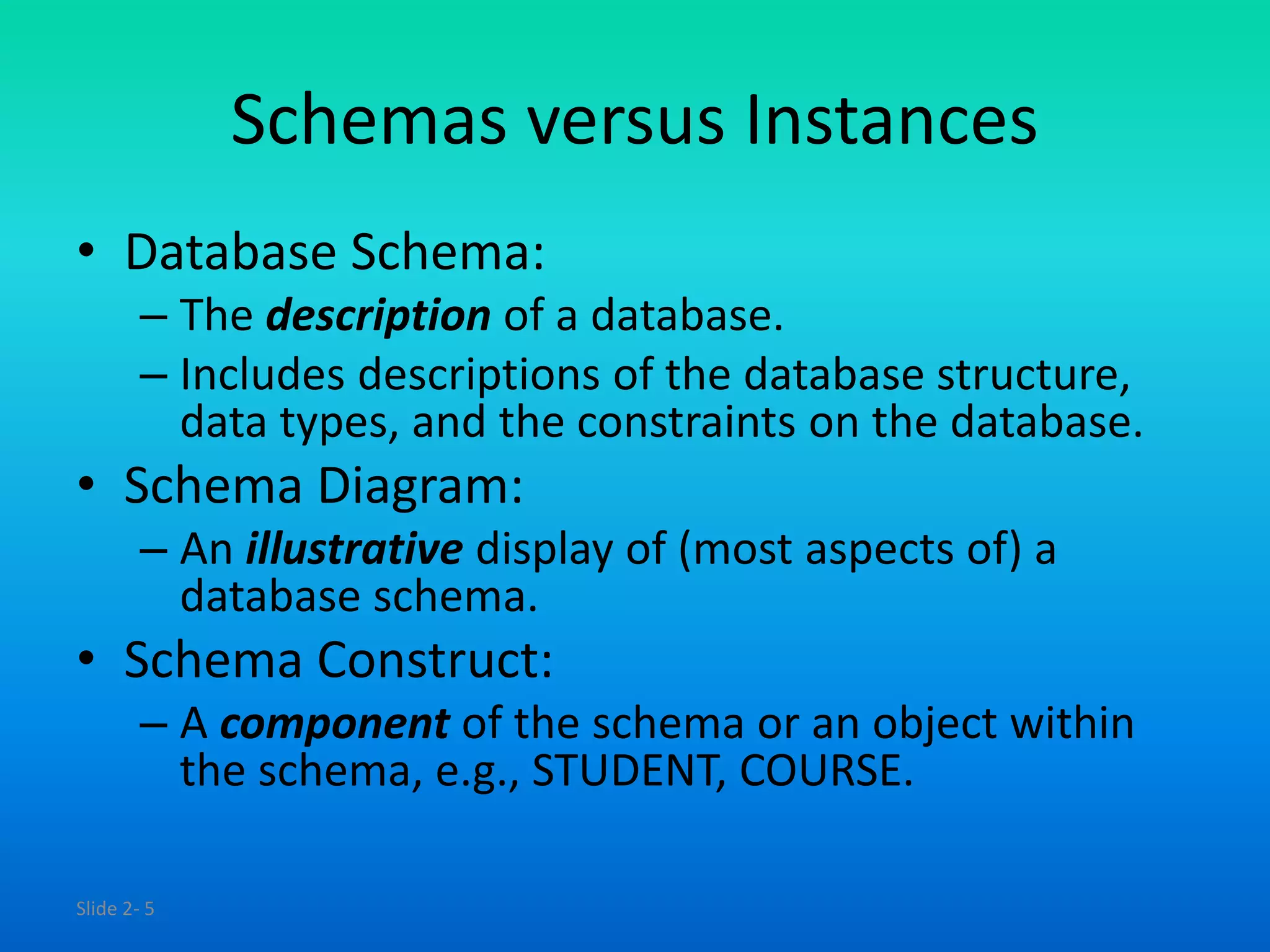
Schemas versus Instances
• Database Schema:
– The description of a database.
– Includes descriptions of the database structure,
data types, and the constraints on the database.
• Schema Diagram:
– An illustrative display of (most aspects of) a
database schema.
• Schema Construct:
– A component of the schema or an object within
the schema, e.g., STUDENT, COURSE.
Slide 2- 6
Schemas versus Instances
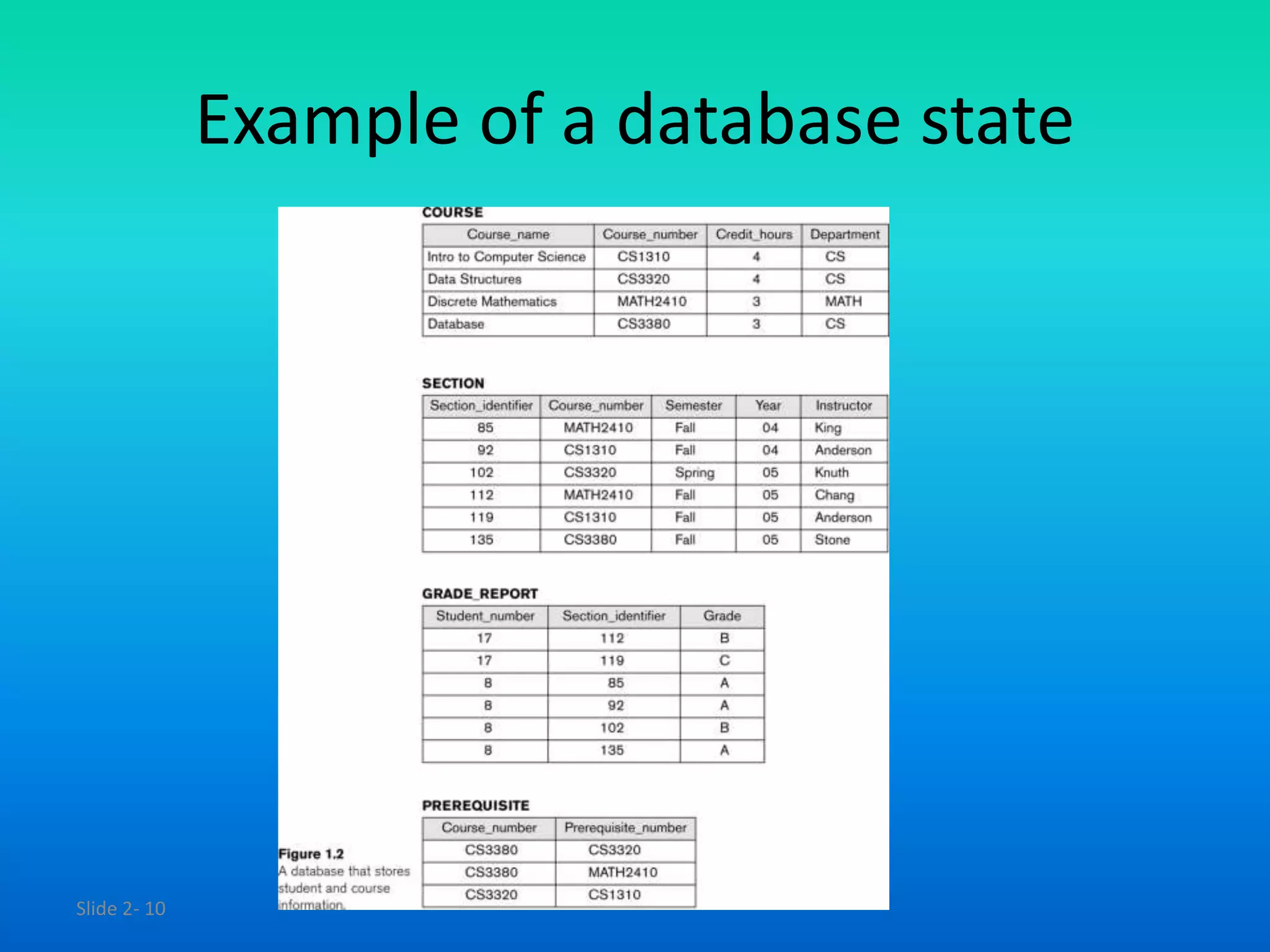
• Database State:
– The actual data stored in a database at a
particular moment in time. This includes the
collection of all the data in the database.
– Also called database instance (or occurrence or
snapshot).
• The term instance is also applied to individual database
components, e.g. record instance, table instance, entity
instance
Slide 2- 7
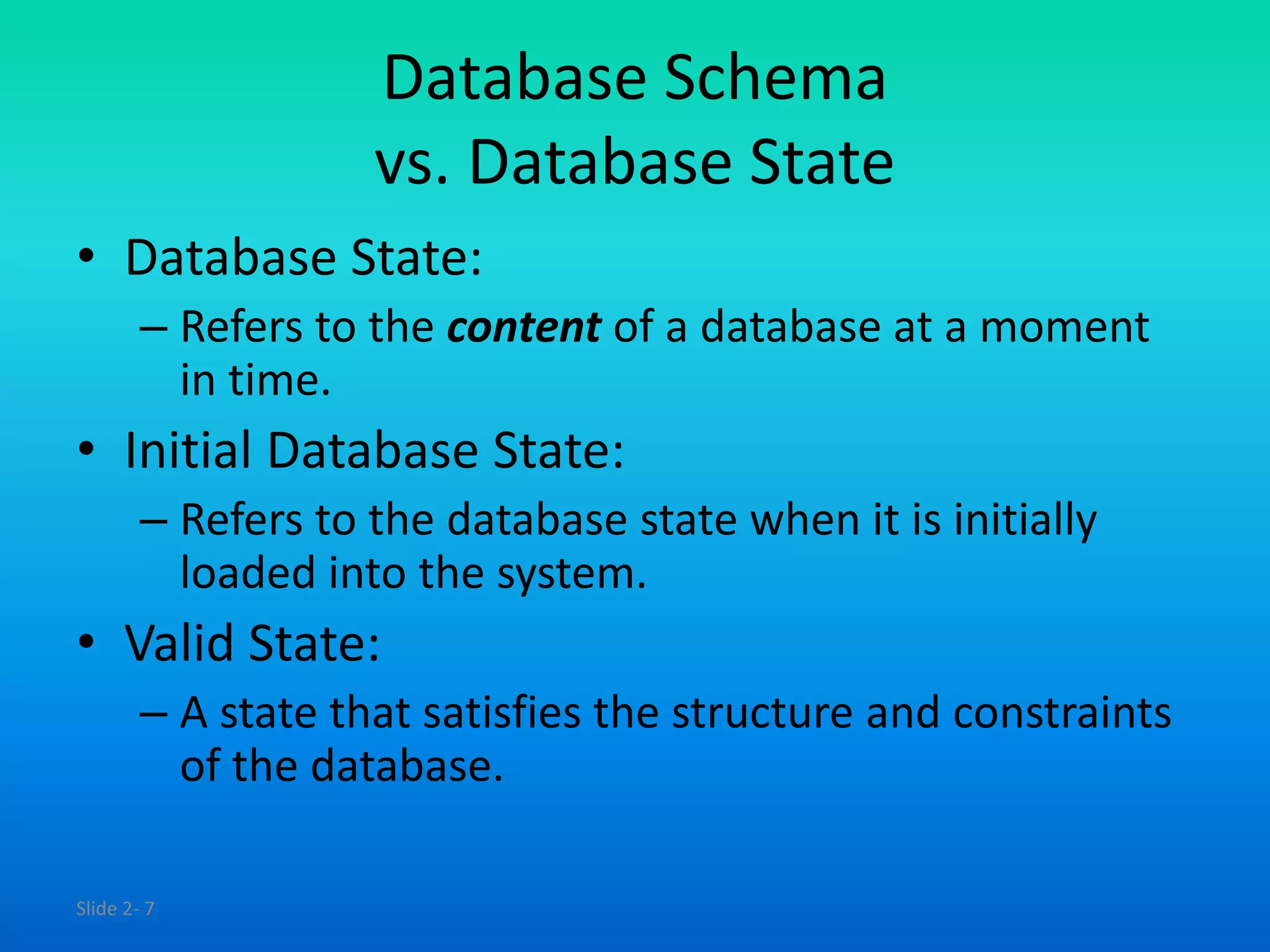
Database Schema
vs. Database State
• Database State:
– Refers to the content of a database at a moment
in time.
• Initial Database State:
– Refers to the database state when it is initially
loaded into the system.
• Valid State:
– A state that satisfies the structure and constraints
of the database.
Slide 2- 8
Database Schema
vs. Database State (continued)
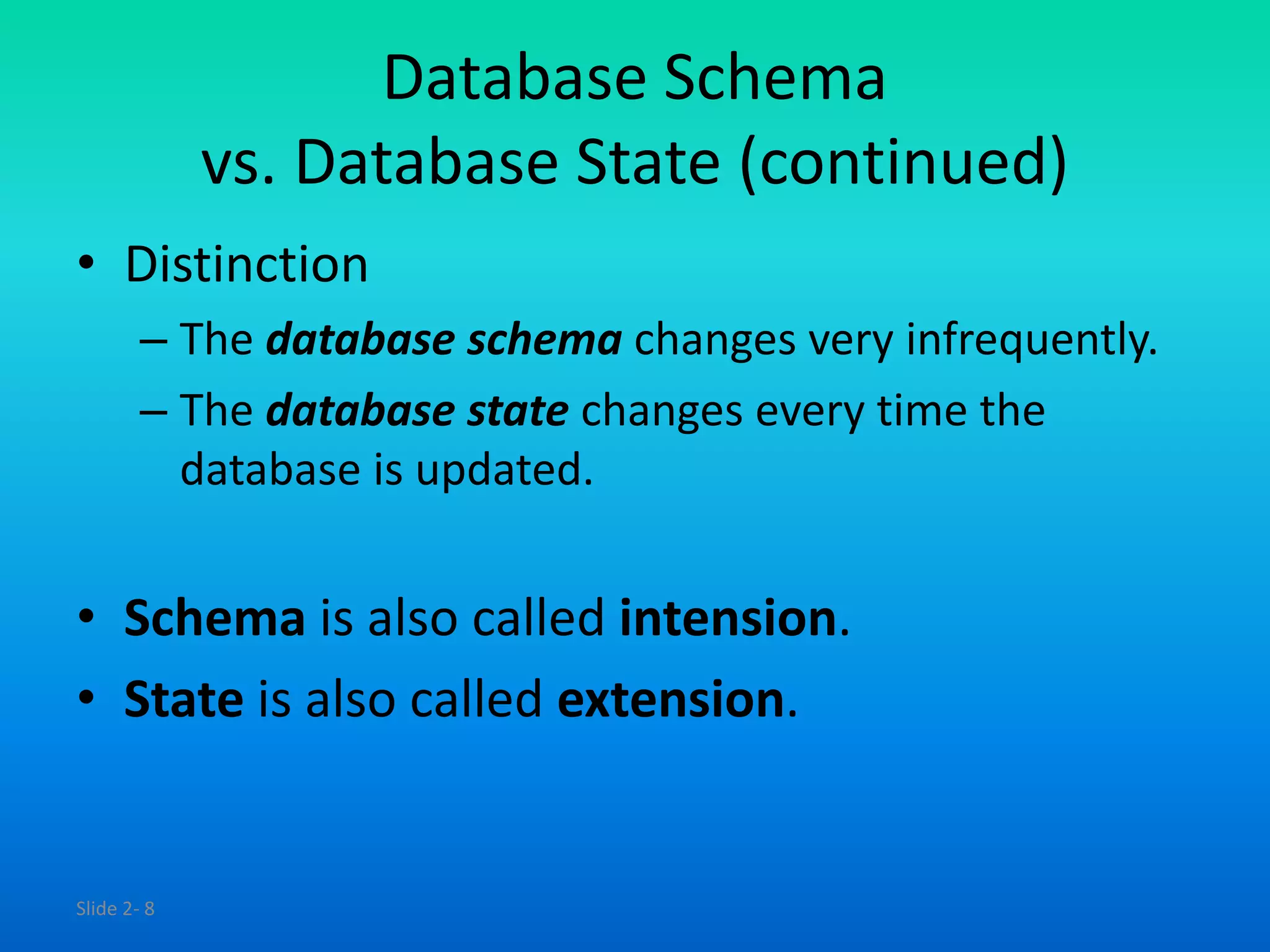
• Distinction
– The database schema changes very infrequently.
– The database state changes every time the
database is updated.
• Schema is also called intension.
• State is also called extension.
Slide 2- 9
Example of a Database Schema
Slide 2- 10
Example of a database state
Assignment
• Define Data Model Structure and Constraints
• Explain Database Schema vs. Database State

Adbms 5 data models schemas instances and states

  • 1.
    Advance Database ManagementSystems : 5 Data Models Schemas Instances and States Prof Neeraj Bhargava Vaibhav Khanna Department of Computer Science School of Engineering and Systems Sciences Maharshi Dayanand Saraswati University Ajmer
  • 2.
    Slide 2- 2 DataModels • Data Model: – A set of concepts to describe the structure of a database, the operations for manipulating these structures, and certain constraints that the database should obey. • Data Model Structure and Constraints: – Constructs are used to define the database structure – Constructs typically include elements (and their data types) as well as groups of elements (e.g. entity, record, table), and relationships among such groups – Constraints specify some restrictions on valid data; these constraints must be enforced at all times
  • 3.
    Slide 2- 3 DataModels (continued) • Data Model Operations: – These operations are used for specifying database retrievals and updates by referring to the constructs of the data model. – Operations on the data model may include basic model operations (e.g. generic insert, delete, update) and user-defined operations (e.g. compute_student_gpa, update_inventory)
  • 4.
    Slide 2- 4 Categoriesof Data Models • Conceptual (high-level, semantic) data models: – Provide concepts that are close to the way many users perceive data. • (Also called entity-based or object-based data models.) • Physical (low-level, internal) data models: – Provide concepts that describe details of how data is stored in the computer. These are usually specified in an ad-hoc manner through DBMS design and administration manuals • Implementation (representational) data models: – Provide concepts that fall between the above two, used by many commercial DBMS implementations (e.g. relational data models used in many commercial systems).
  • 5.
    Slide 2- 5 Schemasversus Instances • Database Schema: – The description of a database. – Includes descriptions of the database structure, data types, and the constraints on the database. • Schema Diagram: – An illustrative display of (most aspects of) a database schema. • Schema Construct: – A component of the schema or an object within the schema, e.g., STUDENT, COURSE.
  • 6.
    Slide 2- 6 Schemasversus Instances • Database State: – The actual data stored in a database at a particular moment in time. This includes the collection of all the data in the database. – Also called database instance (or occurrence or snapshot). • The term instance is also applied to individual database components, e.g. record instance, table instance, entity instance
  • 7.
    Slide 2- 7 DatabaseSchema vs. Database State • Database State: – Refers to the content of a database at a moment in time. • Initial Database State: – Refers to the database state when it is initially loaded into the system. • Valid State: – A state that satisfies the structure and constraints of the database.
  • 8.
    Slide 2- 8 DatabaseSchema vs. Database State (continued) • Distinction – The database schema changes very infrequently. – The database state changes every time the database is updated. • Schema is also called intension. • State is also called extension.
  • 9.
    Slide 2- 9 Exampleof a Database Schema
  • 10.
    Slide 2- 10 Exampleof a database state
  • 11.
    Assignment • Define DataModel Structure and Constraints • Explain Database Schema vs. Database State