Characteristic Of Dabase Approach
Characteristics of the Database
Approach
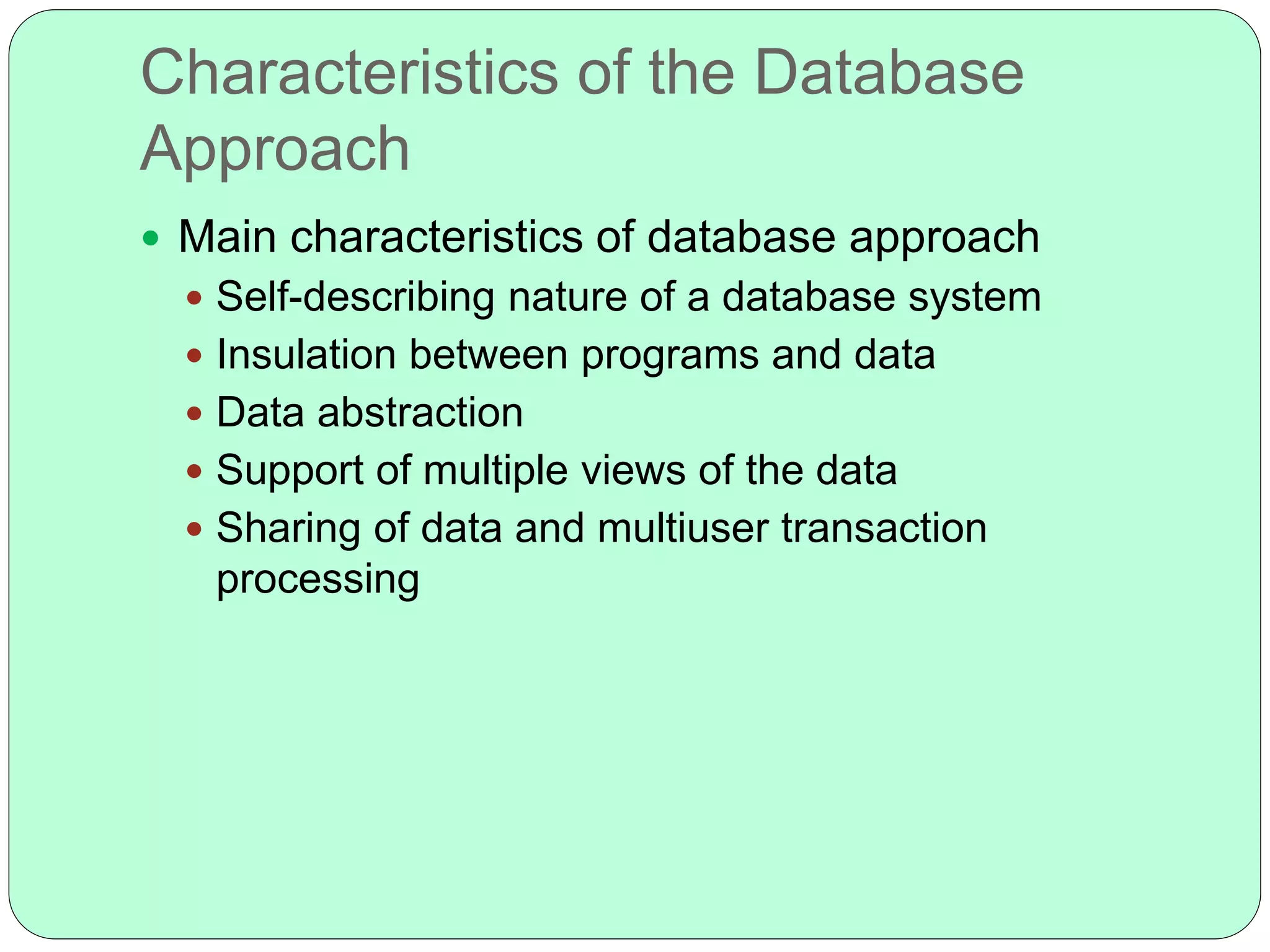
 Main characteristics of database approach
 Self-describing nature of a database system
 Insulation between programs and data
 Data abstraction
 Support of multiple views of the data
 Sharing of data and multiuser transaction
processing
Self-Describing Nature of a Database
System
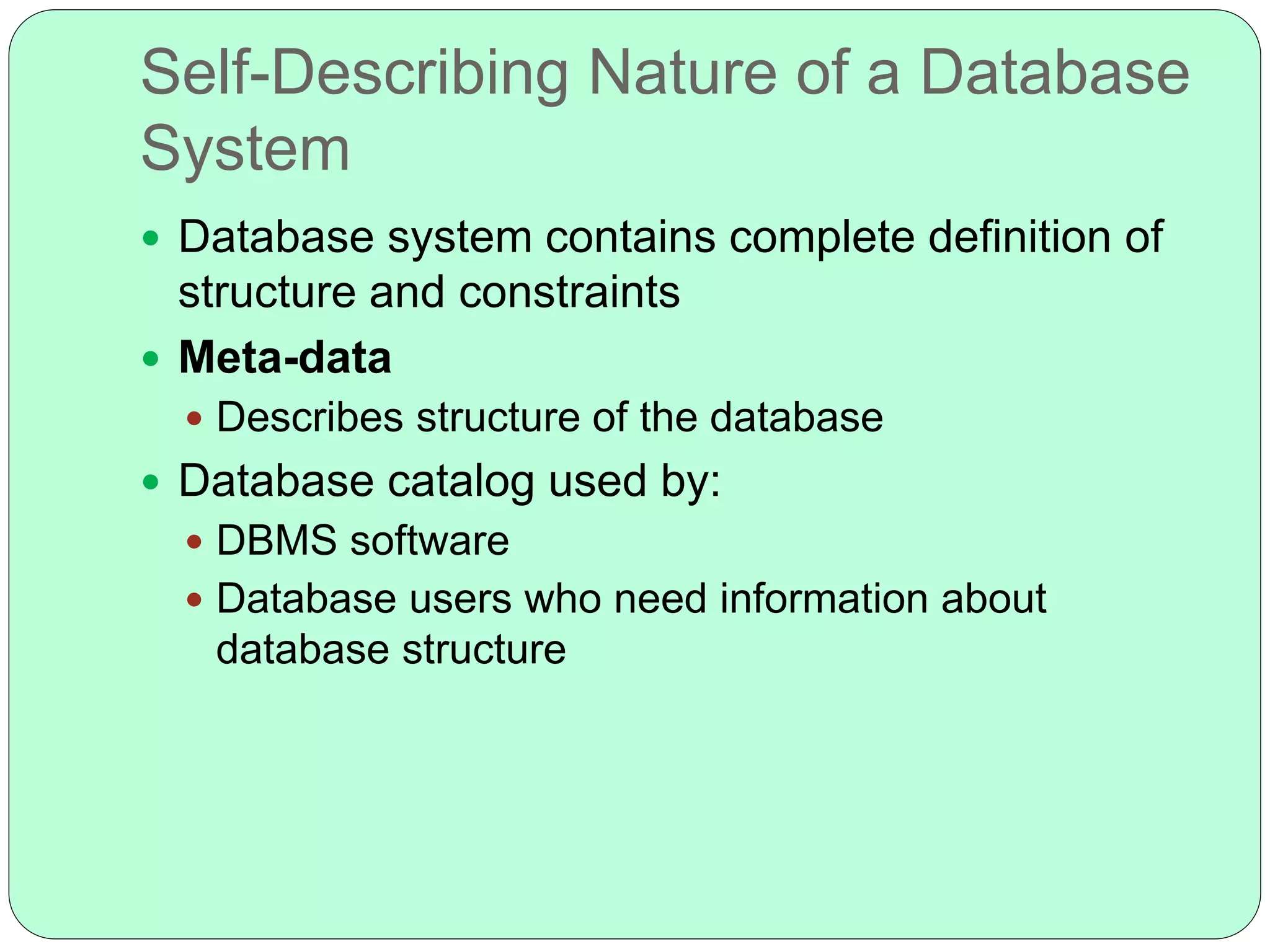
 Database system contains complete definition of
structure and constraints
 Meta-data
 Describes structure of the database
 Database catalog used by:
 DBMS software
 Database users who need information about
database structure
Insulation Between Programs and
Data
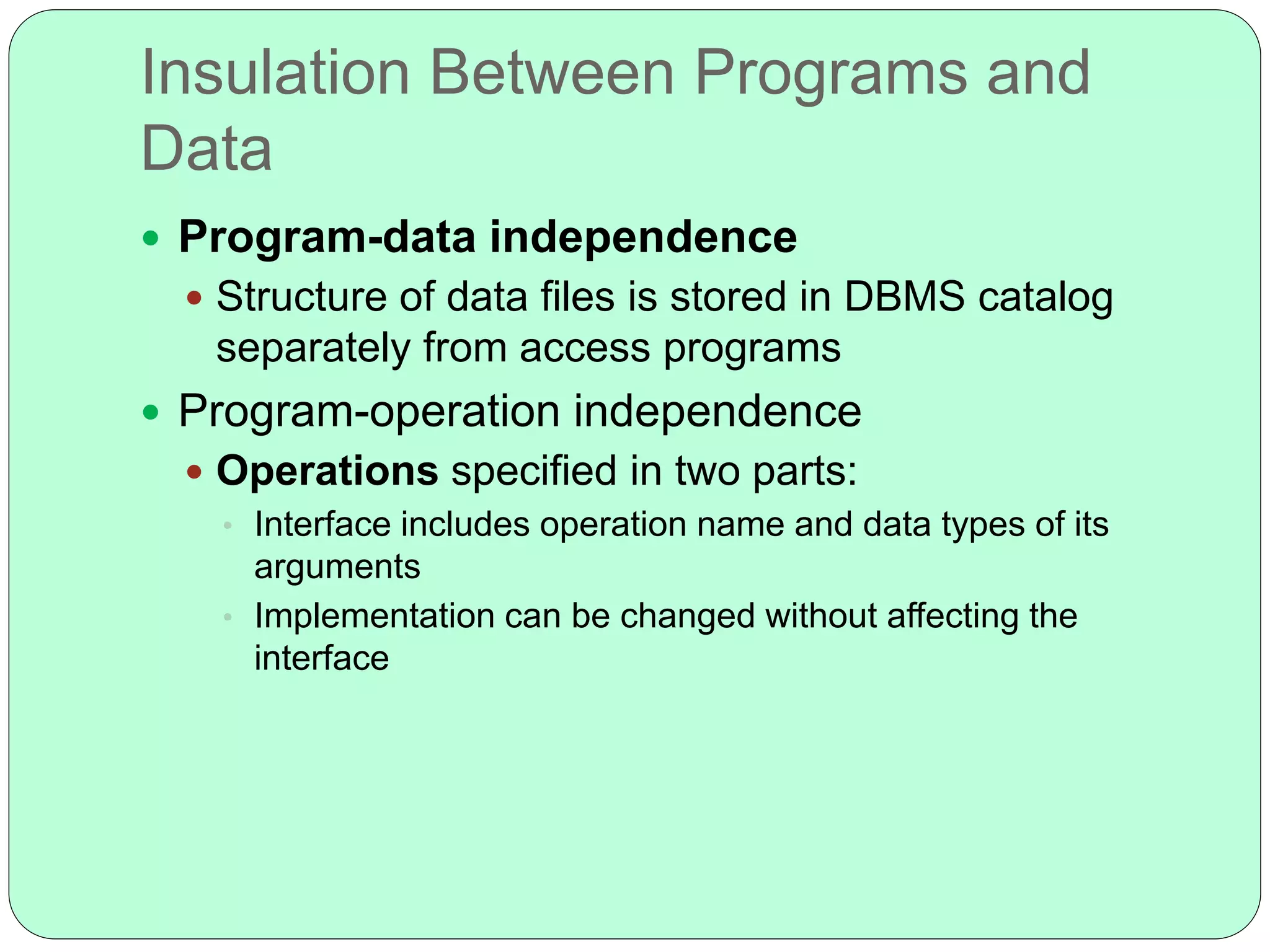
 Program-data independence
 Structure of data files is stored in DBMS catalog
separately from access programs
 Program-operation independence
 Operations specified in two parts:
• Interface includes operation name and data types of its
arguments
• Implementation can be changed without affecting the
interface
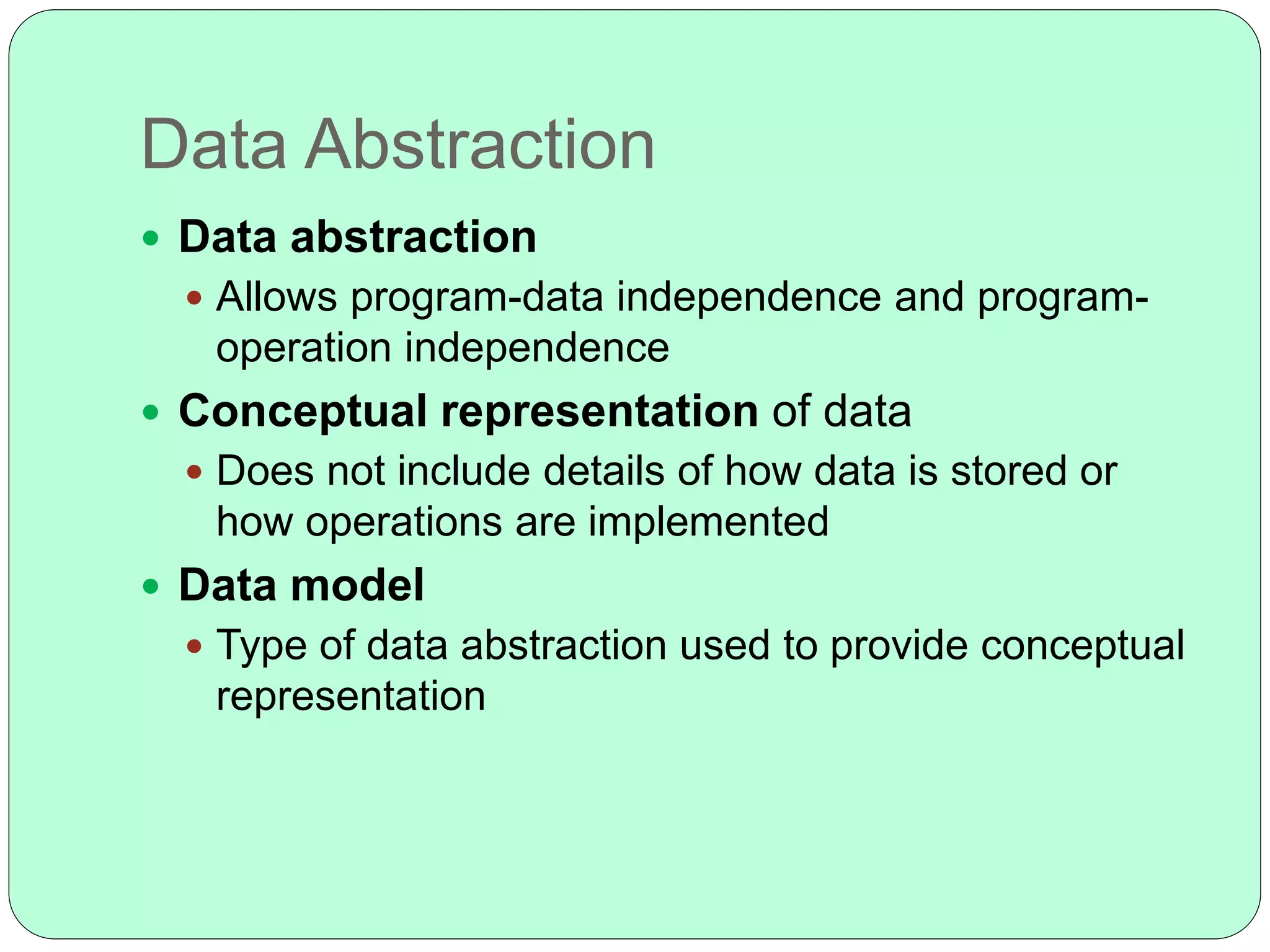
Data Abstraction
 Data abstraction
 Allows program-data independence and program-
operation independence
 Conceptual representation of data
 Does not include details of how data is stored or
how operations are implemented
 Data model
 Type of data abstraction used to provide conceptual
representation
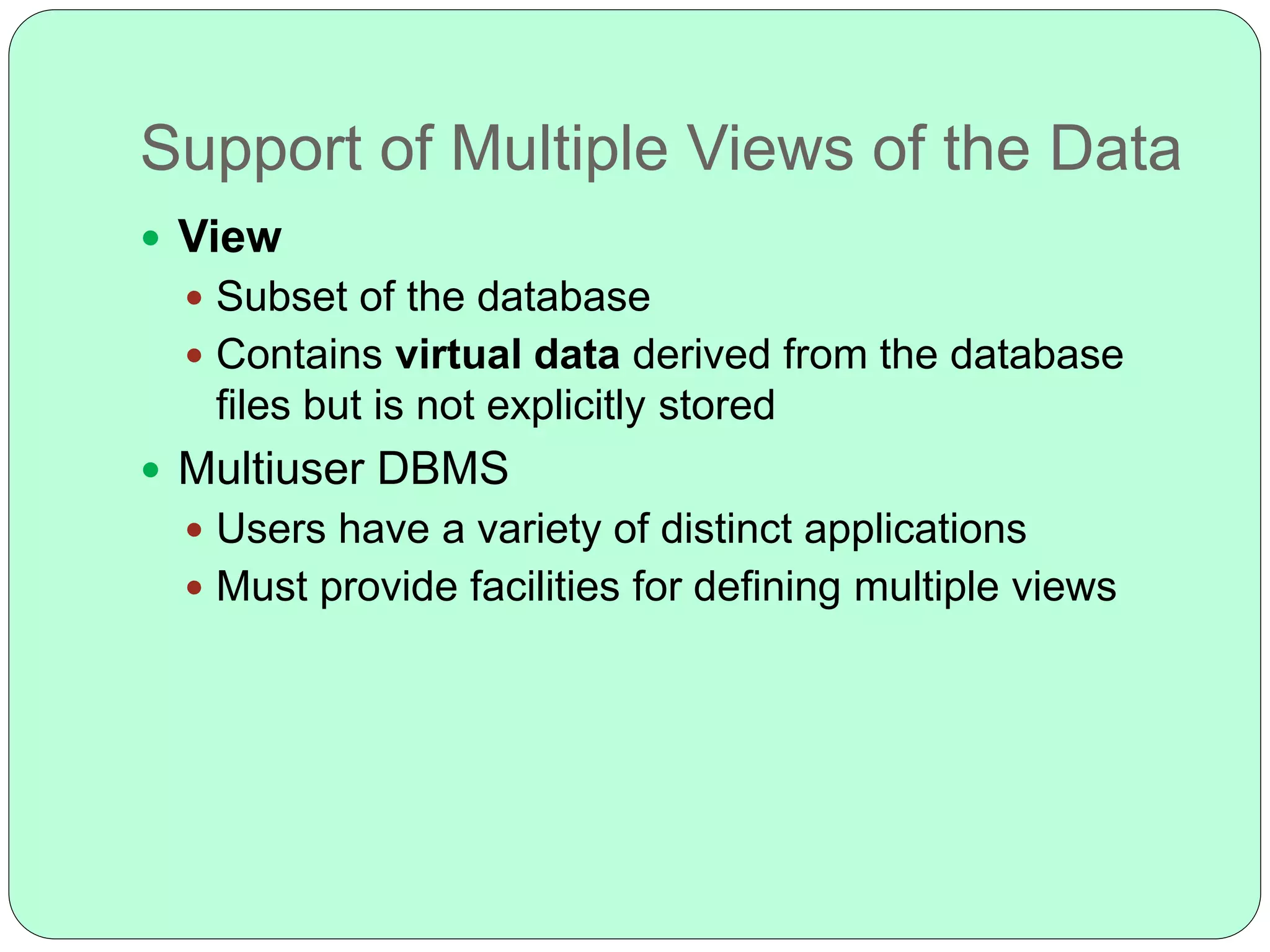
Support of Multiple Views of the Data
 View
 Subset of the database
 Contains virtual data derived from the database
files but is not explicitly stored
 Multiuser DBMS
 Users have a variety of distinct applications
 Must provide facilities for defining multiple views
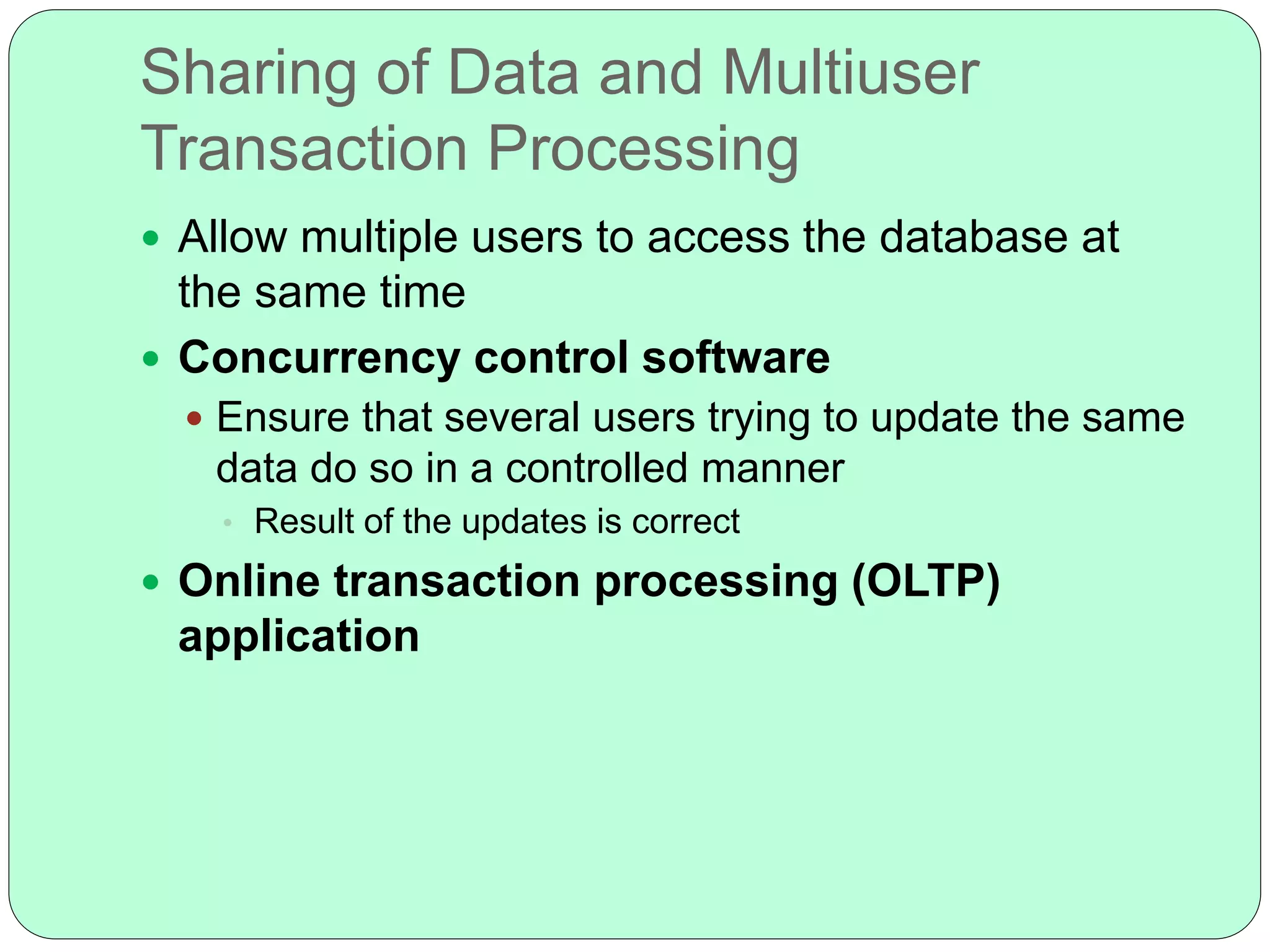
Sharing of Data and Multiuser
Transaction Processing
 Allow multiple users to access the database at
the same time
 Concurrency control software
 Ensure that several users trying to update the same
data do so in a controlled manner
• Result of the updates is correct
 Online transaction processing (OLTP)
application
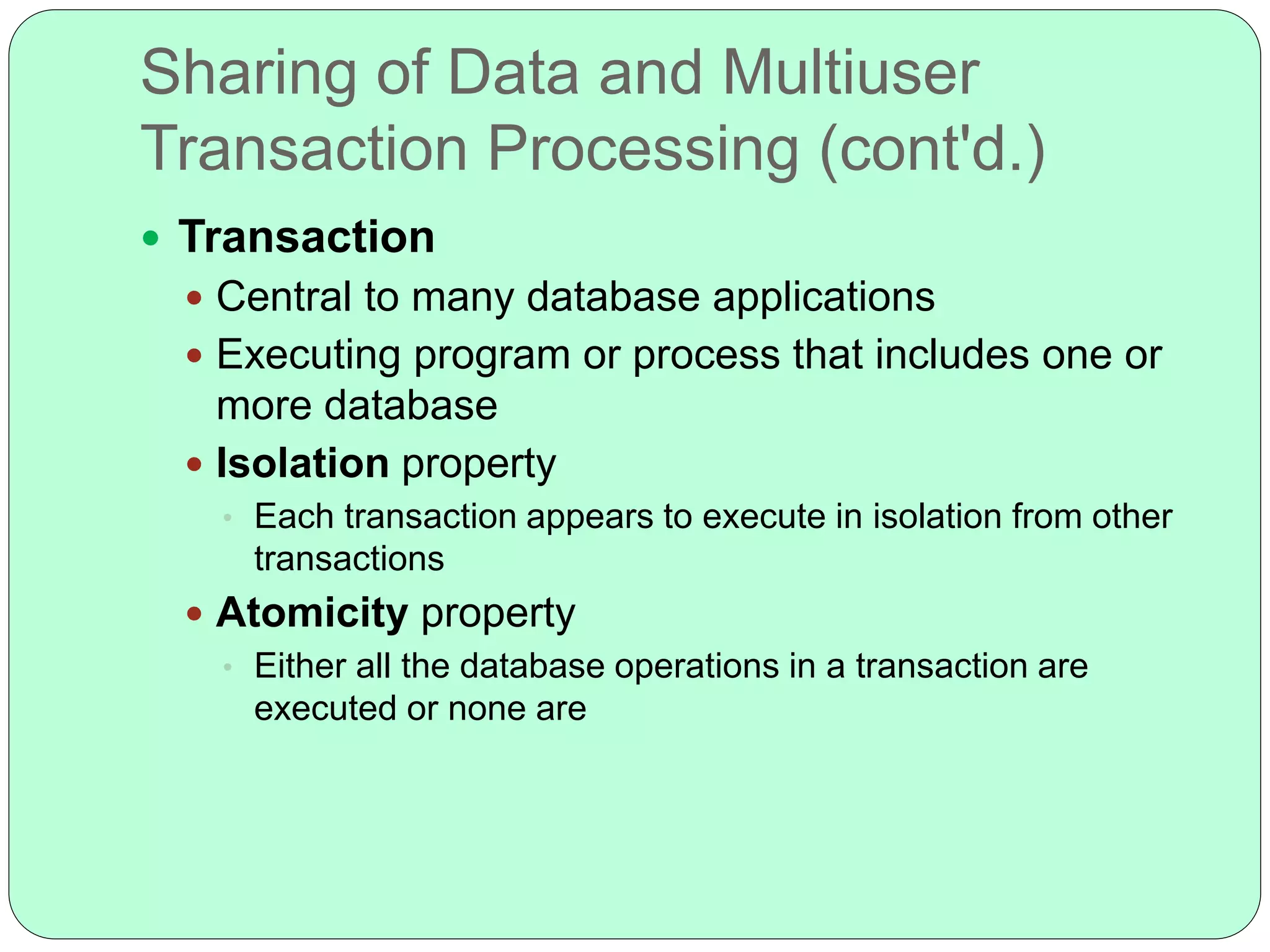
Sharing of Data and Multiuser
Transaction Processing (cont'd.)
 Transaction
 Central to many database applications
 Executing program or process that includes one or
more database
 Isolation property
• Each transaction appears to execute in isolation from other
transactions
 Atomicity property
• Either all the database operations in a transaction are
executed or none are
Advantages of Using the DBMS
Approach
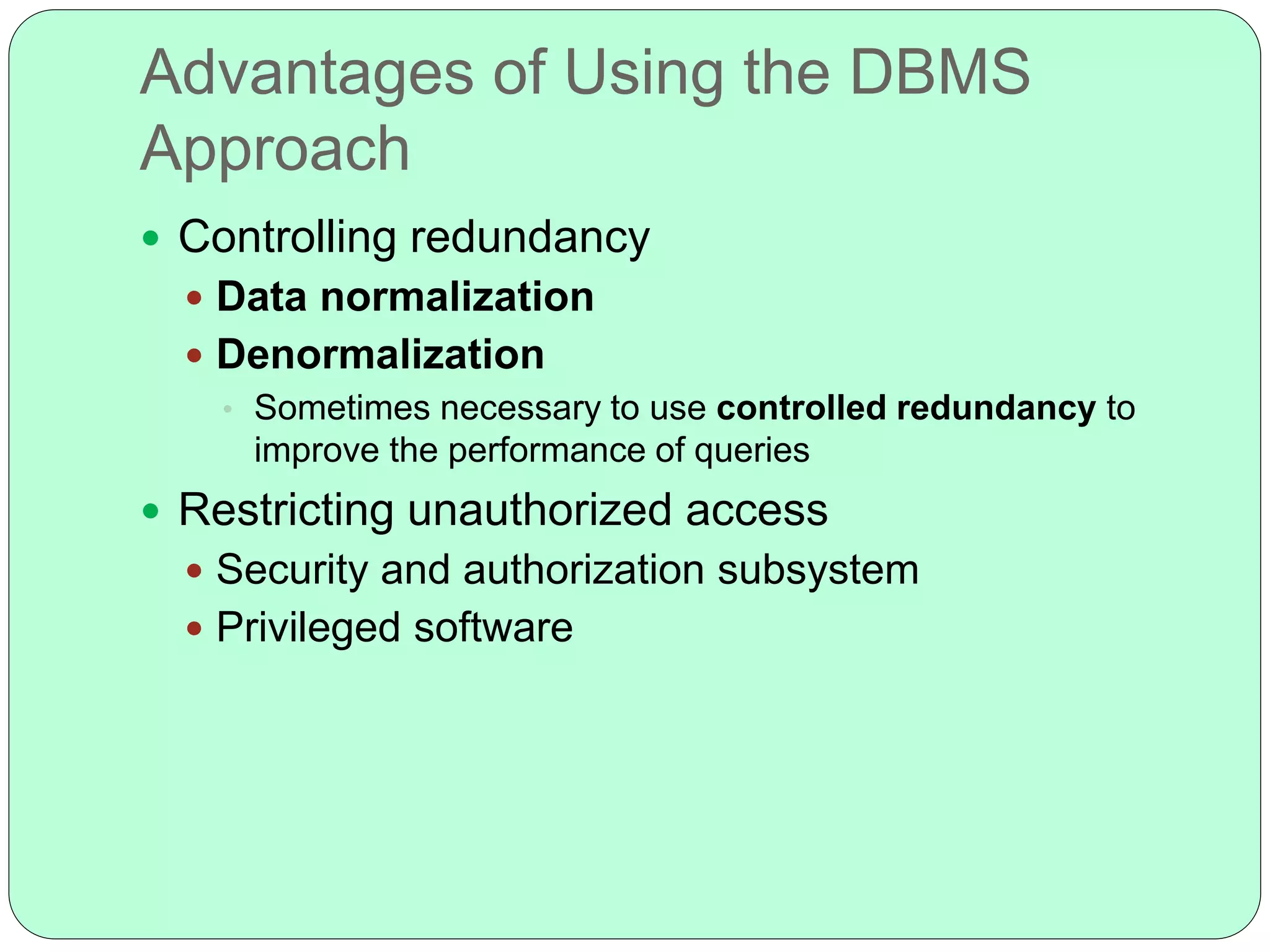
 Controlling redundancy
 Data normalization
 Denormalization
• Sometimes necessary to use controlled redundancy to
improve the performance of queries
 Restricting unauthorized access
 Security and authorization subsystem
 Privileged software
Advantages of Using the DBMS
Approach (cont'd.)
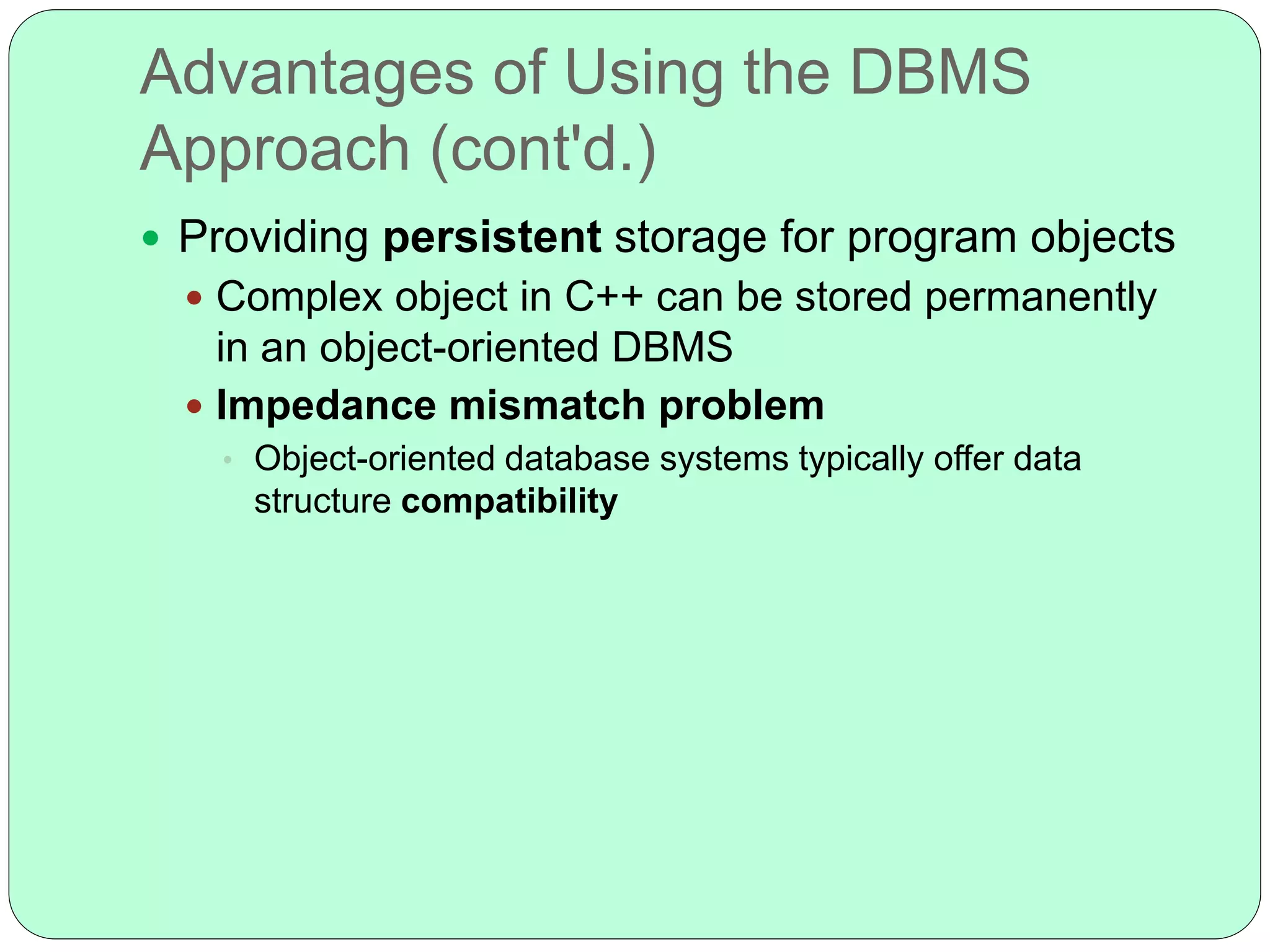
 Providing persistent storage for program objects
 Complex object in C++ can be stored permanently
in an object-oriented DBMS
 Impedance mismatch problem
• Object-oriented database systems typically offer data
structure compatibility
Advantages of Using the DBMS
Approach (cont'd.)
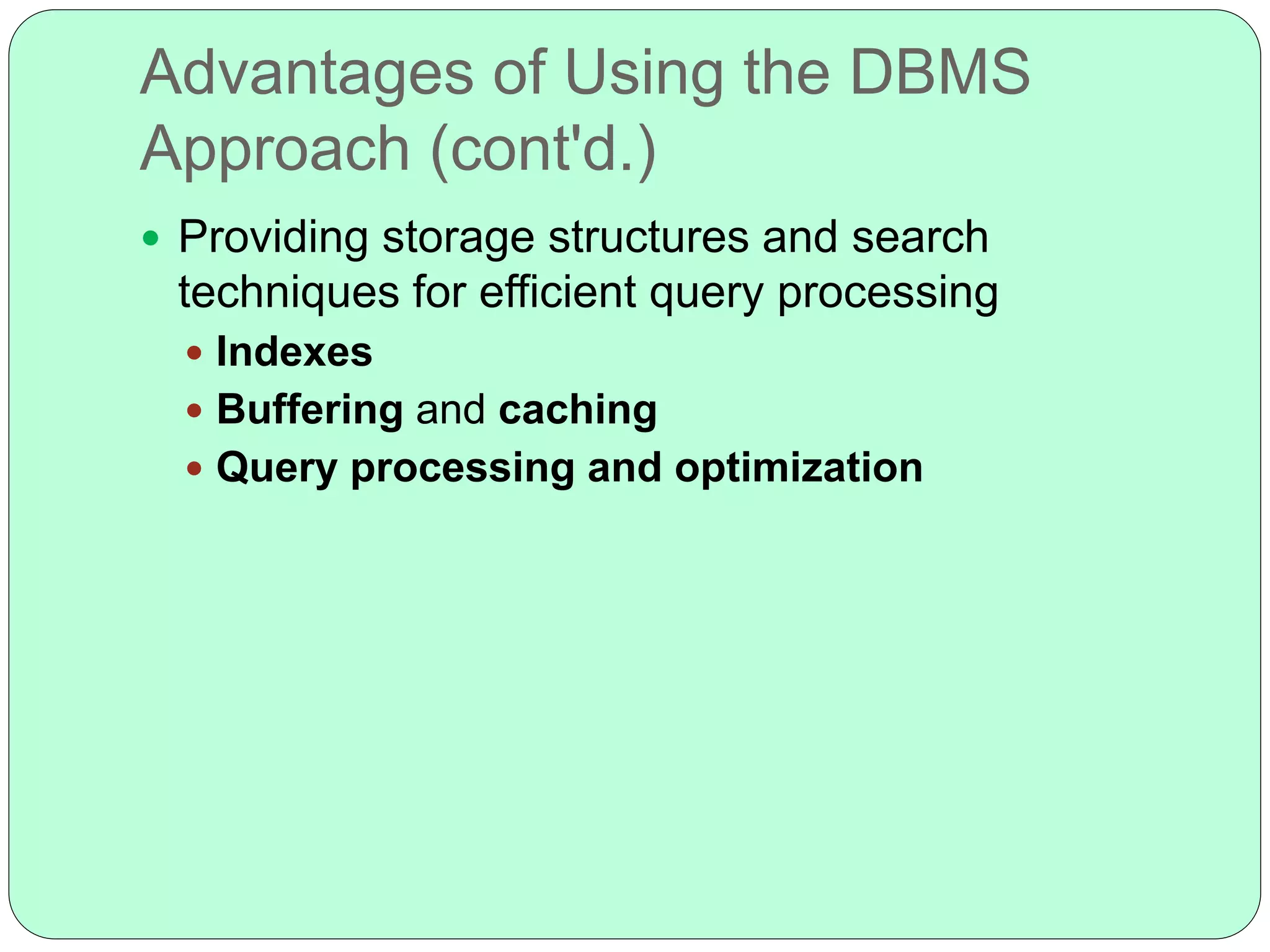
 Providing storage structures and search
techniques for efficient query processing
 Indexes
 Buffering and caching
 Query processing and optimization
Advantages of Using the DBMS
Approach (cont'd.)
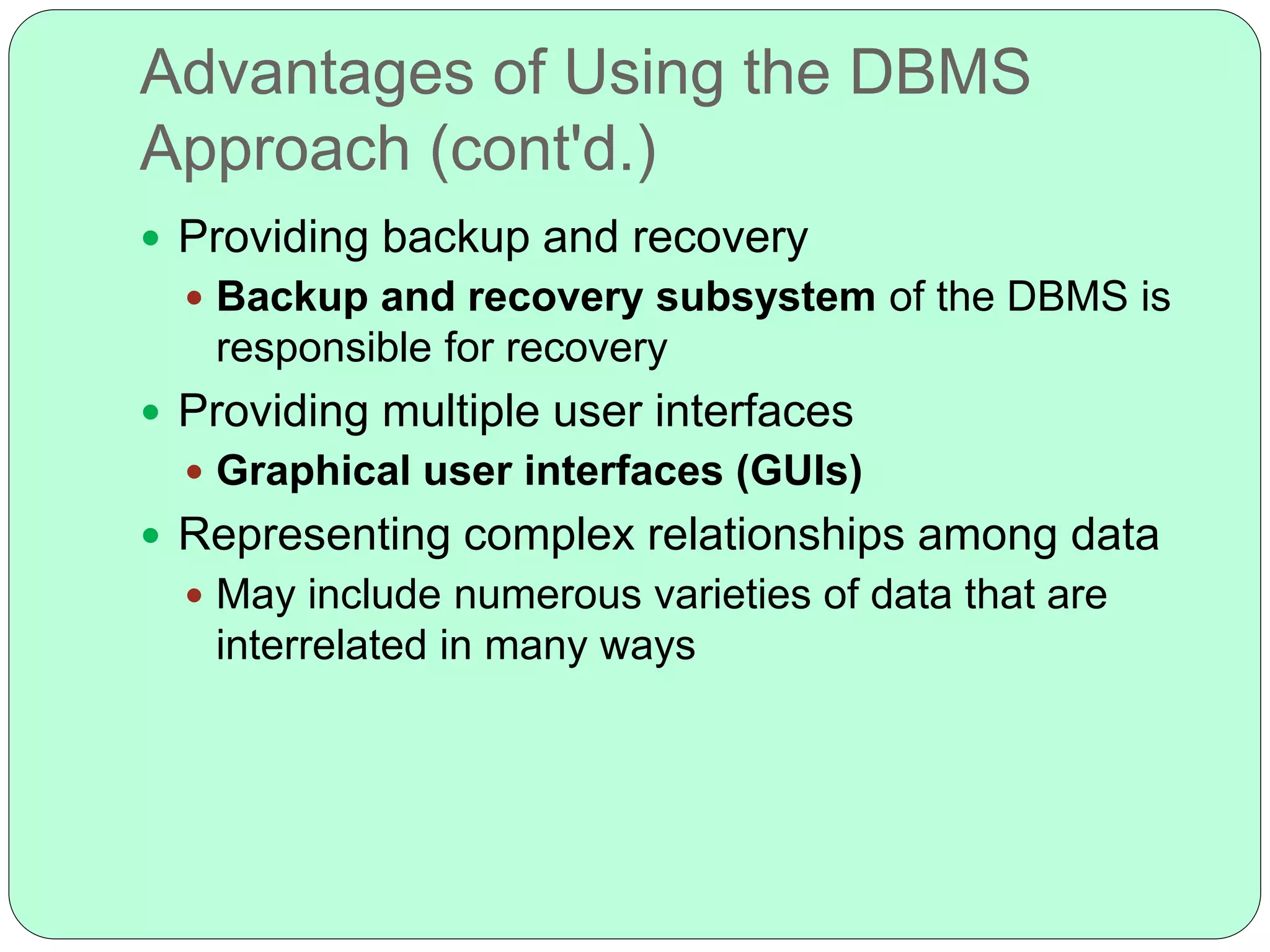
 Providing backup and recovery
 Backup and recovery subsystem of the DBMS is
responsible for recovery
 Providing multiple user interfaces
 Graphical user interfaces (GUIs)
 Representing complex relationships among data
 May include numerous varieties of data that are
interrelated in many ways
Advantages of Using the DBMS
Approach (cont'd.)
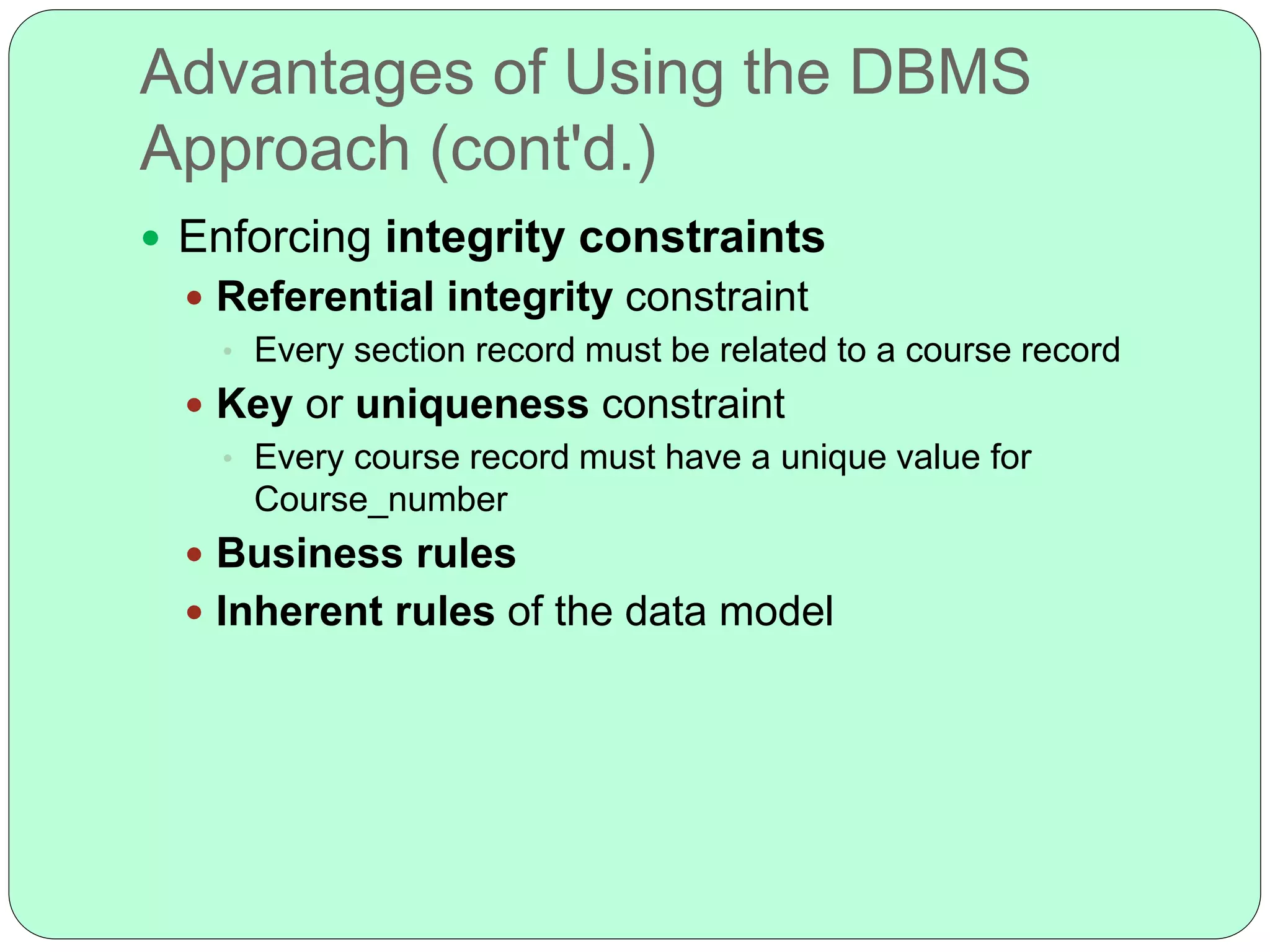
 Enforcing integrity constraints
 Referential integrity constraint
• Every section record must be related to a course record
 Key or uniqueness constraint
• Every course record must have a unique value for
Course_number
 Business rules
 Inherent rules of the data model
Advantages of Using the DBMS
Approach (cont'd.)
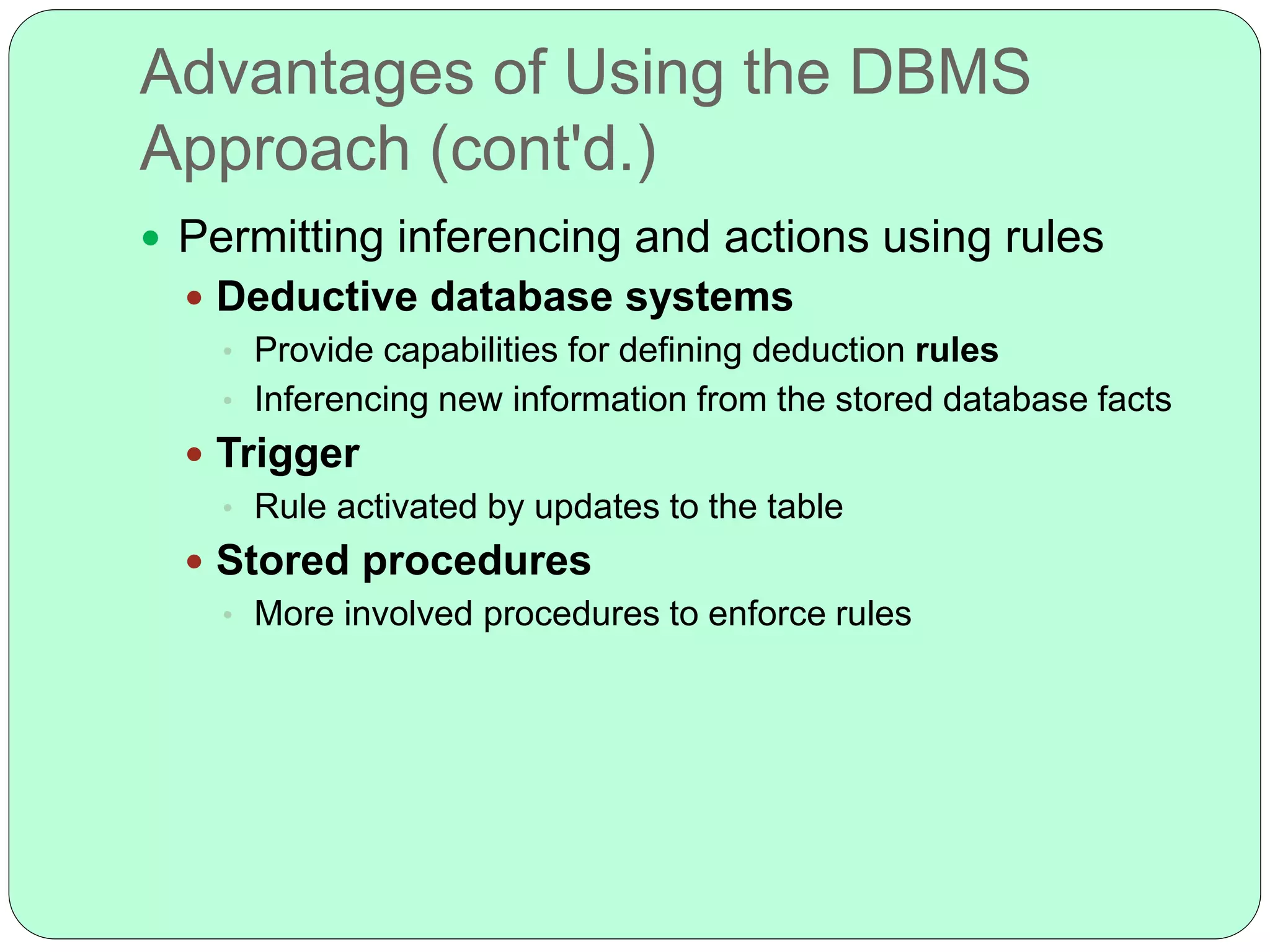
 Permitting inferencing and actions using rules
 Deductive database systems
• Provide capabilities for defining deduction rules
• Inferencing new information from the stored database facts
 Trigger
• Rule activated by updates to the table
 Stored procedures
• More involved procedures to enforce rules
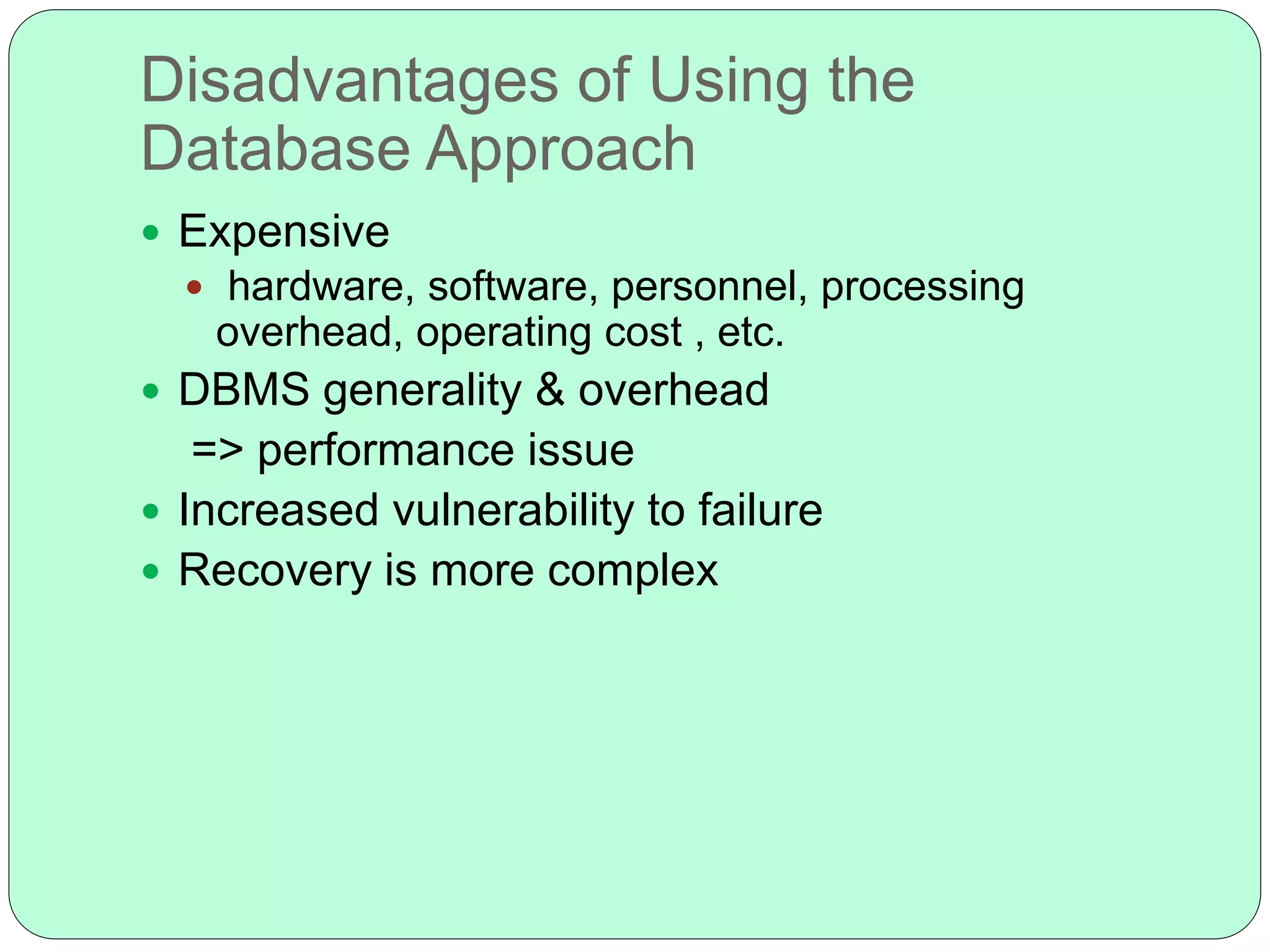
Disadvantages of Using the
Database Approach
 Expensive
 hardware, software, personnel, processing
overhead, operating cost , etc.
 DBMS generality & overhead
=> performance issue
 Increased vulnerability to failure
 Recovery is more complex
THANK YOU

Characteristic of dabase approach

  • 1.
  • 2.
    Characteristics of theDatabase Approach  Main characteristics of database approach  Self-describing nature of a database system  Insulation between programs and data  Data abstraction  Support of multiple views of the data  Sharing of data and multiuser transaction processing
  • 3.
    Self-Describing Nature ofa Database System  Database system contains complete definition of structure and constraints  Meta-data  Describes structure of the database  Database catalog used by:  DBMS software  Database users who need information about database structure
  • 4.
    Insulation Between Programsand Data  Program-data independence  Structure of data files is stored in DBMS catalog separately from access programs  Program-operation independence  Operations specified in two parts: • Interface includes operation name and data types of its arguments • Implementation can be changed without affecting the interface
  • 5.
    Data Abstraction  Dataabstraction  Allows program-data independence and program- operation independence  Conceptual representation of data  Does not include details of how data is stored or how operations are implemented  Data model  Type of data abstraction used to provide conceptual representation
  • 6.
    Support of MultipleViews of the Data  View  Subset of the database  Contains virtual data derived from the database files but is not explicitly stored  Multiuser DBMS  Users have a variety of distinct applications  Must provide facilities for defining multiple views
  • 7.
    Sharing of Dataand Multiuser Transaction Processing  Allow multiple users to access the database at the same time  Concurrency control software  Ensure that several users trying to update the same data do so in a controlled manner • Result of the updates is correct  Online transaction processing (OLTP) application
  • 8.
    Sharing of Dataand Multiuser Transaction Processing (cont'd.)  Transaction  Central to many database applications  Executing program or process that includes one or more database  Isolation property • Each transaction appears to execute in isolation from other transactions  Atomicity property • Either all the database operations in a transaction are executed or none are
  • 9.
    Advantages of Usingthe DBMS Approach  Controlling redundancy  Data normalization  Denormalization • Sometimes necessary to use controlled redundancy to improve the performance of queries  Restricting unauthorized access  Security and authorization subsystem  Privileged software
  • 10.
    Advantages of Usingthe DBMS Approach (cont'd.)  Providing persistent storage for program objects  Complex object in C++ can be stored permanently in an object-oriented DBMS  Impedance mismatch problem • Object-oriented database systems typically offer data structure compatibility
  • 11.
    Advantages of Usingthe DBMS Approach (cont'd.)  Providing storage structures and search techniques for efficient query processing  Indexes  Buffering and caching  Query processing and optimization
  • 12.
    Advantages of Usingthe DBMS Approach (cont'd.)  Providing backup and recovery  Backup and recovery subsystem of the DBMS is responsible for recovery  Providing multiple user interfaces  Graphical user interfaces (GUIs)  Representing complex relationships among data  May include numerous varieties of data that are interrelated in many ways
  • 13.
    Advantages of Usingthe DBMS Approach (cont'd.)  Enforcing integrity constraints  Referential integrity constraint • Every section record must be related to a course record  Key or uniqueness constraint • Every course record must have a unique value for Course_number  Business rules  Inherent rules of the data model
  • 14.
    Advantages of Usingthe DBMS Approach (cont'd.)  Permitting inferencing and actions using rules  Deductive database systems • Provide capabilities for defining deduction rules • Inferencing new information from the stored database facts  Trigger • Rule activated by updates to the table  Stored procedures • More involved procedures to enforce rules
  • 15.
    Disadvantages of Usingthe Database Approach  Expensive  hardware, software, personnel, processing overhead, operating cost , etc.  DBMS generality & overhead => performance issue  Increased vulnerability to failure  Recovery is more complex
  • 16.