Acute Suppurative Peritonitis   Lu Ning, PhD, MD General Surgery Department Tianjin University Hospital
THE PERITONEUM & ITS FUNCTIONS   Lubrication and protection--- Intraperitoneal circulation Nearly 1 m 2  of the total 1.7 m 2  area participates in fluid exchange with the extracellular fluid  Rate: 500 mL or more per hour.  Normally, there is less than 50 mL of free peritoneal fluid: From other sites towards subdiaphragmatic regions bilaterally
THE PERITONEUM & ITS FUNCTIONS Characteristics of peritoneal  transudate:  specific gravity below 1.016 protein concentration less than 3 g/dL white blood cell count less than 3000/uL complement-mediated antibacterial activity lack of fibrinogen-related clot formation.
PERITONITIS Definition--- an inflammatory or suppurative response of the peritoneal lining to direct irritation.  Inflammatory response of peritoneaum increased blood flow increased permeability formation of a fibrinous exudate on its surface
PERITONITIS Primary or spontaneous peritonitis  can occur as a diffuse bacterial infection without an obvious intra-abdominal source of contamination.  Secondary peritonitis  results from bacterial contamination originating from within viscera or from external sources (eg, penetrating injury).
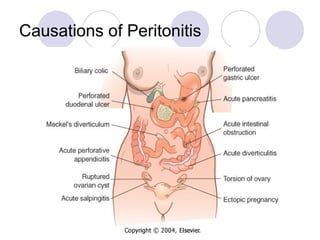
Causations of Peritonitis
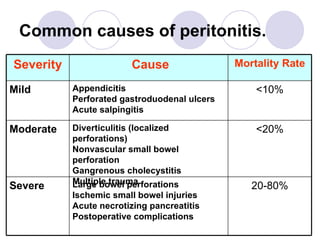
Common causes of peritonitis.   20-80% Large bowel perforations Ischemic small bowel injuries Acute necrotizing pancreatitis Postoperative complications Severe <20% Diverticulitis (localized perforations) Nonvascular small bowel perforation Gangrenous cholecystitis Multiple trauma Moderate <10% Appendicitis Perforated gastroduodenal ulcers Acute salpingitis Mild Mortality Rate Cause Severity
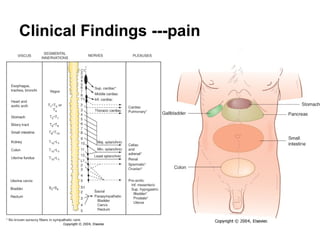
Clinical Findings ---pain
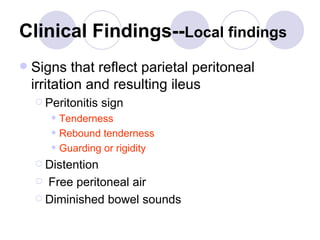
Clinical Findings-- Local findings   Signs that reflect parietal peritoneal irritation and resulting ileus  Peritonitis sign Tenderness Rebound tenderness Guarding or rigidity Distention Free peritoneal air Diminished bowel sounds
Clinical Findings  -- Systemic findings   Fever, chills or rigors, tachycardia, sweating, tachypnea, restlessness, dehydration, oliguria, disorientation, and, ultimately, refractory shock.
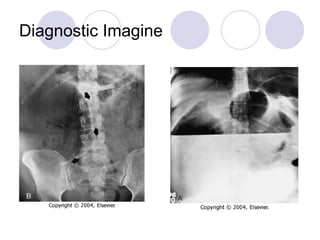
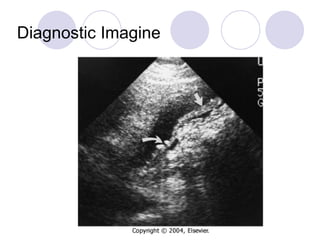
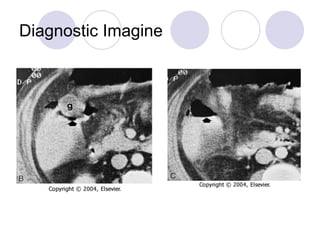
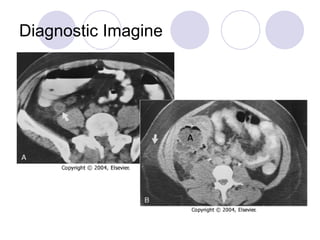
Diagnostic Imagine B-us Abdominal Plain film CT scan
Diagnostic Imagine
Diagnostic Imagine
Diagnostic Imagine
Diagnostic Imagine
Treatment  --- Preoperative Care   1. Intravenous  2. Care for advanced  3. Antibiotics
Treatment  --- Operative Managenment Objectives of surgery for peritonitis  Complete Debridment:remove all infected material Correct the underlying cause Prevent late complications.
Treatment  --- Operative Managenment Control of sepsis   Peritoneal lavage   Peritoneal drainage   Management of abdominal distention
Complications Deep wound infections Residual abscesses  Intraperitoneal sepsis Anastomotic breakdown Fistula formation

Acute Suppurative Peritonitis

  • 1.
    Acute Suppurative Peritonitis Lu Ning, PhD, MD General Surgery Department Tianjin University Hospital
  • 2.
    THE PERITONEUM &ITS FUNCTIONS Lubrication and protection--- Intraperitoneal circulation Nearly 1 m 2 of the total 1.7 m 2 area participates in fluid exchange with the extracellular fluid Rate: 500 mL or more per hour. Normally, there is less than 50 mL of free peritoneal fluid: From other sites towards subdiaphragmatic regions bilaterally
  • 3.
    THE PERITONEUM &ITS FUNCTIONS Characteristics of peritoneal transudate: specific gravity below 1.016 protein concentration less than 3 g/dL white blood cell count less than 3000/uL complement-mediated antibacterial activity lack of fibrinogen-related clot formation.
  • 4.
    PERITONITIS Definition--- aninflammatory or suppurative response of the peritoneal lining to direct irritation. Inflammatory response of peritoneaum increased blood flow increased permeability formation of a fibrinous exudate on its surface
  • 5.
    PERITONITIS Primary orspontaneous peritonitis can occur as a diffuse bacterial infection without an obvious intra-abdominal source of contamination. Secondary peritonitis results from bacterial contamination originating from within viscera or from external sources (eg, penetrating injury).
  • 6.
  • 7.
    Common causes ofperitonitis. 20-80% Large bowel perforations Ischemic small bowel injuries Acute necrotizing pancreatitis Postoperative complications Severe <20% Diverticulitis (localized perforations) Nonvascular small bowel perforation Gangrenous cholecystitis Multiple trauma Moderate <10% Appendicitis Perforated gastroduodenal ulcers Acute salpingitis Mild Mortality Rate Cause Severity
  • 8.
  • 9.
    Clinical Findings-- Localfindings Signs that reflect parietal peritoneal irritation and resulting ileus Peritonitis sign Tenderness Rebound tenderness Guarding or rigidity Distention Free peritoneal air Diminished bowel sounds
  • 10.
    Clinical Findings -- Systemic findings Fever, chills or rigors, tachycardia, sweating, tachypnea, restlessness, dehydration, oliguria, disorientation, and, ultimately, refractory shock.
  • 11.
    Diagnostic Imagine B-usAbdominal Plain film CT scan
  • 12.
  • 13.
  • 14.
  • 15.
  • 16.
    Treatment ---Preoperative Care 1. Intravenous 2. Care for advanced 3. Antibiotics
  • 17.
    Treatment ---Operative Managenment Objectives of surgery for peritonitis Complete Debridment:remove all infected material Correct the underlying cause Prevent late complications.
  • 18.
    Treatment ---Operative Managenment Control of sepsis Peritoneal lavage Peritoneal drainage Management of abdominal distention
  • 19.
    Complications Deep woundinfections Residual abscesses Intraperitoneal sepsis Anastomotic breakdown Fistula formation