Peritonitis
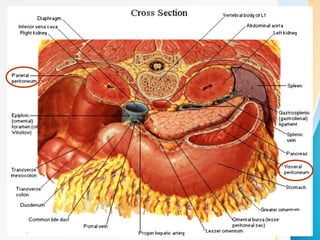
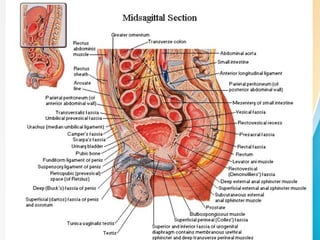
Peritonitis aka intra-abdominal infection 
• Microbial contamination of the peritoneal 
cavity 
• inflammation of the serosal membrane 
that lines the abdominal cavity and the 
organs contained therein 
• may be infectious or sterile
Primary microbial peritonitis 
• microbes invade the normally sterile 
confines of the peritoneal cavity via 
hematogenous dissemination from a 
distant source of infection or direct 
inoculation 
• invariably monomicrobial and rarely 
require surgical intervention
Primary microbial peritonitis 
• Physical examination 
– diffuse tenderness and guarding without localized 
findings 
• CBC 
– presence of more than 100 WBCs/mL 
• Imaging study 
– absence of pneumoperitoneum 
• Gram’s stain (fluid obtained via paracentesis) 
– microbes with a single morphology 
• Diagnosis: 
– established based on identification of risk factors 
(ascites, individuals who are being treated for 
renal failure via peritoneal dialysis)
Primary microbial peritonitis 
• Treatment 
– administration of an antibiotic to which the 
organism is sensitive often 14 to 21 days of 
therapy are required. 
– Removal of indwelling devices (e.g., a 
peritoneal dialysis catheter or a 
peritoneovenous shunt) may be required for 
effective therapy of recurrent infections.
Secondary microbial peritonitis 
• occurs subsequent to contamination of the 
peritoneal cavity due to perforation or 
severe inflammation and infection of an 
intra-abdominal organ 
• e.g. appendicitis, perforation of any portion 
of the gastrointestinal tract, or diverticulitis
Secondary microbial peritonitis 
• in most patients the precise diagnosis 
cannot be established until exploratory 
laparotomy is performed 
• most morbid form of this disease process 
is colonic perforation, due to the large 
number of microbes presen
Effective Therapy 
• source control to resect or repair the 
diseased organ 
• débridement of necrotic, infected tissue 
and debris 
• administration of antimicrobial agents 
directed against aerobes and anaerobes
• Effective source control and antibiotic 
therapy is associated with low failure rates 
and a mortality rate of approximately 5% 
to 6% 
• inability to control the source of infection is 
associated with mortality greater than 40%
Tertiary (persistent) peritonitis 
• develops more frequently in 
immunocompromised patients and in 
persons with significant preexisting 
comorbid conditions 
• Microbes such as Enterococcus faecalis 
and faecium, Staphylococcus epidermidis, 
Candida albicans, and Pseudomonas 
aeruginosa commonly are identified, 
typically in combination, and their presence 
may be due to their lack of responsiveness 
to the initial antibiotic regimen, coupled with 
diminished activity of host defenses
• even with effective antimicrobial agent 
therapy, this disease process is 
associated with mortality rates in excess 
of 50%.
Tertiary (persistent) peritonitis 
• Diagnosis 
– Intraabdominal abscesses can be effectively diagnosed via 
abdominal computed tomographic (CT) imaging techniques 
and drained percutaneously. 
• Surgical intervention 
– reserved for those individuals who harbor multiple abscesses, 
those with abscesses in proximity to vital structures such that 
percutaneous drainage would be hazardous, and those in 
whom an ongoing source of contamination (e.g., enteric leak) 
is identified. 
• Antimicrobial agent therapy 
– necessity not established 
• Catheter drainage 
– precise guidelines that dictate duration are not established
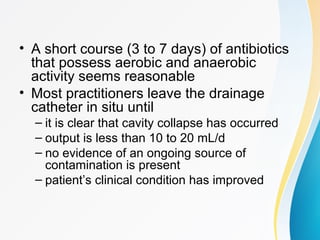
• A short course (3 to 7 days) of antibiotics 
that possess aerobic and anaerobic 
activity seems reasonable 
• Most practitioners leave the drainage 
catheter in situ until 
– it is clear that cavity collapse has occurred 
– output is less than 10 to 20 mL/d 
– no evidence of an ongoing source of 
contamination is present 
– patient’s clinical condition has improved
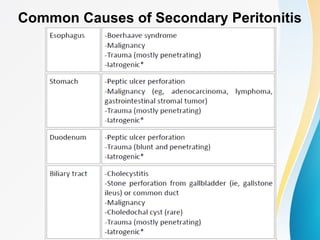
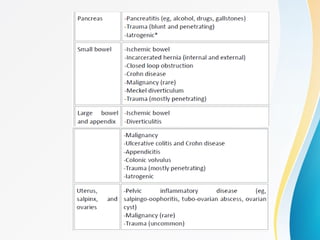
Common Causes of Secondary Peritonitis
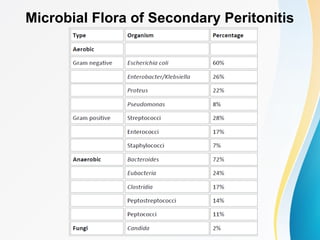
Microbial Flora of Secondary Peritonitis
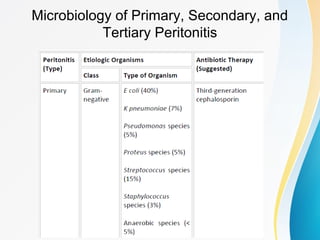
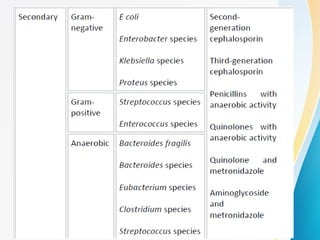
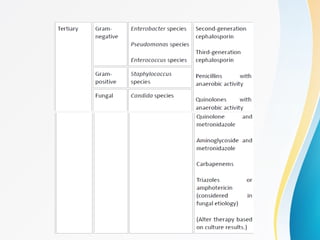
Microbiology of Primary, Secondary, and 
Tertiary Peritonitis
Peritonitis
Peritonitis

Peritonitis

  • 1.
  • 4.
    Peritonitis aka intra-abdominalinfection • Microbial contamination of the peritoneal cavity • inflammation of the serosal membrane that lines the abdominal cavity and the organs contained therein • may be infectious or sterile
  • 5.
    Primary microbial peritonitis • microbes invade the normally sterile confines of the peritoneal cavity via hematogenous dissemination from a distant source of infection or direct inoculation • invariably monomicrobial and rarely require surgical intervention
  • 6.
    Primary microbial peritonitis • Physical examination – diffuse tenderness and guarding without localized findings • CBC – presence of more than 100 WBCs/mL • Imaging study – absence of pneumoperitoneum • Gram’s stain (fluid obtained via paracentesis) – microbes with a single morphology • Diagnosis: – established based on identification of risk factors (ascites, individuals who are being treated for renal failure via peritoneal dialysis)
  • 7.
    Primary microbial peritonitis • Treatment – administration of an antibiotic to which the organism is sensitive often 14 to 21 days of therapy are required. – Removal of indwelling devices (e.g., a peritoneal dialysis catheter or a peritoneovenous shunt) may be required for effective therapy of recurrent infections.
  • 8.
    Secondary microbial peritonitis • occurs subsequent to contamination of the peritoneal cavity due to perforation or severe inflammation and infection of an intra-abdominal organ • e.g. appendicitis, perforation of any portion of the gastrointestinal tract, or diverticulitis
  • 9.
    Secondary microbial peritonitis • in most patients the precise diagnosis cannot be established until exploratory laparotomy is performed • most morbid form of this disease process is colonic perforation, due to the large number of microbes presen
  • 10.
    Effective Therapy •source control to resect or repair the diseased organ • débridement of necrotic, infected tissue and debris • administration of antimicrobial agents directed against aerobes and anaerobes
  • 11.
    • Effective sourcecontrol and antibiotic therapy is associated with low failure rates and a mortality rate of approximately 5% to 6% • inability to control the source of infection is associated with mortality greater than 40%
  • 12.
    Tertiary (persistent) peritonitis • develops more frequently in immunocompromised patients and in persons with significant preexisting comorbid conditions • Microbes such as Enterococcus faecalis and faecium, Staphylococcus epidermidis, Candida albicans, and Pseudomonas aeruginosa commonly are identified, typically in combination, and their presence may be due to their lack of responsiveness to the initial antibiotic regimen, coupled with diminished activity of host defenses
  • 13.
    • even witheffective antimicrobial agent therapy, this disease process is associated with mortality rates in excess of 50%.
  • 14.
    Tertiary (persistent) peritonitis • Diagnosis – Intraabdominal abscesses can be effectively diagnosed via abdominal computed tomographic (CT) imaging techniques and drained percutaneously. • Surgical intervention – reserved for those individuals who harbor multiple abscesses, those with abscesses in proximity to vital structures such that percutaneous drainage would be hazardous, and those in whom an ongoing source of contamination (e.g., enteric leak) is identified. • Antimicrobial agent therapy – necessity not established • Catheter drainage – precise guidelines that dictate duration are not established
  • 15.
    • A shortcourse (3 to 7 days) of antibiotics that possess aerobic and anaerobic activity seems reasonable • Most practitioners leave the drainage catheter in situ until – it is clear that cavity collapse has occurred – output is less than 10 to 20 mL/d – no evidence of an ongoing source of contamination is present – patient’s clinical condition has improved
  • 16.
    Common Causes ofSecondary Peritonitis
  • 18.
    Microbial Flora ofSecondary Peritonitis
  • 19.
    Microbiology of Primary,Secondary, and Tertiary Peritonitis