INTESTINAL
OBSTRUCTION
SHAHRUKH SULTAN AHMED
Kyiv Medical University
Department of Surgery
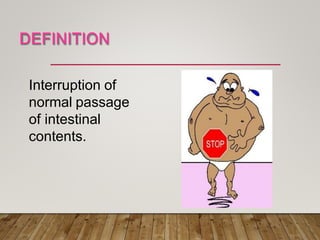
DEFINITION
Interruption of
normal passage
of intestinal
contents.
CLASSIFICATION
DYNAMIC : where peristalsis is working against a mechanical obstruction.
ADYNAMIC: it may occur in two forms
1. 1st where peristalsis may be absent (paralytic ileus,)occurring secondarily to
neuromuscular failure in the mesentery.
2. 2nd where peristalsis may be present in nonpropulsive form.(pseudo-obstruction)
3
CAUSES
 Dynamic:
1.Intraluminal: Impaction, Foreign body
Bezoars, Gallstones
2.Intramural : Stricture, Malignancy
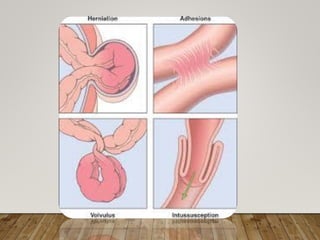
3. Extramural: Bands/adhesions, Hernia,
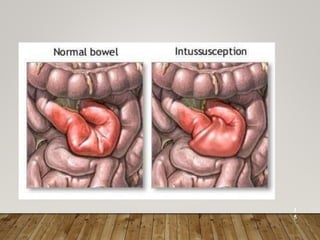
Volvulus ,Intussusception
4
 Adynamic
• Paralytic ileus,
Mesenteric vascular
occlusion,
Pseudo-obstruction
ONTHE BASIS OF NATURE IT IS
CLASSIFIED INTO
ACUTE
CHRONIC
ACUTE ON CHRONIC
SUBACUTE
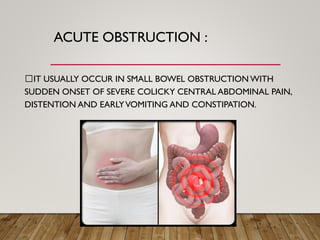
ACUTE OBSTRUCTION :
IT USUALLY OCCUR IN SMALL BOWEL OBSTRUCTION WITH
SUDDEN ONSET OF SEVERE COLICKY CENTRAL ABDOMINAL PAIN,
DISTENTION AND EARLYVOMITING AND CONSTIPATION.
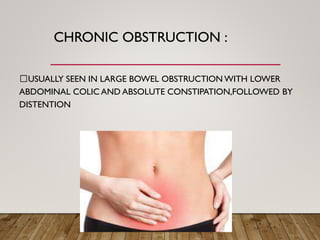
CHRONIC OBSTRUCTION :
USUALLY SEEN IN LARGE BOWEL OBSTRUCTION WITH LOWER
ABDOMINAL COLIC AND ABSOLUTE CONSTIPATION,FOLLOWED BY
DISTENTION
ACUTE ON CHRONIC OBSTRUCTION :
IT STARTS IN LARGE BOWEL BUT GRADUALLY INVOLVES THE SMALL
INTESTINE.
EARLY SYMPTOMS ARE PAIN AND CONSTIPATION BUTWHEN SMALL
INTESTINE IS INVOLVED IT IS CHARACTERIZED BYVOMITING AND
GENERAL DISTENTION.
COMMON CAUSES OF MECHANICAL
SMALL BOWEL OBSTRUCTION:
1. Adhesions and bands following abdominal surgery
2. External hernia
3. Intussusceptions
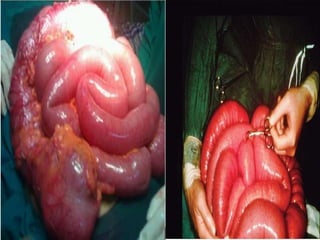
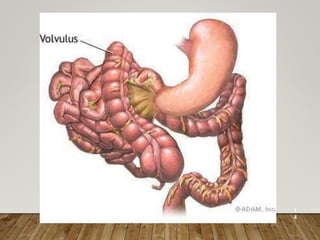
4. Volvulus
5. Neoplasm (benign or malignant).
6. Obstruction : worms
1
1
COMMON CAUSES OF MECHANICAL
LARGE BOWEL OBSTRUCTION
1
2
1. Large bowel cancer.
2. Sigmoid diverticular disease.
3. Sigmoid volvulus.
7
1
4
1
5
COMMON CAUSES OF NON-MECHANICAL
SMALL-BOWEL OBSTRUCTION
1– Paralytic ileus after abdominal surgery
2– Localized intra abdominal abscess or generalized
peritonitis
3– Mesenteric embolism or thrombosis with small
bowel infarction
4– Intestinal pseudo-obstruction
10
COMMON CAUSE OF NON-MECHANICAL
LARGE BOWEL OBSTRUCTION:
11
1 – Retroperitoneal hematoma following lumber
fracture or lumber surgery
2 – Idiopathic
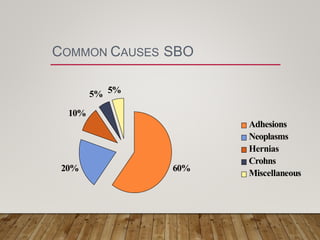
COMMON CAUSES SBO
60%20%
5% 5%
10%
Adhesions
Neoplasms
Hernias
Crohns
Miscellaneous
PATHOPHYSIOLOGY
 Dilation proximal to obstruction (gas & fluid)
Hyper-peristalsis Become Vigorous
Peristalsis Ceases Obstruction Not Relieved
Flaccid, Paralysed, Dilated Bowel
 Dehydration due to :
1. Reduced oral intake
2. Defective intestinal absorption
3. Vomiting
4. Sequestration in Bowel Lumen
MECHANICAL OBSTRUCTION:
Three main types:
1 -Simple
2 – Closed-loop
3 - Strangulation
1 -SIMPLE OBSTRUCTION
1
5
 The bowel is usually occluded at one
level.
2 - CLOSED LOOP OBSTRUCTION
 Bowel obstructed at both proximal & distal
points
 There is rapid increase in the intra luminal
tension, Gangrene or perforation can occur
more quickly, peritonitis.
 Example: Colonic obstruction with
competent ileocaecal valve
3 . STRANGULATION
 This is the end result a closed loop
obstruction when major arterial supply to the
affected bowel has been occluded , causing
gangrene over a considerable area.
MECHANICAL OBSTRUCTION
 Following questions must be answered:
1 – Is it obstruction and if so at what level ?
2 – Is strangulation present ?
3 – Is dehydration present ?
4 – What is the cause ?
5 - What is the treatment ?
1 – IS IT OBSTRUCTION,AND IF SO,
ATWHAT LEVEL ?
1
9
 The question is answered by considering the
clinical features.
Symptoms
Signs
SYMPTOMS
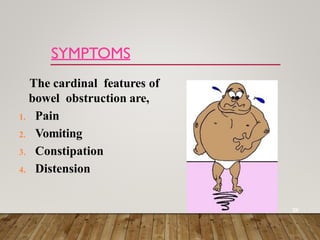
The cardinal features of
bowel obstruction are,
1. Pain
2. Vomiting
3. Constipation
4. Distension
20
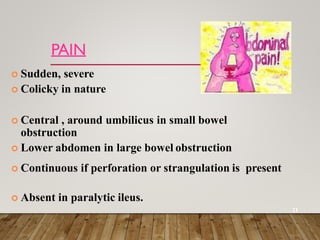
PAIN
 Sudden, severe
 Colicky in nature
 Central , around umbilicus in small bowel
obstruction
 Lower abdomen in large bowel obstruction
 Continuous if perforation or strangulation is present
 Absent in paralytic ileus.
21
VOMITING
2
2
 Early in high small bowel obstruction,
 Late in low small bowel obstruction ,
 Delayed or absent in large bowel obstruction.
 Character : initially clear ,becomes discolored
, and finally feculent (dark and foul smiling).
CONSTIPATION
2
3
 Early in large bowel obstruction
 Absolute in complete obstruction
Local signs in the abdomen are:
 Inspection:
 Scar
 Distension, central in small bowel obstruction and peripheral
in large bowel obstruction
 Visible peristalsis
SIGNS
2
5
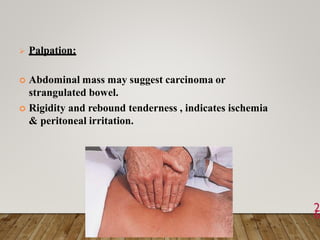
 Palpation:
 Abdominal mass may suggest carcinoma or
strangulated bowel.
 Rigidity and rebound tenderness , indicates ischemia
& peritoneal irritation.
2
6
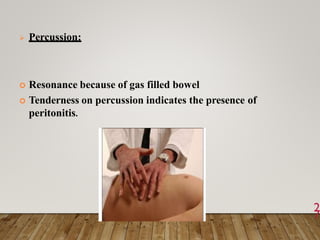
 Percussion:
 Resonance because of gas filled bowel
 Tenderness on percussion indicates the presence of
peritonitis.
2
7
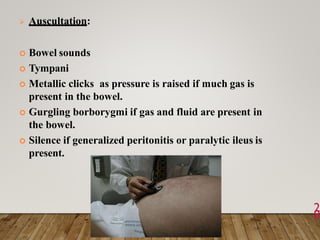
 Auscultation:
 Bowel sounds
 Tympani
 Metallic clicks as pressure is raised if much gas is
present in the bowel.
 Gurgling borborygmi if gas and fluid are present in
the bowel.
 Silence if generalized peritonitis or paralytic ileus is
present.
2
8
 On rectal examination:
 Impacted feces
 Rectal cancer
 Blood on finger which maybe present with mesenteric
artery occlusions, intussusception or Volvulus.
2
9
2 – IS STRANGULATION PRESENT ?
 Fever
 Tachycardia,
 Leukocytosis
 Constant pain
 Rebound Tenderness & rigidity
 Shock
30
3 – Is Dehydration present ?
 Tachycardia
 Hypotension
 Dry skin
 Dry mouth
 Poor skin turgor
 Small volume concentrated urine.
3
1
4 - WHAT ISTHE CAUSE?
3
2
1 - Previous abdominal surgery and features of small
bowel obstructions suggest adhesions, The attacks may
have been recurrent
2 - Large bowel obstruction and history of constipation
with intermittent mucous or bloody diarrhea suggest
carcinoma of the colon
3 – No previous operations and symptoms of small bowel
obstruction suggest obstructed hernia or an
uncommon cause such as congenital band, internal
hernia or mesenteric occlusion.
 Laboratory Examination
1. Complete blood count (WBC)
2. Serum electrolytes and amylase determination
3. Arterial blood gas analysis
INVESTIGATIONS
INVESTIGATIONS
 Radiologic Examination
1. Sigmoidoscopy (Carcinoma, Sigmoid Volvulus,
Inflammatory stricture)
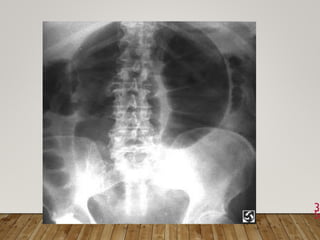
2. Plain X-ray of the abdomen, erect
3. Single- contrast water-soluble enema study
4. CT Scan
3
5
5 – MANAGEMENT
3
6
Non operative :
• In case of Simple obstruction without strangulation .
• Gastrointestinal decompression: NG tube
• IV fluid
• Antibiotics
 Operative:
• Usually surgery
• Replace fluid before surgery
Intestinal obstruction

Intestinal obstruction

  • 1.
    INTESTINAL OBSTRUCTION SHAHRUKH SULTAN AHMED KyivMedical University Department of Surgery
  • 2.
  • 3.
    CLASSIFICATION DYNAMIC : whereperistalsis is working against a mechanical obstruction. ADYNAMIC: it may occur in two forms 1. 1st where peristalsis may be absent (paralytic ileus,)occurring secondarily to neuromuscular failure in the mesentery. 2. 2nd where peristalsis may be present in nonpropulsive form.(pseudo-obstruction) 3
  • 4.
    CAUSES  Dynamic: 1.Intraluminal: Impaction,Foreign body Bezoars, Gallstones 2.Intramural : Stricture, Malignancy 3. Extramural: Bands/adhesions, Hernia, Volvulus ,Intussusception 4  Adynamic • Paralytic ileus, Mesenteric vascular occlusion, Pseudo-obstruction
  • 5.
    ONTHE BASIS OFNATURE IT IS CLASSIFIED INTO ACUTE CHRONIC ACUTE ON CHRONIC SUBACUTE
  • 6.
    ACUTE OBSTRUCTION : ITUSUALLY OCCUR IN SMALL BOWEL OBSTRUCTION WITH SUDDEN ONSET OF SEVERE COLICKY CENTRAL ABDOMINAL PAIN, DISTENTION AND EARLYVOMITING AND CONSTIPATION.
  • 7.
    CHRONIC OBSTRUCTION : USUALLYSEEN IN LARGE BOWEL OBSTRUCTION WITH LOWER ABDOMINAL COLIC AND ABSOLUTE CONSTIPATION,FOLLOWED BY DISTENTION
  • 8.
    ACUTE ON CHRONICOBSTRUCTION : IT STARTS IN LARGE BOWEL BUT GRADUALLY INVOLVES THE SMALL INTESTINE. EARLY SYMPTOMS ARE PAIN AND CONSTIPATION BUTWHEN SMALL INTESTINE IS INVOLVED IT IS CHARACTERIZED BYVOMITING AND GENERAL DISTENTION.
  • 11.
    COMMON CAUSES OFMECHANICAL SMALL BOWEL OBSTRUCTION: 1. Adhesions and bands following abdominal surgery 2. External hernia 3. Intussusceptions 4. Volvulus 5. Neoplasm (benign or malignant). 6. Obstruction : worms 1 1
  • 12.
    COMMON CAUSES OFMECHANICAL LARGE BOWEL OBSTRUCTION 1 2 1. Large bowel cancer. 2. Sigmoid diverticular disease. 3. Sigmoid volvulus.
  • 13.
  • 14.
  • 15.
  • 16.
    COMMON CAUSES OFNON-MECHANICAL SMALL-BOWEL OBSTRUCTION 1– Paralytic ileus after abdominal surgery 2– Localized intra abdominal abscess or generalized peritonitis 3– Mesenteric embolism or thrombosis with small bowel infarction 4– Intestinal pseudo-obstruction 10
  • 17.
    COMMON CAUSE OFNON-MECHANICAL LARGE BOWEL OBSTRUCTION: 11 1 – Retroperitoneal hematoma following lumber fracture or lumber surgery 2 – Idiopathic
  • 18.
    COMMON CAUSES SBO 60%20% 5%5% 10% Adhesions Neoplasms Hernias Crohns Miscellaneous
  • 19.
    PATHOPHYSIOLOGY  Dilation proximalto obstruction (gas & fluid) Hyper-peristalsis Become Vigorous Peristalsis Ceases Obstruction Not Relieved Flaccid, Paralysed, Dilated Bowel  Dehydration due to : 1. Reduced oral intake 2. Defective intestinal absorption 3. Vomiting 4. Sequestration in Bowel Lumen
  • 20.
    MECHANICAL OBSTRUCTION: Three maintypes: 1 -Simple 2 – Closed-loop 3 - Strangulation
  • 21.
    1 -SIMPLE OBSTRUCTION 1 5 The bowel is usually occluded at one level.
  • 22.
    2 - CLOSEDLOOP OBSTRUCTION  Bowel obstructed at both proximal & distal points  There is rapid increase in the intra luminal tension, Gangrene or perforation can occur more quickly, peritonitis.  Example: Colonic obstruction with competent ileocaecal valve
  • 23.
    3 . STRANGULATION This is the end result a closed loop obstruction when major arterial supply to the affected bowel has been occluded , causing gangrene over a considerable area.
  • 24.
    MECHANICAL OBSTRUCTION  Followingquestions must be answered: 1 – Is it obstruction and if so at what level ? 2 – Is strangulation present ? 3 – Is dehydration present ? 4 – What is the cause ? 5 - What is the treatment ?
  • 25.
    1 – ISIT OBSTRUCTION,AND IF SO, ATWHAT LEVEL ? 1 9  The question is answered by considering the clinical features. Symptoms Signs
  • 26.
    SYMPTOMS The cardinal featuresof bowel obstruction are, 1. Pain 2. Vomiting 3. Constipation 4. Distension 20
  • 27.
    PAIN  Sudden, severe Colicky in nature  Central , around umbilicus in small bowel obstruction  Lower abdomen in large bowel obstruction  Continuous if perforation or strangulation is present  Absent in paralytic ileus. 21
  • 28.
    VOMITING 2 2  Early inhigh small bowel obstruction,  Late in low small bowel obstruction ,  Delayed or absent in large bowel obstruction.  Character : initially clear ,becomes discolored , and finally feculent (dark and foul smiling).
  • 29.
    CONSTIPATION 2 3  Early inlarge bowel obstruction  Absolute in complete obstruction
  • 30.
    Local signs inthe abdomen are:  Inspection:  Scar  Distension, central in small bowel obstruction and peripheral in large bowel obstruction  Visible peristalsis SIGNS 2 5
  • 31.
     Palpation:  Abdominalmass may suggest carcinoma or strangulated bowel.  Rigidity and rebound tenderness , indicates ischemia & peritoneal irritation. 2 6
  • 32.
     Percussion:  Resonancebecause of gas filled bowel  Tenderness on percussion indicates the presence of peritonitis. 2 7
  • 33.
     Auscultation:  Bowelsounds  Tympani  Metallic clicks as pressure is raised if much gas is present in the bowel.  Gurgling borborygmi if gas and fluid are present in the bowel.  Silence if generalized peritonitis or paralytic ileus is present. 2 8
  • 34.
     On rectalexamination:  Impacted feces  Rectal cancer  Blood on finger which maybe present with mesenteric artery occlusions, intussusception or Volvulus. 2 9
  • 35.
    2 – ISSTRANGULATION PRESENT ?  Fever  Tachycardia,  Leukocytosis  Constant pain  Rebound Tenderness & rigidity  Shock 30
  • 36.
    3 – IsDehydration present ?  Tachycardia  Hypotension  Dry skin  Dry mouth  Poor skin turgor  Small volume concentrated urine. 3 1
  • 37.
    4 - WHATISTHE CAUSE? 3 2 1 - Previous abdominal surgery and features of small bowel obstructions suggest adhesions, The attacks may have been recurrent 2 - Large bowel obstruction and history of constipation with intermittent mucous or bloody diarrhea suggest carcinoma of the colon 3 – No previous operations and symptoms of small bowel obstruction suggest obstructed hernia or an uncommon cause such as congenital band, internal hernia or mesenteric occlusion.
  • 38.
     Laboratory Examination 1.Complete blood count (WBC) 2. Serum electrolytes and amylase determination 3. Arterial blood gas analysis INVESTIGATIONS
  • 39.
    INVESTIGATIONS  Radiologic Examination 1.Sigmoidoscopy (Carcinoma, Sigmoid Volvulus, Inflammatory stricture) 2. Plain X-ray of the abdomen, erect 3. Single- contrast water-soluble enema study 4. CT Scan
  • 40.
  • 41.
    5 – MANAGEMENT 3 6 Nonoperative : • In case of Simple obstruction without strangulation . • Gastrointestinal decompression: NG tube • IV fluid • Antibiotics  Operative: • Usually surgery • Replace fluid before surgery