Name:
Arooba Asmat
Subject:
Medicine
Topic:
“Meningitis”
Date:
28October2015Wednesday
Meningitis
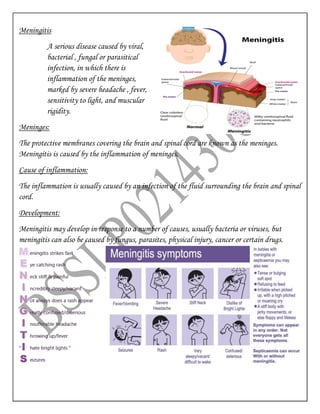
A serious disease caused by viral,
bacterial , fungal or parasitical
infection, in which there is
inflammation of the meninges,
marked by severe headache , fever,
sensitivity to light, and muscular
rigidity.
Meninges:
The protective membranes covering the brain and spinal cord are known as the meninges.
Meningitis is caused by the inflammation of meninges.
Cause of inflammation:
The inflammation is usually caused by an infection of the fluid surrounding the brain and spinal
cord.
Development:
Meningitis may develop in response to a number of causes, usually bacteria or viruses, but
meningitis can also be caused by fungus, parasites, physical injury, cancer or certain drugs.
Bacterial meningitis:
It is usually severe. While most people with meningitis recover, it can cause serious
complications, such as brain damage, hearing loss, or learning disabilities.
Pathogens:
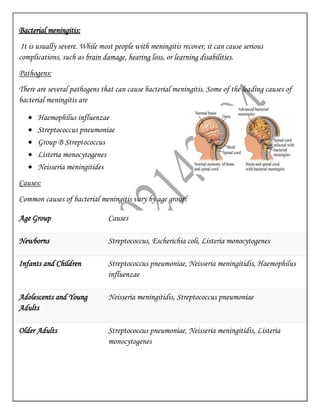
There are several pathogens that can cause bacterial meningitis. Some of the leading causes of
bacterial meningitis are
 Haemophilus influenzae
 Streptococcus pneumoniae
 Group B Streptococcus
 Listeria monocytogenes
 Neisseria meningitides
Causes:
Common causes of bacterial meningitis vary by age group:
Age Group Causes
Newborns Streptococcus, Escherichia coli, Listeria monocytogenes
Infants and Children Streptococcus pneumoniae, Neisseria meningitidis, Haemophilus
influenzae
Adolescents and Young
Adults
Neisseria meningitidis, Streptococcus pneumoniae
Older Adults Streptococcus pneumoniae, Neisseria meningitidis, Listeria
monocytogenes
Signs and Symptoms:
Meningitis infection may show up in a person by a sudden onset of
 Fever
 Headache
 Stiff neck
 Nausea
 Vomiting
 Increased sensitivity to light
 Altered mental status (confusion)
The symptoms of bacterial meningitis can appear quickly or over several days. Typically they
develop within 3-7 days after exposure.
Treatment:
Bacterial meningitis can be treated effectively with antibiotics. Treatment should be started as
soon as possible.
Prevention:
There are vaccines for three types of bacteria that can cause meningitis:
 Neisseria meningitidis (meningococcus)
 Streptococcus pneumoniae (pneumococcus)
 Haemophilus influenzae (Hib)
Antibiotics may be recommended for close contacts of people with meningococcal meningitis.
Viral meningitis:
Viral meningitis is the most common type of meningitis. It is often less severe than bacterial
meningitis, and most people usually get better on their own (without treatment). However,
infants younger than 1 month old and people with weakened immune systems are more likely to
have severe illness.
Causes:
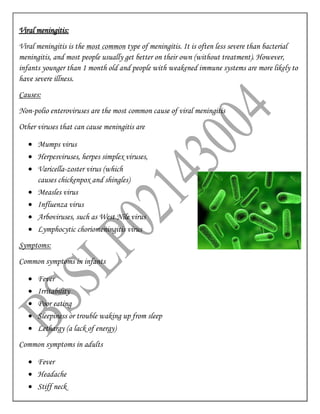
Non-polio enteroviruses are the most common cause of viral meningitis
Other viruses that can cause meningitis are
 Mumps virus
 Herpesviruses, herpes simplex viruses,
 Varicella-zoster virus (which
causes chickenpox and shingles)
 Measles virus
 Influenza virus
 Arboviruses, such as West Nile virus
 Lymphocytic choriomeningitis virus
Symptoms:
Common symptoms in infants
 Fever
 Irritability
 Poor eating
 Sleepiness or trouble waking up from sleep
 Lethargy (a lack of energy)
Common symptoms in adults
 Fever
 Headache
 Stiff neck
 Sensitivity to bright light
 Sleepiness or trouble waking up from sleep
 Nausea
 Vomiting
 Lack of appetite
 Lethargy
Most people with viral meningitis usually get better on their own within 7 to 10 days.
Treatment:
In most cases, there is no specific treatment for viral meningitis. Most people who get viral
meningitis completely recover on their own within 7 to 10 days.
However, people with meningitis caused by certain viruses such as herpesvirus and influenza,
may benefit from treatment with an antiviral medication.
Antibiotics do not help viral infections, so they are not useful in the treatment of viral
meningitis.
Prevention:
There are no vaccines to protect against non-polio enteroviruses, which are the most common
cause of viral meningitis.
Following steps to help lower your chances of getting infected with non-polio enteroviruses or
spreading them to other people:
 Wash your hands often with soap and water, especially after changing diapers, using the
toilet, or coughing or blowing your nose.
 Avoid touching your face with unwashed hands.
 Avoid close contact such as kissing, hugging, or sharing cups or eating utensils with
people who are sick.
 Cover your coughs and sneezes with a tissue or your upper shirt sleeve, not your hands.
 Clean and disinfect frequently touched surfaces, such as toys and doorknobs, especially if
someone is sick.
 Stay home when you are sick
Some vaccinations can protect against diseases such as
 Measles
 Mumps
 Chickenpox
 Influenza
Avoid bites from mosquitoes and other insects that carry diseases that can infect humans.
Fungal meningitis:
Fungal meningitis is rare and usually the result of spread of a fungus through blood to the
spinal cord.
Causes:
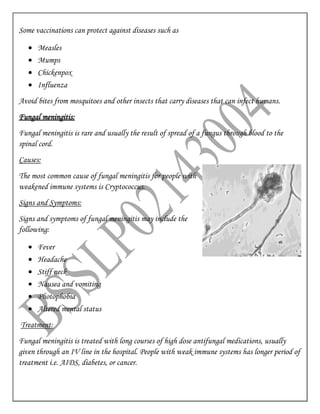
The most common cause of fungal meningitis for people with
weakened immune systems is Cryptococcus.
Signs and Symptoms:
Signs and symptoms of fungal meningitis may include the
following:
 Fever
 Headache
 Stiff neck
 Nausea and vomiting
 Photophobia
 Altered mental status
Treatment:
Fungal meningitis is treated with long courses of high dose antifungal medications, usually
given through an IV line in the hospital. People with weak immune systems has longer period of
treatment i.e. AIDS, diabetes, or cancer.
Parasitic meningitis:
Primary amebic meningoencephalitis (PAM) is a very rare
form of parasitic meningitis that causes a brain infection that
is usually fatal.
Causes:
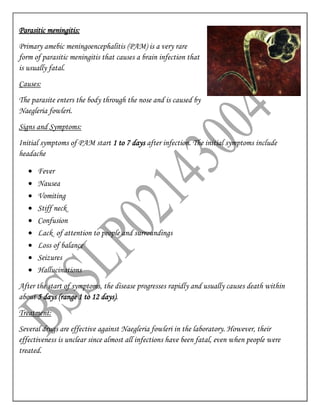
The parasite enters the body through the nose and is caused by
Naegleria fowleri.
Signs and Symptoms:
Initial symptoms of PAM start 1 to 7 days after infection. The initial symptoms include
headache
 Fever
 Nausea
 Vomiting
 Stiff neck
 Confusion
 Lack of attention to people and surroundings
 Loss of balance
 Seizures
 Hallucinations
After the start of symptoms, the disease progresses rapidly and usually causes death within
about 5 days (range 1 to 12 days).
Treatment:
Several drugs are effective against Naegleria fowleri in the laboratory. However, their
effectiveness is unclear since almost all infections have been fatal, even when people were
treated.
Non–infectious meningitis:
Causes:
 Cancers
 Systemic lupus
 Certain drugs
 Head injury
 Brain surgery
Signs and Symptoms:
It is characterized by a sudden onset of
 Fever
 Headache
 Stiff neck
 Nausea
 Vomiting
 Photophobia
 Altered mental status
Meningitis

Meningitis

  • 1.
  • 2.
    Meningitis A serious diseasecaused by viral, bacterial , fungal or parasitical infection, in which there is inflammation of the meninges, marked by severe headache , fever, sensitivity to light, and muscular rigidity. Meninges: The protective membranes covering the brain and spinal cord are known as the meninges. Meningitis is caused by the inflammation of meninges. Cause of inflammation: The inflammation is usually caused by an infection of the fluid surrounding the brain and spinal cord. Development: Meningitis may develop in response to a number of causes, usually bacteria or viruses, but meningitis can also be caused by fungus, parasites, physical injury, cancer or certain drugs.
  • 3.
    Bacterial meningitis: It isusually severe. While most people with meningitis recover, it can cause serious complications, such as brain damage, hearing loss, or learning disabilities. Pathogens: There are several pathogens that can cause bacterial meningitis. Some of the leading causes of bacterial meningitis are  Haemophilus influenzae  Streptococcus pneumoniae  Group B Streptococcus  Listeria monocytogenes  Neisseria meningitides Causes: Common causes of bacterial meningitis vary by age group: Age Group Causes Newborns Streptococcus, Escherichia coli, Listeria monocytogenes Infants and Children Streptococcus pneumoniae, Neisseria meningitidis, Haemophilus influenzae Adolescents and Young Adults Neisseria meningitidis, Streptococcus pneumoniae Older Adults Streptococcus pneumoniae, Neisseria meningitidis, Listeria monocytogenes
  • 4.
    Signs and Symptoms: Meningitisinfection may show up in a person by a sudden onset of  Fever  Headache  Stiff neck  Nausea  Vomiting  Increased sensitivity to light  Altered mental status (confusion) The symptoms of bacterial meningitis can appear quickly or over several days. Typically they develop within 3-7 days after exposure. Treatment: Bacterial meningitis can be treated effectively with antibiotics. Treatment should be started as soon as possible. Prevention: There are vaccines for three types of bacteria that can cause meningitis:  Neisseria meningitidis (meningococcus)  Streptococcus pneumoniae (pneumococcus)  Haemophilus influenzae (Hib) Antibiotics may be recommended for close contacts of people with meningococcal meningitis.
  • 5.
    Viral meningitis: Viral meningitisis the most common type of meningitis. It is often less severe than bacterial meningitis, and most people usually get better on their own (without treatment). However, infants younger than 1 month old and people with weakened immune systems are more likely to have severe illness. Causes: Non-polio enteroviruses are the most common cause of viral meningitis Other viruses that can cause meningitis are  Mumps virus  Herpesviruses, herpes simplex viruses,  Varicella-zoster virus (which causes chickenpox and shingles)  Measles virus  Influenza virus  Arboviruses, such as West Nile virus  Lymphocytic choriomeningitis virus Symptoms: Common symptoms in infants  Fever  Irritability  Poor eating  Sleepiness or trouble waking up from sleep  Lethargy (a lack of energy) Common symptoms in adults  Fever  Headache  Stiff neck
  • 6.
     Sensitivity tobright light  Sleepiness or trouble waking up from sleep  Nausea  Vomiting  Lack of appetite  Lethargy Most people with viral meningitis usually get better on their own within 7 to 10 days. Treatment: In most cases, there is no specific treatment for viral meningitis. Most people who get viral meningitis completely recover on their own within 7 to 10 days. However, people with meningitis caused by certain viruses such as herpesvirus and influenza, may benefit from treatment with an antiviral medication. Antibiotics do not help viral infections, so they are not useful in the treatment of viral meningitis. Prevention: There are no vaccines to protect against non-polio enteroviruses, which are the most common cause of viral meningitis. Following steps to help lower your chances of getting infected with non-polio enteroviruses or spreading them to other people:  Wash your hands often with soap and water, especially after changing diapers, using the toilet, or coughing or blowing your nose.  Avoid touching your face with unwashed hands.  Avoid close contact such as kissing, hugging, or sharing cups or eating utensils with people who are sick.  Cover your coughs and sneezes with a tissue or your upper shirt sleeve, not your hands.  Clean and disinfect frequently touched surfaces, such as toys and doorknobs, especially if someone is sick.  Stay home when you are sick
  • 7.
    Some vaccinations canprotect against diseases such as  Measles  Mumps  Chickenpox  Influenza Avoid bites from mosquitoes and other insects that carry diseases that can infect humans. Fungal meningitis: Fungal meningitis is rare and usually the result of spread of a fungus through blood to the spinal cord. Causes: The most common cause of fungal meningitis for people with weakened immune systems is Cryptococcus. Signs and Symptoms: Signs and symptoms of fungal meningitis may include the following:  Fever  Headache  Stiff neck  Nausea and vomiting  Photophobia  Altered mental status Treatment: Fungal meningitis is treated with long courses of high dose antifungal medications, usually given through an IV line in the hospital. People with weak immune systems has longer period of treatment i.e. AIDS, diabetes, or cancer.
  • 8.
    Parasitic meningitis: Primary amebicmeningoencephalitis (PAM) is a very rare form of parasitic meningitis that causes a brain infection that is usually fatal. Causes: The parasite enters the body through the nose and is caused by Naegleria fowleri. Signs and Symptoms: Initial symptoms of PAM start 1 to 7 days after infection. The initial symptoms include headache  Fever  Nausea  Vomiting  Stiff neck  Confusion  Lack of attention to people and surroundings  Loss of balance  Seizures  Hallucinations After the start of symptoms, the disease progresses rapidly and usually causes death within about 5 days (range 1 to 12 days). Treatment: Several drugs are effective against Naegleria fowleri in the laboratory. However, their effectiveness is unclear since almost all infections have been fatal, even when people were treated.
  • 9.
    Non–infectious meningitis: Causes:  Cancers Systemic lupus  Certain drugs  Head injury  Brain surgery Signs and Symptoms: It is characterized by a sudden onset of  Fever  Headache  Stiff neck  Nausea  Vomiting  Photophobia  Altered mental status