

Acquired Childhood
Aphasia
Arooba Asmat
BS Slp
Aphasia
• A language disorder may also be caused by
damage to the central nervous system, which
is called aphasia.
Developmental language disorder
• When the cause is unknown, it is called a
developmental language disorder.
• Language disorders may occur in children with
other developmental problems such as
autistic spectrum disorders, hearing loss, and
learning disabilities.
What is acquired aphasia?
• Acquired aphasia during childhood is almost
never fluent (mutism), but they recover
rapidly.
Prevalence
• Approximately 1 in 20 children has symptoms
of a language disorder.
Causes
• Result of accident or disease
 Stroke
 Tumor
 Trauma
 Disease (e.g., Pick’s Disease,
AKA fronto temporal dementia)
Development
• Aphasia may occur suddenly or develop over
time, depending on the type and location of
brain tissue damage.
Signs and symptoms
• Word-finding and vocabulary difficulties
• Inability to comprehend language
• Inability to pronounce
• Inability to form words
• Inability to name objects
• Persistent repetiotions of phrases
• Paraphasia (substitution of letters or words)
• Agrammatism (inability to speak in a grammatically
correct form)
• Uncompleted sentences
• Inability to write
• Inability to read
Age
• 0-3 months: no effect
• 21-36 months: all language
accomplishments disappear; language is
re-acquired with repetition of all stages.
• 3-10 years: aphasic symptoms, tendency
for full recovery
• 11th year on: aphasic symptoms persist.
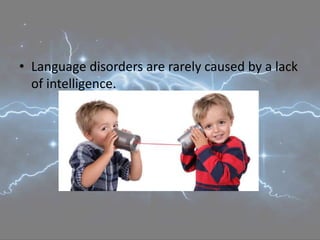
• Language disorders are rarely caused by a lack
of intelligence.
Recovery
• Recovery is faster, better than in adult
acquired aphasia, but not complete.
Hemispheres
• Early enough, right hemisphere can take over
language functions after a serious loss in the
left hemisphere, but it doesn’t do as good a
job.
Acquired childhood aphasia

Acquired childhood aphasia

  • 1.
  • 2.
    Aphasia • A languagedisorder may also be caused by damage to the central nervous system, which is called aphasia.
  • 3.
    Developmental language disorder •When the cause is unknown, it is called a developmental language disorder. • Language disorders may occur in children with other developmental problems such as autistic spectrum disorders, hearing loss, and learning disabilities.
  • 4.
    What is acquiredaphasia? • Acquired aphasia during childhood is almost never fluent (mutism), but they recover rapidly.
  • 5.
    Prevalence • Approximately 1in 20 children has symptoms of a language disorder.
  • 6.
    Causes • Result ofaccident or disease  Stroke  Tumor  Trauma  Disease (e.g., Pick’s Disease, AKA fronto temporal dementia)
  • 7.
    Development • Aphasia mayoccur suddenly or develop over time, depending on the type and location of brain tissue damage.
  • 8.
    Signs and symptoms •Word-finding and vocabulary difficulties • Inability to comprehend language • Inability to pronounce • Inability to form words • Inability to name objects • Persistent repetiotions of phrases • Paraphasia (substitution of letters or words) • Agrammatism (inability to speak in a grammatically correct form) • Uncompleted sentences • Inability to write • Inability to read
  • 9.
    Age • 0-3 months:no effect • 21-36 months: all language accomplishments disappear; language is re-acquired with repetition of all stages. • 3-10 years: aphasic symptoms, tendency for full recovery • 11th year on: aphasic symptoms persist.
  • 10.
    • Language disordersare rarely caused by a lack of intelligence.
  • 11.
    Recovery • Recovery isfaster, better than in adult acquired aphasia, but not complete.
  • 12.
    Hemispheres • Early enough,right hemisphere can take over language functions after a serious loss in the left hemisphere, but it doesn’t do as good a job.