MUSCULAR SYSTEM
PRESEENTED BY : Ms.Sapna Rani
MMCP,MM(DU)
ASSISTANT PROFESSOR
PHARMACOLOGY
The Muscular System
 Muscles are responsible for all types of body
movement – they contract or shorten and are the
machine of the body
 Three basic muscle types are found in the body
Skeletal muscle
Cardiac muscle
Smooth muscle
Slide 6.2
Copyright © 2003 Pearson Education, Inc. publishing as Benjamin Cummings
Introduction
3
 Human body contains over 400 skeletal muscles
 40-50% of total body weight
Functions of skeletal muscle
 Body movement (Locomotion)
 Maintenance of posture
 Respiration
 Diaphragm and intercostal contractions
 Communication (Verbal and Facial)
 Constriction of organs and vessels
 Peristalsis of intestinal tract
 Vasoconstriction of b.v. and other structures
(pupils)
 Production of body heat (Thermogenesis)
Skeletal Muscle Characteristics
• Most are attached by tendons to bones Cells are
multinucleate
• Striated – have visible banding Voluntary – subject to
conscious control
• Cells are surrounded and bundled by connective tissue =
great force, but tires easily
Terms
Sarcolemma = Cell membrane
Sarcoplasm = Cytoplasm
Sarcoplasmic Reticulum =
Endoplasmic Reticulum
Sarcosomes = Mitochontria
5
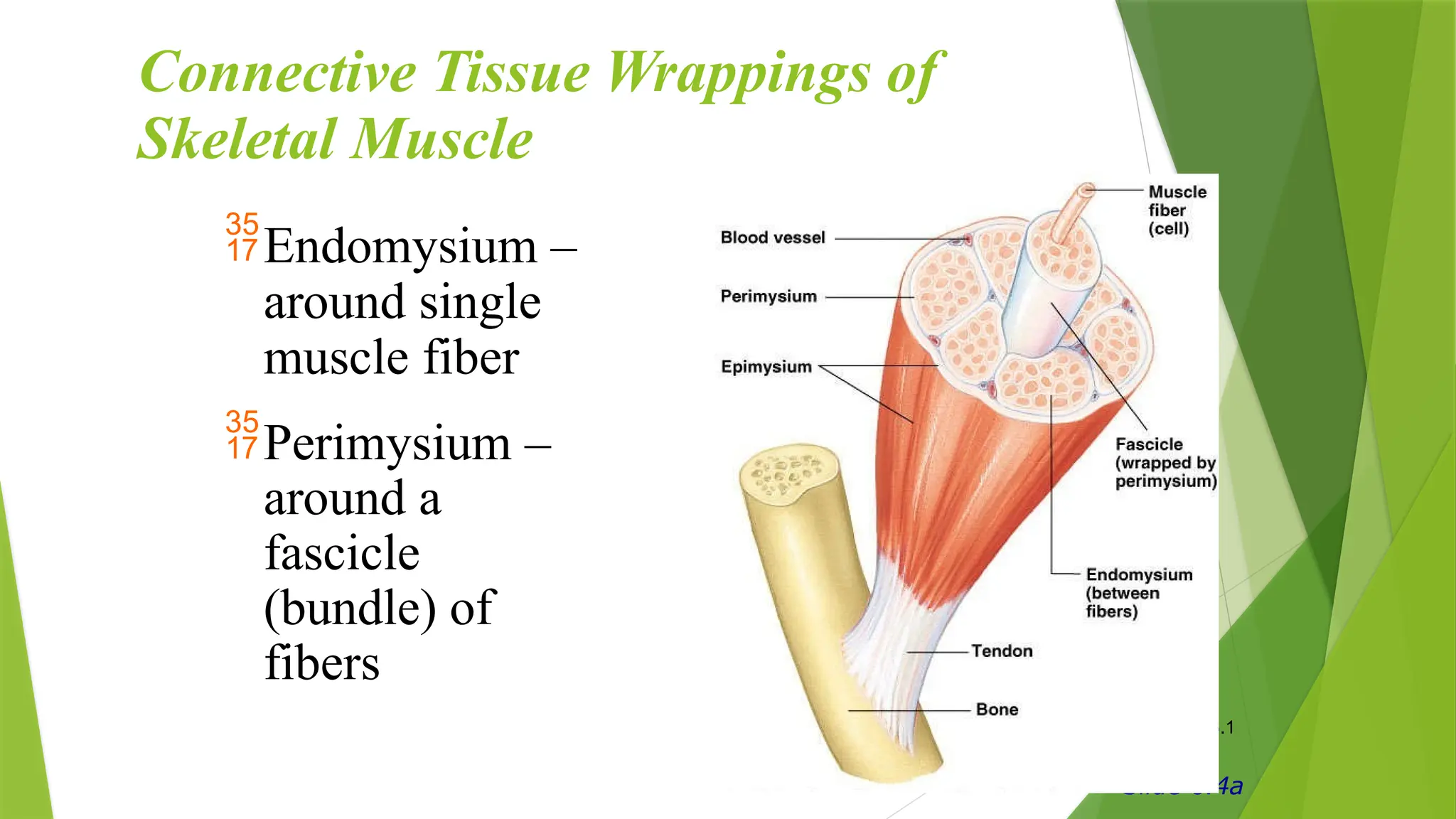
Connective Tissue Wrappings of
Skeletal Muscle
Slide 6.4a
Endomysium –
around single
muscle fiber
Perimysium –
around a
fascicle
(bundle) of
fibers
Figure 6.1
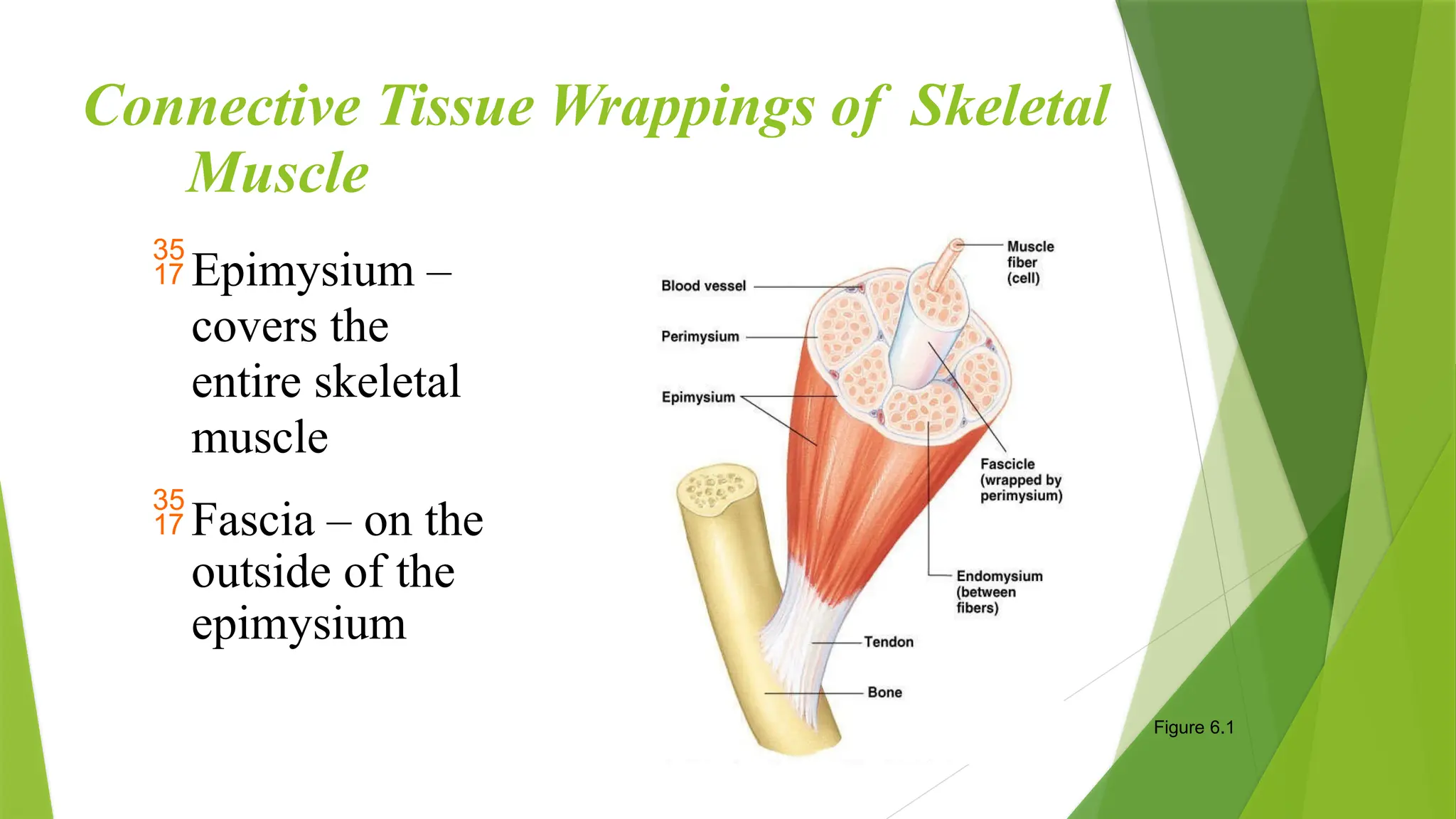
Connective Tissue Wrappings of Skeletal
Muscle
Epimysium –
covers the
entire skeletal
muscle
Fascia – on the
outside of the
epimysium
Figure 6.1
MUSCULAR SYSTEM.pptx, Human anatomy & physiology

MUSCULAR SYSTEM.pptx, Human anatomy & physiology

  • 1.
    MUSCULAR SYSTEM PRESEENTED BY: Ms.Sapna Rani MMCP,MM(DU) ASSISTANT PROFESSOR PHARMACOLOGY
  • 2.
    The Muscular System Muscles are responsible for all types of body movement – they contract or shorten and are the machine of the body  Three basic muscle types are found in the body Skeletal muscle Cardiac muscle Smooth muscle Slide 6.2 Copyright © 2003 Pearson Education, Inc. publishing as Benjamin Cummings
  • 3.
    Introduction 3  Human bodycontains over 400 skeletal muscles  40-50% of total body weight Functions of skeletal muscle  Body movement (Locomotion)  Maintenance of posture  Respiration  Diaphragm and intercostal contractions  Communication (Verbal and Facial)  Constriction of organs and vessels  Peristalsis of intestinal tract  Vasoconstriction of b.v. and other structures (pupils)  Production of body heat (Thermogenesis)
  • 4.
    Skeletal Muscle Characteristics •Most are attached by tendons to bones Cells are multinucleate • Striated – have visible banding Voluntary – subject to conscious control • Cells are surrounded and bundled by connective tissue = great force, but tires easily
  • 5.
    Terms Sarcolemma = Cellmembrane Sarcoplasm = Cytoplasm Sarcoplasmic Reticulum = Endoplasmic Reticulum Sarcosomes = Mitochontria 5
  • 6.
    Connective Tissue Wrappingsof Skeletal Muscle Slide 6.4a Endomysium – around single muscle fiber Perimysium – around a fascicle (bundle) of fibers Figure 6.1
  • 7.
    Connective Tissue Wrappingsof Skeletal Muscle Epimysium – covers the entire skeletal muscle Fascia – on the outside of the epimysium Figure 6.1