General Toxicology
Dr. Noor Rain Abdullah
Herbal Medicine Research Center
Institute for Medical Research,
Kuala Lumpur
General Toxicity testing referred to a series of toxicity
testing required by International regulatory for
compliance to Good Laboratory Practices (GLP) for
proof of safety in experimental animal prior to their
testing in human. .
It comprises of :
Acute,
Sub-acute
chronic toxicity.
These studies are conducted based on “OECD guidelines
of testing of chemicals”
They are performed in rodents and non rodents
International regulations relating to human health require
that all new pharmaceutical drugs undergo Preclinical
investigation.
One of the phases of the Preclinical investigation is the
toxicology studies,
It is conducted following an appropriate guideline and
quality system (OECD GLP).
Preclinical Studies
Includes:
1. Phytochemistry , Development of the
products
2. Formulation
3. Complete pharmacologic and
pharmacokinetic profile
4. Safety study – Toxicology
5. Efficacy study
Regulatory Guidelines and
Quality System in Toxicology
drug safety testing is driven by
International and national
regulatory requirements, e.g.
OECD/ICH guidelines, Good
Laboratory Practices (GLP)….
GLP
GLP is a quality system
concerned with the organ
izational process and the
conditions under which n
on-clinical health and env
ironmental safety studies
are :
PLANNED
performed,
monitored,
.
GLP
recorded, archived and reported
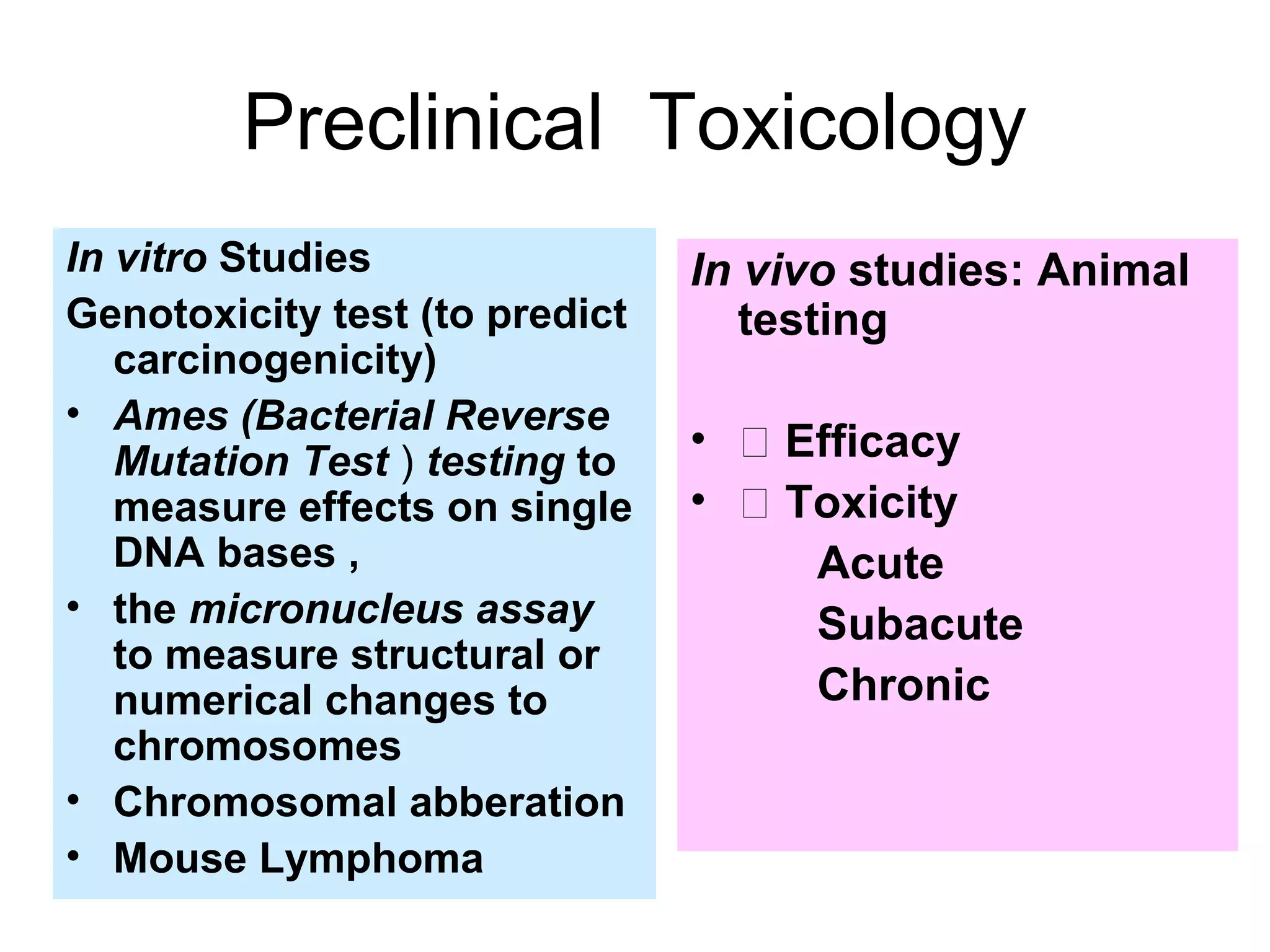
Preclinical Toxicology
In vitro Studies
Genotoxicity test (to predict
carcinogenicity)
• Ames (Bacterial Reverse
Mutation Test ) testing to
measure effects on single
DNA bases ,
• the micronucleus assay
to measure structural or
numerical changes to
chromosomes
• Chromosomal abberation
• Mouse Lymphoma
In vivo studies: Animal
testing
• 􀂊 Efficacy
• 􀂊 Toxicity
Acute
Subacute
Chronic
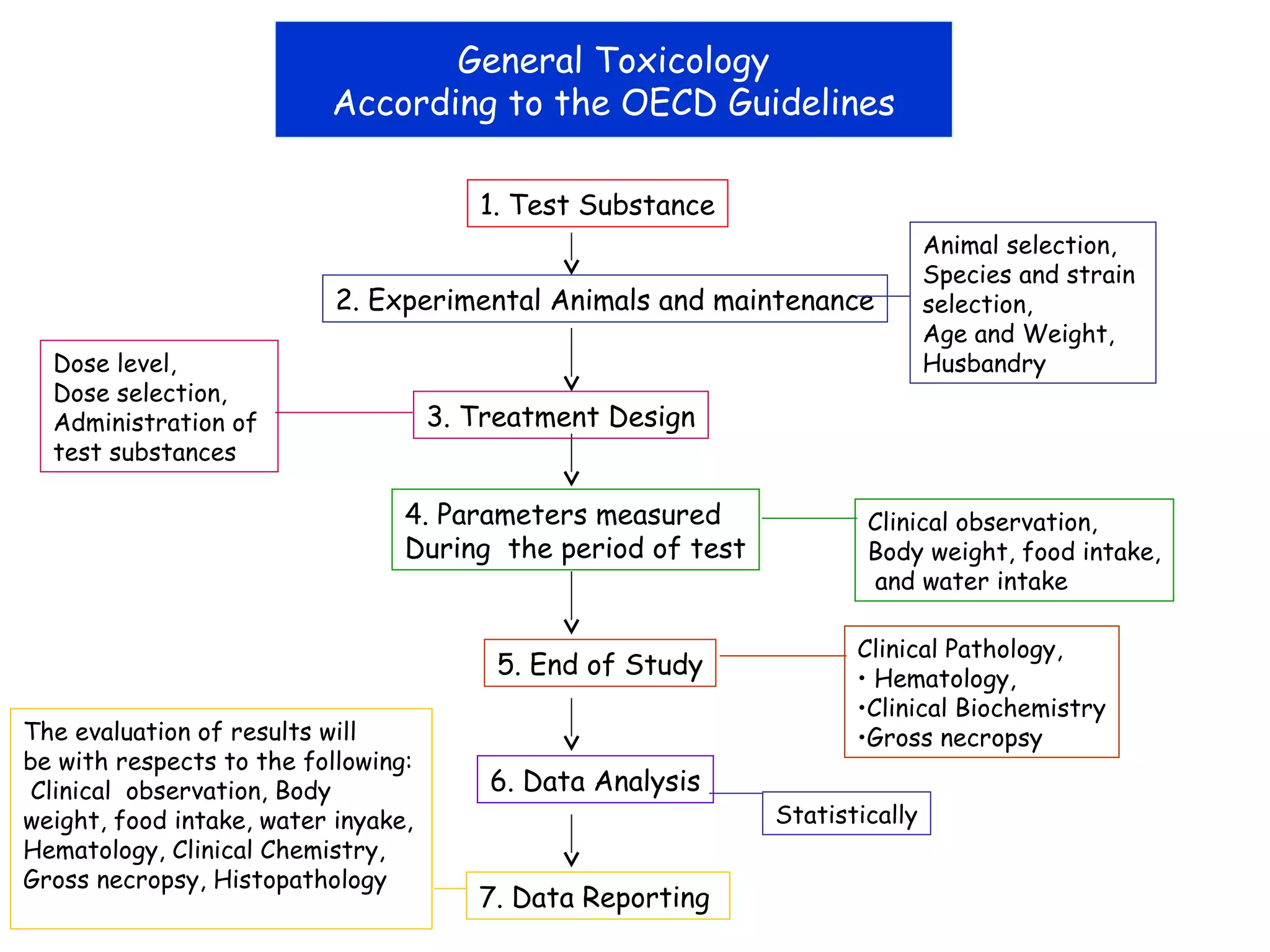
General Toxicology
According to the OECD Guidelines
1. Test Substance
2. Experimental Animals and maintenance
Animal selection,
Species and strain
selection,
Age and Weight,
Husbandry
4. Parameters measured
During the period of test
5. End of Study
6. Data Analysis
7. Data Reporting
Dose level,
Dose selection,
Administration of
test substances
3. Treatment Design
Clinical observation,
Body weight, food intake,
and water intake
Clinical Pathology,
• Hematology,
•Clinical Biochemistry
•Gross necropsyThe evaluation of results will
be with respects to the following:
 Clinical observation, Body
weight, food intake, water inyake,
Hematology, Clinical Chemistry,
Gross necropsy, Histopathology
Statistically
Acute Toxicity
Definition :
Acute toxicity is toxicity study aim to determine acute
effect of chemical produced after administration of a
single dose (or multiple doses) to experimental animal in
a period not exceeding 24 hours,
Dose depending on the guideline can be up to a limit of
2000 and 5 000 mg/kg BW
Objective of acute toxicity studies: To identify a dose
causing major adverse effects and an estimation of the
minimum dose causing lethality, according to regulatory
guidelines and information, guide on doses for the sub-
acute test
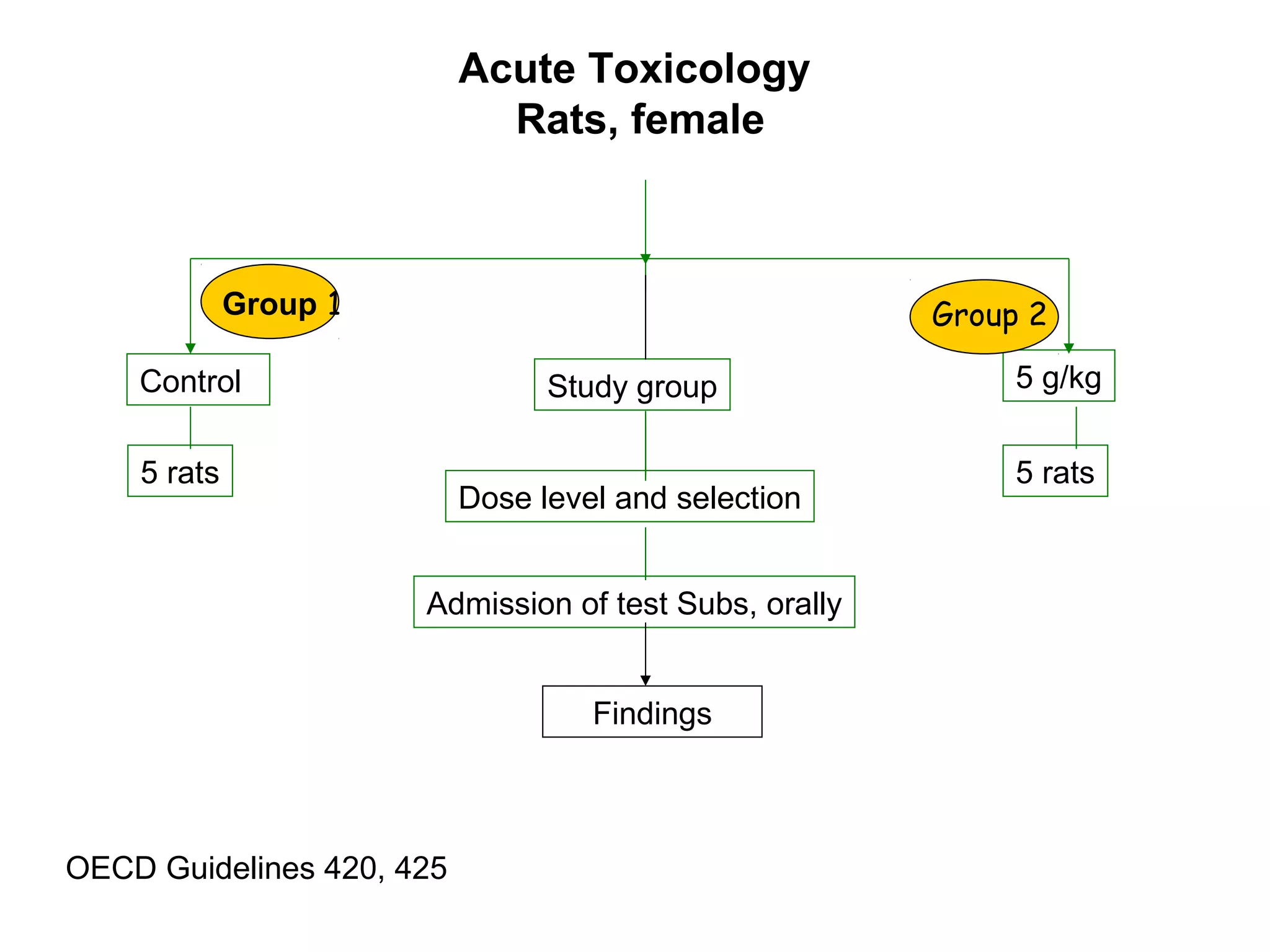
Acute Toxicology
Rats, female
Study group
Dose level and selection
Admission of test Subs, orally
Findings
OECD Guidelines 420, 425
5 rats
Control
5 rats
5 g/kg
Group 1 Group 2
OECD Guidelines for the Testing of Chemicals
Test No. 420: Acute Oral Toxicity - Fixed Dose
Procedure
Principle : in the main study only moderately toxic
doses are used, and the administration of doses that
are expected to be lethal should be avoided.
Sighting study : Groups of animals of a single sex
(normally females) are dosed in a stepwise
procedure using the fixed doses of 5, 50, 300 and
2000 mg/kg (exceptionally 5000 mg/kg). If dose
causes acute effect, stop at that dose, if not cont
until the highest dose.
Main study : Two groups of 5 rats each, one control
and one test
OECD Guidelines for the Testing of Chemicals
Test No. 425: Acute Oral Toxicity: Up-and-Down
Procedure
Principle :to apply to materials that produce death
within couple of days.
Sighting study : step wise
Main study : Two groups of 5 rats each, one control
and one test
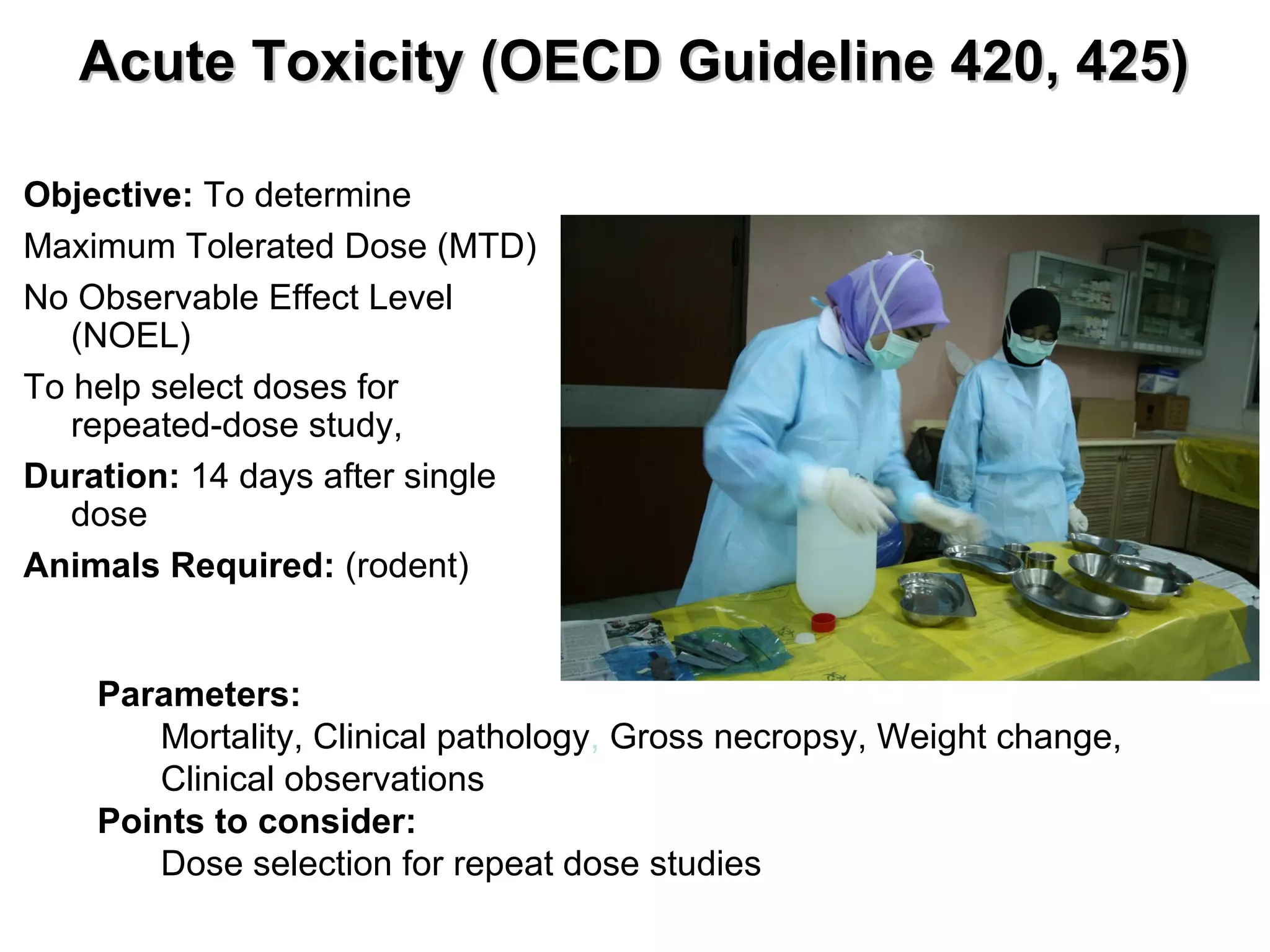
Acute Toxicity (OECD Guideline 420, 425)Acute Toxicity (OECD Guideline 420, 425)
Parameters:
Mortality, Clinical pathology, Gross necropsy, Weight change,
Clinical observations
Points to consider:
Dose selection for repeat dose studies
Objective: To determine
Maximum Tolerated Dose (MTD)
No Observable Effect Level
(NOEL)
To help select doses for
repeated-dose study,
Duration: 14 days after single
dose
Animals Required: (rodent)
What is subacute toxicity
• The effect of exposure from 1 day to 30
days
OECD Guidelines for the Testing of Chemicals
Test No. 407: Repeated Dose 28-day Oral Toxicity
Study in Rodents
Principle : Provides information on health hazard likely to arise from
exposure (daily) to test substance via oral administration.
The method is based on the repeated oral administration of the
substance of interest during one limited period (one dose level daily
during 28 days).
This Guideline is intended primarily for use with rodents (rat
preferably). At least 10 animals (5 female and 5 male) should be
used for each dose level.
Three tests groups, should be used.
The test compound is administered by gavage or via the diet or
drinking water. A limit test may be performed if no effects would be
expected at a dose of 1000 mg/kg bw/d.
Subacute (Guidelines 407)
SD Rats, male and Female
5 rats
5 female
5 rats
5 female
5 Rats
5 female
5 rats,
5 female
Control Low Dose Medium Dose High Dose
Study group
Dose level and selection
Admission of test Subs,
oral
Group 1 Group 2 Group 3 Group 4
Findings
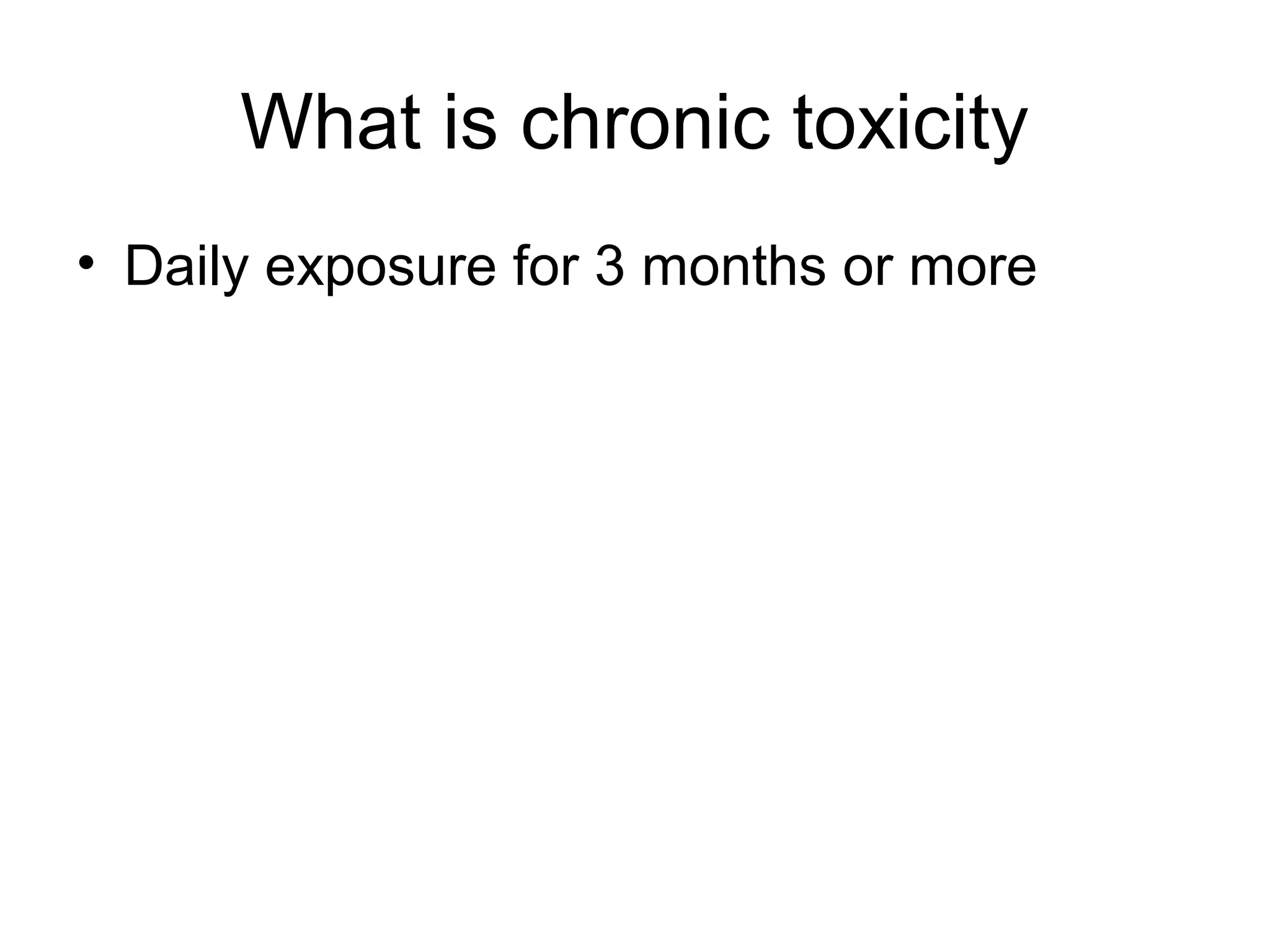
What is chronic toxicity
• Daily exposure for 3 months or more
OECD Guidelines for the Testing of Chemicals
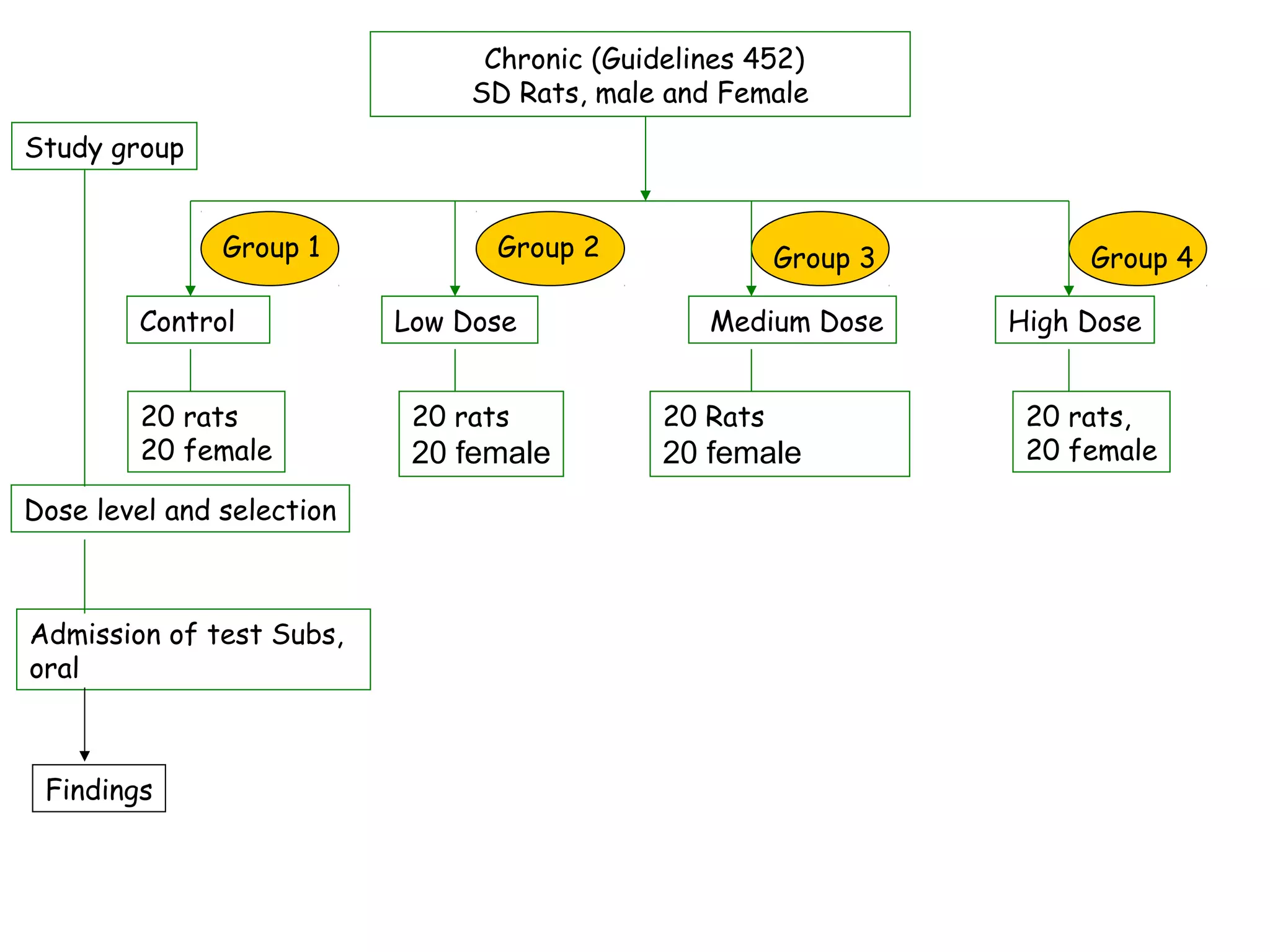
Test No. 452: Chronic Toxicity Studies
The objective : of these chronic toxicity studies is to characterize the
profile of a substance in a mammalian species (primarily rodents)
following prolonged and repeated exposure.
The Test Guideline focuses on rodents and oral administration. Both
sexes should be used. For rodents, at least 20 animals per sex per
group should normally be used at each dose level, while for non-
rodents a minimum of 4 per sex per group is recommended.
At least three dose levels should be used in addition to the concurrent
control group.
Frequency of exposure normally is daily, but may vary according to the
route chosen (oral, dermal or inhalation) and should be adjusted
according to the toxicokinetic profile of the test substance. 12
months or longer or or up to 10% of species’ lifespan. Length
depends on intended period of human exposure
Chronic (Guidelines 452)
SD Rats, male and Female
20 rats
20 female
20 rats
20 female
20 Rats
20 female
20 rats,
20 female
Control Low Dose Medium Dose High Dose
Study group
Dose level and selection
Admission of test Subs,
oral
Group 1 Group 2 Group 3 Group 4
Findings
Non Rodent Animal Species
• Dogs, Pigs and Monkeys are the most commonly used
animals in preclinical studies.
• Ideally , the species of choice should have the same
pharmacokinetic profile as in humans, however, this
information is either incomplete or missing,
• Under such circumstance, select the most sensitive
species for evaluating the safety of the substance.
Chronic Toxicity Study
• Species: 2 ( a rodent and a non-rodent).
• In rodents chronic studies are usually for 6 months to 2
years.
• In non-rodents chronic studies are usually for 1 year but
may be longer.
• The length of exposure is somewhat dependent on the
intended period of use in humans.
General Toxicology
According to the OECD Guidelines
1. Test Substance
2. Experimental Animals and maintenance
Animal selection,
Species and strain
selection,
Age and Weight,
Husbandry
4. Parameters measured
During the period of test
5. End of Study
6. Data Analysis
7. Data Reporting
Dose level,
Dose selection,
Administration of
test substances
3. Treatment Design
Clinical observation,
Body weight, food intake,
and water intake
Clinical Pathology,
• Hematology,
•Clinical Biochemistry
•Gross necropsyThe evaluation of results will
be with respects to the following:
 Clinical observation, Body
weight, food intake, water inyake,
Hematology, Clinical Chemistry,
Gross necropsy, Histopathology
Statistically
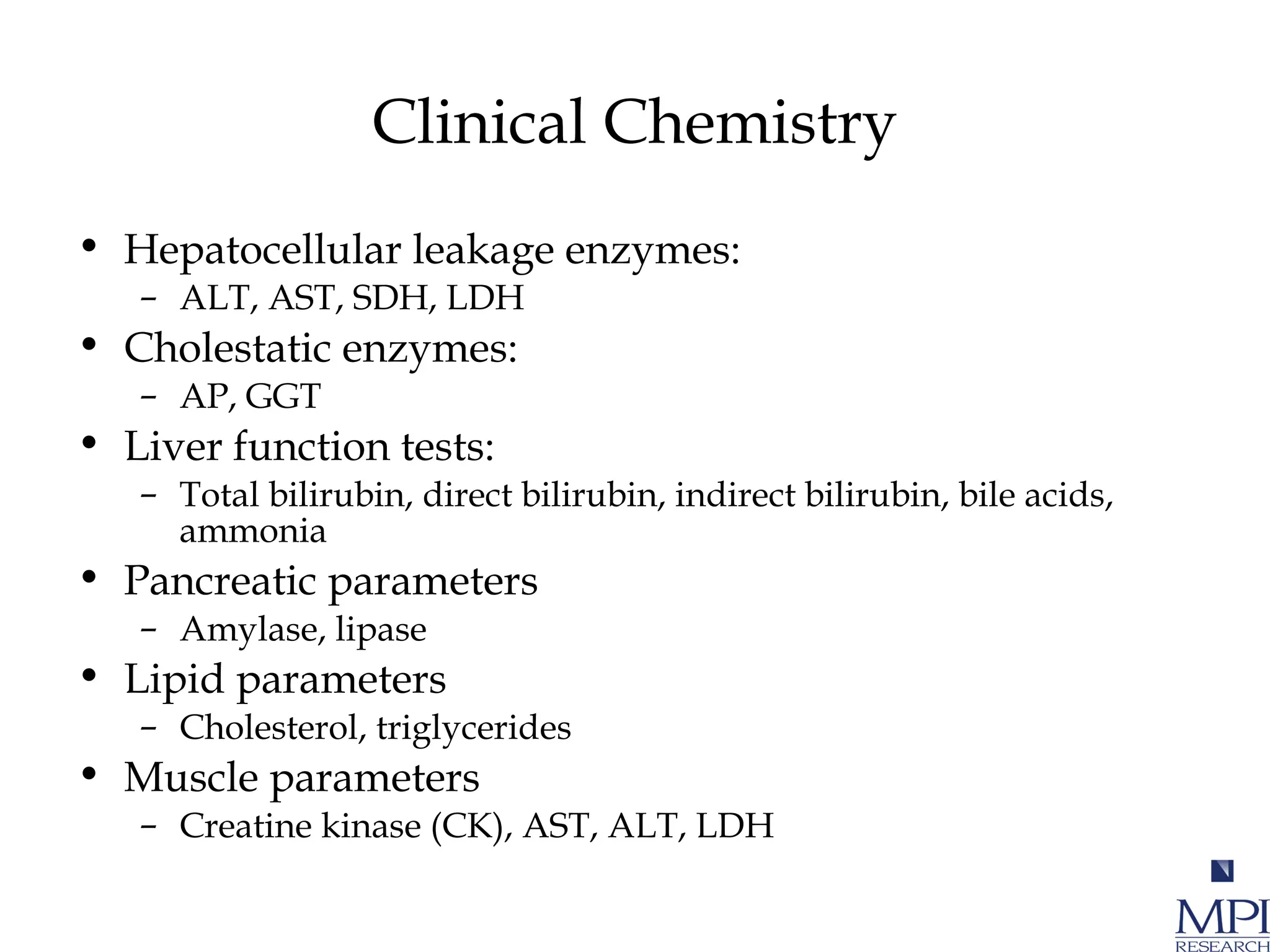
Clinical Chemistry
• Hepatocellular leakage enzymes:
– ALT, AST, SDH, LDH
• Cholestatic enzymes:
– AP, GGT
• Liver function tests:
– Total bilirubin, direct bilirubin, indirect bilirubin, bile acids,
ammonia
• Pancreatic parameters
– Amylase, lipase
• Lipid parameters
– Cholesterol, triglycerides
• Muscle parameters
– Creatine kinase (CK), AST, ALT, LDH
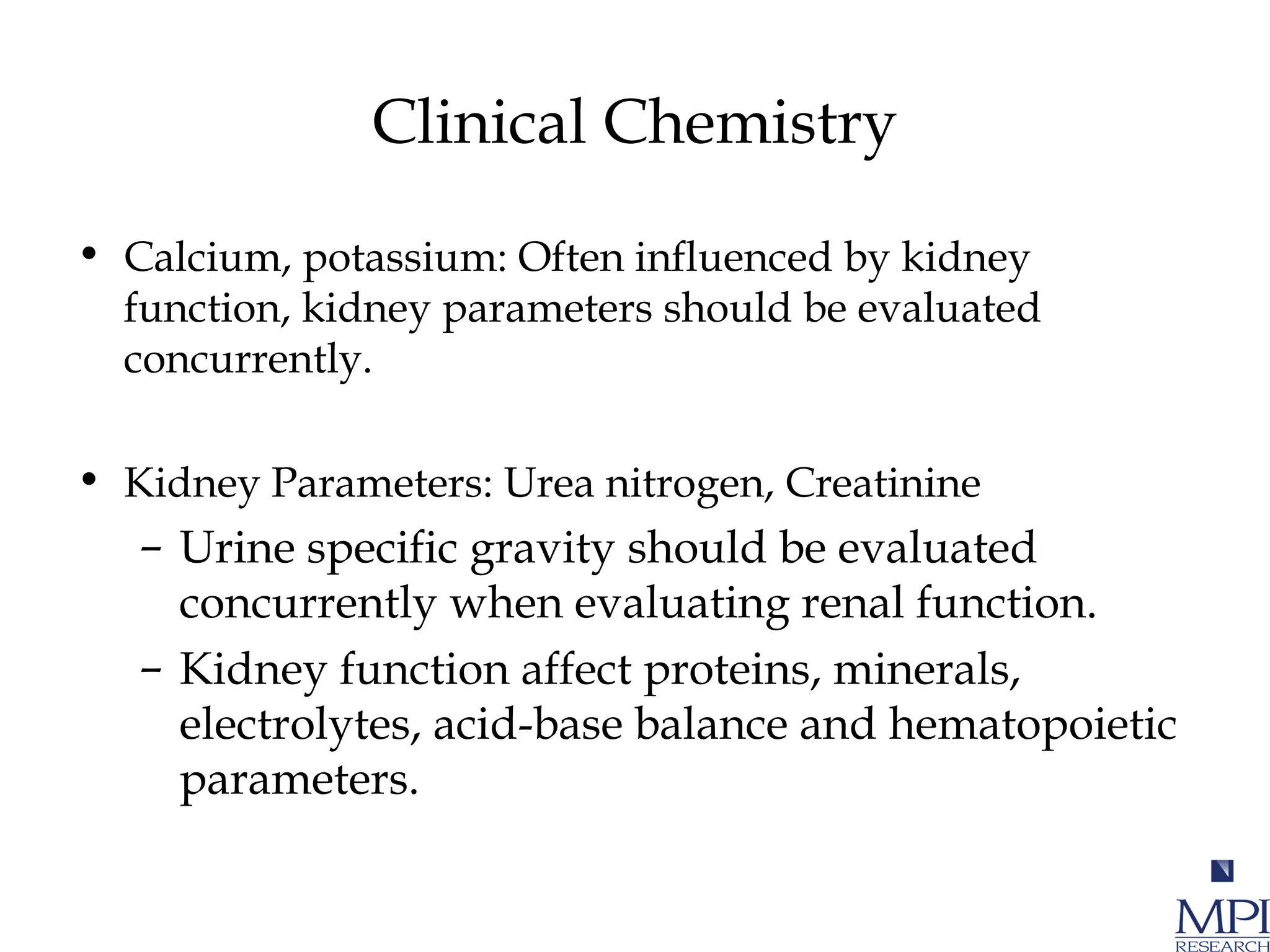
Clinical Chemistry
• Calcium, potassium: Often influenced by kidney
function, kidney parameters should be evaluated
concurrently.
• Kidney Parameters: Urea nitrogen, Creatinine
– Urine specific gravity should be evaluated
concurrently when evaluating renal function.
– Kidney function affect proteins, minerals,
electrolytes, acid-base balance and hematopoietic
parameters.
Hematology
• RBC,
• WBC,
• PLT,
• HB,
• Neutrophyl %
• Neutrophyl no
• MCHC,
• HCT
• MCHC
• MCV,
Parameters:
Mortality, sign of toxicity, Clinical pathology,
Histology, Weight change, Clinical observation
Goal: To estimate safety margin
Points to consider: Dosing regimen, Duration of clinical trials (Phase I, II,
III), Toxicokinetics, Immunotoxicity
Sub Acute ToxicitySub Acute Toxicity
(OECD Guidelines 407)(OECD Guidelines 407)
Objective: To determine
toxicity after repeated
administration of the test
material
Duration: 28 days daily
dosing, observe daily
Animals Required: 2
species (rodent)
Chronic Toxicity (OECD Guideline 452)Chronic Toxicity (OECD Guideline 452)
Objective:
To characterize dose-response
relationships following repeated doses
To identify and characterize specific
organs affected after repeated
administration
Duration:
Rodents - 6 to 24 months;
non-rodents (monkey) - 12 months or
longer or up to 10% of species’
lifespan. Length depends on intended
period of human exposure.
Animals Required: 2 species (rodent
and non-rodent)
Parameters:
Mortality,Clinical pathology, Clinical
observation, Behavioral Assessment,
Histology, Weight change
Weight rat
Euthanesia
Take blood
Blood in EDTA
Hematology Analysis
Removing organs
Cleaning organs
weighing
organs and
collecting data
Histophatology
• Data analysis and reporting
• Auditing for compliance
• Data for evaluation for clinical trial
You
Thank
For your attention

General toxicology

  • 1.
    General Toxicology Dr. NoorRain Abdullah Herbal Medicine Research Center Institute for Medical Research, Kuala Lumpur
  • 2.
    General Toxicity testingreferred to a series of toxicity testing required by International regulatory for compliance to Good Laboratory Practices (GLP) for proof of safety in experimental animal prior to their testing in human. . It comprises of : Acute, Sub-acute chronic toxicity. These studies are conducted based on “OECD guidelines of testing of chemicals” They are performed in rodents and non rodents
  • 3.
    International regulations relatingto human health require that all new pharmaceutical drugs undergo Preclinical investigation. One of the phases of the Preclinical investigation is the toxicology studies, It is conducted following an appropriate guideline and quality system (OECD GLP).
  • 4.
    Preclinical Studies Includes: 1. Phytochemistry, Development of the products 2. Formulation 3. Complete pharmacologic and pharmacokinetic profile 4. Safety study – Toxicology 5. Efficacy study
  • 5.
    Regulatory Guidelines and QualitySystem in Toxicology drug safety testing is driven by International and national regulatory requirements, e.g. OECD/ICH guidelines, Good Laboratory Practices (GLP)….
  • 6.
    GLP GLP is aquality system concerned with the organ izational process and the conditions under which n on-clinical health and env ironmental safety studies are : PLANNED
  • 7.
  • 8.
  • 9.
    Preclinical Toxicology In vitroStudies Genotoxicity test (to predict carcinogenicity) • Ames (Bacterial Reverse Mutation Test ) testing to measure effects on single DNA bases , • the micronucleus assay to measure structural or numerical changes to chromosomes • Chromosomal abberation • Mouse Lymphoma In vivo studies: Animal testing • 􀂊 Efficacy • 􀂊 Toxicity Acute Subacute Chronic
  • 10.
    General Toxicology According tothe OECD Guidelines 1. Test Substance 2. Experimental Animals and maintenance Animal selection, Species and strain selection, Age and Weight, Husbandry 4. Parameters measured During the period of test 5. End of Study 6. Data Analysis 7. Data Reporting Dose level, Dose selection, Administration of test substances 3. Treatment Design Clinical observation, Body weight, food intake, and water intake Clinical Pathology, • Hematology, •Clinical Biochemistry •Gross necropsyThe evaluation of results will be with respects to the following:  Clinical observation, Body weight, food intake, water inyake, Hematology, Clinical Chemistry, Gross necropsy, Histopathology Statistically
  • 11.
    Acute Toxicity Definition : Acutetoxicity is toxicity study aim to determine acute effect of chemical produced after administration of a single dose (or multiple doses) to experimental animal in a period not exceeding 24 hours, Dose depending on the guideline can be up to a limit of 2000 and 5 000 mg/kg BW Objective of acute toxicity studies: To identify a dose causing major adverse effects and an estimation of the minimum dose causing lethality, according to regulatory guidelines and information, guide on doses for the sub- acute test
  • 12.
    Acute Toxicology Rats, female Studygroup Dose level and selection Admission of test Subs, orally Findings OECD Guidelines 420, 425 5 rats Control 5 rats 5 g/kg Group 1 Group 2
  • 13.
    OECD Guidelines forthe Testing of Chemicals Test No. 420: Acute Oral Toxicity - Fixed Dose Procedure Principle : in the main study only moderately toxic doses are used, and the administration of doses that are expected to be lethal should be avoided. Sighting study : Groups of animals of a single sex (normally females) are dosed in a stepwise procedure using the fixed doses of 5, 50, 300 and 2000 mg/kg (exceptionally 5000 mg/kg). If dose causes acute effect, stop at that dose, if not cont until the highest dose. Main study : Two groups of 5 rats each, one control and one test
  • 14.
    OECD Guidelines forthe Testing of Chemicals Test No. 425: Acute Oral Toxicity: Up-and-Down Procedure Principle :to apply to materials that produce death within couple of days. Sighting study : step wise Main study : Two groups of 5 rats each, one control and one test
  • 15.
    Acute Toxicity (OECDGuideline 420, 425)Acute Toxicity (OECD Guideline 420, 425) Parameters: Mortality, Clinical pathology, Gross necropsy, Weight change, Clinical observations Points to consider: Dose selection for repeat dose studies Objective: To determine Maximum Tolerated Dose (MTD) No Observable Effect Level (NOEL) To help select doses for repeated-dose study, Duration: 14 days after single dose Animals Required: (rodent)
  • 16.
    What is subacutetoxicity • The effect of exposure from 1 day to 30 days
  • 17.
    OECD Guidelines forthe Testing of Chemicals Test No. 407: Repeated Dose 28-day Oral Toxicity Study in Rodents Principle : Provides information on health hazard likely to arise from exposure (daily) to test substance via oral administration. The method is based on the repeated oral administration of the substance of interest during one limited period (one dose level daily during 28 days). This Guideline is intended primarily for use with rodents (rat preferably). At least 10 animals (5 female and 5 male) should be used for each dose level. Three tests groups, should be used. The test compound is administered by gavage or via the diet or drinking water. A limit test may be performed if no effects would be expected at a dose of 1000 mg/kg bw/d.
  • 18.
    Subacute (Guidelines 407) SDRats, male and Female 5 rats 5 female 5 rats 5 female 5 Rats 5 female 5 rats, 5 female Control Low Dose Medium Dose High Dose Study group Dose level and selection Admission of test Subs, oral Group 1 Group 2 Group 3 Group 4 Findings
  • 19.
    What is chronictoxicity • Daily exposure for 3 months or more
  • 20.
    OECD Guidelines forthe Testing of Chemicals Test No. 452: Chronic Toxicity Studies The objective : of these chronic toxicity studies is to characterize the profile of a substance in a mammalian species (primarily rodents) following prolonged and repeated exposure. The Test Guideline focuses on rodents and oral administration. Both sexes should be used. For rodents, at least 20 animals per sex per group should normally be used at each dose level, while for non- rodents a minimum of 4 per sex per group is recommended. At least three dose levels should be used in addition to the concurrent control group. Frequency of exposure normally is daily, but may vary according to the route chosen (oral, dermal or inhalation) and should be adjusted according to the toxicokinetic profile of the test substance. 12 months or longer or or up to 10% of species’ lifespan. Length depends on intended period of human exposure
  • 21.
    Chronic (Guidelines 452) SDRats, male and Female 20 rats 20 female 20 rats 20 female 20 Rats 20 female 20 rats, 20 female Control Low Dose Medium Dose High Dose Study group Dose level and selection Admission of test Subs, oral Group 1 Group 2 Group 3 Group 4 Findings
  • 22.
    Non Rodent AnimalSpecies • Dogs, Pigs and Monkeys are the most commonly used animals in preclinical studies. • Ideally , the species of choice should have the same pharmacokinetic profile as in humans, however, this information is either incomplete or missing, • Under such circumstance, select the most sensitive species for evaluating the safety of the substance.
  • 23.
    Chronic Toxicity Study •Species: 2 ( a rodent and a non-rodent). • In rodents chronic studies are usually for 6 months to 2 years. • In non-rodents chronic studies are usually for 1 year but may be longer. • The length of exposure is somewhat dependent on the intended period of use in humans.
  • 24.
    General Toxicology According tothe OECD Guidelines 1. Test Substance 2. Experimental Animals and maintenance Animal selection, Species and strain selection, Age and Weight, Husbandry 4. Parameters measured During the period of test 5. End of Study 6. Data Analysis 7. Data Reporting Dose level, Dose selection, Administration of test substances 3. Treatment Design Clinical observation, Body weight, food intake, and water intake Clinical Pathology, • Hematology, •Clinical Biochemistry •Gross necropsyThe evaluation of results will be with respects to the following:  Clinical observation, Body weight, food intake, water inyake, Hematology, Clinical Chemistry, Gross necropsy, Histopathology Statistically
  • 25.
    Clinical Chemistry • Hepatocellularleakage enzymes: – ALT, AST, SDH, LDH • Cholestatic enzymes: – AP, GGT • Liver function tests: – Total bilirubin, direct bilirubin, indirect bilirubin, bile acids, ammonia • Pancreatic parameters – Amylase, lipase • Lipid parameters – Cholesterol, triglycerides • Muscle parameters – Creatine kinase (CK), AST, ALT, LDH
  • 26.
    Clinical Chemistry • Calcium,potassium: Often influenced by kidney function, kidney parameters should be evaluated concurrently. • Kidney Parameters: Urea nitrogen, Creatinine – Urine specific gravity should be evaluated concurrently when evaluating renal function. – Kidney function affect proteins, minerals, electrolytes, acid-base balance and hematopoietic parameters.
  • 27.
    Hematology • RBC, • WBC, •PLT, • HB, • Neutrophyl % • Neutrophyl no • MCHC, • HCT • MCHC • MCV,
  • 28.
    Parameters: Mortality, sign oftoxicity, Clinical pathology, Histology, Weight change, Clinical observation Goal: To estimate safety margin Points to consider: Dosing regimen, Duration of clinical trials (Phase I, II, III), Toxicokinetics, Immunotoxicity Sub Acute ToxicitySub Acute Toxicity (OECD Guidelines 407)(OECD Guidelines 407) Objective: To determine toxicity after repeated administration of the test material Duration: 28 days daily dosing, observe daily Animals Required: 2 species (rodent)
  • 29.
    Chronic Toxicity (OECDGuideline 452)Chronic Toxicity (OECD Guideline 452) Objective: To characterize dose-response relationships following repeated doses To identify and characterize specific organs affected after repeated administration Duration: Rodents - 6 to 24 months; non-rodents (monkey) - 12 months or longer or up to 10% of species’ lifespan. Length depends on intended period of human exposure. Animals Required: 2 species (rodent and non-rodent) Parameters: Mortality,Clinical pathology, Clinical observation, Behavioral Assessment, Histology, Weight change
  • 30.
  • 31.
  • 32.
  • 33.
  • 34.
  • 35.
  • 36.
    • Data analysisand reporting • Auditing for compliance • Data for evaluation for clinical trial
  • 37.

Editor's Notes

  • #16 ________discuss #'s animals________________________________ ________________________________________________________________ ________________________________________________________________ ________________________________________________________________ ________________________________________________________________ ________________________________________________________________ ________________________________________________________________ ________________________________________________________________
  • #29 _________discuss #'s animals___________________________________________ ________________________________________________________________ ________________________________________________________________ ________________________________________________________________ ________________________________________________________________ ________________________________________________________________ ________________________________________________________________ ________________________________________________________________
  • #30 EU Trials: 2 wks, need 1 month animal study 1 month, need 3 month animal study 3 months, need 6 month animal study (rodent), 3 month (non rodent) cf USA and Japan, where 1 month=1month 2 month=2 month; 3month=3month