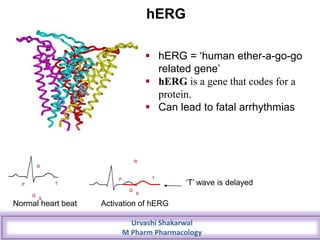
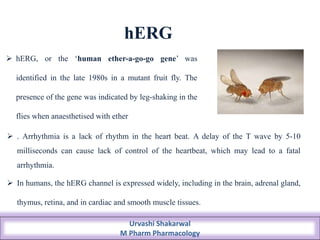
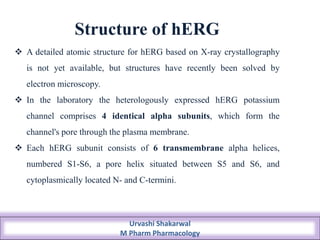
The document discusses hERG assays, which are used to screen for compounds that may block the hERG potassium channel and prolong the heart's QT interval, potentially causing fatal arrhythmias. It describes the structure and function of the hERG channel, then summarizes various screening methods for hERG activity including electrophysiology, flux assays, fluorescence-based assays, and radioligand binding assays. These methods allow high-throughput screening of large numbers of compounds early in drug development to improve cardiovascular safety.