CASE
• A 17-year-old man is brought to the Emergency Department by his
mother after he was stung by an insect. He had been playing football
at the local park when his mother thought she saw a bee near his leg.
He is feeling nauseous and reports a rash on his leg that is spreading
to the rest of his body. He complains that his throat feels itchy and
feels like he is having palpitations. He has a history of asthma.
• Examination
• Vital signs: temperature of 36.8°C, blood pressure of 85/60, heart rate
of 110 and regular, respiratory rate of 24, 95% O2 saturation on air.
• General examination reveals a blotchy, erythematous rash on his right
leg that is spreading upwards towards his trunk, as well as swelling of
his lips and tongue. Cardiac examination is unremarkable, and
auscultation of the chest is notable for mild expiratory wheeze.
• Questions
• 1. What is the diagnosis? Briefly describe its
pathophysiology.
• 2. How would you manage the patient?
• 3. Assuming he responds appropriately to treatment,
does the patient need to be admitted? Is any follow-up
required?
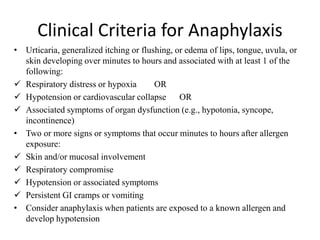
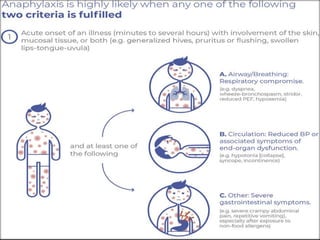
Clinical Criteria for Anaphylaxis
• Urticaria, generalized itching or flushing, or edema of lips, tongue, uvula, or
skin developing over minutes to hours and associated with at least 1 of the
following:
 Respiratory distress or hypoxia OR
 Hypotension or cardiovascular collapse OR
 Associated symptoms of organ dysfunction (e.g., hypotonia, syncope,
incontinence)
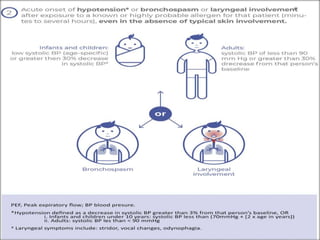
• Two or more signs or symptoms that occur minutes to hours after allergen
exposure:
 Skin and/or mucosal involvement
 Respiratory compromise
 Hypotension or associated symptoms
 Persistent GI cramps or vomiting
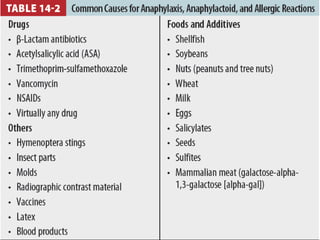
• Consider anaphylaxis when patients are exposed to a known allergen and
develop hypotension
Introduction
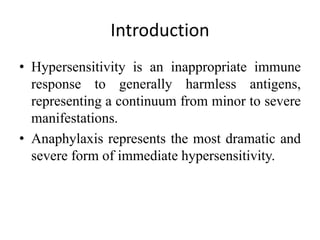
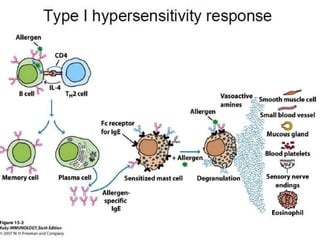
• Hypersensitivity is an inappropriate immune
response to generally harmless antigens,
representing a continuum from minor to severe
manifestations.
• Anaphylaxis represents the most dramatic and
severe form of immediate hypersensitivity.
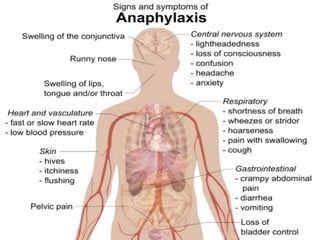
• The classic presentation of anaphylaxis begins
with pruritus, cutaneous flushing, and urticaria.
• These symptoms are followed by a sense of
fullness in the throat, anxiety, a sensation of
chest tightness, shortness of breath, and light
headedness.
• In severe cases, loss of consciousness and
cardio respiratory arrest may result.
• A complaint of a “lump in the throat” and
hoarseness heralds life-threatening laryngeal
edema in a patient with symptoms of
anaphylaxis.
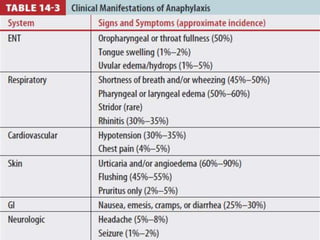
• These major symptoms may be accompanied
by abdominal pain or cramping, nausea,
vomiting, diarrhea, bronchospasm, rhinorrhea,
conjunctivitis, and/or hypotension.
Clinical Features
• In most patients, signs and symptoms begin
suddenly, often immediately and usually
within 60 minutes of exposure.
• In general, the faster the onset of symptoms,
the more severe the reaction—one half of
anaphylactic fatalities occur within the first
hour.
• After the initial signs and symptoms abate,
patients are at a small risk for a recurrence of
symptoms caused by a second phase of
mediator release :
- peaking 8 to 11 hours after the initial
exposure and
- manifesting signs and symptoms 3 to 4
hours after the initial clinical manifestations
have cleared
• The diagnosis of anaphylaxis is clinical.
• Anaphylaxis should be considered when
involvement of any two or more body systems
is observed, with or without hypotension or
airway compromise.
Differential Diagnosis
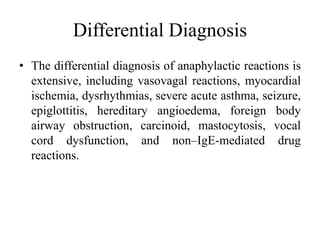
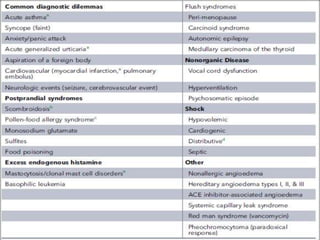
• The differential diagnosis of anaphylactic reactions is
extensive, including vasovagal reactions, myocardial
ischemia, dysrhythmias, severe acute asthma, seizure,
epiglottitis, hereditary angioedema, foreign body
airway obstruction, carcinoid, mastocytosis, vocal
cord dysfunction, and non–IgE-mediated drug
reactions.
• The most common anaphylaxis imitator is a
vasovagal reaction, which is characterized by
hypotension, pallor, bradycardia, diaphoresis,
and weakness, and sometimes by loss of
consciousness.
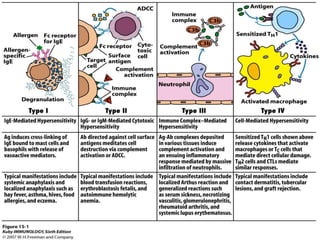
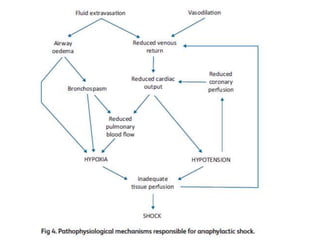
Pathophysiology
TREATMENT
• Triage for all acute allergic reactions should be
at the highest level of urgency because of the
possibility of sudden deterioration.
FIRST-LINE THERAPY
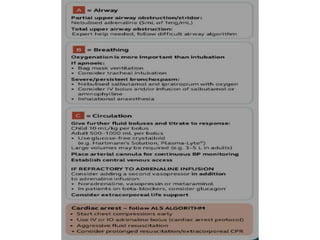
• Emergency management starts with
assessment of:
• Airway, breathing, and circulation.
• Assess vital signs and pulse oximetry, IV
access, oxygen administration, and cardiac
rhythm monitoring should be Initiated
immediately
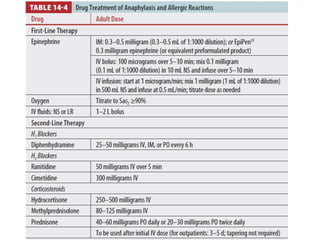
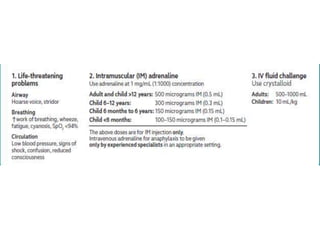
• The first-line therapies for anaphylaxis :
epinephrine, IV crystalloids, oxygen,
decontamination
AIRWAY AND OXYGENATION
• The airway should be examined for signs and
symptoms of angioedema: uvula edema or
hydrops, audible stridor, respiratory distress, or
hypoxia.
• If angioedema is producing respiratory distress,
intubate early, since any delay may result in
complete airway obstruction secondary to
progression of angioedema.
• The patient should be given supplemental oxygen
to maintain arterial oxygen saturation >90%.
DECONTAMINATION
• Terminate exposure to the causative agent
Gastric lavage is not recommended for food-
borne allergens.
• In insect stings, as the stinger continues to
inject venom even if it is detached from the
insect, remove any stinging remnants
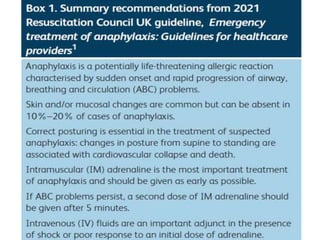
EPINEPHRINE
• Epinephrine is the drug of choice and the first
drug that should be administered in acute
anaphylaxis.
• α1 & β2 receptor agent
• α1 activation: reduces mucosal edema and
membrane leakage and treats hypotension
• β2 activation: bronchodilation and controls
mediator release.
• Epinephrine is the treatment of choice for
anaphylaxis.
• Epinephrine in patients without signs of
cardiovascular compromise or collapse: IM
epinephrine 0.3 to 0.5 milligram (0.3 to 0.5 mL
of the 1:1000 dilution) IM repeated every 5 to
10 minutes according to response or relapse.
• EpiPen ® (0.3 milligram epinephrine for
adults) and EpiPen Junior ÂŽ (0.15 milligram
epinephrine for children <30 kg).
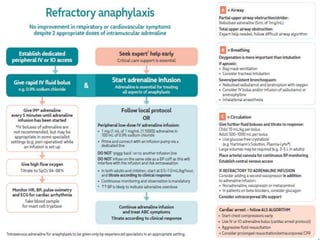
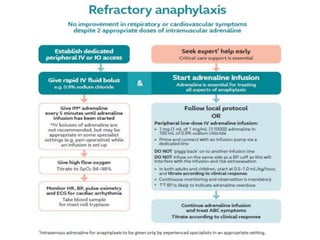
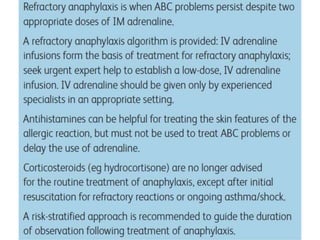
• Epinephrine If the patient is refractory to treatment
despite repeated IM epinephrine, or with signs of
cardiovascular compromise or collapse: IV infusion
of epinephrine. 100 micrograms (0.1 milligram) IV,
should be given as a 1:100,000 dilution.
• 0.1 milligram (0.1 mL of the 1:1000 dilution), in 10
mL of normal saline (NS) solution and infusing it
over 5 to 10 minutes (a rate of 1 to 2 mL/min).
• If the patient is refractory to the initial bolus,
then an epinephrine infusion can be started by
placing epinephrine 1 milligram (1.0 mL of the
1:1000 dilution), in 500 mL of 5% dextrose in
water or NS and administering at a rate of 1 to
4 micrograms/min (0.5 to 2 mL/min), titrating
to effect.
• Crystalloids if hypotension is present, it is
generally the result of distributive shock and
responds to fluid resuscitation. NS bolus of 1
to 2 L (10 to 20 mL/kg in children)
concurrently with the epinephrine infusion.
• Second-Line Therapy:
• Corticosteroids
• Antihistamines
• Asthma medications
• Glucagon.
• Corticosteroids
• Methylprednisolone: 80 to 125 milligrams IV (2
milligrams/kg in children; up to 125 milligrams)
• Hydrocortisone: 250 to 500 milligrams IV (5 to
10 milligrams/kg in children; up to 500
milligrams)
• Methylprednisolone produces less fluid retention
than hydrocortisone and is preferred for elderly
patients and for those patients in whom fluid
retention would be problematic (e.g., renal and
cardiac impairment).
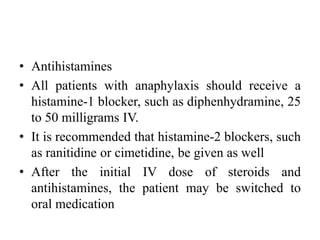
• Antihistamines
• All patients with anaphylaxis should receive a
histamine-1 blocker, such as diphenhydramine, 25
to 50 milligrams IV.
• It is recommended that histamine-2 blockers, such
as ranitidine or cimetidine, be given as well
• After the initial IV dose of steroids and
antihistamines, the patient may be switched to
oral medication
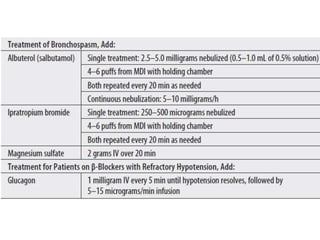
• Agents for Allergic Bronchospasm if wheezing
is present: intermittent or continuous nebulized
albuterol/salbutamol
• Anticholinergics: ipratropium bromide, 250 to
500 micrograms/dose
• Magnesium sulfate: 2 grams IV over 20 to 30
minutes in adults and 25 to 50 milligrams/kg in
children.
• Glucagon
• Patients taking β-blockers with hypotension
refractory to fluids and epinephrine, glucagon
should be used. 1 milligram IV every 5
minutes until hypotension resolves, followed
by an infusion of 5 to 15 micrograms/min.
Disposition and Follow-Up
• In the largest study of allergic reactions treated in
the ED, admission occurred in only 4% of cases.
• All unstable patients with anaphylaxis refractory
to treatment or where airway interventions were
required should be admitted to the intensive care
unit.
• Patients who receive epinephrine should be
observed in the ED, but the duration of
observation is based on experience rather than
clear evidence.
Disposition and Follow-Up
• If patients remain symptom free after appropriate
treatment following 4 hours of observation, the
patient can be safely discharged home.
• prolonged observation periods should be
considered in patients with a past history of
severe reaction and those using β-blockers.
• Other factors to consider in discharge planning
include distance from medical care, whether the
patient lives alone, significant comorbidity and
age
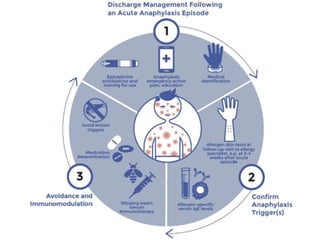
Outpatient Care and Prevention
• The patient should be instructed on how to
avoid future exposure to the causative agent if
known and possible.
• Patients can be discharged from the ED with
an epinephrine autoinjector
Outpatient Care and Prevention
• Discharge Planning for Patients with Anaphylaxis:
• Education Identification of inciting allergen, if possible
Instructions on avoiding future exposure Instructions on
use of medications and epinephrine autoinjector
• Advise about personal identification/allergy alert tag
• Medications :
 Diphenhydramine, 25–50 milligrams PO for several
days
 Prednisone, 40–60 milligrams PO for several days
 Epinephrine autoinjector for future reactions
 Referral to allergist
• Patients with anaphylactic reactions should be
offered educational options [e.g., Web sites]
advice on advocacy groups, and education
regarding food contamination for food
allergies, and encouraged to wear personal
identification of this condition (e.g.,
MedicAlert ÂŽ bracelets).
• β-blocker should be changed.
• Treatment in the outpatient setting:
• Antihistamines
• A short course of corticosteroids.
• All patients should be provided with a patient
information sheet detailing signs and symptoms to
watch for and clear instructions for follow-up and
immediate return if there is any recurrence of
symptoms.
• A written action plan on steps to take in the event
of future allergen exposure or symptom
development may reduce the severity of future
attacks.
CASE DISCUSSION
Salient features
• 17-year-old boy
• stung by an insect.
• feeling nauseous and reports a rash on his leg that is spreading
to the rest of his body.
• his throat feels itchy and feels like he is having palpitations.
• k/c/o asthma.
Examination:
• Vital signs: blood pressure of 85/60, heart rate of 110 and
regular, respiratory rate of 24, 95% O2 saturation on air.
• a blotchy, erythematous rash on his right leg that is spreading
upwards towards his trunk, as well as swelling of his lips and
tongue.
• Auscultation of the chest is notable for mild expiratory wheeze.
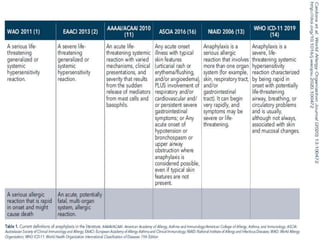
• This patient is suffering from anaphylaxis, which is an acute-
onset potentially life-threatening allergic or hypersensitivity
reaction.
• The diagnosis of anaphylaxis can be made when any one of
the following is present:
• i. Acute onset illness that involves the skin and/or mucosa,
with either respiratory compromise or hypotension
• ii. Two or more of the following that occur quickly after
exposure to a known allergen for a patient: involvement of the
skin/mucosa, hypotension, respiratory compromise or
persistent gastrointestinal symptoms
• iii. Hypotension after exposure to a known allergen for a
patient (defined as systolic BP <90 mm Hg in adults, or ≥30%
decrease from baseline)
• In this case, there is no history of an allergic reaction, but the
patient has skin/mucosal involvement (widespread rash),
respiratory difficulty (tachypnoea, presence of wheeze) and
hypotension, thereby meeting the first criterion for diagnosis of
anaphylaxis.
• Anaphylaxis is a medical emergency and must be quickly
recognised and treated.
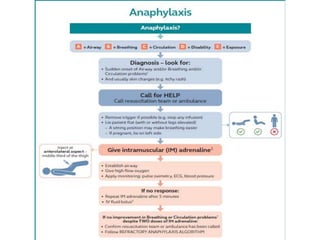
• Management should proceed along the ‘ABCDE’ approach; the
airway should be secured first and preparations for intubation made
should there be evidence of stridor or significant tongue/pharyngeal
oedema.
• Supplemental oxygen should be delivered to maintain saturations
>94% and largebore intravenous cannula placed, along with
initiation of a fluid bolus.
• The most important treatment in anaphylaxis is adrenaline. The
normal dose is 0.5 mg (0.5 mL of 1:1000 solution) in adults, and it is
usually administered intramuscularly into the outer thigh. The dose
may be repeated at an interval of 3–5 minutes should there be no
response.
• Adjunctive treatments include bronchodilators (salbutamol 5 mg
nebulised), anti-histamines (chlorpheniramine 10 mg IV) and steroids
(hydrocortisone 200 mg IV), as well as fluid boluses titrated to blood
pressure. In non-responders, intravenous adrenaline may be given in
50 Îźg boluses, but this should only be given by senior ED due to the
danger of precipitating cardiac ischaemia.
• Take care to remove the suspected source of anaphylaxis if possible
such as a retained insect sting as in this case or other potential sources
like colloid solution or blood products.
• Anyone who has had a severe reaction or required multiple doses of
adrenaline should be admitted for observation for a biphasic reaction.
Those with a single dose of adrenaline may be discharged after 6
hours if they are symptom free.
• At discharge, patients should be prescribed an adrenaline auto-
injector (‘Epipen’, usual dose 0.3 mg) and consider once daily
oral prednisolone for up to 3 days.
• Follow-up should also be arranged with an allergy specialist,
who may arrange further testing to identify the allergen and
initiate preventive therapy.
Take Home Message
• Always think of anaphylaxis when seeing patients
with skin/mucosal symptoms, respiratory difficulty
and/or hypotension, especially after exposure to a
potential allergen.
• Adrenaline 0.5 mg IM is the first-line treatment.
• Any patient with an anaphylactic reaction must at
least be observed for several hours in case of biphasic
reaction, and any patient with a severe reaction
should be admitted.
REFERENCES
1. Tintinalli’s Emergency Medicine, A Comprehensive Study
Guide,Ninth Edition by Judith E. Tintinalli, MD, MS
2. Cardona et al. World Allergy Organization Journal (2020)
13:100472 http://doi.org/10.1016/j.waojou.2020.100472
3. Emergency treatment of anaphylaxis: concise clinical
guidance, Clinical Medicine 2022 Vol 22, No 4: 332–9
4. Emergency treatment of anaphylaxis,Guidelines for
healthcare providers ,Working Group of Resuscitation
Council UK ,May 2021

ANAPHYLAXIS KEYUR BHIMANI anaphylaxispptx

  • 2.
    CASE • A 17-year-oldman is brought to the Emergency Department by his mother after he was stung by an insect. He had been playing football at the local park when his mother thought she saw a bee near his leg. He is feeling nauseous and reports a rash on his leg that is spreading to the rest of his body. He complains that his throat feels itchy and feels like he is having palpitations. He has a history of asthma. • Examination • Vital signs: temperature of 36.8°C, blood pressure of 85/60, heart rate of 110 and regular, respiratory rate of 24, 95% O2 saturation on air. • General examination reveals a blotchy, erythematous rash on his right leg that is spreading upwards towards his trunk, as well as swelling of his lips and tongue. Cardiac examination is unremarkable, and auscultation of the chest is notable for mild expiratory wheeze.
  • 3.
    • Questions • 1.What is the diagnosis? Briefly describe its pathophysiology. • 2. How would you manage the patient? • 3. Assuming he responds appropriately to treatment, does the patient need to be admitted? Is any follow-up required?
  • 4.
    Clinical Criteria forAnaphylaxis • Urticaria, generalized itching or flushing, or edema of lips, tongue, uvula, or skin developing over minutes to hours and associated with at least 1 of the following:  Respiratory distress or hypoxia OR  Hypotension or cardiovascular collapse OR  Associated symptoms of organ dysfunction (e.g., hypotonia, syncope, incontinence) • Two or more signs or symptoms that occur minutes to hours after allergen exposure:  Skin and/or mucosal involvement  Respiratory compromise  Hypotension or associated symptoms  Persistent GI cramps or vomiting • Consider anaphylaxis when patients are exposed to a known allergen and develop hypotension
  • 8.
    Introduction • Hypersensitivity isan inappropriate immune response to generally harmless antigens, representing a continuum from minor to severe manifestations. • Anaphylaxis represents the most dramatic and severe form of immediate hypersensitivity.
  • 11.
    • The classicpresentation of anaphylaxis begins with pruritus, cutaneous flushing, and urticaria. • These symptoms are followed by a sense of fullness in the throat, anxiety, a sensation of chest tightness, shortness of breath, and light headedness. • In severe cases, loss of consciousness and cardio respiratory arrest may result.
  • 14.
    • A complaintof a “lump in the throat” and hoarseness heralds life-threatening laryngeal edema in a patient with symptoms of anaphylaxis. • These major symptoms may be accompanied by abdominal pain or cramping, nausea, vomiting, diarrhea, bronchospasm, rhinorrhea, conjunctivitis, and/or hypotension.
  • 15.
    Clinical Features • Inmost patients, signs and symptoms begin suddenly, often immediately and usually within 60 minutes of exposure. • In general, the faster the onset of symptoms, the more severe the reaction—one half of anaphylactic fatalities occur within the first hour.
  • 16.
    • After theinitial signs and symptoms abate, patients are at a small risk for a recurrence of symptoms caused by a second phase of mediator release : - peaking 8 to 11 hours after the initial exposure and - manifesting signs and symptoms 3 to 4 hours after the initial clinical manifestations have cleared
  • 17.
    • The diagnosisof anaphylaxis is clinical. • Anaphylaxis should be considered when involvement of any two or more body systems is observed, with or without hypotension or airway compromise.
  • 19.
    Differential Diagnosis • Thedifferential diagnosis of anaphylactic reactions is extensive, including vasovagal reactions, myocardial ischemia, dysrhythmias, severe acute asthma, seizure, epiglottitis, hereditary angioedema, foreign body airway obstruction, carcinoid, mastocytosis, vocal cord dysfunction, and non–IgE-mediated drug reactions.
  • 21.
    • The mostcommon anaphylaxis imitator is a vasovagal reaction, which is characterized by hypotension, pallor, bradycardia, diaphoresis, and weakness, and sometimes by loss of consciousness.
  • 22.
  • 25.
    TREATMENT • Triage forall acute allergic reactions should be at the highest level of urgency because of the possibility of sudden deterioration.
  • 26.
    FIRST-LINE THERAPY • Emergencymanagement starts with assessment of: • Airway, breathing, and circulation. • Assess vital signs and pulse oximetry, IV access, oxygen administration, and cardiac rhythm monitoring should be Initiated immediately • The first-line therapies for anaphylaxis : epinephrine, IV crystalloids, oxygen, decontamination
  • 27.
    AIRWAY AND OXYGENATION •The airway should be examined for signs and symptoms of angioedema: uvula edema or hydrops, audible stridor, respiratory distress, or hypoxia. • If angioedema is producing respiratory distress, intubate early, since any delay may result in complete airway obstruction secondary to progression of angioedema. • The patient should be given supplemental oxygen to maintain arterial oxygen saturation >90%.
  • 28.
    DECONTAMINATION • Terminate exposureto the causative agent Gastric lavage is not recommended for food- borne allergens. • In insect stings, as the stinger continues to inject venom even if it is detached from the insect, remove any stinging remnants
  • 29.
    EPINEPHRINE • Epinephrine isthe drug of choice and the first drug that should be administered in acute anaphylaxis. • α1 & β2 receptor agent • α1 activation: reduces mucosal edema and membrane leakage and treats hypotension • β2 activation: bronchodilation and controls mediator release. • Epinephrine is the treatment of choice for anaphylaxis.
  • 30.
    • Epinephrine inpatients without signs of cardiovascular compromise or collapse: IM epinephrine 0.3 to 0.5 milligram (0.3 to 0.5 mL of the 1:1000 dilution) IM repeated every 5 to 10 minutes according to response or relapse. • EpiPen ® (0.3 milligram epinephrine for adults) and EpiPen Junior ® (0.15 milligram epinephrine for children <30 kg).
  • 31.
    • Epinephrine Ifthe patient is refractory to treatment despite repeated IM epinephrine, or with signs of cardiovascular compromise or collapse: IV infusion of epinephrine. 100 micrograms (0.1 milligram) IV, should be given as a 1:100,000 dilution. • 0.1 milligram (0.1 mL of the 1:1000 dilution), in 10 mL of normal saline (NS) solution and infusing it over 5 to 10 minutes (a rate of 1 to 2 mL/min).
  • 32.
    • If thepatient is refractory to the initial bolus, then an epinephrine infusion can be started by placing epinephrine 1 milligram (1.0 mL of the 1:1000 dilution), in 500 mL of 5% dextrose in water or NS and administering at a rate of 1 to 4 micrograms/min (0.5 to 2 mL/min), titrating to effect.
  • 33.
    • Crystalloids ifhypotension is present, it is generally the result of distributive shock and responds to fluid resuscitation. NS bolus of 1 to 2 L (10 to 20 mL/kg in children) concurrently with the epinephrine infusion.
  • 34.
    • Second-Line Therapy: •Corticosteroids • Antihistamines • Asthma medications • Glucagon.
  • 35.
    • Corticosteroids • Methylprednisolone:80 to 125 milligrams IV (2 milligrams/kg in children; up to 125 milligrams) • Hydrocortisone: 250 to 500 milligrams IV (5 to 10 milligrams/kg in children; up to 500 milligrams) • Methylprednisolone produces less fluid retention than hydrocortisone and is preferred for elderly patients and for those patients in whom fluid retention would be problematic (e.g., renal and cardiac impairment).
  • 36.
    • Antihistamines • Allpatients with anaphylaxis should receive a histamine-1 blocker, such as diphenhydramine, 25 to 50 milligrams IV. • It is recommended that histamine-2 blockers, such as ranitidine or cimetidine, be given as well • After the initial IV dose of steroids and antihistamines, the patient may be switched to oral medication
  • 37.
    • Agents forAllergic Bronchospasm if wheezing is present: intermittent or continuous nebulized albuterol/salbutamol • Anticholinergics: ipratropium bromide, 250 to 500 micrograms/dose • Magnesium sulfate: 2 grams IV over 20 to 30 minutes in adults and 25 to 50 milligrams/kg in children.
  • 38.
    • Glucagon • Patientstaking β-blockers with hypotension refractory to fluids and epinephrine, glucagon should be used. 1 milligram IV every 5 minutes until hypotension resolves, followed by an infusion of 5 to 15 micrograms/min.
  • 42.
    Disposition and Follow-Up •In the largest study of allergic reactions treated in the ED, admission occurred in only 4% of cases. • All unstable patients with anaphylaxis refractory to treatment or where airway interventions were required should be admitted to the intensive care unit. • Patients who receive epinephrine should be observed in the ED, but the duration of observation is based on experience rather than clear evidence.
  • 43.
    Disposition and Follow-Up •If patients remain symptom free after appropriate treatment following 4 hours of observation, the patient can be safely discharged home. • prolonged observation periods should be considered in patients with a past history of severe reaction and those using β-blockers. • Other factors to consider in discharge planning include distance from medical care, whether the patient lives alone, significant comorbidity and age
  • 44.
    Outpatient Care andPrevention • The patient should be instructed on how to avoid future exposure to the causative agent if known and possible. • Patients can be discharged from the ED with an epinephrine autoinjector
  • 45.
    Outpatient Care andPrevention • Discharge Planning for Patients with Anaphylaxis: • Education Identification of inciting allergen, if possible Instructions on avoiding future exposure Instructions on use of medications and epinephrine autoinjector • Advise about personal identification/allergy alert tag • Medications :  Diphenhydramine, 25–50 milligrams PO for several days  Prednisone, 40–60 milligrams PO for several days  Epinephrine autoinjector for future reactions  Referral to allergist
  • 46.
    • Patients withanaphylactic reactions should be offered educational options [e.g., Web sites] advice on advocacy groups, and education regarding food contamination for food allergies, and encouraged to wear personal identification of this condition (e.g., MedicAlert ® bracelets). • β-blocker should be changed.
  • 47.
    • Treatment inthe outpatient setting: • Antihistamines • A short course of corticosteroids. • All patients should be provided with a patient information sheet detailing signs and symptoms to watch for and clear instructions for follow-up and immediate return if there is any recurrence of symptoms. • A written action plan on steps to take in the event of future allergen exposure or symptom development may reduce the severity of future attacks.
  • 55.
  • 56.
    Salient features • 17-year-oldboy • stung by an insect. • feeling nauseous and reports a rash on his leg that is spreading to the rest of his body. • his throat feels itchy and feels like he is having palpitations. • k/c/o asthma. Examination: • Vital signs: blood pressure of 85/60, heart rate of 110 and regular, respiratory rate of 24, 95% O2 saturation on air. • a blotchy, erythematous rash on his right leg that is spreading upwards towards his trunk, as well as swelling of his lips and tongue. • Auscultation of the chest is notable for mild expiratory wheeze.
  • 57.
    • This patientis suffering from anaphylaxis, which is an acute- onset potentially life-threatening allergic or hypersensitivity reaction. • The diagnosis of anaphylaxis can be made when any one of the following is present: • i. Acute onset illness that involves the skin and/or mucosa, with either respiratory compromise or hypotension • ii. Two or more of the following that occur quickly after exposure to a known allergen for a patient: involvement of the skin/mucosa, hypotension, respiratory compromise or persistent gastrointestinal symptoms • iii. Hypotension after exposure to a known allergen for a patient (defined as systolic BP <90 mm Hg in adults, or ≥30% decrease from baseline)
  • 58.
    • In thiscase, there is no history of an allergic reaction, but the patient has skin/mucosal involvement (widespread rash), respiratory difficulty (tachypnoea, presence of wheeze) and hypotension, thereby meeting the first criterion for diagnosis of anaphylaxis.
  • 59.
    • Anaphylaxis isa medical emergency and must be quickly recognised and treated. • Management should proceed along the ‘ABCDE’ approach; the airway should be secured first and preparations for intubation made should there be evidence of stridor or significant tongue/pharyngeal oedema. • Supplemental oxygen should be delivered to maintain saturations >94% and largebore intravenous cannula placed, along with initiation of a fluid bolus. • The most important treatment in anaphylaxis is adrenaline. The normal dose is 0.5 mg (0.5 mL of 1:1000 solution) in adults, and it is usually administered intramuscularly into the outer thigh. The dose may be repeated at an interval of 3–5 minutes should there be no response.
  • 60.
    • Adjunctive treatmentsinclude bronchodilators (salbutamol 5 mg nebulised), anti-histamines (chlorpheniramine 10 mg IV) and steroids (hydrocortisone 200 mg IV), as well as fluid boluses titrated to blood pressure. In non-responders, intravenous adrenaline may be given in 50 μg boluses, but this should only be given by senior ED due to the danger of precipitating cardiac ischaemia. • Take care to remove the suspected source of anaphylaxis if possible such as a retained insect sting as in this case or other potential sources like colloid solution or blood products. • Anyone who has had a severe reaction or required multiple doses of adrenaline should be admitted for observation for a biphasic reaction. Those with a single dose of adrenaline may be discharged after 6 hours if they are symptom free.
  • 61.
    • At discharge,patients should be prescribed an adrenaline auto- injector (‘Epipen’, usual dose 0.3 mg) and consider once daily oral prednisolone for up to 3 days. • Follow-up should also be arranged with an allergy specialist, who may arrange further testing to identify the allergen and initiate preventive therapy.
  • 62.
    Take Home Message •Always think of anaphylaxis when seeing patients with skin/mucosal symptoms, respiratory difficulty and/or hypotension, especially after exposure to a potential allergen. • Adrenaline 0.5 mg IM is the first-line treatment. • Any patient with an anaphylactic reaction must at least be observed for several hours in case of biphasic reaction, and any patient with a severe reaction should be admitted.
  • 63.
    REFERENCES 1. Tintinalli’s EmergencyMedicine, A Comprehensive Study Guide,Ninth Edition by Judith E. Tintinalli, MD, MS 2. Cardona et al. World Allergy Organization Journal (2020) 13:100472 http://doi.org/10.1016/j.waojou.2020.100472 3. Emergency treatment of anaphylaxis: concise clinical guidance, Clinical Medicine 2022 Vol 22, No 4: 332–9 4. Emergency treatment of anaphylaxis,Guidelines for healthcare providers ,Working Group of Resuscitation Council UK ,May 2021