



Active Learning
3 Easy Options
What we will discuss:
 Definition
 Range of applications in higher education
 3 specific easy strategies & supporting
evidence:
1. Pausing
2. Asking Questions
3. Cases or Problems
 Tips on what to do, what to avoid
 Being successful in your teaching
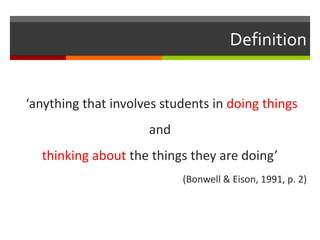
Definition
‘anything that involves students in doing things
and
thinking about the things they are doing’
(Bonwell & Eison, 1991, p. 2)
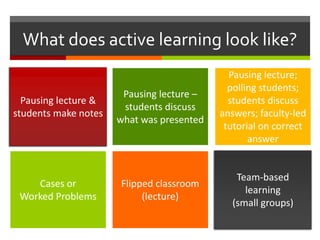
What does active learning look like?
Pausing lecture &
students make notes
Pausing lecture –
students discuss
what was presented
Pausing lecture;
polling students;
students discuss
answers; faculty-led
tutorial on correct
answer
Cases or
Worked Problems
Flipped classroom
(lecture)
Team-based
learning
(small groups)

Active learning: 3 easy ways
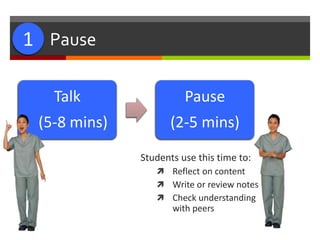
#1: Pause
Students use this time to:
 Reflect on content
 Write or review notes
 Check understanding
with peers
1
Talk
(5-8 mins)
Pause
(2-5 mins)
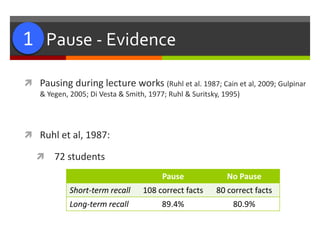
#1: Pause - Evidence
 Pausing during lecture works (Ruhl et al. 1987; Cain et al, 2009; Gulpinar
& Yegen, 2005; Di Vesta & Smith, 1977; Ruhl & Suritsky, 1995)
 Ruhl et al, 1987:
 72 students
1
Pause No Pause
Short-term recall 108 correct facts 80 correct facts
Long-term recall 89.4% 80.9%
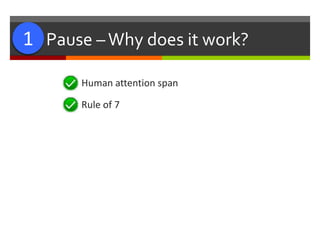
#1: Pause –Why does it work?
 Human attention span
 Rule of 7
1
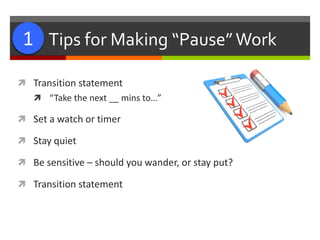
#1: Tips for Making “Pause”Work
 Transition statement
 “Take the next __ mins to…”
 Set a watch or timer
 Stay quiet
 Be sensitive – should you wander, or stay put?
 Transition statement
1
Questions or Clarifying Comments?
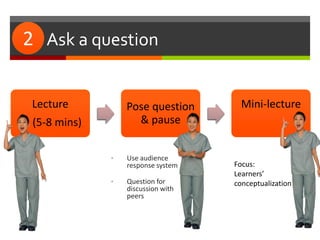
#2: Ask a question
• Use audience
response system
• Question for
discussion with
peers
2
Lecture
(5-8 mins)
Pose question
& pause
Mini-lecture
Focus:
Learners’
conceptualization
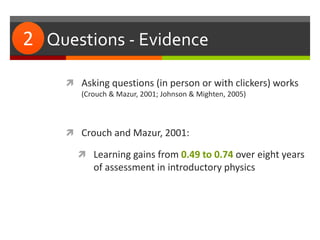
#2: Questions - Evidence
 Asking questions (in person or with clickers) works
(Crouch & Mazur, 2001; Johnson & Mighten, 2005)
 Crouch and Mazur, 2001:
 Learning gains from 0.49 to 0.74 over eight years
of assessment in introductory physics
2
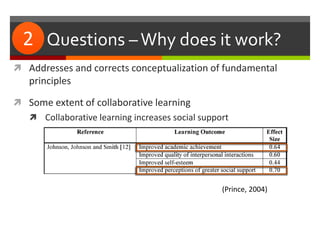
#2: Questions –Why does it work?
 Addresses and corrects conceptualization of fundamental
principles
 Some extent of collaborative learning
 Collaborative learning increases social support
(Prince, 2004)
2
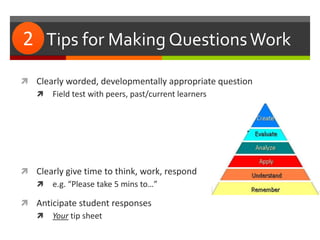
Tips for Making QuestionsWork
 Clearly worded, developmentally appropriate question
 Field test with peers, past/current learners
 Clearly give time to think, work, respond
 e.g. “Please take 5 mins to…”
 Anticipate student responses
 Your tip sheet
2
Questions or Clarifying Comments?
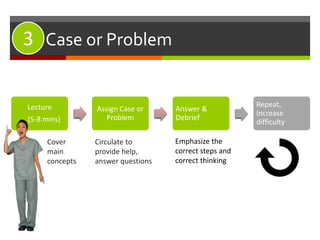
#3: Case or Problem
Circulate to
provide help,
answer questions
Lecture
(5-8 mins)
Assign Case or
Problem
Answer &
Debrief
Repeat,
Increase
difficulty
Emphasize the
correct steps and
correct thinking
3
Cover
main
concepts
#3: Case or Problem
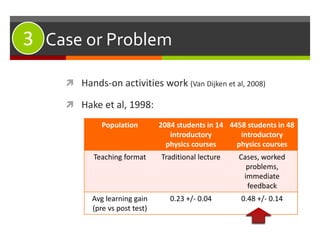
 Hands-on activities work (Van Dijken et al, 2008)
 Hake et al, 1998:
Population 2084 students in 14
introductory
physics courses
4458 students in 48
introductory
physics courses
Teaching format Traditional lecture Cases, worked
problems,
immediate
feedback
Avg learning gain
(pre vs post test)
0.23 +/- 0.04 0.48 +/- 0.14
3
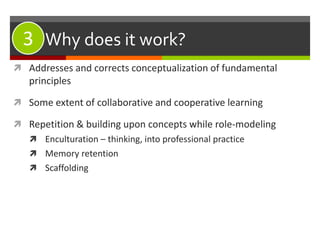
#3: Why does it work?
 Addresses and corrects conceptualization of fundamental
principles
 Some extent of collaborative and cooperative learning
 Repetition & building upon concepts while role-modeling
 Enculturation – thinking, into professional practice
 Memory retention
 Scaffolding
3
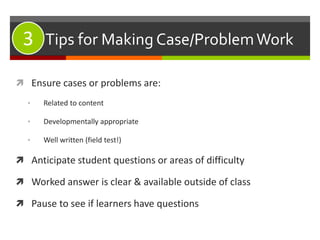
#3: Tips for Making Case/ProblemWork
 Ensure cases or problems are:
• Related to content
• Developmentally appropriate
• Well written (field test!)
 Anticipate student questions or areas of difficulty
 Worked answer is clear & available outside of class
 Pause to see if learners have questions
3
Questions or Clarifying Comments?

How to be successful
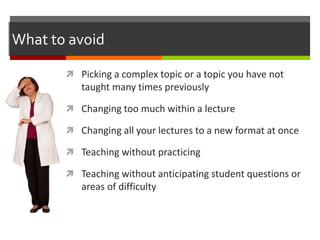
What to avoid
 Picking a complex topic or a topic you have not
taught many times previously
 Changing too much within a lecture
 Changing all your lectures to a new format at once
 Teaching without practicing
 Teaching without anticipating student questions or
areas of difficulty
How to be successful
 Pick a topic you have taught many times before
 Anticipate student questions, areas of difficulty
 Prepare learners for the ‘new’ format
 Safety net: answer keys or ‘lists’; timers
 Add feedback questions on evaluation so you
know where to improve
 Ensure support from administration1
1Bonwell & Eison, 1991
Take-home messages
 3 specific easy strategies:
1. Pausing
2. Asking Questions
3. Cases or Problems
 Prepare, anticipate, practice!
 Start small & get feedback

Active Learning: 3 Easy Ways for Higher Education Lectures

  • 1.
  • 2.
    What we willdiscuss:  Definition  Range of applications in higher education  3 specific easy strategies & supporting evidence: 1. Pausing 2. Asking Questions 3. Cases or Problems  Tips on what to do, what to avoid  Being successful in your teaching
  • 3.
    Definition ‘anything that involvesstudents in doing things and thinking about the things they are doing’ (Bonwell & Eison, 1991, p. 2)
  • 4.
    What does activelearning look like? Pausing lecture & students make notes Pausing lecture – students discuss what was presented Pausing lecture; polling students; students discuss answers; faculty-led tutorial on correct answer Cases or Worked Problems Flipped classroom (lecture) Team-based learning (small groups)
  • 5.
  • 6.
    #1: Pause Students usethis time to:  Reflect on content  Write or review notes  Check understanding with peers 1 Talk (5-8 mins) Pause (2-5 mins)
  • 7.
    #1: Pause -Evidence  Pausing during lecture works (Ruhl et al. 1987; Cain et al, 2009; Gulpinar & Yegen, 2005; Di Vesta & Smith, 1977; Ruhl & Suritsky, 1995)  Ruhl et al, 1987:  72 students 1 Pause No Pause Short-term recall 108 correct facts 80 correct facts Long-term recall 89.4% 80.9%
  • 8.
    #1: Pause –Whydoes it work?  Human attention span  Rule of 7 1
  • 9.
    #1: Tips forMaking “Pause”Work  Transition statement  “Take the next __ mins to…”  Set a watch or timer  Stay quiet  Be sensitive – should you wander, or stay put?  Transition statement 1
  • 10.
  • 11.
    #2: Ask aquestion • Use audience response system • Question for discussion with peers 2 Lecture (5-8 mins) Pose question & pause Mini-lecture Focus: Learners’ conceptualization
  • 12.
    #2: Questions -Evidence  Asking questions (in person or with clickers) works (Crouch & Mazur, 2001; Johnson & Mighten, 2005)  Crouch and Mazur, 2001:  Learning gains from 0.49 to 0.74 over eight years of assessment in introductory physics 2
  • 13.
    #2: Questions –Whydoes it work?  Addresses and corrects conceptualization of fundamental principles  Some extent of collaborative learning  Collaborative learning increases social support (Prince, 2004) 2
  • 14.
    Tips for MakingQuestionsWork  Clearly worded, developmentally appropriate question  Field test with peers, past/current learners  Clearly give time to think, work, respond  e.g. “Please take 5 mins to…”  Anticipate student responses  Your tip sheet 2
  • 15.
  • 16.
    #3: Case orProblem Circulate to provide help, answer questions Lecture (5-8 mins) Assign Case or Problem Answer & Debrief Repeat, Increase difficulty Emphasize the correct steps and correct thinking 3 Cover main concepts
  • 17.
    #3: Case orProblem  Hands-on activities work (Van Dijken et al, 2008)  Hake et al, 1998: Population 2084 students in 14 introductory physics courses 4458 students in 48 introductory physics courses Teaching format Traditional lecture Cases, worked problems, immediate feedback Avg learning gain (pre vs post test) 0.23 +/- 0.04 0.48 +/- 0.14 3
  • 18.
    #3: Why doesit work?  Addresses and corrects conceptualization of fundamental principles  Some extent of collaborative and cooperative learning  Repetition & building upon concepts while role-modeling  Enculturation – thinking, into professional practice  Memory retention  Scaffolding 3
  • 19.
    #3: Tips forMaking Case/ProblemWork  Ensure cases or problems are: • Related to content • Developmentally appropriate • Well written (field test!)  Anticipate student questions or areas of difficulty  Worked answer is clear & available outside of class  Pause to see if learners have questions 3
  • 20.
  • 21.
     How to besuccessful
  • 22.
    What to avoid Picking a complex topic or a topic you have not taught many times previously  Changing too much within a lecture  Changing all your lectures to a new format at once  Teaching without practicing  Teaching without anticipating student questions or areas of difficulty
  • 23.
    How to besuccessful  Pick a topic you have taught many times before  Anticipate student questions, areas of difficulty  Prepare learners for the ‘new’ format  Safety net: answer keys or ‘lists’; timers  Add feedback questions on evaluation so you know where to improve  Ensure support from administration1 1Bonwell & Eison, 1991
  • 24.
    Take-home messages  3specific easy strategies: 1. Pausing 2. Asking Questions 3. Cases or Problems  Prepare, anticipate, practice!  Start small & get feedback

Editor's Notes

  • #18 2 standard deviations higher
  • #20 2 standard deviations higher