ACID BASE BALANCE
Presenter:Joshua Parmeres
MSCN Oncology.
ACID BASE BALANCE
Acid is any compound which form
H+ ion in a solution (proton donor)
eg Carbonic acid release H+ ion.
Base is a compound that combines
with H+ ions in a solution (proton
acceptor) eg bicarbonate accepts
H+ ions.
ACIDOSIS
Is physiological state resulting from
abnomally low plasma PH<7.35
ALKALOSIS
Is physiological state resulting from
high plasma PH >7.45
Volatile Acid
are those acid which can be
converted into gaseous form and
can thus be eliminated by the
lungs.
The primary volatine acid of the
body is carbon dioxide which is
produce by the process of cellular
respiration.
Non volatile acid
average person produces 70mmol
of non volatine acid per day.
Its produced from incomplete
metabolism of carbohydrate,fat
and protein.
Once produced they remain in the
body until eliminated by kidney.Eg
sulphiric acid
Regulation of blood pH.
To maintain blood pH of 7.35 to
7.45 there are three primary
system that regulate H+ in the
body fluids.
1)Buffer system
2)Respiratory system
3)Renal system
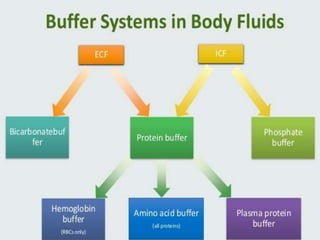
Buffer System
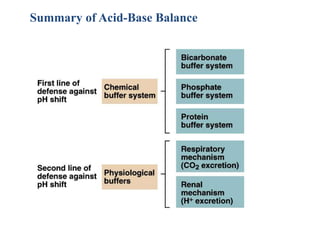
It’s the first line of defence agaist
pH changes
it react very rapidly within seconds
The buffer system of the
blood,tissue fluid and cell
combines with acid or base to
prevent excessive change of pH.
It does not eliminate H+ ion from
the body or add them to the body
but only keep them tied up until
balance is re-established.The
chemical buffer sysyem include
1)Bicarbonates buffer
2)phosphate buffer
3)protein buffer
Bicarbonate Buffer system.
it’s the most important
extracellular fluid buffer.
Its constist of sodium bicarbonate
and carbonic acid.
Carbonic acid dissociate into
hydrogen and bicarbonate ions.
When the pH is rising Hydrogen
ions generated by metabolism or
by ingestion react with bicarbonate
base to form more carbonic acid
Plama Bicarbonate represent alkali
reserve and it has to be sufficiently
high to meet the acid load.
Its has a ratio of 20:1 to ensure
high buffering efficiency against
acid.
Phosphate buffer system
Plays major role in buffering renal
tubular fluid and intracellular
fluids.
Regulate pH within the cell and the
urine.
Phosphate concentration are
higher intracellular and within the
kidney tubules.
More phosphate ions are found in
tubular fluid.
Its has a stronger buffering effect
than equal amount of bicarbonate
buffer.
Protein Buffer system
in the blood,plasma protein
especially albumin act as buffer.
Albumin contain NH2 and COOH
NH2 accept excess hydrogen ion
and COOH give up hydrogen ion.
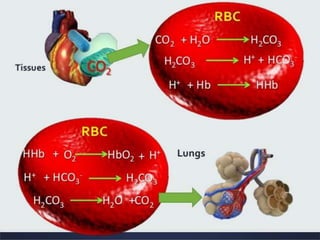
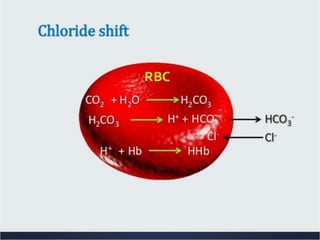
Haemoglobin buffer.
Play important role in respiratory
regulation of pH.
It transport metabolically produced
carbon dioxide from cell to the
lungs for excretion.
As Hb releases oxygen it gains
greater affinity for hydrogen ion
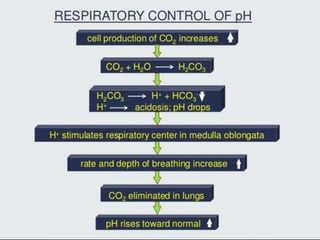
Respiratory mechanism
its called second line of defence.
Its achieved by regulating the
concentration of carbonic acid in
the blood and other body fluid by
the lungs.
The respiratory centre regulate the
removal or rentention of carbon
dioxide hence removal of carbonic
Acid from the extracellular fluid by
the lungs.
the rate of respiration is controlled
by chemoreceptors present in
respiratoty centre of brain which is
sensitive to change in pH.
Chemo sensitive area of the
respiratory center are able to
detect blood concetration level of
carbon dioxide and hydrogen ion.
Increase in co2 and H+ stimulate
the respiratory center.
Effect is to increase resp rate but
effect diminish in 1 to 2 min.
Renal mechanism
provide a permanent solution to
acid base disturbance.
Kidney regulate the blood pH by
maintaining the alkali reserve.The
pH of urine is normally acid
(6.0)The kidney contribute to
acidification of the urine when
formed from
The blood with a pH of 7.4
hydrogen ion generated in the
body are eliminated by acidified
urine.
Hence the pH of urine is normally
acidic.(6.0)while that of blood is
alkaline at (7.4).
Urine pH range from 4.5 to 9.5
depending on concetration of
hydrogen ions.renal mechanism of
acid base balance is achieved by
1)Excretion of hydrogen ion
2) reabsorption of bicarbonates
3)excretion of titratable acid
4)excretion of ammonium ions.
Acidosis
acidosis causes depression of the
CNS through decrease in synaptic
transmission.
Its causes generalized weakness
disorientation
coma
death
Alkalosis
causes over excitation of the
central and peripheral nervous
system.
Numbness
Nervousness
muscle spasm
convulsion
Death
Compesation
the body response to acid base
inbalance is called compensation
if the underlying problem is
metabolic,hyperventila
If underlying problem is metabolic
,hyperventilation or
hyperventilation can help ie
RESPIRATORY COMPESATION.
If problem is respiratory,renal
mechanism can bring about
METABOLIC COMPESATION
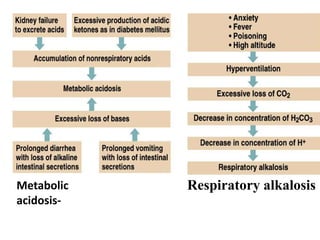
METABOLIC ACIDOSIS
Most common cause are;
lactic acidosis
Diabetic ketoacidosis
acidosis from renal failure
ingestion of toxin.
Acidosis cause hyperkalemia
potassium is a intracellular cation
in acidosis there is an increase in
H+ concentration in ECF.
This leads to exchange of H+ with
intracellular K+.
Net effect is an increase in ECF
potassium (hyperkalemia)
Respiratory acidosis
its from increase in carbonic acid in
plasma
due to retention of carbon dioxide
increase in concentration of
carbonic acid is due to decrease in
alveoli ventilation.
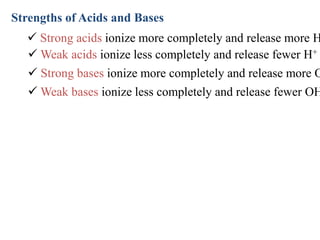
 Weak bases ionize less completely and release fewer OH
 Strong bases ionize more completely and release more O
 Weak acids ionize less completely and release fewer H+
 Strong acids ionize more completely and release more H
Strengths of Acids and Bases
Acid-base balance
Maintenance of homeostasis depends on controlling
the conc. of acids [H+] & bases [H+] in the body fluid
Solutions turn into acids when concentration of
hydrogen ions rises and turns to a base when it falls.
 pH of Extracellular fluid ranges from pH 7.35 – 7.46
 Does not apply to whole body : there are more
extreme/variable pH ranges elsewhere
 Digestive tract
 Gastric Juice 1.0-3.0
 Pancreatic Juice 8.0-8.3
 Intercellular organelles
 Lysosomal pH 4-5
 Digestive and lysosomal enzymes function optimally
at these pH ranges
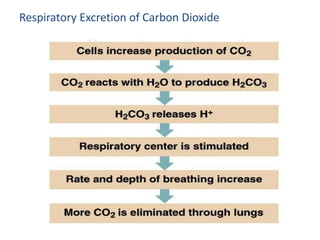
Respiratory Excretion of Carbon Dioxide
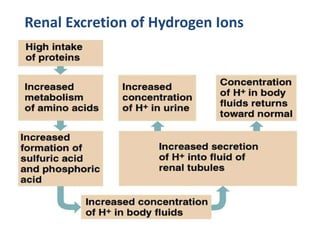
Renal Excretion of Hydrogen Ions
Summary of Acid-Base Balance
Metabolic
acidosis-
Respiratory alkalosis
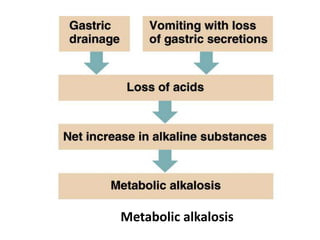
Metabolic alkalosis

Acid base balance..

  • 1.
    ACID BASE BALANCE Presenter:JoshuaParmeres MSCN Oncology.
  • 2.
    ACID BASE BALANCE Acidis any compound which form H+ ion in a solution (proton donor) eg Carbonic acid release H+ ion. Base is a compound that combines with H+ ions in a solution (proton acceptor) eg bicarbonate accepts H+ ions.
  • 3.
    ACIDOSIS Is physiological stateresulting from abnomally low plasma PH<7.35 ALKALOSIS Is physiological state resulting from high plasma PH >7.45
  • 4.
    Volatile Acid are thoseacid which can be converted into gaseous form and can thus be eliminated by the lungs. The primary volatine acid of the body is carbon dioxide which is produce by the process of cellular respiration.
  • 5.
    Non volatile acid averageperson produces 70mmol of non volatine acid per day. Its produced from incomplete metabolism of carbohydrate,fat and protein. Once produced they remain in the body until eliminated by kidney.Eg sulphiric acid
  • 6.
    Regulation of bloodpH. To maintain blood pH of 7.35 to 7.45 there are three primary system that regulate H+ in the body fluids.
  • 7.
  • 8.
    Buffer System It’s thefirst line of defence agaist pH changes it react very rapidly within seconds The buffer system of the blood,tissue fluid and cell combines with acid or base to prevent excessive change of pH.
  • 9.
    It does noteliminate H+ ion from the body or add them to the body but only keep them tied up until balance is re-established.The chemical buffer sysyem include 1)Bicarbonates buffer 2)phosphate buffer 3)protein buffer
  • 11.
    Bicarbonate Buffer system. it’sthe most important extracellular fluid buffer. Its constist of sodium bicarbonate and carbonic acid. Carbonic acid dissociate into hydrogen and bicarbonate ions.
  • 12.
    When the pHis rising Hydrogen ions generated by metabolism or by ingestion react with bicarbonate base to form more carbonic acid
  • 13.
    Plama Bicarbonate representalkali reserve and it has to be sufficiently high to meet the acid load. Its has a ratio of 20:1 to ensure high buffering efficiency against acid.
  • 14.
    Phosphate buffer system Playsmajor role in buffering renal tubular fluid and intracellular fluids. Regulate pH within the cell and the urine. Phosphate concentration are higher intracellular and within the kidney tubules.
  • 15.
    More phosphate ionsare found in tubular fluid. Its has a stronger buffering effect than equal amount of bicarbonate buffer.
  • 16.
    Protein Buffer system inthe blood,plasma protein especially albumin act as buffer. Albumin contain NH2 and COOH NH2 accept excess hydrogen ion and COOH give up hydrogen ion.
  • 17.
    Haemoglobin buffer. Play importantrole in respiratory regulation of pH. It transport metabolically produced carbon dioxide from cell to the lungs for excretion. As Hb releases oxygen it gains greater affinity for hydrogen ion
  • 19.
    Respiratory mechanism its calledsecond line of defence. Its achieved by regulating the concentration of carbonic acid in the blood and other body fluid by the lungs. The respiratory centre regulate the removal or rentention of carbon dioxide hence removal of carbonic
  • 20.
    Acid from theextracellular fluid by the lungs. the rate of respiration is controlled by chemoreceptors present in respiratoty centre of brain which is sensitive to change in pH.
  • 21.
    Chemo sensitive areaof the respiratory center are able to detect blood concetration level of carbon dioxide and hydrogen ion. Increase in co2 and H+ stimulate the respiratory center. Effect is to increase resp rate but effect diminish in 1 to 2 min.
  • 24.
    Renal mechanism provide apermanent solution to acid base disturbance. Kidney regulate the blood pH by maintaining the alkali reserve.The pH of urine is normally acid (6.0)The kidney contribute to acidification of the urine when formed from
  • 25.
    The blood witha pH of 7.4 hydrogen ion generated in the body are eliminated by acidified urine. Hence the pH of urine is normally acidic.(6.0)while that of blood is alkaline at (7.4).
  • 26.
    Urine pH rangefrom 4.5 to 9.5 depending on concetration of hydrogen ions.renal mechanism of acid base balance is achieved by
  • 27.
    1)Excretion of hydrogenion 2) reabsorption of bicarbonates 3)excretion of titratable acid 4)excretion of ammonium ions.
  • 28.
    Acidosis acidosis causes depressionof the CNS through decrease in synaptic transmission. Its causes generalized weakness disorientation coma death
  • 29.
    Alkalosis causes over excitationof the central and peripheral nervous system. Numbness Nervousness muscle spasm convulsion Death
  • 30.
    Compesation the body responseto acid base inbalance is called compensation if the underlying problem is metabolic,hyperventila
  • 31.
    If underlying problemis metabolic ,hyperventilation or hyperventilation can help ie RESPIRATORY COMPESATION. If problem is respiratory,renal mechanism can bring about METABOLIC COMPESATION
  • 32.
    METABOLIC ACIDOSIS Most commoncause are; lactic acidosis Diabetic ketoacidosis acidosis from renal failure ingestion of toxin.
  • 33.
    Acidosis cause hyperkalemia potassiumis a intracellular cation in acidosis there is an increase in H+ concentration in ECF. This leads to exchange of H+ with intracellular K+. Net effect is an increase in ECF potassium (hyperkalemia)
  • 34.
    Respiratory acidosis its fromincrease in carbonic acid in plasma due to retention of carbon dioxide increase in concentration of carbonic acid is due to decrease in alveoli ventilation.
  • 35.
     Weak basesionize less completely and release fewer OH  Strong bases ionize more completely and release more O  Weak acids ionize less completely and release fewer H+  Strong acids ionize more completely and release more H Strengths of Acids and Bases
  • 36.
    Acid-base balance Maintenance ofhomeostasis depends on controlling the conc. of acids [H+] & bases [H+] in the body fluid Solutions turn into acids when concentration of hydrogen ions rises and turns to a base when it falls.  pH of Extracellular fluid ranges from pH 7.35 – 7.46  Does not apply to whole body : there are more extreme/variable pH ranges elsewhere  Digestive tract  Gastric Juice 1.0-3.0  Pancreatic Juice 8.0-8.3  Intercellular organelles  Lysosomal pH 4-5  Digestive and lysosomal enzymes function optimally at these pH ranges
  • 37.
  • 38.
    Renal Excretion ofHydrogen Ions
  • 39.
  • 40.
  • 41.