ABSTRACT
EXPRESSIONIS
M
ABSTRACT
EXPRESSIONISM
• It is a post-World War II art movement in
American painting, that is developed in New
York City in 1940
ABSTRACT
EXPRESSIONISM
• It was the first specifically American
movement to achieve international influence
and put New York City at the center of the
western art world
ABSTRACT
EXPRESSIONISM
• The term "Abstract Expressionism" was first
used in Germany in connection with
Russian artist Wassily Kandinsky in 1919
ABSTRACT
EXPRESSIONISM
• Abstract expressionism has many stylistic
similarities to the Russian artists of the early
20th century
ABSTRACT
EXPRESSIONISM
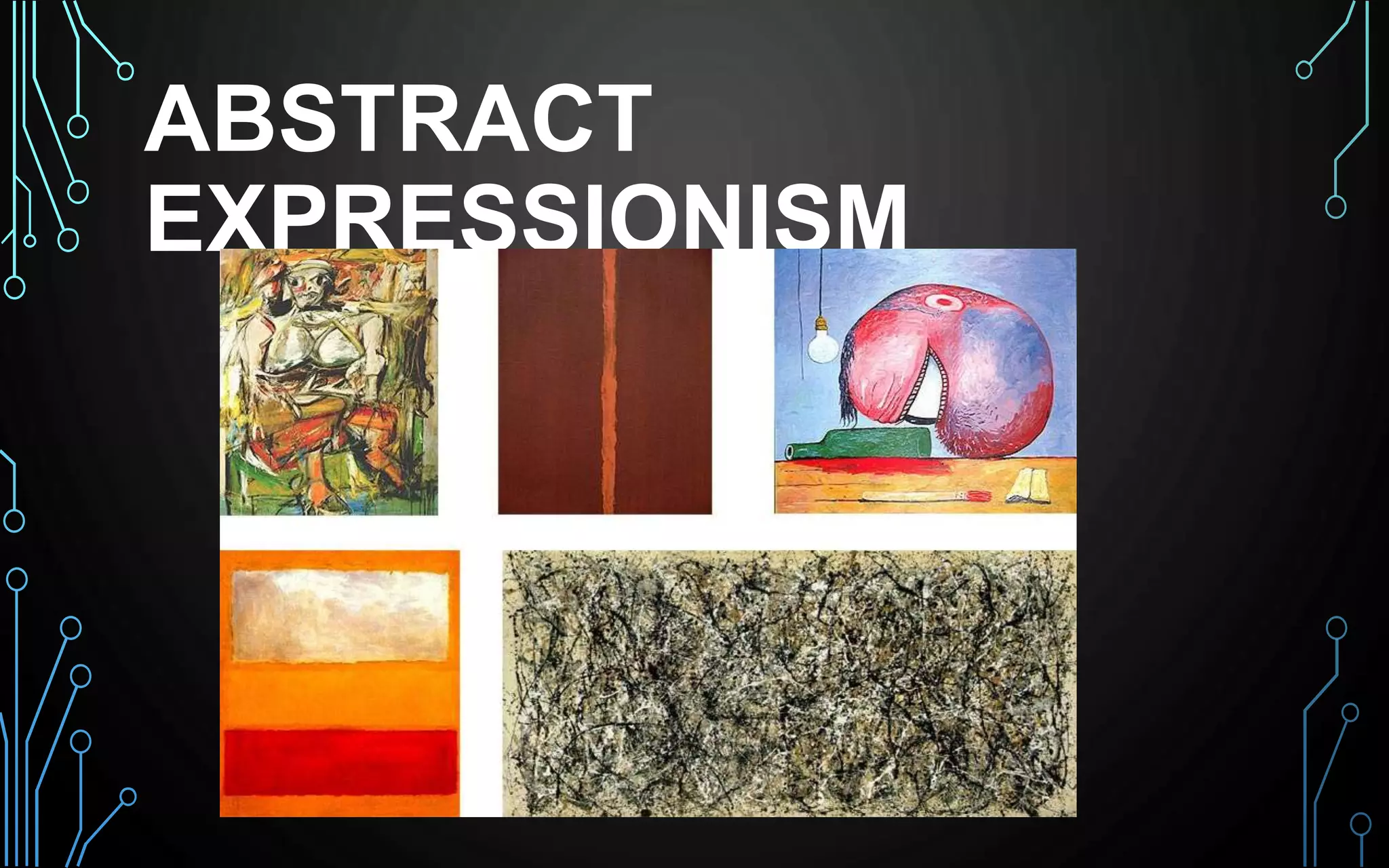
• It was somehow meant to encompass not
only the work of painters who filled their
canvases with fields of color and abstract
forms, but also those who attacked their
canvases with a vigorous gestural
expressionism.
ABSTRACT
EXPRESSIONISM
• Political instability in Europe in the 1930s
brought several leading Surrealists to New
York, and many of the Abstract
Expressionists were profoundly influenced
by the style and by its focus on the
unconscious
CHARACTERISTICS OF
ABSTRACT
EXPRESSIONISM
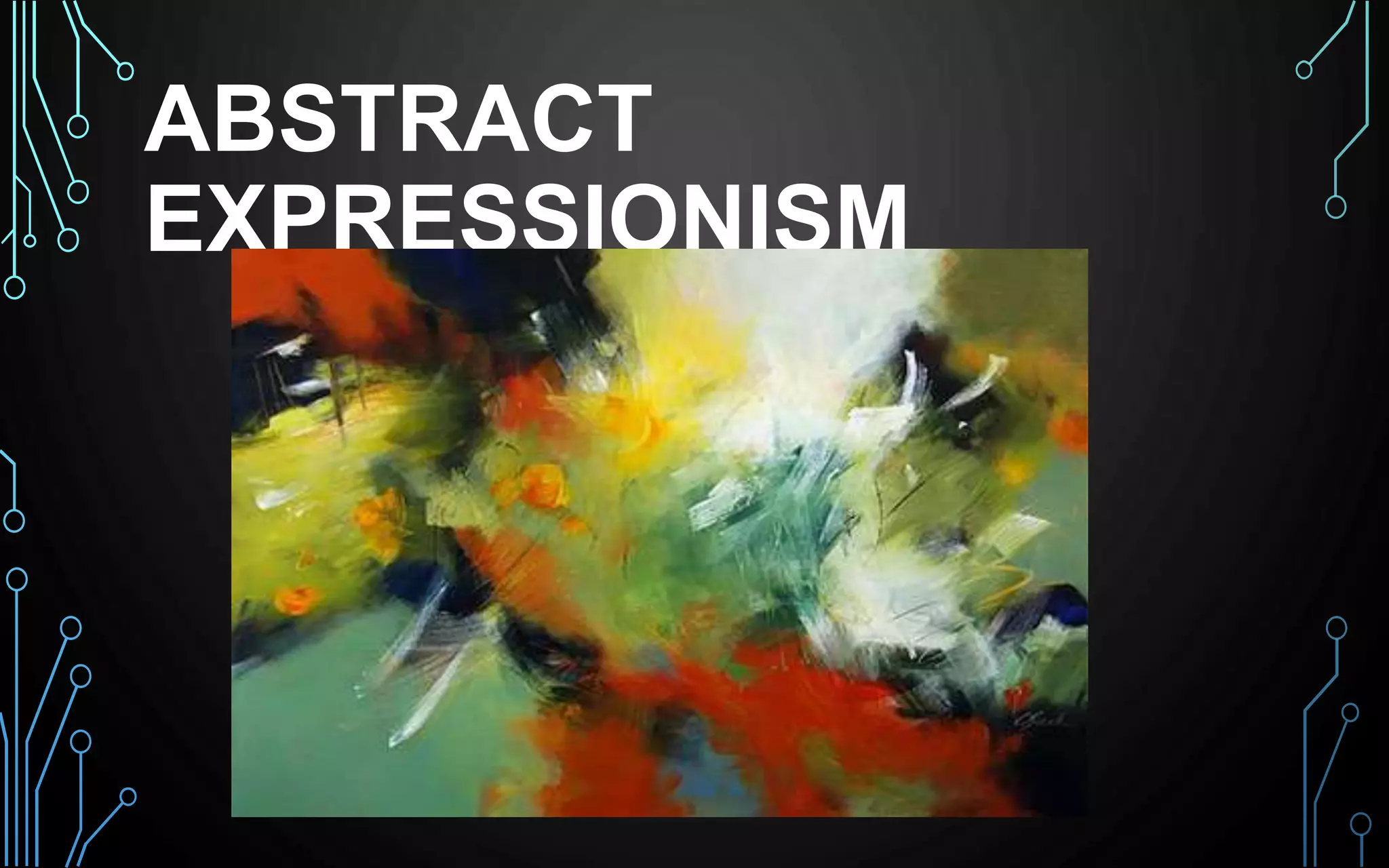
• Messiness
• Sometimes “gestural writing” in a loosely
calligraphic manner
• Unconventional application of paint, usually
without a recognizable subject
SIGNIFICANT PEOPLE OF
ABSTRACT
EXPRESSIONISM
• Herbert Ferber
• April 30, 1906 – August 20, 1991
• Ferber's best-known sculptures are open,
hollow forms in soldered and welded metal.
While abstract, their titles and spiky forms often
suggest forces in conflict.
SIGNIFICANT PEOPLE OF
ABSTRACT
EXPRESSIONISM
• Mark Tobey
• December 11, 1890 – April 24, 1976
• His densely structured compositions,
inspired by Asian calligraphy,
resemble Abstract expressionism.
ABSTRACT
EXPRESSIONISM
ABSTRACT
EXPRESSIONISM
ABSTRACT
EXPRESSIONISM

Abstract Expressionism