



Wireless Sensors Network in
Aircraft Control Systems
PRESENTED BY: SYED FARHAN ABBAS (009)
SHAFQAAT RASUAL (001)
PRESENTED TO :
ENGR. AJMAL HUSSAIN
AUTHORS: RAMA K. YEDAVALLI
ROHIT K. BELUPURKAR
WSNs In Aircraft Control Systems
Need of WSNs:
 Fly by wire
 Digital engine control system
 Electrical Failure
 Increased Weight
WSN
 Increased fuel efficiency
 Decreased weight
 Flexibility
 Reduction in cost and maintenance
Cont..
Applications of WSNs
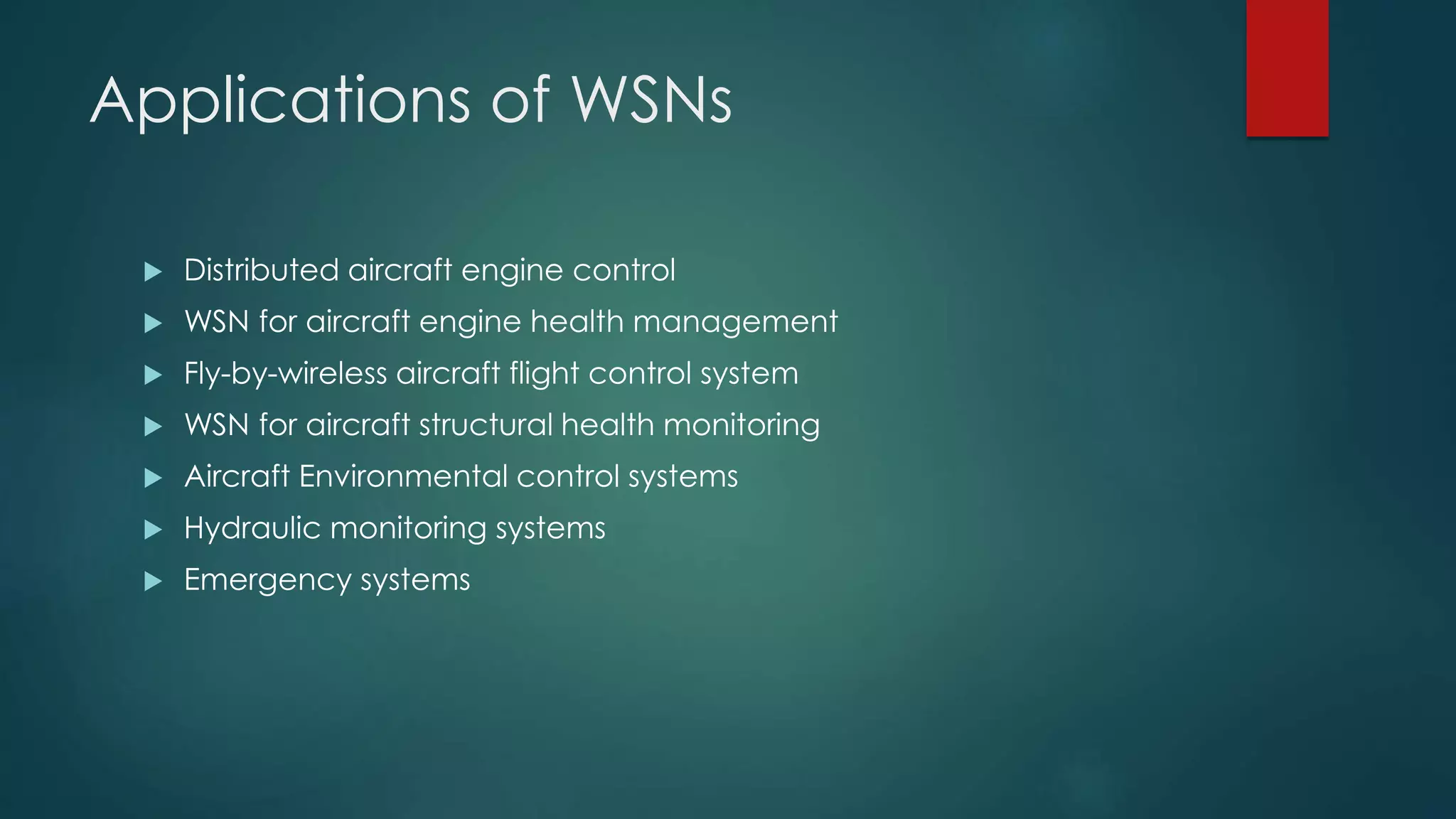
 Distributed aircraft engine control
 WSN for aircraft engine health management
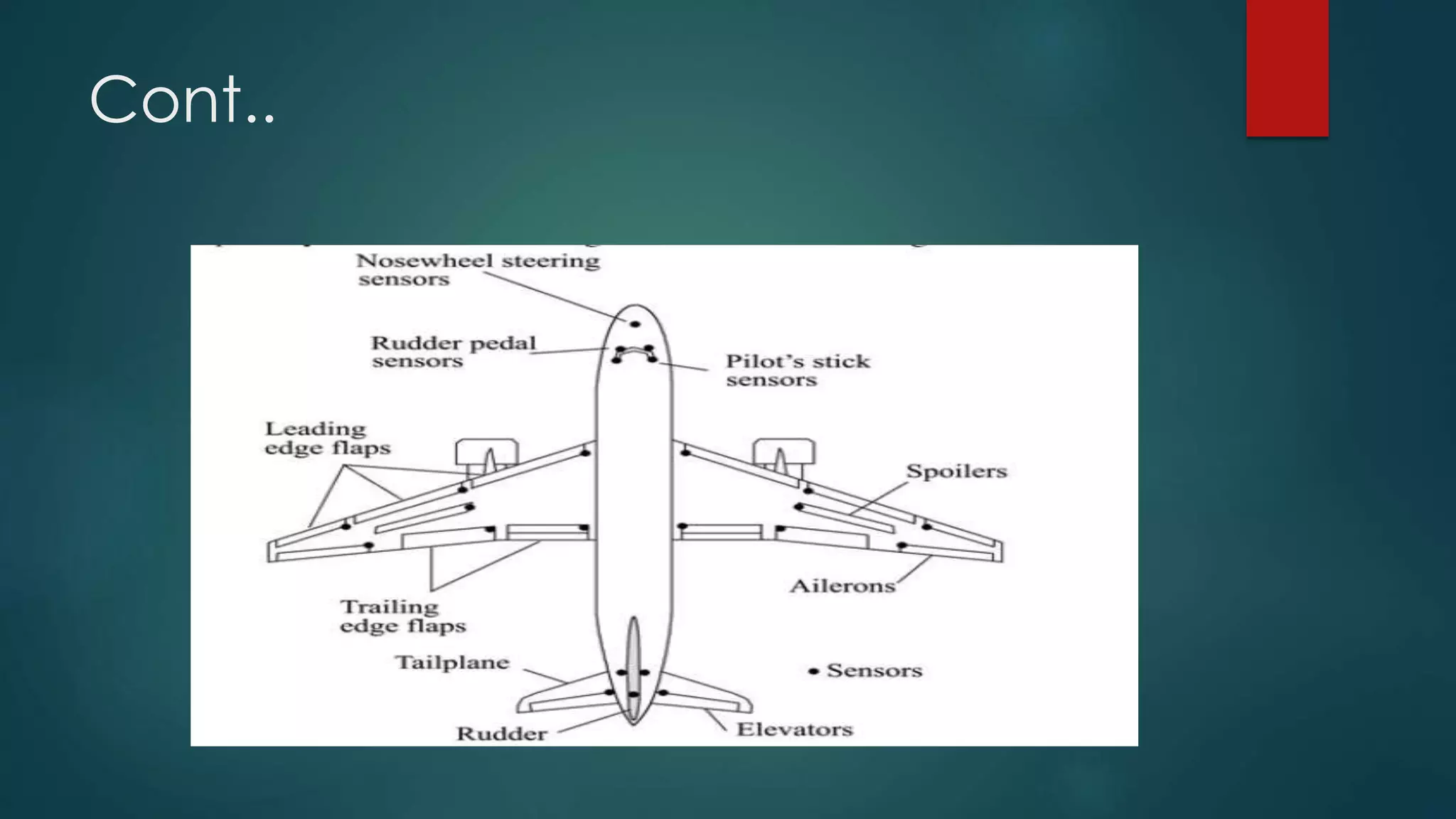
 Fly-by-wireless aircraft flight control system
 WSN for aircraft structural health monitoring
 Aircraft Environmental control systems
 Hydraulic monitoring systems
 Emergency systems
Conclusion
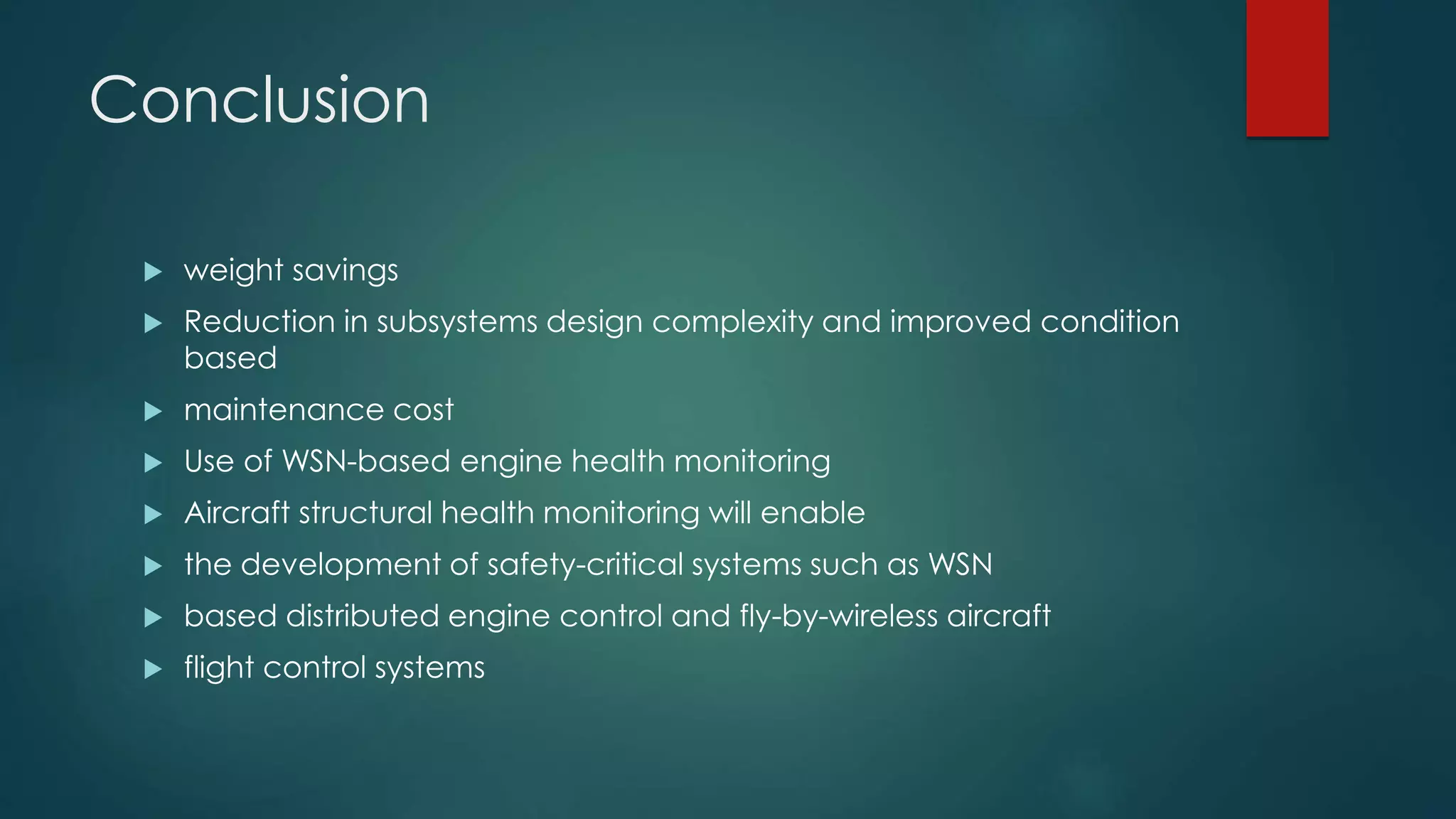
 weight savings
 Reduction in subsystems design complexity and improved condition
based
 maintenance cost
 Use of WSN-based engine health monitoring
 Aircraft structural health monitoring will enable
 the development of safety-critical systems such as WSN
 based distributed engine control and fly-by-wireless aircraft
 flight control systems
Area Of research
 Delays and packet dropout
 Bit rate constraints
 Fusion of WSN
 Routing Protocols
 High temperature electronics

A wireless sensors network in Aircraft Control Systems

  • 1.
    Wireless Sensors Networkin Aircraft Control Systems PRESENTED BY: SYED FARHAN ABBAS (009) SHAFQAAT RASUAL (001) PRESENTED TO : ENGR. AJMAL HUSSAIN AUTHORS: RAMA K. YEDAVALLI ROHIT K. BELUPURKAR
  • 2.
    WSNs In AircraftControl Systems Need of WSNs:  Fly by wire  Digital engine control system  Electrical Failure  Increased Weight
  • 3.
    WSN  Increased fuelefficiency  Decreased weight  Flexibility  Reduction in cost and maintenance
  • 4.
  • 5.
    Applications of WSNs Distributed aircraft engine control  WSN for aircraft engine health management  Fly-by-wireless aircraft flight control system  WSN for aircraft structural health monitoring  Aircraft Environmental control systems  Hydraulic monitoring systems  Emergency systems
  • 6.
    Conclusion  weight savings Reduction in subsystems design complexity and improved condition based  maintenance cost  Use of WSN-based engine health monitoring  Aircraft structural health monitoring will enable  the development of safety-critical systems such as WSN  based distributed engine control and fly-by-wireless aircraft  flight control systems
  • 7.
    Area Of research Delays and packet dropout  Bit rate constraints  Fusion of WSN  Routing Protocols  High temperature electronics