Seminar Outline
Introduction
 Fly-by-wire System
Introduction to Fly-by-wire system
Fly-by-wire Controlling Technology
Advantage , Disadvantage and Future of Fly-by-wire
Flight Control System
Conclusion
References
12/14/2016 Blue Eyes Technology 1
Introduction
Flight Control System :- A conventional fixed-wing aircraft flight
control system consists of flight control surfaces, the respective cockpit controls,
connecting linkages, and the necessary operating mechanisms to control an
aircraft's direction in flight.
Types of flight controls:-
 Mechanical
 Hydraulic-Mechanical
 Fly-by-wire
 Other
Introduction
Fly-by-wire:-
The term "fly-by-wire" implies a purely electrically signalled control
system.
The movements of flight controls are converted to electronic signals
transmitted by wires (hence the fly-by-wire term), and flight
control computers determine how to move the actuators at each
control surface to provide the ordered response.
Why Fly-by-wire ?
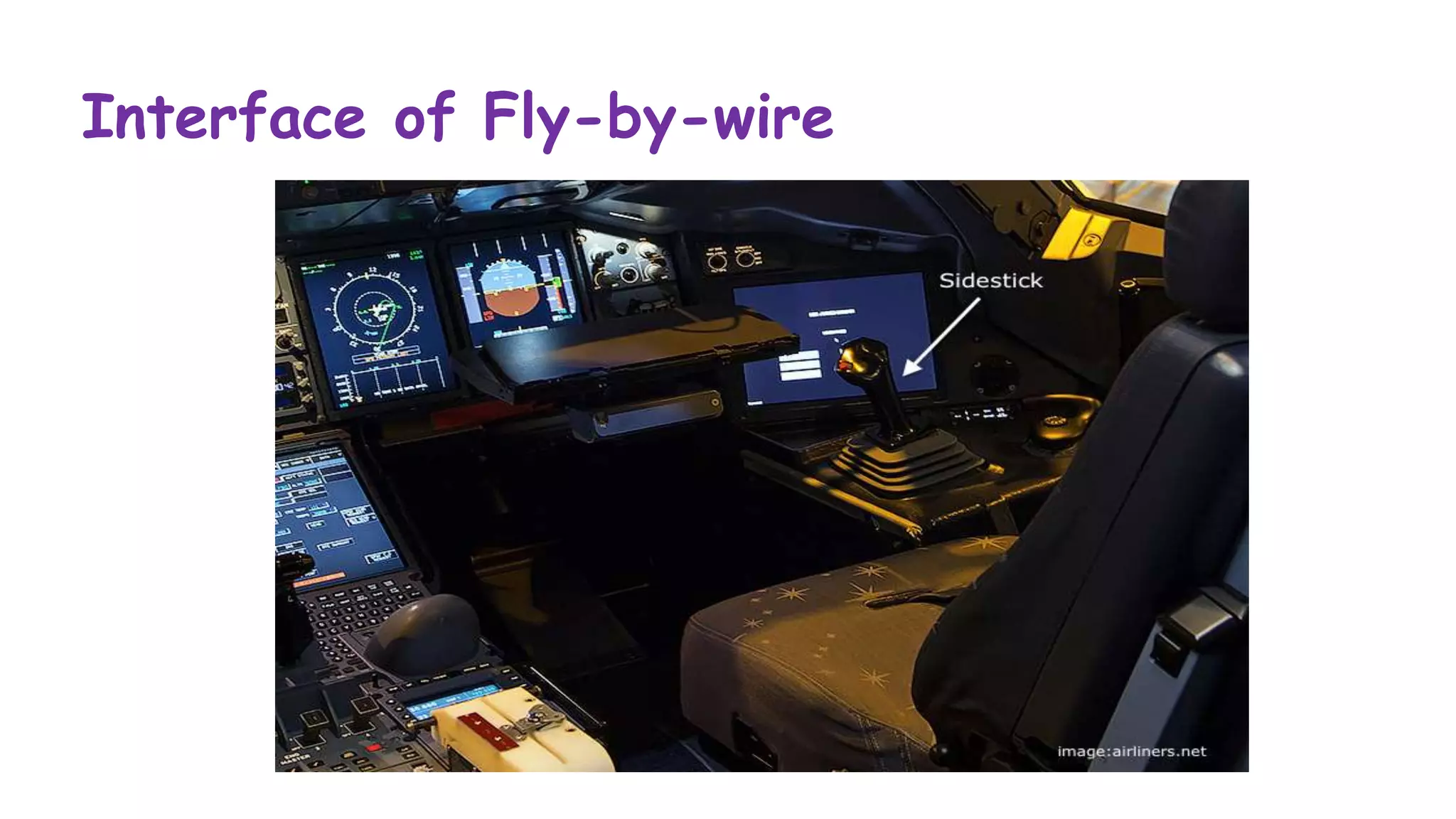
In a fly-by-wire aircraft, the pilot inputs commands via a sidestick or yoke
to a computer.
The computer then directs the hydraulic or electric actuator to deflect a
flight control surface.
 It does provide better tactile feedback to the pilots when they are
manually flying the airplane.
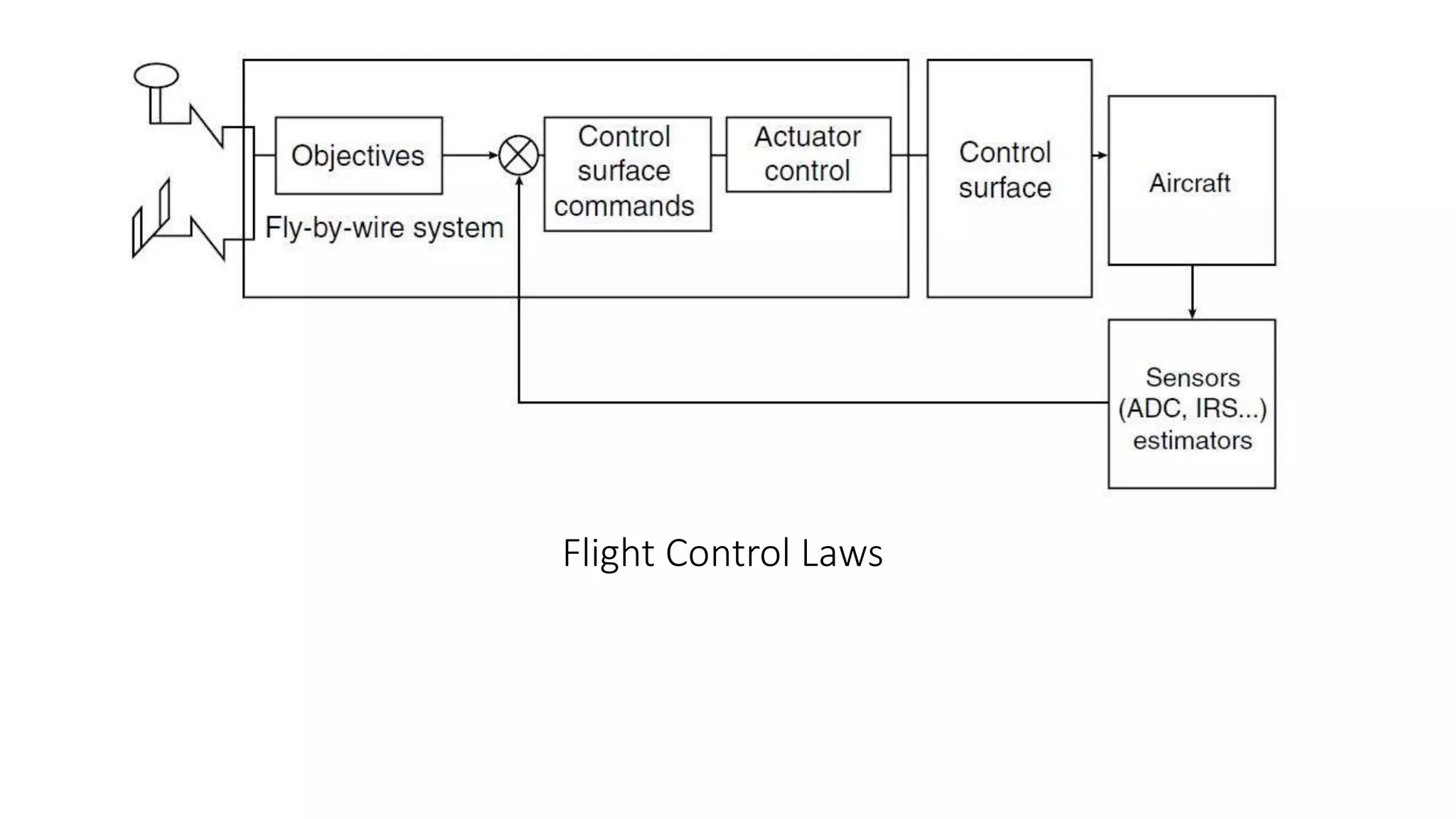
A computer system is interposed between the operator and the final
control actuators or surfaces which modifies the manual inputs of the
pilot in accordance with control parameters.
Competition in the field of Fly-by-wire
system
• In the market , There are various Fly-by-wire like:-
• After getting the concept of Fly-by-wire, most of the companies developed
Fly-by-wire flight control for their aircafts.
o LCA Tejas by HAL
o A320 by Airbus.
o Boeing 777 by Boeing.
o F-8C Crusader by NASA.
o F-22 Raptor by Lockheed Martin.
o PAK-FA by Sukhoi/HAL.
Introduction to Fly-by-wire
Fly-by-wire (FBW) is a system that replaces the conventional manual flight
controls of an aircraft with an electronic interface.
The movements of flight controls are converted to electronic signals transmitted
by wires (hence the fly-by-wire term), and flight control computers determine how
to move the actuators at each control surface to provide the ordered response.
The fly-by-wire system also allows automatic signals sent by the aircraft's
computers to perform functions without the pilot's input, as in systems that
automatically help stabilize the aircraft, or prevent unsafe operation of the aircraft
outside of its performance envelope.
Key point of Fly-by-wire
• Really more of a subset of Hydraulic Controls
• Commonly uses a hydraulic control circuit to physically move the control surfaces
and a computer controlled (digital) circuit that takes pilot input and actuates the
hydraulic system
• Common on newer commercial and military aircraft
• Computer “interpretation” of pilot input allows for better stability of the aircraft
allowing much more “on the edge” designs to be capable of flying
Interface of Fly-by-wire
Fly-by-wire working principles-
On aircraft the pilot orders are transmitted to the servo-controls by an arrangement
of mechanical components (rods, cables, pulleys, etc.).
In addition, specific computers and actuators driving the mechanical linkages restore
the pilot feels on the controls and transmit the autopilot commands.
The fly-by-wire system would simply provide electrical signals to the control actuators
that were directly proportional to the angular displacement of the pilot’s controls,
without any form of enhancement.
Flight Control Laws
Applications of Fly-by-wire system-
• The Space Shuttle orbiter has an all-digital fly-by-wire control system.
• Airbus A320 is the first airliner to fly with an all-digital fly-by-wire control system.
• Dassault Falcon 7X is the first business jet with fly-by-wire controls.
• Many multirole fighter aircrafts such as HAL-Tejas, F-22 Raptor, PAK-FA, Dassault Rafale,
etc. employs
Advantages of Fly-by-wire System
It gives a very accurate and smooth response to demands.
It can also fly with great accuracy on the edges of the flight
envelope.
It is safe, more reliable and responsive way of flight control.
It helps in easy manoeuvrability.
Disadvantages of Fly-by-wire System
It restricts the pilot to monitoring automatic systems.
System failures are not always noticed in time for a satisfactory reaction.
System emergencies (when they come) are so unusual that pilots have difficulty
reacting correctly.
It is a complex system.
Future of Fly-by-wire System
Digitally controlled electric motors and fly-by-wire controls are going replacing heavy,
expensive-to-produce hydraulic systems.
On the flight deck, electronic flight displays incorporating data from a wide array of
electronic sensors are going to be employed to enhance safety and provide pilots with
previously unimagined levels of situational awareness, capability and operational
efficiency.
Envelope protection, which will prevents pilots from exceeding certain parameters and
can also help pilots stay well within the safest areas of the normal flight envelope,
lowering their workload
Conclusion
 Fly-by-wire provides more delicate and user friendly facilities in flight
control.
Provide more security for which every human being is concerned.
 Controlling an aircraft becomes easier with the help of Fly-by-wire
system
Gap between the flight controls and pilot is reduced.
Reference
www.geaviation.com
www.airbus.com
www.wikipedia.com
www.nasa.gov
www.hal-India.com
www.lockheedmartin.com
Flight control system

Flight control system

  • 1.
    Seminar Outline Introduction  Fly-by-wireSystem Introduction to Fly-by-wire system Fly-by-wire Controlling Technology Advantage , Disadvantage and Future of Fly-by-wire Flight Control System Conclusion References 12/14/2016 Blue Eyes Technology 1
  • 2.
    Introduction Flight Control System:- A conventional fixed-wing aircraft flight control system consists of flight control surfaces, the respective cockpit controls, connecting linkages, and the necessary operating mechanisms to control an aircraft's direction in flight. Types of flight controls:-  Mechanical  Hydraulic-Mechanical  Fly-by-wire  Other
  • 3.
    Introduction Fly-by-wire:- The term "fly-by-wire"implies a purely electrically signalled control system. The movements of flight controls are converted to electronic signals transmitted by wires (hence the fly-by-wire term), and flight control computers determine how to move the actuators at each control surface to provide the ordered response.
  • 4.
    Why Fly-by-wire ? Ina fly-by-wire aircraft, the pilot inputs commands via a sidestick or yoke to a computer. The computer then directs the hydraulic or electric actuator to deflect a flight control surface.  It does provide better tactile feedback to the pilots when they are manually flying the airplane. A computer system is interposed between the operator and the final control actuators or surfaces which modifies the manual inputs of the pilot in accordance with control parameters.
  • 5.
    Competition in thefield of Fly-by-wire system • In the market , There are various Fly-by-wire like:- • After getting the concept of Fly-by-wire, most of the companies developed Fly-by-wire flight control for their aircafts. o LCA Tejas by HAL o A320 by Airbus. o Boeing 777 by Boeing. o F-8C Crusader by NASA. o F-22 Raptor by Lockheed Martin. o PAK-FA by Sukhoi/HAL.
  • 6.
    Introduction to Fly-by-wire Fly-by-wire(FBW) is a system that replaces the conventional manual flight controls of an aircraft with an electronic interface. The movements of flight controls are converted to electronic signals transmitted by wires (hence the fly-by-wire term), and flight control computers determine how to move the actuators at each control surface to provide the ordered response. The fly-by-wire system also allows automatic signals sent by the aircraft's computers to perform functions without the pilot's input, as in systems that automatically help stabilize the aircraft, or prevent unsafe operation of the aircraft outside of its performance envelope.
  • 7.
    Key point ofFly-by-wire • Really more of a subset of Hydraulic Controls • Commonly uses a hydraulic control circuit to physically move the control surfaces and a computer controlled (digital) circuit that takes pilot input and actuates the hydraulic system • Common on newer commercial and military aircraft • Computer “interpretation” of pilot input allows for better stability of the aircraft allowing much more “on the edge” designs to be capable of flying
  • 8.
  • 9.
    Fly-by-wire working principles- Onaircraft the pilot orders are transmitted to the servo-controls by an arrangement of mechanical components (rods, cables, pulleys, etc.). In addition, specific computers and actuators driving the mechanical linkages restore the pilot feels on the controls and transmit the autopilot commands. The fly-by-wire system would simply provide electrical signals to the control actuators that were directly proportional to the angular displacement of the pilot’s controls, without any form of enhancement.
  • 10.
  • 11.
    Applications of Fly-by-wiresystem- • The Space Shuttle orbiter has an all-digital fly-by-wire control system. • Airbus A320 is the first airliner to fly with an all-digital fly-by-wire control system. • Dassault Falcon 7X is the first business jet with fly-by-wire controls. • Many multirole fighter aircrafts such as HAL-Tejas, F-22 Raptor, PAK-FA, Dassault Rafale, etc. employs
  • 12.
    Advantages of Fly-by-wireSystem It gives a very accurate and smooth response to demands. It can also fly with great accuracy on the edges of the flight envelope. It is safe, more reliable and responsive way of flight control. It helps in easy manoeuvrability.
  • 13.
    Disadvantages of Fly-by-wireSystem It restricts the pilot to monitoring automatic systems. System failures are not always noticed in time for a satisfactory reaction. System emergencies (when they come) are so unusual that pilots have difficulty reacting correctly. It is a complex system.
  • 14.
    Future of Fly-by-wireSystem Digitally controlled electric motors and fly-by-wire controls are going replacing heavy, expensive-to-produce hydraulic systems. On the flight deck, electronic flight displays incorporating data from a wide array of electronic sensors are going to be employed to enhance safety and provide pilots with previously unimagined levels of situational awareness, capability and operational efficiency. Envelope protection, which will prevents pilots from exceeding certain parameters and can also help pilots stay well within the safest areas of the normal flight envelope, lowering their workload
  • 15.
    Conclusion  Fly-by-wire providesmore delicate and user friendly facilities in flight control. Provide more security for which every human being is concerned.  Controlling an aircraft becomes easier with the help of Fly-by-wire system Gap between the flight controls and pilot is reduced.
  • 16.