
*Passive Thermal Management for
Avionics in High Temperature
Environment
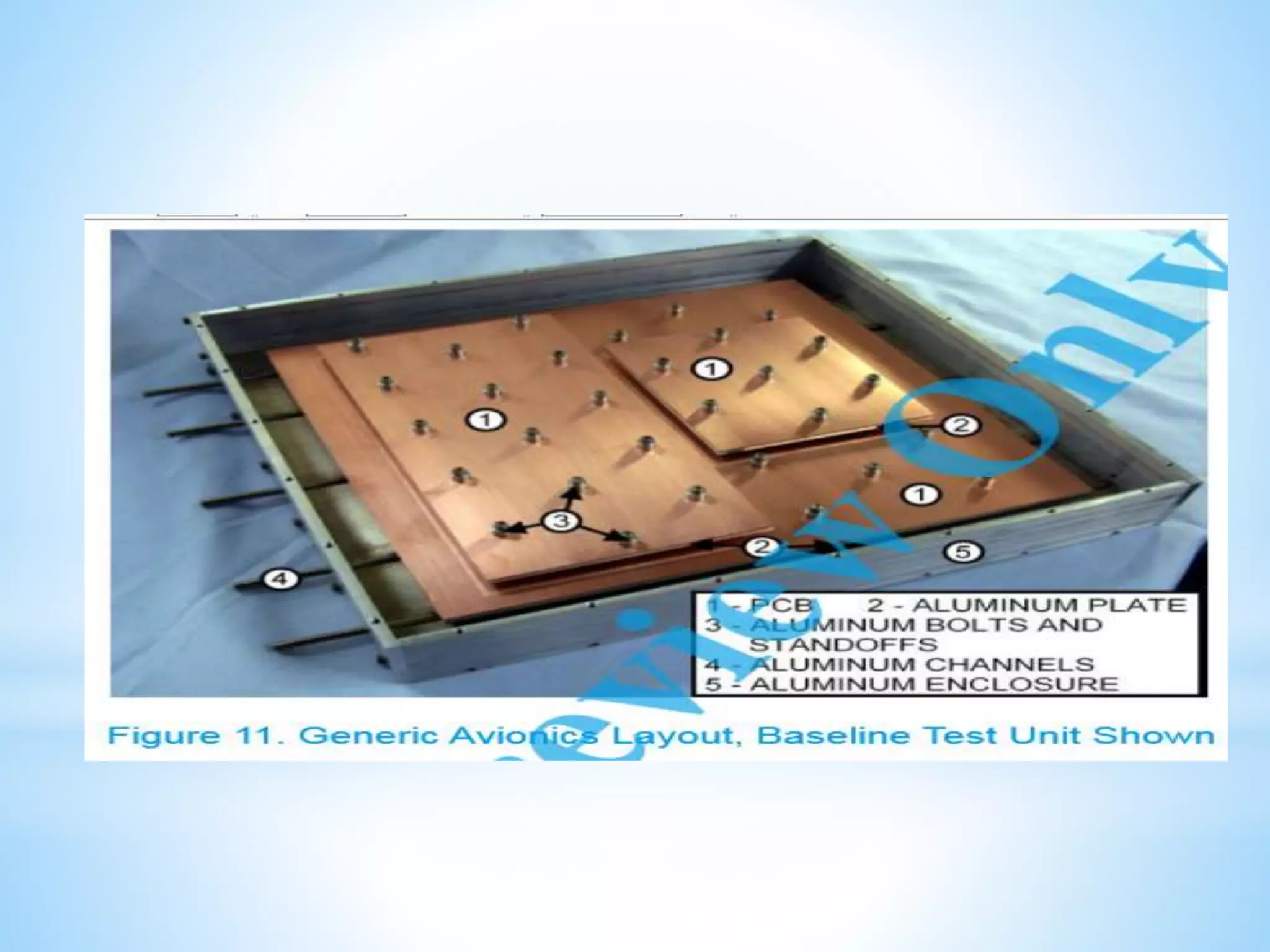
• Avionics are the electronic systems used on
aircraft, artificial satellites, and spacecraft.
• Avionic systems include communications, navigation,
the display and management of multiple systems.
• The cockpit of an aircraft is a typical location for
avionic equipment
*
*
*Under a program funded by the Air Force
Research Laboratory(AFRL), Advanced Cooling
Technologies(ACT) has developed a series of
Passive Thermal Management techniques for
cooling avionics.
*
*The rejection of the waste heat generated by the
electronics in the avionics to the surrounding
environment, results in a significant ambient heat
gain.
*As a result this high temperature reduces the life of
the electronics.
*Heat must be transported to a sink.
*The only viable sink is aircraft fuel, some times the
fuel temperature can become too high to effectively
cool avionics.
*
*Two passive thermal approaches for avionics
packages.
1. Heat Pipe Assemblies(To reduce the internal
temperature gradient)
2. Loop Heat Pipe(to transport thermal energy to
alternative sinks)
*Heat pipe assemblies were capable of reducing the
internal temperature gradient by approximately 25
degree Celsius.
*This reduction translates directly to an increase in the
allowable sink temperature that will still provide
sufficient cooling for the electronic components.
*
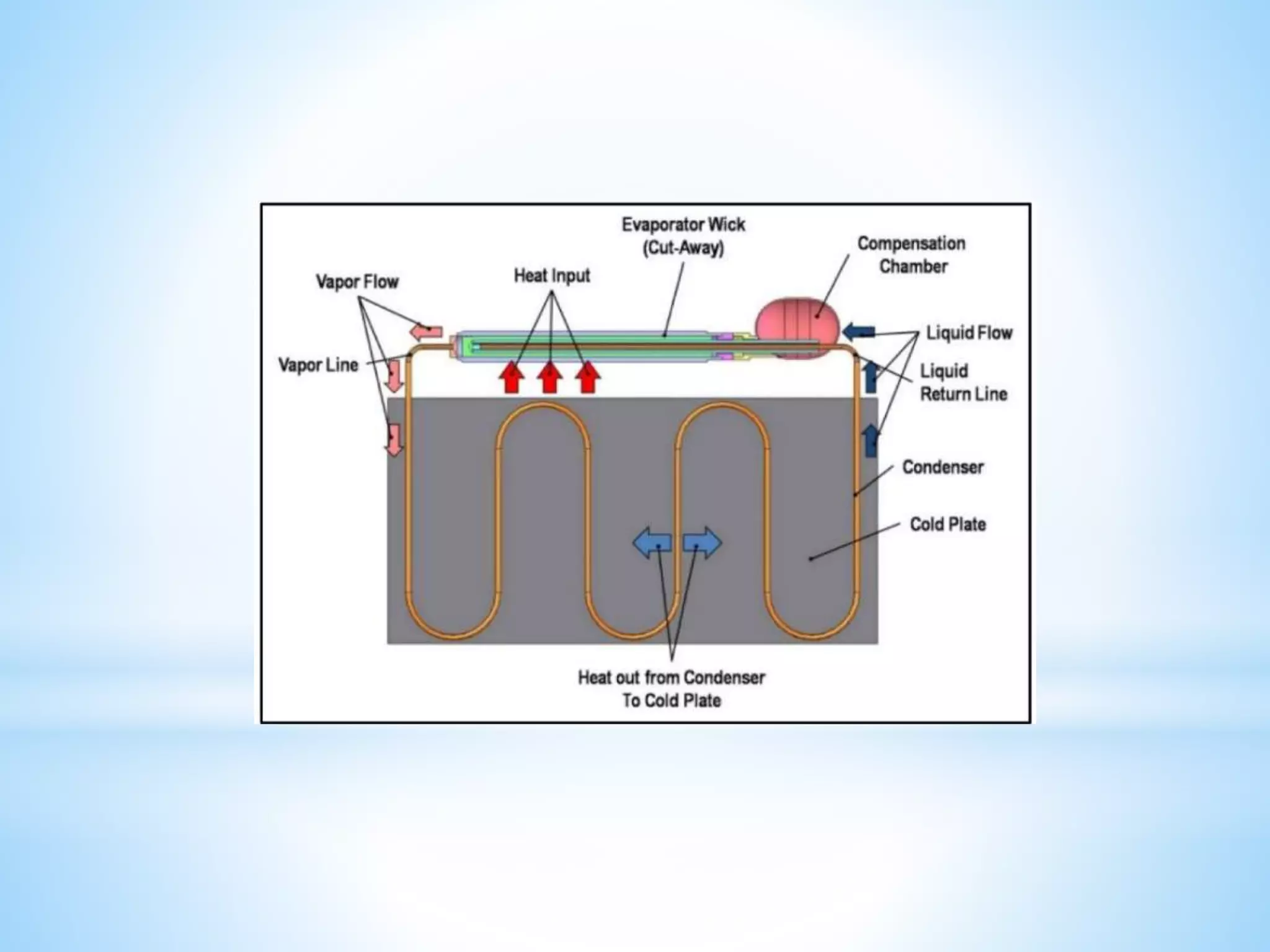
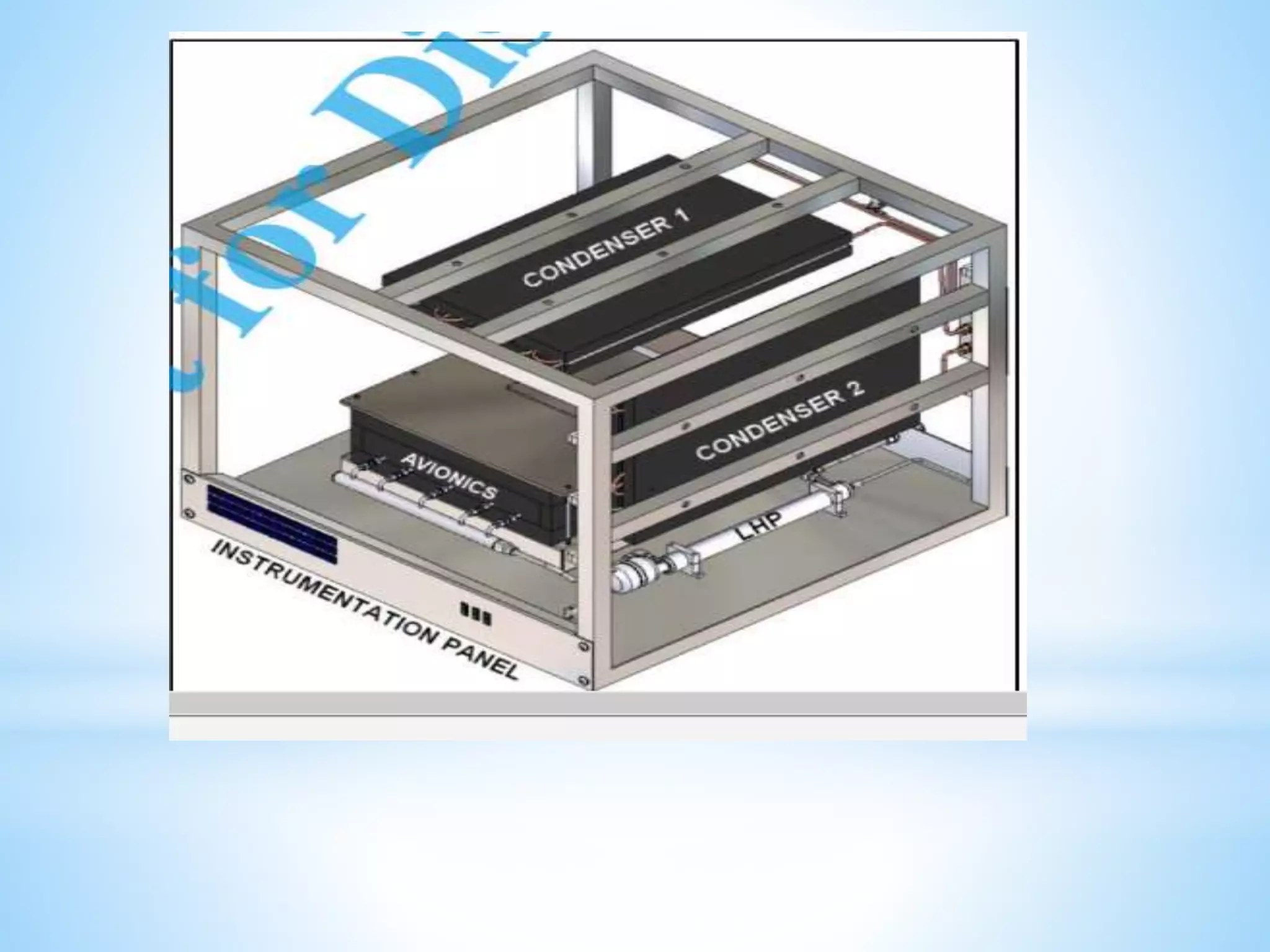
*LHP was designed to transport thermal energy from
the fuel to two heat rejection section.
*Two heat rejection sections were necessary as
aircraft sink condition can vary considerably
throughout the flight.
*Since these sinks can approach temperature much
higher than the intended operating temperature of the
LHP.
*
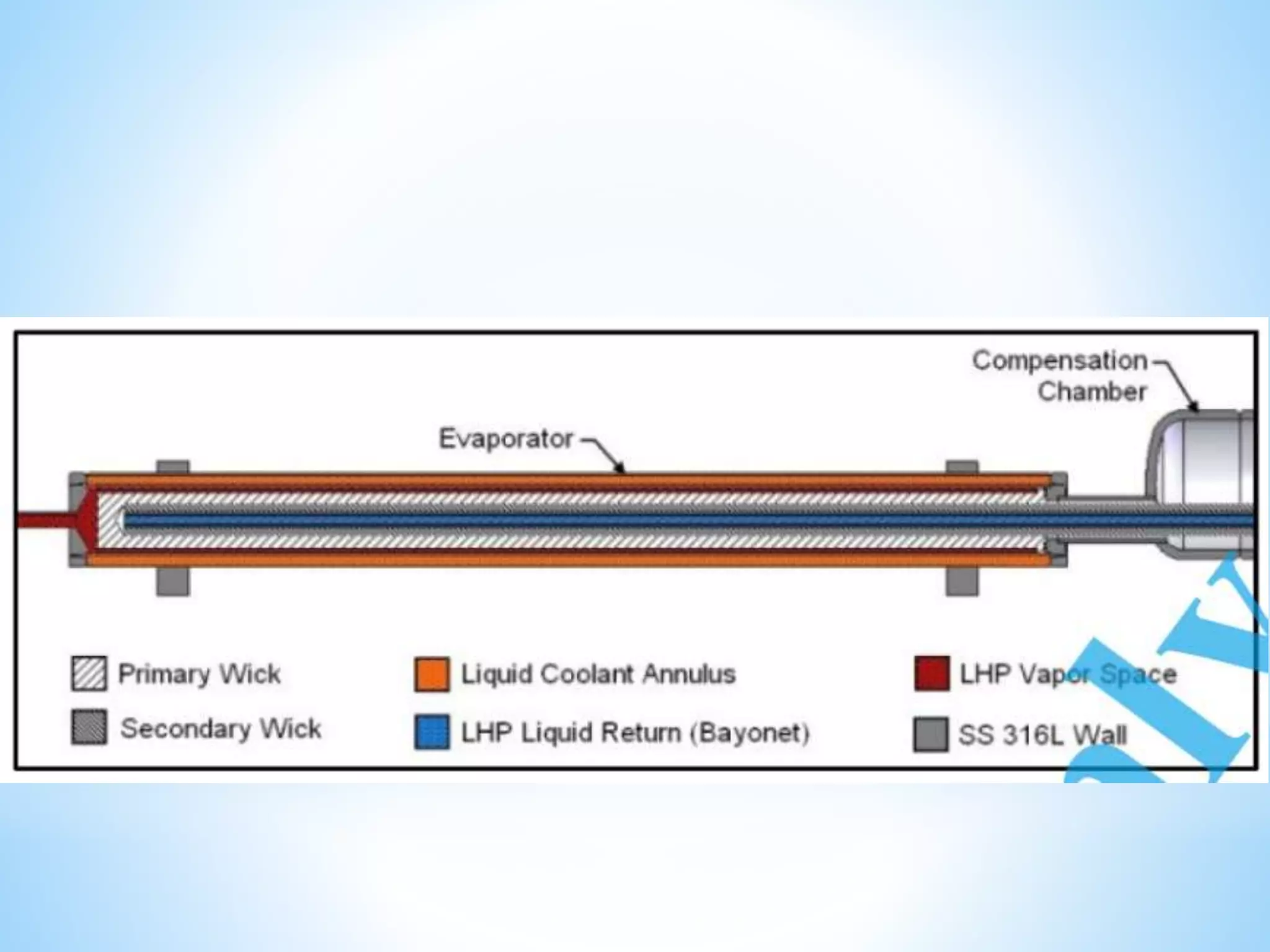
*Two sinks that together were capable of providing
heat rejection over the entire flight envelope.
*Methanol was selected as the working fluid.
*Stainless Steel was used for the evaporator body,
compensation chamber and transport lines.
*
*Both condenser exchanged waste heat with Liquid
Nitrogen(LN)
*The flow of LN was controlled to maintain the sink
temperature at the desired value.
*Each condenser also had a surface exposed to an
electric heater.
*This allowed the sink temperature to be raised above
the LHP vapor temperature.
*Heat pipes transport Heat by two phase flow of a
working fluid
*Liquid Phase
*Vapor Phase
Passive Thermal management for avionics in high temperature environment

Passive Thermal management for avionics in high temperature environment

  • 1.
    *Passive Thermal Managementfor Avionics in High Temperature Environment
  • 2.
    • Avionics arethe electronic systems used on aircraft, artificial satellites, and spacecraft. • Avionic systems include communications, navigation, the display and management of multiple systems. • The cockpit of an aircraft is a typical location for avionic equipment *
  • 3.
    * *Under a programfunded by the Air Force Research Laboratory(AFRL), Advanced Cooling Technologies(ACT) has developed a series of Passive Thermal Management techniques for cooling avionics.
  • 4.
    * *The rejection ofthe waste heat generated by the electronics in the avionics to the surrounding environment, results in a significant ambient heat gain. *As a result this high temperature reduces the life of the electronics. *Heat must be transported to a sink. *The only viable sink is aircraft fuel, some times the fuel temperature can become too high to effectively cool avionics.
  • 5.
    * *Two passive thermalapproaches for avionics packages. 1. Heat Pipe Assemblies(To reduce the internal temperature gradient) 2. Loop Heat Pipe(to transport thermal energy to alternative sinks)
  • 6.
    *Heat pipe assemblieswere capable of reducing the internal temperature gradient by approximately 25 degree Celsius. *This reduction translates directly to an increase in the allowable sink temperature that will still provide sufficient cooling for the electronic components.
  • 7.
    * *LHP was designedto transport thermal energy from the fuel to two heat rejection section. *Two heat rejection sections were necessary as aircraft sink condition can vary considerably throughout the flight. *Since these sinks can approach temperature much higher than the intended operating temperature of the LHP.
  • 9.
    * *Two sinks thattogether were capable of providing heat rejection over the entire flight envelope. *Methanol was selected as the working fluid. *Stainless Steel was used for the evaporator body, compensation chamber and transport lines.
  • 10.
  • 11.
    *Both condenser exchangedwaste heat with Liquid Nitrogen(LN) *The flow of LN was controlled to maintain the sink temperature at the desired value. *Each condenser also had a surface exposed to an electric heater. *This allowed the sink temperature to be raised above the LHP vapor temperature.
  • 12.
    *Heat pipes transportHeat by two phase flow of a working fluid *Liquid Phase *Vapor Phase