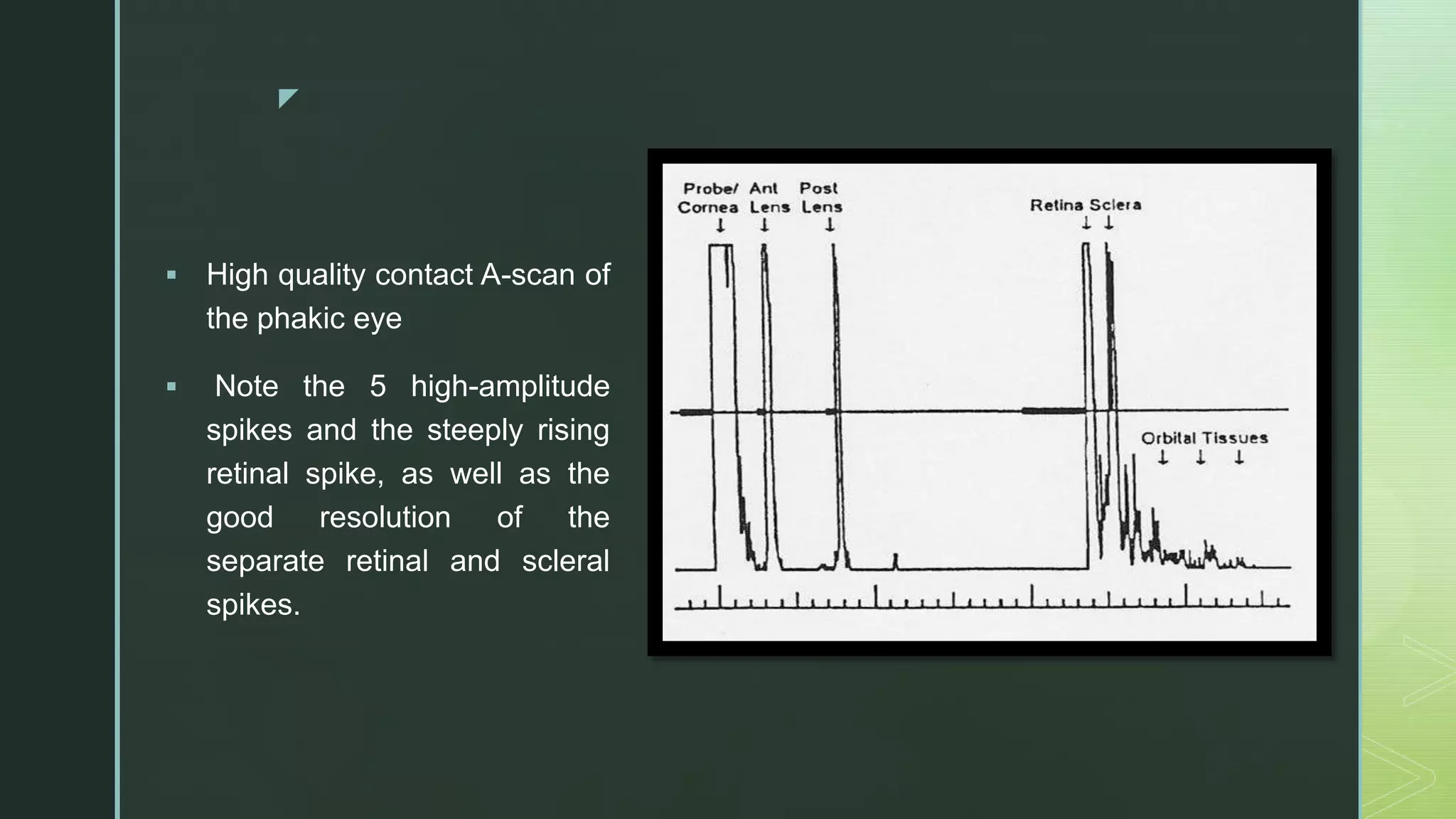
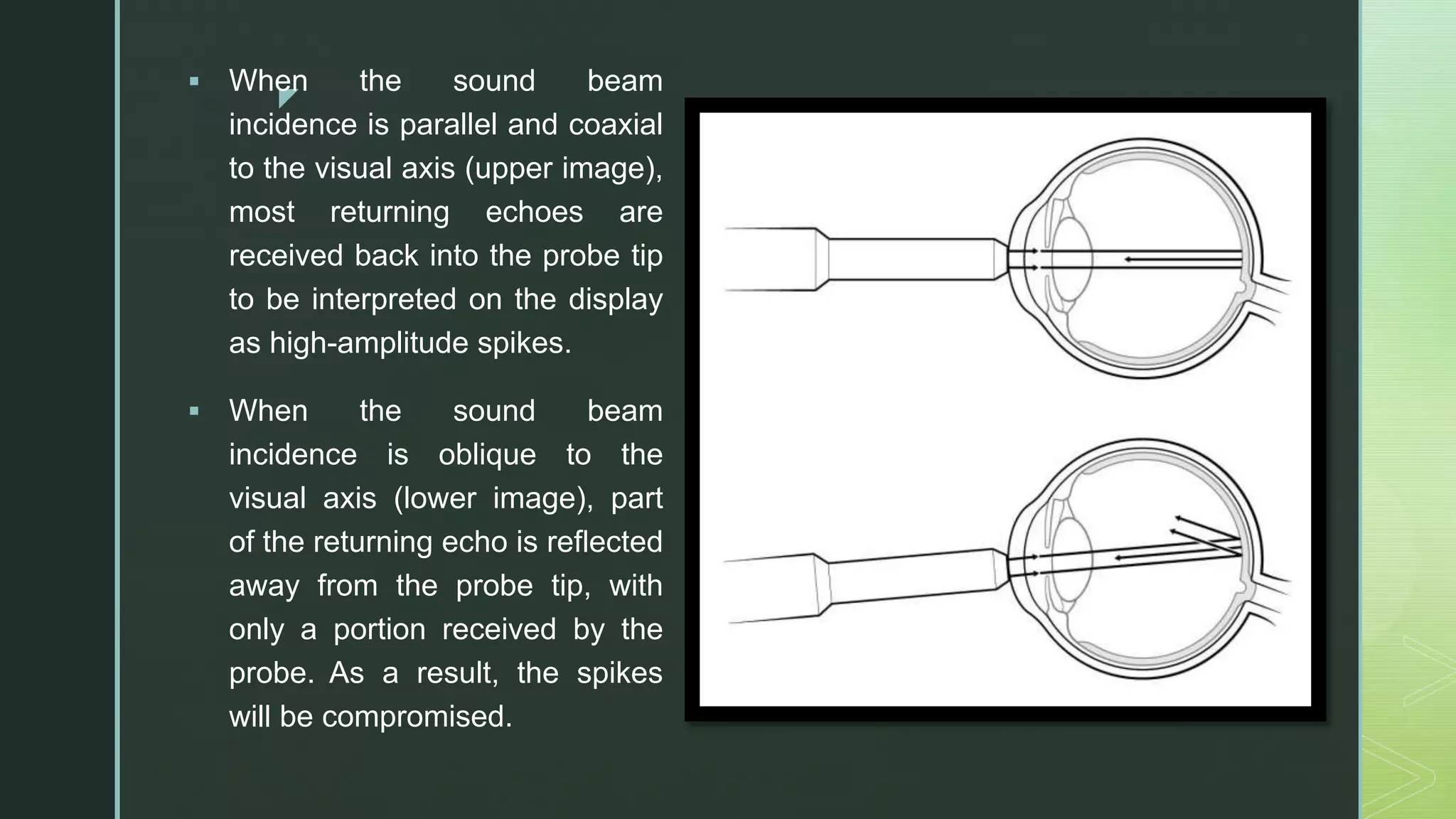
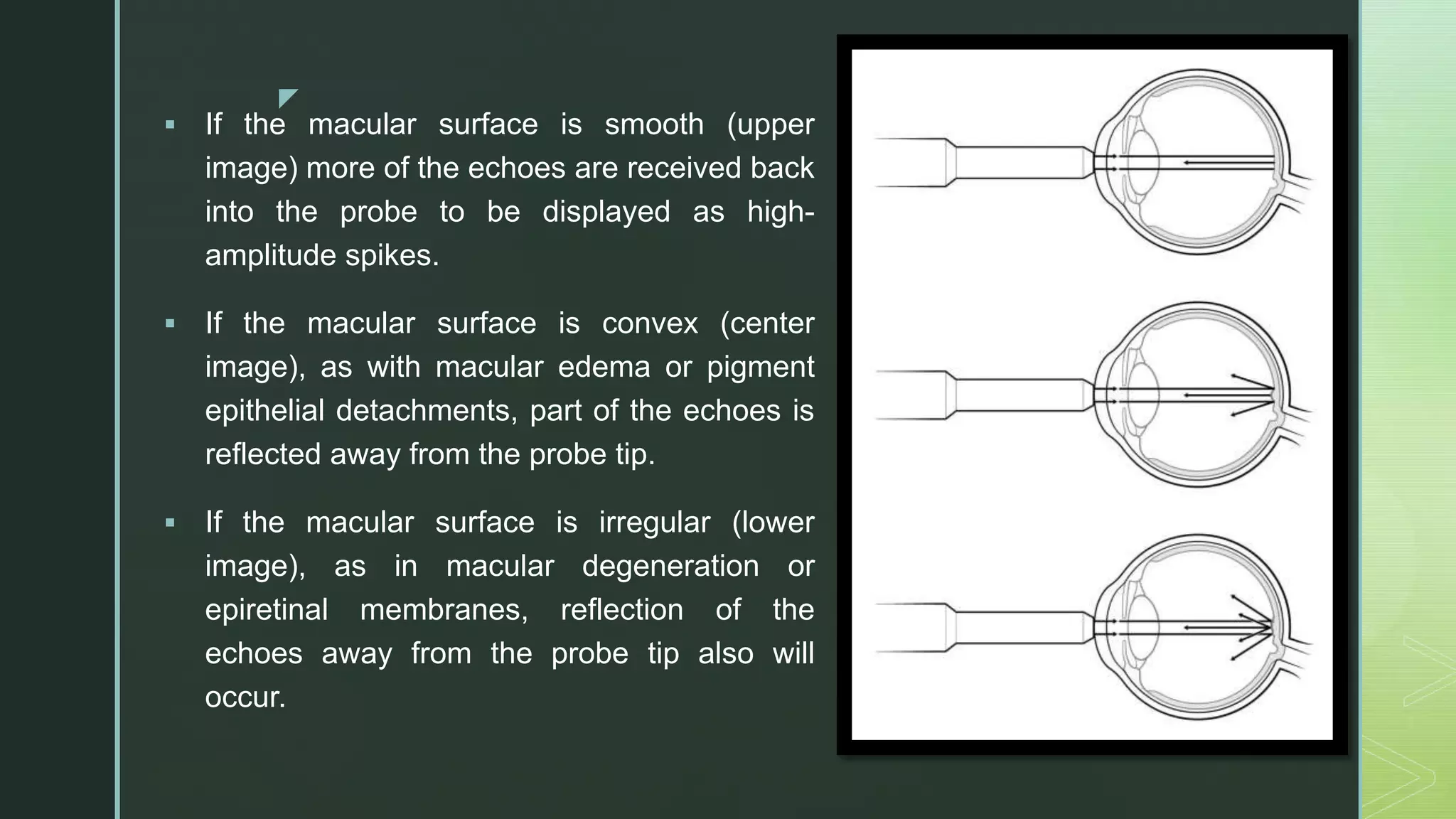
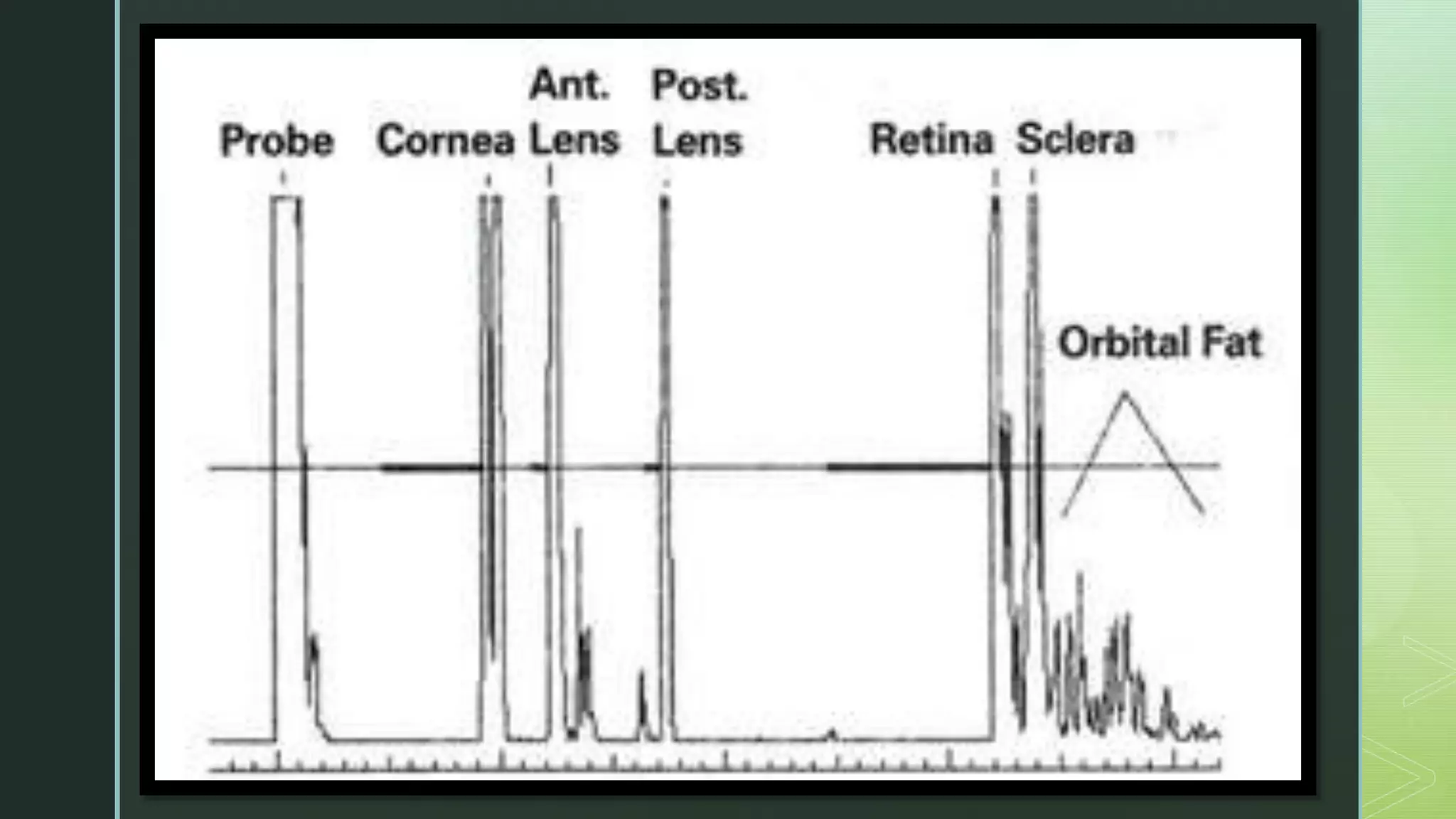
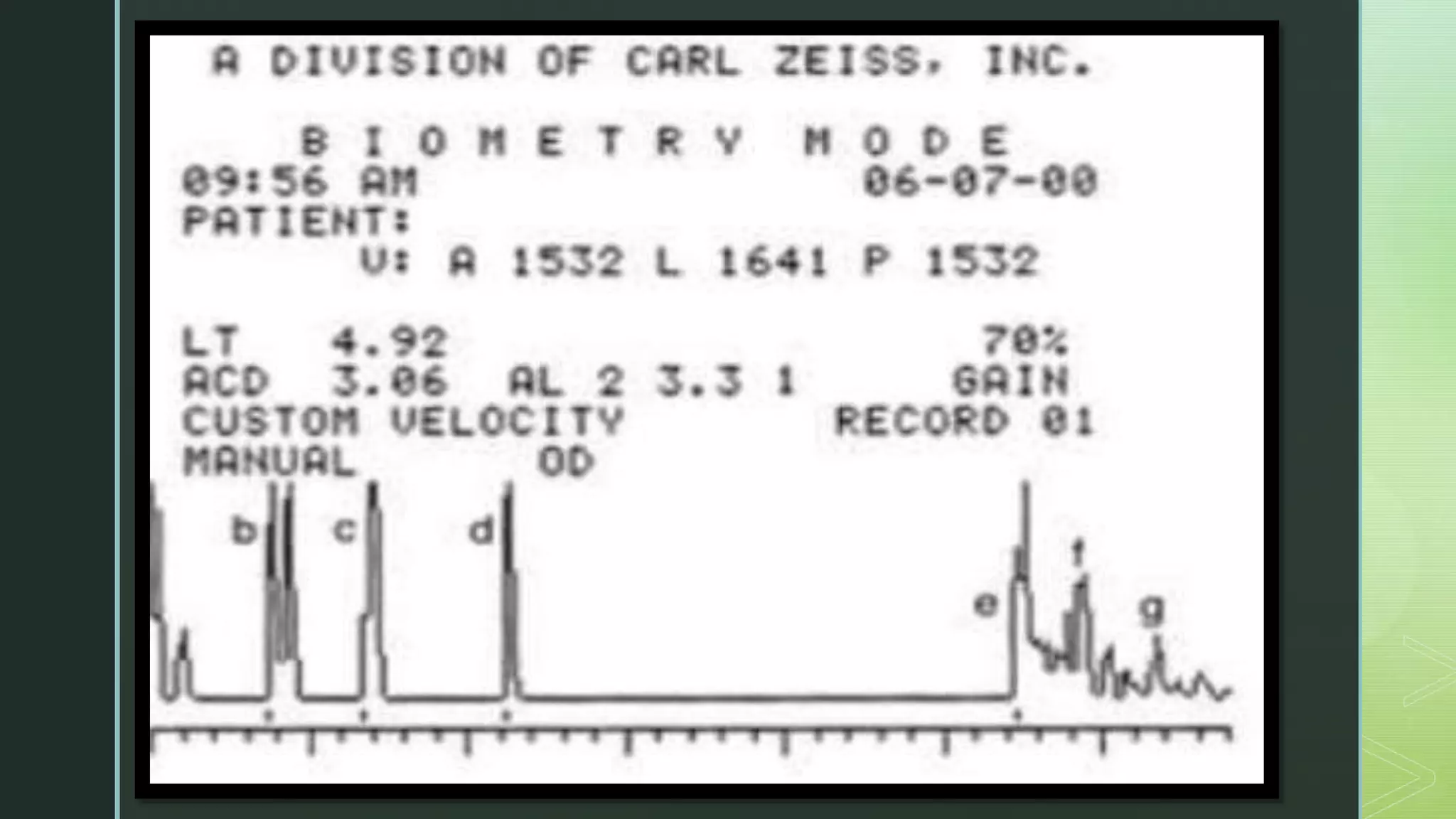
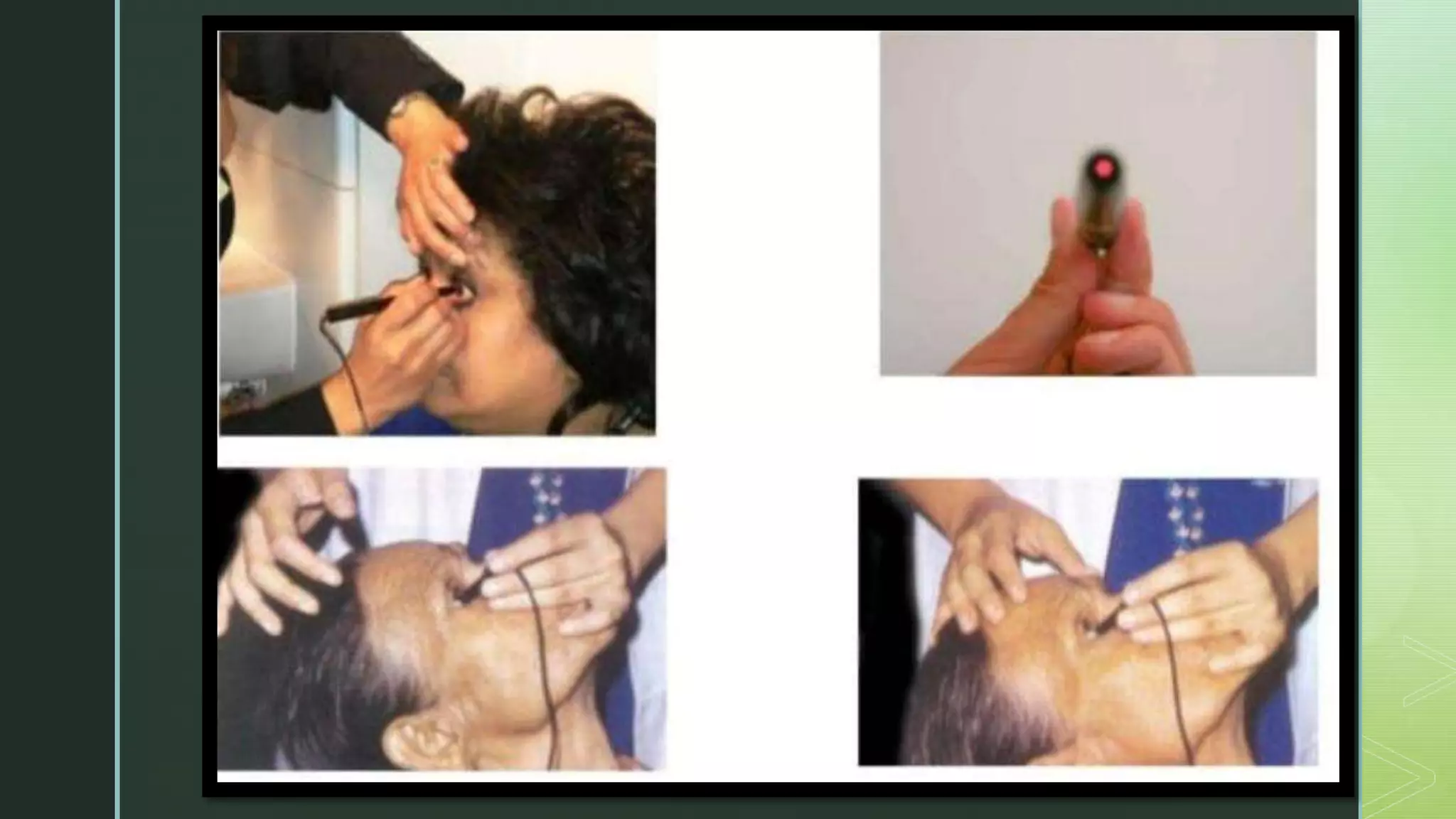
A-scan ultrasonography uses sound waves to produce spikes corresponding to tissue interfaces in the eye. The height of the spikes depends on factors like the difference in tissue densities, the angle of the sound beam, and the shape and size of interfaces. A-scan is used to measure axial length and corneal thickness, with the quality affected by issues like oblique beam incidence, irregular macular surfaces, and dense cataracts that absorb more sound.



![Optics of contact lens and nomenclature copy [repaired] (1)](https://cdn.slidesharecdn.com/ss_thumbnails/opticsofcontactlensandnomenclature-copyrepaired1-170218054900-thumbnail.jpg?width=640&height=640&fit=bounds)


