


WORTH FOUR-DOT TEST
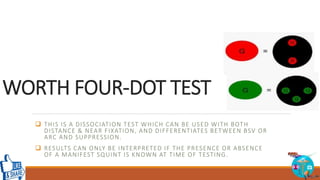
 THIS IS A DISSOCIATION TEST WHICH CAN BE USED WITH BOTH
DISTANCE & NEAR FIXATION, AND DIFFERENTIATES BETWEEN BSV OR
ARC AND SUPPRESSION.
 RESULTS CAN ONLY BE INTERPRETED IF THE PRESENCE OR ABSENCE
OF A MANIFEST SQUINT IS KNOWN AT TIME OF TESTING.
PROCEDURE
The patient wears a green lens in front of the left eye & red lens in front of the right eye.
Then the patient views a box with four lights; one red, two green, and one white
RESULTS:
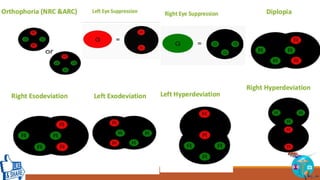
If BSV is present all four lights are seen.
If all four lights are seen in the presence of a manifest deviation, harmonious ARC is present.
If two red light are seen, left suppression is present.
If three green lights are seen, right suppression is present.
If two red & three green lights are seen, diplopia is present
If the green & red lights alternate, alternating suppression is present.
LETS GO FOR PICTURE
THANK YOU

Worth 4 dot test

  • 2.
    WORTH FOUR-DOT TEST THIS IS A DISSOCIATION TEST WHICH CAN BE USED WITH BOTH DISTANCE & NEAR FIXATION, AND DIFFERENTIATES BETWEEN BSV OR ARC AND SUPPRESSION.  RESULTS CAN ONLY BE INTERPRETED IF THE PRESENCE OR ABSENCE OF A MANIFEST SQUINT IS KNOWN AT TIME OF TESTING.
  • 3.
    PROCEDURE The patient wearsa green lens in front of the left eye & red lens in front of the right eye. Then the patient views a box with four lights; one red, two green, and one white RESULTS: If BSV is present all four lights are seen. If all four lights are seen in the presence of a manifest deviation, harmonious ARC is present. If two red light are seen, left suppression is present. If three green lights are seen, right suppression is present. If two red & three green lights are seen, diplopia is present If the green & red lights alternate, alternating suppression is present.
  • 4.
    LETS GO FORPICTURE
  • 6.