Acids and Alkalis
Alkalis
• Examples: Sodium hydroxide (NaOH)and potassium
hydroxide(KOH).
• Calcium hydroxide, also called :Slaked lime.
(Used in many industries to make products as: Bleach
and white wash)
-A weak solution (called: limewater)
can be used in lab to test carbon dioxide.
Detecting acids and alkalis
- Robert Boyle was an Irish scientist who lived 300 years
ago.
- He decided to try and find and easy way to identify acids
and alkalis.
- He knew that workers in France used plant juices to dye
silk clothes.
- So he began testing plant juices to see if they would solve
his problem.
- When he used red cabbage juice he found that:
Red cabbage juice
(purple)
+ Acid Juice turns red
Red cabbage juice
(purple)
+ Alkali Juice turns green
- When he used violets he found that:
+ Acid Juice turns Purple
+ Alkali Juice turns
greenish yellow
- He discovered the colour change in litmus
(juice from lichen)
- Litmus was used in laboratories around
the world.
- It can be used as a solution of absorbed
into paper strips.
- There are over 20 indicators that
scientists use.
- 2 examples:
- Methyl orange:
Turns pink in acids.
Turns Yellow in Alkalis.
- Phenolphthalein:
Turns colourless in acid solutions.
Turns Pink in alkaline solutions.
Acid Alkali
AlkaliAcid
Hydrangea plant:
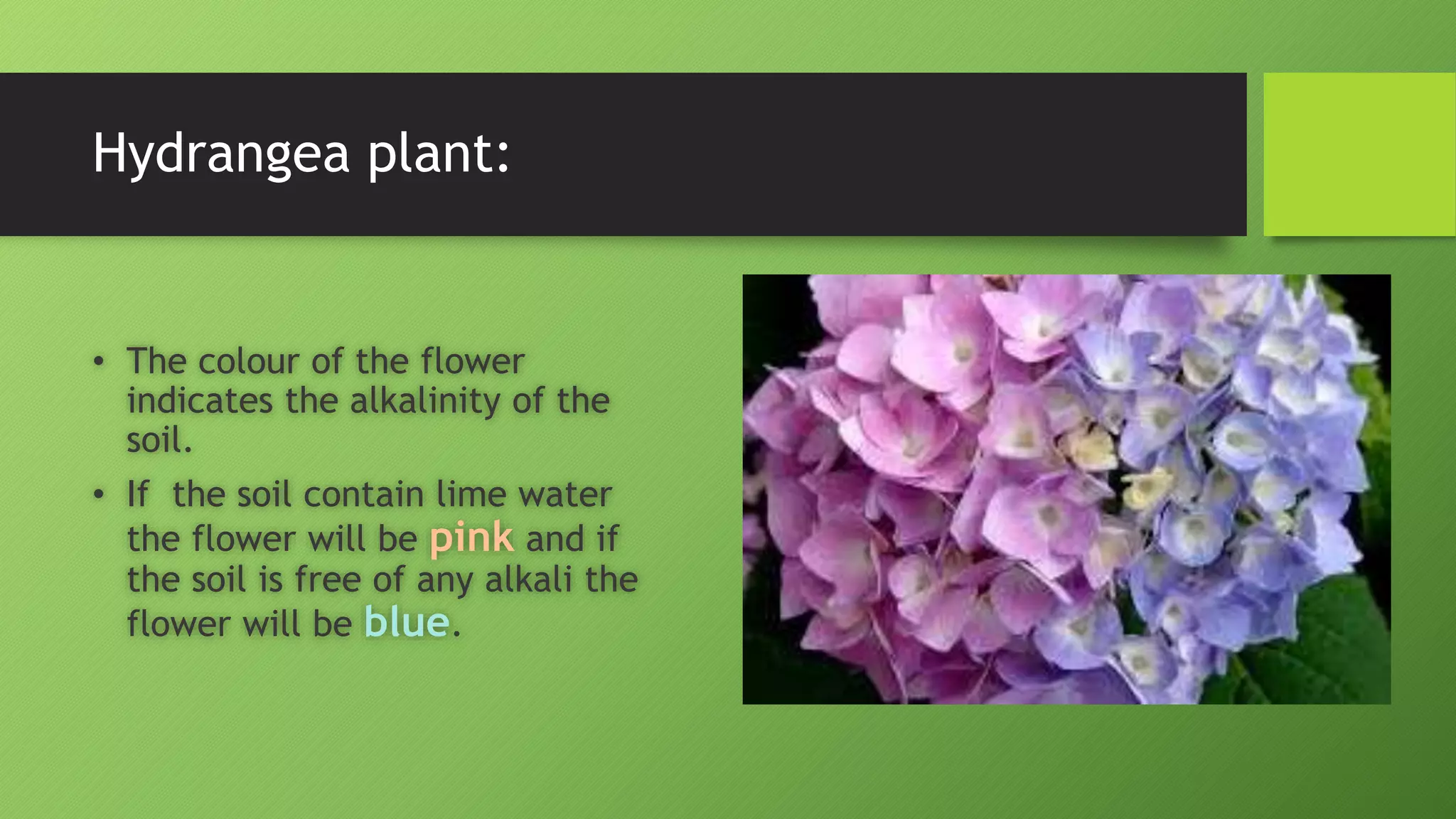
• The colour of the flower
indicates the alkalinity of the
soil.
• If the soil contain lime water
the flower will be pink and if
the soil is free of any alkali the
flower will be blue.
pH scale
- After indicators where found to identify acids and alkalis,
scientists wanted compare the strength of the acids and
alkalis.
- In 1909, a Danish scientist called Soren Sorensen
invented a scale called pH scale to compare the strengths.
- pH stand for ‘power of hydrogen’ because all acids
hydrogen (active part in the chemical reactions)
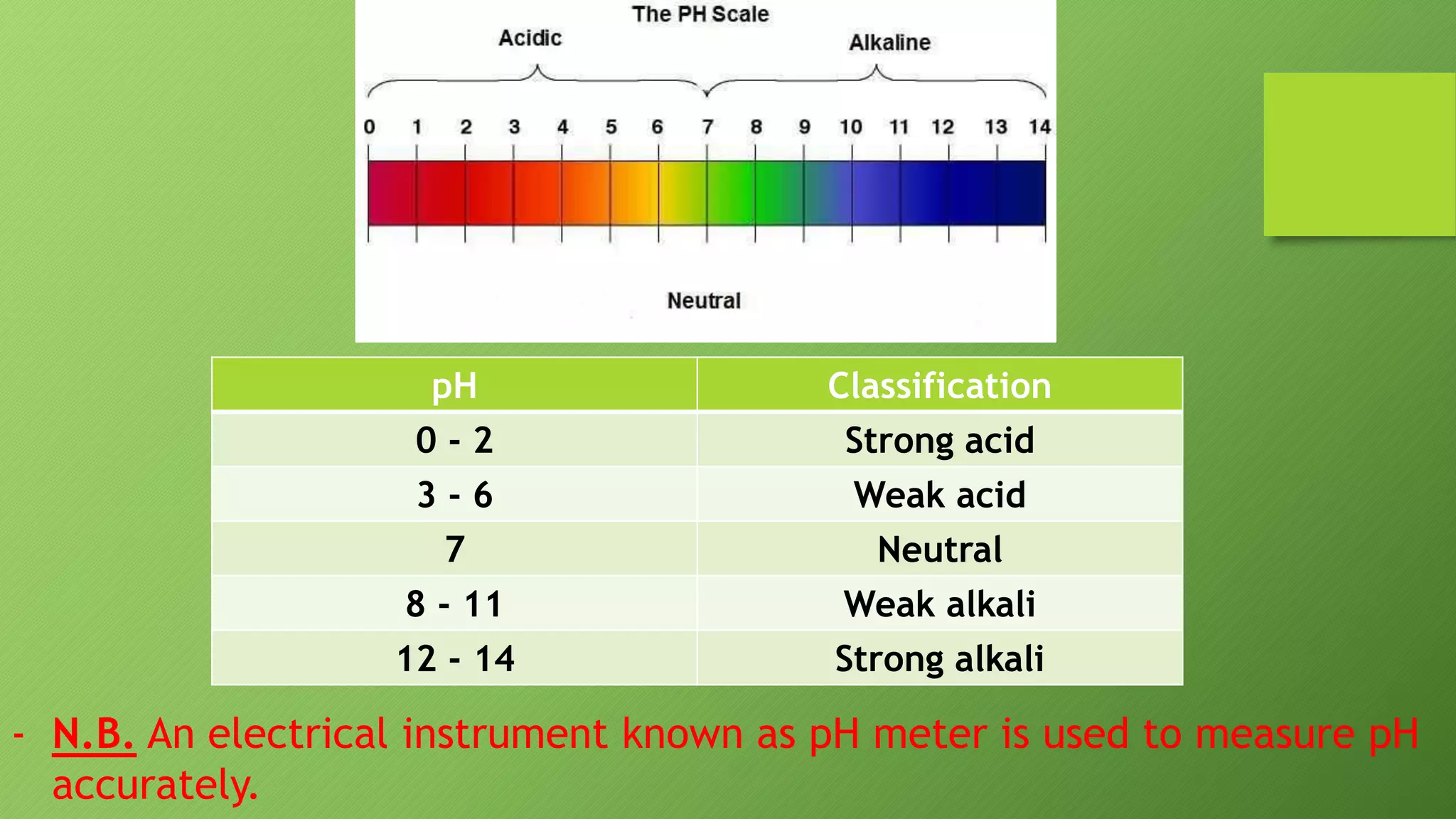
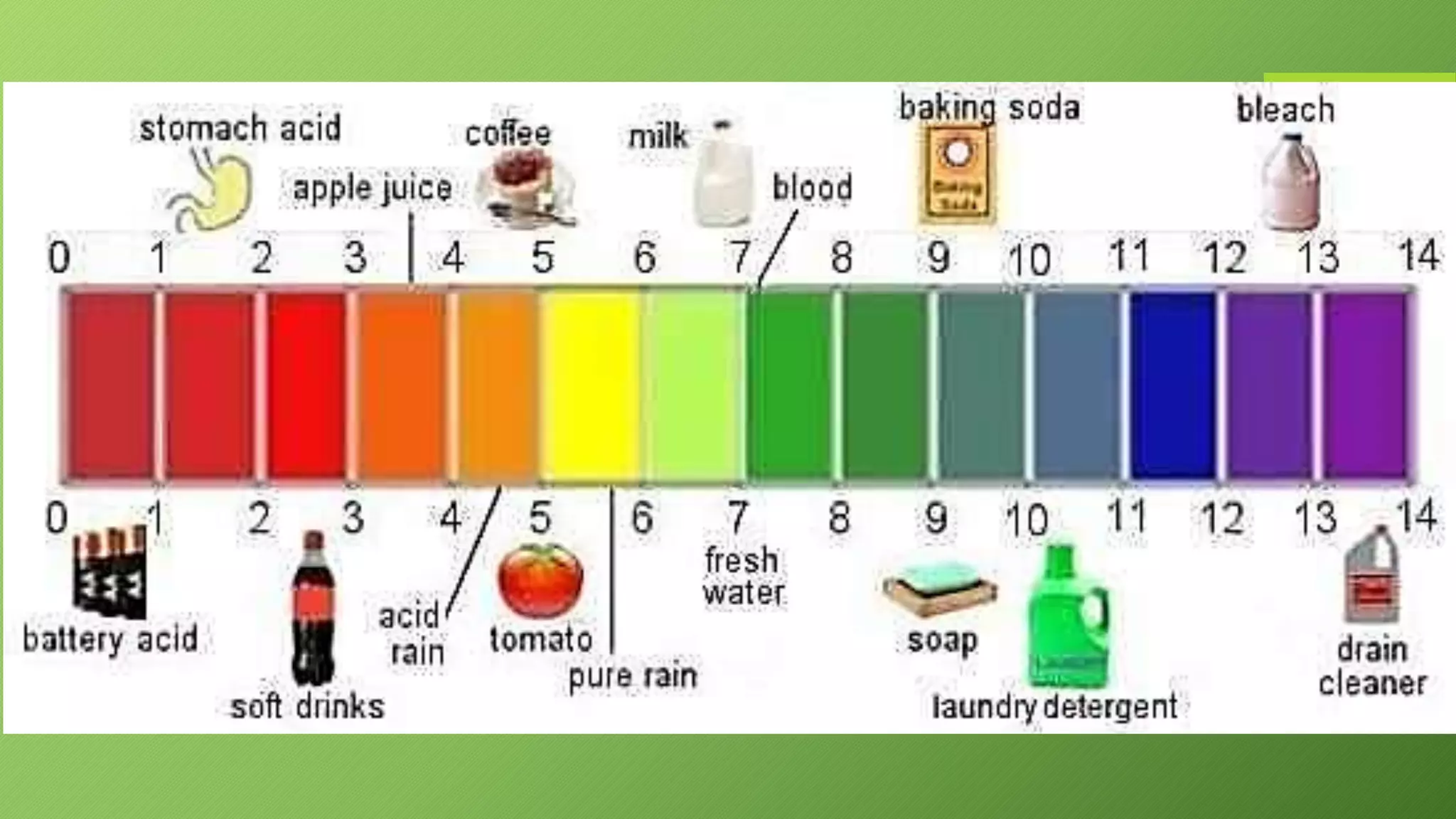
- The pH scale starts from 0 – 14.
- The strongest acid is 0 and the strongest alkali is 14.
pH Classification
0 - 2 Strong acid
3 - 6 Weak acid
7 Neutral
8 - 11 Weak alkali
12 - 14 Strong alkali
- N.B. An electrical instrument known as pH meter is used to measure pH
accurately.
Universal indicator
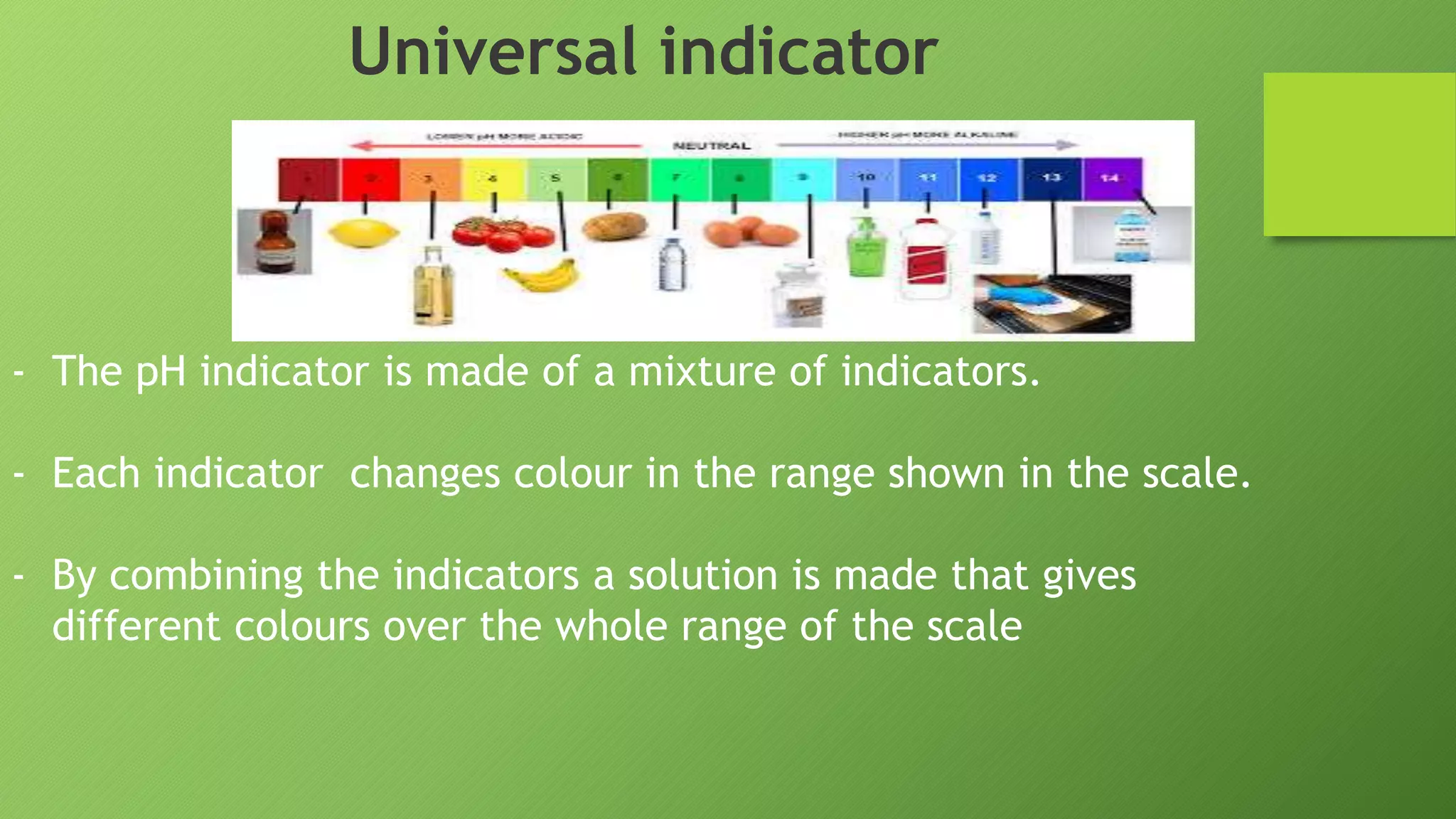
- The pH indicator is made of a mixture of indicators.
- Each indicator changes colour in the range shown in the scale.
- By combining the indicators a solution is made that gives
different colours over the whole range of the scale
9 acids and alkai ph

9 acids and alkai ph

  • 1.
  • 2.
    Alkalis • Examples: Sodiumhydroxide (NaOH)and potassium hydroxide(KOH). • Calcium hydroxide, also called :Slaked lime. (Used in many industries to make products as: Bleach and white wash) -A weak solution (called: limewater) can be used in lab to test carbon dioxide.
  • 3.
    Detecting acids andalkalis - Robert Boyle was an Irish scientist who lived 300 years ago. - He decided to try and find and easy way to identify acids and alkalis. - He knew that workers in France used plant juices to dye silk clothes. - So he began testing plant juices to see if they would solve his problem.
  • 4.
    - When heused red cabbage juice he found that: Red cabbage juice (purple) + Acid Juice turns red Red cabbage juice (purple) + Alkali Juice turns green
  • 5.
    - When heused violets he found that: + Acid Juice turns Purple + Alkali Juice turns greenish yellow
  • 6.
    - He discoveredthe colour change in litmus (juice from lichen) - Litmus was used in laboratories around the world. - It can be used as a solution of absorbed into paper strips.
  • 8.
    - There areover 20 indicators that scientists use. - 2 examples: - Methyl orange: Turns pink in acids. Turns Yellow in Alkalis. - Phenolphthalein: Turns colourless in acid solutions. Turns Pink in alkaline solutions. Acid Alkali AlkaliAcid
  • 9.
    Hydrangea plant: • Thecolour of the flower indicates the alkalinity of the soil. • If the soil contain lime water the flower will be pink and if the soil is free of any alkali the flower will be blue.
  • 10.
    pH scale - Afterindicators where found to identify acids and alkalis, scientists wanted compare the strength of the acids and alkalis. - In 1909, a Danish scientist called Soren Sorensen invented a scale called pH scale to compare the strengths. - pH stand for ‘power of hydrogen’ because all acids hydrogen (active part in the chemical reactions) - The pH scale starts from 0 – 14. - The strongest acid is 0 and the strongest alkali is 14.
  • 11.
    pH Classification 0 -2 Strong acid 3 - 6 Weak acid 7 Neutral 8 - 11 Weak alkali 12 - 14 Strong alkali - N.B. An electrical instrument known as pH meter is used to measure pH accurately.
  • 12.
    Universal indicator - ThepH indicator is made of a mixture of indicators. - Each indicator changes colour in the range shown in the scale. - By combining the indicators a solution is made that gives different colours over the whole range of the scale