ACID AND
ALKALIS
ACIDS
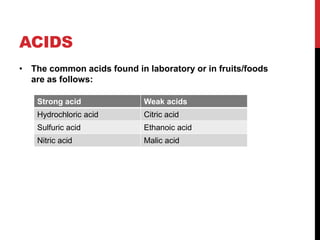
• The common acids found in laboratory or in fruits/foods
  are as follows:

    Strong acid             Weak acids
    Hydrochloric acid       Citric acid
    Sulfuric acid           Ethanoic acid
    Nitric acid             Malic acid
PROPERTIES OF
ACIDS
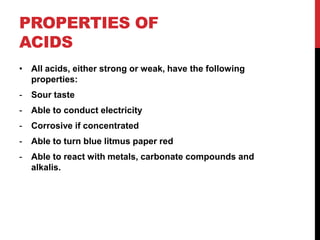
• All acids, either strong or weak, have the following
  properties:
-   Sour taste
-   Able to conduct electricity
-   Corrosive if concentrated
-   Able to turn blue litmus paper red
-   Able to react with metals, carbonate compounds and
    alkalis.
REACTION WITH
METALS
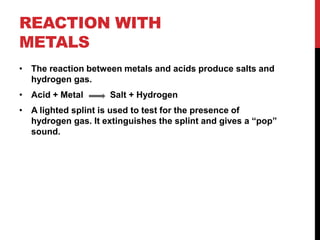
• The reaction between metals and acids produce salts and
  hydrogen gas.
• Acid + Metal       Salt + Hydrogen
• A lighted splint is used to test for the presence of
  hydrogen gas. It extinguishes the splint and gives a “pop”
  sound.
REACTION WITH
CARBONATES
• Acid react with carbonate compounds to produce salts,
  carbon dioxide and water.
• Acid + Carbonate       Salt + Carbon Dioxide + Water
• Limewater is used to test for the presence of carbon
  dioxide gas. The limewater turns chalky when carbon
  dioxide is bubbled into it.
REACTION WITH
ALKALIS
• Acid react with alkalis to produce salts and water only
• The reaction between acids and alkalis is called the
  NEUTRALISATION reaction.
• Acid + Alkalis     Salt + Water
• Universal indicator can be used to show that the solution
  has become neutral after the reaction. It gives a pale green
  color in neutral solutions.
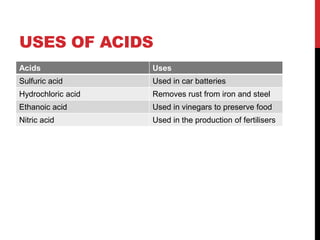
USES OF ACIDS
Acids               Uses
Sulfuric acid       Used in car batteries
Hydrochloric acid   Removes rust from iron and steel
Ethanoic acid       Used in vinegars to preserve food
Nitric acid         Used in the production of fertilisers
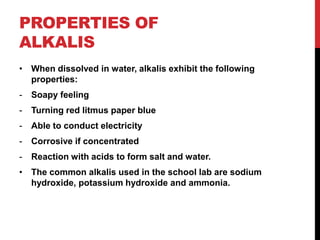
PROPERTIES OF
ALKALIS
• When dissolved in water, alkalis exhibit the following
  properties:
-   Soapy feeling
-   Turning red litmus paper blue
-   Able to conduct electricity
-   Corrosive if concentrated
-   Reaction with acids to form salt and water.
• The common alkalis used in the school lab are sodium
  hydroxide, potassium hydroxide and ammonia.
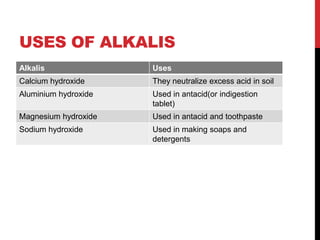
USES OF ALKALIS
Alkalis               Uses
Calcium hydroxide     They neutralize excess acid in soil
Aluminium hydroxide   Used in antacid(or indigestion
                      tablet)
Magnesium hydroxide   Used in antacid and toothpaste
Sodium hydroxide      Used in making soaps and
                      detergents
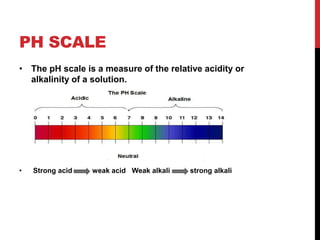
PH SCALE
• The pH scale is a measure of the relative acidity or
  alkalinity of a solution.


•   Strong acid   weak acid Weak alkali   strong alkali
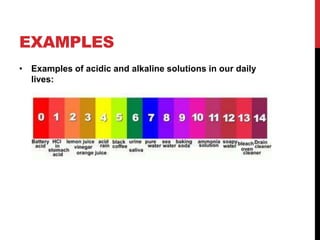
EXAMPLES
• Examples of acidic and alkaline solutions in our daily
  lives:
INDICATOR
• An indicator is a mixture of substances which shows
  different color in different pH values of solutions.
• Universal indicator is an indicator which contains a
  mixture of substances that are able to give different colors
  corresponding to different pH values.
• It can be used to determine the strength of acids and
  alkalis by observing the change of its color.
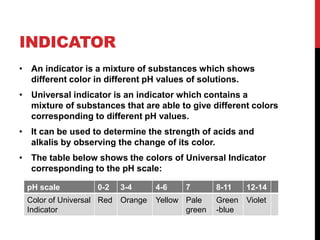
• The table below shows the colors of Universal Indicator
  corresponding to the pH scale:

 pH scale          0-2    3-4      4-6    7       8-11    12-14
 Color of Universal Red   Orange   Yellow Pale    Green   Violet
 Indicator                                green   -blue
INDICATOR
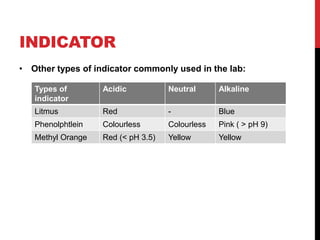
• Other types of indicator commonly used in the lab:

   Types of        Acidic           Neutral      Alkaline
   indicator
   Litmus          Red              -            Blue
   Phenolphtlein   Colourless       Colourless   Pink ( > pH 9)
   Methyl Orange   Red (< pH 3.5)   Yellow       Yellow

Acid and alkalis

  • 1.
  • 2.
    ACIDS • The commonacids found in laboratory or in fruits/foods are as follows: Strong acid Weak acids Hydrochloric acid Citric acid Sulfuric acid Ethanoic acid Nitric acid Malic acid
  • 3.
    PROPERTIES OF ACIDS • Allacids, either strong or weak, have the following properties: - Sour taste - Able to conduct electricity - Corrosive if concentrated - Able to turn blue litmus paper red - Able to react with metals, carbonate compounds and alkalis.
  • 4.
    REACTION WITH METALS • Thereaction between metals and acids produce salts and hydrogen gas. • Acid + Metal Salt + Hydrogen • A lighted splint is used to test for the presence of hydrogen gas. It extinguishes the splint and gives a “pop” sound.
  • 5.
    REACTION WITH CARBONATES • Acidreact with carbonate compounds to produce salts, carbon dioxide and water. • Acid + Carbonate Salt + Carbon Dioxide + Water • Limewater is used to test for the presence of carbon dioxide gas. The limewater turns chalky when carbon dioxide is bubbled into it.
  • 6.
    REACTION WITH ALKALIS • Acidreact with alkalis to produce salts and water only • The reaction between acids and alkalis is called the NEUTRALISATION reaction. • Acid + Alkalis Salt + Water • Universal indicator can be used to show that the solution has become neutral after the reaction. It gives a pale green color in neutral solutions.
  • 7.
    USES OF ACIDS Acids Uses Sulfuric acid Used in car batteries Hydrochloric acid Removes rust from iron and steel Ethanoic acid Used in vinegars to preserve food Nitric acid Used in the production of fertilisers
  • 8.
    PROPERTIES OF ALKALIS • Whendissolved in water, alkalis exhibit the following properties: - Soapy feeling - Turning red litmus paper blue - Able to conduct electricity - Corrosive if concentrated - Reaction with acids to form salt and water. • The common alkalis used in the school lab are sodium hydroxide, potassium hydroxide and ammonia.
  • 9.
    USES OF ALKALIS Alkalis Uses Calcium hydroxide They neutralize excess acid in soil Aluminium hydroxide Used in antacid(or indigestion tablet) Magnesium hydroxide Used in antacid and toothpaste Sodium hydroxide Used in making soaps and detergents
  • 10.
    PH SCALE • ThepH scale is a measure of the relative acidity or alkalinity of a solution. • Strong acid weak acid Weak alkali strong alkali
  • 11.
    EXAMPLES • Examples ofacidic and alkaline solutions in our daily lives:
  • 12.
    INDICATOR • An indicatoris a mixture of substances which shows different color in different pH values of solutions. • Universal indicator is an indicator which contains a mixture of substances that are able to give different colors corresponding to different pH values. • It can be used to determine the strength of acids and alkalis by observing the change of its color. • The table below shows the colors of Universal Indicator corresponding to the pH scale: pH scale 0-2 3-4 4-6 7 8-11 12-14 Color of Universal Red Orange Yellow Pale Green Violet Indicator green -blue
  • 13.
    INDICATOR • Other typesof indicator commonly used in the lab: Types of Acidic Neutral Alkaline indicator Litmus Red - Blue Phenolphtlein Colourless Colourless Pink ( > pH 9) Methyl Orange Red (< pH 3.5) Yellow Yellow