Intel 8085
Microprocessor
Addressing Modes
 To perform any operation, we have to give the
corresponding instructions to the microprocessor.
 In each instruction, programmer has to specify 3
things:
1. Operation to be performed.
2. Address of source of data.
3. Address of destination of result.
Addressing Modes of 8085
 The method by which the address of source of
data or the address of destination of result is
given in the instruction is called Addressing
Modes.
 The term addressing mode refers to the way in
which the operand of the instruction is
specified.
Intel 8085 uses the following addressing modes:
1.Direct Addressing Mode
2.Register Addressing Mode
3.Register Indirect Addressing Mode
4.Immediate Addressing Mode
5.Implicit Addressing Mode
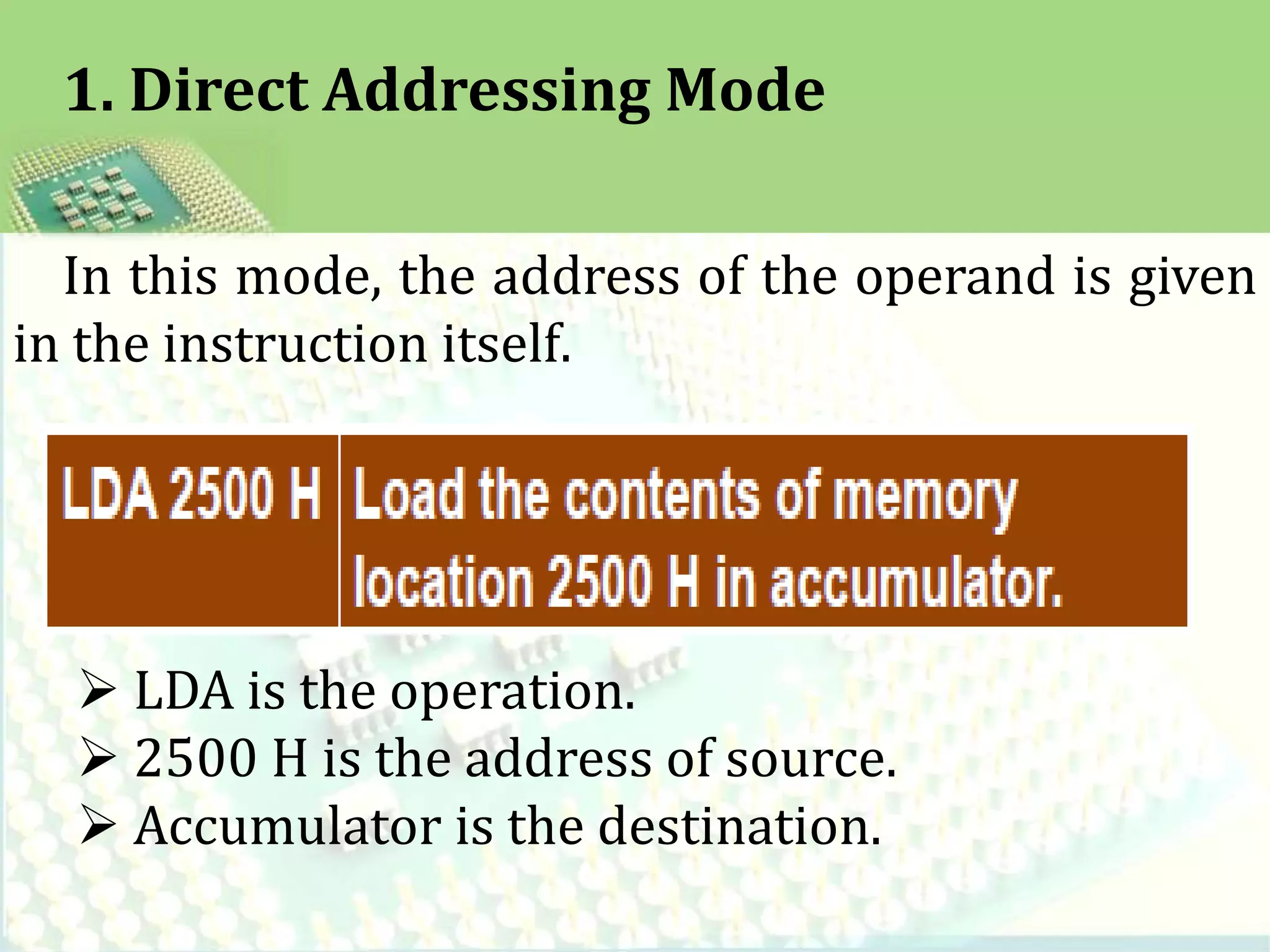
In this mode, the address of the operand is given
in the instruction itself.
 LDA is the operation.
 2500 H is the address of source.
 Accumulator is the destination.
1. Direct Addressing Mode
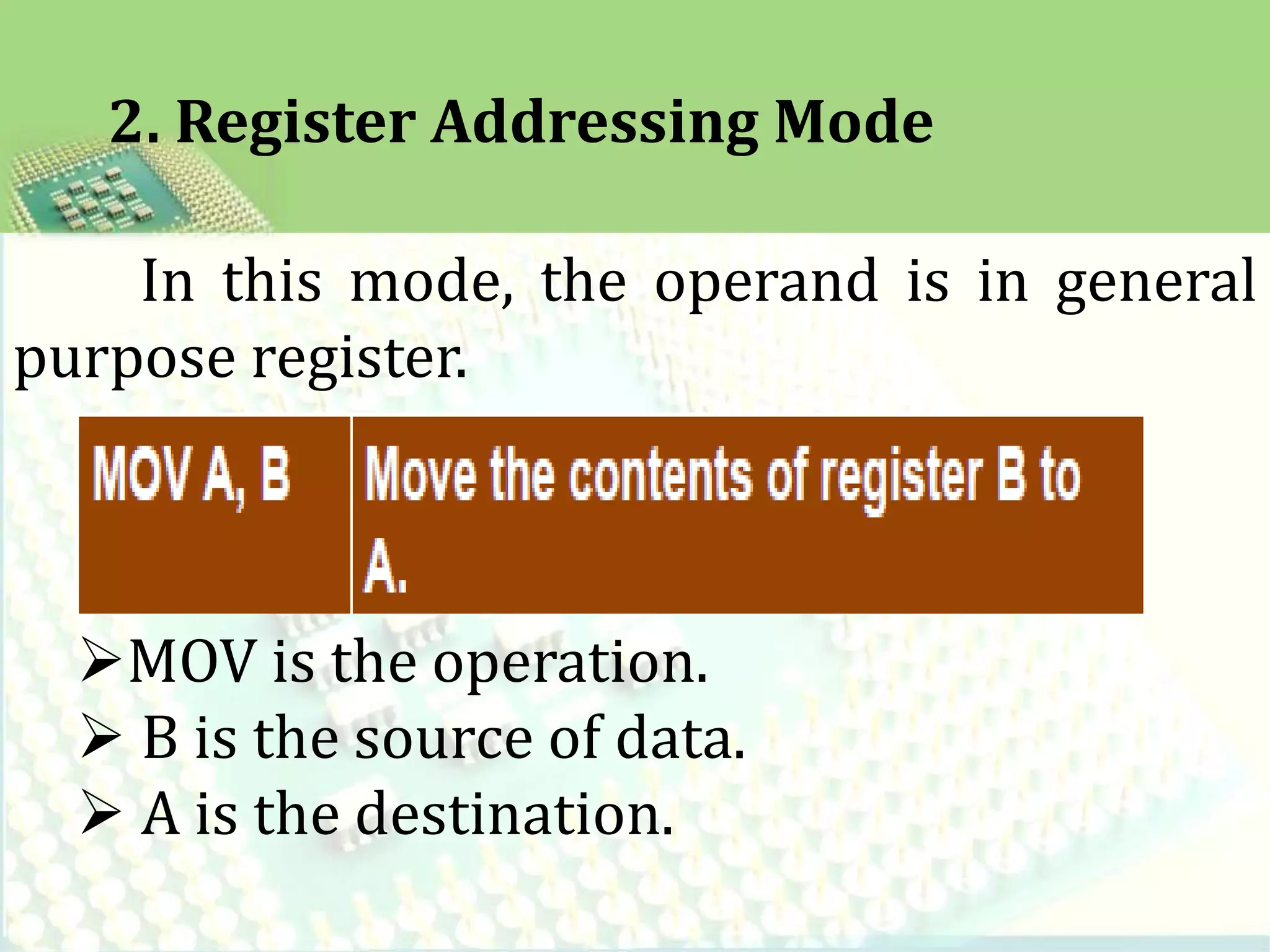
In this mode, the operand is in general
purpose register.
MOV is the operation.
 B is the source of data.
 A is the destination.
2. Register Addressing Mode
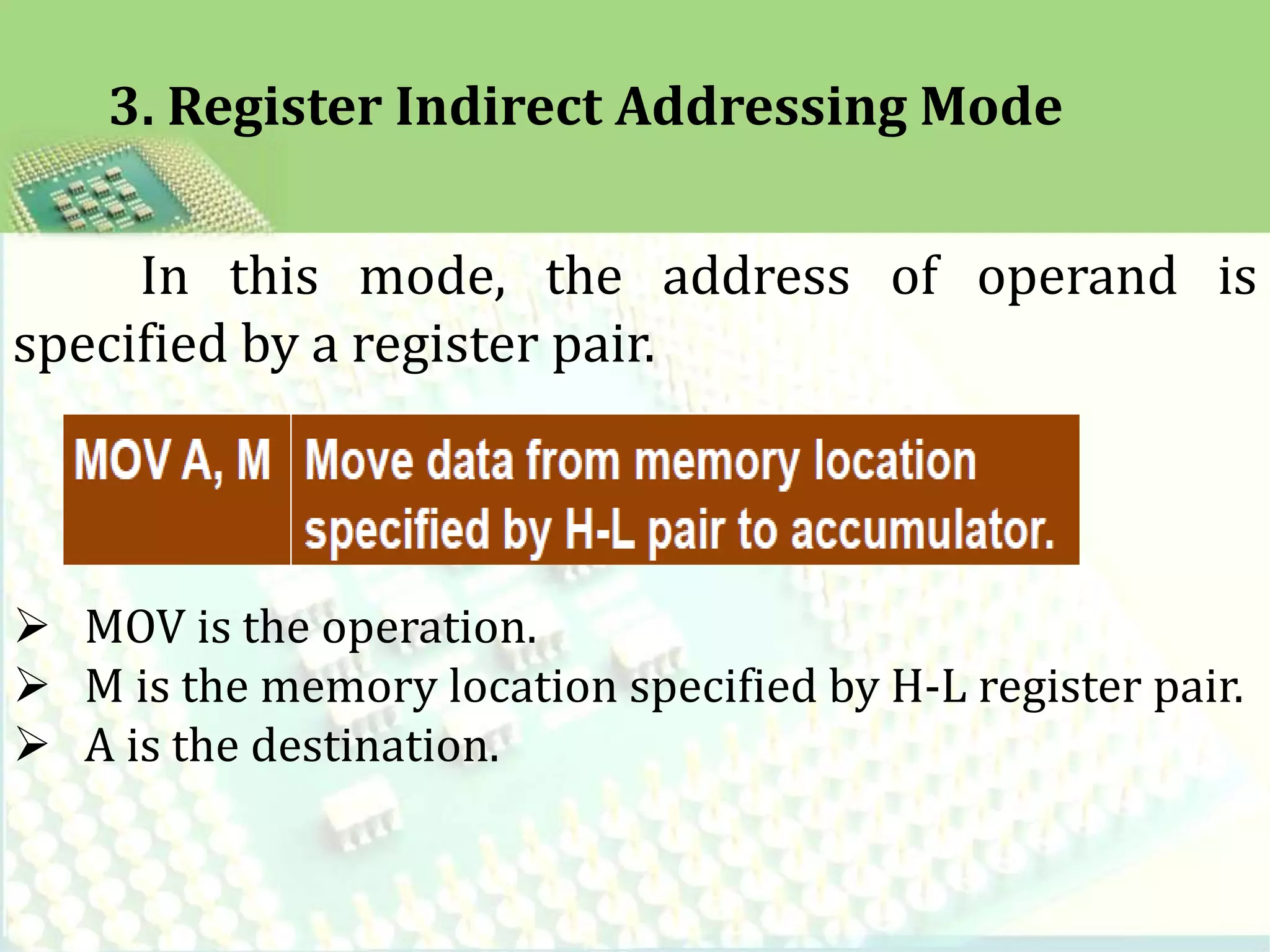
In this mode, the address of operand is
specified by a register pair.
 MOV is the operation.
 M is the memory location specified by H-L register pair.
 A is the destination.
3. Register Indirect Addressing Mode
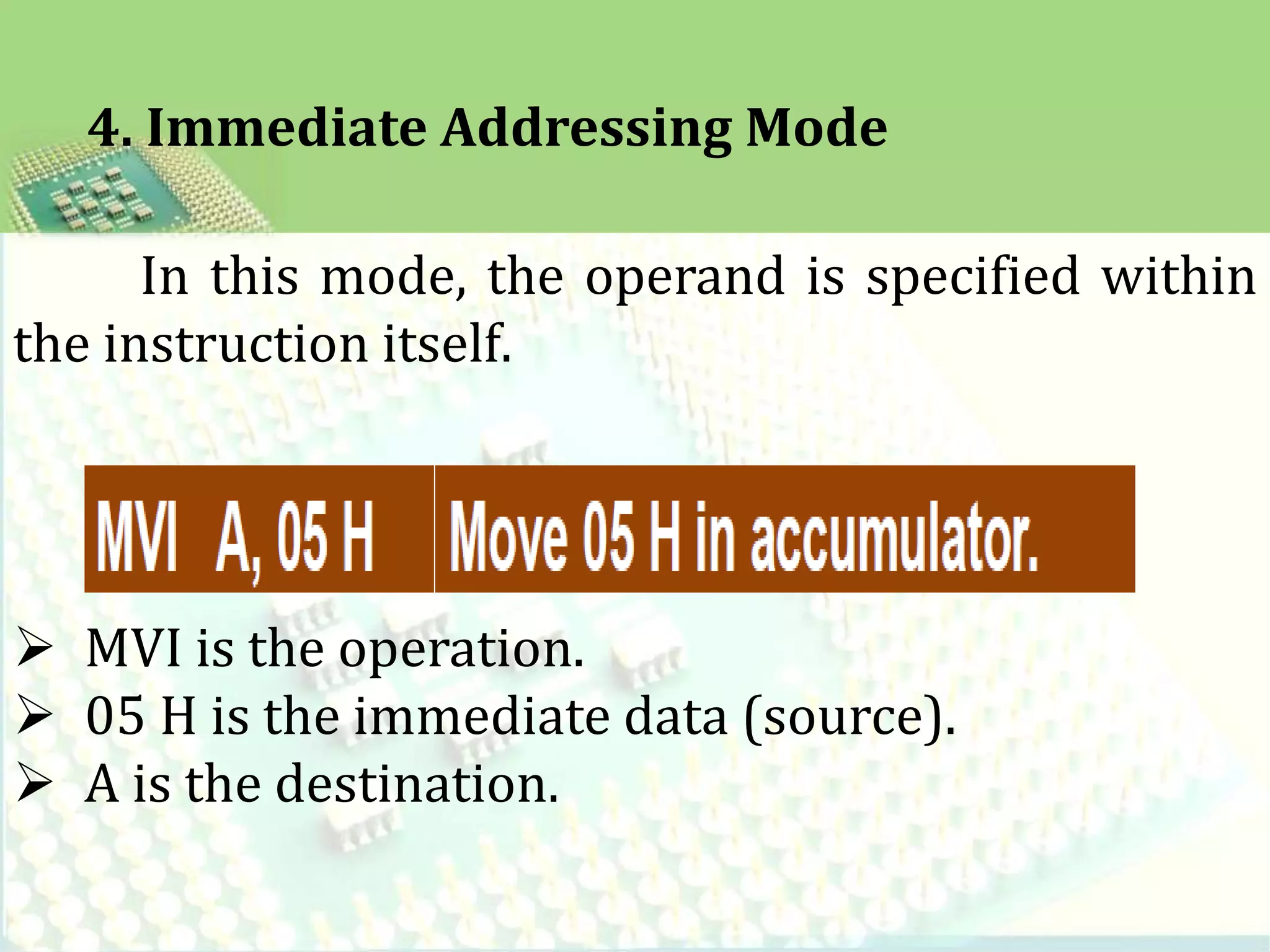
In this mode, the operand is specified within
the instruction itself.
 MVI is the operation.
 05 H is the immediate data (source).
 A is the destination.
4. Immediate Addressing Mode
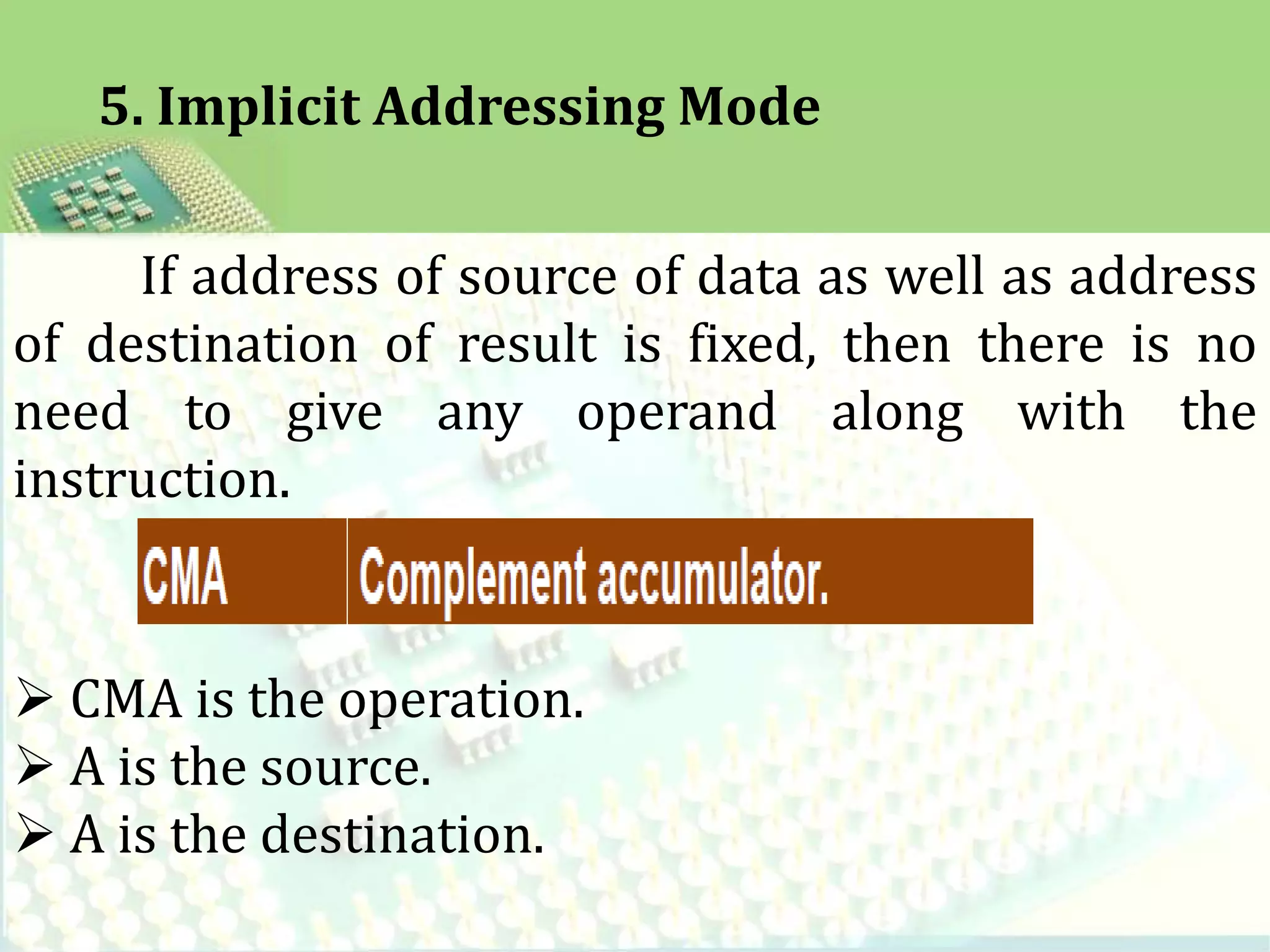
If address of source of data as well as address
of destination of result is fixed, then there is no
need to give any operand along with the
instruction.
 CMA is the operation.
 A is the source.
 A is the destination.
5. Implicit Addressing Mode
Thank You
Have a Nice Day

8085 addressing modes

  • 1.
  • 2.
     To performany operation, we have to give the corresponding instructions to the microprocessor.  In each instruction, programmer has to specify 3 things: 1. Operation to be performed. 2. Address of source of data. 3. Address of destination of result. Addressing Modes of 8085
  • 3.
     The methodby which the address of source of data or the address of destination of result is given in the instruction is called Addressing Modes.  The term addressing mode refers to the way in which the operand of the instruction is specified.
  • 4.
    Intel 8085 usesthe following addressing modes: 1.Direct Addressing Mode 2.Register Addressing Mode 3.Register Indirect Addressing Mode 4.Immediate Addressing Mode 5.Implicit Addressing Mode
  • 5.
    In this mode,the address of the operand is given in the instruction itself.  LDA is the operation.  2500 H is the address of source.  Accumulator is the destination. 1. Direct Addressing Mode
  • 6.
    In this mode,the operand is in general purpose register. MOV is the operation.  B is the source of data.  A is the destination. 2. Register Addressing Mode
  • 7.
    In this mode,the address of operand is specified by a register pair.  MOV is the operation.  M is the memory location specified by H-L register pair.  A is the destination. 3. Register Indirect Addressing Mode
  • 8.
    In this mode,the operand is specified within the instruction itself.  MVI is the operation.  05 H is the immediate data (source).  A is the destination. 4. Immediate Addressing Mode
  • 9.
    If address ofsource of data as well as address of destination of result is fixed, then there is no need to give any operand along with the instruction.  CMA is the operation.  A is the source.  A is the destination. 5. Implicit Addressing Mode
  • 10.