![UCB Python Code
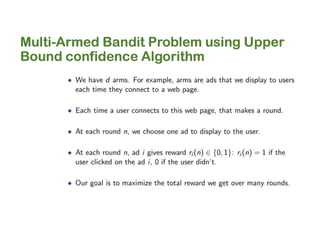
# Importing the libraries
import numpy as np
import matplotlib.pyplot as plt
import pandas as pd
# Importing the dataset
dataset = pd.read_csv('Ads_CTR_Optimisation.csv')
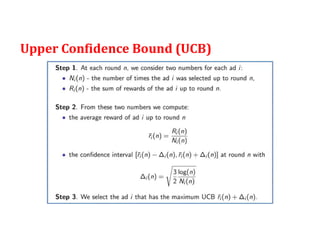
# Implementing UCB
import math
N = 10000
d = 10
ads_selected = []
numbers_of_selections = [0] * d
sums_of_rewards = [0] * d
total_reward = 0
for n in range(0, N):
ad = 0
max_upper_bound = 0](https://image.slidesharecdn.com/7-221216061722-01daa25d/85/7-Reinforcement-Learning-pdf-39-320.jpg)
![UCB Python Code
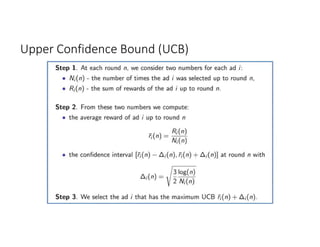
for i in range(0, d):
if (numbers_of_selections[i] > 0):
average_reward = sums_of_rewards[i] / numbers_of_selections[i]
delta_i = math.sqrt(3/2 * math.log(n + 1) / numbers_of_selections[i])
upper_bound = average_reward + delta_i
else:
upper_bound = 1e400
if upper_bound > max_upper_bound:
max_upper_bound = upper_bound
ad = i
ads_selected.append(ad)
numbers_of_selections[ad] = numbers_of_selections[ad] + 1
reward = dataset.values[n, ad]
sums_of_rewards[ad] = sums_of_rewards[ad] + reward
total_reward = total_reward + reward
# Visualising the results
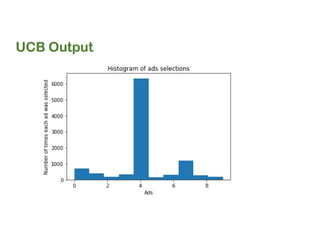
plt.hist(ads_selected)
plt.title('Histogram of ads selections')
plt.xlabel('Ads')
plt.ylabel('Number of times each ad was selected')
plt.show()](https://image.slidesharecdn.com/7-221216061722-01daa25d/85/7-Reinforcement-Learning-pdf-40-320.jpg)
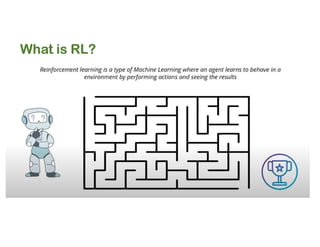
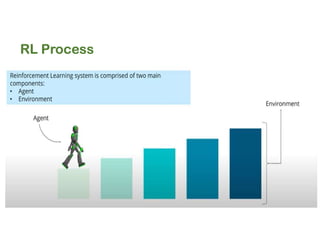
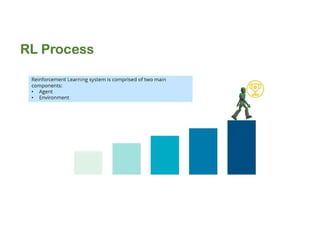
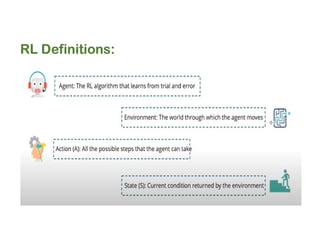
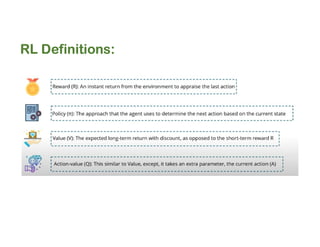
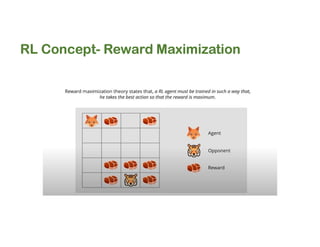
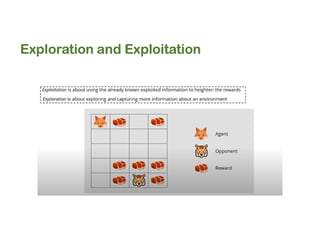
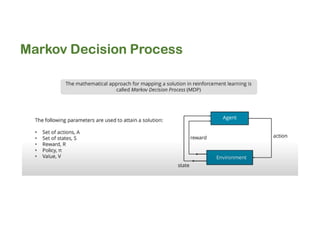


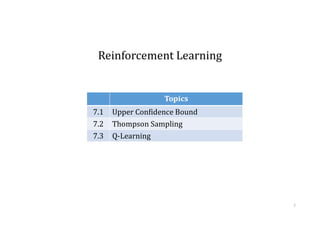
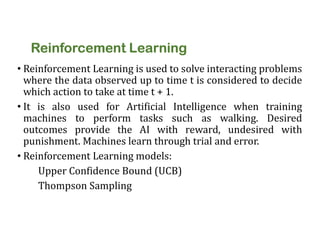
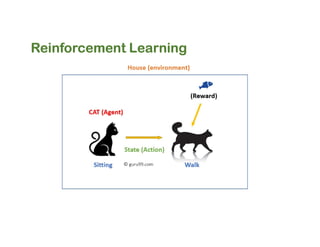
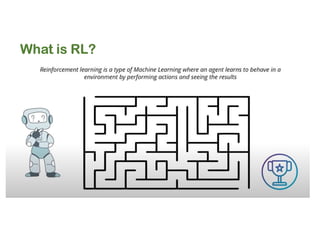
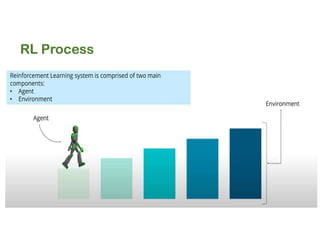
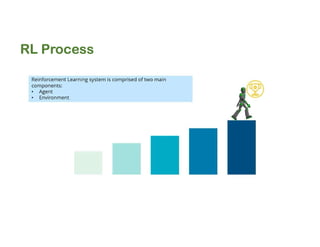
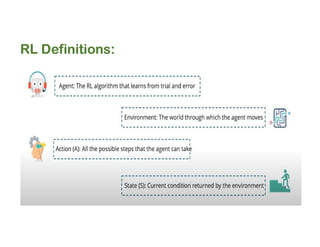
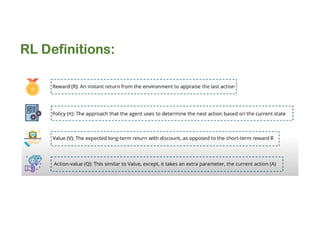
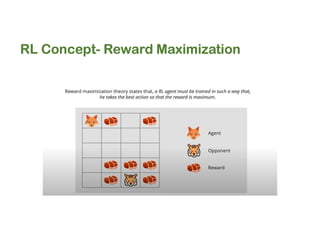
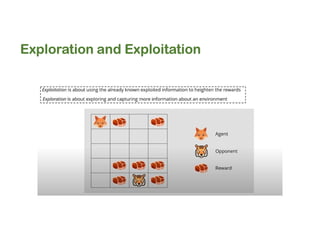
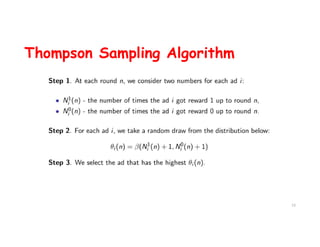
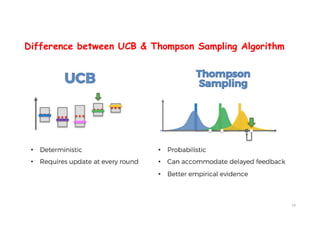
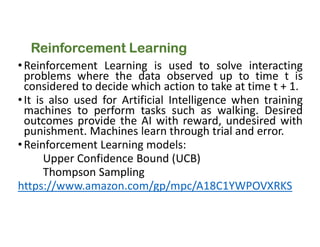
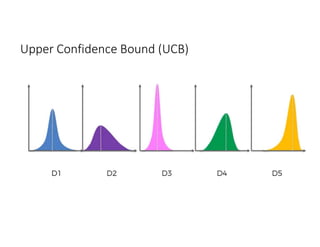
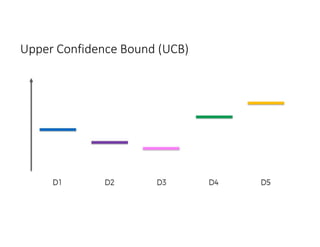
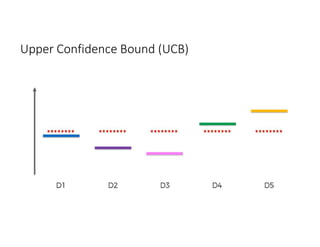
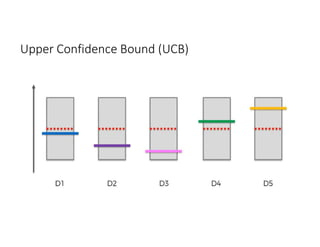
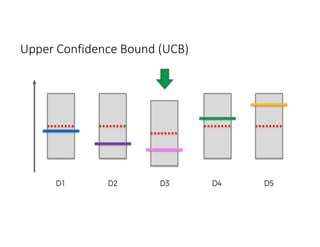
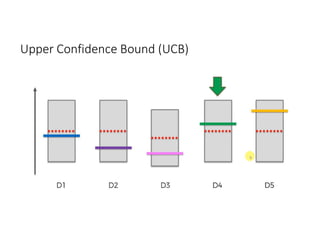
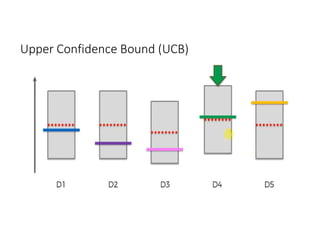
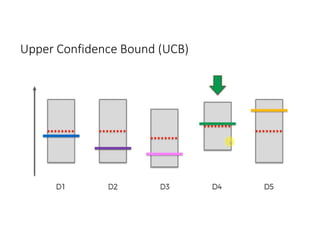
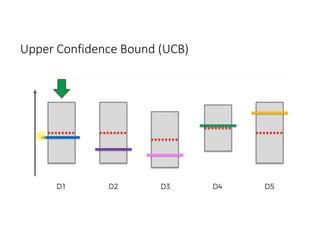
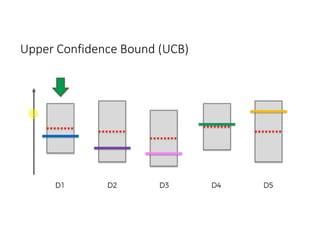
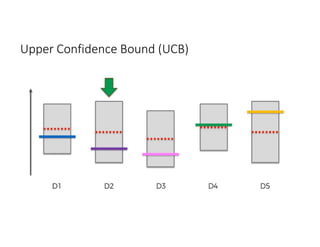
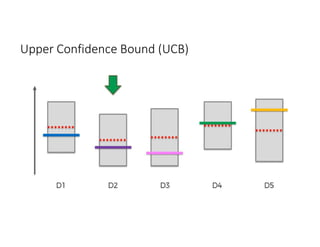
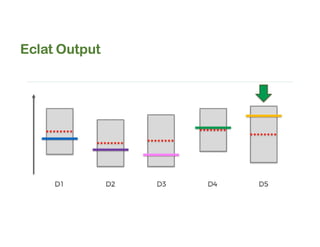
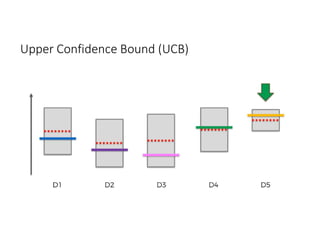
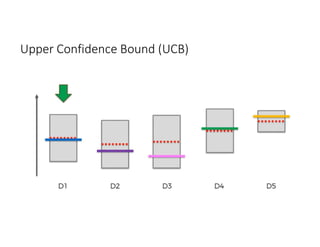
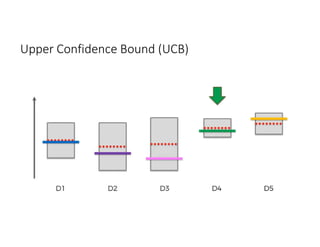
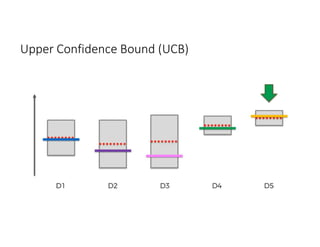
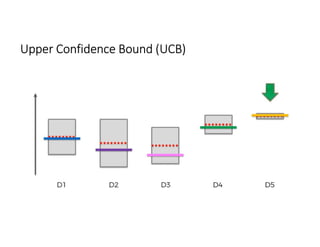
The document discusses reinforcement learning techniques. It describes reinforcement learning as a method for solving interacting problems by considering past data to determine the next action. Reinforcement learning is also used in artificial intelligence to train machines through reward and punishment in tasks like walking. The document outlines reinforcement learning models including Upper Confidence Bound (UCB) and Thompson Sampling.


![A(n abridged) tour of the Rust compiler [PDX-Rust March 2014]](https://cdn.slidesharecdn.com/ss_thumbnails/rust-march-2014-140329160039-phpapp02-thumbnail.jpg?width=640&height=640&fit=bounds)


