DISCIPLINE IN NURSING. BY: A.Glory supriya MSc(N) II yr.
The word  Discipline  comes from the latin term  disciplina  which means teaching, learning and growing.  Discipline comes from one meaning "instruction, knowledge."   
DEFNITION: Training expected to produce a specific character or pattern of behaviour, especially training that produces moral or mental improvement.  -  Internet. Discipline can be defined as a training or molding of the mind  and character to bring about desired behaviors. -   Basavanthappa.
Need for disciple: Discipline should be administered promptly, privately, thoughtfully and consistently following rule of infarction. Discipline should be progressive in nature and preceded by counseling.
Disciplinary action may  have serious and long term consequences for the employee such as loss of income and damage of professional reputation.
Aims and objectives of discipline: To obtain a willing acceptance of rules, regulations and procedures of organization so that organization goals can be achieved. To impart an element of certainty despite in several differences in informal behavior patterns and other related change in an organization.
To develop among the employees a spirit of tolerance and a desire to make adjustments. To give and seek directions of adjustability. To create an atmosphere of respect for the human personality and human relations.
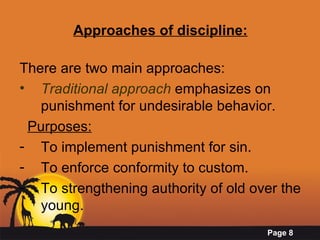
Approaches of discipline: There are two main approaches: Traditional approach   emphasizes on punishment for undesirable behavior. Purposes:   To implement punishment for sin. To enforce conformity to custom. To strengthening authority of old over the young.
2.  Developmental approach  emphasizes discipline as a shaper of desirable behavior. Purpose: -  To shape the behavior by providing favorable consequences for wrong behavior or unfavorable consequences for  wrong behavior.
- To avoid physical punishments, protection of rights of the accused and replacement of arbitrary individual judgment with group judgment and guilt.
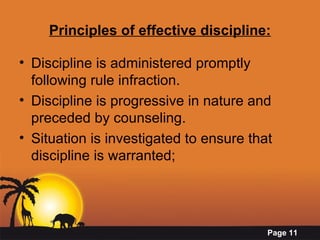
Principles of effective discipline: Discipline is administered promptly following rule infraction. Discipline is progressive in nature and preceded by counseling. Situation is investigated to ensure that discipline is warranted;
Principles of disciplinary action: Have a positive attitude. Investigate carefully. Be prompt. Protect privacy. Focus on the act. Enforce rules consistently.
Be flexible. Advise the employee. Take corrective and constructive action. Follow up.
Penalties   Penalty is defined as fine, punishment in the form of a financial payment. - Internet  Types : Warning Fine
c. Suspension d. Withholding increments  e. Demotion f.  Discharge  g. Dismissal
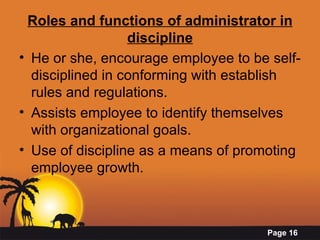
Roles and functions of administrator in discipline He or she, encourage employee to be self-disciplined in conforming with establish rules and regulations. Assists employee to identify themselves with organizational goals. Use of discipline as a means of promoting employee growth.
Periodical assess the need for existing rules and regulations and suggests modification and needs. Self aware regarding the power and responsibility inherited in having formal authority to set rules and regulations. Demonstrate sensitivity to the environment in which discipline is given.
Ensures that rules and regulations are clearly written and communicated to subordinates. Discuss rules and policies with subordinates. Careful documentation of employee behavior that prompts disciplinary action. Uses communication skills.

discipline in nursing

  • 1.
    DISCIPLINE IN NURSING.BY: A.Glory supriya MSc(N) II yr.
  • 2.
    The word Discipline comes from the latin term disciplina which means teaching, learning and growing. Discipline comes from one meaning "instruction, knowledge."  
  • 3.
    DEFNITION: Training expectedto produce a specific character or pattern of behaviour, especially training that produces moral or mental improvement. - Internet. Discipline can be defined as a training or molding of the mind and character to bring about desired behaviors. - Basavanthappa.
  • 4.
    Need for disciple:Discipline should be administered promptly, privately, thoughtfully and consistently following rule of infarction. Discipline should be progressive in nature and preceded by counseling.
  • 5.
    Disciplinary action may have serious and long term consequences for the employee such as loss of income and damage of professional reputation.
  • 6.
    Aims and objectivesof discipline: To obtain a willing acceptance of rules, regulations and procedures of organization so that organization goals can be achieved. To impart an element of certainty despite in several differences in informal behavior patterns and other related change in an organization.
  • 7.
    To develop amongthe employees a spirit of tolerance and a desire to make adjustments. To give and seek directions of adjustability. To create an atmosphere of respect for the human personality and human relations.
  • 8.
    Approaches of discipline:There are two main approaches: Traditional approach emphasizes on punishment for undesirable behavior. Purposes: To implement punishment for sin. To enforce conformity to custom. To strengthening authority of old over the young.
  • 9.
    2. Developmentalapproach emphasizes discipline as a shaper of desirable behavior. Purpose: - To shape the behavior by providing favorable consequences for wrong behavior or unfavorable consequences for wrong behavior.
  • 10.
    - To avoidphysical punishments, protection of rights of the accused and replacement of arbitrary individual judgment with group judgment and guilt.
  • 11.
    Principles of effectivediscipline: Discipline is administered promptly following rule infraction. Discipline is progressive in nature and preceded by counseling. Situation is investigated to ensure that discipline is warranted;
  • 12.
    Principles of disciplinaryaction: Have a positive attitude. Investigate carefully. Be prompt. Protect privacy. Focus on the act. Enforce rules consistently.
  • 13.
    Be flexible. Advisethe employee. Take corrective and constructive action. Follow up.
  • 14.
    Penalties Penalty is defined as fine, punishment in the form of a financial payment. - Internet Types : Warning Fine
  • 15.
    c. Suspension d.Withholding increments e. Demotion f. Discharge g. Dismissal
  • 16.
    Roles and functionsof administrator in discipline He or she, encourage employee to be self-disciplined in conforming with establish rules and regulations. Assists employee to identify themselves with organizational goals. Use of discipline as a means of promoting employee growth.
  • 17.
    Periodical assess theneed for existing rules and regulations and suggests modification and needs. Self aware regarding the power and responsibility inherited in having formal authority to set rules and regulations. Demonstrate sensitivity to the environment in which discipline is given.
  • 18.
    Ensures that rulesand regulations are clearly written and communicated to subordinates. Discuss rules and policies with subordinates. Careful documentation of employee behavior that prompts disciplinary action. Uses communication skills.