Performance Management

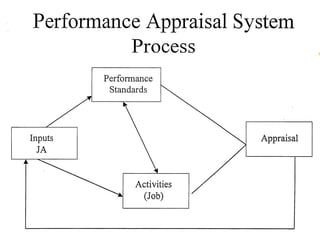
Performance Appraisal is a
 systematic description of job relevant
 strengths and development needs of
 an employee’s actual performance
 relative to established standards.
Performance Management …

is a process to control
 employee work behaviors and
 outputs through providing
 feedback on performance.
Performance Management …

Benefits: An Employee Perspective
  Improved Performance requires
   Assessment and Feedback
  Fairness results when performance is
   measured objectively and outcomes are
   equitable
  Recognition of performance can
   motivate employee improvement
Performance Management …

 Administrative/Evaluative
  pay, promotions, layoffs
 Developmental
   training, career development, HR research
 Legal (minimize exposure to EEO)
   Job related appraisal
   Avoid vague/subjective performance criteria
   Implement a review and appeals process
   Respect employee privacy and confidentiality
Performance Management

 Uses of Performance Appraisal Systems

  Rewards
  Staffing/Career Decisions
  Training/Development Assessment
  Motivation
  Validate HR Research
Performance Management

 Requirements for an Effective
  Performance Appraisals

  Relevant
  Acceptable (Evaluators and Employees)
  Practical (Organization and Evaluators)
  Reliable
  Sensitive to Employee Issues and Needs
Performance Management

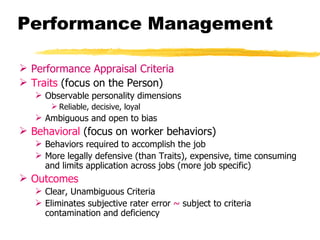
 Performance Appraisal Criteria
 Traits (focus on the Person)
    Observable personality dimensions
        Reliable, decisive, loyal
    Ambiguous and open to bias
 Behavioral (focus on worker behaviors)
    Behaviors required to accomplish the job
    More legally defensive (than Traits), expensive, time consuming
     and limits application across jobs (more job specific)
 Outcomes
    Clear, Unambiguous Criteria
    Eliminates subjective rater error ~ subject to criteria
     contamination and deficiency
Performance Management

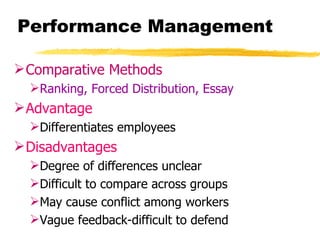
 Comparative Methods
  Ranking, Forced Distribution, Essay
 Advantage
  Differentiates employees
 Disadvantages
  Degree of differences unclear
  Difficult to compare across groups
  May cause conflict among workers
  Vague feedback-difficult to defend
Performance Management

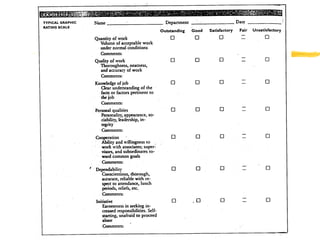
 Adjective Descriptor Methods
  Behavioral Checklist, Graphic Rating Scale
 Advantages
  Avoids conflict
  Allows comparison across work groups
  Feedback of Specific performance dimensions
 Disadvantages
  Open to Rater Error
  Inconsistency Across Raters
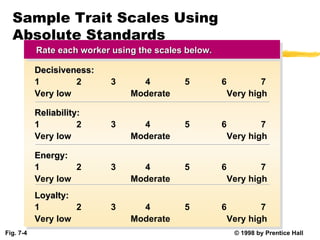
Sample Trait Scales Using
  Absolute Standards
           Rate each worker using the scales below.

           Decisiveness:
           1        2      3      4         5         6           7
           Very low             Moderate                  Very high

           Reliability:
           1          2    3      4         5         6           7
           Very low             Moderate                  Very high

           Energy:
           1        2      3      4         5         6           7
           Very low             Moderate                  Very high
           Loyalty:
           1        2      3      4         5         6           7
           Very low             Moderate                  Very high
Fig. 7-4                                                   © 1998 by Prentice Hall
Performance Management

 Expected Outcome Methods
  Management by Objectives, Behavioral
   Anchored Rating Scales (BARS)
 BARS measures actual performance
  behaviors exhibited by an employee
  relative to pre-defined behaviors of a
  critical performance dimension.
 MBO is a mutual goal setting process
  comparing actual performance to agreed
  upon performance objectives.
Performance Management

 Effective Performance Evaluators should be

  Knowledgeable of job requirements
  Able to observe performance
  Accurate, unbiased, able to differentiate
   performance levels
Performance Management

Sources of Evaluators
  Peers
  Self appraisals (Employee)
  Subordinates
  Outside personnel
  Computer monitoring
§The 360 degree method
§Choice Depends on Objectives
Performance Management

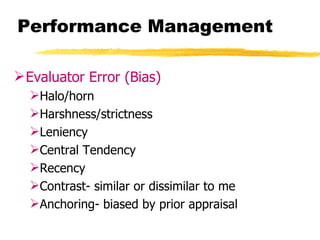
 Evaluator Error (Bias)
  Halo/horn
  Harshness/strictness
  Leniency
  Central Tendency
  Recency
  Contrast- similar or dissimilar to me
  Anchoring- biased by prior appraisal
Performance Management

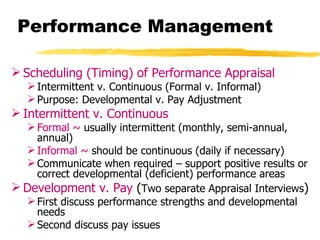
 Scheduling (Timing) of Performance Appraisal
    Intermittent v. Continuous (Formal v. Informal)
    Purpose: Developmental v. Pay Adjustment
 Intermittent v. Continuous
   Formal ~ usually intermittent (monthly, semi-annual,
    annual)
   Informal ~ should be continuous (daily if necessary)
   Communicate when required – support positive results or
    correct developmental (deficient) performance areas
 Development v. Pay (Two separate Appraisal Interviews)
   First discuss performance strengths and developmental
    needs
   Second discuss pay issues
Performance Management

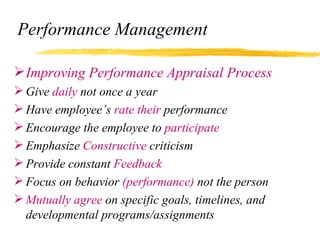
 Improving Performance Appraisal Process
 Give daily not once a year
 Have employee’s rate their performance
 Encourage the employee to participate
 Emphasize Constructive criticism
 Provide constant Feedback
 Focus on behavior (performance) not the person
 Mutually agree on specific goals, timelines, and
  developmental programs/assignments

Performance management-performance-appraisal-is-a-system

  • 1.
    Performance Management Performance Appraisalis a systematic description of job relevant strengths and development needs of an employee’s actual performance relative to established standards.
  • 2.
    Performance Management … isa process to control employee work behaviors and outputs through providing feedback on performance.
  • 3.
    Performance Management … Benefits:An Employee Perspective Improved Performance requires Assessment and Feedback Fairness results when performance is measured objectively and outcomes are equitable Recognition of performance can motivate employee improvement
  • 4.
    Performance Management … Administrative/Evaluative pay, promotions, layoffs  Developmental training, career development, HR research  Legal (minimize exposure to EEO) Job related appraisal Avoid vague/subjective performance criteria Implement a review and appeals process Respect employee privacy and confidentiality
  • 5.
    Performance Management  Usesof Performance Appraisal Systems Rewards Staffing/Career Decisions Training/Development Assessment Motivation Validate HR Research
  • 6.
    Performance Management  Requirementsfor an Effective Performance Appraisals Relevant Acceptable (Evaluators and Employees) Practical (Organization and Evaluators) Reliable Sensitive to Employee Issues and Needs
  • 8.
    Performance Management  PerformanceAppraisal Criteria  Traits (focus on the Person)  Observable personality dimensions  Reliable, decisive, loyal  Ambiguous and open to bias  Behavioral (focus on worker behaviors)  Behaviors required to accomplish the job  More legally defensive (than Traits), expensive, time consuming and limits application across jobs (more job specific)  Outcomes  Clear, Unambiguous Criteria  Eliminates subjective rater error ~ subject to criteria contamination and deficiency
  • 9.
    Performance Management  ComparativeMethods Ranking, Forced Distribution, Essay  Advantage Differentiates employees  Disadvantages Degree of differences unclear Difficult to compare across groups May cause conflict among workers Vague feedback-difficult to defend
  • 10.
    Performance Management  AdjectiveDescriptor Methods Behavioral Checklist, Graphic Rating Scale  Advantages Avoids conflict Allows comparison across work groups Feedback of Specific performance dimensions  Disadvantages Open to Rater Error Inconsistency Across Raters
  • 11.
    Sample Trait ScalesUsing Absolute Standards Rate each worker using the scales below. Decisiveness: 1 2 3 4 5 6 7 Very low Moderate Very high Reliability: 1 2 3 4 5 6 7 Very low Moderate Very high Energy: 1 2 3 4 5 6 7 Very low Moderate Very high Loyalty: 1 2 3 4 5 6 7 Very low Moderate Very high Fig. 7-4 © 1998 by Prentice Hall
  • 13.
    Performance Management  ExpectedOutcome Methods Management by Objectives, Behavioral Anchored Rating Scales (BARS)  BARS measures actual performance behaviors exhibited by an employee relative to pre-defined behaviors of a critical performance dimension.  MBO is a mutual goal setting process comparing actual performance to agreed upon performance objectives.
  • 15.
    Performance Management  EffectivePerformance Evaluators should be Knowledgeable of job requirements Able to observe performance Accurate, unbiased, able to differentiate performance levels
  • 16.
    Performance Management Sources ofEvaluators Peers Self appraisals (Employee) Subordinates Outside personnel Computer monitoring §The 360 degree method §Choice Depends on Objectives
  • 17.
    Performance Management  EvaluatorError (Bias) Halo/horn Harshness/strictness Leniency Central Tendency Recency Contrast- similar or dissimilar to me Anchoring- biased by prior appraisal
  • 18.
    Performance Management  Scheduling(Timing) of Performance Appraisal  Intermittent v. Continuous (Formal v. Informal)  Purpose: Developmental v. Pay Adjustment  Intermittent v. Continuous  Formal ~ usually intermittent (monthly, semi-annual, annual)  Informal ~ should be continuous (daily if necessary)  Communicate when required – support positive results or correct developmental (deficient) performance areas  Development v. Pay (Two separate Appraisal Interviews)  First discuss performance strengths and developmental needs  Second discuss pay issues
  • 19.
    Performance Management  ImprovingPerformance Appraisal Process  Give daily not once a year  Have employee’s rate their performance  Encourage the employee to participate  Emphasize Constructive criticism  Provide constant Feedback  Focus on behavior (performance) not the person  Mutually agree on specific goals, timelines, and developmental programs/assignments