Arabic Grammar

for the Holy Quran

Al-Qaem Institute

Imam Mahdi Association of Marjaeya (I.M.A.M.)
Table of Contents:
Part I: LETTERS
1. The Arabic Aphabet 4

2. Vowels 5

3. Other Accents 8

Part II: NOUNS
4. The Word 9

5. Prepositions 10. 

6. The Nouns 12

7. Nouns: Singular Form 15

8. Nouns: Dual Form 16

9. Nouns: Plural Form: Unbroken 18

10. Nouns: Plural Form: Broken 20

11. Detached Pronouns I 22

12. Detached Pronouns II 24

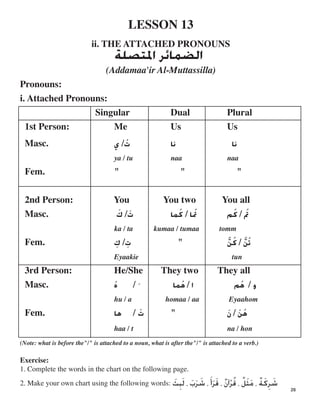
13. Attached Pronouns 26

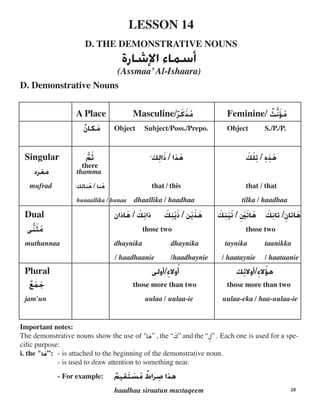
14. Demonstrative Nouns 28

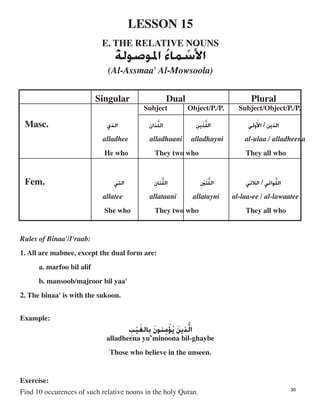
15. Relative Nouns 30

17. Foreign Nouns & Verbal Nouns 31

18. Phrases 33

19. I’raab & Binaa’ 38

20. Nouns within Sentences 39

APPENDICES
1. Appendix A: Chart of the Word 43

2. Appendix B: Flow Chart of Nouns 44

Part III: VERBS
2
PART I: LETTERS

3
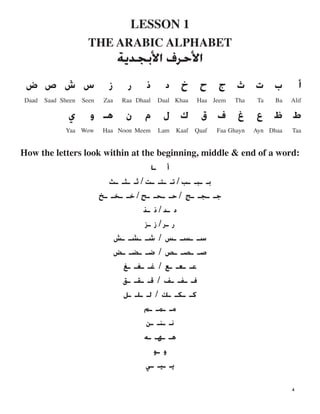
LESSON 1

THE ARABIC ALPHABET

‫ﺍﻷ‬‫ﺣﺮﻑ‬‫ﺔﺔ‬
‫ﺃ‬‫ﺏ‬‫ﺕ‬‫ﺙ‬‫ﺝ‬‫ﺡ‬‫ﺥ‬‫ﺩ‬‫ﺫ‬‫ﺭ‬‫ﺯ‬‫ﺱ‬‫ﺵ‬‫ﺹ‬‫ﺽ‬
Daad Saad Sheen Seen Zaa Raa Dhaal Daal Khaa Haa Jeem Tha Ta Ba Alif

‫ﻁ‬‫ﻅ‬‫ﻉ‬‫ﻍ‬‫ﻑ‬‫ﻕ‬‫ﻙ‬‫ﻝ‬‫ﻡ‬‫ﻥ‬‫ﻫـ‬‫ﻭ‬‫ﻱ‬
Yaa Wow Haa Noon Meem Lam Kaaf Qaaf Faa Ghayn Ayn Dhaa Taa
How the letters look within at the beginning, middle & end of a word:

‫ﺃ‬‫ﺎﺎ‬
‫ﺑـ‬‫ـﺒـ‬‫ـﺐ‬/‫ﺗـ‬‫ـﺘـ‬‫ـﺖ‬/‫ﺛـ‬‫ـﺜـ‬‫ﺚﺚ‬
‫ﺟـ‬‫ـﺠـ‬‫ـﺞ‬/‫ﺣـ‬‫ـﺤـ‬‫ـﺢ‬/‫ﺧـ‬‫ـﺨـ‬‫ﺦﺦ‬
‫ﺩ‬‫ـﺪ‬/‫ﺫ‬‫ﺬﺬ‬
‫ﺭ‬‫ـﺮ‬/‫ﺯ‬‫ﺰﺰ‬
‫ﺳـ‬‫ـﺴـ‬‫ـﺲ‬/‫ﺷـ‬‫ـﺸـ‬‫ﺶﺶ‬
‫ﺻـ‬‫ـﺼـ‬‫ـﺺ‬/‫ﺿـ‬‫ـﻀـ‬‫ـﺾ‬
‫ﻋـ‬‫ـﻌـ‬‫ـﻊ‬/‫ﻏـ‬‫ـﻐـ‬‫ـﻎ‬
‫ﻓـ‬‫ـﻔـ‬‫ـﻒ‬/‫ﻗـ‬‫ـﻘـ‬‫ـﻖ‬
‫ﻛـ‬‫ـﻜـ‬‫ـﻚ‬/‫ﻟـ‬‫ـﻠـ‬‫ـﻞ‬
‫ﻣـ‬‫ـﻤـ‬‫ﻢﻢ‬
‫ﻧـ‬‫ـﻨـ‬‫ﻦﻦ‬
‫ﻫـ‬‫ـﻬـ‬‫ﻪﻪ‬
‫ﻭ‬‫ﻮﻮ‬
‫ﻳـ‬‫ـﻴـ‬‫ﻲﻲ‬
4
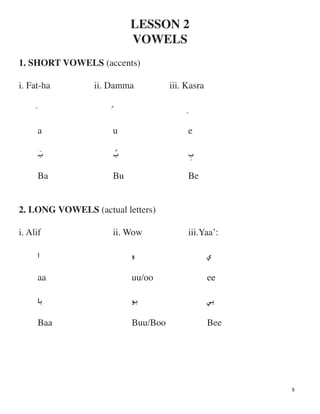
LESSON 2

VOWELS

1. SHORT VOWELS (accents)
i. Fat-ha ii. Damma iii. Kasra

‫ﹺ‬‫ﹸ‬‫
ﹶ‬
a u e

‫ﺏ‬‫ﹺ‬‫ﺏ‬‫ﹸ‬‫ﺏ‬‫
ﹶ‬
Ba Bu Be
2. LONG VOWELS (actual letters)
i. Alif ii. Wow iii.Yaa’:
‫ﺍ‬ ‫ﻭ‬ ‫ﻱ‬
aa uu/oo ee
‫ﺑﺎ‬ ‫ﺑﻮ‬ ‫ﺑﻲ‬
Baa Buu/Boo Bee
5
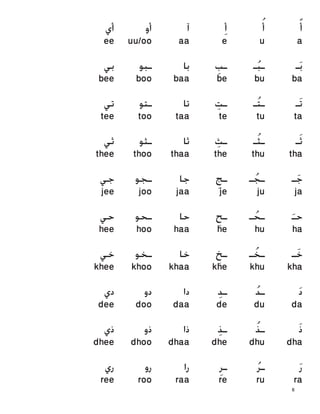
‫ﺃ‬‫ﹰ‬‫ﺃ‬‫ﹸ‬‫ﺃ‬‫ﹺ‬‫ﺁ‬‫ﺃﻭ‬‫ﻱﻱ‬
ee uu/oo aa e u a

‫ﺑ‬‫ـ‬‫ﹶ‬‫ـﺒ‬‫ﹸ‬‫ـ‬‫ـﺐ‬‫ﹺ‬‫ﺑﺎ‬‫ـﺒﻮ‬‫ﻲﻲ‬
bebee boo baa
 bu ba

‫ﺗ‬‫ﹶـ‬‫ـﺘ‬‫ﹸ‬‫ـ‬‫ـﺖ‬‫ﹺ‬‫ﺗﺎ‬‫ـﺘﻮ‬‫ﻲﻲ‬
tee too taa te tu ta

‫ﺛ‬‫ـ‬‫ﹶ‬‫ـﺜ‬‫ﹸ‬‫ـ‬‫ـﺚ‬‫ﹺ‬‫ﺛﺎ‬‫ـﺜﻮ‬‫ﻲﻲ‬
thee thoo thaa the thu tha

‫ﺟ‬‫ﹶ‬‫ـ‬‫ـﺠ‬‫ﹸ‬‫ـ‬‫ـﺞ‬‫ﹺ‬‫ﺟﺎ‬‫ـﺠﻮ‬‫ﻲﻲ‬
jejee joo jaa
 ju ja

‫ﺣـ‬‫ﹶ‬‫ـﺤ‬‫ﹸ‬‫ـ‬‫ـﺢ‬‫ﹺ‬‫ﺣﺎ‬‫ـﺤﻮ‬‫ﻲﻲ‬
he huhee hoo haa
 ha

‫ﺧ‬‫ﹶ‬‫ـ‬‫ـﺨ‬‫ﹸ‬‫ـ‬‫ـﺦ‬‫ﹺ‬‫ﺧﺎ‬‫ـﺨﻮ‬‫ﻲﻲ‬
khe
khee khoo khaa
 khu kha

‫ﺩ‬‫ﹶ‬‫ـﺪ‬‫ﹸ‬‫ـﺪ‬‫ﹺ‬‫ﺩﺍ‬‫ﺩﻭ‬‫ﻱﻱ‬
dee doo daa de du da

‫ﺫ‬‫ﹶ‬‫ـﺬ‬‫ﹸ‬‫ـﺬ‬‫ﹺ‬‫ﺫﺍ‬‫ﺫﻭ‬‫ﻱﻱ‬
dhee dhoo dhaa dhe dhu dha

‫ﺭ‬‫ﹶ‬‫ـﺮ‬‫ﹸ‬‫ـﺮ‬‫ﹺ‬‫ﺭﺍ‬‫ﺭﻭ‬‫ﻱﻱ‬
ree roo raa re ru ra

6
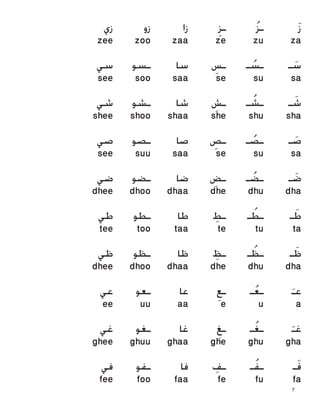
‫ﺯ‬‫ﹶ‬‫ـﺰ‬‫ﹸ‬‫ـﺰ‬‫ﹺ‬‫ﺯﺍ‬‫ﺯﻭ‬‫ﻱﻱ‬
zee zoo zaa ze zu za

‫ﺳ‬‫ﹶ‬‫ـ‬‫ـﺴ‬‫ﹸ‬‫ـ‬‫ـﺲ‬‫ﹺ‬‫ﺳﺎ‬‫ـﺴﻮ‬‫ﻲﻲ‬
see soo saa se su sa

shee shoo shaa

‫ﺷ‬‫ﹶ‬‫ـ‬‫ـﺸ‬‫ﹸ‬‫ـ‬‫ـﺶ‬‫ﹺ‬‫ﺷﺎ‬‫ـﺸﻮ‬‫ﻲﻲ‬
she shu sha

‫ﺻ‬‫ﹶ‬‫ـ‬‫ـﺼ‬‫ﹸ‬‫ـ‬‫ـﺺ‬‫ﹺ‬‫ﺻﺎ‬‫ـﺼﻮ‬‫ﻲﻲ‬
see suu saa se su sa

dhee dhoo dhaa

‫ﺿ‬‫ﹶ‬‫ـ‬‫ـﻀ‬‫ﹸ‬‫ـ‬‫ـﺾ‬‫ﹺ‬‫ﺿﺎ‬‫ـﻀﻮ‬‫ﻲﻲ‬
dhe dhu dha

‫ﻃ‬‫ﹶ‬‫ـ‬‫ـﻄ‬‫ﹸ‬‫ـ‬‫ـﻂ‬‫ﹺ‬‫ﻃﺎ‬‫ـﻄﻮ‬‫ﻲﻲ‬
tee too taa te tu ta

‫ﻇ‬‫ﹶ‬‫ـ‬‫ـﻈ‬‫ﹸ‬‫ـ‬‫ـﻆ‬‫ﹺ‬‫ﻇﺎ‬‫ـﻈﻮ‬‫ﻲﻲ‬
dhee dhoo dhaa dhe dhu dha

‫ﻋـ‬‫ﹶ‬‫ـﻌ‬‫ﹸ‬‫ـ‬‫ـﻊ‬‫ﹺ‬‫ﻋﺎ‬‫ـﻌﻮ‬‫ﻲﻲ‬
ee uu aa e u a

ghee ghuu ghaa

‫ﻏـ‬‫ﹶ‬‫ـﻐ‬‫ﹸ‬‫ـ‬‫ـﻎ‬‫ﻏﺎ‬‫ـﻐﻮ‬‫ﻏﻲ‬
ghe
‫ﹺ‬
ghu gha

‫ﻓ‬‫ﹶ‬‫ـ‬‫ـﻔ‬‫ﹸ‬‫ـ‬‫ـﻒ‬‫ﹺ‬‫ﻓﺎ‬‫ـﻔﻮ‬‫ﻲﻲ‬
fee foo faa fe fu fa

7
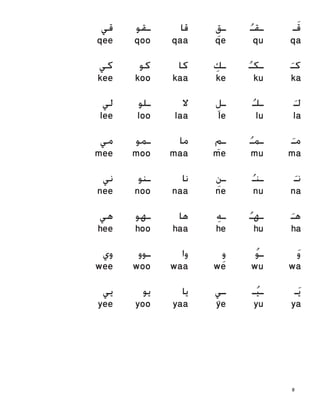
‫ﻗﻲ‬ ‫ـﻘﻮ‬ ‫ﻗﺎ‬ ‫ﹺ‬‫ـﻖ‬ ‫ﹸ‬‫ـﻘـ‬ ‫ـ‬‫ﹶ‬‫ﻗ‬
qee qoo qaa qe qu qa
‫ﻛﻲ‬ ‫ﻛﻮ‬ ‫ﻛﺎ‬ ‫ﹺ‬‫ـﻚ‬ ‫ﹸ‬‫ـﻜـ‬ ‫ﹶ‬‫ﻛـ‬
kee koo kaa ke ku ka
‫ﻟﻲ‬
lee
‫ـﻠﻮ‬
loo
‫ﻻ‬
laa
‫ﹺ‬‫ـﻞ‬
le
‫ﹸ‬‫ـﻠـ‬
lu
‫ﹶ‬‫ﻟـ‬
la
‫ﻣﻲ‬ ‫ـﻤﻮ‬ ‫ﻣﺎ‬ ‫ﹺ‬‫ـﻢ‬ ‫ﹸ‬‫ـﻤـ‬ ‫ﹶ‬‫ﻣـ‬
mee moo maa me mu ma
‫ﻧﻲ‬ ‫ـﻨﻮ‬ ‫ﻧﺎ‬ ‫ﹺ‬‫ـﻦ‬ ‫ﹸ‬‫ـﻨـ‬ ‫ﹶ‬‫ﻧـ‬
nee noo naa ne nu na
‫ﻫﻲ‬ ‫ـﻬﻮ‬ ‫ﻫﺎ‬ ‫ﹺ‬‫ﻪ‬‫ـ‬ ‫ﹸ‬‫ـﻬـ‬ ‫ﹶ‬‫ﻫـ‬
hee hoo haa he hu ha
‫ﻭﻱ‬ ‫ـﻮﻭ‬ ‫ﻭﺍ‬ ‫ﹺ‬‫ﻭ‬ ‫ﹸ‬‫ﻮ‬‫ـ‬ ‫ﹶ‬‫ﻭ‬
wee woo waa we wu wa
‫ﻳﻲ‬
yee
‫ﻳﻮ‬
yoo
‫ﻳﺎ‬
yaa ‫ﹺ‬
‫ـﻲ‬
ye
‫ـ‬‫ﹸ‬‫ﻴ‬‫ـ‬
yu
‫ـ‬‫ﹶ‬‫ﻳ‬
ya
8
LESSON 3

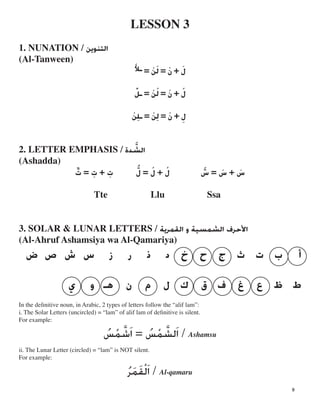
‫ﻝ‬‫ﹶ‬+‫ﻥ‬‫ﹾ‬=‫ﻟ‬‫ﹶ‬‫ﻦ‬‫ﹾ‬=‫ـﻼ‬‫ﹶ‬‫
ﹰ‬
‫ﻝ‬‫ﹸ‬+‫ﻥ‬‫ﹾ‬=‫ﻟ‬‫ﹸ‬‫ﻦ‬‫ﹾ‬=‫ـﻞ‬‫
ﹲ‬
‫ﻝ‬‫ﹺ‬+‫ﻥ‬‫ﹾ‬=‫ﻟ‬‫ﹺ‬‫ﻦ‬‫ﹾ‬=‫ـﻠ‬‫ﹺ‬‫ﻦ‬‫
ﹾ‬
‫ﱠ‬‫ﺸﺸ‬
‫ﻝ‬‫ﹸ‬+‫ﻝ‬‫
ﹸ‬
‫ﺍﻟﺘﻨﻮﻳﻦ‬1. NUNATION / 

(Al-Tanween)
‫ﱢ‬
‫ﺪ‬‫ﺓ‬2. LETTER EMPHASIS /

(Ashadda)
+‫ﺕ‬‫ﹺ‬=‫ﺕ‬ ‫ﺱ‬‫ﹶ‬+‫ﺱ‬‫
ﹶ‬‫ﱡ‬ =‫ﺱ‬=‫ﻝ‬
Tte Llu Ssa

‫
ﱠ‬‫ﺕ‬‫
ﹺ‬
‫ﺥ‬ ‫ﺡ‬ ‫ﺝ‬
3. SOLAR & LUNAR LETTERS / ‫ﺍﻟﻘﻤﺮﻳﺔ‬ ‫ﻭ‬ ‫ﺍﻟﺸﻤﺴﻴﺔ‬ ‫ﺍﻷﺣﺮﻑ‬
(Al-Ahruf Ashamsiya wa Al-Qamariya)
‫ﺏ‬ ‫ﺃ‬‫ﺕ‬‫ﺙ‬‫ﺩ‬‫ﺫ‬‫ﺭ‬‫ﺯ‬‫ﺱ‬‫ﺵ‬‫ﺹ‬‫ﺽ‬
‫ﻫـ‬‫ﻭ‬‫ﻱ‬ ‫ﻥ‬ ‫ﻡ‬ ‫ﻝ‬ ‫ﻙ‬ ‫ﻕ‬ ‫ﻑ‬ ‫ﻍ‬ ‫ﻉ‬ ‫ﻅ‬ ‫ﻁ‬
‫ﱠ‬
In the definitive noun, in Arabic, 2 types of letters follow the “alif lam”:
i. The Solar Letters (uncircled) = “lam” of alif lam of definitive is silent.
For example:
‫ﻟﺸ‬‫ﱠ‬‫ﺷ‬ Ashamsu/‫ﺍ‬‫
ﹶ‬‫
ﹶ‬ ‫ﻤ‬‫ﹾ‬‫ﺲ‬‫ﹸ‬=‫ﺍ‬‫ﻤ‬‫ﹾ‬‫ﺲ‬‫
ﹸ‬
ii. The Lunar Letter (circled) = “lam” is NOT silent.
For example:
Al-qamaru/‫ﺍ‬‫ﻟ‬‫ﹶ‬‫ﻘ‬‫ﹾ‬‫ﹶ‬‫ﻤ‬‫ﹶ‬‫ﺮ‬‫ﹸ‬
9
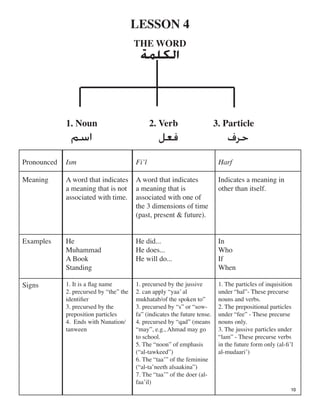
LESSON 4

THE WORD

‫ﺔﺔ‬
1. Noun 2. Verb 3. Particle

‫ﺣﺮﻑ‬‫ﻓﻌﻞ‬‫ﻢﻢ‬
Pronounced Ism  Fi’l  Harf 
Meaning A word that indicates
a meaning that is not
associated with time.
A word that indicates
a meaning that is
associated with one of
the 3 dimensions of time
(past, present & future).
Indicates a meaning in
other than itself.
Examples He
Muhammad
A Book
Standing
He did...
He does...
He will do...
In
Who
If
When
Signs 1. It is a flag name
2. precursed by “the” the
identifier
3. precursed by the
preposition particles
4. Ends with Nunation/
tanween
1. precursed by the jussive
2. can apply “yaa’ al
mukhatab/of the spoken to”
3. precursed by “s” or “sow
fa” (indicates the future tense.
4. precursed by “qad” (means
“may”, e.g., Ahmad may go
to school.
5. The “noon” of emphasis
(“al-tawkeed”)
6. The “taa’” of the feminine
(“al-ta’neeth alsaakina”)
7. The “taa’” of the doer (al
faa’il)
1. The particles of inquisition
under “hal”- These precurse
nouns and verbs.
2. The prepositional particles
under “fee” - These precurse
nouns only.
3. The jussive particles under
“lam” - These precurse verbs
in the future form only (al-fi’l
al-mudaari’)
10
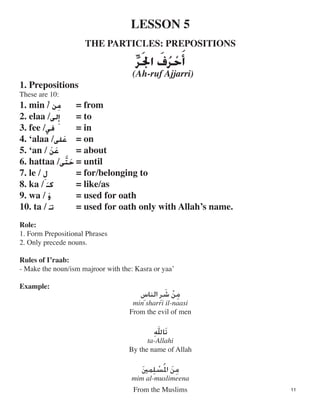
LESSON 5

THE PARTICLES: PREPOSITIONS

‫ﺃ‬‫ﺣ‬‫ﹶ‬‫ﹾ‬‫ﺮ‬‫ﹸ‬‫ﻑ‬‫ﹶ‬‫ﺍﳉ‬‫ﹶ‬‫ﺮ‬
(Ah-ruf Ajjarri)
1. Prepositions
These are 10:
‫
ﱢ‬
‫ﹾ‬1. min /

‫ﺇ‬‫ﻟﻰ‬2. elaa /
 ‫ﹺ‬
‫ﻓﻲ‬3. fee /

‫ﻠﻰ‬4. ‘alaa /

5. ‘an /
‫ﻰ‬6. hattaa /

= from
= to
= in
= on
= about 

= until‫ﺣ‬‫
ﹶ‬
‫ﻣ‬‫ﹺ‬‫ﻦ‬
‫ﻋ‬‫
ﹶ‬
‫ﺘ‬‫
ﱠ‬
‫ﻋ‬‫ﹶ‬‫ﻦ‬‫
ﹾ‬
7. le /

8. ka /

9. wa / 

= for/belonging to
= like/as
‫ﻝ‬‫
ﹺ‬
‫ﻛـ‬‫
ﹶ‬
‫ﻭ‬‫
ﹶ‬ = used for oath

10. ta / 
 = used for oath only with Allah’s name.
‫ﺗـ‬‫
ﹶ‬
Role:
1. Form Prepositional Phrases
2. Only precede nouns.
Rules of I’raab:
- Make the noun/ism majroor with the: Kasra or yaa’
Example:

‫ﻣ‬‫ﹺ‬‫ﻦ‬‫ﹾ‬‫ﺷ‬‫ﹶ‬‫ﺮ‬‫ﹺ‬‫ﺍﻟﻨﺎﺱ‬‫
ﹺ‬
min sharri il-naasi
From the evil of men

‫ﺗ‬‫ﺎﷲ‬‫
ﹺ‬ ‫
ﹶ‬
ta-Allahi
By the name of Allah
‫
ﹸ‬ ‫ﻣ‬‫ﹺ‬‫ﻦ‬‫ﹶ‬‫ﺍﳌ‬‫ﺴ‬‫ﹾ‬‫ﻠ‬‫ﻤﲔ‬‫ﹺ‬‫
ﹶ‬
mim al-muslimeena
From the Muslims 11
PART II: NOUNS

12
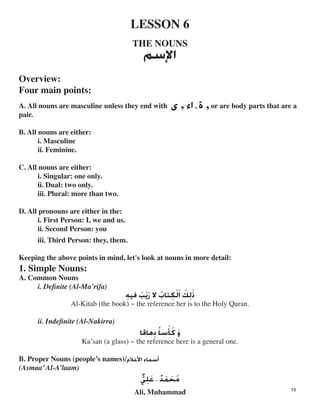
LESSON 6

THE NOUNS

‫ﻢﻢ‬
Overview:

Four main points:

or are body parts that are a,‫ﺓ‬,‫ﺍﺀ‬,‫ﻯ‬A. All nouns are masculine unless they end with
pair.
B. All nouns are either:
i. Masculine
ii. Feminine.
C. All nouns are either:
i. Singular: one only.
ii. Dual: two only.
iii. Plural: more than two.
D. All pronouns are either in the:
i. First Person: I, we and us.
ii. Second Person: you
iii. Third Person: they, them.
Keeping the above points in mind, let's look at nouns in more detail:
1. Simple Nouns:
A. Common Nouns
i. Definite (Al-Ma’rifa)

‫ﺫ‬‫ﹶ‬‫ﻟ‬‫ﹺ‬‫ﻚ‬‫ﹶ‬‫ﺍ‬‫ﻟ‬‫ﹶ‬‫ﻜ‬‫ﹾ‬‫ﹺ‬‫ﺘﺎﺏ‬‫ﹸ‬‫ﻻ‬‫ﺭ‬‫ﻳ‬‫ﹶ‬‫ﺐ‬‫ﹾ‬‫ﹶ‬‫ﻓﻴﻪ‬‫
ﹺ‬
Al-Kitab (the book) ~ the reference her is to the Holy Quran.

ii. Indefinite (Al-Nakirra)

‫ﹶ‬‫ﹾ‬‫ﹰ‬ ‫ﻭ‬‫ﹶ‬‫ﻛ‬‫ﺄ‬‫ﺳﺎ‬‫ﺩ‬‫ﹺ‬‫ﺎﺎ‬
Ka’san (a glass) ~ the reference here is a general one.
‫ﺃﺳﻤﺎ‬‫ﺀ‬‫ﺍﻷﻋﻼﻡ‬B. Proper Nouns (people’s names)/
(Asmaa’Al-A’laam)
‫ﻲ‬‫
ﱞ‬
Ali, Muhammad
‫ﻠ‬‫
ﹺ‬ ‫ﻣ‬‫ﹸ‬‫ﺤ‬‫ﹶ‬‫ﻤ‬‫ﹶ‬‫ﺪ‬‫ﹲ‬،‫ﻋ‬‫
ﹶ‬
13
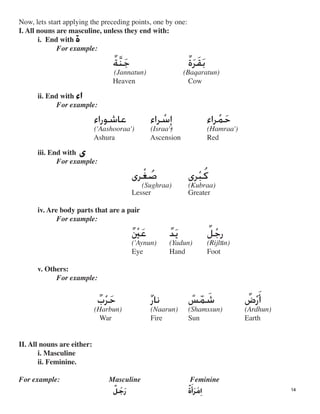
Now, lets start applying the preceding points, one by one:
I. All nouns are masculine, unless they end with:
‫ﺓ‬End withi.
For example: 

‫ﻨ‬
(Jannatun)
Heaven
‫
ﱠ‬‫ﺔ‬‫
ﹲ‬ ‫ﺟ‬‫
ﹶ‬ ‫ﻘ‬‫ﹶ‬‫ﺮ‬‫ﹶ‬‫ﺓ‬‫
ﹲ‬ ‫ﺑ‬‫
ﹶ‬
(Baqaratun)
Cow
‫ﺍﺀ‬ii. End with
For example: 

‫ﺣ‬‫ﹶ‬‫ﻤ‬‫ﹾ‬‫ﺮﺍﺀ‬‫ﺇ‬‫ﺳ‬‫ﹺ‬‫ﹾ‬‫ﺮﺍﺀ‬‫ﺀﺀ‬
(Israa')('Aashooraa')
Ashura
(Hamraa')
RedAscension 

‫ﻯ‬iii. End with
For example: 

‫ﻛ‬‫ﹸ‬‫ﺒ‬‫ﹾ‬‫ﺮﻯ‬‫ﺻ‬‫ﹸ‬‫ﻐ‬‫ﹾ‬‫ﻯﻯ‬
(Sughraa)
Lesser
(Kubraa)
Greater
iv. Are body parts that are a pair
For example:
‫ﲔ‬‫ﹾ‬‫
ﹲ‬
('Aynun) (Yadun)
Eye Hand
‫ﺭ‬‫ﺟ‬‫ﹺ‬‫ﹾ‬‫ﻞ‬‫ﹲ‬‫ﻳ‬‫ﺪ‬‫ﹶ‬‫ﹲ‬‫ﻋ‬‫
ﹶ‬
(Rijlun)
Foot

v. Others:
For example:
‫ﺃ‬‫ﺭ‬‫ﺽ‬‫ﺷ‬‫ﹶ‬‫ﻤ‬‫ﺲ‬‫ﻧﺎﺭ‬‫ﺣ‬‫ﺮ‬‫ﺏ‬ ‫ﹶ‬‫ﹾ‬‫ﹲ‬‫ﹼ‬‫ﹰ‬‫ﹲ‬‫ﹶ‬‫ﹾ‬‫
ﹲ‬
(Harbun)
War
(Naarun) (Shamssun)
Fire Sun
(Ardhun)
Earth
II. All nouns are either:
i. Masculine
ii. Feminine.
For example: 
 Masculine Feminine

‫ﺍ‬‫ﻣ‬‫ﹺ‬‫ﹾ‬‫ﺮ‬‫ﹶ‬‫ﺃ‬‫ﺓ‬‫ﹶ‬‫ﹲ‬‫ﺭ‬‫ﺟ‬‫ﹶ‬‫ﹸ‬‫ﻞ‬‫
ﹲ‬ 14
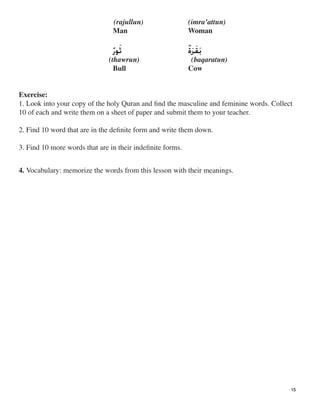
‫ﺑ‬‫ﹶ‬‫ﻘ‬‫ﹶ‬‫ﺮ‬‫ﹶ‬‫ﺓ‬‫ﹲ‬‫ﺛ‬‫ﹶ‬‫ﻮﺭ‬‫
ﹲ‬
(rajullun) (imra’attun)
Man Woman
(thawrun) (baqaratun)
Bull Cow
Exercise:
1. Look into your copy of the holy Quran and find the masculine and feminine words. Collect
10 of each and write them on a sheet of paper and submit them to your teacher.
2. Find 10 word that are in the definite form and write them down.
3. Find 10 more words that are in their indefinite forms.
4. Vocabulary: memorize the words from this lesson with their meanings.
15
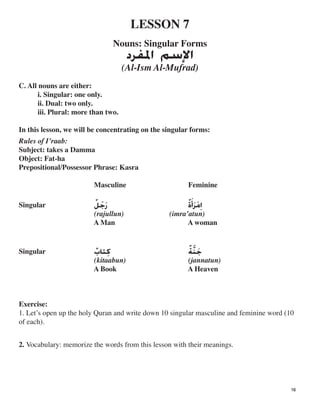
LESSON 7

Nouns: Singular Forms

‫ﺍﻹﺳﻢ‬‫ﺩﺩ‬
(Al-Ism Al-Mufrad)
C. All nouns are either:
i. Singular: one only.
ii. Dual: two only.
iii. Plural: more than two.
In this lesson, we will be concentrating on the singular forms:
Rules of I’raab:
Subject: takes a Damma
Object: Fat-ha
Prepositional/Possessor Phrase: Kasra
Masculine Feminine
‫ﺍ‬‫ﻣ‬‫ﹺ‬‫ﹾ‬‫ﺮ‬‫ﹶ‬‫ﺃ‬‫ﺓ‬‫ﹶ‬‫ﹲ‬‫ﺭ‬‫ﺟ‬‫ﹶ‬‫ﹸ‬‫ﻞ‬‫
ﹲ‬
(rajullun) (imra’atun)
A Man A woman
Singular

‫ﺔ‬‫ﹲ‬‫ﻛ‬‫ﹺ‬‫ﺘﺎﺏ‬‫
ﹲ‬Singular
 ‫ﻨ‬‫
ﱠ‬
(kitaabun) (jannatun)
A Book A Heaven
‫ﺟ‬‫
ﹶ‬
Exercise:
1. Let’s open up the holy Quran and write down 10 singular masculine and feminine word (10
of each).
2. Vocabulary: memorize the words from this lesson with their meanings.
16
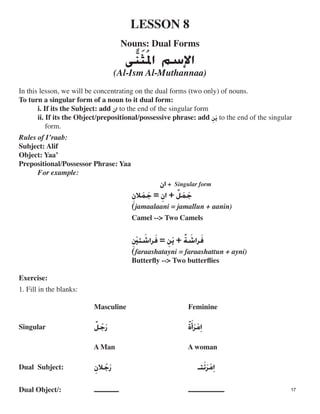
LESSON 8

Nouns: Dual Forms

‫ﺜ‬‫ﹸ‬‫ﹶ‬‫ﻨ‬
‫ﻰ‬ ‫ﺍﻹﺳﻢ‬‫ﳌﳌ‬
(Al-Ism Al-Muthannaa)
In this lesson, we will be concentrating on the dual forms (two only) of nouns.
To turn a singular form of a noun to it dual form:
to the end of the singular form‫ﺍﻥ‬i. If its the Subject: add
ii. If its the Object/prepositional/possessive phrase: add
form.
Rules of I’raab:
Subject: Alif
Object: Yaa’
Prepositional/Possessor Phrase: Yaa
For example:
Singular form+‫ﺍﻥ‬
‫ﺟ‬‫ﹶ‬‫ﻤ‬‫ﹶ‬‫ﻞ‬‫ﹲ‬+‫ﺍﻥ‬‫ﹺ‬=‫ﺟ‬‫ﹶ‬‫ﻤ‬‫ﹶ‬‫ﻼﻥ‬‫ﹺ‬
(jamaalaani = jamallun + aanin)
Camel --> Two Camels

‫ﻓ‬‫ﹶ‬‫ﺮﺍﺷ‬‫ﹶ‬‫ﺔ‬‫ﹲ‬+‫ﻳ‬‫ﻦ‬‫ﹾ‬‫ﹺ‬=‫ﻓ‬‫ﹶ‬‫ﺮﺍﺷ‬‫ﹶ‬‫ﺘﲔ‬‫ﹾ‬‫
ﹺ‬
(faraashatayni = faraashattun + ayni)
Butterfly --> Two butterflies
Exercise:
1. Fill in the blanks:
Masculine Feminine
Singular
 ‫ﹲ‬‫ﻞ‬ ‫ﺟﹸ‬‫ﹶ‬‫ﺭ‬ ‫ﹲ‬‫ﺓ‬‫ﹶ‬‫ﺃ‬‫ﹶ‬‫ﺮ‬‫ﹾ‬‫ﻣ‬‫ﹺ‬‫ﺍ‬
A Man A woman
‫ﹺ‬‫ﻼﻥ‬ ‫ﺟﹸ‬‫ﹶ‬‫ﺭ‬ ‫ﺘ‬‫ـ‬ ‫ﹶ‬‫ﺋ‬‫ﹶ‬‫ﺮ‬‫ﹾ‬‫ﻣ‬‫ﹺ‬‫ﺍ‬
‫ـــــــــــــ‬ ‫ـــــــــــــــــــ‬
to the end of the singular‫ﻳ‬‫ﻦ‬‫ﹾ‬‫ﹺ‬
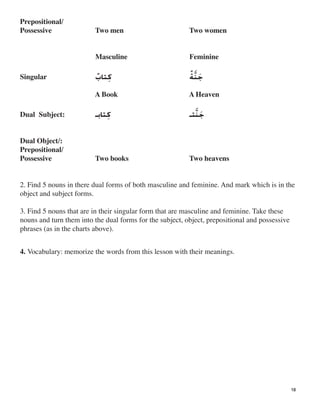
Dual Subject: 

Dual Object/: 
 17
Prepositional/

Possessive Two men Two women

Masculine Feminine
‫ﺔ‬‫ﹲ‬‫ﻛ‬‫ﹺ‬‫ﺘﺎﺏ‬‫
ﹲ‬Singular
 ‫ﻨ‬
A Book A Heaven
‫
ﱠ‬ ‫ﺟ‬‫
ﹶ‬
Dual Subject: 
 ‫ﻨ‬
Dual Object/:

Prepositional/

Possessive Two books Two heavens

2. Find 5 nouns in there dual forms of both masculine and feminine. And mark which is in the
object and subject forms.
‫ﱠ‬
3. Find 5 nouns that are in their singular form that are masculine and feminine. Take these
nouns and turn them into the dual forms for the subject, object, prepositional and possessive
phrases (as in the charts above).
4. Vocabulary: memorize the words from this lesson with their meanings.
‫ﺘـ‬‫ﻛ‬‫ﹺ‬‫ــ‬ ‫ﺟ‬‫
ﹶ‬
18
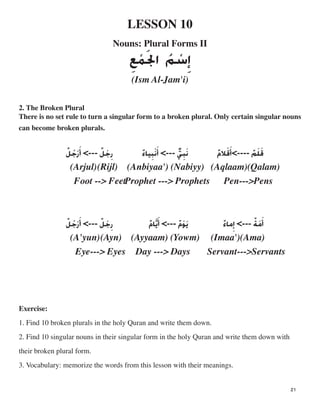
LESSON 9

Nouns: Plural Forms I

‫ﺇ‬‫ﺳ‬‫ﹾ‬‫ﻢ‬‫ﹸ‬‫ﺍﳉ‬‫ﹶ‬‫ﻤ‬‫ﹾ‬‫ﻊ‬ ‫ﹺ‬‫
ﹺ‬
‫ﹲ‬if its the subject, or‫ﺍﺕ‬‫ﹴ‬‫ﹺ‬
if its an object masculine noun within a sentence.‫ﻳﻦ‬if its the subject, or‫ﻭﻥ‬ ‫ﹺ‬
if its an object feminine noun within a sentence.‫ﺍﺕ‬
(Ism Al-Jam'i)

In this lesson, we will be concentrating on the plural forms (three or more) of nouns. There are
two forms of the plural that we must look at:
1. The Unbroken/Sound Plural:
Here the original form of the singular noun:
i. stays intact, or unchanged
ii. with the addition of the:
a.‫ﹶ‬
b.
Singular form+‫ﻭﻥ‬Singular form+‫ﻳﻦ‬
‫ﻣ‬‫ﹸ‬‫ﺆ‬‫ﹾ‬‫ﻣ‬‫ﹺ‬‫ﻦ‬‫ﹲ‬+‫ﻭﻥ‬=‫ﻣ‬‫ﹸ‬‫ﺆ‬‫ﹾ‬‫ﻣ‬‫ﹺ‬‫ﻨﻮﻥ‬‫ﹶ‬‫ﻣ‬‫ﹸ‬‫ﺆ‬‫ﹾ‬‫ﻣ‬‫ﹺ‬‫ﻦ‬‫ﹲ‬+‫ﻳﻦ‬=‫ﻣ‬‫ﹸ‬‫ﺆ‬‫ﹾ‬‫ﻣ‬‫ﹺ‬‫ﻨﲔ‬‫
ﹶ‬
(mu'mineena) (mu'minoona) 

Singular form+‫ﺍﺕ‬‫ﹴ‬Singular form+‫ﺍﺕ‬‫ﹲ‬
‫ﻣ‬‫ﹸ‬‫ﺆ‬‫ﹾ‬‫ﻣ‬‫ﹺ‬‫ﻨ‬‫ﹶ‬‫ﺔ‬‫ﹲ‬+‫ﺍﺕ‬‫ﹴ‬=‫ﻣ‬‫ﹸ‬‫ﺆ‬‫ﹾ‬‫ﻣ‬‫ﹺ‬‫ﻨﺎﺕ‬‫ﹴ‬‫ﻣ‬‫ﹸ‬‫ﺆ‬‫ﹾ‬‫ﻣ‬‫ﹺ‬‫ﻨ‬‫ﹶ‬‫ﺔ‬‫ﹲ‬+‫ﺍﺕ‬‫ﹲ‬=‫ﻣ‬‫ﹸ‬‫ﺆ‬‫ﹾ‬‫ﻣ‬‫ﹺ‬‫ﻨﺎﺕ‬‫
ﹲ‬
(mu'minaatun) (mu'minaatin)
Exercise:
1. Fill in the blanks:
Masculine Feminine
‫ﻲ‬‫
ﱞ‬
Rules of I’raab:
Subject: Wow
Object: Yaa’
Prepositional/Possessor Phrase: Yaa
Object/Prepos./Possessive Subject
Masculine: 

Feminine: 

Singular
 ‫ﻛﺎﻓ‬‫ﹺ‬‫ﺮ‬‫
ﹶ‬‫ﺓ‬‫
ﹲ‬‫ﻛ‬‫ﹺ‬‫ﺘﺎﺑ‬‫
ﹺ‬
A man of the Book(Christian or Jewish) A woman 19
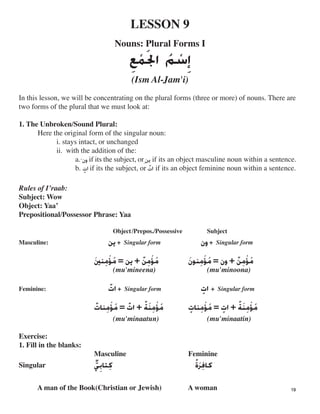
Dual Subject:
 ‫ﻴ‬
‫ـــــــــــــــــــ‬‫ـــــــــــــ‬
‫
ﱠ‬‫ـ‬ ‫ﻛﺎﻓ‬‫ﹺ‬‫ﺮ‬‫ـــــ‬‫ﻛ‬‫ﹺ‬‫ﺘﺎﺑ‬‫
ﹺ‬
Dual Object/:
Prepositional/
Possessive
Three or more men Three or more women

Plural Subject:
 ‫ﻴ‬‫
ﱡ‬
‫ـــــــــــــــــــ‬‫ـــــــــــــ‬
‫ـ‬ ‫ﻛﺎﻓ‬‫ﹺ‬‫ﺮ‬‫ـــــ‬‫ﻛ‬‫ﹺ‬‫ﺘﺎﺑ‬‫
ﹺ‬
Plural Object/:
Prepositional/
Possessive Three or more men Three or more women

2. Now find 10 masculine and 10 feminine words in their plural forms (unbroken) and write
them down in their object and subject forms.
3. Identify 10 masculine and 10 other feminine singular nouns and write them in their plural
forms for subject, object, prepositional phrase and possessive phrase.
4. Vocabulary: memorize the words from this lesson with their meanings.
20
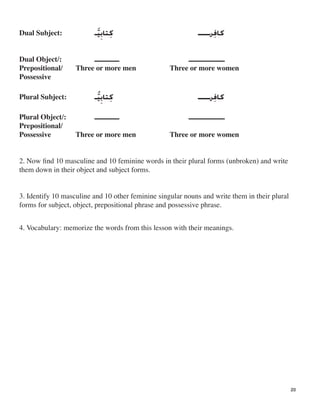
LESSON 10

Nouns: Plural Forms II

‫ﺇ‬‫ﺳ‬‫ﹾ‬‫ﻢ‬‫ﹸ‬‫ﺍﳉ‬‫ﹶ‬‫ﻤ‬‫ﹾ‬‫ﻊ‬ ‫ﹺ‬‫
ﹺ‬
‫ﻗ‬‫ﹶ‬‫ﻠ‬‫ﹶ‬‫ﻢ‬‫ﹲ‬<----‫ﺃ‬‫ﻗ‬‫ﹶ‬‫
ﹾ‬‫ﻧ‬‫ﹶ‬‫ﺒ‬‫ﹾ‬‫ﻴﺎﺀ‬‫ﹲ‬‫ﹺ‬‫ﺟ‬‫ﹾ‬‫ﻞ‬‫ﹲ‬<---‫ﺃ‬‫ﺭ‬‫
ﹶ‬ ‫
ﹶ‬<---‫ﺃ‬‫
ﹲ‬ ‫
ﹲ‬‫ﻧ‬‫ﺒ‬‫
ﹺ‬‫
ﹺ‬‫ﺟ‬‫
ﹸ‬ ‫
ﹾ‬ ‫ﺭ‬ ‫ﻼﻡ‬‫ﻲ‬‫ﻞ‬
(Arjul)(Rijl) (Anbiyaa') (Nabiyy) (Aqlaam)(Qalam) 

‫
ﱞ‬
Foot --> FeetProphet ---> Prophets Pen--->Pens

‫ﻣ‬‫ﹶ‬‫ﹶ‬‫ﺔ‬‫ﹲ‬<---‫ﺇ‬‫ﻣﺎﺀ‬‫ﹲ‬‫ﻳ‬‫ﹶ‬‫ﻮ‬‫ﹾ‬‫ﻡ‬‫ﹲ‬<---‫ﺃ‬‫ﻳ‬‫
ﹶ‬
‫ﹺ‬‫ﺭ‬‫
ﹶ‬ ‫ﻞ‬‫ﹲ‬<---‫ﺃ‬‫
ﹲ‬ ‫ﺎﻡ‬‫ﱠ‬‫ﹲ‬‫ﺭ‬‫ﹺ‬‫ﺟ‬‫
ﹾ‬‫ﺟ‬‫
ﹸ‬ ‫ﺃ‬‫
ﹾ‬‫ﻞ‬
(A'yun)(Ayn) (Ayyaam) (Yowm) (Imaa')(Ama)
Eye---> Eyes Day ---> Days Servant--->Servants
Exercise:
1. Find 10 broken plurals in the holy Quran and write them down.
2. Find 10 singular nouns in their singular form in the holy Quran and write them down with
their broken plural form.
3. Vocabulary: memorize the words from this lesson with their meanings.
(Ism Al-Jam'i)

2. The Broken Plural
There is no set rule to turn a singular form to a broken plural. Only certain singular nouns
can become broken plurals.
21
‫ﺍﻟﻀﻤﺎﺋﺮ‬‫ﺔﺔ‬
LESSON 11

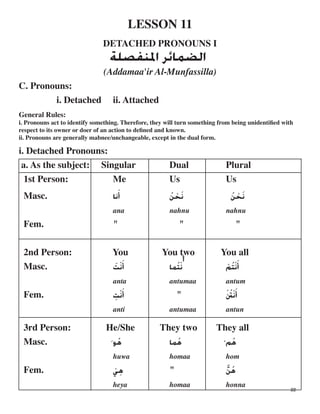
DETACHED PRONOUNS I

(Addamaa'ir Al-Munfassilla)

C. Pronouns:
i. Detached ii. Attached
General Rules:
i. Pronouns act to identify something. Therefore, they will turn something from being unidentified with
respect to its owner or doer of an action to defined and known.
ii. Pronouns are generally mabnee/unchangeable, except in the dual form.
i. Detached Pronouns:
a. As the subject: Singular Dual Plural
1st Person:
Masc.
Fem.
Me
‫ﻧﺎ‬‫ﹶ‬‫ﺃ‬
ana
"
Us
‫ﹸ‬‫ﻦ‬ ‫ﹾ‬‫ﺤ‬‫ﹶ‬‫ﻧ‬
nahnu
"
Us
‫ﹸ‬‫ﻦ‬ ‫ﹾ‬‫ﺤ‬‫ﹶ‬‫ﻧ‬
nahnu
"
2nd Person:
Masc.
Fem.
You
‫ﹶ‬‫ﺖ‬‫ﹾ‬‫ﻧ‬‫ﹶ‬‫ﺃ‬
anta
‫ﹺ‬‫ﺖ‬‫ﹾ‬‫ﻧ‬‫ﹶ‬‫ﺃ‬
anti
You two
‫ﻤﺎ‬‫ﹸ‬‫ﺘ‬‫ﹾ‬‫ﻧ‬
‫ﹶ‬‫ﺃ‬
antumaa
"
antumaa
You all
‫ﻢﹾ‬‫ﹸ‬‫ﺘ‬‫ﹾ‬‫ﻧ‬‫ﹶ‬‫ﺃ‬
antum
‫ﹾ‬ ‫ﹸ‬‫ﱳ‬‫ﹾ‬‫ﻧ‬‫ﹶ‬‫ﺃ‬
antun
3rd Person:
Masc.
Fem.
He/She
‫ﹶ‬ ‫ﻮ‬‫ﹸ‬‫ﻫ‬
huwa
‫ﹶ‬‫ﻲ‬‫ﹺ‬‫ﻫ‬
heya
They two
‫ﻤﺎ‬‫ﹸ‬‫ﻫ‬
homaa
"
homaa
They all
‫ﹾ‬ ‫ﻢ‬‫ﹸ‬‫ﻫ‬
hom
‫ﱠ‬‫ﻦ‬‫ﹸ‬‫ﻫ‬
honna
22
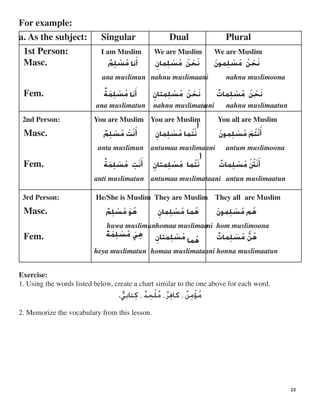
For example:

a. As the subject: Singular Dual Plural
1st Person:
Masc.
Fem.
I am Muslim
‫ﻢﹲ‬‫ﹺ‬‫ﻠ‬ ‫ﹾ‬‫ﺴ‬‫ﹸ‬ ‫ﻧﺎ‬‫ﻣ‬ ‫ﹶ‬‫ﺃ‬
ana muslimun
‫ﹲ‬‫ﺔ‬‫ﻤﹶ‬‫ﹺ‬‫ﻠ‬ ‫ﹾ‬‫ﺴ‬‫ﹸ‬ ‫ﻧﺎ‬‫ﻣ‬ ‫ﹶ‬‫ﺃ‬
ana muslimatun
We are Muslim
‫ﹺ‬‫ﻤﺎﻥ‬‫ﹺ‬‫ﻠ‬ ‫ﹾ‬‫ﺴ‬‫ﹸ‬‫ﻣ‬ ‫ﹸ‬‫ﻦ‬ ‫ﹾ‬‫ﺤ‬‫ﹶ‬‫ﻧ‬
nahnu muslimaani
‫ﹺ‬‫ﻤﺘﺎﻥ‬‫ﹺ‬‫ﻠ‬ ‫ﹾ‬‫ﺴ‬‫ﹸ‬‫ﻣ‬ ‫ﹸ‬‫ﻦ‬ ‫ﹾ‬‫ﺤ‬‫ﹶ‬‫ﻧ‬
nahnu muslimata
We are Muslim
‫ﹶ‬‫ﻥ‬‫ﻤﻮ‬‫ﹺ‬‫ﻠ‬ ‫ﹾ‬‫ﺴ‬‫ﹸ‬‫ﻣ‬ ‫ﹸ‬‫ﻦ‬ ‫ﹾ‬‫ﺤ‬‫ﹶ‬‫ﻧ‬
nahnu muslimoona
‫ﹲ‬‫ﻤﺎﺕ‬‫ﹺ‬‫ﻠ‬ ‫ﹾ‬‫ﺴ‬‫ﹸ‬‫ﻣ‬ ‫ﹸ‬‫ﻦ‬ ‫ﹾ‬‫ﺤ‬‫ﹶ‬‫ﻧ‬
ani nahnu muslimaatun
2nd Person:
Masc.
Fem.
You are Muslim
‫ﻢﹲ‬‫ﹺ‬‫ﻠ‬ ‫ﹾ‬‫ﺴ‬‫ﹸ‬‫ﻣ‬ ‫ﹶ‬‫ﺖ‬‫ﹾ‬‫ﻧ‬‫ﹶ‬‫ﺃ‬
anta muslimun
‫ﹲ‬‫ﺔ‬‫ﻤﹶ‬‫ﹺ‬‫ﻠ‬ ‫ﹾ‬‫ﺴ‬‫ﹸ‬‫ﻣ‬ ‫ﹺ‬‫ﺖ‬‫ﹾ‬‫ﻧ‬‫ﹶ‬‫ﺃ‬
anti muslimatun
You are Muslim
‫ﹺ‬‫ﻤﺎﻥ‬‫ﹺ‬‫ﻠ‬ ‫ﹾ‬‫ﺴ‬‫ﹸ‬ ‫ﻤﺎ‬‫ﻣ‬ ‫ﹸ‬‫ﺘ‬‫ﹾ‬‫ﻧ‬
‫ﹶ‬‫ﺃ‬
antumaa muslima
‫ﹺ‬‫ﻤﺘﺎﻥ‬‫ﹺ‬‫ﻠ‬ ‫ﹾ‬‫ﺴ‬‫ﹸ‬ ‫ﻤﺎ‬‫ﻣ‬ ‫ﹸ‬‫ﺘ‬‫ﹾ‬‫ﻧ‬
‫ﹶ‬‫ﺃ‬
antumaa muslima
You all are Muslim
‫ﹶ‬‫ﻥ‬‫ﻤﻮ‬‫ﹺ‬‫ﻠ‬ ‫ﹾ‬‫ﺴ‬‫ﹸ‬‫ﻣ‬ ‫ﻢﹾ‬‫ﹸ‬‫ﺘ‬‫ﹾ‬‫ﻧ‬‫ﹶ‬‫ﺃ‬
ani antum muslimoona
‫ﹲ‬‫ﻤﺎﺕ‬‫ﹺ‬‫ﻠ‬ ‫ﹾ‬‫ﺴ‬‫ﹸ‬‫ﻣ‬ ‫ﹾ‬ ‫ﹸ‬‫ﱳ‬‫ﹾ‬‫ﻧ‬‫ﹶ‬‫ﺃ‬
taani antun muslimaatun
3rd Person:
Masc.
Fem.
He/She is Muslim
‫ﻢﹲ‬‫ﹺ‬‫ﻠ‬ ‫ﹾ‬‫ﺴ‬‫ﹸ‬‫ﻣ‬ ‫ﹶ‬‫ﻮ‬‫ﹸ‬‫ﻫ‬
huwa muslimun
‫ﹲ‬‫ﺔ‬‫ﻤﹶ‬‫ﹺ‬‫ﻠ‬ ‫ﹾ‬‫ﺴ‬‫ﹸ‬‫ﻣ‬ ‫ﹶ‬‫ﻲ‬‫ﹺ‬‫ﻫ‬
heya muslimatun
They are Muslim
‫ﹺ‬‫ﻤﺎﻥ‬‫ﹺ‬‫ﻠ‬ ‫ﹾ‬‫ﺴ‬‫ﹸ‬ ‫ﻤﺎ‬‫ﻣ‬ ‫ﹸ‬‫ﻫ‬
homaa muslimaa
‫ﹺ‬‫ﻤﺘﺎﻥ‬‫ﹺ‬‫ﻠ‬ ‫ﹾ‬‫ﺴ‬‫ﹸ‬ ‫ﻤﺎ‬‫ﻣ‬ ‫ﹸ‬‫ﻫ‬
homaa muslimata
They all are Muslim
‫ﹶ‬‫ﻥ‬‫ﻤﻮ‬‫ﹺ‬‫ﻠ‬ ‫ﹾ‬‫ﺴ‬‫ﹸ‬ ‫ﻢ‬‫ﻣ‬ ‫ﹸ‬‫ﻫ‬
ni hom muslimoona
‫ﹲ‬‫ﻤﺎﺕ‬‫ﹺ‬‫ﻠ‬ ‫ﹾ‬‫ﺴ‬‫ﹸ‬‫ﻣ‬ ‫ﱠ‬‫ﻦ‬‫ﹸ‬‫ﻫ‬
ani honna muslimaatun
Exercise:
1. Using the words listed below, create a chart similar to the one above for each word.
.‫ﱞ‬
2. Memorize the vocabulary from this lesson.
‫ﻣ‬‫ﹸ‬‫ﺆ‬‫ﹾ‬‫ﻣ‬‫ﹺ‬‫ﻦ‬‫ﹲ‬،‫ﻛﺎﻓ‬‫ﹺ‬‫ﺮ‬‫ﹲ‬،‫ﻣ‬‫ﹸ‬‫ﻠ‬‫ﹾ‬‫ﺤ‬‫ﹺ‬‫ﺪ‬‫ﹲ‬،‫ﻛ‬‫ﹺ‬‫ﻲﻲ‬
23
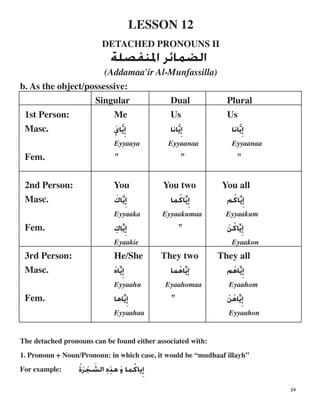
LESSON 12

DETACHED PRONOUNS II

‫ﺍﻟﻀﻤﺎﺋﺮ‬‫ﺔﺔ‬
(Addamaa'ir Al-Munfassilla)
b. As the object/possessive:
Singular Dual Plural
1st Person:
Masc.
Fem.
Me
‫ﹶ‬‫ﺎﻱ‬‫ﱠ‬‫ﻳ‬‫ﹺ‬‫ﺇ‬
Eyyaaya
"
Us
‫ﺎﻧﺎ‬‫ﱠ‬‫ﻳ‬‫ﹺ‬‫ﺇ‬
Eyyaanaa
"
Us
‫ﺎﻧﺎ‬‫ﱠ‬‫ﻳ‬‫ﹺ‬‫ﺇ‬
Eyyaanaa
"
2nd Person:
Masc.
Fem.
You
‫ﹶ‬‫ﺎﻙ‬‫ﱢ‬‫ﻳ‬‫ﹺ‬‫ﺇ‬
Eyyaaka
‫ﹺ‬‫ﺎﻙ‬‫ﱢ‬‫ﻳ‬‫ﹺ‬‫ﺇ‬
Eyaakie
You two
‫ﻤﺎ‬‫ﹸ‬‫ﺎﻛ‬‫ﱢ‬‫ﻳ‬‫ﹺ‬‫ﺇ‬
Eyyaakumaa
"
You all
‫ﻢ‬‫ﹸ‬‫ﺎﻛ‬‫ﱢ‬‫ﻳ‬‫ﹺ‬‫ﺇ‬
Eyyaakum
‫ﹾ‬‫ﻦ‬‫ﹸ‬‫ﺎﻛ‬‫ﱢ‬‫ﻳ‬‫ﹺ‬‫ﺇ‬
Eyaakon
3rd Person:
Masc.
Fem.
He/She
‫ﹸ‬‫ﻩ‬‫ﺎ‬‫ﱢ‬‫ﻳ‬‫ﹺ‬‫ﺇ‬
Eyyaahu
‫ﺎﻫﺎ‬‫ﱢ‬‫ﻳ‬‫ﹺ‬‫ﺇ‬
Eyyaahaa
They two
‫ﻤﺎ‬‫ﹸ‬‫ﺎﻫ‬‫ﱢ‬‫ﻳ‬‫ﺇ‬
Eyaahomaa
"
They all
‫ﻢ‬‫ﹸ‬‫ﺎﻫ‬‫ﱢ‬‫ﻳ‬‫ﹺ‬‫ﺇ‬
Eyaahom
‫ﹾ‬‫ﻦ‬‫ﹸ‬‫ﺎﻫ‬‫ﱢ‬‫ﻳ‬‫ﹺ‬‫ﺇ‬
Eyyaahon
The detached pronouns can be found either associated with:
1. Pronoun + Noun/Pronoun: in which case, it would be “mudhaaf illayh”
For example: 
 ‫ﺇ‬‫ﻳﺎﻛ‬‫ﹸ‬‫ﻤﺎ‬‫ﻭ‬‫ﹶ‬‫ﻫﺬ‬‫ﻩ‬‫ﺍﻟﺸ‬‫ﹶ‬‫ﺠ‬‫ﹶ‬‫ﺮ‬‫ﹶ‬‫ﺓ‬‫
ﹸ‬
‫ﹺ‬‫ﹺ‬‫ﹺ‬
24
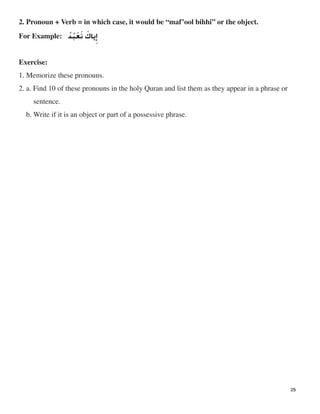
‫ﺇ‬‫ﻳﺎﻙ‬‫ﹶ‬‫ﻧ‬‫ﹶ‬‫ﻌ‬‫ﹾ‬‫ﺒ‬‫ﹸ‬‫ﺪ‬‫
ﹸ‬ ‫ﹺ‬
2. Pronoun + Verb = in which case, it would be “maf’ool bihhi” or the object.
For Example:
Exercise:
1. Memorize these pronouns.
2. a. Find 10 of these pronouns in the holy Quran and list them as they appear in a phrase or
sentence.
b. Write if it is an object or part of a possessive phrase.
25
LESSON 13

ii. THE ATTACHED PRONOUNS

‫ﺍﻟﻀﻤﺎﺋﺮ‬‫ﺔﺔ‬
(Addamaa'ir Al-Muttassilla)
Pronouns:
i. Attached Pronouns:
Singular Dual Plural
1st Person: Me Us Us
Masc. /‫ﻱ‬ ‫ﹸ‬‫ﺕ‬ ‫ﻧﺎ‬ ‫ﻧﺎ‬
ya / tu naa naa
Fem. " " "
2nd Person: You You two You all
Masc. ‫ﹶ‬ /‫ﻙ‬ ‫ﹶ‬‫ﺕ‬ ‫ﻤﺎ‬‫ﹸ‬‫ﻛ‬ ‫ﺎ‬/ ‫ﹸ‬‫ﲤ‬ ‫ﻢ‬‫ﹸ‬‫ﻛ‬ / ‫ﹸ‬‫ﰎ‬
Fem.
ka / ta
‫ﹺ‬ /‫ﻙ‬ ‫ﹺ‬‫ﺕ‬
kumaa / tumaa
"
tomm
‫ﱠ‬‫ﻦ‬‫ﹸ‬‫ﻛ‬ / ‫ﱠ‬‫ﻦ‬‫ﹸ‬‫ﺗ‬
Eyaakie tun
3rd Person:
Masc.
He/She
‫ﹸ‬‫ﻩ‬ / ‫ﹶ‬
They two
‫ﻤﺎ‬‫ﹸ‬‫ﻫ‬ ‫ﺍ‬/
They all
‫ﻢ‬‫ﹸ‬‫ﻫ‬ ‫ﻭ‬/
Fem.
hu / a
‫ﻫﺎ‬ / ‫ﹾ‬‫ﺕ‬
homaa / aa
"
Eyaahom
‫ﹶ‬‫ﻥ‬ / ‫ﹾ‬‫ﻦ‬‫ﹸ‬‫ﻫ‬
haa / t na / hon
(Note: what is before the"/" is attached to a noun, what is after the"/" is attached to a verb.)
Exercise:
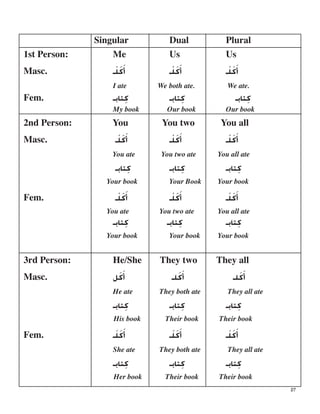
1. Complete the words in the chart on the following page.
2. Make your own chart using the following words:
 ‫ﺷ‬‫ﹶ‬‫ﺮ‬‫ﹺ‬‫ﻛ‬‫ﹶ‬‫ﺔ‬‫ﹲ‬،‫ﻣ‬‫ﹶ‬‫ﺜ‬‫ﹶ‬‫ﻞ‬‫ﹲ‬‫ﻗ‬ ،‫ﹸ‬‫ﺮ‬‫ﹾ‬‫ﺁﻥ‬‫ﹲ‬،‫ﻗ‬‫ﹶ‬‫ﺮ‬‫ﹶ‬‫ﺃ‬‫ﹶ‬،‫ﺷ‬‫ﹶ‬‫ﺮ‬‫ﹶ‬‫ﺏ‬‫ﹶ‬‫ﻟ‬ ،‫ﺒ‬‫ﹶ‬‫ﹺ‬‫ﺚ‬‫
ﹶ‬
26
Singular Dual Plural
1st Person: Me Us Us
Masc. ‫ـ‬‫ﹾ‬‫ﻠ‬‫ﹶ‬‫ﻛ‬‫ﹶ‬‫ﺃ‬ ‫ـ‬‫ﹾ‬‫ﻠ‬‫ﹶ‬‫ﻛ‬‫ﹶ‬‫ﺃ‬ ‫ـ‬‫ﹾ‬‫ﻠ‬‫ﹶ‬‫ﻛ‬‫ﹶ‬‫ﺃ‬
Fem.
I ate
‫ﺘﺎﺑـ‬‫ﹺ‬‫ﻛ‬
My book
We both ate.
‫ﺘﺎﺑـ‬‫ﹺ‬‫ﻛ‬
Our book
We ate.
‫ﺘﺎﺑـ‬‫ﹺ‬‫ﻛ‬
Our book
2nd Person: You You two You all
Masc. ‫ـ‬‫ﹾ‬‫ﻠ‬‫ﹶ‬‫ﻛ‬‫ﹶ‬‫ﺃ‬ ‫ـ‬‫ﹾ‬‫ﻠ‬‫ﹶ‬‫ﻛ‬‫ﹶ‬‫ﺃ‬ ‫ـ‬‫ﹾ‬‫ﻠ‬‫ﹶ‬‫ﻛ‬‫ﹶ‬‫ﺃ‬
You ate You two ate You all ate
‫ﺘﺎﺑـ‬‫ﹺ‬‫ﻛ‬ ‫ﺘﺎﺑـ‬‫ﹺ‬‫ﻛ‬ ‫ﺘﺎﺑـ‬‫ﹺ‬‫ﻛ‬
Your book Your Book Your book
Fem. ‫ـ‬‫ﹾ‬‫ﻠ‬‫ﹶ‬‫ﻛ‬‫ﹶ‬‫ﺃ‬ ‫ـ‬‫ﹾ‬‫ﻠ‬‫ﹶ‬‫ﻛ‬‫ﹶ‬‫ﺃ‬ ‫ـ‬‫ﹾ‬‫ﻠ‬‫ﹶ‬‫ﻛ‬‫ﹶ‬‫ﺃ‬
You ate You two ate You all ate
‫ﺘﺎﺑـ‬‫ﹺ‬‫ﻛ‬ ‫ﺘﺎﺑـ‬‫ﹺ‬‫ﻛ‬ ‫ﺘﺎﺑـ‬‫ﹺ‬‫ﻛ‬
Your book Your book Your book
3rd Person:
Masc.
He/She
‫ﻞ‬‫ﹶ‬‫ﻛ‬‫ﹶ‬‫ﺃ‬
They two
‫ﻠـ‬‫ﹶ‬‫ﻛ‬‫ﹶ‬‫ﺃ‬
They all
‫ﻠـ‬‫ﹶ‬‫ﻛ‬‫ﹶ‬‫ﺃ‬
He ate They both ate They all ate
‫ﺘﺎﺑـ‬‫ﹺ‬‫ﻛ‬ ‫ﺘﺎﺑـ‬‫ﹺ‬‫ﻛ‬ ‫ﺘﺎﺑـ‬‫ﹺ‬‫ﻛ‬
His book Their book Their book
Fem. ‫ـ‬‫ﹶ‬‫ﻠ‬‫ﹶ‬‫ﻛ‬‫ﹶ‬‫ﺃ‬ ‫ـ‬‫ﹶ‬‫ﻠ‬‫ﹶ‬‫ﻛ‬‫ﹶ‬‫ﺃ‬ ‫ـ‬‫ﹶ‬‫ﻠ‬‫ﹶ‬‫ﻛ‬‫ﹶ‬‫ﺃ‬
She ate They both ate They all ate
‫ﺘﺎﺑـ‬‫ﹺ‬‫ﻛ‬ ‫ﺘﺎﺑـ‬‫ﹺ‬‫ﻛ‬ ‫ﺘﺎﺑـ‬‫ﹺ‬‫ﻛ‬
Her book Their book Their book
27
LESSON 14

D. THE DEMONSTRATIVE NOUNS

‫ﺃﺳﻤﺎﺀ‬‫ﺓﺓ‬
(Assmaa’Al-Ishaara)
D. Demonstrative Nouns
A Place Masculine/‫ﹲ‬‫ﺮ‬‫ﹶ‬‫ﻛ‬‫ﹶ‬‫ﺬ‬‫ﹸ‬‫ﻣ‬ Feminine/ ‫ﹲ‬‫ﺚ‬‫ﱠ‬‫ﻧ‬‫ﹶ‬‫ﺆ‬‫ﹸ‬‫ﻣ‬
‫ﹲ‬‫ﻥ‬‫ﹶﻜﺎ‬‫ﻣ‬ Object Subject/Poss./Prepo. Object S./P./P.
Singular
‫ﻣﻔﺮﺩ‬
mufrad
‫ﱠ‬‫ﻢ‬‫ﹶ‬‫ﺛ‬
thamma
‫ﹶ‬ ‫ﻚ‬‫ﹺ‬‫ﻟ‬‫ﻨﺎ‬‫ﹸ‬ /‫ﻫ‬ ‫ﻨﺎ‬‫ﹸ‬‫ﻫ‬
hunaallika /
there
‫ﹶ‬ ‫ﻚ‬‫ﹺ‬‫ﻟ‬‫ﺍ‬‫ﹶ‬ ‫ﺬﺍ‬/‫ﺫ‬ ‫ﹶ‬‫ﻫ‬
that / this
hunaa dhaallika / haadhaa
‫ﹶ‬‫ﻚ‬‫ﹾ‬‫ﻠ‬‫ﹺ‬‫ﺗ‬ / ‫ﹺ‬‫ﻩ‬‫ﹺ‬‫ﺬ‬‫ﹶ‬‫ﻫ‬
that / that
tilka / haadhaa
Dual
‫ﻰ‬‫ﱠ‬‫ﻨ‬‫ﹶ‬‫ﺜ‬‫ﹸ‬‫ﻣ‬
muthannaa
‫ﺎﺫﺍﻥ‬‫ﹶ‬ /‫ﻫ‬ ‫ﹶ‬‫ﻚ‬‫ﹺ‬‫ﻧ‬‫ﺫﺍ‬ ‫ﹶ‬‫ﻚ‬‫ﹺ‬‫ﻨ‬‫ﹾ‬‫ﻳ‬‫ﹶ‬ ‫ﻦ‬/‫ﺫ‬ ‫ﹾ‬‫ﻳ‬‫ﹶ‬‫ﺬ‬‫ﹶ‬‫ﻫ‬
those two
dhaynika dhaynika
/ haadhaanie /haadhaynie
‫ﹶ‬‫ﻚ‬‫ﹺ‬‫ﻨ‬‫ﹾ‬‫ﻴ‬‫ﹶ‬‫ﺗ‬ / ‫ﹺ‬ ‫ﹾ‬‫ﲔ‬‫ﹶ‬‫ﺗ‬‫ﺎ‬‫ﹶ‬‫ﻫ‬ ‫ﹶ‬‫ﻚ‬‫ﹺ‬‫ﻧ‬‫ﺗﺎ‬ /‫ﹺ‬‫ﺎﺗﺎﻥ‬‫ﹶ‬‫ﻫ‬
those two
taynika taanikka
/ haataynie / haataanie
Plural
‫ﹲ‬‫ﻊ‬‫ﻤﹾ‬ ‫ﺟﹶ‬
jam'un
/‫ﺃﻭﻟﻰ‬ ‫ﹺ‬‫ﻭﻻﺀ‬‫ﹸ‬‫ﺃ‬
those more than two
uulaa / uulaa-ie
‫ﻚ‬‫ﹺ‬‫ﺋ‬‫/ﺃﻭﻻ‬‫ﹺ‬‫ﻻﺀ‬‫ﹸ‬‫ﻫﺆ‬
those more than two
uulaa-eka / haa-uulaa-ie
” . Each one is used for a spe-‫ﻝ‬‫ﹺ‬” and the “‫ﻙ‬‫ﹶ‬” , the “‫ﻫ‬‫ﹶ‬
Important notes:
‫ﺎ‬The demonstrative nouns show the use of "
cific purpose:
- is attached to the beginning of the demonstrative noun.”:‫ﻫ‬‫ﹶ‬‫ﺎ‬i. the "
- is used to draw attention to something near.
- For example: ‫ﻫﺬﺍ‬‫ﺻ‬‫ﹺ‬‫ﺮﺍﻁ‬‫ﹲ‬‫ﻣ‬‫ﹸ‬‫ﺴ‬‫ﹾ‬‫ﺘ‬‫ﹶ‬‫ﻘﻴﻢ‬‫
ﹲ‬
haadhaa siraatun mustaqeem 28
That is the straight path 

- is attached to the end of the demonstrative noun.” :‫ﻙ‬‫ﹶ‬
- is used to refer to the person with whom you are speaking.
‫ﺫﻟ‬‫ﹺ‬‫ﻚ‬‫ﹶ‬‫ﺍﻟﻜ‬‫ﹺ‬‫ﺘﺎﺏ‬‫ﹸ‬‫ﻻ‬‫ﺭ‬‫ﻳ‬‫ﹶ‬‫ﺐ‬‫ﹾ‬‫ﹶ‬‫ﻓﻴﻪ‬‫ﹺ‬- For example: 

ii. the “

dhaallika al-kitaabu laa rayba feehi
In that book there is no doubt
- is attached to the end of the demonstrative noun.”:‫ﻝ‬‫ﹺ‬
” .‫ﻙ‬‫ﹶ‬
‫ﺇ‬‫ﻓﻲ‬‫ﺫﻟ‬‫
ﹺ‬‫ﻚ‬‫
ﹶ‬‫ﻵﻳﺎﺕ‬‫ﹴ‬‫ﻟ‬‫ﹺ‬‫ﻘ‬‫
ﹶ‬‫ﻮ‬‫
ﹾ‬
- it must precede the “
- is used to refer to something far.
‫ﻜ‬‫
ﱠ‬ ‫ﻡ‬‫ﹴ‬‫ﻳ‬‫ﹶ‬‫ﺘ‬‫ﹶ‬‫ﻔ‬‫
ﹶ‬‫ﻥﻥ‬- For example: 
 ‫ﻥ‬‫
ﹺ‬
Inna fee dhaallika la-aayaatin li-qawmin yatafakkaroon
Surely, in that there are proofs to people that think/contemplate.
General Rules:
‫
ﱠ‬
” will not be.‫ﻫ‬‫ﹶ‬‫ﺎ‬” are part of the demonstrative noun, "‫ﻝ‬‫ﹺ‬” and the “‫ﻙ‬‫ﹶ‬1. If both the “

‫ﺫﻟ‬‫ﹺ‬‫ﻚ‬‫
ﹶ‬=
‫ﺫﺍ‬+‫ﻝ‬‫ﹺ‬+‫ﻙ‬‫
ﹶ‬For example: 

‫ﺫﺍ‬+‫ﻙ‬‫ﹶ‬+‫ﻫﺎ‬For example:
” will not be.‫ﻝ‬‫ﹺ‬” is part of the demonstrative noun, “‫ﻫ‬‫ﹶ‬‫ﺎ‬2. If "
‫ﻫ‬‫
ﹶ‬‫ﺬﺍﻙ‬‫
ﹶ‬=

iii. the “

3. All demonstrative nouns are “mabnee”/unchangeable except he dual forms are
“mu’rab” or changeable (refers to end of word).
Exercise:
1. Refer to your holy Quran and extract 10 places where you see the use of such demonstrative
nouns and write them down.
2. Write one sentence as an example of each item in the demonstrative noun chart.
29
LESSON 15

E. THE RELATIVE NOUNS

‫ﹶ‬‫ﺍﻷ‬‫ﺳ‬‫ﹾ‬‫ﻤﺎ‬‫ﺀ‬‫ﹸ‬‫ﺍﳌﻮﺻﻮﻟﺔ‬‫
ﹸ‬
(Al-Assmaa' Al-Mowsoola)

Singular Dual Plural
Masc. ‫ﺍﻟﺬﻱ‬
alladhee
He who
Subject Object/P./P. Subject/Object/P./P.
‫ﺬﺍﻥ‬‫ﱠ‬‫ﻠ‬‫ﺍﻟ‬
alladhaani
They two
‫ﹺ‬‫ﻳﻦ‬‫ﹶ‬‫ﺬ‬‫ﱠ‬‫ﻠ‬‫ﺍﻟ‬
alladhayni
who
‫ﻭﻟﻰ‬‫ﹸ‬‫ﺍﻷ‬ ‫ﺍﻟﺬﻳﻦ‬/
al-ulaa / alladheena
They all who
Fem. ‫ﺍﻟﺘﻲ‬
allatee
She who
‫ﹺ‬‫ﺘﺎﻥ‬‫ﱠ‬‫ﻠ‬‫ﺍﻟ‬
allataani
They two
‫ﹺ‬ ‫ﹾ‬‫ﲔ‬‫ﹶ‬‫ﺘ‬‫ﱠ‬‫ﻠ‬‫ﺍﻟ‬
allatayni
who
‫ﺍﻟﻼﺋﻲ‬ ‫ﻮﺍﺋﻲ‬/ ‫ﱠ‬‫ﺍﻟﻠ‬
al-laa-ee / al-lawaatee
They all who
Rules of Binaa'/I'raab:
1. All are mabnee, except the dual form are:
a. marfoo bil alif
b. mansoob/majroor bil yaa'
2. The binaa' is with the sukoon.
Example:

‫ﺬﻳﻦ‬‫ﱠ‬‫ﹶ‬‫ﻳ‬‫ﹸ‬‫ﺆ‬‫ﹾ‬‫ﻣ‬‫ﹺ‬‫ﻨﻮﻥ‬‫ﹶ‬‫ﺑ‬‫ﹺ‬‫ﺎﻟﻐ‬‫ﹶ‬‫ﻴ‬‫ﹾ‬‫ﺐ‬‫
ﹺ‬
alladheena yu’minoona bil-ghaybe
‫ﻟﻟ‬
Those who believe in the unseen.
Exercise:
Find 10 occurences of such relative nouns in the holy Quran. 30
LESSON 16

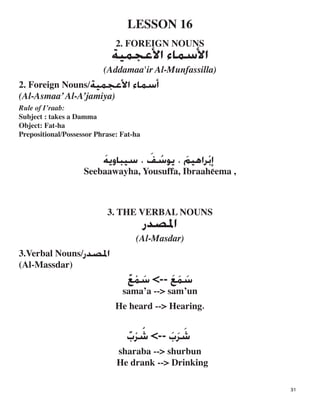
2. FOREIGN NOUNS

‫ﺔﺔ‬
(Addamaa'ir Al-Munfassilla)

‫ﺃﺳﻤﺎﺀ‬‫ﺍﻷﻋﺠﻤﻴﺔ‬2. Foreign Nouns/

(Al-Asmaa’Al-A’jamiya)

Rule of I’raab:
Subject : takes a Damma
Object: Fat-ha
Prepositional/Possessor Phrase: Fat-ha
‫ﹾ‬ ‫ﺇ‬‫ﺑ‬‫ﹺ‬‫ﺮﺍﻫﻴﻢ‬‫ﹶ‬،‫ﻳﻮﺳ‬‫ﹸ‬‫ﻒ‬‫ﹶ‬،‫ﺳﻴﺒﺎﻭﻳﻪ‬‫
ﹶ‬
Seebaawayha, Yousuffa, Ibraaheema ,

3. THE VERBAL NOUNS

‫ﺭﺭ‬
(Al-Masdar)

‫ﺍﳌﺼﺪﺭ‬3.Verbal Nouns/

(Al-Massdar)
‫ﺳ‬‫ﹶ‬‫ﻤ‬‫ﹶ‬‫ﻊ‬‫ﹶ‬<--‫ﺳ‬‫ﹶ‬‫ﻤ‬‫ﹾ‬‫ﻊ‬‫ﹸ‬‫
ﹲ‬
sama’a --> sam’un

،He heard --> Hearing

‫ﺷ‬‫ﹶ‬‫ﺮ‬‫ﹶ‬‫ﺏ‬‫ﹶ‬<--‫ﺷ‬‫ﹸ‬‫ﺮ‬‫ﹾ‬‫ﺏ‬‫
ﹲ‬
sharaba --> shurbun

He drank --> Drinking 

31
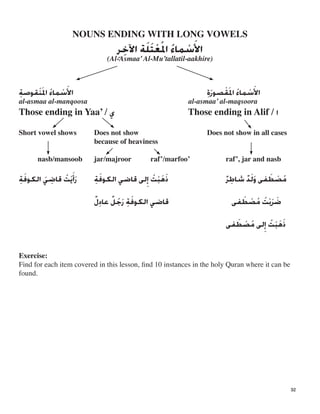
NOUNS ENDING WITH LONG VOWELS

‫ﹶ‬‫ﹸ‬‫ﹶ‬‫ﹶ‬ ‫ﺍﻷ‬‫ﺳ‬‫ﹾ‬‫ﻤﺎﺀ‬‫ﹸ‬‫ﺍﳌ‬‫ﻌ‬‫ﹾ‬‫ﺘ‬‫ﻠ‬‫ﺔ‬‫ﺍﻵﺧ‬‫ﹺ‬‫ﺮ‬‫
ﹺ‬(Al-Asmaa’Al-Mu’tallatil-aakhire)
‫ﹶ‬‫	ﹾ‬‫ﹶ‬ ‫ﺍﻷ‬‫ﺳ‬‫ﹾ‬‫ﻤﺎﺀ‬‫ﹸ‬‫ﺍﳌ‬‫ﻘ‬‫ﹶ‬‫ﺼﻮﺭ‬‫ﹶ‬‫ﺓ‬‫	ﹺ‬‫ﺍﻷ‬‫ﺳ‬‫ﹾ‬‫ﻤﺎﺀ‬‫ﹸ‬‫ﺍﳌ‬‫ﻨ‬‫ﹶ‬‫ﹾ‬‫ﻘﻮﺻﺔ‬‫
ﹺ‬
al-asmaa al-manqoosa 	 al-asmaa’ al-maqsoora
‫ﺍ‬Those ending in Alif / 	‫ﻱ‬Those ending in Yaa’ / 

Short vowel shows 	 Does not show Does not show in all cases
because of heaviness
nasb/mansoob jar/majroor raf’/marfoo’ raf’, jar and nasb
‫ﻣ‬‫ﹸ‬‫ﺼ‬‫ﹾ‬‫ﻄ‬‫ﹶ‬‫ﻔﻰ‬‫ﻭ‬‫ﹶ‬‫ﻟ‬‫ﹶ‬‫ﺪ‬‫ﹲ‬‫ﺷﺎﻃ‬‫ﹺ‬‫ﺮ‬‫	ﹲ‬‫ﺫ‬‫ﹶ‬‫ﻫ‬‫ﹶ‬‫ﺒ‬‫ﹾ‬‫ﺖ‬‫ﹸ‬‫ﺇ‬‫ﺍﻟﻜﻮﻓ‬ ‫ﻗﺎﺿﻲ‬ ‫ﻟﻰ‬‫ﹶ‬‫ﺔ‬‫ﹺ‬‫ﺭ‬‫ﹶ‬‫ﺃ‬‫ﻳ‬‫ﹶ‬‫ﺖ‬‫ﹾ‬‫ﹸ‬‫ﻗﺎﺿ‬‫ﹺ‬‫ﻲ‬‫ﹶ‬‫ﺍﻟﻜﻮﻓ‬‫ﹶ‬‫ﺔ‬‫
ﹺ‬ ‫ﹺ‬
‫ﺿ‬‫ﹶ‬‫ﺮ‬‫ﹶ‬‫ﺑ‬‫ﺖ‬‫ﹾ‬‫ﹸ‬‫ﻣ‬‫ﹸ‬‫ﺼ‬‫ﹾ‬‫ﻄ‬‫ﹶ‬‫ﻔﻰ‬‫ﻗﺎﺿﻲ‬‫ﺍﻟﻜﻮﻓ‬‫ﹶ‬‫ﺔ‬‫ﹺ‬‫ﺭ‬‫ﺟ‬‫ﹶ‬‫ﹸ‬‫ﻞ‬‫ﹲ‬‫ﻋﺎﺩ‬‫ﹺ‬‫ﻝ‬‫ﹲ‬
‫ﺫ‬‫ﹶ‬‫ﻫ‬‫ﹶ‬‫ﺒ‬‫ﹾ‬‫ﺖ‬‫ﹸ‬‫ﺇ‬‫ﻟﻰ‬‫ﻣ‬‫ﹸ‬‫ﺼ‬‫ﹾ‬‫ﻄ‬‫ﹶ‬‫ﻔﻰ‬ ‫ﹺ‬
Exercise:
Find for each item covered in this lesson, find 10 instances in the holy Quran where it can be
found.
32
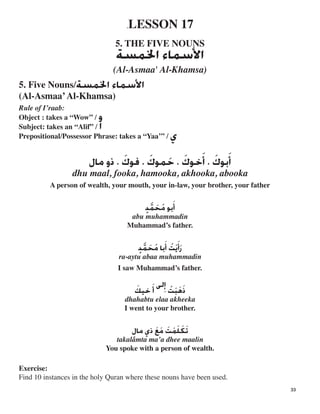
.LESSON 17

5. THE FIVE NOUNS

‫ﺍﻷﺳﻤﺎﺀ‬‫ﺔﺔ‬
(Al-Asmaa' Al-Khamsa)

‫ﺍﻷﺳﻤﺎﺀ‬‫ﺍﳋﻤﺴ‬‫ﺔ‬5. Five Nouns/

(Al-Asmaa’Al-Khamsa)

Rule of I’raab:
‫ﻭ‬Object : takes a “Wow” /
‫ﺍ‬Subject: takes an “Alif” /
‫ﻱ‬Prepositional/Possessor Phrase: takes a “Yaa’” /
‫ﹶ‬‫ﹶ‬ ‫ﺃ‬‫ﺑﻮﻙ‬‫ﹶ‬‫ﺃ‬ ،‫ﺧﻮﻙ‬‫ﹶ‬،‫ﺣ‬‫ﹶ‬‫ﻤﻮﻙ‬‫ﹶ‬،‫ﻓﻮﻙ‬‫ﹶ‬‫ﺫﻭ‬ ،‫ﻣﺎﻝ‬
‫ﺑﻮ‬‫ﹶ‬‫ﻣ‬‫
ﹸ‬ ‫ﺃ‬‫ﺤ‬‫
ﹶ‬‫ﺪ‬‫
ﹴ‬ ‫ﻤ‬‫
ﱠ‬
abu muhammadin
Muhammad’s father.
‫ﻳ‬‫ﹶ‬‫ﺖ‬‫ﹾ‬‫ﹸ‬‫ﺃ‬‫ﺑﺎ‬‫ﹶ‬‫ﻣ‬‫
ﹸ‬ ‫ﺭ‬‫ﺃ‬‫
ﹶ‬‫ﺤ‬‫
ﹶ‬‫ﺪ‬‫
ﹴ‬ ‫ﻤ‬‫
ﱠ‬
ra-aytu abaa muhammadin
I saw Muhammad’s father.
‫ﺇ‬‫ﻟﻰ‬‫
ﹶ‬ ‫ﺫ‬‫ﹶ‬‫ﻫ‬‫ﹶ‬‫ﺒ‬‫ﹾ‬‫ﺖ‬‫ﹸ‬‫ﹺ‬‫ﺃ‬‫ﺧﻴﻚ‬‫
ﹶ‬
dhahabtu elaa akheeka
I went to your brother.
‫ﺗ‬‫ﹶ‬‫ﻜ‬‫ﹶ‬‫ﻠ‬‫ﹶ‬‫ﻤ‬‫ﹾ‬‫ﺖ‬‫ﹶ‬‫ﻣ‬‫ﹶ‬‫ﻊ‬‫ﹶ‬‫ﺫﻱ‬‫ﻣﺎﻝ‬‫
ﹴ‬
dhu maal, fooka, hamooka, akhooka, abooka

A person of wealth, your mouth, your in-law, your brother, your father
takalamta ma’a dhee maalin
You spoke with a person of wealth.
Exercise:
Find 10 instances in the holy Quran where these nouns have been used.
33
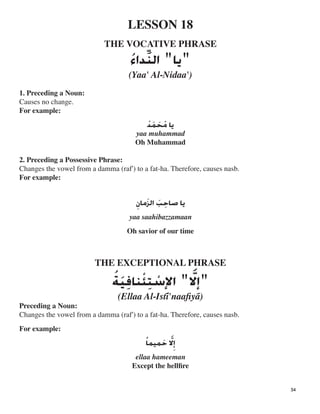
LESSON 18

THE VOCATIVE PHRASE

"‫ﻳﺎ‬"‫ﻨﻨ‬‫
ﹸ‬‫ﺀ‬‫ﺀ‬
(Yaa' Al-Nidaa')
1. Preceding a Noun:
Causes no change.
For example:
‫ﱢ‬
‫ﻳﺎ‬‫ﻣ‬‫ﹸ‬‫ﺤ‬‫ﹶ‬‫ﻤ‬‫ﹶ‬‫ﺪ‬‫
ﹸ‬
‫ﻳﺎ‬‫ﺻﺎﺣ‬‫ﹺ‬‫ﺐ‬‫ﹶ‬‫ﺍﻟﺰ‬‫ﹶ‬‫ﻣﺎﻥ‬‫
ﹺ‬
"‫ﺇ‬"‫ﺍﻹ‬‫ﺳ‬‫ﹾ‬‫ﺘ‬‫ﺌ‬‫ﹾ‬‫ﻨﺎﻓ‬‫ﻴ‬‫ﹶ‬‫ﺔ‬‫
ﹸ‬
‫ﹺ‬‫ﹺ‬‫ﹺ‬ ‫ﻻ‬‫ﹺ‬
‫ﱠ‬
(Ellaa Al-Isti'naafiya)
Preceding a Noun:
Changes the vowel from a damma (raf') to a fat-ha. Therefore, causes nasb.
For example:
‫ﱠ‬ ‫ﺇ‬‫ﻻ‬‫
ﹺ‬‫ﺣ‬‫ﹶ‬‫ﻤﻴﻤﺎ‬‫
ﹰ‬
yaa muhammad
Oh Muhammad
2. Preceding a Possessive Phrase:
Changes the vowel from a damma (raf') to a fat-ha. Therefore, causes nasb.
For example:
yaa saahibazzamaan
Oh savior of our time
THE EXCEPTIONAL PHRASE

ellaa hameeman
Except the hellfire
34
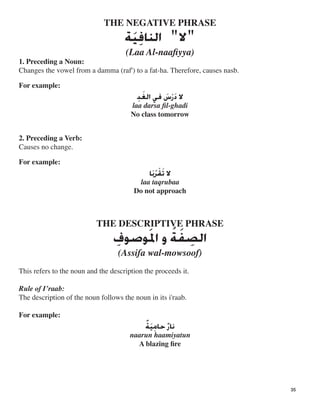
THE NEGATIVE PHRASE

"‫ﻻ‬"‫ﺍﻟﻨﺎﻓ‬‫ﹺ‬‫ﻴ‬‫ﹶ‬‫ﺔ‬
(Laa Al-naafiyya)
1. Preceding a Noun:
Changes the vowel from a damma (raf') to a fat-ha. Therefore, causes nasb.
For example:

‫ﻻ‬‫ﺩ‬‫ﹶ‬‫ﺭ‬‫ﺱ‬‫ﻓﻲ‬‫ﺍﻟﻐ‬‫ﹶ‬‫ﺪ‬‫
ﹺ‬ ‫ﹾ‬‫ﹶ‬
laa darsa fil-ghadi
No class tomorrow
2. Preceding a Verb:
Causes no change.
For example:

‫ﻻ‬‫ﺗ‬‫ﹶ‬‫ﻘ‬‫ﹾ‬‫ﺮ‬‫ﹸ‬‫ﺑ‬‫ﹶ‬‫ﺎ‬
laa taqrubaa
Do not approach
THE DESCRIPTIVE PHRASE

‫ﺍﻟﺼ‬‫ﹺ‬‫ﻔ‬‫ﹶ‬‫ﺔ‬‫ﹸ‬‫ﻭ‬‫ﺍﳌ‬‫ﻮ‬‫ﹶ‬‫ﺻﻮﻑ‬‫
ﹺ‬
(Assifa wal-mowsoof)
This refers to the noun and the description the proceeds it.
Rule of I’raab:
The description of the noun follows the noun in its i'raab.
For example:

‫ﻧﺎﺭ‬‫ﹲ‬‫ﺣﺎﻣ‬‫ﹺ‬‫ﻴ‬‫ﹶ‬‫ﺔ‬‫
ﹲ‬
naarun haamiyatun
A blazing fire
35
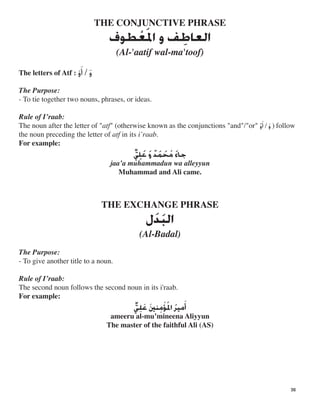
THE CONJUNCTIVE PHRASE

‫ﺍﻟﻌﺎ‬‫ﻃ‬‫ﹺ‬‫ﻒ‬‫ﻭ‬‫ﺍﳌ‬‫ﻌ‬‫ﹶ‬‫ﹾ‬‫ﻑﻑ‬
(Al-'aatif wal-ma'toof)

‫ﻭ‬‫ﹶ‬/‫ﺃ‬‫ﻭ‬‫ﹶ‬‫ﹾ‬The letters of Atf :
The Purpose:
- To tie together two nouns, phrases, or ideas.
Rule of I’raab:
The noun after the letter of "atf" (otherwise known as the conjunctions "and"/"or"
the noun preceding the letter of atf in its i’raab.
For example:
‫ﱞ‬ ‫ﺟﺎﺀ‬‫ﹶ‬‫ﻣ‬‫ﹸ‬‫ﺤ‬‫ﹶ‬‫ﻤ‬‫ﹶ‬‫ﺪ‬‫ﹲ‬‫ﻭ‬‫ﹶ‬‫ﻋ‬‫ﹶ‬‫ﻠ‬‫ﻲ‬‫
ﹺ‬
jaa’a muhammadun wa alleyyun
Muhammad and Ali came.
THE EXCHANGE PHRASE

‫ﺍﻟﺒ‬‫ﹶ‬‫ﺪ‬‫ﹶ‬‫ﻝ‬
(Al-Badal)
The Purpose:
- To give another title to a noun.
Rule of I’raab:
The second noun follows the second noun in its i'raab.
For example:

‫ﻲ‬‫ﱞ‬
ameeru al-mu’mineena Aliyyun
The master of the faithful Ali (AS)
‫ﻠ‬‫
ﹺ‬
‫ﹶ‬‫ﹸ‬‫ﹾ‬ ‫ﻣﻴﺮ‬‫ﹸ‬‫ﺍﳌ‬‫ﺆ‬‫ﻣ‬‫ﹺ‬‫ﻨﲔ‬‫ﹶ‬‫ﻋ‬‫
ﹶ‬ ‫ﺃ‬
) follow‫ﻭ‬‫ﹶ‬/‫ﺃ‬‫ﻭ‬‫ﹶ‬‫ﹾ‬
36
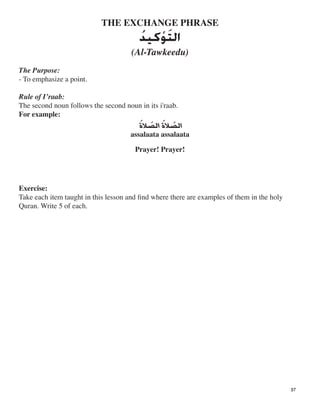
THE EXCHANGE PHRASE

‫ﺍﻟﺘ‬‫ﹶ‬‫ﻮ‬‫ﹾ‬‫ﻛﻴﺪ‬‫
ﹸ‬
(Al-Tawkeedu)
The Purpose:
- To emphasize a point.
Rule of I’raab:
The second noun follows the second noun in its i'raab.
For example:

‫ﺍﻟﺼ‬‫ﹶ‬‫ﻼﺓ‬‫ﹶ‬‫ﺍﻟﺼ‬‫ﹶ‬‫ﻼﺓ‬‫ﹶ‬
assalaata assalaata
Prayer! Prayer!
Exercise:
Take each item taught in this lesson and find where there are examples of them in the holy
Quran. Write 5 of each.
37
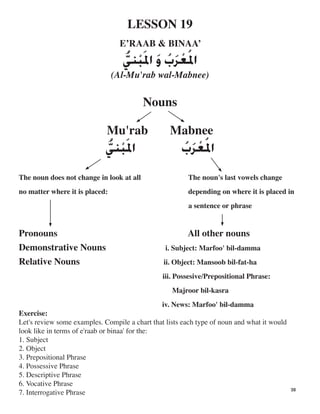
LESSON 19

E’RAAB & BINAA’

‫ﻌ‬‫ﹸ‬‫ﹾ‬‫ﺮ‬‫ﹶ‬‫ﺏ‬‫ﹸ‬‫ﻭ‬‫ﹶ‬‫ﺍﳌ‬‫ﺒ‬‫
ﹶ‬ ‫ﳌﳌ‬‫
ﹾ‬‫ﻲﻲ‬
(Al-Mu'rab wal-Mabnee)

Nouns

‫
ﱡ‬
Mu'rab Mabnee

‫ﳌﳌ‬‫
ﹾ‬ ‫ﻌ‬‫ﹸ‬‫ﹾ‬‫ﺮ‬‫ﹶ‬‫ﺏ‬‫ﹸ‬‫ﺍﳌ‬‫ﺒ‬‫
ﹶ‬‫ﱡ‬‫ﻨﻲ‬
The noun does not change in look at all The noun's last vowels change
no matter where it is placed: depending on where it is placed in  

a sentence or phrase

Pronouns All other nouns
Demonstrative Nouns i. Subject: Marfoo' bil-damma
Relative Nouns ii. Object: Mansoob bil-fat-ha
iii. Possesive/Prepositional Phrase:
Majroor bil-kasra
iv. News: Marfoo' bil-damma
Exercise:
Let's review some examples. Compile a chart that lists each type of noun and what it would
look like in terms of e'raab or binaa' for the:
1. Subject
2. Object
3. Prepositional Phrase
4. Possessive Phrase
5. Descriptive Phrase
6. Vocative Phrase
7. Interrogative Phrase 38
LESSON 20

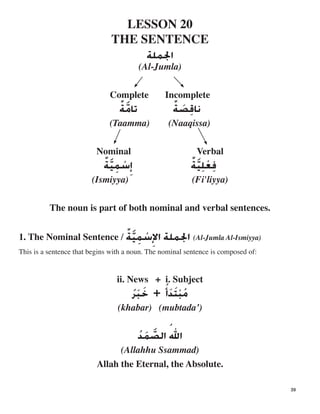
THE SENTENCE

‫ﺍﳉ‬‫ﺔﺔ‬
(Al-Jumla)

(Taamma) (Naaqissa)

Nominal Verbal

The noun is part of both nominal and verbal sentences. 

1. The Nominal Sentence / 

ii. News 

(khabar) (mubtada’) 

Incomplete

‫ﺼ‬‫
ﹶ‬
Complete 

‫ﺗﺎﻣ‬‫ﺔ‬‫
ﹲ‬ ‫
ﱠ‬ ‫ﻧﺎﻗ‬‫
ﹺ‬‫ﺔ‬‫
ﹲ‬
‫
ﹲ‬ ‫ﻓ‬‫
ﹺ‬‫
ﹾ‬‫ﻠ‬‫
ﹺ‬ ‫ﻌ‬‫ﻴ‬‫ﺔ‬
(Fi'liyya)

‫
ﱠ‬‫ﺇ‬‫
ﹺ‬‫
ﹾ‬‫ﻤ‬‫
ﹺ‬‫
ﹲ‬ ‫ﱠ‬ ‫ﺳ‬‫ﻴ‬‫ﺔ‬
(Ismiyya) 

‫
ﹲ‬ ‫
ﹾ‬ (Al-Jumla Al-Ismiyya)‫ﺍﳉﻤﻠﺔ‬‫ﺍﻹ‬‫
ﹺ‬‫ﻤ‬‫
ﹺ‬‫ﱠ‬ ‫ﺳ‬‫ﻴ‬‫ﺔ‬
This is a sentence that begins with a noun. The nominal sentence is composed of:
‫
ﹶ‬ ‫ﺃ‬
+ i. Subject

‫ﻣ‬‫ﹸ‬‫ﺒ‬‫ﹾ‬‫ﺘ‬‫ﹶ‬‫ﺪ‬‫ﹶ‬‫ﹸ‬+‫ﺧ‬‫ﺒ‬‫ﹶ‬‫ﺮ‬‫
ﹸ‬
‫
ﹸ‬
‫ﻤ‬‫ﹶ‬‫ﺪ‬‫
ﹸ‬ ‫ﱠ‬ ‫ﺍﷲ‬‫ﺼﺼ‬
(Allahhu Ssammad)
Allah the Eternal, the Absolute.
39
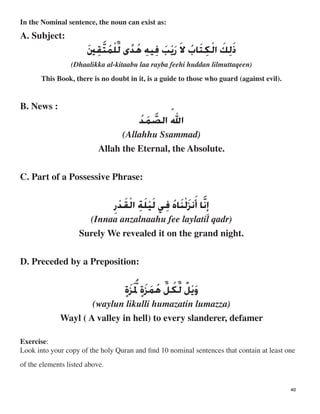
In the Nominal sentence, the noun can exist as:

A. Subject:

‫ﺫ‬‫ﹶ‬‫ﻟ‬‫ﹺ‬‫ﻚ‬‫
ﹶ‬‫ﻟﻟ‬‫
ﹾ‬‫
ﹺ‬‫ﺘ‬‫
ﹶ‬‫
ﹸ‬‫ﻻ‬‫
ﹶ‬‫ﺭ‬‫ﻳ‬‫
ﹶ‬‫
ﹾ‬‫
ﹶ‬‫ﻓ‬‫ﹺ‬‫ﻴﻪ‬‫
ﹺ‬‫
ﹸ‬‫ﺪ‬‫
ﹰ‬‫ﻯ‬‫ﻟ‬‫ﻠ‬‫
ﹾ‬ ‫
ﱢ‬‫
ﹸ‬‫ﻘ‬‫
ﹺ‬ ‫ﻜ‬‫ﺎﺏ‬‫ﺐ‬‫ﻫ‬‫ﻤ‬‫ﺘ‬‫ﲔ‬‫
ﹶ‬
(Dhaalikka al-kitaabu laa rayba feehi huddan lilmuttaqeen)
This Book, there is no doubt in it, is a guide to those who guard (against evil).
‫
ﱠ‬
‫
ﹸ‬
‫ﻤ‬‫ﹶ‬‫ﺪ‬‫
ﹸ‬ ‫ﺍﷲ‬‫ﺼﺼ‬
(Allahhu Ssammad)
Allah the Eternal, the Absolute.
‫
ﱠ‬
C. Part of a Possessive Phrase:
‫
ﱠ‬ ‫ﺇ‬‫ﻧ‬‫ﹺ‬‫ﺎ‬‫ﺃ‬‫ﻧﺰ‬‫ﹶ‬‫ﹶ‬‫ﻟ‬‫ﻨ‬‫ﹾ‬‫ﹶ‬‫ﺎﻩ‬‫ﹸ‬‫ﻓ‬‫ﹺ‬‫ﻲ‬‫ﻟ‬‫ﹶ‬‫ﻴ‬‫ﹾ‬‫ﻠ‬‫ﹶ‬‫ﺔ‬‫ﹺ‬‫ﺍﻟ‬‫ﻘ‬‫ﹾ‬‫ﹶ‬‫ﺪ‬‫ﹾ‬‫ﺭ‬‫
ﹺ‬
‫
ﹲ‬‫
ﹸ‬‫ﺰ‬‫
ﹶ‬ ‫ﱡ‬ ‫ﱢ‬ ‫ﻜ‬‫ﱢ‬‫ﻞ‬‫
ﳌ‬
(waylun likulli humazatin lumazza)

Wayl ( A valley in hell) to every slanderer, defamer

Exercise:

Look into your copy of the holy Quran and find 10 nominal sentences that contain at least one

of the elements listed above.

‫ﻫ‬‫ﹸ‬‫ﻤ‬‫ﹶ‬‫ﺰ‬‫
ﹶ‬‫
ﹶ‬ ‫ﺓ‬‫
ﹴ‬‫ﺓ‬‫
ﹴ‬ ‫ﻭ‬‫ﹶ‬‫ﻳ‬‫ﻞ‬‫
ﹾ‬‫ﻟ‬
B. News :

(Innaa anzalnaahu fee laylatil qadr)

Surely We revealed it on the grand night.
D. Preceded by a Preposition:
40
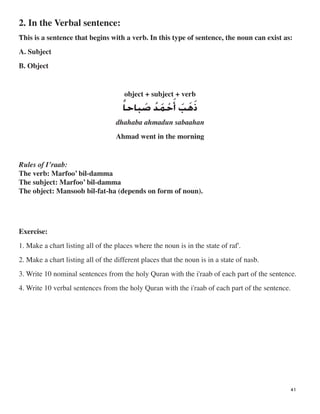
2. In the Verbal sentence:

This is a sentence that begins with a verb. In this type of sentence, the noun can exist as:‫ﹸ‬
A. Subject
B. Object
‫
ﹰ‬
object + subject + verb
‫ﺫ‬‫ﹶ‬‫ﻫ‬‫ﹶ‬‫ﺐ‬‫ﹶ‬‫ﺃ‬‫ﺣ‬‫ﹶ‬‫ﹾ‬‫ﻤ‬‫ﹶ‬‫ﺪ‬‫ﹸ‬‫ﺻ‬‫ﹶ‬‫ﺎﺎ‬
dhahaba ahmadun sabaahan
Ahmad went in the morning
Rules of I’raab:
The verb: Marfoo’ bil-damma
The subject: Marfoo’ bil-damma
The object: Mansoob bil-fat-ha (depends on form of noun).
Exercise:
1. Make a chart listing all of the places where the noun is in the state of raf'.
2. Make a chart listing all of the different places that the noun is in a state of nasb.
3. Write 10 nominal sentences from the holy Quran with the i'raab of each part of the sentence.
4. Write 10 verbal sentences from the holy Quran with the i'raab of each part of the sentence.
41
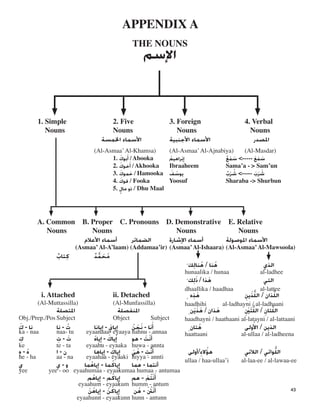
APPENDICES

42
APPENDIX A

THE NOUNS

‫ﻢﻢ‬
1. Simple 2. Five 3. Foreign 4. Verbal 

Nouns Nouns Nouns Nouns 

‫ﺍﳌﺼﺪﺭ‬‫ﺍﻷﺳﻤﺎﺀ‬‫ﺍﻷﺟﻨﺒﻴﺔ‬‫ﺍﻷﺳﻤﺎﺀ‬‫ﺍﳋﻤﺴﺔ‬
(Al-Asmaa’Al-Ajnabiya) (Al-Masdar)
‫ﹶ‬‫ﹲ‬‫ﹺ‬‫ﹾ‬ ‫ﺳ‬‫ﹶ‬‫ﻤ‬‫ﹶ‬‫ﻊ‬<-----‫ﺳ‬‫ﹶ‬‫ﻤ‬‫ﹾ‬‫ﻊ‬‫ﺇ‬‫ﺑ‬‫ﺮﺍﻫﻴﻢ‬‫ﹸ‬
(Al-Asmaa’Al-Khamsa)
‫ﹶ‬1. /Abooka‫ﺃ‬‫ﺑﻮﻙ‬‫ﹶ‬
‫ﹶ‬‫ﺧﻮﻙ‬‫ﹶ‬ Sama’a - > Sam’un
Ibraaheem/Akhooka‫ﺃ‬
‫ﺷ‬‫ﹶ‬‫ﺮ‬‫ﹶ‬‫ﺏ‬‫ﹶ‬<-----‫ﺷ‬‫ﹸ‬‫ﺮ‬‫ﹾ‬‫ﺏ‬‫ﹲ‬‫ﻳﻮﺳ‬‫ﹸ‬‫ﻒ‬‫ﹶ‬/ Hamooka‫ﺣ‬‫ﹶ‬‫ﻤﻮﻙ‬‫ﹶ‬
/ Fooka‫ﻓﻮﻙ‬
2. 

3. 

Yoosuf Sharaba -> Shurbun
‫ﹶ‬4. 

/ Dhu Maal‫ﺫﻭ‬‫ﻣﺎﻝ‬‫ﹴ‬5. 

A. Common B. Proper C. Pronouns D. Demonstrative E. Relative 

Nouns Nouns Nouns Nouns 

‫ﺍﻷﺳﻤﺎﺀ‬‫ﺍﳌﻮﺻﻮﻟﺔ‬‫ﺃﺳﻤﺎﺀ‬‫ﺍﻹﺷﺎﺭﺓ‬‫ﺍﻟﻀﻤﺎﺋﺮ‬‫ﺃﺳﻤﺎﺀ‬‫ﺍﻷﻋﻼﻡ‬
(Asmaa’Al-A’laam) (Addamaa’ir) (Asmaa’Al-Ishaara) (Al-Asmaa’Al-Mawsoola)
‫ﻤ‬‫ﱠ‬ ‫ﻣ‬‫ﹸ‬‫ﺤ‬‫ﹶ‬‫ﺪ‬‫ﹲ‬‫ﻛ‬‫ﹺ‬‫ﺘﺎﺏ‬‫ﹲ‬
‫ﱠ‬
‫ﱠ‬
‫ﺍﻟﺬﻱ‬‫ﻫ‬‫ﹸ‬‫ﻨﺎ‬/‫ﻫ‬‫ﹸ‬‫ﻨﺎﻟ‬‫ﹺ‬‫ﻚ‬‫ﹶ‬
hunaalika / hunaa
‫ﱠ‬
‫ﱠ‬
‫ﻫ‬‫ﹶ‬‫ﺬﺍ‬/‫ﺫ‬‫ﹶ‬
dhaallika / haadhaa al-lattee
‫ﺍﻟﻠ‬‫ﺬﺍﻥ‬/‫ﺍﻟﻠ‬
al-ladhayni / al-ladhaani
‫ﺍﻟﻠ‬‫ﱠ‬‫ﺘﺎﻥ‬/‫ﺍﻟﻠ‬‫ﺘ‬‫ﹶ‬‫ﲔ‬‫ﹾ‬‫ﹺ‬
haadhayni / haathaani al-latayni / al-lattaani
‫ﹸ‬‫ﹸ‬ ‫ﺍﻟﺬﻳﻦ‬/‫ﺍﻷ‬‫ﻭﻟﻰ‬‫ﻫ‬‫ﺘﺎﻥ‬‫ﹺ‬
haattaani al-ullaa / al-ladheena
‫ﺍﻟﻠ‬‫ﻮﺍﺋﻲ‬/‫ﺍﻟﻼﺋﻲ‬
ullaa / haa-ullaa’i al-laa-ee / al-lawaa-ee
‫ﺍﻟﺘﻲ‬‫ﻟ‬‫ﹺ‬‫ﻚ‬‫ﹶ‬
‫ﺬ‬‫ﹶ‬‫ﻫ‬‫ﹶ‬‫ﺬ‬‫ﹺ‬‫ﻩ‬‫ﹺ‬
haadhihi
‫ﻫ‬‫ﹶ‬‫ﺬﺍﻥ‬/‫ﻫ‬‫ﹶ‬‫ﺬ‬‫ﹶ‬‫ﻳ‬‫ﻦ‬‫ﹾ‬
‫ﻳﻦ‬‫ﹺ‬
‫ﹺ‬ ‫ﹺ‬‫ﺍﳌﻨﻔﺼﻠﺔ‬
Object
‫ﺍﳌﺘﺼﻠﺔ‬
‫ﺕ‬‫ﹸ‬-‫ﻧﺎ‬
naa- tu
-‫ﺇﻳﺎﻧﺎ‬
-‫ﺇ‬‫ﻳﺎﻩ‬‫ﹸ‬ ‫ﹺ‬‫ﺕ‬‫ﹶ‬
te - ta 

‫ﻧﺎ‬-‫ﻙ‬‫ﹶ‬
-‫ﺕ‬‫ﹺ‬‫ﻙ‬‫ﹺ‬
ke
‫ﻩ‬‫ﹸ‬-‫ﻩ‬‫ﹺ‬ ‫ﻫﺆ‬‫ﹸ‬‫ﻻﺀ‬‫ﹺ‬/‫ﺃﻭﻟﻰ‬‫ﻥ‬-‫ﺍ‬ -

i. Attached ii. Detached
(Al-Muttassilla) (Al-Munfassilla)
Obj./Prep./Pos Subject Subject
‫ﺃ‬‫ﻧﺎ‬‫ﹶ‬-‫ﻧ‬‫ﹶ‬‫ﺤ‬‫ﹾ‬‫ﻦ‬‫ﹸ‬‫ﺇﻳﺎﻱ‬‫ﹶ‬
ka - naa eyaanaaa- eyaaya nahnu - annaa
‫ﹶ‬‫ﹾ‬‫ﹸ‬‫ﹶ‬ ‫ﺃ‬‫ﻧ‬‫ﺖ‬‫ﹶ‬-‫ﻫﻮ‬‫ﺇ‬‫ﻳﺎﻙ‬
huwa - anntaeyaahu - eyaaka
‫ﹺ‬
‫ﺃ‬‫ﻧ‬‫ﺖ‬‫ﹺ‬-‫ﻫ‬‫ﻲ‬‫ﹶ‬‫ﺇ‬‫ﻳﺎﻙ‬‫ﹺ‬‫ﺇ‬‫ﻳﺎﻫﺎ‬ ‫ﹶ‬‫ﹲ‬‫ﹾ‬‫ﹸ‬
‫ﹺ‬‫ﹺ‬he - ha eyaahaa - eyaaki hiyya - annti
‫ﺃﻧﺘﻤﺎ‬-‫ﻫﻤﺎ‬‫ﺇ‬‫ﻳﺎﻛ‬‫ﹸ‬‫ﻤﺎ‬-‫ﺇﻳﺎﻫ‬‫ﹸ‬‫ﻤﺎ‬‫ﻭ‬-‫ﻱ‬ ‫ﹺ‬yee - oo eyaahumaa - eyaakumaa humaa - antumaa
‫ﺃ‬‫ﻧ‬‫ﹶ‬‫ﺘ‬‫ﹾ‬‫ﹸ‬‫ﻢ‬‫ﹾ‬-‫ﻫﻢ‬‫ﺇ‬‫ﻳﺎﻛ‬‫ﹸ‬‫ﻢ‬-‫ﺇ‬‫ﻳﺎﻫ‬‫ﹸ‬‫ﻢ‬ ‫ﹺ‬‫ﹺ‬eyaahum - eyaakum humm - antum
‫ﺃ‬‫ﻧ‬‫ﹶ‬‫ﱳ‬‫ﹾ‬‫ﹸ‬‫ﹾ‬-‫ﻫ‬‫ﹸ‬‫ﻦ‬‫ﺇ‬‫ﻳﺎﻛ‬‫ﹸ‬‫ﻦ‬‫ﹾ‬-‫ﺇ‬‫ﻳﺎﻫ‬‫ﹸ‬‫ﻦ‬‫ﹾ‬
‫ﹺ‬‫ﹺ‬eyaahunn - eyaakunn hunn - antunn
al-ladhee

aa - na 

‫ﻱ‬
yee
43
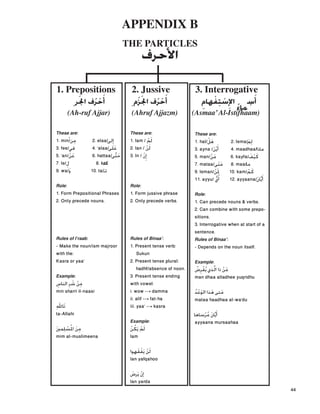
APPENDIX B

THE PARTICLES

‫ﺍﻷ‬‫ﻑﻑ‬
1. Prepositions 2. Jussive 3. Interrogative 

‫ﹶ‬‫ﹾ‬‫ﹶ‬‫ﹶ‬‫ﹶ‬‫ﹶ‬ ‫ﺃ‬‫ﺳ‬‫ﺍﻹ‬‫ﺳ‬‫ﹾ‬‫ﺘ‬‫ﹺ‬‫ﻔ‬‫ﻬﺎﻡ‬‫ﺃ‬‫ﺣ‬‫ﹾ‬‫ﺮ‬‫ﹸ‬‫ﻑ‬‫ﺍﳉ‬‫ﺰ‬‫ﹾ‬‫ﻡ‬‫ﹺ‬‫ﺃ‬‫ﺣ‬‫ﹾ‬‫ﺮ‬‫ﹸ‬‫ﻑ‬‫ﺍﳉ‬‫ﺮ‬‫
ﹺ‬ ‫ﹾ‬‫ﻤﺎﺀ‬‫ﹸ‬‫ﹺ‬‫ﹺ‬
(Ah-ruf Ajjar)
‫ﱠ‬
(Ahruf Ajjazm) (Asmaa’Al-Istifhaam)
These are: These are: These are:
‫ﻟ‬‫ﻢ‬2. lema/‫ﹶ‬‫ﹾ‬‫ﻟ‬‫ﻢ‬‫ﹶ‬1. lam /‫ﺇ‬‫ﻟﻰ‬2. elaa/‫ﻣ‬‫ﻦ‬1. min/ ‫ﹺ‬‫ﹶ‬‫ﻫ‬‫ﻞ‬1. hal/‫ﹾ‬‫ﹺ‬‫ﹺ‬‫ﹾ‬
‫ﻣﺎﺫﺍ‬4. maadhaa/‫ﺃ‬‫ﻳ‬‫ﹶ‬‫ﻦ‬‫ﹾ‬‫ﹶ‬3. ayna /‫ﻟ‬‫ﻦ‬‫ﹶ‬‫ﹾ‬2. lan /‫ﻋ‬‫ﹶ‬‫ﻠﻰ‬4. ‘alaa/‫ﻓﻲ‬3. fee/
‫ﻛ‬‫ﹶ‬‫ﻴ‬‫ﹾ‬‫ﻒ‬‫ﹶ‬6. kayfa/‫ﻣ‬‫ﹶ‬‫ﻦ‬‫ﹾ‬5. man/‫ﺇ‬‫ﻥ‬‫ﹺ‬‫ﹾ‬3. In /‫ﺣ‬‫ﹶ‬‫ﺘ‬‫ﻰ‬6. hattaa/‫ﻋ‬‫ﹶ‬‫ﻦ‬‫ﹾ‬5. ‘an/
‫ﻣﺎ‬8. maa/‫ﻣ‬‫ﹶ‬‫ﺘ‬‫ﹶ‬‫ﻰ‬7. mataa/‫ﻛـ‬‫ﹶ‬8. ke/‫ﻝ‬‫ﹺ‬7. le/

‫ﻛ‬‫ﹶ‬‫ﻢ‬‫ﹾ‬10. kam/‫ﳌ‬‫ﹺ‬‫ﻦ‬‫ﹶ‬‫ﹾ‬9. leman/
‫ﺗـ‬10. ta/‫ﹶ‬‫ﻭ‬‫ﹶ‬9. wa/
‫ﺃ‬‫ﻳ‬‫ﹶ‬‫ﺎﻥ‬‫ﹶ‬12. ayyaana/‫ﺃ‬‫ﻱ‬‫ﹶ‬11. ayyu/
Role: Role:
1. Form Prepositional Phrases 1. Form jussive phrase Role:
2. Only precede nouns. 2. Only precede verbs. 1. Can precede nouns & verbs.
2. Can combine with some prepo
‫ﱠ‬
‫ﱠ‬
‫ﱡ‬
sitions.
3. Interrogative when at start of a
sentence.
Rules of I’raab: Rules of Binaa’: Rules of Binaa’:
- Make the noun/ism majroor 1. Present tense verb: - Depends on the noun itself.

with the: Sukun

‫ﱠ‬
Kasra or yaa’ 2. Present tense plural: Example:
‫ﻣ‬‫ﹶ‬‫ﻦ‬‫ﹾ‬‫ﺍﻟ‬ ‫ﺫﺍ‬‫ﺬﻱ‬‫ﻳ‬‫ﻘ‬‫ﹸ‬‫ﹾ‬‫ﺮ‬‫ﹺ‬‫ﺽ‬‫ﹸ‬hadhf/absence of noon.
Example: 3. Present tense ending man dhaa alladhee yuqridhu
with vowel:‫ﻣ‬‫ﹺ‬‫ﻦ‬‫ﹾ‬‫ﺷ‬‫ﹶ‬‫ﺮ‬‫ﹺ‬‫ﺍﻟﻨﺎﺱ‬‫
ﹺ‬
‫ﻣ‬‫ﹶ‬‫ﺘﻰ‬‫ﻫ‬‫ﹶ‬‫ﺬﺍ‬‫ﺍﻟﻮ‬‫ﹶ‬‫ﻋ‬‫ﹾ‬‫ﺪ‬‫ﹸ‬i. wow --> dammamin sharri il-naasi

ii. alif --> fat-ha mataa haadhaa al-wa’du
‫ﺗ‬‫ﺎﷲ‬‫ﹺ‬ iii. yaa’ --> kasra‫
ﹶ‬
‫ﺃ‬‫ﻳ‬‫ﹶ‬‫ﺎﻥ‬‫ﹶ‬‫ﻣ‬‫ﹸ‬‫ﺮ‬‫ﹾ‬‫ﺎﺎ‬ta-Allahi

Example: ayyaana mursaahaa

‫ﹶ‬‫ﹾ‬‫ﻳ‬‫ﹶ‬‫ﹸ‬‫ﻦ‬‫ﻣ‬‫ﹺ‬‫ﻦ‬‫ﺍﳌ‬‫ﺴ‬‫ﻠ‬‫ﻤﲔ‬‫ﹶ‬ ‫ﻟ‬‫ﻢ‬‫ﻜ‬‫ﹾ‬‫ﹶ‬‫ﹸ‬‫ﹾ‬‫ﹺ‬
mim al-muslimeena lam
‫ﻟ‬‫ﻦ‬‫ﹶ‬‫ﹾ‬‫ﻳ‬‫ﻔ‬‫ﹶ‬‫ﹾ‬‫ﻘ‬‫ﹶ‬‫ﻬﻮﺍ‬
lan yafqahoo
‫ﺇﻥ‬‫ﻳ‬‫ﺮﺽ‬‫ﹶ‬ ‫ﹾ‬‫ﹶ‬
lan yarda
44
PART III: VERBS

45

Arabic Nouns

  • 1.
    Arabic Grammar for theHoly Quran Al-Qaem Institute Imam Mahdi Association of Marjaeya (I.M.A.M.)
  • 2.
    Table of Contents: PartI: LETTERS 1. The Arabic Aphabet 4 2. Vowels 5 3. Other Accents 8 Part II: NOUNS 4. The Word 9 5. Prepositions 10. 6. The Nouns 12 7. Nouns: Singular Form 15 8. Nouns: Dual Form 16 9. Nouns: Plural Form: Unbroken 18 10. Nouns: Plural Form: Broken 20 11. Detached Pronouns I 22 12. Detached Pronouns II 24 13. Attached Pronouns 26 14. Demonstrative Nouns 28 15. Relative Nouns 30 17. Foreign Nouns & Verbal Nouns 31 18. Phrases 33 19. I’raab & Binaa’ 38 20. Nouns within Sentences 39 APPENDICES 1. Appendix A: Chart of the Word 43 2. Appendix B: Flow Chart of Nouns 44 Part III: VERBS 2
  • 3.
  • 4.
    LESSON 1 THE ARABICALPHABET ‫ﺍﻷ‬‫ﺣﺮﻑ‬‫ﺔﺔ‬ ‫ﺃ‬‫ﺏ‬‫ﺕ‬‫ﺙ‬‫ﺝ‬‫ﺡ‬‫ﺥ‬‫ﺩ‬‫ﺫ‬‫ﺭ‬‫ﺯ‬‫ﺱ‬‫ﺵ‬‫ﺹ‬‫ﺽ‬ Daad Saad Sheen Seen Zaa Raa Dhaal Daal Khaa Haa Jeem Tha Ta Ba Alif ‫ﻁ‬‫ﻅ‬‫ﻉ‬‫ﻍ‬‫ﻑ‬‫ﻕ‬‫ﻙ‬‫ﻝ‬‫ﻡ‬‫ﻥ‬‫ﻫـ‬‫ﻭ‬‫ﻱ‬ Yaa Wow Haa Noon Meem Lam Kaaf Qaaf Faa Ghayn Ayn Dhaa Taa How the letters look within at the beginning, middle & end of a word: ‫ﺃ‬‫ﺎﺎ‬ ‫ﺑـ‬‫ـﺒـ‬‫ـﺐ‬/‫ﺗـ‬‫ـﺘـ‬‫ـﺖ‬/‫ﺛـ‬‫ـﺜـ‬‫ﺚﺚ‬ ‫ﺟـ‬‫ـﺠـ‬‫ـﺞ‬/‫ﺣـ‬‫ـﺤـ‬‫ـﺢ‬/‫ﺧـ‬‫ـﺨـ‬‫ﺦﺦ‬ ‫ﺩ‬‫ـﺪ‬/‫ﺫ‬‫ﺬﺬ‬ ‫ﺭ‬‫ـﺮ‬/‫ﺯ‬‫ﺰﺰ‬ ‫ﺳـ‬‫ـﺴـ‬‫ـﺲ‬/‫ﺷـ‬‫ـﺸـ‬‫ﺶﺶ‬ ‫ﺻـ‬‫ـﺼـ‬‫ـﺺ‬/‫ﺿـ‬‫ـﻀـ‬‫ـﺾ‬ ‫ﻋـ‬‫ـﻌـ‬‫ـﻊ‬/‫ﻏـ‬‫ـﻐـ‬‫ـﻎ‬ ‫ﻓـ‬‫ـﻔـ‬‫ـﻒ‬/‫ﻗـ‬‫ـﻘـ‬‫ـﻖ‬ ‫ﻛـ‬‫ـﻜـ‬‫ـﻚ‬/‫ﻟـ‬‫ـﻠـ‬‫ـﻞ‬ ‫ﻣـ‬‫ـﻤـ‬‫ﻢﻢ‬ ‫ﻧـ‬‫ـﻨـ‬‫ﻦﻦ‬ ‫ﻫـ‬‫ـﻬـ‬‫ﻪﻪ‬ ‫ﻭ‬‫ﻮﻮ‬ ‫ﻳـ‬‫ـﻴـ‬‫ﻲﻲ‬ 4
  • 5.
    LESSON 2 VOWELS 1. SHORTVOWELS (accents) i. Fat-ha ii. Damma iii. Kasra ‫ﹺ‬‫ﹸ‬‫ ﹶ‬ a u e ‫ﺏ‬‫ﹺ‬‫ﺏ‬‫ﹸ‬‫ﺏ‬‫ ﹶ‬ Ba Bu Be 2. LONG VOWELS (actual letters) i. Alif ii. Wow iii.Yaa’: ‫ﺍ‬ ‫ﻭ‬ ‫ﻱ‬ aa uu/oo ee ‫ﺑﺎ‬ ‫ﺑﻮ‬ ‫ﺑﻲ‬ Baa Buu/Boo Bee 5
  • 6.
    ‫ﺃ‬‫ﹰ‬‫ﺃ‬‫ﹸ‬‫ﺃ‬‫ﹺ‬‫ﺁ‬‫ﺃﻭ‬‫ﻱﻱ‬ ee uu/oo aae u a ‫ﺑ‬‫ـ‬‫ﹶ‬‫ـﺒ‬‫ﹸ‬‫ـ‬‫ـﺐ‬‫ﹺ‬‫ﺑﺎ‬‫ـﺒﻮ‬‫ﻲﻲ‬ bebee boo baa bu ba ‫ﺗ‬‫ﹶـ‬‫ـﺘ‬‫ﹸ‬‫ـ‬‫ـﺖ‬‫ﹺ‬‫ﺗﺎ‬‫ـﺘﻮ‬‫ﻲﻲ‬ tee too taa te tu ta ‫ﺛ‬‫ـ‬‫ﹶ‬‫ـﺜ‬‫ﹸ‬‫ـ‬‫ـﺚ‬‫ﹺ‬‫ﺛﺎ‬‫ـﺜﻮ‬‫ﻲﻲ‬ thee thoo thaa the thu tha ‫ﺟ‬‫ﹶ‬‫ـ‬‫ـﺠ‬‫ﹸ‬‫ـ‬‫ـﺞ‬‫ﹺ‬‫ﺟﺎ‬‫ـﺠﻮ‬‫ﻲﻲ‬ jejee joo jaa ju ja ‫ﺣـ‬‫ﹶ‬‫ـﺤ‬‫ﹸ‬‫ـ‬‫ـﺢ‬‫ﹺ‬‫ﺣﺎ‬‫ـﺤﻮ‬‫ﻲﻲ‬ he huhee hoo haa ha ‫ﺧ‬‫ﹶ‬‫ـ‬‫ـﺨ‬‫ﹸ‬‫ـ‬‫ـﺦ‬‫ﹺ‬‫ﺧﺎ‬‫ـﺨﻮ‬‫ﻲﻲ‬ khe khee khoo khaa khu kha ‫ﺩ‬‫ﹶ‬‫ـﺪ‬‫ﹸ‬‫ـﺪ‬‫ﹺ‬‫ﺩﺍ‬‫ﺩﻭ‬‫ﻱﻱ‬ dee doo daa de du da ‫ﺫ‬‫ﹶ‬‫ـﺬ‬‫ﹸ‬‫ـﺬ‬‫ﹺ‬‫ﺫﺍ‬‫ﺫﻭ‬‫ﻱﻱ‬ dhee dhoo dhaa dhe dhu dha ‫ﺭ‬‫ﹶ‬‫ـﺮ‬‫ﹸ‬‫ـﺮ‬‫ﹺ‬‫ﺭﺍ‬‫ﺭﻭ‬‫ﻱﻱ‬ ree roo raa re ru ra 6
  • 7.
    ‫ﺯ‬‫ﹶ‬‫ـﺰ‬‫ﹸ‬‫ـﺰ‬‫ﹺ‬‫ﺯﺍ‬‫ﺯﻭ‬‫ﻱﻱ‬ zee zoo zaaze zu za ‫ﺳ‬‫ﹶ‬‫ـ‬‫ـﺴ‬‫ﹸ‬‫ـ‬‫ـﺲ‬‫ﹺ‬‫ﺳﺎ‬‫ـﺴﻮ‬‫ﻲﻲ‬ see soo saa se su sa shee shoo shaa ‫ﺷ‬‫ﹶ‬‫ـ‬‫ـﺸ‬‫ﹸ‬‫ـ‬‫ـﺶ‬‫ﹺ‬‫ﺷﺎ‬‫ـﺸﻮ‬‫ﻲﻲ‬ she shu sha ‫ﺻ‬‫ﹶ‬‫ـ‬‫ـﺼ‬‫ﹸ‬‫ـ‬‫ـﺺ‬‫ﹺ‬‫ﺻﺎ‬‫ـﺼﻮ‬‫ﻲﻲ‬ see suu saa se su sa dhee dhoo dhaa ‫ﺿ‬‫ﹶ‬‫ـ‬‫ـﻀ‬‫ﹸ‬‫ـ‬‫ـﺾ‬‫ﹺ‬‫ﺿﺎ‬‫ـﻀﻮ‬‫ﻲﻲ‬ dhe dhu dha ‫ﻃ‬‫ﹶ‬‫ـ‬‫ـﻄ‬‫ﹸ‬‫ـ‬‫ـﻂ‬‫ﹺ‬‫ﻃﺎ‬‫ـﻄﻮ‬‫ﻲﻲ‬ tee too taa te tu ta ‫ﻇ‬‫ﹶ‬‫ـ‬‫ـﻈ‬‫ﹸ‬‫ـ‬‫ـﻆ‬‫ﹺ‬‫ﻇﺎ‬‫ـﻈﻮ‬‫ﻲﻲ‬ dhee dhoo dhaa dhe dhu dha ‫ﻋـ‬‫ﹶ‬‫ـﻌ‬‫ﹸ‬‫ـ‬‫ـﻊ‬‫ﹺ‬‫ﻋﺎ‬‫ـﻌﻮ‬‫ﻲﻲ‬ ee uu aa e u a ghee ghuu ghaa ‫ﻏـ‬‫ﹶ‬‫ـﻐ‬‫ﹸ‬‫ـ‬‫ـﻎ‬‫ﻏﺎ‬‫ـﻐﻮ‬‫ﻏﻲ‬ ghe ‫ﹺ‬ ghu gha ‫ﻓ‬‫ﹶ‬‫ـ‬‫ـﻔ‬‫ﹸ‬‫ـ‬‫ـﻒ‬‫ﹺ‬‫ﻓﺎ‬‫ـﻔﻮ‬‫ﻲﻲ‬ fee foo faa fe fu fa 7
  • 8.
    ‫ﻗﻲ‬ ‫ـﻘﻮ‬ ‫ﻗﺎ‬‫ﹺ‬‫ـﻖ‬ ‫ﹸ‬‫ـﻘـ‬ ‫ـ‬‫ﹶ‬‫ﻗ‬ qee qoo qaa qe qu qa ‫ﻛﻲ‬ ‫ﻛﻮ‬ ‫ﻛﺎ‬ ‫ﹺ‬‫ـﻚ‬ ‫ﹸ‬‫ـﻜـ‬ ‫ﹶ‬‫ﻛـ‬ kee koo kaa ke ku ka ‫ﻟﻲ‬ lee ‫ـﻠﻮ‬ loo ‫ﻻ‬ laa ‫ﹺ‬‫ـﻞ‬ le ‫ﹸ‬‫ـﻠـ‬ lu ‫ﹶ‬‫ﻟـ‬ la ‫ﻣﻲ‬ ‫ـﻤﻮ‬ ‫ﻣﺎ‬ ‫ﹺ‬‫ـﻢ‬ ‫ﹸ‬‫ـﻤـ‬ ‫ﹶ‬‫ﻣـ‬ mee moo maa me mu ma ‫ﻧﻲ‬ ‫ـﻨﻮ‬ ‫ﻧﺎ‬ ‫ﹺ‬‫ـﻦ‬ ‫ﹸ‬‫ـﻨـ‬ ‫ﹶ‬‫ﻧـ‬ nee noo naa ne nu na ‫ﻫﻲ‬ ‫ـﻬﻮ‬ ‫ﻫﺎ‬ ‫ﹺ‬‫ﻪ‬‫ـ‬ ‫ﹸ‬‫ـﻬـ‬ ‫ﹶ‬‫ﻫـ‬ hee hoo haa he hu ha ‫ﻭﻱ‬ ‫ـﻮﻭ‬ ‫ﻭﺍ‬ ‫ﹺ‬‫ﻭ‬ ‫ﹸ‬‫ﻮ‬‫ـ‬ ‫ﹶ‬‫ﻭ‬ wee woo waa we wu wa ‫ﻳﻲ‬ yee ‫ﻳﻮ‬ yoo ‫ﻳﺎ‬ yaa ‫ﹺ‬ ‫ـﻲ‬ ye ‫ـ‬‫ﹸ‬‫ﻴ‬‫ـ‬ yu ‫ـ‬‫ﹶ‬‫ﻳ‬ ya 8
  • 9.
    LESSON 3 ‫ﻝ‬‫ﹶ‬+‫ﻥ‬‫ﹾ‬=‫ﻟ‬‫ﹶ‬‫ﻦ‬‫ﹾ‬=‫ـﻼ‬‫ﹶ‬‫ ﹰ‬ ‫ﻝ‬‫ﹸ‬+‫ﻥ‬‫ﹾ‬=‫ﻟ‬‫ﹸ‬‫ﻦ‬‫ﹾ‬=‫ـﻞ‬‫ ﹲ‬ ‫ﻝ‬‫ﹺ‬+‫ﻥ‬‫ﹾ‬=‫ﻟ‬‫ﹺ‬‫ﻦ‬‫ﹾ‬=‫ـﻠ‬‫ﹺ‬‫ﻦ‬‫ ﹾ‬ ‫ﱠ‬‫ﺸﺸ‬ ‫ﻝ‬‫ﹸ‬+‫ﻝ‬‫ ﹸ‬ ‫ﺍﻟﺘﻨﻮﻳﻦ‬1. NUNATION/ (Al-Tanween) ‫ﱢ‬ ‫ﺪ‬‫ﺓ‬2. LETTER EMPHASIS / (Ashadda) +‫ﺕ‬‫ﹺ‬=‫ﺕ‬ ‫ﺱ‬‫ﹶ‬+‫ﺱ‬‫ ﹶ‬‫ﱡ‬ =‫ﺱ‬=‫ﻝ‬ Tte Llu Ssa ‫ ﱠ‬‫ﺕ‬‫ ﹺ‬ ‫ﺥ‬ ‫ﺡ‬ ‫ﺝ‬ 3. SOLAR & LUNAR LETTERS / ‫ﺍﻟﻘﻤﺮﻳﺔ‬ ‫ﻭ‬ ‫ﺍﻟﺸﻤﺴﻴﺔ‬ ‫ﺍﻷﺣﺮﻑ‬ (Al-Ahruf Ashamsiya wa Al-Qamariya) ‫ﺏ‬ ‫ﺃ‬‫ﺕ‬‫ﺙ‬‫ﺩ‬‫ﺫ‬‫ﺭ‬‫ﺯ‬‫ﺱ‬‫ﺵ‬‫ﺹ‬‫ﺽ‬ ‫ﻫـ‬‫ﻭ‬‫ﻱ‬ ‫ﻥ‬ ‫ﻡ‬ ‫ﻝ‬ ‫ﻙ‬ ‫ﻕ‬ ‫ﻑ‬ ‫ﻍ‬ ‫ﻉ‬ ‫ﻅ‬ ‫ﻁ‬ ‫ﱠ‬ In the definitive noun, in Arabic, 2 types of letters follow the “alif lam”: i. The Solar Letters (uncircled) = “lam” of alif lam of definitive is silent. For example: ‫ﻟﺸ‬‫ﱠ‬‫ﺷ‬ Ashamsu/‫ﺍ‬‫ ﹶ‬‫ ﹶ‬ ‫ﻤ‬‫ﹾ‬‫ﺲ‬‫ﹸ‬=‫ﺍ‬‫ﻤ‬‫ﹾ‬‫ﺲ‬‫ ﹸ‬ ii. The Lunar Letter (circled) = “lam” is NOT silent. For example: Al-qamaru/‫ﺍ‬‫ﻟ‬‫ﹶ‬‫ﻘ‬‫ﹾ‬‫ﹶ‬‫ﻤ‬‫ﹶ‬‫ﺮ‬‫ﹸ‬ 9
  • 10.
    LESSON 4 THE WORD ‫ﺔﺔ‬ 1.Noun 2. Verb 3. Particle ‫ﺣﺮﻑ‬‫ﻓﻌﻞ‬‫ﻢﻢ‬ Pronounced Ism Fi’l Harf Meaning A word that indicates a meaning that is not associated with time. A word that indicates a meaning that is associated with one of the 3 dimensions of time (past, present & future). Indicates a meaning in other than itself. Examples He Muhammad A Book Standing He did... He does... He will do... In Who If When Signs 1. It is a flag name 2. precursed by “the” the identifier 3. precursed by the preposition particles 4. Ends with Nunation/ tanween 1. precursed by the jussive 2. can apply “yaa’ al mukhatab/of the spoken to” 3. precursed by “s” or “sow fa” (indicates the future tense. 4. precursed by “qad” (means “may”, e.g., Ahmad may go to school. 5. The “noon” of emphasis (“al-tawkeed”) 6. The “taa’” of the feminine (“al-ta’neeth alsaakina”) 7. The “taa’” of the doer (al faa’il) 1. The particles of inquisition under “hal”- These precurse nouns and verbs. 2. The prepositional particles under “fee” - These precurse nouns only. 3. The jussive particles under “lam” - These precurse verbs in the future form only (al-fi’l al-mudaari’) 10
  • 11.
    LESSON 5 THE PARTICLES:PREPOSITIONS ‫ﺃ‬‫ﺣ‬‫ﹶ‬‫ﹾ‬‫ﺮ‬‫ﹸ‬‫ﻑ‬‫ﹶ‬‫ﺍﳉ‬‫ﹶ‬‫ﺮ‬ (Ah-ruf Ajjarri) 1. Prepositions These are 10: ‫ ﱢ‬ ‫ﹾ‬1. min / ‫ﺇ‬‫ﻟﻰ‬2. elaa / ‫ﹺ‬ ‫ﻓﻲ‬3. fee / ‫ﻠﻰ‬4. ‘alaa / 5. ‘an / ‫ﻰ‬6. hattaa / = from = to = in = on = about = until‫ﺣ‬‫ ﹶ‬ ‫ﻣ‬‫ﹺ‬‫ﻦ‬ ‫ﻋ‬‫ ﹶ‬ ‫ﺘ‬‫ ﱠ‬ ‫ﻋ‬‫ﹶ‬‫ﻦ‬‫ ﹾ‬ 7. le / 8. ka / 9. wa / = for/belonging to = like/as ‫ﻝ‬‫ ﹺ‬ ‫ﻛـ‬‫ ﹶ‬ ‫ﻭ‬‫ ﹶ‬ = used for oath 10. ta / = used for oath only with Allah’s name. ‫ﺗـ‬‫ ﹶ‬ Role: 1. Form Prepositional Phrases 2. Only precede nouns. Rules of I’raab: - Make the noun/ism majroor with the: Kasra or yaa’ Example: ‫ﻣ‬‫ﹺ‬‫ﻦ‬‫ﹾ‬‫ﺷ‬‫ﹶ‬‫ﺮ‬‫ﹺ‬‫ﺍﻟﻨﺎﺱ‬‫ ﹺ‬ min sharri il-naasi From the evil of men ‫ﺗ‬‫ﺎﷲ‬‫ ﹺ‬ ‫ ﹶ‬ ta-Allahi By the name of Allah ‫ ﹸ‬ ‫ﻣ‬‫ﹺ‬‫ﻦ‬‫ﹶ‬‫ﺍﳌ‬‫ﺴ‬‫ﹾ‬‫ﻠ‬‫ﻤﲔ‬‫ﹺ‬‫ ﹶ‬ mim al-muslimeena From the Muslims 11
  • 12.
  • 13.
    LESSON 6 THE NOUNS ‫ﻢﻢ‬ Overview: Fourmain points: or are body parts that are a,‫ﺓ‬,‫ﺍﺀ‬,‫ﻯ‬A. All nouns are masculine unless they end with pair. B. All nouns are either: i. Masculine ii. Feminine. C. All nouns are either: i. Singular: one only. ii. Dual: two only. iii. Plural: more than two. D. All pronouns are either in the: i. First Person: I, we and us. ii. Second Person: you iii. Third Person: they, them. Keeping the above points in mind, let's look at nouns in more detail: 1. Simple Nouns: A. Common Nouns i. Definite (Al-Ma’rifa) ‫ﺫ‬‫ﹶ‬‫ﻟ‬‫ﹺ‬‫ﻚ‬‫ﹶ‬‫ﺍ‬‫ﻟ‬‫ﹶ‬‫ﻜ‬‫ﹾ‬‫ﹺ‬‫ﺘﺎﺏ‬‫ﹸ‬‫ﻻ‬‫ﺭ‬‫ﻳ‬‫ﹶ‬‫ﺐ‬‫ﹾ‬‫ﹶ‬‫ﻓﻴﻪ‬‫ ﹺ‬ Al-Kitab (the book) ~ the reference her is to the Holy Quran. ii. Indefinite (Al-Nakirra) ‫ﹶ‬‫ﹾ‬‫ﹰ‬ ‫ﻭ‬‫ﹶ‬‫ﻛ‬‫ﺄ‬‫ﺳﺎ‬‫ﺩ‬‫ﹺ‬‫ﺎﺎ‬ Ka’san (a glass) ~ the reference here is a general one. ‫ﺃﺳﻤﺎ‬‫ﺀ‬‫ﺍﻷﻋﻼﻡ‬B. Proper Nouns (people’s names)/ (Asmaa’Al-A’laam) ‫ﻲ‬‫ ﱞ‬ Ali, Muhammad ‫ﻠ‬‫ ﹺ‬ ‫ﻣ‬‫ﹸ‬‫ﺤ‬‫ﹶ‬‫ﻤ‬‫ﹶ‬‫ﺪ‬‫ﹲ‬،‫ﻋ‬‫ ﹶ‬ 13
  • 14.
    Now, lets startapplying the preceding points, one by one: I. All nouns are masculine, unless they end with: ‫ﺓ‬End withi. For example: ‫ﻨ‬ (Jannatun) Heaven ‫ ﱠ‬‫ﺔ‬‫ ﹲ‬ ‫ﺟ‬‫ ﹶ‬ ‫ﻘ‬‫ﹶ‬‫ﺮ‬‫ﹶ‬‫ﺓ‬‫ ﹲ‬ ‫ﺑ‬‫ ﹶ‬ (Baqaratun) Cow ‫ﺍﺀ‬ii. End with For example: ‫ﺣ‬‫ﹶ‬‫ﻤ‬‫ﹾ‬‫ﺮﺍﺀ‬‫ﺇ‬‫ﺳ‬‫ﹺ‬‫ﹾ‬‫ﺮﺍﺀ‬‫ﺀﺀ‬ (Israa')('Aashooraa') Ashura (Hamraa') RedAscension ‫ﻯ‬iii. End with For example: ‫ﻛ‬‫ﹸ‬‫ﺒ‬‫ﹾ‬‫ﺮﻯ‬‫ﺻ‬‫ﹸ‬‫ﻐ‬‫ﹾ‬‫ﻯﻯ‬ (Sughraa) Lesser (Kubraa) Greater iv. Are body parts that are a pair For example: ‫ﲔ‬‫ﹾ‬‫ ﹲ‬ ('Aynun) (Yadun) Eye Hand ‫ﺭ‬‫ﺟ‬‫ﹺ‬‫ﹾ‬‫ﻞ‬‫ﹲ‬‫ﻳ‬‫ﺪ‬‫ﹶ‬‫ﹲ‬‫ﻋ‬‫ ﹶ‬ (Rijlun) Foot v. Others: For example: ‫ﺃ‬‫ﺭ‬‫ﺽ‬‫ﺷ‬‫ﹶ‬‫ﻤ‬‫ﺲ‬‫ﻧﺎﺭ‬‫ﺣ‬‫ﺮ‬‫ﺏ‬ ‫ﹶ‬‫ﹾ‬‫ﹲ‬‫ﹼ‬‫ﹰ‬‫ﹲ‬‫ﹶ‬‫ﹾ‬‫ ﹲ‬ (Harbun) War (Naarun) (Shamssun) Fire Sun (Ardhun) Earth II. All nouns are either: i. Masculine ii. Feminine. For example: Masculine Feminine ‫ﺍ‬‫ﻣ‬‫ﹺ‬‫ﹾ‬‫ﺮ‬‫ﹶ‬‫ﺃ‬‫ﺓ‬‫ﹶ‬‫ﹲ‬‫ﺭ‬‫ﺟ‬‫ﹶ‬‫ﹸ‬‫ﻞ‬‫ ﹲ‬ 14
  • 15.
    ‫ﺑ‬‫ﹶ‬‫ﻘ‬‫ﹶ‬‫ﺮ‬‫ﹶ‬‫ﺓ‬‫ﹲ‬‫ﺛ‬‫ﹶ‬‫ﻮﺭ‬‫ ﹲ‬ (rajullun) (imra’attun) Man Woman (thawrun)(baqaratun) Bull Cow Exercise: 1. Look into your copy of the holy Quran and find the masculine and feminine words. Collect 10 of each and write them on a sheet of paper and submit them to your teacher. 2. Find 10 word that are in the definite form and write them down. 3. Find 10 more words that are in their indefinite forms. 4. Vocabulary: memorize the words from this lesson with their meanings. 15
  • 16.
    LESSON 7 Nouns: SingularForms ‫ﺍﻹﺳﻢ‬‫ﺩﺩ‬ (Al-Ism Al-Mufrad) C. All nouns are either: i. Singular: one only. ii. Dual: two only. iii. Plural: more than two. In this lesson, we will be concentrating on the singular forms: Rules of I’raab: Subject: takes a Damma Object: Fat-ha Prepositional/Possessor Phrase: Kasra Masculine Feminine ‫ﺍ‬‫ﻣ‬‫ﹺ‬‫ﹾ‬‫ﺮ‬‫ﹶ‬‫ﺃ‬‫ﺓ‬‫ﹶ‬‫ﹲ‬‫ﺭ‬‫ﺟ‬‫ﹶ‬‫ﹸ‬‫ﻞ‬‫ ﹲ‬ (rajullun) (imra’atun) A Man A woman Singular ‫ﺔ‬‫ﹲ‬‫ﻛ‬‫ﹺ‬‫ﺘﺎﺏ‬‫ ﹲ‬Singular ‫ﻨ‬‫ ﱠ‬ (kitaabun) (jannatun) A Book A Heaven ‫ﺟ‬‫ ﹶ‬ Exercise: 1. Let’s open up the holy Quran and write down 10 singular masculine and feminine word (10 of each). 2. Vocabulary: memorize the words from this lesson with their meanings. 16
  • 17.
    LESSON 8 Nouns: DualForms ‫ﺜ‬‫ﹸ‬‫ﹶ‬‫ﻨ‬ ‫ﻰ‬ ‫ﺍﻹﺳﻢ‬‫ﳌﳌ‬ (Al-Ism Al-Muthannaa) In this lesson, we will be concentrating on the dual forms (two only) of nouns. To turn a singular form of a noun to it dual form: to the end of the singular form‫ﺍﻥ‬i. If its the Subject: add ii. If its the Object/prepositional/possessive phrase: add form. Rules of I’raab: Subject: Alif Object: Yaa’ Prepositional/Possessor Phrase: Yaa For example: Singular form+‫ﺍﻥ‬ ‫ﺟ‬‫ﹶ‬‫ﻤ‬‫ﹶ‬‫ﻞ‬‫ﹲ‬+‫ﺍﻥ‬‫ﹺ‬=‫ﺟ‬‫ﹶ‬‫ﻤ‬‫ﹶ‬‫ﻼﻥ‬‫ﹺ‬ (jamaalaani = jamallun + aanin) Camel --> Two Camels ‫ﻓ‬‫ﹶ‬‫ﺮﺍﺷ‬‫ﹶ‬‫ﺔ‬‫ﹲ‬+‫ﻳ‬‫ﻦ‬‫ﹾ‬‫ﹺ‬=‫ﻓ‬‫ﹶ‬‫ﺮﺍﺷ‬‫ﹶ‬‫ﺘﲔ‬‫ﹾ‬‫ ﹺ‬ (faraashatayni = faraashattun + ayni) Butterfly --> Two butterflies Exercise: 1. Fill in the blanks: Masculine Feminine Singular ‫ﹲ‬‫ﻞ‬ ‫ﺟﹸ‬‫ﹶ‬‫ﺭ‬ ‫ﹲ‬‫ﺓ‬‫ﹶ‬‫ﺃ‬‫ﹶ‬‫ﺮ‬‫ﹾ‬‫ﻣ‬‫ﹺ‬‫ﺍ‬ A Man A woman ‫ﹺ‬‫ﻼﻥ‬ ‫ﺟﹸ‬‫ﹶ‬‫ﺭ‬ ‫ﺘ‬‫ـ‬ ‫ﹶ‬‫ﺋ‬‫ﹶ‬‫ﺮ‬‫ﹾ‬‫ﻣ‬‫ﹺ‬‫ﺍ‬ ‫ـــــــــــــ‬ ‫ـــــــــــــــــــ‬ to the end of the singular‫ﻳ‬‫ﻦ‬‫ﹾ‬‫ﹺ‬ Dual Subject: Dual Object/: 17
  • 18.
    Prepositional/ Possessive Two menTwo women Masculine Feminine ‫ﺔ‬‫ﹲ‬‫ﻛ‬‫ﹺ‬‫ﺘﺎﺏ‬‫ ﹲ‬Singular ‫ﻨ‬ A Book A Heaven ‫ ﱠ‬ ‫ﺟ‬‫ ﹶ‬ Dual Subject: ‫ﻨ‬ Dual Object/: Prepositional/ Possessive Two books Two heavens 2. Find 5 nouns in there dual forms of both masculine and feminine. And mark which is in the object and subject forms. ‫ﱠ‬ 3. Find 5 nouns that are in their singular form that are masculine and feminine. Take these nouns and turn them into the dual forms for the subject, object, prepositional and possessive phrases (as in the charts above). 4. Vocabulary: memorize the words from this lesson with their meanings. ‫ﺘـ‬‫ﻛ‬‫ﹺ‬‫ــ‬ ‫ﺟ‬‫ ﹶ‬ 18
  • 19.
    LESSON 9 Nouns: PluralForms I ‫ﺇ‬‫ﺳ‬‫ﹾ‬‫ﻢ‬‫ﹸ‬‫ﺍﳉ‬‫ﹶ‬‫ﻤ‬‫ﹾ‬‫ﻊ‬ ‫ﹺ‬‫ ﹺ‬ ‫ﹲ‬if its the subject, or‫ﺍﺕ‬‫ﹴ‬‫ﹺ‬ if its an object masculine noun within a sentence.‫ﻳﻦ‬if its the subject, or‫ﻭﻥ‬ ‫ﹺ‬ if its an object feminine noun within a sentence.‫ﺍﺕ‬ (Ism Al-Jam'i) In this lesson, we will be concentrating on the plural forms (three or more) of nouns. There are two forms of the plural that we must look at: 1. The Unbroken/Sound Plural: Here the original form of the singular noun: i. stays intact, or unchanged ii. with the addition of the: a.‫ﹶ‬ b. Singular form+‫ﻭﻥ‬Singular form+‫ﻳﻦ‬ ‫ﻣ‬‫ﹸ‬‫ﺆ‬‫ﹾ‬‫ﻣ‬‫ﹺ‬‫ﻦ‬‫ﹲ‬+‫ﻭﻥ‬=‫ﻣ‬‫ﹸ‬‫ﺆ‬‫ﹾ‬‫ﻣ‬‫ﹺ‬‫ﻨﻮﻥ‬‫ﹶ‬‫ﻣ‬‫ﹸ‬‫ﺆ‬‫ﹾ‬‫ﻣ‬‫ﹺ‬‫ﻦ‬‫ﹲ‬+‫ﻳﻦ‬=‫ﻣ‬‫ﹸ‬‫ﺆ‬‫ﹾ‬‫ﻣ‬‫ﹺ‬‫ﻨﲔ‬‫ ﹶ‬ (mu'mineena) (mu'minoona) Singular form+‫ﺍﺕ‬‫ﹴ‬Singular form+‫ﺍﺕ‬‫ﹲ‬ ‫ﻣ‬‫ﹸ‬‫ﺆ‬‫ﹾ‬‫ﻣ‬‫ﹺ‬‫ﻨ‬‫ﹶ‬‫ﺔ‬‫ﹲ‬+‫ﺍﺕ‬‫ﹴ‬=‫ﻣ‬‫ﹸ‬‫ﺆ‬‫ﹾ‬‫ﻣ‬‫ﹺ‬‫ﻨﺎﺕ‬‫ﹴ‬‫ﻣ‬‫ﹸ‬‫ﺆ‬‫ﹾ‬‫ﻣ‬‫ﹺ‬‫ﻨ‬‫ﹶ‬‫ﺔ‬‫ﹲ‬+‫ﺍﺕ‬‫ﹲ‬=‫ﻣ‬‫ﹸ‬‫ﺆ‬‫ﹾ‬‫ﻣ‬‫ﹺ‬‫ﻨﺎﺕ‬‫ ﹲ‬ (mu'minaatun) (mu'minaatin) Exercise: 1. Fill in the blanks: Masculine Feminine ‫ﻲ‬‫ ﱞ‬ Rules of I’raab: Subject: Wow Object: Yaa’ Prepositional/Possessor Phrase: Yaa Object/Prepos./Possessive Subject Masculine: Feminine: Singular ‫ﻛﺎﻓ‬‫ﹺ‬‫ﺮ‬‫ ﹶ‬‫ﺓ‬‫ ﹲ‬‫ﻛ‬‫ﹺ‬‫ﺘﺎﺑ‬‫ ﹺ‬ A man of the Book(Christian or Jewish) A woman 19
  • 20.
    Dual Subject: ‫ﻴ‬ ‫ـــــــــــــــــــ‬‫ـــــــــــــ‬ ‫ ﱠ‬‫ـ‬‫ﻛﺎﻓ‬‫ﹺ‬‫ﺮ‬‫ـــــ‬‫ﻛ‬‫ﹺ‬‫ﺘﺎﺑ‬‫ ﹺ‬ Dual Object/: Prepositional/ Possessive Three or more men Three or more women Plural Subject: ‫ﻴ‬‫ ﱡ‬ ‫ـــــــــــــــــــ‬‫ـــــــــــــ‬ ‫ـ‬ ‫ﻛﺎﻓ‬‫ﹺ‬‫ﺮ‬‫ـــــ‬‫ﻛ‬‫ﹺ‬‫ﺘﺎﺑ‬‫ ﹺ‬ Plural Object/: Prepositional/ Possessive Three or more men Three or more women 2. Now find 10 masculine and 10 feminine words in their plural forms (unbroken) and write them down in their object and subject forms. 3. Identify 10 masculine and 10 other feminine singular nouns and write them in their plural forms for subject, object, prepositional phrase and possessive phrase. 4. Vocabulary: memorize the words from this lesson with their meanings. 20
  • 21.
    LESSON 10 Nouns: PluralForms II ‫ﺇ‬‫ﺳ‬‫ﹾ‬‫ﻢ‬‫ﹸ‬‫ﺍﳉ‬‫ﹶ‬‫ﻤ‬‫ﹾ‬‫ﻊ‬ ‫ﹺ‬‫ ﹺ‬ ‫ﻗ‬‫ﹶ‬‫ﻠ‬‫ﹶ‬‫ﻢ‬‫ﹲ‬<----‫ﺃ‬‫ﻗ‬‫ﹶ‬‫ ﹾ‬‫ﻧ‬‫ﹶ‬‫ﺒ‬‫ﹾ‬‫ﻴﺎﺀ‬‫ﹲ‬‫ﹺ‬‫ﺟ‬‫ﹾ‬‫ﻞ‬‫ﹲ‬<---‫ﺃ‬‫ﺭ‬‫ ﹶ‬ ‫ ﹶ‬<---‫ﺃ‬‫ ﹲ‬ ‫ ﹲ‬‫ﻧ‬‫ﺒ‬‫ ﹺ‬‫ ﹺ‬‫ﺟ‬‫ ﹸ‬ ‫ ﹾ‬ ‫ﺭ‬ ‫ﻼﻡ‬‫ﻲ‬‫ﻞ‬ (Arjul)(Rijl) (Anbiyaa') (Nabiyy) (Aqlaam)(Qalam) ‫ ﱞ‬ Foot --> FeetProphet ---> Prophets Pen--->Pens ‫ﻣ‬‫ﹶ‬‫ﹶ‬‫ﺔ‬‫ﹲ‬<---‫ﺇ‬‫ﻣﺎﺀ‬‫ﹲ‬‫ﻳ‬‫ﹶ‬‫ﻮ‬‫ﹾ‬‫ﻡ‬‫ﹲ‬<---‫ﺃ‬‫ﻳ‬‫ ﹶ‬ ‫ﹺ‬‫ﺭ‬‫ ﹶ‬ ‫ﻞ‬‫ﹲ‬<---‫ﺃ‬‫ ﹲ‬ ‫ﺎﻡ‬‫ﱠ‬‫ﹲ‬‫ﺭ‬‫ﹺ‬‫ﺟ‬‫ ﹾ‬‫ﺟ‬‫ ﹸ‬ ‫ﺃ‬‫ ﹾ‬‫ﻞ‬ (A'yun)(Ayn) (Ayyaam) (Yowm) (Imaa')(Ama) Eye---> Eyes Day ---> Days Servant--->Servants Exercise: 1. Find 10 broken plurals in the holy Quran and write them down. 2. Find 10 singular nouns in their singular form in the holy Quran and write them down with their broken plural form. 3. Vocabulary: memorize the words from this lesson with their meanings. (Ism Al-Jam'i) 2. The Broken Plural There is no set rule to turn a singular form to a broken plural. Only certain singular nouns can become broken plurals. 21
  • 22.
    ‫ﺍﻟﻀﻤﺎﺋﺮ‬‫ﺔﺔ‬ LESSON 11 DETACHED PRONOUNSI (Addamaa'ir Al-Munfassilla) C. Pronouns: i. Detached ii. Attached General Rules: i. Pronouns act to identify something. Therefore, they will turn something from being unidentified with respect to its owner or doer of an action to defined and known. ii. Pronouns are generally mabnee/unchangeable, except in the dual form. i. Detached Pronouns: a. As the subject: Singular Dual Plural 1st Person: Masc. Fem. Me ‫ﻧﺎ‬‫ﹶ‬‫ﺃ‬ ana " Us ‫ﹸ‬‫ﻦ‬ ‫ﹾ‬‫ﺤ‬‫ﹶ‬‫ﻧ‬ nahnu " Us ‫ﹸ‬‫ﻦ‬ ‫ﹾ‬‫ﺤ‬‫ﹶ‬‫ﻧ‬ nahnu " 2nd Person: Masc. Fem. You ‫ﹶ‬‫ﺖ‬‫ﹾ‬‫ﻧ‬‫ﹶ‬‫ﺃ‬ anta ‫ﹺ‬‫ﺖ‬‫ﹾ‬‫ﻧ‬‫ﹶ‬‫ﺃ‬ anti You two ‫ﻤﺎ‬‫ﹸ‬‫ﺘ‬‫ﹾ‬‫ﻧ‬ ‫ﹶ‬‫ﺃ‬ antumaa " antumaa You all ‫ﻢﹾ‬‫ﹸ‬‫ﺘ‬‫ﹾ‬‫ﻧ‬‫ﹶ‬‫ﺃ‬ antum ‫ﹾ‬ ‫ﹸ‬‫ﱳ‬‫ﹾ‬‫ﻧ‬‫ﹶ‬‫ﺃ‬ antun 3rd Person: Masc. Fem. He/She ‫ﹶ‬ ‫ﻮ‬‫ﹸ‬‫ﻫ‬ huwa ‫ﹶ‬‫ﻲ‬‫ﹺ‬‫ﻫ‬ heya They two ‫ﻤﺎ‬‫ﹸ‬‫ﻫ‬ homaa " homaa They all ‫ﹾ‬ ‫ﻢ‬‫ﹸ‬‫ﻫ‬ hom ‫ﱠ‬‫ﻦ‬‫ﹸ‬‫ﻫ‬ honna 22
  • 23.
    For example: a. Asthe subject: Singular Dual Plural 1st Person: Masc. Fem. I am Muslim ‫ﻢﹲ‬‫ﹺ‬‫ﻠ‬ ‫ﹾ‬‫ﺴ‬‫ﹸ‬ ‫ﻧﺎ‬‫ﻣ‬ ‫ﹶ‬‫ﺃ‬ ana muslimun ‫ﹲ‬‫ﺔ‬‫ﻤﹶ‬‫ﹺ‬‫ﻠ‬ ‫ﹾ‬‫ﺴ‬‫ﹸ‬ ‫ﻧﺎ‬‫ﻣ‬ ‫ﹶ‬‫ﺃ‬ ana muslimatun We are Muslim ‫ﹺ‬‫ﻤﺎﻥ‬‫ﹺ‬‫ﻠ‬ ‫ﹾ‬‫ﺴ‬‫ﹸ‬‫ﻣ‬ ‫ﹸ‬‫ﻦ‬ ‫ﹾ‬‫ﺤ‬‫ﹶ‬‫ﻧ‬ nahnu muslimaani ‫ﹺ‬‫ﻤﺘﺎﻥ‬‫ﹺ‬‫ﻠ‬ ‫ﹾ‬‫ﺴ‬‫ﹸ‬‫ﻣ‬ ‫ﹸ‬‫ﻦ‬ ‫ﹾ‬‫ﺤ‬‫ﹶ‬‫ﻧ‬ nahnu muslimata We are Muslim ‫ﹶ‬‫ﻥ‬‫ﻤﻮ‬‫ﹺ‬‫ﻠ‬ ‫ﹾ‬‫ﺴ‬‫ﹸ‬‫ﻣ‬ ‫ﹸ‬‫ﻦ‬ ‫ﹾ‬‫ﺤ‬‫ﹶ‬‫ﻧ‬ nahnu muslimoona ‫ﹲ‬‫ﻤﺎﺕ‬‫ﹺ‬‫ﻠ‬ ‫ﹾ‬‫ﺴ‬‫ﹸ‬‫ﻣ‬ ‫ﹸ‬‫ﻦ‬ ‫ﹾ‬‫ﺤ‬‫ﹶ‬‫ﻧ‬ ani nahnu muslimaatun 2nd Person: Masc. Fem. You are Muslim ‫ﻢﹲ‬‫ﹺ‬‫ﻠ‬ ‫ﹾ‬‫ﺴ‬‫ﹸ‬‫ﻣ‬ ‫ﹶ‬‫ﺖ‬‫ﹾ‬‫ﻧ‬‫ﹶ‬‫ﺃ‬ anta muslimun ‫ﹲ‬‫ﺔ‬‫ﻤﹶ‬‫ﹺ‬‫ﻠ‬ ‫ﹾ‬‫ﺴ‬‫ﹸ‬‫ﻣ‬ ‫ﹺ‬‫ﺖ‬‫ﹾ‬‫ﻧ‬‫ﹶ‬‫ﺃ‬ anti muslimatun You are Muslim ‫ﹺ‬‫ﻤﺎﻥ‬‫ﹺ‬‫ﻠ‬ ‫ﹾ‬‫ﺴ‬‫ﹸ‬ ‫ﻤﺎ‬‫ﻣ‬ ‫ﹸ‬‫ﺘ‬‫ﹾ‬‫ﻧ‬ ‫ﹶ‬‫ﺃ‬ antumaa muslima ‫ﹺ‬‫ﻤﺘﺎﻥ‬‫ﹺ‬‫ﻠ‬ ‫ﹾ‬‫ﺴ‬‫ﹸ‬ ‫ﻤﺎ‬‫ﻣ‬ ‫ﹸ‬‫ﺘ‬‫ﹾ‬‫ﻧ‬ ‫ﹶ‬‫ﺃ‬ antumaa muslima You all are Muslim ‫ﹶ‬‫ﻥ‬‫ﻤﻮ‬‫ﹺ‬‫ﻠ‬ ‫ﹾ‬‫ﺴ‬‫ﹸ‬‫ﻣ‬ ‫ﻢﹾ‬‫ﹸ‬‫ﺘ‬‫ﹾ‬‫ﻧ‬‫ﹶ‬‫ﺃ‬ ani antum muslimoona ‫ﹲ‬‫ﻤﺎﺕ‬‫ﹺ‬‫ﻠ‬ ‫ﹾ‬‫ﺴ‬‫ﹸ‬‫ﻣ‬ ‫ﹾ‬ ‫ﹸ‬‫ﱳ‬‫ﹾ‬‫ﻧ‬‫ﹶ‬‫ﺃ‬ taani antun muslimaatun 3rd Person: Masc. Fem. He/She is Muslim ‫ﻢﹲ‬‫ﹺ‬‫ﻠ‬ ‫ﹾ‬‫ﺴ‬‫ﹸ‬‫ﻣ‬ ‫ﹶ‬‫ﻮ‬‫ﹸ‬‫ﻫ‬ huwa muslimun ‫ﹲ‬‫ﺔ‬‫ﻤﹶ‬‫ﹺ‬‫ﻠ‬ ‫ﹾ‬‫ﺴ‬‫ﹸ‬‫ﻣ‬ ‫ﹶ‬‫ﻲ‬‫ﹺ‬‫ﻫ‬ heya muslimatun They are Muslim ‫ﹺ‬‫ﻤﺎﻥ‬‫ﹺ‬‫ﻠ‬ ‫ﹾ‬‫ﺴ‬‫ﹸ‬ ‫ﻤﺎ‬‫ﻣ‬ ‫ﹸ‬‫ﻫ‬ homaa muslimaa ‫ﹺ‬‫ﻤﺘﺎﻥ‬‫ﹺ‬‫ﻠ‬ ‫ﹾ‬‫ﺴ‬‫ﹸ‬ ‫ﻤﺎ‬‫ﻣ‬ ‫ﹸ‬‫ﻫ‬ homaa muslimata They all are Muslim ‫ﹶ‬‫ﻥ‬‫ﻤﻮ‬‫ﹺ‬‫ﻠ‬ ‫ﹾ‬‫ﺴ‬‫ﹸ‬ ‫ﻢ‬‫ﻣ‬ ‫ﹸ‬‫ﻫ‬ ni hom muslimoona ‫ﹲ‬‫ﻤﺎﺕ‬‫ﹺ‬‫ﻠ‬ ‫ﹾ‬‫ﺴ‬‫ﹸ‬‫ﻣ‬ ‫ﱠ‬‫ﻦ‬‫ﹸ‬‫ﻫ‬ ani honna muslimaatun Exercise: 1. Using the words listed below, create a chart similar to the one above for each word. .‫ﱞ‬ 2. Memorize the vocabulary from this lesson. ‫ﻣ‬‫ﹸ‬‫ﺆ‬‫ﹾ‬‫ﻣ‬‫ﹺ‬‫ﻦ‬‫ﹲ‬،‫ﻛﺎﻓ‬‫ﹺ‬‫ﺮ‬‫ﹲ‬،‫ﻣ‬‫ﹸ‬‫ﻠ‬‫ﹾ‬‫ﺤ‬‫ﹺ‬‫ﺪ‬‫ﹲ‬،‫ﻛ‬‫ﹺ‬‫ﻲﻲ‬ 23
  • 24.
    LESSON 12 DETACHED PRONOUNSII ‫ﺍﻟﻀﻤﺎﺋﺮ‬‫ﺔﺔ‬ (Addamaa'ir Al-Munfassilla) b. As the object/possessive: Singular Dual Plural 1st Person: Masc. Fem. Me ‫ﹶ‬‫ﺎﻱ‬‫ﱠ‬‫ﻳ‬‫ﹺ‬‫ﺇ‬ Eyyaaya " Us ‫ﺎﻧﺎ‬‫ﱠ‬‫ﻳ‬‫ﹺ‬‫ﺇ‬ Eyyaanaa " Us ‫ﺎﻧﺎ‬‫ﱠ‬‫ﻳ‬‫ﹺ‬‫ﺇ‬ Eyyaanaa " 2nd Person: Masc. Fem. You ‫ﹶ‬‫ﺎﻙ‬‫ﱢ‬‫ﻳ‬‫ﹺ‬‫ﺇ‬ Eyyaaka ‫ﹺ‬‫ﺎﻙ‬‫ﱢ‬‫ﻳ‬‫ﹺ‬‫ﺇ‬ Eyaakie You two ‫ﻤﺎ‬‫ﹸ‬‫ﺎﻛ‬‫ﱢ‬‫ﻳ‬‫ﹺ‬‫ﺇ‬ Eyyaakumaa " You all ‫ﻢ‬‫ﹸ‬‫ﺎﻛ‬‫ﱢ‬‫ﻳ‬‫ﹺ‬‫ﺇ‬ Eyyaakum ‫ﹾ‬‫ﻦ‬‫ﹸ‬‫ﺎﻛ‬‫ﱢ‬‫ﻳ‬‫ﹺ‬‫ﺇ‬ Eyaakon 3rd Person: Masc. Fem. He/She ‫ﹸ‬‫ﻩ‬‫ﺎ‬‫ﱢ‬‫ﻳ‬‫ﹺ‬‫ﺇ‬ Eyyaahu ‫ﺎﻫﺎ‬‫ﱢ‬‫ﻳ‬‫ﹺ‬‫ﺇ‬ Eyyaahaa They two ‫ﻤﺎ‬‫ﹸ‬‫ﺎﻫ‬‫ﱢ‬‫ﻳ‬‫ﺇ‬ Eyaahomaa " They all ‫ﻢ‬‫ﹸ‬‫ﺎﻫ‬‫ﱢ‬‫ﻳ‬‫ﹺ‬‫ﺇ‬ Eyaahom ‫ﹾ‬‫ﻦ‬‫ﹸ‬‫ﺎﻫ‬‫ﱢ‬‫ﻳ‬‫ﹺ‬‫ﺇ‬ Eyyaahon The detached pronouns can be found either associated with: 1. Pronoun + Noun/Pronoun: in which case, it would be “mudhaaf illayh” For example: ‫ﺇ‬‫ﻳﺎﻛ‬‫ﹸ‬‫ﻤﺎ‬‫ﻭ‬‫ﹶ‬‫ﻫﺬ‬‫ﻩ‬‫ﺍﻟﺸ‬‫ﹶ‬‫ﺠ‬‫ﹶ‬‫ﺮ‬‫ﹶ‬‫ﺓ‬‫ ﹸ‬ ‫ﹺ‬‫ﹺ‬‫ﹺ‬ 24
  • 25.
    ‫ﺇ‬‫ﻳﺎﻙ‬‫ﹶ‬‫ﻧ‬‫ﹶ‬‫ﻌ‬‫ﹾ‬‫ﺒ‬‫ﹸ‬‫ﺪ‬‫ ﹸ‬ ‫ﹺ‬ 2. Pronoun+ Verb = in which case, it would be “maf’ool bihhi” or the object. For Example: Exercise: 1. Memorize these pronouns. 2. a. Find 10 of these pronouns in the holy Quran and list them as they appear in a phrase or sentence. b. Write if it is an object or part of a possessive phrase. 25
  • 26.
    LESSON 13 ii. THEATTACHED PRONOUNS ‫ﺍﻟﻀﻤﺎﺋﺮ‬‫ﺔﺔ‬ (Addamaa'ir Al-Muttassilla) Pronouns: i. Attached Pronouns: Singular Dual Plural 1st Person: Me Us Us Masc. /‫ﻱ‬ ‫ﹸ‬‫ﺕ‬ ‫ﻧﺎ‬ ‫ﻧﺎ‬ ya / tu naa naa Fem. " " " 2nd Person: You You two You all Masc. ‫ﹶ‬ /‫ﻙ‬ ‫ﹶ‬‫ﺕ‬ ‫ﻤﺎ‬‫ﹸ‬‫ﻛ‬ ‫ﺎ‬/ ‫ﹸ‬‫ﲤ‬ ‫ﻢ‬‫ﹸ‬‫ﻛ‬ / ‫ﹸ‬‫ﰎ‬ Fem. ka / ta ‫ﹺ‬ /‫ﻙ‬ ‫ﹺ‬‫ﺕ‬ kumaa / tumaa " tomm ‫ﱠ‬‫ﻦ‬‫ﹸ‬‫ﻛ‬ / ‫ﱠ‬‫ﻦ‬‫ﹸ‬‫ﺗ‬ Eyaakie tun 3rd Person: Masc. He/She ‫ﹸ‬‫ﻩ‬ / ‫ﹶ‬ They two ‫ﻤﺎ‬‫ﹸ‬‫ﻫ‬ ‫ﺍ‬/ They all ‫ﻢ‬‫ﹸ‬‫ﻫ‬ ‫ﻭ‬/ Fem. hu / a ‫ﻫﺎ‬ / ‫ﹾ‬‫ﺕ‬ homaa / aa " Eyaahom ‫ﹶ‬‫ﻥ‬ / ‫ﹾ‬‫ﻦ‬‫ﹸ‬‫ﻫ‬ haa / t na / hon (Note: what is before the"/" is attached to a noun, what is after the"/" is attached to a verb.) Exercise: 1. Complete the words in the chart on the following page. 2. Make your own chart using the following words: ‫ﺷ‬‫ﹶ‬‫ﺮ‬‫ﹺ‬‫ﻛ‬‫ﹶ‬‫ﺔ‬‫ﹲ‬،‫ﻣ‬‫ﹶ‬‫ﺜ‬‫ﹶ‬‫ﻞ‬‫ﹲ‬‫ﻗ‬ ،‫ﹸ‬‫ﺮ‬‫ﹾ‬‫ﺁﻥ‬‫ﹲ‬،‫ﻗ‬‫ﹶ‬‫ﺮ‬‫ﹶ‬‫ﺃ‬‫ﹶ‬،‫ﺷ‬‫ﹶ‬‫ﺮ‬‫ﹶ‬‫ﺏ‬‫ﹶ‬‫ﻟ‬ ،‫ﺒ‬‫ﹶ‬‫ﹺ‬‫ﺚ‬‫ ﹶ‬ 26
  • 27.
    Singular Dual Plural 1stPerson: Me Us Us Masc. ‫ـ‬‫ﹾ‬‫ﻠ‬‫ﹶ‬‫ﻛ‬‫ﹶ‬‫ﺃ‬ ‫ـ‬‫ﹾ‬‫ﻠ‬‫ﹶ‬‫ﻛ‬‫ﹶ‬‫ﺃ‬ ‫ـ‬‫ﹾ‬‫ﻠ‬‫ﹶ‬‫ﻛ‬‫ﹶ‬‫ﺃ‬ Fem. I ate ‫ﺘﺎﺑـ‬‫ﹺ‬‫ﻛ‬ My book We both ate. ‫ﺘﺎﺑـ‬‫ﹺ‬‫ﻛ‬ Our book We ate. ‫ﺘﺎﺑـ‬‫ﹺ‬‫ﻛ‬ Our book 2nd Person: You You two You all Masc. ‫ـ‬‫ﹾ‬‫ﻠ‬‫ﹶ‬‫ﻛ‬‫ﹶ‬‫ﺃ‬ ‫ـ‬‫ﹾ‬‫ﻠ‬‫ﹶ‬‫ﻛ‬‫ﹶ‬‫ﺃ‬ ‫ـ‬‫ﹾ‬‫ﻠ‬‫ﹶ‬‫ﻛ‬‫ﹶ‬‫ﺃ‬ You ate You two ate You all ate ‫ﺘﺎﺑـ‬‫ﹺ‬‫ﻛ‬ ‫ﺘﺎﺑـ‬‫ﹺ‬‫ﻛ‬ ‫ﺘﺎﺑـ‬‫ﹺ‬‫ﻛ‬ Your book Your Book Your book Fem. ‫ـ‬‫ﹾ‬‫ﻠ‬‫ﹶ‬‫ﻛ‬‫ﹶ‬‫ﺃ‬ ‫ـ‬‫ﹾ‬‫ﻠ‬‫ﹶ‬‫ﻛ‬‫ﹶ‬‫ﺃ‬ ‫ـ‬‫ﹾ‬‫ﻠ‬‫ﹶ‬‫ﻛ‬‫ﹶ‬‫ﺃ‬ You ate You two ate You all ate ‫ﺘﺎﺑـ‬‫ﹺ‬‫ﻛ‬ ‫ﺘﺎﺑـ‬‫ﹺ‬‫ﻛ‬ ‫ﺘﺎﺑـ‬‫ﹺ‬‫ﻛ‬ Your book Your book Your book 3rd Person: Masc. He/She ‫ﻞ‬‫ﹶ‬‫ﻛ‬‫ﹶ‬‫ﺃ‬ They two ‫ﻠـ‬‫ﹶ‬‫ﻛ‬‫ﹶ‬‫ﺃ‬ They all ‫ﻠـ‬‫ﹶ‬‫ﻛ‬‫ﹶ‬‫ﺃ‬ He ate They both ate They all ate ‫ﺘﺎﺑـ‬‫ﹺ‬‫ﻛ‬ ‫ﺘﺎﺑـ‬‫ﹺ‬‫ﻛ‬ ‫ﺘﺎﺑـ‬‫ﹺ‬‫ﻛ‬ His book Their book Their book Fem. ‫ـ‬‫ﹶ‬‫ﻠ‬‫ﹶ‬‫ﻛ‬‫ﹶ‬‫ﺃ‬ ‫ـ‬‫ﹶ‬‫ﻠ‬‫ﹶ‬‫ﻛ‬‫ﹶ‬‫ﺃ‬ ‫ـ‬‫ﹶ‬‫ﻠ‬‫ﹶ‬‫ﻛ‬‫ﹶ‬‫ﺃ‬ She ate They both ate They all ate ‫ﺘﺎﺑـ‬‫ﹺ‬‫ﻛ‬ ‫ﺘﺎﺑـ‬‫ﹺ‬‫ﻛ‬ ‫ﺘﺎﺑـ‬‫ﹺ‬‫ﻛ‬ Her book Their book Their book 27
  • 28.
    LESSON 14 D. THEDEMONSTRATIVE NOUNS ‫ﺃﺳﻤﺎﺀ‬‫ﺓﺓ‬ (Assmaa’Al-Ishaara) D. Demonstrative Nouns A Place Masculine/‫ﹲ‬‫ﺮ‬‫ﹶ‬‫ﻛ‬‫ﹶ‬‫ﺬ‬‫ﹸ‬‫ﻣ‬ Feminine/ ‫ﹲ‬‫ﺚ‬‫ﱠ‬‫ﻧ‬‫ﹶ‬‫ﺆ‬‫ﹸ‬‫ﻣ‬ ‫ﹲ‬‫ﻥ‬‫ﹶﻜﺎ‬‫ﻣ‬ Object Subject/Poss./Prepo. Object S./P./P. Singular ‫ﻣﻔﺮﺩ‬ mufrad ‫ﱠ‬‫ﻢ‬‫ﹶ‬‫ﺛ‬ thamma ‫ﹶ‬ ‫ﻚ‬‫ﹺ‬‫ﻟ‬‫ﻨﺎ‬‫ﹸ‬ /‫ﻫ‬ ‫ﻨﺎ‬‫ﹸ‬‫ﻫ‬ hunaallika / there ‫ﹶ‬ ‫ﻚ‬‫ﹺ‬‫ﻟ‬‫ﺍ‬‫ﹶ‬ ‫ﺬﺍ‬/‫ﺫ‬ ‫ﹶ‬‫ﻫ‬ that / this hunaa dhaallika / haadhaa ‫ﹶ‬‫ﻚ‬‫ﹾ‬‫ﻠ‬‫ﹺ‬‫ﺗ‬ / ‫ﹺ‬‫ﻩ‬‫ﹺ‬‫ﺬ‬‫ﹶ‬‫ﻫ‬ that / that tilka / haadhaa Dual ‫ﻰ‬‫ﱠ‬‫ﻨ‬‫ﹶ‬‫ﺜ‬‫ﹸ‬‫ﻣ‬ muthannaa ‫ﺎﺫﺍﻥ‬‫ﹶ‬ /‫ﻫ‬ ‫ﹶ‬‫ﻚ‬‫ﹺ‬‫ﻧ‬‫ﺫﺍ‬ ‫ﹶ‬‫ﻚ‬‫ﹺ‬‫ﻨ‬‫ﹾ‬‫ﻳ‬‫ﹶ‬ ‫ﻦ‬/‫ﺫ‬ ‫ﹾ‬‫ﻳ‬‫ﹶ‬‫ﺬ‬‫ﹶ‬‫ﻫ‬ those two dhaynika dhaynika / haadhaanie /haadhaynie ‫ﹶ‬‫ﻚ‬‫ﹺ‬‫ﻨ‬‫ﹾ‬‫ﻴ‬‫ﹶ‬‫ﺗ‬ / ‫ﹺ‬ ‫ﹾ‬‫ﲔ‬‫ﹶ‬‫ﺗ‬‫ﺎ‬‫ﹶ‬‫ﻫ‬ ‫ﹶ‬‫ﻚ‬‫ﹺ‬‫ﻧ‬‫ﺗﺎ‬ /‫ﹺ‬‫ﺎﺗﺎﻥ‬‫ﹶ‬‫ﻫ‬ those two taynika taanikka / haataynie / haataanie Plural ‫ﹲ‬‫ﻊ‬‫ﻤﹾ‬ ‫ﺟﹶ‬ jam'un /‫ﺃﻭﻟﻰ‬ ‫ﹺ‬‫ﻭﻻﺀ‬‫ﹸ‬‫ﺃ‬ those more than two uulaa / uulaa-ie ‫ﻚ‬‫ﹺ‬‫ﺋ‬‫/ﺃﻭﻻ‬‫ﹺ‬‫ﻻﺀ‬‫ﹸ‬‫ﻫﺆ‬ those more than two uulaa-eka / haa-uulaa-ie ” . Each one is used for a spe-‫ﻝ‬‫ﹺ‬” and the “‫ﻙ‬‫ﹶ‬” , the “‫ﻫ‬‫ﹶ‬ Important notes: ‫ﺎ‬The demonstrative nouns show the use of " cific purpose: - is attached to the beginning of the demonstrative noun.”:‫ﻫ‬‫ﹶ‬‫ﺎ‬i. the " - is used to draw attention to something near. - For example: ‫ﻫﺬﺍ‬‫ﺻ‬‫ﹺ‬‫ﺮﺍﻁ‬‫ﹲ‬‫ﻣ‬‫ﹸ‬‫ﺴ‬‫ﹾ‬‫ﺘ‬‫ﹶ‬‫ﻘﻴﻢ‬‫ ﹲ‬ haadhaa siraatun mustaqeem 28
  • 29.
    That is thestraight path - is attached to the end of the demonstrative noun.” :‫ﻙ‬‫ﹶ‬ - is used to refer to the person with whom you are speaking. ‫ﺫﻟ‬‫ﹺ‬‫ﻚ‬‫ﹶ‬‫ﺍﻟﻜ‬‫ﹺ‬‫ﺘﺎﺏ‬‫ﹸ‬‫ﻻ‬‫ﺭ‬‫ﻳ‬‫ﹶ‬‫ﺐ‬‫ﹾ‬‫ﹶ‬‫ﻓﻴﻪ‬‫ﹺ‬- For example: ii. the “ dhaallika al-kitaabu laa rayba feehi In that book there is no doubt - is attached to the end of the demonstrative noun.”:‫ﻝ‬‫ﹺ‬ ” .‫ﻙ‬‫ﹶ‬ ‫ﺇ‬‫ﻓﻲ‬‫ﺫﻟ‬‫ ﹺ‬‫ﻚ‬‫ ﹶ‬‫ﻵﻳﺎﺕ‬‫ﹴ‬‫ﻟ‬‫ﹺ‬‫ﻘ‬‫ ﹶ‬‫ﻮ‬‫ ﹾ‬ - it must precede the “ - is used to refer to something far. ‫ﻜ‬‫ ﱠ‬ ‫ﻡ‬‫ﹴ‬‫ﻳ‬‫ﹶ‬‫ﺘ‬‫ﹶ‬‫ﻔ‬‫ ﹶ‬‫ﻥﻥ‬- For example: ‫ﻥ‬‫ ﹺ‬ Inna fee dhaallika la-aayaatin li-qawmin yatafakkaroon Surely, in that there are proofs to people that think/contemplate. General Rules: ‫ ﱠ‬ ” will not be.‫ﻫ‬‫ﹶ‬‫ﺎ‬” are part of the demonstrative noun, "‫ﻝ‬‫ﹺ‬” and the “‫ﻙ‬‫ﹶ‬1. If both the “ ‫ﺫﻟ‬‫ﹺ‬‫ﻚ‬‫ ﹶ‬= ‫ﺫﺍ‬+‫ﻝ‬‫ﹺ‬+‫ﻙ‬‫ ﹶ‬For example: ‫ﺫﺍ‬+‫ﻙ‬‫ﹶ‬+‫ﻫﺎ‬For example: ” will not be.‫ﻝ‬‫ﹺ‬” is part of the demonstrative noun, “‫ﻫ‬‫ﹶ‬‫ﺎ‬2. If " ‫ﻫ‬‫ ﹶ‬‫ﺬﺍﻙ‬‫ ﹶ‬= iii. the “ 3. All demonstrative nouns are “mabnee”/unchangeable except he dual forms are “mu’rab” or changeable (refers to end of word). Exercise: 1. Refer to your holy Quran and extract 10 places where you see the use of such demonstrative nouns and write them down. 2. Write one sentence as an example of each item in the demonstrative noun chart. 29
  • 30.
    LESSON 15 E. THERELATIVE NOUNS ‫ﹶ‬‫ﺍﻷ‬‫ﺳ‬‫ﹾ‬‫ﻤﺎ‬‫ﺀ‬‫ﹸ‬‫ﺍﳌﻮﺻﻮﻟﺔ‬‫ ﹸ‬ (Al-Assmaa' Al-Mowsoola) Singular Dual Plural Masc. ‫ﺍﻟﺬﻱ‬ alladhee He who Subject Object/P./P. Subject/Object/P./P. ‫ﺬﺍﻥ‬‫ﱠ‬‫ﻠ‬‫ﺍﻟ‬ alladhaani They two ‫ﹺ‬‫ﻳﻦ‬‫ﹶ‬‫ﺬ‬‫ﱠ‬‫ﻠ‬‫ﺍﻟ‬ alladhayni who ‫ﻭﻟﻰ‬‫ﹸ‬‫ﺍﻷ‬ ‫ﺍﻟﺬﻳﻦ‬/ al-ulaa / alladheena They all who Fem. ‫ﺍﻟﺘﻲ‬ allatee She who ‫ﹺ‬‫ﺘﺎﻥ‬‫ﱠ‬‫ﻠ‬‫ﺍﻟ‬ allataani They two ‫ﹺ‬ ‫ﹾ‬‫ﲔ‬‫ﹶ‬‫ﺘ‬‫ﱠ‬‫ﻠ‬‫ﺍﻟ‬ allatayni who ‫ﺍﻟﻼﺋﻲ‬ ‫ﻮﺍﺋﻲ‬/ ‫ﱠ‬‫ﺍﻟﻠ‬ al-laa-ee / al-lawaatee They all who Rules of Binaa'/I'raab: 1. All are mabnee, except the dual form are: a. marfoo bil alif b. mansoob/majroor bil yaa' 2. The binaa' is with the sukoon. Example: ‫ﺬﻳﻦ‬‫ﱠ‬‫ﹶ‬‫ﻳ‬‫ﹸ‬‫ﺆ‬‫ﹾ‬‫ﻣ‬‫ﹺ‬‫ﻨﻮﻥ‬‫ﹶ‬‫ﺑ‬‫ﹺ‬‫ﺎﻟﻐ‬‫ﹶ‬‫ﻴ‬‫ﹾ‬‫ﺐ‬‫ ﹺ‬ alladheena yu’minoona bil-ghaybe ‫ﻟﻟ‬ Those who believe in the unseen. Exercise: Find 10 occurences of such relative nouns in the holy Quran. 30
  • 31.
    LESSON 16 2. FOREIGNNOUNS ‫ﺔﺔ‬ (Addamaa'ir Al-Munfassilla) ‫ﺃﺳﻤﺎﺀ‬‫ﺍﻷﻋﺠﻤﻴﺔ‬2. Foreign Nouns/ (Al-Asmaa’Al-A’jamiya) Rule of I’raab: Subject : takes a Damma Object: Fat-ha Prepositional/Possessor Phrase: Fat-ha ‫ﹾ‬ ‫ﺇ‬‫ﺑ‬‫ﹺ‬‫ﺮﺍﻫﻴﻢ‬‫ﹶ‬،‫ﻳﻮﺳ‬‫ﹸ‬‫ﻒ‬‫ﹶ‬،‫ﺳﻴﺒﺎﻭﻳﻪ‬‫ ﹶ‬ Seebaawayha, Yousuffa, Ibraaheema , 3. THE VERBAL NOUNS ‫ﺭﺭ‬ (Al-Masdar) ‫ﺍﳌﺼﺪﺭ‬3.Verbal Nouns/ (Al-Massdar) ‫ﺳ‬‫ﹶ‬‫ﻤ‬‫ﹶ‬‫ﻊ‬‫ﹶ‬<--‫ﺳ‬‫ﹶ‬‫ﻤ‬‫ﹾ‬‫ﻊ‬‫ﹸ‬‫ ﹲ‬ sama’a --> sam’un ،He heard --> Hearing ‫ﺷ‬‫ﹶ‬‫ﺮ‬‫ﹶ‬‫ﺏ‬‫ﹶ‬<--‫ﺷ‬‫ﹸ‬‫ﺮ‬‫ﹾ‬‫ﺏ‬‫ ﹲ‬ sharaba --> shurbun He drank --> Drinking 31
  • 32.
    NOUNS ENDING WITHLONG VOWELS ‫ﹶ‬‫ﹸ‬‫ﹶ‬‫ﹶ‬ ‫ﺍﻷ‬‫ﺳ‬‫ﹾ‬‫ﻤﺎﺀ‬‫ﹸ‬‫ﺍﳌ‬‫ﻌ‬‫ﹾ‬‫ﺘ‬‫ﻠ‬‫ﺔ‬‫ﺍﻵﺧ‬‫ﹺ‬‫ﺮ‬‫ ﹺ‬(Al-Asmaa’Al-Mu’tallatil-aakhire) ‫ﹶ‬‫ ﹾ‬‫ﹶ‬ ‫ﺍﻷ‬‫ﺳ‬‫ﹾ‬‫ﻤﺎﺀ‬‫ﹸ‬‫ﺍﳌ‬‫ﻘ‬‫ﹶ‬‫ﺼﻮﺭ‬‫ﹶ‬‫ﺓ‬‫ ﹺ‬‫ﺍﻷ‬‫ﺳ‬‫ﹾ‬‫ﻤﺎﺀ‬‫ﹸ‬‫ﺍﳌ‬‫ﻨ‬‫ﹶ‬‫ﹾ‬‫ﻘﻮﺻﺔ‬‫ ﹺ‬ al-asmaa al-manqoosa al-asmaa’ al-maqsoora ‫ﺍ‬Those ending in Alif / ‫ﻱ‬Those ending in Yaa’ / Short vowel shows Does not show Does not show in all cases because of heaviness nasb/mansoob jar/majroor raf’/marfoo’ raf’, jar and nasb ‫ﻣ‬‫ﹸ‬‫ﺼ‬‫ﹾ‬‫ﻄ‬‫ﹶ‬‫ﻔﻰ‬‫ﻭ‬‫ﹶ‬‫ﻟ‬‫ﹶ‬‫ﺪ‬‫ﹲ‬‫ﺷﺎﻃ‬‫ﹺ‬‫ﺮ‬‫ ﹲ‬‫ﺫ‬‫ﹶ‬‫ﻫ‬‫ﹶ‬‫ﺒ‬‫ﹾ‬‫ﺖ‬‫ﹸ‬‫ﺇ‬‫ﺍﻟﻜﻮﻓ‬ ‫ﻗﺎﺿﻲ‬ ‫ﻟﻰ‬‫ﹶ‬‫ﺔ‬‫ﹺ‬‫ﺭ‬‫ﹶ‬‫ﺃ‬‫ﻳ‬‫ﹶ‬‫ﺖ‬‫ﹾ‬‫ﹸ‬‫ﻗﺎﺿ‬‫ﹺ‬‫ﻲ‬‫ﹶ‬‫ﺍﻟﻜﻮﻓ‬‫ﹶ‬‫ﺔ‬‫ ﹺ‬ ‫ﹺ‬ ‫ﺿ‬‫ﹶ‬‫ﺮ‬‫ﹶ‬‫ﺑ‬‫ﺖ‬‫ﹾ‬‫ﹸ‬‫ﻣ‬‫ﹸ‬‫ﺼ‬‫ﹾ‬‫ﻄ‬‫ﹶ‬‫ﻔﻰ‬‫ﻗﺎﺿﻲ‬‫ﺍﻟﻜﻮﻓ‬‫ﹶ‬‫ﺔ‬‫ﹺ‬‫ﺭ‬‫ﺟ‬‫ﹶ‬‫ﹸ‬‫ﻞ‬‫ﹲ‬‫ﻋﺎﺩ‬‫ﹺ‬‫ﻝ‬‫ﹲ‬ ‫ﺫ‬‫ﹶ‬‫ﻫ‬‫ﹶ‬‫ﺒ‬‫ﹾ‬‫ﺖ‬‫ﹸ‬‫ﺇ‬‫ﻟﻰ‬‫ﻣ‬‫ﹸ‬‫ﺼ‬‫ﹾ‬‫ﻄ‬‫ﹶ‬‫ﻔﻰ‬ ‫ﹺ‬ Exercise: Find for each item covered in this lesson, find 10 instances in the holy Quran where it can be found. 32
  • 33.
    .LESSON 17 5. THEFIVE NOUNS ‫ﺍﻷﺳﻤﺎﺀ‬‫ﺔﺔ‬ (Al-Asmaa' Al-Khamsa) ‫ﺍﻷﺳﻤﺎﺀ‬‫ﺍﳋﻤﺴ‬‫ﺔ‬5. Five Nouns/ (Al-Asmaa’Al-Khamsa) Rule of I’raab: ‫ﻭ‬Object : takes a “Wow” / ‫ﺍ‬Subject: takes an “Alif” / ‫ﻱ‬Prepositional/Possessor Phrase: takes a “Yaa’” / ‫ﹶ‬‫ﹶ‬ ‫ﺃ‬‫ﺑﻮﻙ‬‫ﹶ‬‫ﺃ‬ ،‫ﺧﻮﻙ‬‫ﹶ‬،‫ﺣ‬‫ﹶ‬‫ﻤﻮﻙ‬‫ﹶ‬،‫ﻓﻮﻙ‬‫ﹶ‬‫ﺫﻭ‬ ،‫ﻣﺎﻝ‬ ‫ﺑﻮ‬‫ﹶ‬‫ﻣ‬‫ ﹸ‬ ‫ﺃ‬‫ﺤ‬‫ ﹶ‬‫ﺪ‬‫ ﹴ‬ ‫ﻤ‬‫ ﱠ‬ abu muhammadin Muhammad’s father. ‫ﻳ‬‫ﹶ‬‫ﺖ‬‫ﹾ‬‫ﹸ‬‫ﺃ‬‫ﺑﺎ‬‫ﹶ‬‫ﻣ‬‫ ﹸ‬ ‫ﺭ‬‫ﺃ‬‫ ﹶ‬‫ﺤ‬‫ ﹶ‬‫ﺪ‬‫ ﹴ‬ ‫ﻤ‬‫ ﱠ‬ ra-aytu abaa muhammadin I saw Muhammad’s father. ‫ﺇ‬‫ﻟﻰ‬‫ ﹶ‬ ‫ﺫ‬‫ﹶ‬‫ﻫ‬‫ﹶ‬‫ﺒ‬‫ﹾ‬‫ﺖ‬‫ﹸ‬‫ﹺ‬‫ﺃ‬‫ﺧﻴﻚ‬‫ ﹶ‬ dhahabtu elaa akheeka I went to your brother. ‫ﺗ‬‫ﹶ‬‫ﻜ‬‫ﹶ‬‫ﻠ‬‫ﹶ‬‫ﻤ‬‫ﹾ‬‫ﺖ‬‫ﹶ‬‫ﻣ‬‫ﹶ‬‫ﻊ‬‫ﹶ‬‫ﺫﻱ‬‫ﻣﺎﻝ‬‫ ﹴ‬ dhu maal, fooka, hamooka, akhooka, abooka A person of wealth, your mouth, your in-law, your brother, your father takalamta ma’a dhee maalin You spoke with a person of wealth. Exercise: Find 10 instances in the holy Quran where these nouns have been used. 33
  • 34.
    LESSON 18 THE VOCATIVEPHRASE "‫ﻳﺎ‬"‫ﻨﻨ‬‫ ﹸ‬‫ﺀ‬‫ﺀ‬ (Yaa' Al-Nidaa') 1. Preceding a Noun: Causes no change. For example: ‫ﱢ‬ ‫ﻳﺎ‬‫ﻣ‬‫ﹸ‬‫ﺤ‬‫ﹶ‬‫ﻤ‬‫ﹶ‬‫ﺪ‬‫ ﹸ‬ ‫ﻳﺎ‬‫ﺻﺎﺣ‬‫ﹺ‬‫ﺐ‬‫ﹶ‬‫ﺍﻟﺰ‬‫ﹶ‬‫ﻣﺎﻥ‬‫ ﹺ‬ "‫ﺇ‬"‫ﺍﻹ‬‫ﺳ‬‫ﹾ‬‫ﺘ‬‫ﺌ‬‫ﹾ‬‫ﻨﺎﻓ‬‫ﻴ‬‫ﹶ‬‫ﺔ‬‫ ﹸ‬ ‫ﹺ‬‫ﹺ‬‫ﹺ‬ ‫ﻻ‬‫ﹺ‬ ‫ﱠ‬ (Ellaa Al-Isti'naafiya) Preceding a Noun: Changes the vowel from a damma (raf') to a fat-ha. Therefore, causes nasb. For example: ‫ﱠ‬ ‫ﺇ‬‫ﻻ‬‫ ﹺ‬‫ﺣ‬‫ﹶ‬‫ﻤﻴﻤﺎ‬‫ ﹰ‬ yaa muhammad Oh Muhammad 2. Preceding a Possessive Phrase: Changes the vowel from a damma (raf') to a fat-ha. Therefore, causes nasb. For example: yaa saahibazzamaan Oh savior of our time THE EXCEPTIONAL PHRASE ellaa hameeman Except the hellfire 34
  • 35.
    THE NEGATIVE PHRASE "‫ﻻ‬"‫ﺍﻟﻨﺎﻓ‬‫ﹺ‬‫ﻴ‬‫ﹶ‬‫ﺔ‬ (LaaAl-naafiyya) 1. Preceding a Noun: Changes the vowel from a damma (raf') to a fat-ha. Therefore, causes nasb. For example: ‫ﻻ‬‫ﺩ‬‫ﹶ‬‫ﺭ‬‫ﺱ‬‫ﻓﻲ‬‫ﺍﻟﻐ‬‫ﹶ‬‫ﺪ‬‫ ﹺ‬ ‫ﹾ‬‫ﹶ‬ laa darsa fil-ghadi No class tomorrow 2. Preceding a Verb: Causes no change. For example: ‫ﻻ‬‫ﺗ‬‫ﹶ‬‫ﻘ‬‫ﹾ‬‫ﺮ‬‫ﹸ‬‫ﺑ‬‫ﹶ‬‫ﺎ‬ laa taqrubaa Do not approach THE DESCRIPTIVE PHRASE ‫ﺍﻟﺼ‬‫ﹺ‬‫ﻔ‬‫ﹶ‬‫ﺔ‬‫ﹸ‬‫ﻭ‬‫ﺍﳌ‬‫ﻮ‬‫ﹶ‬‫ﺻﻮﻑ‬‫ ﹺ‬ (Assifa wal-mowsoof) This refers to the noun and the description the proceeds it. Rule of I’raab: The description of the noun follows the noun in its i'raab. For example: ‫ﻧﺎﺭ‬‫ﹲ‬‫ﺣﺎﻣ‬‫ﹺ‬‫ﻴ‬‫ﹶ‬‫ﺔ‬‫ ﹲ‬ naarun haamiyatun A blazing fire 35
  • 36.
    THE CONJUNCTIVE PHRASE ‫ﺍﻟﻌﺎ‬‫ﻃ‬‫ﹺ‬‫ﻒ‬‫ﻭ‬‫ﺍﳌ‬‫ﻌ‬‫ﹶ‬‫ﹾ‬‫ﻑﻑ‬ (Al-'aatifwal-ma'toof) ‫ﻭ‬‫ﹶ‬/‫ﺃ‬‫ﻭ‬‫ﹶ‬‫ﹾ‬The letters of Atf : The Purpose: - To tie together two nouns, phrases, or ideas. Rule of I’raab: The noun after the letter of "atf" (otherwise known as the conjunctions "and"/"or" the noun preceding the letter of atf in its i’raab. For example: ‫ﱞ‬ ‫ﺟﺎﺀ‬‫ﹶ‬‫ﻣ‬‫ﹸ‬‫ﺤ‬‫ﹶ‬‫ﻤ‬‫ﹶ‬‫ﺪ‬‫ﹲ‬‫ﻭ‬‫ﹶ‬‫ﻋ‬‫ﹶ‬‫ﻠ‬‫ﻲ‬‫ ﹺ‬ jaa’a muhammadun wa alleyyun Muhammad and Ali came. THE EXCHANGE PHRASE ‫ﺍﻟﺒ‬‫ﹶ‬‫ﺪ‬‫ﹶ‬‫ﻝ‬ (Al-Badal) The Purpose: - To give another title to a noun. Rule of I’raab: The second noun follows the second noun in its i'raab. For example: ‫ﻲ‬‫ﱞ‬ ameeru al-mu’mineena Aliyyun The master of the faithful Ali (AS) ‫ﻠ‬‫ ﹺ‬ ‫ﹶ‬‫ﹸ‬‫ﹾ‬ ‫ﻣﻴﺮ‬‫ﹸ‬‫ﺍﳌ‬‫ﺆ‬‫ﻣ‬‫ﹺ‬‫ﻨﲔ‬‫ﹶ‬‫ﻋ‬‫ ﹶ‬ ‫ﺃ‬ ) follow‫ﻭ‬‫ﹶ‬/‫ﺃ‬‫ﻭ‬‫ﹶ‬‫ﹾ‬ 36
  • 37.
    THE EXCHANGE PHRASE ‫ﺍﻟﺘ‬‫ﹶ‬‫ﻮ‬‫ﹾ‬‫ﻛﻴﺪ‬‫ ﹸ‬ (Al-Tawkeedu) ThePurpose: - To emphasize a point. Rule of I’raab: The second noun follows the second noun in its i'raab. For example: ‫ﺍﻟﺼ‬‫ﹶ‬‫ﻼﺓ‬‫ﹶ‬‫ﺍﻟﺼ‬‫ﹶ‬‫ﻼﺓ‬‫ﹶ‬ assalaata assalaata Prayer! Prayer! Exercise: Take each item taught in this lesson and find where there are examples of them in the holy Quran. Write 5 of each. 37
  • 38.
    LESSON 19 E’RAAB &BINAA’ ‫ﻌ‬‫ﹸ‬‫ﹾ‬‫ﺮ‬‫ﹶ‬‫ﺏ‬‫ﹸ‬‫ﻭ‬‫ﹶ‬‫ﺍﳌ‬‫ﺒ‬‫ ﹶ‬ ‫ﳌﳌ‬‫ ﹾ‬‫ﻲﻲ‬ (Al-Mu'rab wal-Mabnee) Nouns ‫ ﱡ‬ Mu'rab Mabnee ‫ﳌﳌ‬‫ ﹾ‬ ‫ﻌ‬‫ﹸ‬‫ﹾ‬‫ﺮ‬‫ﹶ‬‫ﺏ‬‫ﹸ‬‫ﺍﳌ‬‫ﺒ‬‫ ﹶ‬‫ﱡ‬‫ﻨﻲ‬ The noun does not change in look at all The noun's last vowels change no matter where it is placed: depending on where it is placed in a sentence or phrase Pronouns All other nouns Demonstrative Nouns i. Subject: Marfoo' bil-damma Relative Nouns ii. Object: Mansoob bil-fat-ha iii. Possesive/Prepositional Phrase: Majroor bil-kasra iv. News: Marfoo' bil-damma Exercise: Let's review some examples. Compile a chart that lists each type of noun and what it would look like in terms of e'raab or binaa' for the: 1. Subject 2. Object 3. Prepositional Phrase 4. Possessive Phrase 5. Descriptive Phrase 6. Vocative Phrase 7. Interrogative Phrase 38
  • 39.
    LESSON 20 THE SENTENCE ‫ﺍﳉ‬‫ﺔﺔ‬ (Al-Jumla) (Taamma)(Naaqissa) Nominal Verbal The noun is part of both nominal and verbal sentences. 1. The Nominal Sentence / ii. News (khabar) (mubtada’) Incomplete ‫ﺼ‬‫ ﹶ‬ Complete ‫ﺗﺎﻣ‬‫ﺔ‬‫ ﹲ‬ ‫ ﱠ‬ ‫ﻧﺎﻗ‬‫ ﹺ‬‫ﺔ‬‫ ﹲ‬ ‫ ﹲ‬ ‫ﻓ‬‫ ﹺ‬‫ ﹾ‬‫ﻠ‬‫ ﹺ‬ ‫ﻌ‬‫ﻴ‬‫ﺔ‬ (Fi'liyya) ‫ ﱠ‬‫ﺇ‬‫ ﹺ‬‫ ﹾ‬‫ﻤ‬‫ ﹺ‬‫ ﹲ‬ ‫ﱠ‬ ‫ﺳ‬‫ﻴ‬‫ﺔ‬ (Ismiyya) ‫ ﹲ‬ ‫ ﹾ‬ (Al-Jumla Al-Ismiyya)‫ﺍﳉﻤﻠﺔ‬‫ﺍﻹ‬‫ ﹺ‬‫ﻤ‬‫ ﹺ‬‫ﱠ‬ ‫ﺳ‬‫ﻴ‬‫ﺔ‬ This is a sentence that begins with a noun. The nominal sentence is composed of: ‫ ﹶ‬ ‫ﺃ‬ + i. Subject ‫ﻣ‬‫ﹸ‬‫ﺒ‬‫ﹾ‬‫ﺘ‬‫ﹶ‬‫ﺪ‬‫ﹶ‬‫ﹸ‬+‫ﺧ‬‫ﺒ‬‫ﹶ‬‫ﺮ‬‫ ﹸ‬ ‫ ﹸ‬ ‫ﻤ‬‫ﹶ‬‫ﺪ‬‫ ﹸ‬ ‫ﱠ‬ ‫ﺍﷲ‬‫ﺼﺼ‬ (Allahhu Ssammad) Allah the Eternal, the Absolute. 39
  • 40.
    In the Nominalsentence, the noun can exist as: A. Subject: ‫ﺫ‬‫ﹶ‬‫ﻟ‬‫ﹺ‬‫ﻚ‬‫ ﹶ‬‫ﻟﻟ‬‫ ﹾ‬‫ ﹺ‬‫ﺘ‬‫ ﹶ‬‫ ﹸ‬‫ﻻ‬‫ ﹶ‬‫ﺭ‬‫ﻳ‬‫ ﹶ‬‫ ﹾ‬‫ ﹶ‬‫ﻓ‬‫ﹺ‬‫ﻴﻪ‬‫ ﹺ‬‫ ﹸ‬‫ﺪ‬‫ ﹰ‬‫ﻯ‬‫ﻟ‬‫ﻠ‬‫ ﹾ‬ ‫ ﱢ‬‫ ﹸ‬‫ﻘ‬‫ ﹺ‬ ‫ﻜ‬‫ﺎﺏ‬‫ﺐ‬‫ﻫ‬‫ﻤ‬‫ﺘ‬‫ﲔ‬‫ ﹶ‬ (Dhaalikka al-kitaabu laa rayba feehi huddan lilmuttaqeen) This Book, there is no doubt in it, is a guide to those who guard (against evil). ‫ ﱠ‬ ‫ ﹸ‬ ‫ﻤ‬‫ﹶ‬‫ﺪ‬‫ ﹸ‬ ‫ﺍﷲ‬‫ﺼﺼ‬ (Allahhu Ssammad) Allah the Eternal, the Absolute. ‫ ﱠ‬ C. Part of a Possessive Phrase: ‫ ﱠ‬ ‫ﺇ‬‫ﻧ‬‫ﹺ‬‫ﺎ‬‫ﺃ‬‫ﻧﺰ‬‫ﹶ‬‫ﹶ‬‫ﻟ‬‫ﻨ‬‫ﹾ‬‫ﹶ‬‫ﺎﻩ‬‫ﹸ‬‫ﻓ‬‫ﹺ‬‫ﻲ‬‫ﻟ‬‫ﹶ‬‫ﻴ‬‫ﹾ‬‫ﻠ‬‫ﹶ‬‫ﺔ‬‫ﹺ‬‫ﺍﻟ‬‫ﻘ‬‫ﹾ‬‫ﹶ‬‫ﺪ‬‫ﹾ‬‫ﺭ‬‫ ﹺ‬ ‫ ﹲ‬‫ ﹸ‬‫ﺰ‬‫ ﹶ‬ ‫ﱡ‬ ‫ﱢ‬ ‫ﻜ‬‫ﱢ‬‫ﻞ‬‫ ﳌ‬ (waylun likulli humazatin lumazza) Wayl ( A valley in hell) to every slanderer, defamer Exercise: Look into your copy of the holy Quran and find 10 nominal sentences that contain at least one of the elements listed above. ‫ﻫ‬‫ﹸ‬‫ﻤ‬‫ﹶ‬‫ﺰ‬‫ ﹶ‬‫ ﹶ‬ ‫ﺓ‬‫ ﹴ‬‫ﺓ‬‫ ﹴ‬ ‫ﻭ‬‫ﹶ‬‫ﻳ‬‫ﻞ‬‫ ﹾ‬‫ﻟ‬ B. News : (Innaa anzalnaahu fee laylatil qadr) Surely We revealed it on the grand night. D. Preceded by a Preposition: 40
  • 41.
    2. In theVerbal sentence: This is a sentence that begins with a verb. In this type of sentence, the noun can exist as:‫ﹸ‬ A. Subject B. Object ‫ ﹰ‬ object + subject + verb ‫ﺫ‬‫ﹶ‬‫ﻫ‬‫ﹶ‬‫ﺐ‬‫ﹶ‬‫ﺃ‬‫ﺣ‬‫ﹶ‬‫ﹾ‬‫ﻤ‬‫ﹶ‬‫ﺪ‬‫ﹸ‬‫ﺻ‬‫ﹶ‬‫ﺎﺎ‬ dhahaba ahmadun sabaahan Ahmad went in the morning Rules of I’raab: The verb: Marfoo’ bil-damma The subject: Marfoo’ bil-damma The object: Mansoob bil-fat-ha (depends on form of noun). Exercise: 1. Make a chart listing all of the places where the noun is in the state of raf'. 2. Make a chart listing all of the different places that the noun is in a state of nasb. 3. Write 10 nominal sentences from the holy Quran with the i'raab of each part of the sentence. 4. Write 10 verbal sentences from the holy Quran with the i'raab of each part of the sentence. 41
  • 42.
  • 43.
    APPENDIX A THE NOUNS ‫ﻢﻢ‬ 1.Simple 2. Five 3. Foreign 4. Verbal Nouns Nouns Nouns Nouns ‫ﺍﳌﺼﺪﺭ‬‫ﺍﻷﺳﻤﺎﺀ‬‫ﺍﻷﺟﻨﺒﻴﺔ‬‫ﺍﻷﺳﻤﺎﺀ‬‫ﺍﳋﻤﺴﺔ‬ (Al-Asmaa’Al-Ajnabiya) (Al-Masdar) ‫ﹶ‬‫ﹲ‬‫ﹺ‬‫ﹾ‬ ‫ﺳ‬‫ﹶ‬‫ﻤ‬‫ﹶ‬‫ﻊ‬<-----‫ﺳ‬‫ﹶ‬‫ﻤ‬‫ﹾ‬‫ﻊ‬‫ﺇ‬‫ﺑ‬‫ﺮﺍﻫﻴﻢ‬‫ﹸ‬ (Al-Asmaa’Al-Khamsa) ‫ﹶ‬1. /Abooka‫ﺃ‬‫ﺑﻮﻙ‬‫ﹶ‬ ‫ﹶ‬‫ﺧﻮﻙ‬‫ﹶ‬ Sama’a - > Sam’un Ibraaheem/Akhooka‫ﺃ‬ ‫ﺷ‬‫ﹶ‬‫ﺮ‬‫ﹶ‬‫ﺏ‬‫ﹶ‬<-----‫ﺷ‬‫ﹸ‬‫ﺮ‬‫ﹾ‬‫ﺏ‬‫ﹲ‬‫ﻳﻮﺳ‬‫ﹸ‬‫ﻒ‬‫ﹶ‬/ Hamooka‫ﺣ‬‫ﹶ‬‫ﻤﻮﻙ‬‫ﹶ‬ / Fooka‫ﻓﻮﻙ‬ 2. 3. Yoosuf Sharaba -> Shurbun ‫ﹶ‬4. / Dhu Maal‫ﺫﻭ‬‫ﻣﺎﻝ‬‫ﹴ‬5. A. Common B. Proper C. Pronouns D. Demonstrative E. Relative Nouns Nouns Nouns Nouns ‫ﺍﻷﺳﻤﺎﺀ‬‫ﺍﳌﻮﺻﻮﻟﺔ‬‫ﺃﺳﻤﺎﺀ‬‫ﺍﻹﺷﺎﺭﺓ‬‫ﺍﻟﻀﻤﺎﺋﺮ‬‫ﺃﺳﻤﺎﺀ‬‫ﺍﻷﻋﻼﻡ‬ (Asmaa’Al-A’laam) (Addamaa’ir) (Asmaa’Al-Ishaara) (Al-Asmaa’Al-Mawsoola) ‫ﻤ‬‫ﱠ‬ ‫ﻣ‬‫ﹸ‬‫ﺤ‬‫ﹶ‬‫ﺪ‬‫ﹲ‬‫ﻛ‬‫ﹺ‬‫ﺘﺎﺏ‬‫ﹲ‬ ‫ﱠ‬ ‫ﱠ‬ ‫ﺍﻟﺬﻱ‬‫ﻫ‬‫ﹸ‬‫ﻨﺎ‬/‫ﻫ‬‫ﹸ‬‫ﻨﺎﻟ‬‫ﹺ‬‫ﻚ‬‫ﹶ‬ hunaalika / hunaa ‫ﱠ‬ ‫ﱠ‬ ‫ﻫ‬‫ﹶ‬‫ﺬﺍ‬/‫ﺫ‬‫ﹶ‬ dhaallika / haadhaa al-lattee ‫ﺍﻟﻠ‬‫ﺬﺍﻥ‬/‫ﺍﻟﻠ‬ al-ladhayni / al-ladhaani ‫ﺍﻟﻠ‬‫ﱠ‬‫ﺘﺎﻥ‬/‫ﺍﻟﻠ‬‫ﺘ‬‫ﹶ‬‫ﲔ‬‫ﹾ‬‫ﹺ‬ haadhayni / haathaani al-latayni / al-lattaani ‫ﹸ‬‫ﹸ‬ ‫ﺍﻟﺬﻳﻦ‬/‫ﺍﻷ‬‫ﻭﻟﻰ‬‫ﻫ‬‫ﺘﺎﻥ‬‫ﹺ‬ haattaani al-ullaa / al-ladheena ‫ﺍﻟﻠ‬‫ﻮﺍﺋﻲ‬/‫ﺍﻟﻼﺋﻲ‬ ullaa / haa-ullaa’i al-laa-ee / al-lawaa-ee ‫ﺍﻟﺘﻲ‬‫ﻟ‬‫ﹺ‬‫ﻚ‬‫ﹶ‬ ‫ﺬ‬‫ﹶ‬‫ﻫ‬‫ﹶ‬‫ﺬ‬‫ﹺ‬‫ﻩ‬‫ﹺ‬ haadhihi ‫ﻫ‬‫ﹶ‬‫ﺬﺍﻥ‬/‫ﻫ‬‫ﹶ‬‫ﺬ‬‫ﹶ‬‫ﻳ‬‫ﻦ‬‫ﹾ‬ ‫ﻳﻦ‬‫ﹺ‬ ‫ﹺ‬ ‫ﹺ‬‫ﺍﳌﻨﻔﺼﻠﺔ‬ Object ‫ﺍﳌﺘﺼﻠﺔ‬ ‫ﺕ‬‫ﹸ‬-‫ﻧﺎ‬ naa- tu -‫ﺇﻳﺎﻧﺎ‬ -‫ﺇ‬‫ﻳﺎﻩ‬‫ﹸ‬ ‫ﹺ‬‫ﺕ‬‫ﹶ‬ te - ta ‫ﻧﺎ‬-‫ﻙ‬‫ﹶ‬ -‫ﺕ‬‫ﹺ‬‫ﻙ‬‫ﹺ‬ ke ‫ﻩ‬‫ﹸ‬-‫ﻩ‬‫ﹺ‬ ‫ﻫﺆ‬‫ﹸ‬‫ﻻﺀ‬‫ﹺ‬/‫ﺃﻭﻟﻰ‬‫ﻥ‬-‫ﺍ‬ - i. Attached ii. Detached (Al-Muttassilla) (Al-Munfassilla) Obj./Prep./Pos Subject Subject ‫ﺃ‬‫ﻧﺎ‬‫ﹶ‬-‫ﻧ‬‫ﹶ‬‫ﺤ‬‫ﹾ‬‫ﻦ‬‫ﹸ‬‫ﺇﻳﺎﻱ‬‫ﹶ‬ ka - naa eyaanaaa- eyaaya nahnu - annaa ‫ﹶ‬‫ﹾ‬‫ﹸ‬‫ﹶ‬ ‫ﺃ‬‫ﻧ‬‫ﺖ‬‫ﹶ‬-‫ﻫﻮ‬‫ﺇ‬‫ﻳﺎﻙ‬ huwa - anntaeyaahu - eyaaka ‫ﹺ‬ ‫ﺃ‬‫ﻧ‬‫ﺖ‬‫ﹺ‬-‫ﻫ‬‫ﻲ‬‫ﹶ‬‫ﺇ‬‫ﻳﺎﻙ‬‫ﹺ‬‫ﺇ‬‫ﻳﺎﻫﺎ‬ ‫ﹶ‬‫ﹲ‬‫ﹾ‬‫ﹸ‬ ‫ﹺ‬‫ﹺ‬he - ha eyaahaa - eyaaki hiyya - annti ‫ﺃﻧﺘﻤﺎ‬-‫ﻫﻤﺎ‬‫ﺇ‬‫ﻳﺎﻛ‬‫ﹸ‬‫ﻤﺎ‬-‫ﺇﻳﺎﻫ‬‫ﹸ‬‫ﻤﺎ‬‫ﻭ‬-‫ﻱ‬ ‫ﹺ‬yee - oo eyaahumaa - eyaakumaa humaa - antumaa ‫ﺃ‬‫ﻧ‬‫ﹶ‬‫ﺘ‬‫ﹾ‬‫ﹸ‬‫ﻢ‬‫ﹾ‬-‫ﻫﻢ‬‫ﺇ‬‫ﻳﺎﻛ‬‫ﹸ‬‫ﻢ‬-‫ﺇ‬‫ﻳﺎﻫ‬‫ﹸ‬‫ﻢ‬ ‫ﹺ‬‫ﹺ‬eyaahum - eyaakum humm - antum ‫ﺃ‬‫ﻧ‬‫ﹶ‬‫ﱳ‬‫ﹾ‬‫ﹸ‬‫ﹾ‬-‫ﻫ‬‫ﹸ‬‫ﻦ‬‫ﺇ‬‫ﻳﺎﻛ‬‫ﹸ‬‫ﻦ‬‫ﹾ‬-‫ﺇ‬‫ﻳﺎﻫ‬‫ﹸ‬‫ﻦ‬‫ﹾ‬ ‫ﹺ‬‫ﹺ‬eyaahunn - eyaakunn hunn - antunn al-ladhee aa - na ‫ﻱ‬ yee 43
  • 44.
    APPENDIX B THE PARTICLES ‫ﺍﻷ‬‫ﻑﻑ‬ 1.Prepositions 2. Jussive 3. Interrogative ‫ﹶ‬‫ﹾ‬‫ﹶ‬‫ﹶ‬‫ﹶ‬‫ﹶ‬ ‫ﺃ‬‫ﺳ‬‫ﺍﻹ‬‫ﺳ‬‫ﹾ‬‫ﺘ‬‫ﹺ‬‫ﻔ‬‫ﻬﺎﻡ‬‫ﺃ‬‫ﺣ‬‫ﹾ‬‫ﺮ‬‫ﹸ‬‫ﻑ‬‫ﺍﳉ‬‫ﺰ‬‫ﹾ‬‫ﻡ‬‫ﹺ‬‫ﺃ‬‫ﺣ‬‫ﹾ‬‫ﺮ‬‫ﹸ‬‫ﻑ‬‫ﺍﳉ‬‫ﺮ‬‫ ﹺ‬ ‫ﹾ‬‫ﻤﺎﺀ‬‫ﹸ‬‫ﹺ‬‫ﹺ‬ (Ah-ruf Ajjar) ‫ﱠ‬ (Ahruf Ajjazm) (Asmaa’Al-Istifhaam) These are: These are: These are: ‫ﻟ‬‫ﻢ‬2. lema/‫ﹶ‬‫ﹾ‬‫ﻟ‬‫ﻢ‬‫ﹶ‬1. lam /‫ﺇ‬‫ﻟﻰ‬2. elaa/‫ﻣ‬‫ﻦ‬1. min/ ‫ﹺ‬‫ﹶ‬‫ﻫ‬‫ﻞ‬1. hal/‫ﹾ‬‫ﹺ‬‫ﹺ‬‫ﹾ‬ ‫ﻣﺎﺫﺍ‬4. maadhaa/‫ﺃ‬‫ﻳ‬‫ﹶ‬‫ﻦ‬‫ﹾ‬‫ﹶ‬3. ayna /‫ﻟ‬‫ﻦ‬‫ﹶ‬‫ﹾ‬2. lan /‫ﻋ‬‫ﹶ‬‫ﻠﻰ‬4. ‘alaa/‫ﻓﻲ‬3. fee/ ‫ﻛ‬‫ﹶ‬‫ﻴ‬‫ﹾ‬‫ﻒ‬‫ﹶ‬6. kayfa/‫ﻣ‬‫ﹶ‬‫ﻦ‬‫ﹾ‬5. man/‫ﺇ‬‫ﻥ‬‫ﹺ‬‫ﹾ‬3. In /‫ﺣ‬‫ﹶ‬‫ﺘ‬‫ﻰ‬6. hattaa/‫ﻋ‬‫ﹶ‬‫ﻦ‬‫ﹾ‬5. ‘an/ ‫ﻣﺎ‬8. maa/‫ﻣ‬‫ﹶ‬‫ﺘ‬‫ﹶ‬‫ﻰ‬7. mataa/‫ﻛـ‬‫ﹶ‬8. ke/‫ﻝ‬‫ﹺ‬7. le/ ‫ﻛ‬‫ﹶ‬‫ﻢ‬‫ﹾ‬10. kam/‫ﳌ‬‫ﹺ‬‫ﻦ‬‫ﹶ‬‫ﹾ‬9. leman/ ‫ﺗـ‬10. ta/‫ﹶ‬‫ﻭ‬‫ﹶ‬9. wa/ ‫ﺃ‬‫ﻳ‬‫ﹶ‬‫ﺎﻥ‬‫ﹶ‬12. ayyaana/‫ﺃ‬‫ﻱ‬‫ﹶ‬11. ayyu/ Role: Role: 1. Form Prepositional Phrases 1. Form jussive phrase Role: 2. Only precede nouns. 2. Only precede verbs. 1. Can precede nouns & verbs. 2. Can combine with some prepo ‫ﱠ‬ ‫ﱠ‬ ‫ﱡ‬ sitions. 3. Interrogative when at start of a sentence. Rules of I’raab: Rules of Binaa’: Rules of Binaa’: - Make the noun/ism majroor 1. Present tense verb: - Depends on the noun itself. with the: Sukun ‫ﱠ‬ Kasra or yaa’ 2. Present tense plural: Example: ‫ﻣ‬‫ﹶ‬‫ﻦ‬‫ﹾ‬‫ﺍﻟ‬ ‫ﺫﺍ‬‫ﺬﻱ‬‫ﻳ‬‫ﻘ‬‫ﹸ‬‫ﹾ‬‫ﺮ‬‫ﹺ‬‫ﺽ‬‫ﹸ‬hadhf/absence of noon. Example: 3. Present tense ending man dhaa alladhee yuqridhu with vowel:‫ﻣ‬‫ﹺ‬‫ﻦ‬‫ﹾ‬‫ﺷ‬‫ﹶ‬‫ﺮ‬‫ﹺ‬‫ﺍﻟﻨﺎﺱ‬‫ ﹺ‬ ‫ﻣ‬‫ﹶ‬‫ﺘﻰ‬‫ﻫ‬‫ﹶ‬‫ﺬﺍ‬‫ﺍﻟﻮ‬‫ﹶ‬‫ﻋ‬‫ﹾ‬‫ﺪ‬‫ﹸ‬i. wow --> dammamin sharri il-naasi ii. alif --> fat-ha mataa haadhaa al-wa’du ‫ﺗ‬‫ﺎﷲ‬‫ﹺ‬ iii. yaa’ --> kasra‫ ﹶ‬ ‫ﺃ‬‫ﻳ‬‫ﹶ‬‫ﺎﻥ‬‫ﹶ‬‫ﻣ‬‫ﹸ‬‫ﺮ‬‫ﹾ‬‫ﺎﺎ‬ta-Allahi Example: ayyaana mursaahaa ‫ﹶ‬‫ﹾ‬‫ﻳ‬‫ﹶ‬‫ﹸ‬‫ﻦ‬‫ﻣ‬‫ﹺ‬‫ﻦ‬‫ﺍﳌ‬‫ﺴ‬‫ﻠ‬‫ﻤﲔ‬‫ﹶ‬ ‫ﻟ‬‫ﻢ‬‫ﻜ‬‫ﹾ‬‫ﹶ‬‫ﹸ‬‫ﹾ‬‫ﹺ‬ mim al-muslimeena lam ‫ﻟ‬‫ﻦ‬‫ﹶ‬‫ﹾ‬‫ﻳ‬‫ﻔ‬‫ﹶ‬‫ﹾ‬‫ﻘ‬‫ﹶ‬‫ﻬﻮﺍ‬ lan yafqahoo ‫ﺇﻥ‬‫ﻳ‬‫ﺮﺽ‬‫ﹶ‬ ‫ﹾ‬‫ﹶ‬ lan yarda 44
  • 45.