Arabic 3
Basics on
The nominal sentence
www.alif-zaim.blogspot.com
1- Preliminary notes:
A sentence is a set of words, grammatically linked, that is complete in itself and
expresses a complete thought conveying a statement, command, question,
exclamation ..
Typically, a sentence consists of a subject and a predicate. The subject is what
the sentence is talking about and the predicate is the information about the
subject, it tells us something about it.
The sentence is classified in Arabic grammar in tow main categories:
1- Nominal sentence ‫ــيــة‬ِ‫ــم‬ْ‫س‬‫إ‬ ‫ــلــة‬ْ‫ــم‬ُ‫ج‬ , called also noun sentence or equational
sentence.
2- Verbal sentence ‫ـيـة‬ِ‫ل‬‫ـ‬ْ‫ع‬‫ـ‬ِ‫ف‬ ‫ــلــة‬ْ‫ــم‬ُ‫ج‬
The verbal sentence is easy to recognize as the first word in it is always a verb
while the nominal sentence never starts with a verb as illustrated with the
preliminary examples in the next slide:
2- Introductory examples:
‫فعلية‬ ‫جمل‬Verbal sentences :
َ‫و‬ْ‫ح‬َّ‫ن‬‫ال‬ ُ‫الطالب‬ َ‫س‬َ‫ر‬َ‫د‬.The student studied / has studied grammar.
َ‫و‬ْ‫ح‬َّ‫ن‬‫ال‬ ُ‫ب‬ِ‫ل‬‫ا‬ّ‫الط‬ ُ‫س‬ُ‫ر‬ْ‫د‬َ‫ي‬.The student studies /is studying grammar.
َ‫و‬ْ‫ح‬َّ‫ن‬‫ال‬ ُ‫ب‬ِ‫ل‬‫ا‬َّ‫الط‬ ُ‫س‬ُ‫ر‬ْ‫د‬َ‫ي‬َ‫س‬.The student will study grammar.
These sentences, starting with verb “ to study ”‫درس‬ in different tenses and so
classified as verbal sentences, can be changed to nominal sentences (as
shown below) by placing the verb after the subject which is “the student ‫الطالب‬ ”
making the imphasis on the noun (subject) rather than the verb :
‫إسمية‬ ‫جمل‬Nominal sentences :
َ‫و‬ْ‫ح‬َّ‫ن‬‫ال‬ َ‫س‬َ‫ر‬َ‫د‬ ُ‫الطالب‬.The student studied / has studied grammar.
َ‫النحو‬ ُ‫س‬ُ‫ر‬ْ‫د‬َ‫ي‬ ُ‫الطالب‬.The student studies /is studying grammar.
َ‫النحو‬ ُ‫س‬ُ‫ر‬ْ‫د‬َ‫ي‬َ‫س‬ ُ‫الطالب‬.The student will study grammar.
3- Parts of the nominal sentence:
The nominal sentence consists of two main parts as illustrated in the following example:
The house is beautiful ٌ‫ل‬‫ــمــيـــ‬َ‫ج‬ ُ‫ْــت‬‫ي‬‫ــ‬َ‫ب‬‫ــ‬ْ‫ال‬
‫الـبيت‬x‫جميل‬
‫جميل‬:‫خــبــر‬
Beautiful is: Predicate
( Information about the
subject)
x
Hidden ¨ is ¨
(non-existing word in this
context)
‫البيت‬:‫مبتدأ‬
The house is: Subject
( What the sentence is talking
about )
4- Types of the subject ‫المـبـتـدأ‬ ‫أنـواع‬
The subject ‫المبتدأ‬ in the nominal sentence can be:
1- A noun ‫إســـم‬ :
The weather is cold ُ‫س‬ْ‫ق‬َّ‫الط‬ٌ‫د‬ ِ‫بار‬
The students are in the class ُ‫ب‬ّ‫ال‬ُّ‫الط‬ِّ‫ف‬َّ‫ص‬‫ال‬ ‫في‬
Fatima lives in this house ‫فاطمة‬ِ‫ت‬ْ‫ي‬َ‫ب‬ْ‫ال‬ ‫هذا‬ ‫في‬ ُ‫ن‬ُ‫ك‬ْ‫س‬َ‫ت‬
2- A personal pronoun ‫منفصل‬ ‫ضمير‬ :
I am busy ‫أنا‬ٌ‫ل‬‫غو‬ْ‫ش‬َ‫م‬/‫أنا‬ٌ‫مشغولة‬
He is in the office ‫هو‬ِ‫ب‬َ‫ت‬ْ‫ك‬َ‫م‬ْ‫ال‬ ‫في‬
( Personal pronouns are 15 total illustrated in a chart at the end of the show)
3- A demonstrative pronoun ‫إســـم‬‫إشارة‬ :
This is my freind ‫هذا‬‫صديقي‬
This is a nice photo ِ‫ه‬‫هذ‬ٌ‫ميلة‬َ‫ج‬ ٌ‫ة‬ َ‫صور‬
That is a restaurant َ‫ك‬ِ‫ل‬‫ذ‬ٌ‫م‬َ‫ع‬ْ‫ط‬َ‫م‬
( Demonstrative pronouns are 10 illustrated in a chart at the end of the show)
4- The particle ‫أ‬‫ن‬ + a verb in present perfect ‫ن‬ِ‫م‬ ‫ل‬َّ‫و‬‫ؤ‬ُ‫م‬ ‫ر‬‫د‬‫ص‬‫م‬(‫أن‬+‫فعل‬) :
The verbal noun ‫المصدر‬ can be replaced by its verb preceded by the particle ‫أن‬ and so treated
both as a noun called ‫مؤول‬ ‫مصدر‬ ¨ indirect maSdar ¨
functioning the same way as ¨ direct maSdar ¨ :
Reading is beneficial ُ‫ة‬َ‫ء‬‫را‬ِ‫ق‬ْ‫ال‬ٌ‫ة‬َ‫د‬‫في‬ُ‫م‬
The fact that you read is better ‫أ‬َ‫ـر‬ْ‫ق‬‫ـ‬َ‫ت‬ ْ‫أن‬ٌ‫د‬‫في‬ُ‫م‬
The direct maSdar is ¨ ‫القراءة‬ ¨and the indirect maSdar ¨ ‫تقرأ‬ ‫أن‬ ¨, both subjects.
5- Types of the predicate ‫الخــبــر‬ ‫أنـواع‬
The predicate ‫الخــبــر‬ can be:
1- A noun ‫إســـم‬ :
Mohamed is a teacher ٌ‫د‬‫ــ‬ّ‫م‬‫ـ‬َ‫ح‬‫ـ‬ُ‫م‬ٌ‫ذ‬‫ـتـا‬ْ‫س‬ُ‫أ‬
My hobby is swiming ‫تي‬َ‫ي‬‫وا‬ِ‫ه‬ُ‫ة‬َ‫ح‬‫با‬ِّ‫س‬‫ال‬
2- A descriptive noun (adjective) ‫إسم‬‫فة‬ ِ‫ص‬ :
She is ill ‫هــي‬ٌ‫ـريـضـة‬َ‫م‬
Are you happy ? َ‫أنت‬ ‫هل‬ٌ‫د‬‫عي‬َ‫س‬/ِ‫ت‬‫أن‬ ‫هل‬ٌ‫ة‬‫سعيد‬‫؟‬
The pen is red ُ‫م‬‫ـ‬َ‫ل‬َ‫ق‬‫ـ‬ْ‫ال‬‫ــر‬َ‫م‬‫ـ‬ْ‫ح‬َ‫أ‬
3- A verbal sentence ‫ية‬ِ‫ل‬‫ع‬ِ‫ف‬ ‫لة‬‫ُم‬‫ج‬ :
My father works in a company ‫والدي‬ُ‫ل‬َ‫م‬ْ‫ع‬َ‫ي‬‫في‬‫ة‬َ‫ك‬ ِ‫َر‬‫ش‬
Fatima studies medicine ‫فاطمة‬َّ‫ب‬ِّ‫الط‬ ُ‫تدرس‬
4- A prepositional phrase ‫ـلـة‬‫ُـم‬‫ج‬ ‫ـه‬‫ـب‬ِ‫ش‬ :
The chidren are in the school ُ‫د‬‫ال‬ ْ‫و‬ ْ‫اْل‬ِ‫ة‬‫المدرس‬ ‫في‬
The car is in the front of the door ُ‫ة‬‫يار‬َّ‫س‬‫ال‬ِ‫ب‬‫البا‬ َ‫أمام‬
5- A nominal sentence ‫ية‬ِ‫م‬‫إس‬ ‫لة‬‫ُم‬‫ج‬ :
The house, its door is beautiful ُ‫بيت‬ْ‫ال‬ٌ‫ل‬‫مي‬َ‫ج‬ ُ‫ه‬‫ــ‬ُ‫ب‬‫با‬
My sister, her husband is a teacher ‫تي‬ْ‫أخ‬ٌ‫ذ‬‫تا‬ْ‫س‬‫أ‬ ‫ها‬ُ‫ج‬ ْ‫و‬ َ‫ز‬
6- The particle ‫أ‬‫ن‬ + a verb in present perfect ‫أن‬ ‫من‬ ‫ل‬َّ‫و‬‫ؤ‬ُ‫م‬ ‫مصدر‬+‫فعل‬ :
As mentionaed in the types of the subject, The verbal noun ‫المصدر‬ can be
replaced by its verb preceded by the particle ‫أن‬ and so treated both as a
¨ noun called ‫مؤول‬ ‫مصدر‬ ¨ indirect maSdar ¨ functioning the same way
¨ direct maSdar ¨ :
Happiness is satisfaction ُ‫ة‬َ‫ع‬‫نا‬َ‫ق‬ْ‫ال‬ ُ‫ة‬َ‫د‬‫عا‬َّ‫س‬‫ال‬
Happiness is that you are satisfied ُ‫ة‬‫السعاد‬َ‫ع‬َ‫ن‬ْ‫ق‬َ‫ت‬ ْ‫ن‬َ‫أ‬
The direct maSdar is ¨‫القناعة‬¨and the indirect maSdar ¨‫تقنع‬ ‫أن‬ ¨, both
predicates.
7- Please note taht the predicate can alos be a personal pronoun and
demonstraive pronoun such as :
- This is me ‫هذا‬‫أنا‬ - The reason is this ُ‫ب‬َ‫ب‬َّ‫س‬‫ال‬‫هذا‬
6- Case endings in nominal sentences
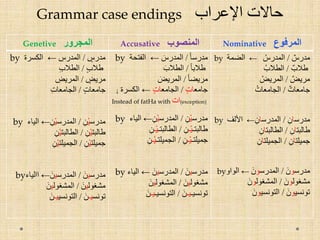
The subject ‫المبتدأ‬ and the predicate ‫الخبر‬ are both in nominative case ‫مرفوع‬.
Please refer to ¨Case system¨ in ¨Arabic 1: Basics on nouns¨ slides for details with
regards to grammar case endings.
1- Damma (s): Notice the mark Damma (s) in red mark indicating the
nominative case in these examples:
Singular : The lesson is beneficial ‫الدر‬ُ‫س‬‫مفيــ‬ٌ‫د‬
The university is big ‫الجامع‬ُ‫ة‬‫كبير‬ٌ‫ة‬
Broken plural: The students are Arabs ‫الطال‬ُ‫ب‬‫عر‬ٌ‫ب‬
The books are many ‫الكت‬ُ‫ب‬‫كثير‬ٌ‫ة‬
Sound plural feminin: The teachers are present ‫اْلستاذا‬ُ‫ت‬‫حاضرا‬ٌ‫ت‬
The articles are long ‫المقاال‬ُ‫ت‬‫طويل‬ٌ‫ة‬
2- Alif ‫األلف‬: Notice “‫ا‬“ in red mark indicating the nominative case in
these examples:
Dual : The two exercises are hard ‫التمرين‬‫ا‬‫صعب‬ ِ‫ن‬‫ا‬ِ‫ن‬
The two sentences are short ‫الجملت‬‫ا‬‫قصيرت‬ ِ‫ن‬‫ا‬ِ‫ن‬
Please note the ‫ن‬ in the dual (after alif) remains with kasra and is not taken into
consideration in grammar anlysis.
3- Waaw ‫:الواو‬ Notice “‫و‬“ in red mark indicating the nominative case in
these examples:
Sound plural masculin: The teachers are coming ‫المعلم‬‫و‬‫قادم‬ َ‫ن‬‫و‬َ‫ن‬
The students are busy ‫مشغول‬ ُ‫الطالب‬‫و‬َ‫ن‬
Please note the ‫ن‬ in the sound plural masculin (after waaw) remains with
fatHa and is not taken into consideration in grammar anlysis.
4- By estimation ‫التقدير‬:
- When the subject ‫المبتدأ‬ is a personal pronoun (singular, dual & plural) or a demonstrative
pronoun (singular & plural only), the nominative case is estimated, and so no mark needed to
indicate the nominative case ending.
- When the predicate is a verbal sentence or a prepositional phrase or a nominal sentence, the
nominative case is estimated too, and so no mark or a letter is needed to indicate the
nominative case ending.
Examples: He is a doctor َ‫و‬ُ‫ه‬ٌ‫طبيب‬
This is library ِ‫ه‬ِ‫ذ‬َ‫ه‬ٌ‫مكتبة‬
Mohamed works in a bank ٌ‫د‬‫محم‬‫بنك‬ ‫في‬ ‫يعمل‬
The director is in the office ُ‫المدير‬ِ‫ب‬‫المكت‬ ‫في‬
The city, it streets are ovecrowded ُ‫ة‬‫المدين‬ٌ‫مزدحمة‬ ‫ها‬ُ‫ع‬‫شوار‬
Please note that the demonstrative pronoun dual is nominative by ‫ا‬ as mentioned in # 2 . Example:
These are two photos ‫هاتــ‬‫ا‬ِ‫ن‬‫صورتــ‬‫ا‬‫ن‬
7- Personal pronouns ‫المنفصلة‬ ‫الضمائر‬
* Translation of the
personal pronouns varies
according to their
contexts.
Example: ‫أنا‬ can be
translated : ¨I¨ or ¨I am¨
or ¨me¨ , same for the
other pronouns.
* When referring to non-
human plural masculine
or feminine such as
objects & animals, the
pronoun used is ‫هي‬
NOT ‫هم‬ or ‫هن‬
.
.
.
8- Demonstrative pronouns ‫اإلشارة‬ ‫أسماء‬
* When pointing or
referring to non-human
plural masculine or
feminine such as objects
& animals, the
demonstrative pronoun
to be used is the singular
feminine ‫هذه‬ & ‫تلك‬ NOT
the plural ‫هؤالء‬ & ‫أولئك‬
Example:
These are books:
‫كـتـب‬ ‫هـذه‬
.
.
9- Grammar tips
Non-human nouns plural masculine and feminine are treated as singular
feminine, and so:
* The predicate adjective describing it has to be singular feminine. Example:
The streets are overcrowded ُ‫ع‬ ِ‫وار‬َّ‫ش‬‫ال‬ٌ‫ة‬َ‫م‬ ِ‫ح‬َ‫د‬ ْ‫ز‬ُ‫م‬
The rooms are small ُ‫ف‬ َ‫ر‬ُ‫غ‬ْ‫ال‬ٌ‫ة‬‫غير‬َ‫ص‬
* The verb in the verbal sentence functioning as a predicate of a subject plural
non-human masculine or feminine must be singular feminine. Example:
Classes start at 8:00 am ُ‫فوف‬ُّ‫ص‬‫ال‬ُ‫أ‬َ‫د‬ْ‫ب‬َ‫ت‬‫باحا‬َ‫ص‬ ِ‫ة‬‫ن‬ِ‫الثام‬ ‫في‬
* Personal pronoun and demonstrative pronoun referring to non-human nouns
plural masculine or feminine need to be Feminine singular : ِ‫ه‬ِ‫ذ‬‫ه‬/َ‫ي‬ِ‫ـ‬‫ه‬ ،َ‫ك‬ْ‫ل‬ِ‫ت‬ .
Example: These are houses ِ‫ه‬ِ‫ذ‬‫ه‬ٌ‫يوت‬ُ‫ب‬
Those are offices َ‫ك‬ْ‫ل‬ِ‫ت‬‫ب‬ِ‫ت‬‫كا‬َ‫م‬
The photos are on the table. They are beautiful ِ‫ة‬َ‫ل‬ِ‫و‬‫الطا‬ ‫لى‬َ‫ع‬ ُ‫ر‬ َ‫و‬ُّ‫ص‬‫ال‬.َ‫ي‬ِ‫ه‬ٌ‫ة‬َ‫ل‬‫مي‬َ‫ج‬
‫النهاية‬
‫تحياتي‬
‫الزعيم‬ ‫محمد‬
www.alif-zaim.blogspot.com

Arabic 3: Basics on the nominal sentence

  • 1.
    Arabic 3 Basics on Thenominal sentence www.alif-zaim.blogspot.com
  • 2.
    1- Preliminary notes: Asentence is a set of words, grammatically linked, that is complete in itself and expresses a complete thought conveying a statement, command, question, exclamation .. Typically, a sentence consists of a subject and a predicate. The subject is what the sentence is talking about and the predicate is the information about the subject, it tells us something about it. The sentence is classified in Arabic grammar in tow main categories: 1- Nominal sentence ‫ــيــة‬ِ‫ــم‬ْ‫س‬‫إ‬ ‫ــلــة‬ْ‫ــم‬ُ‫ج‬ , called also noun sentence or equational sentence. 2- Verbal sentence ‫ـيـة‬ِ‫ل‬‫ـ‬ْ‫ع‬‫ـ‬ِ‫ف‬ ‫ــلــة‬ْ‫ــم‬ُ‫ج‬ The verbal sentence is easy to recognize as the first word in it is always a verb while the nominal sentence never starts with a verb as illustrated with the preliminary examples in the next slide:
  • 3.
    2- Introductory examples: ‫فعلية‬‫جمل‬Verbal sentences : َ‫و‬ْ‫ح‬َّ‫ن‬‫ال‬ ُ‫الطالب‬ َ‫س‬َ‫ر‬َ‫د‬.The student studied / has studied grammar. َ‫و‬ْ‫ح‬َّ‫ن‬‫ال‬ ُ‫ب‬ِ‫ل‬‫ا‬ّ‫الط‬ ُ‫س‬ُ‫ر‬ْ‫د‬َ‫ي‬.The student studies /is studying grammar. َ‫و‬ْ‫ح‬َّ‫ن‬‫ال‬ ُ‫ب‬ِ‫ل‬‫ا‬َّ‫الط‬ ُ‫س‬ُ‫ر‬ْ‫د‬َ‫ي‬َ‫س‬.The student will study grammar. These sentences, starting with verb “ to study ”‫درس‬ in different tenses and so classified as verbal sentences, can be changed to nominal sentences (as shown below) by placing the verb after the subject which is “the student ‫الطالب‬ ” making the imphasis on the noun (subject) rather than the verb : ‫إسمية‬ ‫جمل‬Nominal sentences : َ‫و‬ْ‫ح‬َّ‫ن‬‫ال‬ َ‫س‬َ‫ر‬َ‫د‬ ُ‫الطالب‬.The student studied / has studied grammar. َ‫النحو‬ ُ‫س‬ُ‫ر‬ْ‫د‬َ‫ي‬ ُ‫الطالب‬.The student studies /is studying grammar. َ‫النحو‬ ُ‫س‬ُ‫ر‬ْ‫د‬َ‫ي‬َ‫س‬ ُ‫الطالب‬.The student will study grammar.
  • 4.
    3- Parts ofthe nominal sentence: The nominal sentence consists of two main parts as illustrated in the following example: The house is beautiful ٌ‫ل‬‫ــمــيـــ‬َ‫ج‬ ُ‫ْــت‬‫ي‬‫ــ‬َ‫ب‬‫ــ‬ْ‫ال‬ ‫الـبيت‬x‫جميل‬ ‫جميل‬:‫خــبــر‬ Beautiful is: Predicate ( Information about the subject) x Hidden ¨ is ¨ (non-existing word in this context) ‫البيت‬:‫مبتدأ‬ The house is: Subject ( What the sentence is talking about )
  • 5.
    4- Types ofthe subject ‫المـبـتـدأ‬ ‫أنـواع‬ The subject ‫المبتدأ‬ in the nominal sentence can be: 1- A noun ‫إســـم‬ : The weather is cold ُ‫س‬ْ‫ق‬َّ‫الط‬ٌ‫د‬ ِ‫بار‬ The students are in the class ُ‫ب‬ّ‫ال‬ُّ‫الط‬ِّ‫ف‬َّ‫ص‬‫ال‬ ‫في‬ Fatima lives in this house ‫فاطمة‬ِ‫ت‬ْ‫ي‬َ‫ب‬ْ‫ال‬ ‫هذا‬ ‫في‬ ُ‫ن‬ُ‫ك‬ْ‫س‬َ‫ت‬ 2- A personal pronoun ‫منفصل‬ ‫ضمير‬ : I am busy ‫أنا‬ٌ‫ل‬‫غو‬ْ‫ش‬َ‫م‬/‫أنا‬ٌ‫مشغولة‬ He is in the office ‫هو‬ِ‫ب‬َ‫ت‬ْ‫ك‬َ‫م‬ْ‫ال‬ ‫في‬ ( Personal pronouns are 15 total illustrated in a chart at the end of the show)
  • 6.
    3- A demonstrativepronoun ‫إســـم‬‫إشارة‬ : This is my freind ‫هذا‬‫صديقي‬ This is a nice photo ِ‫ه‬‫هذ‬ٌ‫ميلة‬َ‫ج‬ ٌ‫ة‬ َ‫صور‬ That is a restaurant َ‫ك‬ِ‫ل‬‫ذ‬ٌ‫م‬َ‫ع‬ْ‫ط‬َ‫م‬ ( Demonstrative pronouns are 10 illustrated in a chart at the end of the show) 4- The particle ‫أ‬‫ن‬ + a verb in present perfect ‫ن‬ِ‫م‬ ‫ل‬َّ‫و‬‫ؤ‬ُ‫م‬ ‫ر‬‫د‬‫ص‬‫م‬(‫أن‬+‫فعل‬) : The verbal noun ‫المصدر‬ can be replaced by its verb preceded by the particle ‫أن‬ and so treated both as a noun called ‫مؤول‬ ‫مصدر‬ ¨ indirect maSdar ¨ functioning the same way as ¨ direct maSdar ¨ : Reading is beneficial ُ‫ة‬َ‫ء‬‫را‬ِ‫ق‬ْ‫ال‬ٌ‫ة‬َ‫د‬‫في‬ُ‫م‬ The fact that you read is better ‫أ‬َ‫ـر‬ْ‫ق‬‫ـ‬َ‫ت‬ ْ‫أن‬ٌ‫د‬‫في‬ُ‫م‬ The direct maSdar is ¨ ‫القراءة‬ ¨and the indirect maSdar ¨ ‫تقرأ‬ ‫أن‬ ¨, both subjects.
  • 7.
    5- Types ofthe predicate ‫الخــبــر‬ ‫أنـواع‬ The predicate ‫الخــبــر‬ can be: 1- A noun ‫إســـم‬ : Mohamed is a teacher ٌ‫د‬‫ــ‬ّ‫م‬‫ـ‬َ‫ح‬‫ـ‬ُ‫م‬ٌ‫ذ‬‫ـتـا‬ْ‫س‬ُ‫أ‬ My hobby is swiming ‫تي‬َ‫ي‬‫وا‬ِ‫ه‬ُ‫ة‬َ‫ح‬‫با‬ِّ‫س‬‫ال‬ 2- A descriptive noun (adjective) ‫إسم‬‫فة‬ ِ‫ص‬ : She is ill ‫هــي‬ٌ‫ـريـضـة‬َ‫م‬ Are you happy ? َ‫أنت‬ ‫هل‬ٌ‫د‬‫عي‬َ‫س‬/ِ‫ت‬‫أن‬ ‫هل‬ٌ‫ة‬‫سعيد‬‫؟‬ The pen is red ُ‫م‬‫ـ‬َ‫ل‬َ‫ق‬‫ـ‬ْ‫ال‬‫ــر‬َ‫م‬‫ـ‬ْ‫ح‬َ‫أ‬
  • 8.
    3- A verbalsentence ‫ية‬ِ‫ل‬‫ع‬ِ‫ف‬ ‫لة‬‫ُم‬‫ج‬ : My father works in a company ‫والدي‬ُ‫ل‬َ‫م‬ْ‫ع‬َ‫ي‬‫في‬‫ة‬َ‫ك‬ ِ‫َر‬‫ش‬ Fatima studies medicine ‫فاطمة‬َّ‫ب‬ِّ‫الط‬ ُ‫تدرس‬ 4- A prepositional phrase ‫ـلـة‬‫ُـم‬‫ج‬ ‫ـه‬‫ـب‬ِ‫ش‬ : The chidren are in the school ُ‫د‬‫ال‬ ْ‫و‬ ْ‫اْل‬ِ‫ة‬‫المدرس‬ ‫في‬ The car is in the front of the door ُ‫ة‬‫يار‬َّ‫س‬‫ال‬ِ‫ب‬‫البا‬ َ‫أمام‬ 5- A nominal sentence ‫ية‬ِ‫م‬‫إس‬ ‫لة‬‫ُم‬‫ج‬ : The house, its door is beautiful ُ‫بيت‬ْ‫ال‬ٌ‫ل‬‫مي‬َ‫ج‬ ُ‫ه‬‫ــ‬ُ‫ب‬‫با‬ My sister, her husband is a teacher ‫تي‬ْ‫أخ‬ٌ‫ذ‬‫تا‬ْ‫س‬‫أ‬ ‫ها‬ُ‫ج‬ ْ‫و‬ َ‫ز‬
  • 9.
    6- The particle‫أ‬‫ن‬ + a verb in present perfect ‫أن‬ ‫من‬ ‫ل‬َّ‫و‬‫ؤ‬ُ‫م‬ ‫مصدر‬+‫فعل‬ : As mentionaed in the types of the subject, The verbal noun ‫المصدر‬ can be replaced by its verb preceded by the particle ‫أن‬ and so treated both as a ¨ noun called ‫مؤول‬ ‫مصدر‬ ¨ indirect maSdar ¨ functioning the same way ¨ direct maSdar ¨ : Happiness is satisfaction ُ‫ة‬َ‫ع‬‫نا‬َ‫ق‬ْ‫ال‬ ُ‫ة‬َ‫د‬‫عا‬َّ‫س‬‫ال‬ Happiness is that you are satisfied ُ‫ة‬‫السعاد‬َ‫ع‬َ‫ن‬ْ‫ق‬َ‫ت‬ ْ‫ن‬َ‫أ‬ The direct maSdar is ¨‫القناعة‬¨and the indirect maSdar ¨‫تقنع‬ ‫أن‬ ¨, both predicates. 7- Please note taht the predicate can alos be a personal pronoun and demonstraive pronoun such as : - This is me ‫هذا‬‫أنا‬ - The reason is this ُ‫ب‬َ‫ب‬َّ‫س‬‫ال‬‫هذا‬
  • 10.
    6- Case endingsin nominal sentences The subject ‫المبتدأ‬ and the predicate ‫الخبر‬ are both in nominative case ‫مرفوع‬. Please refer to ¨Case system¨ in ¨Arabic 1: Basics on nouns¨ slides for details with regards to grammar case endings. 1- Damma (s): Notice the mark Damma (s) in red mark indicating the nominative case in these examples: Singular : The lesson is beneficial ‫الدر‬ُ‫س‬‫مفيــ‬ٌ‫د‬ The university is big ‫الجامع‬ُ‫ة‬‫كبير‬ٌ‫ة‬ Broken plural: The students are Arabs ‫الطال‬ُ‫ب‬‫عر‬ٌ‫ب‬ The books are many ‫الكت‬ُ‫ب‬‫كثير‬ٌ‫ة‬ Sound plural feminin: The teachers are present ‫اْلستاذا‬ُ‫ت‬‫حاضرا‬ٌ‫ت‬ The articles are long ‫المقاال‬ُ‫ت‬‫طويل‬ٌ‫ة‬
  • 11.
    2- Alif ‫األلف‬:Notice “‫ا‬“ in red mark indicating the nominative case in these examples: Dual : The two exercises are hard ‫التمرين‬‫ا‬‫صعب‬ ِ‫ن‬‫ا‬ِ‫ن‬ The two sentences are short ‫الجملت‬‫ا‬‫قصيرت‬ ِ‫ن‬‫ا‬ِ‫ن‬ Please note the ‫ن‬ in the dual (after alif) remains with kasra and is not taken into consideration in grammar anlysis. 3- Waaw ‫:الواو‬ Notice “‫و‬“ in red mark indicating the nominative case in these examples: Sound plural masculin: The teachers are coming ‫المعلم‬‫و‬‫قادم‬ َ‫ن‬‫و‬َ‫ن‬ The students are busy ‫مشغول‬ ُ‫الطالب‬‫و‬َ‫ن‬ Please note the ‫ن‬ in the sound plural masculin (after waaw) remains with fatHa and is not taken into consideration in grammar anlysis.
  • 12.
    4- By estimation‫التقدير‬: - When the subject ‫المبتدأ‬ is a personal pronoun (singular, dual & plural) or a demonstrative pronoun (singular & plural only), the nominative case is estimated, and so no mark needed to indicate the nominative case ending. - When the predicate is a verbal sentence or a prepositional phrase or a nominal sentence, the nominative case is estimated too, and so no mark or a letter is needed to indicate the nominative case ending. Examples: He is a doctor َ‫و‬ُ‫ه‬ٌ‫طبيب‬ This is library ِ‫ه‬ِ‫ذ‬َ‫ه‬ٌ‫مكتبة‬ Mohamed works in a bank ٌ‫د‬‫محم‬‫بنك‬ ‫في‬ ‫يعمل‬ The director is in the office ُ‫المدير‬ِ‫ب‬‫المكت‬ ‫في‬ The city, it streets are ovecrowded ُ‫ة‬‫المدين‬ٌ‫مزدحمة‬ ‫ها‬ُ‫ع‬‫شوار‬ Please note that the demonstrative pronoun dual is nominative by ‫ا‬ as mentioned in # 2 . Example: These are two photos ‫هاتــ‬‫ا‬ِ‫ن‬‫صورتــ‬‫ا‬‫ن‬
  • 13.
    7- Personal pronouns‫المنفصلة‬ ‫الضمائر‬ * Translation of the personal pronouns varies according to their contexts. Example: ‫أنا‬ can be translated : ¨I¨ or ¨I am¨ or ¨me¨ , same for the other pronouns. * When referring to non- human plural masculine or feminine such as objects & animals, the pronoun used is ‫هي‬ NOT ‫هم‬ or ‫هن‬ . . .
  • 14.
    8- Demonstrative pronouns‫اإلشارة‬ ‫أسماء‬ * When pointing or referring to non-human plural masculine or feminine such as objects & animals, the demonstrative pronoun to be used is the singular feminine ‫هذه‬ & ‫تلك‬ NOT the plural ‫هؤالء‬ & ‫أولئك‬ Example: These are books: ‫كـتـب‬ ‫هـذه‬ . .
  • 15.
    9- Grammar tips Non-humannouns plural masculine and feminine are treated as singular feminine, and so: * The predicate adjective describing it has to be singular feminine. Example: The streets are overcrowded ُ‫ع‬ ِ‫وار‬َّ‫ش‬‫ال‬ٌ‫ة‬َ‫م‬ ِ‫ح‬َ‫د‬ ْ‫ز‬ُ‫م‬ The rooms are small ُ‫ف‬ َ‫ر‬ُ‫غ‬ْ‫ال‬ٌ‫ة‬‫غير‬َ‫ص‬ * The verb in the verbal sentence functioning as a predicate of a subject plural non-human masculine or feminine must be singular feminine. Example: Classes start at 8:00 am ُ‫فوف‬ُّ‫ص‬‫ال‬ُ‫أ‬َ‫د‬ْ‫ب‬َ‫ت‬‫باحا‬َ‫ص‬ ِ‫ة‬‫ن‬ِ‫الثام‬ ‫في‬ * Personal pronoun and demonstrative pronoun referring to non-human nouns plural masculine or feminine need to be Feminine singular : ِ‫ه‬ِ‫ذ‬‫ه‬/َ‫ي‬ِ‫ـ‬‫ه‬ ،َ‫ك‬ْ‫ل‬ِ‫ت‬ . Example: These are houses ِ‫ه‬ِ‫ذ‬‫ه‬ٌ‫يوت‬ُ‫ب‬ Those are offices َ‫ك‬ْ‫ل‬ِ‫ت‬‫ب‬ِ‫ت‬‫كا‬َ‫م‬ The photos are on the table. They are beautiful ِ‫ة‬َ‫ل‬ِ‫و‬‫الطا‬ ‫لى‬َ‫ع‬ ُ‫ر‬ َ‫و‬ُّ‫ص‬‫ال‬.َ‫ي‬ِ‫ه‬ٌ‫ة‬َ‫ل‬‫مي‬َ‫ج‬
  • 16.