i
‫القرآنية‬‫العربية‬‫اللغة‬‫أصول‬
ESSENTIALS OF QURANIC ARABIC
Volume 1
by Masood Aḥmed Ranginwala
Edited by Abū Zayd
Obaidullah Choudry
ii
Copyright © Masood Aḥmed Ranginwala 2012
Second Edition June 2013
Revised August 2014
All rights reserved. No part of this publication may be reproduced, stored in any retrieval system,
or transmitted in any form or by any means, electronic, or otherwise, without written permission
of the publisher.
ISBN 978-1-300-07804-3
Published by:
ILF- Islamic Learning Foundation (NY)
ICNA (Islamic Circle of North America)
166-26 89th Ave
Jamaica, NY 04262
masoodar@gmail.com
Additional copies of this 2-Volume Series softcover textbook or e-book can be purchased at
http://www.lulu.com/spotlight/MasoodR
Please note that all profits go towards advancing Qur’ānic Studies.
Cover design by Adam Ranginwala and Omar Ranginwala.
Any mistakes or shortcomings in this book are due to errors of the author, and all that is correct
and true solely are due to Allahh. Please feel free to contact the author at the email listed above
to notify him of any errors present.
Table of Contents
1
Table of Contents
TABLE OF CONTENTS........................................................................................................................................................................................................1
ACKNOWLEDGEMENTS.....................................................................................................................................................................................................6
TRANSLITERATION KEY...................................................................................................................................................................................................7
FOREWORD ............................................................................................................................................................................8
PREFACE..................................................................................................................................................................................9
I. THE IMPORTANCE OF THE ARABIC LANGUAGE.........................................................................................................................................................9
I. TEXT GOALS AND OBJECTIVES ................................................................................................................................................................................. 10
HISTORY OF ARABIC GRAMMAR...................................................................................................................................13
I. ARABIC AT THE TIME OF THE PROPHET................................................................................................................................................................. 13
II. EVOLUTION OF ARABIC GRAMMAR........................................................................................................................................................................ 14
LESSON 1: INTRODUCTION TO ARABIC GRAMMAR: THE ARABIC WORD [‫الكلمة‬].......................................16
I. PRE-GRAMMAR REVIEW OF ARABIC...................................................................................................................................................................... 16
II. THE ARABIC WORD [‫ة‬َ‫م‬ِ‫ل‬َ‫ك‬‫ال‬] .................................................................................................................................................................................... 20
III. THE FOUR CHARACTERISTICS OF ARABIC NOUNS [‫اء‬ْ‫َمس‬‫أل‬َ‫ا‬].............................................................................................................................. 22
IV. I'RĀB [‫اب‬‫ر‬ْ‫إع‬]............................................................................................................................................................................................................ 22
Table 1: I‛rāb of Singular and Dual Nouns .................................................................................................................................................24
Table 2: I‛rāb of Sound Masculine Plural ....................................................................................................................................................25
Table 3: I‛rāb of Sound Feminine Plurals ....................................................................................................................................................26
Table 4: I‛rāb of Broken Plurals ......................................................................................................................................................................26
LESSON 2: I‛RĀB AND FLEXIBILITY.............................................................................................................................27
I. THE THREE CATEGORIES OF ARABIC WORDS [‫ات‬َ‫م‬ِ‫ل‬َ‫ك‬ْ‫ل‬َ‫ا‬]...................................................................................................................................... 27
II. THE NOUN [‫م‬ْ‫الس‬َ‫ا‬] AND ITS FOUR CHARACTERISTICS ......................................................................................................................................... 27
Table 5: Special Feminine Nouns....................................................................................................................................................................28
Table 6: Inflection of “Noun Endings” by I‛rāb..........................................................................................................................................32
III. FLEXIBILITY AND I‛RĀB.......................................................................................................................................................................................... 33
IV. THE THREE DEGREES OF FLEXIBILITY OF NOUNS ............................................................................................................................................. 34
Table 7: Broken Plurals on patterns [‫ل‬ِ‫فاع‬َ‫م‬] and [‫الء‬َ‫ع‬ُ‫ف‬] ...........................................................................................................................36
LESSON 3: THE PRONOUNS [‫ر‬ِ‫َّمائ‬‫الض‬] AND THE POINTING NOUNS [ ُ‫َمساء‬‫أ‬ُ‫ة‬َ‫اإلشار‬ ]...................................................38
I. PRONOUNS [‫ر‬ِ‫مائ‬َ‫ض‬/‫ري‬ِ‫م‬َ‫ض‬] ........................................................................................................................................................................................ 38
Table 8: Detached Pronouns [ ‫ر‬ِ‫مائ‬َ‫الض‬‫ة‬َ‫ل‬ِ‫ص‬َ‫ف‬‫ن‬
ُ
‫امل‬ ] ...............................................................................................................................................38
Table 9: Attached Pronouns [‫ر‬ِ‫مائ‬َ‫الض‬‫ة‬َ‫ل‬ِ‫َّص‬‫ت‬ُ‫م‬ْ‫ل‬‫ا‬] ...............................................................................................................................................40
Table 10: Conjugation of Attached Nouns in Three I‛rābs [‫تاب‬ِ‫ك‬]......................................................................................................41
II. POINTING NOUNS [ َ‫أ‬ُ‫اء‬ ْ‫مس‬‫ة‬َ‫شار‬ِْ‫اْل‬ ] .............................................................................................................................................................................. 42
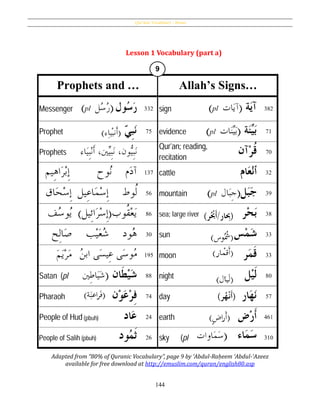
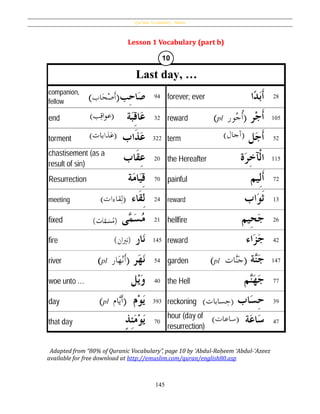
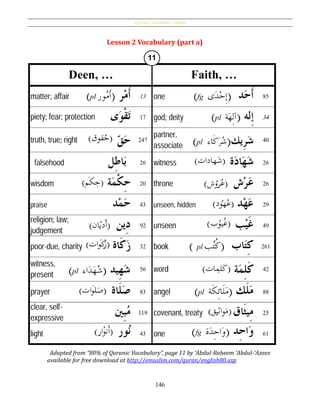
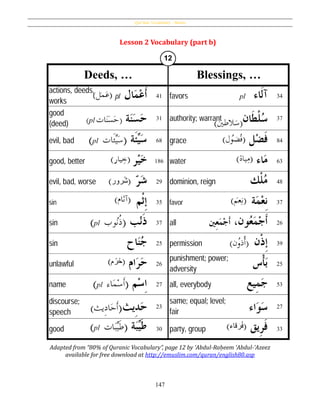
Table 11: Pointing Nouns - Near [ ُ‫اء‬ ْ‫َمس‬‫أ‬ِ‫ة‬َ‫شار‬ِْ‫اْل‬‫يب‬‫ر‬َ‫ق‬ْ‫ل‬‫ا‬ ]..................................................................................................................................42
Table 12: Pointing Nouns: Far [ ‫أ‬ُ‫اء‬ ْ‫مس‬ِ‫ة‬َ‫شار‬ِْ‫اْل‬‫عيد‬َ‫ب‬ْ‫ل‬‫ا‬ ]........................................................................................................................................42
Table 13: Additional Pointing Nouns............................................................................................................................................................43
Table of Contents
2
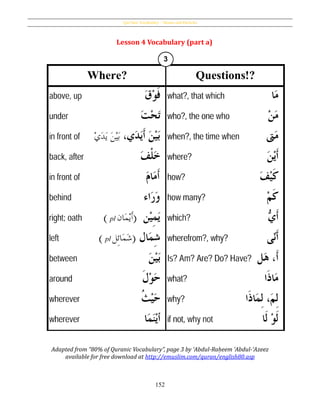
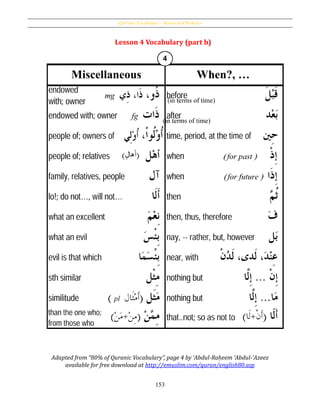
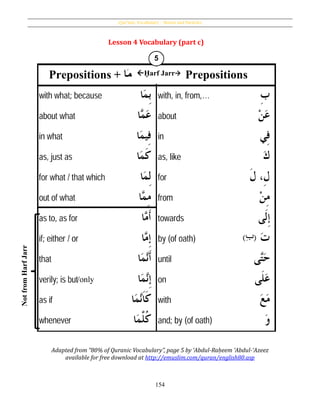
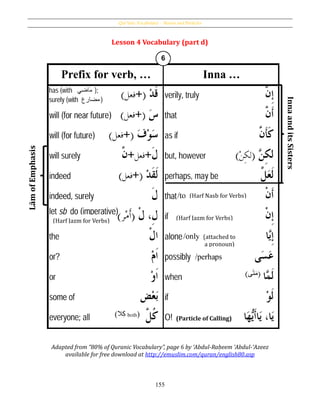
LESSON 4: PARTICLES [‫روف‬‫ح‬‫ْل‬َ‫ا‬] AND BROKEN PLURALS [ ُ‫ع‬ َ‫َج‬ُ‫حسري‬‫ك‬َّ‫ت‬‫ال‬ ] .....................................................................44
I. PARTICLES OF JARR [ ُ‫وف‬ُ‫ر‬ُ‫ح‬‫ر‬َْ‫ْل‬‫ا‬ ] .............................................................................................................................................................................. 44
Table 14: Ḥarf Jarr [ ُ‫وف‬ُ‫ر‬ُ‫ح‬‫ر‬َْ‫ْل‬‫ا‬ ] .........................................................................................................................................................................45
Table 15: Nouns of Place [ ُ‫ف‬ْ‫ر‬َ‫ظ‬‫كان‬
َ
‫امل‬ ] and Nouns of Time [ ُ‫ف‬ْ‫ر‬َ‫ظ‬‫مان‬َّ‫الز‬ ]...............................................................................................47
II. PARTICLES OF NAṢB [ ‫وف‬ُ‫ر‬ُ‫ح‬‫ب‬ْ‫َّص‬‫ن‬‫ال‬ ]....................................................................................................................................................................... 48
Table 16: Inna and its Sisters [ َّ‫ن‬ِ‫إ‬َ‫و‬‫ا‬ُ‫ُت‬‫ا‬‫و‬َ‫َخ‬‫أ‬ ]....................................................................................................................................................48
Table 17: Ḥarf Naṣb for Verbs..........................................................................................................................................................................49
III. PARTICLES OF JAZM [ ‫وف‬ُ‫ر‬ُ‫ح‬‫م‬ْ‫ز‬َْ‫اْل‬ ] .......................................................................................................................................................................... 50
IV. BROKEN PLURAL PATTERNS [ ُ‫ع‬َْ‫َج‬‫ري‬ِ‫ْس‬‫ك‬َّ‫ت‬‫ال‬ ]............................................................................................................................................................ 51
Table 18: Broken Plural Patterns...................................................................................................................................................................52
LESSON 5: WORD CONSTRUCTIONS [‫بات‬ِ‫ك‬َ‫ر‬‫امل‬] ..............................................................................................................53
I. INTRODUCTION TO WORD CONSTRUCTIONS......................................................................................................................................................... 53
II. THE DESCRIBING CONSTRUCTION [
ُ‫ب‬َّ‫ك‬َ‫ر‬
ُ
‫امل‬‫ي‬ِ‫يف‬ِ‫ص‬ْ‫َّو‬‫الت‬ ] ............................................................................................................................................. 53
III. POINTING CONSTRUCTIONS................................................................................................................................................................................... 55
IV. IḌĀFAH - THE POSSESSION CONSTRUCTION [
ُ‫ب‬َّ‫ك‬َ‫ر‬
ُ
‫امل‬ِ‫ضاف‬ِ‫ْل‬‫ا‬ ] .............................................................................................................................. 56
V. RELATIVE PRONOUNS [‫أ‬ُ‫اء‬ ْ‫مس‬‫ة‬َ‫ل‬‫و‬ُ‫ص‬ْ‫و‬َ‫م‬ْ‫ل‬‫ا‬] ................................................................................................................................................................... 61
Table 19: Relative Pronouns: [
َ‫ين‬ِ‫ذ‬َّ‫ل‬َ‫ا‬/‫ي‬ِ‫ذ‬َّ‫ل‬َ‫ا‬ ]....................................................................................................................................................61
VI. JARR CONSTRUCTIONS AND SENTENCES AS ADJECTIVES.................................................................................................................................. 64
VII. THE FIVE SPECIAL NOUNS [ُ‫اء‬ ْ‫َمس‬‫أل‬‫ا‬‫سة‬ْ‫م‬َْ‫اْل‬] ......................................................................................................................................................... 64
Table 20: The Five Special Nouns [
ُ‫اء‬ ْ‫َمس‬‫أل‬‫ا‬َ‫س‬ْ‫م‬َْ‫ْل‬‫ا‬‫ة‬] .........................................................................................................................................65
Table 21: Conjugation of Five Special Nouns as Muḍāf.........................................................................................................................66
LESSON 6: THE NOMINAL SENTENCE [ ُ‫ة‬َ‫ل‬‫م‬‫جل‬َ‫ا‬ُُ‫ة‬َّ‫ي‬ِ‫ح‬‫مس‬ِ‫ح‬‫اْل‬ ]......................................................................................................67
I. THE BASIC NOMINAL SENTENCE [ ُ‫اْل‬ُ‫ة‬َ‫ل‬‫م‬ُ‫ة‬َّ‫ي‬ِْ‫مس‬ِْ‫اال‬ ] .................................................................................................................................................... 67
II. SUBJECT AND PREDICATE [‫أ‬َ‫د‬َ‫ت‬ْ‫ب‬ُ‫م‬ْ‫ل‬َ‫ا‬] AND [َ‫ب‬َْ‫ْل‬َ‫ا‬] ..................................................................................................................................................... 68
III. THE FOUR TYPES OF PREDICATES [‫بار‬ْ‫َخ‬‫أ‬] .......................................................................................................................................................... 70
IV. IMPORTANT MISCELLANEOUS PARTICLES IN SENTENCES................................................................................................................................ 73
Table 22: Particles of Negation [ ‫وف‬ُ‫ر‬ُ‫ح‬‫ي‬ْ‫ف‬َّ‫الن‬ ] ...............................................................................................................................................73
Table 23: Connecting Particles [ ‫وف‬ُ‫ر‬ُ‫ح‬‫ف‬ْ‫ط‬َ‫ع‬ْ‫ل‬‫ا‬ ].............................................................................................................................................74
Table 24: Particles of Emphasis [ ُ‫وف‬ُ‫ر‬ُ‫ح‬‫يد‬ِ‫ك‬ْ‫َّو‬‫الت‬ ]............................................................................................................................................74
Table 25: Particles of Condition [ ‫وف‬ُ‫ر‬ُ‫ح‬‫ط‬ْ‫َّر‬‫الش‬ ].............................................................................................................................................75
V. INTERROGATIVE SENTENCES [‫هام‬ْ‫ف‬ِ‫ت‬ْ‫س‬ ِ‫ال‬َ‫ا‬] ............................................................................................................................................................... 76
Table 26: Interrogative Particles [ُ‫روف‬ُ‫ح‬‫هام‬ْ‫ف‬ِ‫ت‬ْ‫س‬ِْ‫اال‬] ..................................................................................................................................77
LESSON 7: TYPES OF NOMINAL SENTENCES [ُ‫واع‬‫ح‬‫ن‬‫أ‬ُ‫ل‬َ‫م‬‫اجل‬] ..........................................................................................79
I. NOMINAL SENTENCES AND ITS VARIANCES .......................................................................................................................................................... 79
II. CASES WHEN THE PREDICATE IS DEFINITE......................................................................................................................................................... 79
III. REVIEW OF NOMINAL SENTENCES WITH EMBEDDED CONSTRUCTIONS....................................................................................................... 81
IV. METHODOLOGY FOR ANALYZING NOMINAL SENTENCES.................................................................................................................................. 83
Table of Contents
3
LESSON 8: INTRODUCTION TO VERBS [‫حعال‬‫ف‬َ‫أ‬].............................................................................................................85
I. INTRODUCTION TO VERB CLASSIFICATION............................................................................................................................................................ 85
II. THE PAST TENSE VERB [
ُ‫ل‬ْ‫ع‬ِ‫ف‬ْ‫ل‬َ‫ا‬‫ماضي‬ْ‫ل‬‫ا‬ ]................................................................................................................................................................. 86
Table 27: Verb Conjugation of Past Tense Family I Verbs .....................................................................................................................88
III. THE PRESENT TENSE VERB [ ِ‫ف‬ْ‫ل‬َ‫ا‬ْ‫ع‬ُ‫ل‬
ْ
‫امل‬‫ع‬ِ‫ر‬‫ضا‬ُ‫م‬ ] ....................................................................................................................................................... 90
Table 28: Verb Conjugation of Present tense Family I Verbs [ ‫الفعل‬‫ع‬‫املضار‬ ].......................................................................................91
TABLE 29 - CONJUGATION OF ALL FAMILY I FORMS [
ُ‫ل‬ْ‫ع‬ِ‫ف‬ْ‫ل‬َ‫ا‬‫ُّالثي‬‫ث‬‫ال‬‫د‬َّ‫ر‬َ‫ج‬ُ‫م‬ْ‫ل‬‫ا‬] ............................................................................................................ 94
LESSON 9: THE VERBAL SENTENCE [ ُ‫ة‬َ‫ل‬‫ح‬‫م‬‫ح‬‫جل‬َ‫ا‬ُُ‫ح‬‫ل‬‫ا‬َُّ‫ي‬ِ‫ل‬‫ح‬‫ع‬ِ‫ف‬ُ‫ة‬ ]....................................................................................................95
I. INTRODUCTION TO VERBAL SENTENCES ............................................................................................................................................................... 95
II. VERBAL SENTENCE WITH EXPLICIT SUBJECT (THIRD PERSON) ...................................................................................................................... 96
III. IDENTIFYING THE DOER AND DIRECT OBJECT IN VERBAL SENTENCES........................................................................................................ 98
IV. TRANSITIVE AND INTRANSITIVE VERBS: [
ُ‫ل‬ْ‫ع‬ِ‫ف‬ْ‫ل‬َ‫ا‬‫ي‬ِ‫د‬َ‫ع‬َ‫ت‬ُ‫م‬ْ‫ل‬‫ا‬]&[
ُ‫ل‬ْ‫ع‬ِ‫ف‬ْ‫ل‬َ‫ا‬‫م‬ِ‫ز‬ َّ‫الال‬] ....................................................................................................... 99
Table 30: Verbs with an Associated Ḥarf Jarr........................................................................................................................................101
VI. EXCEPTIONS TO RULES OF VERB CONJUGATION: BROKEN PLURALS...........................................................................................................101
LESSON 10: THE VERB OF COMMAND [ُ‫ل‬‫ح‬‫ع‬ِ‫حف‬‫ل‬َ‫ا‬ُ‫ر‬‫ح‬‫َم‬‫ح‬‫اْل‬] , I‛RĀB OF VERBS, VERBAL PARTICLES, AND VERBS IN
THE FUTURE TENSE………………………………………………………………………………………………………………………....103
I. THE VERB OF COMMAND [
ُ‫ل‬ْ‫ع‬ِ‫ف‬ْ‫ل‬َ‫ا‬‫ر‬ْ‫َم‬‫أل‬‫ا‬ ]...................................................................................................................................................................103
Table 31: Converting Verbs to the Command Tense [
ُ‫ل‬ْ‫ع‬ِ‫ف‬ْ‫ل‬َ‫ا‬‫َمر‬ْ‫األ‬ ]........................................................................................................104
Table 32: Conjugation of Command Verbs [ْ‫ل‬َ‫ع‬ْ‫ف‬ِ‫ا‬] and [ْ‫ل‬ِ‫ع‬ْ‫ف‬ِ‫ا‬]................................................................................................................105
II. I‛RĀB OF VERBS: SOME IMPORTANT PRINCIPLES.............................................................................................................................................105
Table 33 – Verb Conjugation in Naṣb and Jazm.....................................................................................................................................106
III. VERBAL PARTICLES – ḤARF NAṢB AND ḤARF JAZM.......................................................................................................................................107
Table 34: Ḥarf Naṣb on Verbs .......................................................................................................................................................................107
Table 35: Ḥarf Jazm on Verbs........................................................................................................................................................................108
IV. FUTURE TENSE [‫بال‬ْ‫ق‬ِ‫ت‬ْ‫س‬ِ‫اال‬] ....................................................................................................................................................................................110
LESSON 11: THE PASSIVE VERB [ُ‫ل‬‫ح‬‫ع‬ِ‫حف‬‫ل‬َ‫ا‬ُ‫هول‬‫ح‬‫ج‬َ‫حم‬‫ل‬‫ا‬] , THE DOER NOUN [ ُ‫سم‬ِ‫ا‬ُ‫ل‬ِ‫الفاع‬ ], THE PASSIVE NOUN
[ ُ‫م‬‫ح‬‫س‬ِ‫ا‬ُ‫ول‬‫ع‬‫ح‬‫ف‬َ‫امل‬ ], THE VERBAL NOUN [‫ر‬َ‫د‬‫ح‬‫ص‬َ‫حم‬‫ل‬َ‫ا‬], AND USING AN ARABIC DICTIONARY................................................. 112
I. THE PASSIVE VERB TENSE [
ُ‫ل‬ْ‫ع‬ِ‫ف‬ْ‫ل‬َ‫ا‬‫هول‬ْ‫ج‬َ‫م‬ْ‫ل‬‫ا‬] ..........................................................................................................................................................112
Table 36: Passive Past Tense [
ُ‫ل‬ْ‫ع‬ِ‫ف‬ْ‫ل‬َ‫ا‬‫ماضي‬ْ‫ل‬‫ا‬‫ول‬ُ‫ه‬ْ‫ج‬َ‫م‬ْ‫ل‬‫ا‬ ].................................................................................................................................112
Table 37: Passive Present Tense [
ُ‫ل‬ْ‫ع‬ِ‫ف‬ْ‫ل‬َ‫ا‬‫ع‬ِ‫ر‬‫ضا‬ُ‫م‬ْ‫ل‬‫ا‬ِ‫هول‬ْ‫ج‬َ‫م‬ْ‫ل‬‫ا‬ ]..........................................................................................................................113
II. THE DOER NOUN PATTERN [ُ‫سم‬ِ‫ا‬‫ل‬ِ‫الفاع‬] .............................................................................................................................................................114
Table 38: The Doer Noun Pattern [ُ‫سم‬ِ‫ا‬‫ل‬ِ‫الفاع‬] ..........................................................................................................................................115
III. THE PASSIVE NOUN PATTERN [ُ‫م‬ْ‫س‬ِ‫ا‬‫ول‬ُ‫ع‬ْ‫ف‬
َ
‫امل‬] .......................................................................................................................................................116
Table 39: The Passive Noun Pattern [ُ‫م‬ْ‫س‬ِ‫ا‬‫ول‬ُ‫ع‬ْ‫ف‬
َ
‫امل‬] .....................................................................................................................................116
IV. THE VERBAL NOUN [ْ‫ل‬َ‫ا‬َ‫م‬‫ر‬َ‫د‬ْ‫ص‬] ............................................................................................................................................................................117
Table 40: Common Verbal Noun Pattern..................................................................................................................................................117
V. USING ARABIC DICTIONARIES ..............................................................................................................................................................................118
Table of Contents
4
LESSON 12: VERB FAMILIES II, III, AND IV - ُ‫ل‬‫ح‬‫ع‬ِ‫حف‬‫ل‬َ‫ا‬ُ‫ُّالثي‬‫ث‬‫ال‬ُُ‫يد‬‫ز‬َ‫حم‬‫ل‬‫ا‬ُُِ‫فيه‬ ...........................................................................125
I. REVIEW OF VERB FAMILY I CONJUGATIONS .......................................................................................................................................................125
Table 41: Review of Verb Family I [ ‫ال‬ُ‫ل‬ْ‫ع‬ِ‫ف‬‫الثي‬ُ‫الث‬ِ‫د‬َّ‫ر‬َ‫ج‬
ُ
‫امل‬ ] .............................................................................................................................125
II. VERB FAMILY II [
َ‫ل‬َّ‫ع‬َ‫ف‬/
ُ‫ل‬ِ‫ع‬َ‫ف‬ُ‫ي‬]...................................................................................................................................................................................127
Conjugation of Family II Verbs [
َ‫ل‬َّ‫ع‬َ‫ف‬/
ُ‫ل‬ِ‫ع‬َ‫ف‬ُ‫ي‬]..................................................................................................................................................128
Table 42: Conjugation of Family II Verbs [
َ‫ل‬َّ‫ع‬َ‫ف‬/
ُ‫ل‬ِ‫ع‬َ‫ف‬ُ‫ي‬]..............................................................................................................................128
Table 43: Family II Conjugations for Advanced Forms [
َ‫ل‬َّ‫ع‬َ‫ف‬]............................................................................................................128
III. VERB FAMILY III [ َ‫اع‬َ‫ف‬َ‫ل‬ /
ُ‫ل‬ِ‫فاع‬ُ‫ي‬].............................................................................................................................................................................130
Table 44 – Verb Family III Conjugations ..................................................................................................................................................130
IV. VERB FAMILY IV [
ُ‫ل‬ِ‫ع‬ْ‫ف‬ُ‫ي‬/َ‫ل‬َ‫ع‬ْ‫َف‬‫أ‬] ..............................................................................................................................................................................131
Table 45 – Verb Family IV Conjugations...................................................................................................................................................131
V. METHOD FOR ANALYZING VERBAL SENTENCES.................................................................................................................................................132
LESSON 13: VERB FAMILIES V THROUGH X - ُ‫ل‬‫ح‬‫ع‬ِ‫حف‬‫ل‬َ‫ا‬ُ‫ُّالثي‬‫ث‬‫ال‬ُُ‫يد‬‫ز‬َ‫حم‬‫ل‬‫ا‬ُُِ‫فيه‬ .........................................................................134
I. VERB FAMILY V [
َ‫ل‬َّ‫ع‬َ‫ف‬َ‫ت‬/ُ‫ل‬َّ‫ع‬َ‫ف‬َ‫ت‬َ‫ي‬ ]..................................................................................................................................................................................134
Table 46 – Verb Family V Conjugations ....................................................................................................................................................135
II. VERB FAMILY VI [
َ‫ل‬َ‫فاع‬َ‫ت‬/ُ‫ل‬َ‫فاع‬َ‫ت‬َ‫ي‬ ].............................................................................................................................................................................136
Table 47 – Verb Family VI Conjugations...................................................................................................................................................137
III. VERB FAMILY VII [
َ‫ل‬َ‫ع‬َ‫ف‬ْ‫ن‬ِ‫ا‬/
ُ‫ل‬ِ‫ع‬َ‫ف‬ْ‫ن‬َ‫ي‬]..........................................................................................................................................................................137
Table 48 – Verb Family VII Conjugations .................................................................................................................................................138
IV. VERB FAMILY VIII [
َ‫ل‬َ‫ع‬َ‫ت‬ْ‫ف‬ِ‫ا‬/
ُ‫ل‬ِ‫ع‬َ‫ت‬ْ‫ف‬َ‫ي‬]..........................................................................................................................................................................138
Table 49 – Verb Family VIII Conjugations................................................................................................................................................139
V. VERB FAMILY IX [َّ‫ل‬َ‫ع‬ْ‫ف‬ِ‫ا‬/ُّ‫ل‬َ‫ع‬ْ‫ف‬َ‫ي‬]..................................................................................................................................................................................139
Table 50– Verb Family IX Conjugations....................................................................................................................................................140
VI. VERB FAMILY X [
َ‫ل‬َ‫ع‬ْ‫ف‬َ‫ت‬ْ‫س‬ِ‫ا‬/
ُ‫ل‬ِ‫ع‬ْ‫ف‬َ‫ت‬ْ‫س‬َ‫ي‬].........................................................................................................................................................................140
Table 51 – Verb Family X Conjugations.....................................................................................................................................................141
VII. FUTURE TOPICS COVERED IN VOLUME TWO OF “ESSENTIALS OF QUR’ĀNIC ARABIC”...........................................................................141
Table 52 – Conjugation of the Ten Families ............................................................................................................................................142
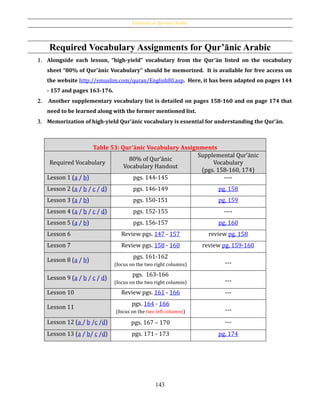
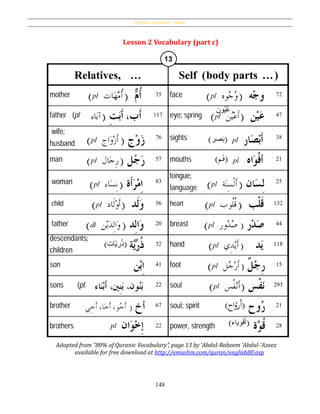
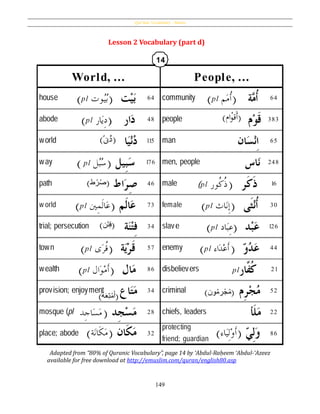
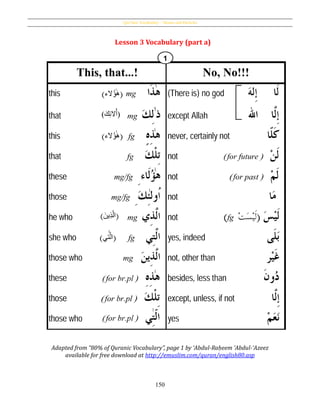
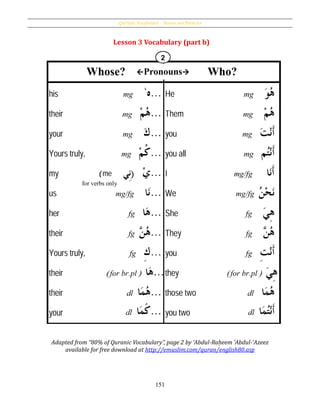
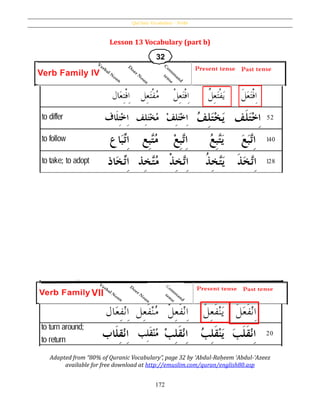
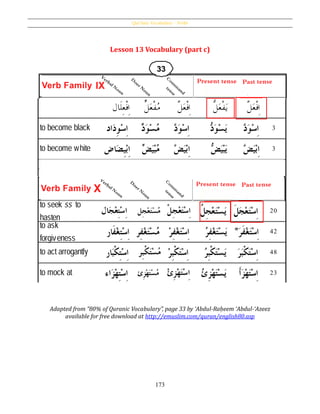
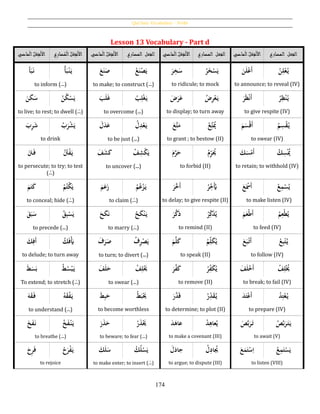
Table 53: Qur’ānic Vocabulary Assignments..........................................................................................................................143
GLOSSARY OF ARABIC GRAMMAR TERMS [ ‫ا‬ - ‫س‬] ...............................................................................................175
GLOSSARY OF ARABIC GRAMMAR TERMS [ ‫ش‬ - ‫ل‬]..............................................................................................176
GLOSSARY OF ARABIC GRAMMAR TERMS [ ‫م‬ - ‫ي‬] ................................................................................................177
REVIEW QUESTIONS FOR ESSENTIALS OF QUR’ĀNIC ARABIC.........................................................................178
ANSWER KEY FOR REVIEW QUESTIONS..................................................................................................................194
REFERENCES.....................................................................................................................................................................205
About the Author ...............................................................................................................................................................................................206
Essentials of Qur’ānic Arabic
5
‫الرحيم‬‫الرحمن‬‫هللا‬ ‫بسم‬
‫د‬ّ‫محم‬ ‫نبينا‬ ‫على‬ ‫الم‬ّ‫الس‬‫و‬ ‫الة‬ّ‫الص‬‫و‬ ‫العالمين‬ ّ‫رب‬ ‫هلل‬ ‫الحمد‬
‫و‬‫و‬ ‫آله‬‫على‬‫ب‬ ّ‫استن‬‫من‬ ‫و‬ ‫أجمعين‬‫صحبه‬‫الدين‬‫يوم‬ ‫إلى‬‫ته‬ّ‫سن‬
‫أمامه‬‫جعله‬‫من‬ ‫مصدق‬ ‫ماحل‬ ‫و‬ ‫مشفع‬ ‫شافع‬ ‫القرآن‬
‫النار‬‫إلى‬‫ساقه‬ ‫ظهره‬ ‫خلف‬‫جعله‬‫من‬ ‫و‬ ‫الجنة‬‫إلى‬‫اده‬‫ق‬
“The Qur’ān is an intercessor, something given permission to intercede, and it is rightfully
believed in. Whoever puts it in front of him, it will lead him to Paradise; whoever puts it
behind him, it will steer him to the Hellfire.”
(An authentic Ḥadīth found in [‫الكبري‬ ‫املعجم‬] by At-Ṭabarānī, on the authority of
‘Abdullāh ibn Mas’ūd verified as Ṣaḥīḥ in [‫الصحيحة‬ ‫السلسلة‬] by Sheikh al-Albāni)
Essentials of Qur’ānic Arabic
6
Acknowledgements
All Praise is to Allahh for His Help and Guidance in allowing this Book to be manifest. I would also like
to thank my many teachers who have guided me and imparted me knowledge in this sacred language. I am
even more indebted to my parents who have raised me on the Religion, and who continue to advise and
guide me. I am also grateful to my wife and children who have been very patient with this effort, and whose
precious time I have sacrificed. I am also thankful to Dr. Abū Zayd, founder of the Qur’ān Literacy Institute
who edited this textbook and improved on its format and readability.
One special note of thanks also goes to one of my early teachers, Ustādh Nouman Alī Khān, founder of the
Bayyinah Arabic Institute. He was my initial inspiration to teach what I learned of Qur’ānic Arabic and
make it accessible to those who wish to learn from its treasures. I also thank my teachers at the Qibla
Institute (formerly the Sunnipath Institute) namely Sheikh Hamza Karamali and Sheikh Farīd Dingle. I also
thank Sheikh Shakiel Humayun from the Foundation of Knowledge and Development. The individuals
involved with websites “The Qur’ānic Arabic Corpus”, “Zekr”, and “OpenBurhan” also deserve recognition as
their resources were used extensively for this work. May Allahh reward all these special people, and
others not mentioned here who contributed to this book.
The journey of learning this sacred language has been an arduous for me and has come with its
challenges. It is my hope that this book series can facilitate this journey for other students, enabling them
to understand the lofty and majestic words of the Qur’ān.
Essentials of Qur’ānic Arabic
7
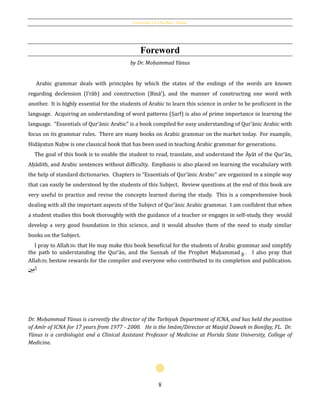
Transliteration Key
‫ئ/ؤ/أ/ء‬ ’ ‫ر‬ r ‫ف‬ f
١ ā ‫ز‬ z ‫ق‬ q
‫ب‬ b ‫س‬ s /‫ك‬‫ﮎ‬ k
‫ت‬ t ‫ش‬ sh ‫ل‬ l
‫ث‬ th ‫ص‬ ṣ ‫م‬ m
‫ج‬ j ‫ض‬ ḍ ‫ن‬ n
‫ح‬ ḥ ‫ط‬ ṭ /‫ه‬‫ﻫ‬ h
‫خ‬ kh ‫ظ‬ ẓ ‫و‬ w, ū, u
‫د‬ d ‫ع‬ ‛ ‫ي‬ y, i, ī
‫ذ‬ dh ‫غ‬ gh
This transliteration key is provided to help bridge the gap between Arabic and English letters. There are
several letters that are specific to the Arabic language, and do not have an English equivalent. We have
chosen to capitalize many of the Arabic terms mentioned in this book, especially those of a grammatical
context. Furthermore, Arabic terms written in English have been pluralized in English to facilitate the
reader.
Essentials of Qur’ānic Arabic
8
Foreword
by Dr. Moḥammad Yūnus
Arabic grammar deals with principles by which the states of the endings of the words are known
regarding declension (I‛rāb) and construction (Binā'), and the manner of constructing one word with
another. It is highly essential for the students of Arabic to learn this science in order to be proficient in the
language. Acquiring an understanding of word patterns (Ṣarf) is also of prime importance in learning the
language. “Essentials of Qur’ānic Arabic” is a book compiled for easy understanding of Qur’ānic Arabic with
focus on its grammar rules. There are many books on Arabic grammar on the market today. For example,
Hidāyatun Naḥw is one classical book that has been used in teaching Arabic grammar for generations.
The goal of this book is to enable the student to read, translate, and understand the Āyāt of the Qur’ān,
Aḥādith, and Arabic sentences without difficulty. Emphasis is also placed on learning the vocabulary with
the help of standard dictionaries. Chapters in “Essentials of Qur’ānic Arabic” are organized in a simple way
that can easily be understood by the students of this Subject. Review questions at the end of this book are
very useful to practice and revise the concepts learned during the study. This is a comprehensive book
dealing with all the important aspects of the Subject of Qur’ānic Arabic grammar. I am confident that when
a student studies this book thoroughly with the guidance of a teacher or engages in self-study, they would
develop a very good foundation in this science, and it would absolve them of the need to study similar
books on the Subject.
I pray to Allahh that He may make this book beneficial for the students of Arabic grammar and simplify
the path to understanding the Qur’ān, and the Sunnah of the Prophet Muḥammad . I also pray that
Allahh bestow rewards for the compiler and everyone who contributed to its completion and publication.
‫ني‬ِ‫آم‬
Dr. Moḥammad Yūnus is currently the director of the Tarbiyah Department of ICNA, and has held the position
of Amīr of ICNA for 17 years from 1977 - 2000. He is the Imām/Director at Masjid Dawah in Bonifay, FL. Dr.
Yūnus is a cardiologist and a Clinical Assistant Professor of Medicine at Florida State University, College of
Medicine.
Preface
9
Preface
I. The Importance of the Arabic Language
There are numerous benefits of learning the Arabic language. The primary benefit is to understand the
Qur’ān, the final message of Allahh which was revealed only in Arabic. By learning Arabic, the final
revelation can be better comprehended, pondered upon, and used as a means of guidance. It is guidance,
which is the most important benefit that one can obtain from this. The Qur’ān itself reminds us of these
benefits as well.
﴿ْ‫م‬ُ‫ك‬َّ‫ل‬َ‫ع‬َّ‫ل‬ ‫ا‬ًّ‫ي‬ِ‫ب‬َ‫ر‬َ‫ع‬ ‫ا‬‫آَّن‬ْ‫ر‬ُ‫ق‬ ُ‫اه‬َ‫ن‬ْ‫ل‬َ‫َنز‬‫أ‬ َّ‫َّن‬ِ‫إ‬َ‫ن‬‫و‬ُ‫ل‬ِ‫ق‬ْ‫ع‬َ‫ت‬﴾
Indeed, We have sent it, an Arabic Qur’ān so that you all may understand. (12:3)
﴿َ‫ن‬‫و‬ُ‫ق‬َّ‫ت‬َ‫ي‬ ْ‫م‬ُ‫ه‬َّ‫ل‬َ‫ع‬َّ‫ل‬ ٍ‫ج‬َ‫و‬ِ‫ع‬ ‫ي‬ِ‫ذ‬ َ‫ر‬ْ‫ي‬َ‫غ‬ ‫ا‬ًّ‫ي‬ِ‫ب‬َ‫ر‬َ‫ع‬ ‫ا‬‫رآَّن‬ُ‫ق‬﴾
It is a Qur’ān in Arabic, without any crookedness, in order that they may have Taqwah. (39:28)
Knowledge of the Arabic language is a means by which belief and awareness in Allahh can be
strengthened and elevated. It is through this language that Allahh speaks to us. Translations are often
inaccurate and cannot equal the beauty of the actual Arabic language. Translations are important but we
need to know Arabic in “real” time. We cannot take out our translations during Ṣalāh, Jumu‛ah Khutbah, or
Tarāwīḥ in Ramaḍān. It is also through this language that the Messenger of Allah speaks to us. His living
example and teachings are the best course of guidance for us, and a direct reflection from the Qur’ān.
Many scholars of Islam have stressed the importance of learning the language. Imām Shāfi said:
“Every Muslim is obligated to learn the Arabic tongue to the utmost of his power in order to profess
through it that "There is no God but Allah and Muḥammad is His Messenger" and to utter what is
mandated upon him....”.1
Sheikh Ibn Taymīyah said:
“The Arabic language is part of the religion, and knowing it is obligatory. This is because the ability
to understand the Qur’ān and Sunnah is obligatory on every Muslim, and yet they cannot be
understood without knowing Arabic, and (the general Islamic principle is that) every act that is an
essential prerequisite to perform an obligatory act is also obligatory”.2
1 Ar-Risāla [‫ة‬َ‫ل‬‫سا‬ِ‫الر‬], Imām Shāfi‛, pg. 93.
2 Iqtidā Ṣirātul Mustaqīm [‫املستقيم‬ ‫اط‬‫ر‬‫الص‬ ‫إقتضاء‬] pg. 469.
Preface
10
Islam has been preserved through the medium of Arabic, primarily through the Qur’ān and the Sunnah.
And secondarily, it has been preserved through the numerous classical books on Islam written by scholars
over the past 1400 years or so. These are some of the most important benefits of learning Arabic among
others.
I. Text Goals and Objectives
The ultimate goal of this text is to enable the student to understand of the fundamentals of Qur’ānic
grammar. Specifically, to understand the Qur’ān in terms of reading comprehension (i.e. understand the
Qur’ān that you read). Our goal here is not to develop fluency in speaking the language. Instead, our first
main focus is on understanding the written words. From this, there is a direct progression to listening
comprehension. Many think that speaking Arabic is the most important aspect of learning the language.
However, we do not hold this sentiment, particularly in the context that the majority of today's Muslims do
not understand basic spoken Arabic. However, since they have some basic ability to read the Qur’ān, a more
realistic and relevant goal is to focus on Qur’ānic reading comprehension. Fluency in the language should
be prioritized after gaining a solid foundation in reading and listening comprehension. Thus, our goal here
is to gain reading and listening comprehension of the Divine words of Allahh. All other goals relative to
learning Arabic should be secondary. Nonetheless, by learning Qur’ānic Arabic alone, the Ḥadīth of His
Messenger and other Islamic and contemporary Arabic literature can also be traversed.
III. Methodology of this Book
This book begins with the study of the three types of Arabic words, namely nouns, particles, and verbs.
Then, it looks at various types of “Word Constructions” and compound words. This is followed by the study
of “Noun Sentences”, or Nominal Arabic sentences. The second half of the book focuses on verbs, verbal
sentences, and verb derivatives. All throughout this book, a firm emphasis is placed on grammar. The
vocabulary that is emphasized is specific to that of the Qur’ān, and taken from the collection “80% of
Qur’ānic Vocabulary”.3 Each Lesson from this text comes with a list of vocabulary that needs to be learned
and memorized.4 More depth in vocabulary will Inshā Allah allow the student to better utilize and apply
grammar principles. Much of the technical Arabic terminology5 found in Arabic grammar study is not
3 This excellent compilation of “high-yield” Qur’ānic vocabulary by Abdul-Raḥeem Abdul-Azeez is available online for free download at
http://emuslim.com/Qur’ān/English80.asp. Memorizing this booklet is a fundamental component of learning the basic essential vocabulary of
Qur’ānic Arabic.
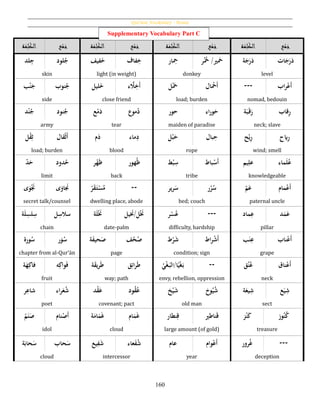
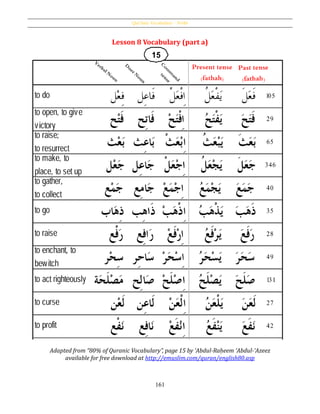
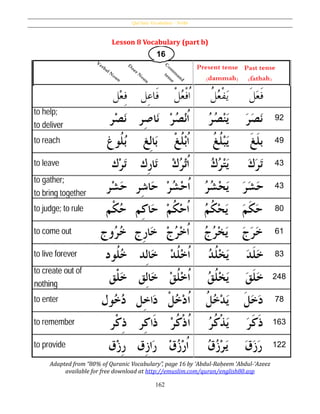
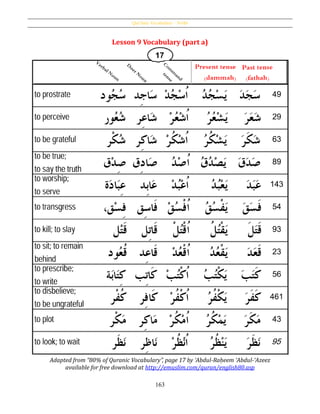
4 Refer to Required Vocabulary List for “Essentials of Qur’ānic Arabic” on pg. 143. This also includes “Supplemental Qur’ānic Vocabulary” as well.
5 A Glossary of Arabic Grammar Terminology is provided near the end of this book for reference if needed for important or commonly used Arabic
grammar terms.
Preface
11
emphasized to provide ease for the novice student. Each lesson covers specific fundamental rules of Arabic
that are presented in a simplified and condensed manner, so that Qur’ānic Arabic can be learned in a most
efficient way. Lastly, review questions are included for every lesson so that the student can appropriately
review the material. Without appropriate review and practicing examples from the Qur’ān, Qur’ānic Arabic
cannot be properly learned.
There are several topics in Arabic Grammar that may be difficult. This will require effort and persistence.
Inshā Allah with time these concepts will be mastered. As the student embarks forward, concepts should
start coming together like pieces of a puzzle. The goal of this First Volume is to develop the ability to
translate a typical āyah from the Qur’ān, Ḥadīth, or an Arabic sentence with the aid of an Arabic dictionary.
The Second Volume builds on the core Arabic grammar principles found in this First Volume, as well other
topics in intermediate grammar.
IV. Advice for the Student
It is essential to start with a righteous intention, and not to let this go. The Prophet said in one well-
known Ḥadīth central to Islam:
[… ِ‫ل‬ُ‫ك‬ِ‫ل‬ ‫ا‬َّ‫َّن‬ِ‫إ‬ َ‫و‬ ِ‫يات‬ِ‫لن‬ِ‫ِب‬ ُ‫مال‬ْ‫َع‬ْ‫األ‬ ‫ا‬َّ‫إَّن‬‫ٱ‬‫ى‬َ‫و‬َ‫ن‬ ‫ما‬ ٍ‫ئ‬ِ‫ر‬ْ‫م‬ ]
“Indeed actions are by intention, and each person will have what he intends...”6
Keep in mind that when you are learning Arabic, you are in fact learning the Qur’ān, and developing the
keys to understanding the Lofty Words of Allahh. Furthermore, you are also learning to understand the
comprehensive speech of His Messenger . The key to learning Arabic is being constant and consistent.
This is not an endeavor of a few months. It takes persistence of several years to truly learn the language.6
Most students give up after the first few weeks. However, the purpose of this book is to equip students with
the necessary skills and fundamentals by which the Qur’ān, Ḥadīth, and other Arabic literature can be
properly understood and utilized. The first step is the hardest: other steps become easier once that first
step has been taken successfully.
6 Ṣaḥīḥ al-Bukhāri, Chapter on Beginning of Revelation:‫العحي‬ ‫بدء‬ ‫,كتاب‬ Ḥadīth #1.
6 This does not mean that students cannot learn the basics of Qur’ānic Arabic in less time. In a few months and with some dedication, students
should be able to learn basic Qur’ānic Arabic ‫هللا‬ ِ‫ن‬ْ‫ذ‬ِِ‫.ِب‬
Preface
12
Realize that the Qur’ān is weighty. Allahh tells His Messenger :
﴿‫ا‬‫يال‬ِ‫ق‬َ‫ث‬ ‫ا‬‫ال‬ْ‫و‬َ‫ق‬ َ‫ك‬ْ‫ي‬َ‫ل‬َ‫ع‬ ‫ي‬ِ‫ق‬ْ‫ل‬ُ‫ن‬َ‫س‬ َّ‫َّن‬ِ‫إ‬﴾
“Indeed, We will soon send upon you a weighty word” (73:4).
One final caveat is that the student should increase his/her connection with the Qur’ān. The Prophet
said: “The Book of Allah is the Rope of Allah which is dangling from the Heavens down to the Earth”7
. It is of
no benefit to learn the Arabic Grammar but not have a regular connection with the Qur’ān. This connection
with the Qur’ān is essential and keeps our goal in focus. We need to continuously ask Allahh to help us
succeed in this important journey. We also need to remain steadfast since Shaytān will try to deter us from
this great endeavor, and so will many commitments from our everyday lives.
The material presented in this textbook is ideally learned in a classroom setting with a teacher proficient
in Qur’ānic Arabic Grammar. Nonetheless, dedicated students who can read the Qur’ān and do not have
access to a teacher can Inshā Allah benefit from the material presented here. For students who have taken
an Introductory Arabic course, it should be very useful for review and advancement in the language.
Students who are weak in Arabic reading and/or writing should devote the necessary time to enhance their
skills prior to starting this course
8
.
The gauge for successfully learning the material is successfully completing the assigned lessons and
memorizing the required vocabulary. One major reason why students are not able to go forward in Arabic
studies is that they simply do not study the material. Other similar reasons are not completing enough
practice assignments and questions, or not memorizing enough vocabulary. When the material presented
here has been mastered, the student will Inshā Allah be able to translate a typical āyah from the Qur’ān.
7 Musnad of Imām Aḥmed. [‫األرض‬ ‫إىل‬ ‫السماء‬ ‫من‬ ‫ممدود‬ ‫حبل‬ ‫هللا‬ ‫]كتاب‬ Ḥadīth Classified as Ḥasan Ṣaḥīḥ by Sheikh al-Albāni.
8 An excellent free resource is the course available at Islāmic Online University titled “Arabic Reading and Writing Made Easy”. You can register for
this and other excellent free courses at www.islamiconlineuniversity.com/diploma .
History of Arabic Grammar
13
History of Arabic Grammar
I. Arabic at the time of the Prophet
Arabic had evolved to a very high level as a language when the Qur’ān was revealed. In terms of
writing, Arabic words at the time did not have any dots on its letters besides not having any Ḥarakāt
(diacritical vowel marks). The Arabs prided their language to such a degree that they would call non-Arabs
[‫مي‬َ‫ج‬َ‫ع‬] or “one who is illiterate in language”. The Arabs knew their language so well that illiteracy only
made them better in mastering their native tongue. It was at this time that the lofty and imitable words of
the Qur’ān were revealed to them through Prophet Muḥammad . In fact, the Qur’ān directly challenged
the Arabs in their own language to produce something like it. In Sūrah Baqarah, the following is stated:
﴿ٍُ‫ب‬ْ‫ي‬َ‫ر‬ ِ‫ف‬ ْ‫م‬ُ‫نت‬ُ‫ك‬ ْ‫ن‬ِ‫إ‬َ‫و‬ِ‫ه‬ِ‫ل‬ْ‫ث‬ِ‫م‬ ‫ن‬ِ‫م‬ ٍ‫ة‬َ‫ور‬ُ‫س‬ِ‫ب‬ ْ‫ا‬‫و‬ُ‫ت‬ْ‫أ‬َ‫ف‬ َ‫َّن‬ِ‫د‬ْ‫ب‬َ‫ع‬ ‫ى‬َ‫ل‬َ‫ع‬ ‫ا‬َ‫ن‬ْ‫ل‬َّ‫ز‬َ‫ن‬ ‫َّا‬ِ‫مم‬
َ‫و‬‫ٱ‬ِ‫ون‬ُ‫د‬ ‫ن‬ِ‫م‬ ‫م‬ُ‫ك‬َ‫اء‬َ‫د‬َ‫ه‬ُ‫ش‬ ْ‫ا‬‫و‬ُ‫ع‬ْ‫د‬‫ٱ‬َ‫ي‬ِ‫ق‬ِ‫اد‬َ‫ص‬ ْ‫م‬ُ‫ت‬ْ‫ن‬ُ‫ك‬ ْ‫ن‬ِ‫إ‬ ِ‫ّلل‬﴾
“And if you are in doubt concerning that which We have sent down to Our slave, then
produce a chapter of the like thereof and call your witnesses besides Allah, if you are
truthful” (2:23).
The people of Makkah were well acquainted with Muḥammad and his place in society. They all
recognized him as the most exemplary and trustworthy among them. Further, it was known that he had
no ability to read or write. Muḥammad was commanded to say:
﴿ُُ‫ول‬ُ‫س‬َ‫ر‬ ِ‫ِن‬ِ‫إ‬ ُ‫َّاس‬‫ن‬‫ال‬ ‫ا‬َ‫ه‬ُّ‫َي‬‫أ‬ َ‫َي‬ ْ‫ل‬ُ‫ق‬‫ٱ‬‫ا‬‫ا‬‫يع‬َِ‫َج‬ ْ‫م‬ُ‫ك‬ْ‫ي‬َ‫ل‬ِ‫إ‬ ِ‫ّلل‬‫ٱ‬ُ‫ك‬ْ‫ل‬ُ‫م‬ ُ‫ه‬َ‫ل‬ ‫ي‬ِ‫ذ‬َّ‫ل‬‫ٱ‬‫و‬ ِ‫ات‬َ‫او‬َ‫م‬َّ‫لس‬‫ٱ‬َ‫و‬ُ‫ﻫ‬ َّ‫ال‬ِ‫إ‬ َ‫ه‬َ‫ل‬ِ‫إ‬ َ‫ال‬ ِ‫ض‬ْ‫َر‬ْ‫أل‬‫ي‬ِ‫ي‬ُْ‫ُي‬ُ‫يت‬ُِ‫ُي‬َ‫و‬
ِ‫ب‬ ْ‫ا‬‫و‬ُ‫ن‬ِ‫آم‬َ‫ف‬‫ٱ‬ِ‫ه‬ِ‫ل‬‫و‬ُ‫س‬َ‫ر‬َ‫و‬ ِ‫ّلل‬‫ٱ‬ِِ‫َّب‬‫ن‬‫ل‬‫ٱ‬ِ‫ي‬ِ‫ُم‬ْ‫أل‬‫ٱ‬ِ‫ب‬ ُ‫ن‬ِ‫م‬ْ‫ؤ‬ُ‫ي‬ ‫ي‬ِ‫ذ‬َّ‫ل‬‫ٱ‬َ‫و‬ ِ‫ه‬ِ‫ات‬َ‫م‬ِ‫ل‬َ‫ك‬َ‫و‬ ِ‫ّلل‬‫ٱ‬َ‫ن‬‫و‬ُ‫د‬َ‫ت‬ْ‫ه‬َ‫ت‬ ْ‫م‬ُ‫ك‬َّ‫ل‬َ‫ع‬َ‫ل‬ ُ‫وه‬ُ‫ع‬ِ‫ب‬َّ‫ت‬﴾
“Say: "O mankind! Verily, I am sent to you all as the Messenger of Allah, to Whom belongs the dominion of
the heavens and the earth. None has the right to be worshiped but He; It is He Who gives life and causes
death. So believe in Allah and His Messenger, the Prophet who can neither read nor write, who believes in
Allah and His Words, and follow him so that you may be guided” (7:158).
History of Arabic Grammar
14
Despite his lack of ability in reading and writing, which was a sign of his prophethood mentioned in the
prior scriptures9
, the Messenger of Allah had been given the gift of eloquence by Allahh, and was the
most eloquent of the Arabs. He said:
[ُ‫ت‬ْ‫ث‬ِ‫ع‬ُ‫ب‬‫م‬ِ‫ل‬َ‫ك‬ْ‫ل‬‫ا‬ ِ‫ع‬ِ‫ام‬‫و‬َ
ِ‫ِب‬]
“I have been sent with Comprehensive speech.”
10
II. Evolution of Arabic Grammar
The earliest attempt to write the Arabic grammar began when A‛li commissioned one of his students
Abu al-Aswad ad-Du'ali (69 AH
11
) to codify Arabic grammar. During the time of the caliphate of A‛li , it
was apparent that Arabic grammar needed to be systemized. This was because many of the non-Arabs who
had embraced Islam were making critical errors in the language. Here is an excerpt from Ad-Du'ali:12
“I came to the Leader of the Believers, A‛li ibn Abi Ṭālib , and found that he was holding a note in
his hand. I asked, "What is this, O Leader of the Believers?" He said, "I have been thinking of the
language of the Arabs, and I came to find out that it has been corrupted through contacts with these
foreigners. Therefore, I have decided to put something that they (the Arabs) refer to and rely on."
Then, he gave me the note and on it, he wrote:
"Speech is made of nouns, verbs, and particles. Nouns are names of things, verbs provide
information, and particles complete the meaning." Then he said to me, "Follow this approach and
add to it what comes to your mind." Ad-Du'ali continued to say, “I wrote two chapters on
conjunctions and attributes then two chapters on exclamation and interrogatives. Then I wrote
about [
َ‫و‬ َّ‫ن‬ِ‫إ‬‫ا‬ِ‫اُت‬َ‫و‬َ‫َخ‬‫أ‬ ] and I skipped [ ِ‫ک‬َ‫ل‬َّ‫ن‬ ]. When I showed that to him , he ordered me to add [ ِ‫ک‬َ‫ل‬َّ‫ن‬ ].
Therefore, every time I finished a chapter I showed it to him, until I covered what I thought to be
enough. He said, "How beautiful is the approach you have taken!"”
At this point in history, the science of grammar called [‫و‬ْ‫َّح‬‫ن‬‫ل‬َ‫ا‬] started to evolve and blossom. Following
Ad-Du'ali came many other grammarians, who studied and developed the science of the language.
9 “Those who follow the Messenger, the Prophet who can neither read nor write whom they find written with them in the Torah and the Injīl
(Gospel), who enjoins upon them what is right and forbids them what is wrong and makes lawful for them the good things and prohibits for them
the evil and relieves them of their burden and the shackles which were upon them. So they who have believed in him, honored him, supported him
and followed the light which was sent down with him it is those who will be the successful (7:157).”
10 Ṣaḥīḥ al-Bukhāri, Chapter on Holding Fast to the Book and Sunnah: ‫ة‬‫السن‬ ‫و‬ ‫ِبلكتاب‬ ‫االعتصام‬ ‫كتاب‬ , Ḥadīth # 6845.
11 AH refers to “After Hijri”, is also the reference point for the Muslim calendar. The first year AH corresponds to 622 CE (Gregorian Calendar).
12 Adapted from Ibn al-Anbari in his book [‫ِبء‬َ‫د‬ُ‫ال‬‫ا‬ ‫طبقات‬ ‫ف‬ ‫باء‬ِ‫االل‬ ‫ﻫة‬ْ‫ز‬ُ‫]ن‬.
History of Arabic Grammar
15
The period between 750 and 1500 AD saw more than 4000 grammarians who have been recorded in
history.13
Of these, the most famous was Sībaway (180 AH), who compiled the work, “Al-Kitāb”, which
became the standard reference for Arabic grammar. The teacher of Sībaway, al-Khalīl (75 AH) compiled
the first complete Arabic dictionary [ ْ‫ل‬‫ا‬ ُ‫تاب‬ِ‫ك‬‫ي‬َ‫ع‬ ] based on Arabic root letters. The work of these
grammarians and their counterparts set the paradigm for subsequent generations of grammarians. These
grammarians studied the Arabic of the Qur’ān, pre-Islamic poetry, and other literature from Bedouin Arabs
as the ideal standard of the language. Interestingly, the pure, unadulterated language of the Bedouin Arabs
became regarded as what we now know as Classical Arabic or Al-Fuṣḥā [ ‫ح‬ْ‫ص‬ُ‫ف‬ْ‫ل‬َ‫ا‬‫ى‬ ]. This pure Arabic was
spoken for the first 300 years AH. Even though Classical Arabic is spoken rarely in today’s time, the rules of
Classical Arabic have been preserved in the voluminous classical works from Islamic scholarship. We hope
that Inshā Allah our Ummah will once again be able to understand and speak the original language that was
spoken by the Prophet , his companions , and the early successors. ‫آمي‬!
13 Jiyad, Mohammed. A Hundred and One Rules!
Introduction to Arabic Grammar: [‫الكلمة‬]
16
Lesson 1: Introduction to Arabic Grammar:
The Arabic Word [‫الكلمة‬]
A‛li said: "Speech is made of nouns, verbs, and particles. Nouns are names of things, verbs provide
information, and particles complete the meaning." Then A‛li said to Abu al-Aswad ad-Du'ali "Follow this
approach and add to it what comes to your mind." We will Inshā Allah start in this same manner as A‛li ,
beginning with the study of the basic unit of speech, the word.
I. Pre-Grammar Review of Arabic
A. The Arabic Letters
These following letters comprise the complete Arabic alphabet and they are written from right to left.
‫ض‬ ‫ص‬ ‫ش‬ ‫س‬ ‫ز‬ ‫ر‬ ‫ذ‬ ‫د‬ ‫خ‬ ‫ح‬ ‫ج‬ ‫ث‬ ‫ت‬ ‫ب‬ ‫ا‬‫ي‬ ‫و‬ ‫ه‬ ‫ن‬ ‫م‬ ‫ل‬ ‫ك‬ ‫ق‬ ‫ف‬ ‫غ‬ ‫ع‬ ‫ظ‬ ‫ط‬
B. Tajwīd14
We need to know the correct pronunciation (Tajwīd) of each letter in a word. If we speak it wrong, there
can sometimes be a drastic change in its meaning. Each letter should be pronounced according to its
proper articulation (Makhraj). Please note the subtle difference between the hard Qāf and the light Kāf in
the first example below. Short and long vowels also need to be pronounced correctly; else, the improper
meaning can be ascribed. In the second example, look at the vowel placed on the last Nūn letter on each of
the two words. If the vowel is not appropriately elongated or shorted, the incorrect word will be
articulated, and the meaning drastically altered.
Appropriate Tajwīd prevents the listener from confusing between similar letters. This is important
especially for letters that sound similar. The following letters below are often difficult to distinguish
because they are often pronounced incorrectly. This is commonplace in those from Southeast Asia.
14 There are many resources to learn and review Tajwīd. We recommend the excellent online lectures of Tajwīd on www.youtube.com by Sheikh
Yāsir Qādhi or Ustādh Wisām Sharief.
 ‫ب‬ْ‫ل‬َ‫ك‬(dog)
vs.
ْ‫ل‬َ‫ق‬‫ب‬ (heart)

َ‫ن‬ْ‫ل‬َ‫ع‬َ‫ج‬‫ا‬ (We made)
vs.
َ‫ن‬ْ‫ل‬َ‫ع‬َ‫ج‬ (the women made)
Introduction to Arabic Grammar: [‫الكلمة‬]
17
 ‫س‬ vs.
‫ص‬ vs.
‫ث‬
 ‫ز‬ vs.
‫ظ‬ vs.
‫ذ‬
 ‫ق‬ vs.
‫ك‬
 ‫أ‬ vs.
‫ع‬
 ‫ح‬ vs.
‫ه‬
C. Vowels and Diacritical marks in Arabic: A Quick Review
1. There are three vowels (‫كات‬َ‫ر‬َ‫ح‬) in Arabic: Ḍammah, Fatḥah, and Kasrah.
 Ḍammah (‫ـ‬‫ـ‬‫ـ‬ُ‫ـ‬‫ـ‬‫ـ‬)
 Fatḥah (‫ـ‬‫ـ‬‫ـ‬َ‫ـ‬‫ـ‬‫ـ‬ )
 Kasrah (‫ـ‬‫ـ‬‫ـ‬ِ‫ـ‬‫ـ‬‫ـ‬ )
2. The Sukūn (o
) is a symbol that represents a necessary stop on a letter.
 Arabic cannot have two consecutive Sukūn because this causes no pronunciation between
letters. When there is the occurrence of consecutive Sukūn during sentence construction, a
Kasrah is added between the letters so that there is "flow" between words. Let us look at
the example below to get clarity on this concept. You will note that a silent Alif is between
two Sākin letters of Tā and Lām. If there is no addition vowel added to one of the underlined
letters, none of the three letters will be articulated properly. Thus, by adding a Kasrah to
the first Sākin letter Tā, the letters are articulated with the middle Alif being silent.

ُ‫اب‬‫ر‬ْ‫ع‬َْ‫ٱأل‬ ْ‫ت‬َ‫ل‬‫قا‬ becomes written as
ُ‫اب‬‫ر‬ْ‫ع‬َْ‫ٱأل‬ ِ‫ت‬َ‫ل‬‫قا‬
Introduction to Arabic Grammar: [‫الكلمة‬]
18
3. Tanwīn refers to doubling of one of the three vowels. It has a Nūn sound at the end. One
detail to note is that Double Fatḥah is typically followed by an Alif15
. This Alif is pronounced if
there is a pause or end at the letter, which ends in Fathah. ً ًٍ
4. Shadda ‫ﱠ‬‫ﱠ‬‫ﱞ‬‫ﱟ‬‫ﳳﳴﳲ‬ is a symbol placed above a letter and causes a doubling of the
letter. For example, in the word [َّ‫ل‬َ‫ق‬], the root letters are [‫قلل‬], where the Shadda Lām represents
two Lāms.
D. Distinction of the Alif and Hamzah: ‫ا‬ vs. ‫أ‬
Alif [‫ا‬] is a letter which is pronounced only when it starts a sentence or when is present directly after a
pause within a sentence. The letter Hamzah [‫ء‬], on the other hand, is always pronounced. If Alif is the first
letter at the initiation of a sentence, or after a pause, a Hamzah al-Waṣl is added so that it can be
pronounced. This essentially is an Alif with a vowel, most cases being the Fatḥah. This is because Alif by
itself is a silent letter, when not used as a vowel. In general, the Hamzah al-Waṣl is represented as an Alif
with a small Ṣād on top [‫ٱ‬]. Please note that the actual use of the Hamzah al-Waṣl despite its presence is
dictated by the rules described above. There are times when it is silent, and there are times when the
Hamzah al-Waṣl (Alif) is vocalized.
In example (i) below, the Alif is pronounced because it starts the sentence. In example (ii) however, Alif
remains silent if the sentence is articulated to its end without a pause. The letter Hamzah on the other
hand is pronounced even though it comes in the middle of a sentence, as we see in (ii). Please note that in
(ii), if there is a spoken pause after [ ُ‫ا‬َ‫ه‬ُّ‫َي‬‫أ‬ُ َ‫َي‬‫ٱ‬‫وا‬‫ن‬َ‫ُآم‬َ‫ين‬ِ‫ذ‬َّ‫ل‬ ], the Alif in [ ‫ٱ‬‫لوا‬‫خ‬‫ح‬‫د‬ ] will have to be pronounced. In this
case, there is a Ḍammah on the Alif. If there is no pause, the Alif is silent.
(i) ‫ٱ‬ِ‫ف‬ ‫ا‬‫و‬ُ‫ل‬ُ‫خ‬ْ‫د‬‫ٱ‬‫ا‬‫ة‬َّ‫ف‬‫كا‬ ِ‫م‬ْ‫ل‬ِ‫لس‬
(ii)16
﴾‫ا‬‫ة‬َّ‫ف‬‫ا‬َ‫ك‬ ِ‫م‬ْ‫ل‬ِ‫ٱلس‬ ِ‫ف‬ ‫ا‬‫و‬ُ‫ل‬ُ‫خ‬ْ‫ٱد‬ ‫ا‬‫و‬ُ‫ن‬َ‫آم‬ َ‫ين‬ِ‫ذ‬َّ‫ل‬‫ٱ‬ ‫ا‬َ‫ه‬ُّ‫ي‬َ‫أ‬ َ‫َي‬﴿
15 A case in which scenario does not occur is Double Fatḥah on Tā Marbūṭah, where there is no Alif afterwards nor is there an Alif sound after a
pause or stop. When there is a pause on a word which ends with Double Fatḥah Double Fatḥah Tā Marbūṭah, the sound at the end is that of a [‫]ه‬
letter. For example, the word [‫ا‬‫ة‬َ‫]آي‬ is pronounced as “Ayah” and this is the same whether the ending is Ḍammah or Kasrah Tanwīn. Another exception
to this rule of Alif, following a Fatḥah Tanwīn is that of words which end in Alif Hamza. Words such as [‫ا‬‫ماء‬] or [‫ا‬‫ساء‬ِ‫ن‬] do not end with an Alif.
16 “O you who believe, Enter into Islām completely” (2:208).
Introduction to Arabic Grammar: [‫الكلمة‬]
19
In the following example from Sūrah Fātiḥah below, the first Alif takes a Fatḥah, as is the typical case of
sentences that begin with [‫ال‬]. As for the second Alif, it remains silent since there is already a preceding
vowel before it (Kasrah).
﴿‫ٱ‬ِ‫ب‬َ‫ر‬ َِِّ‫ّلل‬ ُ‫د‬ْ‫م‬َْ‫ْل‬‫ٱ‬َ‫ي‬ِ‫م‬َ‫ل‬َ‫ع‬ْ‫ل‬﴾
The Hamzah needs to be “seated” on one of three letters. The “seat” of the Hamzah can be Alif, Wāw, or
Yā, depending on the preceding vowel17
. Please note that in the first example below [َُ‫َل‬‫أ‬َ‫س‬], the seat of the
Hamzah is an Alif because its preceding vowel is a Fatḥah. In the second example, the seat is a Wāw, since
its preceding vowel is a Ḍammah.
E. Difference between Tā [‫ت‬] and Tā Marbūṭah [‫ة‬]
Tā Marbūṭah is pronounced as a [‫ت‬], however if it is the last word in a sentence, or if there is a pause
ending with this letter, it is pronounced as a [‫ه‬]. A general rule that occurs in Arabic reading is the
following: when there is a stop at the end of a sentence, or a pause in the middle, the last vowel is not
spoken. The exception to this principle is that of words ending with double Fatḥah vowels.
F. Tashkīl
Most written Arabic including Classical Islamic texts do not have Tashkīl (vowels and diacritical
markings). The main exception to this is the Qur’ān and Ḥadīth collections. Being able to read Arabic
without Tashkīl requires a thorough knowledge of both grammar and vocabulary. For Qur’ān reading, we
generally recommend using the Naskhī18
Muṣḥaf (the mint green Saudi Muṣḥaf) instead of the Farsi Muṣḥaf
to learn Arabic since it emphasizes the Hamzah and excludes extra Tashkīl. Please note both are authentic
Muṣḥafs. Most written Arabic today in Islamic literature and beyond follow this Naskhī Muṣḥaf style.
17 Please note that there are exceptions to this rule when it comes to the Hamza being preceded by the Alif for some words. You have for example
the following words, which do not follow this rule: [‫ا‬‫و‬ُ‫/جاؤ‬َ‫ل/جاء‬ِ‫م/سائ‬ِ‫ائ‬َ‫ص‬].
18 This cursive style of Arabic writing originated in the 4th century AH, and was widely used for copying the Qur’ān. Since the 5th century AH, the
Naskhī script gradually replaced Kūfic for copying of the Qur’ān due to its beauty and legibility It is perhaps the most popular script today in the
Arabic world. Furthermore, most Arabic today has Diacritical marks from this style.
 َ‫س‬َ‫َل‬‫أ‬ ُ‫ر‬‫وس‬ُ‫ؤ‬ َ‫ب‬ِ‫ر‬‫ئ‬
Introduction to Arabic Grammar: [‫الكلمة‬]
20
II. The Arabic Word [ َُ‫ك‬‫ال‬‫ة‬َ‫م‬ِ‫ل‬ ]
A. The Arabic Word [‫ة‬َ‫م‬ِ‫ُل‬َ‫ك‬‫ال‬]
Words in Arabic are usually associated with a “Root Verb” composed of three “root” letters. Its meaning
is typically related to the root word, either directly or indirectly. The vast majority of Arabic nouns are
based on a single three-letter root verb. For example, the word [ ْ‫ل‬ِ‫ع‬‫م‬ ] which means “knowledge” comes from
the verb [
َ‫م‬ِ‫ل‬َ‫ع‬], “to know”. The word [‫ة‬َ‫ن‬ْ‫ت‬ِ‫ف‬], which means “tribulation”, or “trial” is derived from the verb [ََ‫ت‬َ‫ف‬],
“to test”.
 The Arabic Word is one of three categories of words.
i. Fi’l [ ُِ‫ف‬ُ‫ح‬‫ع‬ُ‫ل‬ ] (verb)
ii. Ism [ُ‫م‬‫ح‬‫س‬ِ‫]ا‬ (noun)
iii. Ḥarf [ َُ‫ح‬ُ‫ح‬‫ر‬ُ‫ف‬ ] (particle)
B. Ism - The Arabic Noun [‫م‬ْ‫س‬ِْ‫ال‬َ‫ا‬]
i. The Arabic noun includes the following categories of words:
▪ noun
▪ pronoun
▪ adjective
▪ verbal noun (verb not confined to a specific time period (past, present, or future)
ii. Only nouns carry Tanwīn [ ٍ ٌ ً]
iii. Only nouns carry Tā Marbūṭah [‫ة‬]
iv. Only nouns contain "Al" [‫ال‬]
v. Most words beginning with the letter [‫م‬] are nouns.
vi. When we mention the Name “Allah” linguistically, we avoid saying “the word Allah” or “the name
Allah” in order to give proper respect to Allahh, and to prevent using His name in a casual way.
Instead, we say [‫ة‬َ‫ل‬‫ال‬َْ‫اْل‬ ُ‫ظ‬ْ‫ف‬َ‫ل‬], the Grand Word.
vii. Nouns can have several different plural patterns, and thus are more challenging to learn than
English plurals. It is essential to memorize the plural of a noun along with its single form.
Introduction to Arabic Grammar: [‫الكلمة‬]
21
C. Fʽil - The Arabic Verb [‫ل‬ْ‫ع‬ِ‫ف‬ْ‫ل‬َ‫ا‬]
The Arabic verb or “Fʽil” refers to an action confined to a specific time period. Thus, the action is confined
to either the Past, Present, or Future Tense.
 e.g. He killed ≠ he is killing, He went ≠ he is going
i. It does not have Tā Marbūṭah [‫ة‬].
ii. It does not have Tanwīn [ ٍ ٌ ً].
iii. It does not carry the particle “Al” [‫ال‬].
iv. Numerous nouns and verb-like entities can be derived from verbs.
v. Verbs are conjugated in the past tense, the future/present tense, or the command tense.
D. Ḥarf - The Arabic Particle [‫ف‬ْ‫ر‬َْ‫ْل‬َ‫ا‬]
The third category of words in Arabic are particles or [‫روف‬ُ‫ح‬]. A particle associates with a word directly
following it to result in a useful meaning (in speech). The associated word is either a verb or a noun. A
particle itself is composed of one, two, or three letters. There are several particles in Arabic that have
diverse grammatical functions. In this Volume, we will focus on particles that cause a change in I‛rāb,
specifically causing a change in inflection or case of the word that they are associated with. Particles that
do not cause a change in I‛rāb are termed [ ‫وف‬ُ‫ر‬ُ‫ح‬ُ‫ر‬ْ‫ي‬َ‫غ‬‫ل‬ِ‫عام‬ ]. These will also be reviewed as well.
 Particles include the following categories of words:
 Prepositions
 Words indicating Emphasis
 Conjunctions
 Particles of Negation
 Conditional Particles
 Particles of Interrogation
 Connectors
Introduction to Arabic Grammar: [‫الكلمة‬]
22
III. The Four Characteristics of Arabic Nouns [‫اء‬‫ح‬‫مس‬َ‫ْل‬َ‫ا‬]
An Ism for our purposes is defined as an Arabic noun. In this text, the term “noun” will be synonymous
with “Ism”. It can be a person, place, object, adjective, verbal noun, or action (e.g. murder, anger).
1. Every Arabic Noun has four characteristics
i. Iʽrāb [‫اب‬‫ر‬ْ‫إع‬] - Case or inflection (grammatically known as nominative, accusative, or
genitive).
a) [‫ع‬‫ح‬‫ف‬َ‫ر‬] Raf‛ (nominative)
b) [‫ب‬‫ح‬‫ص‬َ‫ن‬] Naṣb (accusative)
c) [ُ‫ر‬َ‫ج‬] ُJarr (genitive)
ii. [ َُ‫ا‬ُ‫ح‬‫ل‬َُ‫ع‬‫د‬َ‫د‬ ] Number/plurality (single, dual, or plural)
iii. [‫س‬‫ح‬‫ن‬ِ‫اجل‬] Gender (masculine or feminine)
iv. [ َُ‫ا‬ُ‫ح‬‫ل‬‫م‬‫ح‬‫س‬ِ‫ق‬ ] Definiteness (indefinite or definite)
Only nouns carry these four characteristics mentioned above. Verbs and Particles have different rules
and are discussed later. Knowing the four characteristics of nouns allows one to determine the inflection
or "grammatical state" of the word in an āyah of the Qur’ān, or in a typical Arabic sentence. This is known
as I'rāb.
IV. I'rāb [‫اب‬‫ر‬‫ح‬‫ع‬‫إ‬]
The Iʽrāb of a noun points to the specific grammatical role that it has in a sentence. For example, in a
Verbal Sentence, the word that takes the I‛rāb of Raf‛ is identified as the Doer, or the subject, which does the
action. A word in the Naṣb case on the other hand in the same sentence will be identified as the Direct
Object of the verb. A word with the I‛rāb of Jarr is either associated with a preposition or functions in a role
of possession.
To determine the I‛rāb of a noun, we need to examine the inflection on its last letter. In order to do this,
we first need to determine the other three qualities of the respective word, such as its gender, plurality, and
definiteness. We then examine the noun’s ending vowel, and then lastly determine its I‛rāb. Please note
that verbs can also have I‛rāb, but that is discussed later in Lesson 10, where verbs are discussed in more
detail. One will better understand I‛rāb and inflection of Arabic words by looking at the following principles
and examples presented here in this Lesson.
Introduction to Arabic Grammar: [‫الكلمة‬]
23
1. The Three Types of I‛rāb (for Nouns)
i. ‫ع‬ْ‫ف‬َ‫ر‬ Raf‛ (Nominative)
 Subject in a Verbal Sentence.
 Subject and Predicate in a Nominal sentence.
 In Arabic, there are up to eight conditions in which a noun can take the Raf‛ case. Some
of these conditions are discussed in this First Volume, while the rest are discussed in
Volume 2.
ii. ‫ب‬ْ‫ص‬َ‫ن‬ Naṣb (Accusative)
 Object in a Verbal Sentence.
 Objects of certain particles [‫ا‬ِ‫اُت‬‫و‬َ‫َخ‬‫أ‬ َ‫و‬ ‫إن‬].
 Adverbs denoting detail in a sentence [‫ول‬ُ‫ع‬ْ‫ف‬َ‫م‬].
 In Arabic, please note that there are up to twelve conditions where a noun can take the
Naṣb case. Some of these conditions are examined in this First Volume, while the
remaining are discussed in Volume 2.
iii. ‫جر‬ Jarr (Genitive)
 Can denote possession, typically the word after “of” [‫ة‬َ‫ف‬‫ضا‬ِ‫إ‬].
 Objects of preposition [ ُ‫ح‬‫ر‬‫و‬‫ف‬َ‫اْل‬‫ر‬ ]
 In Arabic, there are only two conditions in which a noun can take Jarr, which have been
listed above.
2. Determining I‛rāb of Nouns
Determining the I‛rāb of nouns is done by examining the vowel ending on the last letter. The
Ḍammah vowel typically denotes the case of Raf‛. The Fatḥah vowel denotes the Naṣb case whereas the
Kasrah vowel denotes the Jarr case. Please note that nouns that are indefinite typically carry Tanwīn,
whereas nouns that are definite do not carry Tanwīn. Even though identifying the last vowel usually
allows one to successfully determine the I‛rāb, this is often not the case. There are several exceptions,
particularly if the noun is not singular. At this point, we are only beginning to analyze the Arabic noun
and the concept of I‛rāb. It is important to focus on the main principles rather to dwell on the
exceptions.
i. Ḍammah [ً ًٌ] at the end of a noun denotes Raf‛.
ii. Fatḥah [ ًً ] at the end on a noun typically denotes Naṣb.
 (Exceptions are the partially flexible nouns like [َُ‫ي‬ْ‫ر‬َ‫م‬] and [ُ‫م‬ِ‫ﻫ‬َ‫ر‬ْ‫ب‬ِ‫إ‬].
Introduction to Arabic Grammar: [‫الكلمة‬]
24
iii. Kasrah [ِ ِ] at the end of a noun denotes Jarr.
 Exceptions are rare such as words like [ ٍ‫قاض‬] and [ ٍ‫ماض‬] ʽeah eo hcih tfo htob.
3. Identifying Singularity, Plurality and Duality of Nouns
Arabic nouns come in the singular, dual, or plural tense. The specific number that is reflected by any
word depends on its morphology, and/or its ending. Unlike English, Arabic words are also found in the
dual form. Furthermore, words in the plural form come in one of several different plural patterns.
 Dual Nouns and their Structure [ َ‫ا‬ِ‫ن‬/
-
ِ‫ن‬ْ‫ي‬ ]
A dual noun can be readily identified by looking at its ending. It typically carries one of two
endings, [ َ‫ا‬ِ‫ن‬ ] or [
-
ِ‫ن‬ْ‫ي‬ ]. Any noun in the single form can be converted to the dual form by simply
adding one of the two endings above to its end. The specific dual ending chosen is based on the
I‛rāb of the respective word. The ending [ َ‫ا‬ِ‫ن‬] denotes Raf‛, while the [
-
ِ‫ن‬ْ‫ي‬ ] ending denotes either
Jarr or Naṣb.
a. [ َ‫ا‬ِ‫ن‬] Raf‛
b. [
-
ِ‫ن‬ْ‫ي‬ ] Naṣb or Jarr
Table 1: I‛rāb of Singular and Dual Nouns
Singular (Raf‛)
Singular
(Naṣb)19
Singular
(Jarr)
Dual (Raf‛) Dual (Naṣb/Jarr)
َ‫م‬ِ‫ل‬َ‫ك‬‫ة‬ُُ word
َ‫م‬ِ‫ل‬َ‫ك‬‫ا‬‫ة‬ َ‫م‬ِ‫ل‬َ‫ك‬ٍ‫ة‬ َ‫ت‬َ‫م‬ِ‫ل‬َ‫ك‬ِ‫ان‬ َ‫ت‬َ‫م‬ِ‫ل‬َ‫ك‬ِْ‫ي‬
‫ي‬ِ‫ب‬َ‫ح‬‫ب‬ beloved
‫ا‬‫يب‬ِ‫ب‬َ‫ح‬‫ا‬ ‫ي‬ِ‫ب‬َ‫ح‬ٍ‫ب‬ ‫يب‬ِ‫ب‬َ‫ح‬ِ‫ان‬ َ‫يب‬ِ‫ب‬َ‫ح‬ِْ‫ي‬
ِ‫ل‬ْ‫س‬ُ‫م‬‫م‬ Muslim ِ‫ل‬ْ‫س‬ُ‫م‬‫ا‬‫م‬‫ا‬ ِ‫ل‬ْ‫س‬ُ‫م‬ٍ‫م‬ َ‫م‬ِ‫ل‬ْ‫س‬ُ‫م‬ِ‫ان‬ ِْ‫ي‬َ‫م‬ِ‫ل‬ْ‫س‬ُ‫م‬
ْ‫ي‬َ‫ع‬ eye ْ‫ي‬َ‫ع‬‫ا‬‫ن‬‫ا‬ ٍْ‫ي‬َ‫ع‬ ‫ن‬ْ‫ي‬َ‫ع‬ِ‫ان‬ َ‫ن‬ْ‫ي‬َ‫ع‬ِْ‫ي‬
19 For indefinite nouns which have a double Fatḥah ending (Fatḥah with Tanwīn), an extra Alif is placed at the ending letter. The exception is the Tā
Marbūṭah. For example, for the word [‫م‬ِ‫ل‬ْ‫س‬ُ‫]م‬ in Naṣb is [‫ا‬‫ا‬‫م‬ِ‫ل‬ْ‫س‬ُ‫]م‬ and not [‫ا‬‫م‬ِ‫ل‬ْ‫س‬ُ‫]م‬. This Alif denotes a Fatḥah Tanwīn if Tashkīl is not present. It also
indicates that the Alif be pronounced if a stop is made at that letter, as opposed to no pronunciation of the last vowel if it is a Ḍammah or Kasrah
Tanwīn.
Introduction to Arabic Grammar: [‫الكلمة‬]
25
 Last Ḥadīth of Ṣaḥīḥ al-Bukhāri20
: “Two words beloved words to Ar-Raḥmān, that are light on
the tongue, heavy on the scales, [ ‫ظي‬َ‫ع‬ْ‫ل‬‫ا‬ ِ‫هللا‬ ‫بحان‬ُ‫س‬ ِ‫ه‬ِ‫مد‬َ
ِ‫وِب‬ ِ‫هللا‬ َ‫ن‬‫بحا‬ُ‫س‬ِ‫م‬ ]”.
ِ‫تان‬َ‫يب‬ِ‫ب‬َ‫ح‬ ِ‫تان‬َ‫م‬ِ‫ل‬َ‫ك‬َْ‫ح‬َّ‫الر‬ ‫إىل‬ِ‫ن‬ِ‫تان‬َ‫ف‬‫ي‬ِ‫ف‬َ‫خ‬َ‫ع‬‫ل‬ِ‫سان‬ِ‫الل‬ ‫ى‬ِ‫تان‬َ‫ل‬‫ي‬ِ‫ق‬َ‫ث‬ِ‫ف‬ِ‫ان‬َ‫يز‬ِ‫م‬ْ‫ل‬‫ا‬ ]
] َ‫ن‬‫بحا‬ُ‫س‬ ِ‫ه‬ِ‫مد‬َ
ِ‫وِب‬ ِ‫هللا‬ َ‫ن‬‫بحا‬ُ‫س‬ِ‫م‬‫ظي‬َ‫ع‬ْ‫ل‬‫ا‬ ِ‫هللا‬
In looking at this Ḥadīth, the highlighted words are all dual. However, we also see that some words
with the [ َ‫ا‬‫ن‬] ending in the Ḥadīth are not dual. For example, the following words [‫حان‬‫ح‬‫ب‬‫,س‬ َُّ‫الر‬‫محان‬ ,
ُِ‫الل‬‫سان‬ , ‫ان‬‫ز‬‫مي‬] are all single. This shows that there are several words in Arabic with an [ َ‫ا‬‫ن‬] ending
that are not dual. It is important to note that this occurrence is yet another exception, which
sometimes occurs. However, these words can end in either Ḍammah, Fatḥah, or Kasrah, and it is
the Kasrah vowel ending that may cause ambiguity.
 Sound Masculine Plural [ ُ‫ع‬‫ح‬َ‫َج‬ُ‫امل‬ُِ‫ر‬َّ‫ك‬َ‫ذ‬‫ال‬َُّ‫س‬ُِ‫ال‬ ]
The “Sound Masculine Plural” is the plural pattern found on nouns that act as “Doer Nouns”
[ ُ‫م‬‫ح‬‫س‬ِ‫ا‬ُ‫ل‬ِ‫حفاع‬‫ل‬‫ا‬ ] or “Passive Nouns” [‫عول‬‫ح‬‫ف‬َ‫حم‬‫ل‬‫ُا‬‫سم‬ِ‫ا‬]. Nouns that depict a person or persons doing a
particular action take this pattern. Similar to the dual inflection on nouns, there are two
possible endings. The [َ‫ن‬‫و‬ُُ] ending is placed on sound masculine plural that take Raf‛, while the
[
َ‫ن‬ْ‫ي‬ُِ] ending is placed on plurals taking either Naṣb or Jarr.
Table 2: I‛rāb of Sound Masculine Plural
Singular (Raf‛)
Singular
(Naṣb)
Singular
(Jarr)
Plural
(Raf‛)
Plural (Naṣb/Jarr)
‫م‬ِ‫ل‬ْ‫س‬ُ‫م‬ Muslim
‫ا‬‫م‬ِ‫ل‬ْ‫س‬ُ‫م‬‫ا‬ ٍ‫م‬ِ‫ل‬ْ‫س‬ُ‫م‬ ُ‫م‬ِ‫ل‬ْ‫س‬ُ‫م‬َ‫ن‬‫و‬ ِ‫م‬ِ‫ل‬ْ‫س‬ُ‫م‬َ‫ي‬
‫ر‬ِ‫َّنص‬ helper
‫ا‬‫ر‬ِ‫َّنص‬‫ا‬ ٍ‫ر‬ِ‫َّنص‬ ُ‫ر‬ِ‫َّنص‬َ‫ن‬‫و‬ ِ‫ر‬ِ‫َّنص‬َ‫ين‬
‫م‬َّ‫ل‬َ‫ع‬ُ‫م‬ student
‫ا‬‫م‬َّ‫ل‬َ‫ع‬ُ‫م‬‫ا‬ ٍ‫م‬َّ‫ل‬َ‫ع‬ُ‫م‬ ُ‫م‬َّ‫ل‬َ‫ع‬ُ‫م‬َ‫ن‬‫و‬ ِ‫م‬َّ‫ل‬َ‫ع‬ُ‫م‬َ‫ي‬
 Sound Feminine Plural [ ُ‫ع‬‫ح‬َ‫َج‬ُُ‫امل‬َّ‫ن‬َ‫نَؤ‬ُ‫ال‬َُّ‫س‬ُِ‫ال‬ ]
This plural pattern only applies to words that have the feminine Tā Marbūṭah letter [‫ة‬]. Most
nouns that end with this letter take this Sound Feminine Plural even if they are nonhuman
objects. The [ َُ‫ا‬‫ت‬ ] ending replaces the Tā Marbūṭah. The ending in Raf‛ is [ َ‫ا‬‫ت‬ ], while the ending
in Naṣb/Jarr is [ َ‫ا‬ٍ‫ت‬ ].
20 Ṣaḥīḥ al-Bukhāri, Chapter on Tawhīd: ‫حيد‬ْ‫َّو‬‫الت‬ ‫كتاب‬, Ḥadīth #7124.
Introduction to Arabic Grammar: [‫الكلمة‬]
26
Table 3: I‛rāb of Sound Feminine Plurals
Singular (Raf‛)
Singular
(Naṣb)
Singular
(Jarr)
Plural
( Raf‛)
Plural
(Naṣb/Jarr)
َ‫م‬ِ‫ل‬ْ‫س‬ُ‫م‬‫ة‬ Muslimah
َ‫م‬ِ‫ل‬ْ‫س‬ُ‫م‬‫ا‬‫ة‬ َ‫م‬ِ‫ل‬ْ‫س‬ُ‫م‬ٍ‫ة‬ ‫م‬ِ‫ل‬ْ‫س‬ُ‫م‬‫ات‬ ‫م‬ِ‫ل‬ْ‫س‬ُ‫م‬ٍ‫ات‬
‫ة‬َ‫م‬ِ‫ل‬َ‫ك‬ word ‫ا‬‫ة‬َ‫م‬ِ‫ل‬َ‫ك‬ ٍ‫ة‬َ‫م‬ِ‫ل‬َ‫ك‬ َ‫م‬ِ‫ل‬َ‫ك‬‫ات‬ َ‫م‬ِ‫ل‬َ‫ك‬ٍ‫ات‬
‫ة‬َ‫آي‬ sign ‫ا‬‫ة‬َ‫آي‬ ٍ‫ة‬َ‫آي‬ َ‫آَي‬‫ت‬ ‫آَي‬ٍ‫ت‬
 Broken Plurals [ ُ‫ع‬‫ح‬َ‫َج‬ُ‫سري‬‫ح‬‫ك‬َّ‫ت‬‫ال‬ ]
Broken Plurals are by far the most common plural pattern type for nouns. There are several
different patterns possible. As we go forward in later lessons, we will discuss these patterns in
greater detail. Also for ease and clarity, we will assume that any specific noun takes only one
respective Broken Plural pattern21
. Unlike dual nouns and Sound Plurals, the I‛rāb of Broken Plurals
is determined simply by looking at the vowel endings (just like in single nouns).
Table 4: I‛rāb of Broken Plurals
Singular22
(Raf‛)
Singular
(Naṣb)
Singular
(Jarr)
Plural (Raf‛)
Plural
(Naṣb)
Plural (Jarr)
‫م‬َ‫ل‬َ‫ق‬ ‫ا‬‫م‬َ‫ل‬َ‫ق‬‫ا‬ ٍ‫م‬َ‫ل‬َ‫ق‬ ‫م‬ َ‫ال‬ْ‫ق‬َ‫أ‬ ‫ا‬‫م‬ َ‫ال‬ْ‫ق‬َ‫أ‬‫ا‬ ٍ‫م‬ َ‫ال‬ْ‫ق‬َ‫أ‬
‫ب‬ْ‫ل‬َ‫ق‬ ‫ا‬‫ب‬ْ‫ل‬َ‫ق‬‫ا‬ ٍ‫ب‬ْ‫ل‬َ‫ق‬ ‫وب‬ُ‫ل‬ُ‫ق‬ ‫ا‬‫وِب‬ُ‫ل‬ُ‫ق‬ ٍ‫وب‬ُ‫ل‬ُ‫ق‬
‫ول‬ُ‫س‬َ‫ر‬ ‫ا‬‫وال‬ُ‫س‬َ‫ر‬ ٍ‫ول‬ُ‫س‬َ‫ر‬ ‫ل‬ُ‫س‬ُ‫ر‬ ‫ا‬‫ال‬ُ‫س‬ُ‫ر‬ ٍ‫ل‬ُ‫س‬ُ‫ر‬
21 Most nouns in Arabic take a broken plural, which consists of one of several different morphological patterns that are discussed later. Some
nouns take more than one type of broken plural pattern. For example, the word َْ‫ِب‬‫ر‬ can take two plural patterns, ‫ور‬‫ُب‬ and ‫ار‬ ِ‫.ُب‬ In the Qur’ān we
only find the pattern ‫ار‬ ِ‫ُب‬ mentioned. Thus this is the most prominent pattern for this word, and should be memorized and focused upon and not
the other for ease and clarity.
22 The meaning of the following words is the following: [‫م‬َ‫ل‬َ‫]ق‬ is pen, [‫ب‬ْ‫ل‬َ‫]ق‬ is heart, and [‫ول‬ُ‫س‬َ‫]ر‬ is messenger.
Lesson 2: I´râb and Flexibility
27
Lesson 2: I‛rāb and Flexibility
Review of the Arabic Word [‫ة‬َ‫م‬ِ‫ل‬َ‫ك‬ْ‫ل‬َ‫ا‬]
I. The Three Categories of Arabic Words [ َُ‫م‬ِ‫ل‬َ‫ك‬‫ح‬‫ل‬َ‫ا‬‫ات‬ ]
1. Noun [ ‫اء‬ ْ‫َمس‬‫أ‬/‫م‬ْ‫س‬ِ‫ا‬ ]
 [‫م‬‫ح‬‫س‬ِ‫ا‬] can be a noun, pronoun, adjective, adverb, or infinitive verb (verbal noun). In
this text, the term noun will be synonymous with Ism.
2. Verb [ ‫ا‬َ‫ع‬ْ‫َف‬‫أ‬‫ل‬/‫ل‬ْ‫ع‬ِ‫ف‬ ]
 It is defined as action connected to a specific time period (past, present, or future).
It does not carry Tā Marbūṭah or Tanwīn23
.
3. Particle [ ‫و‬ُ‫ر‬ُ‫ح‬‫ف‬/‫ف‬ْ‫ر‬َ‫ح‬ ]
 A particle needs to join to a corresponding word to yield a meaning. It always comes
before the word that it links with. It is often composed of less than three letters.
II. The Noun [‫م‬‫ح‬‫ْلس‬َ‫ا‬] and Its Four Characteristics
1. Gender [ َ‫ا‬ِ‫ْل‬‫س‬ْ‫ن‬ ]
Every noun has a gender, either being masculine or feminine. The gender of the noun will
require other words referring to it (pronouns, pointing nouns, adjectives, and verbs) to adapt to
its respective gender. For example, when an adjective describes “a girl”, it needs to be modified
to the feminine morphology. This same principle holds true for a pronoun or a Pointing noun
(that, this, etc.) that refers to a respective noun.
All Arabic nouns can be assumed masculine unless proven otherwise. This is because
feminine nouns usually contain a sign within their word structure that points to their femininity.
The most common such sign is the Tā Marbūṭah [‫ة‬]. Please note that words that are universally
feminine (mother, daughter, female names, etc.) do not need such a sign in their word structure.
23 In rare cases, verbs can have Tanwīn. In the Qur’ān (96:15) ﴾ ِ‫ة‬َ‫ي‬ِ‫َّاص‬‫ن‬‫ل‬ِ‫ِب‬ ‫ا‬‫ا‬‫ع‬َ‫ف‬ْ‫س‬َ‫ن‬َ‫ل‬ ِ‫ه‬َ‫ت‬ْ‫ن‬َ‫ي‬ َّ‫َّل‬ ‫ن‬ِ‫ئ‬َ‫ل‬ َّ‫كال‬﴿ , the underlined word is a verb with an apparent
Tanwīn. This situation however has more to do with morphology than grammar. The suffixed emphatic particle is known as the Nūn of emphasis
(‫كيد‬‫التو‬ ‫)نون‬, and is indicated by Tanwīn.
Lesson 2: I´râb and Flexibility
28
Common Feminine Signs on Nouns
 ending with: Tā Marbūṭah [‫ة‬] as in [‫ة‬َ‫م‬ِ‫ل‬َ‫ك‬]
 ending with Alif Mamdūdah [‫اء‬] as in [‫اء‬َ‫مس‬]24
 body parts in pairs: [ ‫ل‬ْ‫ج‬ِ‫ر‬ / ‫د‬َ‫ي‬ْ‫ي‬َ‫ع‬ / ]25
 names of countries or lands: [
ُ‫ر‬ْ‫ص‬ِ‫م‬ُ‫وم‬ُ‫الر‬ / ]26
 Special feminine nouns: these feminine nouns below do not possess a feminine sign in
their word structure.
Table 5: Special Feminine Nouns
‫وق‬ُ‫س‬ ‫َّنر‬ ‫ر‬ََ‫َخ‬ ‫س‬ْ‫ف‬َ‫ن‬ ‫ح‬ْ‫ي‬ِ‫ر‬ ‫س‬َْ‫َش‬ ‫ب‬ْ‫ر‬َ‫ح‬ ‫يل‬ِ‫ب‬َ‫س‬ ‫صا‬َ‫ع‬ ‫س‬ْ‫أ‬َ‫ك‬ ‫ر‬ْ‫ئ‬ِ‫ب‬ ‫دار‬
market fire wine self;
soul
wind sun war path stick cup well house
 Other Exceptions: Masculine names with a feminine sign, or “masculine”
broken plurals. [ ‫ة‬َ‫ح‬ْ‫ل‬َ‫ط‬/‫ل‬ُ‫س‬ُ‫ر‬ / ‫جا‬ِ‫ر‬‫ل‬ ]
2. Number/Plurality [ َ‫ا‬ْ‫ل‬َ‫ع‬‫د‬َ‫د‬ ]
i. Singular
ii. Dual - add [
َُِ‫ان‬ ] or [
َُِ‫ن‬ْ‫ي‬ ] to its end.
a) [َ‫ا‬ِ‫ن‬] : Raf‛
b) [
َُِ‫ن‬ْ‫ي‬ ]: Naṣb or Jarr
iii. Plural (more than 2)
a. Broken plural [‫سري‬‫ح‬‫ك‬َّ‫ت‬‫ُال‬‫ع‬‫ح‬َ‫َج‬] - most common plural
The most common types of Broken Plurals are listed on the next page. Please note that
Broken Plurals in Arabic are considered feminine single. This is the grammatically case even
if the respective noun is masculine. If the noun is a “male person”, then there are two correct
grammatical possibilities, male or female. This point is being mentioned here since both
these two variations are found in the Qur’ān.
24 Translated as “sky” or “heaven”.
25 Translated from left to right as “ eye, foot, and hand”.
26 Translated from left to right as “Rome and Egypt”.
Lesson 2: I´râb and Flexibility
29
Broken Plural
Pattern
27 Single Noun Plural Noun
‫ال‬َ‫ع‬ْ‫َف‬‫أ‬ ‫م‬َ‫ل‬َ‫ق‬ pen ‫م‬َ‫ال‬ْ‫ق‬َ‫أ‬
‫ول‬ُ‫ع‬ُ‫ف‬ ‫س‬ْ‫ر‬َ‫د‬ lesson ‫وس‬ُ‫ر‬ُ‫د‬
‫ال‬َ‫ع‬ِ‫ف‬ ‫ل‬َ‫ب‬َ‫ج‬ mountain ‫بال‬ ِ‫ج‬
ُ‫ل‬ِ‫عاع‬َ‫ف‬ ‫د‬ِ‫ج‬ْ‫س‬َ‫م‬ mosque ُ‫د‬ ِ‫ساج‬َ‫م‬
b. Sound Feminine Plural [ ُ‫ع‬‫ح‬َ‫َج‬ُِ‫ال‬َّ‫ُالس‬ ِ َّ‫ن‬َ‫نَؤ‬‫امل‬ ] ending with Tā Marbūṭah [‫ة‬].
 [ُ‫ت‬َ‫ا‬] replaces [‫ة‬] in Raf‛ I‛rāb.
 [ُ‫ت‬َ‫ا‬] replaces [‫ة‬] in Jarr or Naṣb I‛rāb.
c. Sound Masculine Plural [ ُ‫ع‬‫ح‬َ‫َج‬ُ‫امل‬ُِ‫ر‬َّ‫ك‬َ‫ذ‬‫ال‬َُّ‫س‬ُِ‫ال‬ ]
 [َُ‫ن‬‫و‬ُ] is added to the end of the single noun in Raf‛ I‛rāb.
 [َُ‫ن‬‫ح‬‫ي‬ُِ] is added to the end of the single noun in Jarr or Naṣb I‛rāb.
 These plurals are found on “Doers” or persons involved in doing a
certain action, or task.
3. Definiteness [ َُ‫امل‬/‫ة‬َ‫ف‬ِ‫ر‬‫ح‬‫ع‬َُّ‫ن‬‫ال‬‫ة‬َ‫ر‬ِ‫ك‬ ]
i. Definiteness [ َ‫م‬ْ‫ل‬َ‫ا‬‫ة‬َ‫ف‬ِ‫ر‬ْ‫ع‬ ]
A definite or proper noun is a noun that is specific, defined, and more than ordinary. It
may also be a noun that is specified by a relationship (e.g. my pen, his mother, etc.). Any
noun that begins with the particle [‫ال‬] is definite since this particle denotes “the” on that
particular noun. Any noun that is given a name also becomes definite by default. In this
case, an [‫ال‬] does not need to be added. Please also note that most definite nouns do not
carry Tanwīn since nouns with [‫ال‬] cannot carry Tanwīn. This is also the case with many
names that are Partially Flexible.
27 The letters [‫]فعل‬ represent a stem in Arabic grammar that denote various patterns of words, whether nouns or verbs. These letters are used to
teach morphological derivations and conjugation patterns of several different classes of words in Arabic. We will revisit this [‫]فعل‬ stem frequently in
this Volume and later as well ‫هللا‬ ‫شاء‬ ‫إن‬.
Lesson 2: I´râb and Flexibility
30
a) Adding [‫ال‬] adds the particle “the” to any indefinite noun making it definite.
Words with [‫ال‬] do not take Tanwīn and end in a single vowel.
ُ‫د‬ِ‫ج‬‫ح‬‫س‬َ‫م‬

ُ‫د‬ِ‫ج‬‫ح‬‫ملس‬َ‫ا‬
mosque the mosque
b) Any proper name of a person or place is definite:[ ُُ‫حممد‬/ُُ‫ة‬َّ‫ك‬َ‫م‬ُ/ُ‫وس‬‫م‬‫ى‬ُ ]
c) Any possession relationship is definite. Examples are the following:
my house / your town / Messenger of Allah = [‫يت‬‫ح‬‫ي‬َ‫ُ/ُب‬َ‫ك‬‫د‬َ‫ل‬َ‫ُ/ُب‬ِ‫ُهللا‬‫سول‬َ‫ر‬]
ii. Indefiniteness [ َّ‫ن‬‫ل‬َ‫ا‬‫ة‬َ‫ر‬ِ‫ك‬ ]
Nouns that do not have [‫ال‬] are typically indefinite and take Tanwīn by default
28
.
Please note the following examples [‫ل‬ُ‫ج‬َ‫ر‬ / ‫د‬ِ‫ج‬ْ‫س‬َ‫م‬ / ‫م‬َ‫ل‬َ‫ق‬]29
.
4. I‛rāb [‫اب‬‫ر‬ْ‫ع‬ِْ‫ْل‬َ‫ا‬] - Case/Inflection
The term I‛rāb reflects a specific case that every noun carries. Specifically, it is a
characteristic that imparts the noun to have certain grammatical function(s). Every noun
carries one of three cases. The default case of a noun is the Raf‛ state. For example, only nouns
in the Raf‛ I‛rāb can function as the Subject in a Nominal Sentence. Likewise, the “Doer” can only
be Raf‛ in a Verbal Sentence. By contrast, only a noun in the “Naṣb” I‛rāb can function as a
“object” of a verb in a Verbal Sentence. The specific I‛rāb is reflected on nouns by the varying
vowels at their ends.
(i) The Three Cases
1. [‫ع‬ْ‫ف‬َ‫ر‬] Raf‛- Nominative
2. [‫ب‬ْ‫ص‬َ‫ن‬] Naṣb- Accusative
3. [‫ر‬َ‫ج‬] Jarr - Genitive
28 Please note that certain proper names take Tanwīn and include the following [‫ور‬ُ‫ص‬ْ‫ن‬َ‫م‬ / ‫وح‬ُ‫ن‬ / ‫د‬َّ‫م‬َُ‫]ُم‬.
29 Translations of the words from left to right are the following “a man, a masjid, a pen”.
Lesson 2: I´râb and Flexibility
31
(ii) How to Distinguish the Three Different I‛rābs
A. Ending Vowels on a Noun
1. Ḍammah [ً ًٌ] at the end of a noun denotes Raf‛.
2. Fatḥah [ ًً ] at the end on a noun typically denotes Naṣb.
 (Exceptions are the partially flexible nouns like [َُ‫ي‬ْ‫ر‬َ‫م‬] and [
ُ‫م‬ِ‫ﻫ‬َ‫ر‬ْ‫ب‬ِ‫إ‬].
3. Kasrah [ِ ِ] at the end of a noun denotes Jarr.
 Exceptions are rare such as words like [ُ‫قاض‬] and [ُ‫ماض‬], both of which are Raf‛
here.
B. Dual Endings on all Nouns (revisited)
 [ُِ‫ان‬] for Raf‛
 [‫ن‬‫ح‬‫ي‬] for Naṣb or Jarr
C. Endings on Sound Masculine Plurals (revisited):
 [َُ‫ن‬‫و‬ُ] for Raf‛
 [َُ‫ين‬ُِ] for Naṣb or Jarr
D. Endings on Sound Feminine Plurals
 [ ‫ا‬ُ‫ت‬ ] for Raf‛
 [ُ‫ات‬] for Naṣb or Jarr
Lesson 2: I´râb and Flexibility
32
Table 6: Inflection of “Noun Endings” by I‛rāb
[ُ‫ر‬َ‫ج‬] Jarr [‫ب‬‫ح‬‫ص‬َ‫ن‬] Naṣb [‫فع‬َ‫ر‬] Raf‛ Type of Noun
Kasrah Fatḥah Ḍammah Singular
Kasrah Fatḥah Ḍammah Broken Plural
ِ‫ن‬ْ‫ي‬َُ ِ‫ن‬ْ‫ي‬َُ َُِ‫ان‬ Dual
ُِْ‫ي‬َ‫ن‬ ُِْ‫ي‬َ‫ن‬ َُُ‫ن‬‫و‬ Sound Masculine Plural
َ‫ا‬ٍ‫ت‬ َ‫ا‬ٍ‫ت‬ َ‫ا‬‫ت‬ Sound Feminine Plural
30
Kasrah Fatḥah Ḍammah Flexible
Fatḥah Fatḥah Ḍammah Partially Flexible
no change no change no change Inflexible
Analyzing Nouns from the Qur’ān
Qur’ānic Āyāt
Selected Noun
in single form
Gender,
Plurality, and
Definiteness
I‛rāb of
selected
noun
﴾ِْ‫ي‬َ‫ب‬ِ‫ر‬ْ‫غ‬
َ
‫ٱمل‬ ُّ‫ب‬َ‫ر‬َ‫و‬ ِْ‫ي‬َ‫ق‬ِ‫ر‬ْ‫ش‬َ‫م‬ْ‫ل‬‫ٱ‬ ُّ‫ب‬َ‫ر‬﴿
“Lord of the two easts and wests” (55:17)
‫ب‬ِ‫ر‬‫ح‬‫غ‬َ‫م‬ [west]
Male, Dual, and
Definite
Naṣb or
Jarr
﴾َ‫ن‬‫و‬ُ‫ر‬ُ‫ع‬ْ‫ش‬َ‫ي‬ َّ‫ال‬ ‫ن‬ِ‫ك‬َ‫ل‬َ‫و‬ َ‫ن‬‫و‬ُ‫د‬ِ‫س‬ْ‫ف‬ُ‫م‬ْ‫ل‬‫ٱ‬ ُ‫م‬ُ‫ﻫ‬ ‫م‬ُ‫َّه‬‫ن‬ِ‫إ‬ َ‫ال‬َ‫أ‬ ﴿
“Unquestionably, it is they who are the corrupters,
but they perceive not.”(2:12)
‫د‬ِ‫س‬‫ح‬‫ف‬‫م‬ُ
[corrupter]
Male, Plural
(proper), and
Definite
Raf‛
ٍ‫َّات‬‫ن‬َ‫ج‬ ْ‫م‬َُ‫َل‬ َّ‫َن‬‫أ‬ ِ‫ات‬َ
ِ‫اْل‬َّ‫ٱلص‬ ْ‫ا‬‫و‬ُ‫ل‬ِ‫م‬َ‫ع‬َ‫و‬ ْ‫ا‬‫و‬ُ‫ن‬َ‫آم‬ ‫ين‬ِ‫ذ‬َّ‫ل‬‫ٱ‬ ِ‫ر‬ِ‫ش‬َ‫ب‬َ‫و‬﴿
﴾...ُ‫ار‬َ‫ه‬ْ‫ن‬َْ‫ٱأل‬ ‫ا‬َ‫ه‬ِ‫ت‬َْ‫َت‬ ‫ن‬ِ‫م‬ ‫ي‬ِ‫ر‬َْ‫َت‬
“And give good tidings to those who believe and do
righteous deeds that they will have gardens beneath
which rivers flow…”(2:25)
‫َّة‬‫ن‬َ‫ج‬ [garden]
Female, plural
(proper),
indefinite
Naṣb or
Jarr
ُ‫ح‬‫ه‬َ‫ن‬‫ر‬ [river]
Female (Broken
Plural), plural,
definite
Raf‛
30 Please note that non-human nouns with “Sound Feminine Plurals” can behave like Broken Plurals, and thus can be "feminine singular". They can
also be treated as “feminine plural” as well grammatically.
Lesson 2: I´râb and Flexibility
33
Qur’ānic Āyāt (Cont.)
Selected Noun
in single form
Gender,
Plurality, and
Definiteness
I‛rāb of
selected
noun
ُُ‫ت‬ْ‫ذ‬ََّ‫ٱَّت‬ َُّ‫ُث‬ ‫ا‬‫ة‬َ‫ل‬ْ‫ي‬َ‫ل‬ َ‫ي‬ِ‫ع‬َ‫ب‬ْ‫َر‬‫أ‬ ‫ى‬َ‫وس‬ُ‫م‬ َ‫َّن‬ْ‫د‬َ‫اع‬َ‫و‬ ْ‫ذ‬ِ‫إ‬َ‫و‬ ﴿
﴾ َ‫ن‬‫و‬ُ‫م‬ِ‫ال‬َ‫ظ‬ ْ‫م‬ُ‫َنت‬‫أ‬َ‫و‬ ِ‫ه‬ِ‫د‬ْ‫ع‬َ‫ب‬ ‫ن‬ِ‫م‬ َ‫ل‬ْ‫ج‬ِ‫ع‬ْ‫ل‬‫ٱ‬
“And [recall] when We made an appointment with
Mūsa for forty nights. Then you took [for worship] the
calf after him, while you were wrongdoers.”(2:51)
‫ة‬َ‫ل‬‫ح‬‫ي‬َ‫ل‬ [night]
Female, single,
indefinite Naṣb
‫ل‬‫ح‬‫ج‬ِ‫ع‬ [calf]
Male, single,
indefinite
Naṣb
﴾ ‫ا‬‫ا‬‫د‬َ‫َت‬ْ‫َو‬‫أ‬ َ‫ال‬َ‫ب‬ِْ‫ٱْل‬َ‫و‬ ‫۝‬‫ا‬‫ا‬‫اد‬َ‫ه‬ِ‫م‬ َ‫ض‬ْ‫َر‬ْ‫ٱأل‬ ِ‫ل‬َ‫ع‬َْ‫َن‬ َْ‫َّل‬َ‫أ‬﴿
“Have We not made the earth a resting place?, And
the mountains as pegs?”(78:6-7)
ُ‫ض‬‫ح‬‫َر‬‫أ‬ [earth]
Female, single,
definite Naṣb
‫ل‬َ‫ب‬َ‫ج‬
[mountain]
Female single
(broken plural),
definite
Naṣb
III. Flexibility and I‛rāb
What do we mean by flexibility? Flexibility is the ability of a noun to adapt its ending appropriately
(inflect) to one of the three I‛rāb states. A noun that is fully flexible perfectly adapts its endings to a
particular I‛rāb as per the rules discussed earlier in this chapter. Please note that most nouns in Arabic are
fully flexible. However, many nouns in Arabic are partially flexible, and thus change their endings
“partially”. Other nouns in Arabic are completely inflexible, and cannot change their endings at all. Despite
this, every noun takes an I‛rāb, even if its ending does not change appropriately. The I‛rāb of words, which
are not inflexible, are determined based on their context in the respective sentence. In one sense, one may
say that flexibility is a fifth characteristic that each noun inherently has. The difference with respect to the
other characteristics of nouns (gender, plurality, definiteness, and I‛rāb) however is that the flexibility of
any respective noun cannot change, and is fixed.
The Concept of Flexibility and a Simile:
All Muslims are required to pray the obligatory Ṣalāh daily, even if they have a physical impairment that
limits their ability to do Rukū‛, Sujūd, or to stand. If a Muslim has these impairments, they should pray the
Ṣalāh to the best of their ability and Inshā Allah they will be complying with the rules of Ṣalāh like the
Muslim who stands, does proper Rukū‛, and Sujūd etc.
From this, let us take the example of three Muslim individuals. The first is Muḥammad who is healthy and
“fully flexible”. He does Ṣalāh according to full rules and proper motions (of doing Rukū‛ and Sujūd). Then
we have a second individual Zaid who has a bad back. He is able to stand, but cannot flex properly and do
proper Rukū‛ and Sujūd. Unlike Muḥammad, Zaid needs to use a chair during Ṣalāh, but his Ṣalāh is
accepted and valid since he followed the rules to the utmost of his ability (or in this case flexibility). We
Lesson 2: I´râb and Flexibility
34
then have a third, Manṣūr who is unfortunately crippled. Despite being unable to stand or bend, he
performs Ṣalāh in bed using hand gestures. Even though neither Manṣūr nor Zaid can perform the
appropriate actions of Ṣalāh like Muḥammad, their Ṣalāh is accepted Inshā Allah. Altogether, the prayer of
all three Muslims is accepted. This is because they all performed the actions of Ṣalāh as much as they were
capable of despite their varying degrees of flexibility.
IV. The Three Degrees of Flexibility of Nouns
Similar to the preceding simile, nouns also can have one of three degrees of flexibility. Specifically, this
flexibility is in terms of how their endings adapt appropriately to the respective I‛rāb that they have.
Flexibility has no effect on I‛rāb, and is a specific attribute of the particular noun in question.
1. Flexible; the normal noun [‫ب‬َ‫ر‬ْ‫ع‬ُ‫م‬]
2. Inflexible noun [‫ىن‬ْ‫ب‬َ‫م‬]
3. Partially flexible noun [‫ف‬ِ‫ر‬َ‫ص‬ْ‫ن‬ُ‫م‬ ُ‫ري‬َ‫غ‬]
A. Flexible Nouns [‫ب‬َ‫ر‬‫ح‬‫ع‬‫م‬]
The normal noun in terms of flexibility is one whose ending fully conforms to expressing its
respective I‛rāb.
e.g. [ / ‫ت‬ْ‫ي‬َ‫ب‬ / ‫د‬ِ‫ج‬ْ‫س‬َ‫م‬ / ‫م‬َ‫ل‬َ‫ق‬ / ‫م‬ِ‫ل‬ْ‫س‬ُ‫م‬ / ٌّ‫ب‬َ‫ر‬ُ‫ن‬َ‫ا‬‫ر‬ُ‫ق‬‫ل‬َ‫ا‬ ]
B. Inflexible Nouns [‫ىن‬‫ح‬‫ب‬َ‫م‬]
1. Inflexible Nouns do not change structurally, but still carry one of three I‛rāb. The I‛rāb that
it carries depends on its context in the sentence. For example, if the noun is an owner or
possessor, then it is Jarr. Please note that the term [‫ىن‬‫ح‬‫ب‬َ‫م‬] is also used for verbs that do not
inflect an I‛rāb.
2. Inflexible Nouns include Pronouns [‫م‬‫/ه‬َ‫ي‬ِ‫/ه‬َ‫و‬‫ه‬], Pointing nouns [ ُ‫ه‬ُ‫ذا/ذ‬َُ‫ك‬ِ‫ل‬ ], Relative Pronouns
[ َُ‫ا‬‫ي‬ِ‫ذ‬َّ‫ل‬ ], and names such as [ ُ‫يس‬ِ‫ع‬‫ى‬ ] or [ ُ‫وس‬‫م‬‫ى‬ ].
Lesson 2: I´râb and Flexibility
35
I‛rāb of Inflexible Nouns
Raf‛ Naṣb Jarr
﴾... ﴿َ‫ال‬َ‫ق‬ ْ‫ذ‬ِ‫إ‬َ‫و‬‫ى‬َ‫وس‬ُ‫م‬ِ‫ه‬ِ‫م‬ْ‫و‬َ‫ق‬ِ‫ل‬ ﴿
َ‫م‬َّ‫ل‬َ‫ك‬َ‫و‬‫ٱ‬َُّ‫ّلل‬‫ى‬َ‫وس‬ُ‫م‬‫ا‬‫ا‬‫يم‬ِ‫ْل‬‫ك‬َ‫ت‬﴾ ﴾ ..‫ى‬َ‫وس‬ُ‫م‬ َ‫ىل‬ِ‫إ‬ ‫ا‬َ‫ن‬ْ‫ي‬َ‫ح‬ْ‫َو‬‫أ‬َ‫و‬ ﴿
And when Mūsa said to his
people...(2:54)
(Mūsa is the Subject)
And when Allah talked to Mūsa
directly (4:163)
(Mūsa is the direct object)
And when We revealed to
Mūsa...(7:117)
(Ḥarf causes Mūsa to be Jarr)
َ‫و‬ْ‫م‬ُ‫ت‬ْ‫َن‬‫أ‬َّ‫ن‬َُ‫َل‬ ‫اس‬َ‫ب‬ِ‫ل‬﴾ ...﴿ ﴿
ُ‫م‬ُ‫ك‬َّ‫ب‬َ‫ر‬ ‫ا‬‫و‬ُ‫د‬ُ‫ب‬ْ‫ٱع‬‫ٱ‬َ‫ق‬َ‫ل‬َ‫خ‬ ‫ي‬ِ‫ذ‬َّ‫ل‬ْ‫م‬ُ‫ك‬﴾ ﴿ُ‫ين‬ِ‫د‬ ْ‫م‬ُ‫ك‬َ‫ل‬ْ‫م‬ُ‫ك‬ِ‫ن‬‫ي‬ِ‫د‬ َ
ِ‫ِل‬َ‫و‬﴾
...and you are a garment to them
(2:187).
...worship your Lord the One Who
created you...(2:21).
To you is your religion, and to
me in my religion (109:6).
C. Partially Flexible Nouns [‫ف‬ِ‫ر‬َ‫ص‬‫ح‬‫ن‬‫ُم‬‫ري‬َ‫غ‬]
These nouns follow all the rules of fully flexible nouns except the following:
 They do not take Kasrah.
 They do not take Tanwīn (no double vowel).
 They do not take [‫ال‬] nor are they Muḍāf31
.
D. Categories of Nouns that are Partially Flexible
1. Non-Arabic Names: e.g. [ُ‫ون‬َ‫ع‬‫ح‬‫ر‬ِ‫ف‬] and [ ‫ي‬ِ‫ه‬َ‫ر‬‫ح‬‫ب‬ِ‫إ‬ُ‫م‬ ]
Raf‛ Naṣb Jarr
ُ‫ن‬‫و‬َ‫ع‬ْ‫ر‬ِ‫ف‬ َ‫ن‬‫و‬َ‫ع‬ْ‫ر‬ِ‫ف‬ َ‫ن‬‫و‬َ‫ع‬ْ‫ر‬ِ‫ف‬
‫إبر‬‫ا‬ُ‫ﻫيم‬ ‫إبر‬‫ا‬َ‫ﻫيم‬ ‫إبر‬‫ا‬َ‫ﻫيم‬
2. Feminine names in Arabic that have no masculine counterpart.
 e.g. [ ‫حح‬‫ل‬َ‫ط‬ُ‫ة‬ ] and [ُ‫ة‬َ‫ش‬ِ‫عائ‬]
3. Names of places (these are grammatically feminine)
 e.g. [ ُ‫ة‬َّ‫ك‬َ‫م‬/ُ‫ر‬‫ح‬‫ص‬ِ‫م‬/ُُ‫ة‬َ‫ك‬‫ي‬ِ‫ر‬‫َم‬‫أ‬ ]
4. Certain three-letter Arab names
 e.g. [ُ‫ر‬َ‫م‬‫ع‬]
31 See Lesson 5 on the section on Possession Constructions.
Lesson 2: I´râb and Flexibility
36
5. Comparative and superlative adjectives and colors.
 e.g.32
[ُ‫د‬َ‫و‬‫ح‬‫س‬َ‫ا‬] and [ُ‫ر‬َ‫ب‬‫ح‬‫ك‬َ‫أ‬]
6. Attributes occurring in the pattern of [ َُ‫ف‬‫الن‬‫ح‬‫ع‬ ]
 e.g.33
[ُ‫الن‬‫ح‬‫س‬َ‫ك‬] and [ُ‫بان‬‫ح‬‫ض‬َ‫غ‬]
7. Broken Plural Patterns on patterns [‫ل‬ِ‫فاع‬َ‫م‬] and [‫الء‬َ‫ع‬‫ف‬].
Please note when these two broken plural patterns are only Partially Flexible when they do
not contain [‫ال‬]. When they have [‫ال‬], they are Flexible. Let us take a few examples from the
Qur’ān to illustrate this point. In example (i), the underlined nouns are all indefinite and
Rafʽ. If these nouns were Flexible, they are each expected to take two Ḍammahs. The nouns
that are shaded do not take Tanwīn because they are Partially Flexible and have the stem of
[
ُ‫ل‬ِ‫فاع‬َ‫م‬]. In āyah (ii), the word [‫داء‬َ‫ه‬ُ‫ش‬] on the pattern of [‫الء‬َ‫ع‬ُ‫ف‬] is mentioned twice both in Jarr
case. When [‫داء‬َ‫ه‬ُ‫ش‬] has the definite article, it is Flexible, and takes Kasrah. However without
the definite article, [‫داء‬َ‫ه‬ُ‫ش‬] cannot take the Kasrah since it is Partially Flexible.
32 Translation from left to right is “black” and “greater”.
33 Translation from left to right is “lazy” and “angry”.
Table 7: Broken Plurals on patterns [‫ل‬ِ‫فاع‬َ‫م‬] and [‫الء‬َ‫ع‬‫ف‬]
Stem Plural Pattern Example
ُ‫الء‬َ‫ع‬ُ‫ف‬ ُ‫الء‬َ‫ع‬ُ‫ف‬ ُ‫ِبء‬َ‫ر‬ُ‫غ‬
ُ‫الء‬ِ‫ع‬ْ‫ف‬َ‫أ‬ ُ‫ياء‬ِ‫ن‬ْ‫غ‬َ‫أ‬
ُ‫ل‬ِ‫فاع‬َ‫م‬ ُ‫ل‬ِ‫عال‬َ‫ف‬ ُ‫ب‬ِ‫اك‬‫و‬َ‫ك‬
ِ‫ال‬َ‫ع‬َ‫ف‬ُ‫يل‬ َ‫ك‬َ‫س‬‫ا‬ُ‫ي‬ِ‫ك‬
ُ‫ل‬ِ‫فاع‬َ‫م‬ ُ‫د‬ ِ‫ساج‬َ‫م‬
Lesson 2: I´râb and Flexibility
37
i. ﴾ ..‫ا‬‫ا‬‫ري‬ِ‫ث‬َ‫ك‬َِّ‫اّلل‬ ُ‫م‬ْ‫اس‬ ‫ا‬َ‫يه‬ِ‫ف‬ ُ‫ر‬َ‫ك‬ْ‫ذ‬ُ‫ي‬ ُ‫د‬ ِ‫اج‬َ‫س‬َ‫م‬َ‫و‬ ‫ات‬َ‫و‬َ‫ل‬َ‫ص‬َ‫و‬ ‫ع‬َ‫ي‬ِ‫ب‬َ‫و‬ ُ‫ع‬ِ‫ام‬َ‫و‬َ‫ص‬ ْ‫ت‬َ‫م‬ِ‫د‬َُّ‫َل‬ ٍ‫ض‬ْ‫ع‬َ‫ب‬ِ‫ب‬ ‫م‬ُ‫ه‬َ‫ض‬ْ‫ع‬َ‫ب‬ َ‫َّاس‬‫ن‬‫ال‬ َِّ‫اّلل‬ ُ‫ع‬ْ‫ف‬َ‫د‬ َ‫ال‬ْ‫و‬َ‫ل‬َ‫و‬..﴿
“..And were it not that Allah checks the people, some by means of others, there would have
been demolished monasteries, churches, synagogues, and mosques in which the name of
Allah is much mentioned…”(22:40)
ii. ﴾ َ‫ن‬‫و‬ُ‫ب‬ِ‫اذ‬َ‫ك‬ْ‫ل‬‫ا‬ ُ‫م‬ُ‫ﻫ‬ َِّ‫اّلل‬ َ‫ند‬ِ‫ع‬ َ‫ك‬ِ‫ئ‬َ‫ل‬‫و‬ُ‫أ‬َ‫ف‬ ِ‫اء‬َ‫د‬َ‫ُّه‬‫لش‬ِ‫ِب‬ ‫ا‬‫و‬ُ‫ت‬َْ‫َي‬ َْ‫َّل‬ ْ‫ذ‬ِ‫إ‬َ‫ف‬ ُ َ‫اء‬َ‫د‬َ‫ه‬ُ‫ش‬ ِ‫ة‬َ‫ع‬َ‫ب‬ْ‫َر‬ِ‫ِب‬ ِ‫ه‬ْ‫ي‬َ‫ل‬َ‫ع‬ ‫ا‬‫و‬ُ‫اء‬َ‫ج‬ َ‫ال‬ْ‫و‬َّ‫ل‬﴿
“Why did they [who slandered] not produce for it four witnesses? And when they do not
produce the witnesses, then it is they, in the sight of Allah, who are the liars.” (24:13)
The Pronouns [‫ر‬ِ‫َّمائ‬‫الض‬] and the Pointing Nouns [‫ة‬َ‫اْلشار‬ ُ‫أمساء‬]
38
Lesson 3: The Pronouns [ َّ‫الض‬‫ر‬ِ‫مائ‬ ] and the Pointing Nouns [ َ‫أ‬ُ‫مساء‬َ‫اْلشار‬‫ة‬ ]
I. Pronouns ]‫ري‬ِ‫م‬َ‫ر/ُض‬ِ‫مائ‬َ‫ض‬[
Arabic pronouns are of two types, Attached and Detached. Please note that the Detached Pronouns are
typically Raf‛
34
. Attached Pronouns on the other hand, cannot take Raf‛, but instead take either the Jarr or
Naṣb case. All pronouns are completely Inflexible [‫ين‬‫ح‬‫ب‬َ‫م‬]. Sometimes, the Attached Pronouns can modify
one of its vowels for the purpose of better phonation or sound as per Arabic Morphology. As we saw in the
previous chapter, minor changes in the structure of a word due to phonation [‫رف‬‫الص‬] do not affect I‛rāb. A
pronoun is inherently tied to the gender and the plurality of the noun that it refers to. Singular inanimate
objects are referred to by the third person pronouns [َُ‫و‬‫ه‬] or [َُ‫ي‬ِ‫ه‬] depending on the gender. Inanimate
plurals are usually referred to by the pronoun [َُ‫ي‬ِ‫ه‬] since they are usually grammatically feminine singular.
This is discussed later on in Lesson 4, Section IV.
A. The Detached Pronouns [ َّ‫لض‬َ‫ا‬ِ‫م‬ُ‫ر‬ِ‫ائ‬ُ‫م‬ْ‫ل‬‫ا‬َ‫ل‬ِ‫ص‬َ‫ف‬ْ‫ن‬‫ة‬ ]
Table 8: Detached Pronouns [ َُ‫ض‬‫ال‬‫م‬‫ر‬ِ‫ائ‬ُُ‫امل‬‫ن‬َُ‫ل‬ِ‫ص‬َ‫ف‬‫ة‬ ]
Plural Dual Single
ُ‫ح‬‫م‬‫ه‬ ‫ا‬‫ُه‬ َُ‫و‬‫ه‬ 3rd person masculine
َُّ‫ن‬‫ه‬ ‫ا‬‫ُه‬ َُ‫ي‬ِ‫ه‬ 3rd person feminine
ُ‫ح‬‫م‬‫ت‬‫ح‬‫َن‬‫أ‬ ‫ما‬‫ت‬‫ح‬‫َن‬‫أ‬ َُ‫ت‬‫ح‬‫ن‬َ‫أ‬ 2nd person masculine
َُّ‫ت‬‫ح‬‫َن‬‫أ‬ ‫ما‬‫ت‬‫ح‬‫َن‬‫أ‬ ُِ‫ت‬‫ح‬‫ن‬َ‫أ‬ 2nd person feminine
ُ‫ن‬‫ح‬َ‫َن‬ ُ‫ن‬‫ح‬َ‫َن‬ ‫َان‬‫أ‬ 1st person
34 Exception to this is the particle [َّ‫َي‬ِ‫إ‬], which is always Naṣb. Please see the following page for a discussion on [َّ‫َي‬ِ‫إ‬].
The Pronouns [‫ر‬ِ‫َّمائ‬‫الض‬] and the Pointing Nouns [‫ة‬َ‫اْلشار‬ ُ‫أمساء‬]
39
1. Detached Pronoun Structure
i. All third person pronouns begin with letter [‫ه‬].
ii. All second person pronouns begin with letters [َُ‫ت‬‫ح‬‫ن‬َ‫أ‬].
iii. All dual pronouns end with letters [‫ما‬].
iv. All masculine second/third persons plural end with letter [ُ‫ح‬‫م‬].
v. All feminine second/third person plurals end with letter [ُ‫ن‬].
vi. It is easiest to remember these phonetically from the far right [ُ‫ح‬‫م‬‫اُه‬‫ُُه‬َ‫و‬‫ه‬] .
2. Detached Pronouns in Naṣb: [َّ‫َي‬ِ‫إ‬]
The particle [َُّ‫َي‬ِ‫إ‬] allows a Detached Pronoun to function as a Direct Object for verbs.
[َُّ‫َي‬ِ‫إ‬] is the only Detached Pronoun in the Naṣb state, functioning as a Direct Object, and
preceding a verb for meaning of exclusivity35
. In a normal Verbal Sentence pattern, the
Direct Object follows the verb.
[ َ‫ك‬َّ‫َي‬ِ‫إ‬ / َ‫ي‬َّ‫َي‬ِ‫إ‬ / ‫م‬ُ‫ك‬َّ‫َي‬ِ‫إ‬ / ‫َّن‬َّ‫َي‬ِ‫إ‬ ]
﴿َ‫ك‬َّ‫َي‬ِ‫إ‬َ‫و‬ ُ‫د‬ُ‫ب‬ْ‫ع‬َ‫ن‬َ‫ك‬َّ‫َي‬ِ‫إ‬ُ‫ي‬ِ‫ع‬َ‫ت‬ْ‫س‬َ‫ن‬﴾
“To You alone we worship and to You alone we ask for help.” (1:5)
﴿‫َي‬َ‫يل‬ِ‫ائ‬َ‫ر‬ْ‫س‬ِ‫إ‬ َِِ‫ب‬‫ٱ‬َ
ِ‫ِت‬َ‫م‬ْ‫ع‬ِ‫ن‬ ْ‫ا‬‫و‬ُ‫ر‬ُ‫ك‬ْ‫ذ‬َ‫ٱ‬َ‫و‬ ْ‫م‬ُ‫ك‬ِ‫د‬ْ‫ه‬َ‫ع‬ِ‫ب‬ ِ‫ُوف‬‫أ‬ ‫ي‬ِ‫د‬ْ‫ه‬َ‫ع‬ِ‫ب‬ ْ‫ا‬‫و‬ُ‫ف‬ْ‫َو‬‫أ‬َ‫و‬ ْ‫م‬ُ‫ك‬ْ‫ي‬َ‫ل‬َ‫ع‬ ُ‫ت‬ْ‫م‬َ‫ع‬ْ‫َن‬‫أ‬ ِ‫ِت‬َ‫ي‬َّ‫َي‬ِ‫إ‬َ‫ف‬‫ٱ‬ِ‫ون‬ُ‫ب‬َ‫ﻫ‬ْ‫ر‬﴾
“O Children of Israel, remember My favor which I have bestowed upon you and fulfill My
covenant that I will fulfill your covenant [from Me], and be afraid of only Me.” (2:40)
B. The Attached Pronouns [ َّ‫لض‬َ‫ا‬‫م‬ُ‫ر‬ِ‫ائ‬ُ‫م‬ْ‫ل‬‫ا‬َ‫ل‬ِ‫َّص‬‫ت‬‫ة‬ ]
Attached Pronouns attach to the ends of nouns, verbs, and certain particles. An Attached
Pronoun joins a noun with no [‫ال‬] at its end, and becomes a Possession Construction or [‫ة‬َ‫ف‬‫ضا‬ِ‫إ‬].
The pronoun takes the case of Jarr while being Inflexible [ُِ‫ين‬‫ح‬‫ب‬َ‫م‬]. The same pronouns that attach to
nouns also attach to verbs with the exception of the first person pronoun (see footnote #34).
35 This is related to the advanced grammar principle called ‫ري‬ ِ‫ْخ‬َ‫َت‬ َ‫و‬ ‫دي‬ْ‫ق‬َ‫ت‬. In this case by placing the direct object before the verb causes exclusivity
and places emphasis on the word that has an abnormal sentence structure in terms of sequence.
The Pronouns [‫ر‬ِ‫َّمائ‬‫الض‬] and the Pointing Nouns [‫ة‬َ‫اْلشار‬ ُ‫أمساء‬]
40
When a pronoun is attached to a verb at its end, the pronoun becomes a “Direct Object” of that verb.
In this case, the pronoun always takes the Naṣb I‛rāb. Attached Pronouns can also be directly linked
to particles. Specifically, they are found attached to the ends of Ḥarf Jarr and Naṣb particles.
Singular inanimate objects are referred to by the third person pronoun such as [ُ‫ه‬] or [‫ها‬], while
their plurals are usually referred by the feminine singular [‫ها‬].
Table 9: Attached Pronouns [َُ‫ض‬‫ال‬ُ‫ر‬ِ‫مائ‬َُّ‫ت‬‫حم‬‫ل‬‫ا‬‫ة‬َ‫ل‬ِ‫ص‬]
Plural Dual Single
ُ‫ح‬‫م‬‫ه‬ ‫ا‬‫ُه‬ ُ‫ه‬ 3rd person masculine
َُّ‫ن‬‫ه‬ ‫ا‬‫ُه‬ ‫ها‬ 3rd person feminine
ُ‫ح‬‫م‬‫ك‬ ‫ما‬‫ك‬ َُ‫ك‬ 2nd person masculine
َُّ‫ن‬‫ك‬ ‫ما‬‫ك‬ ُِ‫ك‬ 2nd person feminine
‫ان‬ ‫ان‬ [‫ي‬ or ‫ين‬]36
1st person
1. Attached Pronoun Structure
i. all 3rd person pronouns starting with [‫ه‬]
ii. all dual pronouns ending with [‫ما‬]
iii. all masculine 2nd/ 3rd person plural ending with [ُ‫ح‬‫م‬]
iv. all feminine 2nd and 3rd person plural end with [ُ‫ن‬]
v. 2nd person masculine and feminine beginning with [‫ك‬]
vi. 1st person single beginning with [ [‫ي‬ or [ُِ‫ين‬]
36 [‫]ِن‬ is only attached to verbs, and is called ُ‫ن‬‫نو‬‫ة‬َ‫قاي‬ِ‫و‬ْ‫ل‬‫ا‬ .
The Pronouns [‫ر‬ِ‫َّمائ‬‫الض‬] and the Pointing Nouns [‫ة‬َ‫اْلشار‬ ُ‫أمساء‬]
41
Table 10: Conjugation of Attached Nouns in Three I‛rābs37
[‫تاب‬ِ‫ك‬]
ُ‫تاب‬ِ‫ك‬(Jarr) ًُ‫تاب‬ِ‫ك‬ (Naṣb) ُ‫تاب‬ِ‫ك‬ (Raf‛)
‫تا‬ِ‫ك‬ِِ‫ب‬‫م‬ ‫تا‬ِ‫ك‬ِِ‫ب‬‫ما‬ ِ‫ب‬‫تا‬ِ‫ك‬ِ‫ه‬ ‫م‬ُ‫ه‬َ‫تاب‬ِ‫ك‬ ‫ما‬ُ‫ه‬َ‫تاب‬ِ‫ك‬ َ‫تاب‬ِ‫ك‬ُ‫ه‬ ‫م‬ُ‫ه‬ُ‫تاب‬ِ‫ك‬ ‫ما‬ُ‫ه‬ُ‫تاب‬ِ‫ك‬ ُ‫ه‬ُ‫تاب‬ِ‫ك‬
‫تا‬ِ‫ك‬ِِ‫ب‬َّ‫ن‬ ‫تا‬ِ‫ك‬ِِ‫ب‬‫ما‬ ِ‫تاب‬ِ‫ك‬‫ا‬ َّ‫ن‬ُ‫ه‬َ‫تاب‬ِ‫ك‬ ‫ما‬ُ‫ه‬َ‫تاب‬ِ‫ك‬ ‫ا‬َ‫تاب‬ِ‫ك‬ َّ‫ن‬ُ‫ه‬ُ‫تاب‬ِ‫ك‬ ‫ما‬ُ‫ه‬ُ‫تاب‬ِ‫ك‬ ‫ا‬ُ‫تاب‬ِ‫ك‬
ِ‫ب‬‫تا‬ِ‫ك‬‫م‬ُ‫ك‬ ِ‫ب‬‫تا‬ِ‫ك‬‫ما‬ُ‫ك‬ ِ‫ب‬‫تا‬ِ‫ك‬َ‫ك‬ ‫م‬ُ‫ك‬َ‫تاب‬ِ‫ك‬ ‫ما‬ُ‫ك‬َ‫تاب‬ِ‫ك‬ َ‫ك‬َ‫تاب‬ِ‫ك‬ ‫م‬ُ‫ك‬ُ‫تاب‬ِ‫ك‬ ‫ما‬ُ‫ك‬ُ‫تاب‬ِ‫ك‬ َ‫ك‬ُ‫تاب‬ِ‫ك‬
ِ‫ب‬‫تا‬ِ‫ك‬َّ‫ن‬ُ‫ك‬ ِ‫ب‬‫تا‬ِ‫ك‬‫ما‬ُ‫ك‬ ِ‫ب‬‫تا‬ِ‫ك‬ِ‫ك‬ َّ‫ن‬ُ‫ك‬َ‫تاب‬ِ‫ك‬ ‫ما‬ُ‫ك‬َ‫تاب‬ِ‫ك‬ ِ‫ك‬َ‫تاب‬ِ‫ك‬ َّ‫ن‬ُ‫ك‬ُ‫تاب‬ِ‫ك‬ ‫ما‬ُ‫ك‬ُ‫تاب‬ِ‫ك‬ ِ‫ك‬ُ‫تاب‬ِ‫ك‬
ِ‫ب‬‫تا‬ِ‫ك‬‫نا‬ ِ‫ب‬‫تا‬ِ‫ك‬‫نا‬ ‫تا‬ِ‫ك‬ِ‫ب‬ ‫نا‬َ‫تاب‬ِ‫ك‬ ‫نا‬َ‫تاب‬ِ‫ك‬ ‫تا‬ِ‫ك‬ِ‫ب‬ ‫نا‬ُ‫تاب‬ِ‫ك‬ ‫نا‬ُ‫تاب‬ِ‫ك‬ ‫تا‬ِ‫ك‬ِ‫ب‬
C. Examples of Pronouns from the Qur’ān
Qur’ānic Āyah
Translation of
Selected Pronoun
Type of
Pronoun
I‛rāb of
pronoun
﴿‫ا‬َ‫ه‬ُّ‫َي‬‫أ‬ َ‫َي‬‫ٱ‬ُ‫َّاس‬‫ن‬‫ل‬‫ٱ‬َّ‫ب‬َ‫ر‬ ْ‫ا‬‫و‬ُ‫د‬ُ‫ب‬ْ‫ع‬ُ‫م‬ُ‫ك‬‫ٱ‬َ‫ق‬َ‫ل‬َ‫خ‬ ‫ي‬ِ‫ذ‬َّ‫ل‬ْ‫م‬ُ‫ك‬
َ‫و‬‫ٱ‬ِ‫ل‬ْ‫ب‬َ‫ق‬ ‫ن‬ِ‫م‬ َ‫ين‬ِ‫ذ‬َّ‫ل‬ْ‫م‬ُ‫ك‬َّ‫ل‬َ‫ع‬َ‫ل‬ْ‫م‬ُ‫ك‬َ‫ن‬‫و‬ُ‫ق‬َّ‫ت‬َ‫ت‬﴾
“O mankind, worship your Lord, who created you and those before
you, that you may become righteous” (2:21)
‫م‬‫ك‬َّ‫ب‬َ‫ر‬ [your Lord] attached to
noun
Jarr
ُ‫ح‬‫م‬‫ك‬َ‫ق‬َ‫ل‬َ‫خ‬
[He created you]
Attached to
verb
Naṣb
ُ‫ح‬‫م‬‫ك‬َّ‫ل‬َ‫ع‬َ‫ل‬
[so that you]
Attached to
Ḥarf Naṣb
Naṣb
ُ‫ح‬‫م‬‫ك‬ِ‫ل‬‫ح‬‫ب‬َ‫ق‬[before you] Attached to
Ḥarf Jarr
Jarr
﴿ْ‫ن‬ُ‫ك‬ْ‫ٱس‬ ُ‫م‬َ‫آد‬ َ‫َي‬ ‫ا‬َ‫ن‬ْ‫ل‬ُ‫ق‬َ‫و‬َ‫َنت‬‫أ‬ُ‫ج‬ْ‫و‬َ‫ز‬َ‫و‬َ‫ك‬‫ٱ‬ْ‫ن‬ِ‫م‬ َ‫ال‬ُ‫ك‬َ‫و‬ َ‫ة‬َّ‫ن‬َْ‫ْل‬‫ا‬َ‫ه‬ُ‫ث‬ْ‫ي‬َ‫ح‬ ‫ا‬‫ا‬‫د‬َ‫غ‬َ‫ر‬
ِ‫ه‬ِ‫ذ‬َ‫ﻫ‬ َ‫ِب‬َ‫ر‬ْ‫ق‬َ‫ت‬ َ‫ال‬َ‫و‬ ‫ا‬َ‫م‬ُ‫ت‬ْ‫ئ‬ِ‫ش‬‫ٱ‬َ‫ن‬ِ‫م‬ َ‫َّن‬‫و‬ُ‫ك‬َ‫ت‬َ‫ف‬ َ‫ة‬َ‫ر‬َ‫َّج‬‫لش‬‫ٱ‬َ‫ي‬ِ‫م‬ِ‫ال‬َّ‫ظ‬ْ‫ل‬﴾
“And We said, "O Ādam, dwell, you and your wife, in Paradise and
eat therefrom in [ease and] abundance from wherever you will. But
do not approach this tree, lest you be among the wrongdoers."
(2:35)
َُ‫َنت‬‫أ‬ [you] Detached
pronoun
Raf‛
َُ‫ُك‬‫ج‬‫ح‬‫و‬َ‫ز‬
[your wife]
Attached to
noun
Jarr
‫ا‬َ‫ه‬ْ‫ن‬ِ‫م‬ [from it]
Attached to
Ḥarf Jarr
Jarr
37 Please note that the conjugated structure of [‫تاب‬ِ‫ك‬] with an Attached Pronoun (or for that matter any noun) can be altered due to phonetics
[‫رف‬َّ‫الص‬]. For example, [ُ‫ه‬ِ‫ب‬‫تا‬ِ‫ك‬] is changed to [ِ‫ه‬ِ‫ب‬‫ا‬َ‫ت‬ِ‫ك‬] because it is awkward in pronouncing [ُ‫ه‬] directly after a Kasrah. Similarly, there is only one possible
pattern in [ ِ‫تاب‬ِ‫ك‬] due to the [‫ي‬]. These changes in vowel do not cause any change in the meaning of the word or its I‛rāb. It is simply an issue of
phonetics and morphology. More variances like this will be seen in later lessons. The modification of the Attached Pronoun vowel can have
variance in some cases. For example, in Sūrah Fatḥ (48:10) ﴾‫ا‬‫ا‬‫يم‬ِ‫ظ‬َ‫ع‬ ‫ا‬‫ا‬‫ر‬ْ‫َج‬‫أ‬ ِ‫يه‬ِ‫ت‬ْ‫ؤ‬ُ‫ي‬َ‫س‬َ‫ف‬ ََّ‫اّلل‬ ُ‫ه‬ْ‫ي‬َ‫ل‬َ‫ع‬ َ‫د‬َ‫اﻫ‬َ‫ع‬ ‫ا‬َِ‫ِب‬ َ‫َف‬ْ‫َو‬‫أ‬ ْ‫ن‬َ‫م‬َ‫و‬....﴿, the shaded word [ُ‫ه‬ْ‫ي‬َ‫ل‬َ‫]ع‬ is expected to be [ِ‫ه‬ْ‫ي‬َ‫ل‬َ‫.]ع‬ Here
the Ḍammah functions rhetorically in exalting the oath/promise [َ‫د‬َ‫]عاﻫ‬.
The Pronouns [‫ر‬ِ‫َّمائ‬‫الض‬] and the Pointing Nouns [‫ة‬َ‫اْلشار‬ ُ‫أمساء‬]
42
II. Pointing Nouns [ َُ‫أ‬ُ‫ح‬‫مس‬ُ‫اء‬ُ‫ة‬َ‫شار‬ِ‫ح‬‫اإل‬ ]
These nouns as expected possess all four characteristics present in nouns such as gender, number,
definiteness, and I‛rāb. Like pronouns, Pointing Nouns are always definite and inflexible. In contrast,
however, they can take all three I‛rāb depending on their context in a respective sentence. Masculine
Pointing Nouns usually start with the letter [‫ه‬] while the feminine nouns usually start with the letter Tā.
There are two types of Pointing Nouns, “Near” [ َ‫ا‬ْ‫ل‬َ‫ق‬‫يب‬‫ر‬ ] and “Far” [ َ‫ا‬ْ‫ل‬َ‫ب‬‫عيد‬ ]. The “Far” Pointing Noun is used to
refer to something far literally or figuratively. The “Near” Pointing Noun, on the other hand is used for
something closer, or near.
A. Pointing Nouns - [ُِ‫ة‬َ‫شار‬ِ‫ح‬‫ُاإل‬‫اء‬ ‫ح‬‫َمس‬‫أ‬]
 “This/These” - denotes nearness
Table 11: Pointing Nouns - Near [‫ريب‬َ‫ق‬‫ح‬‫ل‬‫ُا‬ِ‫ة‬َ‫شار‬ِ‫ح‬‫ُاإل‬‫اء‬ ‫ح‬‫َمس‬‫أ‬]
Plural Dual Single
‫ﻫ‬ِ‫الء‬ُ‫ؤ‬
These
‫ﻫ‬‫ﻫ‬ / ِ‫ان‬َ‫ذ‬ِ‫ن‬ْ‫ي‬َ‫ذ‬
These (two)
‫ﻫ‬‫ا‬َ‫ذ‬
this 3rd person masculine
‫ﻫ‬ُ‫ؤ‬ِ‫الء‬
These
‫ﻫ‬ / ِْ‫ي‬َ‫ت‬‫ﻫ‬ِ‫تان‬
These (two)
‫ﻫ‬ِ‫ه‬ِ‫ذ‬
this
3rd person feminine
﴾ ‫ﻫ‬ِ‫ان‬َ‫م‬ْ‫ص‬َ‫خ‬ ِ‫ان‬َ‫ذ‬‫ٱ‬‫ا‬‫و‬ُ‫م‬َ‫ص‬َ‫ت‬ْ‫خ‬ْ‫م‬ِِ‫ب‬َ‫ر‬ ِ‫ف‬... ﴿
“These two antagonists dispute with each other about their Lord..”(22:19).
 “ That/Those ” - denotes being far away
Table 12: Pointing Nouns: Far [ ‫أ‬ِ‫ة‬َ‫شار‬ِْ‫اْل‬ ُ‫اء‬ ْ‫مس‬‫عيد‬َ‫ب‬ْ‫ل‬‫ا‬ ]
Plural Dual Single
َ‫ك‬ِ‫ئ‬َ‫ل‬ْ‫ُو‬‫أ‬
Those (all)
َ‫ك‬ِ‫ن‬ْ‫ي‬َ‫ذ‬ / َ‫ك‬ِ‫ذان‬
Those (two)
َ‫ك‬ِ‫ل‬‫ذ‬
That
3rd person masculine
َ‫ك‬ِ‫ئ‬َ‫ل‬ْ‫ُو‬‫أ‬
Those (all)
َ‫ك‬ِ‫ن‬ْ‫ي‬َ‫ت‬ / َ‫ك‬ِ‫َتن‬
Those (two)
َ‫ك‬ْ‫ل‬ِ‫ت‬
That
3rd person feminine
The Pronouns [‫ر‬ِ‫َّمائ‬‫الض‬] and the Pointing Nouns [‫ة‬َ‫اْلشار‬ ُ‫أمساء‬]
43
 Instead of [ ُ‫ذ‬َُ‫ك‬ِ‫ل‬ ], you can also use [ُ‫ح‬‫م‬‫ك‬ِ‫ل‬‫ذ‬] or [ ُ‫ذ‬‫ما‬‫ك‬ِ‫ل‬ ] ,which have similar meaning and, are
singular.
i. ...﴾ ﴿...‫ذ‬ْ‫م‬ُ‫ك‬َّ‫ب‬َ‫ر‬ ُ‫ٱهلل‬ ُ‫م‬ُ‫ك‬ِ‫ل‬
“…That is Allah, your Lord...”(10:3).
ii. َ‫ل‬ْ‫ُو‬‫أ‬َ‫ك‬ِ‫ئ‬‫ٱ‬َ‫ين‬ِ‫ذ‬َّ‫ل‬‫ٱ‬ْ‫ا‬ُ‫و‬َ‫ر‬َ‫ت‬ْ‫ش‬‫ٱ‬ِ‫ب‬ َ‫ة‬َ‫ل‬َ‫ال‬َّ‫لض‬‫ٱ‬‫ى‬َ‫د‬ُْ‫َل‬...﴾ ﴿
“Those are the ones who have sold guidance for error ....”(2:16).
B. Additional Pointing Nouns
Table 13: Additional Pointing Nouns
‫ذ‬َ‫ک‬َٰ‫ك‬ِ‫ل‬ like this
‫ﻫ‬‫ا‬َ‫ذ‬َ‫ك‬ in this way
‫نا‬ُ‫ﻫ‬ / ‫ﻫ‬‫نا‬ُ‫ه‬ here
‫نا‬ُ‫ﻫ‬َ‫ك‬ there
ََّ‫ُث‬ there/over there
﴿َ‫ت‬ْ‫َي‬‫أ‬َ‫ر‬ ‫ا‬َ‫ذ‬ِ‫إ‬َ‫و‬ََّ‫ُث‬‫ا‬‫ا‬‫ري‬ِ‫ب‬َ‫ك‬‫ا‬‫ا‬‫ك‬ْ‫ل‬ُ‫م‬َ‫و‬ ‫ا‬‫ا‬‫يم‬ِ‫ع‬َ‫ن‬ َ‫ت‬ْ‫َي‬‫أ‬َ‫ر‬﴾
“And when you look there [in Paradise], you will see pleasure and great dominion.” (76:20)
Particles [‫اْلروف‬] and Broken Plurals [‫كسري‬‫الت‬ ‫َجع‬]
44
Lesson 4: Particles [‫روف‬ُْ‫ْل‬َ‫ا‬] and Broken Plurals [ َّ‫ت‬‫ال‬ ُ‫ع‬ َ‫َج‬‫سري‬ْ‫ك‬ ]
Particles [‫ف‬ْ‫ر‬َ‫وف/ح‬ُ‫ر‬ُ‫ح‬]
Particles are the third category of words in Arabic. As mentioned before, particles are words that
require being associated to another word to have a meaning in speech. They attach to the ends of nouns or
verbs. Some particles can impart a new meaning to a noun or verb while others do not. Among the
particles are subcategories that function differently in terms of grammar. In this book, we will focus upon
the most common and high-yield particles. The particles that cause a change in I‛rāb will be discussed in
detail such as Ḥarf Jarr [ُ‫ر‬َ‫ح‬‫جل‬‫وفُا‬‫ر‬‫ح‬], Ḥarf Naṣb [‫ب‬‫ح‬‫َّص‬‫ن‬‫وفُال‬‫ر‬‫ح‬], and Ḥarf Jazm [‫م‬‫ح‬‫ز‬َ‫ح‬‫جل‬‫وفُا‬‫ر‬‫ح‬]. Other particles that
do not affect I‛rāb [ ُ‫ر‬‫ح‬‫ي‬َ‫غ‬ُ‫روف‬‫ح‬ُ‫ة‬َ‫ل‬ِ‫عام‬ ] will be covered briefly here in Volume 1.
I. Particles of Jarr [ ُ‫وف‬‫ر‬‫ح‬ُُ‫ر‬َ‫ح‬‫جل‬‫ا‬ ]
These particles are prepositions that cause nouns immediately following them to be in the Jarr [ُ‫ر‬َ‫ج‬]
state. As particles, they require another word to have a useful meaning. Please note that the Jarr state is
specific only to nouns, therefore Ḥarf Jarr do not act on verbs.38
See Table 14 on the following page for a
listing of common Ḥarf Jarr. When a Jarr particle acts on a noun causing the noun to take the Jarr I‛rāb, it
becomes a unit called “Jarr Construction”. This unit has some important grammar functions in sentences,
which we will later see.
A. Examples of Jarr Particles
The Ḥarf Jarr shown below (highlighted) cause the word after it to be Jarr. In some cases, the Ḥarf
Jarr is attached directly to the noun.
1. ﴿
َ‫و‬َ‫ن‬ِ‫م‬‫ٱ‬‫َّا‬‫ن‬َ‫آم‬ ُ‫ول‬ُ‫ق‬َّ‫ي‬ ْ‫ن‬َ‫م‬ ِ‫َّاس‬‫ن‬‫ل‬ِ‫ب‬‫ٱ‬َ‫و‬ ِ‫ّلل‬ِ‫ب‬‫ٱ‬ِ‫م‬ْ‫و‬َ‫ي‬ْ‫ل‬‫ٱ‬‫م‬ُ‫ﻫ‬ ‫ا‬َ‫م‬َ‫و‬ ِ‫ر‬ِ‫آلخ‬ُِ‫ِب‬َ‫ي‬ِ‫ن‬ِ‫م‬ْ‫ؤ‬﴾
“And from the people are some who say, "We believe in Allah and the Last Day," but they are not
believers.” (2:8)
2. ﴿َ‫ك‬ُّ‫ب‬َ‫ر‬ َ‫ال‬َ‫ق‬ ْ‫ذ‬ِ‫إ‬َ‫و‬ِ‫ل‬‫ل‬ِ‫اع‬َ‫ج‬ ِ‫ِن‬ِ‫إ‬ ِ‫ة‬َ‫ك‬ِ‫ئ‬َ‫ال‬َ‫م‬ْ‫ل‬ِ‫ف‬‫ٱ‬‫ا‬‫ة‬َ‫ف‬‫ي‬ِ‫ل‬َ‫خ‬ ِ‫ض‬ْ‫َر‬ْ‫أل‬...﴾
“And (remember) when your Lord said to the angels: "Verily, I am going to place a
representative on earth.” (2:30)
38 As we will later see, Ḥarf Jarr are associated with intransitive verbs. Furthermore, these Ḥarfs can affect verb meaning. For example, the verb
[َ‫]جاء‬ means, “to come”. However, [ ِ‫ب‬ َ‫]جاء‬ means, “to bring”. The verb [ َ‫إىل‬ َ‫]َتب‬ means, “to repent” while [‫لى‬َ‫ع‬ َ‫]َتب‬ means “to accept the repentance”.
Particles [‫اْلروف‬] and Broken Plurals [‫كسري‬‫الت‬ ‫َجع‬]
45
B. Ḥarf Jarr [ ُ‫وف‬ُ‫ر‬ُ‫ح‬‫ر‬َْ‫اْل‬ ]
Table 14: Ḥarf Jarr [ ُ‫وف‬‫ر‬‫ح‬ُُ‫ر‬َ‫ح‬‫جل‬‫ا‬ ]
‫ىل‬ِ‫إ‬ to/towards ُِ‫ف‬ in
ُِ‫ب‬ in/with َُ‫ك‬ like (similarity)
َُ‫ت‬ by (oath) ُِ‫ل‬ for/to
َُّ‫ّت‬َ‫ح‬ until َُ‫و‬ by (oath)
ُ‫ح‬‫ن‬َ‫ع‬ from/about ‫ن‬ِ‫م‬ from
‫لى‬َ‫ع‬ upon/on
C. Ḥarf Jarr Attached to Pronouns (Variant Conjugations)
In the examples below, we see that when Ḥarf Jarr attach to pronouns, in certain cases, they
modify one of their vowels. This is similar to nouns as was shown in Table 10 with the example of
[‫تاب‬ِ‫ك‬]. In some cases, when nouns attach to pronouns, they cause slight medication of the vowels of
pronouns. Please refer to footnote #35 for a more detailed discussion.
Pronoun
+
Jarr
Particle
=
Jarr
Construction
ُ‫ه‬ ُِ‫ل‬ َُ‫ل‬ُ‫ه‬ ُ‫ه‬ِ‫ل‬
ُ‫ه‬ ‫ىل‬ِ‫إ‬ َُ‫ل‬ِ‫إ‬ُ‫ح‬‫ي‬ُِ‫ه‬ َ‫ل‬ِ‫إ‬ُ‫ه‬ْ‫ي‬
‫ا‬‫ُه‬ ُِ‫ف‬ ُ‫ح‬‫ي‬ِ‫ف‬‫ما‬ِ‫ه‬ ُ‫ه‬ْ‫ي‬ْ‫ف‬‫ما‬
َُّ‫ن‬‫ه‬ ‫لى‬َ‫ع‬ ُ‫ح‬‫ي‬َ‫ل‬َ‫ع‬َُّ‫ن‬ِ‫ه‬ َّ‫ن‬ُ‫ه‬ْ‫ي‬َ‫ل‬َ‫ع‬
‫م‬‫ه‬ ُِ‫ب‬ ُِِ‫ب‬ُ‫ح‬‫م‬ ْ‫م‬ُ
ِ‫ب‬
ُ‫ه‬ ‫ن‬ِ‫م‬ ُ‫ح‬‫ن‬ِ‫م‬ُ‫ه‬ ْ‫ن‬ِ‫م‬ِ‫ه‬
Particles [‫اْلروف‬] and Broken Plurals [‫كسري‬‫الت‬ ‫َجع‬]
46
D. Ḥarf Jarr–like Nouns and [‫روف‬ُّ‫ظ‬‫ال‬]
Sometimes nouns can act as Jarr particles. This occurs with nouns that are always found attached to
another noun in a “Possession Construction”. Thus, these nouns are seldom if ever found alone in Arabic. In
this way, those words act like Ḥarf Jarr and cause the word after it to be in the Jarr state. However, despite
being like particles, they are still nouns since their ends get affected by a Ḥarf Jarr. Most of these nouns
below belong to a category of words known as [‫ف‬‫ح‬‫ر‬َّ‫ظ‬‫ُال‬‫م‬‫ح‬‫س‬ِ‫ا‬] or [‫ف‬‫ح‬‫ر‬َّ‫ظ‬‫ال‬]. These words are found in the Naṣb
case and point to the relative place [‫كان‬َ‫ُامل‬‫ف‬‫ح‬‫ر‬َ‫ظ‬] or the relative time [‫مان‬َّ‫ُالز‬‫ف‬‫ح‬‫ر‬َ‫ظ‬] that a certain action occurs
in.39
These nouns are being listed here for completion.
1. Examples of Ḥarf Jarr-like Nouns
‫ض‬‫ح‬‫ع‬َ‫ب‬ some (of)
َُ‫ل‬‫ح‬‫و‬َ‫ح‬ around
َُ‫ل‬‫ح‬‫ب‬َ‫ق‬ before
َُ‫د‬‫ح‬‫ع‬َ‫ب‬ after
َُ‫ن‬‫و‬‫د‬ besides/other
than
‫ون‬‫ُد‬‫ح‬‫ن‬ِ‫م‬ُُ/َُ‫ر‬‫ح‬‫ي‬َ‫غ‬ other than
ُ‫ح‬‫ن‬‫د‬َ‫ل‬ُُُ/‫ى‬َ‫د‬َ‫ل‬ from/with
39 These nouns also known as [ِ‫يه‬ِ‫ف‬ ‫عول‬ْ‫ف‬َ‫م‬] can however take the Jarr case if acted upon by a Ḥarf Jarr. Please see examples (i) and (ii) on the next page.
Particles [‫اْلروف‬] and Broken Plurals [‫كسري‬‫الت‬ ‫َجع‬]
47
2. Nouns of Place and Time
Table 15: Nouns of Place [‫كان‬َ‫ُامل‬‫ف‬‫ح‬‫ر‬َ‫ظ‬] and Nouns of Time [‫مان‬َّ‫ُالز‬‫ف‬‫ح‬‫ر‬َ‫ظ‬]
Nouns of Place [‫كان‬َ‫ُامل‬‫ف‬‫ح‬‫ر‬َ‫ظ‬] Nouns of Time [‫مان‬َّ‫ُالز‬‫ف‬‫ح‬‫ر‬َ‫ظ‬]
َ‫َمام‬‫أ‬ in front of/before
َ‫ل‬ْ‫ب‬َ‫ق‬ before
َْ‫ي‬َ‫ب‬ between َ‫د‬ْ‫ع‬َ‫ب‬ after
َ‫ق‬ْ‫و‬َ‫ف‬ above
َ‫م‬ْ‫و‬َ‫الي‬ today
َ‫ت‬َْ‫َت‬ under ‫ا‬‫ا‬‫د‬َ‫َب‬‫أ‬ always
َ‫اء‬‫ر‬َ‫و‬ behind ‫ا‬‫ن‬ْ‫ي‬ِ‫ح‬‫ا‬ for a period of time
َ‫ف‬ْ‫ل‬َ‫خ‬ after ‫ا‬‫ا‬‫باح‬َ‫ص‬ morning
َ‫د‬ْ‫ن‬ِ‫ع‬ or
َ‫ع‬َ‫م‬ with ‫ا‬‫ة‬َ‫ْر‬‫ك‬ُ‫ب‬/‫ا‬‫ا‬‫ر‬َ‫ح‬َ‫س‬ early morning
3. Qur’ānic Examples:
i. ﴿ُ
ْ‫ن‬ِ‫م‬ ‫م‬ُ‫ك‬‫ا‬َ‫ن‬ْ‫ث‬َ‫ع‬َ‫ب‬ َُّ‫ُث‬ِ‫د‬ْ‫ع‬َ‫ب‬َ‫ن‬‫و‬ُ‫ر‬ُ‫ك‬ْ‫ش‬َ‫ت‬ ْ‫م‬ُ‫ك‬َّ‫ل‬َ‫ع‬َ‫ل‬ ْ‫م‬ُ‫ك‬ِ‫ت‬ْ‫و‬َ‫م‬﴾
“Then We revived you after your death that perhaps you would be grateful.” (2:56)
ii. ﴿ُُ‫ود‬ُ‫د‬ُ‫ح‬ َ‫ك‬ْ‫ل‬ِ‫ت‬‫ٱ‬ِ‫ع‬ِ‫ط‬ُ‫ي‬ ‫ن‬َ‫م‬َ‫و‬ ِ‫ّلل‬‫ٱ‬‫ن‬ِ‫م‬ ‫ي‬ِ‫ر‬َْ‫َت‬ ٍ‫َّات‬‫ن‬َ‫ج‬ ُ‫ه‬ْ‫ل‬ِ‫خ‬ْ‫د‬ُ‫ي‬ ُ‫ه‬َ‫ل‬‫و‬ُ‫س‬َ‫ر‬َ‫و‬ َ‫ّلل‬ِ‫ت‬َْ‫َت‬‫ا‬َ‫ه‬‫ٱ‬ُ‫ار‬َ‫ه‬ْ‫َن‬ْ‫أل‬﴾
“These are the limits of Allah, and whoever obeys Allah and His Messenger will be
admitted by Him to gardens under which rivers flow”. (4:13)
iii. ﴿.ُ.‫ن‬ِ‫م‬ َ‫ق‬َ‫ف‬‫َن‬‫أ‬ ْ‫ن‬َّ‫م‬ ‫م‬ُ‫ك‬‫ن‬ِ‫م‬ ‫ي‬ِ‫و‬َ‫ت‬ْ‫س‬َ‫ي‬ َ‫ال‬ِ‫ل‬ْ‫ب‬َ‫ق‬‫ٱ‬َ‫ن‬ِ‫م‬ ‫ا‬‫ة‬َ‫ج‬َ‫ر‬َ‫د‬ ُ‫م‬َ‫ظ‬ْ‫َع‬‫أ‬ َ‫ك‬ِ‫ئ‬َ‫ل‬ْ‫ُو‬‫أ‬ َ‫ل‬َ‫ت‬‫ا‬َ‫ق‬َ‫و‬ ِ‫ح‬ْ‫ت‬َ‫ف‬ْ‫ل‬‫ٱ‬‫ا‬‫و‬ُ‫ق‬َ‫ف‬‫َن‬‫أ‬ َ‫ين‬ِ‫ذ‬َّ‫ل‬
‫ن‬ِ‫م‬ُ‫د‬ْ‫ع‬َ‫ب‬‫و‬ُ‫ل‬َ‫ات‬َ‫ق‬َ‫و‬‫ا‬......﴾
“Not equal among you are those who spent before the conquest [of Makkah] and
fought [and those who did so after it].”40
(57:10)
40 In the above āyah, we see an occurrence that is found frequently in the Qur’ān: the presence of a Ḍammah on [ [‫د‬ْ‫ع‬َ‫ب‬ and also often on [‫ل‬ْ‫ب‬َ‫]ق‬. This is
related to what follows the Noun of Place/Time and if it is connected to it (i.e. Possession construction). If the noun is not connected and does not
link with the word after, it carries a single Ḍammah as in [‫د‬ْ‫ع‬َ‫]ب‬ above. Here we see that [‫ل‬ْ‫ب‬َ‫]ق‬ has Kasrah because it forms a Possession construction
with [‫]الفتح‬. On the other hand [‫د‬ْ‫ع‬َ‫]ب‬ does not form a link with [‫ا‬‫و‬‫قاتل‬ ‫]و‬ thus resulting in a Ḍammah.
Particles [‫اْلروف‬] and Broken Plurals [‫كسري‬‫الت‬ ‫َجع‬]
48
E. Particles of Oaths: [‫م‬َ‫س‬َ‫ق‬‫ال‬ ‫وف‬ُ‫ر‬ُ‫ح‬]
Three particles are used in making an oath in Arabic. These are Wāw, Tā, and Bā. The Wāw is the
most common particle for making an oath and is differentiated by other types of Wāw by the sign of Jarr
on words it is associated with.
﴿
َ‫و‬‫ٱ‬‫ا‬َ‫اﻫ‬َ‫ح‬ُ‫ض‬َ‫و‬ ِ‫س‬ْ‫َّم‬‫لش‬﴾ “By the sun and its brightness”
﴿
َ‫و‬‫ٱ‬‫ا‬َ‫ﻫ‬ َ‫ال‬َ‫ت‬ ‫ا‬َ‫ذ‬ِ‫إ‬ ِ‫ر‬َ‫م‬َ‫ق‬ْ‫ل‬﴾ “And by the moon when it follows it”
﴿
َ‫و‬‫ٱ‬‫ا‬َ‫ﻫ‬ َّ‫ال‬َ‫ج‬ ‫ا‬َ‫ذ‬ِ‫إ‬ ِ‫ر‬‫ا‬َ‫َّه‬‫لن‬﴾ “And by the day when it displays it” (91:1-3)
II. Particles of Naṣb [‫ب‬‫ح‬‫َّص‬‫ن‬‫وفُال‬‫ر‬‫ح‬]
A. Particles on Naṣb on Nouns [‫ا‬‫واُت‬َ‫َخ‬‫أ‬َُ‫ُو‬َّ‫ن‬ِ‫إ‬]
These Ḥarfs cause words to go into the Naṣb state. Particles of Naṣb that act on nouns are called
[‫ا‬‫واُت‬َ‫َخ‬‫أ‬ُ َ‫ُو‬َّ‫ن‬ِ‫إ‬] or “Inna and its Sisters” in grammar terminology. These particles act on a respective
noun in a Nominal sentence. The most common particle is [َُّ‫ن‬ِ‫إ‬], which is seen frequently in the
Qur’ān and Ḥadīth. Inna imparts emphasis on its associated noun. It is easier to memorize these six
Ḥarf Naṣb particles phonetically from right to left [َُّ‫ل‬َ‫ع‬َ‫ل‬َُّ‫ن‬ِ‫ك‬َ‫ل‬َُ‫ت‬‫ح‬‫ي‬َ‫ل‬َُّ‫َن‬‫أ‬َ‫ك‬َُّ‫َن‬‫أ‬َُّ‫ن‬ِ‫إ‬].
B. Inna and its Sisters
Table 16: Inna and its Sisters [‫ا‬‫واُت‬َ‫َخ‬‫أ‬َُ‫ُو‬َّ‫ن‬ِ‫إ‬]
َُّ‫ن‬ِ‫إ‬ surely, verily (used in the beginning)
َُّ‫َن‬‫أ‬ surely, verily (used in the middle)
َُّ‫َن‬‫أ‬‫ك‬ as though (used to draw a parallel)
َُ‫ت‬‫ح‬‫ي‬َ‫ل‬ if only, (used to wish for what could have been)
َُّ‫ن‬ِ‫ك‬َ‫ل‬ but, on the contrary, actually
َُّ‫ل‬َ‫ع‬َ‫ل‬ perhaps, maybe, so as to
Particles [‫اْلروف‬] and Broken Plurals [‫كسري‬‫الت‬ ‫َجع‬]
49
C. Examples from the Qur’ān and Ḥadīth
1. [ َّ‫ن‬ِ‫إ‬ْ‫م‬ُ‫ك‬ِ‫مال‬ْ‫َع‬‫أ‬ َ‫و‬ ْ‫م‬ُ‫ك‬ِ‫ب‬‫و‬ُ‫ل‬ُ‫ق‬ ‫ىل‬ِ‫إ‬ ُ‫ر‬ُ‫ظ‬ْ‫ن‬َ‫ي‬ ْ‫ن‬ِ‫ك‬َ‫ل‬ َ‫و‬ ‫م‬ُ‫ك‬ِ‫ال‬‫و‬ْ‫َم‬‫أ‬ َ‫و‬ ‫م‬ُ‫ك‬ِ‫ر‬َ‫و‬ُ‫ص‬ ‫ىل‬ِ‫إ‬ ُ‫ر‬ُ‫ظ‬ْ‫ن‬َ‫ي‬ ‫ال‬ ََّ‫اّلل‬ ]
“Indeed, Allah does not like to look at your forms or your wealth, but He looks at
your hearts and your actions.41”
2. [ َ‫هللا‬ َ‫د‬ُ‫ب‬ْ‫ع‬َ‫ت‬ ْ‫ن‬َ‫أ‬َّ‫ن‬َ‫أ‬َ‫ك‬َ‫ف‬ ُ‫اه‬َ‫ر‬َ‫ت‬ ْ‫ن‬ُ‫ك‬َ‫ت‬ َْ‫َّل‬ ْ‫ن‬ِ‫إ‬َ‫ف‬ ُ‫اه‬‫ر‬َ‫ت‬ َ‫ك‬َّ‫ن‬ِ‫إ‬َ‫اك‬َ‫ر‬َ‫ي‬ ُ‫ه‬.. ..]
“... That you worship Allah as if you see Him, And if you cannot see Him, then
Indeed He sees you..42
”.
3. ﴿‫لى‬َ‫ع‬ َ‫ب‬ِ‫ت‬ُ‫ك‬‫كما‬ُ‫ام‬َ‫ي‬ِ‫ٱلص‬ ُ‫م‬ُ‫ك‬ْ‫ي‬َ‫ل‬َ‫ع‬ َ‫ب‬ِ‫ت‬ُ‫ك‬‫ٱ‬ْ‫م‬ُ‫ك‬ِ‫ل‬ْ‫ب‬َ‫ق‬ ‫ن‬ِ‫م‬ َ‫ين‬ِ‫ذ‬َّ‫ل‬َّ‫ل‬َ‫ع‬َ‫ل‬َ‫ن‬‫و‬ُ‫ق‬َّ‫ت‬َ‫ت‬ ْ‫م‬ُ‫ك‬﴾
“...Fasting is prescribed for you as it was prescribed for those before you, that you may
gain Taqwah (2:183).”
D. Particles of Naṣb for Verbs [ َُّ‫ن‬‫حروفُال‬‫صب‬ ]
These particles only work on Present Tense [ ‫امل‬‫ضارع‬ ] verbs43
. These are discussed in further detail
in Lesson 10. They cause the Ḍammah at the end of single Present Tense verbs to become Fatḥah
(like nouns). They cause the Nūn at the end of a dual or plural verb to be cut off.44
The most
common Particles of Naṣb for verbs are listed below. It is easier to memorize these particles in the
following rhyming order from right to left [َُّ‫ّت‬َ‫اُُُح‬ً‫ذ‬ِ‫إ‬ُُُ‫ح‬‫ي‬َ‫ك‬ُُ‫ح‬‫ن‬َِ‫ُُُْل‬‫ح‬‫ن‬َ‫ل‬ُُُ‫ح‬‫ن‬َ‫أ‬] . The most common Ḥarf
Naṣb are [ُ‫ح‬‫ن‬َ‫أ‬] and [ُ‫ح‬‫َن‬‫ل‬].
E. Ḥarf Naṣb for Verbs
Table 17: Ḥarf Naṣb for Verbs
ْ‫ن‬َ‫أ‬ that/to ‫ا‬‫ا‬‫ذ‬ِ‫إ‬ therefore
ْ‫ن‬َ‫ل‬ will never
(future) َّ‫ّت‬َ‫ح‬ until
ِ‫ل‬ so that َّ‫ال‬َ‫ا‬ may not
ْ‫ي‬َ‫ك‬/
ْ‫ي‬َ‫ك‬ِ‫ل‬ so that ْ‫ن‬َِ‫أل‬ for that
41 Ṣaḥīḥ Muslim, The Book of Virtue, Good Manners and Joining of the Ties of Relationship:ِ‫اب‬َ‫د‬ ْ‫اآل‬َ‫و‬ ِ‫ة‬َ‫ل‬ِ‫الص‬َ‫و‬ ِِ‫ْب‬‫ل‬‫ا‬ ‫اب‬َ‫ت‬ِ‫ك‬ , Ḥadīth # 2564.
42 Ṣaḥīḥ al-Bukhāri, Chapter on Imān: ِ‫ان‬َ‫ُي‬ِْ‫اْل‬ ‫اب‬َ‫ت‬ِ‫ك‬ Ḥadīth #50.
43 The one exception to this is the particle [ َّ‫ّت‬َ‫]ح‬ that also acts as a Ḥarf Jarr on nouns.
44 The exception is the Nūn of femininity present in feminine plural present tense verb conjugation(s), which cannot be truncated.
Particles [‫اْلروف‬] and Broken Plurals [‫كسري‬‫الت‬ ‫َجع‬]
50
F. Examples from the Qur’ān
1. ﴿‫ن‬َ‫ل‬َ‫ن‬ِ‫م‬ ‫م‬ُ‫ﻫ‬ُ‫د‬ َ‫ال‬ْ‫َو‬‫أ‬ َ‫ال‬َ‫و‬ ْ‫م‬ُُ‫َل‬‫ا‬َ‫و‬ْ‫َم‬‫أ‬ ْ‫م‬ُ‫ه‬ْ‫ن‬َ‫ع‬ َ
ِِْ‫غ‬ُ‫ت‬‫ٱ‬‫ا‬‫ا‬‫ئ‬ْ‫ي‬َ‫ش‬ َِّ‫ّلل‬﴾
“Never will their wealth or their children avail them against Allah at all..” (58:17)
2. ﴿َّ‫ن‬ِ‫إ‬ ِ‫ه‬ِ‫م‬ْ‫و‬َ‫ق‬ِ‫ل‬ ‫ى‬َ‫وس‬ُ‫م‬ َ‫ال‬َ‫ق‬ ْ‫ذ‬ِ‫إ‬َ‫و‬‫ٱ‬ْ‫م‬ُ‫ك‬ُ‫ر‬ُ‫م‬َْ‫َي‬ َ‫ّلل‬ْ‫ن‬َ‫أ‬ِ‫ب‬ ُ‫ذ‬‫و‬ُ‫َع‬‫أ‬ َ‫ال‬َ‫ق‬ ‫ا‬‫ا‬‫و‬ُ‫ز‬ُ‫ﻫ‬ َ‫َّن‬ُ‫ذ‬ِ‫َّخ‬‫ت‬َ‫َت‬‫أ‬ ْ‫ا‬‫و‬ُ‫ل‬‫ا‬َ‫ق‬ ‫ا‬‫ة‬َ‫ر‬َ‫ق‬َ‫ب‬ ْ‫ا‬‫و‬َُ‫ِب‬ْ‫ذ‬َ‫ت‬‫ٱ‬ِ‫ّلل‬ْ‫ن‬َ‫أ‬َ‫ن‬‫و‬ُ‫ك‬َ‫أ‬
َ‫ن‬ِ‫م‬‫ٱ‬َ‫ي‬ِ‫ل‬ِ‫اﻫ‬َْ‫ْل‬﴾
“And remember when Mūsa said to his people, "Indeed, Allah commands you to slaughter
a cow." They said, "Do you take us in ridicule?" He said, "I seek refuge in Allah from being
among the ignorant.” (2:67)
III. Particles of Jazm [‫م‬‫ح‬‫ز‬َ‫ح‬‫جل‬‫وفُا‬‫ر‬‫ح‬]
The Jazm case is specific to verbs, and characterized by a Sukūn on the end of Jazm verbs (singular
form). Present Tense verbs can also go in Raf‛ and Naṣb states but they never go into the Jarr state. Instead,
they can go into the Jazm state. There are several particles that cause Jazm and these outnumber the other
Jarr and Naṣb Particles. Please note that Ḥarf Jazm are discussed in further detail in Lesson 10, a chapter
dedicated to verbs.
A. Common Ḥarf Jazm
ُِ‫ل‬ should
(encouraging/admonishing)
‫ْل‬ negation (forbidding)
ُ‫ح‬َ‫ل‬ did not (past tense)
ُ‫ح‬‫ن‬ِ‫إ‬ If (condition)
‫ا‬َّ‫م‬َ‫ل‬ not yet/ when
B. Examples from the Qur’ān
1. ﴿
َ‫و‬َ‫ال‬َ‫و‬ َ‫َّن‬ِ‫ر‬ْ‫ك‬ِ‫ذ‬ ‫ن‬َ‫ع‬ ُ‫ه‬َ‫ب‬ْ‫ل‬َ‫ق‬ ‫ا‬َ‫ن‬ْ‫ل‬َ‫ف‬ْ‫غ‬َ‫أ‬ ْ‫ن‬َ‫م‬ ْ‫ع‬ِ‫ط‬ُ‫ت‬‫ٱ‬ُ‫ه‬ُ‫ر‬ْ‫َم‬‫أ‬ َ‫ن‬‫ا‬َ‫ك‬َ‫و‬ ُ‫اه‬َ‫و‬َ‫ﻫ‬ َ‫ع‬َ‫َّب‬‫ت‬‫ا‬‫ا‬‫ط‬ُ‫ر‬ُ‫ف‬﴾
“…and do not obey one whose heart We have made heedless of Our remembrance and
who follows his desire and whose affair is ever [in] neglect”. (18:28)
Particles [‫اْلروف‬] and Broken Plurals [‫كسري‬‫الت‬ ‫َجع‬]
51
2. ﴿َْ‫َّل‬َ‫و‬ ْ‫د‬ِ‫ل‬َ‫ي‬َْ‫َّل‬ْ‫د‬َ‫ل‬‫و‬ُ‫ي‬‫۝‬َ‫و‬َْ‫َّل‬‫د‬َ‫َح‬‫أ‬ ‫ا‬‫ا‬‫و‬ُ‫ف‬ُ‫ك‬ُ‫ه‬َّ‫ل‬ ‫ن‬ُ‫ك‬َ‫ي‬﴾
“He begets not, nor has he been born, nor has there been to Him any equivalent.” (112:2-
3).
IV. Broken Plural Patterns [ ُ‫ع‬‫ح‬َ‫َج‬‫ري‬ِ‫س‬‫ح‬‫ك‬َّ‫ت‬‫ال‬ ]
We briefly discussed Broken Plurals in Lesson 1. We are discussing them in more detail here since
students need to be familiar with their grammar and intricacies. Please note that the majority of nouns
take Broken Plurals. Typically, there is not set rule for the Broken Plural pattern that any specific noun
takes. Some patterns however are more common than others. Nonetheless, it is understood that the plural
of any noun being learned should be memorized. The actual Broken Plural pattern for a noun can be
determined by using an Arabic dictionary like Hans Wehr45
, unless it is known already. There are more
patterns than the ones listed in this lesson, but these are the most common. Remember that the I‛rāb for
Broken Plural is feminine singular, even when the singular noun is male46
. This is essential to remember
since Arabic grammar places much emphasis on gender distinction. It is also important to remember the
structures of male and female Proper Plurals as was discussed in the first lesson.
The most common plural patterns for three-letter words are patterns #1 through #4 shown in the
table below. The most common patterns for four-letter words are plural patterns #7 through #9, shown
on the next page. Please note that Plural patterns #7 through #11 are partially flexible and do not take
Tanwīn when they are indefinite. Addition plural patterns listed are #12 – 14 which are not very common.
Memorizing the most common plural patterns on the [‫فعل‬] stem allows the student to identify plurals even if
one does not know the meaning of the words itself. Identifying and analyzing words from Āyāt of the
Qur’ān is the first step in reading comprehension.
45 See Lesson #10 on the section on using Arabic Dictionaries.
46 Please note that there are occasional variances. Consider the following āyah (3:6): ﴾... ‫ات‬َ
ِ‫اب‬َ‫ش‬َ‫ت‬ُ‫م‬ ُ‫ر‬َ‫ُخ‬‫أ‬َ‫و‬ ِ‫اب‬َ‫ت‬ِ‫ْك‬‫ل‬‫ا‬ ُّ‫ُم‬‫أ‬ َّ‫ن‬ُ‫ﻫ‬ ‫ات‬َ‫م‬َ‫ك‬ُّْ‫ُم‬ ‫ت‬َ‫آَي‬ ُ‫ه‬ْ‫ن‬ِ‫م‬ َ‫اب‬َ‫ت‬ِ‫ْك‬‫ل‬‫ا‬ َ‫ك‬ْ‫ي‬َ‫ل‬َ‫ع‬ َ‫ل‬َ‫َنز‬‫أ‬ ‫ي‬ِ‫ذ‬َّ‫ل‬‫ا‬ َ‫و‬ُ‫ﻫ‬ ﴿.
Here, it is expected that the pronoun referring to [‫]آَيت‬ would be [‫.]ﻫا‬ However the plural [َّ‫ن‬ُ‫]ﻫ‬ is used for rhetorical function of magnifying the
importance of [‫.]آَيت‬
Particles [‫اْلروف‬] and Broken Plurals [‫كسري‬‫الت‬ ‫َجع‬]
52
Table 18: Broken Plural Patterns
Broken
Plural
Pattern #
Broken Plural
Pattern
[‫فعل‬] Stem
Singular Noun Example
[‫د‬َ‫ر‬‫ح‬‫ف‬‫م‬]
Plural
[‫ع‬‫ح‬َ‫َج‬]
1 ‫عال‬ْ‫ف‬َ‫أ‬ ‫م‬َ‫ل‬َ‫ق‬ [pen] ‫م‬َ‫ال‬ْ‫ق‬َ‫أ‬
2 ‫ول‬ُ‫ع‬ُ‫ف‬ ‫ب‬ْ‫ل‬َ‫ق‬ [heart] ‫وب‬ُ‫ل‬ُ‫ق‬
3 ‫ال‬َ‫ع‬ِ‫ف‬ ‫ري‬ِ‫ب‬َ‫ك‬ [big] ‫بار‬ِ‫ك‬
4 ‫ل‬ُ‫ع‬ُ‫ف‬ ‫ة‬َ‫ين‬ِ‫د‬َ‫م‬ [city] ‫ن‬ُ‫د‬ُ‫م‬
5 ‫ل‬َ‫ع‬ُ‫ف‬ ‫ة‬َ‫ف‬ْ‫ر‬ُ‫غ‬ [room] ‫ف‬َ‫ر‬ُ‫غ‬
6 ‫ال‬َّ‫ع‬ُ‫ف‬ ‫ا‬َ‫ك‬‫ر‬ِ‫ف‬ [disbeliever] ‫ار‬َّ‫ف‬ُ‫ك‬
7
ُ‫ل‬ِ‫فاع‬َ‫م‬ ‫ع‬َ‫ب‬ْ‫ص‬ِ‫إ‬ [finger] ‫ع‬ِ‫ب‬‫َصا‬‫أ‬
8 ‫ال‬َ‫ع‬ُ‫ف‬ُ‫ء‬ ‫يك‬ِ‫ر‬َ‫ش‬ [partner]
ُ‫كاء‬َ‫ر‬ُ‫ش‬
9
ُ‫ل‬ِ‫اع‬َ‫و‬َ‫ف‬ ‫ب‬َ‫ك‬ْ‫و‬َ‫ك‬ [star] ‫ب‬ِ‫اك‬‫و‬َ‫ك‬
10
ُ‫يل‬ِ‫اع‬َ‫و‬َ‫ف‬ ‫اب‬‫ر‬ْ
ِ‫ُم‬[prayer corner] ‫يب‬ِ‫ر‬‫ا‬ََ‫ُم‬
11
ُ‫يل‬ِ‫اع‬َ‫ف‬َ‫م‬ ‫اح‬َ‫ت‬ْ‫ف‬ِ‫م‬ [key]
ُ‫يح‬ِ‫ات‬َ‫ف‬َ‫م‬
12 ‫ة‬َ‫ل‬َّ‫ع‬ِ‫َف‬‫أ‬ ‫يل‬ِ‫ل‬َ‫ذ‬ [humble/low] ‫ة‬َّ‫ل‬ِ‫َذ‬‫أ‬
13 ‫ة‬َ‫ل‬ِ‫ع‬ْ‫ف‬َ‫أ‬ ‫اد‬َ‫ؤ‬ُ‫ف‬ [heart] ‫ة‬َ‫د‬ِ‫ئ‬ْ‫ف‬َ‫أ‬
14 ‫ل‬َ‫ع‬َ‫ف‬ ‫ماد‬ِ‫ع‬ [pillar] ‫د‬َ‫م‬َ‫ع‬
Word Constructions [‫بات‬‫ك‬‫]املر‬
53
Lesson 5: Word Constructions [‫بات‬ِ‫ك‬َ‫ر‬‫امل‬]
I. Introduction to Word Constructions
Understanding Word Constructions is required in properly analyzing and translating sentences. In this
lesson, we will analyze the different types of Word Constructions. A construction [‫ب‬َّ‫ك‬َ‫ر‬‫م‬] is composed of two
or more words that join to form one unit in a respective sentence. These include the following: Describing
Constructions, Pointing Constructions, Possession Constructions, and Jarr Constructions. We will also see
that adjacent constructions can often be merged together into a single unit. Learning the Word
Constructions facilitates for the student the analysis of sentences. This lesson will also examine Relative
Pronouns since they act like Possession Constructions (in describing a definite noun). This noun category
is found frequently in the Qur’ān.
II. The Describing Construction [ُ‫ي‬ِ‫يف‬ِ‫ص‬‫ح‬‫َّو‬‫ُالت‬‫ب‬َّ‫ك‬َ‫ر‬‫امل‬]
In Arabic, the word being described [‫وف‬ُ‫ص‬ْ‫و‬َ‫م‬] comes first and the adjective follows (as opposed to
English). The adjective [‫ة‬َ‫ف‬ِ‫ص‬] used adopts all four characteristics of the noun being described such as
gender, definiteness, plurality, and I‛rāb. The adjective typically directly follows the described word without
any word coming in-between. The word and its adjective(s) that follow form a “Describing Construction”
know as [‫ي‬ِ‫يف‬ِ‫ص‬ْ‫َّو‬‫الت‬ ُ‫ب‬َّ‫ك‬َ‫ر‬
ُ
‫امل‬].
In the examples of Describing Constructions on the next page, the adjective is highlighted while the noun
described is underlined. Remember that an adjective of a noun that is a Broken Plural, will be feminine
singular grammatically. This is shown in examples #1 [‫ة‬َ‫ر‬َّ‫ه‬َ‫ط‬ُّ‫م‬ ‫اج‬َ‫و‬ْ‫َز‬‫أ‬] and in #4 [ٍ‫ة‬َ‫وع‬ُ‫ف‬ْ‫ر‬َّ‫م‬ ٍ‫ش‬ُ‫ر‬ُ‫ف‬] on the following
page. In example #2, we see that a [‫وف‬ُ‫ص‬ْ‫و‬َ‫م‬] can have many adjectives describing it sequentially. However, if
you look closely we see that there is a word [َّ‫ن‬ُ‫ك‬ْ‫ن‬ِ‫م‬] in-between the [‫وف‬ُ‫ص‬ْ‫و‬َ‫م‬] and [‫ة‬َ‫ف‬ِ‫ص‬]. This can sometimes
happen, but in this case, this Jarr Construction acts functionally as a [‫ة‬َ‫ف‬ِ‫ص‬]47
. A similar phenomenon occurs
in example #4 with the term [ٍ‫ة‬َ‫وع‬ُ‫ن‬َْ‫مم‬ َ‫ال‬َ‫و‬ ٍ‫ة‬َ‫وع‬ُ‫ط‬ْ‫ق‬َ‫م‬ َّ‫ال‬] that functions in describing [ٍ‫ة‬َ‫ه‬ِ‫اك‬َ‫ف‬]. In example #5, we
see that the adjective [َ‫ي‬ِ‫ن‬ِ‫م‬ْ‫ؤ‬ُ‫م‬ْ‫ل‬‫ٱ‬] describes the Possession Construction [َ‫َّن‬ِ‫اد‬َ‫ب‬ِ‫ع‬]. Here the [‫وف‬ُ‫ص‬ْ‫و‬َ‫م‬] is one unit,
even though it is composed of two words. The [‫وف‬ُ‫ص‬ْ‫و‬َ‫م‬] is Jarr and plural because of [ِ‫باد‬ِ‫ع‬], and it definite
because Possession Constructions are definite.
47 Sometimes Jarr Constructions, Verbs, and other words can act functionally as a [‫ة‬َ‫ف‬ِ‫.]ص‬ Obviously, in these cases, the rules that were presented in
the above paragraph are excluded. Please note that this topic is more of an advanced grammar discussion at this point.
Word Constructions [‫بات‬‫ك‬‫]املر‬
54
Examples of Describing Constructions from the Qur’ān and Ḥadīth
1. ﴾َ‫ن‬‫و‬ُ‫د‬ِ‫ال‬َ‫خ‬ ‫ا‬َ‫يه‬ِ‫ف‬ ْ‫م‬ُ‫ﻫ‬َّ‫و‬ ‫ة‬َ‫ر‬َّ‫ه‬َ‫ط‬ُّ‫م‬ ‫اج‬َ‫و‬ْ‫َز‬‫أ‬ ‫ا‬َ‫يه‬ِ‫ف‬ ْ‫م‬َُ‫َل‬َ‫و‬...﴿
“…And they will have therein purified spouses, and they will abide therein eternally.”
(2:25)
2. ٍ‫ات‬َ‫د‬ِ‫ب‬‫ا‬َ‫ع‬ ٍ‫ات‬َ‫ب‬ِ‫ئ‬َ‫َت‬ ٍ‫ات‬َ‫ت‬ِ‫ان‬َ‫ق‬ ٍ‫ات‬َ‫ن‬ِ‫م‬ْ‫ؤ‬ُّ‫م‬ ٍ‫ات‬َ‫م‬ِ‫ل‬ْ‫س‬ُ‫م‬ َّ‫ن‬ُ‫ك‬‫ن‬ِ‫م‬ ‫ا‬‫ا‬‫ر‬ْ‫ي‬َ‫خ‬ ‫ا‬‫ا‬‫اج‬َ‫و‬ْ‫َز‬‫أ‬ ُ‫ه‬َ‫ل‬ِ‫د‬ْ‫ب‬ُ‫ي‬ ‫َن‬‫أ‬ َّ‫ن‬ُ‫ك‬َ‫ق‬َّ‫ل‬َ‫ط‬ ‫ن‬ِ‫إ‬ ُ‫ه‬ُّ‫ب‬َ‫ر‬ ‫ى‬َ‫س‬َ‫ع‬﴿
ٍ‫ات‬َ‫ب‬ِ‫ي‬َ‫ث‬ ٍ‫ات‬َ‫ح‬ِ‫ائ‬َ‫س‬‫ا‬‫ار‬َ‫ك‬ْ‫َب‬‫أ‬َ‫و‬‫ا‬﴾
“Perhaps his Lord, if he divorced you [all], would substitute for him wives better than
you submitting [to Allah], believing, devoutly obedient, repentant, worshipping, and
traveling [ones] previously married and virgins.”(66:5)
3.
َ‫ين‬ِ‫ر‬ِ‫اف‬َ‫ك‬ْ‫ل‬ِ‫ل‬َ‫و‬ ٍ‫ات‬َ‫ن‬ِ‫ي‬َ‫ب‬ ٍ‫ت‬َ‫آَي‬ ‫ا‬َ‫ن‬ْ‫ل‬َ‫َنز‬‫أ‬ ْ‫د‬َ‫ق‬َ‫و‬ ْ‫م‬ِ‫ه‬ِ‫ل‬ْ‫ب‬َ‫ق‬ ‫ن‬ِ‫م‬ َ‫ين‬ِ‫ذ‬َّ‫ل‬‫ٱ‬ َ‫ت‬ِ‫ب‬ُ‫ك‬ ‫ا‬َ‫م‬َ‫ك‬ ‫ا‬‫و‬ُ‫ت‬ِ‫ب‬ُ‫ك‬ُ‫ه‬َ‫ل‬‫و‬ُ‫س‬َ‫ر‬َ‫و‬ ََّ‫ٱّلل‬ َ‫ن‬‫و‬ُّ‫اد‬َُ‫ُي‬ َ‫ين‬ِ‫ذ‬َّ‫ل‬‫ٱ‬ َّ‫ن‬ِ‫إ‬﴿
﴾‫ي‬ِ‫ه‬ُّ‫م‬ ‫اب‬َ‫ذ‬َ‫ع‬
“Indeed, those who oppose Allah and His Messenger are abased as those before them
were abased. And We have certainly sent down verses of clear evidence. And for the
disbelievers is a humiliating punishment.”(58:5)
4. ‫۝‬ ٍ‫ود‬ُ‫د‬َّْ‫مم‬ ٍ‫ل‬ِ‫ظ‬َ‫و‬ ‫۝‬ ٍ‫ود‬ُ‫نض‬َّ‫م‬ ٍ‫ح‬ْ‫ل‬َ‫ط‬َ‫و‬ ‫۝‬ ٍ‫ود‬ُ‫ض‬َّْ‫َّم‬ ٍ‫ر‬ْ‫د‬ِ‫س‬ ِ‫ف‬ ‫۝‬ ِ‫ي‬ِ‫م‬َ‫ي‬ْ‫ل‬‫ٱ‬ ُ‫اب‬َ‫ح‬ْ‫َص‬‫أ‬ ‫ا‬َ‫م‬ ِ‫ي‬ِ‫م‬َ‫ي‬ْ‫ل‬‫ٱ‬ ُ‫اب‬َ‫ح‬ْ‫َص‬‫أ‬َ‫و‬ُ﴿
﴾ ٍ‫ة‬َ‫وع‬ُ‫ف‬ْ‫ر‬َّ‫م‬ ٍ‫ش‬ُ‫ر‬ُ‫ف‬َ‫و‬ ‫۝‬ ٍ‫ة‬َ‫وع‬ُ‫ن‬َْ‫مم‬ َ‫ال‬َ‫و‬ ٍ‫ة‬َ‫وع‬ُ‫ط‬ْ‫ق‬َ‫م‬ َّ‫ال‬ ‫۝‬ ٍ‫ة‬َ‫ري‬ِ‫ث‬َ‫ك‬ ٍ‫ة‬َ‫ه‬ِ‫اك‬َ‫ف‬َ‫و‬ ‫۝‬ ٍ‫وب‬ُ‫ك‬ْ‫س‬َّ‫م‬ ٍ‫اء‬َ‫م‬َ‫و‬
“The companions of the right what are the companions of the right? [They will be]
among lote trees with thorns removed, And trees layered, And shade extended, And
water poured out, And fruit, abundant, Neither limited [to season] nor forbidden, And
[upon] thrones raised high.”(56:27-34)
5. ﴾َ‫ي‬ِ‫ن‬ِ‫م‬ْ‫ؤ‬ُ‫م‬ْ‫ل‬‫ٱ‬ َ‫َّن‬ِ‫اد‬َ‫ب‬ِ‫ع‬ ْ‫ن‬ِ‫م‬ ُ‫َّه‬‫ن‬ِ‫إ‬ ﴿
“Indeed, he was of Our believing servants.” (37:132)
6. [ ِ‫َّعيف‬‫الض‬ ِ‫ن‬‫م‬ْ‫ؤ‬
ُ
‫امل‬ ‫ن‬ِ‫م‬ ‫خري‬ ُّ‫وي‬َ‫ق‬ْ‫ل‬‫ا‬ ُ‫ن‬ِ‫م‬ْ‫ؤ‬ُ‫م‬ْ‫ل‬َ‫ا‬]
“The strong believer is better than the weak believer” (Muslim)
48
7. [ َ‫ي‬ِ‫اْل‬َّ‫الص‬ َ‫و‬ ِ‫اء‬َ‫د‬َ‫ُّه‬‫الش‬ َ‫و‬ َِ‫يي‬ِ‫ب‬َّ‫ن‬‫ال‬ َ‫ع‬َ‫م‬ ُ‫َمي‬ْ‫األ‬ ُ‫وق‬ُ‫د‬َّ‫الص‬ ُ‫ر‬ ِ‫َّاج‬‫ت‬‫ال‬]
“The trustworthy, truthful merchant is with the prophets and the martyrs, and the
righteous.” (Tirmidhi)49
48 Ṣaḥīḥ Muslim, Chapter on Predestination: ‫ر‬َ‫د‬َ‫الق‬ ‫كتاب‬, Ḥadīth #2664.
49 Sunan Tirmidhi, Chapter on Transactions: ‫البيوع‬ ‫كتاب‬ Ḥadīth #1209.
Word Constructions [‫بات‬‫ك‬‫]املر‬
55
III. Pointing Constructions
When a Pointing Noun such as [ ‫ﻫ‬‫ا‬َ‫ذ‬ ] or [ ‫ذ‬َ‫ك‬ِ‫ل‬ ] is used to refer to a noun, it becomes one unit, which is
termed “Pointing Construction”. Similar to Describing Constructions, both the Pointing Noun and the noun
being pointed to have the same four characteristics (gender, plurality, definiteness, and I‛rāb). If the noun
associated with a Pointing Noun is indefinite but matches the other remaining three characteristics, then a
Nominal Sentence [‫ة‬َّ‫ي‬ِْ‫مس‬ِ‫ا‬ ‫ة‬َ‫ل‬ُْ‫َج‬] is formed (not a Pointing Construction). A Pointing Construction on the other
hand like the other constructions is not a complete sentence.
1. Examples of Pointing Constructions
Pointing Nouns [‫القريب‬] include the following nouns: [ ُ‫ه‬ُِ‫ْلء‬‫نَؤ‬/ُِ‫ه‬ِ‫ذ‬‫ه‬/ُ‫ه‬‫ا‬َ‫ذ‬ ]. Pointing nouns [ ‫ال‬‫عيد‬َ‫ب‬ ]
include the following: [َُ‫ل‬‫ح‬‫و‬‫أ‬َُ‫ك‬ِ‫ئ‬ُ/َُُ‫حك‬‫ل‬ِ‫ت‬/ُُ‫ذ‬َُ‫ك‬ِ‫ل‬] . The dual pointing nouns are seldom used and do
not need to be emphasized. Let us look at the following Pointing Construction from the āyah
below.
i. ﴿ََّ‫ِل‬ِ‫إ‬ َ‫ي‬ِ‫ُوح‬‫أ‬َ‫و‬‫ا‬َ‫ذ‬َ‫ﻫ‬‫ٱ‬ُ‫ن‬‫آ‬ْ‫ر‬ُ‫ق‬ْ‫ل‬َ‫غ‬َ‫ل‬َ‫ب‬ ‫ن‬َ‫م‬َ‫و‬ ِ‫ه‬ِ‫ب‬ ‫م‬ُ‫ك‬َ‫ر‬ِ‫ُنذ‬ِ‫أل‬﴾
“…And this Qur'ān was revealed to me that I may warn you thereby and
whomever it reaches…” (6:19).
the Qur’ān this
ُ‫آن‬‫ح‬‫ر‬‫حق‬‫ل‬‫ا‬ ‫ا‬َ‫ذ‬َ‫ه‬
definite
Male
Single
Raf‛

definite
male
single
Raf‛

Pointing Construction 
“this Qur’ān”
Word Constructions [‫بات‬‫ك‬‫]املر‬
56
ii. ﴿...
َ‫و‬‫ا‬َ‫ذ‬َ‫ﻫ‬‫اب‬َ‫ت‬ِ‫ك‬ُ‫ق‬ِ‫د‬َ‫ص‬ُ‫م‬ ‫ك‬َ‫ار‬َ‫ب‬ُ‫م‬ ُ‫اه‬َ‫ن‬ْ‫ل‬َ‫ز‬ْ‫َن‬‫أ‬‫ٱ‬ِ‫ه‬ْ‫ي‬َ‫د‬َ‫ي‬ َْ‫ي‬َ‫ب‬ ‫ي‬ِ‫ذ‬َّ‫ل‬..﴾
“…And this is a Book which We have sent down, blessed, and confirming what
was before it…” (6:72)
a book this
ُ‫تاب‬ِ‫ك‬ ‫ا‬َ‫ذ‬َ‫ه‬
indefinite
Male
Single
Raf‛
≠
=
=
=
definite
male
single
Raf‛

Pointing Construction 
Nominal Sentence 
“This is a book”
2. Examples from the Qur’ān
i. ﴿َ‫ك‬ْ‫ل‬ِ‫ت‬‫ى‬َ‫ر‬ُ‫ق‬ْ‫ل‬‫ٱ‬‫ا‬َ‫ه‬ِ‫ائ‬َ‫ب‬ْ‫َن‬‫أ‬ ْ‫ن‬ِ‫م‬ َ‫ك‬ْ‫ي‬َ‫ل‬َ‫ع‬ ُّ‫ص‬ُ‫ق‬َ‫ن‬...﴾
“Those cities - We relate to you, [O Muḥammad], some of their news….” (7:101)
ii. ﴿...َ‫ِب‬َ‫ر‬ْ‫ق‬َ‫ت‬ َ‫ال‬َ‫و‬ ‫ا‬َ‫م‬ُ‫ت‬ْ‫ئ‬ِ‫ش‬ ُ‫ث‬ْ‫ي‬َ‫ح‬ ‫ا‬‫ا‬‫د‬َ‫غ‬َ‫ر‬ ‫ا‬َ‫ه‬ْ‫ن‬ِ‫م‬ َ‫ال‬ُ‫ك‬َ‫و‬ِ‫ه‬ِ‫ذ‬َ‫ﻫ‬َ‫ة‬َ‫ر‬َ‫َّج‬‫ٱلش‬َ‫ي‬ِ‫م‬ِ‫ال‬َّ‫ظ‬ْ‫ل‬‫ٱ‬ َ‫ن‬ِ‫م‬ َ‫َّن‬‫و‬ُ‫ك‬َ‫ت‬َ‫ف‬﴾
“… and eat therefrom in [ease and] abundance from wherever you will. But do not
approach this tree, lest you be among the wrongdoers.”(2:35)
iii. ﴿
َ‫و‬َ‫ك‬ْ‫ل‬ِ‫ت‬‫ٱ‬ُ‫ال‬َ‫ث‬ْ‫َم‬ْ‫أل‬َ‫ن‬‫و‬ُ‫ر‬َّ‫ك‬َ‫ف‬َ‫ت‬َ‫ي‬ ْ‫م‬ُ‫ه‬َّ‫ل‬َ‫ع‬َ‫ل‬ ِ‫َّاس‬‫ن‬‫ل‬ِ‫ل‬ ‫ا‬َ‫ه‬ُ‫ب‬ِ‫ر‬ْ‫ض‬َ‫ن‬﴾
“…And these examples We present to the people that perhaps they will give thought.”
(59:21)
IV. Iḍāfah - The Possession Construction [ُِ‫ضاف‬ِ‫إل‬‫ُا‬‫ب‬َّ‫ك‬َ‫ر‬‫امل‬]
The Possession Construction or Iḍāfah [ ِ‫ضاف‬ِ‫ْل‬‫ا‬ ُ‫ب‬َّ‫ك‬َ‫ر‬
ُ
‫امل‬] occurs frequently Arabic, and need to be
mastered before analyzing Arabic sentences. We have briefly touched upon them when we looked at
nouns attached to pronouns, which essentially are Iḍāfah. An Iḍāfah is composed of two components, a
Muḍāf [‫ضاف‬‫امل‬], and a Muḍāf I’lai [ ُِ‫إ‬ُ‫ضاف‬‫م‬َُ‫ل‬ُ‫ح‬‫ي‬‫ه‬ ]. The Muḍāf is the thing that belongs to the noun that
directly follows it. Conversely, the Muḍāf I’lai is the person or thing that possesses the Muḍāf (preceding
Word Constructions [‫بات‬‫ك‬‫]املر‬
57
it). As we saw for the Attached Pronouns, the pronoun linked to the preceding noun “possessed” it.
Aside from Jarr Particles, an Iḍāfah is the only other situation that a noun can be Jarr (Muḍāf I’lai).
A. Rules of Iḍāfah/Possession Construction
1. The Muḍāf [‫ضاف‬‫امل‬]
i. The Muḍāf is the object that “belongs” to the noun, or is possessed by the noun that
directly follows it. In other words, the Muḍāf is possessed.
ii. The Muḍāf never takes “Al”. This does not mean that is not definite though. It is definite
when its Muḍāf I’lai is definite.
iii. The Muḍāf has no Tanwīn, and has no Nūn ending (Nūn is cut off in dual endings and
sound plural endings). See the following examples.
-----------------------------------------------------------------------------------------------------
his two hands ‫د‬َ‫ي‬ِ‫ان‬َ‫د‬َ‫/ي‬ِ‫ن‬ْ‫ي‬ + ُ‫ه‬ = َ‫د‬َ‫ي‬‫ا‬َ‫د‬َ‫/ي‬ُ‫ه‬ْ‫ي‬ِ‫ه‬ ِ‫ه‬ِ‫ن‬ْ‫ي‬َ‫د‬َ‫/ي‬ِ‫ه‬ِ‫دان‬َ‫ي‬
her two eyes ‫ن‬ْ‫ي‬َ‫ع‬ِ‫ان‬َ‫ن‬ْ‫ي‬َ‫/ع‬ِْ‫ي‬ + ‫ﻫا‬ = َ‫ن‬ْ‫ي‬َ‫ع‬‫ا‬َ‫ن‬ْ‫ي‬َ‫ﻫا/ع‬ْ‫ي‬‫ها‬ ‫ها‬ِ‫ن‬ْ‫ي‬َ‫ن‬ْ‫ي‬َ‫ا/ع‬ِ‫اِن‬َ‫ن‬ْ‫ي‬َ‫ع‬
Muslims of
Makkah ُ‫م‬ِ‫ل‬ْ‫س‬ُ‫م‬َ‫ن‬‫و‬ + ُ‫ة‬َّ‫ك‬َ‫م‬ = ُ‫م‬ِ‫ل‬ْ‫س‬ُ‫م‬‫ا‬‫و‬َ‫ة‬َّ‫ك‬َ‫م‬ ٍ‫ة‬َّ‫ك‬َ‫م‬ َ‫ن‬‫و‬ُ‫م‬ِ‫ل‬ْ‫س‬ُ‫م‬
iv. The Muḍāf can be in any of the three states of I‛rāb [Raf‛, Naṣb, or Jarr]. It determines the
I‛rāb of the Possession Construction. This is the case even if the I‛rāb of its Muḍāf I’lai is
different. Please note gender and number do not need to match (e.g. her brothers, his
sisters).
v. The properties of the Iḍāfah (Gender/plurality/definiteness/I‛rāb) are determined by
the Muḍāf.
2. The Muḍāf I’lai [‫ُه‬‫ح‬‫ُي‬َ‫ل‬ُِ‫إ‬ُ‫ضاف‬‫م‬]
i. The Muḍāf I’lai is the person or thing that “possesses” the Muḍāf (preceding it).
ii. The Muḍāf I’lai is always in the Jarr state.
iii. No word comes in-between the Muḍāf and the Muḍāf I’lai in the Iḍāfah.
iv. The Iḍāfah is typically considered definite (exception is when the Muḍāf I’lai is indefinite.
(e.g. man of a village vs. man of the village).
v. The Muḍāf I’lai usually takes "Al”. Exceptions are if the Muḍāf I’lai is indefinite, or if it is a
"Double Muḍāf I’lai" as in the following examples:
Word Constructions [‫بات‬‫ك‬‫]املر‬
58
a. [ٍ‫ة‬َ‫ي‬ْ‫ر‬َ‫ق‬ ُ‫ل‬ُ‫ج‬َ‫ر‬] “a man of a village”
b. [‫م‬ِ‫ك‬ِ‫ل‬ِ‫م‬ْ‫و‬َ‫ي‬‫ٱ‬ِ‫ن‬‫ي‬ِ‫لد‬] “Master of the Day of Judgment”
3. Determining an Iḍāfah
the scholar pen
ُ
ِ‫عاَّل‬ْ‫ل‬‫ٱ‬ َ‫ل‬َ‫ق‬‫م‬
Muḍāf I’lai Muḍāf
definite
Jarr
no Tanwīn

Possession Construction 
ِِ‫عاَّل‬ْ‫ل‬‫ٱ‬ َ‫ل‬َ‫ق‬ُ‫م‬
“pen of the scholar”
B. Examples from the Qur’ān
1. ﴿...ُ‫اف‬َ‫َخ‬‫أ‬ ِ‫ِن‬ِ‫إ‬‫ٱ‬ََّ‫ّلل‬َّ‫ب‬َ‫ر‬‫ٱ‬َ‫ي‬ِ‫م‬َ‫ل‬‫ا‬َ‫ع‬ْ‫ل‬﴾
“…Indeed, I fear Allah, Lord of the worlds.”(59:16)
2. ﴿ِ‫ل‬ ‫ى‬َ‫وس‬ُ‫م‬ َ‫ال‬َ‫ق‬ ْ‫ذ‬ِ‫إ‬َ‫و‬ِ‫ه‬ِ‫م‬ْ‫و‬َ‫ق‬َ‫َي‬50ِ‫م‬ْ‫و‬َ‫ق‬ِ‫َِن‬‫أ‬ َ‫ن‬‫و‬ُ‫م‬َ‫ل‬ْ‫َّع‬‫ت‬ ‫د‬َ‫ق‬َ‫و‬ َِِ‫ن‬‫و‬ُ‫ذ‬ْ‫ؤ‬ُ‫ت‬ َ
ِ‫َّل‬ُ‫ول‬ُ‫س‬َ‫ر‬‫ٱ‬َِّ‫ّلل‬َ‫غ‬‫ا‬َ‫َز‬‫أ‬ ‫ا‬‫و‬ُ‫غ‬‫ا‬َ‫ز‬ ‫ا‬َّ‫م‬َ‫ل‬َ‫ف‬ ْ‫م‬ُ‫ك‬ْ‫ي‬َ‫ل‬ِ‫إ‬‫ٱ‬َُّ‫ّلل‬
ْ‫م‬ُ‫ه‬َ‫وب‬ُ‫ل‬ُ‫ق‬َ‫و‬‫ٱ‬‫ي‬ِ‫د‬ْ‫ه‬َ‫ي‬ َ‫ال‬ َُّ‫ّلل‬‫ٱ‬َ‫م‬ْ‫و‬َ‫ق‬ْ‫ل‬‫ٱ‬َ‫ي‬ِ‫ق‬ِ‫اس‬َ‫ف‬ْ‫ل‬ُ﴾
“And remember when Mūsa said to his people, "O my people, why do you harm me while you
certainly know that I am the messenger of Allah to you?" And when they deviated, Allah
caused their hearts to deviate. And Allah does not guide the rebellious people.” (61:5)
3. ﴿ْ‫ت‬َّ‫ب‬َ‫ت‬‫ا‬َ‫د‬َ‫ي‬َ‫أ‬ٍ‫ب‬ََ‫َل‬ ِ‫ب‬َّ‫ب‬َ‫ت‬َ‫و‬﴾
“May the hands of Abū Lahab be ruined, and ruined is he”. (111:1)
50 In the word [ُِ‫م‬‫ح‬‫و‬َ‫,]ق‬ the [‫]ي‬ has been omitted, despite there being no subtraction from its pronunciation. The Kasrah is retained as the sign of the
Yā. We see omission of the Yā in several places in the Qur’ān. The phenomenon of [‫حف‬‫ذ‬َ‫]ح‬ or omission of words sometimes occurs in the Qur’ān for
purposes of eloquence and rhetoric.
Word Constructions [‫بات‬‫ك‬‫]املر‬
59
C. Embedded Constructions with Iḍāfah/Possession Constructions
An Iḍāfah can be associated or linked to other constructions such as Jarr Constructions, Describing
Constructions, and Pointing Constructions. In these cases, the Iḍāfah is embedded within these
constructions (and not the converse). For example, when an Iḍāfah is associated with a Jarr Construction,
the entire unit becomes a Jarr Construction.
1. Describing Iḍāfah Constructions
When an Iḍāfah is described by an adjective, it has to match the I‛rāb, number, and gender
of the Muḍāf. Definiteness is determined by looking at the Muḍāf I’lai. The adjective [‫ة‬َ‫ف‬ِ‫ص‬] comes
after the Iḍāfah Construction. Let us look at a couple of examples below to clarify this rule. In the
first example, the adjective [ َُّ‫الص‬‫ا‬ُ‫ة‬َ‫ق‬ِ‫د‬ ] describes the Muḍāf [ُ‫َة‬‫أ‬َ‫ر‬‫ح‬‫م‬ِ‫إ‬], but is definite because the Muḍāf
I’lai is definite. In the second example, the adjective describes a dual noun [ُِ‫الن‬‫ج‬َ‫ر‬] whose Nūn is cut
off because it is a Muḍāf. The adjective does not have [‫ال‬] because the Muḍāf I’lai is indefinite.
Adjective + Iḍāfah
Described
= Describing construction
truthful
‫ة‬َ‫ق‬ِ‫اد‬َّ‫ص‬ +
woman of
the land
ُ‫ة‬َ‫أ‬َ‫ر‬ْ‫م‬ِ‫إ‬ْ‫ل‬‫ا‬َ‫ل‬َ‫ب‬ِ‫د‬ =
truthful woman of the land
َ‫أ‬َ‫ر‬ْ‫م‬ِ‫إ‬ُ‫ة‬ْ‫ل‬‫ا‬ِ‫د‬َ‫ل‬َ‫ب‬‫ال‬َّ‫ص‬‫ا‬َ‫ق‬ِ‫د‬ُ‫ة‬
generous
‫ي‬ِ‫ر‬َ‫ك‬ +
two men of a
mosque
ُ‫ج‬َ‫ر‬‫ال‬ِ‫ج‬ْ‫س‬َ‫م‬ٍ‫د‬ =
Two generous men of a
mosque
ُ‫ج‬َ‫ر‬‫ال‬ْ‫ُي‬ِ‫ر‬َ‫ك‬ٍ‫د‬ِ‫ج‬ْ‫س‬َ‫م‬ِ‫ان‬
2. Pointing Nouns and Iḍāfah
We run into a dilemma when pointing to an Iḍāfah with a Pointing Noun. This is because a
Pointing Noun directly followed by an Iḍāfah is not a Pointing Construction, but is really a Nominal
Sentence. This is similar to when a Pointing Noun is followed by an indefinite noun (being pointed
to). The Pointing Noun is allowed to point to an Iḍāfah in grammar when it is placed directly after
the Iḍāfah (at the end). Let us look at the following two examples to illustrate this point.
Word Constructions [‫بات‬‫ك‬‫]املر‬
60
3. Qur’ānic Examples of Embedded Iḍāfah Constructions
In the examples below, the entire merged Constructions are highlighted gray, the Jarr Particles
are in red, the Pointing Nouns are in yellow, and the adjectives [‫ة‬َ‫ف‬ِ‫ص‬] are in blue. In example (i),
there are two Jarr Constructions. Within each, there is an Iḍāfah, namely [َُِّ‫ُٱّلل‬ِ‫ن‬‫ح‬‫ذ‬ُِ‫إ‬] and [ُ‫ء‬‫ح‬‫ي‬َ‫ش‬ُ ِ‫ل‬‫ك‬]. In
example (ii), we again have two embedded Jarr Constructions as in (i). In example (iii), we have an
adjective [‫اْلكيم‬] that describes the Iḍāfah [ ُ‫ت‬َ‫آَي‬ِ‫اب‬َ‫ت‬ِ‫ك‬ْ‫ل‬‫ٱ‬ ]. Altogether, it is a Describing Construction
with an embedded Iḍāfah. In example (iv), we have two Iḍāfahs merged together [َُ‫ك‬ِ‫ب‬َ‫ر‬] and
[ ُِ‫اب‬َ‫ت‬ِ‫ك‬َُُ‫ك‬ِ‫ب‬َ‫ر‬ ] within a Jarr Construction. Examples (v) and (vi) show Pointing Constructions with
embedded Iḍāfah.
i. ﴾‫يم‬ِ‫ل‬َ‫ع‬ ٍ‫ء‬ْ‫ي‬َ‫ش‬ ِ‫ل‬ُ‫ك‬ِ‫ب‬ َُّ‫ٱّلل‬َ‫و‬ ُ‫ه‬َ‫ب‬ْ‫ل‬َ‫ق‬ ِ‫د‬ْ‫ه‬َ‫ي‬ َِّ‫ٱّلل‬ِ‫ب‬ ‫ن‬ِ‫م‬ْ‫ؤ‬ُ‫ي‬ ‫ن‬َ‫م‬َ‫و‬ َِّ‫ٱّلل‬ ِ‫ن‬ْ‫ذ‬ِِ‫ِب‬ َّ‫ال‬ِ‫إ‬ ٍ‫ة‬َ‫يب‬ِ‫ص‬ُّ‫م‬ ‫ن‬ِ‫م‬ َ‫اب‬َ‫َص‬‫أ‬ ‫ا‬َ‫م‬﴿
“No disaster strikes except by the permission of Allah. And whoever believes in Allah, He will
guide his heart. And Allah is of all things Knowledgeable.” (64:11).
ii. َّ‫ن‬ُ‫وﻫ‬ُ‫ج‬ِ‫ر‬ُْ‫َّت‬ َ‫ال‬ ْ‫م‬ُ‫ك‬َّ‫ب‬َ‫ر‬ ََّ‫ٱّلل‬ ‫ا‬‫و‬ُ‫ق‬َّ‫ٱت‬َ‫و‬ َ‫ة‬َّ‫د‬ِ‫ع‬ْ‫ل‬‫ٱ‬ ‫ا‬‫و‬ُ‫ص‬ْ‫َح‬‫أ‬َ‫و‬ َّ‫ن‬ِِ‫َُّت‬‫د‬ِ‫ع‬ِ‫ل‬ َّ‫ن‬ُ‫وﻫ‬ُ‫ق‬ِ‫ل‬َ‫ط‬َ‫ف‬ َ‫اء‬َ‫س‬ِ‫ٱلن‬ ُ‫م‬ُ‫ت‬ْ‫ق‬َّ‫ل‬َ‫ط‬ ‫ا‬َ‫ذ‬ِ‫إ‬ ُِّ‫َّب‬‫ن‬‫ٱل‬ ‫ا‬َ‫ه‬ُّ‫َي‬‫أ‬ َ‫َي‬﴿
﴾ُ ...ٍ‫ة‬َ‫ش‬ِ‫اح‬َ‫ف‬ِ‫ب‬ َ‫ي‬ِ‫ت‬َ‫َي‬ ‫َن‬‫أ‬ َّ‫ال‬ِ‫إ‬ َ‫ن‬ْ‫ج‬ُ‫ر‬َْ‫َي‬ َ‫ال‬َ‫و‬ َّ‫ن‬ِِ‫وُت‬ُ‫ي‬ُ‫ب‬ ‫ن‬ِ‫م‬
“O Prophet, when you divorce women, divorce them for [the commencement of] their
waiting period and keep count of the waiting period, and fear Allah, your Lord. Do not
turn them out from their houses, nor should they leave [during that period] unless they are
committing a clear immorality…” (65:1)
Iḍāfah
being
pointed to
+ Pointing
Noun
= Pointing
Construction
≠
Nominal
Sentence
Messenger of
Allah
ُِ‫ُهللا‬‫ول‬‫س‬َ‫ر‬
+
this
‫ذا‬‫ه‬ =
this Messenger
of Allah
ِ‫هللا‬ ُ‫ول‬ُ‫س‬َ‫ر‬‫ذا‬‫ﻫ‬
≠
This is the
Messenger of Allah
ِ‫هللا‬ ُ‫ول‬ُ‫س‬َ‫ر‬ ‫ﻫذا‬
your books
َُ‫ك‬‫ب‬‫ت‬‫ك‬ +
those
َُ‫حك‬‫ل‬ِ‫ت‬ =
those books
of yours
َ‫ك‬ُ‫ب‬ُ‫ت‬ُ‫ك‬َ‫ك‬ْ‫ل‬ِ‫ت‬ ≠
Those are your
books.
َ‫ك‬ُ‫ب‬ُ‫ت‬ُ‫ك‬‫ذا‬‫ﻫ‬
Word Constructions [‫بات‬‫ك‬‫]املر‬
61
iii. ﴾ِ‫م‬‫ي‬ِ‫ك‬َْ‫ٱْل‬ ِ‫اب‬َ‫ت‬ِ‫ك‬ْ‫ل‬‫ٱ‬ ُ‫ت‬َ‫آَي‬ َ‫ك‬ْ‫ل‬ِ‫ت‬ ‫الر‬ ﴿
“Alif, Lām, Rā. These are the Āyāt of the Wise Book”. (10:1).
iv. ﴾... َ‫ك‬ِ‫ب‬َ‫ر‬ ِ‫اب‬َ‫ت‬ِ‫ك‬ ْ‫ن‬ِ‫م‬ َ‫ك‬ْ‫ي‬َ‫ل‬ِ‫إ‬ َ‫ي‬ِ‫ُوح‬‫أ‬ ‫ا‬َ‫م‬ ُ‫ل‬ْ‫ت‬‫ٱ‬َ‫و‬ُ﴿
“And recite, what has been revealed to you of the Book of your Lord...” (18:27)
v. ﴾َ‫ن‬‫و‬ُ‫ل‬َ‫م‬ْ‫ع‬َ‫ت‬ ْ‫م‬ُ‫نت‬ُ‫ك‬‫ا‬َِ‫ِب‬ ِ‫د‬ْ‫ل‬ُْ‫ٱْل‬ َ‫اب‬َ‫ذ‬َ‫ع‬ ‫ا‬‫و‬ُ‫ق‬‫و‬ُ‫ذ‬َ‫و‬ ْ‫م‬ُ‫ك‬‫ا‬َ‫ين‬ِ‫س‬َ‫ن‬ َّ‫َّن‬ِ‫إ‬ ‫ا‬َ‫ذ‬َ‫ﻫ‬ ْ‫م‬ُ‫ك‬ِ‫م‬ْ‫و‬َ‫ي‬ َ‫اء‬َ‫ق‬ِ‫ل‬ ْ‫م‬ُ‫يت‬ِ‫س‬َ‫ن‬ ‫ا‬َِ‫ِب‬ ‫ا‬‫و‬ُ‫ق‬‫و‬ُ‫ذ‬َ‫ف‬ ﴿
“So taste [the punishment] because you forgot the meeting of this Day of yours, indeed, We
have forgotten you. And taste the punishment of eternity for what you used to do." (32:14).
vi. ﴾...ِ‫ة‬َ‫ين‬ِ‫د‬َ‫م‬ْ‫ل‬‫ٱ‬ َ‫ىل‬ِ‫إ‬ ِ‫ه‬ِ‫ذ‬َ‫ﻫ‬ ْ‫م‬ُ‫ك‬ِ‫ق‬ِ‫ر‬َ‫و‬ِ‫ب‬ ‫م‬ُ‫ك‬َ‫د‬َ‫َح‬‫أ‬ ‫ا‬‫و‬ُ‫ث‬َ‫ع‬ْ‫ٱب‬َ‫ف‬...﴿
“…So send one of you with this coin/money of yours to the town..”(18:19).
V. Relative Pronouns [‫أ‬ُ‫اء‬ ‫ح‬‫مس‬ُ‫ا‬ُ‫ح‬‫ل‬َُ‫م‬ُ‫ح‬‫و‬ُ‫ص‬َُ‫ل‬‫و‬‫ة‬]
A Relative Pronoun connects the definite word before it to the sentence after it. The statement after the
Relative Pronoun [‫ول‬ُ‫ص‬ْ‫و‬َ‫م‬ْ‫ل‬‫ا‬ ُ‫ة‬َ‫ل‬ِ‫ص‬] functions to describe the definite word preceding it. In English, it includes
the following words: who, whom, whose, and those. Relative Pronouns similar to Pointing Nouns retain all
four characteristics of nouns, are inflexible, and can take all three cases of I‛rāb. They are always definite
like the word they describe. Relative Pronouns are used frequently in the Qur’ān.
A. Relative Pronouns [ َ‫ا‬َ‫ا‬ /َ‫ين‬ِ‫ذ‬َّ‫ل‬‫ي‬ِ‫ذ‬َّ‫ل‬ ]
Table 19: Relative Pronouns: [ َُ‫ا‬َُ‫ا‬ُ/َ‫ين‬ِ‫ذ‬َّ‫ل‬‫ي‬ِ‫ذ‬َّ‫ل‬ ]
Plural Dual Single
َ‫ا‬َ‫ين‬ِ‫ذ‬َّ‫ل‬
Those who
َ‫ا‬ِ‫ان‬َ‫ذ‬َّ‫ل‬/َ‫ا‬َّ‫ل‬َ‫ن‬ْ‫ي‬َ‫ذ‬
These (two) who
َ‫ا‬‫ي‬ِ‫ذ‬َّ‫ل‬
The one who
masculine
َ‫ا‬‫ى‬ِ‫ئ‬ َّ‫ال‬/َ‫ا‬ِ‫ِت‬ َّ‫ال‬
Those who
َ‫ا‬ِ‫تان‬َّ‫ل‬/َ‫ا‬ِْ‫ي‬َ‫ت‬َّ‫ل‬
These (two) who
َ‫ا‬ِ‫ِت‬َّ‫ل‬
The one who
feminine
Word Constructions [‫بات‬‫ك‬‫]املر‬
62
B. Additional Relative Pronouns: [
َ‫م‬ْ‫ن‬ ] and [
َ‫م‬‫ا‬ ]
1. The Relative Pronoun [ُ‫ح‬‫ن‬َ‫م‬] is used only for people. It is not gender or number specific. Do
not confuse this Relative Pronoun with the Interrogative Particle [ُ‫ح‬‫ن‬َ‫م‬] that has the same
structure. The Ḥarf Jarr [ ُِ‫م‬ُ‫ح‬‫ن‬ ] also has a very similar appearance. Like the Relative Pronouns
just listed previously, both [ُ‫ح‬‫ن‬َ‫م‬] and [ َُ‫م‬‫ا‬ ] follow the same rules in describing a definite noun.
2. The Relative Pronoun [ َُ‫م‬‫ا‬ ] is used for non-humans. It is also not gender or number specific.
Do not confuse this with the Negation Particle [ َُ‫م‬‫ا‬ ], or the Interrogative particle [ َُ‫م‬‫ا‬ ]. When a
word is used whose morphology is identical to others with a different grammatical function,
the true identify of the word can be identified by context.
3. Examples from Qur’ān and Ḥadīth:
i. ﴿َ‫ن‬ِ‫م‬َ‫و‬‫ٱ‬ِ‫َّاس‬‫ن‬‫ل‬ْ‫ن‬َ‫م‬ِ‫ف‬ ُ‫ل‬ِ‫اد‬َُ‫ُي‬‫ٱ‬ْ‫ل‬ِ‫ع‬ ِْ‫ري‬َ‫غ‬ِ‫ب‬ َِّ‫ّلل‬ٍ‫م‬﴾
“And among men there are those who disputing about Allah without knowledge.”
(22:3)
ii. [‫م‬ُ‫ت‬ْ‫ع‬َ‫ط‬َ‫ت‬ْ‫ٱس‬ ‫ما‬ ُ‫ه‬ْ‫ن‬ِ‫م‬ ‫ا‬‫و‬ُ‫ت‬ْ‫أ‬َ‫ف‬ ِ‫ه‬ِ‫ب‬ ْ‫م‬ُ‫ك‬ُ‫ت‬ْ‫ر‬َ‫َم‬‫أ‬ ‫ما‬ َ‫و‬ ُ‫ه‬‫و‬ُ‫ب‬ِ‫ن‬َ‫ت‬ْ‫فٱج‬ ُ‫ه‬ْ‫ن‬َ‫ع‬ ْ‫م‬ُ‫ك‬ُ‫ت‬ْ‫ي‬َ‫ه‬َ‫ن‬ ‫ما‬]
“What I have forbidden upon you, avoid; what I have ordered you, do as much of it as
you can....”.
51
C. Relative Pronouns in sentences
Please note that a Relative Pronoun essentially functions in describing a definite noun. The
description comes after the Relative Pronoun and is known in grammar as the [‫ة‬َ‫ل‬ِ‫ص‬]. The [‫ة‬َ‫ل‬ِ‫ص‬] serves as
the [‫ة‬َ‫ف‬ِ‫ص‬] for the noun before the Relative Pronoun. Often in sentences with Relative Pronouns, we may
see a pronoun that appears redundant in meaning. This is the Connector or [‫د‬ِ‫عائ‬] and connects the
Relative Pronoun back to the definite noun being described. This word is not present in English, and
translating it from Arabic may give an awkward meaning if it is not omitted (in translation).
51 Ṣaḥīḥ al-Bukhāri, Chapter on Holding Fast to the Book and Sunnah; ِ‫َّة‬‫ن‬ُّ‫الس‬َ‫و‬ ِ‫اب‬َ‫ت‬ِ‫ْك‬‫ل‬ِ‫ِب‬ ِ‫ام‬َ‫ص‬ِ‫ت‬ْ‫ع‬ ِ‫اال‬ ‫اب‬َ‫ت‬ِ‫ك‬, Ḥadīth # 6777. Also in Ṣaḥīḥ Muslim, ِ‫ل‬ِ‫ائ‬َ‫ض‬َ‫ف‬ْ‫ل‬‫ا‬ ‫اب‬َ‫ت‬ِ‫ك‬,
Ḥadīth #1337.
Word Constructions [‫بات‬‫ك‬‫]املر‬
63
Let us look at the following Arabic sentence below to clarify this point. In this example, the Relative
Pronoun is highlighted. Focus your attention on the pronoun [ُ‫ه‬] attached to the verb [ُ‫ت‬‫ح‬‫ي‬َ‫ر‬َ‫ت‬‫ح‬‫ش‬ِ‫ا‬] which
means “I bought”. The pronoun [ُ‫ه‬] is the Connector, and connects back to the definite noun being
described, which is [‫تاب‬ِ‫ُالك‬ ‫هذا‬]. If the sentence is literally translated in English, it would read
incorrectly as “This book is the one that I bought it”. Here, we also see that the words following the
Relative Pronoun [ ُِ‫ذ‬َّ‫ل‬‫ا‬‫ي‬ ] acts as an adjective to describe the definite noun before it (‫تاب‬ِ‫هذاُالك‬). The
noun is a Pointing Construction and acts like a single unit.
 ‫ذا‬‫ﻫ‬‫ا‬ْ‫ل‬ُ‫تاب‬ِ‫ك‬ِ‫ذ‬َّ‫ل‬‫ا‬‫ي‬ُ‫ت‬ْ‫ي‬َ‫ر‬َ‫ت‬ْ‫ش‬‫ٱ‬ُ‫ه‬
“ This book is the one that I bought.”
D. Examples of [‫د‬ِ‫عائ‬] from the Qur’ān and Ḥadīth
In these following two examples, the [‫صول‬‫ح‬‫و‬َ‫اسمُم‬] is highlighted red and the [‫د‬ِ‫عائ‬] is highlighted blue.
In example #1, the [ُ‫ه‬] connects to the verb [ُ‫وم‬‫ق‬َ‫ي‬] that translates as “one standing”. In example #2, we
see that each highlighted [ُ‫ه‬] connects back to preceding Relative Pronoun [ َُ‫م‬‫ا‬ ]. Please note that there
may not be an explicit [‫د‬ِ‫عائ‬] in every sentence with a Relative Pronoun. In cases where the [‫د‬ِ‫عائ‬] is
omitted, it is implied in a grammatical sense.
1. ﴿َ‫ين‬ِ‫ذ‬َّ‫ل‬‫ٱ‬ُ‫وم‬ُ‫ق‬َ‫ي‬ ‫ا‬َ‫م‬َ‫ك‬َّ‫ال‬ِ‫إ‬ َ‫ن‬‫و‬ُ‫وم‬ُ‫ق‬َ‫ي‬ َ‫ال‬ َ‫ِب‬ِ‫ر‬‫ٱل‬ َ‫ن‬‫و‬ُ‫ل‬ُ‫ك‬َْ‫َي‬‫ي‬ِ‫ذ‬َّ‫ل‬‫ٱ‬ُ‫ط‬َّ‫ب‬َ‫خ‬َ‫ت‬َ‫ي‬ُ‫ه‬ِ‫س‬َ‫م‬ْ‫ل‬‫ٱ‬ َ‫ن‬ِ‫م‬ ُ‫ن‬‫ا‬َ‫ط‬ْ‫َّي‬‫ٱلش‬...﴾
“Those who consume interest cannot stand [on the Day of Resurrection] except as one
stands the one that is beaten by Shaytān into insanity…” (2:275)
2. [‫م‬ُ‫ت‬ْ‫ع‬َ‫ط‬َ‫ت‬ْ‫ٱس‬ ‫ما‬ ُ‫ه‬ْ‫ن‬ِ‫م‬ ‫ا‬‫و‬ُ‫ت‬ْ‫أ‬َ‫ف‬ ِ‫ه‬ِ‫ب‬ ْ‫م‬ُ‫ك‬ُ‫ت‬ْ‫ر‬َ‫َم‬‫أ‬ ‫ما‬ َ‫و‬ ُ‫ه‬‫و‬ُ‫ب‬ِ‫ن‬َ‫ت‬ْ‫فٱج‬ ُ‫ه‬ْ‫ن‬َ‫ع‬ ْ‫م‬ُ‫ك‬ُ‫ت‬ْ‫ي‬َ‫ه‬َ‫ن‬ ‫ما‬]
“What I have forbidden upon you, avoid; what I have ordered you, do as much of it [what]
you can...” (al-Bukhāri)
Word Constructions [‫بات‬‫ك‬‫]املر‬
64
VI. Jarr Constructions and Sentences as Adjectives
We have just learned that Relative Pronouns act essentially as Describers for definite nouns. Often, the
[‫ة‬َ‫ل‬ِ‫ص‬] is an entire sentence that acts as a [‫ة‬َ‫ف‬ِ‫ص‬] and describes a definite noun (preceding the Relative
Pronoun). But what about an indefinite noun? Is there another way to describe it other than the
conventional Describing Construction methodology? The answer is yes, and in fact, it is an easier concept
than that of Relative Pronouns we have studied here. Indefinite words can be described directly by a
sentence or a Jarr Construction, which follows it. The more the student masters sentences and Word
Constructions, these alternate Describers will be more easily recognized.
In the following examples below, the indefinite noun being described is highlighted while the [‫ة‬َ‫ف‬ِ‫ص‬] is
underlined. In the first example, the indefinite word [‫ا‬ً‫ز‬‫ح‬‫ب‬‫خ‬] is being described by the sentence [ ُ‫ل‬‫حك‬َ‫َت‬‫ٱ‬ُ‫ه‬‫ح‬‫ن‬ِ‫ُم‬‫ر‬‫ح‬‫ي‬َّ‫ط‬‫ل‬ ].
Note that the indefinite word is immediately followed by its [‫ة‬َ‫ف‬ِ‫ص‬], a sentence. In the second example, we
have two [‫ة‬َ‫ف‬ِ‫ص‬] of the indefinite word [ُ‫ة‬َّ‫ص‬ِ‫ق‬]. First, we have the word [ُ‫عجيبة‬] that matches all of the
attributes of its described noun. Then, we have the Jarr Construction [ُِ‫رآن‬‫فُالق‬], which acts as an adjective to
describe the indefinite word [ُ‫ة‬َّ‫ص‬ِ‫ق‬].
1. ﴾ ُ‫ه‬ْ‫ن‬ِ‫م‬ ُ‫ر‬ْ‫ي‬َّ‫ط‬‫ٱل‬ ُ‫ل‬ُ‫ك‬َْ‫َت‬ ‫ا‬‫ا‬‫ز‬ْ‫ب‬ُ‫خ‬ ‫ي‬ِ‫س‬ْ‫أ‬َ‫ر‬ َ‫ق‬ْ‫و‬َ‫ف‬ ُ‫ل‬ِْ‫َح‬‫أ‬ ِ‫اِن‬َ‫َر‬‫أ‬ ِ‫ِن‬ِ‫إ‬ ُ‫ر‬َ‫خ‬ ْ‫ٱآل‬ َ‫ال‬َ‫ق‬ُ﴿
“The other said, Verily I see myself carrying on my head bread, birds are eating from it.”
(12:36)
2. ]ِ‫رآن‬ُ‫ق‬‫ال‬ ‫ف‬ ‫ة‬َ‫جيب‬َ‫ع‬ ‫ة‬َّ‫ص‬ِ‫ق‬ ُ‫ه‬َ‫ل‬ ُ‫ف‬ُ‫وس‬ُ‫ي‬[
“Yūsuf has a wondrous story in the Qur’ān.”
VII. The Five Special Nouns [‫سة‬‫ح‬‫م‬َ‫ح‬‫ُاْل‬‫اء‬ ‫ح‬‫َمس‬‫ْل‬‫ا‬]
The Five Special Nouns [ُ‫ُأب‬/ُ‫ُأخ‬/ُ‫م‬َ‫ف‬ُ/ُ‫و‬‫ُذ‬/ُ‫ات‬َ‫ذ‬] occur frequently in Arabic and have a variant
conjugation when they occur as Muḍāf. A discussion on these Five Special Nouns is being included here
since their conjugation requires understanding of Iḍāfah. These words behave like normal words in terms
of inflection when not in an Iḍāfah Construction. For example, the word [‫أب‬] in I‛rāb of Raf‛, Naṣb, and Jarr
is respectively [ ًُ‫َب‬‫أ‬[ ,]ُ‫َب‬‫أ‬ ], and [ُ‫أب‬].
Word Constructions [‫بات‬‫ك‬‫]املر‬
65
A. The Five Special Nouns [‫سة‬ْ‫م‬َْ‫اْل‬ ُ‫اء‬ ْ‫َمس‬‫أل‬‫ا‬]
Table 20: The Five Special Nouns [َُ‫س‬‫ح‬‫م‬َ‫ح‬‫ُاْل‬‫اء‬ ‫ح‬‫َمس‬‫ْل‬‫ا‬‫ة‬]
Plural Dual Single
ُ‫آِبء‬ ِ‫ان‬‫و‬َ‫َب‬‫أ‬/ِ‫ن‬ْ‫ي‬َ‫و‬ُ‫َب‬‫أ‬ ‫َب‬‫أ‬ father
ُ‫ن‬‫ا‬‫و‬ْ‫خ‬ِ‫إ‬ ِ‫ن‬ْ‫ي‬َ‫و‬َ‫َخ‬‫أ‬ / ِ‫ان‬‫و‬َ‫َخ‬‫أ‬ ‫َخ‬‫أ‬ brother
‫اه‬‫و‬ْ‫ف‬َ‫أ‬ ِْ‫ي‬َ‫م‬َ‫ف‬ / ِ‫مان‬َ‫ف‬ ‫م‬َ‫ف‬ mouth
ْ‫و‬ُ‫ل‬ْ‫ُو‬‫أ‬ ِ‫ن‬ْ‫ي‬َ‫و‬َ‫ذ‬ / ِ‫ان‬‫و‬َ‫ذ‬ ‫و‬ُ‫ذ‬ owner of/possessor
(masculine)
‫ُوالت‬‫أ‬ ِْ‫ي‬َ‫وت‬َ‫ذ‬ / ِ‫اَتن‬‫و‬َ‫ذ‬ ‫ات‬َ‫ذ‬ owner of/possessor
(feminine)
The thing that differentiates the Special Nouns from other nouns is the situation when they are Muḍāf.
When this occurs, then their ending takes one of three vowels based on their Iʽrāb. The Rafʽ case is denoted
by a Wāw ending, the Naṣb case by the Alif ending, and the Jarr case by the Yā. Other than that, the
grammar does not change. Please note that the words [‫ات‬َ‫ذ‬] or [‫وْلت‬‫أ‬] do not fit into this paradigm since
they have a Tā Marbūṭah, and whose conjugation has been discussed previously.
Word Constructions [‫بات‬‫ك‬‫]املر‬
66
B. Five Special Nouns as Muḍāf
Table 21: Conjugation of Five Special Nouns as Muḍāf
Jarr52
Naṣb Raf‛
Five Special Nouns
in single form
ِ‫َب‬‫أ‬ ‫َِب‬‫أ‬ ‫و‬ُ‫َب‬‫أ‬ ‫َب‬‫أ‬
‫ي‬ِ‫َخ‬‫أ‬ ‫َخا‬‫أ‬ ‫و‬ُ‫َخ‬‫أ‬ ‫َخ‬‫أ‬
‫ي‬ِ‫م‬َ‫ف‬ ‫ا‬َ‫ف‬ ‫و‬ُ‫ف‬ ‫م‬َ‫ف‬
‫ى‬ِ‫ذ‬ ‫ا‬َ‫ذ‬ ُ‫ذ‬‫و‬ 53
ُ‫ذ‬‫و‬
ِ‫ىل‬ْ‫ُو‬‫أ‬ َ‫ىل‬ْ‫ُو‬‫أ‬ ْ‫و‬ُ‫ل‬ْ‫ُو‬‫أ‬ ْ‫و‬ُ‫ل‬ْ‫ُو‬‫أ‬
ِ‫ات‬َ‫ذ‬ َ‫ات‬َ‫ذ‬ ُ‫ات‬َ‫ذ‬ ‫ات‬َ‫ذ‬
ِ‫الت‬ْ‫ُو‬‫أ‬ ِ‫الت‬ْ‫ُو‬‫أ‬ ُ‫الت‬ْ‫ُو‬‫أ‬ ‫الت‬ْ‫ُو‬‫أ‬
C. Examples from the Qur’ān
1. ﴿...
َ‫َي‬َ‫َّن‬َ‫َِب‬‫أ‬‫َّا‬‫ن‬ِ‫م‬ َ‫ع‬ِ‫ن‬ُ‫م‬‫ٱ‬‫ا‬َ‫ن‬َ‫ع‬َ‫م‬ ْ‫ل‬ِ‫س‬ْ‫َر‬‫أ‬َ‫ف‬ ُ‫ل‬ْ‫ي‬َ‫ك‬ْ‫ل‬َ‫اَّن‬َ‫َخ‬‫أ‬ْ‫ل‬َ‫ْت‬‫ك‬َ‫ن‬...﴾
“…O our father, measure has been denied to us, so send with us our brother [that] we will be
given measure…(12:63)
2. ﴿َ‫ال‬َ‫ق‬ ْ‫م‬ِ‫ﻫ‬ِ‫ز‬‫ا‬َ‫ه‬َ
ِ‫ِب‬ ْ‫م‬ُ‫ﻫ‬َ‫ز‬َّ‫ه‬َ‫ج‬ ‫ا‬َّ‫م‬َ‫ل‬َ‫و‬‫ٱ‬َِ‫ِب‬ ِ‫وِن‬ُ‫ت‬ْ‫ئ‬ٍ‫خ‬ْ‫ن‬ِ‫م‬ ْ‫م‬ُ‫ك‬َ‫ل‬ْ‫م‬ُ‫ك‬‫ي‬ِ‫ب‬َ‫أ‬...﴾
“And when he had furnished them with their supplies, he said, "Bring me a brother of yours
from your father…”(12:59)
3. ﴾َ‫ي‬ِ‫ن‬َ‫ب‬َ‫و‬ ٍ‫ال‬َ‫م‬ ‫ا‬َ‫ذ‬ َ‫ن‬‫ا‬َ‫ك‬ ْ‫ن‬َ‫أ‬﴿
“Because he is a possessor of wealth and children,”(68:14)
4. ﴾ِ‫م‬‫ي‬ِ‫ظ‬َ‫ع‬ْ‫ل‬‫ٱ‬ ِ‫ل‬ْ‫ض‬َ‫ف‬ْ‫ل‬‫ٱ‬ ‫و‬ُ‫ذ‬ َُّ‫ٱّلل‬َ‫و‬ ُ‫اء‬َ‫ش‬َ‫ي‬ ْ‫ن‬َ‫م‬ ِ‫ه‬ِ‫ت‬َْ‫ح‬َ‫ر‬ِ‫ب‬ ُّ‫ص‬َ‫ت‬َْ‫َي‬ َُّ‫ٱّلل‬َ‫...و‬﴿
“..But Allah selects for His mercy whom He wills, and Allah is the possessor of great
bounty.”(2:105)
52 Please note that from these Five Special Nouns, [ [ِ‫َخ‬‫أ‬‫ي‬ and [‫َب‬‫أ‬] in the Jarr state as Muḍāf have the same appearance as when they are attached to
the pronoun of first person [‫]ي‬. You can differentiate them from their Iḍāfah forms by their context in the sentence. This is however not the case
for ْ‫م‬َ‫ف‬ which retains the Meem when attached to the [‫]ي‬ pronoun.
53 Please note that [ْ‫و‬ُ‫ذ‬] is always found in the form of a Muḍāf, but does not attach to pronouns. See examples #3 and #4.
The Nominal Sentence [‫ة‬‫االمسي‬ ‫]اْلملة‬
67
Lesson 6: The Nominal Sentence [ َ‫ا‬ُ‫ْل‬ُ‫ة‬َ‫ل‬‫م‬ِْ‫اال‬ُ‫ة‬َّ‫ي‬ِْ‫مس‬ ]
I. The Basic Nominal Sentence [ ُ‫اجل‬ُ‫ة‬َ‫ل‬‫م‬ُُِ‫ح‬‫اْل‬ُ‫ة‬َّ‫ي‬ِ‫ح‬‫مس‬ ]
Arabic sentences are of two types, Nominal and Verbal. The type of sentence is identified simply by
examining the word at the beginning of the sentence. If the word is a noun, then the sentence is a “Non-
Verbal” nominal sentence or a [ ُ‫اْل‬ُ‫ة‬َ‫ل‬‫م‬ِْ‫اال‬ُ‫ة‬َّ‫ي‬ِْ‫مس‬ ]. If the sentence begins with a verb, then you have a Verbal
Sentence or [‫ة‬َّ‫ي‬ِ‫ل‬ْ‫ع‬ِ‫الف‬ ‫ة‬َ‫ل‬ْ‫م‬ُْ‫اْل‬]. Each sentence type has its own rules. Since we have thoroughly discussed the
grammar of words and word constructions, familiarization with the Nominal sentence should not take too
long.
Nominal sentences have two components: a Subject [‫أ‬َ‫د‬َ‫ت‬ْ‫ب‬ُ‫م‬] and a Predicate [ َ‫ب‬َ‫خ‬]. The Predicate serves to
give information about the Subject. Unlike English, Arabic has no specific word for “is”. In Arabic, there is a
hidden or implied “is” between the Subject and Predicate. A simple way to differentiate the Subject and
Predicate is by looking at the definiteness of the two. Since the Predicate gives information about the
Subject, both have to match in gender, number and in the Raf‛ case. The key difference is that Predicate is
typically indefinite. Another concept that is important to keep in mind is that both Subject and Predicate
can be entire Word Constructions.
 Please note the following rules for a Nominal Sentence:
1. It consists of two components, a Subject [‫أ‬َ‫د‬َ‫ت‬‫ح‬‫ب‬‫م‬] and a Predicate [َُ‫ب‬َ‫خ‬].
2. There is an implied unwritten “is” between the Subject and Predicate.
3. The Subject comes before the implied "is" and is generally definite. If the sentence starts
with a noun ( Ism), that noun is the Subject. Please note that both Nominal Sentences and
Verbal Sentences can begin with a particle. The particle is overlooked as its “first” word
when screening a sentence for a Nominal Sentence.
4. The Predicate comes after the implied "is" and is generally indefinite.
5. Both the Subject and Predicate are Raf‛.
6. The Nonverbal sentence can have other details after the Predicate that give additional
information.
The Nominal Sentence [‫ة‬‫االمسي‬ ‫]اْلملة‬
68
Let us look at the example below, which shows a basic Nominal sentence:
The house is big.
big
“is”
The house
‫بري‬َ‫ك‬ ُ‫ت‬ْ‫ي‬َ‫ب‬ْ‫ل‬َ‫ا‬
Predicate
[ َ‫ب‬َ‫خ‬]
Subject
[‫أ‬َ‫د‬َ‫بت‬ُ‫م‬]
indefinite
Raf‛
Definite
Raf‛

Nominal Sentence 
ُ‫بري‬َ‫ك‬ُ‫ت‬‫ح‬‫ي‬َ‫حب‬‫ل‬َ‫ا‬
Other examples:
This is a book. [‫اب‬َ‫ت‬ِ‫ك‬‫ا‬َ‫ذ‬‫ﻫ‬]
Those are Muslims. [ َ‫ك‬ِ‫ئ‬َ‫ل‬ْ‫ُو‬‫أ‬َ‫ن‬‫و‬ُ‫م‬ِ‫ل‬ْ‫س‬ُ‫م‬ ]
II. Subject and Predicate [‫أ‬َ‫د‬َ‫ت‬‫ح‬‫ب‬‫حم‬‫ل‬َ‫ا‬] and [َُ‫ب‬َ‫ح‬‫ْل‬َ‫ا‬]ُ
A. Subject [‫أ‬َ‫د‬َ‫ت‬‫ح‬‫ب‬‫حم‬‫ل‬َ‫ا‬]
i. It is generally definite and Raf‛. It can be Naṣb however, when [َُّ‫ن‬ِ‫إ‬] begins a sentence
54
.
ii. It is present at the start of a "sentence". Please note that a typical āyah of the Qur’ān is
often composed of many sentences, and thus can have many embedded Nominal and Verbal
Sentences within.
iii. The Subject can be an entire Word Construction (Possession, Pointing, or Describing
Constructions) and thus be composed of two or more nouns.
54 Inna and its sisters [‫ا‬ِ‫اُت‬‫و‬َ‫َخ‬‫أ‬ َ‫و‬ َّ‫ن‬ِ‫إ‬] are present in Nominal Sentences, but are grammatically classified differently than Nominal sentences. These
Naṣb particles act on a Nominal sentence and cause it to gain a verb-like meaning depending of on the particle used. That is why, when the particle
[َّ‫ن‬ِ‫إ‬] acts on a sentence, the subject becomes Naṣb and is termed [َّ‫ن‬ِ‫إ‬ ‫م‬ْ‫س‬ِ‫]ا‬, while the Predicate is termed [َّ‫ن‬ِ‫إ‬ َ‫ب‬َ‫]خ‬.
The Nominal Sentence [‫ة‬‫االمسي‬ ‫]اْلملة‬
69
B. The Predicate [َُ‫ب‬َ‫ح‬‫ْل‬َ‫ا‬]
1. The Predicate generally comes after the Subject.
2. It is Raf‛.
3. The Predicate agrees in gender, plurality, and I‛rāb since it gives information about its
Subject, but not in definiteness.
4. It is typically indefinite, but please note that exceptions do exist. Cases where the
Predicate is definite are discussed here later.
5. The Predicate can an entire Word Construction (Possession, Pointing, or Describing
Constructions) and thus be composed of two or more nouns.
6. There are four types of Predicate. The simplest one is termed [‫د‬َ‫ر‬‫ح‬‫ف‬‫م‬], which we looked at
in the previous examples.
C. Examples from the Qur’ān and Ḥadīth
Subject is red, Predicate is blue. Additional non-highlighted words can be considered extra
detail at this point.
1. ﴿
55
َ‫و‬َ‫و‬ُ‫ﻫ‬‫يم‬ِ‫ل‬َ‫ع‬ِ‫ات‬َ‫ذ‬ِ‫ب‬‫ٱ‬ِ‫ر‬‫و‬ُ‫د‬ُّ‫لص‬﴾
“…and He is knowing of what is in within the breasts..”(57:6)
2.
َ‫و‬ُ‫ة‬‫ال‬َّ‫الص‬‫نور‬َ‫و‬ ،ُ‫ة‬َ‫ق‬َ‫د‬َّ‫الص‬‫ﻫان‬ْ‫ر‬ُ‫ب‬َ‫و‬ ،ُ‫ر‬ْ‫ب‬َّ‫الص‬‫ياء‬ِ‫ض‬َ‫و‬ ،ُ‫ن‬‫آ‬ْ‫ر‬ُ‫ق‬ْ‫ل‬‫ا‬‫ة‬َّ‫ج‬ُ‫ح‬َ‫ك‬ْ‫ي‬َ‫ل‬َ‫ع‬ ْ‫َو‬‫أ‬ َ‫ك‬َ‫ل‬...] ]
“…And the prayer is a light, and charity is a proof, and patience is a shine, and the Qur’ān is
an evidence for or against you…”.(Muslim)
56
3. ﴿
َ‫و‬‫ٱ‬َُّ‫ّلل‬‫ري‬ِ‫ص‬َ‫ب‬َ‫ن‬‫و‬ُ‫ل‬َ‫م‬ْ‫ع‬َ‫ت‬ ‫ا‬َِ‫ِب‬﴾
“…and Allah is seeing of what you do.”(49:18)
4. [ ‫يا‬ْ‫ن‬ُّ‫لد‬َ‫ا‬ِ‫ن‬ِ‫م‬ْ‫ؤ‬ُ‫م‬ْ‫ل‬‫ا‬ ُ‫ن‬ْ‫ج‬ِ‫س‬ِ‫ر‬ِ‫كاف‬ْ‫ل‬‫ا‬ ُ‫ة‬َّ‫ن‬َ‫ج‬ َ‫و‬ ]
“The world is a prison for the believer and a paradise for the disbeliever”.(Muslim)57
55 Please note that in all these examples, there is a [َ‫]و‬ present before the Subject [‫دأ‬َ‫ت‬ْ‫ب‬ُ‫]م‬. This is because these examples were taken from in between
the respective Qur’ānic āyah or Ḥadīth. A [َ‫]و‬ often serves as a particle, which connects two adjacent sentences. There are many different types of [َ‫]و‬
in Arabic grammar, but the [َ‫]و‬ mainly functions as a connector, without any effect on I‛rāb.
56 Ṣaḥīḥ Muslim: Chapter on Book of Purification, ‫هار‬‫الط‬ ‫كتاب‬‫ة‬ , Ḥadīth # 223.
57 Ṣaḥīḥ Muslim, Chapter on Piety and Softening of the Hearts: ِ‫ق‬ِ‫ائ‬َ‫ق‬َّ‫الر‬َ‫و‬ ِ‫د‬ْ‫ﻫ‬ُّ‫الز‬ ‫اب‬َ‫ت‬ِ‫ك‬ , Ḥadīth # 2956.
The Nominal Sentence [‫ة‬‫االمسي‬ ‫]اْلملة‬
70
5. [ ِ‫ق‬ِ‫اف‬َ‫ن‬ُ‫م‬ْ‫ل‬‫ا‬ ُ‫ة‬َ‫آي‬‫الث‬َ‫ث‬... ]
“The signs of the hypocrite are three….”( Bukhāri)58
6. ﴾ ..َِّ‫ٱّلل‬ ِ‫يل‬ِ‫ب‬َ‫س‬ ِ‫ف‬ ْ‫م‬ِ‫ه‬ِ‫س‬ُ‫ف‬‫َن‬‫أ‬َ‫و‬ ْ‫م‬ِِ‫اَل‬َ‫و‬ْ‫َم‬ِ‫ِب‬ ‫ا‬‫و‬ُ‫د‬َ‫اﻫ‬َ‫ج‬َ‫و‬ ‫ا‬‫و‬ُ‫ب‬َ‫َت‬ْ‫ر‬َ‫ي‬ َْ‫َّل‬ َُّ‫ُث‬ ِ‫ه‬ِ‫ل‬‫و‬ُ‫س‬َ‫ر‬َ‫و‬ َِّ‫ٱّلل‬ِ‫ب‬ ‫ا‬‫و‬ُ‫ن‬َ‫آم‬ َ‫ين‬ِ‫ذ‬َّ‫ل‬‫ٱ‬ َ‫ن‬‫و‬ُ‫ن‬ِ‫م‬ْ‫ؤ‬ُ‫م‬ْ‫ل‬‫ٱ‬ ‫ا‬ََّ‫َّن‬ِ‫إ‬﴿
“The believers are only those who have believed in Allah and His Messenger and then doubt
not but strive with their properties and their lives in the cause of Allah....”(49:15)
III. The Four Types of Predicates [‫بار‬‫ح‬‫خ‬َ‫أ‬]
A. Predicate as a Single word or Word Construction: [‫د‬َ‫ر‬ْ‫ف‬ُ‫م‬]
There are four types of Predicates. The [ ُ‫م‬‫د‬َ‫ر‬‫ح‬‫ف‬ ] type is the major type of Predicate that we will be
studying. Sometimes the Predicate is a single word as in prior examples # 1, 2, 3, and 5 just examined.
Sometimes, it is a Word Construction such an Iḍāfah/Possession Construction as in example #4. Please
note that sometimes the Subject can itself be a Word Construction as shown in Example #5. Whatever the
case, it is essential to identify Word Constructions when analyzing the sentence. Incorrect identification
can inherently lead to erroneous and confused translations. Sometimes the Predicate can be a Relative
Pronoun that is encompassed within an entire sentence. In example #7, the Predicate is the Relative
Pronoun [َُ‫ين‬ِ‫ذ‬َّ‫ل‬‫ٱ‬]. Since all Relative Pronouns are connected with a [‫ة‬َ‫ل‬ِ‫ص‬], the entire sentence (dotted) after it
becomes part of the Predicate. These types of sentences incorporating Relative Pronouns are frequently
seen in the Qur’ān and Ḥadīth. Please also note that addition details can follow the Predicate such as a Jarr
constructions (example #1 and 3), conjunctions (example #4), other words, etc. At this point, it is a bit
premature to discuss these details that are discussed in more detail in the Second Volume.
B. Predicate as a Ḥarf Jarr Construction [ ‫جا‬ُُّ‫ر‬َُُ‫و‬‫رور‬‫ح‬‫ج‬َ‫حم‬‫ل‬‫ا‬ ]
These include nouns like [‫وف‬‫ر‬ُّ‫ظ‬‫ال‬] that act like Jarr particles59
(see Table 15). The implied “is” is placed
between the Jarr Construction and the Subject. Since the Jarr Construction is the Predicate, it is considered
Raf‛ functionally even though its appearance is not. In the following examples, the basic Nominal Sentence
is underlined, which contains the Predicate in blue. Additional words after the underlined basic Nominal
sentence are “extra detail” that add additional information to the basic sentence unit.
58 Ṣaḥīḥ al-Bukhāri, Chapter on Imān: ‫اْلُيان‬ ‫كتاب‬ , Ḥadīth #33.
59 In Arabic Grammar terminology, this category of [ َ‫ب‬َ‫]خ‬ is termed [‫َجلة‬ ‫]شبه‬, and includes Jarr Constructions and those words associated with
[ ‫الظ‬‫وف‬ُ‫ر‬ ].
The Nominal Sentence [‫ة‬‫االمسي‬ ‫]اْلملة‬
71
1. ﴾...ْ‫م‬ِِ‫ب‬َّ‫ر‬ ‫ن‬ِ‫م‬ ‫ى‬‫ا‬‫د‬ُ‫ﻫ‬ ‫ى‬َ‫ل‬َ‫ع‬ َ‫ك‬ِ‫ئ‬َ‫ل‬ْ‫ُو‬‫أ‬﴿
“They are on guidance from their Lord...”(2:5)
2. [ِ‫ة‬َ‫ماع‬َْ‫اْل‬ ‫لى‬َ‫ع‬ ِ‫هللا‬ ُ‫د‬َ‫ي‬]
“The hand of Allah is on the group”.
60
3. ﴾‫ا‬‫ا‬‫ري‬ِ‫ص‬َ‫ن‬ ْ‫م‬َُ‫َل‬ َ‫د‬َِ‫َت‬ ‫ن‬َ‫ل‬َ‫و‬ ِ‫ر‬‫َّا‬‫ن‬‫ٱل‬ َ‫ن‬ِ‫م‬ ِ‫ل‬َ‫ف‬ْ‫َس‬ْ‫ٱأل‬ ِ‫ك‬ْ‫َّر‬‫ٱلد‬ ِ‫ف‬ َ‫ي‬ِ‫ق‬ِ‫اف‬َ‫ن‬ُ‫م‬ْ‫ل‬‫ٱ‬ َّ‫ن‬ِ‫إ‬﴿
“Indeed, the hypocrites will be in the lowest depths of the Fire and never will you find for
them a helper”.(4:145)
C. Nominal sentence [ُ‫ة‬َّ‫ي‬ِ‫ح‬‫ُمس‬ِ‫ح‬‫ُُاْل‬‫ة‬َ‫ل‬‫ُم‬‫اجل‬]
Sometimes the Predicate can come in the form of a sentence, such as Nominal sentence. This embedded
sentence directly follows the Subject that initiates a sentence and acts as the Predicate. This is often done
for purposes of placing emphasis on the Subject itself. This is because there is often a redundancy in
bringing forth an extra Subject. Furthermore, it is not proper to translate an implied “is” between the
Subject and Predicate. Let us look at the following example.
1. Nominal Sentence as Predicate
ُ‫ل‬ُ‫ج‬َّ‫الر‬‫ق‬ِ‫صاد‬ َ‫و‬ُ‫ﻫ‬
‫ق‬ِ‫صاد‬ َ‫و‬ُ‫ﻫ‬ ُ‫ل‬ُ‫ج‬َّ‫الر‬
Predicate
[ َ‫ب‬َ‫خ‬]
Subject
[‫أ‬َ‫د‬َ‫بت‬ُ‫م‬]
[ُ‫ة‬َّ‫ي‬ِ‫ح‬‫مس‬ِ‫ح‬‫ُاْل‬‫ة‬َ‫ل‬‫م‬‫اجل‬] Definite
Raf‛

Nominal Sentence 
ُ‫ل‬ُ‫ج‬َّ‫الر‬‫ق‬ِ‫صاد‬ َ‫و‬ُ‫ﻫ‬
The man, he is truthful.
(The man is he is truthful.)
60 Sunan Tirmidhi: Chapter on Tribulation from َِ‫ت‬ِ‫ْف‬‫ل‬‫ا‬ ‫اب‬َ‫ت‬ِ‫ك‬ Ḥadīth #2166.
The Nominal Sentence [‫ة‬‫االمسي‬ ‫]اْلملة‬
72
2. Single Word as Predicate [‫د‬َ‫ر‬‫ح‬‫ف‬‫م‬]
ُ‫ل‬ُ‫ج‬َّ‫الر‬‫ق‬ِ‫صاد‬
‫ق‬ِ‫صاد‬ ُ‫ل‬ُ‫ج‬َّ‫الر‬
Predicate
[ َ‫ب‬َ‫خ‬]
Subject
[‫أ‬َ‫د‬َ‫بت‬ُ‫م‬]
[‫د‬َ‫ر‬‫ح‬‫ف‬‫م‬]
Definite
Raf‛

Nominal Sentence 
ُ‫ل‬ُ‫ج‬َّ‫الر‬‫ق‬ِ‫صاد‬
The man is truthful.
D. Verbal Sentence [ ُ‫ح‬‫جل‬‫ا‬ُ‫ة‬َ‫ل‬‫ح‬‫م‬ُ‫ال‬‫ة‬َّ‫ي‬ِ‫ل‬‫ح‬‫ع‬ِ‫ف‬ ]
Similar to the previous discussion, the Predicate can also be a Verbal Sentence. Again, the embedded
sentence follows the Subject that initiates a Nominal Sentence and acts as the Predicate. Similar to a
Nominal Sentence Predicate, it is inappropriate to place an implied “is” in-between. One rhetorical purpose
for this is that extra emphasis is placed on the Subject being discussed. The Subject is really mentioned
twice. Please recall that a Verbal Sentence is always initiated by a verb at the beginning. Let us look at the
following examples where the Verbal Sentence is in blue..
1. [
ُ‫م‬ْ‫ل‬َ‫ا‬َ‫ن‬‫و‬ُ‫ن‬ِ‫م‬ْ‫ؤ‬‫ا‬‫و‬ُ‫د‬ِ‫جاﻫ‬ِ‫هللا‬ ِ‫يل‬ِ‫ب‬َ‫س‬ ‫ف‬ ]
“The Believers, they struggle in the way of Allah.”
2. ﴿..َ‫و‬َُّ‫ٱّلل‬ِ‫ات‬َ‫او‬َ‫م‬َّ‫ٱلس‬ ِ‫ف‬ ‫ا‬َ‫م‬ ُ‫م‬َ‫ل‬ْ‫ع‬َ‫ي‬.. ِ‫ض‬ْ‫َر‬ْ‫ٱأل‬ ِ‫ف‬ ‫ا‬َ‫م‬َ‫و‬﴾
“…and Allah (He) knows whatever is in the heavens and whatever is on the earth…”(49:16)
The Nominal Sentence [‫ة‬‫االمسي‬ ‫]اْلملة‬
73
IV. Important Miscellaneous Particles in Sentences
Numerous particles occur frequently in Arabic sentences that the student should be familiar with. We
have already discussed those that affect I‛rāb such as Ḥarf Naṣb, Jarr, and Jazm. In this section, we will
briefly discuss the important particles that have no effect on I‛rāb, or [ٍ‫ة‬َ‫ل‬ِ‫عام‬ ُ‫ر‬ْ‫ي‬َ‫غ‬ ‫روف‬ُ‫ح‬].
A. Categories of Miscellaneous Particles [ُ‫ة‬َ‫ل‬ِ‫ُعام‬‫ر‬‫ح‬‫ي‬َ‫غ‬ُ‫روف‬‫ح‬]
1. Particles of Negation [‫ي‬‫ح‬‫ف‬َّ‫وفُالن‬‫ر‬‫ح‬]
These particles presented here cause negation without affecting Iʽrāb. Thus, the other particles
of negation that cause a change in I‛rāb do not fit into this category. These are particles such as
[ ُ‫ح‬َ‫ل‬],[ُ‫ح‬‫َن‬‫ل‬ ], and the Forbidding [‫ْل‬]. The Particles of Exception [ ُِ‫ت‬‫ح‬‫ُاْلس‬‫وف‬‫ر‬‫ح‬‫ناء‬‫ح‬‫ث‬ ] such as [َُّ‫ْل‬ِ‫إ‬] are also not
categorized here since they cause a change in I‛rāb.
2. Particles of Interrogation [ ُ‫ح‬ُِ‫ُاْل‬‫وف‬‫ر‬ُِ‫ت‬‫ح‬‫س‬‫هام‬‫ح‬‫ف‬ ].
Please see Section V of this lesson..
3. Connecting Particles [‫حف‬‫ط‬َ‫حع‬‫ل‬‫وفُا‬‫ر‬‫ح‬]
Connecting Particles connect two words or phrases together in a sentence. Similar to English
conjunctions, these particles allow for less redundancy in the language. These particles transfer
I‛rāb of the first word onto the following word that the particle connects to. Please see Qur’ānic
examples #7 in the next section which shows how [‫ف‬ْ‫ط‬َ‫ع‬] works. In these examples, the
underlined nouns are connected by a [‫ف‬ْ‫ط‬َ‫ع‬ْ‫ل‬‫ا‬ ُ‫ف‬ْ‫ر‬َ‫ح‬] that retains the same I‛rāb.
61 There are different grammatical functions of [ْ‫ن‬ِ‫إ‬], the most common being that of a conditional particle. It serves as a negation particle only when
followed by the exception particle [ َّ‫ال‬ِ‫إ‬] later in the sentence. See Example #8 on pg. 76.
62 This particle stands out from the other particles, as it is a solitary particle, which used as an exclamation.
Table 22: Particles of Negation [‫ي‬‫ح‬‫ف‬َّ‫وفُالن‬‫ر‬‫ح‬]
Examples shown on pgs. 75-76
‫ْل‬ no Example #1
‫ما‬ no Examples #2 and 3
ُ‫ح‬‫ن‬ِ‫إ‬ no61
Example #8
َُّ‫ال‬َ‫ك‬ Never!/by no means!62
Example #9
The Nominal Sentence [‫ة‬‫االمسي‬ ‫]اْلملة‬
74
4. Particles of Emphasis [‫يد‬ِ‫ك‬‫ح‬‫َّو‬‫ُالت‬‫وف‬‫ر‬‫ح‬]
These particles function in causing emphasis. Please note that the particle [َُ‫ل‬] can attach to the
beginning of a particle, noun, or a verb.
Table 24: Particles of Emphasis [‫يد‬ِ‫ك‬‫ح‬‫َّو‬‫ُالت‬‫وف‬‫ر‬‫ح‬]
Examples shown on pgs. 75-76
َ‫ل‬ Indeed
Examples #3, 6 and
8
ْ‫د‬َ‫ق‬ Indeed/certainly64
------
‫ا‬َّ‫َّن‬ِ‫إ‬ only65
Example #7
5. Particles of Condition [ ُ‫وف‬‫ر‬‫ح‬‫ط‬‫ح‬‫ر‬َّ‫الش‬ ]
Conditional particles function in initiating a conditional statement (if/then statement). This
consists of two parts: the condition [‫رط‬َ‫ش‬] and the response [‫ط‬ْ‫ر‬َ‫ش‬ْ‫ل‬‫ا‬ ُ‫اب‬‫و‬َ‫ج‬]. These particles can act
on both nouns and verbs. If they act on a present tense verb, then they cause Jazm. Otherwise,
they have no effect on I‛rāb. The response particle Fā [َ‫ف‬] is used to indicate a response
63 This particle is very similar in meaning and form to [َّ‫ن‬ِ‫ك‬َ‫ل‬], which is also Naṣb Particle.
64 Even though this particle has been grouped under [‫يد‬ِ‫ك‬ْ‫َّو‬‫الت‬ ُ‫وف‬ُ‫ر‬ُ‫]ح‬, it is more accurately termed [‫قيق‬ْ‫َّح‬‫ت‬‫ال‬ ُ‫ف‬ْ‫ر‬َ‫]ح‬, being a particle of certainty.
65 This particle unlike the particle [َّ‫ن‬ِ‫إ‬] does not cause Naṣb even though it appears similar.
Table 23: Connecting Particles [‫حف‬‫ط‬َ‫حع‬‫ل‬‫وفُا‬‫ر‬‫ح‬]
Examples shown on pgs. 75-76
َُ‫و‬ "and"
Examples #5 and 7
َُ‫ف‬ "and/then"
(immediately following) See Example #2
َُّ‫ث‬ "then"
(after a period of time) See Examples #6, 7, and 9
ُ‫ح‬‫َو‬‫أ‬ "or"
(alternation or doubt)
See Example #10
ُ‫ح‬‫َم‬‫أ‬ "or"/rather (used in
questions)
See Example #1
ُ‫ح‬‫ل‬َ‫ب‬ but/rather See Example #10
ُ‫ح‬‫ن‬ِ‫ك‬َ‫ل‬ but63
See Example #4
The Nominal Sentence [‫ة‬‫االمسي‬ ‫]اْلملة‬
75
statement. The Fā is typically not used when present tense verbs are used in both the condition
and the response.
Table 25: Particles of Condition [‫ط‬‫ح‬‫ر‬َّ‫وفُالش‬‫ر‬‫ح‬]
Examples shown on pgs. 75-76
َ‫ل‬ْ‫و‬ If Example #9
ْ‫ن‬ِ‫إ‬ If Example #5 and 10
ْ‫ن‬َ‫م‬ who -----
‫ما‬ what -----
‫ال‬ْ‫و‬َ‫ل‬
had it not
been/were
it not for
Example #6
‫ا‬َّ‫َم‬‫أ‬ as for Example #4
َ‫ف‬
“then”
Response
particle66
Example #4, 5, and
10
B. Examples from the Qur’ān:
Particles are highlighted.
1. ﴿
َ‫و‬ َ‫ن‬‫و‬ُ‫د‬ِ‫س‬ْ‫ف‬ُ‫م‬ْ‫ل‬‫ٱ‬ ُ‫م‬ُ‫ﻫ‬ ْ‫م‬ُ‫َّه‬‫ن‬ِ‫إ‬ َ‫َال‬‫أ‬ْ‫ن‬ِ‫ك‬َ‫ل‬َ‫ال‬َ‫ن‬‫و‬ُ‫ر‬ُ‫ع‬ْ‫ش‬َ‫ي‬﴾
“Unquestionably, it is they who are the corrupters, but they perceive [it] not.”(2:12)
2. ﴿َ‫ل‬‫و‬ُ‫أ‬‫ى‬َ‫د‬ُْ‫َل‬‫ٱ‬ِ‫ب‬ َ‫ة‬َ‫ل‬ َ‫َّال‬‫ٱلض‬ ‫ا‬ُ‫و‬َ‫ر‬َ‫ت‬ْ‫ش‬‫ٱ‬ َ‫ين‬ِ‫ذ‬َّ‫ل‬‫ا‬ َ‫ك‬ِ‫ئ‬َ‫ف‬‫ا‬َ‫م‬َ‫و‬ ْ‫م‬ُ‫ه‬ُ‫ت‬َ‫ار‬َ
ِ‫َت‬ ‫ت‬َِ‫ِب‬َ‫ر‬‫ا‬َ‫م‬َ‫ين‬ِ‫د‬َ‫ت‬ْ‫ه‬ُ‫م‬ ْ‫ا‬‫و‬ُ‫ن‬‫ا‬َ‫ك‬﴾
“Those are the ones who have purchased error [in exchange] for guidance, so their
transaction has brought no profit, nor were they guided.”(2:16)
3. ﴿...
َ‫و‬‫ا‬َ‫م‬َ‫ن‬‫ا‬َ‫ك‬‫ٱ‬َّ‫ن‬ِ‫إ‬ ْ‫م‬ُ‫ك‬َ‫ن‬‫ا‬َ‫ُي‬ِ‫إ‬ َ‫يع‬ِ‫ض‬ُ‫ي‬ِ‫ل‬ َُّ‫ّلل‬‫ٱ‬ِ‫ب‬ ََّ‫ّلل‬‫ٱ‬ِ‫َّس‬‫َّن‬َ‫ل‬‫يم‬ِ‫ح‬َ‫ر‬ ‫وف‬ُ‫ء‬َ‫ر‬﴾
“…and never would Allah have caused you to lose your faith. Indeed Allah is, to the people,
Kind and Merciful.”(2:143)
4. ﴿...َ‫ف‬‫ا‬َّ‫َم‬‫أ‬ْ‫ا‬‫و‬ُ‫ن‬َ‫آم‬ َ‫ين‬ِ‫ذ‬َّ‫ل‬‫ٱ‬َ‫ف‬َ‫و‬ ْ‫م‬ِِ‫ب‬َّ‫ر‬ ‫ن‬ِ‫م‬ ُّ‫ق‬َْ‫ٱْل‬ ُ‫َّه‬‫ن‬َ‫أ‬ َ‫ن‬‫و‬ُ‫م‬َ‫ل‬ْ‫ع‬َ‫ي‬‫ا‬َّ‫َم‬‫أ‬ْ‫ا‬‫و‬ُ‫ر‬َ‫ف‬َ‫ك‬ َ‫ين‬ِ‫ذ‬َّ‫ل‬‫ٱ‬َ‫ف‬َ‫اد‬َ‫َر‬‫أ‬ ‫ا‬َ‫ذ‬‫ا‬َ‫م‬ َ‫ن‬‫و‬ُ‫ل‬‫و‬ُ‫ق‬َ‫ي‬َ
ِ‫ب‬ َُّ‫ٱّلل‬‫ا‬‫ال‬َ‫ث‬َ‫م‬ ‫ا‬َ‫ذ‬...﴾
“…and (as for) those who have believed, they know that it is the truth from their Lord. But as
for those who disbelieve, they say, "What did Allah intend by this as an example?...”(2:26)
66 This Fā is actually a “response particle” and frequently precedes the response statement of a conditional statement.
The Nominal Sentence [‫ة‬‫االمسي‬ ‫]اْلملة‬
76
5. ﴿َ‫ف‬ْ‫ن‬ِ‫إ‬ْ‫ا‬‫و‬ُ‫ل‬َ‫ع‬ْ‫ف‬َ‫ت‬ ‫ن‬َ‫ل‬َ‫و‬ ْ‫ا‬‫و‬ُ‫ل‬َ‫ع‬ْ‫ف‬َ‫ت‬ َّْ‫َّل‬َ‫ف‬‫ٱ‬ْ‫ا‬‫و‬ُ‫ق‬َّ‫ت‬‫ٱ‬َ‫َّار‬‫ن‬‫ل‬‫ٱ‬‫ا‬َ‫ﻫ‬ُ‫ود‬ُ‫ق‬َ‫و‬ ِ‫ِت‬َّ‫ل‬‫ٱ‬ُ‫َّاس‬‫ن‬‫ل‬َ‫و‬‫ٱ‬َ‫ين‬ِ‫ر‬ِ‫اف‬َ‫ك‬ْ‫ل‬ِ‫ل‬ ْ‫َّت‬‫د‬ِ‫ُع‬‫أ‬ ُ‫ة‬َ‫ار‬َ‫ج‬ِْ‫ْل‬﴾
“But if you do not and you will never be able to then fear the Fire, whose fuel is men and
stones, prepared for the disbelievers.”(2:24)
6. ﴿َُّ‫ُث‬َ‫ف‬ َ‫ك‬ِ‫ل‬َ‫ذ‬ ِ‫د‬ْ‫ع‬َ‫ب‬ ْ‫ن‬ِ‫م‬ ‫م‬ُ‫ت‬ْ‫ي‬َّ‫ل‬َ‫و‬َ‫ت‬َ‫ال‬ْ‫و‬َ‫ل‬ُ‫ه‬ُ‫ت‬َْ‫ح‬َ‫ر‬َ‫و‬ ْ‫م‬ُ‫ك‬ْ‫ي‬َ‫ل‬َ‫ع‬ َِّ‫ٱّلل‬ ُ‫ل‬ْ‫ض‬َ‫ف‬َ‫ل‬َ‫ين‬ِ‫ر‬ِ‫اس‬َْ‫ٱْل‬ َ‫ن‬ِ‫م‬ ‫م‬ُ‫ت‬ْ‫ن‬ُ‫ك‬﴾
“Then you turned away after that. And if not for the favor of Allah upon you and His mercy,
you would have been among the losers.”(2:64)
7. َ‫ك‬ِ‫ئ‬َ‫ل‬ْ‫ُو‬‫أ‬ َِّ‫ٱّلل‬ ِ‫يل‬ِ‫ب‬َ‫س‬ ِ‫ف‬ ْ‫م‬ِ‫ه‬ِ‫س‬ُ‫ف‬‫َن‬‫أ‬َ‫و‬ ْ‫م‬ِِ‫اَل‬َ‫و‬ْ‫م‬َِ‫ِب‬ ‫ا‬‫و‬ُ‫د‬َ‫اﻫ‬َ‫ج‬َ‫و‬ ‫ا‬‫و‬ُ‫ب‬َ‫َت‬ْ‫ر‬َ‫ي‬ َْ‫َّل‬ َُّ‫ُث‬ ِ‫ه‬ِ‫ل‬‫و‬ُ‫س‬َ‫ر‬َ‫و‬ َِّ‫ٱّلل‬ِ‫ب‬ ‫ا‬‫و‬ُ‫ن‬َ‫آم‬ َ‫ين‬ِ‫ذ‬َّ‫ل‬‫ٱ‬ َ‫ن‬‫و‬ُ‫ن‬ِ‫م‬ْ‫ؤ‬ُ‫م‬ْ‫ل‬‫ٱ‬ ‫ا‬ََّ‫َّن‬ِ‫إ‬﴿
ُ‫م‬ُ‫ﻫ‬‫ٱ‬َ‫ن‬‫و‬ُ‫ق‬ِ‫اد‬َّ‫لص‬﴾
“The believers are only the ones who have believed in Allah and His Messenger and then do
not doubt but strive with their properties and their lives in the cause of Allah. It is those who
are the truthful.”(49:15)
8. ﴿َ‫ل‬َ‫ال‬َ‫ق‬‫ٱ‬‫ا‬‫و‬ُ‫ر‬َ‫ف‬َ‫ك‬ َ‫ين‬ِ‫ذ‬َّ‫ل‬ْ‫ن‬ِ‫إ‬‫ا‬َ‫ذ‬َ‫ﻫ‬َّ‫ال‬ِ‫إ‬‫ي‬ِ‫ب‬ُ‫م‬ ‫ر‬ْ‫ح‬ِ‫س‬﴾
“…the disbelievers would say, "This is not but obvious magic…”(6:7)
9. ﴿َّ‫ال‬َ‫ك‬َ‫ن‬‫و‬ُ‫م‬َ‫ل‬ْ‫ع‬َ‫ت‬ َ‫ف‬ْ‫و‬َ‫س‬‫۝‬َّ‫ال‬َ‫ك‬َُّ‫ُث‬َ‫ن‬‫و‬ُ‫م‬َ‫ل‬ْ‫ع‬َ‫ت‬ َ‫ف‬ْ‫و‬َ‫س‬‫۝‬
ْ‫و‬َ‫ل‬ َّ‫ال‬َ‫ك‬َ‫م‬ْ‫ل‬ِ‫ع‬ َ‫ن‬‫و‬ُ‫م‬َ‫ل‬ْ‫ع‬َ‫ت‬‫ٱ‬ِ‫ي‬ِ‫ق‬َ‫ي‬ْ‫ل‬‫۝‬﴾
“No! You are going to know. Then no! You are going to know. No! If you only knew with
knowledge of certainty”(102:2-5)
10. ﴿..
ْ‫ل‬ُ‫ق‬َ‫ف‬‫ا‬‫ا‬‫ئ‬ْ‫ي‬َ‫ش‬ َِّ‫ٱّلل‬ َ‫ن‬ِ‫م‬ ‫م‬ُ‫ك‬َ‫ل‬ ُ‫ك‬ِ‫ل‬َْ‫ُي‬ ‫ن‬َ‫م‬ْ‫ن‬ِ‫إ‬‫ا‬ًّ‫ر‬َ‫ض‬ ْ‫م‬ُ‫ك‬ِ‫ب‬ َ‫اد‬َ‫َر‬‫أ‬ْ‫َو‬‫أ‬‫ا‬‫ا‬‫ع‬ْ‫ف‬َ‫ن‬ ْ‫م‬ُ‫ك‬ِ‫ب‬ َ‫اد‬َ‫َر‬‫أ‬ْ‫ل‬َ‫ب‬َ‫ن‬‫و‬ُ‫ل‬َ‫م‬ْ‫ع‬َ‫ت‬ ‫ا‬َِ‫ِب‬ َُّ‫ٱّلل‬ َ‫ن‬‫ا‬َ‫ك‬
‫ا‬‫ا‬‫ري‬ِ‫ب‬َ‫خ‬﴾
“…Say, "Then who could prevent Allah at all if He intended for you harm or intended for you
benefit? Rather, ever is Allah , with what you do, Acquainted.”(48:11)
V. Interrogative Sentences [ َُ‫ا‬‫هام‬‫ح‬‫ف‬ِ‫ت‬‫ح‬‫س‬ ِ‫ْل‬ ]
Interrogative Particles, when placed at the beginning of a respective sentence cause it to become a
question. They do not have any effect on I‛rāb, and can act on both Nominalُand Verbal Sentences alike. For
example, the particle [‫أ‬] or [ُ‫ح‬‫ل‬َ‫ه‬] directly converts any sentence into a question form. Please note that some
Interrogative Particles like [‫ما‬] and [ُ‫ح‬‫ن‬َ‫م‬] can have other grammatical roles even though they may be present
at the beginning of a sentence. For example, [‫ما‬] can act in negation, as a Relative Pronoun, or as an
Interrogative. The particle [ُ‫ح‬‫ن‬َ‫م‬] can act as a Relative Pronoun, Conditional Particle, or an an Interrogative.
The Nominal Sentence [‫ة‬‫االمسي‬ ‫]اْلملة‬
77
Table 26: Interrogative Particles [ُِ‫ح‬‫ُاْل‬‫روف‬‫ح‬‫هام‬‫ح‬‫ف‬ِ‫ت‬‫ح‬‫س‬]
Interrogative
Particle
َ‫أ‬/ْ‫ل‬َ‫ﻫ‬ or / do ْ‫َم‬‫أ‬
When َ‫ّت‬َ‫م‬/َ‫ن‬َّ‫ََي‬‫أ‬ Who
ْ‫ن‬َ‫م‬
What ‫ما‬/‫ماذا‬ Where
َ‫ن‬ْ‫َي‬‫أ‬
Why ‫ماذا‬ِ‫ل‬/‫ما‬ِ‫ل‬ Which
(this is Muḍāf) ُّ‫َي‬‫أ‬
How َ‫ف‬ْ‫ي‬َ‫ك‬ How many
ْ‫م‬َ‫ك‬
from
where/how
َّ‫َّن‬‫أ‬ About what َّ‫م‬َ‫ع‬
Examples from the Qur’ān
1. ﴿
َ‫ل‬ْ‫َﻫ‬‫أ‬ َ‫َي‬ ْ‫ل‬ُ‫ق‬‫ٱ‬ِ‫اب‬َ‫ت‬ِ‫ك‬ْ‫ل‬َ
ِ‫َّل‬ِ‫ت‬َ‫َي‬ِ‫ِب‬ َ‫ن‬‫و‬ُ‫ر‬ُ‫ف‬ْ‫ك‬َ‫ت‬‫ٱ‬َِّ‫ّلل‬....﴾
“Say, "O People of the Book, why do you disbelieve in the āyāt of Allah..?” (3:98)
2. ﴿
َ‫و‬‫ا‬َ‫م‬ِ‫ب‬ َ‫ن‬‫و‬ُ‫ن‬ِ‫م‬ْ‫ؤ‬ُ‫ت‬ َ‫ال‬ ْ‫م‬ُ‫ك‬َ‫ل‬‫ٱ‬ِ‫هلل‬...﴾
“And why do you not believe in Allah…”(57:8)
3. ﴿
ْ‫ل‬َ‫ﻫ‬‫ى‬َ‫وس‬ُ‫م‬ ُ‫يث‬ِ‫د‬َ‫ح‬ َ‫ك‬َ‫أَت‬﴾
“Has there reached you the story of Mūsa?”(79:15)
4. ﴿ْ‫ا‬‫و‬ُ‫ل‬‫ا‬َ‫ق‬َ‫أ‬ُ‫ف‬ُ‫وس‬ُ‫ي‬ َ‫َنت‬َ‫أل‬ َ‫َّك‬‫ن‬ِ‫إ‬...﴾
“They said, "Are you indeed Yūsuf?..”(12:90)
5. ﴿ْ‫َم‬‫أ‬ْ‫م‬ُ‫ت‬ْ‫ب‬ِ‫س‬َ‫ح‬‫ا‬‫و‬ُ‫ل‬ُ‫خ‬ْ‫د‬َ‫ت‬ ْ‫ن‬َ‫أ‬‫ٱ‬ِ‫م‬َ‫ل‬ْ‫ع‬َ‫ي‬ ‫ا‬َّ‫م‬َ‫ل‬َ‫و‬ َ‫ة‬َّ‫ن‬َْ‫ْل‬‫ٱ‬َُّ‫ّلل‬‫ٱ‬ْ‫م‬ُ‫ك‬ْ‫ن‬ِ‫م‬ ‫ا‬‫و‬ُ‫د‬َ‫اﻫ‬َ‫ج‬ َ‫ين‬ِ‫ذ‬َّ‫ل‬....﴾
“Or do you think that you will enter Paradise while Allah has not yet made evident those of
you who fight in His cause”…(3:142)
6. ﴿َ‫ف‬ْ‫ي‬َ‫ك‬ِ‫ب‬ َ‫ن‬‫و‬ُ‫ر‬ُ‫ف‬ْ‫ك‬َ‫ت‬‫ٱ‬ْ‫م‬ُ‫ك‬‫ا‬َ‫ي‬ْ‫َح‬‫أ‬َ‫ف‬ ‫ا‬‫َت‬‫ا‬َ‫و‬ْ‫َم‬‫أ‬ ْ‫م‬ُ‫نت‬ُ‫ك‬َ‫و‬ َِّ‫ّلل‬...﴾
“How can you disbelieve in Allah when you were lifeless and He brought you to life..?”(2:28)
The Nominal Sentence [‫ة‬‫االمسي‬ ‫]اْلملة‬
78
7. ﴿َ‫ف‬....ْ‫ن‬َ‫م‬ِ‫ن‬َِّ‫مم‬ ُ‫م‬َ‫ل‬ْ‫ظ‬َ‫أ‬‫ٱ‬‫ى‬َ‫ل‬َ‫ع‬ ‫ى‬َ‫ر‬َ‫ت‬ْ‫ف‬‫ٱ‬‫ا‬‫ِب‬ِ‫ذ‬َ‫ك‬َِّ‫ّلل‬﴾
“…And who is more unjust than one who invents about Allah a lie?"”(18:15)
8. ﴿...
ْ‫م‬ُ‫ه‬ْ‫ن‬ِ‫م‬ ‫ل‬ِ‫ائ‬َ‫ق‬ َ‫ال‬َ‫ق‬ْ‫م‬َ‫ك‬.ْ‫م‬ُ‫ت‬ْ‫ث‬ِ‫ب‬َ‫ل‬..﴾
“…a speaker said from among them, "How long have you remained?...”(18:19)
9. ﴿ْ‫ت‬َ‫ل‬‫ا‬َ‫ق‬َّ‫َّن‬‫أ‬‫ا‬ًّ‫ي‬ِ‫غ‬َ‫ب‬ ُ‫َك‬‫أ‬ َْ‫َّل‬َ‫و‬ ‫ر‬َ‫ش‬َ‫ب‬ ِِْ‫س‬َ‫س‬َْ‫ُي‬ َْ‫َّل‬َ‫و‬ ‫م‬َ‫ال‬ُ‫غ‬ ِ‫ِل‬ ُ‫ن‬‫و‬ُ‫ك‬َ‫ي‬﴾
“She said, "How can I have a boy while no man has touched me and I have not been
unchaste?”(19:20)
10. ﴿َّ‫م‬َ‫ع‬َ‫ن‬‫و‬ُ‫ل‬َ‫اء‬َ‫س‬َ‫ت‬َ‫ي‬﴾
“Concerning what are they disputing?”(78:1)
11. ﴿َ‫ق‬َ‫ل‬َ‫خ‬ ‫ي‬ِ‫ذ‬َّ‫ل‬‫ٱ‬‫ٱ‬َ‫و‬ َ‫ت‬ْ‫و‬َ‫م‬ْ‫ل‬‫ٱ‬ْ‫م‬ُ‫ك‬َ‫و‬ُ‫ل‬ْ‫ب‬َ‫ي‬ِ‫ل‬ َ‫ة‬‫ا‬َ‫ي‬َْ‫ْل‬ُّ‫ي‬َ‫أ‬‫ا‬‫ال‬َ‫م‬َ‫ع‬ ُ‫ن‬َ‫س‬ْ‫َح‬‫أ‬ ْ‫م‬ُ‫ك‬..﴾
“The One who created death and life to test you which of you is best in deeds..”(67:2)
Types of Nominal Sentences [‫اْلمل‬ ‫اع‬‫و‬‫أن‬]
79
Lesson 7: Types of Nominal Sentences [‫ل‬َ‫م‬‫ُاجل‬‫واع‬‫ح‬‫ن‬‫أ‬]
I. Nominal Sentences and its Variances
In Lesson 6, the rules for the standard Nominal Sentence were studied. Being familiar with their
principles will allow us to also examine and study “atypical” or variant types of Nominal Sentences. Their
study is important since Arabic including the Qur’ān is filled with variances. For example, we have studies
that in the typical Nominal Sentence, the Predicate is indefinite. However, there a few important situations
in which the Predicate is in fact definite.
Examples of a typical Nominal Sentence where the Predicate is indefinite:
1. ﴿‫ا‬َ‫ذ‬َ‫ﻫ‬َ‫و‬‫اب‬َ‫ت‬ِ‫ك‬ُ‫ق‬ِ‫د‬َ‫ص‬ُ‫م‬ ‫ك‬َ‫ار‬َ‫ب‬ُ‫م‬ ُ‫اه‬َ‫ن‬ْ‫ل‬َ‫ز‬ْ‫َن‬‫أ‬‫ٱ‬ِ‫ه‬ْ‫ي‬َ‫د‬َ‫ي‬ َْ‫ي‬َ‫ب‬ ‫ي‬ِ‫ذ‬َّ‫ل‬﴾
“And this is a Book which We have sent down, blessed and confirming what was before
it”(6:92)
2. ﴿..َ‫َّن‬َ‫أ‬ ‫ا‬ََّ‫َّن‬ِ‫إ‬‫ر‬َ‫ش‬َ‫ب‬ْ‫م‬ُ‫ك‬ُ‫ل‬ْ‫ث‬ِ‫م‬..﴾
“..I am only a man like you..”(41:6)
3. ﴾‫يم‬ِ‫ل‬َ‫ع‬ ‫يع‬َِ‫مس‬ ََّ‫ٱّلل‬ َّ‫َن‬‫أ‬ ‫ا‬‫و‬ُ‫م‬َ‫ل‬ْ‫ٱع‬َ‫و‬ َِّ‫ٱّلل‬ ِ‫يل‬ِ‫ب‬َ‫س‬ ِ‫ف‬ ‫ا‬‫و‬ُ‫ل‬ِ‫ات‬َ‫ق‬َ‫و‬﴿
“And fight in the cause of Allah and know that Allah is Hearing and Knowing.”(2:244)
4. [
َ‫و‬ُ‫ﻫ‬ٍ‫م‬ْ‫ل‬ِ‫ع‬ ُ‫ل‬ُ‫ج‬َ‫ر‬ ]
“He is a man of knowledge”.
5. [ ِ‫د‬َ‫ل‬َ‫ب‬ْ‫ل‬‫ا‬ ُ‫ل‬ُ‫ج‬َ‫ر‬‫ن‬َ‫س‬َ‫ح‬ ]
“The man of the city is good”.
II. Cases when the Predicate is Definite
There are situations when the Predicate is definite in a Nominal Sentence. When this occurs, we can run
into a dilemma. Since there are two consecutive nouns that possess that same four inherent characteristics
including definiteness, it may be difficult to differentiate the sentence from a Describing Construction.
Here, context will be the important factor that differentiates between these two possibilities.
Types of Nominal Sentences [ ‫اع‬‫و‬‫أن‬‫اْلمل‬ ]
80
A. Situation # 1: A pronoun is placed between the Subject and Predicate
In order to avoid making this a Describing Construction, We can place another word in between
these two words, remove any ambiguity, and make it a Nominal Sentence. The word that is placed in-
between is the pronoun of the Subject. Remember, the pronoun needs to match in number and gender
of the Subject. This pronoun essentially is the implied “is” of a Nominal Sentence, and is translated as
such. In the following examples, this pronoun is underlined, and is between the Subject and Predicate.
1. ﴾ َ‫ن‬‫و‬ُ‫ق‬ِ‫اس‬َ‫ف‬ْ‫ل‬‫ٱ‬ ُ‫م‬ُ‫ﻫ‬ َ‫ك‬ِ‫ئ‬َ‫ل‬‫و‬ُ‫أ‬َ‫ف‬ َ‫ك‬ِ‫ل‬َ‫ذ‬ َ‫د‬ْ‫ع‬َ‫ب‬ َّ‫ىل‬َ‫و‬َ‫ت‬ ْ‫ن‬َ‫م‬َ‫ف‬ ﴿
“And whoever turned away after that - they were the defiantly disobedient.”(3:82)
2. ﴾
ُ‫يم‬ِ‫ل‬َ‫ع‬ْ‫ل‬‫ا‬ ُ‫يع‬ِ‫م‬َّ‫ٱلس‬ َ‫ت‬ْ‫ن‬َ‫أ‬ َ‫َّك‬‫ن‬ِ‫إ‬.. ﴿
“Indeed, You are the All-Hearing.” (2:127)
3. ﴾
ُ‫يم‬ِ‫ظ‬َ‫ع‬ْ‫ل‬‫ٱ‬ ُ‫ز‬ْ‫و‬َ‫ف‬ْ‫ل‬‫ٱ‬ َ‫و‬ُ‫ﻫ‬ َ‫ك‬ِ‫ل‬َ‫ذ‬ َِّ‫ٱّلل‬ ِ‫ات‬َ‫م‬ِ‫ل‬َ‫ك‬ِ‫ل‬ َ‫يل‬ِ‫د‬ْ‫ب‬َ‫ت‬ َ‫ال‬...﴿
“..No change is there in the words of Allah. That is what the great attainment is.”(10:64)
B. Situation # 2: Nothing is placed between the Subject and Predicate
In some circumstances, both the Subject and the Predicate are definite, without any pronoun as in the
previous situation. In this instance, there is an implied “is” between two continuous definite nouns.
This is more of an exception to the above stated rules even though these types of sentences are found in
the Qur’ān. This meaning is determined by the context of the words. We often see this in many simple
sentences, and this is understood. For example, He is Aḥmad, She is Fāṭimah, This is Baghdād., etc.
Please note that in these cases which start with a pronoun or pointing noun, there is no other way that
these can be stated other than by having a definite Predicate, if it is proper name. However, in other
cases when the Predicate contains the definite article, then context should be used to identify it as a
sentence. Please see the following examples where the Predicate has been underlined.
1. ﴾..ُ‫ف‬ُ‫وس‬ُ‫ي‬ ‫َّن‬َ‫أ‬..﴿
“..I am Yūsuf..” (12:90).
2. ﴾
ُ‫يم‬ِ‫ل‬َ‫ع‬ْ‫ل‬‫ٱ‬ ُ‫يع‬ِ‫م‬َّ‫ٱلس‬ َ‫و‬ُ‫ﻫ‬َ‫و‬ َُّ‫ٱّلل‬ ُ‫م‬ُ‫ه‬َ‫ك‬‫ي‬ِ‫ْف‬‫ك‬َ‫ي‬َ‫س‬َ‫ف‬...﴿
“…and Allah will be sufficient for you against them. And He is the Hearing, the
Knowing.”(2:137)
Types of Nominal Sentences [‫اْلمل‬ ‫اع‬‫و‬‫أن‬]
81
3. ﴾َْ‫ي‬ِ‫َّق‬‫ت‬ُ‫م‬ْ‫ل‬ِ‫ل‬ ‫ى‬‫ا‬‫د‬ُ‫ﻫ‬ ِ‫يه‬ِ‫ف‬ َ‫ب‬ْ‫ي‬َ‫ر‬ َ‫ال‬ ُ‫اب‬َ‫ت‬ِ‫ك‬ْ‫ل‬‫ٱ‬ َ‫ك‬ِ‫ذل‬ ﴿
“This is the Book about which there is no doubt, a guidance for those conscious of
Allah”(2:2)
4. ﴾ُ‫ي‬ِ‫ب‬ُ‫م‬ْ‫ل‬‫ٱ‬ ُ‫ز‬ْ‫و‬َ‫ف‬ْ‫ل‬‫ٱ‬ َ‫ك‬ِ‫ل‬َ‫ذ‬َ‫و‬ ُ‫ه‬َ
ِ‫ح‬َ‫ر‬ ْ‫د‬َ‫ق‬َ‫ف‬ ٍ‫ذ‬ِ‫ئ‬َ‫م‬ْ‫و‬َ‫ي‬ ُ‫ه‬ْ‫ن‬َ‫ع‬ ْ‫ف‬َ‫ر‬ْ‫ص‬ُ‫ي‬ ْ‫ن‬َ‫م‬﴿
“He from whom it is averted that Day, He has granted him mercy. And that is the clear
attainment.”(6:16)
III. Review of Nominal Sentences with Embedded Constructions
 In the following Nominal Sentences, the Predicate is highlighted blue. Please note that the Subject
precedes the Predicate. In these examples, the Subject and/or Predicate take the form of a Word
Construction.
1. [ َ‫ا‬ُ‫ر‬َ‫ب‬ِ‫ك‬ْ‫ل‬‫ا‬ ُ‫ط‬ْ‫م‬َ‫غ‬ َ‫و‬ ِ‫ق‬َْ‫اْل‬ ُ‫ر‬َ‫ط‬َ‫ب‬‫ل‬ِ‫َّاس‬‫ن‬ ] “Arrogance is rejecting the truth and looking down on
people”. (Muslim)67
2. [ُ‫الم‬ْ‫س‬ِْ‫ْل‬َ‫ا‬َ‫ر‬ْ‫ص‬ِ‫م‬ ِ‫م‬ْ‫و‬َ‫ق‬ ُ‫ين‬ِ‫د‬] “Islam is the religion of the people of Egypt”.
3. [ِ‫الة‬َّ‫الص‬ ُ‫ت‬ْ‫ق‬َ‫و‬‫يب‬‫ر‬َ‫ق‬] “The time for prayer is near”.
4. [ ِ‫ك‬ُ‫ت‬ْ‫ن‬ِ‫ب‬‫ة‬َ‫ل‬‫ي‬ َ‫َج‬ ‫ة‬َ‫ل‬ْ‫ف‬ِ‫ط‬ ] “Your daughter is a pretty infant.”
5. [ ‫ة‬َ‫دُي‬َ‫ق‬ْ‫ل‬‫ا‬ ُ‫د‬ ِ‫ساج‬َ‫م‬ْ‫ل‬َ‫ا‬‫ة‬َ‫وب‬ُ‫ب‬َْ‫ُم‬‫نا‬َ‫ل‬ ] “The old mosques are beloved to us.”
6. [ ِ‫م‬ْ‫ل‬ِ‫ع‬ْ‫ل‬‫ا‬ ُ‫ب‬َ‫ل‬َ‫ط‬‫ة‬َ‫يض‬‫ر‬َ‫ف‬ٍ‫م‬ِ‫ل‬ْ‫س‬ُ‫م‬ ِ‫ل‬ُ‫ك‬‫لى‬َ‫ع‬ ] “Seeking knowledge is obligatory on every Muslim”(Abū
Dawūd).68
7. [ ٍ‫د‬ْ‫ي‬َ‫ز‬ ُ‫ت‬ْ‫ي‬َ‫ب‬ ْ‫ل‬َ‫ﻫ‬‫ال‬َ‫ك‬ْ‫َو‬‫أ‬ ‫بري‬‫ال‬َّ‫ص‬‫غري‬ ] “Is the house of Zaid big or small?
8. [َ‫ن‬‫و‬ُ‫ن‬ِ‫م‬ْ‫ؤ‬ُ‫م‬ْ‫ل‬َ‫ا‬‫على‬ِ‫اط‬‫ر‬ِ‫الص‬ِ‫م‬‫ي‬ِ‫ق‬َ‫ت‬ْ‫س‬ُ‫م‬ْ‫ل‬‫ا‬] “The believers are on the straight path”.
9. [ ‫َّن‬َ‫أ‬ ‫ما‬ٍ‫ئ‬ِ‫ر‬‫قا‬ِ‫ب‬ ] “I am not a reciter”.
10. [ َ‫ن‬‫رو‬ِ‫كاف‬ْ‫ل‬َ‫ا‬ُ‫ﻫم‬َ‫ن‬‫رو‬ِ‫اس‬ْ‫اْل‬ ] “The disbelievers, they are the losers.”
11. [
ُ‫م‬ِ‫ل‬َ‫ع‬ُ‫م‬ْ‫ل‬َ‫ا‬َّ‫ل‬َ‫ع‬َ‫م‬‫ف‬ِ‫ة‬َ‫ين‬ِ‫د‬َ‫م‬ْ‫ل‬‫ا‬ ِ‫عة‬ِ‫ام‬ْ‫اْل‬ ] “The teacher, he taught in Madīnah University”.
67 Ṣaḥīḥ Muslim: Book of Imān, ِ‫ه‬ِ‫ان‬َ‫ي‬َ‫ب‬َ‫و‬ ِْ‫ب‬ِ‫ْك‬‫ل‬‫ا‬ ِ‫ي‬ِ‫ر‬َْ‫َت‬ ‫ِبب‬ ‫اْلُيان‬ ‫تاب‬ِ‫ك‬, Ḥadīth #91.
68 Sunan Abu Dawūd, [ ‫اْلامع‬ ‫صحيح‬ ‫ف‬ ‫االلباِن‬ ‫الشيخ‬ ‫صححه‬ ‫وقد‬ ‫املزي‬ ‫عن‬ ‫ايضا‬ ‫ونقله‬3808 ], Ḥadīth #224.
Types of Nominal Sentences [ ‫اع‬‫و‬‫أن‬‫اْلمل‬ ]
82
 Additional Practice with Word Constructions and Sentences
The following exercises are designed to review principles that were covered for Nominal Sentences
and Word Constructions.
a) Exercise 1: Translate the following phrases or sentences and identify specific
Word Constructions that are present.
1. ‫ﻫ‬ُ‫ل‬ُ‫ج‬َّ‫الر‬ ‫ا‬َ‫ذ‬
2. ‫ل‬ُ‫ج‬َ‫ر‬ ‫ا‬َ‫ذ‬‫ﻫ‬
3. ِ‫د‬َ‫ل‬َ‫ب‬ْ‫ل‬‫ا‬ ُ‫ل‬ُ‫ج‬َ‫ر‬
4. ِ‫د‬َ‫ل‬َ‫ب‬ْ‫ل‬‫ا‬ ُ‫ل‬ُ‫ج‬َ‫ر‬ ‫ا‬َ‫ذ‬‫ﻫ‬
5. ٍ‫د‬َ‫ل‬َ‫ب‬ ُ‫ل‬ُ‫ج‬َ‫ر‬ ‫ا‬َ‫ذ‬‫ﻫ‬
6. َ‫ل‬َ‫ب‬ْ‫ل‬‫ا‬ ُ‫ل‬ُ‫ج‬َ‫ر‬ِ‫د‬‫ا‬َ‫ذ‬‫ﻫ‬
7. ُ‫ول‬ُ‫س‬َ‫ر‬‫ﻫ‬ َِّ‫اّلل‬‫ا‬َ‫ذ‬
Answers for Exercise 1:
1. this man : Describing Construction & pointing construction.
2. This is a man. Nominal Sentence.
3. the man of the city. Possession Construction.
4. This is the man of the city: Nominal Sentence with a Possession Construction.
5. This is a man of a city. Nominal Sentence with a Possession Construction.
6. this man of the city: Possession Construction with a Pointing Construction.
7. this messenger of Allah. Possession Construction with a Pointing Construction.
b) Exercise 2: Let us go further with this and take it to the next level.
8.
ُ‫ن‬َ‫س‬َْ‫اْل‬ ِ‫د‬َ‫ل‬َ‫ب‬ْ‫ل‬‫ا‬ ُ‫ل‬ُ‫ج‬َ‫ر‬
9. ‫ن‬َ‫س‬َ‫ح‬ ِ‫د‬َ‫ل‬َ‫ب‬ْ‫ل‬‫ا‬ ُ‫ل‬ُ‫ج‬َ‫ر‬
10.
ُ‫ور‬ُ‫ف‬َ‫غ‬ْ‫ل‬‫ا‬ َ‫ت‬ْ‫ن‬‫أ‬ َ‫َّك‬‫ن‬ِ‫إ‬
11. ُ‫ة‬َ‫م‬ِ‫فاط‬ ِ‫ت‬ْ‫ن‬َ‫أ‬
Types of Nominal Sentences [‫اْلمل‬ ‫اع‬‫و‬‫أن‬]
83
Answers for Exercise 2:
8. the good man of the city. Describing Construction with Possession
Construction.
9. The man of the city is good. Possession Construction with a Nominal Sentence.
10. Indeed, You are All Forgiving. Nominal Sentence
11. You are Fāṭimah. Nominal Sentence (both Subject and Predicate are definite).
IV. Methodology for Analyzing Nominal Sentences69
Correctly analyzing and translating a Nominal Sentence requires that one be very familiar with I‛rāb and
Word Constructions. A Nominal Sentence is identified by looking at the first word of the sentence. If the
first word is a particle, then the next word is examined to see if it is a noun. From this, we should go
systematically in analysis of the sentence. Let us examine this methodology.
1. The first step before analyzing the sentence in question, each word should be analyzed thoroughly
and be categorized (noun, particle, or verb). If the word is a noun, then its gender, plurality,
definiteness, flexibility, and I‛rāb should be identified. If the word is a particle, then it should also be
appropriately categorized.
2. The second step should be to identify Word Constructions (Possession, Pointing, Describing, and
Jarr Constructions) and merge words together. Relative Pronouns also should be looked at carefully
since they are associated with embedded sentences. Then, merge any Word Constructions together,
and or words joined by connecting particles [‫العطف‬ ‫حروف‬]. Merging allows one to simplify analysis
of a sentence into grammar units so that the Subject and Predicate can be easily identified.
3. Then the third step is to identify the Subject and the Predicate of all embedded sentences, and then
translate the sentence. Please look at the algorithm on the next page detailing the methodology to
analyze Nominal Sentences.
69 This methodology is not a novel one, and has been used in some traditional institutions where Arabic is not a first language. For example this
methodology was taught to me by my teachers at the online Sunnipath Academy (now Qibla for the Islāmic Sciences). If one uses this methodology
well, mistranslations and errors will be decreased.
Types of Nominal Sentences [ ‫اع‬‫و‬‫أن‬‫اْلمل‬ ]
84
Methodology of Analyzing a Nominal Sentence:
َّ‫ط‬َ‫خ‬ َ‫م‬َ‫آد‬ َِِ‫ب‬ ُّ‫ل‬ُ‫ك‬َ‫ن‬‫و‬ُ‫اب‬َّ‫َّو‬‫الت‬ َ‫ي‬ِ‫ائ‬َّ‫ط‬َْ‫اْل‬ ُ‫ر‬ْ‫ي‬َ‫خ‬ َ‫و‬ ‫اء‬ [Tirmidhi]70
َ‫ن‬‫و‬ُ‫اب‬َّ‫َّو‬‫الت‬ َ‫ي‬ِ‫ائ‬َّ‫ط‬َْ‫اْل‬ ُ‫ر‬ْ‫ي‬َ‫خ‬ َ‫و‬ َّ‫ط‬َ‫خ‬‫اء‬ َ‫م‬َ‫آد‬ َِِ‫ب‬ ُّ‫ل‬ُ‫ك‬
Step #1
Word
Analysis
Ism
male
proper-
plural
definite
flexible
Raf‛
Ism
male
proper-
plural
definite
flexible
Jarr
Ism
male
single
indef.
flexible
Raf‛
Connect-
ing
particle
Ism
male
single
indefinite
flexible
Raf‛
Ism
male
single
definite
Partially
flexible
Jarr
Ism
male
plural
indefinite
flexible
Jarr
Ism
male
plural
indefinite
flexible
Raf‛
Step #2
Word
Construction
َ‫ن‬‫و‬ُ‫اب‬َّ‫َّو‬‫الت‬
Possession
Construction
[َُ‫ني‬ِ‫ائ‬َّ‫ط‬َ‫ح‬‫ُاْل‬ِ‫ح‬‫ري‬َ‫خ‬]
‫اء‬َّ‫ط‬َ‫خ‬
Possession
Construction
[َُ‫م‬َ‫ينُآد‬َ‫]ب‬
ُّ‫ل‬ُ‫ك‬
Possession Construction
[َُ‫م‬َ‫ينُآد‬َ‫ُب‬ُّ‫ل‬‫ك‬]
Merging
words
Possession
Construction
[َُ‫ني‬ِ‫ائ‬َّ‫ط‬َ‫ح‬‫ُاْل‬ِ‫ح‬‫ري‬َ‫خ‬]
Possession Construction
[َُ‫م‬َ‫ينُآد‬َ‫ُب‬ُّ‫ل‬‫ك‬]
Step #4
ID
Subject/
Predicate
and
Translate
[َُ‫ن‬‫و‬‫اب‬َّ‫َّو‬‫الت‬] =
Predicate
“Those who
repent
repeatedly”
[َُ‫ني‬ِ‫ائ‬َّ‫ط‬َ‫ح‬‫ُاْل‬ِ‫ح‬‫ري‬َ‫خ‬] =
Subject
“the best of those who
commit sin”
َُ‫و‬
Connect
both
sentences
“and”
[ُ‫اء‬َّ‫ط‬َ‫خ‬] =
Predicate
“those
who
commit
mistakes
/ sins”
[َُ‫م‬َ‫ينُآد‬َ‫ُب‬ُّ‫ل‬‫ك‬] = Subject
“All of the Children of Ādam”
“All the Children of Ādam commit sins,
and the best of those who commit sins are those who seek repentance.”
70 Sunan Ibn Mājah, ‫الزﻫد‬ ‫تاب‬ِ‫ک‬, Ḥadīth # 4251.
Introduction to Verbs [‫أفعال‬]
85
Lesson 8: Introduction to Verbs [‫عال‬ْ‫ف‬َ‫أ‬]
I. Introduction to Verb Classification
We have at this point Alhamdulillah reached the halfway point of this book. We will now start discussion
on verbs, which will encompass the entire second half of this book. Since Arabic roots are based on verbs,
even discussions of nouns in many ways are linked to verbs and their derivatives.
1. Verbs are divided into two types based on Root letters.
i. Three-letter roots [ ُِ‫حف‬‫ل‬َ‫ا‬‫ُّالثي‬‫ث‬‫ُال‬‫ل‬‫ح‬‫ع‬ ]: these constitute the majority from verbs. These three-letter
verbs will be our primary focus.
ii. Four-letter Root [ ُ‫ل‬‫ح‬‫ع‬ِ‫حف‬‫ل‬َ‫ا‬ُ‫بعي‬ُّ‫الر‬ ]: these are not common and are discussed in Volume 2.
2. Verbs have two different types of conjugations.
i. Past tense [ ُ‫ل‬‫ح‬‫ع‬ِ‫حف‬‫ل‬َ‫ا‬ُ‫حماض‬‫ل‬‫ا‬‫ي‬ ]
ii. Present/Future tense [‫ِع‬‫ر‬‫ضا‬‫حم‬‫ل‬‫ُا‬‫ل‬‫ح‬‫ع‬ِ‫حف‬‫ل‬َ‫ا‬]
3. Each Verb has an associated Verbal Noun [‫ر‬َ‫د‬‫ح‬‫ص‬َ‫م‬].
4. The Verb and its associated three-letter root. Many nouns are derived from this Verbal
Noun related to the verb in meaning in some way.
5. The three-letter root verb [ ُ‫ل‬‫ح‬‫ع‬ِ‫حف‬‫ل‬َ‫ا‬ُُ‫الثي‬‫الث‬ُِ‫د‬َّ‫ر‬َ‫ج‬‫امل‬ ] will be referred to as Verb Family I in this
book to avoid confusion with technical Arabic terminology. This is the basic origin of most Arabic
words. Each Verb Family I (based on a specific three-letter root) can have with it, other families of
verbs added to its three-letter root.
i. These verbs with extra letters added to its three-letter root is termed [ُِ‫يه‬ِ‫يدُف‬ِ‫ز‬َ‫ُّالثيُامل‬‫ث‬‫ُال‬‫ل‬‫ح‬‫ع‬ِ‫حف‬‫ل‬َ‫ا‬].
ii. These verb families are termed according to Orientalist classification by Roman Numerals II
through X. This classification scheme is very simple and is easier for learning Introductory
Arabic, and thus used in this series.
6. Verbs can be regular or irregular. This occurs when any of the root letters of a verb are weak
[ ُ‫حروف‬ُ‫ح‬‫ل‬‫ا‬‫ة‬َّ‫ل‬ِ‫ع‬ ]. The weak letters are the following letters: [‫أ‬/‫و‬/‫ي‬/ُ‫ا‬ُ] with the additional
inclusion if any of the letter has a Shadda [ّ] (or consecutive doubled letters of a three-letter root).
At this early stage, we recommend not studying the Irregular verbs in detail since they can be
Introduction to Verbs [‫أفعال‬]
86
confusing. Once the rules for regular verbs (including higher verb families) are mastered, then the
student should study the grammar of the Irregular verbs.
7. Verbs can be attached to the following pronouns at their ends:
i. [ُ‫مُ/ُُه‬‫اُُ/ُُه‬‫ُ/ُهاُ/ُُُه‬َّ‫ن‬‫ه‬]
ii. [َُ‫ُُُ/ُُك‬ِ‫ماُ/ُُك‬‫ُُ/ُك‬َّ‫ن‬‫ك‬]
iii. [‫انُ/ُين‬] (Please note that [‫ين‬] instead of [‫ي‬] is attached to verbs.)
iv. All the above act as Direct Objects [ُِ‫ه‬ِ‫ب‬ُ ‫ول‬‫ع‬‫ح‬‫ف‬َ‫م‬] for the respective verb when
attached.
II. The Past Tense Verb [‫حماضي‬‫ل‬‫ُا‬‫ل‬‫ح‬‫ع‬ِ‫حف‬‫ل‬َ‫ا‬]
A. Family I Past tense Verbs
Verb Family I, from which most of words of the Arabic language are derived is composed of three
basic root letters. Specifically, the Past Tense of Verb Family I is in its male third person single
conjugation. All other conjugations contain more than three letters. Even though other verb
conjugations carry more than three letters, every conjugation contains the three root letters.
 Using the [‫فعل‬] stem71
nomenclature.
Let us take an example of a common verb: [َُ‫ر‬َ‫ص‬َ‫ن‬], which means to help.
َ‫ر‬َ‫ص‬َ‫ن‬ 3rd Person Male
Verb Root

[
َ‫ل‬َ‫ع‬َ‫ف‬] stem
⇙ ⇘
[‫ل‬] letter is ‫ر‬ [‫ع‬] letter
is ‫ص‬
[‫ف‬] letter is ‫ن‬
71 In Arabic grammar, the [‫]فعل‬ stem is routinely utilized to derive various conjugations or patterns of both verbs and nouns. Recall, it was used to
characterize the various broken plural patterns that were discussed earlier.
Introduction to Verbs [‫أفعال‬]
87
 The Root Verb [َُ‫ل‬َ‫ع‬َ‫ف‬] and its derivatives.
i. It typically has Fatḥah on the beginning and end letter.
ii. The middle [‫ع‬] letter vowel varies and is key in verb conjugation to the Present Tense
form. For example, the verbs [ َ‫ب‬َ‫ر‬َ‫/ض‬َ‫ع‬َِ‫/مس‬َ‫م‬ُ‫ر‬َ‫ك‬] are all Verb Family I with the same
conjugation.
iii. Each verb has its own Verbal Noun [‫ر‬َ‫د‬‫ح‬‫ص‬َ‫م‬]. Similar to Broken Plurals, they are found in
several different patterns. Each verb has its own distinct Verbal Noun.
iv. A root verb is the source of numerous words and Verb Families that are connected in by
similar meanings. For example, from the verb [َُ‫م‬ِ‫ل‬َ‫ع‬] (to learn), the following verbs are
derived:
َُ‫م‬َّ‫ل‬َ‫ع‬ َُ‫م‬َ‫ل‬‫ح‬‫ع‬َ‫أ‬ َُ‫م‬َّ‫ل‬َ‫ع‬َ‫ت‬ َُ‫م‬َ‫ل‬‫ح‬‫ع‬َ‫ت‬‫ح‬‫س‬ِ‫ا‬
To teach
(knowledge)
To notify To learn
(knowledge)
To ask for
information
 The verb [
َ‫م‬ِ‫ل‬َ‫ع‬] also gives rise to other “action” nouns directly and indirectly related
to its meaning shown in these following words.
‫حم‬‫ل‬ِ‫ع‬ knowledge ‫م‬َ‫ل‬َ‫ع‬ mark/token
‫يم‬ِ‫ل‬‫ح‬‫ع‬َ‫ت‬ learning ُ‫ح‬‫ع‬ِ‫ت‬‫ح‬‫س‬ِ‫ا‬‫ات‬َ‫م‬َ‫ل‬ information
ُِ‫عال‬ knowledgeable ‫وم‬‫ل‬‫ع‬ sciences
‫م‬ِ‫ل‬َ‫ع‬‫م‬ teacher ‫م‬َّ‫ل‬َ‫ع‬‫م‬ student
ُ‫ح‬‫ع‬ِ‫ت‬‫ح‬‫س‬ِ‫ا‬‫الم‬ inquiry ‫وم‬‫ل‬‫ح‬‫ع‬َ‫م‬ known
B. Verb Conjugation of Past Tense Family I Verbs
In review, the basic verb unit is in the third person masculine single past tense form. In it, we see that
both the first stem [‫ف‬] and the third stem [‫ل‬] letters carry the Fatḥah vowel. The middle [‫ع‬] stem
letter however can carry a Fatḥah, Ḍammah, or Kasrah. In the following table, the verb conjugation has
been detailed for Family I Verbs in the past tense based on the [‫فعل‬] stem. Please note that each
Introduction to Verbs [‫أفعال‬]
88
conjugated form reflects a specific pronoun. That pronoun is the Doer of the action if the Doer is not
mentioned explicitly.
Perhaps the easier way to memorize the Verb Conjugation Table is to go from right to left starting
from the single masculine third person (root) line and then proceeding downwards. You will notice that
in the conjugations, the first three root letters remain the same; additional letters are added on at their
ends. This contrasts with Present Tense verbs where letters are added on at both the beginning and at
the end of the 3-root letters.
Table 27: Verb Conjugation of Past Tense Family I Verbs
Plural Dual Singular
َ‫ف‬ُ‫ل‬َ‫ع‬‫ا‬ْ‫و‬
[ ُ‫ﻫ‬ْ‫م‬ ]
َ‫ف‬‫ال‬َ‫ع‬
[ ُ‫ه‬‫ا‬ ]
َ‫ف‬َ‫ل‬َ‫ع‬
[َ‫و‬ُ‫ﻫ‬] root verb
3rd person masculine
َ‫ف‬ْ‫ل‬َ‫ع‬َ‫ن‬
[ ُ‫ﻫ‬َّ‫ن‬ ]
َ‫ف‬َ‫ل‬َ‫ع‬‫ا‬َ‫ت‬
[ ُ‫ه‬‫ا‬ ]
َ‫ف‬َ‫ل‬َ‫ع‬ْ‫ت‬
[ ِ‫ﻫ‬َ‫ي‬ ]
3rd person feminine
َ‫ف‬ْ‫ل‬َ‫ع‬ْ‫م‬ُ‫ت‬
[ُ‫ت‬ْ‫َن‬‫أ‬ْ‫م‬]
َ‫ف‬ْ‫ل‬َ‫ع‬‫ا‬َ‫م‬ُ‫ت‬
[ُ‫ت‬ْ‫َن‬‫أ‬‫ما‬]
َ‫ف‬ْ‫ل‬َ‫ع‬َ‫ت‬
[َ‫ت‬ْ‫ن‬َ‫أ‬]
2nd person masculine
َ‫ف‬ْ‫ل‬َ‫ع‬َُّ‫ت‬
[َُّ‫ت‬ْ‫َن‬‫أ‬]
َ‫ف‬ْ‫ل‬َ‫ع‬‫ا‬َ‫م‬ُ‫ت‬
[ُ‫ت‬ْ‫َن‬‫أ‬‫ما‬]
َ‫ف‬ْ‫ل‬َ‫ع‬ِ‫ت‬
[ِ‫ت‬ْ‫ن‬َ‫أ‬]
2nd person feminine
َ‫ف‬ْ‫ل‬َ‫ع‬‫ا‬َ‫ن‬
[ُ‫ن‬َْ‫َن‬]
َ‫ف‬ْ‫ل‬َ‫ع‬‫ا‬َ‫ن‬
[ُ‫ن‬َْ‫َن‬]
َ‫ف‬ْ‫ل‬َ‫ع‬ُ‫ت‬
[‫َّن‬َ‫أ‬]
1st person
(masculine/feminine)
Introduction to Verbs [‫أفعال‬]
89
C. Example of Past Tense Conjugation: [
َ‫ح‬َ‫ت‬َ‫ف‬] “to open”
Plural Dual Singular
‫ا‬ْ‫و‬ُ‫ح‬َ‫ت‬َ‫ف‬
They (all) opened
‫ا‬َ‫ح‬َ‫ت‬َ‫ف‬
They (two) opened
َ‫ح‬َ‫ت‬َ‫ف‬
He opened
3rd person
masculine
َ‫ن‬ْ‫ح‬َ‫ت‬َ‫ف‬
They (feminine)
opened
‫ا‬َ‫ت‬َ‫ح‬َ‫ت‬َ‫ف‬
They (two) opened
ْ‫ت‬َ‫ح‬َ‫ت‬َ‫ف‬
She opened
3rd person
feminine
ْ‫م‬ُ‫ت‬ْ‫ح‬َ‫ت‬َ‫ف‬
You (all) opened
‫ا‬َ‫م‬ُ‫ت‬ْ‫ح‬َ‫ت‬َ‫ف‬
You (two) opened
َ‫ت‬ْ‫ح‬َ‫ت‬َ‫ف‬
You (masculine)
opened
2nd person
masculine
َُّ‫ت‬ْ‫ح‬َ‫ت‬َ‫ف‬
You (all feminine)
opened
‫ا‬َ‫م‬ُ‫ت‬ْ‫ح‬َ‫ت‬َ‫ف‬
You two opened
ِ‫ت‬ْ‫ح‬َ‫ت‬َ‫ف‬
You (feminine)opened
2nd person
feminine
‫ا‬َ‫ن‬ْ‫ح‬َ‫ت‬َ‫ف‬
we opened
‫ا‬َ‫ن‬ْ‫ح‬َ‫ت‬َ‫ف‬
we opened
ُ‫ت‬ْ‫ح‬َ‫ت‬َ‫ف‬
I opened
1st person
(masculine/
feminine)
D. Examples of Past Tense Verbs in the Qur’ān
After thoroughly reviewing the Past Tense conjugation tables, you should be able to identify most
Past Tense verbs. Please note that any pronoun attached to a verb at its end is its Direct Object. Do
not confuse the Direct Object with the extra letters that cannot be separated from a particular
conjugation. In the following examples, pay attention to the highlighted Past Tense verbs.
1. ﴿‫ٱ‬َِِّ‫ّلل‬ ُ‫د‬ْ‫م‬َْ‫ْل‬‫ٱ‬‫ي‬ِ‫ذ‬َّ‫ل‬َ‫ق‬َ‫ل‬َ‫خ‬‫ٱ‬َ‫و‬ ِ‫ات‬َ‫او‬َ‫م‬َّ‫لس‬‫ٱ‬َ‫ض‬ْ‫َر‬ْ‫أل‬َ‫و‬َ‫ل‬َ‫ع‬َ‫ج‬‫ٱ‬َ‫و‬ ِ‫ات‬َ‫م‬ُ‫ل‬ُّ‫ظ‬‫ل‬‫ٱ‬َ‫ُّور‬‫ن‬‫ل‬...﴾
“All praise is [due] to Allah, who created the heavens and the earth and made the darkness
and the light...”(6:1)
2. ﴿‫ا‬َ‫م‬ َ‫ال‬َ‫ق‬َ‫ع‬َ‫ن‬َ‫م‬ْ‫ذ‬ِ‫إ‬ َ‫د‬ُ‫ج‬ْ‫س‬َ‫ت‬ َّ‫َال‬‫أ‬ َ‫ك‬ُ‫ت‬ْ‫ر‬َ‫َم‬‫أ‬ُ‫ه‬ْ‫ن‬ِ‫م‬ ‫ر‬ْ‫ي‬َ‫خ‬ َ‫َّن‬َ‫أ‬ َ‫ال‬َ‫ق‬ َ‫ك‬َ‫ت‬ْ‫ق‬َ‫ل‬َ‫خ‬َِِ‫و‬ ٍ‫ر‬َ‫َّن‬ ْ‫ن‬ِ‫م‬َ‫ت‬ْ‫ق‬َ‫ل‬َ‫خ‬ٍ‫ي‬ِ‫ط‬ ْ‫ن‬ِ‫م‬ ُ‫ه‬﴾
“[Allah] said, "What prevented you from prostrating when I commanded you?" [Shayṭān]
said, "I am better than him. You created me from fire and created him from clay.”(7:12)
3. ﴿
َ‫و‬‫ٱ‬‫ا‬َ‫ذ‬ِ‫إ‬ َ‫ين‬ِ‫ذ‬َّ‫ل‬‫ا‬‫و‬ُ‫ل‬َ‫ع‬َ‫ف‬ْ‫َو‬‫أ‬ ‫ا‬‫ة‬َ‫ش‬ِ‫اح‬َ‫ف‬‫ا‬‫و‬ُ‫م‬َ‫ل‬َ‫ظ‬ْ‫م‬ُ‫ه‬َ‫س‬ُ‫ف‬ْ‫َن‬‫أ‬‫ا‬‫و‬ُ‫ر‬َ‫ك‬َ‫ذ‬‫ٱ‬..ََّ‫ّلل‬﴾
“And those who, when they commit an immorality or wrong themselves remember
Allah..”(3:135)
4. ﴿ْ‫ذ‬ِ‫إ‬َ‫و‬َ‫َّن‬ْ‫ذ‬َ‫َخ‬‫أ‬ْ‫م‬ُ‫ك‬َ‫ق‬‫ا‬َ‫يث‬ِ‫م‬َ‫و‬‫ا‬َ‫ن‬ْ‫ع‬َ‫ف‬َ‫ر‬ُ‫م‬ُ‫ك‬َ‫ق‬ْ‫و‬َ‫ف‬‫ٱ‬َ‫ور‬ُّ‫ط‬‫ل‬...﴾
“And [recall] when We took your covenant, and We raised over you the mount (”..2:63)
Introduction to Verbs [‫أفعال‬]
90
5. ﴿‫ا‬َ‫م‬ ‫ا‬ََ‫َل‬ ْ‫ت‬َ‫ل‬َ‫خ‬ ْ‫د‬َ‫ق‬ ‫ة‬َّ‫ُم‬‫أ‬ َ‫ك‬ْ‫ل‬ِ‫ت‬ْ‫ت‬َ‫ب‬َ‫س‬َ‫ك‬‫ا‬َ‫م‬ ْ‫م‬ُ‫ك‬َ‫ل‬َ‫و‬ْ‫م‬ُ‫ت‬ْ‫ب‬َ‫س‬َ‫ك‬...﴾
“That was a nation which has passed on. It will have what it earned, and you will have what
you have earned…”(2:134)
III. The Present Tense Verb [ ُِ‫حف‬‫ل‬َ‫ا‬ُ‫ح‬‫ع‬ُ‫ل‬ُُ‫ح‬‫مل‬‫ا‬‫ِع‬‫ر‬‫ضا‬‫م‬ ]
Present Tense verb conjugates have extra letters attached to the front and the end of their root letters.
Recall that Past Tense verbs add extra letters only to the ends of their 3-letter roots. Present Tense verbs
start with one of the following letters: [‫يُ/ُُأُ/ُتُ/ُن‬ ]. Please note that although most Present Tense
verbs begin with the letter [‫ي‬], very few verbs actually have the [‫ي‬] letter root as their first [‫ف‬] stem letter.
There, if a word starts with the letter [‫ي‬], you can assume it a verb because very few nouns start with [‫ي‬].
The following nouns begin with the letter [‫ي‬]: [ [/‫ني‬ِ‫ق‬َ‫ر/ُي‬‫ح‬‫س‬‫سري/ُي‬َ‫ي‬ُ‫وم‬َ‫ني/ُي‬َِ‫تيم/َُي‬َ‫ي‬ .
Another distinct characteristic of Present Tense verbs is that they take an I‛rāb. This is unlike the Past or
Command Tenses that do not take I‛rāb. Like nouns, the “default” I‛rāb for Present Tense verbs is Raf‛. A
Present Tense Verb goes into Naṣb or Jazm when a Ḥarf acts on it (such as a Ḥarf Naṣb or Ḥarf Jazm). The
Jarr case does not exist for verbs just as the Jazm does not exist for nouns.
Please note that Present Tense verbs can sometimes actually refer to the Future Tense. This
differentiation depends on context. To specify the Future Tense without ambiguity, the particles [َُ‫س‬] or
[َُ‫ف‬‫ح‬‫و‬َ‫س‬] placed directly before the respective Present Tense verb. These particles are discussed at the end of
Lesson 10.
A. Verb Conjugation of [‫ِع‬‫ر‬‫ضا‬‫حم‬‫ل‬‫ُا‬‫ل‬‫ح‬‫ع‬ِ‫حف‬‫ل‬َ‫ا‬]
It is essential to memorize the past and present verb conjugation Tables completely before
moving forward. Learning the two verb conjugation tables in this lesson should allow you to
conjugate most Family I Verbs fully in all forms in the past or present tense. Perhaps the easiest way
to memorize the following Present Tense Conjugation Table is going from top to bottom and moving
left.
Knowing the Past and Present Tense Tables furthermore allows the student to theoretically
conjugate verbs of all 3-letter roots in addition to their Verb Families (I through X). Please note that
conjugation of Irregular Verbs also utilizes these two tables with some modification(s) due to vowel
letters. The conjugation of Irregular Verbs is discussed in depth in “Volume 2”. To be proficient in
verb conjugation, it is essential that the student study and memorize the assigned high-yield verbs
from the “80% of Qur’ānic Vocabulary” collection.
Introduction to Verbs [‫أفعال‬]
91
B. Verb Conjugation of [‫ع‬‫املضار‬ ‫الفعل‬]
Table 28: Verb Conjugation of Present tense Family I Verbs [‫الفعلُاملضارع‬]
Plural Dual Single
َ‫ن‬‫و‬ُ‫ل‬َ‫ع‬ْ‫ف‬َ‫ي‬
[ ُ‫ﻫ‬ْ‫م‬ ]
ِ‫الن‬َ‫ع‬ْ‫ف‬َ‫ي‬
[ ُ‫ه‬‫ا‬ ]
ُ‫ل‬َ‫ع‬ْ‫ف‬َ‫ي‬
[َ‫و‬ُ‫ﻫ‬] root verb
3rd person masculine
َ‫ن‬ْ‫ل‬َ‫ع‬ْ‫ف‬َ‫ي‬
[ ُ‫ﻫ‬َّ‫ن‬ ]
ِ‫الن‬َ‫ع‬ْ‫ف‬َ‫ت‬
[ ُ‫ه‬‫ا‬ ]
ُ‫ل‬َ‫ع‬ْ‫ف‬َ‫ت‬
[ ِ‫ﻫ‬َ‫ي‬ ]
3rd person feminine
َ‫ن‬‫و‬ُ‫ل‬َ‫ع‬ْ‫ف‬َ‫ت‬
[ُ‫ت‬ْ‫َن‬‫أ‬ْ‫م‬]
ِ‫الن‬َ‫ع‬ْ‫ف‬َ‫ت‬
[ُ‫ت‬ْ‫َن‬‫أ‬‫ما‬]
ُ‫ل‬َ‫ع‬ْ‫ف‬َ‫ت‬
[َ‫ت‬ْ‫ن‬َ‫أ‬]
2nd person masculine
َ‫ت‬َ‫ن‬ْ‫ل‬َ‫ع‬ْ‫ف‬
[َُّ‫ت‬ْ‫َن‬‫أ‬]
ِ‫الن‬َ‫ع‬ْ‫ف‬َ‫ت‬
[ُ‫ت‬ْ‫َن‬‫أ‬‫ما‬]
َ‫ي‬ِ‫ل‬َ‫ع‬ْ‫ف‬َ‫ت‬
[ِ‫ت‬ْ‫ن‬َ‫أ‬]
2nd person feminine
ُ‫ل‬َ‫ع‬ْ‫ف‬َ‫ن‬
[ُ‫ن‬َْ‫َن‬]
ُ‫ل‬َ‫ع‬ْ‫ف‬َ‫ن‬
[ُ‫ن‬َْ‫َن‬]
ُ‫ل‬َ‫ع‬ْ‫َف‬‫أ‬
[‫َّن‬َ‫أ‬]
1st person (masculine/
feminine)
C. Example of Present Tense Conjugation: [َُ‫ح‬َ‫ت‬َ‫ف‬] “to open”
Plural Dual Single
ْ‫ف‬َ‫ي‬َ‫ن‬‫و‬ُ‫ح‬َ‫ت‬
[ ُ‫ﻫ‬ْ‫م‬ ]
ْ‫ف‬َ‫ي‬ِ‫حان‬َ‫ت‬
[ ُ‫ه‬‫ا‬ ]
ُ‫ح‬َ‫ت‬ْ‫ف‬َ‫ي‬
[َ‫و‬ُ‫ﻫ‬] root verb
3rd person masculine
ْ‫ف‬َ‫ي‬َ‫ن‬ْ‫ح‬َ‫ت‬
[ ُ‫ﻫ‬َّ‫ن‬ ]
ِ‫حان‬َ‫ت‬ْ‫ف‬َ‫ت‬
[ ُ‫ه‬‫ا‬ ]
ُ‫ح‬َ‫ت‬ْ‫ف‬َ‫ت‬
[ ِ‫ﻫ‬َ‫ي‬ ]
3rd person feminine
ْ‫ف‬َ‫ت‬َ‫ن‬‫و‬ُ‫ح‬َ‫ت‬
[ُ‫ت‬ْ‫َن‬‫أ‬ْ‫م‬]
ِ‫حان‬َ‫ت‬ْ‫ف‬َ‫ت‬
[ُ‫ت‬ْ‫َن‬‫أ‬‫ما‬]
ُ‫ح‬َ‫ت‬ْ‫ف‬َ‫ت‬
[َ‫ت‬ْ‫ن‬َ‫أ‬]
2nd person masculine
َ‫ت‬ْ‫ف‬َ‫ن‬ْ‫ح‬َ‫ت‬
[َُّ‫ت‬ْ‫َن‬‫أ‬]
ِ‫حان‬َ‫ت‬ْ‫ف‬َ‫ت‬
[ُ‫ت‬ْ‫َن‬‫أ‬‫ما‬]
َ‫ي‬ِ‫ح‬َ‫ت‬ْ‫ف‬َ‫ت‬
[ِ‫ت‬ْ‫ن‬َ‫أ‬]
2nd person feminine
ْ‫ف‬َ‫ن‬ُ‫ح‬َ‫ت‬
[ُ‫ن‬َْ‫َن‬]
ْ‫ف‬َ‫ن‬ُ‫ح‬َ‫ت‬
[ُ‫ن‬َْ‫َن‬]
ُ‫ح‬َ‫ت‬ْ‫َف‬‫أ‬
[‫َّن‬َ‫أ‬]
1st person
(masculine/feminine)
Introduction to Verbs [‫أفعال‬]
92
D. Relationship between Past and Present Tense verbs
When studying any respective verb, it is essential to memorize the Root form (Past Tense 3rd
person male singular form) and its Present Tense counterpart. By memorizing these two
conjugations, the student should be able to conjugate all forms detailed on Tables 27 and 28. There
is one caveat however. That is the issue of the middle [‫ع‬] vowel, which often changes when
switching between past and present tense for any specific verb. Let us look at the following rules to
clarify this.
1. For Past Tense verbs with a Fatḥah on the middle [‫ع‬] letter, the middle letter can take a
Fatḥah, Kasrah, or Ḍammah in the Present Tense. Thus, in these cases the [‫ع‬] letter vowel on
the Present Tense verb needs to be memorized since there is no set pattern. Each of the
following verbs below with a [‫ع‬] Fatḥah vowel are found in only one of three possible Present
Tense patterns. The one correct form for these three verbs is highlighted in red below.
Converting Past Tense Verbs to Present Tense
‫حماضي‬‫ل‬‫ُا‬‫ل‬‫ح‬‫ع‬ِ‫حف‬‫ل‬َ‫ا‬ ‫ِع‬‫ر‬‫ضا‬‫حم‬‫ل‬‫ُا‬‫ل‬‫ح‬‫ع‬ِ‫حف‬‫ل‬َ‫ا‬
ُ‫ع‬ْ‫ف‬َ‫ي‬ُ‫ل‬
َ‫ل‬َ‫ع‬َ‫ف‬ ُ‫ل‬َ‫ع‬ْ‫ف‬َ‫ي‬
ِ‫ع‬ْ‫ف‬َ‫ي‬ُ‫ل‬
َ‫ل‬ِ‫ع‬َ‫ف‬ ُ‫ل‬َ‫ع‬ْ‫ف‬َ‫ي‬
َ‫ل‬ُ‫ع‬َ‫ف‬ ُ‫ل‬ُ‫ع‬ْ‫ف‬َ‫ي‬
َ‫ر‬َ‫ص‬َ‫ن‬

َ‫ب‬َ‫ر‬َ‫ض‬

َ‫ح‬َ‫ت‬َ‫ف‬
⇙ ⇘ ⇙ ⇘ ⇙ ⇘
ُ‫ر‬َ‫ص‬ْ‫ن‬َ‫ي‬ ُ‫ر‬ُ‫ص‬ْ‫ن‬َ‫ي‬ ُ‫ر‬ِ‫ص‬ْ‫ن‬َ‫ي‬ َ‫ر‬ْ‫ض‬َ‫ي‬ُ‫ب‬ ُ‫ب‬ِ‫ر‬ْ‫ض‬َ‫ي‬ ُ‫ر‬ْ‫ض‬َ‫ي‬ُ‫ب‬ ُ‫ت‬ْ‫ف‬َ‫ي‬ُ‫ح‬ ُ‫ح‬َ‫ت‬ْ‫ف‬َ‫ي‬ ِ‫ت‬ْ‫ف‬َ‫ي‬ُ‫ح‬
✗ ✓ ✗ ✗ ✓ ✗ ✗ ✓ ✗
Introduction to Verbs [‫أفعال‬]
93
 One trick to aid in memorizing Past Tense verbs is knowing the following principle: In
Past Tense verbs where the [‫ع‬] letter takes a Fatḥah and where one of its last two
letters is a letter of the throat [‫ءُ/ُهُ/ُعُ/ُُغُ/ُحُ/ُخ‬], then the middle letter takes a
Fatḥah in the Present Tense. Look at the examples below.
 [
َ‫ر‬َ‫ق‬َ‫أ‬]  [ ْ‫ق‬َ‫ي‬َ‫ر‬ُ‫أ‬ ]
 [
َ‫ج‬َ‫ع‬َ‫ل‬]  [ َْ‫ُي‬َ‫ع‬ُ‫ل‬ ]
2. For Past Tense verbs with a Ḍammah on the [‫ع‬] letter, the [‫ع‬] letter always takes a Ḍammah in
the Present Tense. Please note that this does not work in the opposite direction as most
random Present Tense verbs with a [‫ع‬] Ḍammah actually have a [‫ع‬] Fatḥah in the Past Tense.
The examples below illustrate this principle of the Past Tense [‫ع‬] Ḍammah.
 َ‫ك‬ُ‫ر‬َ‫م‬]  [ْ‫ك‬َ‫ي‬ُ‫ر‬ُ‫م‬

َ‫ب‬ُ‫ص‬َ‫ر‬]  [ْ‫ب‬َ‫ي‬ُ‫ص‬ُ‫ر‬
3. For Past Tense verbs with a Kasrah on the ]‫[ع‬letter, the [‫ع‬] takes a Fatḥah in the Present Tense
with rare exception
72
. Please again note that this principle often does not work in the opposite
direction. For example, if you take any random Present Tense verb whose [‫]ع‬ letter has a
Fatḥah, its Past Tense [‫]ع‬ letter is usually a Fatḥah. Please see the examples below.
 e.g. َِ‫مس‬َ‫ع‬ 
َ‫ي‬ْ‫س‬َ‫م‬ُ‫ع‬
 َ‫ع‬ِ‫ل‬َ‫م‬  ْ‫ع‬َ‫ي‬َ‫ل‬ُ‫م‬ُ
E. Examples of Present Tense Verbs from the Qur’ān
1. ﴿َ‫ال‬ ‫ا‬‫و‬ُ‫ج‬ِ‫ر‬ْ‫ُخ‬‫أ‬ ْ‫ن‬ِ‫ئ‬َ‫ل‬َ‫ن‬‫و‬ُ‫ج‬ُ‫ر‬َْ‫َي‬َ‫ال‬ ‫ا‬‫و‬ُ‫ل‬ِ‫وت‬ُ‫ق‬ ْ‫ن‬ِ‫ئ‬َ‫ل‬َ‫و‬ ْ‫م‬ُ‫ه‬َ‫ع‬َ‫م‬َ‫ون‬ُ‫ر‬ُ‫ص‬ْ‫ن‬َ‫ي‬ْ‫م‬ُ‫ه‬...﴾
“If they are expelled, they will not leave with them, and if they are fought, they will not aid
them...”(59:12)
2. ﴿َ‫ال‬ ٍ‫ة‬َّ‫ب‬‫ا‬َ‫د‬ ْ‫ن‬ِ‫م‬ ْ‫ن‬ِ‫َي‬‫أ‬َ‫ك‬َ‫و‬ُ‫ل‬ِ‫م‬َْ‫َت‬‫ا‬َ‫ه‬َ‫ق‬ْ‫ز‬ِ‫ر‬‫ٱ‬َُّ‫ّلل‬ُ‫ق‬ُ‫ز‬ْ‫ر‬َ‫ي‬‫ا‬َ‫ه‬ْ‫م‬ُ‫ك‬َّ‫َي‬ِ‫إ‬َ‫و‬...﴾
“And how many a creature carries not its provision. Allah provides for it and for you
…”(29:60)
3. ﴿
َ‫ل‬ْ‫َﻫ‬‫أ‬ َ‫َي‬ ْ‫ل‬ُ‫ق‬‫ٱ‬َ
ِ‫َّل‬ ِ‫اب‬َ‫ت‬ِ‫ك‬ْ‫ل‬َ‫ن‬‫و‬ُ‫ر‬ُ‫ف‬ْ‫ك‬َ‫ت‬ِ‫ت‬َ‫َي‬ِ‫ِب‬‫ٱ‬َ‫و‬ ِ‫ّلل‬‫ٱ‬‫ا‬َ‫م‬ ‫ى‬َ‫ل‬َ‫ع‬ ‫يد‬ِ‫ه‬َ‫ش‬ ُ‫ّلل‬َ‫ن‬‫و‬ُ‫ل‬َ‫م‬ْ‫ع‬َ‫ت‬﴾
“O people of the book, why do you disbelieve in the verses of Allah while Allah is Witness
over what you do?”(3:98)
72 It is allowed that Verbs with a Kasrah on the [‫]ع‬ in past tense yields a Kasrah in the present tense but this is rare. In fact, this principle is often
mentioned in Grammar books. An example of this verb is [َ‫ب‬ِ‫س‬َ‫]ح‬. But, even in the Qur’ān, the verb [َ‫ب‬ِ‫س‬َ‫]ح‬ takes a Fatḥah as an [‫]ع‬ vowel, since it can
take either Kasrah or Fatḥah vowel. Please refer to the last row of Table 29 on next page for example of their conjugation.
Introduction to Verbs [‫أفعال‬]
94
4. ﴿َ‫ال‬ُ‫د‬ُ‫ب‬ْ‫َع‬‫أ‬‫ا‬َ‫م‬َ‫ن‬‫و‬ُ‫د‬ُ‫ب‬ْ‫ع‬َ‫ت‬﴾
“I do not worship what you worship.”(109:2)
5. ﴿َ‫ك‬ُ‫ت‬َ‫ال‬َ‫َص‬‫أ‬ ُ‫ب‬ْ‫ي‬َ‫ع‬ُ‫ش‬ َ‫َي‬ ْ‫ا‬‫و‬ُ‫ل‬‫ا‬َ‫ق‬ُ‫ر‬ُ‫م‬َْ‫َت‬‫َن‬‫أ‬ َ‫ك‬َ‫ك‬ُ‫ر‬ْ‫َّت‬‫ن‬‫ا‬َ‫م‬ُ‫د‬ُ‫ب‬ْ‫ع‬َ‫ي‬‫َن‬‫أ‬ ْ‫َو‬‫أ‬ َ‫َّن‬ُ‫ؤ‬َ‫آِب‬َ‫ل‬َ‫ع‬ْ‫ف‬َّ‫ن‬‫ا‬َ‫م‬ ‫ا‬َ‫ن‬ِ‫ال‬َ‫و‬ْ‫َم‬‫أ‬ ِ‫ف‬ُ‫اء‬َ‫ش‬َ‫ن‬...﴾
“They said, "O Shu'ayb, does your prayer command you that we should leave what our
fathers worship or not do with our wealth what we please?...”(11:87)73
Table 29 - Conjugation of All Family I Forms74
[‫د‬َّ‫ر‬َ‫ج‬‫حم‬‫ل‬‫ُّالثيُا‬‫ث‬‫ُال‬‫ل‬‫ح‬‫ع‬ِ‫حف‬‫ل‬َ‫ا‬]
ُ‫م‬‫ح‬‫س‬ِ‫ا‬َُ‫امل‬‫عول‬‫ح‬‫ف‬
Passive Noun
ُ‫م‬‫ح‬‫س‬ِ‫ا‬‫ال‬‫ل‬ِ‫فاع‬
Doer Noun
‫ر‬َ‫د‬‫ح‬‫ص‬َ‫م‬
Verbal Noun
‫ر‬‫ح‬‫َم‬‫ْل‬‫علُا‬ِ‫الف‬
Command
ُ‫امل‬‫ِع‬‫ر‬‫ضا‬
Present
‫املاضي‬
Past
[‫ع‬] Vowel
Variations in
Past/Present
‫ل‬ْ‫و‬ُ‫ع‬ْ‫ف‬َ‫م‬
‫ب‬ْ‫و‬ُ‫ْت‬‫ك‬َ‫م‬
‫ل‬ِ‫اع‬َ‫ف‬
‫ب‬ِ‫ات‬َ‫ك‬
‫ل‬ْ‫ع‬ِ‫ف‬
‫ة‬َ‫اب‬َ‫ت‬ِ‫ك‬
ْ‫ل‬ُ‫ع‬ْ‫ف‬ُ‫ا‬
ْ‫ب‬ُ‫ت‬ْ‫ك‬ُ‫ا‬
ُ‫ل‬ُ‫ع‬ْ‫ف‬َ‫ي‬
ُ‫ب‬ُ‫ْت‬‫ك‬َ‫ي‬
َ‫ل‬َ‫ع‬َ‫ف‬
َ‫ب‬َ‫ت‬َ‫ك‬
Past
‫ﹷ‬
Present
‫ﹹ‬
‫ل‬ْ‫و‬ُ‫ع‬ْ‫ف‬َ‫م‬
‫س‬ْ‫و‬ُ‫ل‬َْ‫َم‬
‫ل‬ِ‫اع‬َ‫ف‬
‫س‬ِ‫ال‬َ‫ج‬
‫ل‬ْ‫ع‬ِ‫ف‬
‫س‬ْ‫و‬ُ‫ل‬َ‫ج‬
ْ‫ل‬ِ‫ع‬ْ‫ف‬ِ‫ا‬
ْ‫س‬ِ‫ل‬ْ‫ج‬ِ‫ا‬
ُ‫ل‬ِ‫ع‬ْ‫ف‬َ‫ي‬
ُ‫س‬ِ‫ل‬َْ‫ُي‬
َ‫ل‬َ‫ع‬َ‫ف‬
َ‫س‬َ‫ل‬َ‫ج‬
Past
‫ﹷ‬
Present
‫ﹻ‬
‫ل‬ْ‫و‬ُ‫ع‬ْ‫ف‬َ‫م‬
‫ب‬ْ‫و‬ُ‫ﻫ‬ْ‫ذ‬َ‫م‬
‫ل‬ِ‫اع‬َ‫ف‬
‫ب‬ِ‫اﻫ‬َ‫ذ‬
‫ل‬ْ‫ع‬َ‫ف‬
‫ب‬ْ‫ا‬َ‫ﻫ‬َ‫ذ‬
ْ‫ل‬َ‫ع‬ْ‫ف‬ِ‫ا‬
ْ‫ب‬َ‫ﻫ‬ْ‫ذ‬ِ‫ا‬
ُ‫ل‬َ‫ع‬ْ‫ف‬َ‫ي‬
ُ‫ب‬َ‫ﻫ‬ْ‫ذ‬َ‫ي‬
َ‫ل‬َ‫ع‬َ‫ف‬
َ‫ب‬َ‫ﻫ‬َ‫ذ‬
Past
‫ﹷ‬
Present
‫ﹷ‬
‫ل‬ْ‫و‬ُ‫ع‬ْ‫ف‬َ‫م‬
‫ر‬ْ‫و‬ُ‫ْب‬‫ك‬َ‫م‬
‫ل‬ِ‫اع‬َ‫ف‬
‫ر‬ِ‫ب‬‫ا‬َ‫ك‬
‫ل‬ْ‫ع‬ُ‫ف‬
‫ر‬ْ‫ب‬ُ‫ك‬
ْ‫ل‬ُ‫ع‬ْ‫ف‬ُ‫ا‬
ْ‫ر‬ُ‫ب‬ْ‫ك‬ُ‫ا‬
ُ‫ل‬ُ‫ع‬ْ‫ف‬َ‫ي‬
ُ‫ر‬ُ‫ْب‬‫ك‬َ‫ي‬
َ‫ل‬ُ‫ع‬َ‫ف‬
َ‫ر‬ُ‫ب‬َ‫ك‬
Past
‫ﹹ‬
Present
‫ﹹ‬
‫ل‬ْ‫و‬ُ‫ع‬ْ‫ف‬َ‫م‬
‫ب‬ْ‫و‬ُ‫ر‬ْ‫ش‬َ‫م‬
‫ل‬ِ‫اع‬َ‫ف‬
‫ب‬ِ‫ر‬‫ا‬َ‫ش‬
‫ل‬ْ‫ع‬َ‫ف‬
‫ب‬ْ‫ر‬َ‫ش‬
ْ‫ل‬َ‫ع‬ْ‫ف‬ِ‫ا‬
ْ‫ب‬َ‫ر‬ْ‫ش‬ِ‫ا‬
ُ‫ل‬َ‫ع‬ْ‫ف‬َ‫ي‬
ُ‫ب‬َ‫ر‬ْ‫ش‬َ‫ي‬
َ‫ل‬ِ‫ع‬َ‫ف‬
َ‫ب‬ِ‫ر‬َ‫ش‬
Past
‫ﹻ‬
Present
‫ﹷ‬
‫ل‬ْ‫و‬ُ‫ع‬ْ‫ف‬َ‫م‬
ْ‫ي‬َ‫م‬ُ‫ئ‬‫س‬ْ‫و‬
‫ل‬ِ‫اع‬َ‫ف‬
َ‫َي‬ِ‫ئ‬‫س‬
‫ل‬ْ‫ع‬َ‫ف‬
َ‫ي‬ْ‫ئ‬‫س‬
ْ‫ل‬ِ‫ع‬ْ‫ف‬ِ‫ا‬
ْ‫ي‬ِ‫ا‬ْ‫س‬ِ‫ئ‬
ُ‫ل‬ِ‫ع‬ْ‫ف‬َ‫ي‬
ْ‫ي‬َ‫ي‬ِ‫ئ‬ُ‫س‬
َ‫ل‬ِ‫ع‬َ‫ف‬
َ‫ي‬ِ‫ئ‬َ‫س‬
Past75
‫ﹻ‬
Present
‫ﹻ‬
73 Please note that for the verbs [َ‫ك‬ُ‫ر‬ْ‫ت‬َ‫]ن‬ and [َ‫ل‬َ‫ع‬ْ‫ف‬َ‫]ن‬ have a Fatḥah at the end instead of the Ḍammah. This is because these two verbs are in the Naṣb
state due to the Ḥarf [ْ‫ن‬َ‫أ‬].
74 In the above noted table, please focus on the first three columns on the right for now. The other columns to the left are further discussed in later
lessons of the book. The columns on the left show the conjugation of the Doer, the Passive Noun, and the Verbal Noun. These are all intrinsically
related to its Type I Verb by meaning. These are discussed later in Lesson 11.
75 This [‫]ع‬ vowel variation is not common and thus not discussed earlier. Vast majority of Past Tense verbs with a [‫]ع‬ Kasrah yield a Present Tense
verb with a [‫]ع‬ Fatḥah.
The Verbal Sentence [‫الفعلية‬ ‫اْلملة‬]
95
Lesson 9: The Verbal Sentence [ ُ‫ة‬َ‫ل‬ْ‫م‬ُْ‫ْل‬َ‫ا‬ْ‫ل‬‫ا‬َّ‫ي‬ِ‫ل‬ْ‫ع‬ِ‫ف‬ُ‫ة‬ ]
I. Introduction to Verbal Sentences
A Verbal Sentence [‫ة‬‫ُفعلي‬‫ة‬َ‫ل‬‫َج‬] is a sentence that starts with a verb. This is in contrast to a Nominal
Sentence that starts with a noun. In Arabic, verbs can come in one of three tenses, two of which have been
studied. They come in the Past Tense, Present Tense, or the Command Tense (Lesson 10). In a Verbal
Sentence, the verb is typically followed directly by the Doer [‫ل‬ِ‫فاع‬], and then a Direct Object [ُِ‫ه‬ِ‫ب‬ُ‫عول‬‫ح‬‫ف‬َ‫م‬] if
applicable. In a Verbal Sentence, the Doer is always Raf‛ while the Direct Object is always Naṣb.
Furthermore, please remember that any pronoun attached to the end of a verb is its Direct Object. In this
case, the specified Doer will follow the Direct Object (as opposed to the Direct Object coming after the
Doer).
Please note that neither the Doer nor the Direct Object needs to be mentioned to form a grammatically
correct Verbal Sentence. In general, deviation from the default sequence of the Verb, Doer, and Direct
Object in a Verbal Sentence is possible, but occurs usually for specific rhetorical benefits. Again, it is
important to focus on the most common “mainstream” grammar principles before looking at variances and
exceptions. Let us look at the following grammatically correct Verbal Sentences to get some familiarity.
1.
َ‫ب‬َ‫ت‬َ‫ك‬ He wrote.
2. ‫د‬ْ‫ي‬َ‫ز‬ َ‫ب‬َ‫ت‬َ‫ك‬ Zaid wrote.
3. ‫د‬ْ‫ي‬َ‫ز‬ َ‫ب‬َ‫ت‬َ‫ك‬‫ا‬‫تاِب‬ِ‫ك‬ Zaid wrote a book.
4. ‫د‬ْ‫ي‬َ‫ز‬ َ‫ب‬َ‫ت‬َ‫ك‬َ‫تاب‬ِ‫ك‬ْ‫ل‬‫ا‬ Zaid wrote the book.
5. ‫د‬ْ‫ي‬َ‫ز‬ ُ‫ه‬َ‫ب‬َ‫ت‬َ‫ك‬ Zaid wrote it.
6.
ُ‫ه‬َ‫ب‬َ‫ت‬َ‫ك‬ He wrote it.
7. ‫ا‬‫ة‬َ‫ل‬‫سا‬ِ‫ر‬ َ‫و‬ ‫ا‬‫ِب‬‫تا‬ِ‫ك‬ َ‫ب‬َ‫ت‬َ‫ك‬ He wrote a book and a letter.
8.
ُ‫ه‬َ‫ب‬َ‫ت‬َ‫ك‬‫ما‬ He did not write it
9.
َ‫تاب‬ِ‫ك‬ْ‫ل‬‫ا‬ َ‫ب‬َ‫ت‬َ‫ك‬ْ‫ل‬َ‫ﻫ‬ Did he write the book?
10. ‫د‬ْ‫ي‬َ‫ز‬ َ‫ب‬َ‫ت‬َ‫ك‬َ‫م‬ْ‫و‬َ‫ي‬ْ‫ل‬‫ا‬ َ‫غري‬َّ‫الص‬ َ‫تاب‬ِ‫الك‬ Zaid wrote the small book today.
The Verbal Sentence [‫الفعلية‬ ‫اْلملة‬]
96
11. ‫د‬ْ‫ي‬َ‫ز‬ َ‫ب‬َ‫ت‬َ‫ك‬َ‫غري‬َّ‫الص‬ َ‫تاب‬ِ‫الك‬ِ‫ه‬ِ‫ت‬ْ‫ي‬َ‫ب‬ ‫ف‬َ‫م‬ْ‫و‬َ‫ي‬ْ‫ل‬‫ا‬ Zaid wrote a small book in his home today.
12.
ُ‫ه‬ُ‫ب‬ُ‫ْت‬‫ك‬َ‫ي‬ He is writing it.
13. ‫ا‬‫ا‬‫د‬َ‫غ‬ ُ‫ه‬ُ‫ب‬ُ‫ْت‬‫ك‬َ‫ي‬ُ‫هللا‬ َ‫شاء‬ ْ‫ن‬ِ‫إ‬ He will write it tomorrow Inshā Allah.
All of the previous sentences are correct Verbal Sentences, but differ in the details that they contain. The
most important detail that should be identified first in any Verbal Sentence after analyzing the verb is the
Doer. This is because all actions (active) require a Doer, whether explicit or implicit. In sentence #1 on the
previous page, we see a Verbal Sentence with no Doer specified, nor a Direct Object. In this case, the Doer is
[َُ‫و‬‫ه‬] and is implied (not explicitly mentioned like in sentence #2).
After identifying the Doer, the Direct Object should be sought. The Direct Object is not mentioned at all
in sentences #1 or #2, but is mentioned in later sentences, either as a pronoun or as a specified noun. In
examples #8 and #9, we see that using particles in front of verbs are allowed in Verbal Sentences. In
examples #10, #11, and #13, there is extra detail provided regarding the time when an action is occurring.
This extra detail comes after mention of respective Doer and Direct Object.
II. Verbal Sentence with Explicit Subject (Third Person)
Verbal Sentences with verbs using the third person conjugation follow certain specific rules that the
student needs to be familiar with. The following rules occur when the Doer of a Verb in the third person
conjugation is explicitly mentioned.
1. In a [ ‫فعلي‬ ‫َجلة‬‫ة‬ ], the verb always appears in the singular form when the Doer [‫ل‬ِ‫فاع‬] is explicitly
mentioned, whether is single, dual or plural.
2. The gender of the verb matches that of the Doer.
 Let us look at the examples below to exemplify these principles. Both the verb with its
corresponding Doer are highlighted.
i. ﴿
َ‫و‬َ‫ين‬ِ‫ذ‬َّ‫ل‬‫ٱ‬ َ‫ال‬َ‫ق‬َ‫ك‬ِ‫ل‬َ‫ذ‬َ‫ك‬‫ة‬َ‫آي‬ ‫ا‬َ‫ين‬ِ‫ت‬َْ‫َت‬ ْ‫َو‬‫أ‬ ُ‫ٱّلل‬ ‫ا‬َ‫ن‬ُ‫م‬ِ‫ل‬َ‫ك‬ُ‫ي‬ َ‫ال‬ْ‫و‬َ‫ل‬ َ‫ن‬‫و‬ُ‫م‬َ‫ل‬ْ‫ع‬َ‫ي‬ َ‫ال‬َ‫ين‬ِ‫ذ‬َّ‫ل‬‫ٱ‬ َ‫ال‬َ‫ق‬ْ‫م‬ِِ‫َل‬ْ‫و‬َ‫ق‬ َ‫ل‬ْ‫ث‬ِ‫م‬ ‫م‬ِ‫ه‬ِ‫ل‬ْ‫ب‬َ‫ق‬ ‫ن‬ِ‫م‬﴾
“Those who do not know say, "Why does Allah not speak to us or there come to us a sign?"
Thus spoke those before them like their words.”(2:118)
The Verbal Sentence [‫الفعلية‬ ‫اْلملة‬]
97
ii. ﴿ِ‫ن‬َ‫ال‬ُ‫ج‬َ‫ر‬ َ‫ال‬َ‫ق‬ُ‫ب‬ِ‫ال‬َ‫غ‬ ْ‫م‬ُ‫ك‬َّ‫ن‬ِ‫إ‬َ‫ف‬ ُ‫وه‬ُ‫م‬ُ‫ت‬ْ‫ل‬َ‫خ‬َ‫د‬ ‫ا‬َ‫ذ‬ِ‫إ‬َ‫ف‬ َ‫اب‬َ‫ب‬ْ‫ل‬‫ٱ‬ ُ‫م‬ِ‫ه‬ْ‫ي‬َ‫ل‬َ‫ع‬ ْ‫ا‬‫و‬ُ‫ل‬ُ‫خ‬ْ‫ٱد‬ ‫ا‬َ‫م‬ِ‫ه‬ْ‫ي‬َ‫ل‬َ‫ع‬ ُ‫ٱّلل‬ َ‫م‬َ‫ع‬ْ‫َن‬‫أ‬ َ‫ن‬‫و‬ُ‫ف‬‫ا‬ََ‫َي‬ َ‫ين‬ِ‫ذ‬َّ‫ل‬‫ٱ‬ َ‫ن‬ِ‫م‬َ‫ن‬‫و‬
َ‫ي‬ِ‫ن‬ِ‫م‬ْ‫ؤ‬ُّ‫م‬ ‫م‬ُ‫نت‬ُ‫ك‬‫ن‬ِ‫إ‬ ْ‫ا‬‫و‬ُ‫ل‬َّ‫ك‬َ‫و‬َ‫ت‬َ‫ف‬ ِ‫ٱّلل‬ ‫ى‬َ‫ل‬َ‫ع‬َ‫و‬﴾
“Said two men from those who feared upon whom Allah had bestowed favor, "Enter upon
them through the gate, for when you have entered it, you will be predominant. And upon
Allah rely, if you should be believers." ”(5:23)
iii. ﴿َّ‫ت‬َ‫ن‬ ْ‫ل‬َ‫ب‬ ْ‫ا‬‫و‬ُ‫ل‬‫ا‬َ‫ق‬ ُ‫ٱّلل‬ َ‫ل‬َ‫َنز‬‫أ‬ ‫ا‬َ‫م‬ ‫ا‬‫و‬ُ‫ع‬ِ‫ب‬َّ‫ت‬‫ٱ‬ ُ‫م‬َُ‫َل‬ َ‫يل‬ِ‫ق‬ ‫ا‬َ‫ذ‬ِ‫إ‬َ‫و‬ْ‫و‬َ‫ل‬َ‫َو‬‫أ‬ َ‫َّن‬َ‫ء‬َ‫آِب‬ ِ‫ه‬ْ‫ي‬َ‫ل‬َ‫ع‬ ‫ا‬َ‫ن‬ْ‫ي‬َ‫ف‬ْ‫ل‬َ‫أ‬ ‫ا‬َ‫م‬ ُ‫ع‬ِ‫ب‬ْ‫م‬ُ‫ﻫ‬ُ‫ؤ‬َ‫آِب‬ َ‫ن‬‫ا‬َ‫ك‬‫ا‬‫ا‬‫ئ‬ْ‫ي‬َ‫ش‬ َ‫ن‬‫و‬ُ‫ل‬ِ‫ق‬ْ‫ع‬َ‫ي‬ َ‫ال‬
َ‫ن‬‫و‬ُ‫د‬َ‫ت‬ْ‫ه‬َ‫ي‬ َ‫ال‬َ‫و‬﴾
“And when it is said to them, "Follow what Allah has revealed," they say, "Rather, we will
follow that which we found our fathers doing." Even though their fathers understood
nothing, nor were they guided?”(2:170)
iv. ﴿ْ‫ذ‬ِ‫إ‬َ‫ن‬‫و‬ُ‫ق‬ِ‫اف‬َ‫ن‬ُ‫م‬ْ‫ل‬‫ٱ‬ ُ‫ول‬ُ‫ق‬َ‫ي‬‫يز‬ِ‫ز‬َ‫ع‬ َ‫ٱّلل‬ َّ‫ن‬ِ‫إ‬َ‫ف‬ ِ‫ٱّلل‬ ‫ى‬َ‫ل‬َ‫ع‬ ْ‫ل‬َّ‫ك‬َ‫و‬َ‫ت‬َ‫ي‬ ‫ن‬َ‫م‬َ‫و‬ ْ‫م‬ُ‫ه‬ُ‫ين‬ِ‫د‬ ِ‫ء‬َ‫ال‬ُ‫ؤ‬َ‫ﻫ‬ َّ‫ر‬َ‫غ‬ ‫ض‬َ‫ر‬َّ‫م‬ ‫م‬ِِ‫وب‬ُ‫ل‬ُ‫ق‬ ِ‫ف‬ َ‫ين‬ِ‫ذ‬َّ‫ل‬‫ٱ‬َ‫و‬
‫يم‬ِ‫ك‬َ‫ح‬﴾
“[Remember] when the hypocrites and those in whose hearts was disease said, "Their
religion has deluded those [Muslims]." But whoever relies upon Allah then indeed, Allah is
Exalted in Might and Wise.”(8:49)
3. Contrast the above with these following examples of Verbal Sentences which have no explicit
[‫ل‬ِ‫فاع‬] mentioned. You will note that the conjugated verb necessarily matches the
corresponding pronoun.
 In example (i), please note that the implied [‫ل‬ِ‫فاع‬] for the verb [‫تا‬َ‫ن‬‫كا‬] underlined represents
[‫ا‬‫ُه‬]. Specifically [‫ا‬‫ُه‬] refers to “wife of Nūḥ and the wife of Lūṭ” from what is highlighted
before the Verbal Sentence that begins with [‫تا‬َ‫ن‬‫كا‬]. Later on, the same conjugation is used in
the next Verbal Sentence initiated by [‫تا‬َ‫ن‬‫خا‬]. This again implicitly refers to “wife of Nūḥ and
the wife of Lūṭ”. The overall context of the āyah makes it clear the actual identity of the [‫ا‬‫ُه‬]
pronoun.
 In example (ii), the āyah actually starts by a Conditional Statement, where the Condition is
marked by the particle [‫ذا‬ِ‫إ‬], and the Response is marked by the verb [‫وا‬‫ال‬َ‫ق‬]. The verb [‫وا‬‫ال‬َ‫ق‬] is
on the conjugation of [ُ‫ح‬‫م‬‫ه‬]. The identity of [ُ‫ح‬‫م‬‫ه‬] here can be extracted from words before the
Verbal Sentence [‫وا‬‫ال‬َ‫ق‬], specifically from “And when it is said to them…”. Later on in the āyah,
The Verbal Sentence [‫الفعلية‬ ‫اْلملة‬]
98
we see the Present Tense verbs [َُ‫ن‬‫و‬‫ل‬ِ‫ق‬‫ح‬‫ع‬َ‫ُي‬َ‫ْل‬] and [َُ‫ن‬‫و‬‫د‬َ‫ت‬‫ح‬‫ه‬َ‫ُي‬َ‫ْل‬], both on the conjugation [ُ‫ح‬‫م‬‫ه‬].
However, in this case, the [ُ‫ح‬‫م‬‫ه‬] that they are referring to is not the same as for [‫وا‬‫ال‬َ‫ق‬]. For
these two verbs, the [ُ‫ح‬‫م‬‫ه‬] is actually extracted from the following “Even though their
fathers…..”. To keep track of the identity of the various implied Doers, it is essential to pay
attention to the overall sentence.
i. ِْ‫ي‬َ
ِ‫اْل‬َ‫ص‬ َ‫َّن‬ِ‫اد‬َ‫ب‬ِ‫ع‬ ْ‫ن‬ِ‫م‬ ِ‫ن‬ْ‫ي‬َ‫د‬ْ‫ب‬َ‫ع‬ َ‫ت‬َْ‫َت‬ ‫ا‬َ‫ت‬َ‫ان‬َ‫ك‬ ٍ‫وط‬ُ‫ل‬ َ‫َت‬‫أ‬َ‫ر‬ْ‫ٱم‬َ‫و‬ ٍ‫وح‬ُ‫ن‬ َ‫َت‬‫أ‬َ‫ر‬ْ‫ٱم‬ ‫ا‬‫و‬ُ‫ر‬َ‫ف‬َ‫ك‬ َ‫ين‬ِ‫ذ‬َّ‫ل‬ِ‫ل‬ ‫ا‬‫ال‬َ‫ث‬َ‫م‬ َُّ‫ٱّلل‬ َ‫ب‬َ‫ر‬َ‫ض‬ ﴿
﴾َ‫ي‬ِ‫ل‬ِ‫َّاخ‬‫ٱلد‬ َ‫ع‬َ‫م‬ َ‫َّار‬‫ن‬‫ٱل‬ َ‫ال‬ُ‫خ‬ْ‫ٱد‬ َ‫يل‬ِ‫ق‬َ‫و‬ ‫ا‬‫ا‬‫ئ‬ْ‫ي‬َ‫ش‬ َِّ‫ٱّلل‬ َ‫ن‬ِ‫م‬ ‫ا‬َ‫م‬ُ‫ه‬ْ‫ن‬َ‫ع‬ ‫ا‬َ‫ي‬ِ‫ن‬ْ‫غ‬ُ‫ي‬ ْ‫م‬َ‫ل‬َ‫ف‬ ‫ا‬َُ‫اه‬َ‫ت‬َ‫ان‬َ‫خ‬َ‫ف‬
“Allah presents an example of those who disbelieved: the wife of Nūḥ and the wife of
Lūṭ. They were under two of Our righteous servants but betrayed them, so those
prophets did not avail them from Allah at all, and it was said, "Enter the Fire with
those who enter."”(66:10)
ii. َ‫ال‬ ْ‫م‬ُ‫ﻫ‬ُ‫ؤ‬َ‫آِب‬ َ‫ن‬‫ا‬َ‫ك‬ ْ‫و‬َ‫ل‬َ‫َو‬‫أ‬ َ‫َّن‬َ‫ء‬َ‫آِب‬ ِ‫ه‬ْ‫ي‬َ‫ل‬َ‫ع‬ ‫ا‬َ‫ن‬ْ‫ي‬َ‫ف‬ْ‫ل‬َ‫أ‬ ‫ا‬َ‫م‬ ُ‫ع‬ِ‫ب‬َّ‫ت‬َ‫ن‬ ْ‫ل‬َ‫ب‬ ْ‫ا‬‫و‬ُ‫ل‬‫ا‬َ‫ق‬ ُ‫ٱّلل‬ َ‫ل‬َ‫َنز‬‫أ‬ ‫ا‬َ‫م‬ ‫ا‬‫و‬ُ‫ع‬ِ‫ب‬َّ‫ت‬‫ٱ‬ ُ‫م‬َُ‫َل‬ َ‫يل‬ِ‫ق‬ ‫ا‬َ‫ذ‬ِ‫إ‬َ‫و‬ ﴿
﴾ َ‫ن‬‫و‬ُ‫د‬َ‫ت‬ْ‫ه‬َ‫ي‬ َ‫ال‬َ‫و‬ ‫ا‬‫ا‬‫ئ‬ْ‫ي‬َ‫ش‬ َ‫ن‬‫و‬ُ‫ل‬ِ‫ق‬ْ‫ع‬َ‫ي‬
“And when it is said to them, "Follow what Allah has revealed," they say, "Rather, we
will follow that which we found our fathers doing." Even though their fathers
understood nothing, nor were they guided?”(2:170)
III. Identifying the Doer and Direct Object in Verbal Sentences
In Verbal Sentences, the verb is followed directly by the Doer when mentioned explicitly, and then a
Direct Object [ُِ‫ه‬ِ‫ب‬ُ‫عول‬‫ح‬‫ف‬َ‫م‬] if applicable. The Doer is always Raf‛ while the Direct Object is always Naṣb. As we
go through more Verbal Sentences, we need to improve proficiency in identifying the Doer and Direct
Object. Let us take more examples of Verbal Sentences from the Qur’ān. The Doer is highlighted red while
the Direct Object is blue. The verb is underlined. Please remember that there is often more than one Verbal
Sentence embedded in an āyah. Each verb essentially represents an individual Verbal Sentence.
Examples from the Qur’ān [‫ة‬‫ةُفعلي‬َ‫ل‬‫َج‬]
1. ﴾ ..َ‫وت‬ُ‫ل‬‫ا‬َ‫ج‬ ُ‫ود‬ُ‫او‬َ‫د‬ َ‫ل‬َ‫ت‬َ‫ق‬َ‫و‬ َِّ‫اّلل‬ ِ‫ن‬ْ‫ذ‬ِِ‫ِب‬ ْ‫م‬ُ‫ﻫ‬‫و‬ُ‫م‬َ‫ز‬َ‫ه‬َ‫ف‬ ﴿
“So they defeated them by permission of Allah, and Dawūd killed Jālūṭ” (2:251).
2. ﴾...‫ا‬َ‫ه‬َ‫ت‬ْ‫ُخ‬‫أ‬ ْ‫ت‬َ‫ن‬َ‫ع‬َ‫ل‬ ‫ة‬َّ‫ُم‬‫أ‬ ْ‫ت‬َ‫ل‬َ‫خ‬َ‫د‬ ‫ا‬َ‫م‬َّ‫ل‬ُ‫ك‬...﴿
“…Every time a nation enters, it will curse its sister..”(7:38)
The Verbal Sentence [‫الفعلية‬ ‫اْلملة‬]
99
3. ﴾
ُ‫يم‬ِ‫اﻫ‬َ‫ر‬ْ‫ب‬ِ‫إ‬ َ‫َي‬ ‫ا‬َ‫ن‬ِ‫ت‬َ
ِ‫َل‬ِ‫ِب‬ ‫ا‬َ‫ذ‬َ‫ﻫ‬ َ‫ت‬ْ‫ل‬َ‫ع‬َ‫ف‬ َ‫ت‬ْ‫ن‬َ‫أ‬َ‫أ‬ ‫ا‬‫و‬ُ‫ل‬‫ا‬َ‫ق‬ ﴿
“They said: "Are you the one who has done this to our gods, O Ibrāhīm?”(21:62)
4. ﴾ٍ‫ي‬ِ‫ط‬ ‫ن‬ِ‫م‬ ُ‫ه‬َ‫ت‬ْ‫ق‬َ‫ل‬َ‫خ‬َ‫و‬ ٍ‫ر‬َّ‫َّن‬ ‫ن‬ِ‫م‬ َِِ‫ت‬ْ‫ق‬َ‫ل‬َ‫خ‬ ُ‫ه‬ْ‫ن‬ِ‫م‬ ‫ر‬ْ‫ي‬َ‫خ‬ َْ‫َّن‬َ‫أ‬ َ‫ال‬َ‫ق‬ َ‫ك‬ُ‫ت‬ْ‫ر‬َ‫َم‬‫أ‬ ْ‫ذ‬ِ‫إ‬ َ‫د‬ُ‫ج‬ْ‫س‬َ‫ت‬ َّ‫ال‬َ‫أ‬ َ‫ك‬َ‫ع‬َ‫ن‬َ‫م‬ ‫ا‬َ‫م‬ َ‫ال‬َ‫ق‬ ﴿
“[Allah] said, "What prevented you from prostrating when I commanded you?" [Shaytān]
said, "I am better than him. You created me from fire and created him from clay.”(7:12)
5. ﴾..ْ‫م‬ُ‫ك‬َّ‫َي‬ِ‫إ‬َ‫و‬ ‫ا‬َ‫ه‬ُ‫ق‬ُ‫ز‬ْ‫ر‬َ‫ي‬ َُّ‫ٱّلل‬ ‫ا‬َ‫ه‬َ‫ق‬ْ‫ز‬ِ‫ر‬ ُ‫ل‬ِ‫م‬َْ‫َت‬ َ‫ال‬ ٍ‫ة‬َّ‫ب‬‫ا‬َ‫د‬ ْ‫ن‬ِ‫م‬ ْ‫ن‬ِ‫َي‬‫أ‬َ‫ك‬َ‫و‬ ﴿
“And how many a creature carries not its provision. Allah provides for it and for
you...”(29:60)
IV. Transitive and Intransitive Verbs: [ُ‫ل‬‫ح‬‫ع‬ِ‫حف‬‫ل‬َ‫ا‬َُُ‫ت‬‫حم‬‫ل‬‫ا‬‫ي‬ِ‫د‬َ‫ع‬]&[ُ‫ل‬‫ح‬‫ع‬ِ‫حف‬‫ل‬َ‫ا‬َُُّ‫الال‬‫م‬ِ‫ز‬]
One important division of verbs is based on Transitivity, or the ability of a verb to transfer the action onto
another thing, or entity. We have discussed the Direct Object, or [ُِ‫ه‬ِ‫ب‬ُ‫ول‬‫ع‬‫ح‬‫ف‬َ‫م‬]. Only verbs which are Transitive
[ ُِ‫حف‬‫ل‬َ‫ا‬ُ‫ل‬‫ح‬‫ع‬ُ‫ي‬ِ‫د‬َ‫ع‬َ‫ت‬‫امل‬ ], can take a Direct Object. Common examples of Transitive Verbs are the following: He hit,
They wrote, She is drinking water.
On the other hand, those verbs that cannot transfer its action onto another thing or entity are termed,
Intransitive, or [ ُِ‫حف‬‫ل‬َ‫ا‬ُ‫ل‬‫ح‬‫ع‬ُ‫ا‬َُّ‫ل‬‫ل‬‫م‬ِ‫ز‬ ]. Examples are the following: We went to a place, He sat on the chair, She is happy.
These types of verbs cannot take a Direct Object. Even though Intransitive Verbs cannot take a direct
object, they can be associated with another noun. This occurs through a Ḥarf Jarr. For example, in the
sentence “He sat on a chair”, the action of sitting is associated with a chair by the particle “on”. It would be
improper to say, “He sat chair”. The correct sentence is [‫ي‬ِ‫س‬‫ح‬‫ر‬‫ىُالك‬َ‫ل‬َ‫ُع‬َ‫س‬َ‫ل‬َ‫ج‬]. Here, the Ḥarf Jarr [‫ى‬َ‫ل‬َ‫ع‬] is used to
link sitting with a chair. In this sentence, the Jarr Construction [‫ي‬ِ‫س‬‫ح‬‫ر‬‫ىُالك‬َ‫ل‬َ‫ع‬] is termed [ ُ‫ح‬‫ب‬ِ‫ش‬ُ‫ه‬ُُ‫اجل‬‫ة‬َ‫ل‬‫ح‬‫م‬ ]. Here, we
will term this the Indirect Object for the sake of simplicity. Please note the following examples where the
Indirect Object is highlighted.
The Verbal Sentence [‫الفعلية‬ ‫اْلملة‬]
100
 Examples of Intransitive verbs and their Indirect Objects
1. ﴿‫د‬َ‫ق‬َ‫و‬ ‫َّا‬‫ن‬َ‫آم‬ ْ‫ا‬‫و‬ُ‫ل‬‫ا‬َ‫ق‬ ْ‫م‬ُ‫ك‬‫و‬ُ‫آؤ‬َ‫ج‬ ‫ا‬َ‫ذ‬ِ‫إ‬َ‫و‬ْ‫ا‬‫و‬ُ‫ل‬َ‫خ‬َّ‫د‬ِ‫ر‬ْ‫ف‬ُ‫ك‬ْ‫ل‬‫ٱ‬ِ‫ب‬ْ‫ا‬‫و‬ُ‫ج‬َ‫ر‬َ‫خ‬ ْ‫د‬َ‫ق‬ ْ‫م‬ُ‫ﻫ‬َ‫و‬ِ‫ه‬ِ‫ب‬...﴾
“And when they come to you, they say, "We believe." But they have entered with disbelief,
and they have certainly left with it.”(5:61)
2. ..﴿
ُ‫ٱّلل‬ َ‫ي‬ِ‫ض‬َّ‫ر‬ْ‫م‬ُ‫ه‬ْ‫ن‬َ‫ع‬ْ‫ا‬‫و‬ُ‫ض‬َ‫ر‬َ‫و‬ُ‫ه‬ْ‫ن‬َ‫ع‬ُ‫يم‬ِ‫ظ‬َ‫ع‬ْ‫ل‬‫ٱ‬ ُ‫ز‬ْ‫و‬َ‫ف‬ْ‫ل‬‫ٱ‬ َ‫ك‬ِ‫ل‬َ‫ذ‬﴾
“..Allah being pleased with them, and they with Him. That is the great attainment.”(5:119)
3. ﴿‫ا‬‫و‬ُ‫ل‬‫و‬ُ‫ق‬َّ‫ن‬َ‫آم‬‫ا‬َِّ‫ٱّلل‬ِ‫ب‬..َ‫يم‬ِ‫اﻫ‬َ‫ر‬ْ‫ب‬ِ‫إ‬ َ‫ىل‬ِ‫إ‬ َ‫ل‬ِ‫ز‬ْ‫ن‬ُ‫أ‬ ‫ا‬َ‫م‬َ‫و‬ ‫ا‬َ‫ن‬ْ‫ي‬َ‫ل‬ِ‫إ‬ َ‫ل‬ِ‫ز‬ْ‫ن‬ُ‫أ‬ ‫ا‬َ‫م‬َ‫و‬﴾
“Say, "We have believed in Allah and what has been revealed to us and what has been
revealed to Ibrāhīm (”..2:136)
Intransitive Verbs require association with Ḥarf Jarr whenever associated with nouns in a sentence. And
this association forms an Indirect Object that functions like a [ُِ‫ه‬ِ‫ب‬ُ‫عول‬‫ح‬‫ف‬َ‫م‬]. Nevertheless, it is important to note
that some Transitive Verbs can sometimes also be associated with a Ḥarf Jarr. For example, the verb [َُ‫ر‬َ‫ف‬َ‫غ‬],
which means to forgive is associated with a Ḥarf [ُِ‫ل‬] even though the verb is transitive. This verb is not used
without the Ḥarf Jarr when a direct object is mentioned. Please also note that Ḥarf Jarr present within a
Verbal Sentence need not be connected to the verb, and may be present as detail within the sentence.
From these principles relating to Intransitive Verbs, we see that Ḥarf Jarr are associated to derive a
certain verbal meaning. Sometimes, the literal meaning of the particle itself is dropped or not used, and the
verbal meaning is incorporated. For example, the verb [َُ‫ن‬َ‫آم‬] means to believe, but it is inherently associated
with the Ḥarf [ُِ‫ب‬]. The sentence [َُِّ‫ّلل‬ِ‫ُب‬َ‫ن‬َ‫آم‬] means “He believed in Allah”, not “He believed with Allah”. Some
Verbs can be associated with different Ḥarf Jarr particles to derive a different verbal meaning. Table 30
shows verbs that are associated with different Ḥarf Jarr. The exact meaning of the verb can be determined
from a classical dictionary such as the Hans Wehr Arabic Dictionary.
The Verbal Sentence [‫الفعلية‬ ‫اْلملة‬]
101
Table 30: Verbs with an Associated Ḥarf Jarr
َُ‫ب‬َ‫ه‬َ‫ذ‬ to go َُ‫ب‬َ‫ر‬َ‫ض‬ to strike ُِ‫ُب‬َ‫جاء‬ to bring
ُِ‫ُب‬َ‫ب‬َ‫ه‬َ‫ذ‬ to take away ‫ُف‬َ‫ب‬َ‫ر‬َ‫ض‬ to travel
through/in
‫ىل‬ِ‫إ‬َُ‫اتب‬ to repent
‫ىل‬ِ‫إ‬َُ‫ب‬َ‫ه‬َ‫ذ‬ to go
toward
ًُ‫ال‬َ‫ث‬َ‫ُم‬َ‫ب‬َ‫ر‬َ‫ض‬ to give an
example
‫لى‬َ‫ُع‬َ‫ب‬َ‫ات‬ to accept
repentance
ُ‫ح‬‫ن‬َ‫ُع‬َ‫ب‬َ‫ه‬َ‫ذ‬ to go away ‫لى‬َ‫ُع‬َ‫ب‬َ‫ر‬َ‫ض‬ to impose
upon
‫ى‬َ‫ض‬َ‫ق‬ to
decree/fulfill
‫ى‬َ‫ت‬َ‫أ‬ to come ُِ‫ُل‬َ‫ب‬َ‫ر‬َ‫ض‬ to mention/
give example
َُ‫ح‬‫ني‬َ‫ىُب‬َ‫ض‬َ‫ق‬ to judge
between
ُِ‫ىُب‬َ‫ت‬َ‫أ‬ to bring َُ‫جاء‬ to come ‫لى‬َ‫ىُع‬َ‫ض‬َ‫ق‬ to kill
 Examples from the Qur’ān
1. ﴿...‫اء‬َ‫ش‬ ْ‫و‬َ‫ل‬َ‫و‬‫ٱ‬َ‫ل‬ ُ‫ّلل‬ِ‫ب‬ َ‫ب‬َ‫ﻫ‬َ‫ذ‬َّ‫ن‬ِ‫إ‬ ْ‫م‬ِ‫ﻫ‬ِ‫ر‬‫ا‬َ‫ص‬ْ‫َب‬‫أ‬َ‫و‬ ْ‫م‬ِ‫ه‬ِ‫ع‬ْ‫م‬َ‫س‬‫ٱ‬‫ير‬ِ‫د‬َ‫ق‬ ٍ‫ء‬ْ‫ي‬َ‫ش‬ ِ‫ل‬ُ‫ك‬‫ى‬َ‫ل‬َ‫ع‬ َّ‫ّلل‬﴾
“…and if Allah had willed, He could have taken away their hearing and their sight. Indeed,
Allah is over all things competent.”(2:20)
2. ﴿‫ا‬َ‫ذ‬َ‫و‬‫ٱ‬‫ذ‬ِ‫إ‬ ِ‫ُّون‬‫ن‬‫ل‬َ‫ب‬َ‫ﻫ‬َّ‫ذ‬‫ا‬‫ا‬‫ب‬ِ‫اض‬َ‫غ‬ُ‫م‬...﴾
“And [mention] the man of the fish, when he went off in anger…”(21:87)
3. ﴿
َ‫و‬ ِ‫ه‬ِ‫ب‬ ‫م‬ُ‫ك‬َ‫ر‬ِ‫ه‬َ‫ط‬ُ‫ي‬ِ‫ل‬ ‫ا‬‫اء‬َ‫م‬ ِ‫اء‬َ‫م‬َّ‫ٱلس‬ ‫ن‬ِ‫م‬ ‫م‬ُ‫ك‬ْ‫ي‬َ‫ل‬َ‫ع‬ ُ‫ل‬ِ‫ز‬َ‫ن‬ُ‫ي‬َ‫و‬ ُ‫ه‬ْ‫ن‬ِ‫م‬ ‫ا‬‫ة‬َ‫ن‬َ‫َم‬‫أ‬ َ‫اس‬َ‫ُّع‬‫ٱلن‬ ُ‫م‬ُ‫ك‬‫ي‬ِ‫ش‬َ‫غ‬ُ‫ي‬ ْ‫ذ‬ِ‫إ‬‫ن‬َ‫ع‬ َ‫ب‬ِ‫ﻫ‬ْ‫ذ‬ُ‫ي‬ْ‫م‬ُ‫ك‬َ‫ز‬ْ‫ج‬ِ‫ر‬
ِ‫ان‬َ‫ط‬ْ‫َّي‬‫ٱلش‬...﴾
“[Remember] when He overwhelmed you with drowsiness [giving] security from Him and
sent down upon you from the sky, rain by which to purify you and remove from you76
the
evil of Shaytān”(8:11)
VI. Exceptions to Rules of Verb Conjugation: Broken Plurals
In Verbal Sentences, when the Doer is a male, the male conjugation is used, and in cases of a female Doer,
the female conjugation. In certain cases, however, the opposite is true, specifically when the Doer is a
Broken Plural. There are a few cases in the Qur’ān when this phenomenon occurs. It is not essential at this
76 Please note that the verb conjugation [ُ‫ب‬َ‫ﻫ‬ْ‫ذ‬ُ‫]ي‬ represents the Passive verb form, which has not been studied yet. Passive verbs are discussed in
Lesson 11.
The Verbal Sentence [‫الفعلية‬ ‫اْلملة‬]
102
point to dwell on this principle of exception too much, as this is being mentioned here for completion.77
If
the Subject is a Broken Plural, the preceding verb can come in the form of the singular of the opposite
gender. So, even though Broken Plurals are grammatically feminine singular, they sometimes can take the
opposite gender for rhetorical reasons..
1. ﴾ ..‫ا‬َ‫ن‬ْ‫م‬َ‫ل‬ْ‫َس‬‫أ‬ ‫ا‬‫و‬ُ‫ل‬‫و‬ُ‫ق‬ ‫ن‬ِ‫ك‬َ‫ل‬َ‫و‬ ‫ا‬‫و‬ُ‫ن‬ِ‫م‬ْ‫ؤ‬ُ‫ت‬ َّْ‫َّل‬ ‫ل‬ُ‫ق‬ ‫َّا‬‫ن‬َ‫آم‬ ُ‫اب‬َ‫ر‬ْ‫َع‬ْ‫ٱأل‬ ِ‫ت‬َ‫ل‬‫ا‬َ‫ق‬ ﴿
“The bedouins say, "We have believed." Say, you have not [yet] believed; but say, 'we have
submitted,...”(49:14)
2. ﴾ ..ِ‫ه‬ِ‫س‬ْ‫ف‬َّ‫ن‬ ‫ن‬َ‫ع‬ ‫ا‬َ‫اﻫ‬َ‫ت‬َ‫ف‬ ُ‫د‬ِ‫و‬‫ا‬َ‫ر‬ُ‫ت‬ ِ‫ز‬‫ي‬ِ‫ز‬َ‫ع‬ْ‫ل‬‫ٱ‬ ُ‫ة‬َ‫أ‬َ‫ر‬ْ‫ٱم‬ ِ‫ة‬َ‫ين‬ِ‫د‬َ‫م‬ْ‫ل‬‫ٱ‬ ِ‫ف‬ ‫ة‬َ‫و‬ْ‫س‬ِ‫ن‬ َ‫ال‬َ‫ق‬َ‫و‬ ﴿
“And women in the city said, "The wife of al-‛Azīz is seeking to seduce her slave
boy…”(12:30)
3. ﴾ ..َّ‫ن‬ِِ‫اِن‬َْ‫ُي‬ِِ‫ِب‬ ُ‫م‬َ‫ل‬ْ‫َع‬‫أ‬ َُّ‫ٱّلل‬ َّ‫ن‬ُ‫وﻫ‬ُ‫ن‬ِ‫ح‬َ‫ت‬ْ‫ٱم‬َ‫ف‬ ٍ‫ات‬َ‫ر‬ ِ‫اج‬َ‫ه‬ُ‫م‬ ُ‫ات‬َ‫ن‬ِ‫م‬ْ‫ؤ‬ُ‫م‬ْ‫ل‬‫ٱ‬ ُ‫م‬ُ‫ك‬َ‫اء‬َ‫ج‬ ‫ا‬َ‫ذ‬ِ‫إ‬ ..﴿
“…when the believing women come to you as emigrants, examine them...”(60:10)
4. ﴾ ..ِ‫ه‬ِ‫اد‬َ‫ب‬ِ‫ع‬ ْ‫ن‬ِ‫م‬ ُ‫اء‬َ‫ش‬َ‫ي‬ ‫ن‬َ‫م‬ ‫ى‬َ‫ل‬َ‫ع‬ ُّ‫ن‬َُ‫ُي‬ َ‫ٱّلل‬ َّ‫ن‬ِ‫ك‬َ‫ل‬َ‫و‬ ْ‫م‬ُ‫ك‬ُ‫ل‬ْ‫ث‬ِ‫م‬ ‫ر‬َ‫ش‬َ‫ب‬ َّ‫ال‬ِ‫إ‬ ُ‫ن‬َّْ‫َن‬ ‫ن‬ِ‫إ‬ ْ‫م‬ُ‫ه‬ُ‫ل‬ُ‫س‬ُ‫ر‬ ْ‫م‬َُ‫َل‬ ْ‫ت‬َ‫ل‬‫ا‬َ‫ق‬ ﴿
“Their messengers said to them, "We are only men like you, but Allah confers favor upon
whom He wills of His servants…”(14:11)
77 This grammatical phenomenon is seen in the Qur’ān and has rhetorical benefits. The masculine verb denotes the Doers as few in number, while
the feminine verb denotes many Doers.
The Command Tense [‫األمر‬ ‫,]الفعل‬ I´râb of Verbs, Verbal Particles, and Verbs in the Future Tense
103
so Lesson 10: The Command Tense [ِ‫ف‬ْ‫ل‬َ‫ا‬ُ‫ل‬ْ‫ع‬‫ر‬ْ‫َم‬ْ‫األ‬] , I‛rāb of Verbs,
Verbal Particles, and Verbs in the Future Tense
I. The Verb of Command [ ُ‫ل‬‫ح‬‫ع‬ِ‫حف‬‫ل‬َ‫ا‬ُ‫ر‬‫ح‬‫َم‬‫ْل‬‫ا‬ ]
The Command Tense is the third tense that verbs are found in. Verbs of Command have an important
place with respect to Islamic Law since most commands in the Qur’ān and Ḥadīth reflect a religious
obligation. Furthermore, the Command Tense is also important with respect to supplication, or “du’ā”. Any
supplication directed towards Allahh is in the command form. Verbs of Command have their own unique
conjugation, which will be discussed here. Since we have studied the Past and Present Tenses, the
Command Tense can now be appropriately studied.
A. Important points on Verbs of Command
Verbs in the Command Tense do not take an I‛rāb, and are [ َُ‫م‬ُ‫ح‬‫ب‬‫ىن‬ ]. These verbs occur only in the
second person. The conjugation rules are also unique for these verbs. The Command Tense can be
identified on most verbs by the Alif that they start with. Few verbs begin with an Alif that are not in
the command tense.78
Please recall that any verb in the Command Tense directed toward Allahh is
really a request or a “du’ā”. Any “command” directed to another person of the same hierarchy is a
suggestion or recommendation. A “command” to someone of a lower hierarchy is a true command.
Examples of verbs in command tense are found in the Vocabulary Section adapted from “80% of
Qur’ānic Vocabulary” on the middle 3rd column.
It is noteworthy to mention that the Command Tense is specific only to the second person.
However, verbs can also go into the “command” tense functionally when in the first or third person.
This occurs when the Ḥarf Jazm Lām [ُِ‫ل‬] acts on a Present Tense verbs in the First or Third Person.
Thus, these verbs in first and third person are not [‫ين‬‫ح‬‫ب‬َ‫م‬] and differ from the Command Tense of
second person.
78 Verb families VII, VIII, IX, and X all begin with an Alif. They do not carry a Sukūn at their end unlike Verbs of Command.
The Command Tense [‫األمر‬ ‫,]الفعل‬ I´râb of Verbs, Verbal Particles, and Verbs in the Future Tense
104
B. Rules for Conjugating Command Tense from Present Tense [‫ِع‬‫ر‬‫ضا‬‫حم‬‫ل‬‫ُا‬‫ل‬‫ح‬‫ع‬ِ‫حف‬‫ل‬َ‫ا‬]
1. Change the verb into Present Tense [‫ِع‬‫ر‬‫ضا‬‫م‬] form specifically third person single masculine
[ُ‫ل‬َ‫ع‬‫ح‬‫ف‬َ‫ي‬].
2. Replace the [‫ي‬] with an Alif [‫ا‬]. The Alif can only take either a Kasrah or Ḍammah, but not
Fatḥah.
3. The vowel on the middle stem [‫ع‬] letter on Present Tense [‫ِع‬‫ر‬‫ضا‬‫م‬] is key.
i. If verb has Ḍammah on the [‫ع‬] letter, the Command Tense beginning Alif and its [‫ع‬]
letter both take the Ḍammah vowel.
ii. If the verb has Fatḥah on the [‫ع‬] letter, the Command Tense beginning Alif takes a
Kasrah and the [‫ع‬] letter takes a Fatḥah.
iii. If the verb has a Kasrah on the [‫ع‬] letter, the beginning Command Tense Alif and the
[‫ع‬] letter both take the Kasrah vowel.
4. A Sukūn is placed on the last letter to obtain the singular masculine form.
5. Conjugate as needed to the appropriate verb in terms of gender and plurality.
6. The different conjugation schemes for aho Tenntem Coeho are shown below and on the next
page.
C. Conjugation of Command Verbs
Table 31: Converting Verbs to the Command Tense [ َُ‫ح‬‫ُاْل‬‫ل‬‫ح‬‫ع‬ِ‫حف‬‫ل‬َ‫ا‬‫مر‬ ]
ُ‫ل‬‫ح‬‫ع‬ِ‫حف‬‫ل‬َ‫ا‬
‫حماضي‬‫ل‬‫ا‬
ُ‫ل‬‫ح‬‫ع‬ِ‫حف‬‫ل‬َ‫ا‬
ُ‫ِع‬‫ر‬‫ضا‬‫حم‬‫ل‬‫ا‬
Replace [‫ﻴ‬ ]
with
[ ُِ‫ا‬ ] or [ُ‫ا‬ ]
Make last
letter Sākin
(Sukūn)
‫ر‬‫ح‬‫َم‬‫ح‬‫ُاْل‬‫ل‬‫ح‬‫ع‬ِ‫حف‬‫ل‬َ‫ا‬
َُ‫ل‬َ‫ع‬َ‫ف‬
ْ‫ف‬َ‫ي‬ِ‫ع‬ُ‫ل‬ ِ‫ا‬ ِ‫ا‬ْ‫ف‬ِ‫ع‬ُ‫ل‬ ُ‫ح‬‫ل‬ِ‫ع‬‫ح‬‫ف‬ِ‫ا‬
ْ‫ف‬َ‫ي‬َ‫ع‬ُ‫ل‬ ِ‫ا‬ ِ‫ا‬ْ‫ف‬َ‫ع‬ُ‫ل‬ ُ‫ح‬‫ل‬َ‫ع‬‫ح‬‫ف‬ِ‫ا‬
ْ‫ف‬َ‫ي‬ُ‫ع‬ُ‫ل‬ ُ‫ا‬ ُ‫ا‬ْ‫ف‬ُ‫ع‬ُ‫ل‬ ُ‫ح‬‫ل‬‫ع‬‫ح‬‫ف‬‫ا‬
َُ‫ل‬ِ‫ع‬َ‫ف‬
ْ‫ف‬َ‫ي‬َ‫ع‬ُ‫ل‬ ِ‫ا‬ ِ‫ا‬ْ‫ف‬َ‫ع‬ُ‫ل‬ ُ‫ح‬‫ل‬َ‫ع‬‫ح‬‫ف‬ِ‫ا‬
َُ‫ل‬‫ع‬َ‫ف‬
ْ‫ف‬َ‫ي‬ُ‫ع‬ُ‫ل‬ ُ‫ا‬ ُ‫ا‬ْ‫ف‬ُ‫ع‬ُ‫ل‬ ُ‫ح‬‫ل‬‫ع‬‫ح‬‫ف‬‫ا‬
The Command Tense [‫األمر‬ ‫,]الفعل‬ I´râb of Verbs, Verbal Particles, and Verbs in the Future Tense
105
Table 32: Conjugation of Command Verbs [ُ‫ح‬‫ل‬َ‫ع‬‫ح‬‫ف‬ِ‫ا‬] and [ُ‫ح‬‫ل‬ِ‫ع‬‫ح‬‫ف‬ِ‫ا‬]
plural Dual single Verb examples
past / present
masculine ‫ا‬‫و‬ُ‫ل‬َ‫م‬ْ‫ع‬ِ‫ا‬ ‫ال‬َ‫م‬ْ‫ع‬ِ‫ا‬ ْ‫ل‬َ‫م‬ْ‫ع‬ِ‫ا‬
َ‫ل‬ِ‫م‬َ‫/ع‬ُ‫ل‬َ‫م‬ْ‫ع‬َ‫ي‬
feminine َ‫ن‬ْ‫ل‬َ‫م‬ْ‫ع‬ِ‫ا‬ ‫ال‬َ‫م‬ْ‫ع‬ِ‫ا‬ ‫ي‬ِ‫ل‬َ‫م‬ْ‫ع‬ِ‫ا‬
masculine ‫ا‬‫و‬ُ‫ب‬ِ‫ر‬ْ‫ض‬ِ‫ا‬ ‫ِب‬ِ‫ر‬ْ‫ض‬ِ‫ا‬ ْ‫ب‬ِ‫ر‬ْ‫ض‬ِ‫ا‬ َ‫ب‬َ‫ر‬َ‫/ض‬ُ‫ب‬ِ‫ر‬ْ‫ص‬َ‫ي‬
feminine َ‫ن‬ْ‫ب‬ِ‫ر‬ْ‫ض‬ِ‫ا‬ ‫ِب‬ِ‫ر‬ْ‫ض‬ِ‫ا‬ ‫ب‬ِ‫ر‬ْ‫ض‬ِ‫ا‬
Conjugation of Command Verb -[ُ‫ح‬‫ل‬‫ع‬‫ح‬‫ف‬ِ‫ا‬]
plural Dual single Verb examples
past / present
masculine ‫ا‬‫و‬ُ‫ر‬ُ‫ص‬ْ‫ن‬ُ‫ا‬ ‫ا‬‫ر‬ُ‫ص‬ْ‫ن‬ُ‫ا‬ ْ‫ر‬ُ‫ص‬ْ‫ن‬ُ‫ا‬
َ‫ر‬َ‫ص‬َ‫ن‬/ُ‫ر‬ُ‫ص‬ْ‫ن‬َ‫ي‬
feminine َ‫ن‬ْ‫ر‬ُ‫ص‬ْ‫ن‬ُ‫ا‬ ‫ا‬‫ر‬ُ‫ص‬ْ‫ن‬ُ‫ا‬ ‫ي‬ِ‫ر‬ُ‫ص‬ْ‫ن‬ُ‫ا‬
II. I‛rāb of Verbs: Some Important Principles
Like nouns, all Present Tense Verbs [‫ع‬ِ‫ر‬‫ضا‬ُ‫م‬ْ‫ل‬‫ا‬ ُ‫ل‬ْ‫ع‬ِ‫ف‬ْ‫ل‬َ‫ا‬] go into one of three I‛rāb. Past Tense verbs [‫ماضي‬ْ‫ل‬‫ا‬ ُ‫ل‬ْ‫ع‬ِ‫ف‬ْ‫ل‬َ‫ا‬]
and the Verbs of Command [‫ر‬ْ‫َم‬ْ‫األ‬ ُ‫ل‬ْ‫ع‬ِ‫ف‬ْ‫ل‬َ‫ا‬] do not go into any I‛rāb and are [‫ىن‬‫ح‬‫ب‬َ‫م‬]. Similar to nouns, the default
case for any Present Tense is the Raf‛ state. One important difference concerning I‛rāb that has been
mentioned is that Present Tense never goes into Jarr state (instead, it goes into Jazm [‫م‬‫ح‬‫ز‬َ‫ج‬]. For any Present
Tense Verb in the Naṣb or Jazm case, there is a Ḥarf acting on it. The important principles regarding Naṣb
and Jazm conjugations are mentioned on the next page.
The Command Tense [‫األمر‬ ‫,]الفعل‬ I´râb of Verbs, Verbal Particles, and Verbs in the Future Tense
106
A. Raf‛ [‫ع‬‫ح‬‫ف‬َ‫ر‬] - This is the default state of Present Tense verbs.
B. Naṣb [‫ب‬‫ح‬‫ص‬َ‫ن‬]
1. There is a Fatḥah in place of the Ḍammah at the end of singular verbs.
2. The Nūn of duality, male plurals, and the singular feminine second person are cut off.
However, the exception is the Feminine Plural Nūn, which stays fixed.
3. Ḥarf Naṣb that act on verbs are the following: [َُّ‫ّت‬َ‫اُح‬ً‫ذ‬ِ‫إ‬ُُ‫ح‬‫ي‬َ‫ك‬ُ ِ‫ُُل‬‫ح‬‫ن‬َِ‫ُُْل‬‫ح‬‫َن‬‫ل‬ُُ‫ح‬‫ن‬َ‫أ‬]
C. Jazm [‫م‬‫ح‬‫ز‬َ‫ج‬]
1. In he Jazm state, a Sukūn is placed at the end of singular verbs (instead of the Ḍammah):
[
ْ‫ل‬َ‫ع‬ْ‫ف‬َ‫ي‬‫و‬ْ‫ل‬َ‫ع‬ْ‫ف‬َ‫ت‬‫و‬ْ‫ل‬َ‫ع‬ْ‫ف‬َ‫ن‬ .].
2. Similar to the Naṣb state, the Nūn of duality, male plurals, and the singular feminine second
person are cut off. The exception is the Feminine Nūn of plurality, which as previously
stated is never cut off.
3. The Jazm state is found in Conditional Statements, and in command/forbidding statements
with Ḥarf Jazm particle Lām.
4. The Particles of Jazm are many, the most important of which are the following:
[ َْ‫َّل‬/‫ا‬َّ‫م‬َ‫ل‬/َْ‫َّل‬َ‫أ‬/‫ا‬َّ‫م‬َ‫ل‬َ‫أ‬/َ‫ل‬/َ‫ل‬/ْ‫ن‬ِ‫إ‬/‫ا‬َ‫م‬/ْ‫ن‬َ‫م‬/َ‫ّت‬َ‫م‬/َ‫ن‬ْ‫َي‬‫أ‬َ‫و‬ ]
Table 33 – Verb Conjugation in Naṣb and Jazm
Raf‛ Naṣb Jazm
َُ‫ن‬‫و‬‫ل‬َ‫ع‬‫ح‬‫ف‬َ‫ي‬ ُِ‫الن‬َ‫ع‬‫ح‬‫ف‬َ‫ي‬ ُ‫ل‬َ‫ع‬‫ح‬‫ف‬َ‫ي‬ ُ‫ل‬َ‫ع‬‫ح‬‫ف‬َ‫ي‬‫وا‬ َُ‫ع‬‫ح‬‫ف‬َ‫ي‬‫ال‬ َُ‫ع‬‫ح‬‫ف‬َ‫ي‬َُ‫ل‬ ُ‫ل‬َ‫ع‬‫ح‬‫ف‬َ‫ي‬‫وا‬ َُ‫ع‬‫ح‬‫ف‬َ‫ي‬‫ال‬ َُ‫ع‬‫ح‬‫ف‬َ‫ي‬ُ‫ح‬‫ل‬
َُ‫حن‬‫ل‬َ‫ع‬‫ح‬‫ف‬َ‫ي‬ ُِ‫الن‬َ‫ع‬‫ح‬‫ف‬َ‫ت‬ ُ‫ل‬َ‫ع‬‫ح‬‫ف‬َ‫ت‬ َُ‫حن‬‫ل‬َ‫ع‬‫ح‬‫ف‬َ‫ي‬ َُ‫ع‬‫ح‬‫ف‬َ‫ت‬‫ال‬ َُ‫ع‬‫ح‬‫ف‬َ‫ت‬َُ‫ل‬ َُ‫حن‬‫ل‬َ‫ع‬‫ح‬‫ف‬َ‫ي‬ َُ‫ع‬‫ح‬‫ف‬َ‫ت‬‫ال‬ َُ‫ع‬‫ح‬‫ف‬َ‫ت‬ُ‫ح‬‫ل‬
َُ‫ن‬‫و‬‫ل‬َ‫ع‬‫ح‬‫ف‬َ‫ت‬ ُِ‫الن‬َ‫ع‬‫ح‬‫ف‬َ‫ت‬ ُ‫ل‬َ‫ع‬‫ح‬‫ف‬َ‫ت‬ ُ‫ل‬َ‫ع‬‫ح‬‫ف‬َ‫ت‬‫وا‬ َُ‫ع‬‫ح‬‫ف‬َ‫ت‬‫ال‬ َُ‫ع‬‫ح‬‫ف‬َ‫ت‬َُ‫ل‬ ُ‫ل‬َ‫ع‬‫ح‬‫ف‬َ‫ت‬‫وا‬ َُ‫ع‬‫ح‬‫ف‬َ‫ت‬‫ال‬ َُ‫ع‬‫ح‬‫ف‬َ‫ت‬ُ‫ح‬‫ل‬
َُ‫حن‬‫ل‬َ‫ع‬‫ح‬‫ف‬َ‫ت‬ ُِ‫الن‬َ‫ع‬‫ح‬‫ف‬َ‫ت‬ َُ‫ني‬ِ‫ل‬َ‫ع‬‫ح‬‫ف‬َ‫ت‬ َُ‫حن‬‫ل‬َ‫ع‬‫ح‬‫ف‬َ‫ت‬ َُ‫ع‬‫ح‬‫ف‬َ‫ت‬‫ال‬ ُِ‫ل‬َ‫ع‬‫ح‬‫ف‬َ‫ت‬‫ي‬ َُ‫حن‬‫ل‬َ‫ع‬‫ح‬‫ف‬َ‫ت‬ َُ‫ع‬‫ح‬‫ف‬َ‫ت‬‫ال‬ ُِ‫ل‬َ‫ع‬‫ح‬‫ف‬َ‫ت‬‫ي‬
ُ‫ل‬َ‫ع‬‫ح‬‫ف‬َ‫ن‬ ُ‫ل‬َ‫ع‬‫ح‬‫ف‬َ‫ن‬ ُ‫ل‬َ‫ع‬‫ح‬‫َف‬‫أ‬ َُ‫ع‬‫ح‬‫ف‬َ‫ن‬َُ‫ل‬ َُ‫ع‬‫ح‬‫ف‬َ‫ن‬َُ‫ل‬ َُ‫ع‬‫ح‬‫َف‬‫أ‬َُ‫ل‬ َُ‫ع‬‫ح‬‫ف‬َ‫ن‬ُ‫ح‬‫ل‬ َُ‫ع‬‫ح‬‫ف‬َ‫ن‬ُ‫ح‬‫ل‬ َُ‫ع‬‫ح‬‫َف‬‫أ‬ُ‫ح‬‫ل‬
The Command Tense [‫األمر‬ ‫,]الفعل‬ I´râb of Verbs, Verbal Particles, and Verbs in the Future Tense
107
III. Verbal Particles – Ḥarf Naṣb and Ḥarf Jazm
A. Verbal Particles – Ḥarf Naṣb
Table 34: Ḥarf Naṣb on Verbs
ُ‫ح‬‫روف‬ُ
‫ال‬َُّ‫ن‬ُ‫ح‬‫ص‬‫ب‬
meaning Examples from the Qur’ān
ْ‫ن‬َ‫أ‬ that/to
﴿
ْ‫م‬ُ‫ك‬ُ‫ر‬ُ‫م‬َْ‫َي‬ َ‫ٱّلل‬ َّ‫ن‬ِ‫إ‬ ِ‫ه‬ِ‫م‬ْ‫و‬َ‫ق‬ِ‫ل‬ ‫ى‬َ‫وس‬ُ‫م‬ َ‫ال‬َ‫ق‬ ْ‫ذ‬ِ‫إ‬َ‫و‬ْ‫ن‬َ‫أ‬َُ‫ِب‬ْ‫ذ‬َ‫ت‬ْ‫ا‬‫و‬..‫ا‬‫ة‬َ‫ر‬َ‫ق‬َ‫ب‬ُ﴾
“And when Mūsa said to his people: Surely Allah commands you that
you should sacrifice a cow..”(2:67)
ْ‫ن‬َ‫ل‬ will never
﴿‫ن‬َ‫ل‬َ‫ف‬‫ن‬َ‫ت‬َ‫ع‬ِ‫ة‬َ‫ام‬َ‫ي‬ِ‫ق‬ْ‫ل‬‫ٱ‬ َ‫م‬ْ‫و‬َ‫ي‬ ْ‫م‬ُ‫ك‬ُ‫د‬ َ‫ال‬ْ‫َو‬‫أ‬ َ‫ال‬َ‫و‬ ْ‫م‬ُ‫ك‬ُ‫ام‬َ‫ح‬ْ‫َر‬‫أ‬ ْ‫م‬ُ‫ك‬..ُ﴾
“Never will your relatives or your children benefit you; the Day of
Resurrection..”(60:3)
ِ‫ل‬ so that
﴿َ‫ة‬‫ا‬َ‫ي‬َْ‫ٱْل‬َ‫و‬ َ‫ت‬ْ‫و‬َ‫م‬ْ‫ل‬‫ٱ‬ َ‫ق‬َ‫ل‬َ‫خ‬ ‫ي‬ِ‫ذ‬َّ‫ل‬‫ٱ‬ِ‫ل‬ُ‫ل‬ْ‫ب‬َ‫ي‬َ‫و‬..‫ا‬‫ال‬َ‫م‬َ‫ع‬ ُ‫ن‬َ‫س‬ْ‫َح‬‫أ‬ ْ‫م‬ُ‫ك‬ُّ‫ي‬َ‫أ‬ ْ‫م‬ُ‫ك‬ُ﴾
“[He] who created death and life to test you, which of you is best in
deeds”. (67:2)
ْ‫ي‬َ‫ك‬ْ‫ي‬َ‫ك‬ِ‫ل‬
so that ﴿‫ي‬ِ‫ر‬ْ‫َم‬‫أ‬ ِ‫ف‬ ُ‫ه‬ْ‫ك‬ِ‫ر‬ْ‫ش‬َ‫أ‬َ‫و‬‫۝‬
ْ‫ي‬َ‫ك‬ِ‫ب‬َ‫س‬ُ‫ن‬َ‫ح‬‫ا‬‫ا‬‫ري‬ِ‫ث‬َ‫ك‬ َ‫ك‬﴾
“And let him share my task, That we may exalt You much”. (20:32-
33)
َّ‫ّت‬َ‫ح‬ until
﴿..
ْ‫م‬ُ‫ك‬َ‫ن‬‫و‬ُ‫ل‬ِ‫ات‬َ‫ق‬ُ‫ي‬ َ‫ن‬‫و‬ُ‫ل‬‫ا‬َ‫ز‬َ‫ي‬ َ‫ال‬َ‫و‬ََّ‫ّت‬َ‫ح‬ُّ‫د‬ُ‫ر‬َ‫ي‬‫و‬ْ‫ا‬‫و‬ُ‫اع‬َ‫ط‬َ‫ت‬ْ‫ٱس‬ ِ‫ن‬ِ‫إ‬ ْ‫م‬ُ‫ك‬ِ‫ين‬ِ‫د‬ ‫ن‬َ‫ع‬ ْ‫م‬ُ‫ك‬..ُ﴾
“And they will continue to fight you until they turn you back from your
religion if they are able.”(2:217)
B. Ḥarf Jazm and Conditional Particles
In Arabic, there are specific particles that are used in Conditional Sentences. Common particles that
signal a Conditional Statement are [ُ‫ح‬‫ن‬َ‫م‬], [‫ما‬], and [ُ‫ح‬‫ن‬َ‫أ‬]. These particles specifically cause Jazm on a
Present Tense verb when it represents the condition and/or the response. Please refer to Table 35,
which gives some examples of Jazm particles in Conditional Statements.
It should be noted that even though the Jazm particles like [ْ‫ن‬َ‫م‬], [‫ما‬], and [ْ‫ن‬َ‫أ‬] act on Present Tense
verbs to mark a conditional statement, they are also commonly used with Past Tense verbs in
conditional statements. In cases when the response particle is not a Present Tense verb, the particle
The Command Tense [‫األمر‬ ‫,]الفعل‬ I´râb of Verbs, Verbal Particles, and Verbs in the Future Tense
108
[َ‫ف‬] is typically used to mark the response or [‫ط‬ْ‫َّر‬‫الش‬ ُ‫اب‬‫و‬َ‫ج‬]. The Response Statement can be a past tense
verb, noun phrase, Verb of Command, etc.
C. Ḥarf Jazm on Verbs
Table 35: Ḥarf Jazm on Verbs
‫حروف‬َُُ‫اجل‬‫م‬‫ح‬‫ز‬ Meaning Examples from the Qur’ān
َْ‫َّل‬ past
negation
...﴿‫ن‬َ‫م‬َ‫و‬َّْ‫َّل‬ُ‫ك‬َْ‫ُي‬ْ‫م‬َ‫ن‬‫و‬ُ‫ر‬ِ‫اف‬َ‫ك‬ْ‫ل‬‫ٱ‬ ُ‫م‬ُ‫ﻫ‬ َ‫ك‬ِ‫ئ‬َ‫ل‬ْ‫ُو‬‫أ‬َ‫ف‬ ُ‫ٱّلل‬ َ‫ل‬َ‫َنز‬‫أ‬ ‫ا‬َِ‫ِب‬ُ﴾
“..and whoever does not judge by what Allah has revealed, then it is those
who are the disbelievers.”(5:44)
‫ا‬َّ‫م‬َ‫ل‬ not yet
﴿
َ‫..و‬‫ا‬َّ‫م‬َ‫ل‬ُ‫خ‬ْ‫د‬َ‫ي‬ِ‫ل‬ْ‫م‬ُ‫ك‬ِ‫ب‬‫و‬ُ‫ل‬ُ‫ق‬ ِ‫ف‬ ُ‫ن‬‫ا‬َْ‫ُي‬ِْ‫ٱْل‬..ُ﴾
“... for faith has not yet entered your hearts...”(49:14)
َْ‫َّل‬َ‫أ‬
Interrogative
of [ُ‫ح‬َ‫ل‬]
﴿َ‫أ‬َْ‫َّل‬ْ‫م‬َ‫ل‬ْ‫ع‬َ‫ت‬ِ‫ض‬ْ‫َر‬ْ‫ٱأل‬َ‫و‬ ِ‫ات‬َ‫او‬َ‫م‬َّ‫ٱلس‬ ُ‫ك‬ْ‫ل‬ُ‫م‬ ُ‫ه‬َ‫ل‬ ََّ‫ٱّلل‬ َّ‫َن‬‫أ‬...ُ﴾
“Do you not know that to Allah belongs the dominion of the heavens and
the earth?...”(5:40)
ِ‫ل‬ Lām of
Command
ُ﴿ِ‫ل‬ِ‫ف‬ْ‫ن‬ُ‫ي‬ْ‫ق‬ِ‫ه‬ِ‫ت‬َ‫ع‬َ‫س‬ ْ‫ن‬ِ‫م‬ ٍ‫ة‬َ‫ع‬َ‫س‬ ْ‫و‬ُ‫ذ‬...﴾
“Let a man of wealth spend from his wealth...” (65:7)
‫ال‬ Lām of
Forbidding
..﴿ِ‫يه‬ِ‫ق‬ْ‫ل‬َ‫أ‬َ‫ف‬ ِ‫ه‬ْ‫ي‬َ‫ل‬َ‫ع‬ ِ‫ت‬ْ‫ف‬ِ‫خ‬ ‫ا‬َ‫ذ‬ِ‫إ‬َ‫ف‬َ‫و‬ ِ‫م‬َ‫ي‬ْ‫ل‬‫ا‬ ِ‫ف‬ِ‫اف‬ََ‫َّت‬ َ‫ال‬َ‫و‬ِ‫ِن‬َ‫ز‬َْ‫َت‬ َ‫ال‬..ُ﴾
“…but when you fear for him, cast him into the river and do not fear and
do not grieve...”(28:7)
ْ‫ن‬ِ‫إ‬ if
(condition)
﴿ُْ‫ن‬ِ‫إ‬ْ‫ر‬ُ‫ص‬ْ‫ن‬َ‫ي‬ْ‫م‬ُ‫ك‬َ‫ل‬ َ‫ب‬ِ‫ال‬َ‫غ‬ َ‫ال‬َ‫ف‬ َُّ‫ٱّلل‬ ُ‫م‬ُ‫ك‬...﴾
“If Allah should aid you, no one can overcome you..”(3:160)
‫ا‬َ‫م‬ What/That
(condition)
..﴿
َ‫و‬‫ا‬َ‫م‬ْ‫ا‬‫و‬ُ‫م‬ِ‫د‬َ‫ق‬ُ‫ت‬ٍْ‫ري‬َ‫خ‬ ْ‫ن‬ِ‫م‬ ‫م‬ُ‫ك‬ِ‫س‬ُ‫ف‬‫َن‬ِ‫أل‬‫و‬ُ‫د‬َِ‫َت‬‫ري‬ِ‫ص‬َ‫ب‬ َ‫ن‬‫و‬ُ‫ل‬َ‫م‬ْ‫ع‬َ‫ت‬ ‫ا‬َِ‫ِب‬ َ‫ٱّلل‬ َّ‫ن‬ِ‫إ‬ ِ‫ٱّلل‬ َ‫ند‬ِ‫ع‬ ُ‫ه‬﴾
“…and whatever good you put forward for yourselves - you will find it with
Allah. Indeed, Allah of what you do, is Seeing.”(2:110)
ْ‫ن‬َ‫م‬ Who
(condition)
[
ْ‫ن‬َ‫م‬ْ‫د‬ِ‫ر‬ُ‫ي‬‫ا‬‫ا‬ ْ‫ري‬َ‫خ‬ ِ‫ه‬ِ‫ب‬ ُ‫هللا‬ْ‫ه‬ِ‫ق‬َ‫ف‬ُ‫ي‬ِ‫ن‬‫ي‬ِ‫الد‬ ‫ف‬ ُ‫ه‬]
“Whoever Allah wants for him good, He will give him understanding in
the Religion.79
”
َ‫ن‬ْ‫َي‬‫أ‬ Where
(condition)
﴿َ‫ن‬ْ‫َي‬‫أ‬‫ا‬َ‫م‬ْ‫ا‬‫و‬ُ‫ن‬‫و‬ُ‫ك‬َ‫ت‬ٍ‫ة‬َ‫د‬َّ‫ي‬َ‫ش‬ُّ‫م‬ ٍ‫وج‬ُ‫ر‬ُ‫ب‬ ِ‫ف‬ ْ‫م‬ُ‫نت‬ُ‫ك‬ ْ‫و‬َ‫ل‬َ‫و‬ ُ‫ت‬ْ‫و‬َ‫م‬ْ‫ل‬‫ٱ‬ ُ‫م‬ُّ‫كك‬ِ‫ر‬ْ‫د‬ُ‫ي‬...﴾
“Wherever you may be, death will overtake you, even if you should be
within towers of lofty construction…”(4:78)
79 Ṣaḥīḥ al-Bukhāri, Chapter on Knowledge: ِ‫م‬ْ‫ل‬ِ‫ْع‬‫ل‬‫ا‬ ‫اب‬َ‫ت‬ِ‫ك‬ , subheading before Ḥadīth #68. In this Ḥadīth, the [ْ‫ن‬َ‫]م‬ affects two verbs, the verb, which is
part of the condition [‫ط‬ْ‫َّر‬‫]الش‬, and the verb that follows the condition [‫ط‬ْ‫َّر‬‫الش‬ ُ‫اب‬‫و‬َ‫]ج‬. The sign of Jazm is shown on both verbs by the Sukūn at the end.
The Command Tense [‫األمر‬ ‫,]الفعل‬ I´râb of Verbs, Verbal Particles, and Verbs in the Future Tense
109
D. Command Tense for Third/First Person – The Lām of Command/Du’ā
The Lām of Command/D’uā [ُِ‫ل‬]80
is a Ḥarf Jazm which acts only on verbs in the first person and third
person. It behaves similar in function to the Command Tense. It has the meaning of “should” or "must".
An example is shown in Table 35 (fourth row) on the preceding page. This is identical to what occurs at
the ending in a second person verb in the command state except the following:
i. There is a Lām before the verb.
ii. Second person Command Tense does not have I‛rāb like past tense verbs, as what was covered
before.
In the Qur’ān, the Lām of Command is usually preceded by a [َُ‫و‬] or a [َُ‫ف‬] and this causes the Lām to take
a Sukūn. Let us look at the following example from Sūrah Kahf.
 ُ﴾‫ا‬‫ا‬‫د‬َ‫َح‬‫أ‬ ِ‫ه‬ِ‫ب‬َ‫ر‬ ِ‫ة‬َ‫اد‬َ‫ب‬ِ‫ع‬ِ‫ب‬ ْ‫ك‬ِ‫ر‬ْ‫ش‬ُ‫ي‬ َ‫ال‬َ‫و‬ ‫ا‬‫ا‬
ِ‫اْل‬َ‫ص‬ ‫ا‬‫ال‬َ‫م‬َ‫ع‬ ْ‫ل‬َ‫م‬ْ‫ع‬َ‫ي‬ْ‫ل‬َ‫ف‬ ِ‫ه‬ِ‫ب‬َ‫ر‬ َ‫اء‬َ‫ق‬ِ‫ل‬ ‫و‬ُ‫ج‬ْ‫ر‬َ‫ي‬ َ‫ن‬‫ا‬َ‫ك‬ ْ‫ن‬َ‫م‬َ‫ف‬ ..﴿
“…so whoever hopes for the meeting with His Lord, then let him work righteous deeds and
associate none as a partner in the worship of His Lord”. (18:110)
E. Lām of Emphasis [‫يد‬ِ‫ك‬ْ‫َّو‬‫الت‬ ُ‫م‬ َ‫ال‬]
It is important to distinguish this from the Lām of Emphasis [‫يد‬ِ‫ك‬‫ح‬‫َّو‬‫ُالت‬‫م‬ َ‫,]ْل‬ which does not cause a
change in I‛rāb and is not a Ḥarf Jazm. It functions to cause a more emphatic meaning like "must" or
"need to". This Lām of Emphasis often comes with a Nūn at the end of the verb. The Lām of Emphasis
can also act on particles and nouns for emphasis. Please look at the following examples showing this.
i. ﴿َُّ‫َّن‬ِ‫إ‬ َ‫و‬َ‫ل‬َ‫بي‬ِ‫ذ‬َ‫ك‬ُ‫م‬ ْ‫م‬ُ‫ك‬ْ‫ن‬ِ‫م‬ َّ‫َن‬‫أ‬ ُ‫م‬َ‫ل‬ْ‫ع‬َ‫ن‬ُ﴾
“And We certainly know that among you are those that are denies”(69:49)
ii. .﴿.‫ا‬‫و‬ُ‫ه‬َ‫نت‬َ‫ت‬ َّْ‫َّل‬ ‫ن‬ِ‫ئ‬َ‫ل‬َ‫ل‬َُ‫َج‬ْ‫ر‬َ‫ن‬َّ‫ن‬َ‫و‬ ْ‫م‬ُ‫ك‬َ‫ل‬َّ‫س‬َ‫م‬َ‫ي‬َّ‫ن‬‫يم‬ِ‫َل‬‫أ‬ ‫اب‬َ‫ذ‬َ‫ع‬ ‫َّا‬‫ن‬ِ‫م‬ ‫م‬ُ‫ك‬ُ﴾
“…If you do not desist, we will surely stone you, and there will surely touch you, from us,
a painful punishment.”(36:18)
iii. ﴿َ‫َّك‬‫ن‬ِ‫إ‬َ‫أ‬ ْ‫ا‬‫و‬ُ‫ل‬‫ا‬َ‫ق‬ََ‫أل‬َ‫نت‬ُ‫ف‬ُ‫وس‬ُ‫ي‬...﴾
“They said, "Are you indeed Yūsuf?...”(12:90)
80 Please note that there are different types of Lām in Arabic Grammar; these also include Lām of emphasis (Tawkīd), Lām as a Ḥarf Jarr, Lām as a
Ḥarf Naṣb on verbs (known as Lām Ta'līl).
The Command Tense [‫األمر‬ ‫,]الفعل‬ I´râb of Verbs, Verbal Particles, and Verbs in the Future Tense
110
F. Lā of Forbidding [ ‫ال‬َ‫ا‬‫ل‬َّ‫ن‬‫ة‬َّ‫ي‬ِ‫ه‬ ]
This Ḥarf Jazm functions similar to the Verb of Command but in forbidding an action. It typically
denotes religious prohibitions in the Qur’ān and Ḥadīth. Unlike the Command Tense, it can act on the
third person and the first person, although this is not common. It is mainly found acting on the second
person. This Lā needs to be distinguished from the Lā of Negation, which does not cause any change in
I‛rāb, and can act on verbs and nouns.
i. ﴿‫ا‬َ‫ه‬ُّ‫َي‬‫أ‬ َ‫َي‬‫ٱ‬ْ‫ا‬‫و‬ُ‫ن‬َ‫آم‬ َ‫ين‬ِ‫ذ‬َّ‫ل‬ْ‫ا‬‫و‬ُ‫ل‬ُ‫ك‬َْ‫َت‬ َ‫ال‬ِ‫ب‬ ْ‫م‬ُ‫ك‬َ‫ن‬ْ‫ي‬َ‫ب‬ ْ‫م‬ُ‫ك‬َ‫ل‬‫ا‬َ‫و‬ْ‫َم‬‫أ‬‫ٱ‬ِ‫ل‬ِ‫اط‬َ‫ب‬ْ‫ل‬..﴾
“O you who have believed, do not consume one another's wealth unjustly...”(4:29)
ii. ﴿ِ‫ذ‬ِ‫َّخ‬‫ت‬َ‫ي‬ َّ‫ال‬‫ٱ‬َ‫ن‬‫و‬ُ‫ن‬ِ‫م‬ْ‫ؤ‬ُ‫م‬ْ‫ل‬‫ٱ‬ِ‫ن‬ْ‫و‬ُ‫د‬ ‫ن‬ِ‫م‬ َ‫اء‬َ‫ي‬ِ‫ل‬ْ‫َو‬‫أ‬ َ‫ين‬ِ‫ر‬ِ‫اف‬َ‫ك‬ْ‫ل‬‫ٱ‬َ‫ي‬ِ‫ن‬ِ‫م‬ْ‫ؤ‬ُ‫م‬ْ‫ل‬...﴾
“Let not believers take disbelievers as allies rather than believers...”(3:28)
G. Lā of Negation [ ‫ال‬ُ‫ء‬َ‫ا‬‫ل‬َّ‫ن‬‫في‬ ]
This Lā is not a Ḥarf Jazm, and functions in general negation for verbs and nouns. It is included
here to contrast the other types of Lā’s being discussed.
i. ﴿
َ‫و‬‫ٱ‬‫ا‬‫ا‬‫م‬ْ‫و‬َ‫ي‬ ْ‫ا‬‫و‬ُ‫ق‬َّ‫ت‬‫ي‬ِ‫ز‬َْ‫َت‬ َّ‫ال‬َّ‫و‬ ‫ا‬‫ا‬‫ئ‬ْ‫ي‬َ‫ش‬ ٍ‫س‬ْ‫ف‬َّ‫ن‬ ْ‫ن‬َ‫ع‬ ‫س‬ْ‫ف‬َ‫ن‬ُ‫ل‬َ‫ب‬ْ‫ق‬ُ‫ي‬ َ‫ال‬‫ة‬َ‫اع‬َ‫ف‬َ‫ش‬ ‫ا‬َ‫ه‬ْ‫ن‬ِ‫م‬َّ‫و‬َ‫خ‬ْ‫ؤ‬ُ‫ي‬ َ‫ال‬ُ‫ذ‬ْ‫م‬ُ‫ﻫ‬ َ‫ال‬َّ‫و‬ ‫ل‬ْ‫د‬َ‫ع‬ ‫ا‬َ‫ه‬ْ‫ن‬ِ‫م‬
َ‫ن‬‫و‬ُ‫ر‬َ‫نص‬ُ‫ي‬﴾
“And fear a Day when no soul will suffice for another soul at all, nor will intercession be
accepted from it, nor will compensation be taken from it, nor will they be aided.”(2:48)
ii. ﴿َ‫ف‬ ‫ا‬‫و‬ُ‫ام‬َ‫ق‬َ‫ت‬ْ‫ٱس‬ َُّ‫ُث‬ َُّ‫ٱّلل‬ ‫ا‬َ‫ن‬ُّ‫ب‬َ‫ر‬ ‫ا‬‫و‬ُ‫ل‬‫ا‬َ‫ق‬ َ‫ين‬ِ‫ذ‬َّ‫ل‬‫ٱ‬ َّ‫ن‬ِ‫إ‬‫ف‬ْ‫و‬َ‫خ‬ َ‫ال‬َ‫و‬ ْ‫م‬ِ‫ه‬ْ‫ي‬َ‫ل‬َ‫ع‬ْ‫م‬ُ‫ﻫ‬ َ‫ال‬َ‫ن‬‫و‬ُ‫ن‬َ‫ز‬َْ‫ُي‬﴾
“Indeed, those who have said, "Our Lord is Allah ," and then remained on a right course -
there will be no fear concerning them, nor will they grieve.”(46:13)
IV. Future Tense [‫بال‬‫ح‬‫ق‬ِ‫ت‬‫ح‬‫س‬ِ‫اْل‬]
The normal Present Tense state can be used for “future” tense as was discussed previously. The “future
tense” meaning is derived based on context. A more definitive way to express the future tense is by adding
the following particles directly in front of the Present Tense verb. There are two particles, which are used
to specify the future tense: [َُ‫س‬] and [َُ‫ف‬‫ح‬‫و‬َ‫س‬]. One of these particles is placed directly in front of a Present
Tense verb without any effect on its I‛rāb. The [َُ‫س‬] specifies the near future while [َُ‫ف‬‫ح‬‫و‬َ‫س‬] specifies the
distant future.
The Command Tense [‫األمر‬ ‫,]الفعل‬ I´râb of Verbs, Verbal Particles, and Verbs in the Future Tense
111
ُ‫ب‬َ‫ﻫ‬ْ‫ذ‬َ‫ي‬
He goes.
َ‫س‬ُ‫ب‬َ‫ﻫ‬ْ‫ذ‬َ‫ي‬
He will go.
ُ‫م‬َ‫ل‬ْ‫َع‬‫أ‬
I learn.
َ‫س‬ُ‫م‬َ‫ل‬ْ‫َع‬‫أ‬
I will learn.
ُ‫ظ‬َ‫ف‬َْ‫ُي‬َ‫ن‬‫آ‬ْ‫ر‬ُ‫ق‬ْ‫ل‬‫ا‬
He is memorizing the Qur’ān.
َ‫ف‬ْ‫و‬َ‫س‬ُ‫هللا‬ َ‫شاء‬ ْ‫ن‬ِ‫إ‬ َ‫ن‬‫آ‬ْ‫ر‬ُ‫ق‬ْ‫ل‬‫ا‬ ُ‫ظ‬َ‫ف‬َْ‫ُي‬
He will memorize the Qur’ān Inshā Allah .
Examples from the Qur’ān
1. ﴿َّ‫ال‬َ‫ك‬َ‫ف‬ْ‫و‬َ‫س‬َ‫ن‬‫و‬ُ‫م‬َ‫ل‬ْ‫ع‬َ‫ت‬‫۝‬َُّ‫ُث‬َّ‫ال‬َ‫ك‬َ‫ن‬‫و‬ُ‫م‬َ‫ل‬ْ‫ع‬َ‫ت‬ َ‫ف‬ْ‫و‬َ‫س‬﴾
“By no means, you all will know, again by no means, you all will know”. (102:3-4)
2. ﴿ِ‫ات‬َ
ِ‫اْل‬َّ‫ٱلص‬ ‫ا‬‫و‬ُ‫ل‬ِ‫م‬َ‫ع‬َ‫و‬ ‫ا‬‫و‬ُ‫ن‬َ‫آم‬ َ‫ين‬ِ‫ذ‬َّ‫ل‬‫ٱ‬َ‫و‬َ‫س‬ْ‫م‬ُ‫ه‬ُ‫ل‬ِ‫خ‬ْ‫د‬ُ‫ن‬‫ا‬‫ا‬‫د‬َ‫َب‬‫أ‬ ‫ا‬َ‫يه‬ِ‫ف‬ َ‫ين‬ِ‫د‬ِ‫ال‬َ‫خ‬ ُ‫ار‬َ‫ه‬ْ‫َن‬ْ‫ٱأل‬ ‫ا‬َ‫ه‬ِ‫ت‬َْ‫َت‬ ْ‫ن‬ِ‫م‬ ‫ي‬ِ‫ر‬َْ‫َت‬ ٍ‫َّات‬‫ن‬َ‫ج‬﴾
“But those who believe and do righteous deeds - We will admit them to gardens beneath
which rivers flow, wherein they abide forever. For them therein are purified spouses, and We
will admit them to deepening shade.”(4:57)
The Passive Verb [‫اجملهول‬ ‫الفعل‬], Doer Noun [‫الفاعل‬ ‫اسم‬], Passive Noun [ ‫اسم‬‫املفعول‬ ], and the Verbal Noun [‫املصدر‬]
112
Lesson 11: The Passive Verb [‫هول‬‫ح‬‫ج‬َ‫حم‬‫ل‬‫ُا‬‫ل‬‫ح‬‫ع‬ِ‫حف‬‫ل‬َ‫ا‬] , The Doer Noun
[ ُِ‫ُالفاع‬‫سم‬ِ‫ا‬‫ل‬ ], The Passive Noun [‫ول‬‫ع‬‫ح‬‫ف‬َ‫ُامل‬‫م‬‫ح‬‫س‬ِ‫ا‬], the Verbal Noun
[‫ر‬َ‫د‬‫ح‬‫ص‬َ‫حم‬‫ل‬َ‫ا‬], and using an Arabic Dictionary
I. The Passive Verb Tense [َُ‫ا‬ُ‫ح‬‫ل‬ُ‫ل‬‫ح‬‫ع‬ِ‫ف‬ُ‫هول‬‫ح‬‫ج‬َ‫حم‬‫ل‬‫ا‬]
So far, we have studied the active tense of Past and Present Tense verbs. We will now examine the
Passive Tense [‫ول‬‫ه‬‫ح‬‫ج‬َ‫حم‬‫ل‬‫علُا‬ِ‫الف‬]. Please note that the basic conjugation patterns that have been studied for the
Past and Present Tenses do not change. All what changes are vowels on certain letters such as the [‫ف‬]
and/or [‫ع‬] stem letters. Verbs that are Transitive can go into the Passive Tense. For example, the Passive
Tense of the verb “they helped” will be “they were helped”. The Passive for “We are striking” is “We are
being struck”, and so on. Please note that certain verbs cannot take the Passive Tense. And this is typically
the case for Intransitive Verbs. For example, for the verb “to sit”, you cannot say “it is being sit”, or “it was
sat”.
The hallmark of a Verbal Sentence with a Passive Verb is that it lacks a Doer [‫ل‬ِ‫فاع‬]. Instead of a Doer, the
Passive Verb has what is termed a Deputy Doer or [‫ل‬ِ‫ُالفاع‬‫ب‬ِ‫انئ‬]. This is the entity that the verb is acting
upon. The Deputy Doer is always present, whether implied or explicitly mentioned in a Verbal Sentence
with a Passive Verb. The Deputy Doer always takes the case of Raf‛. The conjugation of the Deputy Doer has
to match that of the verb. This is similar to the Doer in terms of gender and plurality.
A. Passive Past Tense [َ‫ل‬ِ‫ع‬ُ‫ف‬]
It is easier to remember the phonetic sound “oo ee” that Passive Past Tense verbs start with. The
first two vowels are fixed as a Ḍammah on the [‫ف‬] and a Kasrah on the [‫ع‬]. The remaining
morphology is unchanged.
Table 36: Passive Past Tense [ ُ‫ح‬‫ج‬َ‫حم‬‫ل‬‫حماضيُا‬‫ل‬‫ُا‬‫ل‬‫ح‬‫ع‬ِ‫حف‬‫ل‬َ‫ا‬‫ول‬‫ه‬ ]
َ‫ت‬َ‫ق‬َ‫ل‬
He killed.
ِ‫ت‬ُ‫ق‬َ‫ل‬
He was killed.
ِ‫ل‬َ‫ع‬َ‫م‬
He knew.
ِ‫ل‬ُ‫ع‬َ‫م‬
He was known.
َ‫ص‬َ‫ن‬َ‫ر‬
He helped.
ِ‫ص‬ُ‫ن‬َ‫ر‬
He was helped.
The Passive Verb [‫اجملهول‬ ‫الفعل‬], Doer Noun [‫الفاعل‬ ‫اسم‬], Passive Noun [ ‫اسم‬‫املفعول‬ ], and the Verbal Noun [‫املصدر‬]
113
B. Passive Present Tense ]ُ‫ل‬َ‫ع‬ْ‫ف‬ُ‫ي‬[
The Present Passive Tense begins with the “oo – aa” sound (with a slight pause due to a
Sukūn in the middle). The first letter preceding the [‫ف‬] letter carries a Ḍammah instead of a
Fatḥah in the Active Tense. The [‫ع‬] letter carries a Fatḥah, which sometimes may occur on the
Active Tense since the [‫ع‬] vowel can vary.
Other conjugations:
َ‫ت‬َ‫ق‬ْ‫ت‬َ‫ل‬
She killed.
ِ‫ت‬ُ‫ق‬ْ‫ت‬َ‫ل‬
She was killed.
ِ‫ل‬َ‫ع‬ُ‫م‬‫ا‬‫و‬
They knew.
ِ‫ل‬ُ‫ع‬ُ‫م‬‫ا‬‫و‬
They were known.
َ‫ص‬َ‫ن‬ِ‫ت‬ْ‫ر‬
You helped.
ِ‫ص‬ُ‫ن‬ِ‫ت‬ْ‫ر‬
You were helped.
Table 37: Passive Present Tense [ُِ‫هول‬‫ح‬‫ج‬َ‫حم‬‫ل‬‫ِعُا‬‫ر‬‫ضا‬‫حم‬‫ل‬‫ُا‬‫ل‬‫ح‬‫ع‬ِ‫حف‬‫ل‬َ‫ا‬]
َ‫ي‬ْ‫ق‬ُ‫ت‬ُ‫ل‬
He is killing.
ُ‫ي‬ْ‫ق‬َ‫ت‬ُ‫ل‬
He is being killed.
َ‫ي‬ْ‫ع‬ِ‫ر‬ُ‫ف‬
He will know.
ُ‫ي‬ْ‫ع‬َ‫ر‬ُ‫ف‬
He will be known.
َ‫ي‬ْ‫ن‬ُ‫ص‬ُ‫ر‬
He helps.
ُ‫ي‬ْ‫ن‬َ‫ص‬ُ‫ر‬
He is being helped.
Other conjugations:
َ‫ت‬ْ‫ق‬ُ‫ت‬ُ‫ل‬
She is killing.
ُ‫ت‬ْ‫ق‬َ‫ت‬ُ‫ل‬
She is being killed.
َ‫ي‬ْ‫ع‬ِ‫ر‬َ‫ن‬‫و‬ُ‫ف‬
They will know.
ُ‫ي‬ْ‫ع‬َ‫ر‬َ‫ن‬‫و‬ُ‫ف‬
They will be known.
َ‫ت‬ْ‫ن‬ُ‫ص‬َ‫ين‬ِ‫ر‬
You are helping.
ُ‫ت‬ْ‫ن‬َ‫ص‬َ‫ن‬ْ‫ي‬ِ‫ر‬
You are being helped.
The Passive Verb [‫اجملهول‬ ‫الفعل‬], Doer Noun [‫الفاعل‬ ‫اسم‬], Passive Noun [ ‫اسم‬‫املفعول‬ ], and the Verbal Noun [‫املصدر‬]
114
C. Examples of Passive Verbs in the Qur’ān
1. ﴿ُ‫يد‬ِ‫ر‬ُ‫ي‬‫ٱ‬َ‫ف‬ِ‫ف‬َُ‫َي‬ ‫َن‬‫أ‬ ُ‫ّلل‬َ‫و‬ ْ‫م‬ُ‫ك‬‫ن‬َ‫ع‬َ‫ق‬ِ‫ل‬ُ‫خ‬‫ٱ‬‫ا‬‫ا‬‫ف‬‫ي‬ِ‫ع‬َ‫ض‬ ُ‫ن‬‫ا‬َ‫نس‬ِْ‫ْل‬﴾
“And Allah wants to lighten for you [your difficulties]; and mankind was created
weak.”(4:28)
2. ﴿ُ‫ة‬َ‫ود‬ُ‫ؤ‬ْ‫و‬َ‫م‬ْ‫ل‬‫ٱ‬ ‫ا‬َ‫ذ‬ِ‫إ‬َ‫و‬ْ‫ت‬َ‫ل‬ِ‫ئ‬ُ‫س‬‫۝‬ٍ‫نب‬َ‫ذ‬ ِ‫ي‬َِ‫ِب‬ْ‫ت‬َ‫ل‬ِ‫ت‬ُ‫ق‬‫۝‬ُ‫ف‬ُ‫ح‬ُّ‫ٱلص‬ ‫ا‬َ‫ذ‬ِ‫إ‬َ‫و‬ْ‫ت‬َ‫ر‬ِ‫ش‬ُ‫ن‬‫۝‬
ُ‫اء‬َ‫م‬َّ‫ٱلس‬ ‫ا‬َ‫ذ‬ِ‫إ‬َ‫و‬ْ‫ت‬َ‫ط‬ِ‫ش‬ُ‫ك‬﴾
“And when the girl buried alive is asked, for what sin she was killed, And when the pages are
made public, And when the sky is stripped away..”(81:8-11)
3. ﴿
ْ‫ن‬َ‫م‬ِ‫ل‬ ْ‫ا‬‫و‬ُ‫ل‬‫و‬ُ‫ق‬َ‫ت‬ َ‫ال‬َ‫و‬ُ‫ل‬َ‫ت‬ْ‫ق‬ُ‫ي‬َ‫ن‬‫و‬ُ‫ر‬ُ‫ع‬ْ‫ش‬َ‫ت‬ َّ‫ال‬ ‫ن‬ِ‫ك‬َ‫ل‬َ‫و‬ ‫اء‬َ‫ي‬ْ‫َح‬‫أ‬ ْ‫ل‬َ‫ب‬ ‫ات‬َ‫و‬ْ‫َم‬‫أ‬ ِ‫اّلل‬ ِ‫يل‬ِ‫ب‬َ‫س‬ ِ‫ف‬﴾
“And do not say about those who are killed in the way of Allah, "They are dead." Rather, they
are alive, but you perceive not.”(2:154)
II. The Doer Noun Pattern [‫ل‬ِ‫ُالفاع‬‫سم‬ِ‫ا‬]
In Arabic, there are several important categories of nouns that are directly derived from verbs [ٌّ‫ق‬َ‫ت‬ْ‫ش‬ُ‫م‬ ‫م‬ْ‫س‬ِ‫ا‬].
One of these nouns is termed a Doer Noun or [‫ل‬ِ‫الفاع‬ ُ‫سم‬ِ‫ا‬]. This is different from the Doer [‫ل‬ِ‫فاع‬] that we have
studied thus far which serves a specific function in a Verbal sentence. In every Verbal Sentence (with an
active Verb), there has to be a Doer, whether implicit or explicit. Not to be confused with the Doer, the Doer
inherently carries the meaning of doing a certain action. The Doer Noun or has a specific morphology on
the stem of [‫ل‬ِ‫فاع‬]. Thus, any word on this pattern should be assumed to be a Doer Noun, and function as
doing the action of the verb (of its root letters). The Doer Noun can take any Iʽrāb, and in some
circumstances acts as the Doer in a Verbal Sentence. However, as was previously stated, it cannot be
equated with the Doer, which can only take Rafʽ, and is present only within the context of a Verbal Sentence.
The Doer Nouns take the Sound Plural Pattern that was discussed in Lesson 1. Depending on the specific
Doer Noun, these nouns sometimes can also take a Broken Plural.
The Passive Verb [‫اجملهول‬ ‫الفعل‬], Doer Noun [‫الفاعل‬ ‫اسم‬], Passive Noun [ ‫اسم‬‫املفعول‬ ], and the Verbal Noun [‫املصدر‬]
115
 Examples from the Qur’ān:
ِ‫ات‬َ‫ق‬ِ‫اد‬َّ‫ٱلص‬َ‫و‬ َ‫ي‬ِ‫ق‬ِ‫اد‬َّ‫ٱلص‬َ‫و‬ ِ‫ات‬َ‫ت‬ِ‫ان‬َ‫ق‬ْ‫ل‬‫ٱ‬َ‫و‬ َ‫ي‬ِ‫ت‬ِ‫ان‬َ‫ق‬ْ‫ل‬‫ٱ‬َ‫و‬ ِ‫ات‬َ‫ن‬ِ‫م‬ْ‫ؤ‬ُ‫م‬ْ‫ل‬‫ٱ‬َ‫و‬ َ‫ي‬ِ‫ن‬ِ‫م‬ْ‫ؤ‬ُ‫م‬ْ‫ل‬‫ٱ‬َ‫و‬ ِ‫ات‬َ‫م‬ِ‫ل‬ْ‫س‬ُ‫م‬ْ‫ل‬‫ٱ‬َ‫و‬ َ‫ي‬ِ‫م‬ِ‫ل‬ْ‫س‬ُ‫م‬ْ‫ل‬‫ٱ‬ َّ‫ن‬ِ‫إ‬ ﴿
ِ‫ات‬َ‫م‬ِ‫ائ‬َّ‫ٱلص‬َ‫و‬ َ‫ي‬ِ‫م‬ِ‫ائ‬َّ‫ٱلص‬َ‫و‬ ِ‫ات‬َ‫ق‬ِ‫د‬َ‫ص‬َ‫ت‬ُ‫م‬ْ‫ل‬‫ٱ‬َ‫و‬ َ‫ي‬ِ‫ق‬ِ‫د‬َ‫ص‬َ‫ت‬ُ‫م‬ْ‫ل‬‫ٱ‬َ‫و‬ ِ‫ات‬َ‫ع‬ِ‫اش‬َْ‫ٱْل‬َ‫و‬ َ‫ي‬ِ‫ع‬ِ‫اش‬َْ‫ٱْل‬َ‫و‬ ِ‫ات‬َ‫ر‬ِ‫ب‬‫ا‬َّ‫ٱلص‬َ‫و‬ َ‫ين‬ِ‫ر‬ِ‫ب‬‫ا‬َّ‫ٱلص‬َ‫و‬
﴾‫ا‬‫ا‬‫يم‬ِ‫ظ‬َ‫ع‬ ‫ا‬‫ا‬‫ر‬ْ‫َج‬‫أ‬َ‫و‬ ‫ا‬‫ة‬َ‫ر‬ِ‫ف‬ْ‫غ‬َّ‫م‬ ‫م‬َُ‫َل‬ َُّ‫ٱّلل‬ َّ‫د‬َ‫َع‬‫أ‬ ِ‫ات‬َ‫ر‬ِ‫اك‬َّ‫ٱلذ‬َ‫و‬ ‫ا‬‫ا‬‫ري‬ِ‫ث‬َ‫ك‬ََّ‫ٱّلل‬ َ‫ين‬ِ‫ر‬ِ‫اك‬َّ‫ٱلذ‬َ‫و‬ ِ‫ات‬َ‫ظ‬ِ‫اف‬َْ‫ٱْل‬َ‫و‬ ْ‫م‬ُ‫ه‬َ‫وج‬ُ‫ر‬ُ‫ف‬ َ‫ي‬ِ‫ظ‬ِ‫اف‬َْ‫ٱْل‬َ‫و‬
“Indeed, the Muslim men and Muslim women, the believing men and believing women, the
obedient men and obedient women, the truthful men and truthful women, the patient men and
patient women, the humble men and humble women, the charitable men and charitable women,
the fasting men and fasting women, the men who guard their private parts and the women who
do so, and the men who remember Allah often and the women who do so - for them Allah has
prepared forgiveness and a great reward.”(33:35)
81
81 In this āyah, there are [‫الفاعل‬ ‫]اسم‬ that were not highlighted such as [ ‫م‬ِ‫ل‬ْ‫س‬ُ‫م‬[ ,]‫ن‬ِ‫ؤم‬ُ‫م‬ ], and [‫ق‬ِ‫د‬َ‫ص‬َ‫ت‬ُ‫]م‬ that are of Verb Families II and higher. These Verb
Families that are discussed in the next two lessons have a different morphology.
Table 38: The Doer Noun Pattern [ُ‫سم‬ِ‫ا‬ُ‫ل‬ِ‫الفاع‬]
Verb Doer Noun
َ‫ب‬َ‫ع‬َ‫د‬
to worship
‫د‬ِ‫ب‬‫ا‬َ‫ع‬
a worshiper
َ‫ص‬َ‫ن‬َ‫ر‬
to help
‫ر‬ِ‫ص‬َ‫َّن‬
a helper
َ‫م‬ِ‫ل‬َ‫ع‬
to know
ِ‫اَّل‬َ‫ع‬
one with knowledge
Other conjugations:
‫د‬ِ‫ب‬‫ا‬َ‫ع‬
a worshiper
َ‫د‬ِ‫ب‬‫ا‬َ‫ع‬‫ة‬
a female worshiper
‫د‬ِ‫ب‬‫ا‬َ‫ع‬
a worshiper
‫باد‬ِ‫ع‬/ ‫ون‬ُ‫د‬ِ‫ب‬‫عا‬
worshipers
‫ر‬ِ‫اف‬َ‫ك‬
a disbeliever
َ‫ن‬‫و‬ُ‫ر‬ِ‫اف‬َ‫ك‬/َ‫ين‬ِ‫ر‬ِ‫اف‬َ‫ك‬
disbelievers
The Passive Verb [‫اجملهول‬ ‫الفعل‬], Doer Noun [‫الفاعل‬ ‫اسم‬], Passive Noun [ ‫اسم‬‫املفعول‬ ], and the Verbal Noun [‫املصدر‬]
116
III. The Passive Noun Pattern [‫ول‬‫ع‬‫ح‬‫ف‬َ‫ُامل‬‫م‬‫ح‬‫س‬ِ‫ا‬]
Passive Nouns, or [‫ول‬ُ‫ع‬ْ‫ف‬
َ
‫امل‬ ُ‫م‬ْ‫س‬ِ‫ا‬] similar to Doer Nouns are also derived from verbs. They specify something
that is a recipient of an action. Similar to the Doer Noun, these nouns also take the Sound Plural Pattern.
They have a specific morphology based on the [‫ول‬ُ‫ع‬ْ‫ف‬َ‫م‬] stem and typically begin with the letter [‫.]م‬
Examples from the Qur’ān:
1. ﴿ٍ‫ف‬ْ‫ص‬َ‫ع‬َ‫ك‬ ْ‫م‬ُ‫ه‬َ‫ل‬َ‫ع‬َ‫ج‬َ‫ف‬ٍ‫ول‬ُ‫ك‬ْ‫أ‬َّ‫م‬﴾
“And He made them like eaten straw.”(105:5)
82 Please note the [‫يل‬ِ‫ع‬َ‫ف‬] pattern is less common pattern that some [‫ول‬ُ‫ع‬ْ‫ف‬
َ
‫امل‬ ُ‫م‬ْ‫س‬ِ‫]ا‬ take. Please note that a similar pattern on this stem can be found in
superlative words such as the following: [ ‫يم‬ِ‫ل‬َ‫ع‬[/]‫يع‬َِ‫مس‬[/]‫قيل‬َ‫ث‬ ], etc.
Table 39: The Passive Noun Pattern [‫ول‬‫ع‬‫ح‬‫ف‬َ‫ُامل‬‫م‬‫ح‬‫س‬ِ‫ا‬]
Verb Passive Noun
َ‫ب‬َ‫ع‬َ‫د‬
to worship
‫ود‬ُ‫ب‬ْ‫ع‬َ‫م‬
one who is worshiped
َ‫ص‬َ‫ن‬َ‫ر‬
to help
‫ور‬ُ‫ص‬ْ‫ن‬َ‫م‬
one who is helped
َ‫م‬ِ‫ل‬َ‫ع‬
to know
‫وم‬ُ‫ل‬ْ‫ع‬َ‫م‬
one who is known
َ‫ل‬َ‫ت‬َ‫ق‬
to kill
ِ‫ت‬َ‫ق‬‫يل‬82
/‫ول‬ُ‫ت‬ْ‫ق‬َ‫م‬
One that is killed
Other conjugations:
‫ور‬ُ‫ص‬ْ‫ن‬َ‫م‬
one who is
helped
َ‫ور‬ُ‫ص‬ْ‫ن‬َ‫م‬‫ة‬
a female who is helped
‫ور‬ُ‫ص‬ْ‫ن‬َ‫م‬ ُ‫ور‬ُ‫ص‬ْ‫ن‬َ‫م‬َ‫ن‬‫و‬/َ‫ين‬ِ‫ر‬‫و‬ُ‫ص‬ْ‫ن‬َ‫م‬
persons who are helped
The Passive Verb [‫اجملهول‬ ‫الفعل‬], Doer Noun [‫الفاعل‬ ‫اسم‬], Passive Noun [ ‫اسم‬‫املفعول‬ ], and the Verbal Noun [‫املصدر‬]
117
2. ﴿‫ق‬ْ‫ز‬ِ‫ر‬ ْ‫م‬َُ‫َل‬ َ‫ك‬ِ‫ئ‬َ‫ل‬‫و‬ُ‫أ‬‫وم‬ُ‫ل‬ْ‫ع‬َ‫م‬﴾
“Those will have a provision determined.”(37:41)
IV. The Verbal Noun [ُ‫ح‬‫ل‬َ‫ا‬َُ‫م‬‫ر‬َ‫د‬‫ح‬‫ص‬]
The Verbal Noun, or Maṣdar essentially functions as a verb in the infinitive sense, not being confined to a
specific time or tense (past, present, or future). Examples of Verbal Nouns in English include words such as
knowledge, murder, disbelief, and help. Unlike the Doer Noun[‫ل‬ِ‫الفاع‬ ‫م‬ْ‫س‬ِ‫ا‬] or Passive Noun [‫ول‬ُ‫ع‬ْ‫ف‬
َ
‫امل‬ ‫سم‬ِ‫ا‬], the
Verbal Noun is not considered a Derived Noun [‫ق‬َ‫ت‬ْ‫ش‬ُ‫م‬ ‫اسم‬]. This is so even though it has a binding
relationship with its root verb. Unlike the previously mentioned Derived Nouns comes in several different
morphological patterns on the [‫فعل‬] stem numbering approximately thirty. Similar to Broken Plurals, a
Verbal Noun of any given verb (Family I) can take one of many different morphological patterns. Please
note that the Verbal Nouns of the high-yield verbs from “80% of Qur’ānic Vocabulary” are listed on the last
column on the left (pgs. 161-165). Among the many Maṣdar patterns that are present, there are a few more
common than the rest, which are detailed below in Table 40. Memorizing the Maṣdars for common verbs is
strongly recommended, and will facilitate learning the language Insha Allah. The most common Verbal
Noun pattern is of the [‫ل‬ْ‫ع‬َ‫ف‬] pattern like [‫ل‬ْ‫ت‬َ‫ق‬] or [‫ر‬ْ‫ب‬َ‫ص‬] . Other common patterns are on [‫ل‬ْ‫ع‬ُ‫ف‬] and [‫ل‬ْ‫ع‬ِ‫ف‬] as in
[‫ر‬ْ‫ف‬ُ‫ك‬] and [‫م‬ْ‫ل‬ِ‫ع‬].
Table 40: Common Verbal Noun Pattern
[‫فعل‬] Stem َُ‫امل‬‫ر‬َ‫د‬‫ح‬‫ص‬ ‫ل‬‫ح‬‫ع‬ِ‫ف‬
‫ل‬ْ‫ع‬َ‫ف‬ ‫ح‬ْ‫ت‬َ‫ف‬ َ‫ح‬َ‫ت‬َ‫ف‬
‫ل‬ْ‫ع‬ُ‫ف‬ ‫ر‬ْ‫ك‬ُ‫ش‬ َ‫ر‬َ‫ك‬َ‫ش‬
‫ول‬ُ‫ع‬ُ‫ف‬ ‫ود‬ُ‫ع‬ُ‫ق‬ َ‫د‬َ‫ع‬َ‫ق‬
‫ل‬ْ‫ع‬ِ‫ف‬ ‫ق‬ْ‫د‬ِ‫ص‬ َ‫ق‬َ‫د‬َ‫ص‬
‫ل‬َ‫ع‬َ‫ف‬ ‫ل‬َ‫م‬َ‫ع‬ َ‫ل‬ِ‫م‬َ‫ع‬
The Passive Verb [‫اجملهول‬ ‫الفعل‬], Doer Noun [‫الفاعل‬ ‫اسم‬], Passive Noun [ ‫اسم‬‫املفعول‬ ], and the Verbal Noun [‫املصدر‬]
118
Examples from the Qur’ān:
1. ﴾.. ِ‫ض‬ْ‫َر‬‫أل‬‫ٱ‬َ‫و‬ ِ‫ات‬َ‫او‬َ‫م‬َّ‫ٱلس‬ ِ‫ق‬ْ‫ل‬َ‫خ‬ ِ‫ف‬ َ‫ن‬‫و‬ُ‫ر‬َّ‫ك‬َ‫ف‬َ‫ت‬َ‫ي‬َ‫و‬ ْ‫م‬ِِ‫وب‬ُ‫ن‬ُ‫ج‬ ‫ى‬َ‫ل‬َ‫ع‬َ‫و‬ ‫ا‬‫ا‬‫ود‬ُ‫ع‬ُ‫ق‬َ‫و‬ ‫ا‬‫ا‬‫ام‬َ‫ي‬ِ‫ق‬ َ‫ٱّلل‬ َ‫ن‬‫و‬ُ‫ر‬ُ‫ك‬ْ‫ذ‬َ‫ي‬ َ‫ين‬ِ‫ذ‬َّ‫ل‬‫ٱ‬ ﴿
“Those who remember Allah while standing or sitting or [lying] on their sides and give
thought to the creation of the heavens and the earth...”(3:191)
2. ﴿...‫ي‬ِ‫ب‬ُّ‫م‬ ‫ر‬ْ‫ح‬ِ‫س‬ ‫ا‬َ‫ذ‬َ‫ﻫ‬ ‫ا‬‫و‬ُ‫ل‬‫ا‬َ‫ق‬ ِ‫ات‬َ‫ن‬ِ‫ي‬َ‫ب‬ْ‫ل‬‫ٱ‬ِ‫ب‬ ‫م‬ُ‫ﻫ‬َ‫اء‬َ‫ج‬ ‫ا‬َّ‫م‬َ‫ل‬َ‫ف‬﴾
“..But when he came to them with clear evidences, they said, "This is obvious magic"”.(61:6)
V. Using Arabic Dictionaries83
Using an Arabic Dictionary is an essential component in Arabic learning since Arabic has a very deep and
rich vocabulary. Furthermore, as you already should have noted, most Arabic words are related and/or
derived from a certain root verb or Maṣdar. It helps greatly in acquainting oneself with the root words of a
word that is being learned or memorized. Most dictionaries of Classical Arabic are arranged by the Arabic
root. Most dictionaries related to conversational Arabic however are often arranged alphabetically. Using a
Classical Arabic Dictionary allows the student to connect one word (of a certain root) to several other
words having similar meanings and relationships. Furthermore, the vocabulary that is learned is more
effectively applied and organized. The past few years has seen the appearance of numerous resources
online for Arabic students, both in English and Arabic, and has included online dictionaries. Despite the
ease of the internet and search engines, using a dictionary in the traditional way (by the book) is still the
more effective method for memorizing vocabulary.
A. Hans Wehr and other Classical Arabic Dictionaries
It is our opinion that the best dictionary for the Arabic student is the Hans Wehr Dictionary
84
. Its
organization by root verbs, accurate and easy language, and compact size make it more useful than
other dictionaries in its class. Please note that the most detailed Arabic dictionary in English is the
eight-volume Lane's Lexicon. It is more detailed and comprehensive, but it is huge, and thus of less
utility to the novice student. For those who do wish to obtain a more in-depth meaning than Hans
Wehr, Lane’s Lexicon is the dictionary to use. Fortunately, it is now available for free with an index for
root verbs for easy navigation.85
For in-depth Qur’ānic study, it is best to use a classical “Arabic-Arabic
83 The dictionaries in this book that are discussed are best for Qur’ānic Arabic versus those that are best for conversational Arabic
84 Arabic-English Dictionary: The Hans Wehr Dictionary, by Hans Wehr, Edited by J. Milton Cowan, 4th edition, 1994. ISBN 0879500034
85 Lane’s Lexicon, An Arabic-English Lexicon, Volumes 1-8, by Edward W. Lane available for free online at
http://www.tyndalearchive.com/tabs/lane/ since the older eight-volume edition is out of copyright.
The Passive Verb [‫اجملهول‬ ‫الفعل‬], Doer Noun [‫الفاعل‬ ‫اسم‬], Passive Noun [ ‫اسم‬‫املفعول‬ ], and the Verbal Noun [‫املصدر‬]
119
dictionary” such as [‫ب‬َ‫ر‬َ‫حع‬‫ل‬‫ُا‬‫سان‬ِ‫ل‬]86
, which is available online
87
or a grammar based Tafsīr. Nonetheless,
the Hans Wehr Dictionary does offer meanings that are for the most part in keeping with classical
definitions. It is available in a pdf version that can be found online. A new online search engine, Arabic
Almanac88
has now made it very easy to access the knowledge contained within Hans Wehr and Lane’s
Lexicon, among other sources. It was just a few years ago that both these resources were available only
textbook form.
B. Word Search using the Hans Wehr Dictionary
1. Search the word by the Arabic alphabet of its root word. Remember the Arabic alphabet.
Otherwise, the search will be cumbersome and time consuming.
[‫اُأُُبُتُثُجُحُخُُدُذُرُزُسُشُصُضُطُظُعُغُُفُُقُُكُُلُُمُُنُُهُُُوُُي‬]
2. Determining the three-letter root word/root verb. This will require practice in many
cases, especially in cases of long words, words derived from Irregular Verbs, or words
derived from the higher Verb Families.
3. Let us practice by looking up the verb [َُ‫م‬ِ‫ل‬َ‫ع‬]. Page 121 shows a page from Hans Wehr that
defines the verb [‫علم‬]. We see the following entry in the dictionary.
 ‫علم‬ (alima) “a” (ilm) to know.
Here, the verb is transliterated in its Past Tense Family I form. The term “ilm” represents it the
Maṣdar of the verb. The “ a ” represents the Fatḥah vowel present in its Present Tense [‫ع‬‫مضار‬] form.
A Kasrah is represented by “i”, while a Ḍammah is a “u”. This is the same format for all other verbs.
Any Arabic word having the root letters [‫علم‬] are listed and defined after the verb.
As you look in the entry for [‫علم‬ (a‛lima)], you will note various Roman Numerals. These actually
represent the various “higher” Verb Families that are derived from a respective three-letter root.
You see the following:
 II to teach……….IV to let know…... V to learn, study…… X to inquire...
These Roman Numerals represent the Verb Families II through X. Each verb root has a certain
number of higher Verb Families derived that are actually used in the language. There are certain
specific Verb Families (from II through X) which actually exist in Arabic from a given verb root.
86 The dictionary [‫ب‬َ‫ر‬َ‫الع‬ ُ‫ن‬‫سا‬ِ‫]ل‬ by Ibn Manzūr (711 A.H.) is among the best-known and most comprehensive dictionaries of the Arabic language
encompassing 20 volumes.
87 The website [‫العرب‬ ‫ث‬ِ‫]الباح‬ at www.baheth.info/ contains this and other Classical Arabic-Arabic dictionaries.
88 The Arabic Almanac is available for free download from the website http://ejtaal.net/m/aa/ is a search engine which enables the Arabic student
to access the knowledge contained within Lane’s Lexicon, Hans Wehr, and other dictionaries in English and other languages. By simply inputting a
Verb root in either Arabic or English, the student has simultaneous access to these three classical dictionaries.
The Passive Verb [‫اجملهول‬ ‫الفعل‬], Doer Noun [‫الفاعل‬ ‫اسم‬], Passive Noun [ ‫اسم‬‫املفعول‬ ], and the Verbal Noun [‫املصدر‬]
120
The next entry after the verb [‫علم‬] is the noun [‫علم‬] ‛ilm. We see after it the following:
 (pl. ‘ulūm ‫)علوم‬ science
This represents the plural of the noun [‫م‬ْ‫ل‬ِ‫ع‬].
4. Looking up a Root with a vowel or a “weak letter”
Even though the Irregular Verbs are not discussed much in this First Volume, it is important for
the student to be somewhat acquainted with Irregular Verbs. Recall that Irregular verbs have in
their root word one of the following letters: [‫ُُ/ُُُُا‬ُُُ/ُُ‫وُُُ/ُُُُيُُُ/ُُأ‬ ]. For example, the following
verbs are all Irregular and have one vowel root letter: [ ‫ال‬َ‫ق‬/‫عا‬َ‫د‬/َُ‫ن‬‫ق‬َ‫ي‬ ].
Let us look up the verb [‫عا‬َ‫د‬]. The root letters are not [‫دعا‬], but are [ ‫دع‬‫و‬ ]. Often in the Irregular
Verbs, the [‫ا‬] or [‫ي‬] can represent a different root letter. For example, for the verb [َُ‫ال‬َ‫ق‬], the root
verb letters are actually [‫قول‬]. On page 122, we see the entry for [ ‫دع‬‫و‬ ].
 (‫دعو‬ and ‫دعا‬ )‫دعي‬ da’ā ū (‫دعاء‬ du’ā’) to call;
..To summon (‫ب‬ or ‫ه‬ s.o.)…..; to invite, ask to come (‫اىل‬…)…
…..to invoke God against s.o.), call down evil, invoke evil (‫على‬ upon s.o.)
As you look through this definition for [‫دعا‬], you will notice that there are several Ḥarf Jarr that are
associated with a specific shade of meaning from the original “to call”. Please note the even though
this verb is Transitive, it is associated with certain Ḥarf Jarr which causes a change in its ultimate
meaning. For example, using the Ḥarf [‫]على‬ with this verb [‫دعا‬] causes the meaning to change to
“invoking God against” versus “calling”. Recall that the Transitive Verb [َُ‫ر‬َ‫ف‬َ‫غ‬] which was previously
discussed also is associated with a Ḥarf Jarr.
C. Word Search Using Lane’s Lexicon
Similar to the Hans Wehr Dictionary, Lane’s Lexicon is also organized by three-letter roots. This is
the most comprehensive Arabic dictionary in English and is the result of more than thirty years of
research. The meanings that this dictionary provides are very detailed and thorough. Lane’s Lexicon
often references its meanings with sentence examples, specifically how the word is used in an Arabic
sentence. Please see the entry for [‫علم‬] in Lane’s Lexicon on page 123. You will see that compared to
Hans Wehr, the information provided on the Verb I form [َُ‫م‬ِ‫ل‬َ‫ع‬] is more in-depth and that several
examples are given to correctly show its proper meaning and usage. Nonetheless, the Hans Wehr
Dictionary is still more suitable for the beginner and more than adequate for the intermediate student.
The Passive Verb [‫اجملهول‬ ‫الفعل‬], Doer Noun [‫الفاعل‬ ‫اسم‬], Passive Noun [ ‫اسم‬‫املفعول‬ ], and the Verbal Noun [‫املصدر‬]
121
Page from the Hans Wehr Dictionary
Adapted from page 635 from Third edition of “Hans Wehr: A Dictionary of Modern Written Arabic”.
The Passive Verb [‫اجملهول‬ ‫الفعل‬], Doer Noun [‫الفاعل‬ ‫اسم‬], Passive Noun [ ‫اسم‬‫املفعول‬ ], and the Verbal Noun [‫املصدر‬]
122
Page from the Hans Wehr Dictionary
Adapted from page 282 from Third edition of “Hans Wehr: A Dictionary of Modern Written Arabic”.
The Passive Verb [‫اجملهول‬ ‫الفعل‬], Doer Noun [‫الفاعل‬ ‫اسم‬], Passive Noun [ ‫اسم‬‫املفعول‬ ], and the Verbal Noun [‫املصدر‬]
123
Page from Lane’s Lexicon
Adapted from pages 423 and 424 from Volume 5 of “Arabic –English Lexicon” (1968) by Edward W. Lane.
The Passive Verb [‫اجملهول‬ ‫الفعل‬], Doer Noun [‫الفاعل‬ ‫اسم‬], Passive Noun [ ‫اسم‬‫املفعول‬ ], and the Verbal Noun [‫املصدر‬]
124
D. Other Important Qur’ānic Arabic References in English
It is important for the novice student not to overwhelm themselves with the numerous resources and
books available on Arabic learning. It is important to adhere to one primary resource or Arabic curriculum,
and take to its finale. It is far more effective to learn the grammar and vocabulary well presented here than
to go tangentially into other areas prematurely. Nonetheless, when the need arises or when finishes the
curriculum, one should certainly explore other resources for better understanding. We have already
discussed some excellent supplementary material in learning Qur’ānic Arabic. Listed below are other
1. Islamic Online University – Diploma Series Course “Introduction to Qur’ānic Arabic” at:
http://www.islamiconlineuniversity.com/opencampus/: This is a free online three level course
with videos and exams is actually based on this textbook series. It is ideal that student study
this textbook series in concert with this course or the like.
2. The Quranic Arabic Corpus at http://corpus.quran.com/: This is the most comprehensive
website on Qur’ānic grammar in English. As one goes forward in Qur’ānic Arabic studies, this
website is a great tool for studying Qur’ānic Grammar.
3. HdO Arabic-English Dictionary of Qur’ān Usage89
, Elsaid M. Badawai, Muḥammad Abel Ḥaleem:
This dictionary is the most comprehensive Arabic-English dictionary of the Qur’ān, and based
on Classical Arabic Dictionaries and Qur’ānic commentaries.
4. Arabic Tutor -Volumes 1 through 4, Abdul Sattar Khan: This four volume series is among the
best grammar series on Classical Arabic translated in the English Language.
5. From the Treasures of Arabic Morphology, Muḥammad, Ebrāhīm. This is the best book on the
topic of Morphology or Ṣarf in the English language.
6. Bayyinah Institute Tafsīr Podcast at http://bayyinah.com/podcast: This excellent initiative by
Ustādh Noumān Ali Khān and Sheikh Abdul-Nāsir Jungda explains the Qur'ānic āyah by āyah in
great detail and depth. This Tafsīr series places much focus on the Qur’ān's eloquence,
cohesiveness, and its inimitable grammar. There is much that is expounded upon of the Qur’ān
from several classical Tafsīrs of the past. There is also excellent commentary with respect to
contemporary issues.
89 Koninklijke Brill NV (2008), Leiden, The Netherlands. ISBN 9789004149489.
Verb Families II, III, and IV [‫فيه‬ ‫يد‬‫ز‬‫امل‬ ‫الثي‬‫الث‬ ‫الفعل‬]
125
Lesson 12: Verb Families II, III, and IV - ُِ‫حف‬‫ل‬َ‫ا‬ُ‫ح‬‫ع‬ُ‫ل‬ُ‫ال‬ُُّ‫ث‬ُ‫الثي‬َُ‫حم‬‫ل‬‫ا‬ُ‫يد‬‫ز‬ُُِ‫فيه‬
Up until this point in our study of verbs, we have been focusing on the verbs based on a 3-letter root
[ ِ‫ف‬ْ‫ل‬َ‫ا‬‫ُّالثي‬‫ث‬‫ال‬ ُ‫ل‬ْ‫ع‬ ]. In particular, we have been studying what we have termed Family I Verbs, which have a
minimum of three base letters [ ِ‫ف‬ْ‫ل‬َ‫ا‬ُ‫ل‬ْ‫ع‬‫الثي‬ُ‫الث‬‫د‬َّ‫ر‬َ‫ج‬ُ‫م‬ْ‫ل‬‫ا‬ ]. In this lesson, we will look at verbs of higher Verb
Families derived from a 3-letter root, which have more than three base letters. These represent Families II
through X.
We have already studied the conjugations in the past, present, future, command, and passive tenses of
Family I Verbs. We have also looked at verb-like nouns that stem from all respective verbs such as the
Verbal Noun, the Doer Noun, and the Passive Noun. We have also examined particles that affect verbs and
the rules that govern Verbal Sentences. All these grammatical points relative to verbs should be mastered
before discussing the higher Verb Families. Please note that we will also continue to shy away from
discussing the Irregular Verbs of the higher families just like those of Verb Family I. That topic will be left to
Volume 2 of this series.
I. Review of Verb Family I Conjugations
Table 41: Review of Verb Family I [ ‫ال‬ُِ‫د‬َّ‫ر‬َ‫ج‬‫الثيُامل‬‫ُالث‬‫ل‬‫ح‬‫ع‬ِ‫ف‬ ]
‫حماضي‬‫ل‬‫ُا‬‫ل‬‫ح‬‫ع‬ِ‫حف‬‫ل‬َ‫ا‬ ‫ِع‬‫ر‬‫ضا‬‫حم‬‫ل‬‫ُا‬‫ل‬‫ح‬‫ع‬ِ‫حف‬‫ل‬َ‫ا‬ ‫ر‬‫ح‬‫َم‬‫ح‬‫ُاْل‬‫ل‬‫ح‬‫ع‬ِ‫حف‬‫ل‬َ‫ا‬
َُ‫ل‬َ‫ع‬َ‫ف‬ ُ‫ل‬َ‫ع‬‫ح‬‫ف‬َ‫ي‬ ُ‫ح‬‫ل‬َ‫ع‬‫ح‬‫ف‬ِ‫ا‬/ُُ‫ح‬‫ل‬‫ع‬‫ح‬‫ف‬‫ا‬
َُ‫ل‬ِ‫ع‬َ‫ف‬ ُ‫ل‬َ‫ع‬‫ح‬‫ف‬َ‫ي‬ ُ‫ح‬‫ل‬َ‫ع‬‫ح‬‫ف‬ِ‫ا‬
َُ‫ل‬‫ع‬َ‫ف‬ ُ‫ل‬‫ع‬‫ح‬‫ف‬َ‫ي‬ ُ‫ح‬‫ل‬‫ع‬‫ح‬‫ف‬‫ا‬
‫هول‬َْ‫َم‬ ‫هول‬َْ‫َم‬ ‫ب‬‫ح‬‫ص‬َ‫ن‬ َُ‫ل‬‫ع‬‫ح‬‫ف‬َ‫ي‬
َُ‫ل‬ِ‫ع‬‫ف‬ ُ‫ل‬َ‫ع‬‫ح‬‫ف‬‫ي‬ ‫م‬‫ح‬‫ز‬َ‫ج‬ ُ‫ح‬‫ل‬‫ع‬‫ح‬‫ف‬َ‫ي‬
‫ل‬ْ‫ع‬َ‫ف‬[‫املصدر‬] ‫ل‬ِ‫فاع‬[‫الفاعل‬ ‫اسم‬] ‫عول‬ْ‫ف‬َ‫م‬[‫اسم‬‫امل‬‫فعول‬]
Verb Families II, III, and IV [‫فيه‬ ‫يد‬‫ز‬‫امل‬ ‫الثي‬‫الث‬ ‫الفعل‬]
126
A. Diagram of Verb Families I through X
B. Relation of Verb families to its Family I Root Verb [ ُِ‫حف‬‫ل‬َ‫ا‬‫الثي‬‫ُالث‬‫ل‬‫ح‬‫ع‬ُ‫د‬َّ‫ر‬َ‫ج‬‫حم‬‫ل‬‫ا‬ ]
All of the higher Verb Families (II through X) are related by meaning to its Root three-letter Verb
(Family I). The Roman Numerals, which denote these Verb Families, were originally designated by
Orientalists. They are very helpful in notation of Verb Families, perhaps more than the traditional
notation of using the Verbal Noun to identify the Verb Families. We also prefer the the Roman Numeral
classification due to its ease of notation.
These Families are derived from a respective 3-letter root, and further give rise to several additional
nouns related by meaning. This is one important reason to pay close attention to nouns and their verb
roots. This allows one to connect several different words based on a single verb root with one-another.
Although there can theoretically be 10 derived verbs from a given 3-letter root, this does not occur in
reality. We briefly mentioned that there are only certain specific Verb Families that exist for any
respective 3-letter root. For example, verbs [َُ‫م‬ِ‫ل‬َ‫ع‬] and [ ُِ‫ل‬َ‫س‬َُ‫م‬ ] derive all higher Verb Families except VII,
Family I
َ‫ل‬َ‫ع‬َ‫ف‬
II
َ‫ل‬َّ‫ع‬َ‫ف‬ III
َ‫ل‬َ‫فاع‬
IV
َ‫أ‬َ‫ل‬َ‫ع‬ْ‫ف‬
V
َ‫ل‬َّ‫ع‬َ‫ف‬َ‫ت‬
VI
َ‫ل‬َ‫اع‬َ‫ف‬َ‫ت‬
VII
َ‫ل‬َ‫ع‬َ‫ف‬ْ‫ن‬ِ‫ا‬
VIII
َ‫ل‬َ‫ع‬َ‫ت‬ْ‫ف‬ِ‫ا‬
IX
َّ‫ل‬َ‫ع‬ْ‫ف‬ِ‫ا‬
X
ِ‫ا‬َ‫ل‬َ‫ع‬ْ‫ف‬َ‫ت‬ْ‫س‬
Verb Families II, III, and IV [‫فيه‬ ‫يد‬‫ز‬‫امل‬ ‫الثي‬‫الث‬ ‫الفعل‬]
127
and IX, but not others. The verb [ ُِ‫ل‬َ‫س‬َُ‫م‬ ] derives all higher families except VII and IX. Please note that
depending on the depth of the Arabic Dictionary used, the exact number of conjugated families from a
certain root will also vary. This also varies between Hans Wehr and Lane’s Lexicon, where one will find
more derived Verb Families in the latter. For our purposes, we should focus on the verbs found in the
Qur’ān on a frequent basis.
II. Verb Family II [َُ‫ل‬َّ‫ع‬َ‫ف‬/ُ‫ل‬ِ‫ع‬َ‫ف‬‫ي‬]
Verb Family II along with Family IV are the most frequently found higher Verb Families in the Qur’ān. In
terms of meaning, the Verb II form is usually the intensive meaning of its Verb I root. In other words,
it is the action done onto others. Thus, Verb Family II is generally transitive or .[‫ى‬ِ‫د‬َ‫ع‬َ‫ت‬ُ‫م‬] The verb [ َ‫ل‬َ‫ز‬َ‫ن‬]
means “to go down” and is intransitive. Its Verb Family II derivative [ َ‫ل‬َّ‫ز‬َ‫ن‬] means, “to send down”. Another
example of Family II meaning and its relation to its root verb can be seen with the verb [َ‫م‬ِ‫ل‬َ‫ع‬], which means,
“to know”. The Family II Verb [َ‫م‬َّ‫ل‬َ‫ع‬] means to “apply knowing on others” or simply “to teach”. The present
tense of [َ‫م‬َّ‫ل‬َ‫ع‬] would be [ُ‫م‬ِ‫ل‬َ‫ع‬ُ‫ي‬]. Sometimes, Verb Family II can impart a more intense form of the verb
compared to its root. For example, the verb [ َ‫ت‬َ‫ق‬َ‫ل‬ ] means “to kill”, while its Verb II Family derivative [
َ‫َّل‬‫ت‬َ‫ق‬]
means “to massacre”.
Conjugation of Verb Family II in the Past and Present Tenses identical to the scheme of the Verb I Family.
The same principle holds for the other Higher Families as well. Unlike in the Verb I Family, there is no
variability of the [‫ع‬] vowel in the past or present tense. The stem in the Past Tense and the Present Tense is
the same. For Past Tense, just like in Family I Verbs, extra letters are added to the end of the 4-letter Past
Tense stem [َُ‫ل‬َّ‫ع‬َ‫ف‬]. In the Present Tense, extra letters are added to the front and end of the 5-letter stem
[ُ‫ل‬ِ‫ع‬َ‫ف‬‫ي‬]. Remember the sign for Rafʽ is the Ḍammah, which the Present Tense ends with. Please look at the
following conjugations from the verb [َُ‫م‬َّ‫ل‬َ‫ع‬].
‫ا‬‫و‬ُ‫م‬َّ‫ل‬َ‫ع‬  They (men) taught.
َ‫ن‬‫و‬ُ‫م‬ِ‫ل‬َ‫ع‬ُ‫ي‬  They (men) teach.
ُ‫م‬ِ‫ل‬َ‫ُع‬‫أ‬  I teach.
ْ‫م‬ِ‫ل‬َ‫ع‬  Teach (command).
Verb Families II, III, and IV [‫فيه‬ ‫يد‬‫ز‬‫امل‬ ‫الثي‬‫الث‬ ‫الفعل‬]
128
A. Conjugation of Family II Verbs [َُ‫ل‬َّ‫ع‬َ‫ُ/ف‬‫ل‬ِ‫ع‬َ‫ف‬‫ي‬]
 Please note that for Verb Families II, III, and IV, the present tense letter will always have a
Ḍammah on the first letter; all other present tense forms have a Fatḥah on the first letter
(with the exception of passive tense).
B. Family II Conjugations for Advanced Forms [
َ‫ل‬َّ‫ع‬َ‫ف‬]
Table 43: Family II Conjugations for Advanced Forms [َُ‫ل‬َّ‫ع‬َ‫ف‬]
Verbal
Noun
َُ‫امل‬‫ر‬َ‫د‬‫ح‬‫ص‬
Verbal
Doer
ُ‫اسم‬
‫ال‬‫فاعل‬
Passive
Noun
ُ‫اسم‬
‫امل‬‫فعول‬
Present
Passive
ُ‫امل‬‫ِع‬‫ر‬‫ضا‬
َُ‫امل‬‫ول‬‫ه‬‫ح‬‫ج‬
Past
Passive
‫امل‬ُ‫اضي‬
َُ‫امل‬‫ول‬‫ه‬‫ح‬‫ج‬
Forbidding
‫ة‬َّ‫ي‬ِ‫ه‬َّ‫ن‬‫ْلُال‬
Command
‫ر‬‫ح‬‫َم‬‫ح‬‫ُاْل‬‫ل‬‫ح‬‫ع‬ِ‫حف‬‫ل‬َ‫ا‬
Present
ُ‫امل‬‫ِع‬‫ر‬‫ضا‬
Past
‫امل‬‫ي‬ِ‫اض‬
Verb
Family
II
Stem
[َُ‫ل‬َّ‫ع‬َ‫ف‬]
‫يم‬ِ‫ل‬ْ‫ع‬َ‫ت‬ ‫م‬ِ‫ل‬َ‫ع‬ُ‫م‬ ‫م‬َّ‫ل‬َ‫ع‬ُ‫م‬ ُ‫م‬َّ‫ل‬َ‫ع‬ُ‫ي‬ َ‫م‬ِ‫ل‬ُ‫ع‬ ْ‫م‬ِ‫ل‬َ‫ع‬ُ‫ت‬ ‫ال‬ ُ‫ح‬‫م‬ِ‫ل‬َ‫ع‬ ُ‫م‬ِ‫ل‬َ‫ع‬‫ي‬ َُ‫م‬َّ‫ل‬َ‫ع‬ َ‫م‬َّ‫ل‬َ‫ع‬
1. Please note that for Doer Noun [ ‫اسم‬‫ال‬‫ل‬ِ‫فاع‬ ] forms, each of the families with more than three
letters will have [ُ‫م‬] as its first letter; For example, [‫م‬ِ‫ل‬َ‫ع‬ُ‫م‬] is a teacher, while [‫م‬َّ‫ل‬َ‫ع‬ُ‫م‬] is a student. It
is just one vowel, which makes this big distinction.
2. You will notice in the other Verb Families including Family II that a Kasrah before the last letter
denotes the Doer Noun. However, as for the Passive Noun, it has a Fatḥah vowel before its last
Table 42: Conjugation of Family II Verbs [َُ‫ل‬َّ‫ع‬َ‫ُ/ف‬‫ل‬ِ‫ع‬َ‫ف‬‫ي‬]
‫ِع‬‫ر‬‫ضا‬‫حم‬‫ل‬‫ُا‬‫ل‬‫ح‬‫ع‬ِ‫حف‬‫ل‬َ‫ا‬ ُ‫ل‬‫ح‬‫ع‬ِ‫حف‬‫ل‬َ‫ا‬ُ‫امل‬‫اض‬‫ي‬
[َُ‫ر‬َّ‫س‬َ‫ف‬]
to explain‫ع‬‫ح‬َ‫َج‬ َُّ‫ىن‬َ‫ث‬‫م‬ ‫د‬َ‫ر‬‫ح‬‫ف‬‫م‬ ‫ع‬‫ح‬َ‫َج‬ َُّ‫ىن‬َ‫ث‬‫م‬ ‫د‬َ‫ر‬‫ح‬‫ف‬‫م‬
ِ‫س‬َ‫ف‬ُ‫ي‬َ‫ن‬‫و‬ُ‫ر‬ ِ‫س‬َ‫ف‬ُ‫ي‬ِ‫ان‬َ‫ر‬ ِ‫س‬َ‫ف‬ُ‫ي‬ُ‫ر‬ ‫ا‬‫و‬ُ‫ر‬َّ‫س‬َ‫ف‬ ‫ا‬َ‫ر‬َّ‫س‬َ‫ف‬ َ‫ر‬َّ‫س‬َ‫ف‬ ُ‫ب‬ِ‫غائ‬‫ر‬َّ‫ك‬َ‫ذ‬‫م‬
َ‫ن‬ْ‫ر‬ِ‫س‬َ‫ف‬ُ‫ي‬ ِ‫س‬َ‫ف‬ُ‫ت‬ِ‫ان‬َ‫ر‬ ِ‫س‬َ‫ف‬ُ‫ت‬ُ‫ر‬ َ‫ن‬ْ‫ر‬َّ‫س‬َ‫ف‬ ‫َت‬َ‫ر‬َّ‫س‬َ‫ف‬ ْ‫ت‬َ‫ر‬َّ‫س‬َ‫ف‬ َّ‫ن‬َ‫نَؤ‬‫بُم‬ِ‫غائ‬
ِ‫س‬َ‫ف‬ُ‫ت‬َ‫ن‬‫و‬ُ‫ر‬ ِ‫س‬َ‫ف‬ُ‫ت‬ِ‫ان‬َ‫ر‬ ِ‫س‬َ‫ف‬ُ‫ت‬ُ‫ر‬ ُ‫ت‬ْ‫ر‬َّ‫س‬َ‫ف‬ ‫ا‬ُ‫ُت‬ْ‫ر‬َّ‫س‬َ‫ف‬ َ‫ت‬ْ‫ر‬َّ‫س‬َ‫ف‬ ُ‫ب‬َ‫ط‬‫ا‬‫ُم‬‫ر‬َّ‫ك‬َ‫ذ‬‫م‬
ِ‫س‬َ‫ف‬ُ‫ت‬َ‫ن‬ْ‫ر‬ ِ‫س‬َ‫ف‬ُ‫ت‬ِ‫ان‬َ‫ر‬ ِ‫س‬َ‫ف‬ُ‫ت‬َ‫ين‬ِ‫ر‬ َّ‫ن‬ُ‫ت‬ْ‫ر‬َّ‫س‬َ‫ف‬ ‫ا‬ُ‫ُت‬ْ‫ر‬َّ‫س‬َ‫ف‬ ِ‫ت‬ْ‫ر‬َّ‫س‬َ‫ف‬ َّ‫ن‬َ‫نَؤ‬‫بُم‬َ‫ط‬‫ا‬‫ُم‬
ُ‫ر‬ِ‫س‬َ‫ف‬ُ‫ن‬ ُ‫ر‬ِ‫س‬َ‫ف‬ُ‫ن‬ ُ‫ر‬ِ‫س‬َ‫ف‬ُ‫أ‬ ‫َّن‬ْ‫ر‬َّ‫س‬َ‫ف‬ ‫َّن‬ْ‫ر‬َّ‫س‬َ‫ف‬ ُ‫ت‬ْ‫ر‬َّ‫س‬َ‫ف‬ ُِ‫ل‬َ‫ك‬َ‫ت‬‫م‬‫م‬
Verb Families II, III, and IV [‫فيه‬ ‫يد‬‫ز‬‫امل‬ ‫الثي‬‫الث‬ ‫الفعل‬]
129
letter. Thus, this sharp difference in meaning stems from a single vowel. Please also note that
both the Doer and Passive Nouns take the Proper Plural pattern, like those from the Verb I
Family,
3. Conjugation of the Command Tense is also simpler than that of Family I Verbs. From the bare
[‫ع‬ِ‫ر‬‫ضا‬ُ‫م‬] Present Tense stem, the first letter is removed and the last letter is made Sākin (from
vowel to a Sukūn). For example, the Present Tense [ُ‫م‬ِ‫ل‬َ‫ع‬‫ي‬] that means, “he is learning” is
converted to [ُ‫ح‬‫م‬ِ‫ل‬َ‫ع‬], which means, “learn!”. This is indeed simpler.
4. The conjugation of the Verbal Noun is also simpler than that of the Verb I Family forms. Higher
Families have one set pattern unlike the Verb I Family, which has several variable patterns.
Family III of note has two Verbal Noun patterns.
5. The conjugation of the Passive Tense does not change for the Past and Present Tenses
respectively. The Past Tense morphology is that the first stem letter take a Ḍammah and the
second stem letter take a Kasrah. Because the morphology of a respective Higher Family verb
may not allow this to always occur, the general rule applies. For Present Tense Passive Verbs,
the first stem letter takes a Ḍammah while the [‫ع‬] letter takes a Fatḥah.
6. Please also note there can be Irregular forms (just like Form I) in each Verb Family II through X
containing one of the vowel letters [ / ‫ا‬ / ‫ي‬ / ‫و‬‫أ‬ ] or a letter with an Shadda.
e.g. / ‫قام‬ِ‫ت‬ْ‫س‬ِ‫ا‬ / َ‫ام‬َ‫ق‬َ‫أ‬َّ‫ق‬َ‫ح‬َ‫ت‬ْ‫س‬ِ‫ا‬
C. Verb Family II examples from the Qur’ān
1. ﴿...ُ‫ك‬ِ‫ف‬ْ‫س‬َ‫ي‬َ‫و‬ ‫ا‬َ‫يه‬ِ‫ف‬ ُ‫د‬ِ‫س‬ْ‫ف‬ُّ‫ي‬ ‫ن‬َ‫م‬ ‫ا‬َ‫يه‬ِ‫ف‬ ُ‫ل‬َ‫ع‬َْ‫ََت‬‫أ‬ ْ‫ا‬‫و‬ُ‫ل‬‫ا‬َ‫ق‬‫ٱ‬ُ‫ن‬َْ‫َن‬َ‫و‬ َ‫اء‬َ‫م‬ِ‫لد‬ُ‫ح‬ِ‫ب‬َ‫س‬ُ‫ن‬َ‫و‬ َ‫ك‬ِ‫د‬ْ‫م‬َ
ِ‫ِب‬ُ‫س‬ِ‫د‬َ‫ق‬ُ‫ن‬َ‫ك‬َ‫ل‬...﴾
“..They said, "Will You place upon it one who causes corruption therein and sheds blood,
while we declare Your praise and sanctify You?"…..(2:30) [‫ع‬‫ضار‬ُ‫م‬ ‫فعل‬]
2. ﴿
َ‫يل‬ِ‫آئ‬َ‫ر‬ْ‫س‬ِ‫إ‬ َِِ‫ب‬ َ‫َي‬‫ٱ‬َ
ِ‫ِت‬َ‫م‬ْ‫ع‬ِ‫ن‬ ْ‫ا‬‫و‬ُ‫ر‬ُ‫ك‬ْ‫ذ‬‫ٱ‬ِ‫َِن‬‫أ‬َ‫و‬ ْ‫م‬ُ‫ك‬ْ‫ي‬َ‫ل‬َ‫ع‬ ُ‫ت‬ْ‫م‬َ‫ع‬ْ‫َن‬‫أ‬ ِ‫ِت‬َّ‫ل‬ُ‫ت‬ْ‫ل‬َّ‫ض‬َ‫ف‬‫ى‬َ‫ل‬َ‫ع‬ ْ‫م‬ُ‫ك‬‫ٱ‬َ‫ي‬ِ‫م‬َ‫ل‬‫ا‬َ‫ع‬ْ‫ل‬﴾
“O Children of Israel, remember My favor that I have bestowed upon you and that I
preferred you over the worlds.” (2:47) [ ‫فعل‬ٍ‫ماض‬ ]
3. ﴿...
َ‫و‬‫ٱ‬َ‫و‬ ‫ا‬‫ا‬‫ري‬ِ‫ث‬َ‫ك‬ َ‫ك‬َّ‫ب‬َّ‫ر‬ ‫ر‬ُ‫ك‬ْ‫ذ‬ْ‫ح‬ِ‫ب‬َ‫س‬ِ‫ب‬‫ٱ‬َ‫و‬ ِ‫ي‬ِ‫ش‬َ‫ع‬ْ‫ل‬‫ٱ‬ِ‫ر‬‫ا‬َ‫ك‬ْ‫ب‬ِْ‫ْل‬﴾
“...And remember your Lord much and praise [Him] in the evening and the morning.” (3:41)
[‫ر‬ْ‫َم‬ْ‫األ‬ ُ‫ل‬ْ‫ع‬ِ‫ف‬ْ‫ل‬َ‫ا‬]
4. ﴿...‫اج‬َ‫و‬ْ‫َز‬‫أ‬ ‫ا‬َ‫يه‬ِ‫ف‬ ْ‫م‬َُ‫َل‬َ‫و‬‫ة‬َ‫ر‬َّ‫ه‬َ‫ط‬ُّ‫م‬َ‫ن‬‫و‬ُ‫د‬ِ‫ال‬َ‫خ‬ ‫ا‬َ‫يه‬ِ‫ف‬ ْ‫م‬ُ‫ﻫ‬َّ‫و‬﴾
“..And they will have therein purified spouses, and they will abide therein eternally. (2:25)
[ ‫اسم‬
َ
‫امل‬‫عول‬ْ‫ف‬ ]
Verb Families II, III, and IV [‫فيه‬ ‫يد‬‫ز‬‫امل‬ ‫الثي‬‫الث‬ ‫الفعل‬]
130
III. Verb Family III [َُ‫ل‬َ‫اع‬َ‫ف‬/ُ‫ل‬ِ‫فاع‬‫ي‬]
Verb Family III in meaning compared to its root is often related to doing an action against others.
Therefore, it is typically Transitive or [‫ي‬ِ‫د‬َ‫ع‬َ‫ت‬ُ‫م‬]. It often expresses an attempt to do something. An example is
[
َ‫ل‬َ‫ت‬‫ا‬َ‫ق‬], which means, “fighting with others”. It can also be defined as “an attempt to kill”, since [
َ‫ل‬َ‫ت‬َ‫ق‬] means, “to
kill”. The verb [َ‫ق‬َ‫ب‬َ‫س‬] means to precede or be ahead. Its Verb III derivative [َ‫ق‬َ‫اب‬َ‫س‬] means an attempt to
precede, or to compete with one another. The conjugation patterns for the Past and Present Tense stems
are respectively [َُ‫ل‬َ‫فاع‬] and [ُ‫ل‬ِ‫فاع‬‫ي‬] while its Command form is [ ُِ‫فاع‬ُ‫ح‬‫ل‬ ].
A. Verb Family III Conjugations
B. Verb Family III examples from the Qur’ān
1. ﴿
َ‫ع‬َِ‫مس‬ ْ‫د‬َ‫ق‬‫ٱ‬َ‫ل‬ْ‫و‬َ‫ق‬ َُّ‫ّلل‬‫ٱ‬ِ‫ِت‬َّ‫ل‬ُ‫ل‬ِ‫اد‬َُ‫َت‬َ‫ىل‬ِ‫إ‬ ‫ي‬ِ‫ك‬َ‫ت‬ْ‫ش‬َ‫ت‬َ‫و‬ ‫ا‬َ‫ه‬ ِ‫ج‬ْ‫و‬َ‫ز‬ ِ‫ف‬ َ‫ك‬‫ٱ‬َ‫و‬ َِّ‫ّلل‬‫ٱ‬‫ا‬َ‫م‬ُ‫ك‬َ‫ر‬ُ‫او‬ََ‫َت‬ ُ‫ع‬َ‫م‬ْ‫س‬َ‫ي‬ َُّ‫ّلل‬...﴾
“..Allah indeed has heard the plea of her who pleads with thee about her husband and
complains to Allah; and Allah hears the contentions of both of you.” (58:1) [‫ع‬ِ‫ر‬‫ضا‬ُ‫م‬ْ‫ل‬‫ا‬ ُ‫ل‬ْ‫ع‬ِ‫ف‬ْ‫ل‬َ‫ا‬]
2. ﴿َ‫ك‬َ‫اء‬َ‫ج‬ ‫ا‬َ‫ذ‬ِ‫إ‬‫ٱ‬َ‫ن‬‫و‬ُ‫ق‬ِ‫اف‬َ‫ن‬ُ‫م‬ْ‫ل‬ُ‫ول‬ُ‫س‬َ‫ر‬َ‫ل‬ َ‫َّك‬‫ن‬ِ‫إ‬ ُ‫د‬َ‫ه‬ْ‫ش‬َ‫ن‬ ‫ا‬‫و‬ُ‫ل‬‫ا‬َ‫ق‬‫ٱ‬َِّ‫ّلل‬...﴾
“When the hypocrites come to you, they say, "We testify that you are the Messenger of
Allah."...” (63:1) [‫الفاعل‬ ‫سم‬ِ‫ا‬ ]
3. ﴿...‫ا‬َ‫ذ‬َ‫ﻫ‬ ِ‫ال‬َ‫م‬ ‫ا‬َ‫ن‬َ‫ت‬َ‫ل‬ْ‫ي‬َ‫و‬ َ‫َي‬ َ‫ن‬‫و‬ُ‫ل‬‫و‬ُ‫ق‬َ‫ي‬َ‫و‬‫ٱ‬َ‫ال‬ ِ‫اب‬َ‫ت‬ِ‫ك‬ْ‫ل‬ُ‫ر‬ِ‫اد‬َ‫غ‬ُ‫ي‬‫ا‬َ‫اﻫ‬َ‫ص‬ْ‫َح‬‫أ‬ َّ‫ال‬ِ‫إ‬ ‫ا‬‫ة‬َ‫ري‬ِ‫ب‬َ‫ك‬َ‫ال‬َ‫و‬ ‫ا‬‫ة‬َ‫ري‬ِ‫غ‬َ‫ص‬...﴾
“They will say: "Woe to us! What sort of Book is this that leaves neither a small thing nor a
big thing, but has recorded it (with numbers)!"” (18:49) [‫ع‬ِ‫ر‬‫ضا‬ُ‫م‬ْ‫ل‬‫ا‬ ُ‫ل‬ْ‫ع‬ِ‫ف‬ْ‫ل‬َ‫ا‬]
Table 44 – Verb Family III Conjugations
Verbal
Noun
َُ‫امل‬‫ر‬َ‫د‬‫ح‬‫ص‬
Doer
Noun
ُ‫اسم‬
‫ال‬‫فاعل‬
Passive
Noun
ُ‫اسم‬
‫امل‬‫فعول‬
Present
Passive
ُ‫امل‬‫ِع‬‫ر‬‫ضا‬
َُ‫امل‬‫ول‬‫ه‬‫ح‬‫ج‬
Past
Passive
‫امل‬ُ‫اضي‬
َُ‫امل‬‫ول‬‫ه‬‫ح‬‫ج‬
Forbidding
‫ة‬َّ‫ي‬ِ‫ه‬َّ‫ن‬‫ْلُال‬
Command
‫ر‬‫ح‬‫َم‬‫ح‬‫ُاْل‬‫ل‬‫ح‬‫ع‬ِ‫حف‬‫ل‬َ‫ا‬
Present
ُ‫امل‬‫ِع‬‫ر‬‫ضا‬
Past
‫امل‬‫ي‬ِ‫اض‬
Verb
Family
III
Stem
[َُ‫ل‬َ‫فاع‬]
‫ة‬َ‫د‬َ‫اﻫ‬ ُ‫َم‬
‫اد‬َ‫ه‬ ِ‫ج‬
‫د‬ِ‫اﻫ‬ ُ‫َم‬ ‫د‬َ‫اﻫ‬ ُ‫َم‬ ُ‫د‬َ‫اﻫ‬ ُ‫ُي‬ َ‫د‬ِ‫ﻫ‬ْ‫و‬ُ‫ج‬ ْ‫د‬ِ‫اﻫ‬ ُ‫َت‬ ‫ال‬ ُ‫ح‬‫د‬ِ‫اه‬َ‫ج‬ ُ‫د‬ِ‫اه‬َ‫ُي‬ َُ‫د‬َ‫اه‬َ‫ج‬ َ‫د‬َ‫اﻫ‬َ‫ج‬
Verb Families II, III, and IV [‫فيه‬ ‫يد‬‫ز‬‫امل‬ ‫الثي‬‫الث‬ ‫الفعل‬]
131
4. ﴿‫ا‬َ‫ه‬ُّ‫َي‬‫أ‬ َ‫َي‬‫ٱ‬ُِّ‫َّب‬‫ن‬‫ل‬ِ‫د‬ِ‫اﻫ‬َ‫ج‬‫ٱ‬َ‫و‬ َ‫َّار‬‫ف‬ُ‫ك‬ْ‫ل‬‫ٱ‬َ‫و‬ َ‫ي‬ِ‫ق‬ِ‫اف‬َ‫ن‬ُ‫م‬ْ‫ل‬‫ٱ‬ْ‫م‬ِ‫ه‬ْ‫ي‬َ‫ل‬َ‫ع‬ ْ‫ظ‬ُ‫ل‬ْ‫غ‬...﴾
“O Prophet, fight against the disbelievers and the hypocrites and be harsh upon them...”
(9:73) [‫ر‬ْ‫َم‬ْ‫األ‬ ُ‫ل‬ْ‫ع‬ِ‫ف‬ْ‫ل‬َ‫ا‬]90
IV. Verb Family IV [ُ‫ل‬ِ‫ع‬‫ح‬‫ف‬‫ي‬/َُ‫ل‬َ‫ع‬‫ح‬‫َف‬‫أ‬]
The general meaning of Verb Family IV is related to forcing or doing an action on others. Thus, it is
generally [‫ى‬ِ‫د‬َ‫ع‬َ‫ت‬‫م‬]. Its meaning is similar to that of the Transitive Verb Family II and is very commonly used.
For example, the verb [َُ‫ل‬َ‫خ‬َ‫د‬] means “to enter”, while [َُ‫ل‬َ‫خ‬‫ح‬‫د‬َ‫أ‬] means to “make others enter”, i.e. the action on
others. The verb [َُ‫ل‬َ‫ز‬َ‫ن‬] means, “to go down” while [ َُ‫أ‬َُ‫ل‬َ‫ز‬‫ح‬‫ن‬ ] means “to bring down” similar to [ َُّ‫ز‬َ‫ن‬َُ‫ل‬ ].
In terms of structure, this is the only Verb Family where a Hamzah [‫أ‬] is used at the beginning of its
Command form. The Verbal Noun pattern for Verb Family IV is on the pattern of [ُ‫ال‬َ‫ع‬‫ح‬‫ف‬ِ‫ا‬]. The Verbal Noun
for [َُ‫م‬َ‫ل‬‫ح‬‫َس‬‫أ‬] which means “to submit”, is [ُ‫الم‬‫ح‬‫س‬ِ‫ا‬], which means submission. One interesting thing to note
regarding the Past Passive Tense conjugation of Family IV [ُ‫ل‬َ‫ز‬‫ح‬‫ن‬‫ي‬] is that it is identical to the Past Passive
Tense of Family I. In these rare cases, context clarifies the identity of the verb.
A. Verb Family IV Conjugations
B. Verb Family IV examples from the Qur’ān
1. ﴿...
َ‫و‬ُ‫م‬َ‫ل‬ْ‫َع‬‫أ‬َ‫ن‬‫و‬ُ‫م‬ُ‫ْت‬‫ك‬َ‫ت‬ ْ‫م‬ُ‫نت‬ُ‫ك‬‫ا‬َ‫م‬َ‫و‬ َ‫ن‬‫و‬ُ‫د‬ْ‫ب‬ُ‫ت‬ ‫ا‬َ‫م‬﴾
“..and I know what you reveal and what you have been concealing.”(2:33) [‫ع‬‫ضار‬ُ‫م‬ ‫فعل‬]
90 Please note that the Kasrah on the last letter of [ِ‫د‬ِ‫]جاﻫ‬ is added onto the Sukūn and original word [ْ‫د‬ِ‫جاﻫ‬]. This Kasrah is necessary because
without it, there would be two consecutive Sukūn, which are grammatically impossible in Arabic.
Table 45 – Verb Family IV Conjugations
Verbal
Noun
َُ‫امل‬‫ر‬َ‫د‬‫ح‬‫ص‬
Doer
Noun
ُ‫اسم‬
‫ال‬‫فاعل‬
Passive
Noun
ُ‫اسم‬
‫امل‬‫فعول‬
Present
Passive
ُ‫امل‬‫ِع‬‫ر‬‫ضا‬
َُ‫امل‬‫ول‬‫ه‬‫ح‬‫ج‬
Past
Passive
‫امل‬ُ‫اضي‬
َُ‫امل‬‫ول‬‫ه‬‫ح‬‫ج‬
Forbidding
‫ة‬َّ‫ي‬ِ‫ه‬َّ‫ن‬‫ْلُال‬
Command
‫ر‬‫ح‬‫َم‬‫ح‬‫ُاْل‬‫ل‬‫ح‬‫ع‬ِ‫حف‬‫ل‬َ‫ا‬
Present
ُ‫امل‬‫ِع‬‫ر‬‫ضا‬
Past
‫امل‬‫ي‬ِ‫اض‬
Verb
Family
IV
Stem
[
َ‫ل‬َ‫ع‬ْ‫َف‬‫أ‬]
‫ال‬‫ز‬ْ‫ن‬ِ‫إ‬ ُ‫م‬ِ‫ز‬ْ‫ن‬‫ل‬ ُ‫م‬َ‫ز‬ْ‫ن‬‫ل‬ ُ‫ل‬َ‫ز‬ْ‫ن‬ُ‫ي‬ َ‫ل‬ِ‫ز‬ْ‫ن‬ُ‫أ‬ ْ‫ل‬ِ‫ز‬ْ‫ن‬ُ‫ت‬ ‫ال‬ ُ‫ح‬‫ل‬ِ‫ز‬‫ح‬‫ن‬َ‫أ‬ ُ‫ل‬ِ‫ز‬‫ح‬‫ن‬‫ي‬ َُ‫أ‬َُ‫ل‬َ‫ز‬‫ح‬‫ن‬ َ‫أ‬َ‫ل‬َ‫ز‬ْ‫ن‬
Verb Families II, III, and IV [‫فيه‬ ‫يد‬‫ز‬‫امل‬ ‫الثي‬‫الث‬ ‫الفعل‬]
132
2. ﴿
ُ‫م‬ُ‫ك‬ِ‫ب‬ ‫ا‬َ‫ن‬ْ‫ق‬َ‫ر‬َ‫ف‬ ْ‫ذ‬ِ‫إ‬َ‫و‬‫ٱ‬َ‫ف‬ َ‫ر‬ْ‫ح‬َ‫ب‬ْ‫ل‬‫ا‬َ‫ن‬ْ‫ي‬َ‫ََن‬‫أ‬َ‫و‬ ْ‫م‬ُ‫ك‬‫ا‬َ‫ن‬ْ‫ق‬َ‫ر‬ْ‫غ‬َ‫أ‬َ‫ن‬‫و‬ُ‫ر‬ُ‫ظ‬‫ن‬َ‫ت‬ ْ‫م‬ُ‫َنت‬‫أ‬َ‫و‬ َ‫ن‬ْ‫و‬َ‫ع‬ْ‫ر‬ِ‫ف‬ َ‫آل‬ُ﴾
“And [recall] when We parted the sea for you and saved you and drowned the people of
Pharaoh while you were looking on..” (2:50) [‫ماضي‬ْ‫ل‬‫ا‬ ُ‫ل‬ْ‫ع‬ِ‫ف‬ْ‫ل‬َ‫ا‬]
3. ﴿َ‫ن‬ْ‫د‬ِ‫ر‬ُ‫ت‬ َُّ‫نت‬ُ‫ك‬‫ن‬ِ‫إ‬َ‫و‬‫ٱ‬َ‫و‬ ُ‫ه‬َ‫ل‬‫و‬ُ‫س‬َ‫ر‬َ‫و‬ ََّ‫ّلل‬‫ٱ‬َ‫َّار‬‫لد‬‫ٱ‬َّ‫ن‬ِ‫إ‬َ‫ف‬ َ‫ة‬َ‫ر‬ِ‫خ‬ ْ‫آل‬‫ٱ‬ِ‫ل‬ َّ‫د‬َ‫َع‬‫أ‬ ََّ‫ّلل‬ِ‫ات‬َ‫ن‬ِ‫س‬ْ‫ح‬ُ‫م‬ْ‫ل‬‫ا‬‫ا‬‫يم‬ِ‫ظ‬َ‫ع‬ ‫ا‬‫ا‬‫ر‬ْ‫َج‬‫أ‬ َّ‫ن‬ُ‫ك‬‫ن‬ِ‫م‬ُ﴾
“But if you desire Allah and His Messenger, and the home of the Hereafter, then verily, Allah
has prepared for the righteous (women) amongst you an enormous reward” (33:29).
[‫الفاعل‬ ُ‫اسم‬ ]
4. ﴿َّ‫َّن‬ِ‫إ‬‫ا‬َ‫ن‬ْ‫ل‬َ‫س‬ْ‫َر‬‫أ‬ْ‫ن‬َ‫أ‬ ِ‫ه‬ِ‫م‬ْ‫و‬َ‫ق‬ َ‫ىل‬ِ‫إ‬ ‫ا‬‫ا‬‫وح‬ُ‫ن‬ْ‫ر‬ِ‫َنذ‬‫أ‬َ‫ك‬َ‫م‬ْ‫و‬َ‫ق‬‫يم‬ِ‫َل‬‫أ‬ ‫اب‬َ‫ذ‬َ‫ع‬ ْ‫م‬ُ‫ه‬َ‫ي‬ِ‫ت‬َْ‫َي‬ ‫َن‬‫أ‬ ِ‫ل‬ْ‫ب‬َ‫ق‬ ‫ن‬ِ‫م‬﴾
“Indeed, We sent Nūḥ to his people, [saying], "Warn your people before there comes to them
a painful punishment.” (71:1). [ ‫ر‬ْ‫َم‬ْ‫األ‬ ُ‫ل‬ْ‫ع‬ِ‫ف‬ْ‫ل‬َ‫ا‬/‫ماضي‬ْ‫ل‬‫ا‬ ُ‫ل‬ْ‫ع‬ِ‫ف‬ْ‫ل‬َ‫ا‬ ]
V. Method for Analyzing Verbal Sentences
After the student becomes familiar with verbs, its conjugations, and the basic structure of Verbal
Sentences, it is useful to be systematic when reading and analyzing Verbal Sentences. If a specific
methodology is not used, things can be missed, and subsequently the translation becomes deficient. Using
the following methodology is useful in extracting an appropriate meaning when analyzing a respective
Verbal Sentence from the Qur’ān or Ḥadīth.
1. The First step in analyzing a Verbal Sentence similar to the methodology of analyzing Nominal
Sentences is Word Analysis. Specifically, this involves fully identifying and characterizing nouns
and particles involved in the Verbal Sentence. The analysis of verbs occurs in the next step.
2. The Second step is Verb Analysis. First, identify the Verb Family of the verb in question (Family
I through X). If the specific family is not identified first, it will easier to identify the specific
tense that the verb is taking, whether Past, Present, or Command. After identifying the Family,
then identify its tense (Past, Present, Command, Passive) and then its conjugation (pronoun in
terms of gender, plurality, and person).
3. The Third step after appropriately analyzing the verb, is to identify the Doer. Remember the
Doer if explicitly mentioned is Raf‛, and may not necessary be found immediately after the verb
as in the typical case.
4. The Fourth step is to identify the Direct Object if present. This may be attached to the verb
itself, or be present sequentially after the Doer or Verb. When present, it is always Naṣb. If not
present, check to see if there is an indirect Object (Jarr Construction), as the verb may be [‫م‬ِ‫ز‬‫ال‬].
Verb Families II, III, and IV [‫فيه‬ ‫يد‬‫ز‬‫امل‬ ‫الثي‬‫الث‬ ‫الفعل‬]
133
After screening for the Direct Object, there may be additional details noted in the Verbal
Sentence. Also, note that not every noun in the Naṣb state is a Direct Object. The discussion on
other nouns that are Naṣb in Verbal Sentences is presented in detail in Volume 2. The final step
is putting everything together and deriving an appropriate translation/meaning.
Example of Analyzing a Verbal Sentence:
﴿
ُ‫يم‬ِ‫اﻫ‬َ‫ر‬ْ‫ب‬ِ‫إ‬ ُ‫ع‬َ‫ف‬ْ‫ر‬َ‫ي‬ ْ‫ذ‬ِ‫إ‬َ‫و‬‫ٱ‬َ‫ن‬ِ‫م‬ َ‫د‬ِ‫اع‬َ‫و‬َ‫ق‬ْ‫ل‬‫ٱ‬ُ‫يل‬ِ‫اع‬َْ‫مس‬ِ‫إ‬َ‫و‬ ِ‫ت‬ْ‫ي‬َ‫ب‬ْ‫ل‬...﴾ (2:127)
ُ‫يل‬ِ‫اع‬َْ‫مس‬ِ‫إ‬ َ‫و‬ ِ‫ت‬ْ‫ي‬َ‫ب‬ْ‫ل‬‫ا‬ َ‫ن‬ِ‫م‬ َ‫د‬ِ‫اع‬َ‫و‬َ‫ق‬ْ‫ل‬‫ا‬ ُ‫يم‬ِ‫اﻫ‬َ‫ر‬ْ‫ب‬ِ‫إ‬ ُ‫ع‬َ‫ف‬ْ‫ر‬َ‫ي‬ ْ‫ذ‬ِ‫إ‬َ‫و‬
Step #1
Word
Analysis
-noun
-male
-singular
-definite
(partially-
flexible)
-Raf‛
Ḥarf
[‫ف‬ْ‫ط‬َ‫ع‬]
Connect-
ing
particle
-noun
-male
-singular
-definite
-Jarr
Ḥarf
Jarr
-noun
-feminine
-definite
-singular
(broken
plural)
-Naṣb
-noun
-male
-singular
-definite
(partially-
flexible)
-Raf‛
verb [‫و‬] is
particle
[ْ‫ذ‬ِ‫إ‬] is an
Adverb
particle
Step #2
Verb
Analysis
[ُ‫ع‬َ‫ف‬ْ‫ر‬َ‫ي‬]= Verb family I Present tense [‫ع‬‫مضار‬ ‫فعل‬] on conjugation [ َ‫و‬ُ‫ه‬].
Step #3
ID the
Doer
[
ُ‫يل‬ِ‫اع‬َْ‫مس‬ِ‫إ‬]
Doer through [‫و‬]
[ُ‫يم‬ِ‫اﻫ‬َ‫ر‬ْ‫ب‬ِ‫إ‬]
Doer
Step #4
ID object
and rest
[ ِ‫ت‬ْ‫ي‬َ‫ب‬ْ‫ل‬‫ا‬ َ‫ن‬ِ‫م‬]
Jarr
Construction
[‫د‬ِ‫اع‬‫و‬َ‫ق‬‫ال‬]
Direct
Object
Final Step And remember when Ibrāhīm was raising the foundations of the house and
(with him) Ismaīl...
Verb Families V through X [‫فيه‬ ‫يد‬‫ز‬‫امل‬ ‫الثي‬‫الث‬ ‫الفعل‬]
134
Lesson 13: Verb Families V through X - ِ‫فيه‬ ُ‫يد‬‫ز‬َ‫م‬ْ‫ل‬‫ا‬ ‫ُّالثي‬‫ث‬‫ال‬ ُ‫ل‬ْ‫ع‬ِ‫ف‬ْ‫ل‬َ‫ا‬
The same rules that applied to Verb Families II, III, and IV also apply to these Families V through X as
previously discussed. The most frequently used Families in the Qur’ān from here are Family VIII and X.
Family IX is rarely used. The Verb Families from VII to X all start with the letter Alif.
I. Verb Family V [ َُّ‫ع‬َ‫ف‬َ‫ت‬َ‫/ي‬َ‫ل‬َّ‫ع‬َ‫ف‬َ‫ت‬ُ‫ل‬ ]
This Family is essentially a Tā attached to the Verb Family II pattern in the Past Tense. This Verb Family
can be [‫م‬ِ‫ز‬‫ال‬] or [‫ى‬ِ‫د‬َ‫ع‬َ‫ت‬ُ‫م‬]. In terms of meaning, it is also closely tied to Family II, and is its reflexive form (the
action done on oneself). For example , the Verb II [َ‫م‬َّ‫ل‬َ‫ع‬] means “to teach”, while the Verb V [َ‫م‬َّ‫ل‬َ‫ع‬َ‫ت‬] from the
same root means “to teach oneself” or “to learn”. Similarly, [َ‫ق‬َّ‫ر‬َ‫ف‬] means “to separate”, while [َ‫ق‬َّ‫ر‬َ‫ف‬َ‫ت‬] means to
separate oneself.
In terms of structure, Verb Families V through X differ from the Present Tense stems of Verbs II, III, and
IV as their first stem letter takes a Fatḥah. Verb V is also different from these three Verb families in that it’s
[‫ع‬] or next to last stem letter takes a Fatḥah (not a Kasrah). The Verbal Noun of Family V (and VI) is a bit
different from the rest. Its structure is [ُ‫ل‬ُّ‫ع‬َ‫ف‬َ‫ت‬] pattern, which is essentially the stem past tense form [ َُّ‫ع‬َ‫ف‬َ‫ت‬‫ل‬ ]
with its [‫ع‬] letter carrying the Ḍammah vowel. Another way in which Families V through X differ from the
rest is in their conjugation of the Past Passive Tense. These Verb Families with stems of five letters or more
Family I
َ‫ل‬َ‫ع‬َ‫ف‬/ُ‫ل‬َ‫ع‬ْ‫ف‬َ‫ي‬
II
َ‫ل‬َّ‫ع‬َ‫ف‬
ُ‫ل‬ِ‫ع‬َ‫ف‬ُ‫ي‬
III
َ‫ل‬َ‫فاع‬
ُ‫ل‬ِ‫فاع‬ُ‫ي‬
IV
َ‫أ‬َ‫ل‬َ‫ع‬ْ‫ف‬
ُ‫ل‬ِ‫ع‬ْ‫ف‬ُ‫ي‬
V
َ‫ل‬َّ‫ع‬َ‫ف‬َ‫ت‬
ُ‫ل‬َّ‫ع‬َ‫ف‬َ‫ت‬َ‫ي‬
VI
‫ل‬َ‫اع‬َ‫ف‬َ‫ت‬
ُ‫ل‬َ‫فاع‬َ‫ت‬َ‫ي‬
VII
َ‫ل‬َ‫ع‬َ‫ف‬ْ‫ن‬ِ‫ا‬
ُ‫ل‬ِ‫ع‬َ‫ف‬ْ‫ن‬َ‫ي‬
VIII
َ‫ل‬َ‫ع‬َ‫ت‬ْ‫ف‬ِ‫ا‬
ُ‫ل‬ِ‫ع‬َ‫ت‬ْ‫ف‬َ‫ي‬
IX
َّ‫ل‬َ‫ع‬ْ‫ف‬ِ‫ا‬
ُّ‫ل‬َ‫ع‬ْ‫ف‬َ‫ي‬
X
ِ‫ا‬َ‫ل‬َ‫ع‬ْ‫ف‬َ‫ت‬ْ‫س‬
ُ‫ل‬ِ‫ع‬ْ‫ف‬َ‫ت‬ْ‫س‬َ‫ي‬
Verb Families V through X [‫فيه‬ ‫يد‬‫ز‬‫امل‬ ‫الثي‬‫الث‬ ‫الفعل‬]
135
contain two Ḍammahs in their Past Passive Tense conjugation. For example, the verb [َُ‫ر‬َ‫ف‬‫ح‬‫غ‬َ‫ت‬‫ح‬‫س‬ِ‫ا‬] becomes
[َُ‫ر‬ِ‫ف‬‫ح‬‫غ‬‫ت‬‫ح‬‫س‬‫ا‬] whereas [َُ‫ب‬َ‫ن‬َ‫ت‬‫ح‬‫ج‬ِ‫ا‬] becomes [َُ‫ب‬ِ‫ن‬‫ت‬‫ح‬‫ج‬‫ا‬]. Here, in these cases, a Kasrah follows the second Ḍammah in
keeping with the original conjugation found in Family I Verbs.
A. Verb Family V Conjugations
B. Verb Family V examples from the Qur’ān and Ḥadīth
1. ﴿...َ‫ن‬ِ‫م‬ َّ‫ن‬ِ‫إ‬َ‫و‬‫ٱ‬‫ا‬َ‫م‬َ‫ل‬ ِ‫ة‬َ‫ار‬َ‫ج‬ِْ‫ْل‬ُ‫ر‬َّ‫ج‬َ‫ف‬َ‫ت‬َ‫ي‬ُ‫ه‬ْ‫ن‬ِ‫م‬‫ٱ‬ُ‫ار‬َ‫ه‬ْ‫َن‬‫أل‬...ُ﴾
“...And indeed, there are stones out of which rivers gush forth ...”(2:74) [‫ماضي‬ْ‫ل‬‫ا‬ ُ‫ل‬ْ‫ع‬ِ‫ف‬ْ‫ل‬َ‫ا‬]
2. ﴿..َ‫ف‬َ‫ن‬‫و‬ُ‫م‬َّ‫ل‬َ‫ع‬َ‫ت‬َ‫ي‬َْ‫ي‬َ‫ب‬ ِ‫ه‬ِ‫ب‬ َ‫ن‬‫و‬ُ‫ق‬ِ‫ر‬َ‫ف‬ُ‫ي‬ ‫ا‬َ‫م‬ ‫ا‬َ‫م‬ُ‫ه‬ْ‫ن‬ِ‫م‬‫ٱ‬ِ‫ه‬ ِ‫ج‬ْ‫و‬َ‫ز‬َ‫و‬ ِ‫ء‬ْ‫ر‬َ‫م‬ْ‫ل‬ُ..﴾
“......And they learned from these two (angels) by what causes separation between man and
his wife....”(2:102) [‫ماضي‬ْ‫ل‬‫ا‬ ُ‫ل‬ْ‫ع‬ِ‫ف‬ْ‫ل‬َ‫ا‬]
3. ﴿‫ا‬َ‫ه‬ُّ‫َي‬‫أ‬ َ‫َي‬‫ٱ‬ْ‫م‬ُ‫ك‬َ‫ل‬ َ‫يل‬ِ‫ق‬ ‫ا‬َ‫ذ‬ِ‫إ‬ ‫ا‬‫و‬ُ‫ن‬َ‫آم‬ َ‫ين‬ِ‫ذ‬َّ‫ل‬‫ا‬‫و‬ُ‫ح‬َّ‫س‬َ‫ف‬َ‫ت‬ِ‫ف‬‫ٱ‬َ‫ف‬ ِ‫س‬ِ‫ال‬َ‫ج‬َ‫م‬ْ‫ل‬‫ٱ‬ِ‫ح‬َ‫س‬ْ‫ف‬َ‫ي‬ ‫ا‬‫و‬ُ‫ح‬َ‫س‬ْ‫ف‬‫ٱ‬.ْ‫م‬ُ‫ك‬َ‫ل‬ َُّ‫ّلل‬..ُ﴾
“O you who have believed, when you are told, "Space yourselves" in assemblies, then make
space; Allah will make space for you.....”(2:102) [ َْ‫األ‬ ُ‫ل‬ْ‫ع‬ِ‫ف‬ْ‫ل‬َ‫ا‬‫ر‬ْ‫م‬ ]
4. [ْ‫ن‬َ‫م‬ ْ‫م‬ُ‫ك‬ُ‫ر‬ْ‫ي‬َ‫خ‬َ‫م‬َّ‫ل‬َ‫ع‬َ‫ت‬ُ‫ه‬َ‫م‬َّ‫ل‬َ‫ع‬ َ‫و‬ َ‫ن‬‫رآ‬ُ‫ق‬‫ال‬]
“The best of you is one who learns the Qur’ān and teaches it”. (Bukhāri)91
[‫ماضي‬ْ‫ل‬‫ا‬ ُ‫ل‬ْ‫ع‬ِ‫ف‬ْ‫ل‬َ‫ا‬]
5. ﴿...ُ‫ع‬َ‫ب‬ْ‫ط‬َ‫ي‬ َ‫ك‬ِ‫ل‬َ‫ذ‬َ‫ك‬‫ٱ‬ِ‫ب‬ْ‫ل‬َ‫ق‬ ِ‫ل‬ُ‫ك‬‫ى‬َ‫ل‬َ‫ع‬ َُّ‫ّلل‬ٍِ‫ب‬َ‫ك‬َ‫ت‬ُ‫م‬ٍ‫ر‬‫ا‬َّ‫ب‬َ‫ج‬﴾
“Thus does Allah seal over every heart [belonging to] an arrogant tyrant.” (40:35)
[‫ل‬ِ‫فاع‬ْ‫ل‬‫ا‬ ُ‫م‬ْ‫س‬ِ‫ا‬]
91 Ṣaḥīḥ al-Bukhāri, Chapter on the Bounties of the Qur’ān: ‫القرآن‬ ‫فضائل‬ ‫كتاب‬ , Ḥadīth #4739.
Table 46 – Verb Family V Conjugations
Verbal
Noun
َُ‫امل‬‫ر‬َ‫د‬‫ح‬‫ص‬
Verbal
Doer
ُ‫اسم‬
‫ال‬‫فاعل‬
Passive
Noun
ُ‫اسم‬
‫امل‬‫فعول‬
Present
Passive
ُ‫امل‬‫ِع‬‫ر‬‫ضا‬
َُ‫امل‬‫ول‬‫ه‬‫ح‬‫ج‬
Past
Passive
‫امل‬ُ‫اضي‬
َُ‫امل‬‫ول‬‫ه‬‫ح‬‫ج‬
Forbidding
‫ة‬َّ‫ي‬ِ‫ه‬َّ‫ن‬‫ْلُال‬
Command
‫ر‬‫ح‬‫َم‬‫ح‬‫ُاْل‬‫ل‬‫ح‬‫ع‬ِ‫حف‬‫ل‬َ‫ا‬
Present
ُ‫امل‬‫ِع‬‫ر‬‫ضا‬
Past
‫امل‬‫ي‬ِ‫اض‬
Verb
Family
V
Stem
[
َ‫ل‬َّ‫ع‬َ‫ف‬َ‫ت‬]
‫ر‬ُّ‫ب‬َ‫ك‬َ‫ت‬ ِ‫ب‬َ‫ك‬َ‫ت‬ُ‫م‬ َ‫ت‬ُ‫م‬َّ‫ب‬َ‫ك‬ ُ‫ر‬َّ‫ب‬َ‫ك‬َ‫ت‬ُ‫ي‬ َ
ِ‫ب‬ُ‫ك‬ُ‫ت‬ ْ‫ر‬َّ‫ب‬َ‫ك‬َ‫ت‬َ‫ت‬ ‫ال‬ ُ‫ح‬‫ر‬َّ‫ب‬َ‫ك‬َ‫ت‬ ُ‫ر‬َّ‫ب‬َ‫ك‬َ‫ت‬َ‫ي‬ َُ‫ر‬َّ‫ب‬َ‫ك‬َ‫ت‬ َ‫ر‬َّ‫ب‬َ‫ك‬َ‫ت‬
Verb Families V through X [‫فيه‬ ‫يد‬‫ز‬‫امل‬ ‫الثي‬‫الث‬ ‫الفعل‬]
136
C. Omission of Consecutive Tā from Verb Family V Conjugates
Please note that in the Present Tense or noun derivatives from Family V, one of the consecutive Tā’s
may be deleted. This usually occurs in conjugations of second person (which start with Tā).
 Examples
1. ﴿‫ا‬َّ‫م‬ ‫ا‬‫يال‬ِ‫ل‬َ‫ق‬ ٍ‫ن‬ِ‫اﻫ‬َ‫ك‬ ِ‫ل‬ْ‫و‬َ‫ق‬ِ‫ب‬ َ‫ال‬َ‫و‬َ‫ن‬‫و‬ُ‫ر‬َّ‫ك‬َ‫ذ‬َ‫ت‬ُ﴾
“Nor the word of a soothsayer; little do you remember.” (69:42)
Please note that the full conjugation of the highlighted verb should have been [َُ‫ن‬‫و‬‫ر‬َّ‫ك‬َ‫ذ‬َ‫ت‬َ‫ت‬]
without the omission of the beginning Tā.
2. ﴿‫َن‬‫أ‬َ‫و‬ ٍ‫ة‬َ‫ر‬َ‫س‬ْ‫ي‬َ‫م‬ َ‫ىل‬ِ‫إ‬ ‫ة‬َ‫ر‬ِ‫ظ‬َ‫ن‬َ‫ف‬ ٍ‫ة‬َ‫ر‬ْ‫س‬ُ‫ع‬ ‫و‬ُ‫ذ‬ َ‫ن‬‫ا‬َ‫ك‬‫ن‬ِ‫إ‬َ‫و‬ُ‫ق‬َّ‫د‬َ‫ص‬َ‫ت‬ْ‫ا‬‫و‬َ‫ن‬‫و‬ُ‫م‬َ‫ل‬ْ‫ع‬َ‫ت‬ ْ‫م‬ُ‫نت‬ُ‫ك‬‫ن‬ِ‫إ‬ ْ‫م‬ُ‫ك‬َّ‫ل‬ ‫ر‬ْ‫ي‬َ‫خ‬ُ﴾
“And if someone is in hardship, then [let there be] postponement until [a time of] ease. But if
you give charity, then it is better for you, if you only knew.” (2:280)
Please note that the full conjugation of the highlighted verb should have been [‫َّقوا‬‫د‬َ‫ص‬َ‫ت‬َ‫ت‬] without
the omission of the beginning Tā.
II. Verb Family VI [ َُ‫ل‬َ‫فاع‬َ‫ت‬ُ‫ل‬َ‫فاع‬َ‫ت‬َ‫/ي‬ ]
ُُُُُFamily VI is the reflexive of Family III, which represents the action done to oneself or the action done
within. For example, Verb III [َُ‫ل‬َ‫ت‬‫قا‬] means “to fight” while Verb VI [َُ‫ل‬َ‫ت‬‫قا‬َ‫ت‬] means “to fight with one another”.
Likewise, Verb I [َُ‫َل‬‫أ‬َ‫س‬] means “to ask”, while the Verb VI [ َُ‫س‬َ‫ت‬َُ‫ئ‬‫ا‬َُ‫ل‬ ] means “to ask each other”.
Family VI structure is essentially a Tā added to the beginning of the Family III Verb pattern [َُ‫ل‬َ‫فاع‬].
However, unlike Family III, the Present Tense first letter stem in Family VI takes a Fatḥah. Thus, Family VI is
similar to Family V in this regard. As a point of contrast with the other higher Verb Families , Verb Families
V, VI, and IX maintain an [‫ع‬] Fatḥah (on second to last stem letter) instead of a Kasrah in their Present
Tense conjugations. The Verbal Noun of Family V (like VI) is its stem Past Tense [ َُ‫ف‬َ‫ت‬َُ‫ل‬َ‫اع‬ ] pattern with a
Ḍammah on its [‫ع‬] letter to form [ َُ‫ف‬َ‫ت‬ُ‫ل‬‫اع‬ ].
Verb Families V through X [‫فيه‬ ‫يد‬‫ز‬‫امل‬ ‫الثي‬‫الث‬ ‫الفعل‬]
137
A. Verb Family VI Conjugations
B. Verb Family VI Examples from the Qur’ān
1. ﴿...
َ‫و‬ ْ‫م‬ُ‫ك‬َ‫س‬ُ‫ف‬‫َن‬‫أ‬ ‫ا‬‫و‬ُ‫ز‬ِ‫م‬ْ‫ل‬َ‫ت‬ َ‫ال‬َ‫و‬‫ا‬‫و‬ُ‫ز‬َ‫اب‬َ‫ن‬َ‫ت‬ َ‫ال‬ِ‫ب‬‫ٱ‬ِ‫اب‬َ‫ق‬ْ‫ل‬َْ‫أل‬ُ...﴾
“....and do not defame one another, nor insult another by nicknames...”(49:11).
[ ‫ماضي‬ْ‫ل‬‫ا‬ ُ‫ل‬ْ‫ع‬ِ‫ف‬ْ‫ل‬َ‫ا‬‫زوم‬ْ‫ج‬
َ
‫امل‬ ]
2. ﴿...ْ‫ن‬ِ‫إ‬َ‫و‬ْ‫ر‬َ‫اس‬َ‫ع‬َ‫ت‬‫ى‬َ‫ر‬ْ‫ُخ‬‫أ‬ ُ‫ه‬َ‫ل‬ ُ‫ع‬ِ‫ض‬ْ‫ر‬ُ‫ت‬َ‫س‬َ‫ف‬ ُْ‫ت‬﴾
“....But if you disagree, then some other woman may suckle for him (65:6).
[‫اجملزوم‬ ‫ماضي‬ْ‫ل‬‫ا‬ ُ‫ل‬ْ‫ع‬ِ‫ف‬ْ‫ل‬َ‫ا‬]
3. ﴿...ِ‫ن‬ْ‫ي‬َ‫ر‬ْ‫ه‬َ‫ش‬ ُ‫ام‬َ‫ي‬ِ‫ص‬َ‫ف‬ ْ‫د‬َِ‫ُي‬ َّْ‫َّل‬ ‫ن‬َ‫م‬َ‫ف‬ِْ‫ي‬َ‫ع‬ِ‫ب‬‫ا‬َ‫ت‬َ‫ت‬ُ‫م‬ِ‫ٱّلل‬ َ‫ن‬ِ‫م‬ ‫ا‬‫ة‬َ‫ب‬ْ‫و‬َ‫ت‬﴾...
“….And whoso finds this beyond his means, he must fast for two consecutive months in
order to seek repentance from Allah” (4:92). [‫الفاعل‬ ‫اسم‬]
III. Verb Family VII [َُ‫ل‬َ‫ع‬َ‫ف‬‫ح‬‫ن‬ِ‫ُ/ا‬‫ل‬ِ‫ع‬َ‫ف‬‫ح‬‫ن‬َ‫ي‬]
Verb Family VII represents passive or intransitive actions that are done. Thus, verbs from this family are
[‫م‬ِ‫ز‬‫ال‬], or Intransitive. For example, for the verb [َ‫ر‬َ‫س‬َ‫ك‬] that means, “to break”, its VII derived form is [َ‫ر‬َ‫س‬َ‫ك‬ْ‫ن‬ِ‫ا‬],
which means, “to be broken”.
In terms of structure, the first two letters of the verb are [ُ‫ح‬‫ن‬ِ‫ا‬]. Please note that this verb begins with Alif
(not Hamzah) similar to Verb families VIII, IX, and X. Due to this, the Command Tense also begins with an
Alif. In terms of the Verbal Noun pattern for this family, it is on the pattern of [ُ‫عال‬ِ‫ف‬‫ح‬‫ن‬ِ‫ا‬]. This pattern is
obtained by taking the Past Tense stem pattern [َُ‫ل‬َ‫ع‬َ‫ف‬‫ح‬‫ن‬ِ‫ا‬] and adding an Alif on the [‫ع‬] letter along with adding
a Kasrah to the letter before the [‫ع‬]. This pattern is actually not a new pattern and perhaps you may recall
Table 47 – Verb Family VI Conjugations
Verbal
Noun
َُ‫امل‬‫ر‬َ‫د‬‫ح‬‫ص‬
Doer
Noun
ُ‫اسم‬
‫الفاعل‬
Passive
Noun
ُ‫اسم‬
‫املفعول‬
Present
Passive
‫ِع‬‫ر‬‫ضا‬‫امل‬
‫ول‬‫ه‬‫ح‬‫ج‬َ‫امل‬
Past
Passive
ُ‫املاضي‬
‫ول‬‫ه‬‫ح‬‫ج‬َ‫امل‬
Forbidding
‫ة‬َّ‫ي‬ِ‫ه‬َّ‫ن‬‫ْلُال‬
Command
‫ر‬‫ح‬‫َم‬‫ح‬‫ُاْل‬‫ل‬‫ح‬‫ع‬ِ‫حف‬‫ل‬َ‫ا‬
Present
‫ِع‬‫ر‬‫ضا‬‫امل‬
Past
‫ي‬ِ‫املاض‬
Verb
Family
VI
Stem
[
َ‫ل‬َ‫ت‬‫قا‬َ‫ت‬]
‫ر‬ُ‫كاث‬َ‫ت‬ ‫ر‬ِ‫كاث‬َ‫ت‬ُ‫م‬ ‫ر‬َ‫كاث‬َ‫ت‬ُ‫م‬ ُ‫ر‬َ‫كاث‬َ‫ت‬ُ‫ي‬ َ‫ر‬ِ‫وث‬ُ‫ك‬ُ‫ت‬ ْ‫ر‬َ‫كاث‬َ‫ت‬َ‫ت‬ ‫ال‬ ُ‫ح‬‫ر‬َ‫كاث‬َ‫ت‬ ُ‫ر‬َ‫كاث‬َ‫ت‬َ‫ي‬ َُ‫ر‬َ‫كاث‬َ‫ت‬ َ‫ر‬َ‫كاث‬َ‫ت‬
Verb Families V through X [‫فيه‬ ‫يد‬‫ز‬‫امل‬ ‫الثي‬‫الث‬ ‫الفعل‬]
138
that Verb Family IV also used this pattern as its Verbal Noun. The verb [َُ‫ل‬َ‫ع‬‫ح‬‫أف‬] becomes the Maṣdar [ُ‫عال‬‫ح‬‫ف‬‫ح‬‫إ‬].
This same Verbal Noun pattern is seen in Verb Families VIII, IX, and X respectively as we will inshā Allah
soon see. Another variance that may be noted is Family VI Passive Past Tense structure. Here, the Past
Tense stem [َُ‫ل‬َ‫اع‬َ‫ف‬َ‫ت‬] becomes [َُ‫ل‬ِ‫وع‬‫ف‬‫ت‬]. The Alif becomes a Wāw because of Morphology (Ṣarf) rules.
A. Verb Family VII Conjugations
B. Verb Family VII examples from the Qur’ān
1. ﴿...َ‫ف‬‫ٱ‬ْ‫ت‬َ‫ر‬َ‫ج‬َ‫ف‬ْ‫ن‬ُ‫ه‬ْ‫ن‬ِ‫م‬‫ٱ‬‫نا‬ْ‫ي‬َ‫ع‬ َ‫ة‬َ‫ر‬ْ‫ش‬َ‫ع‬ ‫ا‬َ‫ت‬َ‫ن‬ْ‫ث‬...﴾
“...then gushed forth therefrom twelve springs...” (2:60). [ ٍ‫ماض‬ ‫فعل‬]
2. ﴿ُ‫ا‬‫و‬ُ‫ق‬ِ‫ل‬َ‫ط‬ْ‫ن‬‫ٱ‬َ‫ن‬‫و‬ُ‫ب‬ِ‫ذ‬َ‫ك‬ُ‫ت‬ ِ‫ه‬ِ‫ب‬ ْ‫م‬ُ‫ت‬ْ‫ن‬ُ‫ك‬‫ا‬َ‫م‬ َ‫ىل‬ِ‫إ‬﴾
“[They will be told], "Proceed to that which you used to deny”(77:29)[‫أمر‬ ‫فعل‬ ]
3. ﴿َُ‫ف‬‫ا‬َ‫ق‬َ‫ل‬َ‫ط‬‫ٱن‬‫ا‬َ‫ه‬َ‫ق‬َ‫ر‬َ‫خ‬ ِ‫ة‬َ‫ين‬ِ‫ف‬َّ‫ٱلس‬ ِ‫ف‬ ‫ا‬َ‫ب‬ِ‫ك‬َ‫ر‬ ‫ا‬َ‫ذ‬ِ‫إ‬ َّ‫ّت‬َ‫ح‬﴾...
“So they both proceeded, till, when they embarked the ship, he (Khidr) scuttled it…”(18:71)
[ ‫فعل‬ٍ‫ماض‬ ]
IV. Verb Family VIII [َُ‫ل‬َ‫ع‬َ‫ت‬‫ح‬‫ف‬ِ‫ا‬/ُ‫ل‬ِ‫ع‬َ‫ت‬‫ح‬‫ف‬َ‫ي‬]
In this Verb Family, there is an Alif at the beginning, and there is a Tā is placed between the [‫ف‬] and [‫ع‬]
letters. In terms of meaning, this family of verbs often is related to actions done for oneself. For example,
the verb [َ‫ب‬َ‫س‬َ‫ك‬] means “to earn”, while [َ‫ب‬َ‫س‬َ‫ت‬ْ‫ك‬ِ‫ا‬] means “to gain”. In terms of Verbal Noun pattern, the Past
Tense stem [َُ‫ل‬َ‫ع‬َ‫ت‬‫ح‬‫ف‬ِ‫ا‬] is converted to [ ُِ‫ت‬‫ح‬‫ف‬ِ‫ا‬َُ‫ع‬‫ا‬ُ‫ل‬ ], which is similar to the pattern of Family VII.
Table 48 – Verb Family VII Conjugations
Verbal
Noun
َُ‫امل‬‫ر‬َ‫د‬‫ح‬‫ص‬
Doer
Noun
ُ‫اسم‬
‫الفاعل‬
Passive
Noun
ُ‫اسم‬
‫املفعول‬
Present
Passive
‫ِع‬‫ر‬‫ضا‬‫امل‬
‫ول‬‫ه‬‫ح‬‫ج‬َ‫امل‬
Past
Passive
ُ‫املاضي‬
‫ول‬‫ه‬‫ح‬‫ج‬َ‫امل‬
Forbidding
‫ة‬َّ‫ي‬ِ‫ه‬َّ‫ن‬‫ْلُال‬
Command
ُ‫ل‬‫ح‬‫ع‬ِ‫حف‬‫ل‬َ‫ا‬‫ر‬‫ح‬‫َم‬‫ح‬‫اْل‬
Present
‫ِع‬‫ر‬‫ضا‬‫امل‬
Past
‫ي‬ِ‫املاض‬
Verb
Family
VII
Stem
[َُ‫ل‬َ‫ع‬َ‫ف‬‫ح‬‫ن‬ِ‫ا‬]
‫سار‬ِ‫ك‬ْ‫ن‬ِ‫ا‬ ‫ر‬ِ‫س‬َ‫ك‬ْ‫ن‬ُ‫م‬ ‫ر‬َ‫س‬َ‫ك‬ْ‫ن‬ُ‫م‬ َ‫ر‬َ‫ط‬َ‫ف‬ْ‫ن‬ُ‫ي‬ َ‫ر‬ِ‫س‬ُ‫ك‬ْ‫ن‬ُ‫ا‬ ْ‫ر‬ِ‫س‬َ‫ك‬ْ‫ن‬َ‫ت‬ ‫ال‬ ُ‫ح‬‫ر‬ِ‫س‬َ‫ك‬‫ح‬‫ن‬ِ‫ا‬ ُ‫ر‬ِ‫س‬َ‫ك‬‫ح‬‫ن‬َ‫ي‬ َُ‫ر‬َ‫س‬َ‫ك‬‫ح‬‫ن‬ِ‫ا‬ ‫ر‬َ‫س‬َ‫ك‬ْ‫ن‬ِ‫ا‬
Verb Families V through X [‫فيه‬ ‫يد‬‫ز‬‫امل‬ ‫الثي‬‫الث‬ ‫الفعل‬]
139
A. Verb Family VIII Conjugations
B. Verb Family VIII examples from the Qur’ān
1. ﴿ِ‫ذ‬ِ‫إ‬َ‫و‬‫ٱ‬‫و‬ُ‫م‬ُ‫ت‬ْ‫ل‬َ‫ز‬َ‫ت‬ْ‫ع‬َّ‫ال‬ِ‫إ‬ َ‫ن‬‫و‬ُ‫د‬ُ‫ب‬ْ‫ع‬َ‫ي‬ ‫ا‬َ‫م‬َ‫و‬ ْ‫م‬ُ‫ﻫ‬‫ٱ‬َ‫ىل‬ِ‫إ‬ ‫ا‬‫و‬ُ‫و‬ْ‫أ‬َ‫ف‬ ََّ‫ّلل‬‫ٱ‬ِ‫ف‬ْ‫ه‬َ‫ك‬ْ‫ل‬...﴾
And when you withdraw from them, and that which they worship, except Allah, then seek
refuge in the Cave... (18:16). [‫ماضي‬ْ‫ل‬‫ا‬ ُ‫ل‬ْ‫ع‬ِ‫ف‬ْ‫ل‬َ‫ا‬]
2. ﴿..َ‫ف‬ ْ‫م‬ُ‫ك‬َ‫اء‬َ‫ر‬َ‫و‬ ‫ا‬‫و‬ُ‫ع‬ ِ‫ج‬ْ‫ٱر‬ َ‫يل‬ِ‫ق‬‫ا‬‫و‬ُ‫س‬ِ‫م‬َ‫ت‬ْ‫ل‬‫ٱ‬‫ا‬‫ا‬‫ور‬ُ‫ن‬...﴾
“…It will be said, "Go back behind you and seek light...” (57:13). [‫ر‬ْ‫َم‬ْ‫األ‬ ُ‫ل‬ْ‫ع‬ِ‫ف‬ْ‫ل‬َ‫ا‬ ]
3. ﴿ٍ‫ر‬َ‫ه‬َ‫ن‬َ‫و‬ ٍ‫َّات‬‫ن‬َ‫ج‬ ِ‫ف‬ َ‫ي‬ِ‫َّق‬‫ت‬ُ‫م‬ْ‫ل‬‫ٱ‬ َّ‫ن‬ِ‫إ‬‫۝‬ٍ‫يك‬ِ‫ل‬َ‫م‬ َ‫ند‬ِ‫ع‬ ٍ‫ق‬ْ‫د‬ِ‫ص‬ ِ‫د‬َ‫ع‬ْ‫ق‬َ‫م‬ ِ‫ف‬ٍ‫ر‬ِ‫د‬َ‫ت‬ْ‫ق‬ُّ‫م‬﴾
“Verily, the righteous will be in the midst of Gardens and Rivers. In a seat of truth, near the
Omnipotent Sovereign (54:54-55). [‫الفاعل‬ ‫اسم‬]
V. Verb Family IX [َُّ‫ل‬َ‫ع‬‫ح‬‫ف‬ِ‫ا‬/ُُّ‫ل‬َ‫ع‬‫ح‬‫ف‬َ‫ي‬]
This form is used rarely in Arabic. It is often used to express colors and defects. Its structure is different
from the rest of the Verb Family stems since it has a Shadda on its last letter.
Table 49 – Verb Family VIII Conjugations
Verbal
Noun
َُ‫امل‬‫ر‬َ‫د‬‫ح‬‫ص‬
Verbal
Doer
ُ‫اسم‬
‫الفاعل‬
Passive
Noun
ُ‫اسم‬
‫املفعول‬
Present
Passive
‫ِع‬‫ر‬‫ضا‬‫امل‬
‫ول‬‫ه‬‫ح‬‫ج‬َ‫امل‬
Past
Passive
ُ‫املاضي‬
‫ول‬‫ه‬‫ح‬‫ج‬َ‫امل‬
Forbidding
‫ة‬َّ‫ي‬ِ‫ه‬َّ‫ن‬‫ْلُال‬
Command
‫ر‬‫ح‬‫َم‬‫ح‬‫ُاْل‬‫ل‬‫ح‬‫ع‬ِ‫حف‬‫ل‬َ‫ا‬
Present
‫ِع‬‫ر‬‫ضا‬‫امل‬
Past
‫ي‬ِ‫املاض‬
Verb
Family
VIII
Stem
[ُ‫ح‬‫ف‬ِ‫ا‬َُ‫ت‬َُ‫ل‬َ‫ع‬]
‫ناب‬ِ‫ت‬ْ‫ج‬ِ‫ا‬ ‫ب‬ِ‫ن‬َ‫ت‬ُْ‫َم‬ ‫ب‬َ‫ن‬َ‫ت‬ُْ‫َم‬ ُ‫ب‬َ‫ن‬َ‫ت‬ُْ‫ُي‬ َ‫ب‬ِ‫ن‬ُ‫ت‬ْ‫ج‬ُ‫ا‬ ْ‫ب‬ِ‫ن‬َ‫ت‬َْ‫َت‬ ‫ال‬ ُ‫ح‬‫ب‬ِ‫ن‬َ‫ت‬‫ح‬‫ج‬ِ‫ا‬ ُ‫ب‬ِ‫ن‬َ‫ت‬‫ح‬َ‫ُي‬ َُ‫ب‬َ‫ن‬َ‫ت‬‫ح‬‫ج‬ِ‫ا‬ َ‫ب‬َ‫ن‬َ‫ت‬ْ‫ج‬ِ‫ا‬
Verb Families V through X [‫فيه‬ ‫يد‬‫ز‬‫امل‬ ‫الثي‬‫الث‬ ‫الفعل‬]
140
A. Verb Family IX Conjugations
B. Verb Family IX examples from the Qur’ān
﴿َ‫م‬ْ‫و‬َ‫ي‬ُّ‫ض‬َ‫ي‬ْ‫ب‬َ‫ت‬َ‫و‬ ‫وه‬ُ‫ج‬ُ‫و‬ُّ‫د‬َ‫و‬ْ‫س‬َ‫ت‬َ‫ين‬ِ‫ذ‬َّ‫ل‬‫ا‬ ‫ا‬َّ‫َم‬‫أ‬َ‫ف‬ ‫وه‬ُ‫ج‬ُ‫و‬‫ٱ‬ْ‫ت‬َّ‫د‬َ‫و‬ْ‫س‬ْ‫ا‬‫و‬ُ‫ق‬‫و‬ُ‫ذ‬َ‫ف‬ ْ‫م‬ُ‫ك‬ِ‫ان‬َ‫ُي‬ِ‫إ‬ َ‫د‬ْ‫ع‬َ‫ب‬ ُ‫ت‬ْ‫ر‬َ‫ف‬ْ‫ك‬َ‫أ‬ ْ‫م‬ُ‫ه‬ُ‫وﻫ‬ُ‫ج‬ُ‫و‬‫ٱ‬ْ‫م‬ُ‫ت‬ْ‫ن‬ُ‫ك‬‫ا‬َِ‫ِب‬ َ‫اب‬َ‫ذ‬َ‫ع‬ْ‫ل‬
َ‫ن‬‫و‬ُ‫ر‬ُ‫ف‬ْ‫ك‬َ‫ت‬﴾
“On the Day faces will turn white and [some] faces will turn black. As for those whose faces turn
black, [to them it will be said], "Did you disbelieve after your belief? Then taste the punishment for
what you used to reject."”(3:106) [ ْ‫ع‬ِ‫ف‬ْ‫ل‬َ‫ا‬‫ع‬ِ‫ر‬‫ضا‬ُ‫م‬ْ‫ل‬‫ا‬ ُ‫ل‬ ]
VI. Verb Family X [َُ‫ل‬َ‫ع‬‫ح‬‫ف‬َ‫ت‬‫ح‬‫س‬ِ‫ُ/ا‬‫ل‬ِ‫ع‬‫ح‬‫ف‬َ‫ت‬‫ح‬‫س‬َ‫ي‬]
Family X is frequently found in the Qur’ān and has six base letters in its stem Past Tense third person
male form. This family contains the starting letters [‫ت‬ْ‫س‬ِ‫ا‬]. It often has the meaning of asking, or “to ask for”.
For example, [َ‫م‬ِ‫ل‬َ‫ع‬] means to have knowledge, where [َ‫م‬َ‫ل‬ْ‫ع‬َ‫ت‬ْ‫س‬ِ‫ا‬] means to “ask for information” or in a sense to
“ask for knowledge”. The verb [َ‫ر‬َ‫ف‬َ‫غ‬] means to forgive, while [َ‫ر‬َ‫ف‬ْ‫غ‬َ‫ت‬ْ‫س‬ِ‫ا‬] means to “ask for forgiveness”.
92
There are three possible conjugations for the command form due to the doubled last letter (with Shadda). The three possible conjugations are
[ َّ‫ر‬َ‫ض‬ْ‫خ‬ِ‫ا‬[ ,]ِ‫ر‬َ‫ض‬ْ‫خ‬ِ‫ا‬ ], and [ْ‫ر‬ِ‫ر‬َ‫ض‬ْ‫خ‬ِ‫.]ا‬
Table 50– Verb Family IX Conjugations
Verbal
Noun
َُ‫امل‬‫ر‬َ‫د‬‫ح‬‫ص‬
Verbal
Doer
ُ‫اسم‬
‫ال‬‫فاعل‬
Passive
Noun
ُ‫اسم‬
‫امل‬‫فعول‬
Present
Passive
ُ‫امل‬‫ِع‬‫ر‬‫ضا‬
َُ‫امل‬‫ول‬‫ه‬‫ح‬‫ج‬
Past
Passive
‫امل‬ُ‫اضي‬
َُ‫امل‬‫ول‬‫ه‬‫ح‬‫ج‬
Forbidding
‫ة‬َّ‫ي‬ِ‫ه‬َّ‫ن‬‫ْلُال‬
Command
92
‫ر‬‫ح‬‫َم‬‫ح‬‫ُاْل‬‫ل‬‫ح‬‫ع‬ِ‫حف‬‫ل‬َ‫ا‬
Present
ُ‫امل‬‫ِع‬‫ر‬‫ضا‬
Past
‫امل‬‫ي‬ِ‫اض‬
Verb
Family
IX Stem
[َّ‫ل‬َ‫ع‬ْ‫ف‬ِ‫ا‬]
‫ار‬‫ر‬ِ‫ض‬ْ‫خ‬ِ‫ا‬ ٍ‫ر‬َ‫ض‬ُْ‫َّم‬ -- ُّ‫ر‬َ‫ض‬ُْ‫َي‬ َّ‫ر‬ُ‫ض‬ْ‫خ‬ُ‫ا‬ ‫ال‬‫ر‬َ‫ض‬َْ‫َّت‬ َُّ‫ر‬َ‫ض‬‫ح‬‫خ‬ِ‫ا‬ ُُّ‫ر‬َ‫ض‬‫ح‬َ‫َي‬ َُّ‫ر‬َ‫ض‬‫ح‬‫خ‬ِ‫ا‬ َّ‫ر‬َ‫ض‬ْ‫خ‬ِ‫ا‬
Verb Families V through X [‫فيه‬ ‫يد‬‫ز‬‫امل‬ ‫الثي‬‫الث‬ ‫الفعل‬]
141
A. Verb Family X Conjugations
B. Verb Family X examples from the Qur’ān
1. ﴿...َ‫أ‬ َ‫ال‬َ‫ق‬َ‫ن‬‫و‬ُ‫ل‬ِ‫د‬ْ‫ب‬َ‫ت‬ْ‫س‬َ‫ت‬‫ٱ‬َ‫و‬ُ‫ﻫ‬ ‫ي‬ِ‫ذ‬َّ‫ل‬ِ‫ب‬ َ‫ّن‬ْ‫َد‬‫أ‬‫ٱ‬‫ر‬ْ‫ي‬َ‫خ‬ َ‫و‬ُ‫ﻫ‬ ‫ي‬ِ‫ذ‬َّ‫ل‬...﴾
“…..he said, "Would you exchange that which is better for that which is lower?...”
(2:61). [ ‫ع‬ِ‫ر‬‫ضا‬ُ‫م‬ْ‫ل‬‫ا‬ ُ‫ل‬ْ‫ع‬ِ‫ف‬ْ‫ل‬َ‫ا‬ ]
2. ﴿..ِ‫ه‬ِ‫ب‬ ِ‫وِن‬ُ‫ت‬ْ‫ٱئ‬ ُ‫ك‬ِ‫ل‬َ‫م‬ْ‫ل‬‫ٱ‬ َ‫ال‬َ‫ق‬َ‫و‬ْ‫ص‬ِ‫ل‬ْ‫خ‬َ‫ت‬ْ‫َس‬‫أ‬‫ي‬ِ‫س‬ْ‫ف‬َ‫ن‬ِ‫ل‬ ُ‫ه‬...﴾
“And the king said: "Bring him to me that I may appoint him for myself...” (12:54).
[‫ع‬ِ‫ر‬‫ضا‬ُ‫م‬ْ‫ل‬‫ا‬ ُ‫ل‬ْ‫ع‬ِ‫ف‬ْ‫ل‬َ‫ا‬ ‫زوم‬ْ‫ج‬
َ
‫امل‬]
3. ﴿‫م‬ُ‫ك‬َ‫ل‬َ‫ع‬َ‫ج‬ ‫َّا‬ِ‫مم‬ ‫ا‬‫و‬ُ‫ق‬ِ‫َنف‬‫أ‬َ‫و‬ ِ‫ه‬ِ‫ل‬‫و‬ُ‫س‬َ‫ر‬َ‫و‬ َِّ‫ٱّلل‬ِ‫ب‬ ‫ا‬‫و‬ُ‫ن‬ِ‫آم‬َ‫ي‬ِ‫ف‬َ‫ل‬ْ‫خ‬َ‫ت‬ْ‫س‬ُّ‫م‬ِ‫يه‬ِ‫ف‬﴾
“Believe in Allah and His Messenger, and spend of that whereof He has made you trustees...”
(57:7) [ ‫امل‬ ‫اسم‬‫فعول‬ ]
4. ﴿
َ‫و‬ ْ‫م‬ِِ‫اِن‬َ‫ذ‬‫آ‬ ِ‫ف‬ ْ‫م‬ُ‫ه‬َ‫ع‬ِ‫ب‬‫ا‬َ‫َص‬‫أ‬ ‫ا‬‫و‬ُ‫ل‬َ‫ع‬َ‫ج‬ ْ‫م‬َُ‫َل‬ َ‫ر‬ِ‫ف‬ْ‫غ‬َ‫ت‬ِ‫ل‬ ْ‫م‬ُ‫ه‬ُ‫ت‬ْ‫و‬َ‫ع‬َ‫د‬ ‫ا‬َ‫م‬َّ‫ل‬ُ‫ك‬ ِ‫ِن‬ِ‫إ‬َ‫و‬‫ا‬ْ‫و‬َ‫ش‬ْ‫غ‬َ‫ت‬ْ‫ٱس‬َ‫و‬ ‫ا‬‫و‬ُّ‫ر‬َ‫َص‬‫أ‬َ‫و‬ ْ‫م‬ُ‫ه‬َ‫اب‬َ‫ي‬ِ‫ث‬‫ا‬‫و‬ُ‫ر‬َ‫ْب‬‫ك‬َ‫ت‬ْ‫ٱس‬
‫ا‬‫ا‬‫ار‬َ‫ْب‬‫ك‬ِ‫ت‬ْ‫ٱس‬﴾
“And indeed, every time I invited them that You may forgive them, they put their fingers in
their ears, covered themselves with their garments, persisted, and were arrogant with
[great] arrogance.” (71:7) [‫ر‬َ‫د‬ْ‫ص‬
َ
‫/امل‬ٍ‫ماض‬ ‫عل‬ِ‫/ف‬ ٍ‫ماض‬ ‫فعل‬]
VII. Future Topics Covered in Volume Two of “Essentials of Qur’ānic Arabic”
All of what has been presented here in this Volume represents the core of Qur’ānic Arabic. Before the
student goes further, it is paramount for them to review and master the grammar principles of this Volume.
It is also important the the selected high yield vocabulary from the Qur’ān be memorized. The Second
Volume of this series builds upon this knowledge, and teaches other principles that are essential to Qur’ānic
Arabic studies. These include but are not limited to the following:
Table 51 – Verb Family X Conjugations
َُ‫امل‬‫ر‬َ‫د‬‫ح‬‫ص‬ ُ‫اسم‬‫ال‬‫فاعل‬ ‫اسمُاملفعول‬
ُ‫امل‬‫ِع‬‫ر‬‫ضا‬
َُ‫امل‬‫ول‬‫ه‬‫ح‬‫ج‬
‫امل‬ُ‫اضي‬
َُ‫امل‬‫ول‬‫ه‬‫ح‬‫ج‬
‫ة‬َّ‫ي‬ِ‫ه‬َّ‫ن‬‫ْلُال‬ ‫ر‬‫ح‬‫َم‬‫ح‬‫ُاْل‬‫ل‬‫ح‬‫ع‬ِ‫حف‬‫ل‬َ‫ا‬ ُ‫امل‬‫ِع‬‫ر‬‫ضا‬ ‫امل‬‫ي‬ِ‫اض‬
Verb
Family X
[ُِ‫ا‬َُ‫ت‬‫ح‬‫س‬ُ‫ح‬‫ف‬َُ‫ل‬َ‫ع‬]
‫فار‬ْ‫غ‬ِ‫ت‬ْ‫س‬ِ‫ا‬ ‫ر‬ِ‫ف‬ْ‫غ‬َ‫ت‬ْ‫س‬ُ‫م‬ ‫ر‬َ‫ف‬ْ‫غ‬َ‫ت‬ْ‫س‬ُ‫م‬ ُ‫ر‬َ‫ف‬ْ‫غ‬َ‫ت‬ْ‫س‬ُ‫ي‬ ِ‫ف‬ْ‫غ‬ُ‫ت‬ْ‫س‬ُ‫ا‬َ‫ر‬ ْ‫ر‬ِ‫ف‬ْ‫غ‬َ‫ت‬ْ‫س‬َ‫ت‬ ‫ال‬ ُ‫ح‬‫ر‬ِ‫ف‬‫ح‬‫غ‬َ‫ت‬‫ح‬‫س‬ِ‫ا‬ ُ‫ر‬ِ‫ف‬‫ح‬‫غ‬َ‫ت‬‫ح‬‫س‬َ‫ي‬ َُ‫ر‬َ‫ف‬‫ح‬‫غ‬َ‫ت‬‫ح‬‫س‬ِ‫ا‬ َ‫ر‬َ‫ف‬ْ‫غ‬َ‫ت‬ْ‫س‬ِ‫ا‬
Verb Families V through X [‫فيه‬ ‫يد‬‫ز‬‫امل‬ ‫الثي‬‫الث‬ ‫الفعل‬]
142
The Irregular Verbs, The Incomplete Verbs [َُ‫س‬‫ح‬‫كانُ/ُكاد/لي‬], Important points from Morphology
[‫الصرف‬], Review of Particles, the Naṣb Nouns [‫وبت‬‫ص‬‫ح‬‫ن‬َ‫امل‬], Exceptions [‫اإلستثناء‬] and Negation,
Methodology of Grammatically Analyzing Āyāt from the Qur’ān and Ḥadīth, Numbers and
Warnings, and Examples of Qur’ānic Eloquence [‫البالغة‬].
Table 52 – Conjugation of the Ten Families
‫م‬‫ح‬‫س‬ِ‫ا‬
‫عول‬‫ح‬‫ف‬َ‫امل‬
‫م‬‫ح‬‫س‬ِ‫ا‬
‫ل‬ِ‫الفاع‬
‫ر‬َ‫د‬‫ح‬‫ص‬َ‫امل‬
‫مضارع‬
‫هول‬‫ح‬َ‫َم‬
‫ماضي‬
‫هول‬‫ح‬َ‫َم‬
ُ‫ْل‬‫ال‬َُّ‫ن‬‫ة‬َّ‫ي‬ِ‫اه‬
ُ‫ل‬‫ح‬‫ع‬ِ‫حف‬‫ل‬َ‫ا‬
‫ر‬‫ح‬‫َم‬‫ح‬‫اْل‬
‫ال‬ُ‫ل‬‫ح‬‫ع‬ِ‫ف‬
‫ِع‬‫ر‬‫ضا‬‫امل‬
‫ال‬ُ‫فعل‬
‫املاض‬
ُ‫ع‬‫ح‬‫و‬َ‫ن‬
ُ‫ل‬‫ح‬‫ع‬ِ‫حف‬‫ل‬‫ا‬
Family
ُ‫ص‬ْ‫ن‬َ‫م‬‫ور‬ ‫ر‬ِ‫َّنص‬ ‫ر‬ْ‫ص‬َ‫ن‬ ُ‫ر‬َ‫ص‬ْ‫ن‬ُ‫ي‬ َ‫ر‬ِ‫ص‬ُ‫ن‬ ْ‫ر‬ُ‫ص‬ْ‫ن‬َ‫ت‬ ‫ال‬ ْ‫ر‬ُ‫ص‬ْ‫ن‬ُ‫ا‬ ُ‫ر‬ُ‫ص‬ْ‫ن‬َ‫ي‬ َ‫ر‬َ‫ص‬َ‫ن‬ َ‫ل‬َ‫ع‬َ‫ف‬ I
‫م‬َّ‫ل‬َ‫ع‬ُ‫م‬ ‫م‬ِ‫ل‬َ‫ع‬ُ‫م‬ ‫يم‬ِ‫ل‬ْ‫ع‬َ‫ت‬ ُ‫م‬َّ‫ل‬َ‫ع‬ُ‫ي‬ َ‫م‬ِ‫ل‬ُ‫ع‬ ْ‫م‬ِ‫ل‬َ‫ع‬ُ‫ت‬ ‫ال‬ ْ‫م‬ِ‫ل‬َ‫ع‬ ُ‫م‬ِ‫ل‬َ‫ع‬ُ‫ي‬ َ‫م‬َّ‫ل‬َ‫ع‬ َ‫ل‬َّ‫ع‬َ‫ف‬ II
‫د‬َ‫اﻫ‬ ُ‫َم‬ ‫د‬ِ‫اﻫ‬ ُ‫َم‬
‫ة‬َ‫د‬َ‫اﻫ‬ ُ‫َم‬
‫اد‬َ‫ه‬ ِ‫ج‬
ُ‫د‬َ‫اﻫ‬ ُ‫ُي‬ َ‫د‬ِ‫وﻫ‬ُ‫ج‬ ْ‫د‬ِ‫اﻫ‬ ُ‫َت‬ ‫ال‬ ْ‫د‬ِ‫اﻫ‬َ‫ج‬ ُ‫د‬ِ‫اﻫ‬َُ‫ُي‬ َ‫د‬َ‫اﻫ‬َ‫ج‬ َ‫ل‬َ‫اع‬َ‫ف‬ III
‫ل‬َ‫ز‬ْ‫ن‬ُ‫م‬ ‫ل‬ِ‫ز‬ْ‫ن‬ُ‫م‬ ‫ال‬‫ز‬ْ‫ن‬ِ‫إ‬ ُ‫ل‬َ‫ز‬ْ‫ن‬ُ‫ي‬ َ‫ل‬ِ‫ز‬ْ‫ن‬ُ‫أ‬ ْ‫ل‬ِ‫ز‬ْ‫ن‬ُ‫ت‬ ‫ال‬ ْ‫ل‬ِ‫ز‬ْ‫ن‬َ‫أ‬ َ‫ل‬ِ‫ز‬ْ‫ن‬ُ‫ي‬ َ‫أ‬َ‫ل‬َ‫ز‬ْ‫ن‬ َ‫ل‬َ‫ع‬ْ‫َف‬‫أ‬ IV
‫ر‬َّ‫ب‬َ‫ك‬َ‫ت‬ُ‫م‬ ِ‫ب‬َ‫ك‬َ‫ت‬ُ‫م‬ ‫ر‬ُّ‫ب‬َ‫ك‬َ‫ت‬ ُ‫ر‬َّ‫ب‬َ‫ك‬َ‫ت‬ُ‫ي‬ َ
ِ‫ب‬ُ‫ك‬ُ‫ت‬ ْ‫ر‬َّ‫ب‬َ‫ك‬َ‫ت‬َ‫ت‬ ‫ال‬ ْ‫ر‬َّ‫ب‬َ‫ك‬َ‫ت‬ ُ‫ر‬َّ‫ب‬َ‫ك‬َ‫ت‬َ‫ي‬ َ‫ر‬َّ‫ب‬َ‫ك‬َ‫ت‬ َ‫ل‬َّ‫ع‬َ‫ف‬َ‫ت‬ V
‫ر‬َ‫كاث‬َ‫ت‬ُ‫م‬ ‫ر‬ِ‫كاث‬َ‫ت‬ُ‫م‬ ‫ر‬ُ‫كاث‬َ‫ت‬ ُ‫ر‬َ‫كاث‬َ‫ت‬ُ‫ي‬ َ‫ر‬ِ‫وث‬ُ‫ك‬ُ‫ت‬ ْ‫ر‬َ‫كاث‬َ‫ت‬َ‫ت‬ ‫ال‬ ْ‫ر‬َ‫كاث‬َ‫ت‬ ُ‫ر‬َ‫كاث‬َ‫ت‬َ‫ي‬ َ‫ر‬َ‫كاث‬َ‫ت‬ َ‫ل‬َ‫فاع‬َ‫ت‬ VI
-- ِ‫س‬َ‫ك‬ْ‫ن‬ُ‫م‬‫ر‬ ‫سار‬ِ‫نك‬ِ‫ا‬ ُ‫ر‬َ‫س‬َ‫ك‬ْ‫ن‬ُ‫ي‬ َ‫ر‬ِ‫س‬ُ‫ك‬ْ‫ن‬ُ‫ا‬ ْ‫ر‬ِ‫س‬َ‫ك‬ْ‫ن‬َ‫ت‬ ‫ال‬ ْ‫ر‬ِ‫س‬َ‫ك‬ْ‫ن‬ِ‫ا‬ ُ‫ر‬ِ‫س‬َ‫ك‬ْ‫ن‬َ‫ي‬ َ‫ر‬َ‫س‬َ‫ك‬ْ‫ن‬ِ‫ا‬ َ‫ل‬َ‫ع‬َ‫ف‬ْ‫ن‬ِ‫ا‬ VII
‫ب‬َ‫ن‬َ‫ت‬ُْ‫َم‬ ‫ب‬ِ‫ن‬َ‫ت‬ُْ‫َم‬ ‫ناب‬ِ‫ت‬ْ‫ج‬ِ‫ا‬ ُ‫ب‬َ‫ن‬َ‫ت‬ُْ‫ُي‬ َ‫ب‬ِ‫ن‬ُ‫ت‬ْ‫ج‬ُ‫ا‬ ْ‫ب‬ِ‫ن‬َ‫ت‬َْ‫َت‬ ‫ال‬ ْ‫ب‬ِ‫ن‬َ‫ت‬ْ‫ج‬ِ‫ا‬ ُ‫ب‬ِ‫ن‬َ‫ت‬َْ‫ُي‬ َ‫ب‬َ‫ن‬َ‫ت‬ْ‫ج‬ِ‫ا‬ َ‫ل‬َ‫ع‬َ‫ت‬ْ‫ف‬ِ‫ا‬ VIII
-- ٍ‫ض‬َ‫ي‬ْ‫ب‬ُ‫م‬ ‫ضاض‬ِ‫ي‬ْ‫ب‬ِ‫ا‬ ُ‫ي‬ُّ‫ض‬َ‫ي‬ْ‫ب‬ ُ‫ا‬ِ‫ي‬ْ‫ب‬َّ‫ض‬ ‫ض‬َ‫ي‬ْ‫ب‬َ‫ت‬ ‫ال‬ ْ‫ض‬ِ‫ض‬َ‫ي‬ْ‫ب‬ِ‫ا‬ ُّ‫ض‬َ‫ي‬ْ‫ب‬َ‫ي‬ َّ‫ض‬َ‫ي‬ْ‫ب‬ِ‫ا‬ َّ‫ل‬َ‫ع‬ْ‫ف‬ِ‫ا‬ IX
‫ر‬َ‫ف‬ْ‫غ‬َ‫ت‬ْ‫س‬ُ‫م‬ ‫ر‬ِ‫ف‬ْ‫غ‬َ‫ت‬ْ‫س‬ُ‫م‬ ‫فار‬ْ‫غ‬ِ‫ت‬ْ‫س‬ِ‫ا‬ ُ‫ر‬َ‫ف‬ْ‫غ‬َ‫ت‬ْ‫س‬ُ‫ي‬ ِ‫ف‬ْ‫غ‬ُ‫ت‬ْ‫س‬ُ‫ا‬َ‫ر‬ ْ‫ر‬ِ‫ف‬ْ‫غ‬َ‫ت‬ْ‫س‬َ‫ت‬ ‫ال‬ ْ‫ر‬ِ‫ف‬ْ‫غ‬َ‫ت‬ْ‫س‬ِ‫ا‬ ُ‫ر‬ِ‫ف‬ْ‫غ‬َ‫ت‬ْ‫س‬َ‫ي‬ َ‫ر‬َ‫ف‬ْ‫غ‬َ‫ت‬ْ‫س‬ِ‫ا‬ َ‫ل‬َ‫ع‬ْ‫ف‬َ‫ت‬ْ‫س‬ِ‫ا‬ X
Essentials of Qur’ânic Arabic
143
Required Vocabulary Assignments for Qur’ānic Arabic
 Alongside each lesson, “high-yield” vocabulary from the Qur’ān listed on the vocabulary
sheet “80% of Qur’ānic Vocabulary” should be memorized. It is available for free access on
the website http://emuslim.com/quran/English80.asp. Here, it has been adapted on pages 144
- 157 and pages 163-176.
 Another supplementary vocabulary list is detailed on pages 158-160 and on page 174 that
need to be learned along with the former mentioned list.
 Memorization of high-yield Qur’ānic vocabulary is essential for understanding the Qur’ān.
Table 53: Qur’ānic Vocabulary Assignments
Required Vocabulary
80% of Qur’ānic
Vocabulary Handout
Supplemental Qur’ānic
Vocabulary
(pgs. 158-160, 174)
Lesson 1 (a / b) pgs. 144-145 ----
Lesson 2 (a / b / c / d) pgs. 146-149 pg. 158
Lesson 3 (a / b) pgs. 150-151 pg. 159
Lesson 4 (a / b / c / d) pgs. 152-155 ----
Lesson 5 (a / b) pgs. 156-157 pg. 160
Lesson 6 Review pgs. 147 - 157 review pg. 158
Lesson 7 Review pgs. 158 - 160 review pg. 159-160
Lesson 8 (a / b)
pgs. 161-162
(focus on the two right columns) ---
Lesson 9 (a / b / c / d)
pgs. 163-166
(focus on the two right columns) ---
Lesson 10 Review pgs. 161 - 166 ---
Lesson 11
pgs. 164 - 166
(focus on the two left columns) ---
Lesson 12 (a / b /c /d) pgs. 167 – 170 ---
Lesson 13 (a / b/ c /d) pgs. 171 - 173 pg. 174
Qur’ânic Vocabulary - Nouns
144
Lesson 1 Vocabulary (part a)
Adapted from “80% of Quranic Vocabulary”, page 9 by ʻAbdul-Raḥeem ʻAbdul-ʻAzeez
available for free download at http://emuslim.com/quran/english80.asp
‫ر‬ ‫ح‬‫َُب‬‫أ‬/‫ار‬ ِ‫ُب‬) )
‫ر‬‫ه‬‫ح‬‫َن‬‫أ‬) )
Qur’ânic Vocabulary - Nouns
145
Lesson 1 Vocabulary (part b)
Adapted from “80% of Quranic Vocabulary”, page 10 by ʻAbdul-Raḥeem ʻAbdul-ʻAzeez
available for free download at http://emuslim.com/quran/english80.asp
Qur’ânic Vocabulary - Nouns
146
Lesson 2 Vocabulary (part a)
Adapted from “80% of Quranic Vocabulary”, page 11 by ʻAbdul-Raḥeem ʻAbdul-ʻAzeez
available for free download at http://emuslim.com/quran/english80.asp
Qur’ânic Vocabulary - Nouns
147
Lesson 2 Vocabulary (part b)
Adapted from “80% of Quranic Vocabulary”, page 12 by ʻAbdul-Raḥeem ʻAbdul-ʻAzeez
available for free download at http://emuslim.com/quran/english80.asp
Qur’ânic Vocabulary - Nouns
148
Lesson 2 Vocabulary (part c)
Adapted from “80% of Quranic Vocabulary”, page 13 by ʻAbdul-Raḥeem ʻAbdul-ʻAzeez
available for free download at http://emuslim.com/quran/english80.asp
Qur’ânic Vocabulary - Nouns
149
Lesson 2 Vocabulary (part d)
Adapted from “80% of Quranic Vocabulary”, page 14 by ʻAbdul-Raḥeem ʻAbdul-ʻAzeez
available for free download at http://emuslim.com/quran/english80.asp
Qur’ânic Vocabulary – Nouns and Particles
150
Lesson 3 Vocabulary (part a)
Adapted from “80% of Quranic Vocabulary”, page 1 by ʻAbdul-Raḥeem ʻAbdul-ʻAzeez
available for free download at http://emuslim.com/quran/english80.asp
Qur’ânic Vocabulary – Nouns and Particles
151
Lesson 3 Vocabulary (part b)
Adapted from “80% of Quranic Vocabulary”, page 2 by ʻAbdul-Raḥeem ʻAbdul-ʻAzeez
available for free download at http://emuslim.com/quran/english80.asp
Pronouns
for verbs only
Qur’ânic Vocabulary – Nouns and Particles
152
Lesson 4 Vocabulary (part a)
Adapted from “80% of Quranic Vocabulary”, page 3 by ʻAbdul-Raḥeem ʻAbdul-ʻAzeez
available for free download at http://emuslim.com/quran/english80.asp
Qur’ânic Vocabulary – Nouns and Particles
153
Lesson 4 Vocabulary (part b)
Adapted from “80% of Quranic Vocabulary”, page 4 by ʻAbdul-Raḥeem ʻAbdul-ʻAzeez
available for free download at http://emuslim.com/quran/english80.asp
Qur’ânic Vocabulary – Nouns and Particles
154
Lesson 4 Vocabulary (part c)
Adapted from “80% of Quranic Vocabulary”, page 5 by ʻAbdul-Raḥeem ʻAbdul-ʻAzeez
available for free download at http://emuslim.com/quran/english80.asp
Ḥarf Jarr
NotfromḤarfJarr
Qur’ânic Vocabulary – Nouns and Particles
155
Lesson 4 Vocabulary (part d)
Adapted from “80% of Quranic Vocabulary”, page 6 by ʻAbdul-Raḥeem ʻAbdul-ʻAzeez
available for free download at http://emuslim.com/quran/english80.asp
(Particle of Calling)
(Ḥarf Naṣb for Verbs)
(Ḥarf Jazm for Verbs)(Harf Jazm for Verbs)
(attached to
a pronoun)
LāmofEmphasis
InnaanditsSisters
Qur’ânic Vocabulary – Nouns
156
Lesson 5 Vocabulary (part a)
* These words are not adjectives nor are they derived nouns.
Adapted from “80% of Quranic Vocabulary”, page 7 by ʻAbdul-Raḥeem ʻAbdul-ʻAzeez
available for free download at http://emuslim.com/quran/english80.asp
‫بب‬‫ح‬‫َر‬‫أ‬) )
ُ‫ة‬َ‫غ‬‫ي‬ِ‫ص‬‫ة‬َ‫غ‬َ‫ل‬‫با‬‫م‬ & ‫ة‬َ‫ه‬َّ‫ب‬َ‫ش‬‫ةُم‬َ‫ف‬ِ‫ص‬
Derived
Adjectives
Intransitive
Superlative
Adjectives
Transitive
*
*
Qur’ânic Vocabulary – Nouns
157
Lesson 5 Vocabulary (part b)
Adapted from “80% of Quranic Vocabulary”, page 8 by ʻAbdul-Raḥeem ʻAbdul-ʻAzeez
available for free download at http://emuslim.com/quran/english80.asp
Superlative/
Comparative Noun:
‫يل‬ِ‫ض‬‫ح‬‫ف‬َ‫اسمُت‬ ‫ة‬َ‫غ‬َ‫ل‬‫با‬‫ةُم‬َ‫غ‬‫ي‬ِ‫ص‬ & ‫ة‬َ‫ه‬َّ‫ب‬َ‫ش‬‫ةُم‬َ‫ف‬ِ‫ص‬
Derived
Adjectives
Intransitive
Superlative
Adjectives
Transitive
Qur’ânic Vocabulary – Nouns
158
‫ال‬‫ة‬َ‫م‬ِ‫ل‬َ‫ك‬ ‫ع‬ْ‫م‬َ‫ج‬ ‫ال‬‫ة‬َ‫م‬ِ‫ل‬َ‫ك‬ ‫ع‬ْ‫م‬َ‫ج‬ ‫ال‬‫ة‬َ‫م‬ِ‫ل‬َ‫ك‬ ‫ع‬ْ‫م‬َ‫ج‬ ‫ال‬‫ة‬َ‫م‬ِ‫ل‬َ‫ك‬ ‫ع‬ْ‫م‬َ‫ج‬
‫ة‬َ‫حو‬‫ط‬‫خ‬ ‫وات‬‫ط‬‫خ‬ ‫ة‬َ‫يئ‬ِ‫ط‬َ‫خ‬ ‫يئات‬ِ‫ط‬َ‫طاَي/خ‬َ‫خ‬ ‫ين‬‫ر‬َ‫ق‬ ‫انء‬َ‫ر‬‫ق‬ ‫حب‬‫ل‬َ‫ك‬ ‫الب‬ِ‫ك‬
footstep fault, sin close friend dog
‫ب‬َ‫ك‬‫ح‬‫و‬َ‫ك‬ ‫ب‬ِ‫اك‬َ‫و‬َ‫ك‬ ‫يقات‬ِ‫م‬ ‫يت‬ِ‫اق‬َ‫و‬َ‫م‬ ‫الن‬‫ح‬‫س‬َ‫ك‬ َُ‫اىل‬َ‫س‬‫ك‬ ‫س‬‫ح‬‫أ‬َ‫ر‬ ‫وس‬‫ؤ‬‫ر‬
star appointment; meeting point lazy head
‫ة‬َ‫حر‬َ‫َث‬ ‫ات‬‫ر‬ََ‫َث‬ ‫جاء‬َ‫ر‬ ---- ‫م‬َ‫ل‬َ‫ق‬ ‫حالم‬‫ق‬َ‫أ‬ ‫رن‬َ‫ق‬ ‫رون‬‫ق‬
fruit hoping pen generation
‫ة‬َ‫ئ‬ِ‫ف‬ ‫ئات‬ِ‫ف‬ ‫م‬َ‫د‬َ‫ق‬ ‫حدام‬‫ق‬َ‫أ‬ ‫ر‬‫ح‬‫ه‬َ‫ش‬ ‫ر‬‫ه‬‫ح‬‫ش‬َ‫أ‬ ُ‫ل‬ِ‫ظ‬ ‫الل‬ِ‫ظ‬
group step; foot month shade
‫ى‬ً‫ذ‬َ‫أ‬ --- ‫و‬‫ح‬َ‫َل‬ ------ ‫ب‬ِ‫ع‬َ‫ل‬ --- ‫س‬‫ح‬‫ج‬ِ‫ر‬ ---
injury, harm entertainment play; amusement filth, impure
‫اب‬‫ر‬‫ح‬ِ‫حم‬ ُِ‫ر‬‫ا‬ َ‫حم‬‫ي‬‫ب‬ ‫داء‬ِ‫ن‬ --- ‫ق‬ِ‫صاد‬ ‫قون‬ِ‫صاد‬ ‫صري‬َ‫م‬ ‫ر‬ِ‫صائ‬َ‫م‬
private chamber call truthful person destination
‫ة‬َ‫دين‬َ‫م‬ ‫ن‬ِ‫دائ‬َ‫ن/م‬‫د‬‫م‬ ‫ة‬َ‫ح‬‫ح‬‫ي‬َ‫ص‬ ‫حات‬‫ح‬‫ي‬َ‫ص‬ ‫ة‬َ‫ض‬‫ي‬‫ر‬َ‫ف‬ ‫ض‬ِ‫ائ‬‫ر‬َ‫ف‬ ‫ص‬ِ‫ل‬‫ح‬‫ُم‬ ‫ون‬‫ص‬ِ‫ل‬‫ح‬‫ُم‬
city shout requirement sincere
ُ‫ح‬َ‫ن‬‫ة‬َ‫ل‬ ‫ل‬‫ح‬َ‫ن‬‫يل‬َِ‫/ن‬ ‫ل‬‫ح‬‫ح‬َ‫ر‬ ‫حال‬ِ‫ر‬ َُّ‫ا/الس‬ً‫ي‬‫ح‬‫ع‬َ‫س‬ُ‫ح‬‫ع‬‫ي‬ -- ُ‫ر‬َ‫ض‬ ‫ار‬‫ر‬‫ح‬‫ض‬َ‫أ‬
date-palm bag effort injury
‫ان‬‫ز‬‫مي‬ ‫ين‬ِ‫ز‬‫ا‬َ‫و‬َ‫م‬ ‫ة‬َّ‫ر‬َ‫م‬ ‫ات‬َّ‫ر‬َ‫م‬ ‫تيم‬َ‫ي‬ ‫تامى‬َ‫ي‬ ‫حن‬‫أ‬َ‫ش‬ ‫ون‬‫نَؤ‬‫ش‬
balance; scale one time orphan matter
‫ق‬ِ‫فاس‬ ‫قون‬ِ‫فاس‬ ‫ل‬‫ح‬‫ي‬َ‫ك‬ ‫يال‬‫ح‬‫ك‬َ‫أ‬ ‫ب‬َ‫ب‬َ‫س‬ ‫باب‬‫ح‬‫َس‬‫أ‬ ‫ا‬ً‫ار‬‫ر‬ِ‫م‬ ----
open sinner measure course, means, way repeatedly
‫اد‬َ‫نَؤ‬‫ف‬ ‫ة‬َ‫د‬ِ‫ئ‬‫ح‬‫ف‬َ‫أ‬ ‫ديد‬َ‫ج‬ ‫د‬‫د‬‫ج‬ ‫ة‬َ‫ر‬‫ح‬‫ب‬ِ‫ع‬ َُ‫ب‬ِ‫ع‬ ُ‫ر‬ِ‫س‬ ‫ار‬‫ر‬‫ح‬‫َس‬‫أ‬
heart new admonition happiness
‫ة‬َ‫ظ‬ِ‫ع‬‫ح‬‫و‬َ‫م‬ ‫وا‬َ‫م‬ُِ‫ع‬‫ظ‬ ‫عيد‬َ‫ص‬ ‫د‬‫ع‬‫ص‬ ‫ك‬‫س‬‫ن‬ ---- ‫ن‬‫ذ‬‫أ‬ ‫آذان‬
admonition earth, soil sacrifice ear
Supplementary Vocabulary Part A
Qur’ânic Vocabulary – Nouns
159
‫ال‬‫ة‬َ‫م‬ِ‫ل‬َ‫ك‬ ‫ع‬ْ‫م‬َ‫ج‬ ‫ال‬‫ة‬َ‫م‬ِ‫ل‬َ‫ك‬ ‫ع‬ْ‫م‬َ‫ج‬ ‫ال‬‫ة‬َ‫م‬ِ‫ل‬َ‫ك‬ ‫ع‬ْ‫م‬َ‫ج‬ ‫ال‬‫ة‬َ‫م‬ِ‫ل‬َ‫ك‬ ‫ع‬ْ‫م‬َ‫ج‬
‫يب‬َ‫ر‬ --- َُ‫ب‬َ‫ن‬‫ات‬ ‫باات‬َ‫ن‬‫ت‬ ‫حم‬‫ظ‬َ‫ع‬ ‫ظام‬ِ‫ع‬ ‫ة‬َ‫ي‬ِ‫ن‬‫ح‬‫َم‬‫أ‬ ُِ‫َماين‬‫أ‬
doubt vegetation; plant bone false hope
‫ى‬ً‫د‬‫ه‬ --- ‫مى‬‫ح‬‫ع‬َ‫أ‬ ُ‫ي‬‫ح‬‫م‬‫ع‬ َُ‫ب‬‫ح‬‫ق‬َ‫م‬‫ة‬َ‫ر‬ ‫ر‬ِ‫ب‬‫قا‬َ‫م‬ ‫ف‬‫ح‬‫ن‬َ‫أ‬ ‫وف‬‫ن‬‫أ‬
guidance blind grave nose
‫ل‬ََ‫َج‬ ‫ل‬ِ‫ب‬ِ‫إ‬ُ/‫ال‬ ِ‫َج‬ ‫ب‬ِ‫غال‬ ‫ون‬‫ب‬ِ‫غال‬ ‫يئ‬‫ر‬َ‫ب‬ ---- ‫م‬َ‫ك‬‫ح‬‫َب‬‫أ‬ ‫م‬‫ح‬‫ك‬‫ب‬
camel dominant/ victorious innocent dumb
‫ب‬َ‫ه‬َ‫ذ‬ -- ‫ر‬َ‫ث‬َ‫أ‬ ‫آاثر‬ ‫ن‬َ‫ط‬َ‫ب‬ ‫ون‬‫ط‬‫ب‬ ‫طورة‬‫ح‬‫س‬‫أ‬ ‫َساطري‬‫أ‬
gold trace, footsteps, tracks stomach tale; story
‫هان‬‫ح‬‫ر‬‫ب‬ ‫اهني‬‫ر‬َ‫ب‬ ‫ة‬َ‫ك‬‫ي‬‫ر‬َ‫أ‬ ‫ك‬ِ‫ائ‬‫ر‬َ‫أ‬ ‫عام‬َ‫ط‬ ‫ة‬َ‫م‬ِ‫حع‬‫ط‬َ‫أ‬ ‫د‬َ‫و‬‫ح‬‫َس‬‫أ‬‫وداء‬َ‫/س‬ ُ‫د‬‫ح‬‫و‬‫س‬
evidence throne food black
‫كني‬‫ح‬‫س‬ِ‫م‬ ‫ساكني‬َ‫م‬ ‫ع‬ِ‫ق‬‫ح‬‫و‬َ‫م‬ ‫ع‬ِ‫واق‬َ‫م‬ ‫الم‬‫غ‬ ‫ة‬َ‫لم‬ِ‫حمان/غ‬‫ل‬ِ‫غ‬ ‫ع‬َ‫ب‬‫ح‬‫ص‬ِ‫إ‬ ‫ع‬ِ‫ب‬‫أصا‬
poor person place servant; boy finger
‫َّة‬‫ض‬ِ‫ف‬ --- ُ‫د‬َ‫ن‬ ‫داد‬‫ح‬‫ن‬َ‫أ‬ ‫يض‬‫ر‬َ‫م‬ َُ‫ض‬‫ح‬‫ر‬َ‫م‬‫ى‬ ‫ب‬ِ‫اه‬‫ر‬ ‫بان‬‫ح‬‫ه‬‫ر‬
silver partner sick person monk
‫ر‬‫ح‬‫ذ‬َ‫ن‬ ‫ور‬‫ذ‬‫ن‬ ‫م‬ََ‫َن‬ ‫وم‬‫َن‬ ‫ر‬َ‫ض‬‫حم‬ ‫ون‬‫ر‬َ‫ض‬‫ح‬‫حم‬ ُ‫ر‬َ‫ب‬ ‫ار‬‫ر‬‫ح‬‫َب‬‫أ‬
vow star one brought/presented righteous person
‫ب‬‫ح‬‫ع‬َ‫ش‬ ‫عوب‬‫ش‬ ‫ب‬‫ح‬‫ز‬ِ‫ح‬ ‫اب‬‫ز‬‫ح‬‫َح‬‫أ‬ ‫ك‬ِ‫ل‬َ‫م‬ ‫لوك‬‫م‬ ‫ة‬َ‫ف‬‫ح‬‫ر‬‫غ‬ ُ‫غ‬‫فات‬‫ر‬‫ف/غ‬َ‫ر‬
nation/people party king room; quarter
‫ب‬ِ‫ق‬َ‫ع‬ ‫قاب‬‫ح‬‫ع‬َ‫أ‬ ‫ت‬‫ح‬‫و‬َ‫ص‬ ‫وات‬‫ح‬‫َص‬‫أ‬ ‫دار‬ِ‫ج‬ ‫ر‬‫د‬‫ج‬ ُ‫ب‬‫ل‬ ‫حباب‬‫ل‬َ‫أ‬
end voice wall intellect
‫ف‬ِ‫ل‬َ‫ت‬‫ح‬‫ُم‬ ‫وب‬‫ف‬ِ‫ل‬َ‫ت‬‫ح‬‫ُم‬ َُ‫ب‬َ‫خ‬ ‫بار‬‫ح‬‫خ‬َ‫أ‬ ‫م‬‫ح‬‫س‬ِ‫ج‬ ‫سام‬‫ح‬‫َج‬‫أ‬ ‫ة‬َّ‫ب‬‫دا‬ ‫واب‬َ‫د‬
differing/varying news body creature (4-legged)
‫ب‬‫ح‬‫و‬َ‫ث‬ ‫ياب‬ِ‫ث‬ ‫ة‬َ‫ن‬‫ا‬‫ز‬َ‫خ‬ ُِ‫ائ‬‫ز‬َ‫خ‬‫ن‬ ‫لم‬‫ح‬ ‫الم‬‫ح‬‫َح‬‫أ‬ ‫ر‬‫ب‬‫د‬ ‫بر‬‫ح‬‫د‬َ‫أ‬
clothes; garment treasure dream back
Supplementary Vocabulary Part ASupplementary Vocabulary Part B
Qur’ânic Vocabulary – Nouns
160
‫ال‬‫ة‬َ‫م‬ِ‫ل‬َ‫ك‬ ‫ع‬ْ‫م‬َ‫ج‬ ‫ال‬‫ة‬َ‫م‬ِ‫ل‬َ‫ك‬ ‫ع‬ْ‫م‬َ‫ج‬ ‫ال‬‫ة‬َ‫م‬ِ‫ل‬َ‫ك‬ ‫ع‬ْ‫م‬َ‫ج‬ ‫ال‬‫ة‬َ‫م‬ِ‫ل‬َ‫ك‬ ‫ع‬ْ‫م‬َ‫ج‬
‫لد‬ِ‫ج‬ ‫لود‬‫ج‬ ‫فيف‬َ‫خ‬ ُِ‫خ‬‫فاف‬ ‫ار‬ ِ‫مح‬ ‫ر‬‫ري/ُمح‬ َ‫مح‬ ‫ة‬َ‫ج‬َ‫ر‬َ‫د‬ ‫ات‬َ‫ج‬َ‫ر‬َ‫د‬
skin light (in weight) donkey level
‫ب‬‫ح‬‫ن‬َ‫ج‬ ‫نوب‬‫ج‬ ‫ليل‬َ‫خ‬ ‫ء‬ َّ‫ال‬ِ‫َخ‬‫أ‬ ‫ل‬‫ح‬َ‫مح‬ ‫ال‬ ‫ح‬‫َمح‬‫أ‬ --- ‫اب‬‫ر‬‫ح‬‫ع‬َ‫أ‬
side close friend load; burden nomad, bedouin
‫د‬‫ح‬‫ن‬‫ج‬ ‫نود‬‫ج‬ ‫ع‬‫ح‬‫م‬َ‫د‬ ‫موع‬‫د‬ ‫حور‬ َُ‫ح‬‫اء‬‫ر‬‫و‬ ‫ة‬َ‫ب‬َ‫ق‬َ‫ر‬ ‫قاب‬ِ‫ر‬
army tear maiden of paradise neck; slave
‫ل‬‫ح‬‫ق‬ِ‫ث‬ ‫قال‬‫ح‬‫ث‬َ‫أ‬ ‫م‬َ‫د‬ ‫ماء‬ِ‫د‬ ‫ل‬‫ح‬‫ب‬َ‫ح‬ ُِ‫ح‬‫بال‬ ‫ح‬‫ح‬‫ي‬ِ‫ر‬ ‫َيح‬ِ‫ر‬
load; burden blood rope wind; smell
ُ‫د‬َ‫ح‬ ‫دود‬‫ح‬ ‫ر‬‫ح‬‫ه‬َ‫ظ‬ ‫هور‬‫ظ‬ ‫ط‬‫ح‬‫ب‬ِ‫س‬ ‫باط‬‫ح‬‫َس‬‫أ‬ ‫يم‬ِ‫عل‬ ‫ماء‬َ‫ل‬‫ع‬
limit back tribe knowledgeable
‫ى‬َ‫و‬‫ح‬َ‫َن‬ ‫ى‬َ‫او‬ َ‫َن‬ ُ‫ر‬َ‫ق‬َ‫ت‬‫ح‬‫س‬‫م‬ -- ‫ير‬‫ر‬َ‫س‬ ‫ر‬‫ر‬‫س‬ ُ‫م‬َ‫ع‬ ‫مام‬‫ح‬‫ع‬َ‫أ‬
secret talk/counsel dwelling place, abode bed; couch paternal uncle
‫ة‬َ‫ل‬ِ‫لس‬ِ‫س‬ ‫ل‬ِ‫سالس‬ ‫ة‬َ‫ل‬‫ح‬َ‫ن‬ ‫يل‬ َ‫ل/ن‬‫ح‬َ‫ن‬ ‫ر‬‫ح‬‫س‬‫ع‬ --- ‫ماد‬ِ‫ع‬ ‫د‬َ‫م‬َ‫ع‬
chain date-palm difficulty, hardship pillar
‫ورة‬‫س‬ ‫ر‬َ‫و‬‫س‬ ‫ة‬َ‫ف‬‫حي‬َ‫ص‬ ‫ف‬‫ح‬‫ص‬ ‫ط‬‫ح‬‫ر‬َ‫ش‬ ‫اط‬‫ر‬‫ح‬‫ش‬َ‫أ‬ ‫ب‬َ‫ن‬ِ‫ع‬ ‫ناب‬‫ح‬‫ع‬َ‫أ‬
chapter from al-Qur’ān page condition; sign grape
‫ة‬َ‫ه‬ِ‫فاك‬ ‫ه‬ِ‫واك‬َ‫ف‬ ‫ة‬َ‫ق‬‫ي‬‫ر‬َ‫ط‬ ‫ق‬ِ‫ائ‬‫ر‬َ‫ط‬ ُ‫ح‬‫غ‬َ‫ب‬‫ا‬ً‫ي‬ُ‫ي‬‫ح‬‫غ‬َ‫/الب‬ -- ُ‫ع‬ُ‫ن‬‫ق‬ ‫ناق‬‫ح‬‫ع‬َ‫أ‬
fruit way; path envy, rebellion, oppression neck
ُِ‫شاع‬‫ر‬ ‫اء‬‫ر‬َ‫ع‬‫ش‬ ‫د‬‫ح‬‫ق‬َ‫ع‬ ‫ود‬‫ق‬‫ع‬ ‫خ‬‫ح‬‫ي‬َ‫ش‬ ‫وخ‬‫ي‬‫ش‬ ُِ‫ش‬‫ة‬َ‫يع‬ ُِ‫ش‬‫ع‬َ‫ي‬
poet covenant; pact old man sect
ُ‫ح‬‫م‬َ‫ن‬َ‫ص‬ ‫نام‬‫ح‬‫َص‬‫أ‬ ‫ة‬َ‫ام‬َ‫م‬َ‫غ‬ ‫ام‬َ‫م‬َ‫غ‬ ‫نطار‬ِ‫ق‬ ‫ناطري‬َ‫ق‬ ‫ز‬‫ح‬‫ن‬َ‫ك‬ ‫وز‬‫ن‬‫ك‬
idol cloud large amount (of gold) treasure
‫ة‬َ‫حاب‬َ‫س‬ ‫حاب‬َ‫س‬ ‫يع‬ِ‫ف‬َ‫ش‬ ‫عاء‬َ‫ف‬‫ش‬ ‫عام‬ ‫وام‬‫ح‬‫ع‬َ‫أ‬ ‫رور‬‫غ‬ ---
cloud intercessor year deception
Supplementary Vocabulary Part ASupplementary Vocabulary Part C
Qur’ânic Vocabulary – Verbs
161
Lesson 8 Vocabulary (part a)
Adapted from “80% of Quranic Vocabulary”, page 15 by ʻAbdul-Raḥeem ʻAbdul-ʻAzeez
available for free download at http://emuslim.com/quran/english80.asp
Qur’ânic Vocabulary – Verbs
162
Lesson 8 Vocabulary (part b)
Adapted from “80% of Quranic Vocabulary”, page 16 by ʻAbdul-Raḥeem ʻAbdul-ʻAzeez
available for free download at http://emuslim.com/quran/english80.asp
Qur’ânic Vocabulary – Verbs
163
Lesson 9 Vocabulary (part a)
Adapted from “80% of Quranic Vocabulary”, page 17 by ʻAbdul-Raḥeem ʻAbdul-ʻAzeez
available for free download at http://emuslim.com/quran/english80.asp
Qur’ânic Vocabulary – Verbs
164
Lesson 9 Vocabulary (part b)
Adapted from “80% of Quranic Vocabulary”, page 18 by ʻAbdul-Raḥeem ʻAbdul-ʻAzeez
available for free download at http://emuslim.com/quran/english80.asp
ُ‫ح‬‫سب‬‫ح‬‫ك‬‫ا‬
ُ‫ح‬‫ذب‬‫ح‬‫ك‬‫ا‬‫ك‬‫اذ‬‫ب‬
‫ف‬ِ‫ر‬‫عا‬
‫ك‬‫اس‬‫ب‬
Qur’ânic Vocabulary – Verbs
165
Lesson 9 Vocabulary (part c)
Adapted from “80% of Quranic Vocabulary”, page 19 by ʻAbdul-Raḥeem ʻAbdul-ʻAzeez
available for free download at http://emuslim.com/quran/english80.asp
‫حاس‬‫ب‬ ُ‫ح‬‫ب‬َ‫س‬‫ح‬‫اح‬
Qur’ânic Vocabulary – Verbs
166
Lesson 9 Vocabulary (part d)
Adapted from “80% of Quranic Vocabulary”, page 34 by ʻAbdul-Raḥeem ʻAbdul-ʻAzeez
available for free download at http://emuslim.com/quran/english80.asp
*Focus on Verbs that are not Irregular (those
without a Vowel root letter)
Qur’ânic Vocabulary – Verbs
167
Lesson 12 Vocabulary (part a)
Adapted from “80% of Quranic Vocabulary”, page 25 by ʻAbdul-Raḥeem ʻAbdul-ʻAzeez
available for free download at http://emuslim.com/quran/english80.asp
Qur’ânic Vocabulary – Verbs
168
Lesson 12 Vocabulary (part b)
Adapted from “80% of Quranic Vocabulary”, page 26 by ʻAbdul-Raḥeem ʻAbdul-ʻAzeez
available for free download at http://emuslim.com/quran/english80.asp
to be a hypocrite
Qur’ânic Vocabulary – Verbs
169
Lesson 12 Vocabulary (part c)
Adapted from “80% of Quranic Vocabulary”, page 27 by ʻAbdul-Raḥeem ʻAbdul-ʻAzeez
available for free download at http://emuslim.com/quran/english80.asp
Qur’ânic Vocabulary – Verbs
170
Lesson 12 Vocabulary (part d)
Adapted from “80% of Quranic Vocabulary”, page 28 by ʻAbdul-Raḥeem ʻAbdul-ʻAzeez
available for free download at http://emuslim.com/quran/english80.asp
Qur’ânic Vocabulary – Verbs
171
Lesson 13 Vocabulary (part a)
Adapted from “80% of Quranic Vocabulary”, page 31 by ʻAbdul-Raḥeem ʻAbdul-ʻAzeez
available for free download at http://emuslim.com/quran/english80.asp
Qur’ânic Vocabulary – Verbs
172
Lesson 13 Vocabulary (part b)
Adapted from “80% of Quranic Vocabulary”, page 32 by ʻAbdul-Raḥeem ʻAbdul-ʻAzeez
available for free download at http://emuslim.com/quran/english80.asp
Qur’ânic Vocabulary – Verbs
173
Lesson 13 Vocabulary (part c)
Adapted from “80% of Quranic Vocabulary”, page 33 by ʻAbdul-Raḥeem ʻAbdul-ʻAzeez
available for free download at http://emuslim.com/quran/english80.asp
Qur’ânic Vocabulary – Verbs
174
Lesson 13 Vocabulary - Part d
َ‫ل‬‫ا‬‫ما‬ْ‫ل‬‫ا‬‫ا‬‫ل‬ْ‫ع‬ِ‫ف‬ْ‫ل‬ َ‫ل‬‫ا‬ِ‫ر‬‫را‬‫ا‬‫م‬ْ‫ل‬‫ا‬‫ا‬‫ل‬ْ‫ع‬ِ‫ف‬ْ‫ل‬ َ‫ل‬‫ا‬‫ما‬ْ‫ل‬‫ا‬‫ا‬‫ل‬ْ‫ع‬ِ‫ف‬ْ‫ل‬ ‫المرار‬ ‫الفعل‬ َ‫ل‬‫ا‬‫ما‬ْ‫ل‬‫ا‬‫ا‬‫ل‬ْ‫ع‬ِ‫ف‬ْ‫ل‬ ‫المرار‬ ‫الفعل‬ َ‫ل‬‫ا‬‫ما‬ْ‫ل‬‫ا‬‫ا‬‫ل‬ْ‫ع‬ِ‫ف‬ْ‫ل‬ ‫المرار‬ ‫الفعل‬
َُ‫أ‬َ‫ب‬َ‫ن‬ ُ‫أ‬َ‫ب‬‫ح‬‫ن‬َ‫ي‬ َُ‫ع‬َ‫ن‬َ‫ص‬ ُ‫ع‬َ‫ن‬‫ح‬‫ص‬َ‫ي‬ َُ‫ر‬ِ‫خ‬َ‫س‬ ُ‫ر‬َ‫خ‬‫ح‬‫س‬َ‫ي‬ َُ‫ن‬َ‫ل‬‫ح‬‫ع‬َ‫أ‬ ُ‫ن‬ِ‫ل‬‫ح‬‫ع‬‫ي‬
to inform (‫)ﹷ‬ to make; to construct (‫)ﹷ‬ to ridicule; to mock to announce; to reveal (IV)
َُ‫ن‬َ‫ك‬َ‫س‬ ُ‫ن‬‫ك‬‫ح‬‫س‬َ‫ي‬ َُ‫ب‬َ‫ل‬َ‫غ‬ ُ‫ب‬ِ‫ل‬‫ح‬‫غ‬َ‫ي‬ َُ‫ض‬َ‫ر‬َ‫ع‬ ُ‫ض‬ِ‫ر‬‫ح‬‫ع‬َ‫ي‬ َُ‫ر‬َ‫ظ‬‫ح‬‫ن‬َ‫أ‬ ُ‫ر‬ِ‫ظ‬‫ح‬‫ن‬‫ي‬
to live; to rest; to dwell (‫)ﹹ‬ to overcome (‫)ﹻ‬ to display; to turn away to give respite (IV)
َُ‫ب‬ِ‫ر‬َ‫ش‬ ُ‫ب‬َ‫ر‬‫ح‬‫ش‬َ‫ي‬ َُ‫ل‬َ‫د‬َ‫ع‬ ُ‫ل‬ِ‫د‬‫ح‬‫ع‬َ‫ي‬ َُ‫َّع‬‫ت‬َ‫م‬ ُ‫ع‬ِ‫ت‬َ‫َي‬ َُ‫م‬َ‫حس‬‫ق‬َ‫أ‬ ُ‫م‬ِ‫س‬‫ح‬‫ق‬‫ي‬
to drink to be just (‫)ﹻ‬ to grant ; to bestow (II) to swear (IV)
ََُ‫ت‬َ‫ف‬ ُ‫ت‬‫ح‬‫ف‬َ‫ي‬ َُ‫ف‬َ‫ش‬َ‫ك‬ ُ‫ف‬ِ‫ش‬‫ح‬‫ك‬َ‫ي‬ َُ‫م‬َّ‫ر‬َ‫ح‬ ُ‫م‬ِ‫ر‬َ‫ُي‬ َُ‫ك‬َ‫س‬‫ح‬‫َم‬‫أ‬ ُ‫ك‬ِ‫س‬‫ح‬‫َي‬
to persecute; to try; to test
(‫)ﹹ‬
to uncover (‫)ﹻ‬ to forbid (II) to retain; to withhold (IV)
َُ‫م‬َ‫ت‬َ‫ك‬ ُ‫م‬‫ت‬‫ح‬‫ك‬َ‫ي‬ َُ‫م‬َ‫ع‬َ‫ز‬ ُ‫ع‬‫ح‬‫ز‬َ‫ي‬ُ‫م‬ َُ‫َّر‬‫َخ‬‫أ‬ ُ‫ر‬ِ‫َخ‬‫ُي‬ َُ‫ع‬َ‫ح‬‫َمس‬‫أ‬ ُ‫ع‬ِ‫م‬‫ح‬‫س‬‫ي‬
to conceal; hide (‫)ﹹ‬ to claim (‫)ﹹ‬ to delay; to give respite (II) to make listen (IV)
َُ‫ق‬َ‫ب‬َ‫س‬ ُ‫ق‬ِ‫ب‬‫ح‬‫س‬َ‫ي‬ َُ‫ح‬َ‫ك‬َ‫ن‬ ُ‫ح‬َ‫ك‬‫ح‬‫ن‬َ‫ي‬ َُ‫ر‬َّ‫ك‬َ‫ذ‬ ُ‫ر‬ِ‫ك‬َ‫ذ‬‫ي‬ َُ‫م‬َ‫حع‬‫ط‬َ‫أ‬ ُ‫م‬ِ‫حع‬‫ط‬‫ي‬
to precede (‫)ﹻ‬ to marry (‫)ﹷ‬ to remind (II) to feed (IV)
َُ‫ك‬ِ‫َف‬‫أ‬ ُ‫ك‬َ‫ف‬‫ح‬َ‫ُي‬ َُ‫ف‬َ‫ر‬َ‫ص‬ ُ‫ف‬ِ‫ر‬‫ح‬‫ص‬َ‫ي‬ َُ‫م‬َّ‫ل‬َ‫ك‬ ُ‫م‬ِ‫ل‬َ‫ك‬‫ي‬ َُ‫ع‬َ‫ب‬‫ح‬‫َت‬‫أ‬ ُ‫ع‬ِ‫ب‬‫ح‬‫ت‬‫ي‬
to delude; to turn away to turn; to divert (‫)ﹻ‬ to speak (II) to follow (IV)
َُ‫ط‬َ‫س‬َ‫ب‬ ُ‫ط‬‫س‬‫ح‬‫ب‬َ‫ي‬ َُ‫ف‬َ‫ل‬َ‫ح‬ ُ‫ف‬ِ‫ل‬‫ح‬َ‫ُي‬ َُ‫ر‬َّ‫ف‬َ‫ك‬ ُ‫ر‬ِ‫ف‬َ‫ك‬‫ي‬ َُ‫ف‬َ‫ل‬‫ح‬‫خ‬َ‫أ‬ ُ‫ف‬ِ‫ل‬‫ح‬‫َي‬
To extend; to stretch (‫)ﹹ‬ to swear (‫)ﹻ‬ to remove (II) to break; to fail (IV)
َُ‫ه‬َ‫ق‬َ‫ف‬ ُ‫ه‬َ‫ق‬‫ح‬‫ف‬َ‫ي‬ َُ‫ط‬ِ‫ب‬َ‫ح‬ ُ‫ط‬َ‫ب‬‫ح‬َ‫ُي‬ َُ‫ر‬َّ‫د‬َ‫ق‬ ُ‫ر‬ِ‫د‬َ‫ق‬‫ي‬ َُ‫د‬َ‫ت‬‫ح‬‫ع‬َ‫أ‬ ُ‫د‬ِ‫ت‬‫ح‬‫ع‬‫ي‬
to understand (‫)ﹷ‬ to become worthless to determine; to plot (II) to prepare (IV)
َُ‫خ‬َ‫ف‬َ‫ن‬ ُ‫خ‬َ‫ف‬‫ح‬‫ن‬َ‫ي‬ َُ‫ر‬َ‫ذ‬َ‫ح‬ ُ‫ر‬َ‫ذ‬‫ح‬َ‫ُي‬ َُ‫د‬َ‫عاه‬ ُ‫د‬ِ‫عاه‬‫ي‬ َُ‫ص‬َّ‫ب‬َ‫ر‬َ‫ت‬ ُ‫ص‬َّ‫ب‬َ‫ر‬َ‫ت‬َ‫ي‬
to breathe (‫)ﹷ‬ to beware; to fear (‫)ﹷ‬ to make a covenant (III) to await (V)
َُ‫ِح‬‫ر‬َ‫ف‬ ُ‫ح‬َ‫ر‬‫ح‬‫ف‬َ‫ي‬ َُ‫ك‬َ‫ل‬َ‫س‬ ُ‫ك‬‫ل‬‫ح‬‫س‬َ‫ي‬ َُ‫ل‬َ‫جاد‬ ُ‫ل‬ِ‫اد‬‫ُي‬ َُ‫ع‬َ‫م‬َ‫ت‬‫ح‬‫س‬ِ‫ا‬ ُ‫ع‬ِ‫م‬َ‫ت‬‫ح‬‫س‬َ‫ي‬
to rejoice to make enter; to insert (‫)ﹹ‬ to argue; to dispute (III) to listen (VIII)
Glossary of Arabic Grammar Terms
175
Glossary of Arabic Grammar Terms [ ‫ا‬ - ‫س‬]
‫بال‬‫ح‬‫ق‬ِ‫ت‬‫ح‬‫س‬ِ‫ا‬ Future ُ‫ح‬َ‫َج‬ُ‫ع‬َُُّ‫ك‬َ‫ذ‬‫امل‬ُِ‫ر‬ُُِ‫ال‬‫الس‬ Masculine Sound Plural
‫اء‬ ‫ح‬‫َمس‬‫أ‬/‫م‬‫ح‬‫س‬ِ‫ا‬ Noun ‫س‬‫ح‬‫ن‬ِ‫اجل‬ Gender
ُ‫اء‬َ‫ح‬‫َمس‬‫ْل‬‫ا‬ُ‫ة‬َ‫س‬‫ح‬‫م‬َ‫ح‬‫اْل‬ The Five Special Nouns
( ‫َبو‬‫أ‬,‫َخ‬‫أ‬,‫و‬َُ‫ح‬,‫و‬ُ‫ف‬‫و‬ُ‫ذ‬ )
ُ‫ع‬‫ح‬َ‫َج‬ُُ‫ح‬‫ري‬ِ‫س‬‫ح‬‫ك‬َّ‫ت‬‫ال‬ broken plural
ُ‫سم‬ِ‫ا‬‫ة‬َ‫شار‬ ‫ح‬‫اإل‬ Pointing Noun ‫ة‬َ‫ل‬‫ح‬‫َج‬ُ‫ة‬َّ‫ي‬ِ‫ح‬‫مس‬ِ‫إ‬ nominal sentence
ُ‫اسم‬ُ‫ة‬َ‫ل‬ِ‫الص‬ Relative Pronoun ‫ة‬َ‫ل‬‫ح‬‫َج‬ُ‫ة‬َّ‫ي‬‫ل‬‫ح‬‫ع‬ِ‫ف‬ verbal sentence
ُ‫م‬‫ح‬‫س‬ِ‫ا‬‫ل‬ِ‫حفاع‬‫ل‬‫ا‬ Active Participle; Doer Noun ُ‫واب‬َ‫ج‬‫الشرط‬ Response statement after a
condition
ُ‫سم‬ِ‫ا‬‫عول‬‫ح‬‫ف‬َ‫حم‬‫ل‬‫ا‬ Passive Participle; Passive
noun
ُ/ُ‫ة‬َ‫ك‬َ‫ر‬َ‫ح‬‫كات‬َ‫حر‬ Vowel(s) Ḍammah, Kasrah,
and Fatḥah
‫ة‬َ‫ف‬‫ا‬َ‫ض‬ ‫ح‬‫إل‬َ‫ا‬ Possession Construction
‫وف‬‫ر‬‫ف/ح‬‫ح‬‫ر‬َ‫ح‬ Particle(s); these include
those causing a change in
I‛rāb, or those that do not.
‫اب‬‫ر‬‫ح‬‫ع‬ِ‫إ‬ Inflected state or Case of a
Noun or Verb: either Raf‛,
Naṣb, Jarr, or Jazm
‫هام‬‫ح‬‫ف‬ِ‫ت‬‫ح‬‫روفُاْلس‬‫ح‬ Particles of Interrogation
‫ا‬‫واُت‬َ‫َخ‬‫أ‬َُ‫ُُو‬َّ‫ن‬ِ‫إ‬ Inna and its Sisters: Ḥarf
Naṣb Particles
ُ‫حروفُاجلر‬ Particles that cause Jarr such
as [‫ىل‬ِ‫إ‬ُ/ُ ِ‫نُ/ُب‬ِ‫م‬] etc.
‫ة‬َ‫غ‬ َ‫البال‬ The study of rhetoric and
eloquence
ُ‫وف‬‫ر‬‫ح‬ُ‫م‬‫ح‬‫ز‬َ‫ح‬‫جل‬‫ا‬ Particles that cause verbs to
be in Jazm
‫ة‬َ‫ت‬‫و‬‫ب‬‫ح‬‫ر‬َ‫اتءُامل‬ The Tā of femininity : ‫ة‬ ‫ة‬َّ‫ل‬ِ‫حع‬‫ل‬‫وفُا‬‫ر‬‫ح‬ A vowel letter such as
[ ُ‫اُ/ي‬‫ُ/ُأ‬ُ/ُ‫/ُو‬ ]
‫ا‬َّ‫جل‬‫ا‬ُُّ‫ر‬َُُ‫و‬‫رور‬‫ح‬‫ج‬َ‫حم‬‫ل‬‫ا‬ Jarr Construction َُ‫ب‬َ‫خ‬ Predicate
ُ‫وم‬‫ز‬‫ح‬َ‫اجلزم/َم‬
Jazm I‛rāb (with verbs)
‫ون‬‫ك‬‫ُ/ُس‬‫ن‬ِ‫اك‬َ‫س‬ Mark of stopping on a
letter; Sukūn ; also known
as Jazm
‫ع‬‫ح‬َ‫َج‬َُُّ‫ن‬َ‫نَؤ‬‫امل‬ُُِ‫ال‬‫الس‬ Feminine Sound Plural
Glossary of Arabic Grammar Terms
176
Glossary of Arabic Grammar Terms [ ‫ش‬ - ‫ل‬]
‫ة‬َ‫ل‬‫ح‬‫م‬‫ُاجل‬‫ه‬‫ح‬‫ب‬ِ‫ش‬ [َُ‫ب‬َ‫خ‬] which is essentially a
Jarr Construction
‫ر‬‫ح‬‫َم‬‫ح‬‫ُاْل‬‫ل‬‫ح‬‫ع‬ِ‫حف‬‫ل‬َ‫ا‬ Command Tense verb
‫رط‬َّ‫الش‬ condition that is denoted by
a Condition Particle
ُِ‫د‬َّ‫ر‬َ‫ج‬‫الثيُامل‬‫ُالث‬‫ل‬‫ح‬‫ع‬ِ‫ف‬ Family I Verb; the “root verb”
‫ة‬َ‫ف‬ِ‫ص‬‫فات‬ِ‫/ص‬ adjective(s)
ُ‫الثيُامل‬‫ُالث‬‫ل‬‫ح‬‫ع‬ِ‫ف‬ُِ‫يه‬ِ‫يدُف‬‫ز‬ Higher Verb families which
are derived from the Verb I
Family
‫ر‬ِ‫ائ‬َ‫م‬َ‫ُ/ُض‬ ‫ح‬‫ري‬ِ‫َّم‬‫ض‬ pronoun(s) ‫ال‬‫بعي‬ُّ‫ُالر‬‫ل‬‫ح‬‫ع‬ِ‫ف‬ Four-letter root verb
‫ل‬ِ‫َّص‬‫ت‬‫مريُم‬َ‫ض‬ Connected Pronoun ‫م‬ِ‫ز‬‫فعلُْل‬ Intransitive Verb: it does not
take a Direct Object
‫ل‬ِ‫ص‬َ‫ف‬‫ح‬‫ن‬‫ريُم‬ِ‫م‬َ‫ض‬ Detached Pronoun ُ‫فعلُماض‬ verb in the Past Tense
‫مان‬َّ‫ُالز‬‫ف‬‫ح‬‫ر‬َ‫ظ‬ Noun in Naṣb that indicates
the time when an action
occurs
ُ‫ح‬‫ع‬ِ‫ف‬‫ي‬ِ‫د‬َ‫ع‬َ‫ت‬‫ُُم‬‫ل‬ Transitive verb.
‫كان‬َ‫حم‬‫ل‬‫ُا‬‫ف‬‫ح‬‫ر‬َ‫ظ‬ Noun in Naṣb that indicates
the place when an action
occurs
ُ‫عل‬ِ‫ف‬ُ‫هول‬‫ح‬َ‫َم‬ Passive Verb
‫د‬ِ‫عائ‬ A pronoun that connects the
[‫ة‬َ‫ل‬ِ‫]ص‬ to the word it is
describing
‫ِع‬‫ر‬‫ا‬َ‫ض‬‫ُُم‬‫ل‬‫ح‬‫ع‬ِ‫ف‬
Present or Future Tense verb.
‫ب‬ِ‫غائ‬ Third Person ‫م‬‫ح‬‫س‬ِ‫الق‬ Definiteness of a word
ُ‫ر‬‫ح‬‫ي‬َ‫غ‬‫ف‬ِ‫ر‬َ‫ص‬‫ح‬‫ن‬‫م‬ Partially Flexible word ‫ة‬َ‫ي‬ِ‫َّاف‬‫ن‬‫ْلُال‬ Lā of Negation
negation particle
‫حى‬‫ح‬‫ص‬‫الف‬ The original Classical Arabic
language
‫ة‬َّ‫ي‬ِ‫ه‬َّ‫ن‬‫ْلُال‬ Forbidding done by a Lā
(negative command)
Glossary of Arabic Grammar Terms
177
Glossary of Arabic Grammar Terms [ ‫م‬ - ‫ي‬]
ُ‫امل‬َّ‫ن‬َ‫نَؤ‬ feminine ‫ر‬ِ‫/مصاد‬ ‫ر‬َ‫د‬‫ح‬‫ص‬َ‫م‬ verbal noun(s)
‫أ‬َ‫د‬َ‫ت‬‫ح‬‫ب‬‫م‬ Subject (Nominal sentence) ‫اف‬َ‫ض‬‫م‬ 1st Particle of the Iḍāfah
Construction
ُِ‫ين‬‫ح‬‫ب‬َ‫م‬ Inflexible; when used for
verbs, it means they cannot
take I‛rāb
ُِ‫ه‬‫ح‬‫ي‬َ‫ل‬ِ‫إ‬ُ‫اف‬َ‫ض‬‫امل‬ Second Particle of the Iḍāfah
Construction; it is always in
the Jarr state
َُّ‫ىن‬َ‫ث‬‫م‬ dual
‫ب‬َ‫ر‬‫ح‬‫ع‬‫م‬ Verb or noun that is Flexible;
its vowel(s) adapt fully
according to its I‛rāb.
‫ور‬‫ر‬‫ح‬َ‫َم‬ Noun that is in the Jarr state َُ‫امل‬‫ة‬َ‫ف‬ِ‫ر‬‫ح‬‫ع‬ Definite (noun)
‫ول‬‫ه‬‫ح‬َ‫َم‬ passive ‫د‬َ‫ر‬‫ح‬‫ف‬‫م‬ Singular; also used to indicate
a type of [ َ‫ب‬َ‫خ‬]
‫ب‬َ‫ط‬‫ا‬‫ُم‬ Second person ُِ‫ه‬ِ‫ب‬ُ‫ول‬‫ع‬‫ح‬‫ف‬َ‫م‬ direct object of a verb
ُ‫امل‬َُّ‫ك‬َ‫ذ‬‫ر‬ masculine ‫وف‬‫ص‬‫ح‬‫و‬َ‫م‬ word being described
‫بات‬ِ‫ك‬َ‫ر‬‫بُ/ُُم‬َّ‫ك‬َ‫ر‬‫م‬ Word Construction(s)
‫ل‬ِ‫ُالفاع‬‫ب‬ِ‫ئ‬َ‫ان‬ Deputy Doer,
substitutes the Doer in
Passive Verbal Sentences
ُِ‫ضاف‬ِ‫إ‬ُ‫ب‬َّ‫ك‬َ‫ر‬‫م‬ Possession Construction ‫َّحو‬‫ن‬‫ال‬ Science of grammar
ُ‫ي‬ِ‫وصيف‬َ‫ت‬ُ‫ب‬َّ‫ك‬َ‫ر‬‫م‬ Describing Construction ‫ال‬َُّ‫ن‬‫ة‬َ‫ر‬ِ‫ك‬ indefinite (noun)
ُ‫امل‬‫ف‬َ‫ح‬‫ح‬‫ص‬ Al-Qur’ān in book form
preserved according to
Uthmāni script
Review Questions
178
Review Questions for Essentials of Qur’ānic Arabic
Instructions: Questions from each lesson should be done after a thorough study of the respective lesson
and without looking at any of the notes. This will benefit the student by allowing them to realize areas of
deficiency, etc. Exercises should be checked with the Answers provided on pgs. 194-204.
LESSON 1 REVIEW QUESTIONS
True/False:
1. Tajwīd is not that important in when learning Arabic grammar.
2. Most Arabic words are derived from one single Arabic root verb.
3. Adjectives and Verbal nouns are not considered nouns.
4. Raf‛ state is denoted by a Ḍammah at the end of the noun.
5. A noun is considered feminine by default unless there is a reason for it to be masculine.
Short Answer:
6. Briefly discuss how a Hamzah is different from an Alif when it is at the beginning of a word
7. What are the names of three types of Words in Arabic?
8. What four characteristics do nouns have?
9. What are the two endings that can occur on Dual nouns?
10. What is the most common sign on a noun to indicate that it is feminine?
Vocabulary Review: translate the underlined words in the following Qur’ānic Āyāt.
11-12. ﴾َ‫ن‬‫و‬ُ‫ن‬ِ‫م‬ْ‫ؤ‬ُ‫م‬ْ‫ل‬‫ٱ‬َ‫و‬ ِ‫ه‬ِ‫ب‬َ‫ر‬ ْ‫ن‬ِ‫م‬ ِ‫ه‬ْ‫ي‬َ‫ل‬ِ‫إ‬ َ‫ل‬ِ‫ز‬ْ‫ن‬ُ‫أ‬ ‫ا‬َِ‫ِب‬ ُ‫ول‬ُ‫س‬َّ‫ٱلر‬ َ‫ن‬َ‫آم‬﴿ [2:285]
13-14. ﴾
‫ا‬‫اِب‬َ‫س‬ِ‫ح‬ ‫ا‬‫اء‬َ‫ط‬َ‫ع‬ َ‫ك‬ِ‫ب‬َ‫ر‬ ْ‫ن‬ِ‫م‬ ‫ا‬‫اء‬َ‫ز‬َ‫ج‬﴿ [78:36]
15-16. ﴾..‫ا‬‫ا‬‫د‬َ‫َب‬‫أ‬ ‫ا‬َ‫يه‬ِ‫ف‬ َ‫ين‬ِ‫د‬ِ‫ال‬َ‫خ‬ ُ‫ار‬َ‫ه‬ْ‫َن‬ْ‫ٱأل‬ ‫ا‬َ‫ه‬ِ‫ت‬َْ‫َت‬ ‫ن‬ِ‫م‬ ‫ي‬ِ‫ر‬َْ‫َت‬ ٍ‫َّات‬‫ن‬َ‫ج‬ ْ‫م‬ُ‫ه‬ُ‫ل‬ِ‫خ‬ْ‫د‬ُ‫ن‬َ‫س‬ ِ‫ات‬َ
ِ‫اْل‬َّ‫ٱلص‬ ْ‫ا‬‫و‬ُ‫ل‬ِ‫م‬َ‫ع‬َ‫و‬ ْ‫ا‬‫و‬ُ‫ن‬َ‫آم‬ َ‫ين‬ِ‫ذ‬َّ‫ل‬‫ٱ‬َ‫و‬﴿ [4:57]
17-20. ﴾
ُ‫ر‬َ‫م‬َ‫ق‬ْ‫ل‬‫ٱ‬َ‫و‬ ُ‫س‬ْ‫َّم‬‫ٱلش‬َ‫و‬ ِ‫ض‬ْ‫َر‬ْ‫ٱأل‬ ِ‫ف‬ ْ‫ن‬َ‫م‬َ‫و‬ ِ‫ات‬َ‫او‬َ‫م‬َّ‫ٱلس‬ ِ‫ف‬ ْ‫ن‬َ‫م‬ ُ‫ه‬َ‫ل‬ ُ‫د‬ُ‫ج‬ْ‫س‬َ‫ي‬ ََّ‫ٱّلل‬ َّ‫َن‬‫أ‬ َ‫ر‬َ‫ت‬ َْ‫َّل‬َ‫أ‬﴿ [22:18]
Check Answers.
LESSON 2 REVIEW QUESTIONS
True/False
1. Some feminine words are ‫ر‬‫ح‬َ‫سُ/َُُخ‬‫ح‬‫ف‬َ‫بُ/ُُن‬‫ح‬‫ر‬َ‫سُ/ُح‬‫ح‬َ‫َش‬
2. Most plurals of nouns are on a specific Broken Plural pattern.
3. The regular plural pattern ending can only be of two specific endings.
4. All nouns have an I‛rāb even if they cannot change their endings.
5. The sign of a partially flexible noun in the Jarr state is Ḍammah.
6. You can have Tanwīn with words that have "Al" on them.
Short Answer:
7. What are the two possible endings for plural of ‫ة‬َ‫م‬ِ‫ل‬‫ح‬‫س‬‫م‬?
8. Briefly describe the difference between nouns that are partially flexible and fully inflexible.
9. Name one noun that is partially flexible and one noun that is fully inflexible.
Review Questions
179
For each highlighted noun in the following Qur’ānic Āyāt, determine its four qualities (plurality,
gender, definiteness, and I‛rāb) and its flexibility. Include all possible I‛rāb that the noun may take if
used outside the respective āyah.
10. ﴾...َ‫ن‬‫و‬ُ‫ط‬ِ‫اس‬َ‫ق‬ْ‫ل‬‫ٱ‬ ‫َّا‬‫ن‬ِ‫م‬َ‫و‬ َ‫ن‬‫و‬ُ‫م‬ِ‫ل‬ْ‫س‬ُ‫م‬ْ‫ل‬‫ٱ‬ ‫َّا‬‫ن‬ِ‫م‬ َّ‫َّن‬َ‫أ‬َ‫و‬...﴿ [72:14]
11. ﴾... ِ‫ات‬َ‫ن‬ِ‫م‬ْ‫ؤ‬ُ‫م‬ْ‫ل‬‫ٱ‬َ‫و‬ َ‫ي‬ِ‫ن‬ِ‫م‬ْ‫ؤ‬ُ‫م‬ْ‫ل‬‫ٱ‬َ‫و‬ ِ‫ات‬َ‫م‬ِ‫ل‬ْ‫س‬ُ‫م‬ْ‫ل‬‫ٱ‬َ‫و‬ َ‫ي‬ِ‫م‬ِ‫ل‬ْ‫س‬ُ‫م‬ْ‫ل‬‫ٱ‬ َّ‫ن‬ِ‫إ‬﴿ [33:35]
12. ﴾...‫ا‬‫و‬ُ
ِ‫ب‬ْ‫ٱص‬َ‫و‬ َِّ‫ٱّلل‬ِ‫ب‬ ‫ا‬‫و‬ُ‫ين‬ِ‫ع‬َ‫ت‬ْ‫ٱس‬ ِ‫ه‬ِ‫م‬ْ‫و‬َ‫ق‬ِ‫ل‬ ‫ى‬َ‫وس‬ُ‫م‬ َ‫ال‬َ‫ق‬﴿ [7:128]
13. ﴾َ‫ي‬ِ‫ك‬ِ‫ر‬ْ‫ش‬ُ‫م‬ْ‫ل‬‫ٱ‬ َ‫ن‬ِ‫م‬ َ‫ن‬‫ا‬َ‫ك‬‫ا‬َ‫م‬َ‫و‬ ‫ا‬‫ا‬‫ف‬‫ي‬ِ‫ن‬َ‫ح‬ َ‫يم‬ِ‫اﻫ‬َ‫ر‬ْ‫ب‬ِ‫إ‬ َ‫ة‬َّ‫ل‬ِ‫م‬ ْ‫ا‬‫و‬ُ‫ع‬ِ‫ب‬َّ‫ت‬‫ٱ‬َ‫ف‬ ُ‫ٱّلل‬ َ‫ق‬َ‫د‬َ‫ص‬ ْ‫ل‬ُ‫ق‬﴿ [3:95]
14. ﴾ .. ٍ‫ض‬ْ‫ع‬َ‫ب‬ َ‫ق‬ْ‫و‬َ‫ف‬ ‫ا‬َ‫ه‬ُ‫ض‬ْ‫ع‬َ‫ب‬ ‫ات‬َ‫م‬ُ‫ل‬ُ‫ظ‬ ‫اب‬َ‫ح‬َ‫س‬ ِ‫ه‬ِ‫ق‬ْ‫و‬َ‫ف‬ ‫ن‬ِ‫م‬ ‫ج‬ْ‫و‬َ‫م‬ ِ‫ه‬ِ‫ق‬ْ‫و‬َ‫ف‬ ‫ن‬ِ‫م‬ ‫ج‬ْ‫و‬َ‫م‬ ُ‫اه‬َ‫ش‬ْ‫غ‬َ‫ي‬ ٍ‫ي‬ُِّ‫ْل‬ ٍ‫ر‬َْ‫ِب‬ ِ‫ف‬ ٍ‫ات‬َ‫م‬ُ‫ل‬ُ‫ظ‬َ‫ك‬ ْ‫َو‬‫أ‬﴿
[04:42]
15. ﴿...
ُ‫ع‬ْ‫ف‬َ‫د‬ َ‫ال‬ْ‫و‬َ‫ل‬َ‫و‬‫ٱ‬َِّ‫ّلل‬‫ٱ‬ُ‫ع‬ِ‫ام‬َ‫و‬َ‫ص‬ ْ‫ت‬َ‫م‬ِ‫د‬َُّ‫َل‬ ٍ‫ض‬ْ‫ع‬َ‫ب‬ِ‫ب‬ ‫م‬ُ‫ه‬َ‫ض‬ْ‫ع‬َ‫ب‬ َ‫َّاس‬‫ن‬‫ل‬
﴾...‫ا‬‫ا‬‫ري‬ِ‫ث‬َ‫ك‬َِّ‫ٱّلل‬ ُ‫م‬ْ‫ٱس‬ ‫ا‬َ‫يه‬ِ‫ف‬ ُ‫ر‬َ‫ك‬ْ‫ذ‬ُ‫ي‬ ُ‫د‬ ِ‫اج‬َ‫س‬َ‫م‬َ‫و‬ ‫ات‬َ‫و‬َ‫ل‬َ‫ص‬َ‫و‬ ‫ع‬َ‫ي‬ِ‫ب‬َ‫و‬
[00:42]
Vocabulary Review: translate the underlined words in the following Qur’ānic Āyāt.
16-18. ُ﴾ُُِ‫ر‬‫ا‬َّ‫ُٱلد‬ َ‫َب‬‫ح‬‫ق‬‫ُع‬‫ح‬‫م‬َ‫َل‬ُ َ‫ك‬ِ‫ئ‬َ‫ل‬‫ح‬‫و‬‫ُُأ‬َ‫ة‬َ‫ئ‬ِ‫ي‬َّ‫ُُٱلس‬ِ‫ة‬َ‫ن‬َ‫س‬َ‫ح‬‫ْل‬‫ُٱ‬ِ‫ب‬َُ‫ن‬‫و‬‫ؤ‬َ‫ر‬‫ح‬‫د‬َ‫ي‬َ‫ُو‬ً‫ة‬َ‫ي‬ِ‫ن‬َ‫ال‬َ‫ع‬َ‫اُو‬ًّ‫ر‬ِ‫ُس‬‫ح‬‫م‬‫اه‬َ‫حن‬‫ق‬َ‫ز‬َ‫اُر‬َِّ‫ُِم‬‫ح‬‫ا‬‫و‬‫ق‬َ‫ف‬‫َن‬‫أ‬َ‫ُُو‬َ‫ة‬َ‫ال‬َّ‫ُٱلص‬‫ح‬‫ا‬‫و‬‫ام‬َ‫ق‬َ‫أ‬َ‫و‬..﴿ [13:22]
19-20. ﴾...ْ‫م‬ُ‫ك‬ِ‫ب‬َ‫ر‬ ْ‫ن‬ِ‫م‬ ‫ا‬‫ال‬ْ‫ض‬َ‫ف‬ ‫ا‬‫و‬ُ‫غ‬َ‫ت‬ْ‫ب‬َ‫ت‬ ْ‫ن‬َ‫أ‬ ‫اح‬َ‫ن‬ُ‫ج‬ ْ‫م‬ُ‫ك‬ْ‫ي‬َ‫ل‬َ‫ع‬ َ‫س‬ْ‫ي‬َ‫ل‬﴿ [2:198]
21-22. ﴾...ِ‫ه‬ِ‫اق‬َ‫يث‬ِ‫م‬ ِ‫د‬ْ‫ع‬َ‫ب‬ ْ‫ن‬ِ‫م‬ َِّ‫ٱّلل‬ َ‫د‬ْ‫ه‬َ‫ع‬ َ‫ن‬‫و‬ُ‫ض‬ُ‫ق‬ْ‫ن‬َ‫ي‬ َ‫ين‬ِ‫ذ‬َّ‫ل‬‫ٱ‬﴿ [2:27]
23-30. Please fill in the blank spaces with the appropriate noun with the appropriate I‛rāb.
Single Dual (Naṣb) Plural
23.
‫ة‬َ‫م‬ِ‫ل‬ْ‫س‬ُ‫م‬ َ‫ت‬َ‫م‬ِ‫ل‬ْ‫س‬ُ‫م‬ِ‫ان‬
24. ِْ‫ي‬َ‫ت‬ْ‫ي‬َ‫ب‬ ٍ‫وت‬ُ‫ي‬ُ‫ب‬
25.
‫ا‬‫م‬ِ‫ل‬ْ‫س‬ُ‫م‬‫ا‬ ِْ‫ي‬َ‫م‬ِ‫ل‬ْ‫س‬ُ‫م‬
26. ِ‫ان‬َ‫ت‬َ‫م‬ِ‫ل‬َ‫ك‬ ‫ات‬َ‫م‬ِ‫ل‬َ‫ك‬
27. ٍ‫د‬ِ‫اﻫ‬ ُ‫َم‬ ِ‫ن‬ْ‫ي‬َ‫د‬ِ‫اﻫ‬ ُ‫َم‬
Raf‛ Naṣb Jarr
28.
‫د‬َّ‫م‬َُ‫ُم‬ ٍ‫د‬َّ‫م‬َُ‫ُم‬
29.
‫يس‬ِ‫ع‬‫ى‬ ‫يس‬ِ‫ع‬‫ى‬
30.
َُ‫ي‬ْ‫ر‬َ‫م‬ ََ‫ي‬ْ‫ر‬َ‫م‬ (check answers)
Review Questions
180
LESSON 3 REVIEW QUESTIONS
True/False:
1. All pronouns are Partially Inflexible.
2. Pronouns are of two types, attached and detached.
3. When Pronouns are attached they can be in the Raf‛ state.
4. Detached pronouns are typically in the Naṣb state.
5. In Verbal sentences, the Doer (Subject) is in the Raf‛ state.
6. Pointing nouns and Relative pronouns are nouns that are always Definite.
7. Pointing nouns are of three types: near, far, and very far.
8. ََُّ‫ث‬/‫نا‬‫ه‬/‫ناك‬‫ه‬ are pointing nouns.
9. [‫ما‬] and [ُ‫ح‬‫ن‬َ‫م‬] are pointing nouns.
10. Words like [‫ي‬ِ‫ذ‬َّ‫ل‬َ‫ا‬] function to describe the definite word that precedes it.
11-15. Without looking at the notes, Complete the table below:
Plural Dual Single
ُ‫ح‬‫م‬‫ه‬ َُ‫و‬‫ه‬ 3rd person
masculine
‫ا‬‫ُه‬ َُ‫ي‬ِ‫ه‬ 3rd person feminine
‫ما‬‫ت‬‫ح‬‫َن‬‫أ‬ 2nd person
masculine
َُّ‫ت‬‫ح‬‫َن‬‫أ‬ ُِ‫ت‬‫ح‬‫ن‬َ‫أ‬ 2nd person feminine
ُ‫ن‬‫ح‬َ‫َن‬ ‫َان‬‫أ‬ 1st person
15-19. Without looking at the notes, complete the table: use [‫تاب‬ِ‫ك‬] as the Noun in the Jarr
state. Write the words properly in the blank spaces with the appropriate pronoun.
Plural Dual Single
15. ‫ما‬ِِ‫تاب‬ِ‫ك‬ ُِ‫ه‬ِ‫ب‬‫تا‬ِ‫ك‬ 3rd person masculine
16. 3rd person feminine
17. َُ‫ك‬ِ‫ب‬‫تا‬ِ‫ك‬ 2nd person masculine
18. َُّ‫ن‬‫ك‬ِ‫ب‬‫تا‬ِ‫ك‬ 2nd person feminine
19. ‫نا‬ِ‫ب‬‫تا‬ِ‫ك‬ 1st person
Review Questions
181
Short answer:
20. How would the meaning of the following āyah change if [َُ‫ك‬َّ‫َي‬ِ‫إ‬] was omitted and replaced with [َُ‫ك‬] after
the verb. ﴿ُ‫ني‬ِ‫ع‬َ‫ت‬‫ح‬‫س‬َ‫ن‬َُ‫ك‬َّ‫َي‬ِ‫إ‬َ‫ُو‬‫د‬‫ب‬‫ح‬‫ع‬َ‫ُن‬ َ‫ك‬َّ‫َي‬ِ‫إ‬﴾
21. What is the feminine counterpart to [ ُ‫ه‬‫ذا‬ ]?
22. What is the masculine counterpart to [َُ‫حك‬‫ل‬ِ‫ت‬]?
23. What is plural of [‫ذا‬‫ه‬]?
Vocabulary Review from the Qur’ān: Translate the highlighted word(s). For the Nouns that are
underlined, identify whether it is a pointing noun (near), pointing noun (far), or Relative Pronoun.
24. ﴾... ِ‫ت‬ْ‫و‬َ‫م‬ْ‫ل‬‫ٱ‬ َ‫ر‬َ‫ذ‬َ‫ح‬ ِ‫ق‬ِ‫اع‬َ‫و‬َّ‫ٱلص‬ َ‫ن‬ِ‫م‬ ْ‫م‬ِِ‫اِن‬َ‫ذ‬‫آ‬ ِ‫ف‬ ْ‫م‬ُ‫ه‬َ‫ع‬ِ‫ب‬‫ا‬َ‫َص‬‫أ‬ َ‫ن‬‫و‬ُ‫ل‬َ‫ع‬َْ‫ُي‬...﴿ [2:19]
25. ‫ى‬َ‫ل‬َ‫ع‬ ‫ي‬ِ‫ش‬َْ‫ُي‬ ‫ن‬َّ‫م‬ ‫م‬ُ‫ه‬ْ‫ن‬ِ‫م‬َ‫و‬ ِْ‫ي‬َ‫ل‬ْ‫ج‬ِ‫ر‬ ‫ى‬َ‫ل‬َ‫ع‬ ‫ي‬ِ‫ش‬َْ‫ُي‬ ‫ن‬َّ‫م‬ ‫م‬ُ‫ه‬ْ‫ن‬ِ‫م‬َ‫و‬ ِ‫ه‬ِ‫ن‬ْ‫ط‬َ‫ب‬ ‫ى‬َ‫ل‬َ‫ع‬ ‫ي‬ِ‫ش‬َْ‫ُي‬ ‫ن‬َّ‫م‬ ‫م‬ُ‫ه‬ْ‫ن‬ِ‫م‬َ‫ف‬ ٍ‫اء‬َّ‫م‬ ‫ن‬ِ‫م‬ ٍ‫ة‬َّ‫ب‬‫ا‬َ‫د‬ َّ‫ل‬ُ‫ك‬ َ‫ق‬َ‫ل‬َ‫خ‬ َُّ‫ٱّلل‬َ‫و‬﴿
ُ‫ق‬ُ‫ل‬َْ‫َي‬ ٍ‫ع‬َ‫ب‬ْ‫َر‬‫أ‬‫ٱ‬َّ‫ن‬ِ‫إ‬ ُ‫اء‬َ‫ش‬َ‫ي‬ ‫ا‬َ‫م‬ َُّ‫ّلل‬‫ٱ‬‫ير‬ِ‫د‬َ‫ق‬ ٍ‫ء‬ْ‫ي‬َ‫ش‬ ِ‫ل‬ُ‫ك‬‫ى‬َ‫ل‬َ‫ع‬ ََّ‫ّلل‬﴾ [24:45]
26. ﴾‫ى‬َ‫و‬ْ‫ق‬َّ‫لت‬ِ‫ل‬ ْ‫م‬ُ‫ه‬َ‫وب‬ُ‫ل‬ُ‫ق‬ َُّ‫ٱّلل‬ َ‫ن‬َ‫ح‬َ‫ت‬ْ‫ٱم‬ َ‫ين‬ِ‫ذ‬َّ‫ل‬‫ٱ‬ َ‫ك‬ِ‫ئ‬َ‫ل‬‫و‬ُ‫أ‬ َِّ‫ٱّلل‬ ِ‫ول‬ُ‫س‬َ‫ر‬ َ‫د‬ْ‫ن‬ِ‫ع‬ ْ‫م‬ُ‫ه‬َ‫ات‬َ‫و‬ْ‫َص‬‫أ‬ َ‫ن‬‫ُّو‬‫ض‬ُ‫غ‬َ‫ي‬ َ‫ين‬ِ‫ذ‬َّ‫ل‬‫ٱ‬ َّ‫ن‬ِ‫إ‬﴿ [49:3]
27. ﴾...‫ا‬َ‫ه‬ْ‫ن‬ِ‫م‬ َ‫ر‬َ‫ه‬َ‫ظ‬ ‫ا‬َ‫م‬ َّ‫ال‬ِ‫إ‬ َّ‫ن‬ُ‫ه‬َ‫ت‬َ‫ين‬ِ‫ز‬ َ‫ين‬ِ‫د‬ْ‫ب‬ُ‫ي‬ َ‫ال‬َ‫و‬ َّ‫ن‬ُ‫ه‬َ‫وج‬ُ‫ر‬ُ‫ف‬ َ‫ن‬ْ‫ظ‬َ‫ف‬َْ‫ُي‬َ‫و‬ َّ‫ن‬ِ‫ﻫ‬ِ‫ر‬‫ا‬َ‫ص‬ْ‫َب‬‫أ‬ ْ‫ن‬ِ‫م‬ َ‫ن‬ْ‫ض‬ُ‫ض‬ْ‫غ‬َ‫ي‬ ِ‫ات‬َ‫ن‬ِ‫م‬ْ‫ؤ‬ُ‫م‬ْ‫ل‬ِ‫ل‬ ‫ل‬ُ‫ق‬َ‫و‬﴿ [24:31]
Check Answers.
LESSON 4 REVIEW QUESTIONS
True/False:
1. Typically, any noun followed by a Ḥarf will change its I‛rāb to Naṣb or Jarr.
2. Ḥarf cannot act on Verbs.
3. Sometimes Isms act as Ḥarf Jarr like [‫ل‬‫ح‬‫و‬َ‫ح‬], [‫ض‬‫ح‬‫ع‬َ‫ب‬], or [‫ت‬‫ح‬َ‫َت‬].
4. Ḥarf Jarr can sometimes cause the noun before it to be in Jarr.
5. Ḥarf Jarr can never be attached to a noun.
6. Verbs cannot be in the Jarr state.
7. [ ُِ‫/لك‬َّ‫َعل‬‫ل‬/َّ‫إن‬‫ن‬ ] cause the word after it to be in the Jarr state.
8. The following act as Ḥarf Jarr: [‫ل‬‫ح‬‫ب‬َ‫/ق‬ ِ‫لى/ب‬َ‫ت/ع‬‫ح‬َ‫َت‬].
9. [‫عال‬‫ح‬‫ف‬َ‫أ‬] and ‫ول‬‫ع‬‫ف‬] ] and [‫د‬ِ‫ساج‬َ‫م‬] are very common broken plural patterns.
10. Nouns can sometimes be in the Jazm state.
11-21. Translate the following highlighted Ḥarf along with its corresponding Noun in the following
Qur’ānic Āyāt:
11. ﴾...ُ‫ل‬ْ‫ب‬َ‫ق‬ ْ‫ن‬ِ‫م‬ ‫ا‬َ‫ن‬ْ‫ق‬ِ‫ز‬ُ‫ر‬ ‫ي‬ِ‫ذ‬َّ‫ل‬‫ٱ‬ ‫ا‬َ‫ذ‬َ‫ﻫ‬ ‫ا‬‫و‬ُ‫ل‬‫ا‬َ‫ق‬ ‫ا‬‫ا‬‫ق‬ْ‫ز‬ِ‫ر‬ ٍ‫ة‬َ‫ر‬ََ‫َث‬ ْ‫ن‬ِ‫م‬ ‫ا‬َ‫ه‬ْ‫ن‬ِ‫م‬ ‫ا‬‫و‬ُ‫ق‬ِ‫ز‬ُ‫ر‬ ‫ا‬َ‫م‬َّ‫ل‬ُ‫ك‬..﴿ [2:25]
Review Questions
182
12. ﴾...‫ا‬‫ا‬‫ئ‬ْ‫ي‬َ‫ش‬ َّ‫ن‬ُ‫وﻫ‬ُ‫م‬ُ‫ت‬ْ‫ي‬َ‫آت‬ ‫َّا‬ِ‫مم‬ ‫ا‬‫و‬ُ‫ذ‬ُ‫خ‬َْ‫َت‬ ْ‫ن‬َ‫أ‬ ْ‫م‬ُ‫ك‬َ‫ل‬ ُّ‫ل‬َِ‫ُي‬ َ‫ال‬َ‫و‬...﴿ [2:229]
13. ﴾َ‫ن‬‫و‬ُ‫د‬ِ‫ال‬َ‫خ‬ ‫ا‬َ‫يه‬ِ‫ف‬ ْ‫م‬ُ‫ﻫ‬ ِ‫ر‬‫َّا‬‫ن‬‫ٱل‬ ُ‫اب‬َ‫ح‬ْ‫َص‬‫أ‬ َ‫ك‬ِ‫ئ‬َ‫ل‬‫و‬ُ‫أ‬ ‫ا‬َ‫ن‬ِ‫ت‬َ‫َي‬ِ‫ِب‬ ‫ا‬‫و‬ُ‫ب‬َّ‫ذ‬َ‫ك‬َ‫و‬ ‫ا‬‫و‬ُ‫ر‬َ‫ف‬َ‫ك‬ َ‫ين‬ِ‫ذ‬َّ‫ل‬‫ٱ‬َ‫و‬﴿ [2:39]
14. ﴾َ‫ن‬‫و‬ُ‫م‬ُ‫ْت‬‫ك‬َ‫ي‬ ‫ا‬َِ‫ِب‬ ُ‫م‬َ‫ل‬ْ‫َع‬‫أ‬ َُّ‫ٱّلل‬َ‫و‬ ْ‫م‬ِِ‫وب‬ُ‫ل‬ُ‫ق‬ ِ‫ف‬ َ‫س‬ْ‫ي‬َ‫ل‬ ‫ا‬َ‫م‬ ْ‫م‬ِ‫ه‬ِ‫اﻫ‬َ‫و‬ْ‫َف‬ِ‫ِب‬ َ‫ن‬‫و‬ُ‫ل‬‫و‬ُ‫ق‬َ‫ي‬...﴿ [3:167]
15. ﴾َ‫ن‬‫و‬ُ‫ر‬ُ‫ك‬ْ‫ش‬َ‫ت‬ ْ‫م‬ُ‫ك‬َّ‫ل‬َ‫ع‬َ‫ل‬ ْ‫م‬ُ‫ك‬ِ‫ت‬ْ‫و‬َ‫م‬ ِ‫د‬ْ‫ع‬َ‫ب‬ ْ‫ن‬ِ‫م‬ ْ‫م‬ُ‫ك‬‫ا‬َ‫ن‬ْ‫ث‬َ‫ع‬َ‫ب‬ َُّ‫ُث‬﴿ [2:56]
16. ﴾َ‫ن‬‫و‬ُ‫ع‬ ِ‫اج‬َ‫ر‬ ِ‫ه‬ْ‫ي‬َ‫ل‬ِ‫إ‬ َّ‫َّن‬ِ‫إ‬َ‫و‬ َِِّ‫ّلل‬ َّ‫َّن‬ِ‫إ‬ ‫ا‬‫و‬ُ‫ل‬‫ا‬َ‫ق‬ ‫ة‬َ‫يب‬ِ‫ص‬ُ‫م‬ ْ‫م‬ُ‫ه‬ْ‫ت‬َ‫اب‬َ‫َص‬‫أ‬ ‫ا‬َ‫ذ‬ِ‫إ‬ َ‫ين‬ِ‫ذ‬َّ‫ل‬‫ٱ‬..﴿ [2:156]
17. ﴾ٍ‫ي‬ِ‫ح‬ َّ‫ّت‬َ‫ح‬ ِ‫ه‬ِ‫ب‬ ‫ا‬‫و‬ُ‫ص‬َّ‫ب‬َ‫ر‬َ‫ت‬َ‫ف‬ ‫َّة‬‫ن‬ ِ‫ج‬ ِ‫ه‬ِ‫ب‬ ‫ل‬ُ‫ج‬َ‫ر‬ َّ‫ال‬ِ‫إ‬ َ‫و‬ُ‫ﻫ‬ ْ‫ن‬ِ‫إ‬﴿ [23:25]
18. ِ‫ات‬َ‫او‬َ‫م‬َّ‫ٱلس‬ ِ‫ف‬ ْ‫ت‬َ‫ل‬ُ‫ق‬َ‫ث‬ َ‫و‬ُ‫ﻫ‬ َّ‫ال‬ِ‫إ‬ ‫ا‬َ‫ه‬ِ‫ت‬ْ‫ق‬َ‫و‬ِ‫ل‬ ‫ا‬َ‫يه‬ِ‫ل‬َُ‫ُي‬ َ‫ال‬ ِ‫ب‬َ‫ر‬ َ‫ند‬ِ‫ع‬ ‫ا‬َ‫ه‬ُ‫م‬ْ‫ل‬ِ‫ع‬ ‫ا‬ََّ‫َّن‬ِ‫إ‬ ْ‫ل‬ُ‫ق‬ ‫ا‬َ‫اﻫ‬َ‫س‬ْ‫ر‬ُ‫م‬ َ‫ن‬َّ‫ََي‬‫أ‬ ِ‫ة‬َ‫اع‬َّ‫ٱلس‬ ِ‫ن‬َ‫ع‬ َ‫ك‬َ‫ن‬‫و‬ُ‫ل‬َ‫أ‬ْ‫س‬َ‫ي‬﴿
﴾َ‫ن‬‫و‬ُ‫م‬َ‫ل‬ْ‫ع‬َ‫ي‬ َ‫ال‬ ِ‫َّاس‬‫ن‬‫ٱل‬ َ‫ر‬َ‫ث‬ْ‫ك‬َ‫أ‬ َّ‫ن‬ِ‫ك‬َ‫ل‬َ‫و‬ ِ‫ٱّلل‬ َ‫ند‬ِ‫ع‬ ‫ا‬َ‫ه‬ُ‫م‬ْ‫ل‬ِ‫ع‬ ‫ا‬ََّ‫َّن‬ِ‫إ‬ ْ‫ل‬ُ‫ق‬ ‫ا‬َ‫ه‬ْ‫ن‬َ‫ع‬ ٌّ‫ي‬ِ‫ف‬َ‫ح‬ َ‫َّك‬‫ن‬َ‫أ‬َ‫ك‬ َ‫ك‬َ‫ن‬‫و‬ُ‫ل‬َ‫أ‬ْ‫س‬َ‫ي‬ ‫ا‬‫ة‬َ‫ت‬ْ‫غ‬َ‫ب‬ َّ‫ال‬ِ‫إ‬ ْ‫م‬ُ‫ك‬‫ي‬ِ‫ت‬َْ‫َت‬ َ‫ال‬ ِ‫ض‬ْ‫َر‬ْ‫ٱأل‬َ‫و‬
[7:187]
19-25. In the following Qur’ānic Āyāt, the broken plural stem pattern is given for the highlighted
noun. If the highlighted noun is singular, convert it to its plural; if plural change it to its singular
form.
19. ﴾...ِ‫ه‬ِ‫س‬ْ‫ف‬َ‫ن‬ ْ‫ن‬َ‫ع‬ ‫ا‬َ‫اﻫ‬َ‫ت‬َ‫ف‬ ُ‫د‬ِ‫و‬‫ا‬َ‫ر‬ُ‫ت‬ ِ‫ز‬‫ي‬ِ‫ز‬َ‫ع‬ْ‫ل‬‫ٱ‬ ُ‫َت‬‫أ‬َ‫ر‬ْ‫ام‬ ِ‫ة‬َ‫ين‬ِ‫د‬َ‫م‬ْ‫ل‬‫ٱ‬ ِ‫ف‬ ‫ة‬َ‫و‬ْ‫س‬ِ‫ن‬ َ‫ال‬َ‫ق‬َ‫و‬﴿ [12:30; {‫ل‬‫ع‬‫ف‬} ]
20. ﴾... ِ‫ك‬ْ‫ل‬ُ‫م‬ْ‫ل‬‫ٱ‬ ِ‫ف‬ ‫يك‬ِ‫ر‬َ‫ش‬ ُ‫ه‬َ‫ل‬ ْ‫ن‬ُ‫ك‬َ‫ي‬ َْ‫َّل‬َ‫و‬ ‫ا‬‫ا‬‫د‬َ‫ل‬َ‫و‬ ْ‫ذ‬ِ‫َّخ‬‫ت‬َ‫ي‬ َْ‫َّل‬َ‫و‬...﴿ [25:2; {‫الء‬َ‫ع‬‫ف‬}]
21. ﴾ ْ‫ت‬َ‫ر‬ِ‫ج‬ُ‫س‬ ُ‫ار‬َ‫ح‬ِ‫ب‬ْ‫ل‬‫ٱ‬ ‫ا‬َ‫ذ‬ِ‫إ‬َ‫و‬﴿ [81:6; {‫ُعال‬ِ‫ف‬}]
22. ﴾...‫ا‬َ‫وﻫ‬ُ‫د‬َ‫س‬ْ‫ف‬َ‫أ‬ ‫ا‬‫ة‬َ‫ي‬ْ‫ر‬َ‫ق‬ ‫ا‬‫و‬ُ‫ل‬َ‫خ‬َ‫د‬ ‫ا‬َ‫ذ‬ِ‫إ‬ َ‫وك‬ُ‫ل‬ُ‫م‬ْ‫ل‬‫ٱ‬ َّ‫ن‬ِ‫إ‬ ْ‫ت‬َ‫ل‬‫ا‬َ‫ق‬﴿[27:34; {‫ول‬‫ُع‬‫ف‬}]
23. ﴾..‫ا‬َ‫ه‬ِ‫ل‬ْ‫ث‬ِ‫م‬ ْ‫َو‬‫أ‬ ‫ا‬َ‫ه‬ْ‫ن‬ِ‫م‬ ٍْ‫ري‬َِ‫ِب‬ ِ‫ت‬َْ‫َن‬ ‫ا‬َ‫ه‬ِ‫س‬ْ‫ن‬ُ‫ن‬ ْ‫َو‬‫أ‬ ٍ‫ة‬َ‫آي‬ ْ‫ن‬ِ‫م‬ ْ‫خ‬َ‫س‬ْ‫ن‬َ‫ن‬ ‫ا‬َ‫م‬﴿ [81:6; {‫عال‬‫ح‬‫ف‬َ‫أ‬}]
24. ﴾..ٍ‫ة‬َ‫ك‬َ‫ار‬َ‫ب‬ُ‫م‬ ٍ‫ة‬َ‫ر‬َ‫ج‬َ‫ش‬ ْ‫ن‬ِ‫م‬ ُ‫د‬َ‫ق‬‫و‬ُ‫ي‬ ٌّ‫ي‬ِ‫ر‬ُ‫د‬ ‫ب‬َ‫ك‬ْ‫و‬َ‫ك‬‫ا‬َ‫َّه‬‫َن‬‫أ‬َ‫ك‬...﴿ [24:35; {‫ل‬ِ‫واع‬َ‫ف‬}]
25. ﴾...َُّ‫ٱّلل‬ ُ‫ه‬ْ‫م‬َ‫ل‬ْ‫ع‬َ‫ي‬ ُ‫وه‬ُ‫د‬ْ‫ب‬ُ‫ت‬ ْ‫َو‬‫أ‬ ْ‫م‬ُ‫ك‬ِ‫ر‬‫و‬ُ‫د‬ُ‫ص‬ ِ‫ف‬ ‫ا‬َ‫م‬ ‫ا‬‫و‬ُ‫ف‬ُْ‫َّت‬ ْ‫ن‬ِ‫إ‬ ْ‫ل‬ُ‫ق‬﴿[3:29; {‫ول‬‫ُع‬‫ف‬}]
Check answers.
LESSON 5 REVIEW QUESTIONS
True/False:
1. The Muḍāf is the object belonging to the noun that follows it.
2. The Muḍāf can never have [‫ال‬] and does not have Tanwīn.
3. The Muḍāf I’lai can be in the Raf‛, Naṣb, or Jarr state.
4. The Iḍāfah is typically definite except when the Muḍāf I’lai is common without [‫ال‬].
Review Questions
183
5. When describing a word, the descriptive word can come before or after the word.
6. The [‫ة‬َ‫ف‬ِ‫ص‬] (adjective) has all four characteristics of the noun described.
7. Nothing comes between the Mawṣūf and Ṣifah.
8. Broken Plural is considered Feminine Singular.
9. A noun attached to a Pronoun is really an Iḍāfah Construction.
10. In Plural and Dual Nouns with a [‫ن‬] ending, this is chopped off when it is a Muḍāf.
11. A Word Construction in many respects acts as a single word or unit in a sentence.
12. Different Constructions can be merged together forming a single larger construction.
Translate the following highlighted Constructions in the following Qur’ānic Āyāt (be exact as
possible).
13. ﴾ٍ‫م‬‫ي‬ِ‫ل‬َ‫س‬ ٍ‫ب‬ْ‫ل‬َ‫ق‬ِ‫ب‬ ََّ‫ٱّلل‬ ‫ى‬َ‫َت‬‫أ‬ ْ‫ن‬َ‫م‬ َّ‫ال‬ِ‫إ‬﴿ [26:89]
14. ﴾ِ‫م‬‫ي‬ِ‫ح‬َّ‫الر‬ ِ‫ز‬‫ي‬ِ‫ز‬َ‫ع‬ْ‫ل‬‫ا‬ َ‫يل‬ِ‫ز‬ْ‫ن‬َ‫ت‬‫۝‬ٍ‫م‬‫ي‬ِ‫ق‬َ‫ت‬ْ‫س‬ُّ‫م‬ ٍ‫اط‬َ‫ر‬ِ‫ص‬ ‫ى‬َ‫ل‬َ‫ع‬‫۝‬َ‫ي‬ِ‫ل‬َ‫س‬ْ‫ر‬ُ‫م‬ْ‫ل‬‫ٱ‬ َ‫ن‬ِ‫م‬َ‫ل‬ َ‫َّك‬‫ن‬ِ‫إ‬﴿ [36:3-5]
15. ﴾َ‫ن‬‫و‬ُ‫ل‬َ‫س‬ْ‫ر‬ُ‫م‬ْ‫ل‬‫ٱ‬ ‫ا‬َ‫ﻫ‬َ‫اء‬َ‫ج‬ ْ‫ذ‬ِ‫إ‬ ِ‫ة‬َ‫ي‬ْ‫ر‬َ‫ق‬ْ‫ل‬‫ٱ‬ َ‫اب‬َ‫ح‬ْ‫َص‬‫أ‬ ‫ا‬‫ال‬َ‫ث‬َّ‫م‬ ‫م‬َُ‫َل‬ ْ‫ب‬ِ‫ر‬ْ‫ٱض‬َ‫و‬﴿ [36:13]
16. ﴾‫ا‬‫د‬َ‫غ‬َ‫ر‬ ْ‫م‬ُ‫ت‬ْ‫ئ‬ِ‫ش‬ ُ‫ث‬ْ‫ي‬َ‫ح‬ ‫ا‬َ‫ه‬ْ‫ن‬ِ‫م‬ ‫ا‬‫و‬ُ‫ل‬ُ‫ك‬َ‫ف‬ َ‫ة‬َ‫ي‬ْ‫ر‬َ‫ق‬ْ‫ل‬‫ٱ‬ ِ‫ه‬ِ‫ذ‬َ‫ﻫ‬ ‫ا‬‫و‬ُ‫ل‬ُ‫خ‬ْ‫ٱد‬ ‫ا‬َ‫ن‬ْ‫ل‬ُ‫ق‬ ْ‫ذ‬ِ‫إ‬َ‫و‬﴿ [2:58]
17. ﴾
َ‫ين‬ِ‫ر‬ِ‫اس‬َْ‫ٱْل‬ َ‫ن‬ِ‫م‬ َ‫ح‬َ‫ب‬ْ‫َص‬‫أ‬َ‫ف‬ ُ‫ه‬َ‫ل‬َ‫ت‬َ‫ق‬َ‫ف‬ ِ‫يه‬ِ‫َخ‬‫أ‬ َ‫ل‬ْ‫ت‬َ‫ق‬ ُ‫ه‬ُ‫س‬ْ‫ف‬َ‫ن‬ ُ‫ه‬َ‫ل‬ ْ‫ت‬َ‫ع‬َّ‫و‬َ‫ط‬َ‫ف‬﴿ [5:30]
Identify all constructions in the following Qur’ānic Āyāt (Possession, Describing, Pointing, and Jarr
Constructions. Underline Jarr Constructions with one line, Possession Constructions with two lines,
Describing Constructions with dotted lines, and Pointing Constructions with wavy lines.
Constructions that are merged should be highlighted.
18. ﴿ٍ‫م‬‫ي‬ِ‫ظ‬َ‫ع‬ ٍ‫ق‬ُ‫ل‬ُ‫خ‬ ‫لى‬َ‫ع‬َ‫ل‬ َ‫َّك‬‫ن‬ِ‫إ‬َ‫و‬﴾ [68:4]
19. ﴿َ‫ك‬َ‫ار‬َ‫ب‬َ‫ت‬‫ٱ‬ِ‫ه‬ِ‫د‬َ‫ي‬ِ‫ب‬ ‫ي‬ِ‫ذ‬َّ‫ل‬‫ٱ‬‫ير‬ِ‫د‬َ‫ق‬ ٍ‫ء‬ْ‫ي‬َ‫ش‬ ِ‫ل‬ُ‫ك‬‫ى‬َ‫ل‬َ‫ع‬ َ‫و‬ُ‫ﻫ‬َ‫و‬ ُ‫ك‬ْ‫ل‬ُ‫م‬ْ‫ل‬﴾ [67:1]
20. ﴿
َ‫س‬ْ‫ئ‬ِ‫ب‬َ‫و‬ َ‫َّم‬‫ن‬َ‫ه‬َ‫ج‬ ُ‫اب‬َ‫ذ‬َ‫ع‬ ْ‫م‬ِِ‫ب‬َ‫ر‬ِ‫ب‬ ‫ا‬‫و‬ُ‫ر‬َ‫ف‬َ‫ك‬ َ‫ين‬ِ‫ذ‬َّ‫ل‬ِ‫ل‬َ‫و‬‫ٱ‬ُ‫ري‬ِ‫ص‬َ‫م‬ْ‫ل‬﴾ [67:6]
21. ﴿‫و‬‫ا‬َ‫ذ‬َ‫ﻫ‬َ‫و‬‫ٱ‬ِ‫د‬َ‫ل‬َ‫ب‬ْ‫ل‬‫ٱ‬ِ‫ي‬ِ‫َم‬ْ‫أل‬﴾ [95:3]
22. ﴿ِ‫ند‬ِ‫ع‬ ْ‫ن‬ِ‫م‬ ‫ول‬ُ‫س‬َ‫ر‬ ْ‫م‬ُ‫ﻫ‬َ‫اء‬َ‫ج‬ ‫ا‬َّ‫م‬َ‫ل‬َ‫و‬‫ٱ‬َ‫ن‬ِ‫م‬ ‫يق‬ِ‫ر‬َ‫ف‬ َ‫ذ‬َ‫ب‬َ‫ن‬ ْ‫م‬ُ‫ه‬َ‫ع‬َ‫م‬ ‫ا‬َ‫م‬ِ‫ل‬ ‫ق‬ِ‫د‬َ‫ص‬ُ‫م‬ ِ‫ّلل‬‫ٱ‬ْ‫ا‬‫و‬ُ‫ُوت‬‫أ‬ َ‫ين‬ِ‫ذ‬َّ‫ل‬‫ٱ‬َ‫اب‬َ‫ت‬ِ‫ك‬ َ‫اب‬َ‫ت‬ِ‫ك‬ْ‫ل‬‫ٱ‬َ‫اء‬َ‫ر‬َ‫و‬ ِ‫ّلل‬
َ‫ن‬‫و‬ُ‫م‬َ‫ل‬ْ‫ع‬َ‫ي‬ َ‫ال‬ ْ‫م‬ُ‫َّه‬‫َن‬‫أ‬َ‫ك‬ ْ‫م‬ِ‫ﻫ‬ِ‫ر‬‫و‬ُ‫ه‬ُ‫ظ‬﴾ [2:101]
23. ﴿
َ‫س‬ْ‫ئ‬ِ‫ب‬َ‫و‬ َ‫َّم‬‫ن‬َ‫ه‬َ‫ج‬ ُ‫اب‬َ‫ذ‬َ‫ع‬ ْ‫م‬ِِ‫ب‬َ‫ر‬ِ‫ب‬ ‫ا‬‫و‬ُ‫ر‬َ‫ف‬َ‫ك‬ َ‫ين‬ِ‫ذ‬َّ‫ل‬ِ‫ل‬َ‫و‬‫ٱ‬ُ‫ري‬ِ‫ص‬َ‫م‬ْ‫ل‬﴾ [78:40]
Check answers.
Review Questions
184
LESSON 6 REVIEW QUESTIONS
True/False:
1. In a Nominal Sentence, the Subject [‫أ‬َ‫د‬َ‫ت‬‫ح‬‫ب‬‫م‬] and Predicate [َُ‫ب‬َ‫خ‬] are Raf‛.
2. The Predicate or [َُ‫ب‬َ‫خ‬] is generally definite.
3. The [‫أ‬َ‫د‬َ‫ت‬‫ح‬‫ب‬‫م‬] and [َُ‫ب‬َ‫خ‬] typically match in all qualities except definiteness.
4. The [َُ‫ب‬َ‫خ‬] can only be a single word.
5. A Nominal Sentence can have within it a Verbal Sentence or another Nominal Sentence.
6. Interrogative particles work by acting at the beginning of a sentence.
7. [ُُّ‫َي‬‫أ‬] as an interrogative particle acts as a Muḍāf unlike other interrogatives.
8. In a Nominative Sentence, the word "is" is implied.
9. A Ḥarf Jarr Construction cannot be part of a Nominative Sentence.
10. Pointing nouns can act as [‫أ‬َ‫د‬َ‫ت‬‫ح‬‫ب‬‫م‬] or [َُ‫ب‬َ‫خ‬].
Write the following in Arabic:
11. I am a Muslim.
12. That is a house.
13. That masjid is big.
14. Your house is big
15. You are in the city.
In the following parts from the Qur’ānic Āyāt, the Nominal Sentence has been extracted.
(1) Identify the Subject [‫أ‬َ‫د‬َ‫ت‬‫ح‬‫ب‬‫م‬] by underlining it and (2) translate the highlighted word with its
respective plural or singular.
16. ﴾َ..َِّ‫اّلل‬ ُ‫ود‬ُ‫د‬ُ‫ح‬ َ‫ك‬ْ‫ل‬ِ‫ت‬َ‫و‬..﴿ [65:1]
17. ﴾َ..ِ‫ه‬ِ‫ر‬ْ‫َم‬‫أ‬ ُ‫غ‬ِ‫ل‬َ‫ِب‬ ََّ‫ٱّلل‬ َّ‫ن‬ِ‫إ‬..﴿ [65:3]
18. ﴾ ..َِّ‫ٱّلل‬ ُ‫ر‬ْ‫َم‬‫أ‬ َ‫ك‬ِ‫ل‬َ‫ذ‬..﴿ [65:4]
19. ﴾َ‫ن‬‫و‬ُ‫د‬َ‫وع‬ُ‫ي‬ ‫ا‬‫و‬ُ‫ن‬‫ا‬َ‫ك‬‫ي‬ِ‫ذ‬َّ‫ل‬‫ٱ‬ ُ‫م‬ْ‫و‬َ‫ي‬ْ‫ل‬‫ٱ‬ َ‫ك‬ِ‫ل‬َ‫ذ‬﴿ [70:44]
20. ﴾ ِ‫ر‬‫و‬ُ‫د‬ُّ‫ٱلص‬ ِ‫ات‬َ‫ذ‬ِ‫ب‬ ‫يم‬ِ‫ل‬َ‫ع‬ َُّ‫ٱّلل‬َ‫و‬...﴿ [64:4]
21. ﴾ ٍ‫ة‬َ‫ي‬ِ‫اض‬َّ‫ر‬ ٍ‫ة‬َ‫يش‬ِ‫ع‬ ِ‫ف‬ َ‫و‬ُ‫ه‬َ‫ف‬﴿ [69:21]
22. ﴾ ‫ي‬ِ‫ب‬ُّ‫م‬ ‫ر‬ْ‫ح‬ِ‫س‬ ‫ا‬َ‫ذ‬َ‫ﻫ‬..﴿ [61:5]
23. ﴾ َْ‫م‬ُ‫ك‬ْ‫ي‬َ‫ل‬ِ‫إ‬ َِّ‫ٱّلل‬ ُ‫ول‬ُ‫س‬َ‫ر‬ ِ‫َِن‬‫أ‬...﴿ [61:5]
Review Questions
185
24. ﴾ ..َِّ‫ٱّلل‬ َ‫ىل‬ِ‫إ‬ ‫ي‬ِ‫ر‬‫ا‬َ‫َنص‬‫أ‬ ْ‫ن‬َ‫م‬...﴿ [61:14]
Check answers.
LESSON 7 REVIEW QUESTIONS
True/False:
1. In a Nominative Sentence, the [َُ‫ب‬َ‫خ‬] is always indefinite.
2. Iḍāfah construction can sometimes be Indefinite.
3. [‫أ‬َ‫د‬َ‫ت‬‫ح‬‫ب‬‫م‬] can be a word construction such as an Iḍāfah or a Describing Construction.
4. When [‫أ‬َ‫د‬َ‫بت‬‫م‬] and [َُ‫ب‬َ‫خ‬] are definite, a pronoun is usually used to prevent it from becoming a Describing
Construction.
Translate the following into Arabic:
5. messenger of the king
6. messenger of a king
7. the Muslim king
8. The king is a Muslim.
9. the Muslim teacher of the city.
10. This Muslim teacher is a king.
11. This Muslim is the king.
12. This is the teacher of the king.
13. this teacher of the king
From the following Qur’ānic Āyāt, translate the highlighted words with their respective
plural/singular if possible.
14-15. ﴾ٍ‫يد‬ِ‫ع‬َ‫ب‬ ٍ‫ل‬ َ‫ال‬َ‫ض‬ ِ‫ف‬ َ‫ن‬‫ا‬َ‫ك‬ ْ‫ن‬ِ‫ك‬َ‫ل‬َ‫و‬ ُ‫ه‬ُ‫ت‬ْ‫ي‬َ‫غ‬ْ‫ط‬َ‫أ‬ ‫ا‬َ‫م‬ ‫ا‬َ‫ن‬َّ‫ب‬َ‫ر‬ ُ‫ه‬ُ‫ين‬ِ‫ر‬َ‫ق‬ َ‫ال‬َ‫ق‬﴿ [50:27]
16-17. ﴾
ْ‫م‬ِِ‫ب‬َ‫ر‬ ْ‫ن‬ِ‫م‬ ‫ب‬َ‫ض‬َ‫غ‬ ْ‫م‬ُُ‫َل‬‫ا‬َ‫ن‬َ‫ي‬َ‫س‬ َ‫ل‬ْ‫ج‬ِ‫ع‬ْ‫ل‬‫ٱ‬ ‫ا‬‫و‬ُ‫ذ‬ََّ‫ٱَّت‬ َ‫ين‬ِ‫ذ‬َّ‫ل‬‫ٱ‬ َّ‫ن‬ِ‫إ‬﴿ [7:152]
18-19. ٍ‫يق‬ِ‫ر‬َ‫ط‬ َ‫ىل‬ِ‫إ‬َ‫و‬ ِ‫ق‬َْ‫ٱْل‬ َ‫ىل‬ِ‫إ‬ ‫ي‬ِ‫د‬ْ‫ه‬َ‫ي‬ ِ‫ه‬ْ‫ي‬َ‫د‬َ‫ي‬ َْ‫ي‬َ‫ب‬ ‫ا‬َ‫م‬ِ‫ل‬ ‫ا‬‫ا‬‫ق‬ِ‫د‬َ‫ص‬ُ‫م‬ ‫ى‬َ‫وس‬ُ‫م‬ ِ‫د‬ْ‫ع‬َ‫ب‬ ‫ن‬ِ‫م‬ َ‫ل‬ِ‫ز‬‫ُن‬‫أ‬ ‫ا‬‫اِب‬َ‫ت‬ِ‫ك‬‫ا‬َ‫ن‬ْ‫ع‬َِ‫مس‬ َّ‫َّن‬ِ‫إ‬ ‫ا‬َ‫ن‬َ‫م‬ْ‫و‬َ‫ق‬ َ‫َي‬ ‫ا‬‫و‬ُ‫ل‬‫ا‬َ‫ق‬﴿
ٍ‫م‬‫ي‬ِ‫ق‬َ‫ت‬ْ‫س‬ُّ‫م‬﴾ [46:30]
20-21. ﴾‫ا‬‫ا‬‫ور‬ُ‫ب‬ُ‫ث‬ ْ‫ا‬‫و‬ُ‫ع‬ْ‫د‬َ‫ي‬ َ‫ف‬ْ‫و‬َ‫س‬َ‫ف‬ ‫۝‬ ِ‫ه‬ِ‫ر‬ْ‫ه‬َ‫ظ‬ َ‫اء‬َ‫ر‬َ‫و‬ ُ‫ه‬َ‫اب‬َ‫ت‬ِ‫ك‬َ
ِ‫ُوِت‬‫أ‬ ْ‫ن‬َ‫م‬ ‫ا‬َّ‫َم‬‫أ‬َ‫و‬﴿ [84:10-11]
22-23. ﴾..
ُ‫ٱّلل‬ َ‫اَّن‬َ‫د‬َ‫ﻫ‬ ْ‫ذ‬ِ‫إ‬ َ‫د‬ْ‫ع‬َ‫ب‬ ‫ا‬َ‫ن‬ِ‫ب‬‫ا‬َ‫ق‬ْ‫َع‬‫أ‬ ‫ى‬َ‫ل‬َ‫ع‬ ُّ‫د‬َ‫ر‬ُ‫ن‬َ‫و‬ َ‫َّن‬ُّ‫ر‬ُ‫ض‬َ‫ي‬ َ‫ال‬َ‫و‬ ‫ا‬َ‫ن‬ُ‫ع‬َ‫ف‬‫ن‬َ‫ي‬ َ‫ال‬ ‫ا‬َ‫م‬ ِ‫ٱّلل‬ ِ‫ون‬ُ‫د‬ ‫ن‬ِ‫م‬ ْ‫ا‬‫و‬ُ‫ع‬ْ‫د‬َ‫ن‬َ‫أ‬ ْ‫ل‬ُ‫ق‬﴿ [6:71]
Check answers.
LESSON 8 REVIEW QUESTIONS
True/False:
1. The Arabic root verb is 3rd person single present tense.
2. The Present tense verb by default ends in Ḍammah if in its single form.
3. Each verb comes with its own verbal noun.
4. Verbs in Family I can derive other verbs in different families.
5. For a Past tense verb with a Fatḥah on the middle letter, any vowel may be present on the same letter in
the Present tense form of the verb.
Review Questions
186
6. For a Past tense verb with a Ḍammah on the middle letter, any vowel may be present on the same letter
in the Present tense form of the verb.
7. For a Past tense verb with a Kasrah on the middle letter, a Kasrah is usually present on the same letter in
the Present tense form of the verb.
8. Only verbs in the Present tense state take I‛rāb.
9. If the verb has a Fatḥah in the middle letter, and if its last two letters is one of the letters of the throat,
then the vowel on the middle letter in the Present tense gets a Fatḥah.
10-14. Fill in the empty spaces with the appropriately conjugated verb [ َُ‫ق‬َُ‫أ‬َ‫ر‬ ] with the attached
pronoun [ ُ‫ه‬] at its end.
Plural Dual Single
‫آ‬َ‫ر‬َ‫ق‬ َُ‫أ‬َ‫ر‬َ‫ق‬ 3rd Person Masculine
‫َات‬‫أ‬َ‫ر‬َ‫ق‬ 3rd Person Feminine
‫ا‬‫ُت‬‫ح‬‫أ‬َ‫ر‬َ‫ق‬ 2nd Person masculine
ُِ‫ت‬‫ح‬‫أ‬َ‫ر‬َ‫ق‬ 2nd Person feminine
‫ان‬‫ح‬‫أ‬َ‫ر‬َ‫ق‬ 1st Person
15-19. Fill in the empty spaces with the appropriately conjugated verb [ُ‫ب‬ِ‫ر‬‫ح‬‫ض‬َ‫ي‬] with the attached
pronoun [ْ‫م‬ُ‫ﻫ‬] at its end.
Plural Dual Single
ُ‫ب‬ِ‫ر‬‫ح‬‫ض‬َ‫ي‬ 3rd Person Masculine
ُِ‫بن‬ِ‫ر‬‫ح‬‫ض‬َ‫ت‬ ُ‫ب‬ِ‫ر‬‫ح‬‫ض‬َ‫ت‬ 3rd Person Feminine
َُ‫ن‬‫و‬‫ب‬ِ‫ر‬‫ح‬‫ض‬َ‫ت‬ 2nd Person masculine
ُِ‫بن‬ِ‫ر‬‫ح‬‫ض‬َ‫ت‬ 2nd Person feminine
ُ‫ب‬ِ‫ر‬‫ح‬‫ض‬َ‫ن‬ 1st Person
Qur’ānic Vocabulary: For the following highlighted verbs, (1) convert them into the Root verb form
(3rd person past, male singular) (2) Translate them, and (3) identify their conjugation referring to
the detached pronoun they represent.
20-21. ﴾ِ‫ه‬ِ‫ب‬ ْ‫ا‬‫و‬ُ‫ج‬َ‫ر‬َ‫خ‬ ْ‫د‬َ‫ق‬ ْ‫م‬ُ‫ﻫ‬َ‫و‬ ِ‫ر‬ْ‫ف‬ُ‫ك‬ْ‫ل‬‫ٱ‬ِ‫ب‬ ْ‫ا‬‫و‬ُ‫ل‬َ‫خ‬َّ‫د‬ ‫د‬َ‫ق‬َ‫و‬ ‫َّا‬‫ن‬َ‫آم‬ ْ‫ا‬‫و‬ُ‫ل‬‫ا‬َ‫ق‬ ْ‫م‬ُ‫ك‬‫و‬ُ‫آؤ‬َ‫ج‬ ‫ا‬َ‫ذ‬ِ‫إ‬َ‫و‬﴿ [5:61]
22. ﴾َ‫ن‬‫و‬ُ‫م‬ِ‫ل‬ْ‫ظ‬َ‫ي‬ ْ‫م‬ُ‫ه‬َ‫س‬ُ‫ف‬ْ‫َن‬‫أ‬ ْ‫ن‬ِ‫ك‬َ‫ل‬َ‫و‬ َُّ‫ٱّلل‬ ُ‫م‬ُ‫ه‬َ‫م‬َ‫ل‬َ‫ظ‬ ‫ا‬َ‫م‬َ‫و‬...﴿ [3:117]
23. ﴾َ‫ن‬‫و‬ُ‫ب‬ِ‫ْس‬‫ك‬َ‫ي‬ ‫َّا‬ِ‫مم‬ ْ‫م‬َُ‫َل‬ ‫ل‬ْ‫ي‬َ‫و‬َ‫و‬ ْ‫م‬ِ‫ه‬‫ي‬ِ‫د‬ْ‫َي‬‫أ‬ ْ‫ت‬َ‫ب‬َ‫ت‬َ‫ك‬‫َّا‬ِ‫مم‬ ْ‫م‬َُ‫َل‬ ‫ل‬ْ‫ي‬َ‫و‬َ‫ف‬﴿ [2:79]
24-25. ﴾...َّ‫ن‬ِ‫ه‬ِ‫س‬ُ‫ف‬ْ‫َن‬‫أ‬ ِ‫ف‬ َ‫ن‬ْ‫ل‬َ‫ع‬َ‫ف‬ ‫ا‬َ‫يم‬ِ‫ف‬ ْ‫م‬ُ‫ك‬ْ‫ي‬َ‫ل‬َ‫ع‬ َ‫اح‬َ‫ن‬ُ‫ج‬ َ‫ال‬َ‫ف‬ َّ‫ن‬ُ‫ه‬َ‫ل‬َ‫َج‬‫أ‬ َ‫ن‬ْ‫غ‬َ‫ل‬َ‫ب‬ ‫ا‬َ‫ذ‬ِ‫إ‬َ‫ف‬..﴿ [2:234]
Review Questions
187
Qur’ānic Vocabulary: For the following highlighted verbs, (1) convert them into their present tense
form in the same exact conjugation (2) Translate them, and (3) identify their conjugation referring
to the detached pronoun they represent.
26. ﴾ ِ‫ط‬ْ‫س‬ِ‫ق‬ْ‫ل‬‫ٱ‬ِ‫ب‬ ْ‫م‬ُ‫ه‬َ‫ن‬ْ‫ي‬َ‫ب‬ ْ‫م‬ُ‫ك‬ْ‫اح‬َ‫ف‬ َ‫ت‬ْ‫م‬َ‫ك‬َ‫ح‬ ْ‫ن‬ِ‫إ‬َ‫و‬﴿ [5:42]
25. ﴾.. ٍ‫ض‬ْ‫ع‬َ‫ب‬ َ‫ىل‬ِ‫إ‬ ْ‫م‬ُ‫ه‬ُ‫ض‬ْ‫ع‬َ‫ب‬ َ‫ر‬َ‫ظ‬َ‫ن‬ ‫ة‬َ‫ور‬ُ‫س‬ ْ‫ت‬َ‫ل‬ِ‫ز‬ْ‫ن‬ُ‫أ‬ ‫ا‬َ‫م‬ ‫ا‬َ‫ذ‬ِ‫إ‬َ‫و‬﴿ [9:127]
26. ﴾ ٍ‫آب‬َ‫م‬ َ‫ن‬ْ‫س‬ُ‫ح‬َ‫و‬ ‫ى‬َ‫ف‬ْ‫ل‬ُ‫ز‬َ‫ل‬ َ‫َّن‬َ‫د‬ْ‫ن‬ِ‫ع‬ ُ‫ه‬َ‫ل‬ َّ‫ن‬ِ‫إ‬َ‫و‬ َ‫ك‬ِ‫ل‬َ‫ذ‬ ُ‫ه‬َ‫ل‬ َ‫َّن‬ْ‫ر‬َ‫ف‬َ‫غ‬َ‫ف‬﴿ [38:25]
27. ﴾..
ُ‫َّار‬‫ن‬‫ال‬ ُ‫م‬ُ‫اﻫ‬َ‫و‬ْ‫أ‬َ‫م‬َ‫ف‬ ‫ا‬‫و‬ُ‫ق‬َ‫س‬َ‫ف‬ َ‫ين‬ِ‫ذ‬َّ‫ل‬‫ا‬ ‫ا‬َّ‫َم‬‫أ‬َ‫و‬﴿ [32:20]
Check answers.
LESSON 9 REVIEW QUESTIONS
True/False:
1. The Doer and Direct Object in a [ُ‫ة‬َّ‫ي‬ِ‫ل‬ْ‫ع‬ِ‫الف‬ ُ‫ة‬َ‫ل‬‫م‬ُ‫اْل‬] take the Raf‛ state.
2. A [ُ‫ة‬َّ‫ي‬ِ‫ل‬ْ‫ع‬ِ‫الف‬ ُ‫ة‬َ‫ل‬‫م‬ُ‫اْل‬] starts with a verb.
3. A verb can be in the dual or plural state if the Subject is not explicitly mentioned.
4. If the Doer is not mentioned in a Verbal Sentence then there is no Doer.
5. The term for Direct Object acted on by a verb is called [ ‫ول‬ُ‫ع‬ْ‫ف‬َ‫م‬ِ‫ه‬ِ‫ب‬ ].
6. In a [ُ‫ة‬َّ‫ي‬ِ‫ل‬ْ‫ع‬ِ‫الف‬ ُ‫ة‬َ‫ل‬‫م‬ُ‫اْل‬] with the mentioned Doer is [‫سلمون‬
ُ
‫امل‬], the verb [ َ‫ن‬َ‫ص‬َ‫ر‬ ] would be conjugated as [‫ا‬‫و‬ُ‫ر‬َ‫ص‬َ‫ن‬] at the
beginning of the sentence.
7. An Indirect Object is the same as a [ِ‫ه‬ِ‫ب‬ ‫ول‬ُ‫ع‬ْ‫ف‬َ‫م‬].
8. A pronoun attached to a verb is always a [ِ‫ه‬ِ‫ب‬ ‫ول‬ُ‫ع‬ْ‫ف‬َ‫م‬] and is Naṣb.
9. A Transitive verb is typically associated with a Ḥarf Naṣb.
10. In verbs that cannot take a [ِ‫ه‬ِ‫ب‬ ‫ول‬ُ‫ع‬ْ‫ف‬َ‫م‬], a Jarr Construction is used and acts similar to a Direct Object.
In the following Qur’ānic Āyāt below (1), underline all verbs (Family I). Then (2) identify their Doer
[‫ل‬ِ‫فاع‬] by underlining twice. If Doer not explicitly mentioned, then write the implied doer (pronoun).
11. ﴿...
ُ‫م‬ُ‫ك‬ْ‫ت‬َ‫ذ‬َ‫َخ‬‫أ‬َ‫ف‬‫ٱ‬َ‫ن‬‫و‬ُ‫ر‬ُ‫ظ‬‫ن‬َ‫ت‬ ْ‫م‬ُ‫َنت‬‫أ‬َ‫و‬ ُ‫ة‬َ‫ق‬ِ‫اع‬َّ‫لص‬﴾ [2:55]
12. ﴿...
ُ‫م‬ُ‫ه‬َ‫ن‬َ‫ع‬َّ‫ل‬ ْ‫ل‬َ‫ب‬‫ٱ‬َ‫ن‬‫و‬ُ‫ن‬ِ‫م‬ْ‫ؤ‬ُ‫ي‬ ‫ا‬َّ‫م‬ ‫ا‬‫ال‬ْ‫ي‬ِ‫ل‬َ‫ق‬َ‫ف‬ ْ‫م‬ِ‫ﻫ‬ِ‫ر‬ْ‫ف‬ُ‫ك‬ِ‫ب‬ َُّ‫ّلل‬﴾ [2:88]
13. ﴿ِ‫ند‬ِ‫ع‬ ْ‫ن‬ِ‫م‬ ‫ول‬ُ‫س‬َ‫ر‬ ْ‫م‬ُ‫ﻫ‬َ‫اء‬َ‫ج‬ ‫ا‬َّ‫م‬َ‫ل‬َ‫و‬‫ٱ‬َ‫ن‬ِ‫م‬ ‫يق‬ِ‫ر‬َ‫ف‬ َ‫ذ‬َ‫ب‬َ‫ن‬ ْ‫م‬ُ‫ه‬َ‫ع‬َ‫م‬ ‫ا‬َ‫م‬ِ‫ل‬ ‫ق‬ِ‫د‬َ‫ص‬ُ‫م‬ ِ‫ّلل‬‫ٱ‬ْ‫ا‬‫و‬ُ‫ُوت‬‫أ‬ َ‫ين‬ِ‫ذ‬َّ‫ل‬‫ٱ‬َ‫اب‬َ‫ت‬ِ‫ك‬ َ‫اب‬َ‫ت‬ِ‫ك‬ْ‫ل‬‫ٱ‬َ‫اء‬َ‫ر‬َ‫و‬ ِ‫ّلل‬
ْ‫م‬ِ‫ﻫ‬ِ‫ر‬‫و‬ُ‫ه‬ُ‫ظ‬َ‫ن‬‫و‬ُ‫م‬َ‫ل‬ْ‫ع‬َ‫ي‬ َ‫ال‬ ْ‫م‬ُ‫َّه‬‫َن‬‫أ‬َ‫ك‬﴾ [2:101]
14. ﴿..َّ‫ن‬ِ‫ك‬َ‫ل‬َ‫و‬ ُ‫ن‬‫ا‬َ‫م‬ْ‫ي‬َ‫ل‬ُ‫س‬ َ‫ر‬َ‫ف‬َ‫ك‬‫ا‬َ‫م‬َ‫و‬‫ٱ‬ْ‫ا‬‫و‬ُ‫ر‬َ‫ف‬َ‫ك‬ َ‫ي‬ِ‫اط‬َ‫َّي‬‫لش‬..﴾ [2:102]
15. ﴿
ُ‫يم‬ِ‫اﻫ‬َ‫ر‬ْ‫ب‬ِ‫إ‬ ُ‫ع‬َ‫ف‬ْ‫ر‬َ‫ي‬ ْ‫ذ‬ِ‫إ‬َ‫و‬‫ٱ‬َ‫ن‬ِ‫م‬ َ‫د‬ِ‫اع‬َ‫و‬َ‫ق‬ْ‫ل‬‫ٱ‬ِ‫ت‬ْ‫ي‬َ‫ب‬ْ‫ل‬...﴾ [2:127]
Review Questions
188
In the following Qur’ānic Āyāt below (1), underline all verbs (Family I). Then (2) identify the Direct
Object [ُِ‫ه‬ِ‫ب‬ُ‫ول‬‫ع‬‫ح‬‫ف‬َ‫م‬] Doer by underlining twice. If the respective verb does not have a Direct object,
check to see if it has an Indirect object underline it with dots.
16. ﴿ْ‫ا‬‫و‬ُ‫ل‬َ‫ع‬َ‫ف‬ ‫ا‬َ‫ذ‬ِ‫إ‬ َ‫ين‬ِ‫ذ‬َّ‫ل‬‫ٱ‬َ‫و‬َ‫ٱّلل‬ ْ‫ا‬‫و‬ُ‫ر‬َ‫ك‬َ‫ذ‬ ْ‫م‬ُ‫ه‬َ‫س‬ُ‫ف‬ْ‫َن‬‫أ‬ ْ‫ا‬‫و‬ُ‫م‬َ‫ل‬َ‫ظ‬ ْ‫َو‬‫أ‬ ‫ا‬‫ة‬َ‫ش‬ِ‫اح‬َ‫ف‬...﴾ [3:135]
17. ﴿
َ‫ن‬ِ‫م‬ ‫م‬ِِ‫اِن‬َ‫ذ‬‫آ‬ ِ‫ف‬ ْ‫م‬ُ‫ه‬َ‫ع‬ِ‫ب‬‫ا‬َ‫َص‬‫أ‬ َ‫ن‬‫و‬ُ‫ل‬َ‫ع‬َْ‫ُي‬‫ٱ‬َ‫ر‬َ‫ذ‬َ‫ح‬ ِ‫ق‬ِ‫اع‬َ‫و‬َّ‫لص‬‫ٱ‬ِ‫ت‬ْ‫و‬َ‫م‬ْ‫ل‬﴾ [2:19]
18. ﴿..
ْ‫م‬ِ‫ﻫ‬ِ‫ر‬َ‫َي‬ِ‫د‬ ْ‫ن‬ِ‫م‬ ْ‫م‬ُ‫ك‬ْ‫ن‬ِ‫م‬ ‫ا‬‫ا‬‫يق‬ِ‫ر‬َ‫ف‬ َ‫ن‬‫و‬ُ‫ج‬ِ‫ر‬ُْ‫َّت‬َ‫و‬ ْ‫م‬ُ‫ك‬َ‫س‬ُ‫ف‬‫َن‬‫أ‬ َ‫ن‬‫و‬ُ‫ل‬ُ‫ت‬ْ‫ق‬َ‫ت‬..﴾ [2:85]
19. ﴿
َ‫و‬ُ‫ﻫ‬‫ٱ‬َ‫ق‬َ‫ل‬َ‫خ‬ ‫ي‬ِ‫ذ‬َّ‫ل‬‫ٱ‬َ‫و‬ ِ‫ات‬َ‫او‬َ‫م‬َّ‫لس‬‫ٱ‬َُّ‫ُث‬ ٍ‫م‬َّ‫ََي‬‫أ‬ ِ‫َّة‬‫ت‬ِ‫س‬ ِ‫ف‬ َ‫ض‬ْ‫َر‬ْ‫أل‬‫ٱ‬‫ى‬َ‫ل‬َ‫ع‬ ‫ى‬َ‫و‬َ‫ت‬ْ‫س‬‫ٱ‬ِ‫ش‬ْ‫ر‬َ‫ع‬ْ‫ل‬﴾ [57:4]
20. ﴿َ‫ف‬ ‫ي‬ِ‫س‬ْ‫ف‬َ‫ن‬ ُ‫ت‬ْ‫م‬َ‫ل‬َ‫ظ‬ ِ‫ِن‬ِ‫إ‬ ِ‫ب‬َ‫ر‬ َ‫ال‬َ‫ق‬‫ٱ‬ُ‫ه‬َ‫ل‬ َ‫ر‬َ‫ف‬َ‫غ‬َ‫ف‬ ِ‫ِل‬ ْ‫ر‬ِ‫ف‬ْ‫غ‬﴾ [28:16]
Vocabulary (Verbs): Translate into past and present tense verb (3rd Person Masculine single).
21. To remember
22. To provide/sustain
23. To hit/ strike
24. To carry
25. To lie
Check answers.
LESSON 10 REVIEW QUESTIONS
True/False
1. Past tense verbs can go into one of three states.
2. [‫مضارع‬] Verbs go into Raf‛, Naṣb, and Jarr states.
3. If a verb is in Naṣb or Jazm, there is Ḥarf acting on it.
4. Nouns can only go into the Jarr state due to a Ḥarf.
5. Nouns can go into Naṣb because of a Ḥarf or a Verb.
6. The Feminine Nūn is cut off if the verb is in the Naṣb or Jazm state.
7. [ُ‫ح‬‫ن‬ِ‫إ‬] and [ُ‫ح‬َ‫ل‬] are two Ḥarf Jazm
8. [َُّ‫ن‬ِ‫َك‬‫ل‬] and [َُّ‫ل‬َ‫َع‬‫ل‬]are two Ḥarf Naṣb for verbs.
9. There is a Sukūn instead of Ḍammah on single verbs if in Jazm state.
10. The most important information that can be used in conjugating the [‫ر‬‫ح‬‫أم‬] of a verb is its vowel on the
middle letter in the Past Tense.
Short Answer.
11. What are the two particles that can be used to put verbs in the Future Tense?
12. What are the similarities in terms of verb structure between the Command state and when the Lām of
Forbidding acts on the verb?
13. Name one particle that functions in conditional statements.
14. Name two particles of Jazm and two Particles of Naṣb that act on verbs.
15. Name two particles in Arabic that are structurally identical but have completely different grammatical
functions and roles.
In the following Āyāt, state the I‛rāb of the highlighted Verb below, and underline the Ḥarf if
applicable.
Review Questions
189
16. ﴾‫ا‬‫ا‬‫د‬َ‫َح‬‫أ‬ ‫ا‬َ‫ن‬ِ‫ب‬َ‫ر‬ِ‫ب‬ َ‫ك‬ِ‫ر‬ْ‫ش‬ُّ‫ن‬ ‫ن‬َ‫ل‬َ‫و‬ ِ‫ه‬ِ‫ب‬ ‫َّا‬‫ن‬َ‫آم‬َ‫ف‬ ِ‫د‬ْ‫ش‬ُّ‫الر‬ َ‫ىل‬ِ‫إ‬ ‫ي‬ِ‫د‬ْ‫ه‬َ‫ي‬﴿ [72:2]
17. ﴾ ‫ا‬‫و‬ُ‫اع‬َ‫ط‬َ‫ت‬ْ‫ٱس‬ ِ‫ن‬ِ‫إ‬ ْ‫م‬ُ‫ك‬ِ‫ين‬ِ‫د‬ ْ‫ن‬َ‫ع‬ ْ‫م‬ُ‫ك‬‫و‬ُّ‫د‬ُ‫ر‬َ‫ي‬ َّ‫ّت‬َ‫ح‬ ْ‫م‬ُ‫ك‬َ‫ن‬‫و‬ُ‫ل‬ِ‫ات‬َ‫ق‬ُ‫ي‬ َ‫ن‬‫و‬ُ‫ل‬‫ا‬َ‫ز‬َ‫ي‬ َ‫ال‬َ‫و‬ ﴿ [2:217]
18.
َ‫ن‬ِ‫م‬ َ‫ن‬‫و‬ُ‫ك‬َ‫أ‬ ْ‫ن‬َ‫أ‬ ِ‫ٱّلل‬ِ‫ب‬ ُ‫ذ‬‫و‬ُ‫َع‬‫أ‬ َ‫ال‬َ‫ق‬ ‫ا‬‫ا‬‫و‬ُ‫ز‬ُ‫ﻫ‬ َ‫َّن‬ُ‫ذ‬ِ‫َّخ‬‫ت‬َ‫ت‬َ‫أ‬ ْ‫ا‬‫و‬ُ‫ل‬‫ا‬َ‫ق‬ ‫ا‬‫ة‬َ‫ر‬َ‫ق‬َ‫ب‬ ْ‫ا‬‫و‬َُ‫ِب‬ْ‫ذ‬َ‫ت‬ ْ‫ن‬َ‫أ‬ ْ‫م‬ُ‫ك‬ُ‫ر‬ُ‫م‬َْ‫َي‬ َ‫ٱّلل‬ َّ‫ن‬ِ‫إ‬ ِ‫ه‬ِ‫م‬ْ‫و‬َ‫ق‬ِ‫ل‬ ‫ى‬َ‫وس‬ُ‫م‬ َ‫ال‬َ‫ق‬ ْ‫ذ‬ِ‫إ‬َ‫و‬ ﴿
‫ٱ‬َ‫ي‬ِ‫ل‬ِ‫اﻫ‬َْ‫ْل‬﴾
[2:67]
19. ﴾ ‫ى‬َ‫ق‬ْ‫ث‬ُ‫و‬ْ‫ل‬‫ٱ‬ ِ‫ة‬َ‫و‬ْ‫ر‬ُ‫ع‬ْ‫ل‬‫ٱ‬ِ‫ب‬ َ‫ك‬َ‫س‬ْ‫م‬َ‫ت‬ْ‫ٱس‬ ِ‫د‬َ‫ق‬َ‫ف‬ َِّ‫ٱّلل‬ِ‫ب‬ ْ‫ن‬ِ‫م‬ْ‫ؤ‬ُ‫ي‬َ‫و‬ ِ‫وت‬ُ‫غ‬‫ا‬َّ‫ط‬‫ٱل‬ِ‫ب‬ ْ‫ر‬ُ‫ف‬ْ‫ك‬َ‫ي‬ ْ‫ن‬َ‫م‬َ‫ف‬ ﴿ [2:256]
20. ﴾َ‫ن‬‫و‬ُ‫م‬َ‫ل‬ْ‫ع‬َ‫ت‬ ‫ا‬‫و‬ُ‫ن‬‫و‬ُ‫ك‬َ‫ت‬ َْ‫َّل‬ ‫ا‬َ‫م‬ ْ‫م‬ُ‫ك‬ُ‫م‬ِ‫ل‬َ‫ع‬ُ‫ي‬َ‫و‬ ﴿ [2:151]
In the following Āyāt, convert the highlighted verb in the Command Tense [‫ر‬‫ح‬‫َم‬‫ح‬‫ُاْل‬‫ل‬‫ح‬‫ع‬ِ‫حف‬‫ل‬َ‫ا‬] in the same
conjugation.
21. ﴾...
ُ‫ٱّلل‬ ُ‫ه‬َ‫ر‬َ‫ص‬َ‫ن‬ ْ‫د‬َ‫ق‬َ‫ف‬ ُ‫ه‬‫و‬ُ‫ر‬ُ‫نص‬َ‫ت‬ َّ‫ال‬ِ‫إ‬ ﴿ [9:40]
22. ﴾‫ا‬‫ا‬‫ئ‬ْ‫ي‬َ‫ش‬ َ‫نك‬َ‫ع‬ ِِْ‫غ‬ُ‫ي‬ َ‫ال‬َ‫و‬ ُ‫ر‬ِ‫ص‬ْ‫ب‬ُ‫ي‬ َ‫ال‬َ‫و‬ ُ‫ع‬َ‫م‬ْ‫س‬َ‫ي‬ َ‫ال‬ ‫ا‬َ‫م‬ ُ‫د‬ُ‫ب‬ْ‫ع‬َ‫ت‬ َ
ِ‫َّل‬ ِ‫ت‬َ‫َب‬‫أ‬ َ‫َي‬ ِ‫يه‬ِ‫ب‬َِ‫أل‬ َ‫ال‬َ‫ق‬ ْ‫ذ‬ِ‫إ‬ ﴿ [19:42]
23. ﴾‫ا‬‫ا‬‫يم‬ِ‫ل‬َ‫ع‬ ‫ا‬‫ا‬‫ر‬ِ‫اك‬َ‫ش‬ ُ‫ٱّلل‬ َ‫ن‬‫ا‬َ‫ك‬َ‫و‬ ْ‫م‬ُ‫نت‬َ‫آم‬َ‫و‬ ُْ‫ت‬ْ‫ر‬َ‫ك‬َ‫ش‬ ‫ن‬ِ‫إ‬ ْ‫م‬ُ‫ك‬ِ‫ب‬‫ا‬َ‫ذ‬َ‫ع‬ِ‫ب‬ ُ‫ٱّلل‬ ُ‫ل‬َ‫ع‬ْ‫ف‬َ‫ي‬ ‫ا‬َّ‫م‬﴿ [4:147]
24. ﴾‫ا‬‫ا‬‫ور‬ُ‫ف‬ُ‫ن‬ ْ‫م‬ِ‫ﻫ‬ِ‫ر‬َ‫ِب‬ْ‫َد‬‫أ‬ ‫ى‬َ‫ل‬َ‫ع‬ ْ‫ا‬ْ‫و‬َّ‫ل‬َ‫و‬ ُ‫ه‬َ‫د‬ْ‫ح‬َ‫و‬ ِ‫آن‬ْ‫ر‬ُ‫ق‬ْ‫ل‬‫ٱ‬ ِ‫ف‬ َ‫ك‬َّ‫ب‬َ‫ر‬ َ‫ت‬ْ‫ر‬َ‫ك‬َ‫ذ‬ ‫ا‬َ‫ذ‬ِ‫إ‬َ‫و‬ ...﴿ [17:46]
25. ﴾َ‫ن‬‫و‬ُ‫ل‬َ‫م‬ْ‫ع‬َ‫ت‬ ‫ا‬َّ‫م‬َ‫ع‬ ٍ‫ل‬ِ‫اف‬َ‫غ‬ِ‫ب‬ ُ‫ٱّلل‬ ‫ا‬َ‫م‬َ‫و‬ َ‫ك‬ِ‫ب‬َّ‫ر‬ ‫ن‬ِ‫م‬ ُّ‫ق‬َ‫ح‬ْ‫ل‬َ‫ل‬ ُ‫َّه‬‫ن‬ِ‫إ‬َ‫و‬ ِ‫ام‬َ‫ر‬َْ‫ٱْل‬ ِ‫د‬ِ‫ج‬ْ‫س‬َ‫م‬ْ‫ل‬‫ٱ‬ َ‫ر‬ْ‫ط‬َ‫ش‬ َ‫ك‬َ‫ه‬ْ‫ج‬َ‫و‬ ِ‫ل‬َ‫و‬َ‫ف‬ َ‫ت‬ْ‫ج‬َ‫ر‬َ‫خ‬ ُ‫ث‬ْ‫ي‬َ‫ح‬ ْ‫ن‬ِ‫م‬َ‫و‬ ﴿
[2:149]
Check answers.
LESSON 11 REVIEW QUESTIONS
True/False:
1. Every verb in the Passive Tense takes a Deputy Doer or ‫ل‬ِ‫ُالفاع‬‫ب‬ِ‫انئ‬.
2. Every verb can take a Passive Tense.
3. The beginning Vowel in either Passive Present or Past Tense verb is a Ḍammah.
4. [ ‫ُال‬‫اسم‬‫ل‬ِ‫فاع‬ ] and [‫اسمُاملفعول‬] can be derived from most verbs.
5. Only a few verbs have associated Maṣdars that come in a few patterns.
6. Verbs can be either [‫م‬ِ‫ز‬‫ْل‬] or [‫ي‬ِ‫د‬َ‫ع‬َ‫ت‬‫م‬].
7. A verb that is Intransitive cannot take a ُِ‫ه‬ِ‫ب‬ُ‫عول‬‫ح‬‫ف‬َ‫م‬ .
8. [ ‫امل‬‫صدر‬ ] and [ ُ‫اسم‬‫ال‬‫فاعل‬ ] are similar to verbs in that they relate to a particular action.
9. The I'rāb of the Deputy Doer is Naṣb since there is no Doer present.
10. A very common Maṣdar pattern for Family I verbs are [ُ‫ل‬‫ح‬‫ع‬َ‫ف‬].
In the following Qur’ānic Āyāt below, convert the highlighted verbs to the passive tense.
Review Questions
190
11. ﴾َِّ‫ٱّلل‬ ِ‫يل‬ِ‫ب‬َ‫س‬ ِ‫ف‬ ْ‫م‬ِ‫ه‬ِ‫س‬ُ‫ف‬ْ‫َن‬‫أ‬َ‫و‬ ْ‫م‬ِِ‫اَل‬َ‫و‬ْ‫َم‬ِ‫ِب‬ ‫ا‬‫و‬ُ‫د‬ِ‫اﻫ‬َُ‫ُي‬ ْ‫ن‬َ‫أ‬ ‫ا‬‫و‬ُ‫ﻫ‬ِ‫ر‬َ‫ك‬َ‫و‬...﴿ [9:81]
12. ﴾...
ْ‫م‬ِِ‫وب‬ُ‫ن‬ُ‫ج‬ ‫ى‬َ‫ل‬َ‫ع‬َ‫و‬ ‫ا‬‫ا‬‫ود‬ُ‫ع‬ُ‫ق‬َ‫و‬ ‫ا‬‫ا‬‫ام‬َ‫ي‬ِ‫ق‬ ََّ‫ٱّلل‬ َ‫ن‬‫و‬ُ‫ر‬ُ‫ك‬ْ‫ذ‬َ‫ي‬ َ‫ين‬ِ‫ذ‬َّ‫ل‬‫ٱ‬ ﴿ [3:191]
13. ﴾... ِ‫ت‬ْ‫ب‬َّ‫ٱلس‬ ِ‫ف‬ ْ‫م‬ُ‫ك‬ْ‫ن‬ِ‫م‬ ‫ا‬ْ‫و‬َ‫د‬َ‫ت‬ْ‫ٱع‬ َ‫ين‬ِ‫ذ‬َّ‫ل‬‫ٱ‬ ُ‫م‬ُ‫ت‬ْ‫م‬ِ‫ل‬َ‫ع‬ ْ‫د‬َ‫ق‬َ‫ل‬َ‫و‬ ﴿ [2:65]
14. ﴾َ‫ن‬‫و‬ُ‫م‬ِ‫ل‬ْ‫ظ‬َ‫ي‬ ْ‫م‬ُ‫ه‬َ‫س‬ُ‫ف‬ْ‫َن‬‫أ‬ ْ‫ن‬ِ‫ك‬َ‫ل‬َ‫و‬ َُّ‫ٱّلل‬ ُ‫م‬ُ‫ه‬َ‫م‬َ‫ل‬َ‫ظ‬ ‫ا‬َ‫م‬ ..﴿ [3:117]
15. ﴾َّ‫ن‬ِ‫ه‬ِ‫س‬ُ‫ف‬ْ‫َن‬‫أ‬ ِ‫ف‬ َ‫ن‬ْ‫ل‬َ‫ع‬َ‫ف‬ ‫ا‬َ‫يم‬ِ‫ف‬ ْ‫م‬ُ‫ك‬ْ‫ي‬َ‫ل‬َ‫ع‬ َ‫اح‬َ‫ن‬ُ‫ج‬ َ‫ال‬َ‫ف‬ َّ‫ن‬ُ‫ه‬َ‫ل‬َ‫َج‬‫أ‬ َ‫ن‬ْ‫غ‬َ‫ل‬َ‫ب‬ ‫ا‬َ‫ذ‬ِ‫إ‬َ‫ف‬... ﴿ [2:234]
In the following Qur’ānic Āyāt below, convert the highlighted verbs into the Doer Noun
[‫ل‬ِ‫ع‬‫ُالفا‬‫م‬‫ح‬‫س‬ِ‫ا‬], match the gender and plurality.
16. ﴾...
َ‫ٱّلل‬ ْ‫ا‬‫و‬ُ‫ر‬َ‫ك‬َ‫ذ‬ ْ‫م‬ُ‫ه‬َ‫س‬ُ‫ف‬ْ‫َن‬‫أ‬ ْ‫ا‬‫و‬ُ‫م‬َ‫ل‬َ‫ظ‬ ْ‫َو‬‫أ‬ ‫ا‬‫ة‬َ‫ش‬ِ‫اح‬َ‫ف‬ ْ‫ا‬‫و‬ُ‫ل‬َ‫ع‬َ‫ف‬ ‫ا‬َ‫ذ‬ِ‫إ‬ َ‫ين‬ِ‫ذ‬َّ‫ل‬‫ٱ‬َ‫و‬﴿ [3:135]
17. ﴾ ‫ا‬‫ا‬‫ري‬ِ‫س‬َ‫ي‬ َّ‫ال‬ِ‫إ‬ ‫ا‬َ
ِ‫ب‬ ‫ا‬‫و‬ُ‫ث‬َّ‫ب‬َ‫ل‬َ‫ت‬ ‫ا‬َ‫م‬َ‫و‬ ‫ا‬َ‫ﻫ‬ْ‫و‬َ‫ت‬ َ‫آل‬ َ‫ة‬َ‫ن‬ْ‫ت‬ِ‫ف‬ْ‫ل‬‫ٱ‬ ‫ا‬‫و‬ُ‫ل‬ِ‫ئ‬ُ‫س‬ َُّ‫ُث‬ ‫ا‬َ‫ﻫ‬ِ‫ر‬‫ا‬َ‫ط‬ْ‫ق‬َ‫أ‬ ْ‫ن‬ِ‫م‬ ‫م‬ِ‫ه‬ْ‫ي‬َ‫ل‬َ‫ع‬ ْ‫ت‬َ‫ل‬ِ‫خ‬ُ‫د‬ ْ‫و‬َ‫ل‬َ‫و‬﴿ [33:14]
18. ﴾َّ‫ن‬ِ‫ه‬ِ‫س‬ُ‫ف‬ْ‫َن‬‫أ‬ ِ‫ف‬ َ‫ن‬ْ‫ل‬َ‫ع‬َ‫ف‬ ‫ا‬َ‫يم‬ِ‫ف‬ ْ‫م‬ُ‫ك‬ْ‫ي‬َ‫ل‬َ‫ع‬ َ‫اح‬َ‫ن‬ُ‫ج‬ َ‫ال‬َ‫ف‬ َّ‫ن‬ُ‫ه‬َ‫ل‬َ‫َج‬‫أ‬ َ‫ن‬ْ‫غ‬َ‫ل‬َ‫ب‬ ‫ا‬َ‫ذ‬ِ‫إ‬َ‫ف‬... ﴿ [2:234]
19. ﴾ ِ‫ش‬ْ‫ر‬َ‫ع‬ْ‫ل‬‫ٱ‬ ‫ى‬َ‫ل‬َ‫ع‬ ‫ى‬َ‫و‬َ‫ت‬ْ‫ٱس‬ َُّ‫ُث‬ ٍ‫م‬َّ‫ََي‬‫أ‬ ِ‫َّة‬‫ت‬ِ‫س‬ ِ‫ف‬ َ‫ض‬ْ‫َر‬ْ‫ٱأل‬َ‫و‬ ِ‫ات‬َ‫او‬َ‫م‬َّ‫ٱلس‬ َ‫ق‬َ‫ل‬َ‫خ‬ ‫ي‬ِ‫ذ‬َّ‫ل‬‫ٱ‬ َ‫و‬ُ‫ﻫ‬﴿ [57:4]
20. ﴾َ‫ي‬ِ‫م‬ِ‫ال‬َّ‫ظ‬ْ‫ل‬‫ٱ‬ َ‫ن‬ِ‫م‬ َ‫َّن‬‫و‬ُ‫ك‬َ‫ت‬َ‫ف‬ َ‫ة‬َ‫ر‬َ‫َّج‬‫ٱلش‬ ِ‫ه‬ِ‫ذ‬َ‫ﻫ‬ َ‫ِب‬َ‫ر‬ْ‫ق‬َ‫ت‬ َ‫ال‬َ‫و‬﴿ [2:35]
In the following Qur’ānic Āyāt below, convert the highlighted verbs into the Passive Noun
[‫ُل‬‫و‬‫ع‬‫ح‬‫ف‬َُ‫ُامل‬‫م‬‫ح‬‫س‬ِ‫ا‬], match the gender and plurality.
21. ﴾...
َ‫ٱّلل‬ ْ‫ا‬‫و‬ُ‫ر‬َ‫ك‬َ‫ذ‬ ْ‫م‬ُ‫ه‬َ‫س‬ُ‫ف‬ْ‫َن‬‫أ‬ ْ‫ا‬‫و‬ُ‫م‬َ‫ل‬َ‫ظ‬ ْ‫َو‬‫أ‬ ‫ا‬‫ة‬َ‫ش‬ِ‫اح‬َ‫ف‬ ْ‫ا‬‫و‬ُ‫ل‬َ‫ع‬َ‫ف‬ ‫ا‬َ‫ذ‬ِ‫إ‬ َ‫ين‬ِ‫ذ‬َّ‫ل‬‫ٱ‬َ‫و‬﴿ [3:135]
22. ﴾ ‫ا‬‫ا‬‫ري‬ِ‫س‬َ‫ي‬ َّ‫ال‬ِ‫إ‬ ‫ا‬َ
ِ‫ب‬ ‫ا‬‫و‬ُ‫ث‬َّ‫ب‬َ‫ل‬َ‫ت‬ ‫ا‬َ‫م‬َ‫و‬ ‫ا‬َ‫ﻫ‬ْ‫و‬َ‫ت‬ َ‫آل‬ َ‫ة‬َ‫ن‬ْ‫ت‬ِ‫ف‬ْ‫ل‬‫ٱ‬ ‫ا‬‫و‬ُ‫ل‬ِ‫ئ‬ُ‫س‬ َُّ‫ُث‬ ‫ا‬َ‫ﻫ‬ِ‫ر‬‫ا‬َ‫ط‬ْ‫ق‬َ‫أ‬ ْ‫ن‬ِ‫م‬ ‫م‬ِ‫ه‬ْ‫ي‬َ‫ل‬َ‫ع‬ ْ‫ت‬َ‫ل‬ِ‫خ‬ُ‫د‬ ْ‫و‬َ‫ل‬َ‫و‬﴿ [33:14]
23. ﴾َّ‫ن‬ِ‫ه‬ِ‫س‬ُ‫ف‬ْ‫َن‬‫أ‬ ِ‫ف‬ َ‫ن‬ْ‫ل‬َ‫ع‬َ‫ف‬ ‫ا‬َ‫يم‬ِ‫ف‬ ْ‫م‬ُ‫ك‬ْ‫ي‬َ‫ل‬َ‫ع‬ َ‫اح‬َ‫ن‬ُ‫ج‬ َ‫ال‬َ‫ف‬ َّ‫ن‬ُ‫ه‬َ‫ل‬َ‫َج‬‫أ‬ َ‫ن‬ْ‫غ‬َ‫ل‬َ‫ب‬ ‫ا‬َ‫ذ‬ِ‫إ‬َ‫ف‬... ﴿ [2:234]
24. ﴾ ِ‫ش‬ْ‫ر‬َ‫ع‬ْ‫ل‬‫ٱ‬ ‫ى‬َ‫ل‬َ‫ع‬ ‫ى‬َ‫و‬َ‫ت‬ْ‫ٱس‬ َُّ‫ُث‬ ٍ‫م‬َّ‫ََي‬‫أ‬ ِ‫َّة‬‫ت‬ِ‫س‬ ِ‫ف‬ َ‫ض‬ْ‫َر‬ْ‫ٱأل‬َ‫و‬ ِ‫ات‬َ‫او‬َ‫م‬َّ‫ٱلس‬ َ‫ق‬َ‫ل‬َ‫خ‬ ‫ي‬ِ‫ذ‬َّ‫ل‬‫ٱ‬ َ‫و‬ُ‫ﻫ‬﴿ [57:4]
25. ﴾َ‫ي‬ِ‫م‬ِ‫ال‬َّ‫ظ‬ْ‫ل‬‫ٱ‬ َ‫ن‬ِ‫م‬ َ‫َّن‬‫و‬ُ‫ك‬َ‫ت‬َ‫ف‬ َ‫ة‬َ‫ر‬َ‫َّج‬‫ٱلش‬ ِ‫ه‬ِ‫ذ‬َ‫ﻫ‬ َ‫ِب‬َ‫ر‬ْ‫ق‬َ‫ت‬ َ‫ال‬َ‫و‬﴿ [2:35]
Check answers.
LESSON 12 REVIEW QUESTIONS
True/False:
1. The rules for verb conjugation for Families II through X do not change.
2. The Maṣdar patterns to conjugate Verb Families II through X are based on many different patterns.
3. All Verb Families from II through X are somehow related to its Family I verb in meaning.
4. Verb Families II through IV are typically [‫ى‬ِ‫د‬َ‫ع‬َ‫ت‬‫م‬].
Review Questions
191
5. In terms of meaning Verb Families II through IV typically relate to doing an action on the self.
6. The [ ‫ل‬ِ‫حفاع‬‫ل‬‫ُا‬‫م‬‫ح‬‫س‬ِ‫ا‬],[‫مصدر‬ ], or [ ُ‫ع‬‫ح‬‫ف‬َ‫حم‬‫ل‬‫ُا‬‫م‬‫ح‬‫س‬ِ‫ا‬‫ول‬ ] from Verb Families II and above begin with the letter [‫م‬].
7. The [‫ل‬ِ‫حفاع‬‫ل‬‫ُا‬‫م‬‫ح‬‫س‬ِ‫ا‬] has a Kasrah on the [‫ع‬] letter.
8. The [ ُ‫ع‬‫ح‬‫ف‬َ‫حم‬‫ل‬‫ُا‬‫م‬‫ح‬‫س‬ِ‫ا‬‫ول‬ ] has a Fatḥah on the [‫ع‬] letter from Verb Families II and above.
9. Form IV is the only verb type that actually has a Hamzah in its command form.
10. For Command State in Forms II and above, it is formed by simply replacing the [‫]ي‬ of Present Tense
verbs with Alif like in the Verb I Families.
For the following highlighted verbs, (1) identify its Verb Family (I, II, III, or IV), and (2) Identify its
tense (Past, Present, Command, or Passive). If there is an associated Ḥarf, identify the I‛rāb of the
Verb.
11. ﴾...
ْ‫م‬ُ‫ه‬ْ‫ب‬ِ‫ذ‬َ‫ع‬ُ‫ت‬ َ‫ال‬َ‫و‬ َ‫يل‬ِ‫ائ‬َ‫ر‬ْ‫س‬ِ‫إ‬ َِِ‫ب‬ ‫ا‬َ‫ن‬َ‫ع‬َ‫م‬ ْ‫ل‬ِ‫س‬ْ‫ر‬َ‫أ‬َ‫ف‬ َ‫ك‬ِ‫ب‬َ‫ر‬ َ‫وال‬ُ‫س‬َ‫ر‬ َّ‫َّن‬ِ‫إ‬ َ‫وال‬ُ‫ق‬َ‫ف‬ ُ‫اه‬َ‫ي‬ِ‫ت‬ْ‫أ‬َ‫ف‬ ﴿ [20:47]
12. ﴾...
ْ‫م‬ِِ‫ب‬َ‫ر‬ ِ‫د‬ْ‫م‬َ
ِ‫ِب‬ ‫ا‬‫و‬ُ‫ح‬َّ‫ب‬َ‫س‬َ‫و‬ ‫ا‬‫ا‬‫د‬َّ‫ج‬ُ‫س‬ ‫ا‬‫و‬ُّ‫ر‬َ‫خ‬ ‫ا‬َ
ِ‫ب‬ ‫ا‬‫و‬ُ‫ر‬ِ‫ك‬ُ‫ذ‬ ‫ا‬َ‫ذ‬ِ‫إ‬ َ‫ين‬ِ‫ذ‬َّ‫ل‬‫ٱ‬ ‫ا‬َ‫ن‬ِ‫ت‬َ‫َي‬ِ‫ِب‬ ُ‫ن‬ِ‫م‬ْ‫ؤ‬ُ‫ي‬ ‫ا‬ََّ‫َّن‬ِ‫إ‬﴿ [32:15]93
13. ﴾...
ْ‫م‬ُ‫ك‬َ‫ل‬ ‫ا‬‫ا‬‫ق‬ْ‫ز‬ِ‫ر‬ ِ‫ات‬َ‫ر‬َ‫َّم‬‫ث‬‫ٱل‬ َ‫ن‬ِ‫م‬ ِ‫ه‬ِ‫ب‬ َ‫ج‬َ‫ر‬ْ‫َخ‬‫أ‬َ‫ف‬ ‫ا‬‫اء‬َ‫م‬ ِ‫اء‬َ‫م‬َّ‫ٱلس‬ َ‫ن‬ِ‫م‬ َ‫ل‬َ‫ز‬ْ‫َن‬‫أ‬َ‫و‬... ﴿ [2:22]
14. ﴾َ‫ي‬ِ‫ق‬ِ‫اد‬َّ‫ٱلص‬ َ‫ن‬ِ‫م‬ َ‫نت‬ُ‫ك‬‫ن‬ِ‫إ‬ َ‫َّن‬ُ‫د‬ِ‫ع‬َ‫ت‬ ‫ا‬َِ‫ِب‬ ‫ا‬ِ‫ن‬َ‫ت‬ْ‫أ‬َ‫ف‬ ‫ا‬َ‫ن‬َ‫ل‬‫ا‬َ‫د‬ ِ‫ج‬ َ‫ت‬ْ‫ر‬َ‫ث‬ْ‫ك‬َ‫أ‬َ‫ف‬ ‫ا‬َ‫ن‬َ‫ت‬ْ‫ل‬َ‫اد‬َ‫ج‬ ْ‫د‬َ‫ق‬ ُ‫وح‬ُ‫ن‬ َ‫َي‬ ْ‫ا‬‫و‬ُ‫ل‬‫ا‬َ‫ق‬ ﴿ [11:32]
15. ﴾...‫ا‬‫ا‬‫ئ‬ْ‫ي‬َ‫ش‬ ِ‫ب‬ َ‫ن‬‫و‬ُ‫ك‬ِ‫ر‬ْ‫ش‬ُ‫ي‬ َ‫ال‬ َِِ‫ن‬‫و‬ُ‫د‬ُ‫ب‬ْ‫ع‬َ‫ي‬ ...﴿ [24:55]
16. ﴾َ‫ي‬ِ‫َّق‬‫ت‬ُ‫م‬ْ‫ل‬‫ٱ‬ َ‫ع‬َ‫م‬ َ‫ٱّلل‬ َّ‫َن‬‫أ‬ ْ‫ا‬‫و‬ُ‫م‬َ‫ل‬ْ‫ٱع‬َ‫و‬ ‫ا‬‫ة‬َّ‫ف‬‫آ‬َ‫ك‬ ْ‫م‬ُ‫ك‬َ‫ن‬‫و‬ُ‫ل‬ِ‫ات‬َ‫ق‬ُ‫ي‬ ‫ا‬َ‫م‬َ‫ك‬‫ا‬‫ة‬َّ‫ف‬‫آ‬َ‫ك‬ َ‫ي‬ِ‫ك‬ِ‫ر‬ْ‫ش‬ُ‫م‬ْ‫ل‬‫ٱ‬ ْ‫ا‬‫و‬ُ‫ل‬ِ‫ات‬َ‫ق‬َ‫و‬...﴿ [9:36]
17. ﴾ ِ‫اق‬َ‫ر‬ْ‫ش‬ِْ‫ٱْل‬َ‫و‬ ِ‫ي‬ِ‫ش‬َ‫ع‬ْ‫ل‬‫ٱ‬ِ‫ب‬ َ‫ن‬ْ‫ح‬ِ‫ب‬َ‫س‬ُ‫ي‬ ُ‫ه‬َ‫ع‬َ‫م‬ َ‫ال‬َ‫ب‬ِْ‫ٱْل‬ َ‫َّن‬ْ‫ر‬َّ‫خ‬َ‫س‬ َّ‫َّن‬ِ‫إ‬﴿ [38:18]
18. ﴾َ‫ن‬‫و‬ُ‫ن‬ِ‫م‬ْ‫ؤ‬ُ‫ي‬ َ‫ال‬ ْ‫م‬ُ‫ﻫ‬ْ‫ر‬ِ‫ذ‬ْ‫ن‬ُ‫ت‬ َْ‫َّل‬ ْ‫َم‬‫أ‬ ْ‫م‬ُ‫ه‬َ‫ت‬ْ‫ر‬َ‫ذ‬ْ‫ن‬َ‫أ‬َ‫أ‬ ْ‫م‬ِ‫ه‬ْ‫ي‬َ‫ل‬َ‫ع‬ ‫اء‬َ‫و‬َ‫س‬﴿ [2:6]
19. ﴾‫ا‬‫اَّن‬َ‫ط‬ْ‫ل‬ُ‫س‬ ِ‫ه‬ِ‫ب‬ ْ‫ل‬ِ‫ز‬َ‫ن‬ُ‫ي‬ َْ‫َّل‬ ‫ا‬َ‫م‬ َِّ‫ٱّلل‬ِ‫ب‬ ‫ا‬‫و‬ُ‫ك‬َ‫ر‬ْ‫ش‬َ‫أ‬ ‫ا‬َِ‫ِب‬ َ‫ب‬ْ‫ع‬ُّ‫ٱلر‬ ‫ا‬‫و‬ُ‫ر‬َ‫ف‬َ‫ك‬ َ‫ين‬ِ‫ذ‬َّ‫ل‬‫ٱ‬ ِ‫وب‬ُ‫ل‬ُ‫ق‬ ِ‫ف‬ ‫ي‬ِ‫ق‬ْ‫ل‬ُ‫ن‬َ‫س‬﴿ [3:151]
20. ﴾َ‫ي‬ِِ‫اْل‬َّ‫ٱلص‬ َ‫ن‬ِ‫م‬ ْ‫م‬ُ‫َّه‬‫ن‬ِ‫إ‬ ‫ا‬َ‫ن‬ِ‫ت‬َْ‫ح‬َ‫ر‬ ِ‫ف‬ ْ‫م‬ُ‫اﻫ‬َ‫ن‬ْ‫ل‬َ‫خ‬ْ‫َد‬‫أ‬َ‫و‬﴿ [21: 86]
For the following highlighted nouns, (1) identify the category to which it belongs (Verbal Noun, Doer
Noun, or Passive Doer, (2) Identify its Verb Family (I, II, III, or IV)
21. ﴾َ‫ي‬ِ‫ق‬ِ‫اد‬َّ‫ٱلص‬ َ‫ن‬ِ‫م‬ َ‫نت‬ُ‫ك‬‫ن‬ِ‫إ‬ َ‫َّن‬ُ‫د‬ِ‫ع‬َ‫ت‬ ‫ا‬َِ‫ِب‬ ‫ا‬ِ‫ن‬َ‫ت‬ْ‫أ‬َ‫ف‬ ‫ا‬َ‫ن‬َ‫ل‬‫ا‬َ‫د‬ ِ‫ج‬ َ‫ت‬ْ‫ر‬َ‫ث‬ْ‫ك‬َ‫أ‬َ‫ف‬ ‫ا‬َ‫ن‬َ‫ت‬ْ‫ل‬َ‫اد‬َ‫ج‬ ْ‫د‬َ‫ق‬ ُ‫وح‬ُ‫ن‬ َ‫َي‬ ْ‫ا‬‫و‬ُ‫ل‬‫ا‬َ‫ق‬ ﴿ [11:32]
22. ﴾ ٍ‫ق‬ْ‫د‬ِ‫ص‬ َ‫ج‬َ‫ر‬ُْ‫َّم‬ ِِْ‫ج‬ِ‫ر‬ْ‫َخ‬‫أ‬َ‫و‬ ٍ‫ق‬ْ‫د‬ِ‫ص‬ َ‫ل‬َ‫خ‬ْ‫د‬ُ‫م‬ ِِْ‫ل‬ِ‫خ‬ْ‫َد‬‫أ‬ ِ‫ب‬َ‫ر‬ ْ‫ل‬ُ‫ق‬َ‫و‬﴿ [17:80]
23. ﴾
‫ا‬‫ور‬ُ‫ف‬َ‫غ‬ ‫ا‬‫ا‬‫يم‬ِ‫ل‬َ‫ح‬ َ‫ن‬‫ا‬َ‫ك‬ُ‫َّه‬‫ن‬ِ‫إ‬ ْ‫م‬ُ‫ه‬َ‫يح‬ِ‫ب‬ْ‫س‬َ‫ت‬ َ‫ن‬‫و‬ُ‫ه‬َ‫ق‬ْ‫ف‬َ‫ت‬ َّ‫ال‬ ‫ن‬ِ‫ك‬َ‫ل‬َ‫و‬ ِ‫ه‬ِ‫د‬ْ‫م‬َ
ِ‫ِب‬ ُ‫ح‬ِ‫ب‬َ‫س‬ُ‫ي‬ َّ‫ال‬ِ‫إ‬ ٍ‫ء‬ْ‫ي‬َ‫ش‬ ‫ن‬ِ‫م‬ ‫ن‬ِ‫إ‬َ‫و‬...﴿ [17:44]
93
Please note that the verb [ُ‫ن‬ِ‫م‬ْ‫ؤ‬ُ‫]ي‬ comes from [َ‫ن‬‫]آم‬ an Irregular verb in Verb Family IV.
Review Questions
192
24. ﴾...
َ‫ين‬ِ‫ر‬ِ‫نذ‬ُ‫م‬َ‫و‬ َ‫ين‬ِ‫ر‬ِ‫ش‬َ‫ب‬ُ‫م‬ َّ‫ال‬ِ‫إ‬ َ‫ي‬ِ‫ل‬َ‫س‬ْ‫ر‬ُ‫م‬ْ‫ل‬‫ٱ‬ ُ‫ل‬ِ‫س‬ْ‫ر‬ُ‫ن‬ ‫ا‬َ‫م‬َ‫و‬﴿ [6:48]
25. ﴾... ِ‫اق‬َ‫ف‬ْ‫ن‬ِْ‫ٱْل‬ َ‫ة‬َ‫ي‬ْ‫ش‬َ‫خ‬ ْ‫م‬ُ‫ْت‬‫ك‬َ‫س‬ْ‫َم‬َ‫أل‬ ‫ا‬‫ا‬‫ذ‬ِ‫إ‬ ِ‫ب‬َ‫ر‬ ِ‫ة‬َْ‫ح‬َ‫ر‬ َ‫ن‬ِ‫ائ‬َ‫ز‬َ‫خ‬ َ‫ن‬‫و‬ُ‫ك‬ِ‫ل‬َْ‫ُت‬ ْ‫م‬ُ‫ت‬ْ‫َن‬‫أ‬ ْ‫و‬َ‫ل‬ ْ‫ل‬ُ‫ق‬﴿ [17:100]
Convert the highlighted verbs or derived nouns into its identical counterpart from the Verb I Family.
Please retain the respective conjugation, plurality, gender, etc. if applicable.
26. ﴾...ِ‫ه‬ِ‫ب‬ ْ‫م‬ُ‫ك‬َ‫ر‬ِ‫ه‬َ‫ط‬ُ‫ي‬ِ‫ل‬ ‫ا‬‫اء‬َ‫م‬ ِ‫اء‬َ‫م‬َّ‫ٱلس‬ َ‫ن‬ِ‫م‬ ْ‫م‬ُ‫ك‬ْ‫ي‬َ‫ل‬َ‫ع‬ ُ‫ل‬ِ‫ز‬َ‫ن‬ُ‫ي‬َ‫و‬...﴿ [8:11]
27. ﴾َ‫ي‬ِِ‫اْل‬َّ‫ٱلص‬ َ‫ن‬ِ‫م‬ ُ‫َّه‬‫ن‬ِ‫إ‬ ‫ا‬َ‫ن‬ِ‫ت‬َْ‫ح‬َ‫ر‬ ِ‫ف‬ ُ‫اه‬َ‫ن‬ْ‫ل‬َ‫خ‬ْ‫َد‬‫أ‬َ‫و‬﴿ [21:75]
28. ﴾...
ْ‫م‬ُ‫ك‬َ‫ل‬ ‫ه‬ْ‫ر‬ُ‫ك‬ َ‫و‬ُ‫ﻫ‬َ‫و‬ ُ‫ال‬َ‫ت‬ِ‫ق‬ْ‫ل‬‫ٱ‬ ُ‫م‬ُ‫ك‬ْ‫ي‬َ‫ل‬َ‫ع‬ َ‫ب‬ِ‫ت‬ُ‫ك‬﴿ [2:216]
29. ﴾ِ‫ر‬‫ا‬َ‫ر‬ْ‫َب‬ْ‫ٱأل‬ َ‫ع‬َ‫م‬ ‫ا‬َ‫ن‬َّ‫ف‬َ‫و‬َ‫ت‬َ‫و‬ ‫ا‬َ‫ن‬ِ‫ات‬َ‫ئ‬ِ‫ي‬َ‫س‬ ‫َّا‬‫ن‬َ‫ع‬ ْ‫ر‬ِ‫ف‬َ‫ك‬َ‫و‬ ‫ا‬َ‫ن‬َ‫وب‬ُ‫ن‬ُ‫ذ‬ ‫ا‬َ‫ن‬َ‫ل‬ ْ‫ر‬ِ‫ف‬ْ‫غ‬‫ٱ‬َ‫ف‬ ‫ا‬َ‫ن‬َّ‫ب‬َ‫ر‬﴿ [3:193]
30. ﴾َ‫ي‬ِ‫م‬َ‫ل‬‫ا‬َ‫ع‬ْ‫ل‬‫ٱ‬ َ‫ن‬ِ‫م‬ ‫ا‬‫ا‬‫د‬َ‫َح‬‫أ‬ ُ‫ه‬ُ‫ب‬ِ‫ذ‬َ‫ُع‬‫أ‬ َّ‫ال‬ ‫ا‬‫اِب‬َ‫ذ‬َ‫ع‬ ُ‫ه‬ُ‫ب‬ِ‫ذ‬َ‫ُع‬‫أ‬ ِ‫ِن‬ِ‫إ‬َ‫ف‬ ْ‫م‬ُ‫ك‬‫ن‬ِ‫م‬ ُ‫د‬ْ‫ع‬َ‫ب‬ ْ‫ر‬ُ‫ف‬ْ‫ك‬َ‫ي‬ ‫ن‬َ‫م‬َ‫ف‬ ْ‫م‬ُ‫ك‬ْ‫ي‬َ‫ل‬َ‫ع‬ ‫ا‬َُ‫َل‬ِ‫ز‬َ‫ن‬ُ‫م‬ ِ‫ِن‬ِ‫إ‬ ُ‫ٱّلل‬ َ‫ال‬َ‫ق‬﴿ [5:115]
Check answers.
LESSON 13 REVIEW QUESTIONS
For the following highlighted verbs, (1) identify its Verb Family (V-X), and (2) Identify its tense (Past,
Present, Command, or Passive). If there is an associated Ḥarf, identify the I‛rāb of the Verb
1. ﴾َ‫ن‬‫و‬ُ‫ر‬َّ‫ك‬َ‫ف‬َ‫ت‬َ‫ي‬ ْ‫م‬ُ‫ه‬َّ‫ل‬َ‫ع‬َ‫ل‬َ‫و‬ ْ‫م‬ِ‫ه‬ْ‫ي‬َ‫ل‬ِ‫إ‬ َ‫ل‬ِ‫ز‬ُ‫ن‬ ‫ا‬َ‫م‬ ِ‫َّاس‬‫ن‬‫ل‬ِ‫ل‬ َِ‫ي‬َ‫ب‬ُ‫ت‬ِ‫ل‬ َ‫ر‬ْ‫ك‬ِ‫ٱلذ‬ َ‫ك‬ْ‫ي‬َ‫ل‬ِ‫إ‬ ‫ا‬َ‫ن‬ْ‫ل‬َ‫ز‬ْ‫َن‬‫أ‬َ‫و‬﴿ [16:44]
2. ‫م‬ُ‫ﻫ‬ ‫ا‬َ‫م‬َ‫و‬ ْ‫م‬ِ‫ه‬ْ‫ي‬َ‫ل‬َ‫ع‬ ٍ‫ات‬َ‫ر‬َ‫س‬َ‫ح‬ ْ‫م‬َُ‫َل‬‫ا‬َ‫م‬ْ‫َع‬‫أ‬ ُ‫ٱّلل‬ ُ‫م‬ِ‫ه‬‫ي‬ِ‫ر‬ُ‫ي‬ َ‫ك‬ِ‫ل‬َ‫ذ‬َ‫ك‬‫َّا‬‫ن‬ِ‫م‬ ْ‫ا‬‫و‬ُ‫ؤ‬َّ‫ر‬َ‫ب‬َ‫ت‬ ‫ا‬َ‫م‬َ‫ك‬ ْ‫م‬ُ‫ه‬ْ‫ن‬ِ‫م‬ َ‫أ‬َّ‫ر‬َ‫ب‬َ‫ت‬َ‫ن‬َ‫ف‬ ‫ا‬‫ة‬َّ‫ر‬َ‫ك‬‫ا‬َ‫ن‬َ‫ل‬ َّ‫َن‬‫أ‬ ْ‫و‬َ‫ل‬ ْ‫ا‬‫و‬ُ‫ع‬َ‫َّب‬‫ٱت‬ َ‫ين‬ِ‫ذ‬َّ‫ل‬‫ٱ‬ َ‫ال‬َ‫ق‬َ‫و‬﴿
َ‫ن‬ِ‫م‬ َ‫ي‬ ِ‫ج‬ِ‫ر‬‫ا‬َِ‫ِب‬‫ٱ‬ِ‫ر‬‫َّا‬‫ن‬‫ل‬﴾ [2:167]
3. ﴾...ُ‫ه‬َ‫د‬ْ‫ع‬َ‫و‬ َُّ‫ٱّلل‬ َ‫ف‬ِ‫ل‬ُْ‫َي‬ ْ‫ن‬َ‫ل‬َ‫و‬ ِ‫اب‬َ‫ذ‬َ‫ع‬ْ‫ل‬‫ٱ‬ِ‫ب‬ َ‫ك‬َ‫ن‬‫و‬ُ‫ل‬ِ‫ج‬ْ‫ع‬َ‫ت‬ْ‫س‬َ‫ي‬َ‫و‬﴿ [22:47]
4. ﴾‫ا‬ًّ‫ي‬ِ‫ف‬َ‫ح‬ ِ‫ب‬ َ‫ن‬‫ا‬َ‫ك‬ُ‫َّه‬‫ن‬ِ‫إ‬ ِ‫ب‬َ‫ر‬ َ‫ك‬َ‫ل‬ ُ‫ر‬ِ‫ف‬ْ‫غ‬َ‫ت‬ْ‫َس‬‫أ‬َ‫س‬ َ‫ك‬ْ‫ي‬َ‫ل‬َ‫ع‬ ‫م‬ َ‫ال‬َ‫س‬ َ‫ال‬َ‫ق‬﴿ [19:47]
5. ﴾‫ا‬‫ا‬‫ْر‬‫ك‬ُّ‫ن‬ ‫ا‬‫ا‬‫ئ‬ْ‫ي‬َ‫ش‬ َ‫ت‬ْ‫ئ‬ ِ‫ج‬ ْ‫د‬َ‫ق‬َّ‫ل‬ ٍ‫س‬ْ‫ف‬َ‫ن‬ ِْ‫ري‬َ‫غ‬ِ‫ب‬ ‫ا‬‫ة‬َّ‫ي‬ِ‫ك‬َ‫ز‬ ‫ا‬‫ا‬‫س‬ْ‫ف‬َ‫ن‬ َ‫ت‬ْ‫ل‬َ‫ت‬َ‫ق‬َ‫أ‬ َ‫ال‬َ‫ق‬ ُ‫ه‬َ‫ل‬َ‫ت‬َ‫ق‬َ‫ف‬ ‫ا‬‫ا‬‫م‬َ‫ال‬ُ‫غ‬ ‫ا‬َ‫ي‬ِ‫ق‬َ‫ل‬ ‫ا‬َ‫ذ‬ِ‫إ‬ َّ‫ّت‬َ‫ح‬ ‫ا‬َ‫ق‬َ‫ل‬َ‫ط‬‫ٱن‬َ‫ف‬ ﴿ [18:74]
6. ﴾‫ا‬‫ا‬‫يع‬َِ‫َج‬ ِ‫ه‬ْ‫ي‬َ‫ل‬ِ‫إ‬ ْ‫م‬ُ‫ﻫ‬ُ‫ر‬ُ‫ش‬ْ‫ح‬َ‫ي‬َ‫س‬َ‫ف‬ ْ
ِ‫ْب‬‫ك‬َ‫ت‬ْ‫س‬َ‫ي‬َ‫و‬ ِ‫ه‬ِ‫ت‬َ‫اد‬َ‫ب‬ِ‫ع‬ ْ‫ن‬َ‫ع‬ ْ‫ف‬ِ‫ك‬ْ‫ن‬َ‫ت‬ْ‫س‬َ‫ي‬ ْ‫ن‬َ‫م‬َ‫و‬...﴿ [4:172]
7. ﴾َ‫ن‬‫و‬ُ‫ئ‬ِ‫ز‬ْ‫ه‬َ‫ت‬ْ‫س‬َ‫ي‬ ِ‫ه‬ِ‫ب‬ ‫ا‬‫و‬ُ‫ن‬‫ا‬َ‫ك‬‫ا‬َ‫م‬ ْ‫م‬ُ‫ه‬ْ‫ن‬ِ‫م‬ ‫ا‬‫و‬ُ‫ر‬ِ‫خ‬َ‫س‬ َ‫ين‬ِ‫ذ‬َّ‫ل‬‫ٱ‬ِ‫ب‬ َ‫اق‬َ‫ح‬َ‫ف‬ َ‫ك‬ِ‫ل‬ْ‫ب‬َ‫ق‬ ْ‫ن‬ِ‫م‬ ٍ‫ل‬ُ‫س‬ُ‫ر‬ِ‫ب‬ َ‫ئ‬ِ‫ز‬ْ‫ه‬ُ‫ت‬ْ‫ٱس‬ ِ‫د‬َ‫ق‬َ‫ل‬َ‫و‬﴿ [21:41]
8. ﴾َ‫ن‬‫و‬ُ‫ف‬ِ‫ل‬َ‫ت‬َْ‫َّت‬ ِ‫يه‬ِ‫ف‬ ْ‫م‬ُ‫ت‬ْ‫ن‬ُ‫ك‬‫ا‬َِ‫ِب‬ ْ‫م‬ُ‫ك‬ُ‫ئ‬ِ‫ب‬َ‫ن‬ُ‫ي‬َ‫ف‬ ‫ا‬‫ا‬‫يع‬َِ‫َج‬ ْ‫م‬ُ‫ك‬ُ‫ع‬ ِ‫ج‬ْ‫ر‬َ‫م‬ َِّ‫ٱّلل‬ َ‫ىل‬ِ‫إ‬...﴿ [5:48]
9. ﴾‫ا‬‫ا‬‫ير‬ِ‫ذ‬َ‫ن‬ َ‫ي‬ِ‫م‬َ‫ل‬‫ا‬َ‫ع‬ْ‫ل‬ِ‫ل‬ َ‫ن‬‫و‬ُ‫ك‬َ‫ي‬ِ‫ل‬ ِ‫ه‬ِ‫د‬ْ‫ب‬َ‫ع‬ ‫ى‬َ‫ل‬َ‫ع‬ َ‫ن‬‫ا‬َ‫ق‬ْ‫ر‬ُ‫ف‬ْ‫ل‬‫ٱ‬ َ‫ل‬َّ‫ز‬َ‫ن‬ ‫ي‬ِ‫ذ‬َّ‫ل‬‫ٱ‬ َ‫ك‬َ‫ار‬َ‫ب‬َ‫ت‬﴿ [25:1]
10. ﴾ ِ‫ت‬ْ‫و‬َ‫م‬ْ‫ل‬‫ٱ‬ َ‫ىل‬ِ‫إ‬ َ‫ن‬‫و‬ُ‫ق‬‫ا‬َ‫س‬ُ‫ي‬ ‫ا‬ََّ‫َّن‬َ‫أ‬َ‫ك‬ ََّ‫ي‬َ‫ب‬َ‫ت‬ ‫ا‬َ‫م‬َ‫د‬ْ‫ع‬َ‫ب‬ ِ‫ق‬َْ‫ٱْل‬ ِ‫ف‬ َ‫ك‬َ‫ن‬‫و‬ُ‫ل‬ِ‫اد‬َُ‫ُي‬﴿ [8:6]
For the following highlighted nouns, (1) identify the category to which it belongs (Verbal Noun, Doer
Noun, or Passive Doer, (2) Identify its Verb Family (V - X)
11. ﴾َ‫ن‬‫و‬ُ‫ر‬ِ‫ظ‬َ‫ت‬ْ‫ن‬ُ‫م‬ ْ‫م‬ُ‫َّه‬‫ن‬ِ‫إ‬ ْ‫ر‬ِ‫ظ‬َ‫ت‬ْ‫ٱن‬َ‫و‬ ْ‫م‬ُ‫ه‬ْ‫ن‬َ‫ع‬ ْ‫ض‬ِ‫ر‬ْ‫َع‬‫أ‬َ‫ف‬﴿ [32:30]
Review Questions
193
12. ﴾ٍ‫م‬‫ي‬ِ‫َل‬‫أ‬ ٍ‫اب‬َ‫ذ‬َ‫ع‬ِ‫ب‬ ُ‫ه‬ْ‫ر‬ِ‫ش‬َ‫ب‬َ‫ف‬ ‫ا‬َ‫ه‬ْ‫ع‬َ‫م‬ْ‫س‬َ‫ي‬ َّْ‫َّل‬ ‫َن‬‫أ‬َ‫ك‬‫ا‬‫ا‬
ِ‫ْب‬‫ك‬َ‫ت‬ْ‫س‬ُ‫م‬ ُّ‫ر‬ِ‫ص‬ُ‫ي‬ َُّ‫ُث‬ ِ‫ه‬ْ‫ي‬َ‫ل‬َ‫ع‬ ‫ى‬َ‫ل‬ْ‫ت‬ُ‫ت‬ َِّ‫ٱّلل‬ ِ‫ت‬َ‫آَي‬ ُ‫ع‬َ‫م‬ْ‫س‬َ‫ي‬﴿ [45:8]
13. ﴾...ٍ‫ه‬ِ‫ب‬‫ا‬َ‫ش‬َ‫ت‬ُ‫م‬ َ‫ر‬ْ‫ي‬َ‫غ‬َ‫و‬ ‫ا‬‫ا‬‫ه‬ِ‫ب‬َ‫ت‬ْ‫ش‬ُ‫م‬ َ‫ن‬‫ا‬َّ‫م‬ُّ‫ٱلر‬َ‫و‬ َ‫ن‬‫و‬ُ‫ت‬ْ‫ي‬َّ‫ٱلز‬َ‫و‬ ٍ‫اب‬َ‫ن‬ْ‫َع‬‫أ‬ ْ‫ن‬ِ‫م‬ ٍ‫َّات‬‫ن‬َ‫ج‬َ‫و‬ ‫ة‬َ‫ي‬ِ‫ان‬َ‫د‬ ‫ان‬َ‫و‬ْ‫ن‬ِ‫ق‬ ‫ا‬َ‫ه‬ِ‫ع‬ْ‫ل‬َ‫ط‬ ‫ن‬ِ‫م‬ ِ‫ل‬ْ‫َّخ‬‫ن‬‫ٱل‬ َ‫ن‬ِ‫م‬َ‫و‬...﴿
[6:99]
14. ﴾َ‫ي‬ِ‫ل‬ِ‫ب‬‫ا‬َ‫ق‬َ‫ت‬ُ‫م‬ ٍ‫ر‬ُ‫ر‬ُ‫س‬ ‫ى‬َ‫ل‬َ‫ع‬ ‫ا‬‫اَّن‬َ‫و‬ْ‫خ‬ِ‫إ‬ ٍ‫ل‬ِ‫غ‬ ْ‫ن‬ِ‫م‬ ْ‫م‬ِ‫ﻫ‬ِ‫ر‬‫و‬ُ‫د‬ُ‫ص‬ ِ‫ف‬ ‫ا‬َ‫م‬ ‫ا‬َ‫ن‬ْ‫ع‬َ‫ز‬َ‫ن‬َ‫و‬ ﴿ [15:47]
15. ﴾
ُ‫ار‬َّ‫ه‬َ‫ق‬ْ‫ل‬‫ٱ‬ ُ‫د‬ِ‫اح‬َ‫و‬ْ‫ل‬‫ٱ‬ ُ‫ٱّلل‬ ِ‫َم‬‫أ‬ ‫ر‬ْ‫ي‬َ‫خ‬ َ‫ن‬‫و‬ُ‫ق‬ِ‫ر‬َ‫ف‬َ‫ت‬ُّ‫م‬ ‫ب‬َ‫ِب‬ْ‫َر‬‫أ‬َ‫أ‬ ِ‫ن‬ْ‫ج‬ِ‫ٱلس‬ َِ‫ب‬ِ‫اح‬َ‫ص‬ َ‫َي‬﴿ [12:39]
16-23. Identify the Verb Family (I to X) and the tense (past, present, or command)
16 17 18 19 20 21 22 23
َ‫ي‬ِ‫ف‬ِ‫ل‬َ‫ت‬َْ‫َّت‬ ُ‫ر‬ِ‫ف‬ْ‫غ‬َ‫ت‬ْ‫َس‬‫أ‬ ْ‫م‬ِ‫ل‬ْ‫َس‬‫أ‬ َ‫ن‬‫و‬ُ‫ل‬ِ‫ز‬ْ‫ن‬ُ‫ي‬ َ‫ن‬‫و‬ُ‫ح‬ِ‫ب‬َ‫س‬ُ‫ي‬ ْ‫د‬ِ‫جاﻫ‬ ُ‫ج‬ُ‫ر‬َْ‫َي‬ َ‫أ‬ْ‫ل‬ِ‫ز‬ْ‫ن‬
24. The 10 Family Table: Complete the empty boxes below without referring to the book.
‫ر‬َ‫د‬‫ح‬‫ص‬َ‫م‬ ‫اسم‬ُ‫ال‬‫فاعل‬ Present
Passive
Past
Passive
Forbidding ‫اْلمر‬ ُ‫امل‬‫ِع‬‫ر‬‫ضا‬ ‫امل‬‫ي‬ِ‫اض‬ ‫ال‬‫ل‬‫ح‬‫ع‬ِ‫ف‬
ُ‫ب‬َ‫ر‬‫ح‬‫ض‬‫ي‬ َُ‫ب‬ِ‫ر‬‫ض‬ ُ‫ح‬‫ب‬ِ‫ر‬‫ح‬‫ض‬َ‫ت‬ُ‫ْل‬ ُ‫ح‬‫ب‬ِ‫ر‬‫ح‬‫ض‬ِ‫ا‬ ُ‫ب‬ِ‫ر‬‫ح‬‫ض‬َ‫ي‬ َُ‫ل‬َ‫ع‬َ‫ف‬ I
‫يب‬ِ‫ذ‬ِ‫ك‬َ‫ت‬ ُ‫ب‬ِ‫ذ‬َ‫ك‬‫م‬ َُ‫ب‬ِ‫ذ‬‫ك‬ ُ‫ح‬‫ب‬ِ‫ذ‬َ‫ك‬ َُ‫ب‬َّ‫ذ‬َ‫ك‬ َُ‫ل‬َّ‫ع‬َ‫ف‬ II
‫تال‬ِ‫ق‬ ُ‫ل‬َ‫ت‬‫قا‬‫ي‬ ُ‫ل‬ِ‫وت‬‫ق‬ ُ‫ح‬‫ل‬ِ‫قات‬‫ْلُت‬ َُ‫ل‬َ‫ت‬‫قا‬ َُ‫ل‬َ‫اع‬َ‫ف‬ III
ُ‫م‬َ‫ل‬‫ح‬‫س‬‫ي‬ ُ‫ح‬‫م‬ِ‫ل‬‫ح‬‫س‬‫ْلُت‬ ُ‫م‬ِ‫ل‬‫ح‬‫س‬‫ي‬ َُ‫ل‬َ‫ع‬‫ح‬‫َف‬‫أ‬ IV
ُ‫م‬ُّ‫ل‬َ‫ع‬َ‫ت‬ َُ‫م‬ُِ‫ل‬‫ع‬‫ت‬ ُ‫ح‬‫م‬ِ‫ل‬َ‫ع‬َ‫ت‬ ُ‫م‬َّ‫ل‬َ‫ع‬َ‫ت‬َ‫ي‬ َُ‫م‬َّ‫ل‬َ‫ع‬َ‫ت‬ َُ‫ل‬َّ‫ع‬َ‫ف‬َ‫ت‬ V
ُ‫ر‬ِ‫فاخ‬َ‫ت‬‫م‬ َُ‫ر‬ِ‫وخ‬‫ف‬‫ت‬ ُ‫ح‬‫ر‬َ‫فاخ‬َ‫ت‬َ‫ْلُت‬ ُ‫ح‬‫ر‬َ‫فاخ‬َ‫ت‬ ُ‫ر‬َ‫فاخ‬َ‫ت‬َ‫ي‬ َُ‫ر‬َ‫فاخ‬َ‫ت‬ VI
‫الب‬ِ‫ق‬‫ح‬‫ن‬ِ‫ا‬ ُ‫ب‬ِ‫ل‬َ‫ق‬‫ح‬‫ن‬‫م‬ -- -- ُ‫ح‬‫ب‬ِ‫ل‬َ‫ق‬‫ح‬‫ن‬َ‫ْلُت‬ ُ‫ح‬‫ب‬ِ‫ل‬َ‫ق‬‫ح‬‫ن‬ِ‫ا‬ ُ‫ب‬ِ‫ل‬َ‫ق‬‫ح‬‫ن‬َ‫ي‬ َُ‫ب‬َ‫ل‬َ‫ق‬‫ح‬‫ن‬ِ‫ا‬ َُ‫ل‬َ‫ع‬َ‫ف‬‫ح‬‫ن‬ِ‫ا‬ VII
ُ‫ب‬َ‫ر‬َ‫ت‬‫ح‬‫ك‬‫ي‬ َُ‫ب‬ِ‫ُت‬‫ح‬‫ك‬‫ا‬ ُ‫ح‬‫ب‬َِ‫ُت‬‫ح‬‫ك‬َ‫ت‬ُ‫ْل‬ َُ‫ب‬َ‫ر‬َ‫ت‬‫ح‬‫ك‬ِ‫ا‬ َُ‫ل‬َ‫ع‬َ‫ت‬‫ح‬‫ف‬ِ‫ا‬ VIII
ُ‫ل‬َ‫ب‬‫ح‬‫ق‬َ‫ت‬‫ح‬‫س‬‫ي‬ َُ‫ل‬ِ‫ب‬‫ح‬‫ق‬‫ت‬‫ح‬‫س‬‫ا‬ ُ‫ح‬‫ل‬ِ‫ب‬‫ح‬‫ق‬َ‫ت‬‫ح‬‫س‬َ‫ت‬ُ‫ْل‬ ُ‫ح‬‫ل‬ِ‫ب‬‫ح‬‫ق‬َ‫ت‬‫ح‬‫س‬ِ‫ا‬ َُ‫ل‬َ‫ب‬‫ح‬‫ق‬َ‫ت‬‫ح‬‫س‬ِ‫ا‬ َُ‫ل‬َ‫ع‬‫ح‬‫ف‬َ‫ت‬‫ح‬‫س‬ِ‫ا‬ X
Check answers.
Answer Key for Review Questions
194
Answer Key for Review Questions
LESSON 1 ANSWERS
True/False:
1. F 2. T 3. F 4. T 5. F
Short Answer:
6. Hamzah is always pronounced, while an Alif is only pronounced when at the beginning of a sentence or
from a pause.
7. Fi'l, Noun, Ḥarf.
8. Number, Gender, Definiteness, and I‛rāb.
9. [ُِ‫ان‬] and [ُِ‫ن‬‫ح‬‫ي‬].
10. ‫ة‬
Vocabulary Review: (from right to left as in the corresponding āyah)
11-12. the Messenger….(his) Lord
13-14. a reward….. account/reckoning
15-16. the rivers…….forever
17-20. the heavens….. the earth….. the sun….. the moon
11 12 13 14 15 16 17
َُ‫و‬‫ه‬ َُ‫ك‬ِ‫ل‬َ‫ذ‬ ‫ا‬َ‫ذ‬َ‫ه‬ ‫ة‬َ‫ن‬ِ‫ي‬َ‫ب‬ ‫بيل‬َ‫س‬ ‫ر‬ََ‫ُت‬ ‫سول‬َ‫ر‬
LESSON 2 ANSWERS
True/False
1. T 2. T 3. T 4. T 5. F 6. F
Short Answer:
7. [ُ‫مات‬ِ‫ل‬‫ح‬‫س‬‫م‬] or [ُ‫مات‬ِ‫ل‬‫ح‬‫س‬‫م‬].
8. Fully inflexible Nouns do not change their endings, while partially inflexible Nouns cannot take a
Kasrah, nor can they have Tanwīn.
9. Partially flexible: [‫د‬ِ‫ساج‬َ‫]م‬ or [‫ة‬َّ‫ك‬َ‫م‬] Completely Inflexible: [َُ‫ك‬ِ‫ئ‬َ‫ل‬‫ح‬‫و‬‫أ‬].
10. Plural, male, definite, Raf‛, and Flexible.
11. [َُ‫ني‬ِ‫م‬ِ‫ل‬‫ح‬‫س‬‫حم‬‫ل‬‫ٱ‬] is plural, male, definite, Naṣb or Jarr, and Flexible; [ُِ‫ات‬َ‫م‬ِ‫ل‬‫ح‬‫س‬‫حم‬‫ل‬‫ٱ‬] is plural, female, definite, Naṣb
or Jarr, and Flexible.
12. Single, male, definite, Raf‛, Naṣb, or Jarr, and inflexible.
13. Single, male, definite, Naṣb, or Jarr, and partially flexible.
14. Single, male, indefinite, Jarr, and flexible.
15. Single, female (broken plural), indefinite, Rafʽ, and partially flexible
16-18. the evil ..the good………………………the prayer
19-20. favor…sin
21-22. covenant (his)…..treaty/pact
Answer Key for Review Questions
195
Single Dual Plural
23.
َ‫ن‬‫مو‬ِ‫ل‬ْ‫س‬ُ‫م‬
24. ٍ‫ت‬ْ‫ي‬َ‫ب‬
25.
َ‫ي‬ِ‫م‬ِ‫ل‬ْ‫س‬ُ‫م‬
26. ‫ة‬َ‫م‬ِ‫ل‬َ‫ك‬
27.
َ‫ين‬ِ‫د‬ِ‫اﻫ‬ ُ‫َم‬
Raf‛ Naṣb Jarr
28. ‫ا‬‫ا‬‫د‬َّ‫م‬َُ‫ُم‬
29. ‫ى‬‫يس‬ِ‫ع‬
30.
ََ‫ي‬ْ‫ر‬َ‫م‬
Lesson 3 Answers
True/False:
1. F 2. T 3. F 4. F 5. T
6. T 7. F 8. T 9. F 10. T
11-15.
Plural Dual Single
ُ‫ح‬‫م‬‫ه‬ ‫ا‬‫ُه‬ َُ‫و‬‫ه‬
َُّ‫ن‬‫ه‬ ‫ا‬‫ُه‬ َُ‫ي‬ِ‫ه‬
ُ‫ح‬‫َن‬‫أ‬‫م‬‫ت‬ ‫ما‬‫ت‬‫ح‬‫َن‬‫أ‬ َُ‫ت‬‫ح‬‫ن‬َ‫أ‬
َُّ‫ت‬‫ح‬‫َن‬‫أ‬ ‫ما‬‫ت‬‫ح‬‫َن‬‫أ‬ ُِ‫ت‬‫ح‬‫ن‬َ‫أ‬
ُ‫ن‬‫ح‬َ‫َن‬ ُ‫ن‬‫ح‬َ‫َن‬ ‫َان‬‫أ‬
Answer Key for Review Questions
196
Plural Dual Single
15. ُ‫ح‬‫م‬ِِ‫تاب‬ِ‫ك‬ --- ---
16. َُّ‫ن‬ِِ‫تاب‬ِ‫ك‬ ‫ما‬ِِ‫تاب‬ِ‫ك‬ ‫ا‬ ِ‫تاب‬ِ‫ك‬
17. ُ‫ح‬‫م‬‫ك‬ِ‫ب‬‫تا‬ِ‫ك‬ ‫ما‬‫ك‬ِ‫ب‬‫تا‬ِ‫ك‬ ---
18. --- ‫ما‬‫ك‬ِ‫ب‬‫تا‬ِ‫ك‬ ُِ‫ك‬ِ‫ب‬‫تا‬ِ‫ك‬
19. ُِ‫ب‬‫تا‬ِ‫ك‬‫نا‬ --- ُِ‫تاب‬ِ‫ك‬
Short answer:
20. The meaning would be "we worship You and we ask You for help" but it lacks exclusivity.
21. ُِ‫ه‬ِ‫ذ‬َ‫ه‬
22. َُ‫ك‬ِ‫ل‬َ‫ذ‬
23. ‫ْلء‬‫نَؤ‬َ‫ه‬
24. their fingers…. their ears
25. creature… from them…. Relative Pronoun…. its belly…..two feet…. Relative Pronoun… Relative
Pronoun
26. …. Relative Pronoun …their voices…. Pointing Noun (far)… Relative Pronoun... their
hearts
27. their sights (women)….Relative Pronoun
LESSON 4 ANSWERS
True/False:
1. T 2. F 3. T 4. F 5. F
6. T 7. F 8. T 9. T 10. F
11. from it (feminine)…. from fruit….. from before
12. to you (all)….. from what
13. with our signs… in it
14. in their hearts…… with what ….with their mouths
15. from after your death …. so that you
16. Indeed we….. to Allah….. Indeed we… to Him
17. with him…. until a time
18. regarding the hour… with my Lord…. with its time… in the heavens and earth…. as if you…. from it….
with Allah…. but most
19. ُِ‫ن‬‫د‬‫امل‬ 20. ُ‫كاء‬َ‫ر‬‫ش‬ 21. ُُ‫ر‬‫ح‬‫ح‬ِ‫ب‬‫ال‬ 22. َُ‫ك‬ِ‫ل‬َ‫امل‬ 23. ‫ا‬ِ‫ثاَل‬‫ح‬‫َم‬‫أ‬ 24.ُ‫ب‬ِ‫واك‬َ‫ك‬ 25.ُ ‫م‬‫ك‬ِ‫ر‬‫ح‬‫د‬َ‫ص‬
Answer Key for Review Questions
197
LESSON 5 ANSWERS
True/False:
1. T 2. T 3. F 4. T 5. F 6. T
7. T 8. T 9. T 10. T 11. T 12. T
Translate the following highlighted Constructions in the following Qur’ānic Āyāt (be exact as
possible).
13. a sound heart
14. a straight path…revelation from the Most Powerful, Most Merciful
15. people of the village/town
16. this tree
17. himself…killing of his brother….from the losers
18-23. Jarr Constructions have one line, Possession constructions have two lines, Describing
Constructions have dotted lines and Pointing Constructions have wavy lines. Constructions that are
merged are highlighted.
18. ﴾ٍ‫م‬‫ي‬ِ‫ظ‬َ‫ع‬ ٍ‫ق‬ُ‫ل‬ُ‫خ‬ ‫لى‬َ‫ع‬َ‫ل‬ َ‫َّك‬‫ن‬ِ‫إ‬َ‫و‬﴿ [68:4]
19. ﴾‫ير‬ِ‫د‬َ‫ق‬ ٍ‫ء‬ْ‫ي‬َ‫ش‬ ِ‫ل‬ُ‫ك‬‫ى‬َ‫ل‬َ‫ع‬ َ‫و‬ُ‫ﻫ‬َ‫و‬ ُ‫ك‬ْ‫ل‬ُ‫م‬ْ‫ل‬‫ٱ‬ ِ‫ه‬ِ‫د‬َ‫ي‬ِ‫ب‬ ‫ي‬ِ‫ذ‬َّ‫ل‬‫ٱ‬ َ‫ك‬َ‫ار‬َ‫ب‬َ‫ت‬﴿ [67:1]
20. ﴾
ُ‫ري‬ِ‫ص‬َ‫م‬ْ‫ل‬‫ٱ‬ َ‫س‬ْ‫ئ‬ِ‫ب‬َ‫و‬ َ‫َّم‬‫ن‬َ‫ه‬َ‫ج‬ ُ‫اب‬َ‫ذ‬َ‫ع‬ ْ‫م‬ِِ‫ب‬َ‫ر‬ِ‫ب‬ ‫ا‬‫و‬ُ‫ر‬َ‫ف‬َ‫ك‬ َ‫ين‬ِ‫ذ‬َّ‫ل‬ِ‫ل‬َ‫و‬﴿ [67:6]
21. ﴾ِ‫ي‬ِ‫َم‬ْ‫ٱأل‬ ِ‫د‬َ‫ل‬َ‫ب‬ْ‫ل‬‫ٱ‬ ‫ا‬َ‫ذ‬َ‫ﻫ‬َ‫و‬﴿ [95:3]
22.
َ‫اء‬َ‫ر‬َ‫و‬ ِ‫ٱّلل‬ َ‫اب‬َ‫ت‬ِ‫ك‬ َ‫اب‬َ‫ت‬ِ‫ك‬ْ‫ل‬‫ٱ‬ ْ‫ا‬‫و‬ُ‫ُوت‬‫أ‬ َ‫ين‬ِ‫ذ‬َّ‫ل‬‫ٱ‬ َ‫ن‬ِ‫م‬ ‫يق‬ِ‫ر‬َ‫ف‬ َ‫ذ‬َ‫ب‬َ‫ن‬ ْ‫م‬ُ‫ه‬َ‫ع‬َ‫م‬ ‫ا‬َ‫م‬ِ‫ل‬ ‫ق‬ِ‫د‬َ‫ص‬ُ‫م‬ ِ‫ٱّلل‬ ِ‫ند‬ِ‫ع‬ ْ‫ن‬ِ‫م‬ ‫ول‬ُ‫س‬َ‫ر‬ ْ‫م‬ُ‫ﻫ‬َ‫اء‬َ‫ج‬ ‫ا‬َّ‫م‬َ‫ل‬َ‫و‬﴿
﴾َ‫ن‬‫و‬ُ‫م‬َ‫ل‬ْ‫ع‬َ‫ي‬ َ‫ال‬ ْ‫م‬ُ‫َّه‬‫َن‬‫أ‬َ‫ك‬ ْ‫م‬ِ‫ﻫ‬ِ‫ر‬‫و‬ُ‫ه‬ُ‫ظ‬ [2:101]
23. ﴾
ُ‫ري‬ِ‫ص‬َ‫م‬ْ‫ل‬‫ٱ‬ َ‫س‬ْ‫ئ‬ِ‫ب‬َ‫و‬ َ‫َّم‬‫ن‬َ‫ه‬َ‫ج‬ ُ‫اب‬َ‫ذ‬َ‫ع‬ ْ‫م‬ِِ‫ب‬َ‫ر‬ِ‫ب‬ ‫ا‬‫و‬ُ‫ر‬َ‫ف‬َ‫ك‬ َ‫ين‬ِ‫ذ‬َّ‫ل‬ِ‫ل‬َ‫و‬﴿ [78:40]
LESSON 6 ANSWERS
True/False:
1. T 2. F 3. T 4. F 5. T
6. T 7. T 8. T 9. F 10. T
Write the following:
11. ُ‫م‬ِ‫ل‬‫ح‬‫س‬‫َانُم‬‫أ‬ 12. ُ‫ك‬ِ‫ل‬َ‫ذ‬ُ‫ت‬‫ح‬‫ي‬َ‫ب‬ 13. ُ‫ري‬ِ‫ب‬َ‫ك‬ُ‫د‬ِ‫ج‬‫ح‬‫س‬َ‫حم‬‫ل‬‫ُا‬ َ‫ك‬ِ‫ل‬َ‫ذ‬
14. ُ‫ري‬ِ‫ب‬َ‫ك‬ُ َ‫ك‬‫ت‬‫ح‬‫ي‬َ‫ب‬ 15. ُِ‫ة‬َ‫دين‬َ‫حم‬‫ل‬‫ُفُا‬َ‫ت‬‫ح‬‫ن‬َ‫أ‬
Answer Key for Review Questions
198
In the following parts from the Qur’ānic Āyāt, the Nominal Sentence has been extracted.
(1) Identify the Subject [‫أ‬َ‫د‬َ‫ت‬‫ح‬‫ب‬‫م‬] by underlining it and (2) translate the highlighted word with its
respective plural or singular.
16. ﴾َ..َِّ‫اّلل‬ ُ‫ود‬ُ‫د‬ُ‫ح‬ َ‫ك‬ْ‫ل‬ِ‫ت‬َ‫و‬..﴿ [limits/َُّ‫د‬َ‫ح‬ ]
17. ﴾َ..ِ‫ه‬ِ‫ر‬ْ‫َم‬‫أ‬ ُ‫غ‬ِ‫ل‬َ‫ِب‬ ََّ‫ٱّلل‬ َّ‫ن‬ِ‫إ‬..﴿ [command/ُِ‫ه‬ِ‫ر‬‫و‬‫م‬‫أ‬]
18. ﴾ ..َِّ‫ٱّلل‬ ُ‫ر‬ْ‫َم‬‫أ‬ َ‫ك‬ِ‫ل‬َ‫ذ‬..﴿ [that/َُ‫ك‬ِ‫ولئ‬‫أ‬]
19. ﴾َ‫ن‬‫و‬ُ‫د‬َ‫وع‬ُ‫ي‬ ‫ا‬‫و‬ُ‫ن‬‫ا‬َ‫ك‬‫ي‬ِ‫ذ‬َّ‫ل‬‫ٱ‬ ُ‫م‬ْ‫و‬َ‫ي‬ْ‫ل‬‫ٱ‬ َ‫ك‬ِ‫ل‬َ‫ذ‬﴿ [the day/‫م‬َّ‫ََي‬‫ح‬‫ْل‬َ‫ا‬]
20. ﴾ ِ‫ر‬‫و‬ُ‫د‬ُّ‫ٱلص‬ ِ‫ات‬َ‫ذ‬ِ‫ب‬ ‫يم‬ِ‫ل‬َ‫ع‬ َُّ‫ٱّلل‬َ‫و‬...﴿ [the chests/‫ر‬‫ح‬‫د‬َّ‫لص‬َ‫ا‬]
21. ﴾ ٍ‫ة‬َ‫ي‬ِ‫اض‬َّ‫ر‬ ٍ‫ة‬َ‫يش‬ِ‫ع‬ ِ‫ف‬ َ‫و‬ُ‫ه‬َ‫ف‬﴿ [life/---]
22. ﴾ ‫ي‬ِ‫ب‬ُّ‫م‬ ‫ر‬ْ‫ح‬ِ‫س‬ ‫ا‬َ‫ذ‬َ‫ﻫ‬..﴿ [magic/--]
23. ﴾ َْ‫م‬ُ‫ك‬ْ‫ي‬َ‫ل‬ِ‫إ‬ َِّ‫ٱّلل‬ ُ‫ول‬ُ‫س‬َ‫ر‬ ِ‫َِن‬‫أ‬...﴿ [messenger/‫ل‬‫س‬‫ر‬]
24. ﴾ ..َِّ‫ٱّلل‬ َ‫ىل‬ِ‫إ‬ ‫ي‬ِ‫ر‬‫ا‬َ‫َنص‬‫أ‬ ْ‫ن‬َ‫م‬...﴿ [{my}helpers/‫ر‬ِ‫انص‬]
LESSON 7 ANSWERS
True/False:
1. F 2. T 3. T 4. T
Translate the following into Arabic:
5.
ُِ‫ك‬ِ‫ل‬َ‫حم‬‫ل‬‫ُا‬‫ول‬‫س‬َ‫ر‬
6.
ُ‫ك‬ِ‫ل‬َ‫ُم‬‫ول‬‫س‬َ‫ر‬
7.
ُِ‫سل‬‫حم‬‫ل‬‫ُا‬‫ك‬ِ‫ل‬َ‫حم‬‫ل‬‫ا‬ُ‫م‬
8.
ُ‫م‬ِ‫ل‬‫ح‬‫س‬‫ُم‬‫ك‬ِ‫ل‬َ‫حم‬‫ل‬‫ا‬
9.
ُ‫م‬ِ‫ل‬‫ح‬‫س‬‫حم‬‫ل‬‫ُا‬ِ‫ة‬َ‫ين‬ِ‫د‬َ‫حم‬‫ل‬‫ُا‬‫م‬ِ‫ل‬َ‫ع‬‫م‬
10.
ُ‫ك‬ِ‫ل‬َ‫ُم‬‫م‬ِ‫ل‬‫ح‬‫س‬‫ُامل‬‫م‬ِ‫ل‬َ‫ع‬‫حم‬‫ل‬‫ا‬
11.
ُ‫ك‬ِ‫ل‬َ‫حم‬‫ل‬‫ُا‬َ‫و‬‫ُه‬‫م‬ِ‫سل‬‫حم‬‫ل‬‫ا‬
12.
ُِ‫ك‬ِ‫ل‬َ‫حم‬‫ل‬‫ُا‬‫م‬ِ‫ل‬َ‫ع‬‫ُم‬َ‫و‬‫اُه‬َ‫ذ‬َ‫ه‬
13.
‫ا‬َ‫ذ‬َ‫ُه‬ ِ‫ك‬ِ‫ل‬َ‫حم‬‫ل‬‫ُا‬‫م‬ِ‫ل‬َ‫ع‬‫م‬
14. close
friend[‫انء‬‫ح‬‫ر‬‫ق‬]
15. far 16. calf [‫ول‬‫ج‬‫ع‬] 17. anger 18. confirming
19. path [‫ق‬ِ‫ائ‬‫ر‬َ‫ط‬/‫ق‬‫ر‬‫ط‬] 20. behind 21. back [‫هور‬‫ظ‬] 22. besides/-- 23. heels [‫ب‬ِ‫ق‬َ‫ع‬]
____________________
Answer Key for Review Questions
199
LESSON 8 ANSWERS
True/False:
1. F 2. T 3. T 4. T 5. T
6. F 7. F 8. T 9. T
10-14. Fill in the Spaces with [َُ‫أ‬َ‫ر‬َ‫ق‬] with the attached pronoun [ ُ‫ه‬] at its end.
Plural Dual Single
ُ‫و‬‫أ‬َ‫ر‬َ‫ق‬ُ‫ه‬ --- --- 3rd person masculine
َُ‫ن‬‫ح‬َُ‫أ‬َ‫ر‬َ‫ق‬ُ‫ه‬ --- ُ‫ح‬‫ت‬َ‫أ‬َ‫ر‬َ‫ق‬ُ‫ه‬ 3rd person feminine
ُ‫حُت‬‫أ‬َ‫ر‬َ‫ق‬ُ‫ه‬ --- َُ‫ت‬‫ح‬‫أ‬َ‫ر‬َ‫ق‬ُ‫ه‬ 2nd person masculine
َُّ‫ن‬‫حت‬‫أ‬َ‫ر‬َ‫ق‬ُ‫ه‬ ‫ا‬‫حُت‬‫أ‬َ‫ر‬َ‫ق‬ُ‫ه‬ --- 2nd person feminine
‫حان‬‫أ‬َ‫ر‬َ‫ق‬ُ‫ه‬ --- ُ‫حت‬‫أ‬َ‫ر‬َ‫ق‬ُ‫ه‬ 1st person
(masculine/feminine)
15-19. Fill in the spaces with [ُ‫ب‬ِ‫ر‬‫ح‬‫ض‬َ‫ي‬] with the attached pronoun [ْ‫م‬ُ‫ﻫ‬] at its end.
Plural Dual Single
َُ‫بون‬ِ‫ر‬‫ح‬‫ض‬َ‫ي‬ُ‫ح‬‫م‬‫ه‬ ُِِ‫بن‬ِ‫ر‬‫ح‬‫ض‬َ‫ي‬ُ‫ح‬‫م‬ --- 3rd person masculine
َُ‫ن‬‫ح‬‫ب‬ِ‫ر‬‫ح‬‫ض‬َ‫ي‬ُ‫ح‬‫م‬‫ه‬ --- --- 3rd person feminine
--- ُِِ‫بن‬ِ‫ر‬‫ح‬‫ض‬َ‫ت‬ُ‫ح‬‫م‬ ُ‫ب‬ِ‫ر‬‫ح‬‫ض‬َ‫ت‬ُ‫ح‬‫م‬‫ه‬ 2nd person masculine
َُ‫ن‬‫ح‬‫ب‬ِ‫ر‬‫ح‬‫ض‬َ‫ت‬ُ‫ح‬‫م‬‫ه‬ --- َُ‫بين‬ِ‫ر‬‫ح‬‫ض‬َ‫ت‬‫م‬‫ه‬ 2nd person feminine
ُ‫ب‬ِ‫ر‬‫ح‬‫ض‬َ‫ن‬ُ‫ح‬‫م‬‫ه‬ --- ُ‫ب‬ِ‫ر‬‫ح‬‫ض‬َ‫أ‬‫م‬‫ه‬ 1st person
(masculine/feminine)
Verb root Translation Conjugation [pronoun]
20. َُ‫ل‬َ‫خ‬َ‫د‬ To enter ‫م‬ُ‫ﻫ‬
21. َُ‫ج‬َ‫ر‬َ‫خ‬ To exit/leave ‫م‬ُ‫ﻫ‬
22. َُ‫م‬َ‫ل‬َ‫ظ‬ To transgress
ُ‫ن‬َْ‫َن‬
23. َُ‫ب‬َ‫ت‬َ‫ك‬ To write
َ‫ي‬ِ‫ﻫ‬
24. َُ‫غ‬َ‫ل‬َ‫ب‬ To reach َّ‫ن‬ُ‫ﻫ‬
25. َُ‫ل‬َ‫ع‬َ‫ف‬ To do َّ‫ن‬ُ‫ﻫ‬
Answer Key for Review Questions
200
Present tense
form
Translation Conjugation [pronoun]
26. ُ‫م‬‫ك‬‫ح‬َ‫َت‬ To judge َ‫ت‬ْ‫ن‬َ‫أ‬
27. ُ‫ر‬‫ظ‬‫ح‬‫ن‬َ‫ي‬ To see َ‫و‬ُ‫ﻫ‬
28. ُ‫ر‬ِ‫ف‬‫ح‬‫غ‬َ‫ن‬ To forgive ُ‫ن‬َْ‫َن‬
29. َُ‫ن‬‫و‬‫ق‬‫س‬‫ح‬‫ف‬َ‫ي‬ To corrupt ْ‫م‬ُ‫ﻫ‬
LESSON 9 ANSWERS
True/False:
1. F 2. T 3. T 4. F 5. T
6. F 7. F 8. F 9. F 10. T
11. ﴾َ‫ن‬‫و‬ُ‫ر‬ُ‫ظ‬‫ن‬َ‫ت‬ ْ‫م‬ُ‫َنت‬‫أ‬َ‫و‬ ُ‫ة‬َ‫ق‬ِ‫اع‬َّ‫ٱلص‬ ُ‫م‬ُ‫ك‬ْ‫ت‬َ‫ذ‬َ‫خ‬َ‫أ‬َ‫ف‬...﴿
12. ﴾َ‫ن‬‫و‬ُ‫ن‬ِ‫م‬ْ‫ؤ‬ُ‫ي‬ ‫ا‬َّ‫م‬ ‫ا‬‫ال‬ْ‫ي‬ِ‫ل‬َ‫ق‬َ‫ف‬ ْ‫م‬ِ‫ﻫ‬ِ‫ر‬ْ‫ف‬ُ‫ك‬ِ‫ب‬ َُّ‫ٱّلل‬ ُ‫م‬ُ‫ه‬َ‫ن‬َ‫ع‬َّ‫ل‬ ْ‫ل‬َ‫ب‬...﴿
13.
َ‫اء‬َ‫ر‬َ‫و‬ ِ‫ٱّلل‬ َ‫اب‬َ‫ت‬ِ‫ك‬ َ‫اب‬َ‫ت‬ِ‫ك‬ْ‫ل‬‫ٱ‬ ْ‫ا‬‫و‬ُ‫ُوت‬‫أ‬ َ‫ين‬ِ‫ذ‬َّ‫ل‬‫ٱ‬ َ‫ن‬ِ‫م‬ ‫يق‬ِ‫ر‬َ‫ف‬ َ‫ذ‬َ‫ب‬َ‫ن‬ ْ‫م‬ُ‫ه‬َ‫ع‬َ‫م‬ ‫ا‬َ‫م‬ِ‫ل‬ ‫ق‬ِ‫د‬َ‫ص‬ُ‫م‬ ِ‫ٱّلل‬ ِ‫ند‬ِ‫ع‬ ْ‫ن‬ِ‫م‬ ‫ول‬ُ‫س‬َ‫ر‬ ْ‫م‬ُ‫ﻫ‬َ‫اء‬َ‫ج‬ ‫ا‬َّ‫م‬َ‫ل‬َ‫و‬﴿
﴾َ‫ن‬‫و‬ُ‫م‬َ‫ل‬ْ‫ع‬َ‫ي‬ َ‫ال‬ ْ‫م‬ُ‫َّه‬‫َن‬‫أ‬َ‫ك‬ ْ‫م‬ِ‫ﻫ‬ِ‫ر‬‫و‬ُ‫ه‬ُ‫ظ‬ [َ‫ن‬‫و‬ُ‫م‬َ‫ل‬ْ‫ع‬َ‫ي‬  ‫م‬ُ‫ﻫ‬]
14. ﴾..ْ‫ا‬‫و‬ُ‫ر‬َ‫ف‬َ‫ك‬ َ‫ي‬ِ‫اط‬َ‫َّي‬‫ٱلش‬ َّ‫ن‬ِ‫ك‬َ‫ل‬َ‫و‬ ُ‫ن‬‫ا‬َ‫م‬ْ‫ي‬َ‫ل‬ُ‫س‬ َ‫ر‬َ‫ف‬َ‫ك‬‫ا‬َ‫م‬َ‫و‬..﴿ ْ‫ا‬‫و‬ُ‫ر‬َ‫ف‬َ‫ك‬[  ‫م‬ُ‫ﻫ‬]
15. ﴾... ِ‫ت‬ْ‫ي‬َ‫ب‬ْ‫ل‬‫ٱ‬ َ‫ن‬ِ‫م‬ َ‫د‬ِ‫اع‬َ‫و‬َ‫ق‬ْ‫ل‬‫ٱ‬ ُ‫يم‬ِ‫اﻫ‬َ‫ر‬ْ‫ب‬ِ‫إ‬ ُ‫ع‬َ‫ف‬ْ‫ر‬َ‫ي‬ ْ‫ذ‬ِ‫إ‬َ‫و‬﴿
------------------------------------------------------
16. ﴾...
َ‫ٱّلل‬ ْ‫ا‬‫و‬ُ‫ر‬َ‫ك‬َ‫ذ‬ ْ‫م‬ُ‫ه‬َ‫س‬ُ‫ف‬ْ‫َن‬‫أ‬ ْ‫ا‬‫و‬ُ‫م‬َ‫ل‬َ‫ظ‬ ْ‫َو‬‫أ‬ ‫ا‬‫ة‬َ‫ش‬ِ‫اح‬َ‫ف‬ ْ‫ا‬‫و‬ُ‫ل‬َ‫ع‬َ‫ف‬ ‫ا‬َ‫ذ‬ِ‫إ‬ َ‫ين‬ِ‫ذ‬َّ‫ل‬‫ٱ‬َ‫و‬﴿
17. ﴾ ِ‫ت‬ْ‫و‬َ‫م‬ْ‫ل‬‫ٱ‬ َ‫ر‬َ‫ذ‬َ‫ح‬ ِ‫ق‬ِ‫اع‬َ‫و‬َّ‫ٱلص‬ َ‫ن‬ِ‫م‬ ‫م‬ِِ‫اِن‬َ‫ذ‬‫آ‬ ِ‫ف‬ ْ‫م‬ُ‫ه‬َ‫ع‬ِ‫ب‬‫ا‬َ‫َص‬‫أ‬ َ‫ن‬‫و‬ُ‫ل‬َ‫ع‬َْ‫ُي‬﴿
18. ﴾..
ْ‫م‬ِ‫ﻫ‬ِ‫ر‬َ‫َي‬ِ‫د‬ ْ‫ن‬ِ‫م‬ ْ‫م‬ُ‫ك‬ْ‫ن‬ِ‫م‬ ‫ا‬‫ا‬‫يق‬ِ‫ر‬َ‫ف‬ َ‫ن‬‫و‬ُ‫ج‬ِ‫ر‬ُْ‫َّت‬َ‫و‬ ْ‫م‬ُ‫ك‬َ‫س‬ُ‫ف‬‫َن‬‫أ‬ َ‫ن‬‫و‬ُ‫ل‬ُ‫ت‬ْ‫ق‬َ‫ت‬..﴿
19. ﴾ ِ‫ش‬ْ‫ر‬َ‫ع‬ْ‫ل‬‫ٱ‬ ‫ى‬َ‫ل‬َ‫ع‬ ‫ى‬َ‫و‬َ‫ت‬ْ‫ٱس‬ َُّ‫ُث‬ ٍ‫م‬َّ‫ََي‬‫أ‬ ِ‫َّة‬‫ت‬ِ‫س‬ ِ‫ف‬ َ‫ض‬ْ‫َر‬ْ‫ٱأل‬َ‫و‬ ِ‫ات‬َ‫او‬َ‫م‬َّ‫ٱلس‬ َ‫ق‬َ‫ل‬َ‫خ‬ ‫ي‬ِ‫ذ‬َّ‫ل‬‫ٱ‬ َ‫و‬ُ‫ﻫ‬﴿
20. ﴾ُ‫ه‬َ‫ل‬ َ‫ر‬َ‫ف‬َ‫غ‬َ‫ف‬ ِ‫ِل‬ ْ‫ر‬ِ‫ف‬ْ‫غ‬‫ٱ‬َ‫ف‬ ‫ي‬ِ‫س‬ْ‫ف‬َ‫ن‬ ُ‫ت‬ْ‫م‬َ‫ل‬َ‫ظ‬ ِ‫ِن‬ِ‫إ‬ ِ‫ب‬َ‫ر‬ َ‫ال‬َ‫ق‬﴿
Answer Key for Review Questions
201
Vocabulary (Verbs):
21 22 23 24 25
َُ‫ر‬َ‫ك‬َ‫ذ‬
ُ‫ر‬‫حك‬‫ذ‬َ‫ي‬
َُ‫ق‬َ‫ز‬َ‫ر‬
ُ‫ق‬‫ز‬‫ح‬‫ر‬َ‫ي‬
َُ‫ب‬َ‫ر‬َ‫ض‬
ُ‫ب‬ِ‫ر‬‫ح‬‫ض‬َ‫ي‬
َُ‫ل‬ََ‫مح‬
ُ‫ل‬ِ‫م‬‫ح‬َ‫ُي‬
َُ‫ذ‬َ‫ك‬َُ‫ب‬
ُ‫ب‬ِ‫ذ‬‫ح‬‫ك‬َ‫ي‬
LESSON 10 ANSWERS
True/False:
1. F 2. F 3. T 4. F 5. T
6. F 7. T 8. F 9. T 10. F
Short Answer.
11. [َُ‫س‬] and [َُ‫ف‬‫ح‬‫و‬َ‫س‬]
12. The verb structurally is changed in a similar fashion, either by adding a Sukūn on 1st person or by
dropping the Nūn at the end.
13. [ ُِ‫إ‬ُ‫ح‬‫ن‬[/ ]ُ‫ح‬‫ن‬َ‫م‬[/]‫ما‬[/]َُ‫ن‬‫ح‬‫َي‬‫أ‬ ]/, or [َُ‫ّت‬َ‫م‬]
14. Jazm Particles = [ /َ‫ل‬ُِ‫إ‬/‫/ْل‬ ِ‫/ل‬‫ح‬‫ن‬َ‫/م‬‫ح‬‫ن‬‫ا/ما‬َّ‫َم‬‫ل‬ ]; Naṣb Particles =[ُ‫ح‬‫ن‬َ‫أ‬/ ِ‫ن/ل‬ِ‫َك‬‫ل‬/‫ح‬‫َن‬‫ل‬/ َّ‫ّت‬َ‫/ح‬‫ح‬‫ي‬َ‫ك‬]
15. [َُ‫و‬]/[َُّ‫ّت‬َ‫ح‬]/[‫ْل‬]/[ُِ‫ل‬]/[‫ما‬]/[ُ‫ح‬‫ن‬َ‫م‬]
In the following Āyāt, state the I‛rāb of the highlighted Verb below, and underline the Ḥarf if
applicable.
16. َ‫ك‬ِ‫ر‬ْ‫ش‬ُّ‫ن‬ Naṣb
17. َ‫ن‬‫و‬ُ‫ل‬‫ا‬َ‫ز‬َ‫ي‬ Raf‛ ‫ون‬ُ‫ل‬ِ‫ات‬َ‫ق‬ُ‫ي‬ Raf‛ ‫و‬ُّ‫د‬ُ‫ر‬َ‫ي‬ Naṣb ‫و‬ُ‫اع‬َ‫ط‬َ‫ت‬ْ‫ٱس‬‫ا‬ Jazm
18.
ُ‫ر‬ُ‫م‬َْ‫َي‬ Raf‛ ْ‫ا‬‫و‬َُ‫ِب‬ْ‫ذ‬َ‫ت‬ Jazm ُ‫ذ‬ِ‫َّخ‬‫ت‬َ‫ت‬ Raf‛ َ‫ن‬‫و‬ُ‫ك‬َ‫أ‬ Naṣb
19.
ْ‫ر‬ُ‫ف‬ْ‫ك‬َ‫ي‬ Jazm ُ‫ن‬ِ‫م‬ْ‫ؤ‬ُ‫ي‬ Jazm
20. ‫ا‬‫و‬ُ‫ن‬‫و‬ُ‫ك‬َ‫ت‬ Jazm َ‫ن‬‫و‬ُ‫م‬َ‫ل‬ْ‫ع‬َ‫ت‬ Raf‛
In the following Āyāt, convert the highlighted verb in the command tense [‫ر‬‫ح‬‫َم‬‫ح‬‫ُاْل‬‫ل‬‫ح‬‫ع‬ِ‫حف‬‫ل‬َ‫ا‬] in the same
conjugation.
21 22 23 24 25
ُ‫ا‬ُ‫و‬‫ر‬‫نص‬‫ا‬ ُُ‫ا‬ُ‫د‬‫ب‬‫ح‬‫ع‬ ‫وا‬‫ر‬‫ك‬‫ح‬‫ش‬‫ا‬ ُ‫ح‬‫ر‬‫حك‬‫ذ‬‫ا‬ ُ‫ح‬‫ج‬‫ر‬‫ح‬‫خ‬‫ا‬
‫وا‬‫ل‬َ‫م‬‫ح‬‫ع‬ِ‫ا‬
Answer Key for Review Questions
202
LESSON 11 ANSWERS
True/False:
1. T 2. F 3. T 4. T 5. F
6. T 7. T 8. T 9. T 10. T
LESSON 12 ANSWERS
True/False:
1. T 2. F 3. T 4. T 5. F
6. T 7. T 8. T 9. T 10. F
Question# 11 12 13 14
Verb ْ‫ل‬ِ‫س‬ْ‫َر‬‫أ‬ ْ‫ب‬ِ‫ذ‬َ‫ع‬ُ‫ت‬ َ‫ال‬ ‫ا‬‫و‬ُ‫ر‬ِ‫ك‬ُ‫ذ‬ ‫ا‬‫و‬ُ‫ح‬َّ‫ب‬َ‫س‬ َ‫ل‬َ‫ز‬ْ‫َن‬‫أ‬ َ‫ج‬َ‫ر‬ْ‫َخ‬‫أ‬ ‫ت‬ْ‫ل‬َ‫اد‬َ‫ج‬ َ‫ت‬ْ‫ر‬َ‫ث‬ْ‫ك‬َ‫أ‬
Verb Family IV II II II IV IV III IV
Tense command
present
/Jazm
past
passive
past past past past past
Question# 15 16 17
Verb َ‫ن‬‫و‬ُ‫د‬ُ‫ب‬ْ‫ع‬َ‫ي‬ َ‫ن‬‫و‬ُ‫ك‬ِ‫ر‬ْ‫ش‬ُ‫ي‬ ‫ا‬‫و‬ُ‫ل‬ِ‫ات‬َ‫ق‬ َ‫ن‬‫و‬ُ‫ل‬ِ‫ات‬َ‫ق‬ُ‫ي‬ ْ‫ا‬‫و‬ُ‫م‬َ‫ل‬ْ‫ٱع‬ َ‫َّن‬ْ‫ر‬َّ‫خ‬َ‫س‬ َ‫ن‬ْ‫ح‬ِ‫ب‬َ‫س‬ُ‫ي‬
Verb Family I IV III III I II II
Tense present present command present command past present
11 12 13 14 15 16 17 18 19 20
ُ‫ك‬‫ا‬‫و‬ُ‫ﻫ‬ِ‫ر‬ ُ‫ي‬َ‫ك‬ْ‫ذ‬َ‫ن‬‫و‬ُ‫ر‬ ُ‫ع‬ُ‫م‬ُ‫ت‬ْ‫م‬ِ‫ل‬ ُ‫ظ‬ِ‫ل‬َ‫م‬
ُ‫ي‬َ‫ل‬ْ‫ظ‬َ‫ن‬‫و‬ُ‫م‬
ُ‫ب‬ِ‫ل‬َ‫ن‬ْ‫غ‬
ُ‫ف‬ِ‫ع‬َ‫ن‬ْ‫ل‬
َ‫ن‬‫و‬ُ‫ل‬ِ‫فاع‬
َ‫ن‬‫و‬ُ‫م‬ِ‫ال‬َ‫ظ‬
َ‫ن‬‫و‬ُ‫ر‬ِ‫اك‬َ‫ذ‬
‫ة‬َ‫ل‬ِ‫اخ‬َ‫د‬
َ‫ن‬‫و‬ُ‫ل‬ِ‫ائ‬َ‫س‬
‫ات‬َ‫غ‬ِ‫ل‬َ‫ِب‬
‫الت‬ِ‫فاع‬
‫ق‬ِ‫ال‬َ‫خ‬ ِ‫ِبن‬ِ‫ر‬‫قا‬
ِ‫نان‬ِ‫كائ‬
21 22 23 24 25
ْ‫ف‬َ‫م‬َ‫ن‬‫لو‬‫و‬‫ع‬
َ‫ن‬‫لومو‬ْ‫ظ‬َ‫م‬
َ‫ن‬‫ورو‬ُ‫ك‬ْ‫ذ‬َ‫م‬
‫ة‬َ‫ل‬‫و‬ُ‫خ‬ْ‫د‬َ‫م‬
َ‫ن‬‫و‬ُ‫ل‬‫و‬ُ‫أ‬ْ‫س‬َ‫م‬
‫لوغات‬ْ‫ب‬َ‫م‬
‫عوالت‬ْ‫ف‬َ‫م‬
‫لوق‬َْ‫َّم‬ ِ‫روِبن‬ْ‫ق‬َ‫م‬
---
Answer Key for Review Questions
203
Question# 18 19 20
Verb َ‫ت‬ْ‫ر‬َ‫ذ‬ْ‫ن‬َ‫أ‬ ْ‫ر‬ِ‫ذ‬ْ‫ن‬ُ‫ت‬ َْ‫َّل‬ ‫ا‬‫و‬ُ‫ر‬َ‫ف‬َ‫ك‬ ‫ا‬‫و‬ُ‫ك‬َ‫ر‬ْ‫ش‬َ‫أ‬ َْ‫َّل‬ْ‫ل‬ِ‫ز‬َ‫ن‬ُ‫ي‬ ‫ا‬َ‫ن‬ْ‫ل‬َ‫خ‬ْ‫َد‬‫أ‬
Verb Family IV IV I IV II IV
Tense past
present
/Jazm
past past
present/
Jazm
past
Question# 21 22 23
Noun َ‫ال‬َ‫د‬ ِ‫ج‬ َ‫ي‬ِ‫ق‬ِ‫اد‬َّ‫ٱلص‬ َ‫ل‬َ‫خ‬ْ‫د‬ُ‫م‬ ٍ‫ق‬ْ‫د‬ِ‫ص‬ َ‫ج‬َ‫ر‬ُْ‫َّم‬ ِ‫د‬َْ‫ح‬ َ‫يح‬ِ‫ب‬ْ‫س‬َ‫ت‬
Category
verbal
noun
Doer
Noun
passive
noun
verbal
noun
passive
noun
verbal
noun
verbal
noun
Family III I IV I IV I II
Question# 24 25
Noun َ‫ي‬ِ‫ل‬َ‫س‬ْ‫ر‬ُ‫م‬ْ‫ل‬‫ٱ‬ َ‫ين‬ِ‫ر‬ِ‫ش‬َ‫ب‬ُ‫م‬ َ‫ين‬ِ‫ر‬ِ‫نذ‬ُ‫م‬ ِ‫ة‬َْ‫ح‬َ‫ر‬ ِ‫اق‬َ‫ف‬ْ‫ن‬ِْ‫ٱْل‬
Category
Doer
Noun
Doer
Noun
Doer
Noun
verbal
noun
verbal
noun
Family IV II IV I IV
LESSON 13 ANSWERS
Question
#
1 2 3 4
Verb َ‫ن‬‫و‬ُ‫ر‬َّ‫ك‬َ‫ف‬َ‫ت‬َ‫ي‬ ْ‫ا‬‫و‬ُ‫ع‬َ‫َّب‬‫ٱت‬ َ‫أ‬َّ‫ر‬َ‫ب‬َ‫ت‬َ‫ن‬ ْ‫ا‬‫و‬ُ‫ؤ‬َّ‫ر‬َ‫ب‬َ‫ت‬ َ‫ن‬‫و‬ُ‫ل‬ِ‫ج‬ْ‫ع‬َ‫ت‬ْ‫س‬َ‫ي‬
َ‫ف‬ِ‫ل‬ُْ‫َي‬ ُ‫ر‬ِ‫ف‬ْ‫غ‬َ‫ت‬ْ‫َس‬‫أ‬
Verb
Family
V VIII V V X IV X
Tense
present command Present
Naṣb
past present Present
Naṣb
present
Question
#
5 6 7
Verb ‫ا‬َ‫ق‬َ‫ل‬َ‫ط‬‫ٱن‬ َ‫ت‬ْ‫ل‬َ‫ت‬َ‫ق‬ ْ‫ف‬ِ‫ك‬ْ‫ن‬َ‫ت‬ْ‫س‬َ‫ي‬ ْ
ِ‫ْب‬‫ك‬َ‫ت‬ْ‫س‬َ‫ي‬ ُ‫ر‬ُ‫ش‬َْ‫ُي‬ َ‫ئ‬ِ‫ز‬ْ‫ه‬ُ‫ت‬ْ‫ٱس‬ ‫ا‬‫و‬ُ‫ر‬ِ‫خ‬َ‫س‬ َ‫ن‬‫و‬ُ‫ئ‬ِ‫ز‬ْ‫ه‬َ‫ت‬ْ‫س‬َ‫ي‬
Verb
Family
VII I X X I X I X
Tense
past past Present
Jazm
Present
Jazm
present Past
Passive
past present
26 27 28 29 30
ُ‫ل‬ِ‫ز‬ْ‫ن‬َ‫ي‬ ‫نا‬ْ‫ل‬َ‫خ‬َ‫د‬ ُ‫ل‬ْ‫ت‬َ‫ق‬‫ال‬ ْ‫ر‬ُ‫ف‬ْ‫ك‬ُ‫ا‬ ‫ل‬ِ‫ز‬‫َّن‬
Answer Key for Review Questions
204
Question
#
8 9 10
Verb ُ‫ئ‬ِ‫ب‬َ‫ن‬ُ‫ي‬ َ‫ن‬‫و‬ُ‫ف‬ِ‫ل‬َ‫ت‬َْ‫َّت‬ َ‫ك‬َ‫ار‬َ‫ب‬َ‫ت‬ َ‫ل‬َّ‫ز‬َ‫ن‬ َ‫ن‬‫و‬ُ‫ل‬ِ‫اد‬َُ‫ُي‬ ََّ‫ي‬َ‫ب‬َ‫ت‬
Verb
Family
II VIII VI II III V
Tense present present past past present past
Question# 11 12 13 14 15
Noun َ‫ن‬‫و‬ُ‫ر‬ِ‫ظ‬َ‫ت‬ْ‫ن‬ُ‫م‬ ‫ا‬‫ا‬
ِ‫ْب‬‫ك‬َ‫ت‬ْ‫س‬ُ‫م‬ ٍ‫ه‬ِ‫ب‬‫ا‬َ‫ش‬َ‫ت‬ُ‫م‬ َ‫ي‬ِ‫ل‬ِ‫ب‬‫ا‬َ‫ق‬َ‫ت‬ُ‫م‬ ‫ون‬ُ‫ق‬ِ‫ر‬َ‫ف‬َ‫ت‬ُّ‫م‬
Category Doer Noun Verbal Noun Doer Noun Doer Noun Doer Noun
Family VII X VI VI V
16.
VII
present
17.
X
present
18.
IV
command
19.
IV
present
20.
II
present
21.
III
command
22.
I
present
23.
IV
command
24. The 10 Family Table: Answers are highlighted.
‫ر‬َ‫د‬‫ح‬‫ص‬َ‫م‬ ُ‫اسم‬‫ل‬ِ‫الفاع‬ Present
Passive
Past
Passive
Forbidding ‫اْلمر‬ ‫ِع‬‫ر‬‫ضا‬‫م‬ ‫امل‬‫ي‬ِ‫اض‬ ‫ال‬‫ل‬‫ح‬‫ع‬ِ‫ف‬
ُ‫ب‬‫ح‬‫ر‬َ‫ض‬ ُ‫ب‬ِ‫ر‬‫ضا‬ ُ‫ب‬َ‫ر‬‫ح‬‫ض‬‫ي‬ َُ‫ب‬ِ‫ر‬‫ض‬ ُ‫ح‬‫ب‬ِ‫ر‬‫ح‬‫ض‬َ‫ت‬ُ‫ْل‬ ُ‫ح‬‫ب‬ِ‫ر‬‫ح‬‫ض‬ِ‫ا‬ ُ‫ب‬ِ‫ر‬‫ح‬‫ض‬َ‫ي‬ َُ‫ب‬َ‫ر‬َ‫ض‬ َُ‫ل‬َ‫ع‬َ‫ف‬ I
‫يب‬ِ‫ذ‬ِ‫ك‬َ‫ت‬ ُ‫ب‬ِ‫ذ‬َ‫ك‬‫م‬ ُ‫ب‬َّ‫ذ‬َ‫ك‬‫ي‬ َُ‫ب‬ِ‫ذ‬‫ك‬ ُ‫ح‬‫ب‬ِ‫ذ‬َ‫ك‬‫ْلُت‬ ُ‫ح‬‫ب‬ِ‫ذ‬َ‫ك‬ ُ‫ب‬ِ‫ذ‬َ‫ك‬‫ي‬ َُ‫ب‬َّ‫ذ‬َ‫ك‬ َُ‫ل‬َّ‫ع‬َ‫ف‬ II
‫تال‬ِ‫ق‬ ُ‫ل‬ِ‫قات‬‫م‬ ُ‫ل‬َ‫ت‬‫قا‬‫ي‬ ُ‫ل‬ِ‫وت‬‫ق‬ ُ‫ح‬‫ل‬ِ‫قات‬‫ْلُت‬ ُ‫ح‬‫ل‬ِ‫قات‬ ُ‫ل‬ِ‫قات‬‫ي‬ َُ‫ل‬َ‫ت‬‫قا‬ َُ‫ل‬َ‫اع‬َ‫ف‬ III
ُ‫الم‬‫ح‬‫س‬ِ‫إ‬ ُ‫م‬ِ‫ل‬‫ح‬‫س‬‫م‬ ُ‫م‬َ‫ل‬‫ح‬‫س‬‫ي‬ َُ‫م‬ِ‫ل‬‫ح‬‫س‬‫أ‬ ُ‫ح‬‫م‬ِ‫ل‬‫ح‬‫س‬‫ْلُت‬ ُ‫ح‬‫م‬ِ‫ل‬‫ح‬‫َس‬‫أ‬ ُ‫م‬ِ‫ل‬‫ح‬‫س‬‫ي‬ َُ‫م‬َ‫ل‬‫ح‬‫َس‬‫أ‬ َُ‫ل‬َ‫ع‬‫ح‬‫َف‬‫أ‬ IV
ُ‫م‬ُّ‫ل‬َ‫ع‬َ‫ت‬ ُ‫م‬ِ‫ل‬َ‫ع‬َ‫ت‬‫م‬ ُ‫م‬َّ‫ل‬َ‫ع‬َ‫ت‬‫ي‬ ُِ‫ل‬‫ع‬‫ت‬َُ‫م‬ ُ‫ح‬‫م‬َّ‫ل‬َ‫ع‬َ‫ت‬َ‫ْلُت‬ ُ‫ح‬‫م‬ِ‫ل‬َ‫ع‬َ‫ت‬ ُ‫م‬َّ‫ل‬َ‫ع‬َ‫ت‬َ‫ي‬ َُ‫م‬َّ‫ل‬َ‫ع‬َ‫ت‬ َُ‫ل‬َّ‫ع‬َ‫ف‬َ‫ت‬ V
ُ‫ر‬‫فاخ‬َ‫ت‬ ُ‫ر‬ِ‫فاخ‬َ‫ت‬‫م‬ ُ‫ر‬َ‫فاخ‬َ‫ت‬‫ي‬ َُ‫ر‬ِ‫وخ‬‫ف‬‫ت‬ ُ‫ح‬‫ر‬َ‫فاخ‬َ‫ت‬َ‫ْلُت‬ ُ‫ح‬‫ر‬َ‫فاخ‬َ‫ت‬ ُ‫ر‬َ‫فاخ‬َ‫ت‬َ‫ي‬ َُ‫ر‬َ‫فاخ‬َ‫ت‬ َُ‫ل‬َ‫فاع‬َ‫ت‬ VI
‫الب‬ِ‫ق‬‫ح‬‫ن‬ِ‫ا‬ ُ‫ب‬ِ‫ل‬َ‫ق‬‫ح‬‫ن‬‫م‬ -- -- ُ‫ح‬‫ب‬ِ‫ل‬َ‫ق‬‫ح‬‫ن‬َ‫ْلُت‬ ُ‫ح‬‫ب‬ِ‫ل‬َ‫ق‬‫ح‬‫ن‬ِ‫ا‬ ُ‫ب‬ِ‫ل‬َ‫ق‬‫ح‬‫ن‬َ‫ي‬ َُ‫ب‬َ‫ل‬َ‫ق‬‫ح‬‫ن‬ِ‫ا‬ َُ‫ل‬َ‫ع‬َ‫ف‬‫ح‬‫ن‬ِ‫ا‬ VII
ُ‫اب‬ ِ‫ُت‬‫ح‬‫ك‬ِ‫ا‬ ُ‫ب‬َِ‫ُت‬‫ح‬‫ك‬‫م‬ ُ‫ب‬َ‫ر‬َ‫ت‬‫ح‬‫ك‬‫ي‬ َُ‫ب‬ِ‫ُت‬‫ح‬‫ك‬‫ا‬ ُ‫ح‬‫ب‬َِ‫ُت‬‫ح‬‫ك‬َ‫ت‬ُ‫ْل‬ ُ‫ح‬‫ب‬َِ‫ُت‬‫ح‬‫ك‬ِ‫ا‬ ُ‫ب‬َِ‫ُت‬‫ح‬‫ك‬َ‫ي‬ َُ‫ب‬َ‫ر‬َ‫ت‬‫ح‬‫ك‬ِ‫ا‬ َُ‫ل‬َ‫ع‬َ‫ت‬‫ح‬‫ف‬ِ‫ا‬ VIII
ُ‫بال‬‫ح‬‫ق‬ِ‫ت‬‫ح‬‫س‬ِ‫ا‬ ُ‫ل‬ِ‫ب‬‫ح‬‫ق‬َ‫ت‬‫ح‬‫س‬‫م‬ ُ‫ل‬َ‫ب‬‫ح‬‫ق‬َ‫ت‬‫ح‬‫س‬‫ي‬ َُ‫ل‬ِ‫ب‬‫ح‬‫ق‬‫ت‬‫ح‬‫س‬‫ا‬ ُ‫ح‬‫ل‬ِ‫ب‬‫ح‬‫ق‬َ‫ت‬‫ح‬‫س‬َ‫ت‬ُ‫ْل‬ ُ‫ح‬‫ل‬ِ‫ب‬‫ح‬‫ق‬َ‫ت‬‫ح‬‫س‬ِ‫ا‬ ُ‫ل‬ِ‫ب‬‫ح‬‫ق‬َ‫ت‬‫ح‬‫س‬َ‫ي‬ َُ‫ل‬َ‫ب‬‫ح‬‫ق‬َ‫ت‬‫ح‬‫س‬ِ‫ا‬ َُ‫ل‬َ‫ع‬‫ح‬‫ف‬َ‫ت‬‫ح‬‫س‬ِ‫ا‬ X
Essentials of Qur’ânic Arabic
205
References
1. Abdul-Raḥeem, Abdul-Azeez. 80% of Quranic Words, available for free download at
<http://emuslim.com/quran/english80.asp>.
2. Āl Ash-Sheikh, Sāliḥ bin Abdul Azīz bin Muḥammad bin Ibrāhīm [‫وقعُاإلسالمُالدعويُوُاإلرشادي‬َ‫م‬], Section
on Ḥadīth < http://www.al-islam.com/>.
3. Al-Faṣeeḥ, [ُ‫ة‬‫ومُاللغةُالعربي‬‫ل‬‫ع‬ِ‫الفصيحُل‬], < http://www.alfaseeh.com/vb/showthread.php?t=54331***>.
4. Dukes, Kais, PhD. Qur’ānic Arabic Corpus. 2009-2011. Language Research Group,
University of Leeds. < http://corpus.quran.com/>.
5. Encyclopaedia Britannica, Naskhi Script, 10/10/12,
<http://www.britannica.com/EBchecked/topic/403972/naskhi-script>.
6. Ḥassan, Iffath. Qur’ānic Language Made Easy: Basic Grammar Required to Understand the Qur’ān.
Illinois: IQRA International Educational Foundation, 2002.
7. Jiyād, Moḥammed. A Hundred and One Rules! A Short Reference for Syntactic, Morphological, &
Phonological rules for Novice and Intermediate Levels of Proficiency. Lambert Academic Publishing,
2010.
8. Karamali, Hamza, Sunnipath Academy, ARB201 and ARB202: Introductory Arabic 1 and 2, Fall 2007
to Spring 2008.
9. Khan, Abdul Sattar. Arabic Tutor – Part 1, Translated by Moulana Ebrāhīm Muḥammad, 1st Edition,
2007. Darul-Ishaat, Karachi, Pakistan.
10. Khan, Abdul Sattar. Arabic Tutor – Part 2, Translated by Moulana Ebrāhīm Muḥammad, 1st Edition,
2007. Darul-Ishaat, Karachi, Pakistan.
11. Khan, Abdul Sattar. Arabic Tutor – Part 3, Translated by Moulana Ebrāhīm Muḥammad, 1st Edition,
2007. Darul-Ishaat, Karachi, Pakistan.
12. Khan, Abdul Sattar. Arabic Tutor – Part 4, Translated by Moulana Ebrāhīm Muḥammad, 1st Edition,
2007. Darul-Ishaat, Karachi, Pakistan.
13. Khan, Farooq Sarar. Open Burhan. January 2007. < http://www.openburhan.net/ >
14. Lane, Edward William An Arabic- English Lexicon , 1968, Libraire Beirut, Lebanon.
15. Muḥammad, Ebrāhīm, From the Treasures of Arabic Morphology, Zam Zam Publishers, 2nd Edition,
2008.
16. Ranginwala, Masood, Essentials of Quranic Arabic – Intermediate Level, Volume 2, 2013, ILF-NY
Publications: New York, 1st Edition.
17. Ṣaḥīḥ International. Translation of the Meaning of the Glorious Qur’ān, AbulQasim Publishing House
(1997), Riyaḍh.
18. Wehr, Hans and Milton J. Cowan (Editor). Hans Wehr: A Dictionary of Modern Written Arabic. 3rd
Edition. Ithica, NY: Spoken Language Services, Inc., 1976.
About the Author
Masood Ranginwala has studied Arabic with various teachers and
institutions. He has been teaching basic Qur’ānic Arabic over the past
few years at the Islāmic Learning Foundation, an institution of Islāmic
Circle of North America (ICNA). He earned the Sībawayh Degree in
Arabic Studies from the Qibla Institute. He obtained a Diploma in
Islāmic Studies from the Islāmic Online University (IOU) where he
serves as the Arabic Studies Coordinator for the Diploma Series since
2012. At IOU, he is the instructor for the Diploma Course Series
“Introduction to Qur’anic Arabic”. He is a member of ICNA, and a
founding member of its youth organization, Young Muslims. He is a
practicing emergency physician and resides with his wife and three
children in New Jersey.
َ‫و‬ ِ‫ه‬ِ‫آل‬‫لى‬َ‫ع‬ َ‫و‬ ٍ‫د‬َّ‫م‬َ‫ح‬‫ا‬‫م‬ ‫لى‬َ‫ع‬ ‫الم‬َّ‫الس‬ َ‫و‬ ‫ا‬‫الة‬َّ‫الص‬ َ‫و‬ِ‫ه‬ِ‫ب‬‫ا‬ْ‫ح‬َ‫أص‬‫عين‬َ‫م‬ْ‫أَج‬
‫يل‬ِ‫ك‬َ‫و‬ْ‫ل‬‫ا‬َ‫م‬ْ‫ع‬ِ‫ن‬ ‫و‬ ‫نا‬‫ا‬‫ب‬ْ‫س‬َ‫ح‬‫عالى‬َ‫ت‬ ‫و‬ ‫ا‬‫ه‬َ‫حان‬ْ‫ب‬‫ا‬‫س‬‫ا‬‫هللا‬

Eqa1 2nd edition ebook!

  • 3.
    i ‫القرآنية‬‫العربية‬‫اللغة‬‫أصول‬ ESSENTIALS OF QURANICARABIC Volume 1 by Masood Aḥmed Ranginwala Edited by Abū Zayd Obaidullah Choudry
  • 4.
    ii Copyright © MasoodAḥmed Ranginwala 2012 Second Edition June 2013 Revised August 2014 All rights reserved. No part of this publication may be reproduced, stored in any retrieval system, or transmitted in any form or by any means, electronic, or otherwise, without written permission of the publisher. ISBN 978-1-300-07804-3 Published by: ILF- Islamic Learning Foundation (NY) ICNA (Islamic Circle of North America) 166-26 89th Ave Jamaica, NY 04262 masoodar@gmail.com Additional copies of this 2-Volume Series softcover textbook or e-book can be purchased at http://www.lulu.com/spotlight/MasoodR Please note that all profits go towards advancing Qur’ānic Studies. Cover design by Adam Ranginwala and Omar Ranginwala. Any mistakes or shortcomings in this book are due to errors of the author, and all that is correct and true solely are due to Allahh. Please feel free to contact the author at the email listed above to notify him of any errors present.
  • 5.
    Table of Contents 1 Tableof Contents TABLE OF CONTENTS........................................................................................................................................................................................................1 ACKNOWLEDGEMENTS.....................................................................................................................................................................................................6 TRANSLITERATION KEY...................................................................................................................................................................................................7 FOREWORD ............................................................................................................................................................................8 PREFACE..................................................................................................................................................................................9 I. THE IMPORTANCE OF THE ARABIC LANGUAGE.........................................................................................................................................................9 I. TEXT GOALS AND OBJECTIVES ................................................................................................................................................................................. 10 HISTORY OF ARABIC GRAMMAR...................................................................................................................................13 I. ARABIC AT THE TIME OF THE PROPHET................................................................................................................................................................. 13 II. EVOLUTION OF ARABIC GRAMMAR........................................................................................................................................................................ 14 LESSON 1: INTRODUCTION TO ARABIC GRAMMAR: THE ARABIC WORD [‫الكلمة‬].......................................16 I. PRE-GRAMMAR REVIEW OF ARABIC...................................................................................................................................................................... 16 II. THE ARABIC WORD [‫ة‬َ‫م‬ِ‫ل‬َ‫ك‬‫ال‬] .................................................................................................................................................................................... 20 III. THE FOUR CHARACTERISTICS OF ARABIC NOUNS [‫اء‬ْ‫َمس‬‫أل‬َ‫ا‬].............................................................................................................................. 22 IV. I'RĀB [‫اب‬‫ر‬ْ‫إع‬]............................................................................................................................................................................................................ 22 Table 1: I‛rāb of Singular and Dual Nouns .................................................................................................................................................24 Table 2: I‛rāb of Sound Masculine Plural ....................................................................................................................................................25 Table 3: I‛rāb of Sound Feminine Plurals ....................................................................................................................................................26 Table 4: I‛rāb of Broken Plurals ......................................................................................................................................................................26 LESSON 2: I‛RĀB AND FLEXIBILITY.............................................................................................................................27 I. THE THREE CATEGORIES OF ARABIC WORDS [‫ات‬َ‫م‬ِ‫ل‬َ‫ك‬ْ‫ل‬َ‫ا‬]...................................................................................................................................... 27 II. THE NOUN [‫م‬ْ‫الس‬َ‫ا‬] AND ITS FOUR CHARACTERISTICS ......................................................................................................................................... 27 Table 5: Special Feminine Nouns....................................................................................................................................................................28 Table 6: Inflection of “Noun Endings” by I‛rāb..........................................................................................................................................32 III. FLEXIBILITY AND I‛RĀB.......................................................................................................................................................................................... 33 IV. THE THREE DEGREES OF FLEXIBILITY OF NOUNS ............................................................................................................................................. 34 Table 7: Broken Plurals on patterns [‫ل‬ِ‫فاع‬َ‫م‬] and [‫الء‬َ‫ع‬ُ‫ف‬] ...........................................................................................................................36 LESSON 3: THE PRONOUNS [‫ر‬ِ‫َّمائ‬‫الض‬] AND THE POINTING NOUNS [ ُ‫َمساء‬‫أ‬ُ‫ة‬َ‫اإلشار‬ ]...................................................38 I. PRONOUNS [‫ر‬ِ‫مائ‬َ‫ض‬/‫ري‬ِ‫م‬َ‫ض‬] ........................................................................................................................................................................................ 38 Table 8: Detached Pronouns [ ‫ر‬ِ‫مائ‬َ‫الض‬‫ة‬َ‫ل‬ِ‫ص‬َ‫ف‬‫ن‬ ُ ‫امل‬ ] ...............................................................................................................................................38 Table 9: Attached Pronouns [‫ر‬ِ‫مائ‬َ‫الض‬‫ة‬َ‫ل‬ِ‫َّص‬‫ت‬ُ‫م‬ْ‫ل‬‫ا‬] ...............................................................................................................................................40 Table 10: Conjugation of Attached Nouns in Three I‛rābs [‫تاب‬ِ‫ك‬]......................................................................................................41 II. POINTING NOUNS [ َ‫أ‬ُ‫اء‬ ْ‫مس‬‫ة‬َ‫شار‬ِْ‫اْل‬ ] .............................................................................................................................................................................. 42 Table 11: Pointing Nouns - Near [ ُ‫اء‬ ْ‫َمس‬‫أ‬ِ‫ة‬َ‫شار‬ِْ‫اْل‬‫يب‬‫ر‬َ‫ق‬ْ‫ل‬‫ا‬ ]..................................................................................................................................42 Table 12: Pointing Nouns: Far [ ‫أ‬ُ‫اء‬ ْ‫مس‬ِ‫ة‬َ‫شار‬ِْ‫اْل‬‫عيد‬َ‫ب‬ْ‫ل‬‫ا‬ ]........................................................................................................................................42 Table 13: Additional Pointing Nouns............................................................................................................................................................43
  • 6.
    Table of Contents 2 LESSON4: PARTICLES [‫روف‬‫ح‬‫ْل‬َ‫ا‬] AND BROKEN PLURALS [ ُ‫ع‬ َ‫َج‬ُ‫حسري‬‫ك‬َّ‫ت‬‫ال‬ ] .....................................................................44 I. PARTICLES OF JARR [ ُ‫وف‬ُ‫ر‬ُ‫ح‬‫ر‬َْ‫ْل‬‫ا‬ ] .............................................................................................................................................................................. 44 Table 14: Ḥarf Jarr [ ُ‫وف‬ُ‫ر‬ُ‫ح‬‫ر‬َْ‫ْل‬‫ا‬ ] .........................................................................................................................................................................45 Table 15: Nouns of Place [ ُ‫ف‬ْ‫ر‬َ‫ظ‬‫كان‬ َ ‫امل‬ ] and Nouns of Time [ ُ‫ف‬ْ‫ر‬َ‫ظ‬‫مان‬َّ‫الز‬ ]...............................................................................................47 II. PARTICLES OF NAṢB [ ‫وف‬ُ‫ر‬ُ‫ح‬‫ب‬ْ‫َّص‬‫ن‬‫ال‬ ]....................................................................................................................................................................... 48 Table 16: Inna and its Sisters [ َّ‫ن‬ِ‫إ‬َ‫و‬‫ا‬ُ‫ُت‬‫ا‬‫و‬َ‫َخ‬‫أ‬ ]....................................................................................................................................................48 Table 17: Ḥarf Naṣb for Verbs..........................................................................................................................................................................49 III. PARTICLES OF JAZM [ ‫وف‬ُ‫ر‬ُ‫ح‬‫م‬ْ‫ز‬َْ‫اْل‬ ] .......................................................................................................................................................................... 50 IV. BROKEN PLURAL PATTERNS [ ُ‫ع‬َْ‫َج‬‫ري‬ِ‫ْس‬‫ك‬َّ‫ت‬‫ال‬ ]............................................................................................................................................................ 51 Table 18: Broken Plural Patterns...................................................................................................................................................................52 LESSON 5: WORD CONSTRUCTIONS [‫بات‬ِ‫ك‬َ‫ر‬‫امل‬] ..............................................................................................................53 I. INTRODUCTION TO WORD CONSTRUCTIONS......................................................................................................................................................... 53 II. THE DESCRIBING CONSTRUCTION [ ُ‫ب‬َّ‫ك‬َ‫ر‬ ُ ‫امل‬‫ي‬ِ‫يف‬ِ‫ص‬ْ‫َّو‬‫الت‬ ] ............................................................................................................................................. 53 III. POINTING CONSTRUCTIONS................................................................................................................................................................................... 55 IV. IḌĀFAH - THE POSSESSION CONSTRUCTION [ ُ‫ب‬َّ‫ك‬َ‫ر‬ ُ ‫امل‬ِ‫ضاف‬ِ‫ْل‬‫ا‬ ] .............................................................................................................................. 56 V. RELATIVE PRONOUNS [‫أ‬ُ‫اء‬ ْ‫مس‬‫ة‬َ‫ل‬‫و‬ُ‫ص‬ْ‫و‬َ‫م‬ْ‫ل‬‫ا‬] ................................................................................................................................................................... 61 Table 19: Relative Pronouns: [ َ‫ين‬ِ‫ذ‬َّ‫ل‬َ‫ا‬/‫ي‬ِ‫ذ‬َّ‫ل‬َ‫ا‬ ]....................................................................................................................................................61 VI. JARR CONSTRUCTIONS AND SENTENCES AS ADJECTIVES.................................................................................................................................. 64 VII. THE FIVE SPECIAL NOUNS [ُ‫اء‬ ْ‫َمس‬‫أل‬‫ا‬‫سة‬ْ‫م‬َْ‫اْل‬] ......................................................................................................................................................... 64 Table 20: The Five Special Nouns [ ُ‫اء‬ ْ‫َمس‬‫أل‬‫ا‬َ‫س‬ْ‫م‬َْ‫ْل‬‫ا‬‫ة‬] .........................................................................................................................................65 Table 21: Conjugation of Five Special Nouns as Muḍāf.........................................................................................................................66 LESSON 6: THE NOMINAL SENTENCE [ ُ‫ة‬َ‫ل‬‫م‬‫جل‬َ‫ا‬ُُ‫ة‬َّ‫ي‬ِ‫ح‬‫مس‬ِ‫ح‬‫اْل‬ ]......................................................................................................67 I. THE BASIC NOMINAL SENTENCE [ ُ‫اْل‬ُ‫ة‬َ‫ل‬‫م‬ُ‫ة‬َّ‫ي‬ِْ‫مس‬ِْ‫اال‬ ] .................................................................................................................................................... 67 II. SUBJECT AND PREDICATE [‫أ‬َ‫د‬َ‫ت‬ْ‫ب‬ُ‫م‬ْ‫ل‬َ‫ا‬] AND [َ‫ب‬َْ‫ْل‬َ‫ا‬] ..................................................................................................................................................... 68 III. THE FOUR TYPES OF PREDICATES [‫بار‬ْ‫َخ‬‫أ‬] .......................................................................................................................................................... 70 IV. IMPORTANT MISCELLANEOUS PARTICLES IN SENTENCES................................................................................................................................ 73 Table 22: Particles of Negation [ ‫وف‬ُ‫ر‬ُ‫ح‬‫ي‬ْ‫ف‬َّ‫الن‬ ] ...............................................................................................................................................73 Table 23: Connecting Particles [ ‫وف‬ُ‫ر‬ُ‫ح‬‫ف‬ْ‫ط‬َ‫ع‬ْ‫ل‬‫ا‬ ].............................................................................................................................................74 Table 24: Particles of Emphasis [ ُ‫وف‬ُ‫ر‬ُ‫ح‬‫يد‬ِ‫ك‬ْ‫َّو‬‫الت‬ ]............................................................................................................................................74 Table 25: Particles of Condition [ ‫وف‬ُ‫ر‬ُ‫ح‬‫ط‬ْ‫َّر‬‫الش‬ ].............................................................................................................................................75 V. INTERROGATIVE SENTENCES [‫هام‬ْ‫ف‬ِ‫ت‬ْ‫س‬ ِ‫ال‬َ‫ا‬] ............................................................................................................................................................... 76 Table 26: Interrogative Particles [ُ‫روف‬ُ‫ح‬‫هام‬ْ‫ف‬ِ‫ت‬ْ‫س‬ِْ‫اال‬] ..................................................................................................................................77 LESSON 7: TYPES OF NOMINAL SENTENCES [ُ‫واع‬‫ح‬‫ن‬‫أ‬ُ‫ل‬َ‫م‬‫اجل‬] ..........................................................................................79 I. NOMINAL SENTENCES AND ITS VARIANCES .......................................................................................................................................................... 79 II. CASES WHEN THE PREDICATE IS DEFINITE......................................................................................................................................................... 79 III. REVIEW OF NOMINAL SENTENCES WITH EMBEDDED CONSTRUCTIONS....................................................................................................... 81 IV. METHODOLOGY FOR ANALYZING NOMINAL SENTENCES.................................................................................................................................. 83
  • 7.
    Table of Contents 3 LESSON8: INTRODUCTION TO VERBS [‫حعال‬‫ف‬َ‫أ‬].............................................................................................................85 I. INTRODUCTION TO VERB CLASSIFICATION............................................................................................................................................................ 85 II. THE PAST TENSE VERB [ ُ‫ل‬ْ‫ع‬ِ‫ف‬ْ‫ل‬َ‫ا‬‫ماضي‬ْ‫ل‬‫ا‬ ]................................................................................................................................................................. 86 Table 27: Verb Conjugation of Past Tense Family I Verbs .....................................................................................................................88 III. THE PRESENT TENSE VERB [ ِ‫ف‬ْ‫ل‬َ‫ا‬ْ‫ع‬ُ‫ل‬ ْ ‫امل‬‫ع‬ِ‫ر‬‫ضا‬ُ‫م‬ ] ....................................................................................................................................................... 90 Table 28: Verb Conjugation of Present tense Family I Verbs [ ‫الفعل‬‫ع‬‫املضار‬ ].......................................................................................91 TABLE 29 - CONJUGATION OF ALL FAMILY I FORMS [ ُ‫ل‬ْ‫ع‬ِ‫ف‬ْ‫ل‬َ‫ا‬‫ُّالثي‬‫ث‬‫ال‬‫د‬َّ‫ر‬َ‫ج‬ُ‫م‬ْ‫ل‬‫ا‬] ............................................................................................................ 94 LESSON 9: THE VERBAL SENTENCE [ ُ‫ة‬َ‫ل‬‫ح‬‫م‬‫ح‬‫جل‬َ‫ا‬ُُ‫ح‬‫ل‬‫ا‬َُّ‫ي‬ِ‫ل‬‫ح‬‫ع‬ِ‫ف‬ُ‫ة‬ ]....................................................................................................95 I. INTRODUCTION TO VERBAL SENTENCES ............................................................................................................................................................... 95 II. VERBAL SENTENCE WITH EXPLICIT SUBJECT (THIRD PERSON) ...................................................................................................................... 96 III. IDENTIFYING THE DOER AND DIRECT OBJECT IN VERBAL SENTENCES........................................................................................................ 98 IV. TRANSITIVE AND INTRANSITIVE VERBS: [ ُ‫ل‬ْ‫ع‬ِ‫ف‬ْ‫ل‬َ‫ا‬‫ي‬ِ‫د‬َ‫ع‬َ‫ت‬ُ‫م‬ْ‫ل‬‫ا‬]&[ ُ‫ل‬ْ‫ع‬ِ‫ف‬ْ‫ل‬َ‫ا‬‫م‬ِ‫ز‬ َّ‫الال‬] ....................................................................................................... 99 Table 30: Verbs with an Associated Ḥarf Jarr........................................................................................................................................101 VI. EXCEPTIONS TO RULES OF VERB CONJUGATION: BROKEN PLURALS...........................................................................................................101 LESSON 10: THE VERB OF COMMAND [ُ‫ل‬‫ح‬‫ع‬ِ‫حف‬‫ل‬َ‫ا‬ُ‫ر‬‫ح‬‫َم‬‫ح‬‫اْل‬] , I‛RĀB OF VERBS, VERBAL PARTICLES, AND VERBS IN THE FUTURE TENSE………………………………………………………………………………………………………………………....103 I. THE VERB OF COMMAND [ ُ‫ل‬ْ‫ع‬ِ‫ف‬ْ‫ل‬َ‫ا‬‫ر‬ْ‫َم‬‫أل‬‫ا‬ ]...................................................................................................................................................................103 Table 31: Converting Verbs to the Command Tense [ ُ‫ل‬ْ‫ع‬ِ‫ف‬ْ‫ل‬َ‫ا‬‫َمر‬ْ‫األ‬ ]........................................................................................................104 Table 32: Conjugation of Command Verbs [ْ‫ل‬َ‫ع‬ْ‫ف‬ِ‫ا‬] and [ْ‫ل‬ِ‫ع‬ْ‫ف‬ِ‫ا‬]................................................................................................................105 II. I‛RĀB OF VERBS: SOME IMPORTANT PRINCIPLES.............................................................................................................................................105 Table 33 – Verb Conjugation in Naṣb and Jazm.....................................................................................................................................106 III. VERBAL PARTICLES – ḤARF NAṢB AND ḤARF JAZM.......................................................................................................................................107 Table 34: Ḥarf Naṣb on Verbs .......................................................................................................................................................................107 Table 35: Ḥarf Jazm on Verbs........................................................................................................................................................................108 IV. FUTURE TENSE [‫بال‬ْ‫ق‬ِ‫ت‬ْ‫س‬ِ‫اال‬] ....................................................................................................................................................................................110 LESSON 11: THE PASSIVE VERB [ُ‫ل‬‫ح‬‫ع‬ِ‫حف‬‫ل‬َ‫ا‬ُ‫هول‬‫ح‬‫ج‬َ‫حم‬‫ل‬‫ا‬] , THE DOER NOUN [ ُ‫سم‬ِ‫ا‬ُ‫ل‬ِ‫الفاع‬ ], THE PASSIVE NOUN [ ُ‫م‬‫ح‬‫س‬ِ‫ا‬ُ‫ول‬‫ع‬‫ح‬‫ف‬َ‫امل‬ ], THE VERBAL NOUN [‫ر‬َ‫د‬‫ح‬‫ص‬َ‫حم‬‫ل‬َ‫ا‬], AND USING AN ARABIC DICTIONARY................................................. 112 I. THE PASSIVE VERB TENSE [ ُ‫ل‬ْ‫ع‬ِ‫ف‬ْ‫ل‬َ‫ا‬‫هول‬ْ‫ج‬َ‫م‬ْ‫ل‬‫ا‬] ..........................................................................................................................................................112 Table 36: Passive Past Tense [ ُ‫ل‬ْ‫ع‬ِ‫ف‬ْ‫ل‬َ‫ا‬‫ماضي‬ْ‫ل‬‫ا‬‫ول‬ُ‫ه‬ْ‫ج‬َ‫م‬ْ‫ل‬‫ا‬ ].................................................................................................................................112 Table 37: Passive Present Tense [ ُ‫ل‬ْ‫ع‬ِ‫ف‬ْ‫ل‬َ‫ا‬‫ع‬ِ‫ر‬‫ضا‬ُ‫م‬ْ‫ل‬‫ا‬ِ‫هول‬ْ‫ج‬َ‫م‬ْ‫ل‬‫ا‬ ]..........................................................................................................................113 II. THE DOER NOUN PATTERN [ُ‫سم‬ِ‫ا‬‫ل‬ِ‫الفاع‬] .............................................................................................................................................................114 Table 38: The Doer Noun Pattern [ُ‫سم‬ِ‫ا‬‫ل‬ِ‫الفاع‬] ..........................................................................................................................................115 III. THE PASSIVE NOUN PATTERN [ُ‫م‬ْ‫س‬ِ‫ا‬‫ول‬ُ‫ع‬ْ‫ف‬ َ ‫امل‬] .......................................................................................................................................................116 Table 39: The Passive Noun Pattern [ُ‫م‬ْ‫س‬ِ‫ا‬‫ول‬ُ‫ع‬ْ‫ف‬ َ ‫امل‬] .....................................................................................................................................116 IV. THE VERBAL NOUN [ْ‫ل‬َ‫ا‬َ‫م‬‫ر‬َ‫د‬ْ‫ص‬] ............................................................................................................................................................................117 Table 40: Common Verbal Noun Pattern..................................................................................................................................................117 V. USING ARABIC DICTIONARIES ..............................................................................................................................................................................118
  • 8.
    Table of Contents 4 LESSON12: VERB FAMILIES II, III, AND IV - ُ‫ل‬‫ح‬‫ع‬ِ‫حف‬‫ل‬َ‫ا‬ُ‫ُّالثي‬‫ث‬‫ال‬ُُ‫يد‬‫ز‬َ‫حم‬‫ل‬‫ا‬ُُِ‫فيه‬ ...........................................................................125 I. REVIEW OF VERB FAMILY I CONJUGATIONS .......................................................................................................................................................125 Table 41: Review of Verb Family I [ ‫ال‬ُ‫ل‬ْ‫ع‬ِ‫ف‬‫الثي‬ُ‫الث‬ِ‫د‬َّ‫ر‬َ‫ج‬ ُ ‫امل‬ ] .............................................................................................................................125 II. VERB FAMILY II [ َ‫ل‬َّ‫ع‬َ‫ف‬/ ُ‫ل‬ِ‫ع‬َ‫ف‬ُ‫ي‬]...................................................................................................................................................................................127 Conjugation of Family II Verbs [ َ‫ل‬َّ‫ع‬َ‫ف‬/ ُ‫ل‬ِ‫ع‬َ‫ف‬ُ‫ي‬]..................................................................................................................................................128 Table 42: Conjugation of Family II Verbs [ َ‫ل‬َّ‫ع‬َ‫ف‬/ ُ‫ل‬ِ‫ع‬َ‫ف‬ُ‫ي‬]..............................................................................................................................128 Table 43: Family II Conjugations for Advanced Forms [ َ‫ل‬َّ‫ع‬َ‫ف‬]............................................................................................................128 III. VERB FAMILY III [ َ‫اع‬َ‫ف‬َ‫ل‬ / ُ‫ل‬ِ‫فاع‬ُ‫ي‬].............................................................................................................................................................................130 Table 44 – Verb Family III Conjugations ..................................................................................................................................................130 IV. VERB FAMILY IV [ ُ‫ل‬ِ‫ع‬ْ‫ف‬ُ‫ي‬/َ‫ل‬َ‫ع‬ْ‫َف‬‫أ‬] ..............................................................................................................................................................................131 Table 45 – Verb Family IV Conjugations...................................................................................................................................................131 V. METHOD FOR ANALYZING VERBAL SENTENCES.................................................................................................................................................132 LESSON 13: VERB FAMILIES V THROUGH X - ُ‫ل‬‫ح‬‫ع‬ِ‫حف‬‫ل‬َ‫ا‬ُ‫ُّالثي‬‫ث‬‫ال‬ُُ‫يد‬‫ز‬َ‫حم‬‫ل‬‫ا‬ُُِ‫فيه‬ .........................................................................134 I. VERB FAMILY V [ َ‫ل‬َّ‫ع‬َ‫ف‬َ‫ت‬/ُ‫ل‬َّ‫ع‬َ‫ف‬َ‫ت‬َ‫ي‬ ]..................................................................................................................................................................................134 Table 46 – Verb Family V Conjugations ....................................................................................................................................................135 II. VERB FAMILY VI [ َ‫ل‬َ‫فاع‬َ‫ت‬/ُ‫ل‬َ‫فاع‬َ‫ت‬َ‫ي‬ ].............................................................................................................................................................................136 Table 47 – Verb Family VI Conjugations...................................................................................................................................................137 III. VERB FAMILY VII [ َ‫ل‬َ‫ع‬َ‫ف‬ْ‫ن‬ِ‫ا‬/ ُ‫ل‬ِ‫ع‬َ‫ف‬ْ‫ن‬َ‫ي‬]..........................................................................................................................................................................137 Table 48 – Verb Family VII Conjugations .................................................................................................................................................138 IV. VERB FAMILY VIII [ َ‫ل‬َ‫ع‬َ‫ت‬ْ‫ف‬ِ‫ا‬/ ُ‫ل‬ِ‫ع‬َ‫ت‬ْ‫ف‬َ‫ي‬]..........................................................................................................................................................................138 Table 49 – Verb Family VIII Conjugations................................................................................................................................................139 V. VERB FAMILY IX [َّ‫ل‬َ‫ع‬ْ‫ف‬ِ‫ا‬/ُّ‫ل‬َ‫ع‬ْ‫ف‬َ‫ي‬]..................................................................................................................................................................................139 Table 50– Verb Family IX Conjugations....................................................................................................................................................140 VI. VERB FAMILY X [ َ‫ل‬َ‫ع‬ْ‫ف‬َ‫ت‬ْ‫س‬ِ‫ا‬/ ُ‫ل‬ِ‫ع‬ْ‫ف‬َ‫ت‬ْ‫س‬َ‫ي‬].........................................................................................................................................................................140 Table 51 – Verb Family X Conjugations.....................................................................................................................................................141 VII. FUTURE TOPICS COVERED IN VOLUME TWO OF “ESSENTIALS OF QUR’ĀNIC ARABIC”...........................................................................141 Table 52 – Conjugation of the Ten Families ............................................................................................................................................142 Table 53: Qur’ānic Vocabulary Assignments..........................................................................................................................143 GLOSSARY OF ARABIC GRAMMAR TERMS [ ‫ا‬ - ‫س‬] ...............................................................................................175 GLOSSARY OF ARABIC GRAMMAR TERMS [ ‫ش‬ - ‫ل‬]..............................................................................................176 GLOSSARY OF ARABIC GRAMMAR TERMS [ ‫م‬ - ‫ي‬] ................................................................................................177 REVIEW QUESTIONS FOR ESSENTIALS OF QUR’ĀNIC ARABIC.........................................................................178 ANSWER KEY FOR REVIEW QUESTIONS..................................................................................................................194 REFERENCES.....................................................................................................................................................................205 About the Author ...............................................................................................................................................................................................206
  • 9.
    Essentials of Qur’ānicArabic 5 ‫الرحيم‬‫الرحمن‬‫هللا‬ ‫بسم‬ ‫د‬ّ‫محم‬ ‫نبينا‬ ‫على‬ ‫الم‬ّ‫الس‬‫و‬ ‫الة‬ّ‫الص‬‫و‬ ‫العالمين‬ ّ‫رب‬ ‫هلل‬ ‫الحمد‬ ‫و‬‫و‬ ‫آله‬‫على‬‫ب‬ ّ‫استن‬‫من‬ ‫و‬ ‫أجمعين‬‫صحبه‬‫الدين‬‫يوم‬ ‫إلى‬‫ته‬ّ‫سن‬ ‫أمامه‬‫جعله‬‫من‬ ‫مصدق‬ ‫ماحل‬ ‫و‬ ‫مشفع‬ ‫شافع‬ ‫القرآن‬ ‫النار‬‫إلى‬‫ساقه‬ ‫ظهره‬ ‫خلف‬‫جعله‬‫من‬ ‫و‬ ‫الجنة‬‫إلى‬‫اده‬‫ق‬ “The Qur’ān is an intercessor, something given permission to intercede, and it is rightfully believed in. Whoever puts it in front of him, it will lead him to Paradise; whoever puts it behind him, it will steer him to the Hellfire.” (An authentic Ḥadīth found in [‫الكبري‬ ‫املعجم‬] by At-Ṭabarānī, on the authority of ‘Abdullāh ibn Mas’ūd verified as Ṣaḥīḥ in [‫الصحيحة‬ ‫السلسلة‬] by Sheikh al-Albāni)
  • 10.
    Essentials of Qur’ānicArabic 6 Acknowledgements All Praise is to Allahh for His Help and Guidance in allowing this Book to be manifest. I would also like to thank my many teachers who have guided me and imparted me knowledge in this sacred language. I am even more indebted to my parents who have raised me on the Religion, and who continue to advise and guide me. I am also grateful to my wife and children who have been very patient with this effort, and whose precious time I have sacrificed. I am also thankful to Dr. Abū Zayd, founder of the Qur’ān Literacy Institute who edited this textbook and improved on its format and readability. One special note of thanks also goes to one of my early teachers, Ustādh Nouman Alī Khān, founder of the Bayyinah Arabic Institute. He was my initial inspiration to teach what I learned of Qur’ānic Arabic and make it accessible to those who wish to learn from its treasures. I also thank my teachers at the Qibla Institute (formerly the Sunnipath Institute) namely Sheikh Hamza Karamali and Sheikh Farīd Dingle. I also thank Sheikh Shakiel Humayun from the Foundation of Knowledge and Development. The individuals involved with websites “The Qur’ānic Arabic Corpus”, “Zekr”, and “OpenBurhan” also deserve recognition as their resources were used extensively for this work. May Allahh reward all these special people, and others not mentioned here who contributed to this book. The journey of learning this sacred language has been an arduous for me and has come with its challenges. It is my hope that this book series can facilitate this journey for other students, enabling them to understand the lofty and majestic words of the Qur’ān.
  • 11.
    Essentials of Qur’ānicArabic 7 Transliteration Key ‫ئ/ؤ/أ/ء‬ ’ ‫ر‬ r ‫ف‬ f ١ ā ‫ز‬ z ‫ق‬ q ‫ب‬ b ‫س‬ s /‫ك‬‫ﮎ‬ k ‫ت‬ t ‫ش‬ sh ‫ل‬ l ‫ث‬ th ‫ص‬ ṣ ‫م‬ m ‫ج‬ j ‫ض‬ ḍ ‫ن‬ n ‫ح‬ ḥ ‫ط‬ ṭ /‫ه‬‫ﻫ‬ h ‫خ‬ kh ‫ظ‬ ẓ ‫و‬ w, ū, u ‫د‬ d ‫ع‬ ‛ ‫ي‬ y, i, ī ‫ذ‬ dh ‫غ‬ gh This transliteration key is provided to help bridge the gap between Arabic and English letters. There are several letters that are specific to the Arabic language, and do not have an English equivalent. We have chosen to capitalize many of the Arabic terms mentioned in this book, especially those of a grammatical context. Furthermore, Arabic terms written in English have been pluralized in English to facilitate the reader.
  • 12.
    Essentials of Qur’ānicArabic 8 Foreword by Dr. Moḥammad Yūnus Arabic grammar deals with principles by which the states of the endings of the words are known regarding declension (I‛rāb) and construction (Binā'), and the manner of constructing one word with another. It is highly essential for the students of Arabic to learn this science in order to be proficient in the language. Acquiring an understanding of word patterns (Ṣarf) is also of prime importance in learning the language. “Essentials of Qur’ānic Arabic” is a book compiled for easy understanding of Qur’ānic Arabic with focus on its grammar rules. There are many books on Arabic grammar on the market today. For example, Hidāyatun Naḥw is one classical book that has been used in teaching Arabic grammar for generations. The goal of this book is to enable the student to read, translate, and understand the Āyāt of the Qur’ān, Aḥādith, and Arabic sentences without difficulty. Emphasis is also placed on learning the vocabulary with the help of standard dictionaries. Chapters in “Essentials of Qur’ānic Arabic” are organized in a simple way that can easily be understood by the students of this Subject. Review questions at the end of this book are very useful to practice and revise the concepts learned during the study. This is a comprehensive book dealing with all the important aspects of the Subject of Qur’ānic Arabic grammar. I am confident that when a student studies this book thoroughly with the guidance of a teacher or engages in self-study, they would develop a very good foundation in this science, and it would absolve them of the need to study similar books on the Subject. I pray to Allahh that He may make this book beneficial for the students of Arabic grammar and simplify the path to understanding the Qur’ān, and the Sunnah of the Prophet Muḥammad . I also pray that Allahh bestow rewards for the compiler and everyone who contributed to its completion and publication. ‫ني‬ِ‫آم‬ Dr. Moḥammad Yūnus is currently the director of the Tarbiyah Department of ICNA, and has held the position of Amīr of ICNA for 17 years from 1977 - 2000. He is the Imām/Director at Masjid Dawah in Bonifay, FL. Dr. Yūnus is a cardiologist and a Clinical Assistant Professor of Medicine at Florida State University, College of Medicine.
  • 13.
    Preface 9 Preface I. The Importanceof the Arabic Language There are numerous benefits of learning the Arabic language. The primary benefit is to understand the Qur’ān, the final message of Allahh which was revealed only in Arabic. By learning Arabic, the final revelation can be better comprehended, pondered upon, and used as a means of guidance. It is guidance, which is the most important benefit that one can obtain from this. The Qur’ān itself reminds us of these benefits as well. ﴿ْ‫م‬ُ‫ك‬َّ‫ل‬َ‫ع‬َّ‫ل‬ ‫ا‬ًّ‫ي‬ِ‫ب‬َ‫ر‬َ‫ع‬ ‫ا‬‫آَّن‬ْ‫ر‬ُ‫ق‬ ُ‫اه‬َ‫ن‬ْ‫ل‬َ‫َنز‬‫أ‬ َّ‫َّن‬ِ‫إ‬َ‫ن‬‫و‬ُ‫ل‬ِ‫ق‬ْ‫ع‬َ‫ت‬﴾ Indeed, We have sent it, an Arabic Qur’ān so that you all may understand. (12:3) ﴿َ‫ن‬‫و‬ُ‫ق‬َّ‫ت‬َ‫ي‬ ْ‫م‬ُ‫ه‬َّ‫ل‬َ‫ع‬َّ‫ل‬ ٍ‫ج‬َ‫و‬ِ‫ع‬ ‫ي‬ِ‫ذ‬ َ‫ر‬ْ‫ي‬َ‫غ‬ ‫ا‬ًّ‫ي‬ِ‫ب‬َ‫ر‬َ‫ع‬ ‫ا‬‫رآَّن‬ُ‫ق‬﴾ It is a Qur’ān in Arabic, without any crookedness, in order that they may have Taqwah. (39:28) Knowledge of the Arabic language is a means by which belief and awareness in Allahh can be strengthened and elevated. It is through this language that Allahh speaks to us. Translations are often inaccurate and cannot equal the beauty of the actual Arabic language. Translations are important but we need to know Arabic in “real” time. We cannot take out our translations during Ṣalāh, Jumu‛ah Khutbah, or Tarāwīḥ in Ramaḍān. It is also through this language that the Messenger of Allah speaks to us. His living example and teachings are the best course of guidance for us, and a direct reflection from the Qur’ān. Many scholars of Islam have stressed the importance of learning the language. Imām Shāfi said: “Every Muslim is obligated to learn the Arabic tongue to the utmost of his power in order to profess through it that "There is no God but Allah and Muḥammad is His Messenger" and to utter what is mandated upon him....”.1 Sheikh Ibn Taymīyah said: “The Arabic language is part of the religion, and knowing it is obligatory. This is because the ability to understand the Qur’ān and Sunnah is obligatory on every Muslim, and yet they cannot be understood without knowing Arabic, and (the general Islamic principle is that) every act that is an essential prerequisite to perform an obligatory act is also obligatory”.2 1 Ar-Risāla [‫ة‬َ‫ل‬‫سا‬ِ‫الر‬], Imām Shāfi‛, pg. 93. 2 Iqtidā Ṣirātul Mustaqīm [‫املستقيم‬ ‫اط‬‫ر‬‫الص‬ ‫إقتضاء‬] pg. 469.
  • 14.
    Preface 10 Islam has beenpreserved through the medium of Arabic, primarily through the Qur’ān and the Sunnah. And secondarily, it has been preserved through the numerous classical books on Islam written by scholars over the past 1400 years or so. These are some of the most important benefits of learning Arabic among others. I. Text Goals and Objectives The ultimate goal of this text is to enable the student to understand of the fundamentals of Qur’ānic grammar. Specifically, to understand the Qur’ān in terms of reading comprehension (i.e. understand the Qur’ān that you read). Our goal here is not to develop fluency in speaking the language. Instead, our first main focus is on understanding the written words. From this, there is a direct progression to listening comprehension. Many think that speaking Arabic is the most important aspect of learning the language. However, we do not hold this sentiment, particularly in the context that the majority of today's Muslims do not understand basic spoken Arabic. However, since they have some basic ability to read the Qur’ān, a more realistic and relevant goal is to focus on Qur’ānic reading comprehension. Fluency in the language should be prioritized after gaining a solid foundation in reading and listening comprehension. Thus, our goal here is to gain reading and listening comprehension of the Divine words of Allahh. All other goals relative to learning Arabic should be secondary. Nonetheless, by learning Qur’ānic Arabic alone, the Ḥadīth of His Messenger and other Islamic and contemporary Arabic literature can also be traversed. III. Methodology of this Book This book begins with the study of the three types of Arabic words, namely nouns, particles, and verbs. Then, it looks at various types of “Word Constructions” and compound words. This is followed by the study of “Noun Sentences”, or Nominal Arabic sentences. The second half of the book focuses on verbs, verbal sentences, and verb derivatives. All throughout this book, a firm emphasis is placed on grammar. The vocabulary that is emphasized is specific to that of the Qur’ān, and taken from the collection “80% of Qur’ānic Vocabulary”.3 Each Lesson from this text comes with a list of vocabulary that needs to be learned and memorized.4 More depth in vocabulary will Inshā Allah allow the student to better utilize and apply grammar principles. Much of the technical Arabic terminology5 found in Arabic grammar study is not 3 This excellent compilation of “high-yield” Qur’ānic vocabulary by Abdul-Raḥeem Abdul-Azeez is available online for free download at http://emuslim.com/Qur’ān/English80.asp. Memorizing this booklet is a fundamental component of learning the basic essential vocabulary of Qur’ānic Arabic. 4 Refer to Required Vocabulary List for “Essentials of Qur’ānic Arabic” on pg. 143. This also includes “Supplemental Qur’ānic Vocabulary” as well. 5 A Glossary of Arabic Grammar Terminology is provided near the end of this book for reference if needed for important or commonly used Arabic grammar terms.
  • 15.
    Preface 11 emphasized to provideease for the novice student. Each lesson covers specific fundamental rules of Arabic that are presented in a simplified and condensed manner, so that Qur’ānic Arabic can be learned in a most efficient way. Lastly, review questions are included for every lesson so that the student can appropriately review the material. Without appropriate review and practicing examples from the Qur’ān, Qur’ānic Arabic cannot be properly learned. There are several topics in Arabic Grammar that may be difficult. This will require effort and persistence. Inshā Allah with time these concepts will be mastered. As the student embarks forward, concepts should start coming together like pieces of a puzzle. The goal of this First Volume is to develop the ability to translate a typical āyah from the Qur’ān, Ḥadīth, or an Arabic sentence with the aid of an Arabic dictionary. The Second Volume builds on the core Arabic grammar principles found in this First Volume, as well other topics in intermediate grammar. IV. Advice for the Student It is essential to start with a righteous intention, and not to let this go. The Prophet said in one well- known Ḥadīth central to Islam: [… ِ‫ل‬ُ‫ك‬ِ‫ل‬ ‫ا‬َّ‫َّن‬ِ‫إ‬ َ‫و‬ ِ‫يات‬ِ‫لن‬ِ‫ِب‬ ُ‫مال‬ْ‫َع‬ْ‫األ‬ ‫ا‬َّ‫إَّن‬‫ٱ‬‫ى‬َ‫و‬َ‫ن‬ ‫ما‬ ٍ‫ئ‬ِ‫ر‬ْ‫م‬ ] “Indeed actions are by intention, and each person will have what he intends...”6 Keep in mind that when you are learning Arabic, you are in fact learning the Qur’ān, and developing the keys to understanding the Lofty Words of Allahh. Furthermore, you are also learning to understand the comprehensive speech of His Messenger . The key to learning Arabic is being constant and consistent. This is not an endeavor of a few months. It takes persistence of several years to truly learn the language.6 Most students give up after the first few weeks. However, the purpose of this book is to equip students with the necessary skills and fundamentals by which the Qur’ān, Ḥadīth, and other Arabic literature can be properly understood and utilized. The first step is the hardest: other steps become easier once that first step has been taken successfully. 6 Ṣaḥīḥ al-Bukhāri, Chapter on Beginning of Revelation:‫العحي‬ ‫بدء‬ ‫,كتاب‬ Ḥadīth #1. 6 This does not mean that students cannot learn the basics of Qur’ānic Arabic in less time. In a few months and with some dedication, students should be able to learn basic Qur’ānic Arabic ‫هللا‬ ِ‫ن‬ْ‫ذ‬ِِ‫.ِب‬
  • 16.
    Preface 12 Realize that theQur’ān is weighty. Allahh tells His Messenger : ﴿‫ا‬‫يال‬ِ‫ق‬َ‫ث‬ ‫ا‬‫ال‬ْ‫و‬َ‫ق‬ َ‫ك‬ْ‫ي‬َ‫ل‬َ‫ع‬ ‫ي‬ِ‫ق‬ْ‫ل‬ُ‫ن‬َ‫س‬ َّ‫َّن‬ِ‫إ‬﴾ “Indeed, We will soon send upon you a weighty word” (73:4). One final caveat is that the student should increase his/her connection with the Qur’ān. The Prophet said: “The Book of Allah is the Rope of Allah which is dangling from the Heavens down to the Earth”7 . It is of no benefit to learn the Arabic Grammar but not have a regular connection with the Qur’ān. This connection with the Qur’ān is essential and keeps our goal in focus. We need to continuously ask Allahh to help us succeed in this important journey. We also need to remain steadfast since Shaytān will try to deter us from this great endeavor, and so will many commitments from our everyday lives. The material presented in this textbook is ideally learned in a classroom setting with a teacher proficient in Qur’ānic Arabic Grammar. Nonetheless, dedicated students who can read the Qur’ān and do not have access to a teacher can Inshā Allah benefit from the material presented here. For students who have taken an Introductory Arabic course, it should be very useful for review and advancement in the language. Students who are weak in Arabic reading and/or writing should devote the necessary time to enhance their skills prior to starting this course 8 . The gauge for successfully learning the material is successfully completing the assigned lessons and memorizing the required vocabulary. One major reason why students are not able to go forward in Arabic studies is that they simply do not study the material. Other similar reasons are not completing enough practice assignments and questions, or not memorizing enough vocabulary. When the material presented here has been mastered, the student will Inshā Allah be able to translate a typical āyah from the Qur’ān. 7 Musnad of Imām Aḥmed. [‫األرض‬ ‫إىل‬ ‫السماء‬ ‫من‬ ‫ممدود‬ ‫حبل‬ ‫هللا‬ ‫]كتاب‬ Ḥadīth Classified as Ḥasan Ṣaḥīḥ by Sheikh al-Albāni. 8 An excellent free resource is the course available at Islāmic Online University titled “Arabic Reading and Writing Made Easy”. You can register for this and other excellent free courses at www.islamiconlineuniversity.com/diploma .
  • 17.
    History of ArabicGrammar 13 History of Arabic Grammar I. Arabic at the time of the Prophet Arabic had evolved to a very high level as a language when the Qur’ān was revealed. In terms of writing, Arabic words at the time did not have any dots on its letters besides not having any Ḥarakāt (diacritical vowel marks). The Arabs prided their language to such a degree that they would call non-Arabs [‫مي‬َ‫ج‬َ‫ع‬] or “one who is illiterate in language”. The Arabs knew their language so well that illiteracy only made them better in mastering their native tongue. It was at this time that the lofty and imitable words of the Qur’ān were revealed to them through Prophet Muḥammad . In fact, the Qur’ān directly challenged the Arabs in their own language to produce something like it. In Sūrah Baqarah, the following is stated: ﴿ٍُ‫ب‬ْ‫ي‬َ‫ر‬ ِ‫ف‬ ْ‫م‬ُ‫نت‬ُ‫ك‬ ْ‫ن‬ِ‫إ‬َ‫و‬ِ‫ه‬ِ‫ل‬ْ‫ث‬ِ‫م‬ ‫ن‬ِ‫م‬ ٍ‫ة‬َ‫ور‬ُ‫س‬ِ‫ب‬ ْ‫ا‬‫و‬ُ‫ت‬ْ‫أ‬َ‫ف‬ َ‫َّن‬ِ‫د‬ْ‫ب‬َ‫ع‬ ‫ى‬َ‫ل‬َ‫ع‬ ‫ا‬َ‫ن‬ْ‫ل‬َّ‫ز‬َ‫ن‬ ‫َّا‬ِ‫مم‬ َ‫و‬‫ٱ‬ِ‫ون‬ُ‫د‬ ‫ن‬ِ‫م‬ ‫م‬ُ‫ك‬َ‫اء‬َ‫د‬َ‫ه‬ُ‫ش‬ ْ‫ا‬‫و‬ُ‫ع‬ْ‫د‬‫ٱ‬َ‫ي‬ِ‫ق‬ِ‫اد‬َ‫ص‬ ْ‫م‬ُ‫ت‬ْ‫ن‬ُ‫ك‬ ْ‫ن‬ِ‫إ‬ ِ‫ّلل‬﴾ “And if you are in doubt concerning that which We have sent down to Our slave, then produce a chapter of the like thereof and call your witnesses besides Allah, if you are truthful” (2:23). The people of Makkah were well acquainted with Muḥammad and his place in society. They all recognized him as the most exemplary and trustworthy among them. Further, it was known that he had no ability to read or write. Muḥammad was commanded to say: ﴿ُُ‫ول‬ُ‫س‬َ‫ر‬ ِ‫ِن‬ِ‫إ‬ ُ‫َّاس‬‫ن‬‫ال‬ ‫ا‬َ‫ه‬ُّ‫َي‬‫أ‬ َ‫َي‬ ْ‫ل‬ُ‫ق‬‫ٱ‬‫ا‬‫ا‬‫يع‬َِ‫َج‬ ْ‫م‬ُ‫ك‬ْ‫ي‬َ‫ل‬ِ‫إ‬ ِ‫ّلل‬‫ٱ‬ُ‫ك‬ْ‫ل‬ُ‫م‬ ُ‫ه‬َ‫ل‬ ‫ي‬ِ‫ذ‬َّ‫ل‬‫ٱ‬‫و‬ ِ‫ات‬َ‫او‬َ‫م‬َّ‫لس‬‫ٱ‬َ‫و‬ُ‫ﻫ‬ َّ‫ال‬ِ‫إ‬ َ‫ه‬َ‫ل‬ِ‫إ‬ َ‫ال‬ ِ‫ض‬ْ‫َر‬ْ‫أل‬‫ي‬ِ‫ي‬ُْ‫ُي‬ُ‫يت‬ُِ‫ُي‬َ‫و‬ ِ‫ب‬ ْ‫ا‬‫و‬ُ‫ن‬ِ‫آم‬َ‫ف‬‫ٱ‬ِ‫ه‬ِ‫ل‬‫و‬ُ‫س‬َ‫ر‬َ‫و‬ ِ‫ّلل‬‫ٱ‬ِِ‫َّب‬‫ن‬‫ل‬‫ٱ‬ِ‫ي‬ِ‫ُم‬ْ‫أل‬‫ٱ‬ِ‫ب‬ ُ‫ن‬ِ‫م‬ْ‫ؤ‬ُ‫ي‬ ‫ي‬ِ‫ذ‬َّ‫ل‬‫ٱ‬َ‫و‬ ِ‫ه‬ِ‫ات‬َ‫م‬ِ‫ل‬َ‫ك‬َ‫و‬ ِ‫ّلل‬‫ٱ‬َ‫ن‬‫و‬ُ‫د‬َ‫ت‬ْ‫ه‬َ‫ت‬ ْ‫م‬ُ‫ك‬َّ‫ل‬َ‫ع‬َ‫ل‬ ُ‫وه‬ُ‫ع‬ِ‫ب‬َّ‫ت‬﴾ “Say: "O mankind! Verily, I am sent to you all as the Messenger of Allah, to Whom belongs the dominion of the heavens and the earth. None has the right to be worshiped but He; It is He Who gives life and causes death. So believe in Allah and His Messenger, the Prophet who can neither read nor write, who believes in Allah and His Words, and follow him so that you may be guided” (7:158).
  • 18.
    History of ArabicGrammar 14 Despite his lack of ability in reading and writing, which was a sign of his prophethood mentioned in the prior scriptures9 , the Messenger of Allah had been given the gift of eloquence by Allahh, and was the most eloquent of the Arabs. He said: [ُ‫ت‬ْ‫ث‬ِ‫ع‬ُ‫ب‬‫م‬ِ‫ل‬َ‫ك‬ْ‫ل‬‫ا‬ ِ‫ع‬ِ‫ام‬‫و‬َ ِ‫ِب‬] “I have been sent with Comprehensive speech.” 10 II. Evolution of Arabic Grammar The earliest attempt to write the Arabic grammar began when A‛li commissioned one of his students Abu al-Aswad ad-Du'ali (69 AH 11 ) to codify Arabic grammar. During the time of the caliphate of A‛li , it was apparent that Arabic grammar needed to be systemized. This was because many of the non-Arabs who had embraced Islam were making critical errors in the language. Here is an excerpt from Ad-Du'ali:12 “I came to the Leader of the Believers, A‛li ibn Abi Ṭālib , and found that he was holding a note in his hand. I asked, "What is this, O Leader of the Believers?" He said, "I have been thinking of the language of the Arabs, and I came to find out that it has been corrupted through contacts with these foreigners. Therefore, I have decided to put something that they (the Arabs) refer to and rely on." Then, he gave me the note and on it, he wrote: "Speech is made of nouns, verbs, and particles. Nouns are names of things, verbs provide information, and particles complete the meaning." Then he said to me, "Follow this approach and add to it what comes to your mind." Ad-Du'ali continued to say, “I wrote two chapters on conjunctions and attributes then two chapters on exclamation and interrogatives. Then I wrote about [ َ‫و‬ َّ‫ن‬ِ‫إ‬‫ا‬ِ‫اُت‬َ‫و‬َ‫َخ‬‫أ‬ ] and I skipped [ ِ‫ک‬َ‫ل‬َّ‫ن‬ ]. When I showed that to him , he ordered me to add [ ِ‫ک‬َ‫ل‬َّ‫ن‬ ]. Therefore, every time I finished a chapter I showed it to him, until I covered what I thought to be enough. He said, "How beautiful is the approach you have taken!"” At this point in history, the science of grammar called [‫و‬ْ‫َّح‬‫ن‬‫ل‬َ‫ا‬] started to evolve and blossom. Following Ad-Du'ali came many other grammarians, who studied and developed the science of the language. 9 “Those who follow the Messenger, the Prophet who can neither read nor write whom they find written with them in the Torah and the Injīl (Gospel), who enjoins upon them what is right and forbids them what is wrong and makes lawful for them the good things and prohibits for them the evil and relieves them of their burden and the shackles which were upon them. So they who have believed in him, honored him, supported him and followed the light which was sent down with him it is those who will be the successful (7:157).” 10 Ṣaḥīḥ al-Bukhāri, Chapter on Holding Fast to the Book and Sunnah: ‫ة‬‫السن‬ ‫و‬ ‫ِبلكتاب‬ ‫االعتصام‬ ‫كتاب‬ , Ḥadīth # 6845. 11 AH refers to “After Hijri”, is also the reference point for the Muslim calendar. The first year AH corresponds to 622 CE (Gregorian Calendar). 12 Adapted from Ibn al-Anbari in his book [‫ِبء‬َ‫د‬ُ‫ال‬‫ا‬ ‫طبقات‬ ‫ف‬ ‫باء‬ِ‫االل‬ ‫ﻫة‬ْ‫ز‬ُ‫]ن‬.
  • 19.
    History of ArabicGrammar 15 The period between 750 and 1500 AD saw more than 4000 grammarians who have been recorded in history.13 Of these, the most famous was Sībaway (180 AH), who compiled the work, “Al-Kitāb”, which became the standard reference for Arabic grammar. The teacher of Sībaway, al-Khalīl (75 AH) compiled the first complete Arabic dictionary [ ْ‫ل‬‫ا‬ ُ‫تاب‬ِ‫ك‬‫ي‬َ‫ع‬ ] based on Arabic root letters. The work of these grammarians and their counterparts set the paradigm for subsequent generations of grammarians. These grammarians studied the Arabic of the Qur’ān, pre-Islamic poetry, and other literature from Bedouin Arabs as the ideal standard of the language. Interestingly, the pure, unadulterated language of the Bedouin Arabs became regarded as what we now know as Classical Arabic or Al-Fuṣḥā [ ‫ح‬ْ‫ص‬ُ‫ف‬ْ‫ل‬َ‫ا‬‫ى‬ ]. This pure Arabic was spoken for the first 300 years AH. Even though Classical Arabic is spoken rarely in today’s time, the rules of Classical Arabic have been preserved in the voluminous classical works from Islamic scholarship. We hope that Inshā Allah our Ummah will once again be able to understand and speak the original language that was spoken by the Prophet , his companions , and the early successors. ‫آمي‬! 13 Jiyad, Mohammed. A Hundred and One Rules!
  • 20.
    Introduction to ArabicGrammar: [‫الكلمة‬] 16 Lesson 1: Introduction to Arabic Grammar: The Arabic Word [‫الكلمة‬] A‛li said: "Speech is made of nouns, verbs, and particles. Nouns are names of things, verbs provide information, and particles complete the meaning." Then A‛li said to Abu al-Aswad ad-Du'ali "Follow this approach and add to it what comes to your mind." We will Inshā Allah start in this same manner as A‛li , beginning with the study of the basic unit of speech, the word. I. Pre-Grammar Review of Arabic A. The Arabic Letters These following letters comprise the complete Arabic alphabet and they are written from right to left. ‫ض‬ ‫ص‬ ‫ش‬ ‫س‬ ‫ز‬ ‫ر‬ ‫ذ‬ ‫د‬ ‫خ‬ ‫ح‬ ‫ج‬ ‫ث‬ ‫ت‬ ‫ب‬ ‫ا‬‫ي‬ ‫و‬ ‫ه‬ ‫ن‬ ‫م‬ ‫ل‬ ‫ك‬ ‫ق‬ ‫ف‬ ‫غ‬ ‫ع‬ ‫ظ‬ ‫ط‬ B. Tajwīd14 We need to know the correct pronunciation (Tajwīd) of each letter in a word. If we speak it wrong, there can sometimes be a drastic change in its meaning. Each letter should be pronounced according to its proper articulation (Makhraj). Please note the subtle difference between the hard Qāf and the light Kāf in the first example below. Short and long vowels also need to be pronounced correctly; else, the improper meaning can be ascribed. In the second example, look at the vowel placed on the last Nūn letter on each of the two words. If the vowel is not appropriately elongated or shorted, the incorrect word will be articulated, and the meaning drastically altered. Appropriate Tajwīd prevents the listener from confusing between similar letters. This is important especially for letters that sound similar. The following letters below are often difficult to distinguish because they are often pronounced incorrectly. This is commonplace in those from Southeast Asia. 14 There are many resources to learn and review Tajwīd. We recommend the excellent online lectures of Tajwīd on www.youtube.com by Sheikh Yāsir Qādhi or Ustādh Wisām Sharief.  ‫ب‬ْ‫ل‬َ‫ك‬(dog) vs. ْ‫ل‬َ‫ق‬‫ب‬ (heart)  َ‫ن‬ْ‫ل‬َ‫ع‬َ‫ج‬‫ا‬ (We made) vs. َ‫ن‬ْ‫ل‬َ‫ع‬َ‫ج‬ (the women made)
  • 21.
    Introduction to ArabicGrammar: [‫الكلمة‬] 17  ‫س‬ vs. ‫ص‬ vs. ‫ث‬  ‫ز‬ vs. ‫ظ‬ vs. ‫ذ‬  ‫ق‬ vs. ‫ك‬  ‫أ‬ vs. ‫ع‬  ‫ح‬ vs. ‫ه‬ C. Vowels and Diacritical marks in Arabic: A Quick Review 1. There are three vowels (‫كات‬َ‫ر‬َ‫ح‬) in Arabic: Ḍammah, Fatḥah, and Kasrah.  Ḍammah (‫ـ‬‫ـ‬‫ـ‬ُ‫ـ‬‫ـ‬‫ـ‬)  Fatḥah (‫ـ‬‫ـ‬‫ـ‬َ‫ـ‬‫ـ‬‫ـ‬ )  Kasrah (‫ـ‬‫ـ‬‫ـ‬ِ‫ـ‬‫ـ‬‫ـ‬ ) 2. The Sukūn (o ) is a symbol that represents a necessary stop on a letter.  Arabic cannot have two consecutive Sukūn because this causes no pronunciation between letters. When there is the occurrence of consecutive Sukūn during sentence construction, a Kasrah is added between the letters so that there is "flow" between words. Let us look at the example below to get clarity on this concept. You will note that a silent Alif is between two Sākin letters of Tā and Lām. If there is no addition vowel added to one of the underlined letters, none of the three letters will be articulated properly. Thus, by adding a Kasrah to the first Sākin letter Tā, the letters are articulated with the middle Alif being silent.  ُ‫اب‬‫ر‬ْ‫ع‬َْ‫ٱأل‬ ْ‫ت‬َ‫ل‬‫قا‬ becomes written as ُ‫اب‬‫ر‬ْ‫ع‬َْ‫ٱأل‬ ِ‫ت‬َ‫ل‬‫قا‬
  • 22.
    Introduction to ArabicGrammar: [‫الكلمة‬] 18 3. Tanwīn refers to doubling of one of the three vowels. It has a Nūn sound at the end. One detail to note is that Double Fatḥah is typically followed by an Alif15 . This Alif is pronounced if there is a pause or end at the letter, which ends in Fathah. ً ًٍ 4. Shadda ‫ﱠ‬‫ﱠ‬‫ﱞ‬‫ﱟ‬‫ﳳﳴﳲ‬ is a symbol placed above a letter and causes a doubling of the letter. For example, in the word [َّ‫ل‬َ‫ق‬], the root letters are [‫قلل‬], where the Shadda Lām represents two Lāms. D. Distinction of the Alif and Hamzah: ‫ا‬ vs. ‫أ‬ Alif [‫ا‬] is a letter which is pronounced only when it starts a sentence or when is present directly after a pause within a sentence. The letter Hamzah [‫ء‬], on the other hand, is always pronounced. If Alif is the first letter at the initiation of a sentence, or after a pause, a Hamzah al-Waṣl is added so that it can be pronounced. This essentially is an Alif with a vowel, most cases being the Fatḥah. This is because Alif by itself is a silent letter, when not used as a vowel. In general, the Hamzah al-Waṣl is represented as an Alif with a small Ṣād on top [‫ٱ‬]. Please note that the actual use of the Hamzah al-Waṣl despite its presence is dictated by the rules described above. There are times when it is silent, and there are times when the Hamzah al-Waṣl (Alif) is vocalized. In example (i) below, the Alif is pronounced because it starts the sentence. In example (ii) however, Alif remains silent if the sentence is articulated to its end without a pause. The letter Hamzah on the other hand is pronounced even though it comes in the middle of a sentence, as we see in (ii). Please note that in (ii), if there is a spoken pause after [ ُ‫ا‬َ‫ه‬ُّ‫َي‬‫أ‬ُ َ‫َي‬‫ٱ‬‫وا‬‫ن‬َ‫ُآم‬َ‫ين‬ِ‫ذ‬َّ‫ل‬ ], the Alif in [ ‫ٱ‬‫لوا‬‫خ‬‫ح‬‫د‬ ] will have to be pronounced. In this case, there is a Ḍammah on the Alif. If there is no pause, the Alif is silent. (i) ‫ٱ‬ِ‫ف‬ ‫ا‬‫و‬ُ‫ل‬ُ‫خ‬ْ‫د‬‫ٱ‬‫ا‬‫ة‬َّ‫ف‬‫كا‬ ِ‫م‬ْ‫ل‬ِ‫لس‬ (ii)16 ﴾‫ا‬‫ة‬َّ‫ف‬‫ا‬َ‫ك‬ ِ‫م‬ْ‫ل‬ِ‫ٱلس‬ ِ‫ف‬ ‫ا‬‫و‬ُ‫ل‬ُ‫خ‬ْ‫ٱد‬ ‫ا‬‫و‬ُ‫ن‬َ‫آم‬ َ‫ين‬ِ‫ذ‬َّ‫ل‬‫ٱ‬ ‫ا‬َ‫ه‬ُّ‫ي‬َ‫أ‬ َ‫َي‬﴿ 15 A case in which scenario does not occur is Double Fatḥah on Tā Marbūṭah, where there is no Alif afterwards nor is there an Alif sound after a pause or stop. When there is a pause on a word which ends with Double Fatḥah Double Fatḥah Tā Marbūṭah, the sound at the end is that of a [‫]ه‬ letter. For example, the word [‫ا‬‫ة‬َ‫]آي‬ is pronounced as “Ayah” and this is the same whether the ending is Ḍammah or Kasrah Tanwīn. Another exception to this rule of Alif, following a Fatḥah Tanwīn is that of words which end in Alif Hamza. Words such as [‫ا‬‫ماء‬] or [‫ا‬‫ساء‬ِ‫ن‬] do not end with an Alif. 16 “O you who believe, Enter into Islām completely” (2:208).
  • 23.
    Introduction to ArabicGrammar: [‫الكلمة‬] 19 In the following example from Sūrah Fātiḥah below, the first Alif takes a Fatḥah, as is the typical case of sentences that begin with [‫ال‬]. As for the second Alif, it remains silent since there is already a preceding vowel before it (Kasrah). ﴿‫ٱ‬ِ‫ب‬َ‫ر‬ َِِّ‫ّلل‬ ُ‫د‬ْ‫م‬َْ‫ْل‬‫ٱ‬َ‫ي‬ِ‫م‬َ‫ل‬َ‫ع‬ْ‫ل‬﴾ The Hamzah needs to be “seated” on one of three letters. The “seat” of the Hamzah can be Alif, Wāw, or Yā, depending on the preceding vowel17 . Please note that in the first example below [َُ‫َل‬‫أ‬َ‫س‬], the seat of the Hamzah is an Alif because its preceding vowel is a Fatḥah. In the second example, the seat is a Wāw, since its preceding vowel is a Ḍammah. E. Difference between Tā [‫ت‬] and Tā Marbūṭah [‫ة‬] Tā Marbūṭah is pronounced as a [‫ت‬], however if it is the last word in a sentence, or if there is a pause ending with this letter, it is pronounced as a [‫ه‬]. A general rule that occurs in Arabic reading is the following: when there is a stop at the end of a sentence, or a pause in the middle, the last vowel is not spoken. The exception to this principle is that of words ending with double Fatḥah vowels. F. Tashkīl Most written Arabic including Classical Islamic texts do not have Tashkīl (vowels and diacritical markings). The main exception to this is the Qur’ān and Ḥadīth collections. Being able to read Arabic without Tashkīl requires a thorough knowledge of both grammar and vocabulary. For Qur’ān reading, we generally recommend using the Naskhī18 Muṣḥaf (the mint green Saudi Muṣḥaf) instead of the Farsi Muṣḥaf to learn Arabic since it emphasizes the Hamzah and excludes extra Tashkīl. Please note both are authentic Muṣḥafs. Most written Arabic today in Islamic literature and beyond follow this Naskhī Muṣḥaf style. 17 Please note that there are exceptions to this rule when it comes to the Hamza being preceded by the Alif for some words. You have for example the following words, which do not follow this rule: [‫ا‬‫و‬ُ‫/جاؤ‬َ‫ل/جاء‬ِ‫م/سائ‬ِ‫ائ‬َ‫ص‬]. 18 This cursive style of Arabic writing originated in the 4th century AH, and was widely used for copying the Qur’ān. Since the 5th century AH, the Naskhī script gradually replaced Kūfic for copying of the Qur’ān due to its beauty and legibility It is perhaps the most popular script today in the Arabic world. Furthermore, most Arabic today has Diacritical marks from this style.  َ‫س‬َ‫َل‬‫أ‬ ُ‫ر‬‫وس‬ُ‫ؤ‬ َ‫ب‬ِ‫ر‬‫ئ‬
  • 24.
    Introduction to ArabicGrammar: [‫الكلمة‬] 20 II. The Arabic Word [ َُ‫ك‬‫ال‬‫ة‬َ‫م‬ِ‫ل‬ ] A. The Arabic Word [‫ة‬َ‫م‬ِ‫ُل‬َ‫ك‬‫ال‬] Words in Arabic are usually associated with a “Root Verb” composed of three “root” letters. Its meaning is typically related to the root word, either directly or indirectly. The vast majority of Arabic nouns are based on a single three-letter root verb. For example, the word [ ْ‫ل‬ِ‫ع‬‫م‬ ] which means “knowledge” comes from the verb [ َ‫م‬ِ‫ل‬َ‫ع‬], “to know”. The word [‫ة‬َ‫ن‬ْ‫ت‬ِ‫ف‬], which means “tribulation”, or “trial” is derived from the verb [ََ‫ت‬َ‫ف‬], “to test”.  The Arabic Word is one of three categories of words. i. Fi’l [ ُِ‫ف‬ُ‫ح‬‫ع‬ُ‫ل‬ ] (verb) ii. Ism [ُ‫م‬‫ح‬‫س‬ِ‫]ا‬ (noun) iii. Ḥarf [ َُ‫ح‬ُ‫ح‬‫ر‬ُ‫ف‬ ] (particle) B. Ism - The Arabic Noun [‫م‬ْ‫س‬ِْ‫ال‬َ‫ا‬] i. The Arabic noun includes the following categories of words: ▪ noun ▪ pronoun ▪ adjective ▪ verbal noun (verb not confined to a specific time period (past, present, or future) ii. Only nouns carry Tanwīn [ ٍ ٌ ً] iii. Only nouns carry Tā Marbūṭah [‫ة‬] iv. Only nouns contain "Al" [‫ال‬] v. Most words beginning with the letter [‫م‬] are nouns. vi. When we mention the Name “Allah” linguistically, we avoid saying “the word Allah” or “the name Allah” in order to give proper respect to Allahh, and to prevent using His name in a casual way. Instead, we say [‫ة‬َ‫ل‬‫ال‬َْ‫اْل‬ ُ‫ظ‬ْ‫ف‬َ‫ل‬], the Grand Word. vii. Nouns can have several different plural patterns, and thus are more challenging to learn than English plurals. It is essential to memorize the plural of a noun along with its single form.
  • 25.
    Introduction to ArabicGrammar: [‫الكلمة‬] 21 C. Fʽil - The Arabic Verb [‫ل‬ْ‫ع‬ِ‫ف‬ْ‫ل‬َ‫ا‬] The Arabic verb or “Fʽil” refers to an action confined to a specific time period. Thus, the action is confined to either the Past, Present, or Future Tense.  e.g. He killed ≠ he is killing, He went ≠ he is going i. It does not have Tā Marbūṭah [‫ة‬]. ii. It does not have Tanwīn [ ٍ ٌ ً]. iii. It does not carry the particle “Al” [‫ال‬]. iv. Numerous nouns and verb-like entities can be derived from verbs. v. Verbs are conjugated in the past tense, the future/present tense, or the command tense. D. Ḥarf - The Arabic Particle [‫ف‬ْ‫ر‬َْ‫ْل‬َ‫ا‬] The third category of words in Arabic are particles or [‫روف‬ُ‫ح‬]. A particle associates with a word directly following it to result in a useful meaning (in speech). The associated word is either a verb or a noun. A particle itself is composed of one, two, or three letters. There are several particles in Arabic that have diverse grammatical functions. In this Volume, we will focus on particles that cause a change in I‛rāb, specifically causing a change in inflection or case of the word that they are associated with. Particles that do not cause a change in I‛rāb are termed [ ‫وف‬ُ‫ر‬ُ‫ح‬ُ‫ر‬ْ‫ي‬َ‫غ‬‫ل‬ِ‫عام‬ ]. These will also be reviewed as well.  Particles include the following categories of words:  Prepositions  Words indicating Emphasis  Conjunctions  Particles of Negation  Conditional Particles  Particles of Interrogation  Connectors
  • 26.
    Introduction to ArabicGrammar: [‫الكلمة‬] 22 III. The Four Characteristics of Arabic Nouns [‫اء‬‫ح‬‫مس‬َ‫ْل‬َ‫ا‬] An Ism for our purposes is defined as an Arabic noun. In this text, the term “noun” will be synonymous with “Ism”. It can be a person, place, object, adjective, verbal noun, or action (e.g. murder, anger). 1. Every Arabic Noun has four characteristics i. Iʽrāb [‫اب‬‫ر‬ْ‫إع‬] - Case or inflection (grammatically known as nominative, accusative, or genitive). a) [‫ع‬‫ح‬‫ف‬َ‫ر‬] Raf‛ (nominative) b) [‫ب‬‫ح‬‫ص‬َ‫ن‬] Naṣb (accusative) c) [ُ‫ر‬َ‫ج‬] ُJarr (genitive) ii. [ َُ‫ا‬ُ‫ح‬‫ل‬َُ‫ع‬‫د‬َ‫د‬ ] Number/plurality (single, dual, or plural) iii. [‫س‬‫ح‬‫ن‬ِ‫اجل‬] Gender (masculine or feminine) iv. [ َُ‫ا‬ُ‫ح‬‫ل‬‫م‬‫ح‬‫س‬ِ‫ق‬ ] Definiteness (indefinite or definite) Only nouns carry these four characteristics mentioned above. Verbs and Particles have different rules and are discussed later. Knowing the four characteristics of nouns allows one to determine the inflection or "grammatical state" of the word in an āyah of the Qur’ān, or in a typical Arabic sentence. This is known as I'rāb. IV. I'rāb [‫اب‬‫ر‬‫ح‬‫ع‬‫إ‬] The Iʽrāb of a noun points to the specific grammatical role that it has in a sentence. For example, in a Verbal Sentence, the word that takes the I‛rāb of Raf‛ is identified as the Doer, or the subject, which does the action. A word in the Naṣb case on the other hand in the same sentence will be identified as the Direct Object of the verb. A word with the I‛rāb of Jarr is either associated with a preposition or functions in a role of possession. To determine the I‛rāb of a noun, we need to examine the inflection on its last letter. In order to do this, we first need to determine the other three qualities of the respective word, such as its gender, plurality, and definiteness. We then examine the noun’s ending vowel, and then lastly determine its I‛rāb. Please note that verbs can also have I‛rāb, but that is discussed later in Lesson 10, where verbs are discussed in more detail. One will better understand I‛rāb and inflection of Arabic words by looking at the following principles and examples presented here in this Lesson.
  • 27.
    Introduction to ArabicGrammar: [‫الكلمة‬] 23 1. The Three Types of I‛rāb (for Nouns) i. ‫ع‬ْ‫ف‬َ‫ر‬ Raf‛ (Nominative)  Subject in a Verbal Sentence.  Subject and Predicate in a Nominal sentence.  In Arabic, there are up to eight conditions in which a noun can take the Raf‛ case. Some of these conditions are discussed in this First Volume, while the rest are discussed in Volume 2. ii. ‫ب‬ْ‫ص‬َ‫ن‬ Naṣb (Accusative)  Object in a Verbal Sentence.  Objects of certain particles [‫ا‬ِ‫اُت‬‫و‬َ‫َخ‬‫أ‬ َ‫و‬ ‫إن‬].  Adverbs denoting detail in a sentence [‫ول‬ُ‫ع‬ْ‫ف‬َ‫م‬].  In Arabic, please note that there are up to twelve conditions where a noun can take the Naṣb case. Some of these conditions are examined in this First Volume, while the remaining are discussed in Volume 2. iii. ‫جر‬ Jarr (Genitive)  Can denote possession, typically the word after “of” [‫ة‬َ‫ف‬‫ضا‬ِ‫إ‬].  Objects of preposition [ ُ‫ح‬‫ر‬‫و‬‫ف‬َ‫اْل‬‫ر‬ ]  In Arabic, there are only two conditions in which a noun can take Jarr, which have been listed above. 2. Determining I‛rāb of Nouns Determining the I‛rāb of nouns is done by examining the vowel ending on the last letter. The Ḍammah vowel typically denotes the case of Raf‛. The Fatḥah vowel denotes the Naṣb case whereas the Kasrah vowel denotes the Jarr case. Please note that nouns that are indefinite typically carry Tanwīn, whereas nouns that are definite do not carry Tanwīn. Even though identifying the last vowel usually allows one to successfully determine the I‛rāb, this is often not the case. There are several exceptions, particularly if the noun is not singular. At this point, we are only beginning to analyze the Arabic noun and the concept of I‛rāb. It is important to focus on the main principles rather to dwell on the exceptions. i. Ḍammah [ً ًٌ] at the end of a noun denotes Raf‛. ii. Fatḥah [ ًً ] at the end on a noun typically denotes Naṣb.  (Exceptions are the partially flexible nouns like [َُ‫ي‬ْ‫ر‬َ‫م‬] and [ُ‫م‬ِ‫ﻫ‬َ‫ر‬ْ‫ب‬ِ‫إ‬].
  • 28.
    Introduction to ArabicGrammar: [‫الكلمة‬] 24 iii. Kasrah [ِ ِ] at the end of a noun denotes Jarr.  Exceptions are rare such as words like [ ٍ‫قاض‬] and [ ٍ‫ماض‬] ʽeah eo hcih tfo htob. 3. Identifying Singularity, Plurality and Duality of Nouns Arabic nouns come in the singular, dual, or plural tense. The specific number that is reflected by any word depends on its morphology, and/or its ending. Unlike English, Arabic words are also found in the dual form. Furthermore, words in the plural form come in one of several different plural patterns.  Dual Nouns and their Structure [ َ‫ا‬ِ‫ن‬/ - ِ‫ن‬ْ‫ي‬ ] A dual noun can be readily identified by looking at its ending. It typically carries one of two endings, [ َ‫ا‬ِ‫ن‬ ] or [ - ِ‫ن‬ْ‫ي‬ ]. Any noun in the single form can be converted to the dual form by simply adding one of the two endings above to its end. The specific dual ending chosen is based on the I‛rāb of the respective word. The ending [ َ‫ا‬ِ‫ن‬] denotes Raf‛, while the [ - ِ‫ن‬ْ‫ي‬ ] ending denotes either Jarr or Naṣb. a. [ َ‫ا‬ِ‫ن‬] Raf‛ b. [ - ِ‫ن‬ْ‫ي‬ ] Naṣb or Jarr Table 1: I‛rāb of Singular and Dual Nouns Singular (Raf‛) Singular (Naṣb)19 Singular (Jarr) Dual (Raf‛) Dual (Naṣb/Jarr) َ‫م‬ِ‫ل‬َ‫ك‬‫ة‬ُُ word َ‫م‬ِ‫ل‬َ‫ك‬‫ا‬‫ة‬ َ‫م‬ِ‫ل‬َ‫ك‬ٍ‫ة‬ َ‫ت‬َ‫م‬ِ‫ل‬َ‫ك‬ِ‫ان‬ َ‫ت‬َ‫م‬ِ‫ل‬َ‫ك‬ِْ‫ي‬ ‫ي‬ِ‫ب‬َ‫ح‬‫ب‬ beloved ‫ا‬‫يب‬ِ‫ب‬َ‫ح‬‫ا‬ ‫ي‬ِ‫ب‬َ‫ح‬ٍ‫ب‬ ‫يب‬ِ‫ب‬َ‫ح‬ِ‫ان‬ َ‫يب‬ِ‫ب‬َ‫ح‬ِْ‫ي‬ ِ‫ل‬ْ‫س‬ُ‫م‬‫م‬ Muslim ِ‫ل‬ْ‫س‬ُ‫م‬‫ا‬‫م‬‫ا‬ ِ‫ل‬ْ‫س‬ُ‫م‬ٍ‫م‬ َ‫م‬ِ‫ل‬ْ‫س‬ُ‫م‬ِ‫ان‬ ِْ‫ي‬َ‫م‬ِ‫ل‬ْ‫س‬ُ‫م‬ ْ‫ي‬َ‫ع‬ eye ْ‫ي‬َ‫ع‬‫ا‬‫ن‬‫ا‬ ٍْ‫ي‬َ‫ع‬ ‫ن‬ْ‫ي‬َ‫ع‬ِ‫ان‬ َ‫ن‬ْ‫ي‬َ‫ع‬ِْ‫ي‬ 19 For indefinite nouns which have a double Fatḥah ending (Fatḥah with Tanwīn), an extra Alif is placed at the ending letter. The exception is the Tā Marbūṭah. For example, for the word [‫م‬ِ‫ل‬ْ‫س‬ُ‫]م‬ in Naṣb is [‫ا‬‫ا‬‫م‬ِ‫ل‬ْ‫س‬ُ‫]م‬ and not [‫ا‬‫م‬ِ‫ل‬ْ‫س‬ُ‫]م‬. This Alif denotes a Fatḥah Tanwīn if Tashkīl is not present. It also indicates that the Alif be pronounced if a stop is made at that letter, as opposed to no pronunciation of the last vowel if it is a Ḍammah or Kasrah Tanwīn.
  • 29.
    Introduction to ArabicGrammar: [‫الكلمة‬] 25  Last Ḥadīth of Ṣaḥīḥ al-Bukhāri20 : “Two words beloved words to Ar-Raḥmān, that are light on the tongue, heavy on the scales, [ ‫ظي‬َ‫ع‬ْ‫ل‬‫ا‬ ِ‫هللا‬ ‫بحان‬ُ‫س‬ ِ‫ه‬ِ‫مد‬َ ِ‫وِب‬ ِ‫هللا‬ َ‫ن‬‫بحا‬ُ‫س‬ِ‫م‬ ]”. ِ‫تان‬َ‫يب‬ِ‫ب‬َ‫ح‬ ِ‫تان‬َ‫م‬ِ‫ل‬َ‫ك‬َْ‫ح‬َّ‫الر‬ ‫إىل‬ِ‫ن‬ِ‫تان‬َ‫ف‬‫ي‬ِ‫ف‬َ‫خ‬َ‫ع‬‫ل‬ِ‫سان‬ِ‫الل‬ ‫ى‬ِ‫تان‬َ‫ل‬‫ي‬ِ‫ق‬َ‫ث‬ِ‫ف‬ِ‫ان‬َ‫يز‬ِ‫م‬ْ‫ل‬‫ا‬ ] ] َ‫ن‬‫بحا‬ُ‫س‬ ِ‫ه‬ِ‫مد‬َ ِ‫وِب‬ ِ‫هللا‬ َ‫ن‬‫بحا‬ُ‫س‬ِ‫م‬‫ظي‬َ‫ع‬ْ‫ل‬‫ا‬ ِ‫هللا‬ In looking at this Ḥadīth, the highlighted words are all dual. However, we also see that some words with the [ َ‫ا‬‫ن‬] ending in the Ḥadīth are not dual. For example, the following words [‫حان‬‫ح‬‫ب‬‫,س‬ َُّ‫الر‬‫محان‬ , ُِ‫الل‬‫سان‬ , ‫ان‬‫ز‬‫مي‬] are all single. This shows that there are several words in Arabic with an [ َ‫ا‬‫ن‬] ending that are not dual. It is important to note that this occurrence is yet another exception, which sometimes occurs. However, these words can end in either Ḍammah, Fatḥah, or Kasrah, and it is the Kasrah vowel ending that may cause ambiguity.  Sound Masculine Plural [ ُ‫ع‬‫ح‬َ‫َج‬ُ‫امل‬ُِ‫ر‬َّ‫ك‬َ‫ذ‬‫ال‬َُّ‫س‬ُِ‫ال‬ ] The “Sound Masculine Plural” is the plural pattern found on nouns that act as “Doer Nouns” [ ُ‫م‬‫ح‬‫س‬ِ‫ا‬ُ‫ل‬ِ‫حفاع‬‫ل‬‫ا‬ ] or “Passive Nouns” [‫عول‬‫ح‬‫ف‬َ‫حم‬‫ل‬‫ُا‬‫سم‬ِ‫ا‬]. Nouns that depict a person or persons doing a particular action take this pattern. Similar to the dual inflection on nouns, there are two possible endings. The [َ‫ن‬‫و‬ُُ] ending is placed on sound masculine plural that take Raf‛, while the [ َ‫ن‬ْ‫ي‬ُِ] ending is placed on plurals taking either Naṣb or Jarr. Table 2: I‛rāb of Sound Masculine Plural Singular (Raf‛) Singular (Naṣb) Singular (Jarr) Plural (Raf‛) Plural (Naṣb/Jarr) ‫م‬ِ‫ل‬ْ‫س‬ُ‫م‬ Muslim ‫ا‬‫م‬ِ‫ل‬ْ‫س‬ُ‫م‬‫ا‬ ٍ‫م‬ِ‫ل‬ْ‫س‬ُ‫م‬ ُ‫م‬ِ‫ل‬ْ‫س‬ُ‫م‬َ‫ن‬‫و‬ ِ‫م‬ِ‫ل‬ْ‫س‬ُ‫م‬َ‫ي‬ ‫ر‬ِ‫َّنص‬ helper ‫ا‬‫ر‬ِ‫َّنص‬‫ا‬ ٍ‫ر‬ِ‫َّنص‬ ُ‫ر‬ِ‫َّنص‬َ‫ن‬‫و‬ ِ‫ر‬ِ‫َّنص‬َ‫ين‬ ‫م‬َّ‫ل‬َ‫ع‬ُ‫م‬ student ‫ا‬‫م‬َّ‫ل‬َ‫ع‬ُ‫م‬‫ا‬ ٍ‫م‬َّ‫ل‬َ‫ع‬ُ‫م‬ ُ‫م‬َّ‫ل‬َ‫ع‬ُ‫م‬َ‫ن‬‫و‬ ِ‫م‬َّ‫ل‬َ‫ع‬ُ‫م‬َ‫ي‬  Sound Feminine Plural [ ُ‫ع‬‫ح‬َ‫َج‬ُُ‫امل‬َّ‫ن‬َ‫نَؤ‬ُ‫ال‬َُّ‫س‬ُِ‫ال‬ ] This plural pattern only applies to words that have the feminine Tā Marbūṭah letter [‫ة‬]. Most nouns that end with this letter take this Sound Feminine Plural even if they are nonhuman objects. The [ َُ‫ا‬‫ت‬ ] ending replaces the Tā Marbūṭah. The ending in Raf‛ is [ َ‫ا‬‫ت‬ ], while the ending in Naṣb/Jarr is [ َ‫ا‬ٍ‫ت‬ ]. 20 Ṣaḥīḥ al-Bukhāri, Chapter on Tawhīd: ‫حيد‬ْ‫َّو‬‫الت‬ ‫كتاب‬, Ḥadīth #7124.
  • 30.
    Introduction to ArabicGrammar: [‫الكلمة‬] 26 Table 3: I‛rāb of Sound Feminine Plurals Singular (Raf‛) Singular (Naṣb) Singular (Jarr) Plural ( Raf‛) Plural (Naṣb/Jarr) َ‫م‬ِ‫ل‬ْ‫س‬ُ‫م‬‫ة‬ Muslimah َ‫م‬ِ‫ل‬ْ‫س‬ُ‫م‬‫ا‬‫ة‬ َ‫م‬ِ‫ل‬ْ‫س‬ُ‫م‬ٍ‫ة‬ ‫م‬ِ‫ل‬ْ‫س‬ُ‫م‬‫ات‬ ‫م‬ِ‫ل‬ْ‫س‬ُ‫م‬ٍ‫ات‬ ‫ة‬َ‫م‬ِ‫ل‬َ‫ك‬ word ‫ا‬‫ة‬َ‫م‬ِ‫ل‬َ‫ك‬ ٍ‫ة‬َ‫م‬ِ‫ل‬َ‫ك‬ َ‫م‬ِ‫ل‬َ‫ك‬‫ات‬ َ‫م‬ِ‫ل‬َ‫ك‬ٍ‫ات‬ ‫ة‬َ‫آي‬ sign ‫ا‬‫ة‬َ‫آي‬ ٍ‫ة‬َ‫آي‬ َ‫آَي‬‫ت‬ ‫آَي‬ٍ‫ت‬  Broken Plurals [ ُ‫ع‬‫ح‬َ‫َج‬ُ‫سري‬‫ح‬‫ك‬َّ‫ت‬‫ال‬ ] Broken Plurals are by far the most common plural pattern type for nouns. There are several different patterns possible. As we go forward in later lessons, we will discuss these patterns in greater detail. Also for ease and clarity, we will assume that any specific noun takes only one respective Broken Plural pattern21 . Unlike dual nouns and Sound Plurals, the I‛rāb of Broken Plurals is determined simply by looking at the vowel endings (just like in single nouns). Table 4: I‛rāb of Broken Plurals Singular22 (Raf‛) Singular (Naṣb) Singular (Jarr) Plural (Raf‛) Plural (Naṣb) Plural (Jarr) ‫م‬َ‫ل‬َ‫ق‬ ‫ا‬‫م‬َ‫ل‬َ‫ق‬‫ا‬ ٍ‫م‬َ‫ل‬َ‫ق‬ ‫م‬ َ‫ال‬ْ‫ق‬َ‫أ‬ ‫ا‬‫م‬ َ‫ال‬ْ‫ق‬َ‫أ‬‫ا‬ ٍ‫م‬ َ‫ال‬ْ‫ق‬َ‫أ‬ ‫ب‬ْ‫ل‬َ‫ق‬ ‫ا‬‫ب‬ْ‫ل‬َ‫ق‬‫ا‬ ٍ‫ب‬ْ‫ل‬َ‫ق‬ ‫وب‬ُ‫ل‬ُ‫ق‬ ‫ا‬‫وِب‬ُ‫ل‬ُ‫ق‬ ٍ‫وب‬ُ‫ل‬ُ‫ق‬ ‫ول‬ُ‫س‬َ‫ر‬ ‫ا‬‫وال‬ُ‫س‬َ‫ر‬ ٍ‫ول‬ُ‫س‬َ‫ر‬ ‫ل‬ُ‫س‬ُ‫ر‬ ‫ا‬‫ال‬ُ‫س‬ُ‫ر‬ ٍ‫ل‬ُ‫س‬ُ‫ر‬ 21 Most nouns in Arabic take a broken plural, which consists of one of several different morphological patterns that are discussed later. Some nouns take more than one type of broken plural pattern. For example, the word َْ‫ِب‬‫ر‬ can take two plural patterns, ‫ور‬‫ُب‬ and ‫ار‬ ِ‫.ُب‬ In the Qur’ān we only find the pattern ‫ار‬ ِ‫ُب‬ mentioned. Thus this is the most prominent pattern for this word, and should be memorized and focused upon and not the other for ease and clarity. 22 The meaning of the following words is the following: [‫م‬َ‫ل‬َ‫]ق‬ is pen, [‫ب‬ْ‫ل‬َ‫]ق‬ is heart, and [‫ول‬ُ‫س‬َ‫]ر‬ is messenger.
  • 31.
    Lesson 2: I´râband Flexibility 27 Lesson 2: I‛rāb and Flexibility Review of the Arabic Word [‫ة‬َ‫م‬ِ‫ل‬َ‫ك‬ْ‫ل‬َ‫ا‬] I. The Three Categories of Arabic Words [ َُ‫م‬ِ‫ل‬َ‫ك‬‫ح‬‫ل‬َ‫ا‬‫ات‬ ] 1. Noun [ ‫اء‬ ْ‫َمس‬‫أ‬/‫م‬ْ‫س‬ِ‫ا‬ ]  [‫م‬‫ح‬‫س‬ِ‫ا‬] can be a noun, pronoun, adjective, adverb, or infinitive verb (verbal noun). In this text, the term noun will be synonymous with Ism. 2. Verb [ ‫ا‬َ‫ع‬ْ‫َف‬‫أ‬‫ل‬/‫ل‬ْ‫ع‬ِ‫ف‬ ]  It is defined as action connected to a specific time period (past, present, or future). It does not carry Tā Marbūṭah or Tanwīn23 . 3. Particle [ ‫و‬ُ‫ر‬ُ‫ح‬‫ف‬/‫ف‬ْ‫ر‬َ‫ح‬ ]  A particle needs to join to a corresponding word to yield a meaning. It always comes before the word that it links with. It is often composed of less than three letters. II. The Noun [‫م‬‫ح‬‫ْلس‬َ‫ا‬] and Its Four Characteristics 1. Gender [ َ‫ا‬ِ‫ْل‬‫س‬ْ‫ن‬ ] Every noun has a gender, either being masculine or feminine. The gender of the noun will require other words referring to it (pronouns, pointing nouns, adjectives, and verbs) to adapt to its respective gender. For example, when an adjective describes “a girl”, it needs to be modified to the feminine morphology. This same principle holds true for a pronoun or a Pointing noun (that, this, etc.) that refers to a respective noun. All Arabic nouns can be assumed masculine unless proven otherwise. This is because feminine nouns usually contain a sign within their word structure that points to their femininity. The most common such sign is the Tā Marbūṭah [‫ة‬]. Please note that words that are universally feminine (mother, daughter, female names, etc.) do not need such a sign in their word structure. 23 In rare cases, verbs can have Tanwīn. In the Qur’ān (96:15) ﴾ ِ‫ة‬َ‫ي‬ِ‫َّاص‬‫ن‬‫ل‬ِ‫ِب‬ ‫ا‬‫ا‬‫ع‬َ‫ف‬ْ‫س‬َ‫ن‬َ‫ل‬ ِ‫ه‬َ‫ت‬ْ‫ن‬َ‫ي‬ َّ‫َّل‬ ‫ن‬ِ‫ئ‬َ‫ل‬ َّ‫كال‬﴿ , the underlined word is a verb with an apparent Tanwīn. This situation however has more to do with morphology than grammar. The suffixed emphatic particle is known as the Nūn of emphasis (‫كيد‬‫التو‬ ‫)نون‬, and is indicated by Tanwīn.
  • 32.
    Lesson 2: I´râband Flexibility 28 Common Feminine Signs on Nouns  ending with: Tā Marbūṭah [‫ة‬] as in [‫ة‬َ‫م‬ِ‫ل‬َ‫ك‬]  ending with Alif Mamdūdah [‫اء‬] as in [‫اء‬َ‫مس‬]24  body parts in pairs: [ ‫ل‬ْ‫ج‬ِ‫ر‬ / ‫د‬َ‫ي‬ْ‫ي‬َ‫ع‬ / ]25  names of countries or lands: [ ُ‫ر‬ْ‫ص‬ِ‫م‬ُ‫وم‬ُ‫الر‬ / ]26  Special feminine nouns: these feminine nouns below do not possess a feminine sign in their word structure. Table 5: Special Feminine Nouns ‫وق‬ُ‫س‬ ‫َّنر‬ ‫ر‬ََ‫َخ‬ ‫س‬ْ‫ف‬َ‫ن‬ ‫ح‬ْ‫ي‬ِ‫ر‬ ‫س‬َْ‫َش‬ ‫ب‬ْ‫ر‬َ‫ح‬ ‫يل‬ِ‫ب‬َ‫س‬ ‫صا‬َ‫ع‬ ‫س‬ْ‫أ‬َ‫ك‬ ‫ر‬ْ‫ئ‬ِ‫ب‬ ‫دار‬ market fire wine self; soul wind sun war path stick cup well house  Other Exceptions: Masculine names with a feminine sign, or “masculine” broken plurals. [ ‫ة‬َ‫ح‬ْ‫ل‬َ‫ط‬/‫ل‬ُ‫س‬ُ‫ر‬ / ‫جا‬ِ‫ر‬‫ل‬ ] 2. Number/Plurality [ َ‫ا‬ْ‫ل‬َ‫ع‬‫د‬َ‫د‬ ] i. Singular ii. Dual - add [ َُِ‫ان‬ ] or [ َُِ‫ن‬ْ‫ي‬ ] to its end. a) [َ‫ا‬ِ‫ن‬] : Raf‛ b) [ َُِ‫ن‬ْ‫ي‬ ]: Naṣb or Jarr iii. Plural (more than 2) a. Broken plural [‫سري‬‫ح‬‫ك‬َّ‫ت‬‫ُال‬‫ع‬‫ح‬َ‫َج‬] - most common plural The most common types of Broken Plurals are listed on the next page. Please note that Broken Plurals in Arabic are considered feminine single. This is the grammatically case even if the respective noun is masculine. If the noun is a “male person”, then there are two correct grammatical possibilities, male or female. This point is being mentioned here since both these two variations are found in the Qur’ān. 24 Translated as “sky” or “heaven”. 25 Translated from left to right as “ eye, foot, and hand”. 26 Translated from left to right as “Rome and Egypt”.
  • 33.
    Lesson 2: I´râband Flexibility 29 Broken Plural Pattern 27 Single Noun Plural Noun ‫ال‬َ‫ع‬ْ‫َف‬‫أ‬ ‫م‬َ‫ل‬َ‫ق‬ pen ‫م‬َ‫ال‬ْ‫ق‬َ‫أ‬ ‫ول‬ُ‫ع‬ُ‫ف‬ ‫س‬ْ‫ر‬َ‫د‬ lesson ‫وس‬ُ‫ر‬ُ‫د‬ ‫ال‬َ‫ع‬ِ‫ف‬ ‫ل‬َ‫ب‬َ‫ج‬ mountain ‫بال‬ ِ‫ج‬ ُ‫ل‬ِ‫عاع‬َ‫ف‬ ‫د‬ِ‫ج‬ْ‫س‬َ‫م‬ mosque ُ‫د‬ ِ‫ساج‬َ‫م‬ b. Sound Feminine Plural [ ُ‫ع‬‫ح‬َ‫َج‬ُِ‫ال‬َّ‫ُالس‬ ِ َّ‫ن‬َ‫نَؤ‬‫امل‬ ] ending with Tā Marbūṭah [‫ة‬].  [ُ‫ت‬َ‫ا‬] replaces [‫ة‬] in Raf‛ I‛rāb.  [ُ‫ت‬َ‫ا‬] replaces [‫ة‬] in Jarr or Naṣb I‛rāb. c. Sound Masculine Plural [ ُ‫ع‬‫ح‬َ‫َج‬ُ‫امل‬ُِ‫ر‬َّ‫ك‬َ‫ذ‬‫ال‬َُّ‫س‬ُِ‫ال‬ ]  [َُ‫ن‬‫و‬ُ] is added to the end of the single noun in Raf‛ I‛rāb.  [َُ‫ن‬‫ح‬‫ي‬ُِ] is added to the end of the single noun in Jarr or Naṣb I‛rāb.  These plurals are found on “Doers” or persons involved in doing a certain action, or task. 3. Definiteness [ َُ‫امل‬/‫ة‬َ‫ف‬ِ‫ر‬‫ح‬‫ع‬َُّ‫ن‬‫ال‬‫ة‬َ‫ر‬ِ‫ك‬ ] i. Definiteness [ َ‫م‬ْ‫ل‬َ‫ا‬‫ة‬َ‫ف‬ِ‫ر‬ْ‫ع‬ ] A definite or proper noun is a noun that is specific, defined, and more than ordinary. It may also be a noun that is specified by a relationship (e.g. my pen, his mother, etc.). Any noun that begins with the particle [‫ال‬] is definite since this particle denotes “the” on that particular noun. Any noun that is given a name also becomes definite by default. In this case, an [‫ال‬] does not need to be added. Please also note that most definite nouns do not carry Tanwīn since nouns with [‫ال‬] cannot carry Tanwīn. This is also the case with many names that are Partially Flexible. 27 The letters [‫]فعل‬ represent a stem in Arabic grammar that denote various patterns of words, whether nouns or verbs. These letters are used to teach morphological derivations and conjugation patterns of several different classes of words in Arabic. We will revisit this [‫]فعل‬ stem frequently in this Volume and later as well ‫هللا‬ ‫شاء‬ ‫إن‬.
  • 34.
    Lesson 2: I´râband Flexibility 30 a) Adding [‫ال‬] adds the particle “the” to any indefinite noun making it definite. Words with [‫ال‬] do not take Tanwīn and end in a single vowel. ُ‫د‬ِ‫ج‬‫ح‬‫س‬َ‫م‬  ُ‫د‬ِ‫ج‬‫ح‬‫ملس‬َ‫ا‬ mosque the mosque b) Any proper name of a person or place is definite:[ ُُ‫حممد‬/ُُ‫ة‬َّ‫ك‬َ‫م‬ُ/ُ‫وس‬‫م‬‫ى‬ُ ] c) Any possession relationship is definite. Examples are the following: my house / your town / Messenger of Allah = [‫يت‬‫ح‬‫ي‬َ‫ُ/ُب‬َ‫ك‬‫د‬َ‫ل‬َ‫ُ/ُب‬ِ‫ُهللا‬‫سول‬َ‫ر‬] ii. Indefiniteness [ َّ‫ن‬‫ل‬َ‫ا‬‫ة‬َ‫ر‬ِ‫ك‬ ] Nouns that do not have [‫ال‬] are typically indefinite and take Tanwīn by default 28 . Please note the following examples [‫ل‬ُ‫ج‬َ‫ر‬ / ‫د‬ِ‫ج‬ْ‫س‬َ‫م‬ / ‫م‬َ‫ل‬َ‫ق‬]29 . 4. I‛rāb [‫اب‬‫ر‬ْ‫ع‬ِْ‫ْل‬َ‫ا‬] - Case/Inflection The term I‛rāb reflects a specific case that every noun carries. Specifically, it is a characteristic that imparts the noun to have certain grammatical function(s). Every noun carries one of three cases. The default case of a noun is the Raf‛ state. For example, only nouns in the Raf‛ I‛rāb can function as the Subject in a Nominal Sentence. Likewise, the “Doer” can only be Raf‛ in a Verbal Sentence. By contrast, only a noun in the “Naṣb” I‛rāb can function as a “object” of a verb in a Verbal Sentence. The specific I‛rāb is reflected on nouns by the varying vowels at their ends. (i) The Three Cases 1. [‫ع‬ْ‫ف‬َ‫ر‬] Raf‛- Nominative 2. [‫ب‬ْ‫ص‬َ‫ن‬] Naṣb- Accusative 3. [‫ر‬َ‫ج‬] Jarr - Genitive 28 Please note that certain proper names take Tanwīn and include the following [‫ور‬ُ‫ص‬ْ‫ن‬َ‫م‬ / ‫وح‬ُ‫ن‬ / ‫د‬َّ‫م‬َُ‫]ُم‬. 29 Translations of the words from left to right are the following “a man, a masjid, a pen”.
  • 35.
    Lesson 2: I´râband Flexibility 31 (ii) How to Distinguish the Three Different I‛rābs A. Ending Vowels on a Noun 1. Ḍammah [ً ًٌ] at the end of a noun denotes Raf‛. 2. Fatḥah [ ًً ] at the end on a noun typically denotes Naṣb.  (Exceptions are the partially flexible nouns like [َُ‫ي‬ْ‫ر‬َ‫م‬] and [ ُ‫م‬ِ‫ﻫ‬َ‫ر‬ْ‫ب‬ِ‫إ‬]. 3. Kasrah [ِ ِ] at the end of a noun denotes Jarr.  Exceptions are rare such as words like [ُ‫قاض‬] and [ُ‫ماض‬], both of which are Raf‛ here. B. Dual Endings on all Nouns (revisited)  [ُِ‫ان‬] for Raf‛  [‫ن‬‫ح‬‫ي‬] for Naṣb or Jarr C. Endings on Sound Masculine Plurals (revisited):  [َُ‫ن‬‫و‬ُ] for Raf‛  [َُ‫ين‬ُِ] for Naṣb or Jarr D. Endings on Sound Feminine Plurals  [ ‫ا‬ُ‫ت‬ ] for Raf‛  [ُ‫ات‬] for Naṣb or Jarr
  • 36.
    Lesson 2: I´râband Flexibility 32 Table 6: Inflection of “Noun Endings” by I‛rāb [ُ‫ر‬َ‫ج‬] Jarr [‫ب‬‫ح‬‫ص‬َ‫ن‬] Naṣb [‫فع‬َ‫ر‬] Raf‛ Type of Noun Kasrah Fatḥah Ḍammah Singular Kasrah Fatḥah Ḍammah Broken Plural ِ‫ن‬ْ‫ي‬َُ ِ‫ن‬ْ‫ي‬َُ َُِ‫ان‬ Dual ُِْ‫ي‬َ‫ن‬ ُِْ‫ي‬َ‫ن‬ َُُ‫ن‬‫و‬ Sound Masculine Plural َ‫ا‬ٍ‫ت‬ َ‫ا‬ٍ‫ت‬ َ‫ا‬‫ت‬ Sound Feminine Plural 30 Kasrah Fatḥah Ḍammah Flexible Fatḥah Fatḥah Ḍammah Partially Flexible no change no change no change Inflexible Analyzing Nouns from the Qur’ān Qur’ānic Āyāt Selected Noun in single form Gender, Plurality, and Definiteness I‛rāb of selected noun ﴾ِْ‫ي‬َ‫ب‬ِ‫ر‬ْ‫غ‬ َ ‫ٱمل‬ ُّ‫ب‬َ‫ر‬َ‫و‬ ِْ‫ي‬َ‫ق‬ِ‫ر‬ْ‫ش‬َ‫م‬ْ‫ل‬‫ٱ‬ ُّ‫ب‬َ‫ر‬﴿ “Lord of the two easts and wests” (55:17) ‫ب‬ِ‫ر‬‫ح‬‫غ‬َ‫م‬ [west] Male, Dual, and Definite Naṣb or Jarr ﴾َ‫ن‬‫و‬ُ‫ر‬ُ‫ع‬ْ‫ش‬َ‫ي‬ َّ‫ال‬ ‫ن‬ِ‫ك‬َ‫ل‬َ‫و‬ َ‫ن‬‫و‬ُ‫د‬ِ‫س‬ْ‫ف‬ُ‫م‬ْ‫ل‬‫ٱ‬ ُ‫م‬ُ‫ﻫ‬ ‫م‬ُ‫َّه‬‫ن‬ِ‫إ‬ َ‫ال‬َ‫أ‬ ﴿ “Unquestionably, it is they who are the corrupters, but they perceive not.”(2:12) ‫د‬ِ‫س‬‫ح‬‫ف‬‫م‬ُ [corrupter] Male, Plural (proper), and Definite Raf‛ ٍ‫َّات‬‫ن‬َ‫ج‬ ْ‫م‬َُ‫َل‬ َّ‫َن‬‫أ‬ ِ‫ات‬َ ِ‫اْل‬َّ‫ٱلص‬ ْ‫ا‬‫و‬ُ‫ل‬ِ‫م‬َ‫ع‬َ‫و‬ ْ‫ا‬‫و‬ُ‫ن‬َ‫آم‬ ‫ين‬ِ‫ذ‬َّ‫ل‬‫ٱ‬ ِ‫ر‬ِ‫ش‬َ‫ب‬َ‫و‬﴿ ﴾...ُ‫ار‬َ‫ه‬ْ‫ن‬َْ‫ٱأل‬ ‫ا‬َ‫ه‬ِ‫ت‬َْ‫َت‬ ‫ن‬ِ‫م‬ ‫ي‬ِ‫ر‬َْ‫َت‬ “And give good tidings to those who believe and do righteous deeds that they will have gardens beneath which rivers flow…”(2:25) ‫َّة‬‫ن‬َ‫ج‬ [garden] Female, plural (proper), indefinite Naṣb or Jarr ُ‫ح‬‫ه‬َ‫ن‬‫ر‬ [river] Female (Broken Plural), plural, definite Raf‛ 30 Please note that non-human nouns with “Sound Feminine Plurals” can behave like Broken Plurals, and thus can be "feminine singular". They can also be treated as “feminine plural” as well grammatically.
  • 37.
    Lesson 2: I´râband Flexibility 33 Qur’ānic Āyāt (Cont.) Selected Noun in single form Gender, Plurality, and Definiteness I‛rāb of selected noun ُُ‫ت‬ْ‫ذ‬ََّ‫ٱَّت‬ َُّ‫ُث‬ ‫ا‬‫ة‬َ‫ل‬ْ‫ي‬َ‫ل‬ َ‫ي‬ِ‫ع‬َ‫ب‬ْ‫َر‬‫أ‬ ‫ى‬َ‫وس‬ُ‫م‬ َ‫َّن‬ْ‫د‬َ‫اع‬َ‫و‬ ْ‫ذ‬ِ‫إ‬َ‫و‬ ﴿ ﴾ َ‫ن‬‫و‬ُ‫م‬ِ‫ال‬َ‫ظ‬ ْ‫م‬ُ‫َنت‬‫أ‬َ‫و‬ ِ‫ه‬ِ‫د‬ْ‫ع‬َ‫ب‬ ‫ن‬ِ‫م‬ َ‫ل‬ْ‫ج‬ِ‫ع‬ْ‫ل‬‫ٱ‬ “And [recall] when We made an appointment with Mūsa for forty nights. Then you took [for worship] the calf after him, while you were wrongdoers.”(2:51) ‫ة‬َ‫ل‬‫ح‬‫ي‬َ‫ل‬ [night] Female, single, indefinite Naṣb ‫ل‬‫ح‬‫ج‬ِ‫ع‬ [calf] Male, single, indefinite Naṣb ﴾ ‫ا‬‫ا‬‫د‬َ‫َت‬ْ‫َو‬‫أ‬ َ‫ال‬َ‫ب‬ِْ‫ٱْل‬َ‫و‬ ‫۝‬‫ا‬‫ا‬‫اد‬َ‫ه‬ِ‫م‬ َ‫ض‬ْ‫َر‬ْ‫ٱأل‬ ِ‫ل‬َ‫ع‬َْ‫َن‬ َْ‫َّل‬َ‫أ‬﴿ “Have We not made the earth a resting place?, And the mountains as pegs?”(78:6-7) ُ‫ض‬‫ح‬‫َر‬‫أ‬ [earth] Female, single, definite Naṣb ‫ل‬َ‫ب‬َ‫ج‬ [mountain] Female single (broken plural), definite Naṣb III. Flexibility and I‛rāb What do we mean by flexibility? Flexibility is the ability of a noun to adapt its ending appropriately (inflect) to one of the three I‛rāb states. A noun that is fully flexible perfectly adapts its endings to a particular I‛rāb as per the rules discussed earlier in this chapter. Please note that most nouns in Arabic are fully flexible. However, many nouns in Arabic are partially flexible, and thus change their endings “partially”. Other nouns in Arabic are completely inflexible, and cannot change their endings at all. Despite this, every noun takes an I‛rāb, even if its ending does not change appropriately. The I‛rāb of words, which are not inflexible, are determined based on their context in the respective sentence. In one sense, one may say that flexibility is a fifth characteristic that each noun inherently has. The difference with respect to the other characteristics of nouns (gender, plurality, definiteness, and I‛rāb) however is that the flexibility of any respective noun cannot change, and is fixed. The Concept of Flexibility and a Simile: All Muslims are required to pray the obligatory Ṣalāh daily, even if they have a physical impairment that limits their ability to do Rukū‛, Sujūd, or to stand. If a Muslim has these impairments, they should pray the Ṣalāh to the best of their ability and Inshā Allah they will be complying with the rules of Ṣalāh like the Muslim who stands, does proper Rukū‛, and Sujūd etc. From this, let us take the example of three Muslim individuals. The first is Muḥammad who is healthy and “fully flexible”. He does Ṣalāh according to full rules and proper motions (of doing Rukū‛ and Sujūd). Then we have a second individual Zaid who has a bad back. He is able to stand, but cannot flex properly and do proper Rukū‛ and Sujūd. Unlike Muḥammad, Zaid needs to use a chair during Ṣalāh, but his Ṣalāh is accepted and valid since he followed the rules to the utmost of his ability (or in this case flexibility). We
  • 38.
    Lesson 2: I´râband Flexibility 34 then have a third, Manṣūr who is unfortunately crippled. Despite being unable to stand or bend, he performs Ṣalāh in bed using hand gestures. Even though neither Manṣūr nor Zaid can perform the appropriate actions of Ṣalāh like Muḥammad, their Ṣalāh is accepted Inshā Allah. Altogether, the prayer of all three Muslims is accepted. This is because they all performed the actions of Ṣalāh as much as they were capable of despite their varying degrees of flexibility. IV. The Three Degrees of Flexibility of Nouns Similar to the preceding simile, nouns also can have one of three degrees of flexibility. Specifically, this flexibility is in terms of how their endings adapt appropriately to the respective I‛rāb that they have. Flexibility has no effect on I‛rāb, and is a specific attribute of the particular noun in question. 1. Flexible; the normal noun [‫ب‬َ‫ر‬ْ‫ع‬ُ‫م‬] 2. Inflexible noun [‫ىن‬ْ‫ب‬َ‫م‬] 3. Partially flexible noun [‫ف‬ِ‫ر‬َ‫ص‬ْ‫ن‬ُ‫م‬ ُ‫ري‬َ‫غ‬] A. Flexible Nouns [‫ب‬َ‫ر‬‫ح‬‫ع‬‫م‬] The normal noun in terms of flexibility is one whose ending fully conforms to expressing its respective I‛rāb. e.g. [ / ‫ت‬ْ‫ي‬َ‫ب‬ / ‫د‬ِ‫ج‬ْ‫س‬َ‫م‬ / ‫م‬َ‫ل‬َ‫ق‬ / ‫م‬ِ‫ل‬ْ‫س‬ُ‫م‬ / ٌّ‫ب‬َ‫ر‬ُ‫ن‬َ‫ا‬‫ر‬ُ‫ق‬‫ل‬َ‫ا‬ ] B. Inflexible Nouns [‫ىن‬‫ح‬‫ب‬َ‫م‬] 1. Inflexible Nouns do not change structurally, but still carry one of three I‛rāb. The I‛rāb that it carries depends on its context in the sentence. For example, if the noun is an owner or possessor, then it is Jarr. Please note that the term [‫ىن‬‫ح‬‫ب‬َ‫م‬] is also used for verbs that do not inflect an I‛rāb. 2. Inflexible Nouns include Pronouns [‫م‬‫/ه‬َ‫ي‬ِ‫/ه‬َ‫و‬‫ه‬], Pointing nouns [ ُ‫ه‬ُ‫ذا/ذ‬َُ‫ك‬ِ‫ل‬ ], Relative Pronouns [ َُ‫ا‬‫ي‬ِ‫ذ‬َّ‫ل‬ ], and names such as [ ُ‫يس‬ِ‫ع‬‫ى‬ ] or [ ُ‫وس‬‫م‬‫ى‬ ].
  • 39.
    Lesson 2: I´râband Flexibility 35 I‛rāb of Inflexible Nouns Raf‛ Naṣb Jarr ﴾... ﴿َ‫ال‬َ‫ق‬ ْ‫ذ‬ِ‫إ‬َ‫و‬‫ى‬َ‫وس‬ُ‫م‬ِ‫ه‬ِ‫م‬ْ‫و‬َ‫ق‬ِ‫ل‬ ﴿ َ‫م‬َّ‫ل‬َ‫ك‬َ‫و‬‫ٱ‬َُّ‫ّلل‬‫ى‬َ‫وس‬ُ‫م‬‫ا‬‫ا‬‫يم‬ِ‫ْل‬‫ك‬َ‫ت‬﴾ ﴾ ..‫ى‬َ‫وس‬ُ‫م‬ َ‫ىل‬ِ‫إ‬ ‫ا‬َ‫ن‬ْ‫ي‬َ‫ح‬ْ‫َو‬‫أ‬َ‫و‬ ﴿ And when Mūsa said to his people...(2:54) (Mūsa is the Subject) And when Allah talked to Mūsa directly (4:163) (Mūsa is the direct object) And when We revealed to Mūsa...(7:117) (Ḥarf causes Mūsa to be Jarr) َ‫و‬ْ‫م‬ُ‫ت‬ْ‫َن‬‫أ‬َّ‫ن‬َُ‫َل‬ ‫اس‬َ‫ب‬ِ‫ل‬﴾ ...﴿ ﴿ ُ‫م‬ُ‫ك‬َّ‫ب‬َ‫ر‬ ‫ا‬‫و‬ُ‫د‬ُ‫ب‬ْ‫ٱع‬‫ٱ‬َ‫ق‬َ‫ل‬َ‫خ‬ ‫ي‬ِ‫ذ‬َّ‫ل‬ْ‫م‬ُ‫ك‬﴾ ﴿ُ‫ين‬ِ‫د‬ ْ‫م‬ُ‫ك‬َ‫ل‬ْ‫م‬ُ‫ك‬ِ‫ن‬‫ي‬ِ‫د‬ َ ِ‫ِل‬َ‫و‬﴾ ...and you are a garment to them (2:187). ...worship your Lord the One Who created you...(2:21). To you is your religion, and to me in my religion (109:6). C. Partially Flexible Nouns [‫ف‬ِ‫ر‬َ‫ص‬‫ح‬‫ن‬‫ُم‬‫ري‬َ‫غ‬] These nouns follow all the rules of fully flexible nouns except the following:  They do not take Kasrah.  They do not take Tanwīn (no double vowel).  They do not take [‫ال‬] nor are they Muḍāf31 . D. Categories of Nouns that are Partially Flexible 1. Non-Arabic Names: e.g. [ُ‫ون‬َ‫ع‬‫ح‬‫ر‬ِ‫ف‬] and [ ‫ي‬ِ‫ه‬َ‫ر‬‫ح‬‫ب‬ِ‫إ‬ُ‫م‬ ] Raf‛ Naṣb Jarr ُ‫ن‬‫و‬َ‫ع‬ْ‫ر‬ِ‫ف‬ َ‫ن‬‫و‬َ‫ع‬ْ‫ر‬ِ‫ف‬ َ‫ن‬‫و‬َ‫ع‬ْ‫ر‬ِ‫ف‬ ‫إبر‬‫ا‬ُ‫ﻫيم‬ ‫إبر‬‫ا‬َ‫ﻫيم‬ ‫إبر‬‫ا‬َ‫ﻫيم‬ 2. Feminine names in Arabic that have no masculine counterpart.  e.g. [ ‫حح‬‫ل‬َ‫ط‬ُ‫ة‬ ] and [ُ‫ة‬َ‫ش‬ِ‫عائ‬] 3. Names of places (these are grammatically feminine)  e.g. [ ُ‫ة‬َّ‫ك‬َ‫م‬/ُ‫ر‬‫ح‬‫ص‬ِ‫م‬/ُُ‫ة‬َ‫ك‬‫ي‬ِ‫ر‬‫َم‬‫أ‬ ] 4. Certain three-letter Arab names  e.g. [ُ‫ر‬َ‫م‬‫ع‬] 31 See Lesson 5 on the section on Possession Constructions.
  • 40.
    Lesson 2: I´râband Flexibility 36 5. Comparative and superlative adjectives and colors.  e.g.32 [ُ‫د‬َ‫و‬‫ح‬‫س‬َ‫ا‬] and [ُ‫ر‬َ‫ب‬‫ح‬‫ك‬َ‫أ‬] 6. Attributes occurring in the pattern of [ َُ‫ف‬‫الن‬‫ح‬‫ع‬ ]  e.g.33 [ُ‫الن‬‫ح‬‫س‬َ‫ك‬] and [ُ‫بان‬‫ح‬‫ض‬َ‫غ‬] 7. Broken Plural Patterns on patterns [‫ل‬ِ‫فاع‬َ‫م‬] and [‫الء‬َ‫ع‬‫ف‬]. Please note when these two broken plural patterns are only Partially Flexible when they do not contain [‫ال‬]. When they have [‫ال‬], they are Flexible. Let us take a few examples from the Qur’ān to illustrate this point. In example (i), the underlined nouns are all indefinite and Rafʽ. If these nouns were Flexible, they are each expected to take two Ḍammahs. The nouns that are shaded do not take Tanwīn because they are Partially Flexible and have the stem of [ ُ‫ل‬ِ‫فاع‬َ‫م‬]. In āyah (ii), the word [‫داء‬َ‫ه‬ُ‫ش‬] on the pattern of [‫الء‬َ‫ع‬ُ‫ف‬] is mentioned twice both in Jarr case. When [‫داء‬َ‫ه‬ُ‫ش‬] has the definite article, it is Flexible, and takes Kasrah. However without the definite article, [‫داء‬َ‫ه‬ُ‫ش‬] cannot take the Kasrah since it is Partially Flexible. 32 Translation from left to right is “black” and “greater”. 33 Translation from left to right is “lazy” and “angry”. Table 7: Broken Plurals on patterns [‫ل‬ِ‫فاع‬َ‫م‬] and [‫الء‬َ‫ع‬‫ف‬] Stem Plural Pattern Example ُ‫الء‬َ‫ع‬ُ‫ف‬ ُ‫الء‬َ‫ع‬ُ‫ف‬ ُ‫ِبء‬َ‫ر‬ُ‫غ‬ ُ‫الء‬ِ‫ع‬ْ‫ف‬َ‫أ‬ ُ‫ياء‬ِ‫ن‬ْ‫غ‬َ‫أ‬ ُ‫ل‬ِ‫فاع‬َ‫م‬ ُ‫ل‬ِ‫عال‬َ‫ف‬ ُ‫ب‬ِ‫اك‬‫و‬َ‫ك‬ ِ‫ال‬َ‫ع‬َ‫ف‬ُ‫يل‬ َ‫ك‬َ‫س‬‫ا‬ُ‫ي‬ِ‫ك‬ ُ‫ل‬ِ‫فاع‬َ‫م‬ ُ‫د‬ ِ‫ساج‬َ‫م‬
  • 41.
    Lesson 2: I´râband Flexibility 37 i. ﴾ ..‫ا‬‫ا‬‫ري‬ِ‫ث‬َ‫ك‬َِّ‫اّلل‬ ُ‫م‬ْ‫اس‬ ‫ا‬َ‫يه‬ِ‫ف‬ ُ‫ر‬َ‫ك‬ْ‫ذ‬ُ‫ي‬ ُ‫د‬ ِ‫اج‬َ‫س‬َ‫م‬َ‫و‬ ‫ات‬َ‫و‬َ‫ل‬َ‫ص‬َ‫و‬ ‫ع‬َ‫ي‬ِ‫ب‬َ‫و‬ ُ‫ع‬ِ‫ام‬َ‫و‬َ‫ص‬ ْ‫ت‬َ‫م‬ِ‫د‬َُّ‫َل‬ ٍ‫ض‬ْ‫ع‬َ‫ب‬ِ‫ب‬ ‫م‬ُ‫ه‬َ‫ض‬ْ‫ع‬َ‫ب‬ َ‫َّاس‬‫ن‬‫ال‬ َِّ‫اّلل‬ ُ‫ع‬ْ‫ف‬َ‫د‬ َ‫ال‬ْ‫و‬َ‫ل‬َ‫و‬..﴿ “..And were it not that Allah checks the people, some by means of others, there would have been demolished monasteries, churches, synagogues, and mosques in which the name of Allah is much mentioned…”(22:40) ii. ﴾ َ‫ن‬‫و‬ُ‫ب‬ِ‫اذ‬َ‫ك‬ْ‫ل‬‫ا‬ ُ‫م‬ُ‫ﻫ‬ َِّ‫اّلل‬ َ‫ند‬ِ‫ع‬ َ‫ك‬ِ‫ئ‬َ‫ل‬‫و‬ُ‫أ‬َ‫ف‬ ِ‫اء‬َ‫د‬َ‫ُّه‬‫لش‬ِ‫ِب‬ ‫ا‬‫و‬ُ‫ت‬َْ‫َي‬ َْ‫َّل‬ ْ‫ذ‬ِ‫إ‬َ‫ف‬ ُ َ‫اء‬َ‫د‬َ‫ه‬ُ‫ش‬ ِ‫ة‬َ‫ع‬َ‫ب‬ْ‫َر‬ِ‫ِب‬ ِ‫ه‬ْ‫ي‬َ‫ل‬َ‫ع‬ ‫ا‬‫و‬ُ‫اء‬َ‫ج‬ َ‫ال‬ْ‫و‬َّ‫ل‬﴿ “Why did they [who slandered] not produce for it four witnesses? And when they do not produce the witnesses, then it is they, in the sight of Allah, who are the liars.” (24:13)
  • 42.
    The Pronouns [‫ر‬ِ‫َّمائ‬‫الض‬]and the Pointing Nouns [‫ة‬َ‫اْلشار‬ ُ‫أمساء‬] 38 Lesson 3: The Pronouns [ َّ‫الض‬‫ر‬ِ‫مائ‬ ] and the Pointing Nouns [ َ‫أ‬ُ‫مساء‬َ‫اْلشار‬‫ة‬ ] I. Pronouns ]‫ري‬ِ‫م‬َ‫ر/ُض‬ِ‫مائ‬َ‫ض‬[ Arabic pronouns are of two types, Attached and Detached. Please note that the Detached Pronouns are typically Raf‛ 34 . Attached Pronouns on the other hand, cannot take Raf‛, but instead take either the Jarr or Naṣb case. All pronouns are completely Inflexible [‫ين‬‫ح‬‫ب‬َ‫م‬]. Sometimes, the Attached Pronouns can modify one of its vowels for the purpose of better phonation or sound as per Arabic Morphology. As we saw in the previous chapter, minor changes in the structure of a word due to phonation [‫رف‬‫الص‬] do not affect I‛rāb. A pronoun is inherently tied to the gender and the plurality of the noun that it refers to. Singular inanimate objects are referred to by the third person pronouns [َُ‫و‬‫ه‬] or [َُ‫ي‬ِ‫ه‬] depending on the gender. Inanimate plurals are usually referred to by the pronoun [َُ‫ي‬ِ‫ه‬] since they are usually grammatically feminine singular. This is discussed later on in Lesson 4, Section IV. A. The Detached Pronouns [ َّ‫لض‬َ‫ا‬ِ‫م‬ُ‫ر‬ِ‫ائ‬ُ‫م‬ْ‫ل‬‫ا‬َ‫ل‬ِ‫ص‬َ‫ف‬ْ‫ن‬‫ة‬ ] Table 8: Detached Pronouns [ َُ‫ض‬‫ال‬‫م‬‫ر‬ِ‫ائ‬ُُ‫امل‬‫ن‬َُ‫ل‬ِ‫ص‬َ‫ف‬‫ة‬ ] Plural Dual Single ُ‫ح‬‫م‬‫ه‬ ‫ا‬‫ُه‬ َُ‫و‬‫ه‬ 3rd person masculine َُّ‫ن‬‫ه‬ ‫ا‬‫ُه‬ َُ‫ي‬ِ‫ه‬ 3rd person feminine ُ‫ح‬‫م‬‫ت‬‫ح‬‫َن‬‫أ‬ ‫ما‬‫ت‬‫ح‬‫َن‬‫أ‬ َُ‫ت‬‫ح‬‫ن‬َ‫أ‬ 2nd person masculine َُّ‫ت‬‫ح‬‫َن‬‫أ‬ ‫ما‬‫ت‬‫ح‬‫َن‬‫أ‬ ُِ‫ت‬‫ح‬‫ن‬َ‫أ‬ 2nd person feminine ُ‫ن‬‫ح‬َ‫َن‬ ُ‫ن‬‫ح‬َ‫َن‬ ‫َان‬‫أ‬ 1st person 34 Exception to this is the particle [َّ‫َي‬ِ‫إ‬], which is always Naṣb. Please see the following page for a discussion on [َّ‫َي‬ِ‫إ‬].
  • 43.
    The Pronouns [‫ر‬ِ‫َّمائ‬‫الض‬]and the Pointing Nouns [‫ة‬َ‫اْلشار‬ ُ‫أمساء‬] 39 1. Detached Pronoun Structure i. All third person pronouns begin with letter [‫ه‬]. ii. All second person pronouns begin with letters [َُ‫ت‬‫ح‬‫ن‬َ‫أ‬]. iii. All dual pronouns end with letters [‫ما‬]. iv. All masculine second/third persons plural end with letter [ُ‫ح‬‫م‬]. v. All feminine second/third person plurals end with letter [ُ‫ن‬]. vi. It is easiest to remember these phonetically from the far right [ُ‫ح‬‫م‬‫اُه‬‫ُُه‬َ‫و‬‫ه‬] . 2. Detached Pronouns in Naṣb: [َّ‫َي‬ِ‫إ‬] The particle [َُّ‫َي‬ِ‫إ‬] allows a Detached Pronoun to function as a Direct Object for verbs. [َُّ‫َي‬ِ‫إ‬] is the only Detached Pronoun in the Naṣb state, functioning as a Direct Object, and preceding a verb for meaning of exclusivity35 . In a normal Verbal Sentence pattern, the Direct Object follows the verb. [ َ‫ك‬َّ‫َي‬ِ‫إ‬ / َ‫ي‬َّ‫َي‬ِ‫إ‬ / ‫م‬ُ‫ك‬َّ‫َي‬ِ‫إ‬ / ‫َّن‬َّ‫َي‬ِ‫إ‬ ] ﴿َ‫ك‬َّ‫َي‬ِ‫إ‬َ‫و‬ ُ‫د‬ُ‫ب‬ْ‫ع‬َ‫ن‬َ‫ك‬َّ‫َي‬ِ‫إ‬ُ‫ي‬ِ‫ع‬َ‫ت‬ْ‫س‬َ‫ن‬﴾ “To You alone we worship and to You alone we ask for help.” (1:5) ﴿‫َي‬َ‫يل‬ِ‫ائ‬َ‫ر‬ْ‫س‬ِ‫إ‬ َِِ‫ب‬‫ٱ‬َ ِ‫ِت‬َ‫م‬ْ‫ع‬ِ‫ن‬ ْ‫ا‬‫و‬ُ‫ر‬ُ‫ك‬ْ‫ذ‬َ‫ٱ‬َ‫و‬ ْ‫م‬ُ‫ك‬ِ‫د‬ْ‫ه‬َ‫ع‬ِ‫ب‬ ِ‫ُوف‬‫أ‬ ‫ي‬ِ‫د‬ْ‫ه‬َ‫ع‬ِ‫ب‬ ْ‫ا‬‫و‬ُ‫ف‬ْ‫َو‬‫أ‬َ‫و‬ ْ‫م‬ُ‫ك‬ْ‫ي‬َ‫ل‬َ‫ع‬ ُ‫ت‬ْ‫م‬َ‫ع‬ْ‫َن‬‫أ‬ ِ‫ِت‬َ‫ي‬َّ‫َي‬ِ‫إ‬َ‫ف‬‫ٱ‬ِ‫ون‬ُ‫ب‬َ‫ﻫ‬ْ‫ر‬﴾ “O Children of Israel, remember My favor which I have bestowed upon you and fulfill My covenant that I will fulfill your covenant [from Me], and be afraid of only Me.” (2:40) B. The Attached Pronouns [ َّ‫لض‬َ‫ا‬‫م‬ُ‫ر‬ِ‫ائ‬ُ‫م‬ْ‫ل‬‫ا‬َ‫ل‬ِ‫َّص‬‫ت‬‫ة‬ ] Attached Pronouns attach to the ends of nouns, verbs, and certain particles. An Attached Pronoun joins a noun with no [‫ال‬] at its end, and becomes a Possession Construction or [‫ة‬َ‫ف‬‫ضا‬ِ‫إ‬]. The pronoun takes the case of Jarr while being Inflexible [ُِ‫ين‬‫ح‬‫ب‬َ‫م‬]. The same pronouns that attach to nouns also attach to verbs with the exception of the first person pronoun (see footnote #34). 35 This is related to the advanced grammar principle called ‫ري‬ ِ‫ْخ‬َ‫َت‬ َ‫و‬ ‫دي‬ْ‫ق‬َ‫ت‬. In this case by placing the direct object before the verb causes exclusivity and places emphasis on the word that has an abnormal sentence structure in terms of sequence.
  • 44.
    The Pronouns [‫ر‬ِ‫َّمائ‬‫الض‬]and the Pointing Nouns [‫ة‬َ‫اْلشار‬ ُ‫أمساء‬] 40 When a pronoun is attached to a verb at its end, the pronoun becomes a “Direct Object” of that verb. In this case, the pronoun always takes the Naṣb I‛rāb. Attached Pronouns can also be directly linked to particles. Specifically, they are found attached to the ends of Ḥarf Jarr and Naṣb particles. Singular inanimate objects are referred to by the third person pronoun such as [ُ‫ه‬] or [‫ها‬], while their plurals are usually referred by the feminine singular [‫ها‬]. Table 9: Attached Pronouns [َُ‫ض‬‫ال‬ُ‫ر‬ِ‫مائ‬َُّ‫ت‬‫حم‬‫ل‬‫ا‬‫ة‬َ‫ل‬ِ‫ص‬] Plural Dual Single ُ‫ح‬‫م‬‫ه‬ ‫ا‬‫ُه‬ ُ‫ه‬ 3rd person masculine َُّ‫ن‬‫ه‬ ‫ا‬‫ُه‬ ‫ها‬ 3rd person feminine ُ‫ح‬‫م‬‫ك‬ ‫ما‬‫ك‬ َُ‫ك‬ 2nd person masculine َُّ‫ن‬‫ك‬ ‫ما‬‫ك‬ ُِ‫ك‬ 2nd person feminine ‫ان‬ ‫ان‬ [‫ي‬ or ‫ين‬]36 1st person 1. Attached Pronoun Structure i. all 3rd person pronouns starting with [‫ه‬] ii. all dual pronouns ending with [‫ما‬] iii. all masculine 2nd/ 3rd person plural ending with [ُ‫ح‬‫م‬] iv. all feminine 2nd and 3rd person plural end with [ُ‫ن‬] v. 2nd person masculine and feminine beginning with [‫ك‬] vi. 1st person single beginning with [ [‫ي‬ or [ُِ‫ين‬] 36 [‫]ِن‬ is only attached to verbs, and is called ُ‫ن‬‫نو‬‫ة‬َ‫قاي‬ِ‫و‬ْ‫ل‬‫ا‬ .
  • 45.
    The Pronouns [‫ر‬ِ‫َّمائ‬‫الض‬]and the Pointing Nouns [‫ة‬َ‫اْلشار‬ ُ‫أمساء‬] 41 Table 10: Conjugation of Attached Nouns in Three I‛rābs37 [‫تاب‬ِ‫ك‬] ُ‫تاب‬ِ‫ك‬(Jarr) ًُ‫تاب‬ِ‫ك‬ (Naṣb) ُ‫تاب‬ِ‫ك‬ (Raf‛) ‫تا‬ِ‫ك‬ِِ‫ب‬‫م‬ ‫تا‬ِ‫ك‬ِِ‫ب‬‫ما‬ ِ‫ب‬‫تا‬ِ‫ك‬ِ‫ه‬ ‫م‬ُ‫ه‬َ‫تاب‬ِ‫ك‬ ‫ما‬ُ‫ه‬َ‫تاب‬ِ‫ك‬ َ‫تاب‬ِ‫ك‬ُ‫ه‬ ‫م‬ُ‫ه‬ُ‫تاب‬ِ‫ك‬ ‫ما‬ُ‫ه‬ُ‫تاب‬ِ‫ك‬ ُ‫ه‬ُ‫تاب‬ِ‫ك‬ ‫تا‬ِ‫ك‬ِِ‫ب‬َّ‫ن‬ ‫تا‬ِ‫ك‬ِِ‫ب‬‫ما‬ ِ‫تاب‬ِ‫ك‬‫ا‬ َّ‫ن‬ُ‫ه‬َ‫تاب‬ِ‫ك‬ ‫ما‬ُ‫ه‬َ‫تاب‬ِ‫ك‬ ‫ا‬َ‫تاب‬ِ‫ك‬ َّ‫ن‬ُ‫ه‬ُ‫تاب‬ِ‫ك‬ ‫ما‬ُ‫ه‬ُ‫تاب‬ِ‫ك‬ ‫ا‬ُ‫تاب‬ِ‫ك‬ ِ‫ب‬‫تا‬ِ‫ك‬‫م‬ُ‫ك‬ ِ‫ب‬‫تا‬ِ‫ك‬‫ما‬ُ‫ك‬ ِ‫ب‬‫تا‬ِ‫ك‬َ‫ك‬ ‫م‬ُ‫ك‬َ‫تاب‬ِ‫ك‬ ‫ما‬ُ‫ك‬َ‫تاب‬ِ‫ك‬ َ‫ك‬َ‫تاب‬ِ‫ك‬ ‫م‬ُ‫ك‬ُ‫تاب‬ِ‫ك‬ ‫ما‬ُ‫ك‬ُ‫تاب‬ِ‫ك‬ َ‫ك‬ُ‫تاب‬ِ‫ك‬ ِ‫ب‬‫تا‬ِ‫ك‬َّ‫ن‬ُ‫ك‬ ِ‫ب‬‫تا‬ِ‫ك‬‫ما‬ُ‫ك‬ ِ‫ب‬‫تا‬ِ‫ك‬ِ‫ك‬ َّ‫ن‬ُ‫ك‬َ‫تاب‬ِ‫ك‬ ‫ما‬ُ‫ك‬َ‫تاب‬ِ‫ك‬ ِ‫ك‬َ‫تاب‬ِ‫ك‬ َّ‫ن‬ُ‫ك‬ُ‫تاب‬ِ‫ك‬ ‫ما‬ُ‫ك‬ُ‫تاب‬ِ‫ك‬ ِ‫ك‬ُ‫تاب‬ِ‫ك‬ ِ‫ب‬‫تا‬ِ‫ك‬‫نا‬ ِ‫ب‬‫تا‬ِ‫ك‬‫نا‬ ‫تا‬ِ‫ك‬ِ‫ب‬ ‫نا‬َ‫تاب‬ِ‫ك‬ ‫نا‬َ‫تاب‬ِ‫ك‬ ‫تا‬ِ‫ك‬ِ‫ب‬ ‫نا‬ُ‫تاب‬ِ‫ك‬ ‫نا‬ُ‫تاب‬ِ‫ك‬ ‫تا‬ِ‫ك‬ِ‫ب‬ C. Examples of Pronouns from the Qur’ān Qur’ānic Āyah Translation of Selected Pronoun Type of Pronoun I‛rāb of pronoun ﴿‫ا‬َ‫ه‬ُّ‫َي‬‫أ‬ َ‫َي‬‫ٱ‬ُ‫َّاس‬‫ن‬‫ل‬‫ٱ‬َّ‫ب‬َ‫ر‬ ْ‫ا‬‫و‬ُ‫د‬ُ‫ب‬ْ‫ع‬ُ‫م‬ُ‫ك‬‫ٱ‬َ‫ق‬َ‫ل‬َ‫خ‬ ‫ي‬ِ‫ذ‬َّ‫ل‬ْ‫م‬ُ‫ك‬ َ‫و‬‫ٱ‬ِ‫ل‬ْ‫ب‬َ‫ق‬ ‫ن‬ِ‫م‬ َ‫ين‬ِ‫ذ‬َّ‫ل‬ْ‫م‬ُ‫ك‬َّ‫ل‬َ‫ع‬َ‫ل‬ْ‫م‬ُ‫ك‬َ‫ن‬‫و‬ُ‫ق‬َّ‫ت‬َ‫ت‬﴾ “O mankind, worship your Lord, who created you and those before you, that you may become righteous” (2:21) ‫م‬‫ك‬َّ‫ب‬َ‫ر‬ [your Lord] attached to noun Jarr ُ‫ح‬‫م‬‫ك‬َ‫ق‬َ‫ل‬َ‫خ‬ [He created you] Attached to verb Naṣb ُ‫ح‬‫م‬‫ك‬َّ‫ل‬َ‫ع‬َ‫ل‬ [so that you] Attached to Ḥarf Naṣb Naṣb ُ‫ح‬‫م‬‫ك‬ِ‫ل‬‫ح‬‫ب‬َ‫ق‬[before you] Attached to Ḥarf Jarr Jarr ﴿ْ‫ن‬ُ‫ك‬ْ‫ٱس‬ ُ‫م‬َ‫آد‬ َ‫َي‬ ‫ا‬َ‫ن‬ْ‫ل‬ُ‫ق‬َ‫و‬َ‫َنت‬‫أ‬ُ‫ج‬ْ‫و‬َ‫ز‬َ‫و‬َ‫ك‬‫ٱ‬ْ‫ن‬ِ‫م‬ َ‫ال‬ُ‫ك‬َ‫و‬ َ‫ة‬َّ‫ن‬َْ‫ْل‬‫ا‬َ‫ه‬ُ‫ث‬ْ‫ي‬َ‫ح‬ ‫ا‬‫ا‬‫د‬َ‫غ‬َ‫ر‬ ِ‫ه‬ِ‫ذ‬َ‫ﻫ‬ َ‫ِب‬َ‫ر‬ْ‫ق‬َ‫ت‬ َ‫ال‬َ‫و‬ ‫ا‬َ‫م‬ُ‫ت‬ْ‫ئ‬ِ‫ش‬‫ٱ‬َ‫ن‬ِ‫م‬ َ‫َّن‬‫و‬ُ‫ك‬َ‫ت‬َ‫ف‬ َ‫ة‬َ‫ر‬َ‫َّج‬‫لش‬‫ٱ‬َ‫ي‬ِ‫م‬ِ‫ال‬َّ‫ظ‬ْ‫ل‬﴾ “And We said, "O Ādam, dwell, you and your wife, in Paradise and eat therefrom in [ease and] abundance from wherever you will. But do not approach this tree, lest you be among the wrongdoers." (2:35) َُ‫َنت‬‫أ‬ [you] Detached pronoun Raf‛ َُ‫ُك‬‫ج‬‫ح‬‫و‬َ‫ز‬ [your wife] Attached to noun Jarr ‫ا‬َ‫ه‬ْ‫ن‬ِ‫م‬ [from it] Attached to Ḥarf Jarr Jarr 37 Please note that the conjugated structure of [‫تاب‬ِ‫ك‬] with an Attached Pronoun (or for that matter any noun) can be altered due to phonetics [‫رف‬َّ‫الص‬]. For example, [ُ‫ه‬ِ‫ب‬‫تا‬ِ‫ك‬] is changed to [ِ‫ه‬ِ‫ب‬‫ا‬َ‫ت‬ِ‫ك‬] because it is awkward in pronouncing [ُ‫ه‬] directly after a Kasrah. Similarly, there is only one possible pattern in [ ِ‫تاب‬ِ‫ك‬] due to the [‫ي‬]. These changes in vowel do not cause any change in the meaning of the word or its I‛rāb. It is simply an issue of phonetics and morphology. More variances like this will be seen in later lessons. The modification of the Attached Pronoun vowel can have variance in some cases. For example, in Sūrah Fatḥ (48:10) ﴾‫ا‬‫ا‬‫يم‬ِ‫ظ‬َ‫ع‬ ‫ا‬‫ا‬‫ر‬ْ‫َج‬‫أ‬ ِ‫يه‬ِ‫ت‬ْ‫ؤ‬ُ‫ي‬َ‫س‬َ‫ف‬ ََّ‫اّلل‬ ُ‫ه‬ْ‫ي‬َ‫ل‬َ‫ع‬ َ‫د‬َ‫اﻫ‬َ‫ع‬ ‫ا‬َِ‫ِب‬ َ‫َف‬ْ‫َو‬‫أ‬ ْ‫ن‬َ‫م‬َ‫و‬....﴿, the shaded word [ُ‫ه‬ْ‫ي‬َ‫ل‬َ‫]ع‬ is expected to be [ِ‫ه‬ْ‫ي‬َ‫ل‬َ‫.]ع‬ Here the Ḍammah functions rhetorically in exalting the oath/promise [َ‫د‬َ‫]عاﻫ‬.
  • 46.
    The Pronouns [‫ر‬ِ‫َّمائ‬‫الض‬]and the Pointing Nouns [‫ة‬َ‫اْلشار‬ ُ‫أمساء‬] 42 II. Pointing Nouns [ َُ‫أ‬ُ‫ح‬‫مس‬ُ‫اء‬ُ‫ة‬َ‫شار‬ِ‫ح‬‫اإل‬ ] These nouns as expected possess all four characteristics present in nouns such as gender, number, definiteness, and I‛rāb. Like pronouns, Pointing Nouns are always definite and inflexible. In contrast, however, they can take all three I‛rāb depending on their context in a respective sentence. Masculine Pointing Nouns usually start with the letter [‫ه‬] while the feminine nouns usually start with the letter Tā. There are two types of Pointing Nouns, “Near” [ َ‫ا‬ْ‫ل‬َ‫ق‬‫يب‬‫ر‬ ] and “Far” [ َ‫ا‬ْ‫ل‬َ‫ب‬‫عيد‬ ]. The “Far” Pointing Noun is used to refer to something far literally or figuratively. The “Near” Pointing Noun, on the other hand is used for something closer, or near. A. Pointing Nouns - [ُِ‫ة‬َ‫شار‬ِ‫ح‬‫ُاإل‬‫اء‬ ‫ح‬‫َمس‬‫أ‬]  “This/These” - denotes nearness Table 11: Pointing Nouns - Near [‫ريب‬َ‫ق‬‫ح‬‫ل‬‫ُا‬ِ‫ة‬َ‫شار‬ِ‫ح‬‫ُاإل‬‫اء‬ ‫ح‬‫َمس‬‫أ‬] Plural Dual Single ‫ﻫ‬ِ‫الء‬ُ‫ؤ‬ These ‫ﻫ‬‫ﻫ‬ / ِ‫ان‬َ‫ذ‬ِ‫ن‬ْ‫ي‬َ‫ذ‬ These (two) ‫ﻫ‬‫ا‬َ‫ذ‬ this 3rd person masculine ‫ﻫ‬ُ‫ؤ‬ِ‫الء‬ These ‫ﻫ‬ / ِْ‫ي‬َ‫ت‬‫ﻫ‬ِ‫تان‬ These (two) ‫ﻫ‬ِ‫ه‬ِ‫ذ‬ this 3rd person feminine ﴾ ‫ﻫ‬ِ‫ان‬َ‫م‬ْ‫ص‬َ‫خ‬ ِ‫ان‬َ‫ذ‬‫ٱ‬‫ا‬‫و‬ُ‫م‬َ‫ص‬َ‫ت‬ْ‫خ‬ْ‫م‬ِِ‫ب‬َ‫ر‬ ِ‫ف‬... ﴿ “These two antagonists dispute with each other about their Lord..”(22:19).  “ That/Those ” - denotes being far away Table 12: Pointing Nouns: Far [ ‫أ‬ِ‫ة‬َ‫شار‬ِْ‫اْل‬ ُ‫اء‬ ْ‫مس‬‫عيد‬َ‫ب‬ْ‫ل‬‫ا‬ ] Plural Dual Single َ‫ك‬ِ‫ئ‬َ‫ل‬ْ‫ُو‬‫أ‬ Those (all) َ‫ك‬ِ‫ن‬ْ‫ي‬َ‫ذ‬ / َ‫ك‬ِ‫ذان‬ Those (two) َ‫ك‬ِ‫ل‬‫ذ‬ That 3rd person masculine َ‫ك‬ِ‫ئ‬َ‫ل‬ْ‫ُو‬‫أ‬ Those (all) َ‫ك‬ِ‫ن‬ْ‫ي‬َ‫ت‬ / َ‫ك‬ِ‫َتن‬ Those (two) َ‫ك‬ْ‫ل‬ِ‫ت‬ That 3rd person feminine
  • 47.
    The Pronouns [‫ر‬ِ‫َّمائ‬‫الض‬]and the Pointing Nouns [‫ة‬َ‫اْلشار‬ ُ‫أمساء‬] 43  Instead of [ ُ‫ذ‬َُ‫ك‬ِ‫ل‬ ], you can also use [ُ‫ح‬‫م‬‫ك‬ِ‫ل‬‫ذ‬] or [ ُ‫ذ‬‫ما‬‫ك‬ِ‫ل‬ ] ,which have similar meaning and, are singular. i. ...﴾ ﴿...‫ذ‬ْ‫م‬ُ‫ك‬َّ‫ب‬َ‫ر‬ ُ‫ٱهلل‬ ُ‫م‬ُ‫ك‬ِ‫ل‬ “…That is Allah, your Lord...”(10:3). ii. َ‫ل‬ْ‫ُو‬‫أ‬َ‫ك‬ِ‫ئ‬‫ٱ‬َ‫ين‬ِ‫ذ‬َّ‫ل‬‫ٱ‬ْ‫ا‬ُ‫و‬َ‫ر‬َ‫ت‬ْ‫ش‬‫ٱ‬ِ‫ب‬ َ‫ة‬َ‫ل‬َ‫ال‬َّ‫لض‬‫ٱ‬‫ى‬َ‫د‬ُْ‫َل‬...﴾ ﴿ “Those are the ones who have sold guidance for error ....”(2:16). B. Additional Pointing Nouns Table 13: Additional Pointing Nouns ‫ذ‬َ‫ک‬َٰ‫ك‬ِ‫ل‬ like this ‫ﻫ‬‫ا‬َ‫ذ‬َ‫ك‬ in this way ‫نا‬ُ‫ﻫ‬ / ‫ﻫ‬‫نا‬ُ‫ه‬ here ‫نا‬ُ‫ﻫ‬َ‫ك‬ there ََّ‫ُث‬ there/over there ﴿َ‫ت‬ْ‫َي‬‫أ‬َ‫ر‬ ‫ا‬َ‫ذ‬ِ‫إ‬َ‫و‬ََّ‫ُث‬‫ا‬‫ا‬‫ري‬ِ‫ب‬َ‫ك‬‫ا‬‫ا‬‫ك‬ْ‫ل‬ُ‫م‬َ‫و‬ ‫ا‬‫ا‬‫يم‬ِ‫ع‬َ‫ن‬ َ‫ت‬ْ‫َي‬‫أ‬َ‫ر‬﴾ “And when you look there [in Paradise], you will see pleasure and great dominion.” (76:20)
  • 48.
    Particles [‫اْلروف‬] andBroken Plurals [‫كسري‬‫الت‬ ‫َجع‬] 44 Lesson 4: Particles [‫روف‬ُْ‫ْل‬َ‫ا‬] and Broken Plurals [ َّ‫ت‬‫ال‬ ُ‫ع‬ َ‫َج‬‫سري‬ْ‫ك‬ ] Particles [‫ف‬ْ‫ر‬َ‫وف/ح‬ُ‫ر‬ُ‫ح‬] Particles are the third category of words in Arabic. As mentioned before, particles are words that require being associated to another word to have a meaning in speech. They attach to the ends of nouns or verbs. Some particles can impart a new meaning to a noun or verb while others do not. Among the particles are subcategories that function differently in terms of grammar. In this book, we will focus upon the most common and high-yield particles. The particles that cause a change in I‛rāb will be discussed in detail such as Ḥarf Jarr [ُ‫ر‬َ‫ح‬‫جل‬‫وفُا‬‫ر‬‫ح‬], Ḥarf Naṣb [‫ب‬‫ح‬‫َّص‬‫ن‬‫وفُال‬‫ر‬‫ح‬], and Ḥarf Jazm [‫م‬‫ح‬‫ز‬َ‫ح‬‫جل‬‫وفُا‬‫ر‬‫ح‬]. Other particles that do not affect I‛rāb [ ُ‫ر‬‫ح‬‫ي‬َ‫غ‬ُ‫روف‬‫ح‬ُ‫ة‬َ‫ل‬ِ‫عام‬ ] will be covered briefly here in Volume 1. I. Particles of Jarr [ ُ‫وف‬‫ر‬‫ح‬ُُ‫ر‬َ‫ح‬‫جل‬‫ا‬ ] These particles are prepositions that cause nouns immediately following them to be in the Jarr [ُ‫ر‬َ‫ج‬] state. As particles, they require another word to have a useful meaning. Please note that the Jarr state is specific only to nouns, therefore Ḥarf Jarr do not act on verbs.38 See Table 14 on the following page for a listing of common Ḥarf Jarr. When a Jarr particle acts on a noun causing the noun to take the Jarr I‛rāb, it becomes a unit called “Jarr Construction”. This unit has some important grammar functions in sentences, which we will later see. A. Examples of Jarr Particles The Ḥarf Jarr shown below (highlighted) cause the word after it to be Jarr. In some cases, the Ḥarf Jarr is attached directly to the noun. 1. ﴿ َ‫و‬َ‫ن‬ِ‫م‬‫ٱ‬‫َّا‬‫ن‬َ‫آم‬ ُ‫ول‬ُ‫ق‬َّ‫ي‬ ْ‫ن‬َ‫م‬ ِ‫َّاس‬‫ن‬‫ل‬ِ‫ب‬‫ٱ‬َ‫و‬ ِ‫ّلل‬ِ‫ب‬‫ٱ‬ِ‫م‬ْ‫و‬َ‫ي‬ْ‫ل‬‫ٱ‬‫م‬ُ‫ﻫ‬ ‫ا‬َ‫م‬َ‫و‬ ِ‫ر‬ِ‫آلخ‬ُِ‫ِب‬َ‫ي‬ِ‫ن‬ِ‫م‬ْ‫ؤ‬﴾ “And from the people are some who say, "We believe in Allah and the Last Day," but they are not believers.” (2:8) 2. ﴿َ‫ك‬ُّ‫ب‬َ‫ر‬ َ‫ال‬َ‫ق‬ ْ‫ذ‬ِ‫إ‬َ‫و‬ِ‫ل‬‫ل‬ِ‫اع‬َ‫ج‬ ِ‫ِن‬ِ‫إ‬ ِ‫ة‬َ‫ك‬ِ‫ئ‬َ‫ال‬َ‫م‬ْ‫ل‬ِ‫ف‬‫ٱ‬‫ا‬‫ة‬َ‫ف‬‫ي‬ِ‫ل‬َ‫خ‬ ِ‫ض‬ْ‫َر‬ْ‫أل‬...﴾ “And (remember) when your Lord said to the angels: "Verily, I am going to place a representative on earth.” (2:30) 38 As we will later see, Ḥarf Jarr are associated with intransitive verbs. Furthermore, these Ḥarfs can affect verb meaning. For example, the verb [َ‫]جاء‬ means, “to come”. However, [ ِ‫ب‬ َ‫]جاء‬ means, “to bring”. The verb [ َ‫إىل‬ َ‫]َتب‬ means, “to repent” while [‫لى‬َ‫ع‬ َ‫]َتب‬ means “to accept the repentance”.
  • 49.
    Particles [‫اْلروف‬] andBroken Plurals [‫كسري‬‫الت‬ ‫َجع‬] 45 B. Ḥarf Jarr [ ُ‫وف‬ُ‫ر‬ُ‫ح‬‫ر‬َْ‫اْل‬ ] Table 14: Ḥarf Jarr [ ُ‫وف‬‫ر‬‫ح‬ُُ‫ر‬َ‫ح‬‫جل‬‫ا‬ ] ‫ىل‬ِ‫إ‬ to/towards ُِ‫ف‬ in ُِ‫ب‬ in/with َُ‫ك‬ like (similarity) َُ‫ت‬ by (oath) ُِ‫ل‬ for/to َُّ‫ّت‬َ‫ح‬ until َُ‫و‬ by (oath) ُ‫ح‬‫ن‬َ‫ع‬ from/about ‫ن‬ِ‫م‬ from ‫لى‬َ‫ع‬ upon/on C. Ḥarf Jarr Attached to Pronouns (Variant Conjugations) In the examples below, we see that when Ḥarf Jarr attach to pronouns, in certain cases, they modify one of their vowels. This is similar to nouns as was shown in Table 10 with the example of [‫تاب‬ِ‫ك‬]. In some cases, when nouns attach to pronouns, they cause slight medication of the vowels of pronouns. Please refer to footnote #35 for a more detailed discussion. Pronoun + Jarr Particle = Jarr Construction ُ‫ه‬ ُِ‫ل‬ َُ‫ل‬ُ‫ه‬ ُ‫ه‬ِ‫ل‬ ُ‫ه‬ ‫ىل‬ِ‫إ‬ َُ‫ل‬ِ‫إ‬ُ‫ح‬‫ي‬ُِ‫ه‬ َ‫ل‬ِ‫إ‬ُ‫ه‬ْ‫ي‬ ‫ا‬‫ُه‬ ُِ‫ف‬ ُ‫ح‬‫ي‬ِ‫ف‬‫ما‬ِ‫ه‬ ُ‫ه‬ْ‫ي‬ْ‫ف‬‫ما‬ َُّ‫ن‬‫ه‬ ‫لى‬َ‫ع‬ ُ‫ح‬‫ي‬َ‫ل‬َ‫ع‬َُّ‫ن‬ِ‫ه‬ َّ‫ن‬ُ‫ه‬ْ‫ي‬َ‫ل‬َ‫ع‬ ‫م‬‫ه‬ ُِ‫ب‬ ُِِ‫ب‬ُ‫ح‬‫م‬ ْ‫م‬ُ ِ‫ب‬ ُ‫ه‬ ‫ن‬ِ‫م‬ ُ‫ح‬‫ن‬ِ‫م‬ُ‫ه‬ ْ‫ن‬ِ‫م‬ِ‫ه‬
  • 50.
    Particles [‫اْلروف‬] andBroken Plurals [‫كسري‬‫الت‬ ‫َجع‬] 46 D. Ḥarf Jarr–like Nouns and [‫روف‬ُّ‫ظ‬‫ال‬] Sometimes nouns can act as Jarr particles. This occurs with nouns that are always found attached to another noun in a “Possession Construction”. Thus, these nouns are seldom if ever found alone in Arabic. In this way, those words act like Ḥarf Jarr and cause the word after it to be in the Jarr state. However, despite being like particles, they are still nouns since their ends get affected by a Ḥarf Jarr. Most of these nouns below belong to a category of words known as [‫ف‬‫ح‬‫ر‬َّ‫ظ‬‫ُال‬‫م‬‫ح‬‫س‬ِ‫ا‬] or [‫ف‬‫ح‬‫ر‬َّ‫ظ‬‫ال‬]. These words are found in the Naṣb case and point to the relative place [‫كان‬َ‫ُامل‬‫ف‬‫ح‬‫ر‬َ‫ظ‬] or the relative time [‫مان‬َّ‫ُالز‬‫ف‬‫ح‬‫ر‬َ‫ظ‬] that a certain action occurs in.39 These nouns are being listed here for completion. 1. Examples of Ḥarf Jarr-like Nouns ‫ض‬‫ح‬‫ع‬َ‫ب‬ some (of) َُ‫ل‬‫ح‬‫و‬َ‫ح‬ around َُ‫ل‬‫ح‬‫ب‬َ‫ق‬ before َُ‫د‬‫ح‬‫ع‬َ‫ب‬ after َُ‫ن‬‫و‬‫د‬ besides/other than ‫ون‬‫ُد‬‫ح‬‫ن‬ِ‫م‬ُُ/َُ‫ر‬‫ح‬‫ي‬َ‫غ‬ other than ُ‫ح‬‫ن‬‫د‬َ‫ل‬ُُُ/‫ى‬َ‫د‬َ‫ل‬ from/with 39 These nouns also known as [ِ‫يه‬ِ‫ف‬ ‫عول‬ْ‫ف‬َ‫م‬] can however take the Jarr case if acted upon by a Ḥarf Jarr. Please see examples (i) and (ii) on the next page.
  • 51.
    Particles [‫اْلروف‬] andBroken Plurals [‫كسري‬‫الت‬ ‫َجع‬] 47 2. Nouns of Place and Time Table 15: Nouns of Place [‫كان‬َ‫ُامل‬‫ف‬‫ح‬‫ر‬َ‫ظ‬] and Nouns of Time [‫مان‬َّ‫ُالز‬‫ف‬‫ح‬‫ر‬َ‫ظ‬] Nouns of Place [‫كان‬َ‫ُامل‬‫ف‬‫ح‬‫ر‬َ‫ظ‬] Nouns of Time [‫مان‬َّ‫ُالز‬‫ف‬‫ح‬‫ر‬َ‫ظ‬] َ‫َمام‬‫أ‬ in front of/before َ‫ل‬ْ‫ب‬َ‫ق‬ before َْ‫ي‬َ‫ب‬ between َ‫د‬ْ‫ع‬َ‫ب‬ after َ‫ق‬ْ‫و‬َ‫ف‬ above َ‫م‬ْ‫و‬َ‫الي‬ today َ‫ت‬َْ‫َت‬ under ‫ا‬‫ا‬‫د‬َ‫َب‬‫أ‬ always َ‫اء‬‫ر‬َ‫و‬ behind ‫ا‬‫ن‬ْ‫ي‬ِ‫ح‬‫ا‬ for a period of time َ‫ف‬ْ‫ل‬َ‫خ‬ after ‫ا‬‫ا‬‫باح‬َ‫ص‬ morning َ‫د‬ْ‫ن‬ِ‫ع‬ or َ‫ع‬َ‫م‬ with ‫ا‬‫ة‬َ‫ْر‬‫ك‬ُ‫ب‬/‫ا‬‫ا‬‫ر‬َ‫ح‬َ‫س‬ early morning 3. Qur’ānic Examples: i. ﴿ُ ْ‫ن‬ِ‫م‬ ‫م‬ُ‫ك‬‫ا‬َ‫ن‬ْ‫ث‬َ‫ع‬َ‫ب‬ َُّ‫ُث‬ِ‫د‬ْ‫ع‬َ‫ب‬َ‫ن‬‫و‬ُ‫ر‬ُ‫ك‬ْ‫ش‬َ‫ت‬ ْ‫م‬ُ‫ك‬َّ‫ل‬َ‫ع‬َ‫ل‬ ْ‫م‬ُ‫ك‬ِ‫ت‬ْ‫و‬َ‫م‬﴾ “Then We revived you after your death that perhaps you would be grateful.” (2:56) ii. ﴿ُُ‫ود‬ُ‫د‬ُ‫ح‬ َ‫ك‬ْ‫ل‬ِ‫ت‬‫ٱ‬ِ‫ع‬ِ‫ط‬ُ‫ي‬ ‫ن‬َ‫م‬َ‫و‬ ِ‫ّلل‬‫ٱ‬‫ن‬ِ‫م‬ ‫ي‬ِ‫ر‬َْ‫َت‬ ٍ‫َّات‬‫ن‬َ‫ج‬ ُ‫ه‬ْ‫ل‬ِ‫خ‬ْ‫د‬ُ‫ي‬ ُ‫ه‬َ‫ل‬‫و‬ُ‫س‬َ‫ر‬َ‫و‬ َ‫ّلل‬ِ‫ت‬َْ‫َت‬‫ا‬َ‫ه‬‫ٱ‬ُ‫ار‬َ‫ه‬ْ‫َن‬ْ‫أل‬﴾ “These are the limits of Allah, and whoever obeys Allah and His Messenger will be admitted by Him to gardens under which rivers flow”. (4:13) iii. ﴿.ُ.‫ن‬ِ‫م‬ َ‫ق‬َ‫ف‬‫َن‬‫أ‬ ْ‫ن‬َّ‫م‬ ‫م‬ُ‫ك‬‫ن‬ِ‫م‬ ‫ي‬ِ‫و‬َ‫ت‬ْ‫س‬َ‫ي‬ َ‫ال‬ِ‫ل‬ْ‫ب‬َ‫ق‬‫ٱ‬َ‫ن‬ِ‫م‬ ‫ا‬‫ة‬َ‫ج‬َ‫ر‬َ‫د‬ ُ‫م‬َ‫ظ‬ْ‫َع‬‫أ‬ َ‫ك‬ِ‫ئ‬َ‫ل‬ْ‫ُو‬‫أ‬ َ‫ل‬َ‫ت‬‫ا‬َ‫ق‬َ‫و‬ ِ‫ح‬ْ‫ت‬َ‫ف‬ْ‫ل‬‫ٱ‬‫ا‬‫و‬ُ‫ق‬َ‫ف‬‫َن‬‫أ‬ َ‫ين‬ِ‫ذ‬َّ‫ل‬ ‫ن‬ِ‫م‬ُ‫د‬ْ‫ع‬َ‫ب‬‫و‬ُ‫ل‬َ‫ات‬َ‫ق‬َ‫و‬‫ا‬......﴾ “Not equal among you are those who spent before the conquest [of Makkah] and fought [and those who did so after it].”40 (57:10) 40 In the above āyah, we see an occurrence that is found frequently in the Qur’ān: the presence of a Ḍammah on [ [‫د‬ْ‫ع‬َ‫ب‬ and also often on [‫ل‬ْ‫ب‬َ‫]ق‬. This is related to what follows the Noun of Place/Time and if it is connected to it (i.e. Possession construction). If the noun is not connected and does not link with the word after, it carries a single Ḍammah as in [‫د‬ْ‫ع‬َ‫]ب‬ above. Here we see that [‫ل‬ْ‫ب‬َ‫]ق‬ has Kasrah because it forms a Possession construction with [‫]الفتح‬. On the other hand [‫د‬ْ‫ع‬َ‫]ب‬ does not form a link with [‫ا‬‫و‬‫قاتل‬ ‫]و‬ thus resulting in a Ḍammah.
  • 52.
    Particles [‫اْلروف‬] andBroken Plurals [‫كسري‬‫الت‬ ‫َجع‬] 48 E. Particles of Oaths: [‫م‬َ‫س‬َ‫ق‬‫ال‬ ‫وف‬ُ‫ر‬ُ‫ح‬] Three particles are used in making an oath in Arabic. These are Wāw, Tā, and Bā. The Wāw is the most common particle for making an oath and is differentiated by other types of Wāw by the sign of Jarr on words it is associated with. ﴿ َ‫و‬‫ٱ‬‫ا‬َ‫اﻫ‬َ‫ح‬ُ‫ض‬َ‫و‬ ِ‫س‬ْ‫َّم‬‫لش‬﴾ “By the sun and its brightness” ﴿ َ‫و‬‫ٱ‬‫ا‬َ‫ﻫ‬ َ‫ال‬َ‫ت‬ ‫ا‬َ‫ذ‬ِ‫إ‬ ِ‫ر‬َ‫م‬َ‫ق‬ْ‫ل‬﴾ “And by the moon when it follows it” ﴿ َ‫و‬‫ٱ‬‫ا‬َ‫ﻫ‬ َّ‫ال‬َ‫ج‬ ‫ا‬َ‫ذ‬ِ‫إ‬ ِ‫ر‬‫ا‬َ‫َّه‬‫لن‬﴾ “And by the day when it displays it” (91:1-3) II. Particles of Naṣb [‫ب‬‫ح‬‫َّص‬‫ن‬‫وفُال‬‫ر‬‫ح‬] A. Particles on Naṣb on Nouns [‫ا‬‫واُت‬َ‫َخ‬‫أ‬َُ‫ُو‬َّ‫ن‬ِ‫إ‬] These Ḥarfs cause words to go into the Naṣb state. Particles of Naṣb that act on nouns are called [‫ا‬‫واُت‬َ‫َخ‬‫أ‬ُ َ‫ُو‬َّ‫ن‬ِ‫إ‬] or “Inna and its Sisters” in grammar terminology. These particles act on a respective noun in a Nominal sentence. The most common particle is [َُّ‫ن‬ِ‫إ‬], which is seen frequently in the Qur’ān and Ḥadīth. Inna imparts emphasis on its associated noun. It is easier to memorize these six Ḥarf Naṣb particles phonetically from right to left [َُّ‫ل‬َ‫ع‬َ‫ل‬َُّ‫ن‬ِ‫ك‬َ‫ل‬َُ‫ت‬‫ح‬‫ي‬َ‫ل‬َُّ‫َن‬‫أ‬َ‫ك‬َُّ‫َن‬‫أ‬َُّ‫ن‬ِ‫إ‬]. B. Inna and its Sisters Table 16: Inna and its Sisters [‫ا‬‫واُت‬َ‫َخ‬‫أ‬َُ‫ُو‬َّ‫ن‬ِ‫إ‬] َُّ‫ن‬ِ‫إ‬ surely, verily (used in the beginning) َُّ‫َن‬‫أ‬ surely, verily (used in the middle) َُّ‫َن‬‫أ‬‫ك‬ as though (used to draw a parallel) َُ‫ت‬‫ح‬‫ي‬َ‫ل‬ if only, (used to wish for what could have been) َُّ‫ن‬ِ‫ك‬َ‫ل‬ but, on the contrary, actually َُّ‫ل‬َ‫ع‬َ‫ل‬ perhaps, maybe, so as to
  • 53.
    Particles [‫اْلروف‬] andBroken Plurals [‫كسري‬‫الت‬ ‫َجع‬] 49 C. Examples from the Qur’ān and Ḥadīth 1. [ َّ‫ن‬ِ‫إ‬ْ‫م‬ُ‫ك‬ِ‫مال‬ْ‫َع‬‫أ‬ َ‫و‬ ْ‫م‬ُ‫ك‬ِ‫ب‬‫و‬ُ‫ل‬ُ‫ق‬ ‫ىل‬ِ‫إ‬ ُ‫ر‬ُ‫ظ‬ْ‫ن‬َ‫ي‬ ْ‫ن‬ِ‫ك‬َ‫ل‬ َ‫و‬ ‫م‬ُ‫ك‬ِ‫ال‬‫و‬ْ‫َم‬‫أ‬ َ‫و‬ ‫م‬ُ‫ك‬ِ‫ر‬َ‫و‬ُ‫ص‬ ‫ىل‬ِ‫إ‬ ُ‫ر‬ُ‫ظ‬ْ‫ن‬َ‫ي‬ ‫ال‬ ََّ‫اّلل‬ ] “Indeed, Allah does not like to look at your forms or your wealth, but He looks at your hearts and your actions.41” 2. [ َ‫هللا‬ َ‫د‬ُ‫ب‬ْ‫ع‬َ‫ت‬ ْ‫ن‬َ‫أ‬َّ‫ن‬َ‫أ‬َ‫ك‬َ‫ف‬ ُ‫اه‬َ‫ر‬َ‫ت‬ ْ‫ن‬ُ‫ك‬َ‫ت‬ َْ‫َّل‬ ْ‫ن‬ِ‫إ‬َ‫ف‬ ُ‫اه‬‫ر‬َ‫ت‬ َ‫ك‬َّ‫ن‬ِ‫إ‬َ‫اك‬َ‫ر‬َ‫ي‬ ُ‫ه‬.. ..] “... That you worship Allah as if you see Him, And if you cannot see Him, then Indeed He sees you..42 ”. 3. ﴿‫لى‬َ‫ع‬ َ‫ب‬ِ‫ت‬ُ‫ك‬‫كما‬ُ‫ام‬َ‫ي‬ِ‫ٱلص‬ ُ‫م‬ُ‫ك‬ْ‫ي‬َ‫ل‬َ‫ع‬ َ‫ب‬ِ‫ت‬ُ‫ك‬‫ٱ‬ْ‫م‬ُ‫ك‬ِ‫ل‬ْ‫ب‬َ‫ق‬ ‫ن‬ِ‫م‬ َ‫ين‬ِ‫ذ‬َّ‫ل‬َّ‫ل‬َ‫ع‬َ‫ل‬َ‫ن‬‫و‬ُ‫ق‬َّ‫ت‬َ‫ت‬ ْ‫م‬ُ‫ك‬﴾ “...Fasting is prescribed for you as it was prescribed for those before you, that you may gain Taqwah (2:183).” D. Particles of Naṣb for Verbs [ َُّ‫ن‬‫حروفُال‬‫صب‬ ] These particles only work on Present Tense [ ‫امل‬‫ضارع‬ ] verbs43 . These are discussed in further detail in Lesson 10. They cause the Ḍammah at the end of single Present Tense verbs to become Fatḥah (like nouns). They cause the Nūn at the end of a dual or plural verb to be cut off.44 The most common Particles of Naṣb for verbs are listed below. It is easier to memorize these particles in the following rhyming order from right to left [َُّ‫ّت‬َ‫اُُُح‬ً‫ذ‬ِ‫إ‬ُُُ‫ح‬‫ي‬َ‫ك‬ُُ‫ح‬‫ن‬َِ‫ُُُْل‬‫ح‬‫ن‬َ‫ل‬ُُُ‫ح‬‫ن‬َ‫أ‬] . The most common Ḥarf Naṣb are [ُ‫ح‬‫ن‬َ‫أ‬] and [ُ‫ح‬‫َن‬‫ل‬]. E. Ḥarf Naṣb for Verbs Table 17: Ḥarf Naṣb for Verbs ْ‫ن‬َ‫أ‬ that/to ‫ا‬‫ا‬‫ذ‬ِ‫إ‬ therefore ْ‫ن‬َ‫ل‬ will never (future) َّ‫ّت‬َ‫ح‬ until ِ‫ل‬ so that َّ‫ال‬َ‫ا‬ may not ْ‫ي‬َ‫ك‬/ ْ‫ي‬َ‫ك‬ِ‫ل‬ so that ْ‫ن‬َِ‫أل‬ for that 41 Ṣaḥīḥ Muslim, The Book of Virtue, Good Manners and Joining of the Ties of Relationship:ِ‫اب‬َ‫د‬ ْ‫اآل‬َ‫و‬ ِ‫ة‬َ‫ل‬ِ‫الص‬َ‫و‬ ِِ‫ْب‬‫ل‬‫ا‬ ‫اب‬َ‫ت‬ِ‫ك‬ , Ḥadīth # 2564. 42 Ṣaḥīḥ al-Bukhāri, Chapter on Imān: ِ‫ان‬َ‫ُي‬ِْ‫اْل‬ ‫اب‬َ‫ت‬ِ‫ك‬ Ḥadīth #50. 43 The one exception to this is the particle [ َّ‫ّت‬َ‫]ح‬ that also acts as a Ḥarf Jarr on nouns. 44 The exception is the Nūn of femininity present in feminine plural present tense verb conjugation(s), which cannot be truncated.
  • 54.
    Particles [‫اْلروف‬] andBroken Plurals [‫كسري‬‫الت‬ ‫َجع‬] 50 F. Examples from the Qur’ān 1. ﴿‫ن‬َ‫ل‬َ‫ن‬ِ‫م‬ ‫م‬ُ‫ﻫ‬ُ‫د‬ َ‫ال‬ْ‫َو‬‫أ‬ َ‫ال‬َ‫و‬ ْ‫م‬ُُ‫َل‬‫ا‬َ‫و‬ْ‫َم‬‫أ‬ ْ‫م‬ُ‫ه‬ْ‫ن‬َ‫ع‬ َ ِِْ‫غ‬ُ‫ت‬‫ٱ‬‫ا‬‫ا‬‫ئ‬ْ‫ي‬َ‫ش‬ َِّ‫ّلل‬﴾ “Never will their wealth or their children avail them against Allah at all..” (58:17) 2. ﴿َّ‫ن‬ِ‫إ‬ ِ‫ه‬ِ‫م‬ْ‫و‬َ‫ق‬ِ‫ل‬ ‫ى‬َ‫وس‬ُ‫م‬ َ‫ال‬َ‫ق‬ ْ‫ذ‬ِ‫إ‬َ‫و‬‫ٱ‬ْ‫م‬ُ‫ك‬ُ‫ر‬ُ‫م‬َْ‫َي‬ َ‫ّلل‬ْ‫ن‬َ‫أ‬ِ‫ب‬ ُ‫ذ‬‫و‬ُ‫َع‬‫أ‬ َ‫ال‬َ‫ق‬ ‫ا‬‫ا‬‫و‬ُ‫ز‬ُ‫ﻫ‬ َ‫َّن‬ُ‫ذ‬ِ‫َّخ‬‫ت‬َ‫َت‬‫أ‬ ْ‫ا‬‫و‬ُ‫ل‬‫ا‬َ‫ق‬ ‫ا‬‫ة‬َ‫ر‬َ‫ق‬َ‫ب‬ ْ‫ا‬‫و‬َُ‫ِب‬ْ‫ذ‬َ‫ت‬‫ٱ‬ِ‫ّلل‬ْ‫ن‬َ‫أ‬َ‫ن‬‫و‬ُ‫ك‬َ‫أ‬ َ‫ن‬ِ‫م‬‫ٱ‬َ‫ي‬ِ‫ل‬ِ‫اﻫ‬َْ‫ْل‬﴾ “And remember when Mūsa said to his people, "Indeed, Allah commands you to slaughter a cow." They said, "Do you take us in ridicule?" He said, "I seek refuge in Allah from being among the ignorant.” (2:67) III. Particles of Jazm [‫م‬‫ح‬‫ز‬َ‫ح‬‫جل‬‫وفُا‬‫ر‬‫ح‬] The Jazm case is specific to verbs, and characterized by a Sukūn on the end of Jazm verbs (singular form). Present Tense verbs can also go in Raf‛ and Naṣb states but they never go into the Jarr state. Instead, they can go into the Jazm state. There are several particles that cause Jazm and these outnumber the other Jarr and Naṣb Particles. Please note that Ḥarf Jazm are discussed in further detail in Lesson 10, a chapter dedicated to verbs. A. Common Ḥarf Jazm ُِ‫ل‬ should (encouraging/admonishing) ‫ْل‬ negation (forbidding) ُ‫ح‬َ‫ل‬ did not (past tense) ُ‫ح‬‫ن‬ِ‫إ‬ If (condition) ‫ا‬َّ‫م‬َ‫ل‬ not yet/ when B. Examples from the Qur’ān 1. ﴿ َ‫و‬َ‫ال‬َ‫و‬ َ‫َّن‬ِ‫ر‬ْ‫ك‬ِ‫ذ‬ ‫ن‬َ‫ع‬ ُ‫ه‬َ‫ب‬ْ‫ل‬َ‫ق‬ ‫ا‬َ‫ن‬ْ‫ل‬َ‫ف‬ْ‫غ‬َ‫أ‬ ْ‫ن‬َ‫م‬ ْ‫ع‬ِ‫ط‬ُ‫ت‬‫ٱ‬ُ‫ه‬ُ‫ر‬ْ‫َم‬‫أ‬ َ‫ن‬‫ا‬َ‫ك‬َ‫و‬ ُ‫اه‬َ‫و‬َ‫ﻫ‬ َ‫ع‬َ‫َّب‬‫ت‬‫ا‬‫ا‬‫ط‬ُ‫ر‬ُ‫ف‬﴾ “…and do not obey one whose heart We have made heedless of Our remembrance and who follows his desire and whose affair is ever [in] neglect”. (18:28)
  • 55.
    Particles [‫اْلروف‬] andBroken Plurals [‫كسري‬‫الت‬ ‫َجع‬] 51 2. ﴿َْ‫َّل‬َ‫و‬ ْ‫د‬ِ‫ل‬َ‫ي‬َْ‫َّل‬ْ‫د‬َ‫ل‬‫و‬ُ‫ي‬‫۝‬َ‫و‬َْ‫َّل‬‫د‬َ‫َح‬‫أ‬ ‫ا‬‫ا‬‫و‬ُ‫ف‬ُ‫ك‬ُ‫ه‬َّ‫ل‬ ‫ن‬ُ‫ك‬َ‫ي‬﴾ “He begets not, nor has he been born, nor has there been to Him any equivalent.” (112:2- 3). IV. Broken Plural Patterns [ ُ‫ع‬‫ح‬َ‫َج‬‫ري‬ِ‫س‬‫ح‬‫ك‬َّ‫ت‬‫ال‬ ] We briefly discussed Broken Plurals in Lesson 1. We are discussing them in more detail here since students need to be familiar with their grammar and intricacies. Please note that the majority of nouns take Broken Plurals. Typically, there is not set rule for the Broken Plural pattern that any specific noun takes. Some patterns however are more common than others. Nonetheless, it is understood that the plural of any noun being learned should be memorized. The actual Broken Plural pattern for a noun can be determined by using an Arabic dictionary like Hans Wehr45 , unless it is known already. There are more patterns than the ones listed in this lesson, but these are the most common. Remember that the I‛rāb for Broken Plural is feminine singular, even when the singular noun is male46 . This is essential to remember since Arabic grammar places much emphasis on gender distinction. It is also important to remember the structures of male and female Proper Plurals as was discussed in the first lesson. The most common plural patterns for three-letter words are patterns #1 through #4 shown in the table below. The most common patterns for four-letter words are plural patterns #7 through #9, shown on the next page. Please note that Plural patterns #7 through #11 are partially flexible and do not take Tanwīn when they are indefinite. Addition plural patterns listed are #12 – 14 which are not very common. Memorizing the most common plural patterns on the [‫فعل‬] stem allows the student to identify plurals even if one does not know the meaning of the words itself. Identifying and analyzing words from Āyāt of the Qur’ān is the first step in reading comprehension. 45 See Lesson #10 on the section on using Arabic Dictionaries. 46 Please note that there are occasional variances. Consider the following āyah (3:6): ﴾... ‫ات‬َ ِ‫اب‬َ‫ش‬َ‫ت‬ُ‫م‬ ُ‫ر‬َ‫ُخ‬‫أ‬َ‫و‬ ِ‫اب‬َ‫ت‬ِ‫ْك‬‫ل‬‫ا‬ ُّ‫ُم‬‫أ‬ َّ‫ن‬ُ‫ﻫ‬ ‫ات‬َ‫م‬َ‫ك‬ُّْ‫ُم‬ ‫ت‬َ‫آَي‬ ُ‫ه‬ْ‫ن‬ِ‫م‬ َ‫اب‬َ‫ت‬ِ‫ْك‬‫ل‬‫ا‬ َ‫ك‬ْ‫ي‬َ‫ل‬َ‫ع‬ َ‫ل‬َ‫َنز‬‫أ‬ ‫ي‬ِ‫ذ‬َّ‫ل‬‫ا‬ َ‫و‬ُ‫ﻫ‬ ﴿. Here, it is expected that the pronoun referring to [‫]آَيت‬ would be [‫.]ﻫا‬ However the plural [َّ‫ن‬ُ‫]ﻫ‬ is used for rhetorical function of magnifying the importance of [‫.]آَيت‬
  • 56.
    Particles [‫اْلروف‬] andBroken Plurals [‫كسري‬‫الت‬ ‫َجع‬] 52 Table 18: Broken Plural Patterns Broken Plural Pattern # Broken Plural Pattern [‫فعل‬] Stem Singular Noun Example [‫د‬َ‫ر‬‫ح‬‫ف‬‫م‬] Plural [‫ع‬‫ح‬َ‫َج‬] 1 ‫عال‬ْ‫ف‬َ‫أ‬ ‫م‬َ‫ل‬َ‫ق‬ [pen] ‫م‬َ‫ال‬ْ‫ق‬َ‫أ‬ 2 ‫ول‬ُ‫ع‬ُ‫ف‬ ‫ب‬ْ‫ل‬َ‫ق‬ [heart] ‫وب‬ُ‫ل‬ُ‫ق‬ 3 ‫ال‬َ‫ع‬ِ‫ف‬ ‫ري‬ِ‫ب‬َ‫ك‬ [big] ‫بار‬ِ‫ك‬ 4 ‫ل‬ُ‫ع‬ُ‫ف‬ ‫ة‬َ‫ين‬ِ‫د‬َ‫م‬ [city] ‫ن‬ُ‫د‬ُ‫م‬ 5 ‫ل‬َ‫ع‬ُ‫ف‬ ‫ة‬َ‫ف‬ْ‫ر‬ُ‫غ‬ [room] ‫ف‬َ‫ر‬ُ‫غ‬ 6 ‫ال‬َّ‫ع‬ُ‫ف‬ ‫ا‬َ‫ك‬‫ر‬ِ‫ف‬ [disbeliever] ‫ار‬َّ‫ف‬ُ‫ك‬ 7 ُ‫ل‬ِ‫فاع‬َ‫م‬ ‫ع‬َ‫ب‬ْ‫ص‬ِ‫إ‬ [finger] ‫ع‬ِ‫ب‬‫َصا‬‫أ‬ 8 ‫ال‬َ‫ع‬ُ‫ف‬ُ‫ء‬ ‫يك‬ِ‫ر‬َ‫ش‬ [partner] ُ‫كاء‬َ‫ر‬ُ‫ش‬ 9 ُ‫ل‬ِ‫اع‬َ‫و‬َ‫ف‬ ‫ب‬َ‫ك‬ْ‫و‬َ‫ك‬ [star] ‫ب‬ِ‫اك‬‫و‬َ‫ك‬ 10 ُ‫يل‬ِ‫اع‬َ‫و‬َ‫ف‬ ‫اب‬‫ر‬ْ ِ‫ُم‬[prayer corner] ‫يب‬ِ‫ر‬‫ا‬ََ‫ُم‬ 11 ُ‫يل‬ِ‫اع‬َ‫ف‬َ‫م‬ ‫اح‬َ‫ت‬ْ‫ف‬ِ‫م‬ [key] ُ‫يح‬ِ‫ات‬َ‫ف‬َ‫م‬ 12 ‫ة‬َ‫ل‬َّ‫ع‬ِ‫َف‬‫أ‬ ‫يل‬ِ‫ل‬َ‫ذ‬ [humble/low] ‫ة‬َّ‫ل‬ِ‫َذ‬‫أ‬ 13 ‫ة‬َ‫ل‬ِ‫ع‬ْ‫ف‬َ‫أ‬ ‫اد‬َ‫ؤ‬ُ‫ف‬ [heart] ‫ة‬َ‫د‬ِ‫ئ‬ْ‫ف‬َ‫أ‬ 14 ‫ل‬َ‫ع‬َ‫ف‬ ‫ماد‬ِ‫ع‬ [pillar] ‫د‬َ‫م‬َ‫ع‬
  • 57.
    Word Constructions [‫بات‬‫ك‬‫]املر‬ 53 Lesson5: Word Constructions [‫بات‬ِ‫ك‬َ‫ر‬‫امل‬] I. Introduction to Word Constructions Understanding Word Constructions is required in properly analyzing and translating sentences. In this lesson, we will analyze the different types of Word Constructions. A construction [‫ب‬َّ‫ك‬َ‫ر‬‫م‬] is composed of two or more words that join to form one unit in a respective sentence. These include the following: Describing Constructions, Pointing Constructions, Possession Constructions, and Jarr Constructions. We will also see that adjacent constructions can often be merged together into a single unit. Learning the Word Constructions facilitates for the student the analysis of sentences. This lesson will also examine Relative Pronouns since they act like Possession Constructions (in describing a definite noun). This noun category is found frequently in the Qur’ān. II. The Describing Construction [ُ‫ي‬ِ‫يف‬ِ‫ص‬‫ح‬‫َّو‬‫ُالت‬‫ب‬َّ‫ك‬َ‫ر‬‫امل‬] In Arabic, the word being described [‫وف‬ُ‫ص‬ْ‫و‬َ‫م‬] comes first and the adjective follows (as opposed to English). The adjective [‫ة‬َ‫ف‬ِ‫ص‬] used adopts all four characteristics of the noun being described such as gender, definiteness, plurality, and I‛rāb. The adjective typically directly follows the described word without any word coming in-between. The word and its adjective(s) that follow form a “Describing Construction” know as [‫ي‬ِ‫يف‬ِ‫ص‬ْ‫َّو‬‫الت‬ ُ‫ب‬َّ‫ك‬َ‫ر‬ ُ ‫امل‬]. In the examples of Describing Constructions on the next page, the adjective is highlighted while the noun described is underlined. Remember that an adjective of a noun that is a Broken Plural, will be feminine singular grammatically. This is shown in examples #1 [‫ة‬َ‫ر‬َّ‫ه‬َ‫ط‬ُّ‫م‬ ‫اج‬َ‫و‬ْ‫َز‬‫أ‬] and in #4 [ٍ‫ة‬َ‫وع‬ُ‫ف‬ْ‫ر‬َّ‫م‬ ٍ‫ش‬ُ‫ر‬ُ‫ف‬] on the following page. In example #2, we see that a [‫وف‬ُ‫ص‬ْ‫و‬َ‫م‬] can have many adjectives describing it sequentially. However, if you look closely we see that there is a word [َّ‫ن‬ُ‫ك‬ْ‫ن‬ِ‫م‬] in-between the [‫وف‬ُ‫ص‬ْ‫و‬َ‫م‬] and [‫ة‬َ‫ف‬ِ‫ص‬]. This can sometimes happen, but in this case, this Jarr Construction acts functionally as a [‫ة‬َ‫ف‬ِ‫ص‬]47 . A similar phenomenon occurs in example #4 with the term [ٍ‫ة‬َ‫وع‬ُ‫ن‬َْ‫مم‬ َ‫ال‬َ‫و‬ ٍ‫ة‬َ‫وع‬ُ‫ط‬ْ‫ق‬َ‫م‬ َّ‫ال‬] that functions in describing [ٍ‫ة‬َ‫ه‬ِ‫اك‬َ‫ف‬]. In example #5, we see that the adjective [َ‫ي‬ِ‫ن‬ِ‫م‬ْ‫ؤ‬ُ‫م‬ْ‫ل‬‫ٱ‬] describes the Possession Construction [َ‫َّن‬ِ‫اد‬َ‫ب‬ِ‫ع‬]. Here the [‫وف‬ُ‫ص‬ْ‫و‬َ‫م‬] is one unit, even though it is composed of two words. The [‫وف‬ُ‫ص‬ْ‫و‬َ‫م‬] is Jarr and plural because of [ِ‫باد‬ِ‫ع‬], and it definite because Possession Constructions are definite. 47 Sometimes Jarr Constructions, Verbs, and other words can act functionally as a [‫ة‬َ‫ف‬ِ‫.]ص‬ Obviously, in these cases, the rules that were presented in the above paragraph are excluded. Please note that this topic is more of an advanced grammar discussion at this point.
  • 58.
    Word Constructions [‫بات‬‫ك‬‫]املر‬ 54 Examplesof Describing Constructions from the Qur’ān and Ḥadīth 1. ﴾َ‫ن‬‫و‬ُ‫د‬ِ‫ال‬َ‫خ‬ ‫ا‬َ‫يه‬ِ‫ف‬ ْ‫م‬ُ‫ﻫ‬َّ‫و‬ ‫ة‬َ‫ر‬َّ‫ه‬َ‫ط‬ُّ‫م‬ ‫اج‬َ‫و‬ْ‫َز‬‫أ‬ ‫ا‬َ‫يه‬ِ‫ف‬ ْ‫م‬َُ‫َل‬َ‫و‬...﴿ “…And they will have therein purified spouses, and they will abide therein eternally.” (2:25) 2. ٍ‫ات‬َ‫د‬ِ‫ب‬‫ا‬َ‫ع‬ ٍ‫ات‬َ‫ب‬ِ‫ئ‬َ‫َت‬ ٍ‫ات‬َ‫ت‬ِ‫ان‬َ‫ق‬ ٍ‫ات‬َ‫ن‬ِ‫م‬ْ‫ؤ‬ُّ‫م‬ ٍ‫ات‬َ‫م‬ِ‫ل‬ْ‫س‬ُ‫م‬ َّ‫ن‬ُ‫ك‬‫ن‬ِ‫م‬ ‫ا‬‫ا‬‫ر‬ْ‫ي‬َ‫خ‬ ‫ا‬‫ا‬‫اج‬َ‫و‬ْ‫َز‬‫أ‬ ُ‫ه‬َ‫ل‬ِ‫د‬ْ‫ب‬ُ‫ي‬ ‫َن‬‫أ‬ َّ‫ن‬ُ‫ك‬َ‫ق‬َّ‫ل‬َ‫ط‬ ‫ن‬ِ‫إ‬ ُ‫ه‬ُّ‫ب‬َ‫ر‬ ‫ى‬َ‫س‬َ‫ع‬﴿ ٍ‫ات‬َ‫ب‬ِ‫ي‬َ‫ث‬ ٍ‫ات‬َ‫ح‬ِ‫ائ‬َ‫س‬‫ا‬‫ار‬َ‫ك‬ْ‫َب‬‫أ‬َ‫و‬‫ا‬﴾ “Perhaps his Lord, if he divorced you [all], would substitute for him wives better than you submitting [to Allah], believing, devoutly obedient, repentant, worshipping, and traveling [ones] previously married and virgins.”(66:5) 3. َ‫ين‬ِ‫ر‬ِ‫اف‬َ‫ك‬ْ‫ل‬ِ‫ل‬َ‫و‬ ٍ‫ات‬َ‫ن‬ِ‫ي‬َ‫ب‬ ٍ‫ت‬َ‫آَي‬ ‫ا‬َ‫ن‬ْ‫ل‬َ‫َنز‬‫أ‬ ْ‫د‬َ‫ق‬َ‫و‬ ْ‫م‬ِ‫ه‬ِ‫ل‬ْ‫ب‬َ‫ق‬ ‫ن‬ِ‫م‬ َ‫ين‬ِ‫ذ‬َّ‫ل‬‫ٱ‬ َ‫ت‬ِ‫ب‬ُ‫ك‬ ‫ا‬َ‫م‬َ‫ك‬ ‫ا‬‫و‬ُ‫ت‬ِ‫ب‬ُ‫ك‬ُ‫ه‬َ‫ل‬‫و‬ُ‫س‬َ‫ر‬َ‫و‬ ََّ‫ٱّلل‬ َ‫ن‬‫و‬ُّ‫اد‬َُ‫ُي‬ َ‫ين‬ِ‫ذ‬َّ‫ل‬‫ٱ‬ َّ‫ن‬ِ‫إ‬﴿ ﴾‫ي‬ِ‫ه‬ُّ‫م‬ ‫اب‬َ‫ذ‬َ‫ع‬ “Indeed, those who oppose Allah and His Messenger are abased as those before them were abased. And We have certainly sent down verses of clear evidence. And for the disbelievers is a humiliating punishment.”(58:5) 4. ‫۝‬ ٍ‫ود‬ُ‫د‬َّْ‫مم‬ ٍ‫ل‬ِ‫ظ‬َ‫و‬ ‫۝‬ ٍ‫ود‬ُ‫نض‬َّ‫م‬ ٍ‫ح‬ْ‫ل‬َ‫ط‬َ‫و‬ ‫۝‬ ٍ‫ود‬ُ‫ض‬َّْ‫َّم‬ ٍ‫ر‬ْ‫د‬ِ‫س‬ ِ‫ف‬ ‫۝‬ ِ‫ي‬ِ‫م‬َ‫ي‬ْ‫ل‬‫ٱ‬ ُ‫اب‬َ‫ح‬ْ‫َص‬‫أ‬ ‫ا‬َ‫م‬ ِ‫ي‬ِ‫م‬َ‫ي‬ْ‫ل‬‫ٱ‬ ُ‫اب‬َ‫ح‬ْ‫َص‬‫أ‬َ‫و‬ُ﴿ ﴾ ٍ‫ة‬َ‫وع‬ُ‫ف‬ْ‫ر‬َّ‫م‬ ٍ‫ش‬ُ‫ر‬ُ‫ف‬َ‫و‬ ‫۝‬ ٍ‫ة‬َ‫وع‬ُ‫ن‬َْ‫مم‬ َ‫ال‬َ‫و‬ ٍ‫ة‬َ‫وع‬ُ‫ط‬ْ‫ق‬َ‫م‬ َّ‫ال‬ ‫۝‬ ٍ‫ة‬َ‫ري‬ِ‫ث‬َ‫ك‬ ٍ‫ة‬َ‫ه‬ِ‫اك‬َ‫ف‬َ‫و‬ ‫۝‬ ٍ‫وب‬ُ‫ك‬ْ‫س‬َّ‫م‬ ٍ‫اء‬َ‫م‬َ‫و‬ “The companions of the right what are the companions of the right? [They will be] among lote trees with thorns removed, And trees layered, And shade extended, And water poured out, And fruit, abundant, Neither limited [to season] nor forbidden, And [upon] thrones raised high.”(56:27-34) 5. ﴾َ‫ي‬ِ‫ن‬ِ‫م‬ْ‫ؤ‬ُ‫م‬ْ‫ل‬‫ٱ‬ َ‫َّن‬ِ‫اد‬َ‫ب‬ِ‫ع‬ ْ‫ن‬ِ‫م‬ ُ‫َّه‬‫ن‬ِ‫إ‬ ﴿ “Indeed, he was of Our believing servants.” (37:132) 6. [ ِ‫َّعيف‬‫الض‬ ِ‫ن‬‫م‬ْ‫ؤ‬ ُ ‫امل‬ ‫ن‬ِ‫م‬ ‫خري‬ ُّ‫وي‬َ‫ق‬ْ‫ل‬‫ا‬ ُ‫ن‬ِ‫م‬ْ‫ؤ‬ُ‫م‬ْ‫ل‬َ‫ا‬] “The strong believer is better than the weak believer” (Muslim) 48 7. [ َ‫ي‬ِ‫اْل‬َّ‫الص‬ َ‫و‬ ِ‫اء‬َ‫د‬َ‫ُّه‬‫الش‬ َ‫و‬ َِ‫يي‬ِ‫ب‬َّ‫ن‬‫ال‬ َ‫ع‬َ‫م‬ ُ‫َمي‬ْ‫األ‬ ُ‫وق‬ُ‫د‬َّ‫الص‬ ُ‫ر‬ ِ‫َّاج‬‫ت‬‫ال‬] “The trustworthy, truthful merchant is with the prophets and the martyrs, and the righteous.” (Tirmidhi)49 48 Ṣaḥīḥ Muslim, Chapter on Predestination: ‫ر‬َ‫د‬َ‫الق‬ ‫كتاب‬, Ḥadīth #2664. 49 Sunan Tirmidhi, Chapter on Transactions: ‫البيوع‬ ‫كتاب‬ Ḥadīth #1209.
  • 59.
    Word Constructions [‫بات‬‫ك‬‫]املر‬ 55 III.Pointing Constructions When a Pointing Noun such as [ ‫ﻫ‬‫ا‬َ‫ذ‬ ] or [ ‫ذ‬َ‫ك‬ِ‫ل‬ ] is used to refer to a noun, it becomes one unit, which is termed “Pointing Construction”. Similar to Describing Constructions, both the Pointing Noun and the noun being pointed to have the same four characteristics (gender, plurality, definiteness, and I‛rāb). If the noun associated with a Pointing Noun is indefinite but matches the other remaining three characteristics, then a Nominal Sentence [‫ة‬َّ‫ي‬ِْ‫مس‬ِ‫ا‬ ‫ة‬َ‫ل‬ُْ‫َج‬] is formed (not a Pointing Construction). A Pointing Construction on the other hand like the other constructions is not a complete sentence. 1. Examples of Pointing Constructions Pointing Nouns [‫القريب‬] include the following nouns: [ ُ‫ه‬ُِ‫ْلء‬‫نَؤ‬/ُِ‫ه‬ِ‫ذ‬‫ه‬/ُ‫ه‬‫ا‬َ‫ذ‬ ]. Pointing nouns [ ‫ال‬‫عيد‬َ‫ب‬ ] include the following: [َُ‫ل‬‫ح‬‫و‬‫أ‬َُ‫ك‬ِ‫ئ‬ُ/َُُ‫حك‬‫ل‬ِ‫ت‬/ُُ‫ذ‬َُ‫ك‬ِ‫ل‬] . The dual pointing nouns are seldom used and do not need to be emphasized. Let us look at the following Pointing Construction from the āyah below. i. ﴿ََّ‫ِل‬ِ‫إ‬ َ‫ي‬ِ‫ُوح‬‫أ‬َ‫و‬‫ا‬َ‫ذ‬َ‫ﻫ‬‫ٱ‬ُ‫ن‬‫آ‬ْ‫ر‬ُ‫ق‬ْ‫ل‬َ‫غ‬َ‫ل‬َ‫ب‬ ‫ن‬َ‫م‬َ‫و‬ ِ‫ه‬ِ‫ب‬ ‫م‬ُ‫ك‬َ‫ر‬ِ‫ُنذ‬ِ‫أل‬﴾ “…And this Qur'ān was revealed to me that I may warn you thereby and whomever it reaches…” (6:19). the Qur’ān this ُ‫آن‬‫ح‬‫ر‬‫حق‬‫ل‬‫ا‬ ‫ا‬َ‫ذ‬َ‫ه‬ definite Male Single Raf‛  definite male single Raf‛  Pointing Construction  “this Qur’ān”
  • 60.
    Word Constructions [‫بات‬‫ك‬‫]املر‬ 56 ii.﴿... َ‫و‬‫ا‬َ‫ذ‬َ‫ﻫ‬‫اب‬َ‫ت‬ِ‫ك‬ُ‫ق‬ِ‫د‬َ‫ص‬ُ‫م‬ ‫ك‬َ‫ار‬َ‫ب‬ُ‫م‬ ُ‫اه‬َ‫ن‬ْ‫ل‬َ‫ز‬ْ‫َن‬‫أ‬‫ٱ‬ِ‫ه‬ْ‫ي‬َ‫د‬َ‫ي‬ َْ‫ي‬َ‫ب‬ ‫ي‬ِ‫ذ‬َّ‫ل‬..﴾ “…And this is a Book which We have sent down, blessed, and confirming what was before it…” (6:72) a book this ُ‫تاب‬ِ‫ك‬ ‫ا‬َ‫ذ‬َ‫ه‬ indefinite Male Single Raf‛ ≠ = = = definite male single Raf‛  Pointing Construction  Nominal Sentence  “This is a book” 2. Examples from the Qur’ān i. ﴿َ‫ك‬ْ‫ل‬ِ‫ت‬‫ى‬َ‫ر‬ُ‫ق‬ْ‫ل‬‫ٱ‬‫ا‬َ‫ه‬ِ‫ائ‬َ‫ب‬ْ‫َن‬‫أ‬ ْ‫ن‬ِ‫م‬ َ‫ك‬ْ‫ي‬َ‫ل‬َ‫ع‬ ُّ‫ص‬ُ‫ق‬َ‫ن‬...﴾ “Those cities - We relate to you, [O Muḥammad], some of their news….” (7:101) ii. ﴿...َ‫ِب‬َ‫ر‬ْ‫ق‬َ‫ت‬ َ‫ال‬َ‫و‬ ‫ا‬َ‫م‬ُ‫ت‬ْ‫ئ‬ِ‫ش‬ ُ‫ث‬ْ‫ي‬َ‫ح‬ ‫ا‬‫ا‬‫د‬َ‫غ‬َ‫ر‬ ‫ا‬َ‫ه‬ْ‫ن‬ِ‫م‬ َ‫ال‬ُ‫ك‬َ‫و‬ِ‫ه‬ِ‫ذ‬َ‫ﻫ‬َ‫ة‬َ‫ر‬َ‫َّج‬‫ٱلش‬َ‫ي‬ِ‫م‬ِ‫ال‬َّ‫ظ‬ْ‫ل‬‫ٱ‬ َ‫ن‬ِ‫م‬ َ‫َّن‬‫و‬ُ‫ك‬َ‫ت‬َ‫ف‬﴾ “… and eat therefrom in [ease and] abundance from wherever you will. But do not approach this tree, lest you be among the wrongdoers.”(2:35) iii. ﴿ َ‫و‬َ‫ك‬ْ‫ل‬ِ‫ت‬‫ٱ‬ُ‫ال‬َ‫ث‬ْ‫َم‬ْ‫أل‬َ‫ن‬‫و‬ُ‫ر‬َّ‫ك‬َ‫ف‬َ‫ت‬َ‫ي‬ ْ‫م‬ُ‫ه‬َّ‫ل‬َ‫ع‬َ‫ل‬ ِ‫َّاس‬‫ن‬‫ل‬ِ‫ل‬ ‫ا‬َ‫ه‬ُ‫ب‬ِ‫ر‬ْ‫ض‬َ‫ن‬﴾ “…And these examples We present to the people that perhaps they will give thought.” (59:21) IV. Iḍāfah - The Possession Construction [ُِ‫ضاف‬ِ‫إل‬‫ُا‬‫ب‬َّ‫ك‬َ‫ر‬‫امل‬] The Possession Construction or Iḍāfah [ ِ‫ضاف‬ِ‫ْل‬‫ا‬ ُ‫ب‬َّ‫ك‬َ‫ر‬ ُ ‫امل‬] occurs frequently Arabic, and need to be mastered before analyzing Arabic sentences. We have briefly touched upon them when we looked at nouns attached to pronouns, which essentially are Iḍāfah. An Iḍāfah is composed of two components, a Muḍāf [‫ضاف‬‫امل‬], and a Muḍāf I’lai [ ُِ‫إ‬ُ‫ضاف‬‫م‬َُ‫ل‬ُ‫ح‬‫ي‬‫ه‬ ]. The Muḍāf is the thing that belongs to the noun that directly follows it. Conversely, the Muḍāf I’lai is the person or thing that possesses the Muḍāf (preceding
  • 61.
    Word Constructions [‫بات‬‫ك‬‫]املر‬ 57 it).As we saw for the Attached Pronouns, the pronoun linked to the preceding noun “possessed” it. Aside from Jarr Particles, an Iḍāfah is the only other situation that a noun can be Jarr (Muḍāf I’lai). A. Rules of Iḍāfah/Possession Construction 1. The Muḍāf [‫ضاف‬‫امل‬] i. The Muḍāf is the object that “belongs” to the noun, or is possessed by the noun that directly follows it. In other words, the Muḍāf is possessed. ii. The Muḍāf never takes “Al”. This does not mean that is not definite though. It is definite when its Muḍāf I’lai is definite. iii. The Muḍāf has no Tanwīn, and has no Nūn ending (Nūn is cut off in dual endings and sound plural endings). See the following examples. ----------------------------------------------------------------------------------------------------- his two hands ‫د‬َ‫ي‬ِ‫ان‬َ‫د‬َ‫/ي‬ِ‫ن‬ْ‫ي‬ + ُ‫ه‬ = َ‫د‬َ‫ي‬‫ا‬َ‫د‬َ‫/ي‬ُ‫ه‬ْ‫ي‬ِ‫ه‬ ِ‫ه‬ِ‫ن‬ْ‫ي‬َ‫د‬َ‫/ي‬ِ‫ه‬ِ‫دان‬َ‫ي‬ her two eyes ‫ن‬ْ‫ي‬َ‫ع‬ِ‫ان‬َ‫ن‬ْ‫ي‬َ‫/ع‬ِْ‫ي‬ + ‫ﻫا‬ = َ‫ن‬ْ‫ي‬َ‫ع‬‫ا‬َ‫ن‬ْ‫ي‬َ‫ﻫا/ع‬ْ‫ي‬‫ها‬ ‫ها‬ِ‫ن‬ْ‫ي‬َ‫ن‬ْ‫ي‬َ‫ا/ع‬ِ‫اِن‬َ‫ن‬ْ‫ي‬َ‫ع‬ Muslims of Makkah ُ‫م‬ِ‫ل‬ْ‫س‬ُ‫م‬َ‫ن‬‫و‬ + ُ‫ة‬َّ‫ك‬َ‫م‬ = ُ‫م‬ِ‫ل‬ْ‫س‬ُ‫م‬‫ا‬‫و‬َ‫ة‬َّ‫ك‬َ‫م‬ ٍ‫ة‬َّ‫ك‬َ‫م‬ َ‫ن‬‫و‬ُ‫م‬ِ‫ل‬ْ‫س‬ُ‫م‬ iv. The Muḍāf can be in any of the three states of I‛rāb [Raf‛, Naṣb, or Jarr]. It determines the I‛rāb of the Possession Construction. This is the case even if the I‛rāb of its Muḍāf I’lai is different. Please note gender and number do not need to match (e.g. her brothers, his sisters). v. The properties of the Iḍāfah (Gender/plurality/definiteness/I‛rāb) are determined by the Muḍāf. 2. The Muḍāf I’lai [‫ُه‬‫ح‬‫ُي‬َ‫ل‬ُِ‫إ‬ُ‫ضاف‬‫م‬] i. The Muḍāf I’lai is the person or thing that “possesses” the Muḍāf (preceding it). ii. The Muḍāf I’lai is always in the Jarr state. iii. No word comes in-between the Muḍāf and the Muḍāf I’lai in the Iḍāfah. iv. The Iḍāfah is typically considered definite (exception is when the Muḍāf I’lai is indefinite. (e.g. man of a village vs. man of the village). v. The Muḍāf I’lai usually takes "Al”. Exceptions are if the Muḍāf I’lai is indefinite, or if it is a "Double Muḍāf I’lai" as in the following examples:
  • 62.
    Word Constructions [‫بات‬‫ك‬‫]املر‬ 58 a.[ٍ‫ة‬َ‫ي‬ْ‫ر‬َ‫ق‬ ُ‫ل‬ُ‫ج‬َ‫ر‬] “a man of a village” b. [‫م‬ِ‫ك‬ِ‫ل‬ِ‫م‬ْ‫و‬َ‫ي‬‫ٱ‬ِ‫ن‬‫ي‬ِ‫لد‬] “Master of the Day of Judgment” 3. Determining an Iḍāfah the scholar pen ُ ِ‫عاَّل‬ْ‫ل‬‫ٱ‬ َ‫ل‬َ‫ق‬‫م‬ Muḍāf I’lai Muḍāf definite Jarr no Tanwīn  Possession Construction  ِِ‫عاَّل‬ْ‫ل‬‫ٱ‬ َ‫ل‬َ‫ق‬ُ‫م‬ “pen of the scholar” B. Examples from the Qur’ān 1. ﴿...ُ‫اف‬َ‫َخ‬‫أ‬ ِ‫ِن‬ِ‫إ‬‫ٱ‬ََّ‫ّلل‬َّ‫ب‬َ‫ر‬‫ٱ‬َ‫ي‬ِ‫م‬َ‫ل‬‫ا‬َ‫ع‬ْ‫ل‬﴾ “…Indeed, I fear Allah, Lord of the worlds.”(59:16) 2. ﴿ِ‫ل‬ ‫ى‬َ‫وس‬ُ‫م‬ َ‫ال‬َ‫ق‬ ْ‫ذ‬ِ‫إ‬َ‫و‬ِ‫ه‬ِ‫م‬ْ‫و‬َ‫ق‬َ‫َي‬50ِ‫م‬ْ‫و‬َ‫ق‬ِ‫َِن‬‫أ‬ َ‫ن‬‫و‬ُ‫م‬َ‫ل‬ْ‫َّع‬‫ت‬ ‫د‬َ‫ق‬َ‫و‬ َِِ‫ن‬‫و‬ُ‫ذ‬ْ‫ؤ‬ُ‫ت‬ َ ِ‫َّل‬ُ‫ول‬ُ‫س‬َ‫ر‬‫ٱ‬َِّ‫ّلل‬َ‫غ‬‫ا‬َ‫َز‬‫أ‬ ‫ا‬‫و‬ُ‫غ‬‫ا‬َ‫ز‬ ‫ا‬َّ‫م‬َ‫ل‬َ‫ف‬ ْ‫م‬ُ‫ك‬ْ‫ي‬َ‫ل‬ِ‫إ‬‫ٱ‬َُّ‫ّلل‬ ْ‫م‬ُ‫ه‬َ‫وب‬ُ‫ل‬ُ‫ق‬َ‫و‬‫ٱ‬‫ي‬ِ‫د‬ْ‫ه‬َ‫ي‬ َ‫ال‬ َُّ‫ّلل‬‫ٱ‬َ‫م‬ْ‫و‬َ‫ق‬ْ‫ل‬‫ٱ‬َ‫ي‬ِ‫ق‬ِ‫اس‬َ‫ف‬ْ‫ل‬ُ﴾ “And remember when Mūsa said to his people, "O my people, why do you harm me while you certainly know that I am the messenger of Allah to you?" And when they deviated, Allah caused their hearts to deviate. And Allah does not guide the rebellious people.” (61:5) 3. ﴿ْ‫ت‬َّ‫ب‬َ‫ت‬‫ا‬َ‫د‬َ‫ي‬َ‫أ‬ٍ‫ب‬ََ‫َل‬ ِ‫ب‬َّ‫ب‬َ‫ت‬َ‫و‬﴾ “May the hands of Abū Lahab be ruined, and ruined is he”. (111:1) 50 In the word [ُِ‫م‬‫ح‬‫و‬َ‫,]ق‬ the [‫]ي‬ has been omitted, despite there being no subtraction from its pronunciation. The Kasrah is retained as the sign of the Yā. We see omission of the Yā in several places in the Qur’ān. The phenomenon of [‫حف‬‫ذ‬َ‫]ح‬ or omission of words sometimes occurs in the Qur’ān for purposes of eloquence and rhetoric.
  • 63.
    Word Constructions [‫بات‬‫ك‬‫]املر‬ 59 C.Embedded Constructions with Iḍāfah/Possession Constructions An Iḍāfah can be associated or linked to other constructions such as Jarr Constructions, Describing Constructions, and Pointing Constructions. In these cases, the Iḍāfah is embedded within these constructions (and not the converse). For example, when an Iḍāfah is associated with a Jarr Construction, the entire unit becomes a Jarr Construction. 1. Describing Iḍāfah Constructions When an Iḍāfah is described by an adjective, it has to match the I‛rāb, number, and gender of the Muḍāf. Definiteness is determined by looking at the Muḍāf I’lai. The adjective [‫ة‬َ‫ف‬ِ‫ص‬] comes after the Iḍāfah Construction. Let us look at a couple of examples below to clarify this rule. In the first example, the adjective [ َُّ‫الص‬‫ا‬ُ‫ة‬َ‫ق‬ِ‫د‬ ] describes the Muḍāf [ُ‫َة‬‫أ‬َ‫ر‬‫ح‬‫م‬ِ‫إ‬], but is definite because the Muḍāf I’lai is definite. In the second example, the adjective describes a dual noun [ُِ‫الن‬‫ج‬َ‫ر‬] whose Nūn is cut off because it is a Muḍāf. The adjective does not have [‫ال‬] because the Muḍāf I’lai is indefinite. Adjective + Iḍāfah Described = Describing construction truthful ‫ة‬َ‫ق‬ِ‫اد‬َّ‫ص‬ + woman of the land ُ‫ة‬َ‫أ‬َ‫ر‬ْ‫م‬ِ‫إ‬ْ‫ل‬‫ا‬َ‫ل‬َ‫ب‬ِ‫د‬ = truthful woman of the land َ‫أ‬َ‫ر‬ْ‫م‬ِ‫إ‬ُ‫ة‬ْ‫ل‬‫ا‬ِ‫د‬َ‫ل‬َ‫ب‬‫ال‬َّ‫ص‬‫ا‬َ‫ق‬ِ‫د‬ُ‫ة‬ generous ‫ي‬ِ‫ر‬َ‫ك‬ + two men of a mosque ُ‫ج‬َ‫ر‬‫ال‬ِ‫ج‬ْ‫س‬َ‫م‬ٍ‫د‬ = Two generous men of a mosque ُ‫ج‬َ‫ر‬‫ال‬ْ‫ُي‬ِ‫ر‬َ‫ك‬ٍ‫د‬ِ‫ج‬ْ‫س‬َ‫م‬ِ‫ان‬ 2. Pointing Nouns and Iḍāfah We run into a dilemma when pointing to an Iḍāfah with a Pointing Noun. This is because a Pointing Noun directly followed by an Iḍāfah is not a Pointing Construction, but is really a Nominal Sentence. This is similar to when a Pointing Noun is followed by an indefinite noun (being pointed to). The Pointing Noun is allowed to point to an Iḍāfah in grammar when it is placed directly after the Iḍāfah (at the end). Let us look at the following two examples to illustrate this point.
  • 64.
    Word Constructions [‫بات‬‫ك‬‫]املر‬ 60 3.Qur’ānic Examples of Embedded Iḍāfah Constructions In the examples below, the entire merged Constructions are highlighted gray, the Jarr Particles are in red, the Pointing Nouns are in yellow, and the adjectives [‫ة‬َ‫ف‬ِ‫ص‬] are in blue. In example (i), there are two Jarr Constructions. Within each, there is an Iḍāfah, namely [َُِّ‫ُٱّلل‬ِ‫ن‬‫ح‬‫ذ‬ُِ‫إ‬] and [ُ‫ء‬‫ح‬‫ي‬َ‫ش‬ُ ِ‫ل‬‫ك‬]. In example (ii), we again have two embedded Jarr Constructions as in (i). In example (iii), we have an adjective [‫اْلكيم‬] that describes the Iḍāfah [ ُ‫ت‬َ‫آَي‬ِ‫اب‬َ‫ت‬ِ‫ك‬ْ‫ل‬‫ٱ‬ ]. Altogether, it is a Describing Construction with an embedded Iḍāfah. In example (iv), we have two Iḍāfahs merged together [َُ‫ك‬ِ‫ب‬َ‫ر‬] and [ ُِ‫اب‬َ‫ت‬ِ‫ك‬َُُ‫ك‬ِ‫ب‬َ‫ر‬ ] within a Jarr Construction. Examples (v) and (vi) show Pointing Constructions with embedded Iḍāfah. i. ﴾‫يم‬ِ‫ل‬َ‫ع‬ ٍ‫ء‬ْ‫ي‬َ‫ش‬ ِ‫ل‬ُ‫ك‬ِ‫ب‬ َُّ‫ٱّلل‬َ‫و‬ ُ‫ه‬َ‫ب‬ْ‫ل‬َ‫ق‬ ِ‫د‬ْ‫ه‬َ‫ي‬ َِّ‫ٱّلل‬ِ‫ب‬ ‫ن‬ِ‫م‬ْ‫ؤ‬ُ‫ي‬ ‫ن‬َ‫م‬َ‫و‬ َِّ‫ٱّلل‬ ِ‫ن‬ْ‫ذ‬ِِ‫ِب‬ َّ‫ال‬ِ‫إ‬ ٍ‫ة‬َ‫يب‬ِ‫ص‬ُّ‫م‬ ‫ن‬ِ‫م‬ َ‫اب‬َ‫َص‬‫أ‬ ‫ا‬َ‫م‬﴿ “No disaster strikes except by the permission of Allah. And whoever believes in Allah, He will guide his heart. And Allah is of all things Knowledgeable.” (64:11). ii. َّ‫ن‬ُ‫وﻫ‬ُ‫ج‬ِ‫ر‬ُْ‫َّت‬ َ‫ال‬ ْ‫م‬ُ‫ك‬َّ‫ب‬َ‫ر‬ ََّ‫ٱّلل‬ ‫ا‬‫و‬ُ‫ق‬َّ‫ٱت‬َ‫و‬ َ‫ة‬َّ‫د‬ِ‫ع‬ْ‫ل‬‫ٱ‬ ‫ا‬‫و‬ُ‫ص‬ْ‫َح‬‫أ‬َ‫و‬ َّ‫ن‬ِِ‫َُّت‬‫د‬ِ‫ع‬ِ‫ل‬ َّ‫ن‬ُ‫وﻫ‬ُ‫ق‬ِ‫ل‬َ‫ط‬َ‫ف‬ َ‫اء‬َ‫س‬ِ‫ٱلن‬ ُ‫م‬ُ‫ت‬ْ‫ق‬َّ‫ل‬َ‫ط‬ ‫ا‬َ‫ذ‬ِ‫إ‬ ُِّ‫َّب‬‫ن‬‫ٱل‬ ‫ا‬َ‫ه‬ُّ‫َي‬‫أ‬ َ‫َي‬﴿ ﴾ُ ...ٍ‫ة‬َ‫ش‬ِ‫اح‬َ‫ف‬ِ‫ب‬ َ‫ي‬ِ‫ت‬َ‫َي‬ ‫َن‬‫أ‬ َّ‫ال‬ِ‫إ‬ َ‫ن‬ْ‫ج‬ُ‫ر‬َْ‫َي‬ َ‫ال‬َ‫و‬ َّ‫ن‬ِِ‫وُت‬ُ‫ي‬ُ‫ب‬ ‫ن‬ِ‫م‬ “O Prophet, when you divorce women, divorce them for [the commencement of] their waiting period and keep count of the waiting period, and fear Allah, your Lord. Do not turn them out from their houses, nor should they leave [during that period] unless they are committing a clear immorality…” (65:1) Iḍāfah being pointed to + Pointing Noun = Pointing Construction ≠ Nominal Sentence Messenger of Allah ُِ‫ُهللا‬‫ول‬‫س‬َ‫ر‬ + this ‫ذا‬‫ه‬ = this Messenger of Allah ِ‫هللا‬ ُ‫ول‬ُ‫س‬َ‫ر‬‫ذا‬‫ﻫ‬ ≠ This is the Messenger of Allah ِ‫هللا‬ ُ‫ول‬ُ‫س‬َ‫ر‬ ‫ﻫذا‬ your books َُ‫ك‬‫ب‬‫ت‬‫ك‬ + those َُ‫حك‬‫ل‬ِ‫ت‬ = those books of yours َ‫ك‬ُ‫ب‬ُ‫ت‬ُ‫ك‬َ‫ك‬ْ‫ل‬ِ‫ت‬ ≠ Those are your books. َ‫ك‬ُ‫ب‬ُ‫ت‬ُ‫ك‬‫ذا‬‫ﻫ‬
  • 65.
    Word Constructions [‫بات‬‫ك‬‫]املر‬ 61 iii.﴾ِ‫م‬‫ي‬ِ‫ك‬َْ‫ٱْل‬ ِ‫اب‬َ‫ت‬ِ‫ك‬ْ‫ل‬‫ٱ‬ ُ‫ت‬َ‫آَي‬ َ‫ك‬ْ‫ل‬ِ‫ت‬ ‫الر‬ ﴿ “Alif, Lām, Rā. These are the Āyāt of the Wise Book”. (10:1). iv. ﴾... َ‫ك‬ِ‫ب‬َ‫ر‬ ِ‫اب‬َ‫ت‬ِ‫ك‬ ْ‫ن‬ِ‫م‬ َ‫ك‬ْ‫ي‬َ‫ل‬ِ‫إ‬ َ‫ي‬ِ‫ُوح‬‫أ‬ ‫ا‬َ‫م‬ ُ‫ل‬ْ‫ت‬‫ٱ‬َ‫و‬ُ﴿ “And recite, what has been revealed to you of the Book of your Lord...” (18:27) v. ﴾َ‫ن‬‫و‬ُ‫ل‬َ‫م‬ْ‫ع‬َ‫ت‬ ْ‫م‬ُ‫نت‬ُ‫ك‬‫ا‬َِ‫ِب‬ ِ‫د‬ْ‫ل‬ُْ‫ٱْل‬ َ‫اب‬َ‫ذ‬َ‫ع‬ ‫ا‬‫و‬ُ‫ق‬‫و‬ُ‫ذ‬َ‫و‬ ْ‫م‬ُ‫ك‬‫ا‬َ‫ين‬ِ‫س‬َ‫ن‬ َّ‫َّن‬ِ‫إ‬ ‫ا‬َ‫ذ‬َ‫ﻫ‬ ْ‫م‬ُ‫ك‬ِ‫م‬ْ‫و‬َ‫ي‬ َ‫اء‬َ‫ق‬ِ‫ل‬ ْ‫م‬ُ‫يت‬ِ‫س‬َ‫ن‬ ‫ا‬َِ‫ِب‬ ‫ا‬‫و‬ُ‫ق‬‫و‬ُ‫ذ‬َ‫ف‬ ﴿ “So taste [the punishment] because you forgot the meeting of this Day of yours, indeed, We have forgotten you. And taste the punishment of eternity for what you used to do." (32:14). vi. ﴾...ِ‫ة‬َ‫ين‬ِ‫د‬َ‫م‬ْ‫ل‬‫ٱ‬ َ‫ىل‬ِ‫إ‬ ِ‫ه‬ِ‫ذ‬َ‫ﻫ‬ ْ‫م‬ُ‫ك‬ِ‫ق‬ِ‫ر‬َ‫و‬ِ‫ب‬ ‫م‬ُ‫ك‬َ‫د‬َ‫َح‬‫أ‬ ‫ا‬‫و‬ُ‫ث‬َ‫ع‬ْ‫ٱب‬َ‫ف‬...﴿ “…So send one of you with this coin/money of yours to the town..”(18:19). V. Relative Pronouns [‫أ‬ُ‫اء‬ ‫ح‬‫مس‬ُ‫ا‬ُ‫ح‬‫ل‬َُ‫م‬ُ‫ح‬‫و‬ُ‫ص‬َُ‫ل‬‫و‬‫ة‬] A Relative Pronoun connects the definite word before it to the sentence after it. The statement after the Relative Pronoun [‫ول‬ُ‫ص‬ْ‫و‬َ‫م‬ْ‫ل‬‫ا‬ ُ‫ة‬َ‫ل‬ِ‫ص‬] functions to describe the definite word preceding it. In English, it includes the following words: who, whom, whose, and those. Relative Pronouns similar to Pointing Nouns retain all four characteristics of nouns, are inflexible, and can take all three cases of I‛rāb. They are always definite like the word they describe. Relative Pronouns are used frequently in the Qur’ān. A. Relative Pronouns [ َ‫ا‬َ‫ا‬ /َ‫ين‬ِ‫ذ‬َّ‫ل‬‫ي‬ِ‫ذ‬َّ‫ل‬ ] Table 19: Relative Pronouns: [ َُ‫ا‬َُ‫ا‬ُ/َ‫ين‬ِ‫ذ‬َّ‫ل‬‫ي‬ِ‫ذ‬َّ‫ل‬ ] Plural Dual Single َ‫ا‬َ‫ين‬ِ‫ذ‬َّ‫ل‬ Those who َ‫ا‬ِ‫ان‬َ‫ذ‬َّ‫ل‬/َ‫ا‬َّ‫ل‬َ‫ن‬ْ‫ي‬َ‫ذ‬ These (two) who َ‫ا‬‫ي‬ِ‫ذ‬َّ‫ل‬ The one who masculine َ‫ا‬‫ى‬ِ‫ئ‬ َّ‫ال‬/َ‫ا‬ِ‫ِت‬ َّ‫ال‬ Those who َ‫ا‬ِ‫تان‬َّ‫ل‬/َ‫ا‬ِْ‫ي‬َ‫ت‬َّ‫ل‬ These (two) who َ‫ا‬ِ‫ِت‬َّ‫ل‬ The one who feminine
  • 66.
    Word Constructions [‫بات‬‫ك‬‫]املر‬ 62 B.Additional Relative Pronouns: [ َ‫م‬ْ‫ن‬ ] and [ َ‫م‬‫ا‬ ] 1. The Relative Pronoun [ُ‫ح‬‫ن‬َ‫م‬] is used only for people. It is not gender or number specific. Do not confuse this Relative Pronoun with the Interrogative Particle [ُ‫ح‬‫ن‬َ‫م‬] that has the same structure. The Ḥarf Jarr [ ُِ‫م‬ُ‫ح‬‫ن‬ ] also has a very similar appearance. Like the Relative Pronouns just listed previously, both [ُ‫ح‬‫ن‬َ‫م‬] and [ َُ‫م‬‫ا‬ ] follow the same rules in describing a definite noun. 2. The Relative Pronoun [ َُ‫م‬‫ا‬ ] is used for non-humans. It is also not gender or number specific. Do not confuse this with the Negation Particle [ َُ‫م‬‫ا‬ ], or the Interrogative particle [ َُ‫م‬‫ا‬ ]. When a word is used whose morphology is identical to others with a different grammatical function, the true identify of the word can be identified by context. 3. Examples from Qur’ān and Ḥadīth: i. ﴿َ‫ن‬ِ‫م‬َ‫و‬‫ٱ‬ِ‫َّاس‬‫ن‬‫ل‬ْ‫ن‬َ‫م‬ِ‫ف‬ ُ‫ل‬ِ‫اد‬َُ‫ُي‬‫ٱ‬ْ‫ل‬ِ‫ع‬ ِْ‫ري‬َ‫غ‬ِ‫ب‬ َِّ‫ّلل‬ٍ‫م‬﴾ “And among men there are those who disputing about Allah without knowledge.” (22:3) ii. [‫م‬ُ‫ت‬ْ‫ع‬َ‫ط‬َ‫ت‬ْ‫ٱس‬ ‫ما‬ ُ‫ه‬ْ‫ن‬ِ‫م‬ ‫ا‬‫و‬ُ‫ت‬ْ‫أ‬َ‫ف‬ ِ‫ه‬ِ‫ب‬ ْ‫م‬ُ‫ك‬ُ‫ت‬ْ‫ر‬َ‫َم‬‫أ‬ ‫ما‬ َ‫و‬ ُ‫ه‬‫و‬ُ‫ب‬ِ‫ن‬َ‫ت‬ْ‫فٱج‬ ُ‫ه‬ْ‫ن‬َ‫ع‬ ْ‫م‬ُ‫ك‬ُ‫ت‬ْ‫ي‬َ‫ه‬َ‫ن‬ ‫ما‬] “What I have forbidden upon you, avoid; what I have ordered you, do as much of it as you can....”. 51 C. Relative Pronouns in sentences Please note that a Relative Pronoun essentially functions in describing a definite noun. The description comes after the Relative Pronoun and is known in grammar as the [‫ة‬َ‫ل‬ِ‫ص‬]. The [‫ة‬َ‫ل‬ِ‫ص‬] serves as the [‫ة‬َ‫ف‬ِ‫ص‬] for the noun before the Relative Pronoun. Often in sentences with Relative Pronouns, we may see a pronoun that appears redundant in meaning. This is the Connector or [‫د‬ِ‫عائ‬] and connects the Relative Pronoun back to the definite noun being described. This word is not present in English, and translating it from Arabic may give an awkward meaning if it is not omitted (in translation). 51 Ṣaḥīḥ al-Bukhāri, Chapter on Holding Fast to the Book and Sunnah; ِ‫َّة‬‫ن‬ُّ‫الس‬َ‫و‬ ِ‫اب‬َ‫ت‬ِ‫ْك‬‫ل‬ِ‫ِب‬ ِ‫ام‬َ‫ص‬ِ‫ت‬ْ‫ع‬ ِ‫اال‬ ‫اب‬َ‫ت‬ِ‫ك‬, Ḥadīth # 6777. Also in Ṣaḥīḥ Muslim, ِ‫ل‬ِ‫ائ‬َ‫ض‬َ‫ف‬ْ‫ل‬‫ا‬ ‫اب‬َ‫ت‬ِ‫ك‬, Ḥadīth #1337.
  • 67.
    Word Constructions [‫بات‬‫ك‬‫]املر‬ 63 Letus look at the following Arabic sentence below to clarify this point. In this example, the Relative Pronoun is highlighted. Focus your attention on the pronoun [ُ‫ه‬] attached to the verb [ُ‫ت‬‫ح‬‫ي‬َ‫ر‬َ‫ت‬‫ح‬‫ش‬ِ‫ا‬] which means “I bought”. The pronoun [ُ‫ه‬] is the Connector, and connects back to the definite noun being described, which is [‫تاب‬ِ‫ُالك‬ ‫هذا‬]. If the sentence is literally translated in English, it would read incorrectly as “This book is the one that I bought it”. Here, we also see that the words following the Relative Pronoun [ ُِ‫ذ‬َّ‫ل‬‫ا‬‫ي‬ ] acts as an adjective to describe the definite noun before it (‫تاب‬ِ‫هذاُالك‬). The noun is a Pointing Construction and acts like a single unit.  ‫ذا‬‫ﻫ‬‫ا‬ْ‫ل‬ُ‫تاب‬ِ‫ك‬ِ‫ذ‬َّ‫ل‬‫ا‬‫ي‬ُ‫ت‬ْ‫ي‬َ‫ر‬َ‫ت‬ْ‫ش‬‫ٱ‬ُ‫ه‬ “ This book is the one that I bought.” D. Examples of [‫د‬ِ‫عائ‬] from the Qur’ān and Ḥadīth In these following two examples, the [‫صول‬‫ح‬‫و‬َ‫اسمُم‬] is highlighted red and the [‫د‬ِ‫عائ‬] is highlighted blue. In example #1, the [ُ‫ه‬] connects to the verb [ُ‫وم‬‫ق‬َ‫ي‬] that translates as “one standing”. In example #2, we see that each highlighted [ُ‫ه‬] connects back to preceding Relative Pronoun [ َُ‫م‬‫ا‬ ]. Please note that there may not be an explicit [‫د‬ِ‫عائ‬] in every sentence with a Relative Pronoun. In cases where the [‫د‬ِ‫عائ‬] is omitted, it is implied in a grammatical sense. 1. ﴿َ‫ين‬ِ‫ذ‬َّ‫ل‬‫ٱ‬ُ‫وم‬ُ‫ق‬َ‫ي‬ ‫ا‬َ‫م‬َ‫ك‬َّ‫ال‬ِ‫إ‬ َ‫ن‬‫و‬ُ‫وم‬ُ‫ق‬َ‫ي‬ َ‫ال‬ َ‫ِب‬ِ‫ر‬‫ٱل‬ َ‫ن‬‫و‬ُ‫ل‬ُ‫ك‬َْ‫َي‬‫ي‬ِ‫ذ‬َّ‫ل‬‫ٱ‬ُ‫ط‬َّ‫ب‬َ‫خ‬َ‫ت‬َ‫ي‬ُ‫ه‬ِ‫س‬َ‫م‬ْ‫ل‬‫ٱ‬ َ‫ن‬ِ‫م‬ ُ‫ن‬‫ا‬َ‫ط‬ْ‫َّي‬‫ٱلش‬...﴾ “Those who consume interest cannot stand [on the Day of Resurrection] except as one stands the one that is beaten by Shaytān into insanity…” (2:275) 2. [‫م‬ُ‫ت‬ْ‫ع‬َ‫ط‬َ‫ت‬ْ‫ٱس‬ ‫ما‬ ُ‫ه‬ْ‫ن‬ِ‫م‬ ‫ا‬‫و‬ُ‫ت‬ْ‫أ‬َ‫ف‬ ِ‫ه‬ِ‫ب‬ ْ‫م‬ُ‫ك‬ُ‫ت‬ْ‫ر‬َ‫َم‬‫أ‬ ‫ما‬ َ‫و‬ ُ‫ه‬‫و‬ُ‫ب‬ِ‫ن‬َ‫ت‬ْ‫فٱج‬ ُ‫ه‬ْ‫ن‬َ‫ع‬ ْ‫م‬ُ‫ك‬ُ‫ت‬ْ‫ي‬َ‫ه‬َ‫ن‬ ‫ما‬] “What I have forbidden upon you, avoid; what I have ordered you, do as much of it [what] you can...” (al-Bukhāri)
  • 68.
    Word Constructions [‫بات‬‫ك‬‫]املر‬ 64 VI.Jarr Constructions and Sentences as Adjectives We have just learned that Relative Pronouns act essentially as Describers for definite nouns. Often, the [‫ة‬َ‫ل‬ِ‫ص‬] is an entire sentence that acts as a [‫ة‬َ‫ف‬ِ‫ص‬] and describes a definite noun (preceding the Relative Pronoun). But what about an indefinite noun? Is there another way to describe it other than the conventional Describing Construction methodology? The answer is yes, and in fact, it is an easier concept than that of Relative Pronouns we have studied here. Indefinite words can be described directly by a sentence or a Jarr Construction, which follows it. The more the student masters sentences and Word Constructions, these alternate Describers will be more easily recognized. In the following examples below, the indefinite noun being described is highlighted while the [‫ة‬َ‫ف‬ِ‫ص‬] is underlined. In the first example, the indefinite word [‫ا‬ً‫ز‬‫ح‬‫ب‬‫خ‬] is being described by the sentence [ ُ‫ل‬‫حك‬َ‫َت‬‫ٱ‬ُ‫ه‬‫ح‬‫ن‬ِ‫ُم‬‫ر‬‫ح‬‫ي‬َّ‫ط‬‫ل‬ ]. Note that the indefinite word is immediately followed by its [‫ة‬َ‫ف‬ِ‫ص‬], a sentence. In the second example, we have two [‫ة‬َ‫ف‬ِ‫ص‬] of the indefinite word [ُ‫ة‬َّ‫ص‬ِ‫ق‬]. First, we have the word [ُ‫عجيبة‬] that matches all of the attributes of its described noun. Then, we have the Jarr Construction [ُِ‫رآن‬‫فُالق‬], which acts as an adjective to describe the indefinite word [ُ‫ة‬َّ‫ص‬ِ‫ق‬]. 1. ﴾ ُ‫ه‬ْ‫ن‬ِ‫م‬ ُ‫ر‬ْ‫ي‬َّ‫ط‬‫ٱل‬ ُ‫ل‬ُ‫ك‬َْ‫َت‬ ‫ا‬‫ا‬‫ز‬ْ‫ب‬ُ‫خ‬ ‫ي‬ِ‫س‬ْ‫أ‬َ‫ر‬ َ‫ق‬ْ‫و‬َ‫ف‬ ُ‫ل‬ِْ‫َح‬‫أ‬ ِ‫اِن‬َ‫َر‬‫أ‬ ِ‫ِن‬ِ‫إ‬ ُ‫ر‬َ‫خ‬ ْ‫ٱآل‬ َ‫ال‬َ‫ق‬ُ﴿ “The other said, Verily I see myself carrying on my head bread, birds are eating from it.” (12:36) 2. ]ِ‫رآن‬ُ‫ق‬‫ال‬ ‫ف‬ ‫ة‬َ‫جيب‬َ‫ع‬ ‫ة‬َّ‫ص‬ِ‫ق‬ ُ‫ه‬َ‫ل‬ ُ‫ف‬ُ‫وس‬ُ‫ي‬[ “Yūsuf has a wondrous story in the Qur’ān.” VII. The Five Special Nouns [‫سة‬‫ح‬‫م‬َ‫ح‬‫ُاْل‬‫اء‬ ‫ح‬‫َمس‬‫ْل‬‫ا‬] The Five Special Nouns [ُ‫ُأب‬/ُ‫ُأخ‬/ُ‫م‬َ‫ف‬ُ/ُ‫و‬‫ُذ‬/ُ‫ات‬َ‫ذ‬] occur frequently in Arabic and have a variant conjugation when they occur as Muḍāf. A discussion on these Five Special Nouns is being included here since their conjugation requires understanding of Iḍāfah. These words behave like normal words in terms of inflection when not in an Iḍāfah Construction. For example, the word [‫أب‬] in I‛rāb of Raf‛, Naṣb, and Jarr is respectively [ ًُ‫َب‬‫أ‬[ ,]ُ‫َب‬‫أ‬ ], and [ُ‫أب‬].
  • 69.
    Word Constructions [‫بات‬‫ك‬‫]املر‬ 65 A.The Five Special Nouns [‫سة‬ْ‫م‬َْ‫اْل‬ ُ‫اء‬ ْ‫َمس‬‫أل‬‫ا‬] Table 20: The Five Special Nouns [َُ‫س‬‫ح‬‫م‬َ‫ح‬‫ُاْل‬‫اء‬ ‫ح‬‫َمس‬‫ْل‬‫ا‬‫ة‬] Plural Dual Single ُ‫آِبء‬ ِ‫ان‬‫و‬َ‫َب‬‫أ‬/ِ‫ن‬ْ‫ي‬َ‫و‬ُ‫َب‬‫أ‬ ‫َب‬‫أ‬ father ُ‫ن‬‫ا‬‫و‬ْ‫خ‬ِ‫إ‬ ِ‫ن‬ْ‫ي‬َ‫و‬َ‫َخ‬‫أ‬ / ِ‫ان‬‫و‬َ‫َخ‬‫أ‬ ‫َخ‬‫أ‬ brother ‫اه‬‫و‬ْ‫ف‬َ‫أ‬ ِْ‫ي‬َ‫م‬َ‫ف‬ / ِ‫مان‬َ‫ف‬ ‫م‬َ‫ف‬ mouth ْ‫و‬ُ‫ل‬ْ‫ُو‬‫أ‬ ِ‫ن‬ْ‫ي‬َ‫و‬َ‫ذ‬ / ِ‫ان‬‫و‬َ‫ذ‬ ‫و‬ُ‫ذ‬ owner of/possessor (masculine) ‫ُوالت‬‫أ‬ ِْ‫ي‬َ‫وت‬َ‫ذ‬ / ِ‫اَتن‬‫و‬َ‫ذ‬ ‫ات‬َ‫ذ‬ owner of/possessor (feminine) The thing that differentiates the Special Nouns from other nouns is the situation when they are Muḍāf. When this occurs, then their ending takes one of three vowels based on their Iʽrāb. The Rafʽ case is denoted by a Wāw ending, the Naṣb case by the Alif ending, and the Jarr case by the Yā. Other than that, the grammar does not change. Please note that the words [‫ات‬َ‫ذ‬] or [‫وْلت‬‫أ‬] do not fit into this paradigm since they have a Tā Marbūṭah, and whose conjugation has been discussed previously.
  • 70.
    Word Constructions [‫بات‬‫ك‬‫]املر‬ 66 B.Five Special Nouns as Muḍāf Table 21: Conjugation of Five Special Nouns as Muḍāf Jarr52 Naṣb Raf‛ Five Special Nouns in single form ِ‫َب‬‫أ‬ ‫َِب‬‫أ‬ ‫و‬ُ‫َب‬‫أ‬ ‫َب‬‫أ‬ ‫ي‬ِ‫َخ‬‫أ‬ ‫َخا‬‫أ‬ ‫و‬ُ‫َخ‬‫أ‬ ‫َخ‬‫أ‬ ‫ي‬ِ‫م‬َ‫ف‬ ‫ا‬َ‫ف‬ ‫و‬ُ‫ف‬ ‫م‬َ‫ف‬ ‫ى‬ِ‫ذ‬ ‫ا‬َ‫ذ‬ ُ‫ذ‬‫و‬ 53 ُ‫ذ‬‫و‬ ِ‫ىل‬ْ‫ُو‬‫أ‬ َ‫ىل‬ْ‫ُو‬‫أ‬ ْ‫و‬ُ‫ل‬ْ‫ُو‬‫أ‬ ْ‫و‬ُ‫ل‬ْ‫ُو‬‫أ‬ ِ‫ات‬َ‫ذ‬ َ‫ات‬َ‫ذ‬ ُ‫ات‬َ‫ذ‬ ‫ات‬َ‫ذ‬ ِ‫الت‬ْ‫ُو‬‫أ‬ ِ‫الت‬ْ‫ُو‬‫أ‬ ُ‫الت‬ْ‫ُو‬‫أ‬ ‫الت‬ْ‫ُو‬‫أ‬ C. Examples from the Qur’ān 1. ﴿... َ‫َي‬َ‫َّن‬َ‫َِب‬‫أ‬‫َّا‬‫ن‬ِ‫م‬ َ‫ع‬ِ‫ن‬ُ‫م‬‫ٱ‬‫ا‬َ‫ن‬َ‫ع‬َ‫م‬ ْ‫ل‬ِ‫س‬ْ‫َر‬‫أ‬َ‫ف‬ ُ‫ل‬ْ‫ي‬َ‫ك‬ْ‫ل‬َ‫اَّن‬َ‫َخ‬‫أ‬ْ‫ل‬َ‫ْت‬‫ك‬َ‫ن‬...﴾ “…O our father, measure has been denied to us, so send with us our brother [that] we will be given measure…(12:63) 2. ﴿َ‫ال‬َ‫ق‬ ْ‫م‬ِ‫ﻫ‬ِ‫ز‬‫ا‬َ‫ه‬َ ِ‫ِب‬ ْ‫م‬ُ‫ﻫ‬َ‫ز‬َّ‫ه‬َ‫ج‬ ‫ا‬َّ‫م‬َ‫ل‬َ‫و‬‫ٱ‬َِ‫ِب‬ ِ‫وِن‬ُ‫ت‬ْ‫ئ‬ٍ‫خ‬ْ‫ن‬ِ‫م‬ ْ‫م‬ُ‫ك‬َ‫ل‬ْ‫م‬ُ‫ك‬‫ي‬ِ‫ب‬َ‫أ‬...﴾ “And when he had furnished them with their supplies, he said, "Bring me a brother of yours from your father…”(12:59) 3. ﴾َ‫ي‬ِ‫ن‬َ‫ب‬َ‫و‬ ٍ‫ال‬َ‫م‬ ‫ا‬َ‫ذ‬ َ‫ن‬‫ا‬َ‫ك‬ ْ‫ن‬َ‫أ‬﴿ “Because he is a possessor of wealth and children,”(68:14) 4. ﴾ِ‫م‬‫ي‬ِ‫ظ‬َ‫ع‬ْ‫ل‬‫ٱ‬ ِ‫ل‬ْ‫ض‬َ‫ف‬ْ‫ل‬‫ٱ‬ ‫و‬ُ‫ذ‬ َُّ‫ٱّلل‬َ‫و‬ ُ‫اء‬َ‫ش‬َ‫ي‬ ْ‫ن‬َ‫م‬ ِ‫ه‬ِ‫ت‬َْ‫ح‬َ‫ر‬ِ‫ب‬ ُّ‫ص‬َ‫ت‬َْ‫َي‬ َُّ‫ٱّلل‬َ‫...و‬﴿ “..But Allah selects for His mercy whom He wills, and Allah is the possessor of great bounty.”(2:105) 52 Please note that from these Five Special Nouns, [ [ِ‫َخ‬‫أ‬‫ي‬ and [‫َب‬‫أ‬] in the Jarr state as Muḍāf have the same appearance as when they are attached to the pronoun of first person [‫]ي‬. You can differentiate them from their Iḍāfah forms by their context in the sentence. This is however not the case for ْ‫م‬َ‫ف‬ which retains the Meem when attached to the [‫]ي‬ pronoun. 53 Please note that [ْ‫و‬ُ‫ذ‬] is always found in the form of a Muḍāf, but does not attach to pronouns. See examples #3 and #4.
  • 71.
    The Nominal Sentence[‫ة‬‫االمسي‬ ‫]اْلملة‬ 67 Lesson 6: The Nominal Sentence [ َ‫ا‬ُ‫ْل‬ُ‫ة‬َ‫ل‬‫م‬ِْ‫اال‬ُ‫ة‬َّ‫ي‬ِْ‫مس‬ ] I. The Basic Nominal Sentence [ ُ‫اجل‬ُ‫ة‬َ‫ل‬‫م‬ُُِ‫ح‬‫اْل‬ُ‫ة‬َّ‫ي‬ِ‫ح‬‫مس‬ ] Arabic sentences are of two types, Nominal and Verbal. The type of sentence is identified simply by examining the word at the beginning of the sentence. If the word is a noun, then the sentence is a “Non- Verbal” nominal sentence or a [ ُ‫اْل‬ُ‫ة‬َ‫ل‬‫م‬ِْ‫اال‬ُ‫ة‬َّ‫ي‬ِْ‫مس‬ ]. If the sentence begins with a verb, then you have a Verbal Sentence or [‫ة‬َّ‫ي‬ِ‫ل‬ْ‫ع‬ِ‫الف‬ ‫ة‬َ‫ل‬ْ‫م‬ُْ‫اْل‬]. Each sentence type has its own rules. Since we have thoroughly discussed the grammar of words and word constructions, familiarization with the Nominal sentence should not take too long. Nominal sentences have two components: a Subject [‫أ‬َ‫د‬َ‫ت‬ْ‫ب‬ُ‫م‬] and a Predicate [ َ‫ب‬َ‫خ‬]. The Predicate serves to give information about the Subject. Unlike English, Arabic has no specific word for “is”. In Arabic, there is a hidden or implied “is” between the Subject and Predicate. A simple way to differentiate the Subject and Predicate is by looking at the definiteness of the two. Since the Predicate gives information about the Subject, both have to match in gender, number and in the Raf‛ case. The key difference is that Predicate is typically indefinite. Another concept that is important to keep in mind is that both Subject and Predicate can be entire Word Constructions.  Please note the following rules for a Nominal Sentence: 1. It consists of two components, a Subject [‫أ‬َ‫د‬َ‫ت‬‫ح‬‫ب‬‫م‬] and a Predicate [َُ‫ب‬َ‫خ‬]. 2. There is an implied unwritten “is” between the Subject and Predicate. 3. The Subject comes before the implied "is" and is generally definite. If the sentence starts with a noun ( Ism), that noun is the Subject. Please note that both Nominal Sentences and Verbal Sentences can begin with a particle. The particle is overlooked as its “first” word when screening a sentence for a Nominal Sentence. 4. The Predicate comes after the implied "is" and is generally indefinite. 5. Both the Subject and Predicate are Raf‛. 6. The Nonverbal sentence can have other details after the Predicate that give additional information.
  • 72.
    The Nominal Sentence[‫ة‬‫االمسي‬ ‫]اْلملة‬ 68 Let us look at the example below, which shows a basic Nominal sentence: The house is big. big “is” The house ‫بري‬َ‫ك‬ ُ‫ت‬ْ‫ي‬َ‫ب‬ْ‫ل‬َ‫ا‬ Predicate [ َ‫ب‬َ‫خ‬] Subject [‫أ‬َ‫د‬َ‫بت‬ُ‫م‬] indefinite Raf‛ Definite Raf‛  Nominal Sentence  ُ‫بري‬َ‫ك‬ُ‫ت‬‫ح‬‫ي‬َ‫حب‬‫ل‬َ‫ا‬ Other examples: This is a book. [‫اب‬َ‫ت‬ِ‫ك‬‫ا‬َ‫ذ‬‫ﻫ‬] Those are Muslims. [ َ‫ك‬ِ‫ئ‬َ‫ل‬ْ‫ُو‬‫أ‬َ‫ن‬‫و‬ُ‫م‬ِ‫ل‬ْ‫س‬ُ‫م‬ ] II. Subject and Predicate [‫أ‬َ‫د‬َ‫ت‬‫ح‬‫ب‬‫حم‬‫ل‬َ‫ا‬] and [َُ‫ب‬َ‫ح‬‫ْل‬َ‫ا‬]ُ A. Subject [‫أ‬َ‫د‬َ‫ت‬‫ح‬‫ب‬‫حم‬‫ل‬َ‫ا‬] i. It is generally definite and Raf‛. It can be Naṣb however, when [َُّ‫ن‬ِ‫إ‬] begins a sentence 54 . ii. It is present at the start of a "sentence". Please note that a typical āyah of the Qur’ān is often composed of many sentences, and thus can have many embedded Nominal and Verbal Sentences within. iii. The Subject can be an entire Word Construction (Possession, Pointing, or Describing Constructions) and thus be composed of two or more nouns. 54 Inna and its sisters [‫ا‬ِ‫اُت‬‫و‬َ‫َخ‬‫أ‬ َ‫و‬ َّ‫ن‬ِ‫إ‬] are present in Nominal Sentences, but are grammatically classified differently than Nominal sentences. These Naṣb particles act on a Nominal sentence and cause it to gain a verb-like meaning depending of on the particle used. That is why, when the particle [َّ‫ن‬ِ‫إ‬] acts on a sentence, the subject becomes Naṣb and is termed [َّ‫ن‬ِ‫إ‬ ‫م‬ْ‫س‬ِ‫]ا‬, while the Predicate is termed [َّ‫ن‬ِ‫إ‬ َ‫ب‬َ‫]خ‬.
  • 73.
    The Nominal Sentence[‫ة‬‫االمسي‬ ‫]اْلملة‬ 69 B. The Predicate [َُ‫ب‬َ‫ح‬‫ْل‬َ‫ا‬] 1. The Predicate generally comes after the Subject. 2. It is Raf‛. 3. The Predicate agrees in gender, plurality, and I‛rāb since it gives information about its Subject, but not in definiteness. 4. It is typically indefinite, but please note that exceptions do exist. Cases where the Predicate is definite are discussed here later. 5. The Predicate can an entire Word Construction (Possession, Pointing, or Describing Constructions) and thus be composed of two or more nouns. 6. There are four types of Predicate. The simplest one is termed [‫د‬َ‫ر‬‫ح‬‫ف‬‫م‬], which we looked at in the previous examples. C. Examples from the Qur’ān and Ḥadīth Subject is red, Predicate is blue. Additional non-highlighted words can be considered extra detail at this point. 1. ﴿ 55 َ‫و‬َ‫و‬ُ‫ﻫ‬‫يم‬ِ‫ل‬َ‫ع‬ِ‫ات‬َ‫ذ‬ِ‫ب‬‫ٱ‬ِ‫ر‬‫و‬ُ‫د‬ُّ‫لص‬﴾ “…and He is knowing of what is in within the breasts..”(57:6) 2. َ‫و‬ُ‫ة‬‫ال‬َّ‫الص‬‫نور‬َ‫و‬ ،ُ‫ة‬َ‫ق‬َ‫د‬َّ‫الص‬‫ﻫان‬ْ‫ر‬ُ‫ب‬َ‫و‬ ،ُ‫ر‬ْ‫ب‬َّ‫الص‬‫ياء‬ِ‫ض‬َ‫و‬ ،ُ‫ن‬‫آ‬ْ‫ر‬ُ‫ق‬ْ‫ل‬‫ا‬‫ة‬َّ‫ج‬ُ‫ح‬َ‫ك‬ْ‫ي‬َ‫ل‬َ‫ع‬ ْ‫َو‬‫أ‬ َ‫ك‬َ‫ل‬...] ] “…And the prayer is a light, and charity is a proof, and patience is a shine, and the Qur’ān is an evidence for or against you…”.(Muslim) 56 3. ﴿ َ‫و‬‫ٱ‬َُّ‫ّلل‬‫ري‬ِ‫ص‬َ‫ب‬َ‫ن‬‫و‬ُ‫ل‬َ‫م‬ْ‫ع‬َ‫ت‬ ‫ا‬َِ‫ِب‬﴾ “…and Allah is seeing of what you do.”(49:18) 4. [ ‫يا‬ْ‫ن‬ُّ‫لد‬َ‫ا‬ِ‫ن‬ِ‫م‬ْ‫ؤ‬ُ‫م‬ْ‫ل‬‫ا‬ ُ‫ن‬ْ‫ج‬ِ‫س‬ِ‫ر‬ِ‫كاف‬ْ‫ل‬‫ا‬ ُ‫ة‬َّ‫ن‬َ‫ج‬ َ‫و‬ ] “The world is a prison for the believer and a paradise for the disbeliever”.(Muslim)57 55 Please note that in all these examples, there is a [َ‫]و‬ present before the Subject [‫دأ‬َ‫ت‬ْ‫ب‬ُ‫]م‬. This is because these examples were taken from in between the respective Qur’ānic āyah or Ḥadīth. A [َ‫]و‬ often serves as a particle, which connects two adjacent sentences. There are many different types of [َ‫]و‬ in Arabic grammar, but the [َ‫]و‬ mainly functions as a connector, without any effect on I‛rāb. 56 Ṣaḥīḥ Muslim: Chapter on Book of Purification, ‫هار‬‫الط‬ ‫كتاب‬‫ة‬ , Ḥadīth # 223. 57 Ṣaḥīḥ Muslim, Chapter on Piety and Softening of the Hearts: ِ‫ق‬ِ‫ائ‬َ‫ق‬َّ‫الر‬َ‫و‬ ِ‫د‬ْ‫ﻫ‬ُّ‫الز‬ ‫اب‬َ‫ت‬ِ‫ك‬ , Ḥadīth # 2956.
  • 74.
    The Nominal Sentence[‫ة‬‫االمسي‬ ‫]اْلملة‬ 70 5. [ ِ‫ق‬ِ‫اف‬َ‫ن‬ُ‫م‬ْ‫ل‬‫ا‬ ُ‫ة‬َ‫آي‬‫الث‬َ‫ث‬... ] “The signs of the hypocrite are three….”( Bukhāri)58 6. ﴾ ..َِّ‫ٱّلل‬ ِ‫يل‬ِ‫ب‬َ‫س‬ ِ‫ف‬ ْ‫م‬ِ‫ه‬ِ‫س‬ُ‫ف‬‫َن‬‫أ‬َ‫و‬ ْ‫م‬ِِ‫اَل‬َ‫و‬ْ‫َم‬ِ‫ِب‬ ‫ا‬‫و‬ُ‫د‬َ‫اﻫ‬َ‫ج‬َ‫و‬ ‫ا‬‫و‬ُ‫ب‬َ‫َت‬ْ‫ر‬َ‫ي‬ َْ‫َّل‬ َُّ‫ُث‬ ِ‫ه‬ِ‫ل‬‫و‬ُ‫س‬َ‫ر‬َ‫و‬ َِّ‫ٱّلل‬ِ‫ب‬ ‫ا‬‫و‬ُ‫ن‬َ‫آم‬ َ‫ين‬ِ‫ذ‬َّ‫ل‬‫ٱ‬ َ‫ن‬‫و‬ُ‫ن‬ِ‫م‬ْ‫ؤ‬ُ‫م‬ْ‫ل‬‫ٱ‬ ‫ا‬ََّ‫َّن‬ِ‫إ‬﴿ “The believers are only those who have believed in Allah and His Messenger and then doubt not but strive with their properties and their lives in the cause of Allah....”(49:15) III. The Four Types of Predicates [‫بار‬‫ح‬‫خ‬َ‫أ‬] A. Predicate as a Single word or Word Construction: [‫د‬َ‫ر‬ْ‫ف‬ُ‫م‬] There are four types of Predicates. The [ ُ‫م‬‫د‬َ‫ر‬‫ح‬‫ف‬ ] type is the major type of Predicate that we will be studying. Sometimes the Predicate is a single word as in prior examples # 1, 2, 3, and 5 just examined. Sometimes, it is a Word Construction such an Iḍāfah/Possession Construction as in example #4. Please note that sometimes the Subject can itself be a Word Construction as shown in Example #5. Whatever the case, it is essential to identify Word Constructions when analyzing the sentence. Incorrect identification can inherently lead to erroneous and confused translations. Sometimes the Predicate can be a Relative Pronoun that is encompassed within an entire sentence. In example #7, the Predicate is the Relative Pronoun [َُ‫ين‬ِ‫ذ‬َّ‫ل‬‫ٱ‬]. Since all Relative Pronouns are connected with a [‫ة‬َ‫ل‬ِ‫ص‬], the entire sentence (dotted) after it becomes part of the Predicate. These types of sentences incorporating Relative Pronouns are frequently seen in the Qur’ān and Ḥadīth. Please also note that addition details can follow the Predicate such as a Jarr constructions (example #1 and 3), conjunctions (example #4), other words, etc. At this point, it is a bit premature to discuss these details that are discussed in more detail in the Second Volume. B. Predicate as a Ḥarf Jarr Construction [ ‫جا‬ُُّ‫ر‬َُُ‫و‬‫رور‬‫ح‬‫ج‬َ‫حم‬‫ل‬‫ا‬ ] These include nouns like [‫وف‬‫ر‬ُّ‫ظ‬‫ال‬] that act like Jarr particles59 (see Table 15). The implied “is” is placed between the Jarr Construction and the Subject. Since the Jarr Construction is the Predicate, it is considered Raf‛ functionally even though its appearance is not. In the following examples, the basic Nominal Sentence is underlined, which contains the Predicate in blue. Additional words after the underlined basic Nominal sentence are “extra detail” that add additional information to the basic sentence unit. 58 Ṣaḥīḥ al-Bukhāri, Chapter on Imān: ‫اْلُيان‬ ‫كتاب‬ , Ḥadīth #33. 59 In Arabic Grammar terminology, this category of [ َ‫ب‬َ‫]خ‬ is termed [‫َجلة‬ ‫]شبه‬, and includes Jarr Constructions and those words associated with [ ‫الظ‬‫وف‬ُ‫ر‬ ].
  • 75.
    The Nominal Sentence[‫ة‬‫االمسي‬ ‫]اْلملة‬ 71 1. ﴾...ْ‫م‬ِِ‫ب‬َّ‫ر‬ ‫ن‬ِ‫م‬ ‫ى‬‫ا‬‫د‬ُ‫ﻫ‬ ‫ى‬َ‫ل‬َ‫ع‬ َ‫ك‬ِ‫ئ‬َ‫ل‬ْ‫ُو‬‫أ‬﴿ “They are on guidance from their Lord...”(2:5) 2. [ِ‫ة‬َ‫ماع‬َْ‫اْل‬ ‫لى‬َ‫ع‬ ِ‫هللا‬ ُ‫د‬َ‫ي‬] “The hand of Allah is on the group”. 60 3. ﴾‫ا‬‫ا‬‫ري‬ِ‫ص‬َ‫ن‬ ْ‫م‬َُ‫َل‬ َ‫د‬َِ‫َت‬ ‫ن‬َ‫ل‬َ‫و‬ ِ‫ر‬‫َّا‬‫ن‬‫ٱل‬ َ‫ن‬ِ‫م‬ ِ‫ل‬َ‫ف‬ْ‫َس‬ْ‫ٱأل‬ ِ‫ك‬ْ‫َّر‬‫ٱلد‬ ِ‫ف‬ َ‫ي‬ِ‫ق‬ِ‫اف‬َ‫ن‬ُ‫م‬ْ‫ل‬‫ٱ‬ َّ‫ن‬ِ‫إ‬﴿ “Indeed, the hypocrites will be in the lowest depths of the Fire and never will you find for them a helper”.(4:145) C. Nominal sentence [ُ‫ة‬َّ‫ي‬ِ‫ح‬‫ُمس‬ِ‫ح‬‫ُُاْل‬‫ة‬َ‫ل‬‫ُم‬‫اجل‬] Sometimes the Predicate can come in the form of a sentence, such as Nominal sentence. This embedded sentence directly follows the Subject that initiates a sentence and acts as the Predicate. This is often done for purposes of placing emphasis on the Subject itself. This is because there is often a redundancy in bringing forth an extra Subject. Furthermore, it is not proper to translate an implied “is” between the Subject and Predicate. Let us look at the following example. 1. Nominal Sentence as Predicate ُ‫ل‬ُ‫ج‬َّ‫الر‬‫ق‬ِ‫صاد‬ َ‫و‬ُ‫ﻫ‬ ‫ق‬ِ‫صاد‬ َ‫و‬ُ‫ﻫ‬ ُ‫ل‬ُ‫ج‬َّ‫الر‬ Predicate [ َ‫ب‬َ‫خ‬] Subject [‫أ‬َ‫د‬َ‫بت‬ُ‫م‬] [ُ‫ة‬َّ‫ي‬ِ‫ح‬‫مس‬ِ‫ح‬‫ُاْل‬‫ة‬َ‫ل‬‫م‬‫اجل‬] Definite Raf‛  Nominal Sentence  ُ‫ل‬ُ‫ج‬َّ‫الر‬‫ق‬ِ‫صاد‬ َ‫و‬ُ‫ﻫ‬ The man, he is truthful. (The man is he is truthful.) 60 Sunan Tirmidhi: Chapter on Tribulation from َِ‫ت‬ِ‫ْف‬‫ل‬‫ا‬ ‫اب‬َ‫ت‬ِ‫ك‬ Ḥadīth #2166.
  • 76.
    The Nominal Sentence[‫ة‬‫االمسي‬ ‫]اْلملة‬ 72 2. Single Word as Predicate [‫د‬َ‫ر‬‫ح‬‫ف‬‫م‬] ُ‫ل‬ُ‫ج‬َّ‫الر‬‫ق‬ِ‫صاد‬ ‫ق‬ِ‫صاد‬ ُ‫ل‬ُ‫ج‬َّ‫الر‬ Predicate [ َ‫ب‬َ‫خ‬] Subject [‫أ‬َ‫د‬َ‫بت‬ُ‫م‬] [‫د‬َ‫ر‬‫ح‬‫ف‬‫م‬] Definite Raf‛  Nominal Sentence  ُ‫ل‬ُ‫ج‬َّ‫الر‬‫ق‬ِ‫صاد‬ The man is truthful. D. Verbal Sentence [ ُ‫ح‬‫جل‬‫ا‬ُ‫ة‬َ‫ل‬‫ح‬‫م‬ُ‫ال‬‫ة‬َّ‫ي‬ِ‫ل‬‫ح‬‫ع‬ِ‫ف‬ ] Similar to the previous discussion, the Predicate can also be a Verbal Sentence. Again, the embedded sentence follows the Subject that initiates a Nominal Sentence and acts as the Predicate. Similar to a Nominal Sentence Predicate, it is inappropriate to place an implied “is” in-between. One rhetorical purpose for this is that extra emphasis is placed on the Subject being discussed. The Subject is really mentioned twice. Please recall that a Verbal Sentence is always initiated by a verb at the beginning. Let us look at the following examples where the Verbal Sentence is in blue.. 1. [ ُ‫م‬ْ‫ل‬َ‫ا‬َ‫ن‬‫و‬ُ‫ن‬ِ‫م‬ْ‫ؤ‬‫ا‬‫و‬ُ‫د‬ِ‫جاﻫ‬ِ‫هللا‬ ِ‫يل‬ِ‫ب‬َ‫س‬ ‫ف‬ ] “The Believers, they struggle in the way of Allah.” 2. ﴿..َ‫و‬َُّ‫ٱّلل‬ِ‫ات‬َ‫او‬َ‫م‬َّ‫ٱلس‬ ِ‫ف‬ ‫ا‬َ‫م‬ ُ‫م‬َ‫ل‬ْ‫ع‬َ‫ي‬.. ِ‫ض‬ْ‫َر‬ْ‫ٱأل‬ ِ‫ف‬ ‫ا‬َ‫م‬َ‫و‬﴾ “…and Allah (He) knows whatever is in the heavens and whatever is on the earth…”(49:16)
  • 77.
    The Nominal Sentence[‫ة‬‫االمسي‬ ‫]اْلملة‬ 73 IV. Important Miscellaneous Particles in Sentences Numerous particles occur frequently in Arabic sentences that the student should be familiar with. We have already discussed those that affect I‛rāb such as Ḥarf Naṣb, Jarr, and Jazm. In this section, we will briefly discuss the important particles that have no effect on I‛rāb, or [ٍ‫ة‬َ‫ل‬ِ‫عام‬ ُ‫ر‬ْ‫ي‬َ‫غ‬ ‫روف‬ُ‫ح‬]. A. Categories of Miscellaneous Particles [ُ‫ة‬َ‫ل‬ِ‫ُعام‬‫ر‬‫ح‬‫ي‬َ‫غ‬ُ‫روف‬‫ح‬] 1. Particles of Negation [‫ي‬‫ح‬‫ف‬َّ‫وفُالن‬‫ر‬‫ح‬] These particles presented here cause negation without affecting Iʽrāb. Thus, the other particles of negation that cause a change in I‛rāb do not fit into this category. These are particles such as [ ُ‫ح‬َ‫ل‬],[ُ‫ح‬‫َن‬‫ل‬ ], and the Forbidding [‫ْل‬]. The Particles of Exception [ ُِ‫ت‬‫ح‬‫ُاْلس‬‫وف‬‫ر‬‫ح‬‫ناء‬‫ح‬‫ث‬ ] such as [َُّ‫ْل‬ِ‫إ‬] are also not categorized here since they cause a change in I‛rāb. 2. Particles of Interrogation [ ُ‫ح‬ُِ‫ُاْل‬‫وف‬‫ر‬ُِ‫ت‬‫ح‬‫س‬‫هام‬‫ح‬‫ف‬ ]. Please see Section V of this lesson.. 3. Connecting Particles [‫حف‬‫ط‬َ‫حع‬‫ل‬‫وفُا‬‫ر‬‫ح‬] Connecting Particles connect two words or phrases together in a sentence. Similar to English conjunctions, these particles allow for less redundancy in the language. These particles transfer I‛rāb of the first word onto the following word that the particle connects to. Please see Qur’ānic examples #7 in the next section which shows how [‫ف‬ْ‫ط‬َ‫ع‬] works. In these examples, the underlined nouns are connected by a [‫ف‬ْ‫ط‬َ‫ع‬ْ‫ل‬‫ا‬ ُ‫ف‬ْ‫ر‬َ‫ح‬] that retains the same I‛rāb. 61 There are different grammatical functions of [ْ‫ن‬ِ‫إ‬], the most common being that of a conditional particle. It serves as a negation particle only when followed by the exception particle [ َّ‫ال‬ِ‫إ‬] later in the sentence. See Example #8 on pg. 76. 62 This particle stands out from the other particles, as it is a solitary particle, which used as an exclamation. Table 22: Particles of Negation [‫ي‬‫ح‬‫ف‬َّ‫وفُالن‬‫ر‬‫ح‬] Examples shown on pgs. 75-76 ‫ْل‬ no Example #1 ‫ما‬ no Examples #2 and 3 ُ‫ح‬‫ن‬ِ‫إ‬ no61 Example #8 َُّ‫ال‬َ‫ك‬ Never!/by no means!62 Example #9
  • 78.
    The Nominal Sentence[‫ة‬‫االمسي‬ ‫]اْلملة‬ 74 4. Particles of Emphasis [‫يد‬ِ‫ك‬‫ح‬‫َّو‬‫ُالت‬‫وف‬‫ر‬‫ح‬] These particles function in causing emphasis. Please note that the particle [َُ‫ل‬] can attach to the beginning of a particle, noun, or a verb. Table 24: Particles of Emphasis [‫يد‬ِ‫ك‬‫ح‬‫َّو‬‫ُالت‬‫وف‬‫ر‬‫ح‬] Examples shown on pgs. 75-76 َ‫ل‬ Indeed Examples #3, 6 and 8 ْ‫د‬َ‫ق‬ Indeed/certainly64 ------ ‫ا‬َّ‫َّن‬ِ‫إ‬ only65 Example #7 5. Particles of Condition [ ُ‫وف‬‫ر‬‫ح‬‫ط‬‫ح‬‫ر‬َّ‫الش‬ ] Conditional particles function in initiating a conditional statement (if/then statement). This consists of two parts: the condition [‫رط‬َ‫ش‬] and the response [‫ط‬ْ‫ر‬َ‫ش‬ْ‫ل‬‫ا‬ ُ‫اب‬‫و‬َ‫ج‬]. These particles can act on both nouns and verbs. If they act on a present tense verb, then they cause Jazm. Otherwise, they have no effect on I‛rāb. The response particle Fā [َ‫ف‬] is used to indicate a response 63 This particle is very similar in meaning and form to [َّ‫ن‬ِ‫ك‬َ‫ل‬], which is also Naṣb Particle. 64 Even though this particle has been grouped under [‫يد‬ِ‫ك‬ْ‫َّو‬‫الت‬ ُ‫وف‬ُ‫ر‬ُ‫]ح‬, it is more accurately termed [‫قيق‬ْ‫َّح‬‫ت‬‫ال‬ ُ‫ف‬ْ‫ر‬َ‫]ح‬, being a particle of certainty. 65 This particle unlike the particle [َّ‫ن‬ِ‫إ‬] does not cause Naṣb even though it appears similar. Table 23: Connecting Particles [‫حف‬‫ط‬َ‫حع‬‫ل‬‫وفُا‬‫ر‬‫ح‬] Examples shown on pgs. 75-76 َُ‫و‬ "and" Examples #5 and 7 َُ‫ف‬ "and/then" (immediately following) See Example #2 َُّ‫ث‬ "then" (after a period of time) See Examples #6, 7, and 9 ُ‫ح‬‫َو‬‫أ‬ "or" (alternation or doubt) See Example #10 ُ‫ح‬‫َم‬‫أ‬ "or"/rather (used in questions) See Example #1 ُ‫ح‬‫ل‬َ‫ب‬ but/rather See Example #10 ُ‫ح‬‫ن‬ِ‫ك‬َ‫ل‬ but63 See Example #4
  • 79.
    The Nominal Sentence[‫ة‬‫االمسي‬ ‫]اْلملة‬ 75 statement. The Fā is typically not used when present tense verbs are used in both the condition and the response. Table 25: Particles of Condition [‫ط‬‫ح‬‫ر‬َّ‫وفُالش‬‫ر‬‫ح‬] Examples shown on pgs. 75-76 َ‫ل‬ْ‫و‬ If Example #9 ْ‫ن‬ِ‫إ‬ If Example #5 and 10 ْ‫ن‬َ‫م‬ who ----- ‫ما‬ what ----- ‫ال‬ْ‫و‬َ‫ل‬ had it not been/were it not for Example #6 ‫ا‬َّ‫َم‬‫أ‬ as for Example #4 َ‫ف‬ “then” Response particle66 Example #4, 5, and 10 B. Examples from the Qur’ān: Particles are highlighted. 1. ﴿ َ‫و‬ َ‫ن‬‫و‬ُ‫د‬ِ‫س‬ْ‫ف‬ُ‫م‬ْ‫ل‬‫ٱ‬ ُ‫م‬ُ‫ﻫ‬ ْ‫م‬ُ‫َّه‬‫ن‬ِ‫إ‬ َ‫َال‬‫أ‬ْ‫ن‬ِ‫ك‬َ‫ل‬َ‫ال‬َ‫ن‬‫و‬ُ‫ر‬ُ‫ع‬ْ‫ش‬َ‫ي‬﴾ “Unquestionably, it is they who are the corrupters, but they perceive [it] not.”(2:12) 2. ﴿َ‫ل‬‫و‬ُ‫أ‬‫ى‬َ‫د‬ُْ‫َل‬‫ٱ‬ِ‫ب‬ َ‫ة‬َ‫ل‬ َ‫َّال‬‫ٱلض‬ ‫ا‬ُ‫و‬َ‫ر‬َ‫ت‬ْ‫ش‬‫ٱ‬ َ‫ين‬ِ‫ذ‬َّ‫ل‬‫ا‬ َ‫ك‬ِ‫ئ‬َ‫ف‬‫ا‬َ‫م‬َ‫و‬ ْ‫م‬ُ‫ه‬ُ‫ت‬َ‫ار‬َ ِ‫َت‬ ‫ت‬َِ‫ِب‬َ‫ر‬‫ا‬َ‫م‬َ‫ين‬ِ‫د‬َ‫ت‬ْ‫ه‬ُ‫م‬ ْ‫ا‬‫و‬ُ‫ن‬‫ا‬َ‫ك‬﴾ “Those are the ones who have purchased error [in exchange] for guidance, so their transaction has brought no profit, nor were they guided.”(2:16) 3. ﴿... َ‫و‬‫ا‬َ‫م‬َ‫ن‬‫ا‬َ‫ك‬‫ٱ‬َّ‫ن‬ِ‫إ‬ ْ‫م‬ُ‫ك‬َ‫ن‬‫ا‬َ‫ُي‬ِ‫إ‬ َ‫يع‬ِ‫ض‬ُ‫ي‬ِ‫ل‬ َُّ‫ّلل‬‫ٱ‬ِ‫ب‬ ََّ‫ّلل‬‫ٱ‬ِ‫َّس‬‫َّن‬َ‫ل‬‫يم‬ِ‫ح‬َ‫ر‬ ‫وف‬ُ‫ء‬َ‫ر‬﴾ “…and never would Allah have caused you to lose your faith. Indeed Allah is, to the people, Kind and Merciful.”(2:143) 4. ﴿...َ‫ف‬‫ا‬َّ‫َم‬‫أ‬ْ‫ا‬‫و‬ُ‫ن‬َ‫آم‬ َ‫ين‬ِ‫ذ‬َّ‫ل‬‫ٱ‬َ‫ف‬َ‫و‬ ْ‫م‬ِِ‫ب‬َّ‫ر‬ ‫ن‬ِ‫م‬ ُّ‫ق‬َْ‫ٱْل‬ ُ‫َّه‬‫ن‬َ‫أ‬ َ‫ن‬‫و‬ُ‫م‬َ‫ل‬ْ‫ع‬َ‫ي‬‫ا‬َّ‫َم‬‫أ‬ْ‫ا‬‫و‬ُ‫ر‬َ‫ف‬َ‫ك‬ َ‫ين‬ِ‫ذ‬َّ‫ل‬‫ٱ‬َ‫ف‬َ‫اد‬َ‫َر‬‫أ‬ ‫ا‬َ‫ذ‬‫ا‬َ‫م‬ َ‫ن‬‫و‬ُ‫ل‬‫و‬ُ‫ق‬َ‫ي‬َ ِ‫ب‬ َُّ‫ٱّلل‬‫ا‬‫ال‬َ‫ث‬َ‫م‬ ‫ا‬َ‫ذ‬...﴾ “…and (as for) those who have believed, they know that it is the truth from their Lord. But as for those who disbelieve, they say, "What did Allah intend by this as an example?...”(2:26) 66 This Fā is actually a “response particle” and frequently precedes the response statement of a conditional statement.
  • 80.
    The Nominal Sentence[‫ة‬‫االمسي‬ ‫]اْلملة‬ 76 5. ﴿َ‫ف‬ْ‫ن‬ِ‫إ‬ْ‫ا‬‫و‬ُ‫ل‬َ‫ع‬ْ‫ف‬َ‫ت‬ ‫ن‬َ‫ل‬َ‫و‬ ْ‫ا‬‫و‬ُ‫ل‬َ‫ع‬ْ‫ف‬َ‫ت‬ َّْ‫َّل‬َ‫ف‬‫ٱ‬ْ‫ا‬‫و‬ُ‫ق‬َّ‫ت‬‫ٱ‬َ‫َّار‬‫ن‬‫ل‬‫ٱ‬‫ا‬َ‫ﻫ‬ُ‫ود‬ُ‫ق‬َ‫و‬ ِ‫ِت‬َّ‫ل‬‫ٱ‬ُ‫َّاس‬‫ن‬‫ل‬َ‫و‬‫ٱ‬َ‫ين‬ِ‫ر‬ِ‫اف‬َ‫ك‬ْ‫ل‬ِ‫ل‬ ْ‫َّت‬‫د‬ِ‫ُع‬‫أ‬ ُ‫ة‬َ‫ار‬َ‫ج‬ِْ‫ْل‬﴾ “But if you do not and you will never be able to then fear the Fire, whose fuel is men and stones, prepared for the disbelievers.”(2:24) 6. ﴿َُّ‫ُث‬َ‫ف‬ َ‫ك‬ِ‫ل‬َ‫ذ‬ ِ‫د‬ْ‫ع‬َ‫ب‬ ْ‫ن‬ِ‫م‬ ‫م‬ُ‫ت‬ْ‫ي‬َّ‫ل‬َ‫و‬َ‫ت‬َ‫ال‬ْ‫و‬َ‫ل‬ُ‫ه‬ُ‫ت‬َْ‫ح‬َ‫ر‬َ‫و‬ ْ‫م‬ُ‫ك‬ْ‫ي‬َ‫ل‬َ‫ع‬ َِّ‫ٱّلل‬ ُ‫ل‬ْ‫ض‬َ‫ف‬َ‫ل‬َ‫ين‬ِ‫ر‬ِ‫اس‬َْ‫ٱْل‬ َ‫ن‬ِ‫م‬ ‫م‬ُ‫ت‬ْ‫ن‬ُ‫ك‬﴾ “Then you turned away after that. And if not for the favor of Allah upon you and His mercy, you would have been among the losers.”(2:64) 7. َ‫ك‬ِ‫ئ‬َ‫ل‬ْ‫ُو‬‫أ‬ َِّ‫ٱّلل‬ ِ‫يل‬ِ‫ب‬َ‫س‬ ِ‫ف‬ ْ‫م‬ِ‫ه‬ِ‫س‬ُ‫ف‬‫َن‬‫أ‬َ‫و‬ ْ‫م‬ِِ‫اَل‬َ‫و‬ْ‫م‬َِ‫ِب‬ ‫ا‬‫و‬ُ‫د‬َ‫اﻫ‬َ‫ج‬َ‫و‬ ‫ا‬‫و‬ُ‫ب‬َ‫َت‬ْ‫ر‬َ‫ي‬ َْ‫َّل‬ َُّ‫ُث‬ ِ‫ه‬ِ‫ل‬‫و‬ُ‫س‬َ‫ر‬َ‫و‬ َِّ‫ٱّلل‬ِ‫ب‬ ‫ا‬‫و‬ُ‫ن‬َ‫آم‬ َ‫ين‬ِ‫ذ‬َّ‫ل‬‫ٱ‬ َ‫ن‬‫و‬ُ‫ن‬ِ‫م‬ْ‫ؤ‬ُ‫م‬ْ‫ل‬‫ٱ‬ ‫ا‬ََّ‫َّن‬ِ‫إ‬﴿ ُ‫م‬ُ‫ﻫ‬‫ٱ‬َ‫ن‬‫و‬ُ‫ق‬ِ‫اد‬َّ‫لص‬﴾ “The believers are only the ones who have believed in Allah and His Messenger and then do not doubt but strive with their properties and their lives in the cause of Allah. It is those who are the truthful.”(49:15) 8. ﴿َ‫ل‬َ‫ال‬َ‫ق‬‫ٱ‬‫ا‬‫و‬ُ‫ر‬َ‫ف‬َ‫ك‬ َ‫ين‬ِ‫ذ‬َّ‫ل‬ْ‫ن‬ِ‫إ‬‫ا‬َ‫ذ‬َ‫ﻫ‬َّ‫ال‬ِ‫إ‬‫ي‬ِ‫ب‬ُ‫م‬ ‫ر‬ْ‫ح‬ِ‫س‬﴾ “…the disbelievers would say, "This is not but obvious magic…”(6:7) 9. ﴿َّ‫ال‬َ‫ك‬َ‫ن‬‫و‬ُ‫م‬َ‫ل‬ْ‫ع‬َ‫ت‬ َ‫ف‬ْ‫و‬َ‫س‬‫۝‬َّ‫ال‬َ‫ك‬َُّ‫ُث‬َ‫ن‬‫و‬ُ‫م‬َ‫ل‬ْ‫ع‬َ‫ت‬ َ‫ف‬ْ‫و‬َ‫س‬‫۝‬ ْ‫و‬َ‫ل‬ َّ‫ال‬َ‫ك‬َ‫م‬ْ‫ل‬ِ‫ع‬ َ‫ن‬‫و‬ُ‫م‬َ‫ل‬ْ‫ع‬َ‫ت‬‫ٱ‬ِ‫ي‬ِ‫ق‬َ‫ي‬ْ‫ل‬‫۝‬﴾ “No! You are going to know. Then no! You are going to know. No! If you only knew with knowledge of certainty”(102:2-5) 10. ﴿.. ْ‫ل‬ُ‫ق‬َ‫ف‬‫ا‬‫ا‬‫ئ‬ْ‫ي‬َ‫ش‬ َِّ‫ٱّلل‬ َ‫ن‬ِ‫م‬ ‫م‬ُ‫ك‬َ‫ل‬ ُ‫ك‬ِ‫ل‬َْ‫ُي‬ ‫ن‬َ‫م‬ْ‫ن‬ِ‫إ‬‫ا‬ًّ‫ر‬َ‫ض‬ ْ‫م‬ُ‫ك‬ِ‫ب‬ َ‫اد‬َ‫َر‬‫أ‬ْ‫َو‬‫أ‬‫ا‬‫ا‬‫ع‬ْ‫ف‬َ‫ن‬ ْ‫م‬ُ‫ك‬ِ‫ب‬ َ‫اد‬َ‫َر‬‫أ‬ْ‫ل‬َ‫ب‬َ‫ن‬‫و‬ُ‫ل‬َ‫م‬ْ‫ع‬َ‫ت‬ ‫ا‬َِ‫ِب‬ َُّ‫ٱّلل‬ َ‫ن‬‫ا‬َ‫ك‬ ‫ا‬‫ا‬‫ري‬ِ‫ب‬َ‫خ‬﴾ “…Say, "Then who could prevent Allah at all if He intended for you harm or intended for you benefit? Rather, ever is Allah , with what you do, Acquainted.”(48:11) V. Interrogative Sentences [ َُ‫ا‬‫هام‬‫ح‬‫ف‬ِ‫ت‬‫ح‬‫س‬ ِ‫ْل‬ ] Interrogative Particles, when placed at the beginning of a respective sentence cause it to become a question. They do not have any effect on I‛rāb, and can act on both Nominalُand Verbal Sentences alike. For example, the particle [‫أ‬] or [ُ‫ح‬‫ل‬َ‫ه‬] directly converts any sentence into a question form. Please note that some Interrogative Particles like [‫ما‬] and [ُ‫ح‬‫ن‬َ‫م‬] can have other grammatical roles even though they may be present at the beginning of a sentence. For example, [‫ما‬] can act in negation, as a Relative Pronoun, or as an Interrogative. The particle [ُ‫ح‬‫ن‬َ‫م‬] can act as a Relative Pronoun, Conditional Particle, or an an Interrogative.
  • 81.
    The Nominal Sentence[‫ة‬‫االمسي‬ ‫]اْلملة‬ 77 Table 26: Interrogative Particles [ُِ‫ح‬‫ُاْل‬‫روف‬‫ح‬‫هام‬‫ح‬‫ف‬ِ‫ت‬‫ح‬‫س‬] Interrogative Particle َ‫أ‬/ْ‫ل‬َ‫ﻫ‬ or / do ْ‫َم‬‫أ‬ When َ‫ّت‬َ‫م‬/َ‫ن‬َّ‫ََي‬‫أ‬ Who ْ‫ن‬َ‫م‬ What ‫ما‬/‫ماذا‬ Where َ‫ن‬ْ‫َي‬‫أ‬ Why ‫ماذا‬ِ‫ل‬/‫ما‬ِ‫ل‬ Which (this is Muḍāf) ُّ‫َي‬‫أ‬ How َ‫ف‬ْ‫ي‬َ‫ك‬ How many ْ‫م‬َ‫ك‬ from where/how َّ‫َّن‬‫أ‬ About what َّ‫م‬َ‫ع‬ Examples from the Qur’ān 1. ﴿ َ‫ل‬ْ‫َﻫ‬‫أ‬ َ‫َي‬ ْ‫ل‬ُ‫ق‬‫ٱ‬ِ‫اب‬َ‫ت‬ِ‫ك‬ْ‫ل‬َ ِ‫َّل‬ِ‫ت‬َ‫َي‬ِ‫ِب‬ َ‫ن‬‫و‬ُ‫ر‬ُ‫ف‬ْ‫ك‬َ‫ت‬‫ٱ‬َِّ‫ّلل‬....﴾ “Say, "O People of the Book, why do you disbelieve in the āyāt of Allah..?” (3:98) 2. ﴿ َ‫و‬‫ا‬َ‫م‬ِ‫ب‬ َ‫ن‬‫و‬ُ‫ن‬ِ‫م‬ْ‫ؤ‬ُ‫ت‬ َ‫ال‬ ْ‫م‬ُ‫ك‬َ‫ل‬‫ٱ‬ِ‫هلل‬...﴾ “And why do you not believe in Allah…”(57:8) 3. ﴿ ْ‫ل‬َ‫ﻫ‬‫ى‬َ‫وس‬ُ‫م‬ ُ‫يث‬ِ‫د‬َ‫ح‬ َ‫ك‬َ‫أَت‬﴾ “Has there reached you the story of Mūsa?”(79:15) 4. ﴿ْ‫ا‬‫و‬ُ‫ل‬‫ا‬َ‫ق‬َ‫أ‬ُ‫ف‬ُ‫وس‬ُ‫ي‬ َ‫َنت‬َ‫أل‬ َ‫َّك‬‫ن‬ِ‫إ‬...﴾ “They said, "Are you indeed Yūsuf?..”(12:90) 5. ﴿ْ‫َم‬‫أ‬ْ‫م‬ُ‫ت‬ْ‫ب‬ِ‫س‬َ‫ح‬‫ا‬‫و‬ُ‫ل‬ُ‫خ‬ْ‫د‬َ‫ت‬ ْ‫ن‬َ‫أ‬‫ٱ‬ِ‫م‬َ‫ل‬ْ‫ع‬َ‫ي‬ ‫ا‬َّ‫م‬َ‫ل‬َ‫و‬ َ‫ة‬َّ‫ن‬َْ‫ْل‬‫ٱ‬َُّ‫ّلل‬‫ٱ‬ْ‫م‬ُ‫ك‬ْ‫ن‬ِ‫م‬ ‫ا‬‫و‬ُ‫د‬َ‫اﻫ‬َ‫ج‬ َ‫ين‬ِ‫ذ‬َّ‫ل‬....﴾ “Or do you think that you will enter Paradise while Allah has not yet made evident those of you who fight in His cause”…(3:142) 6. ﴿َ‫ف‬ْ‫ي‬َ‫ك‬ِ‫ب‬ َ‫ن‬‫و‬ُ‫ر‬ُ‫ف‬ْ‫ك‬َ‫ت‬‫ٱ‬ْ‫م‬ُ‫ك‬‫ا‬َ‫ي‬ْ‫َح‬‫أ‬َ‫ف‬ ‫ا‬‫َت‬‫ا‬َ‫و‬ْ‫َم‬‫أ‬ ْ‫م‬ُ‫نت‬ُ‫ك‬َ‫و‬ َِّ‫ّلل‬...﴾ “How can you disbelieve in Allah when you were lifeless and He brought you to life..?”(2:28)
  • 82.
    The Nominal Sentence[‫ة‬‫االمسي‬ ‫]اْلملة‬ 78 7. ﴿َ‫ف‬....ْ‫ن‬َ‫م‬ِ‫ن‬َِّ‫مم‬ ُ‫م‬َ‫ل‬ْ‫ظ‬َ‫أ‬‫ٱ‬‫ى‬َ‫ل‬َ‫ع‬ ‫ى‬َ‫ر‬َ‫ت‬ْ‫ف‬‫ٱ‬‫ا‬‫ِب‬ِ‫ذ‬َ‫ك‬َِّ‫ّلل‬﴾ “…And who is more unjust than one who invents about Allah a lie?"”(18:15) 8. ﴿... ْ‫م‬ُ‫ه‬ْ‫ن‬ِ‫م‬ ‫ل‬ِ‫ائ‬َ‫ق‬ َ‫ال‬َ‫ق‬ْ‫م‬َ‫ك‬.ْ‫م‬ُ‫ت‬ْ‫ث‬ِ‫ب‬َ‫ل‬..﴾ “…a speaker said from among them, "How long have you remained?...”(18:19) 9. ﴿ْ‫ت‬َ‫ل‬‫ا‬َ‫ق‬َّ‫َّن‬‫أ‬‫ا‬ًّ‫ي‬ِ‫غ‬َ‫ب‬ ُ‫َك‬‫أ‬ َْ‫َّل‬َ‫و‬ ‫ر‬َ‫ش‬َ‫ب‬ ِِْ‫س‬َ‫س‬َْ‫ُي‬ َْ‫َّل‬َ‫و‬ ‫م‬َ‫ال‬ُ‫غ‬ ِ‫ِل‬ ُ‫ن‬‫و‬ُ‫ك‬َ‫ي‬﴾ “She said, "How can I have a boy while no man has touched me and I have not been unchaste?”(19:20) 10. ﴿َّ‫م‬َ‫ع‬َ‫ن‬‫و‬ُ‫ل‬َ‫اء‬َ‫س‬َ‫ت‬َ‫ي‬﴾ “Concerning what are they disputing?”(78:1) 11. ﴿َ‫ق‬َ‫ل‬َ‫خ‬ ‫ي‬ِ‫ذ‬َّ‫ل‬‫ٱ‬‫ٱ‬َ‫و‬ َ‫ت‬ْ‫و‬َ‫م‬ْ‫ل‬‫ٱ‬ْ‫م‬ُ‫ك‬َ‫و‬ُ‫ل‬ْ‫ب‬َ‫ي‬ِ‫ل‬ َ‫ة‬‫ا‬َ‫ي‬َْ‫ْل‬ُّ‫ي‬َ‫أ‬‫ا‬‫ال‬َ‫م‬َ‫ع‬ ُ‫ن‬َ‫س‬ْ‫َح‬‫أ‬ ْ‫م‬ُ‫ك‬..﴾ “The One who created death and life to test you which of you is best in deeds..”(67:2)
  • 83.
    Types of NominalSentences [‫اْلمل‬ ‫اع‬‫و‬‫أن‬] 79 Lesson 7: Types of Nominal Sentences [‫ل‬َ‫م‬‫ُاجل‬‫واع‬‫ح‬‫ن‬‫أ‬] I. Nominal Sentences and its Variances In Lesson 6, the rules for the standard Nominal Sentence were studied. Being familiar with their principles will allow us to also examine and study “atypical” or variant types of Nominal Sentences. Their study is important since Arabic including the Qur’ān is filled with variances. For example, we have studies that in the typical Nominal Sentence, the Predicate is indefinite. However, there a few important situations in which the Predicate is in fact definite. Examples of a typical Nominal Sentence where the Predicate is indefinite: 1. ﴿‫ا‬َ‫ذ‬َ‫ﻫ‬َ‫و‬‫اب‬َ‫ت‬ِ‫ك‬ُ‫ق‬ِ‫د‬َ‫ص‬ُ‫م‬ ‫ك‬َ‫ار‬َ‫ب‬ُ‫م‬ ُ‫اه‬َ‫ن‬ْ‫ل‬َ‫ز‬ْ‫َن‬‫أ‬‫ٱ‬ِ‫ه‬ْ‫ي‬َ‫د‬َ‫ي‬ َْ‫ي‬َ‫ب‬ ‫ي‬ِ‫ذ‬َّ‫ل‬﴾ “And this is a Book which We have sent down, blessed and confirming what was before it”(6:92) 2. ﴿..َ‫َّن‬َ‫أ‬ ‫ا‬ََّ‫َّن‬ِ‫إ‬‫ر‬َ‫ش‬َ‫ب‬ْ‫م‬ُ‫ك‬ُ‫ل‬ْ‫ث‬ِ‫م‬..﴾ “..I am only a man like you..”(41:6) 3. ﴾‫يم‬ِ‫ل‬َ‫ع‬ ‫يع‬َِ‫مس‬ ََّ‫ٱّلل‬ َّ‫َن‬‫أ‬ ‫ا‬‫و‬ُ‫م‬َ‫ل‬ْ‫ٱع‬َ‫و‬ َِّ‫ٱّلل‬ ِ‫يل‬ِ‫ب‬َ‫س‬ ِ‫ف‬ ‫ا‬‫و‬ُ‫ل‬ِ‫ات‬َ‫ق‬َ‫و‬﴿ “And fight in the cause of Allah and know that Allah is Hearing and Knowing.”(2:244) 4. [ َ‫و‬ُ‫ﻫ‬ٍ‫م‬ْ‫ل‬ِ‫ع‬ ُ‫ل‬ُ‫ج‬َ‫ر‬ ] “He is a man of knowledge”. 5. [ ِ‫د‬َ‫ل‬َ‫ب‬ْ‫ل‬‫ا‬ ُ‫ل‬ُ‫ج‬َ‫ر‬‫ن‬َ‫س‬َ‫ح‬ ] “The man of the city is good”. II. Cases when the Predicate is Definite There are situations when the Predicate is definite in a Nominal Sentence. When this occurs, we can run into a dilemma. Since there are two consecutive nouns that possess that same four inherent characteristics including definiteness, it may be difficult to differentiate the sentence from a Describing Construction. Here, context will be the important factor that differentiates between these two possibilities.
  • 84.
    Types of NominalSentences [ ‫اع‬‫و‬‫أن‬‫اْلمل‬ ] 80 A. Situation # 1: A pronoun is placed between the Subject and Predicate In order to avoid making this a Describing Construction, We can place another word in between these two words, remove any ambiguity, and make it a Nominal Sentence. The word that is placed in- between is the pronoun of the Subject. Remember, the pronoun needs to match in number and gender of the Subject. This pronoun essentially is the implied “is” of a Nominal Sentence, and is translated as such. In the following examples, this pronoun is underlined, and is between the Subject and Predicate. 1. ﴾ َ‫ن‬‫و‬ُ‫ق‬ِ‫اس‬َ‫ف‬ْ‫ل‬‫ٱ‬ ُ‫م‬ُ‫ﻫ‬ َ‫ك‬ِ‫ئ‬َ‫ل‬‫و‬ُ‫أ‬َ‫ف‬ َ‫ك‬ِ‫ل‬َ‫ذ‬ َ‫د‬ْ‫ع‬َ‫ب‬ َّ‫ىل‬َ‫و‬َ‫ت‬ ْ‫ن‬َ‫م‬َ‫ف‬ ﴿ “And whoever turned away after that - they were the defiantly disobedient.”(3:82) 2. ﴾ ُ‫يم‬ِ‫ل‬َ‫ع‬ْ‫ل‬‫ا‬ ُ‫يع‬ِ‫م‬َّ‫ٱلس‬ َ‫ت‬ْ‫ن‬َ‫أ‬ َ‫َّك‬‫ن‬ِ‫إ‬.. ﴿ “Indeed, You are the All-Hearing.” (2:127) 3. ﴾ ُ‫يم‬ِ‫ظ‬َ‫ع‬ْ‫ل‬‫ٱ‬ ُ‫ز‬ْ‫و‬َ‫ف‬ْ‫ل‬‫ٱ‬ َ‫و‬ُ‫ﻫ‬ َ‫ك‬ِ‫ل‬َ‫ذ‬ َِّ‫ٱّلل‬ ِ‫ات‬َ‫م‬ِ‫ل‬َ‫ك‬ِ‫ل‬ َ‫يل‬ِ‫د‬ْ‫ب‬َ‫ت‬ َ‫ال‬...﴿ “..No change is there in the words of Allah. That is what the great attainment is.”(10:64) B. Situation # 2: Nothing is placed between the Subject and Predicate In some circumstances, both the Subject and the Predicate are definite, without any pronoun as in the previous situation. In this instance, there is an implied “is” between two continuous definite nouns. This is more of an exception to the above stated rules even though these types of sentences are found in the Qur’ān. This meaning is determined by the context of the words. We often see this in many simple sentences, and this is understood. For example, He is Aḥmad, She is Fāṭimah, This is Baghdād., etc. Please note that in these cases which start with a pronoun or pointing noun, there is no other way that these can be stated other than by having a definite Predicate, if it is proper name. However, in other cases when the Predicate contains the definite article, then context should be used to identify it as a sentence. Please see the following examples where the Predicate has been underlined. 1. ﴾..ُ‫ف‬ُ‫وس‬ُ‫ي‬ ‫َّن‬َ‫أ‬..﴿ “..I am Yūsuf..” (12:90). 2. ﴾ ُ‫يم‬ِ‫ل‬َ‫ع‬ْ‫ل‬‫ٱ‬ ُ‫يع‬ِ‫م‬َّ‫ٱلس‬ َ‫و‬ُ‫ﻫ‬َ‫و‬ َُّ‫ٱّلل‬ ُ‫م‬ُ‫ه‬َ‫ك‬‫ي‬ِ‫ْف‬‫ك‬َ‫ي‬َ‫س‬َ‫ف‬...﴿ “…and Allah will be sufficient for you against them. And He is the Hearing, the Knowing.”(2:137)
  • 85.
    Types of NominalSentences [‫اْلمل‬ ‫اع‬‫و‬‫أن‬] 81 3. ﴾َْ‫ي‬ِ‫َّق‬‫ت‬ُ‫م‬ْ‫ل‬ِ‫ل‬ ‫ى‬‫ا‬‫د‬ُ‫ﻫ‬ ِ‫يه‬ِ‫ف‬ َ‫ب‬ْ‫ي‬َ‫ر‬ َ‫ال‬ ُ‫اب‬َ‫ت‬ِ‫ك‬ْ‫ل‬‫ٱ‬ َ‫ك‬ِ‫ذل‬ ﴿ “This is the Book about which there is no doubt, a guidance for those conscious of Allah”(2:2) 4. ﴾ُ‫ي‬ِ‫ب‬ُ‫م‬ْ‫ل‬‫ٱ‬ ُ‫ز‬ْ‫و‬َ‫ف‬ْ‫ل‬‫ٱ‬ َ‫ك‬ِ‫ل‬َ‫ذ‬َ‫و‬ ُ‫ه‬َ ِ‫ح‬َ‫ر‬ ْ‫د‬َ‫ق‬َ‫ف‬ ٍ‫ذ‬ِ‫ئ‬َ‫م‬ْ‫و‬َ‫ي‬ ُ‫ه‬ْ‫ن‬َ‫ع‬ ْ‫ف‬َ‫ر‬ْ‫ص‬ُ‫ي‬ ْ‫ن‬َ‫م‬﴿ “He from whom it is averted that Day, He has granted him mercy. And that is the clear attainment.”(6:16) III. Review of Nominal Sentences with Embedded Constructions  In the following Nominal Sentences, the Predicate is highlighted blue. Please note that the Subject precedes the Predicate. In these examples, the Subject and/or Predicate take the form of a Word Construction. 1. [ َ‫ا‬ُ‫ر‬َ‫ب‬ِ‫ك‬ْ‫ل‬‫ا‬ ُ‫ط‬ْ‫م‬َ‫غ‬ َ‫و‬ ِ‫ق‬َْ‫اْل‬ ُ‫ر‬َ‫ط‬َ‫ب‬‫ل‬ِ‫َّاس‬‫ن‬ ] “Arrogance is rejecting the truth and looking down on people”. (Muslim)67 2. [ُ‫الم‬ْ‫س‬ِْ‫ْل‬َ‫ا‬َ‫ر‬ْ‫ص‬ِ‫م‬ ِ‫م‬ْ‫و‬َ‫ق‬ ُ‫ين‬ِ‫د‬] “Islam is the religion of the people of Egypt”. 3. [ِ‫الة‬َّ‫الص‬ ُ‫ت‬ْ‫ق‬َ‫و‬‫يب‬‫ر‬َ‫ق‬] “The time for prayer is near”. 4. [ ِ‫ك‬ُ‫ت‬ْ‫ن‬ِ‫ب‬‫ة‬َ‫ل‬‫ي‬ َ‫َج‬ ‫ة‬َ‫ل‬ْ‫ف‬ِ‫ط‬ ] “Your daughter is a pretty infant.” 5. [ ‫ة‬َ‫دُي‬َ‫ق‬ْ‫ل‬‫ا‬ ُ‫د‬ ِ‫ساج‬َ‫م‬ْ‫ل‬َ‫ا‬‫ة‬َ‫وب‬ُ‫ب‬َْ‫ُم‬‫نا‬َ‫ل‬ ] “The old mosques are beloved to us.” 6. [ ِ‫م‬ْ‫ل‬ِ‫ع‬ْ‫ل‬‫ا‬ ُ‫ب‬َ‫ل‬َ‫ط‬‫ة‬َ‫يض‬‫ر‬َ‫ف‬ٍ‫م‬ِ‫ل‬ْ‫س‬ُ‫م‬ ِ‫ل‬ُ‫ك‬‫لى‬َ‫ع‬ ] “Seeking knowledge is obligatory on every Muslim”(Abū Dawūd).68 7. [ ٍ‫د‬ْ‫ي‬َ‫ز‬ ُ‫ت‬ْ‫ي‬َ‫ب‬ ْ‫ل‬َ‫ﻫ‬‫ال‬َ‫ك‬ْ‫َو‬‫أ‬ ‫بري‬‫ال‬َّ‫ص‬‫غري‬ ] “Is the house of Zaid big or small? 8. [َ‫ن‬‫و‬ُ‫ن‬ِ‫م‬ْ‫ؤ‬ُ‫م‬ْ‫ل‬َ‫ا‬‫على‬ِ‫اط‬‫ر‬ِ‫الص‬ِ‫م‬‫ي‬ِ‫ق‬َ‫ت‬ْ‫س‬ُ‫م‬ْ‫ل‬‫ا‬] “The believers are on the straight path”. 9. [ ‫َّن‬َ‫أ‬ ‫ما‬ٍ‫ئ‬ِ‫ر‬‫قا‬ِ‫ب‬ ] “I am not a reciter”. 10. [ َ‫ن‬‫رو‬ِ‫كاف‬ْ‫ل‬َ‫ا‬ُ‫ﻫم‬َ‫ن‬‫رو‬ِ‫اس‬ْ‫اْل‬ ] “The disbelievers, they are the losers.” 11. [ ُ‫م‬ِ‫ل‬َ‫ع‬ُ‫م‬ْ‫ل‬َ‫ا‬َّ‫ل‬َ‫ع‬َ‫م‬‫ف‬ِ‫ة‬َ‫ين‬ِ‫د‬َ‫م‬ْ‫ل‬‫ا‬ ِ‫عة‬ِ‫ام‬ْ‫اْل‬ ] “The teacher, he taught in Madīnah University”. 67 Ṣaḥīḥ Muslim: Book of Imān, ِ‫ه‬ِ‫ان‬َ‫ي‬َ‫ب‬َ‫و‬ ِْ‫ب‬ِ‫ْك‬‫ل‬‫ا‬ ِ‫ي‬ِ‫ر‬َْ‫َت‬ ‫ِبب‬ ‫اْلُيان‬ ‫تاب‬ِ‫ك‬, Ḥadīth #91. 68 Sunan Abu Dawūd, [ ‫اْلامع‬ ‫صحيح‬ ‫ف‬ ‫االلباِن‬ ‫الشيخ‬ ‫صححه‬ ‫وقد‬ ‫املزي‬ ‫عن‬ ‫ايضا‬ ‫ونقله‬3808 ], Ḥadīth #224.
  • 86.
    Types of NominalSentences [ ‫اع‬‫و‬‫أن‬‫اْلمل‬ ] 82  Additional Practice with Word Constructions and Sentences The following exercises are designed to review principles that were covered for Nominal Sentences and Word Constructions. a) Exercise 1: Translate the following phrases or sentences and identify specific Word Constructions that are present. 1. ‫ﻫ‬ُ‫ل‬ُ‫ج‬َّ‫الر‬ ‫ا‬َ‫ذ‬ 2. ‫ل‬ُ‫ج‬َ‫ر‬ ‫ا‬َ‫ذ‬‫ﻫ‬ 3. ِ‫د‬َ‫ل‬َ‫ب‬ْ‫ل‬‫ا‬ ُ‫ل‬ُ‫ج‬َ‫ر‬ 4. ِ‫د‬َ‫ل‬َ‫ب‬ْ‫ل‬‫ا‬ ُ‫ل‬ُ‫ج‬َ‫ر‬ ‫ا‬َ‫ذ‬‫ﻫ‬ 5. ٍ‫د‬َ‫ل‬َ‫ب‬ ُ‫ل‬ُ‫ج‬َ‫ر‬ ‫ا‬َ‫ذ‬‫ﻫ‬ 6. َ‫ل‬َ‫ب‬ْ‫ل‬‫ا‬ ُ‫ل‬ُ‫ج‬َ‫ر‬ِ‫د‬‫ا‬َ‫ذ‬‫ﻫ‬ 7. ُ‫ول‬ُ‫س‬َ‫ر‬‫ﻫ‬ َِّ‫اّلل‬‫ا‬َ‫ذ‬ Answers for Exercise 1: 1. this man : Describing Construction & pointing construction. 2. This is a man. Nominal Sentence. 3. the man of the city. Possession Construction. 4. This is the man of the city: Nominal Sentence with a Possession Construction. 5. This is a man of a city. Nominal Sentence with a Possession Construction. 6. this man of the city: Possession Construction with a Pointing Construction. 7. this messenger of Allah. Possession Construction with a Pointing Construction. b) Exercise 2: Let us go further with this and take it to the next level. 8. ُ‫ن‬َ‫س‬َْ‫اْل‬ ِ‫د‬َ‫ل‬َ‫ب‬ْ‫ل‬‫ا‬ ُ‫ل‬ُ‫ج‬َ‫ر‬ 9. ‫ن‬َ‫س‬َ‫ح‬ ِ‫د‬َ‫ل‬َ‫ب‬ْ‫ل‬‫ا‬ ُ‫ل‬ُ‫ج‬َ‫ر‬ 10. ُ‫ور‬ُ‫ف‬َ‫غ‬ْ‫ل‬‫ا‬ َ‫ت‬ْ‫ن‬‫أ‬ َ‫َّك‬‫ن‬ِ‫إ‬ 11. ُ‫ة‬َ‫م‬ِ‫فاط‬ ِ‫ت‬ْ‫ن‬َ‫أ‬
  • 87.
    Types of NominalSentences [‫اْلمل‬ ‫اع‬‫و‬‫أن‬] 83 Answers for Exercise 2: 8. the good man of the city. Describing Construction with Possession Construction. 9. The man of the city is good. Possession Construction with a Nominal Sentence. 10. Indeed, You are All Forgiving. Nominal Sentence 11. You are Fāṭimah. Nominal Sentence (both Subject and Predicate are definite). IV. Methodology for Analyzing Nominal Sentences69 Correctly analyzing and translating a Nominal Sentence requires that one be very familiar with I‛rāb and Word Constructions. A Nominal Sentence is identified by looking at the first word of the sentence. If the first word is a particle, then the next word is examined to see if it is a noun. From this, we should go systematically in analysis of the sentence. Let us examine this methodology. 1. The first step before analyzing the sentence in question, each word should be analyzed thoroughly and be categorized (noun, particle, or verb). If the word is a noun, then its gender, plurality, definiteness, flexibility, and I‛rāb should be identified. If the word is a particle, then it should also be appropriately categorized. 2. The second step should be to identify Word Constructions (Possession, Pointing, Describing, and Jarr Constructions) and merge words together. Relative Pronouns also should be looked at carefully since they are associated with embedded sentences. Then, merge any Word Constructions together, and or words joined by connecting particles [‫العطف‬ ‫حروف‬]. Merging allows one to simplify analysis of a sentence into grammar units so that the Subject and Predicate can be easily identified. 3. Then the third step is to identify the Subject and the Predicate of all embedded sentences, and then translate the sentence. Please look at the algorithm on the next page detailing the methodology to analyze Nominal Sentences. 69 This methodology is not a novel one, and has been used in some traditional institutions where Arabic is not a first language. For example this methodology was taught to me by my teachers at the online Sunnipath Academy (now Qibla for the Islāmic Sciences). If one uses this methodology well, mistranslations and errors will be decreased.
  • 88.
    Types of NominalSentences [ ‫اع‬‫و‬‫أن‬‫اْلمل‬ ] 84 Methodology of Analyzing a Nominal Sentence: َّ‫ط‬َ‫خ‬ َ‫م‬َ‫آد‬ َِِ‫ب‬ ُّ‫ل‬ُ‫ك‬َ‫ن‬‫و‬ُ‫اب‬َّ‫َّو‬‫الت‬ َ‫ي‬ِ‫ائ‬َّ‫ط‬َْ‫اْل‬ ُ‫ر‬ْ‫ي‬َ‫خ‬ َ‫و‬ ‫اء‬ [Tirmidhi]70 َ‫ن‬‫و‬ُ‫اب‬َّ‫َّو‬‫الت‬ َ‫ي‬ِ‫ائ‬َّ‫ط‬َْ‫اْل‬ ُ‫ر‬ْ‫ي‬َ‫خ‬ َ‫و‬ َّ‫ط‬َ‫خ‬‫اء‬ َ‫م‬َ‫آد‬ َِِ‫ب‬ ُّ‫ل‬ُ‫ك‬ Step #1 Word Analysis Ism male proper- plural definite flexible Raf‛ Ism male proper- plural definite flexible Jarr Ism male single indef. flexible Raf‛ Connect- ing particle Ism male single indefinite flexible Raf‛ Ism male single definite Partially flexible Jarr Ism male plural indefinite flexible Jarr Ism male plural indefinite flexible Raf‛ Step #2 Word Construction َ‫ن‬‫و‬ُ‫اب‬َّ‫َّو‬‫الت‬ Possession Construction [َُ‫ني‬ِ‫ائ‬َّ‫ط‬َ‫ح‬‫ُاْل‬ِ‫ح‬‫ري‬َ‫خ‬] ‫اء‬َّ‫ط‬َ‫خ‬ Possession Construction [َُ‫م‬َ‫ينُآد‬َ‫]ب‬ ُّ‫ل‬ُ‫ك‬ Possession Construction [َُ‫م‬َ‫ينُآد‬َ‫ُب‬ُّ‫ل‬‫ك‬] Merging words Possession Construction [َُ‫ني‬ِ‫ائ‬َّ‫ط‬َ‫ح‬‫ُاْل‬ِ‫ح‬‫ري‬َ‫خ‬] Possession Construction [َُ‫م‬َ‫ينُآد‬َ‫ُب‬ُّ‫ل‬‫ك‬] Step #4 ID Subject/ Predicate and Translate [َُ‫ن‬‫و‬‫اب‬َّ‫َّو‬‫الت‬] = Predicate “Those who repent repeatedly” [َُ‫ني‬ِ‫ائ‬َّ‫ط‬َ‫ح‬‫ُاْل‬ِ‫ح‬‫ري‬َ‫خ‬] = Subject “the best of those who commit sin” َُ‫و‬ Connect both sentences “and” [ُ‫اء‬َّ‫ط‬َ‫خ‬] = Predicate “those who commit mistakes / sins” [َُ‫م‬َ‫ينُآد‬َ‫ُب‬ُّ‫ل‬‫ك‬] = Subject “All of the Children of Ādam” “All the Children of Ādam commit sins, and the best of those who commit sins are those who seek repentance.” 70 Sunan Ibn Mājah, ‫الزﻫد‬ ‫تاب‬ِ‫ک‬, Ḥadīth # 4251.
  • 89.
    Introduction to Verbs[‫أفعال‬] 85 Lesson 8: Introduction to Verbs [‫عال‬ْ‫ف‬َ‫أ‬] I. Introduction to Verb Classification We have at this point Alhamdulillah reached the halfway point of this book. We will now start discussion on verbs, which will encompass the entire second half of this book. Since Arabic roots are based on verbs, even discussions of nouns in many ways are linked to verbs and their derivatives. 1. Verbs are divided into two types based on Root letters. i. Three-letter roots [ ُِ‫حف‬‫ل‬َ‫ا‬‫ُّالثي‬‫ث‬‫ُال‬‫ل‬‫ح‬‫ع‬ ]: these constitute the majority from verbs. These three-letter verbs will be our primary focus. ii. Four-letter Root [ ُ‫ل‬‫ح‬‫ع‬ِ‫حف‬‫ل‬َ‫ا‬ُ‫بعي‬ُّ‫الر‬ ]: these are not common and are discussed in Volume 2. 2. Verbs have two different types of conjugations. i. Past tense [ ُ‫ل‬‫ح‬‫ع‬ِ‫حف‬‫ل‬َ‫ا‬ُ‫حماض‬‫ل‬‫ا‬‫ي‬ ] ii. Present/Future tense [‫ِع‬‫ر‬‫ضا‬‫حم‬‫ل‬‫ُا‬‫ل‬‫ح‬‫ع‬ِ‫حف‬‫ل‬َ‫ا‬] 3. Each Verb has an associated Verbal Noun [‫ر‬َ‫د‬‫ح‬‫ص‬َ‫م‬]. 4. The Verb and its associated three-letter root. Many nouns are derived from this Verbal Noun related to the verb in meaning in some way. 5. The three-letter root verb [ ُ‫ل‬‫ح‬‫ع‬ِ‫حف‬‫ل‬َ‫ا‬ُُ‫الثي‬‫الث‬ُِ‫د‬َّ‫ر‬َ‫ج‬‫امل‬ ] will be referred to as Verb Family I in this book to avoid confusion with technical Arabic terminology. This is the basic origin of most Arabic words. Each Verb Family I (based on a specific three-letter root) can have with it, other families of verbs added to its three-letter root. i. These verbs with extra letters added to its three-letter root is termed [ُِ‫يه‬ِ‫يدُف‬ِ‫ز‬َ‫ُّالثيُامل‬‫ث‬‫ُال‬‫ل‬‫ح‬‫ع‬ِ‫حف‬‫ل‬َ‫ا‬]. ii. These verb families are termed according to Orientalist classification by Roman Numerals II through X. This classification scheme is very simple and is easier for learning Introductory Arabic, and thus used in this series. 6. Verbs can be regular or irregular. This occurs when any of the root letters of a verb are weak [ ُ‫حروف‬ُ‫ح‬‫ل‬‫ا‬‫ة‬َّ‫ل‬ِ‫ع‬ ]. The weak letters are the following letters: [‫أ‬/‫و‬/‫ي‬/ُ‫ا‬ُ] with the additional inclusion if any of the letter has a Shadda [ّ] (or consecutive doubled letters of a three-letter root). At this early stage, we recommend not studying the Irregular verbs in detail since they can be
  • 90.
    Introduction to Verbs[‫أفعال‬] 86 confusing. Once the rules for regular verbs (including higher verb families) are mastered, then the student should study the grammar of the Irregular verbs. 7. Verbs can be attached to the following pronouns at their ends: i. [ُ‫مُ/ُُه‬‫اُُ/ُُه‬‫ُ/ُهاُ/ُُُه‬َّ‫ن‬‫ه‬] ii. [َُ‫ُُُ/ُُك‬ِ‫ماُ/ُُك‬‫ُُ/ُك‬َّ‫ن‬‫ك‬] iii. [‫انُ/ُين‬] (Please note that [‫ين‬] instead of [‫ي‬] is attached to verbs.) iv. All the above act as Direct Objects [ُِ‫ه‬ِ‫ب‬ُ ‫ول‬‫ع‬‫ح‬‫ف‬َ‫م‬] for the respective verb when attached. II. The Past Tense Verb [‫حماضي‬‫ل‬‫ُا‬‫ل‬‫ح‬‫ع‬ِ‫حف‬‫ل‬َ‫ا‬] A. Family I Past tense Verbs Verb Family I, from which most of words of the Arabic language are derived is composed of three basic root letters. Specifically, the Past Tense of Verb Family I is in its male third person single conjugation. All other conjugations contain more than three letters. Even though other verb conjugations carry more than three letters, every conjugation contains the three root letters.  Using the [‫فعل‬] stem71 nomenclature. Let us take an example of a common verb: [َُ‫ر‬َ‫ص‬َ‫ن‬], which means to help. َ‫ر‬َ‫ص‬َ‫ن‬ 3rd Person Male Verb Root  [ َ‫ل‬َ‫ع‬َ‫ف‬] stem ⇙ ⇘ [‫ل‬] letter is ‫ر‬ [‫ع‬] letter is ‫ص‬ [‫ف‬] letter is ‫ن‬ 71 In Arabic grammar, the [‫]فعل‬ stem is routinely utilized to derive various conjugations or patterns of both verbs and nouns. Recall, it was used to characterize the various broken plural patterns that were discussed earlier.
  • 91.
    Introduction to Verbs[‫أفعال‬] 87  The Root Verb [َُ‫ل‬َ‫ع‬َ‫ف‬] and its derivatives. i. It typically has Fatḥah on the beginning and end letter. ii. The middle [‫ع‬] letter vowel varies and is key in verb conjugation to the Present Tense form. For example, the verbs [ َ‫ب‬َ‫ر‬َ‫/ض‬َ‫ع‬َِ‫/مس‬َ‫م‬ُ‫ر‬َ‫ك‬] are all Verb Family I with the same conjugation. iii. Each verb has its own Verbal Noun [‫ر‬َ‫د‬‫ح‬‫ص‬َ‫م‬]. Similar to Broken Plurals, they are found in several different patterns. Each verb has its own distinct Verbal Noun. iv. A root verb is the source of numerous words and Verb Families that are connected in by similar meanings. For example, from the verb [َُ‫م‬ِ‫ل‬َ‫ع‬] (to learn), the following verbs are derived: َُ‫م‬َّ‫ل‬َ‫ع‬ َُ‫م‬َ‫ل‬‫ح‬‫ع‬َ‫أ‬ َُ‫م‬َّ‫ل‬َ‫ع‬َ‫ت‬ َُ‫م‬َ‫ل‬‫ح‬‫ع‬َ‫ت‬‫ح‬‫س‬ِ‫ا‬ To teach (knowledge) To notify To learn (knowledge) To ask for information  The verb [ َ‫م‬ِ‫ل‬َ‫ع‬] also gives rise to other “action” nouns directly and indirectly related to its meaning shown in these following words. ‫حم‬‫ل‬ِ‫ع‬ knowledge ‫م‬َ‫ل‬َ‫ع‬ mark/token ‫يم‬ِ‫ل‬‫ح‬‫ع‬َ‫ت‬ learning ُ‫ح‬‫ع‬ِ‫ت‬‫ح‬‫س‬ِ‫ا‬‫ات‬َ‫م‬َ‫ل‬ information ُِ‫عال‬ knowledgeable ‫وم‬‫ل‬‫ع‬ sciences ‫م‬ِ‫ل‬َ‫ع‬‫م‬ teacher ‫م‬َّ‫ل‬َ‫ع‬‫م‬ student ُ‫ح‬‫ع‬ِ‫ت‬‫ح‬‫س‬ِ‫ا‬‫الم‬ inquiry ‫وم‬‫ل‬‫ح‬‫ع‬َ‫م‬ known B. Verb Conjugation of Past Tense Family I Verbs In review, the basic verb unit is in the third person masculine single past tense form. In it, we see that both the first stem [‫ف‬] and the third stem [‫ل‬] letters carry the Fatḥah vowel. The middle [‫ع‬] stem letter however can carry a Fatḥah, Ḍammah, or Kasrah. In the following table, the verb conjugation has been detailed for Family I Verbs in the past tense based on the [‫فعل‬] stem. Please note that each
  • 92.
    Introduction to Verbs[‫أفعال‬] 88 conjugated form reflects a specific pronoun. That pronoun is the Doer of the action if the Doer is not mentioned explicitly. Perhaps the easier way to memorize the Verb Conjugation Table is to go from right to left starting from the single masculine third person (root) line and then proceeding downwards. You will notice that in the conjugations, the first three root letters remain the same; additional letters are added on at their ends. This contrasts with Present Tense verbs where letters are added on at both the beginning and at the end of the 3-root letters. Table 27: Verb Conjugation of Past Tense Family I Verbs Plural Dual Singular َ‫ف‬ُ‫ل‬َ‫ع‬‫ا‬ْ‫و‬ [ ُ‫ﻫ‬ْ‫م‬ ] َ‫ف‬‫ال‬َ‫ع‬ [ ُ‫ه‬‫ا‬ ] َ‫ف‬َ‫ل‬َ‫ع‬ [َ‫و‬ُ‫ﻫ‬] root verb 3rd person masculine َ‫ف‬ْ‫ل‬َ‫ع‬َ‫ن‬ [ ُ‫ﻫ‬َّ‫ن‬ ] َ‫ف‬َ‫ل‬َ‫ع‬‫ا‬َ‫ت‬ [ ُ‫ه‬‫ا‬ ] َ‫ف‬َ‫ل‬َ‫ع‬ْ‫ت‬ [ ِ‫ﻫ‬َ‫ي‬ ] 3rd person feminine َ‫ف‬ْ‫ل‬َ‫ع‬ْ‫م‬ُ‫ت‬ [ُ‫ت‬ْ‫َن‬‫أ‬ْ‫م‬] َ‫ف‬ْ‫ل‬َ‫ع‬‫ا‬َ‫م‬ُ‫ت‬ [ُ‫ت‬ْ‫َن‬‫أ‬‫ما‬] َ‫ف‬ْ‫ل‬َ‫ع‬َ‫ت‬ [َ‫ت‬ْ‫ن‬َ‫أ‬] 2nd person masculine َ‫ف‬ْ‫ل‬َ‫ع‬َُّ‫ت‬ [َُّ‫ت‬ْ‫َن‬‫أ‬] َ‫ف‬ْ‫ل‬َ‫ع‬‫ا‬َ‫م‬ُ‫ت‬ [ُ‫ت‬ْ‫َن‬‫أ‬‫ما‬] َ‫ف‬ْ‫ل‬َ‫ع‬ِ‫ت‬ [ِ‫ت‬ْ‫ن‬َ‫أ‬] 2nd person feminine َ‫ف‬ْ‫ل‬َ‫ع‬‫ا‬َ‫ن‬ [ُ‫ن‬َْ‫َن‬] َ‫ف‬ْ‫ل‬َ‫ع‬‫ا‬َ‫ن‬ [ُ‫ن‬َْ‫َن‬] َ‫ف‬ْ‫ل‬َ‫ع‬ُ‫ت‬ [‫َّن‬َ‫أ‬] 1st person (masculine/feminine)
  • 93.
    Introduction to Verbs[‫أفعال‬] 89 C. Example of Past Tense Conjugation: [ َ‫ح‬َ‫ت‬َ‫ف‬] “to open” Plural Dual Singular ‫ا‬ْ‫و‬ُ‫ح‬َ‫ت‬َ‫ف‬ They (all) opened ‫ا‬َ‫ح‬َ‫ت‬َ‫ف‬ They (two) opened َ‫ح‬َ‫ت‬َ‫ف‬ He opened 3rd person masculine َ‫ن‬ْ‫ح‬َ‫ت‬َ‫ف‬ They (feminine) opened ‫ا‬َ‫ت‬َ‫ح‬َ‫ت‬َ‫ف‬ They (two) opened ْ‫ت‬َ‫ح‬َ‫ت‬َ‫ف‬ She opened 3rd person feminine ْ‫م‬ُ‫ت‬ْ‫ح‬َ‫ت‬َ‫ف‬ You (all) opened ‫ا‬َ‫م‬ُ‫ت‬ْ‫ح‬َ‫ت‬َ‫ف‬ You (two) opened َ‫ت‬ْ‫ح‬َ‫ت‬َ‫ف‬ You (masculine) opened 2nd person masculine َُّ‫ت‬ْ‫ح‬َ‫ت‬َ‫ف‬ You (all feminine) opened ‫ا‬َ‫م‬ُ‫ت‬ْ‫ح‬َ‫ت‬َ‫ف‬ You two opened ِ‫ت‬ْ‫ح‬َ‫ت‬َ‫ف‬ You (feminine)opened 2nd person feminine ‫ا‬َ‫ن‬ْ‫ح‬َ‫ت‬َ‫ف‬ we opened ‫ا‬َ‫ن‬ْ‫ح‬َ‫ت‬َ‫ف‬ we opened ُ‫ت‬ْ‫ح‬َ‫ت‬َ‫ف‬ I opened 1st person (masculine/ feminine) D. Examples of Past Tense Verbs in the Qur’ān After thoroughly reviewing the Past Tense conjugation tables, you should be able to identify most Past Tense verbs. Please note that any pronoun attached to a verb at its end is its Direct Object. Do not confuse the Direct Object with the extra letters that cannot be separated from a particular conjugation. In the following examples, pay attention to the highlighted Past Tense verbs. 1. ﴿‫ٱ‬َِِّ‫ّلل‬ ُ‫د‬ْ‫م‬َْ‫ْل‬‫ٱ‬‫ي‬ِ‫ذ‬َّ‫ل‬َ‫ق‬َ‫ل‬َ‫خ‬‫ٱ‬َ‫و‬ ِ‫ات‬َ‫او‬َ‫م‬َّ‫لس‬‫ٱ‬َ‫ض‬ْ‫َر‬ْ‫أل‬َ‫و‬َ‫ل‬َ‫ع‬َ‫ج‬‫ٱ‬َ‫و‬ ِ‫ات‬َ‫م‬ُ‫ل‬ُّ‫ظ‬‫ل‬‫ٱ‬َ‫ُّور‬‫ن‬‫ل‬...﴾ “All praise is [due] to Allah, who created the heavens and the earth and made the darkness and the light...”(6:1) 2. ﴿‫ا‬َ‫م‬ َ‫ال‬َ‫ق‬َ‫ع‬َ‫ن‬َ‫م‬ْ‫ذ‬ِ‫إ‬ َ‫د‬ُ‫ج‬ْ‫س‬َ‫ت‬ َّ‫َال‬‫أ‬ َ‫ك‬ُ‫ت‬ْ‫ر‬َ‫َم‬‫أ‬ُ‫ه‬ْ‫ن‬ِ‫م‬ ‫ر‬ْ‫ي‬َ‫خ‬ َ‫َّن‬َ‫أ‬ َ‫ال‬َ‫ق‬ َ‫ك‬َ‫ت‬ْ‫ق‬َ‫ل‬َ‫خ‬َِِ‫و‬ ٍ‫ر‬َ‫َّن‬ ْ‫ن‬ِ‫م‬َ‫ت‬ْ‫ق‬َ‫ل‬َ‫خ‬ٍ‫ي‬ِ‫ط‬ ْ‫ن‬ِ‫م‬ ُ‫ه‬﴾ “[Allah] said, "What prevented you from prostrating when I commanded you?" [Shayṭān] said, "I am better than him. You created me from fire and created him from clay.”(7:12) 3. ﴿ َ‫و‬‫ٱ‬‫ا‬َ‫ذ‬ِ‫إ‬ َ‫ين‬ِ‫ذ‬َّ‫ل‬‫ا‬‫و‬ُ‫ل‬َ‫ع‬َ‫ف‬ْ‫َو‬‫أ‬ ‫ا‬‫ة‬َ‫ش‬ِ‫اح‬َ‫ف‬‫ا‬‫و‬ُ‫م‬َ‫ل‬َ‫ظ‬ْ‫م‬ُ‫ه‬َ‫س‬ُ‫ف‬ْ‫َن‬‫أ‬‫ا‬‫و‬ُ‫ر‬َ‫ك‬َ‫ذ‬‫ٱ‬..ََّ‫ّلل‬﴾ “And those who, when they commit an immorality or wrong themselves remember Allah..”(3:135) 4. ﴿ْ‫ذ‬ِ‫إ‬َ‫و‬َ‫َّن‬ْ‫ذ‬َ‫َخ‬‫أ‬ْ‫م‬ُ‫ك‬َ‫ق‬‫ا‬َ‫يث‬ِ‫م‬َ‫و‬‫ا‬َ‫ن‬ْ‫ع‬َ‫ف‬َ‫ر‬ُ‫م‬ُ‫ك‬َ‫ق‬ْ‫و‬َ‫ف‬‫ٱ‬َ‫ور‬ُّ‫ط‬‫ل‬...﴾ “And [recall] when We took your covenant, and We raised over you the mount (”..2:63)
  • 94.
    Introduction to Verbs[‫أفعال‬] 90 5. ﴿‫ا‬َ‫م‬ ‫ا‬ََ‫َل‬ ْ‫ت‬َ‫ل‬َ‫خ‬ ْ‫د‬َ‫ق‬ ‫ة‬َّ‫ُم‬‫أ‬ َ‫ك‬ْ‫ل‬ِ‫ت‬ْ‫ت‬َ‫ب‬َ‫س‬َ‫ك‬‫ا‬َ‫م‬ ْ‫م‬ُ‫ك‬َ‫ل‬َ‫و‬ْ‫م‬ُ‫ت‬ْ‫ب‬َ‫س‬َ‫ك‬...﴾ “That was a nation which has passed on. It will have what it earned, and you will have what you have earned…”(2:134) III. The Present Tense Verb [ ُِ‫حف‬‫ل‬َ‫ا‬ُ‫ح‬‫ع‬ُ‫ل‬ُُ‫ح‬‫مل‬‫ا‬‫ِع‬‫ر‬‫ضا‬‫م‬ ] Present Tense verb conjugates have extra letters attached to the front and the end of their root letters. Recall that Past Tense verbs add extra letters only to the ends of their 3-letter roots. Present Tense verbs start with one of the following letters: [‫يُ/ُُأُ/ُتُ/ُن‬ ]. Please note that although most Present Tense verbs begin with the letter [‫ي‬], very few verbs actually have the [‫ي‬] letter root as their first [‫ف‬] stem letter. There, if a word starts with the letter [‫ي‬], you can assume it a verb because very few nouns start with [‫ي‬]. The following nouns begin with the letter [‫ي‬]: [ [/‫ني‬ِ‫ق‬َ‫ر/ُي‬‫ح‬‫س‬‫سري/ُي‬َ‫ي‬ُ‫وم‬َ‫ني/ُي‬َِ‫تيم/َُي‬َ‫ي‬ . Another distinct characteristic of Present Tense verbs is that they take an I‛rāb. This is unlike the Past or Command Tenses that do not take I‛rāb. Like nouns, the “default” I‛rāb for Present Tense verbs is Raf‛. A Present Tense Verb goes into Naṣb or Jazm when a Ḥarf acts on it (such as a Ḥarf Naṣb or Ḥarf Jazm). The Jarr case does not exist for verbs just as the Jazm does not exist for nouns. Please note that Present Tense verbs can sometimes actually refer to the Future Tense. This differentiation depends on context. To specify the Future Tense without ambiguity, the particles [َُ‫س‬] or [َُ‫ف‬‫ح‬‫و‬َ‫س‬] placed directly before the respective Present Tense verb. These particles are discussed at the end of Lesson 10. A. Verb Conjugation of [‫ِع‬‫ر‬‫ضا‬‫حم‬‫ل‬‫ُا‬‫ل‬‫ح‬‫ع‬ِ‫حف‬‫ل‬َ‫ا‬] It is essential to memorize the past and present verb conjugation Tables completely before moving forward. Learning the two verb conjugation tables in this lesson should allow you to conjugate most Family I Verbs fully in all forms in the past or present tense. Perhaps the easiest way to memorize the following Present Tense Conjugation Table is going from top to bottom and moving left. Knowing the Past and Present Tense Tables furthermore allows the student to theoretically conjugate verbs of all 3-letter roots in addition to their Verb Families (I through X). Please note that conjugation of Irregular Verbs also utilizes these two tables with some modification(s) due to vowel letters. The conjugation of Irregular Verbs is discussed in depth in “Volume 2”. To be proficient in verb conjugation, it is essential that the student study and memorize the assigned high-yield verbs from the “80% of Qur’ānic Vocabulary” collection.
  • 95.
    Introduction to Verbs[‫أفعال‬] 91 B. Verb Conjugation of [‫ع‬‫املضار‬ ‫الفعل‬] Table 28: Verb Conjugation of Present tense Family I Verbs [‫الفعلُاملضارع‬] Plural Dual Single َ‫ن‬‫و‬ُ‫ل‬َ‫ع‬ْ‫ف‬َ‫ي‬ [ ُ‫ﻫ‬ْ‫م‬ ] ِ‫الن‬َ‫ع‬ْ‫ف‬َ‫ي‬ [ ُ‫ه‬‫ا‬ ] ُ‫ل‬َ‫ع‬ْ‫ف‬َ‫ي‬ [َ‫و‬ُ‫ﻫ‬] root verb 3rd person masculine َ‫ن‬ْ‫ل‬َ‫ع‬ْ‫ف‬َ‫ي‬ [ ُ‫ﻫ‬َّ‫ن‬ ] ِ‫الن‬َ‫ع‬ْ‫ف‬َ‫ت‬ [ ُ‫ه‬‫ا‬ ] ُ‫ل‬َ‫ع‬ْ‫ف‬َ‫ت‬ [ ِ‫ﻫ‬َ‫ي‬ ] 3rd person feminine َ‫ن‬‫و‬ُ‫ل‬َ‫ع‬ْ‫ف‬َ‫ت‬ [ُ‫ت‬ْ‫َن‬‫أ‬ْ‫م‬] ِ‫الن‬َ‫ع‬ْ‫ف‬َ‫ت‬ [ُ‫ت‬ْ‫َن‬‫أ‬‫ما‬] ُ‫ل‬َ‫ع‬ْ‫ف‬َ‫ت‬ [َ‫ت‬ْ‫ن‬َ‫أ‬] 2nd person masculine َ‫ت‬َ‫ن‬ْ‫ل‬َ‫ع‬ْ‫ف‬ [َُّ‫ت‬ْ‫َن‬‫أ‬] ِ‫الن‬َ‫ع‬ْ‫ف‬َ‫ت‬ [ُ‫ت‬ْ‫َن‬‫أ‬‫ما‬] َ‫ي‬ِ‫ل‬َ‫ع‬ْ‫ف‬َ‫ت‬ [ِ‫ت‬ْ‫ن‬َ‫أ‬] 2nd person feminine ُ‫ل‬َ‫ع‬ْ‫ف‬َ‫ن‬ [ُ‫ن‬َْ‫َن‬] ُ‫ل‬َ‫ع‬ْ‫ف‬َ‫ن‬ [ُ‫ن‬َْ‫َن‬] ُ‫ل‬َ‫ع‬ْ‫َف‬‫أ‬ [‫َّن‬َ‫أ‬] 1st person (masculine/ feminine) C. Example of Present Tense Conjugation: [َُ‫ح‬َ‫ت‬َ‫ف‬] “to open” Plural Dual Single ْ‫ف‬َ‫ي‬َ‫ن‬‫و‬ُ‫ح‬َ‫ت‬ [ ُ‫ﻫ‬ْ‫م‬ ] ْ‫ف‬َ‫ي‬ِ‫حان‬َ‫ت‬ [ ُ‫ه‬‫ا‬ ] ُ‫ح‬َ‫ت‬ْ‫ف‬َ‫ي‬ [َ‫و‬ُ‫ﻫ‬] root verb 3rd person masculine ْ‫ف‬َ‫ي‬َ‫ن‬ْ‫ح‬َ‫ت‬ [ ُ‫ﻫ‬َّ‫ن‬ ] ِ‫حان‬َ‫ت‬ْ‫ف‬َ‫ت‬ [ ُ‫ه‬‫ا‬ ] ُ‫ح‬َ‫ت‬ْ‫ف‬َ‫ت‬ [ ِ‫ﻫ‬َ‫ي‬ ] 3rd person feminine ْ‫ف‬َ‫ت‬َ‫ن‬‫و‬ُ‫ح‬َ‫ت‬ [ُ‫ت‬ْ‫َن‬‫أ‬ْ‫م‬] ِ‫حان‬َ‫ت‬ْ‫ف‬َ‫ت‬ [ُ‫ت‬ْ‫َن‬‫أ‬‫ما‬] ُ‫ح‬َ‫ت‬ْ‫ف‬َ‫ت‬ [َ‫ت‬ْ‫ن‬َ‫أ‬] 2nd person masculine َ‫ت‬ْ‫ف‬َ‫ن‬ْ‫ح‬َ‫ت‬ [َُّ‫ت‬ْ‫َن‬‫أ‬] ِ‫حان‬َ‫ت‬ْ‫ف‬َ‫ت‬ [ُ‫ت‬ْ‫َن‬‫أ‬‫ما‬] َ‫ي‬ِ‫ح‬َ‫ت‬ْ‫ف‬َ‫ت‬ [ِ‫ت‬ْ‫ن‬َ‫أ‬] 2nd person feminine ْ‫ف‬َ‫ن‬ُ‫ح‬َ‫ت‬ [ُ‫ن‬َْ‫َن‬] ْ‫ف‬َ‫ن‬ُ‫ح‬َ‫ت‬ [ُ‫ن‬َْ‫َن‬] ُ‫ح‬َ‫ت‬ْ‫َف‬‫أ‬ [‫َّن‬َ‫أ‬] 1st person (masculine/feminine)
  • 96.
    Introduction to Verbs[‫أفعال‬] 92 D. Relationship between Past and Present Tense verbs When studying any respective verb, it is essential to memorize the Root form (Past Tense 3rd person male singular form) and its Present Tense counterpart. By memorizing these two conjugations, the student should be able to conjugate all forms detailed on Tables 27 and 28. There is one caveat however. That is the issue of the middle [‫ع‬] vowel, which often changes when switching between past and present tense for any specific verb. Let us look at the following rules to clarify this. 1. For Past Tense verbs with a Fatḥah on the middle [‫ع‬] letter, the middle letter can take a Fatḥah, Kasrah, or Ḍammah in the Present Tense. Thus, in these cases the [‫ع‬] letter vowel on the Present Tense verb needs to be memorized since there is no set pattern. Each of the following verbs below with a [‫ع‬] Fatḥah vowel are found in only one of three possible Present Tense patterns. The one correct form for these three verbs is highlighted in red below. Converting Past Tense Verbs to Present Tense ‫حماضي‬‫ل‬‫ُا‬‫ل‬‫ح‬‫ع‬ِ‫حف‬‫ل‬َ‫ا‬ ‫ِع‬‫ر‬‫ضا‬‫حم‬‫ل‬‫ُا‬‫ل‬‫ح‬‫ع‬ِ‫حف‬‫ل‬َ‫ا‬ ُ‫ع‬ْ‫ف‬َ‫ي‬ُ‫ل‬ َ‫ل‬َ‫ع‬َ‫ف‬ ُ‫ل‬َ‫ع‬ْ‫ف‬َ‫ي‬ ِ‫ع‬ْ‫ف‬َ‫ي‬ُ‫ل‬ َ‫ل‬ِ‫ع‬َ‫ف‬ ُ‫ل‬َ‫ع‬ْ‫ف‬َ‫ي‬ َ‫ل‬ُ‫ع‬َ‫ف‬ ُ‫ل‬ُ‫ع‬ْ‫ف‬َ‫ي‬ َ‫ر‬َ‫ص‬َ‫ن‬  َ‫ب‬َ‫ر‬َ‫ض‬  َ‫ح‬َ‫ت‬َ‫ف‬ ⇙ ⇘ ⇙ ⇘ ⇙ ⇘ ُ‫ر‬َ‫ص‬ْ‫ن‬َ‫ي‬ ُ‫ر‬ُ‫ص‬ْ‫ن‬َ‫ي‬ ُ‫ر‬ِ‫ص‬ْ‫ن‬َ‫ي‬ َ‫ر‬ْ‫ض‬َ‫ي‬ُ‫ب‬ ُ‫ب‬ِ‫ر‬ْ‫ض‬َ‫ي‬ ُ‫ر‬ْ‫ض‬َ‫ي‬ُ‫ب‬ ُ‫ت‬ْ‫ف‬َ‫ي‬ُ‫ح‬ ُ‫ح‬َ‫ت‬ْ‫ف‬َ‫ي‬ ِ‫ت‬ْ‫ف‬َ‫ي‬ُ‫ح‬ ✗ ✓ ✗ ✗ ✓ ✗ ✗ ✓ ✗
  • 97.
    Introduction to Verbs[‫أفعال‬] 93  One trick to aid in memorizing Past Tense verbs is knowing the following principle: In Past Tense verbs where the [‫ع‬] letter takes a Fatḥah and where one of its last two letters is a letter of the throat [‫ءُ/ُهُ/ُعُ/ُُغُ/ُحُ/ُخ‬], then the middle letter takes a Fatḥah in the Present Tense. Look at the examples below.  [ َ‫ر‬َ‫ق‬َ‫أ‬]  [ ْ‫ق‬َ‫ي‬َ‫ر‬ُ‫أ‬ ]  [ َ‫ج‬َ‫ع‬َ‫ل‬]  [ َْ‫ُي‬َ‫ع‬ُ‫ل‬ ] 2. For Past Tense verbs with a Ḍammah on the [‫ع‬] letter, the [‫ع‬] letter always takes a Ḍammah in the Present Tense. Please note that this does not work in the opposite direction as most random Present Tense verbs with a [‫ع‬] Ḍammah actually have a [‫ع‬] Fatḥah in the Past Tense. The examples below illustrate this principle of the Past Tense [‫ع‬] Ḍammah.  َ‫ك‬ُ‫ر‬َ‫م‬]  [ْ‫ك‬َ‫ي‬ُ‫ر‬ُ‫م‬  َ‫ب‬ُ‫ص‬َ‫ر‬]  [ْ‫ب‬َ‫ي‬ُ‫ص‬ُ‫ر‬ 3. For Past Tense verbs with a Kasrah on the ]‫[ع‬letter, the [‫ع‬] takes a Fatḥah in the Present Tense with rare exception 72 . Please again note that this principle often does not work in the opposite direction. For example, if you take any random Present Tense verb whose [‫]ع‬ letter has a Fatḥah, its Past Tense [‫]ع‬ letter is usually a Fatḥah. Please see the examples below.  e.g. َِ‫مس‬َ‫ع‬  َ‫ي‬ْ‫س‬َ‫م‬ُ‫ع‬  َ‫ع‬ِ‫ل‬َ‫م‬  ْ‫ع‬َ‫ي‬َ‫ل‬ُ‫م‬ُ E. Examples of Present Tense Verbs from the Qur’ān 1. ﴿َ‫ال‬ ‫ا‬‫و‬ُ‫ج‬ِ‫ر‬ْ‫ُخ‬‫أ‬ ْ‫ن‬ِ‫ئ‬َ‫ل‬َ‫ن‬‫و‬ُ‫ج‬ُ‫ر‬َْ‫َي‬َ‫ال‬ ‫ا‬‫و‬ُ‫ل‬ِ‫وت‬ُ‫ق‬ ْ‫ن‬ِ‫ئ‬َ‫ل‬َ‫و‬ ْ‫م‬ُ‫ه‬َ‫ع‬َ‫م‬َ‫ون‬ُ‫ر‬ُ‫ص‬ْ‫ن‬َ‫ي‬ْ‫م‬ُ‫ه‬...﴾ “If they are expelled, they will not leave with them, and if they are fought, they will not aid them...”(59:12) 2. ﴿َ‫ال‬ ٍ‫ة‬َّ‫ب‬‫ا‬َ‫د‬ ْ‫ن‬ِ‫م‬ ْ‫ن‬ِ‫َي‬‫أ‬َ‫ك‬َ‫و‬ُ‫ل‬ِ‫م‬َْ‫َت‬‫ا‬َ‫ه‬َ‫ق‬ْ‫ز‬ِ‫ر‬‫ٱ‬َُّ‫ّلل‬ُ‫ق‬ُ‫ز‬ْ‫ر‬َ‫ي‬‫ا‬َ‫ه‬ْ‫م‬ُ‫ك‬َّ‫َي‬ِ‫إ‬َ‫و‬...﴾ “And how many a creature carries not its provision. Allah provides for it and for you …”(29:60) 3. ﴿ َ‫ل‬ْ‫َﻫ‬‫أ‬ َ‫َي‬ ْ‫ل‬ُ‫ق‬‫ٱ‬َ ِ‫َّل‬ ِ‫اب‬َ‫ت‬ِ‫ك‬ْ‫ل‬َ‫ن‬‫و‬ُ‫ر‬ُ‫ف‬ْ‫ك‬َ‫ت‬ِ‫ت‬َ‫َي‬ِ‫ِب‬‫ٱ‬َ‫و‬ ِ‫ّلل‬‫ٱ‬‫ا‬َ‫م‬ ‫ى‬َ‫ل‬َ‫ع‬ ‫يد‬ِ‫ه‬َ‫ش‬ ُ‫ّلل‬َ‫ن‬‫و‬ُ‫ل‬َ‫م‬ْ‫ع‬َ‫ت‬﴾ “O people of the book, why do you disbelieve in the verses of Allah while Allah is Witness over what you do?”(3:98) 72 It is allowed that Verbs with a Kasrah on the [‫]ع‬ in past tense yields a Kasrah in the present tense but this is rare. In fact, this principle is often mentioned in Grammar books. An example of this verb is [َ‫ب‬ِ‫س‬َ‫]ح‬. But, even in the Qur’ān, the verb [َ‫ب‬ِ‫س‬َ‫]ح‬ takes a Fatḥah as an [‫]ع‬ vowel, since it can take either Kasrah or Fatḥah vowel. Please refer to the last row of Table 29 on next page for example of their conjugation.
  • 98.
    Introduction to Verbs[‫أفعال‬] 94 4. ﴿َ‫ال‬ُ‫د‬ُ‫ب‬ْ‫َع‬‫أ‬‫ا‬َ‫م‬َ‫ن‬‫و‬ُ‫د‬ُ‫ب‬ْ‫ع‬َ‫ت‬﴾ “I do not worship what you worship.”(109:2) 5. ﴿َ‫ك‬ُ‫ت‬َ‫ال‬َ‫َص‬‫أ‬ ُ‫ب‬ْ‫ي‬َ‫ع‬ُ‫ش‬ َ‫َي‬ ْ‫ا‬‫و‬ُ‫ل‬‫ا‬َ‫ق‬ُ‫ر‬ُ‫م‬َْ‫َت‬‫َن‬‫أ‬ َ‫ك‬َ‫ك‬ُ‫ر‬ْ‫َّت‬‫ن‬‫ا‬َ‫م‬ُ‫د‬ُ‫ب‬ْ‫ع‬َ‫ي‬‫َن‬‫أ‬ ْ‫َو‬‫أ‬ َ‫َّن‬ُ‫ؤ‬َ‫آِب‬َ‫ل‬َ‫ع‬ْ‫ف‬َّ‫ن‬‫ا‬َ‫م‬ ‫ا‬َ‫ن‬ِ‫ال‬َ‫و‬ْ‫َم‬‫أ‬ ِ‫ف‬ُ‫اء‬َ‫ش‬َ‫ن‬...﴾ “They said, "O Shu'ayb, does your prayer command you that we should leave what our fathers worship or not do with our wealth what we please?...”(11:87)73 Table 29 - Conjugation of All Family I Forms74 [‫د‬َّ‫ر‬َ‫ج‬‫حم‬‫ل‬‫ُّالثيُا‬‫ث‬‫ُال‬‫ل‬‫ح‬‫ع‬ِ‫حف‬‫ل‬َ‫ا‬] ُ‫م‬‫ح‬‫س‬ِ‫ا‬َُ‫امل‬‫عول‬‫ح‬‫ف‬ Passive Noun ُ‫م‬‫ح‬‫س‬ِ‫ا‬‫ال‬‫ل‬ِ‫فاع‬ Doer Noun ‫ر‬َ‫د‬‫ح‬‫ص‬َ‫م‬ Verbal Noun ‫ر‬‫ح‬‫َم‬‫ْل‬‫علُا‬ِ‫الف‬ Command ُ‫امل‬‫ِع‬‫ر‬‫ضا‬ Present ‫املاضي‬ Past [‫ع‬] Vowel Variations in Past/Present ‫ل‬ْ‫و‬ُ‫ع‬ْ‫ف‬َ‫م‬ ‫ب‬ْ‫و‬ُ‫ْت‬‫ك‬َ‫م‬ ‫ل‬ِ‫اع‬َ‫ف‬ ‫ب‬ِ‫ات‬َ‫ك‬ ‫ل‬ْ‫ع‬ِ‫ف‬ ‫ة‬َ‫اب‬َ‫ت‬ِ‫ك‬ ْ‫ل‬ُ‫ع‬ْ‫ف‬ُ‫ا‬ ْ‫ب‬ُ‫ت‬ْ‫ك‬ُ‫ا‬ ُ‫ل‬ُ‫ع‬ْ‫ف‬َ‫ي‬ ُ‫ب‬ُ‫ْت‬‫ك‬َ‫ي‬ َ‫ل‬َ‫ع‬َ‫ف‬ َ‫ب‬َ‫ت‬َ‫ك‬ Past ‫ﹷ‬ Present ‫ﹹ‬ ‫ل‬ْ‫و‬ُ‫ع‬ْ‫ف‬َ‫م‬ ‫س‬ْ‫و‬ُ‫ل‬َْ‫َم‬ ‫ل‬ِ‫اع‬َ‫ف‬ ‫س‬ِ‫ال‬َ‫ج‬ ‫ل‬ْ‫ع‬ِ‫ف‬ ‫س‬ْ‫و‬ُ‫ل‬َ‫ج‬ ْ‫ل‬ِ‫ع‬ْ‫ف‬ِ‫ا‬ ْ‫س‬ِ‫ل‬ْ‫ج‬ِ‫ا‬ ُ‫ل‬ِ‫ع‬ْ‫ف‬َ‫ي‬ ُ‫س‬ِ‫ل‬َْ‫ُي‬ َ‫ل‬َ‫ع‬َ‫ف‬ َ‫س‬َ‫ل‬َ‫ج‬ Past ‫ﹷ‬ Present ‫ﹻ‬ ‫ل‬ْ‫و‬ُ‫ع‬ْ‫ف‬َ‫م‬ ‫ب‬ْ‫و‬ُ‫ﻫ‬ْ‫ذ‬َ‫م‬ ‫ل‬ِ‫اع‬َ‫ف‬ ‫ب‬ِ‫اﻫ‬َ‫ذ‬ ‫ل‬ْ‫ع‬َ‫ف‬ ‫ب‬ْ‫ا‬َ‫ﻫ‬َ‫ذ‬ ْ‫ل‬َ‫ع‬ْ‫ف‬ِ‫ا‬ ْ‫ب‬َ‫ﻫ‬ْ‫ذ‬ِ‫ا‬ ُ‫ل‬َ‫ع‬ْ‫ف‬َ‫ي‬ ُ‫ب‬َ‫ﻫ‬ْ‫ذ‬َ‫ي‬ َ‫ل‬َ‫ع‬َ‫ف‬ َ‫ب‬َ‫ﻫ‬َ‫ذ‬ Past ‫ﹷ‬ Present ‫ﹷ‬ ‫ل‬ْ‫و‬ُ‫ع‬ْ‫ف‬َ‫م‬ ‫ر‬ْ‫و‬ُ‫ْب‬‫ك‬َ‫م‬ ‫ل‬ِ‫اع‬َ‫ف‬ ‫ر‬ِ‫ب‬‫ا‬َ‫ك‬ ‫ل‬ْ‫ع‬ُ‫ف‬ ‫ر‬ْ‫ب‬ُ‫ك‬ ْ‫ل‬ُ‫ع‬ْ‫ف‬ُ‫ا‬ ْ‫ر‬ُ‫ب‬ْ‫ك‬ُ‫ا‬ ُ‫ل‬ُ‫ع‬ْ‫ف‬َ‫ي‬ ُ‫ر‬ُ‫ْب‬‫ك‬َ‫ي‬ َ‫ل‬ُ‫ع‬َ‫ف‬ َ‫ر‬ُ‫ب‬َ‫ك‬ Past ‫ﹹ‬ Present ‫ﹹ‬ ‫ل‬ْ‫و‬ُ‫ع‬ْ‫ف‬َ‫م‬ ‫ب‬ْ‫و‬ُ‫ر‬ْ‫ش‬َ‫م‬ ‫ل‬ِ‫اع‬َ‫ف‬ ‫ب‬ِ‫ر‬‫ا‬َ‫ش‬ ‫ل‬ْ‫ع‬َ‫ف‬ ‫ب‬ْ‫ر‬َ‫ش‬ ْ‫ل‬َ‫ع‬ْ‫ف‬ِ‫ا‬ ْ‫ب‬َ‫ر‬ْ‫ش‬ِ‫ا‬ ُ‫ل‬َ‫ع‬ْ‫ف‬َ‫ي‬ ُ‫ب‬َ‫ر‬ْ‫ش‬َ‫ي‬ َ‫ل‬ِ‫ع‬َ‫ف‬ َ‫ب‬ِ‫ر‬َ‫ش‬ Past ‫ﹻ‬ Present ‫ﹷ‬ ‫ل‬ْ‫و‬ُ‫ع‬ْ‫ف‬َ‫م‬ ْ‫ي‬َ‫م‬ُ‫ئ‬‫س‬ْ‫و‬ ‫ل‬ِ‫اع‬َ‫ف‬ َ‫َي‬ِ‫ئ‬‫س‬ ‫ل‬ْ‫ع‬َ‫ف‬ َ‫ي‬ْ‫ئ‬‫س‬ ْ‫ل‬ِ‫ع‬ْ‫ف‬ِ‫ا‬ ْ‫ي‬ِ‫ا‬ْ‫س‬ِ‫ئ‬ ُ‫ل‬ِ‫ع‬ْ‫ف‬َ‫ي‬ ْ‫ي‬َ‫ي‬ِ‫ئ‬ُ‫س‬ َ‫ل‬ِ‫ع‬َ‫ف‬ َ‫ي‬ِ‫ئ‬َ‫س‬ Past75 ‫ﹻ‬ Present ‫ﹻ‬ 73 Please note that for the verbs [َ‫ك‬ُ‫ر‬ْ‫ت‬َ‫]ن‬ and [َ‫ل‬َ‫ع‬ْ‫ف‬َ‫]ن‬ have a Fatḥah at the end instead of the Ḍammah. This is because these two verbs are in the Naṣb state due to the Ḥarf [ْ‫ن‬َ‫أ‬]. 74 In the above noted table, please focus on the first three columns on the right for now. The other columns to the left are further discussed in later lessons of the book. The columns on the left show the conjugation of the Doer, the Passive Noun, and the Verbal Noun. These are all intrinsically related to its Type I Verb by meaning. These are discussed later in Lesson 11. 75 This [‫]ع‬ vowel variation is not common and thus not discussed earlier. Vast majority of Past Tense verbs with a [‫]ع‬ Kasrah yield a Present Tense verb with a [‫]ع‬ Fatḥah.
  • 99.
    The Verbal Sentence[‫الفعلية‬ ‫اْلملة‬] 95 Lesson 9: The Verbal Sentence [ ُ‫ة‬َ‫ل‬ْ‫م‬ُْ‫ْل‬َ‫ا‬ْ‫ل‬‫ا‬َّ‫ي‬ِ‫ل‬ْ‫ع‬ِ‫ف‬ُ‫ة‬ ] I. Introduction to Verbal Sentences A Verbal Sentence [‫ة‬‫ُفعلي‬‫ة‬َ‫ل‬‫َج‬] is a sentence that starts with a verb. This is in contrast to a Nominal Sentence that starts with a noun. In Arabic, verbs can come in one of three tenses, two of which have been studied. They come in the Past Tense, Present Tense, or the Command Tense (Lesson 10). In a Verbal Sentence, the verb is typically followed directly by the Doer [‫ل‬ِ‫فاع‬], and then a Direct Object [ُِ‫ه‬ِ‫ب‬ُ‫عول‬‫ح‬‫ف‬َ‫م‬] if applicable. In a Verbal Sentence, the Doer is always Raf‛ while the Direct Object is always Naṣb. Furthermore, please remember that any pronoun attached to the end of a verb is its Direct Object. In this case, the specified Doer will follow the Direct Object (as opposed to the Direct Object coming after the Doer). Please note that neither the Doer nor the Direct Object needs to be mentioned to form a grammatically correct Verbal Sentence. In general, deviation from the default sequence of the Verb, Doer, and Direct Object in a Verbal Sentence is possible, but occurs usually for specific rhetorical benefits. Again, it is important to focus on the most common “mainstream” grammar principles before looking at variances and exceptions. Let us look at the following grammatically correct Verbal Sentences to get some familiarity. 1. َ‫ب‬َ‫ت‬َ‫ك‬ He wrote. 2. ‫د‬ْ‫ي‬َ‫ز‬ َ‫ب‬َ‫ت‬َ‫ك‬ Zaid wrote. 3. ‫د‬ْ‫ي‬َ‫ز‬ َ‫ب‬َ‫ت‬َ‫ك‬‫ا‬‫تاِب‬ِ‫ك‬ Zaid wrote a book. 4. ‫د‬ْ‫ي‬َ‫ز‬ َ‫ب‬َ‫ت‬َ‫ك‬َ‫تاب‬ِ‫ك‬ْ‫ل‬‫ا‬ Zaid wrote the book. 5. ‫د‬ْ‫ي‬َ‫ز‬ ُ‫ه‬َ‫ب‬َ‫ت‬َ‫ك‬ Zaid wrote it. 6. ُ‫ه‬َ‫ب‬َ‫ت‬َ‫ك‬ He wrote it. 7. ‫ا‬‫ة‬َ‫ل‬‫سا‬ِ‫ر‬ َ‫و‬ ‫ا‬‫ِب‬‫تا‬ِ‫ك‬ َ‫ب‬َ‫ت‬َ‫ك‬ He wrote a book and a letter. 8. ُ‫ه‬َ‫ب‬َ‫ت‬َ‫ك‬‫ما‬ He did not write it 9. َ‫تاب‬ِ‫ك‬ْ‫ل‬‫ا‬ َ‫ب‬َ‫ت‬َ‫ك‬ْ‫ل‬َ‫ﻫ‬ Did he write the book? 10. ‫د‬ْ‫ي‬َ‫ز‬ َ‫ب‬َ‫ت‬َ‫ك‬َ‫م‬ْ‫و‬َ‫ي‬ْ‫ل‬‫ا‬ َ‫غري‬َّ‫الص‬ َ‫تاب‬ِ‫الك‬ Zaid wrote the small book today.
  • 100.
    The Verbal Sentence[‫الفعلية‬ ‫اْلملة‬] 96 11. ‫د‬ْ‫ي‬َ‫ز‬ َ‫ب‬َ‫ت‬َ‫ك‬َ‫غري‬َّ‫الص‬ َ‫تاب‬ِ‫الك‬ِ‫ه‬ِ‫ت‬ْ‫ي‬َ‫ب‬ ‫ف‬َ‫م‬ْ‫و‬َ‫ي‬ْ‫ل‬‫ا‬ Zaid wrote a small book in his home today. 12. ُ‫ه‬ُ‫ب‬ُ‫ْت‬‫ك‬َ‫ي‬ He is writing it. 13. ‫ا‬‫ا‬‫د‬َ‫غ‬ ُ‫ه‬ُ‫ب‬ُ‫ْت‬‫ك‬َ‫ي‬ُ‫هللا‬ َ‫شاء‬ ْ‫ن‬ِ‫إ‬ He will write it tomorrow Inshā Allah. All of the previous sentences are correct Verbal Sentences, but differ in the details that they contain. The most important detail that should be identified first in any Verbal Sentence after analyzing the verb is the Doer. This is because all actions (active) require a Doer, whether explicit or implicit. In sentence #1 on the previous page, we see a Verbal Sentence with no Doer specified, nor a Direct Object. In this case, the Doer is [َُ‫و‬‫ه‬] and is implied (not explicitly mentioned like in sentence #2). After identifying the Doer, the Direct Object should be sought. The Direct Object is not mentioned at all in sentences #1 or #2, but is mentioned in later sentences, either as a pronoun or as a specified noun. In examples #8 and #9, we see that using particles in front of verbs are allowed in Verbal Sentences. In examples #10, #11, and #13, there is extra detail provided regarding the time when an action is occurring. This extra detail comes after mention of respective Doer and Direct Object. II. Verbal Sentence with Explicit Subject (Third Person) Verbal Sentences with verbs using the third person conjugation follow certain specific rules that the student needs to be familiar with. The following rules occur when the Doer of a Verb in the third person conjugation is explicitly mentioned. 1. In a [ ‫فعلي‬ ‫َجلة‬‫ة‬ ], the verb always appears in the singular form when the Doer [‫ل‬ِ‫فاع‬] is explicitly mentioned, whether is single, dual or plural. 2. The gender of the verb matches that of the Doer.  Let us look at the examples below to exemplify these principles. Both the verb with its corresponding Doer are highlighted. i. ﴿ َ‫و‬َ‫ين‬ِ‫ذ‬َّ‫ل‬‫ٱ‬ َ‫ال‬َ‫ق‬َ‫ك‬ِ‫ل‬َ‫ذ‬َ‫ك‬‫ة‬َ‫آي‬ ‫ا‬َ‫ين‬ِ‫ت‬َْ‫َت‬ ْ‫َو‬‫أ‬ ُ‫ٱّلل‬ ‫ا‬َ‫ن‬ُ‫م‬ِ‫ل‬َ‫ك‬ُ‫ي‬ َ‫ال‬ْ‫و‬َ‫ل‬ َ‫ن‬‫و‬ُ‫م‬َ‫ل‬ْ‫ع‬َ‫ي‬ َ‫ال‬َ‫ين‬ِ‫ذ‬َّ‫ل‬‫ٱ‬ َ‫ال‬َ‫ق‬ْ‫م‬ِِ‫َل‬ْ‫و‬َ‫ق‬ َ‫ل‬ْ‫ث‬ِ‫م‬ ‫م‬ِ‫ه‬ِ‫ل‬ْ‫ب‬َ‫ق‬ ‫ن‬ِ‫م‬﴾ “Those who do not know say, "Why does Allah not speak to us or there come to us a sign?" Thus spoke those before them like their words.”(2:118)
  • 101.
    The Verbal Sentence[‫الفعلية‬ ‫اْلملة‬] 97 ii. ﴿ِ‫ن‬َ‫ال‬ُ‫ج‬َ‫ر‬ َ‫ال‬َ‫ق‬ُ‫ب‬ِ‫ال‬َ‫غ‬ ْ‫م‬ُ‫ك‬َّ‫ن‬ِ‫إ‬َ‫ف‬ ُ‫وه‬ُ‫م‬ُ‫ت‬ْ‫ل‬َ‫خ‬َ‫د‬ ‫ا‬َ‫ذ‬ِ‫إ‬َ‫ف‬ َ‫اب‬َ‫ب‬ْ‫ل‬‫ٱ‬ ُ‫م‬ِ‫ه‬ْ‫ي‬َ‫ل‬َ‫ع‬ ْ‫ا‬‫و‬ُ‫ل‬ُ‫خ‬ْ‫ٱد‬ ‫ا‬َ‫م‬ِ‫ه‬ْ‫ي‬َ‫ل‬َ‫ع‬ ُ‫ٱّلل‬ َ‫م‬َ‫ع‬ْ‫َن‬‫أ‬ َ‫ن‬‫و‬ُ‫ف‬‫ا‬ََ‫َي‬ َ‫ين‬ِ‫ذ‬َّ‫ل‬‫ٱ‬ َ‫ن‬ِ‫م‬َ‫ن‬‫و‬ َ‫ي‬ِ‫ن‬ِ‫م‬ْ‫ؤ‬ُّ‫م‬ ‫م‬ُ‫نت‬ُ‫ك‬‫ن‬ِ‫إ‬ ْ‫ا‬‫و‬ُ‫ل‬َّ‫ك‬َ‫و‬َ‫ت‬َ‫ف‬ ِ‫ٱّلل‬ ‫ى‬َ‫ل‬َ‫ع‬َ‫و‬﴾ “Said two men from those who feared upon whom Allah had bestowed favor, "Enter upon them through the gate, for when you have entered it, you will be predominant. And upon Allah rely, if you should be believers." ”(5:23) iii. ﴿َّ‫ت‬َ‫ن‬ ْ‫ل‬َ‫ب‬ ْ‫ا‬‫و‬ُ‫ل‬‫ا‬َ‫ق‬ ُ‫ٱّلل‬ َ‫ل‬َ‫َنز‬‫أ‬ ‫ا‬َ‫م‬ ‫ا‬‫و‬ُ‫ع‬ِ‫ب‬َّ‫ت‬‫ٱ‬ ُ‫م‬َُ‫َل‬ َ‫يل‬ِ‫ق‬ ‫ا‬َ‫ذ‬ِ‫إ‬َ‫و‬ْ‫و‬َ‫ل‬َ‫َو‬‫أ‬ َ‫َّن‬َ‫ء‬َ‫آِب‬ ِ‫ه‬ْ‫ي‬َ‫ل‬َ‫ع‬ ‫ا‬َ‫ن‬ْ‫ي‬َ‫ف‬ْ‫ل‬َ‫أ‬ ‫ا‬َ‫م‬ ُ‫ع‬ِ‫ب‬ْ‫م‬ُ‫ﻫ‬ُ‫ؤ‬َ‫آِب‬ َ‫ن‬‫ا‬َ‫ك‬‫ا‬‫ا‬‫ئ‬ْ‫ي‬َ‫ش‬ َ‫ن‬‫و‬ُ‫ل‬ِ‫ق‬ْ‫ع‬َ‫ي‬ َ‫ال‬ َ‫ن‬‫و‬ُ‫د‬َ‫ت‬ْ‫ه‬َ‫ي‬ َ‫ال‬َ‫و‬﴾ “And when it is said to them, "Follow what Allah has revealed," they say, "Rather, we will follow that which we found our fathers doing." Even though their fathers understood nothing, nor were they guided?”(2:170) iv. ﴿ْ‫ذ‬ِ‫إ‬َ‫ن‬‫و‬ُ‫ق‬ِ‫اف‬َ‫ن‬ُ‫م‬ْ‫ل‬‫ٱ‬ ُ‫ول‬ُ‫ق‬َ‫ي‬‫يز‬ِ‫ز‬َ‫ع‬ َ‫ٱّلل‬ َّ‫ن‬ِ‫إ‬َ‫ف‬ ِ‫ٱّلل‬ ‫ى‬َ‫ل‬َ‫ع‬ ْ‫ل‬َّ‫ك‬َ‫و‬َ‫ت‬َ‫ي‬ ‫ن‬َ‫م‬َ‫و‬ ْ‫م‬ُ‫ه‬ُ‫ين‬ِ‫د‬ ِ‫ء‬َ‫ال‬ُ‫ؤ‬َ‫ﻫ‬ َّ‫ر‬َ‫غ‬ ‫ض‬َ‫ر‬َّ‫م‬ ‫م‬ِِ‫وب‬ُ‫ل‬ُ‫ق‬ ِ‫ف‬ َ‫ين‬ِ‫ذ‬َّ‫ل‬‫ٱ‬َ‫و‬ ‫يم‬ِ‫ك‬َ‫ح‬﴾ “[Remember] when the hypocrites and those in whose hearts was disease said, "Their religion has deluded those [Muslims]." But whoever relies upon Allah then indeed, Allah is Exalted in Might and Wise.”(8:49) 3. Contrast the above with these following examples of Verbal Sentences which have no explicit [‫ل‬ِ‫فاع‬] mentioned. You will note that the conjugated verb necessarily matches the corresponding pronoun.  In example (i), please note that the implied [‫ل‬ِ‫فاع‬] for the verb [‫تا‬َ‫ن‬‫كا‬] underlined represents [‫ا‬‫ُه‬]. Specifically [‫ا‬‫ُه‬] refers to “wife of Nūḥ and the wife of Lūṭ” from what is highlighted before the Verbal Sentence that begins with [‫تا‬َ‫ن‬‫كا‬]. Later on, the same conjugation is used in the next Verbal Sentence initiated by [‫تا‬َ‫ن‬‫خا‬]. This again implicitly refers to “wife of Nūḥ and the wife of Lūṭ”. The overall context of the āyah makes it clear the actual identity of the [‫ا‬‫ُه‬] pronoun.  In example (ii), the āyah actually starts by a Conditional Statement, where the Condition is marked by the particle [‫ذا‬ِ‫إ‬], and the Response is marked by the verb [‫وا‬‫ال‬َ‫ق‬]. The verb [‫وا‬‫ال‬َ‫ق‬] is on the conjugation of [ُ‫ح‬‫م‬‫ه‬]. The identity of [ُ‫ح‬‫م‬‫ه‬] here can be extracted from words before the Verbal Sentence [‫وا‬‫ال‬َ‫ق‬], specifically from “And when it is said to them…”. Later on in the āyah,
  • 102.
    The Verbal Sentence[‫الفعلية‬ ‫اْلملة‬] 98 we see the Present Tense verbs [َُ‫ن‬‫و‬‫ل‬ِ‫ق‬‫ح‬‫ع‬َ‫ُي‬َ‫ْل‬] and [َُ‫ن‬‫و‬‫د‬َ‫ت‬‫ح‬‫ه‬َ‫ُي‬َ‫ْل‬], both on the conjugation [ُ‫ح‬‫م‬‫ه‬]. However, in this case, the [ُ‫ح‬‫م‬‫ه‬] that they are referring to is not the same as for [‫وا‬‫ال‬َ‫ق‬]. For these two verbs, the [ُ‫ح‬‫م‬‫ه‬] is actually extracted from the following “Even though their fathers…..”. To keep track of the identity of the various implied Doers, it is essential to pay attention to the overall sentence. i. ِْ‫ي‬َ ِ‫اْل‬َ‫ص‬ َ‫َّن‬ِ‫اد‬َ‫ب‬ِ‫ع‬ ْ‫ن‬ِ‫م‬ ِ‫ن‬ْ‫ي‬َ‫د‬ْ‫ب‬َ‫ع‬ َ‫ت‬َْ‫َت‬ ‫ا‬َ‫ت‬َ‫ان‬َ‫ك‬ ٍ‫وط‬ُ‫ل‬ َ‫َت‬‫أ‬َ‫ر‬ْ‫ٱم‬َ‫و‬ ٍ‫وح‬ُ‫ن‬ َ‫َت‬‫أ‬َ‫ر‬ْ‫ٱم‬ ‫ا‬‫و‬ُ‫ر‬َ‫ف‬َ‫ك‬ َ‫ين‬ِ‫ذ‬َّ‫ل‬ِ‫ل‬ ‫ا‬‫ال‬َ‫ث‬َ‫م‬ َُّ‫ٱّلل‬ َ‫ب‬َ‫ر‬َ‫ض‬ ﴿ ﴾َ‫ي‬ِ‫ل‬ِ‫َّاخ‬‫ٱلد‬ َ‫ع‬َ‫م‬ َ‫َّار‬‫ن‬‫ٱل‬ َ‫ال‬ُ‫خ‬ْ‫ٱد‬ َ‫يل‬ِ‫ق‬َ‫و‬ ‫ا‬‫ا‬‫ئ‬ْ‫ي‬َ‫ش‬ َِّ‫ٱّلل‬ َ‫ن‬ِ‫م‬ ‫ا‬َ‫م‬ُ‫ه‬ْ‫ن‬َ‫ع‬ ‫ا‬َ‫ي‬ِ‫ن‬ْ‫غ‬ُ‫ي‬ ْ‫م‬َ‫ل‬َ‫ف‬ ‫ا‬َُ‫اه‬َ‫ت‬َ‫ان‬َ‫خ‬َ‫ف‬ “Allah presents an example of those who disbelieved: the wife of Nūḥ and the wife of Lūṭ. They were under two of Our righteous servants but betrayed them, so those prophets did not avail them from Allah at all, and it was said, "Enter the Fire with those who enter."”(66:10) ii. َ‫ال‬ ْ‫م‬ُ‫ﻫ‬ُ‫ؤ‬َ‫آِب‬ َ‫ن‬‫ا‬َ‫ك‬ ْ‫و‬َ‫ل‬َ‫َو‬‫أ‬ َ‫َّن‬َ‫ء‬َ‫آِب‬ ِ‫ه‬ْ‫ي‬َ‫ل‬َ‫ع‬ ‫ا‬َ‫ن‬ْ‫ي‬َ‫ف‬ْ‫ل‬َ‫أ‬ ‫ا‬َ‫م‬ ُ‫ع‬ِ‫ب‬َّ‫ت‬َ‫ن‬ ْ‫ل‬َ‫ب‬ ْ‫ا‬‫و‬ُ‫ل‬‫ا‬َ‫ق‬ ُ‫ٱّلل‬ َ‫ل‬َ‫َنز‬‫أ‬ ‫ا‬َ‫م‬ ‫ا‬‫و‬ُ‫ع‬ِ‫ب‬َّ‫ت‬‫ٱ‬ ُ‫م‬َُ‫َل‬ َ‫يل‬ِ‫ق‬ ‫ا‬َ‫ذ‬ِ‫إ‬َ‫و‬ ﴿ ﴾ َ‫ن‬‫و‬ُ‫د‬َ‫ت‬ْ‫ه‬َ‫ي‬ َ‫ال‬َ‫و‬ ‫ا‬‫ا‬‫ئ‬ْ‫ي‬َ‫ش‬ َ‫ن‬‫و‬ُ‫ل‬ِ‫ق‬ْ‫ع‬َ‫ي‬ “And when it is said to them, "Follow what Allah has revealed," they say, "Rather, we will follow that which we found our fathers doing." Even though their fathers understood nothing, nor were they guided?”(2:170) III. Identifying the Doer and Direct Object in Verbal Sentences In Verbal Sentences, the verb is followed directly by the Doer when mentioned explicitly, and then a Direct Object [ُِ‫ه‬ِ‫ب‬ُ‫عول‬‫ح‬‫ف‬َ‫م‬] if applicable. The Doer is always Raf‛ while the Direct Object is always Naṣb. As we go through more Verbal Sentences, we need to improve proficiency in identifying the Doer and Direct Object. Let us take more examples of Verbal Sentences from the Qur’ān. The Doer is highlighted red while the Direct Object is blue. The verb is underlined. Please remember that there is often more than one Verbal Sentence embedded in an āyah. Each verb essentially represents an individual Verbal Sentence. Examples from the Qur’ān [‫ة‬‫ةُفعلي‬َ‫ل‬‫َج‬] 1. ﴾ ..َ‫وت‬ُ‫ل‬‫ا‬َ‫ج‬ ُ‫ود‬ُ‫او‬َ‫د‬ َ‫ل‬َ‫ت‬َ‫ق‬َ‫و‬ َِّ‫اّلل‬ ِ‫ن‬ْ‫ذ‬ِِ‫ِب‬ ْ‫م‬ُ‫ﻫ‬‫و‬ُ‫م‬َ‫ز‬َ‫ه‬َ‫ف‬ ﴿ “So they defeated them by permission of Allah, and Dawūd killed Jālūṭ” (2:251). 2. ﴾...‫ا‬َ‫ه‬َ‫ت‬ْ‫ُخ‬‫أ‬ ْ‫ت‬َ‫ن‬َ‫ع‬َ‫ل‬ ‫ة‬َّ‫ُم‬‫أ‬ ْ‫ت‬َ‫ل‬َ‫خ‬َ‫د‬ ‫ا‬َ‫م‬َّ‫ل‬ُ‫ك‬...﴿ “…Every time a nation enters, it will curse its sister..”(7:38)
  • 103.
    The Verbal Sentence[‫الفعلية‬ ‫اْلملة‬] 99 3. ﴾ ُ‫يم‬ِ‫اﻫ‬َ‫ر‬ْ‫ب‬ِ‫إ‬ َ‫َي‬ ‫ا‬َ‫ن‬ِ‫ت‬َ ِ‫َل‬ِ‫ِب‬ ‫ا‬َ‫ذ‬َ‫ﻫ‬ َ‫ت‬ْ‫ل‬َ‫ع‬َ‫ف‬ َ‫ت‬ْ‫ن‬َ‫أ‬َ‫أ‬ ‫ا‬‫و‬ُ‫ل‬‫ا‬َ‫ق‬ ﴿ “They said: "Are you the one who has done this to our gods, O Ibrāhīm?”(21:62) 4. ﴾ٍ‫ي‬ِ‫ط‬ ‫ن‬ِ‫م‬ ُ‫ه‬َ‫ت‬ْ‫ق‬َ‫ل‬َ‫خ‬َ‫و‬ ٍ‫ر‬َّ‫َّن‬ ‫ن‬ِ‫م‬ َِِ‫ت‬ْ‫ق‬َ‫ل‬َ‫خ‬ ُ‫ه‬ْ‫ن‬ِ‫م‬ ‫ر‬ْ‫ي‬َ‫خ‬ َْ‫َّن‬َ‫أ‬ َ‫ال‬َ‫ق‬ َ‫ك‬ُ‫ت‬ْ‫ر‬َ‫َم‬‫أ‬ ْ‫ذ‬ِ‫إ‬ َ‫د‬ُ‫ج‬ْ‫س‬َ‫ت‬ َّ‫ال‬َ‫أ‬ َ‫ك‬َ‫ع‬َ‫ن‬َ‫م‬ ‫ا‬َ‫م‬ َ‫ال‬َ‫ق‬ ﴿ “[Allah] said, "What prevented you from prostrating when I commanded you?" [Shaytān] said, "I am better than him. You created me from fire and created him from clay.”(7:12) 5. ﴾..ْ‫م‬ُ‫ك‬َّ‫َي‬ِ‫إ‬َ‫و‬ ‫ا‬َ‫ه‬ُ‫ق‬ُ‫ز‬ْ‫ر‬َ‫ي‬ َُّ‫ٱّلل‬ ‫ا‬َ‫ه‬َ‫ق‬ْ‫ز‬ِ‫ر‬ ُ‫ل‬ِ‫م‬َْ‫َت‬ َ‫ال‬ ٍ‫ة‬َّ‫ب‬‫ا‬َ‫د‬ ْ‫ن‬ِ‫م‬ ْ‫ن‬ِ‫َي‬‫أ‬َ‫ك‬َ‫و‬ ﴿ “And how many a creature carries not its provision. Allah provides for it and for you...”(29:60) IV. Transitive and Intransitive Verbs: [ُ‫ل‬‫ح‬‫ع‬ِ‫حف‬‫ل‬َ‫ا‬َُُ‫ت‬‫حم‬‫ل‬‫ا‬‫ي‬ِ‫د‬َ‫ع‬]&[ُ‫ل‬‫ح‬‫ع‬ِ‫حف‬‫ل‬َ‫ا‬َُُّ‫الال‬‫م‬ِ‫ز‬] One important division of verbs is based on Transitivity, or the ability of a verb to transfer the action onto another thing, or entity. We have discussed the Direct Object, or [ُِ‫ه‬ِ‫ب‬ُ‫ول‬‫ع‬‫ح‬‫ف‬َ‫م‬]. Only verbs which are Transitive [ ُِ‫حف‬‫ل‬َ‫ا‬ُ‫ل‬‫ح‬‫ع‬ُ‫ي‬ِ‫د‬َ‫ع‬َ‫ت‬‫امل‬ ], can take a Direct Object. Common examples of Transitive Verbs are the following: He hit, They wrote, She is drinking water. On the other hand, those verbs that cannot transfer its action onto another thing or entity are termed, Intransitive, or [ ُِ‫حف‬‫ل‬َ‫ا‬ُ‫ل‬‫ح‬‫ع‬ُ‫ا‬َُّ‫ل‬‫ل‬‫م‬ِ‫ز‬ ]. Examples are the following: We went to a place, He sat on the chair, She is happy. These types of verbs cannot take a Direct Object. Even though Intransitive Verbs cannot take a direct object, they can be associated with another noun. This occurs through a Ḥarf Jarr. For example, in the sentence “He sat on a chair”, the action of sitting is associated with a chair by the particle “on”. It would be improper to say, “He sat chair”. The correct sentence is [‫ي‬ِ‫س‬‫ح‬‫ر‬‫ىُالك‬َ‫ل‬َ‫ُع‬َ‫س‬َ‫ل‬َ‫ج‬]. Here, the Ḥarf Jarr [‫ى‬َ‫ل‬َ‫ع‬] is used to link sitting with a chair. In this sentence, the Jarr Construction [‫ي‬ِ‫س‬‫ح‬‫ر‬‫ىُالك‬َ‫ل‬َ‫ع‬] is termed [ ُ‫ح‬‫ب‬ِ‫ش‬ُ‫ه‬ُُ‫اجل‬‫ة‬َ‫ل‬‫ح‬‫م‬ ]. Here, we will term this the Indirect Object for the sake of simplicity. Please note the following examples where the Indirect Object is highlighted.
  • 104.
    The Verbal Sentence[‫الفعلية‬ ‫اْلملة‬] 100  Examples of Intransitive verbs and their Indirect Objects 1. ﴿‫د‬َ‫ق‬َ‫و‬ ‫َّا‬‫ن‬َ‫آم‬ ْ‫ا‬‫و‬ُ‫ل‬‫ا‬َ‫ق‬ ْ‫م‬ُ‫ك‬‫و‬ُ‫آؤ‬َ‫ج‬ ‫ا‬َ‫ذ‬ِ‫إ‬َ‫و‬ْ‫ا‬‫و‬ُ‫ل‬َ‫خ‬َّ‫د‬ِ‫ر‬ْ‫ف‬ُ‫ك‬ْ‫ل‬‫ٱ‬ِ‫ب‬ْ‫ا‬‫و‬ُ‫ج‬َ‫ر‬َ‫خ‬ ْ‫د‬َ‫ق‬ ْ‫م‬ُ‫ﻫ‬َ‫و‬ِ‫ه‬ِ‫ب‬...﴾ “And when they come to you, they say, "We believe." But they have entered with disbelief, and they have certainly left with it.”(5:61) 2. ..﴿ ُ‫ٱّلل‬ َ‫ي‬ِ‫ض‬َّ‫ر‬ْ‫م‬ُ‫ه‬ْ‫ن‬َ‫ع‬ْ‫ا‬‫و‬ُ‫ض‬َ‫ر‬َ‫و‬ُ‫ه‬ْ‫ن‬َ‫ع‬ُ‫يم‬ِ‫ظ‬َ‫ع‬ْ‫ل‬‫ٱ‬ ُ‫ز‬ْ‫و‬َ‫ف‬ْ‫ل‬‫ٱ‬ َ‫ك‬ِ‫ل‬َ‫ذ‬﴾ “..Allah being pleased with them, and they with Him. That is the great attainment.”(5:119) 3. ﴿‫ا‬‫و‬ُ‫ل‬‫و‬ُ‫ق‬َّ‫ن‬َ‫آم‬‫ا‬َِّ‫ٱّلل‬ِ‫ب‬..َ‫يم‬ِ‫اﻫ‬َ‫ر‬ْ‫ب‬ِ‫إ‬ َ‫ىل‬ِ‫إ‬ َ‫ل‬ِ‫ز‬ْ‫ن‬ُ‫أ‬ ‫ا‬َ‫م‬َ‫و‬ ‫ا‬َ‫ن‬ْ‫ي‬َ‫ل‬ِ‫إ‬ َ‫ل‬ِ‫ز‬ْ‫ن‬ُ‫أ‬ ‫ا‬َ‫م‬َ‫و‬﴾ “Say, "We have believed in Allah and what has been revealed to us and what has been revealed to Ibrāhīm (”..2:136) Intransitive Verbs require association with Ḥarf Jarr whenever associated with nouns in a sentence. And this association forms an Indirect Object that functions like a [ُِ‫ه‬ِ‫ب‬ُ‫عول‬‫ح‬‫ف‬َ‫م‬]. Nevertheless, it is important to note that some Transitive Verbs can sometimes also be associated with a Ḥarf Jarr. For example, the verb [َُ‫ر‬َ‫ف‬َ‫غ‬], which means to forgive is associated with a Ḥarf [ُِ‫ل‬] even though the verb is transitive. This verb is not used without the Ḥarf Jarr when a direct object is mentioned. Please also note that Ḥarf Jarr present within a Verbal Sentence need not be connected to the verb, and may be present as detail within the sentence. From these principles relating to Intransitive Verbs, we see that Ḥarf Jarr are associated to derive a certain verbal meaning. Sometimes, the literal meaning of the particle itself is dropped or not used, and the verbal meaning is incorporated. For example, the verb [َُ‫ن‬َ‫آم‬] means to believe, but it is inherently associated with the Ḥarf [ُِ‫ب‬]. The sentence [َُِّ‫ّلل‬ِ‫ُب‬َ‫ن‬َ‫آم‬] means “He believed in Allah”, not “He believed with Allah”. Some Verbs can be associated with different Ḥarf Jarr particles to derive a different verbal meaning. Table 30 shows verbs that are associated with different Ḥarf Jarr. The exact meaning of the verb can be determined from a classical dictionary such as the Hans Wehr Arabic Dictionary.
  • 105.
    The Verbal Sentence[‫الفعلية‬ ‫اْلملة‬] 101 Table 30: Verbs with an Associated Ḥarf Jarr َُ‫ب‬َ‫ه‬َ‫ذ‬ to go َُ‫ب‬َ‫ر‬َ‫ض‬ to strike ُِ‫ُب‬َ‫جاء‬ to bring ُِ‫ُب‬َ‫ب‬َ‫ه‬َ‫ذ‬ to take away ‫ُف‬َ‫ب‬َ‫ر‬َ‫ض‬ to travel through/in ‫ىل‬ِ‫إ‬َُ‫اتب‬ to repent ‫ىل‬ِ‫إ‬َُ‫ب‬َ‫ه‬َ‫ذ‬ to go toward ًُ‫ال‬َ‫ث‬َ‫ُم‬َ‫ب‬َ‫ر‬َ‫ض‬ to give an example ‫لى‬َ‫ُع‬َ‫ب‬َ‫ات‬ to accept repentance ُ‫ح‬‫ن‬َ‫ُع‬َ‫ب‬َ‫ه‬َ‫ذ‬ to go away ‫لى‬َ‫ُع‬َ‫ب‬َ‫ر‬َ‫ض‬ to impose upon ‫ى‬َ‫ض‬َ‫ق‬ to decree/fulfill ‫ى‬َ‫ت‬َ‫أ‬ to come ُِ‫ُل‬َ‫ب‬َ‫ر‬َ‫ض‬ to mention/ give example َُ‫ح‬‫ني‬َ‫ىُب‬َ‫ض‬َ‫ق‬ to judge between ُِ‫ىُب‬َ‫ت‬َ‫أ‬ to bring َُ‫جاء‬ to come ‫لى‬َ‫ىُع‬َ‫ض‬َ‫ق‬ to kill  Examples from the Qur’ān 1. ﴿...‫اء‬َ‫ش‬ ْ‫و‬َ‫ل‬َ‫و‬‫ٱ‬َ‫ل‬ ُ‫ّلل‬ِ‫ب‬ َ‫ب‬َ‫ﻫ‬َ‫ذ‬َّ‫ن‬ِ‫إ‬ ْ‫م‬ِ‫ﻫ‬ِ‫ر‬‫ا‬َ‫ص‬ْ‫َب‬‫أ‬َ‫و‬ ْ‫م‬ِ‫ه‬ِ‫ع‬ْ‫م‬َ‫س‬‫ٱ‬‫ير‬ِ‫د‬َ‫ق‬ ٍ‫ء‬ْ‫ي‬َ‫ش‬ ِ‫ل‬ُ‫ك‬‫ى‬َ‫ل‬َ‫ع‬ َّ‫ّلل‬﴾ “…and if Allah had willed, He could have taken away their hearing and their sight. Indeed, Allah is over all things competent.”(2:20) 2. ﴿‫ا‬َ‫ذ‬َ‫و‬‫ٱ‬‫ذ‬ِ‫إ‬ ِ‫ُّون‬‫ن‬‫ل‬َ‫ب‬َ‫ﻫ‬َّ‫ذ‬‫ا‬‫ا‬‫ب‬ِ‫اض‬َ‫غ‬ُ‫م‬...﴾ “And [mention] the man of the fish, when he went off in anger…”(21:87) 3. ﴿ َ‫و‬ ِ‫ه‬ِ‫ب‬ ‫م‬ُ‫ك‬َ‫ر‬ِ‫ه‬َ‫ط‬ُ‫ي‬ِ‫ل‬ ‫ا‬‫اء‬َ‫م‬ ِ‫اء‬َ‫م‬َّ‫ٱلس‬ ‫ن‬ِ‫م‬ ‫م‬ُ‫ك‬ْ‫ي‬َ‫ل‬َ‫ع‬ ُ‫ل‬ِ‫ز‬َ‫ن‬ُ‫ي‬َ‫و‬ ُ‫ه‬ْ‫ن‬ِ‫م‬ ‫ا‬‫ة‬َ‫ن‬َ‫َم‬‫أ‬ َ‫اس‬َ‫ُّع‬‫ٱلن‬ ُ‫م‬ُ‫ك‬‫ي‬ِ‫ش‬َ‫غ‬ُ‫ي‬ ْ‫ذ‬ِ‫إ‬‫ن‬َ‫ع‬ َ‫ب‬ِ‫ﻫ‬ْ‫ذ‬ُ‫ي‬ْ‫م‬ُ‫ك‬َ‫ز‬ْ‫ج‬ِ‫ر‬ ِ‫ان‬َ‫ط‬ْ‫َّي‬‫ٱلش‬...﴾ “[Remember] when He overwhelmed you with drowsiness [giving] security from Him and sent down upon you from the sky, rain by which to purify you and remove from you76 the evil of Shaytān”(8:11) VI. Exceptions to Rules of Verb Conjugation: Broken Plurals In Verbal Sentences, when the Doer is a male, the male conjugation is used, and in cases of a female Doer, the female conjugation. In certain cases, however, the opposite is true, specifically when the Doer is a Broken Plural. There are a few cases in the Qur’ān when this phenomenon occurs. It is not essential at this 76 Please note that the verb conjugation [ُ‫ب‬َ‫ﻫ‬ْ‫ذ‬ُ‫]ي‬ represents the Passive verb form, which has not been studied yet. Passive verbs are discussed in Lesson 11.
  • 106.
    The Verbal Sentence[‫الفعلية‬ ‫اْلملة‬] 102 point to dwell on this principle of exception too much, as this is being mentioned here for completion.77 If the Subject is a Broken Plural, the preceding verb can come in the form of the singular of the opposite gender. So, even though Broken Plurals are grammatically feminine singular, they sometimes can take the opposite gender for rhetorical reasons.. 1. ﴾ ..‫ا‬َ‫ن‬ْ‫م‬َ‫ل‬ْ‫َس‬‫أ‬ ‫ا‬‫و‬ُ‫ل‬‫و‬ُ‫ق‬ ‫ن‬ِ‫ك‬َ‫ل‬َ‫و‬ ‫ا‬‫و‬ُ‫ن‬ِ‫م‬ْ‫ؤ‬ُ‫ت‬ َّْ‫َّل‬ ‫ل‬ُ‫ق‬ ‫َّا‬‫ن‬َ‫آم‬ ُ‫اب‬َ‫ر‬ْ‫َع‬ْ‫ٱأل‬ ِ‫ت‬َ‫ل‬‫ا‬َ‫ق‬ ﴿ “The bedouins say, "We have believed." Say, you have not [yet] believed; but say, 'we have submitted,...”(49:14) 2. ﴾ ..ِ‫ه‬ِ‫س‬ْ‫ف‬َّ‫ن‬ ‫ن‬َ‫ع‬ ‫ا‬َ‫اﻫ‬َ‫ت‬َ‫ف‬ ُ‫د‬ِ‫و‬‫ا‬َ‫ر‬ُ‫ت‬ ِ‫ز‬‫ي‬ِ‫ز‬َ‫ع‬ْ‫ل‬‫ٱ‬ ُ‫ة‬َ‫أ‬َ‫ر‬ْ‫ٱم‬ ِ‫ة‬َ‫ين‬ِ‫د‬َ‫م‬ْ‫ل‬‫ٱ‬ ِ‫ف‬ ‫ة‬َ‫و‬ْ‫س‬ِ‫ن‬ َ‫ال‬َ‫ق‬َ‫و‬ ﴿ “And women in the city said, "The wife of al-‛Azīz is seeking to seduce her slave boy…”(12:30) 3. ﴾ ..َّ‫ن‬ِِ‫اِن‬َْ‫ُي‬ِِ‫ِب‬ ُ‫م‬َ‫ل‬ْ‫َع‬‫أ‬ َُّ‫ٱّلل‬ َّ‫ن‬ُ‫وﻫ‬ُ‫ن‬ِ‫ح‬َ‫ت‬ْ‫ٱم‬َ‫ف‬ ٍ‫ات‬َ‫ر‬ ِ‫اج‬َ‫ه‬ُ‫م‬ ُ‫ات‬َ‫ن‬ِ‫م‬ْ‫ؤ‬ُ‫م‬ْ‫ل‬‫ٱ‬ ُ‫م‬ُ‫ك‬َ‫اء‬َ‫ج‬ ‫ا‬َ‫ذ‬ِ‫إ‬ ..﴿ “…when the believing women come to you as emigrants, examine them...”(60:10) 4. ﴾ ..ِ‫ه‬ِ‫اد‬َ‫ب‬ِ‫ع‬ ْ‫ن‬ِ‫م‬ ُ‫اء‬َ‫ش‬َ‫ي‬ ‫ن‬َ‫م‬ ‫ى‬َ‫ل‬َ‫ع‬ ُّ‫ن‬َُ‫ُي‬ َ‫ٱّلل‬ َّ‫ن‬ِ‫ك‬َ‫ل‬َ‫و‬ ْ‫م‬ُ‫ك‬ُ‫ل‬ْ‫ث‬ِ‫م‬ ‫ر‬َ‫ش‬َ‫ب‬ َّ‫ال‬ِ‫إ‬ ُ‫ن‬َّْ‫َن‬ ‫ن‬ِ‫إ‬ ْ‫م‬ُ‫ه‬ُ‫ل‬ُ‫س‬ُ‫ر‬ ْ‫م‬َُ‫َل‬ ْ‫ت‬َ‫ل‬‫ا‬َ‫ق‬ ﴿ “Their messengers said to them, "We are only men like you, but Allah confers favor upon whom He wills of His servants…”(14:11) 77 This grammatical phenomenon is seen in the Qur’ān and has rhetorical benefits. The masculine verb denotes the Doers as few in number, while the feminine verb denotes many Doers.
  • 107.
    The Command Tense[‫األمر‬ ‫,]الفعل‬ I´râb of Verbs, Verbal Particles, and Verbs in the Future Tense 103 so Lesson 10: The Command Tense [ِ‫ف‬ْ‫ل‬َ‫ا‬ُ‫ل‬ْ‫ع‬‫ر‬ْ‫َم‬ْ‫األ‬] , I‛rāb of Verbs, Verbal Particles, and Verbs in the Future Tense I. The Verb of Command [ ُ‫ل‬‫ح‬‫ع‬ِ‫حف‬‫ل‬َ‫ا‬ُ‫ر‬‫ح‬‫َم‬‫ْل‬‫ا‬ ] The Command Tense is the third tense that verbs are found in. Verbs of Command have an important place with respect to Islamic Law since most commands in the Qur’ān and Ḥadīth reflect a religious obligation. Furthermore, the Command Tense is also important with respect to supplication, or “du’ā”. Any supplication directed towards Allahh is in the command form. Verbs of Command have their own unique conjugation, which will be discussed here. Since we have studied the Past and Present Tenses, the Command Tense can now be appropriately studied. A. Important points on Verbs of Command Verbs in the Command Tense do not take an I‛rāb, and are [ َُ‫م‬ُ‫ح‬‫ب‬‫ىن‬ ]. These verbs occur only in the second person. The conjugation rules are also unique for these verbs. The Command Tense can be identified on most verbs by the Alif that they start with. Few verbs begin with an Alif that are not in the command tense.78 Please recall that any verb in the Command Tense directed toward Allahh is really a request or a “du’ā”. Any “command” directed to another person of the same hierarchy is a suggestion or recommendation. A “command” to someone of a lower hierarchy is a true command. Examples of verbs in command tense are found in the Vocabulary Section adapted from “80% of Qur’ānic Vocabulary” on the middle 3rd column. It is noteworthy to mention that the Command Tense is specific only to the second person. However, verbs can also go into the “command” tense functionally when in the first or third person. This occurs when the Ḥarf Jazm Lām [ُِ‫ل‬] acts on a Present Tense verbs in the First or Third Person. Thus, these verbs in first and third person are not [‫ين‬‫ح‬‫ب‬َ‫م‬] and differ from the Command Tense of second person. 78 Verb families VII, VIII, IX, and X all begin with an Alif. They do not carry a Sukūn at their end unlike Verbs of Command.
  • 108.
    The Command Tense[‫األمر‬ ‫,]الفعل‬ I´râb of Verbs, Verbal Particles, and Verbs in the Future Tense 104 B. Rules for Conjugating Command Tense from Present Tense [‫ِع‬‫ر‬‫ضا‬‫حم‬‫ل‬‫ُا‬‫ل‬‫ح‬‫ع‬ِ‫حف‬‫ل‬َ‫ا‬] 1. Change the verb into Present Tense [‫ِع‬‫ر‬‫ضا‬‫م‬] form specifically third person single masculine [ُ‫ل‬َ‫ع‬‫ح‬‫ف‬َ‫ي‬]. 2. Replace the [‫ي‬] with an Alif [‫ا‬]. The Alif can only take either a Kasrah or Ḍammah, but not Fatḥah. 3. The vowel on the middle stem [‫ع‬] letter on Present Tense [‫ِع‬‫ر‬‫ضا‬‫م‬] is key. i. If verb has Ḍammah on the [‫ع‬] letter, the Command Tense beginning Alif and its [‫ع‬] letter both take the Ḍammah vowel. ii. If the verb has Fatḥah on the [‫ع‬] letter, the Command Tense beginning Alif takes a Kasrah and the [‫ع‬] letter takes a Fatḥah. iii. If the verb has a Kasrah on the [‫ع‬] letter, the beginning Command Tense Alif and the [‫ع‬] letter both take the Kasrah vowel. 4. A Sukūn is placed on the last letter to obtain the singular masculine form. 5. Conjugate as needed to the appropriate verb in terms of gender and plurality. 6. The different conjugation schemes for aho Tenntem Coeho are shown below and on the next page. C. Conjugation of Command Verbs Table 31: Converting Verbs to the Command Tense [ َُ‫ح‬‫ُاْل‬‫ل‬‫ح‬‫ع‬ِ‫حف‬‫ل‬َ‫ا‬‫مر‬ ] ُ‫ل‬‫ح‬‫ع‬ِ‫حف‬‫ل‬َ‫ا‬ ‫حماضي‬‫ل‬‫ا‬ ُ‫ل‬‫ح‬‫ع‬ِ‫حف‬‫ل‬َ‫ا‬ ُ‫ِع‬‫ر‬‫ضا‬‫حم‬‫ل‬‫ا‬ Replace [‫ﻴ‬ ] with [ ُِ‫ا‬ ] or [ُ‫ا‬ ] Make last letter Sākin (Sukūn) ‫ر‬‫ح‬‫َم‬‫ح‬‫ُاْل‬‫ل‬‫ح‬‫ع‬ِ‫حف‬‫ل‬َ‫ا‬ َُ‫ل‬َ‫ع‬َ‫ف‬ ْ‫ف‬َ‫ي‬ِ‫ع‬ُ‫ل‬ ِ‫ا‬ ِ‫ا‬ْ‫ف‬ِ‫ع‬ُ‫ل‬ ُ‫ح‬‫ل‬ِ‫ع‬‫ح‬‫ف‬ِ‫ا‬ ْ‫ف‬َ‫ي‬َ‫ع‬ُ‫ل‬ ِ‫ا‬ ِ‫ا‬ْ‫ف‬َ‫ع‬ُ‫ل‬ ُ‫ح‬‫ل‬َ‫ع‬‫ح‬‫ف‬ِ‫ا‬ ْ‫ف‬َ‫ي‬ُ‫ع‬ُ‫ل‬ ُ‫ا‬ ُ‫ا‬ْ‫ف‬ُ‫ع‬ُ‫ل‬ ُ‫ح‬‫ل‬‫ع‬‫ح‬‫ف‬‫ا‬ َُ‫ل‬ِ‫ع‬َ‫ف‬ ْ‫ف‬َ‫ي‬َ‫ع‬ُ‫ل‬ ِ‫ا‬ ِ‫ا‬ْ‫ف‬َ‫ع‬ُ‫ل‬ ُ‫ح‬‫ل‬َ‫ع‬‫ح‬‫ف‬ِ‫ا‬ َُ‫ل‬‫ع‬َ‫ف‬ ْ‫ف‬َ‫ي‬ُ‫ع‬ُ‫ل‬ ُ‫ا‬ ُ‫ا‬ْ‫ف‬ُ‫ع‬ُ‫ل‬ ُ‫ح‬‫ل‬‫ع‬‫ح‬‫ف‬‫ا‬
  • 109.
    The Command Tense[‫األمر‬ ‫,]الفعل‬ I´râb of Verbs, Verbal Particles, and Verbs in the Future Tense 105 Table 32: Conjugation of Command Verbs [ُ‫ح‬‫ل‬َ‫ع‬‫ح‬‫ف‬ِ‫ا‬] and [ُ‫ح‬‫ل‬ِ‫ع‬‫ح‬‫ف‬ِ‫ا‬] plural Dual single Verb examples past / present masculine ‫ا‬‫و‬ُ‫ل‬َ‫م‬ْ‫ع‬ِ‫ا‬ ‫ال‬َ‫م‬ْ‫ع‬ِ‫ا‬ ْ‫ل‬َ‫م‬ْ‫ع‬ِ‫ا‬ َ‫ل‬ِ‫م‬َ‫/ع‬ُ‫ل‬َ‫م‬ْ‫ع‬َ‫ي‬ feminine َ‫ن‬ْ‫ل‬َ‫م‬ْ‫ع‬ِ‫ا‬ ‫ال‬َ‫م‬ْ‫ع‬ِ‫ا‬ ‫ي‬ِ‫ل‬َ‫م‬ْ‫ع‬ِ‫ا‬ masculine ‫ا‬‫و‬ُ‫ب‬ِ‫ر‬ْ‫ض‬ِ‫ا‬ ‫ِب‬ِ‫ر‬ْ‫ض‬ِ‫ا‬ ْ‫ب‬ِ‫ر‬ْ‫ض‬ِ‫ا‬ َ‫ب‬َ‫ر‬َ‫/ض‬ُ‫ب‬ِ‫ر‬ْ‫ص‬َ‫ي‬ feminine َ‫ن‬ْ‫ب‬ِ‫ر‬ْ‫ض‬ِ‫ا‬ ‫ِب‬ِ‫ر‬ْ‫ض‬ِ‫ا‬ ‫ب‬ِ‫ر‬ْ‫ض‬ِ‫ا‬ Conjugation of Command Verb -[ُ‫ح‬‫ل‬‫ع‬‫ح‬‫ف‬ِ‫ا‬] plural Dual single Verb examples past / present masculine ‫ا‬‫و‬ُ‫ر‬ُ‫ص‬ْ‫ن‬ُ‫ا‬ ‫ا‬‫ر‬ُ‫ص‬ْ‫ن‬ُ‫ا‬ ْ‫ر‬ُ‫ص‬ْ‫ن‬ُ‫ا‬ َ‫ر‬َ‫ص‬َ‫ن‬/ُ‫ر‬ُ‫ص‬ْ‫ن‬َ‫ي‬ feminine َ‫ن‬ْ‫ر‬ُ‫ص‬ْ‫ن‬ُ‫ا‬ ‫ا‬‫ر‬ُ‫ص‬ْ‫ن‬ُ‫ا‬ ‫ي‬ِ‫ر‬ُ‫ص‬ْ‫ن‬ُ‫ا‬ II. I‛rāb of Verbs: Some Important Principles Like nouns, all Present Tense Verbs [‫ع‬ِ‫ر‬‫ضا‬ُ‫م‬ْ‫ل‬‫ا‬ ُ‫ل‬ْ‫ع‬ِ‫ف‬ْ‫ل‬َ‫ا‬] go into one of three I‛rāb. Past Tense verbs [‫ماضي‬ْ‫ل‬‫ا‬ ُ‫ل‬ْ‫ع‬ِ‫ف‬ْ‫ل‬َ‫ا‬] and the Verbs of Command [‫ر‬ْ‫َم‬ْ‫األ‬ ُ‫ل‬ْ‫ع‬ِ‫ف‬ْ‫ل‬َ‫ا‬] do not go into any I‛rāb and are [‫ىن‬‫ح‬‫ب‬َ‫م‬]. Similar to nouns, the default case for any Present Tense is the Raf‛ state. One important difference concerning I‛rāb that has been mentioned is that Present Tense never goes into Jarr state (instead, it goes into Jazm [‫م‬‫ح‬‫ز‬َ‫ج‬]. For any Present Tense Verb in the Naṣb or Jazm case, there is a Ḥarf acting on it. The important principles regarding Naṣb and Jazm conjugations are mentioned on the next page.
  • 110.
    The Command Tense[‫األمر‬ ‫,]الفعل‬ I´râb of Verbs, Verbal Particles, and Verbs in the Future Tense 106 A. Raf‛ [‫ع‬‫ح‬‫ف‬َ‫ر‬] - This is the default state of Present Tense verbs. B. Naṣb [‫ب‬‫ح‬‫ص‬َ‫ن‬] 1. There is a Fatḥah in place of the Ḍammah at the end of singular verbs. 2. The Nūn of duality, male plurals, and the singular feminine second person are cut off. However, the exception is the Feminine Plural Nūn, which stays fixed. 3. Ḥarf Naṣb that act on verbs are the following: [َُّ‫ّت‬َ‫اُح‬ً‫ذ‬ِ‫إ‬ُُ‫ح‬‫ي‬َ‫ك‬ُ ِ‫ُُل‬‫ح‬‫ن‬َِ‫ُُْل‬‫ح‬‫َن‬‫ل‬ُُ‫ح‬‫ن‬َ‫أ‬] C. Jazm [‫م‬‫ح‬‫ز‬َ‫ج‬] 1. In he Jazm state, a Sukūn is placed at the end of singular verbs (instead of the Ḍammah): [ ْ‫ل‬َ‫ع‬ْ‫ف‬َ‫ي‬‫و‬ْ‫ل‬َ‫ع‬ْ‫ف‬َ‫ت‬‫و‬ْ‫ل‬َ‫ع‬ْ‫ف‬َ‫ن‬ .]. 2. Similar to the Naṣb state, the Nūn of duality, male plurals, and the singular feminine second person are cut off. The exception is the Feminine Nūn of plurality, which as previously stated is never cut off. 3. The Jazm state is found in Conditional Statements, and in command/forbidding statements with Ḥarf Jazm particle Lām. 4. The Particles of Jazm are many, the most important of which are the following: [ َْ‫َّل‬/‫ا‬َّ‫م‬َ‫ل‬/َْ‫َّل‬َ‫أ‬/‫ا‬َّ‫م‬َ‫ل‬َ‫أ‬/َ‫ل‬/َ‫ل‬/ْ‫ن‬ِ‫إ‬/‫ا‬َ‫م‬/ْ‫ن‬َ‫م‬/َ‫ّت‬َ‫م‬/َ‫ن‬ْ‫َي‬‫أ‬َ‫و‬ ] Table 33 – Verb Conjugation in Naṣb and Jazm Raf‛ Naṣb Jazm َُ‫ن‬‫و‬‫ل‬َ‫ع‬‫ح‬‫ف‬َ‫ي‬ ُِ‫الن‬َ‫ع‬‫ح‬‫ف‬َ‫ي‬ ُ‫ل‬َ‫ع‬‫ح‬‫ف‬َ‫ي‬ ُ‫ل‬َ‫ع‬‫ح‬‫ف‬َ‫ي‬‫وا‬ َُ‫ع‬‫ح‬‫ف‬َ‫ي‬‫ال‬ َُ‫ع‬‫ح‬‫ف‬َ‫ي‬َُ‫ل‬ ُ‫ل‬َ‫ع‬‫ح‬‫ف‬َ‫ي‬‫وا‬ َُ‫ع‬‫ح‬‫ف‬َ‫ي‬‫ال‬ َُ‫ع‬‫ح‬‫ف‬َ‫ي‬ُ‫ح‬‫ل‬ َُ‫حن‬‫ل‬َ‫ع‬‫ح‬‫ف‬َ‫ي‬ ُِ‫الن‬َ‫ع‬‫ح‬‫ف‬َ‫ت‬ ُ‫ل‬َ‫ع‬‫ح‬‫ف‬َ‫ت‬ َُ‫حن‬‫ل‬َ‫ع‬‫ح‬‫ف‬َ‫ي‬ َُ‫ع‬‫ح‬‫ف‬َ‫ت‬‫ال‬ َُ‫ع‬‫ح‬‫ف‬َ‫ت‬َُ‫ل‬ َُ‫حن‬‫ل‬َ‫ع‬‫ح‬‫ف‬َ‫ي‬ َُ‫ع‬‫ح‬‫ف‬َ‫ت‬‫ال‬ َُ‫ع‬‫ح‬‫ف‬َ‫ت‬ُ‫ح‬‫ل‬ َُ‫ن‬‫و‬‫ل‬َ‫ع‬‫ح‬‫ف‬َ‫ت‬ ُِ‫الن‬َ‫ع‬‫ح‬‫ف‬َ‫ت‬ ُ‫ل‬َ‫ع‬‫ح‬‫ف‬َ‫ت‬ ُ‫ل‬َ‫ع‬‫ح‬‫ف‬َ‫ت‬‫وا‬ َُ‫ع‬‫ح‬‫ف‬َ‫ت‬‫ال‬ َُ‫ع‬‫ح‬‫ف‬َ‫ت‬َُ‫ل‬ ُ‫ل‬َ‫ع‬‫ح‬‫ف‬َ‫ت‬‫وا‬ َُ‫ع‬‫ح‬‫ف‬َ‫ت‬‫ال‬ َُ‫ع‬‫ح‬‫ف‬َ‫ت‬ُ‫ح‬‫ل‬ َُ‫حن‬‫ل‬َ‫ع‬‫ح‬‫ف‬َ‫ت‬ ُِ‫الن‬َ‫ع‬‫ح‬‫ف‬َ‫ت‬ َُ‫ني‬ِ‫ل‬َ‫ع‬‫ح‬‫ف‬َ‫ت‬ َُ‫حن‬‫ل‬َ‫ع‬‫ح‬‫ف‬َ‫ت‬ َُ‫ع‬‫ح‬‫ف‬َ‫ت‬‫ال‬ ُِ‫ل‬َ‫ع‬‫ح‬‫ف‬َ‫ت‬‫ي‬ َُ‫حن‬‫ل‬َ‫ع‬‫ح‬‫ف‬َ‫ت‬ َُ‫ع‬‫ح‬‫ف‬َ‫ت‬‫ال‬ ُِ‫ل‬َ‫ع‬‫ح‬‫ف‬َ‫ت‬‫ي‬ ُ‫ل‬َ‫ع‬‫ح‬‫ف‬َ‫ن‬ ُ‫ل‬َ‫ع‬‫ح‬‫ف‬َ‫ن‬ ُ‫ل‬َ‫ع‬‫ح‬‫َف‬‫أ‬ َُ‫ع‬‫ح‬‫ف‬َ‫ن‬َُ‫ل‬ َُ‫ع‬‫ح‬‫ف‬َ‫ن‬َُ‫ل‬ َُ‫ع‬‫ح‬‫َف‬‫أ‬َُ‫ل‬ َُ‫ع‬‫ح‬‫ف‬َ‫ن‬ُ‫ح‬‫ل‬ َُ‫ع‬‫ح‬‫ف‬َ‫ن‬ُ‫ح‬‫ل‬ َُ‫ع‬‫ح‬‫َف‬‫أ‬ُ‫ح‬‫ل‬
  • 111.
    The Command Tense[‫األمر‬ ‫,]الفعل‬ I´râb of Verbs, Verbal Particles, and Verbs in the Future Tense 107 III. Verbal Particles – Ḥarf Naṣb and Ḥarf Jazm A. Verbal Particles – Ḥarf Naṣb Table 34: Ḥarf Naṣb on Verbs ُ‫ح‬‫روف‬ُ ‫ال‬َُّ‫ن‬ُ‫ح‬‫ص‬‫ب‬ meaning Examples from the Qur’ān ْ‫ن‬َ‫أ‬ that/to ﴿ ْ‫م‬ُ‫ك‬ُ‫ر‬ُ‫م‬َْ‫َي‬ َ‫ٱّلل‬ َّ‫ن‬ِ‫إ‬ ِ‫ه‬ِ‫م‬ْ‫و‬َ‫ق‬ِ‫ل‬ ‫ى‬َ‫وس‬ُ‫م‬ َ‫ال‬َ‫ق‬ ْ‫ذ‬ِ‫إ‬َ‫و‬ْ‫ن‬َ‫أ‬َُ‫ِب‬ْ‫ذ‬َ‫ت‬ْ‫ا‬‫و‬..‫ا‬‫ة‬َ‫ر‬َ‫ق‬َ‫ب‬ُ﴾ “And when Mūsa said to his people: Surely Allah commands you that you should sacrifice a cow..”(2:67) ْ‫ن‬َ‫ل‬ will never ﴿‫ن‬َ‫ل‬َ‫ف‬‫ن‬َ‫ت‬َ‫ع‬ِ‫ة‬َ‫ام‬َ‫ي‬ِ‫ق‬ْ‫ل‬‫ٱ‬ َ‫م‬ْ‫و‬َ‫ي‬ ْ‫م‬ُ‫ك‬ُ‫د‬ َ‫ال‬ْ‫َو‬‫أ‬ َ‫ال‬َ‫و‬ ْ‫م‬ُ‫ك‬ُ‫ام‬َ‫ح‬ْ‫َر‬‫أ‬ ْ‫م‬ُ‫ك‬..ُ﴾ “Never will your relatives or your children benefit you; the Day of Resurrection..”(60:3) ِ‫ل‬ so that ﴿َ‫ة‬‫ا‬َ‫ي‬َْ‫ٱْل‬َ‫و‬ َ‫ت‬ْ‫و‬َ‫م‬ْ‫ل‬‫ٱ‬ َ‫ق‬َ‫ل‬َ‫خ‬ ‫ي‬ِ‫ذ‬َّ‫ل‬‫ٱ‬ِ‫ل‬ُ‫ل‬ْ‫ب‬َ‫ي‬َ‫و‬..‫ا‬‫ال‬َ‫م‬َ‫ع‬ ُ‫ن‬َ‫س‬ْ‫َح‬‫أ‬ ْ‫م‬ُ‫ك‬ُّ‫ي‬َ‫أ‬ ْ‫م‬ُ‫ك‬ُ﴾ “[He] who created death and life to test you, which of you is best in deeds”. (67:2) ْ‫ي‬َ‫ك‬ْ‫ي‬َ‫ك‬ِ‫ل‬ so that ﴿‫ي‬ِ‫ر‬ْ‫َم‬‫أ‬ ِ‫ف‬ ُ‫ه‬ْ‫ك‬ِ‫ر‬ْ‫ش‬َ‫أ‬َ‫و‬‫۝‬ ْ‫ي‬َ‫ك‬ِ‫ب‬َ‫س‬ُ‫ن‬َ‫ح‬‫ا‬‫ا‬‫ري‬ِ‫ث‬َ‫ك‬ َ‫ك‬﴾ “And let him share my task, That we may exalt You much”. (20:32- 33) َّ‫ّت‬َ‫ح‬ until ﴿.. ْ‫م‬ُ‫ك‬َ‫ن‬‫و‬ُ‫ل‬ِ‫ات‬َ‫ق‬ُ‫ي‬ َ‫ن‬‫و‬ُ‫ل‬‫ا‬َ‫ز‬َ‫ي‬ َ‫ال‬َ‫و‬ََّ‫ّت‬َ‫ح‬ُّ‫د‬ُ‫ر‬َ‫ي‬‫و‬ْ‫ا‬‫و‬ُ‫اع‬َ‫ط‬َ‫ت‬ْ‫ٱس‬ ِ‫ن‬ِ‫إ‬ ْ‫م‬ُ‫ك‬ِ‫ين‬ِ‫د‬ ‫ن‬َ‫ع‬ ْ‫م‬ُ‫ك‬..ُ﴾ “And they will continue to fight you until they turn you back from your religion if they are able.”(2:217) B. Ḥarf Jazm and Conditional Particles In Arabic, there are specific particles that are used in Conditional Sentences. Common particles that signal a Conditional Statement are [ُ‫ح‬‫ن‬َ‫م‬], [‫ما‬], and [ُ‫ح‬‫ن‬َ‫أ‬]. These particles specifically cause Jazm on a Present Tense verb when it represents the condition and/or the response. Please refer to Table 35, which gives some examples of Jazm particles in Conditional Statements. It should be noted that even though the Jazm particles like [ْ‫ن‬َ‫م‬], [‫ما‬], and [ْ‫ن‬َ‫أ‬] act on Present Tense verbs to mark a conditional statement, they are also commonly used with Past Tense verbs in conditional statements. In cases when the response particle is not a Present Tense verb, the particle
  • 112.
    The Command Tense[‫األمر‬ ‫,]الفعل‬ I´râb of Verbs, Verbal Particles, and Verbs in the Future Tense 108 [َ‫ف‬] is typically used to mark the response or [‫ط‬ْ‫َّر‬‫الش‬ ُ‫اب‬‫و‬َ‫ج‬]. The Response Statement can be a past tense verb, noun phrase, Verb of Command, etc. C. Ḥarf Jazm on Verbs Table 35: Ḥarf Jazm on Verbs ‫حروف‬َُُ‫اجل‬‫م‬‫ح‬‫ز‬ Meaning Examples from the Qur’ān َْ‫َّل‬ past negation ...﴿‫ن‬َ‫م‬َ‫و‬َّْ‫َّل‬ُ‫ك‬َْ‫ُي‬ْ‫م‬َ‫ن‬‫و‬ُ‫ر‬ِ‫اف‬َ‫ك‬ْ‫ل‬‫ٱ‬ ُ‫م‬ُ‫ﻫ‬ َ‫ك‬ِ‫ئ‬َ‫ل‬ْ‫ُو‬‫أ‬َ‫ف‬ ُ‫ٱّلل‬ َ‫ل‬َ‫َنز‬‫أ‬ ‫ا‬َِ‫ِب‬ُ﴾ “..and whoever does not judge by what Allah has revealed, then it is those who are the disbelievers.”(5:44) ‫ا‬َّ‫م‬َ‫ل‬ not yet ﴿ َ‫..و‬‫ا‬َّ‫م‬َ‫ل‬ُ‫خ‬ْ‫د‬َ‫ي‬ِ‫ل‬ْ‫م‬ُ‫ك‬ِ‫ب‬‫و‬ُ‫ل‬ُ‫ق‬ ِ‫ف‬ ُ‫ن‬‫ا‬َْ‫ُي‬ِْ‫ٱْل‬..ُ﴾ “... for faith has not yet entered your hearts...”(49:14) َْ‫َّل‬َ‫أ‬ Interrogative of [ُ‫ح‬َ‫ل‬] ﴿َ‫أ‬َْ‫َّل‬ْ‫م‬َ‫ل‬ْ‫ع‬َ‫ت‬ِ‫ض‬ْ‫َر‬ْ‫ٱأل‬َ‫و‬ ِ‫ات‬َ‫او‬َ‫م‬َّ‫ٱلس‬ ُ‫ك‬ْ‫ل‬ُ‫م‬ ُ‫ه‬َ‫ل‬ ََّ‫ٱّلل‬ َّ‫َن‬‫أ‬...ُ﴾ “Do you not know that to Allah belongs the dominion of the heavens and the earth?...”(5:40) ِ‫ل‬ Lām of Command ُ﴿ِ‫ل‬ِ‫ف‬ْ‫ن‬ُ‫ي‬ْ‫ق‬ِ‫ه‬ِ‫ت‬َ‫ع‬َ‫س‬ ْ‫ن‬ِ‫م‬ ٍ‫ة‬َ‫ع‬َ‫س‬ ْ‫و‬ُ‫ذ‬...﴾ “Let a man of wealth spend from his wealth...” (65:7) ‫ال‬ Lām of Forbidding ..﴿ِ‫يه‬ِ‫ق‬ْ‫ل‬َ‫أ‬َ‫ف‬ ِ‫ه‬ْ‫ي‬َ‫ل‬َ‫ع‬ ِ‫ت‬ْ‫ف‬ِ‫خ‬ ‫ا‬َ‫ذ‬ِ‫إ‬َ‫ف‬َ‫و‬ ِ‫م‬َ‫ي‬ْ‫ل‬‫ا‬ ِ‫ف‬ِ‫اف‬ََ‫َّت‬ َ‫ال‬َ‫و‬ِ‫ِن‬َ‫ز‬َْ‫َت‬ َ‫ال‬..ُ﴾ “…but when you fear for him, cast him into the river and do not fear and do not grieve...”(28:7) ْ‫ن‬ِ‫إ‬ if (condition) ﴿ُْ‫ن‬ِ‫إ‬ْ‫ر‬ُ‫ص‬ْ‫ن‬َ‫ي‬ْ‫م‬ُ‫ك‬َ‫ل‬ َ‫ب‬ِ‫ال‬َ‫غ‬ َ‫ال‬َ‫ف‬ َُّ‫ٱّلل‬ ُ‫م‬ُ‫ك‬...﴾ “If Allah should aid you, no one can overcome you..”(3:160) ‫ا‬َ‫م‬ What/That (condition) ..﴿ َ‫و‬‫ا‬َ‫م‬ْ‫ا‬‫و‬ُ‫م‬ِ‫د‬َ‫ق‬ُ‫ت‬ٍْ‫ري‬َ‫خ‬ ْ‫ن‬ِ‫م‬ ‫م‬ُ‫ك‬ِ‫س‬ُ‫ف‬‫َن‬ِ‫أل‬‫و‬ُ‫د‬َِ‫َت‬‫ري‬ِ‫ص‬َ‫ب‬ َ‫ن‬‫و‬ُ‫ل‬َ‫م‬ْ‫ع‬َ‫ت‬ ‫ا‬َِ‫ِب‬ َ‫ٱّلل‬ َّ‫ن‬ِ‫إ‬ ِ‫ٱّلل‬ َ‫ند‬ِ‫ع‬ ُ‫ه‬﴾ “…and whatever good you put forward for yourselves - you will find it with Allah. Indeed, Allah of what you do, is Seeing.”(2:110) ْ‫ن‬َ‫م‬ Who (condition) [ ْ‫ن‬َ‫م‬ْ‫د‬ِ‫ر‬ُ‫ي‬‫ا‬‫ا‬ ْ‫ري‬َ‫خ‬ ِ‫ه‬ِ‫ب‬ ُ‫هللا‬ْ‫ه‬ِ‫ق‬َ‫ف‬ُ‫ي‬ِ‫ن‬‫ي‬ِ‫الد‬ ‫ف‬ ُ‫ه‬] “Whoever Allah wants for him good, He will give him understanding in the Religion.79 ” َ‫ن‬ْ‫َي‬‫أ‬ Where (condition) ﴿َ‫ن‬ْ‫َي‬‫أ‬‫ا‬َ‫م‬ْ‫ا‬‫و‬ُ‫ن‬‫و‬ُ‫ك‬َ‫ت‬ٍ‫ة‬َ‫د‬َّ‫ي‬َ‫ش‬ُّ‫م‬ ٍ‫وج‬ُ‫ر‬ُ‫ب‬ ِ‫ف‬ ْ‫م‬ُ‫نت‬ُ‫ك‬ ْ‫و‬َ‫ل‬َ‫و‬ ُ‫ت‬ْ‫و‬َ‫م‬ْ‫ل‬‫ٱ‬ ُ‫م‬ُّ‫كك‬ِ‫ر‬ْ‫د‬ُ‫ي‬...﴾ “Wherever you may be, death will overtake you, even if you should be within towers of lofty construction…”(4:78) 79 Ṣaḥīḥ al-Bukhāri, Chapter on Knowledge: ِ‫م‬ْ‫ل‬ِ‫ْع‬‫ل‬‫ا‬ ‫اب‬َ‫ت‬ِ‫ك‬ , subheading before Ḥadīth #68. In this Ḥadīth, the [ْ‫ن‬َ‫]م‬ affects two verbs, the verb, which is part of the condition [‫ط‬ْ‫َّر‬‫]الش‬, and the verb that follows the condition [‫ط‬ْ‫َّر‬‫الش‬ ُ‫اب‬‫و‬َ‫]ج‬. The sign of Jazm is shown on both verbs by the Sukūn at the end.
  • 113.
    The Command Tense[‫األمر‬ ‫,]الفعل‬ I´râb of Verbs, Verbal Particles, and Verbs in the Future Tense 109 D. Command Tense for Third/First Person – The Lām of Command/Du’ā The Lām of Command/D’uā [ُِ‫ل‬]80 is a Ḥarf Jazm which acts only on verbs in the first person and third person. It behaves similar in function to the Command Tense. It has the meaning of “should” or "must". An example is shown in Table 35 (fourth row) on the preceding page. This is identical to what occurs at the ending in a second person verb in the command state except the following: i. There is a Lām before the verb. ii. Second person Command Tense does not have I‛rāb like past tense verbs, as what was covered before. In the Qur’ān, the Lām of Command is usually preceded by a [َُ‫و‬] or a [َُ‫ف‬] and this causes the Lām to take a Sukūn. Let us look at the following example from Sūrah Kahf.  ُ﴾‫ا‬‫ا‬‫د‬َ‫َح‬‫أ‬ ِ‫ه‬ِ‫ب‬َ‫ر‬ ِ‫ة‬َ‫اد‬َ‫ب‬ِ‫ع‬ِ‫ب‬ ْ‫ك‬ِ‫ر‬ْ‫ش‬ُ‫ي‬ َ‫ال‬َ‫و‬ ‫ا‬‫ا‬ ِ‫اْل‬َ‫ص‬ ‫ا‬‫ال‬َ‫م‬َ‫ع‬ ْ‫ل‬َ‫م‬ْ‫ع‬َ‫ي‬ْ‫ل‬َ‫ف‬ ِ‫ه‬ِ‫ب‬َ‫ر‬ َ‫اء‬َ‫ق‬ِ‫ل‬ ‫و‬ُ‫ج‬ْ‫ر‬َ‫ي‬ َ‫ن‬‫ا‬َ‫ك‬ ْ‫ن‬َ‫م‬َ‫ف‬ ..﴿ “…so whoever hopes for the meeting with His Lord, then let him work righteous deeds and associate none as a partner in the worship of His Lord”. (18:110) E. Lām of Emphasis [‫يد‬ِ‫ك‬ْ‫َّو‬‫الت‬ ُ‫م‬ َ‫ال‬] It is important to distinguish this from the Lām of Emphasis [‫يد‬ِ‫ك‬‫ح‬‫َّو‬‫ُالت‬‫م‬ َ‫,]ْل‬ which does not cause a change in I‛rāb and is not a Ḥarf Jazm. It functions to cause a more emphatic meaning like "must" or "need to". This Lām of Emphasis often comes with a Nūn at the end of the verb. The Lām of Emphasis can also act on particles and nouns for emphasis. Please look at the following examples showing this. i. ﴿َُّ‫َّن‬ِ‫إ‬ َ‫و‬َ‫ل‬َ‫بي‬ِ‫ذ‬َ‫ك‬ُ‫م‬ ْ‫م‬ُ‫ك‬ْ‫ن‬ِ‫م‬ َّ‫َن‬‫أ‬ ُ‫م‬َ‫ل‬ْ‫ع‬َ‫ن‬ُ﴾ “And We certainly know that among you are those that are denies”(69:49) ii. .﴿.‫ا‬‫و‬ُ‫ه‬َ‫نت‬َ‫ت‬ َّْ‫َّل‬ ‫ن‬ِ‫ئ‬َ‫ل‬َ‫ل‬َُ‫َج‬ْ‫ر‬َ‫ن‬َّ‫ن‬َ‫و‬ ْ‫م‬ُ‫ك‬َ‫ل‬َّ‫س‬َ‫م‬َ‫ي‬َّ‫ن‬‫يم‬ِ‫َل‬‫أ‬ ‫اب‬َ‫ذ‬َ‫ع‬ ‫َّا‬‫ن‬ِ‫م‬ ‫م‬ُ‫ك‬ُ﴾ “…If you do not desist, we will surely stone you, and there will surely touch you, from us, a painful punishment.”(36:18) iii. ﴿َ‫َّك‬‫ن‬ِ‫إ‬َ‫أ‬ ْ‫ا‬‫و‬ُ‫ل‬‫ا‬َ‫ق‬ََ‫أل‬َ‫نت‬ُ‫ف‬ُ‫وس‬ُ‫ي‬...﴾ “They said, "Are you indeed Yūsuf?...”(12:90) 80 Please note that there are different types of Lām in Arabic Grammar; these also include Lām of emphasis (Tawkīd), Lām as a Ḥarf Jarr, Lām as a Ḥarf Naṣb on verbs (known as Lām Ta'līl).
  • 114.
    The Command Tense[‫األمر‬ ‫,]الفعل‬ I´râb of Verbs, Verbal Particles, and Verbs in the Future Tense 110 F. Lā of Forbidding [ ‫ال‬َ‫ا‬‫ل‬َّ‫ن‬‫ة‬َّ‫ي‬ِ‫ه‬ ] This Ḥarf Jazm functions similar to the Verb of Command but in forbidding an action. It typically denotes religious prohibitions in the Qur’ān and Ḥadīth. Unlike the Command Tense, it can act on the third person and the first person, although this is not common. It is mainly found acting on the second person. This Lā needs to be distinguished from the Lā of Negation, which does not cause any change in I‛rāb, and can act on verbs and nouns. i. ﴿‫ا‬َ‫ه‬ُّ‫َي‬‫أ‬ َ‫َي‬‫ٱ‬ْ‫ا‬‫و‬ُ‫ن‬َ‫آم‬ َ‫ين‬ِ‫ذ‬َّ‫ل‬ْ‫ا‬‫و‬ُ‫ل‬ُ‫ك‬َْ‫َت‬ َ‫ال‬ِ‫ب‬ ْ‫م‬ُ‫ك‬َ‫ن‬ْ‫ي‬َ‫ب‬ ْ‫م‬ُ‫ك‬َ‫ل‬‫ا‬َ‫و‬ْ‫َم‬‫أ‬‫ٱ‬ِ‫ل‬ِ‫اط‬َ‫ب‬ْ‫ل‬..﴾ “O you who have believed, do not consume one another's wealth unjustly...”(4:29) ii. ﴿ِ‫ذ‬ِ‫َّخ‬‫ت‬َ‫ي‬ َّ‫ال‬‫ٱ‬َ‫ن‬‫و‬ُ‫ن‬ِ‫م‬ْ‫ؤ‬ُ‫م‬ْ‫ل‬‫ٱ‬ِ‫ن‬ْ‫و‬ُ‫د‬ ‫ن‬ِ‫م‬ َ‫اء‬َ‫ي‬ِ‫ل‬ْ‫َو‬‫أ‬ َ‫ين‬ِ‫ر‬ِ‫اف‬َ‫ك‬ْ‫ل‬‫ٱ‬َ‫ي‬ِ‫ن‬ِ‫م‬ْ‫ؤ‬ُ‫م‬ْ‫ل‬...﴾ “Let not believers take disbelievers as allies rather than believers...”(3:28) G. Lā of Negation [ ‫ال‬ُ‫ء‬َ‫ا‬‫ل‬َّ‫ن‬‫في‬ ] This Lā is not a Ḥarf Jazm, and functions in general negation for verbs and nouns. It is included here to contrast the other types of Lā’s being discussed. i. ﴿ َ‫و‬‫ٱ‬‫ا‬‫ا‬‫م‬ْ‫و‬َ‫ي‬ ْ‫ا‬‫و‬ُ‫ق‬َّ‫ت‬‫ي‬ِ‫ز‬َْ‫َت‬ َّ‫ال‬َّ‫و‬ ‫ا‬‫ا‬‫ئ‬ْ‫ي‬َ‫ش‬ ٍ‫س‬ْ‫ف‬َّ‫ن‬ ْ‫ن‬َ‫ع‬ ‫س‬ْ‫ف‬َ‫ن‬ُ‫ل‬َ‫ب‬ْ‫ق‬ُ‫ي‬ َ‫ال‬‫ة‬َ‫اع‬َ‫ف‬َ‫ش‬ ‫ا‬َ‫ه‬ْ‫ن‬ِ‫م‬َّ‫و‬َ‫خ‬ْ‫ؤ‬ُ‫ي‬ َ‫ال‬ُ‫ذ‬ْ‫م‬ُ‫ﻫ‬ َ‫ال‬َّ‫و‬ ‫ل‬ْ‫د‬َ‫ع‬ ‫ا‬َ‫ه‬ْ‫ن‬ِ‫م‬ َ‫ن‬‫و‬ُ‫ر‬َ‫نص‬ُ‫ي‬﴾ “And fear a Day when no soul will suffice for another soul at all, nor will intercession be accepted from it, nor will compensation be taken from it, nor will they be aided.”(2:48) ii. ﴿َ‫ف‬ ‫ا‬‫و‬ُ‫ام‬َ‫ق‬َ‫ت‬ْ‫ٱس‬ َُّ‫ُث‬ َُّ‫ٱّلل‬ ‫ا‬َ‫ن‬ُّ‫ب‬َ‫ر‬ ‫ا‬‫و‬ُ‫ل‬‫ا‬َ‫ق‬ َ‫ين‬ِ‫ذ‬َّ‫ل‬‫ٱ‬ َّ‫ن‬ِ‫إ‬‫ف‬ْ‫و‬َ‫خ‬ َ‫ال‬َ‫و‬ ْ‫م‬ِ‫ه‬ْ‫ي‬َ‫ل‬َ‫ع‬ْ‫م‬ُ‫ﻫ‬ َ‫ال‬َ‫ن‬‫و‬ُ‫ن‬َ‫ز‬َْ‫ُي‬﴾ “Indeed, those who have said, "Our Lord is Allah ," and then remained on a right course - there will be no fear concerning them, nor will they grieve.”(46:13) IV. Future Tense [‫بال‬‫ح‬‫ق‬ِ‫ت‬‫ح‬‫س‬ِ‫اْل‬] The normal Present Tense state can be used for “future” tense as was discussed previously. The “future tense” meaning is derived based on context. A more definitive way to express the future tense is by adding the following particles directly in front of the Present Tense verb. There are two particles, which are used to specify the future tense: [َُ‫س‬] and [َُ‫ف‬‫ح‬‫و‬َ‫س‬]. One of these particles is placed directly in front of a Present Tense verb without any effect on its I‛rāb. The [َُ‫س‬] specifies the near future while [َُ‫ف‬‫ح‬‫و‬َ‫س‬] specifies the distant future.
  • 115.
    The Command Tense[‫األمر‬ ‫,]الفعل‬ I´râb of Verbs, Verbal Particles, and Verbs in the Future Tense 111 ُ‫ب‬َ‫ﻫ‬ْ‫ذ‬َ‫ي‬ He goes. َ‫س‬ُ‫ب‬َ‫ﻫ‬ْ‫ذ‬َ‫ي‬ He will go. ُ‫م‬َ‫ل‬ْ‫َع‬‫أ‬ I learn. َ‫س‬ُ‫م‬َ‫ل‬ْ‫َع‬‫أ‬ I will learn. ُ‫ظ‬َ‫ف‬َْ‫ُي‬َ‫ن‬‫آ‬ْ‫ر‬ُ‫ق‬ْ‫ل‬‫ا‬ He is memorizing the Qur’ān. َ‫ف‬ْ‫و‬َ‫س‬ُ‫هللا‬ َ‫شاء‬ ْ‫ن‬ِ‫إ‬ َ‫ن‬‫آ‬ْ‫ر‬ُ‫ق‬ْ‫ل‬‫ا‬ ُ‫ظ‬َ‫ف‬َْ‫ُي‬ He will memorize the Qur’ān Inshā Allah . Examples from the Qur’ān 1. ﴿َّ‫ال‬َ‫ك‬َ‫ف‬ْ‫و‬َ‫س‬َ‫ن‬‫و‬ُ‫م‬َ‫ل‬ْ‫ع‬َ‫ت‬‫۝‬َُّ‫ُث‬َّ‫ال‬َ‫ك‬َ‫ن‬‫و‬ُ‫م‬َ‫ل‬ْ‫ع‬َ‫ت‬ َ‫ف‬ْ‫و‬َ‫س‬﴾ “By no means, you all will know, again by no means, you all will know”. (102:3-4) 2. ﴿ِ‫ات‬َ ِ‫اْل‬َّ‫ٱلص‬ ‫ا‬‫و‬ُ‫ل‬ِ‫م‬َ‫ع‬َ‫و‬ ‫ا‬‫و‬ُ‫ن‬َ‫آم‬ َ‫ين‬ِ‫ذ‬َّ‫ل‬‫ٱ‬َ‫و‬َ‫س‬ْ‫م‬ُ‫ه‬ُ‫ل‬ِ‫خ‬ْ‫د‬ُ‫ن‬‫ا‬‫ا‬‫د‬َ‫َب‬‫أ‬ ‫ا‬َ‫يه‬ِ‫ف‬ َ‫ين‬ِ‫د‬ِ‫ال‬َ‫خ‬ ُ‫ار‬َ‫ه‬ْ‫َن‬ْ‫ٱأل‬ ‫ا‬َ‫ه‬ِ‫ت‬َْ‫َت‬ ْ‫ن‬ِ‫م‬ ‫ي‬ِ‫ر‬َْ‫َت‬ ٍ‫َّات‬‫ن‬َ‫ج‬﴾ “But those who believe and do righteous deeds - We will admit them to gardens beneath which rivers flow, wherein they abide forever. For them therein are purified spouses, and We will admit them to deepening shade.”(4:57)
  • 116.
    The Passive Verb[‫اجملهول‬ ‫الفعل‬], Doer Noun [‫الفاعل‬ ‫اسم‬], Passive Noun [ ‫اسم‬‫املفعول‬ ], and the Verbal Noun [‫املصدر‬] 112 Lesson 11: The Passive Verb [‫هول‬‫ح‬‫ج‬َ‫حم‬‫ل‬‫ُا‬‫ل‬‫ح‬‫ع‬ِ‫حف‬‫ل‬َ‫ا‬] , The Doer Noun [ ُِ‫ُالفاع‬‫سم‬ِ‫ا‬‫ل‬ ], The Passive Noun [‫ول‬‫ع‬‫ح‬‫ف‬َ‫ُامل‬‫م‬‫ح‬‫س‬ِ‫ا‬], the Verbal Noun [‫ر‬َ‫د‬‫ح‬‫ص‬َ‫حم‬‫ل‬َ‫ا‬], and using an Arabic Dictionary I. The Passive Verb Tense [َُ‫ا‬ُ‫ح‬‫ل‬ُ‫ل‬‫ح‬‫ع‬ِ‫ف‬ُ‫هول‬‫ح‬‫ج‬َ‫حم‬‫ل‬‫ا‬] So far, we have studied the active tense of Past and Present Tense verbs. We will now examine the Passive Tense [‫ول‬‫ه‬‫ح‬‫ج‬َ‫حم‬‫ل‬‫علُا‬ِ‫الف‬]. Please note that the basic conjugation patterns that have been studied for the Past and Present Tenses do not change. All what changes are vowels on certain letters such as the [‫ف‬] and/or [‫ع‬] stem letters. Verbs that are Transitive can go into the Passive Tense. For example, the Passive Tense of the verb “they helped” will be “they were helped”. The Passive for “We are striking” is “We are being struck”, and so on. Please note that certain verbs cannot take the Passive Tense. And this is typically the case for Intransitive Verbs. For example, for the verb “to sit”, you cannot say “it is being sit”, or “it was sat”. The hallmark of a Verbal Sentence with a Passive Verb is that it lacks a Doer [‫ل‬ِ‫فاع‬]. Instead of a Doer, the Passive Verb has what is termed a Deputy Doer or [‫ل‬ِ‫ُالفاع‬‫ب‬ِ‫انئ‬]. This is the entity that the verb is acting upon. The Deputy Doer is always present, whether implied or explicitly mentioned in a Verbal Sentence with a Passive Verb. The Deputy Doer always takes the case of Raf‛. The conjugation of the Deputy Doer has to match that of the verb. This is similar to the Doer in terms of gender and plurality. A. Passive Past Tense [َ‫ل‬ِ‫ع‬ُ‫ف‬] It is easier to remember the phonetic sound “oo ee” that Passive Past Tense verbs start with. The first two vowels are fixed as a Ḍammah on the [‫ف‬] and a Kasrah on the [‫ع‬]. The remaining morphology is unchanged. Table 36: Passive Past Tense [ ُ‫ح‬‫ج‬َ‫حم‬‫ل‬‫حماضيُا‬‫ل‬‫ُا‬‫ل‬‫ح‬‫ع‬ِ‫حف‬‫ل‬َ‫ا‬‫ول‬‫ه‬ ] َ‫ت‬َ‫ق‬َ‫ل‬ He killed. ِ‫ت‬ُ‫ق‬َ‫ل‬ He was killed. ِ‫ل‬َ‫ع‬َ‫م‬ He knew. ِ‫ل‬ُ‫ع‬َ‫م‬ He was known. َ‫ص‬َ‫ن‬َ‫ر‬ He helped. ِ‫ص‬ُ‫ن‬َ‫ر‬ He was helped.
  • 117.
    The Passive Verb[‫اجملهول‬ ‫الفعل‬], Doer Noun [‫الفاعل‬ ‫اسم‬], Passive Noun [ ‫اسم‬‫املفعول‬ ], and the Verbal Noun [‫املصدر‬] 113 B. Passive Present Tense ]ُ‫ل‬َ‫ع‬ْ‫ف‬ُ‫ي‬[ The Present Passive Tense begins with the “oo – aa” sound (with a slight pause due to a Sukūn in the middle). The first letter preceding the [‫ف‬] letter carries a Ḍammah instead of a Fatḥah in the Active Tense. The [‫ع‬] letter carries a Fatḥah, which sometimes may occur on the Active Tense since the [‫ع‬] vowel can vary. Other conjugations: َ‫ت‬َ‫ق‬ْ‫ت‬َ‫ل‬ She killed. ِ‫ت‬ُ‫ق‬ْ‫ت‬َ‫ل‬ She was killed. ِ‫ل‬َ‫ع‬ُ‫م‬‫ا‬‫و‬ They knew. ِ‫ل‬ُ‫ع‬ُ‫م‬‫ا‬‫و‬ They were known. َ‫ص‬َ‫ن‬ِ‫ت‬ْ‫ر‬ You helped. ِ‫ص‬ُ‫ن‬ِ‫ت‬ْ‫ر‬ You were helped. Table 37: Passive Present Tense [ُِ‫هول‬‫ح‬‫ج‬َ‫حم‬‫ل‬‫ِعُا‬‫ر‬‫ضا‬‫حم‬‫ل‬‫ُا‬‫ل‬‫ح‬‫ع‬ِ‫حف‬‫ل‬َ‫ا‬] َ‫ي‬ْ‫ق‬ُ‫ت‬ُ‫ل‬ He is killing. ُ‫ي‬ْ‫ق‬َ‫ت‬ُ‫ل‬ He is being killed. َ‫ي‬ْ‫ع‬ِ‫ر‬ُ‫ف‬ He will know. ُ‫ي‬ْ‫ع‬َ‫ر‬ُ‫ف‬ He will be known. َ‫ي‬ْ‫ن‬ُ‫ص‬ُ‫ر‬ He helps. ُ‫ي‬ْ‫ن‬َ‫ص‬ُ‫ر‬ He is being helped. Other conjugations: َ‫ت‬ْ‫ق‬ُ‫ت‬ُ‫ل‬ She is killing. ُ‫ت‬ْ‫ق‬َ‫ت‬ُ‫ل‬ She is being killed. َ‫ي‬ْ‫ع‬ِ‫ر‬َ‫ن‬‫و‬ُ‫ف‬ They will know. ُ‫ي‬ْ‫ع‬َ‫ر‬َ‫ن‬‫و‬ُ‫ف‬ They will be known. َ‫ت‬ْ‫ن‬ُ‫ص‬َ‫ين‬ِ‫ر‬ You are helping. ُ‫ت‬ْ‫ن‬َ‫ص‬َ‫ن‬ْ‫ي‬ِ‫ر‬ You are being helped.
  • 118.
    The Passive Verb[‫اجملهول‬ ‫الفعل‬], Doer Noun [‫الفاعل‬ ‫اسم‬], Passive Noun [ ‫اسم‬‫املفعول‬ ], and the Verbal Noun [‫املصدر‬] 114 C. Examples of Passive Verbs in the Qur’ān 1. ﴿ُ‫يد‬ِ‫ر‬ُ‫ي‬‫ٱ‬َ‫ف‬ِ‫ف‬َُ‫َي‬ ‫َن‬‫أ‬ ُ‫ّلل‬َ‫و‬ ْ‫م‬ُ‫ك‬‫ن‬َ‫ع‬َ‫ق‬ِ‫ل‬ُ‫خ‬‫ٱ‬‫ا‬‫ا‬‫ف‬‫ي‬ِ‫ع‬َ‫ض‬ ُ‫ن‬‫ا‬َ‫نس‬ِْ‫ْل‬﴾ “And Allah wants to lighten for you [your difficulties]; and mankind was created weak.”(4:28) 2. ﴿ُ‫ة‬َ‫ود‬ُ‫ؤ‬ْ‫و‬َ‫م‬ْ‫ل‬‫ٱ‬ ‫ا‬َ‫ذ‬ِ‫إ‬َ‫و‬ْ‫ت‬َ‫ل‬ِ‫ئ‬ُ‫س‬‫۝‬ٍ‫نب‬َ‫ذ‬ ِ‫ي‬َِ‫ِب‬ْ‫ت‬َ‫ل‬ِ‫ت‬ُ‫ق‬‫۝‬ُ‫ف‬ُ‫ح‬ُّ‫ٱلص‬ ‫ا‬َ‫ذ‬ِ‫إ‬َ‫و‬ْ‫ت‬َ‫ر‬ِ‫ش‬ُ‫ن‬‫۝‬ ُ‫اء‬َ‫م‬َّ‫ٱلس‬ ‫ا‬َ‫ذ‬ِ‫إ‬َ‫و‬ْ‫ت‬َ‫ط‬ِ‫ش‬ُ‫ك‬﴾ “And when the girl buried alive is asked, for what sin she was killed, And when the pages are made public, And when the sky is stripped away..”(81:8-11) 3. ﴿ ْ‫ن‬َ‫م‬ِ‫ل‬ ْ‫ا‬‫و‬ُ‫ل‬‫و‬ُ‫ق‬َ‫ت‬ َ‫ال‬َ‫و‬ُ‫ل‬َ‫ت‬ْ‫ق‬ُ‫ي‬َ‫ن‬‫و‬ُ‫ر‬ُ‫ع‬ْ‫ش‬َ‫ت‬ َّ‫ال‬ ‫ن‬ِ‫ك‬َ‫ل‬َ‫و‬ ‫اء‬َ‫ي‬ْ‫َح‬‫أ‬ ْ‫ل‬َ‫ب‬ ‫ات‬َ‫و‬ْ‫َم‬‫أ‬ ِ‫اّلل‬ ِ‫يل‬ِ‫ب‬َ‫س‬ ِ‫ف‬﴾ “And do not say about those who are killed in the way of Allah, "They are dead." Rather, they are alive, but you perceive not.”(2:154) II. The Doer Noun Pattern [‫ل‬ِ‫ُالفاع‬‫سم‬ِ‫ا‬] In Arabic, there are several important categories of nouns that are directly derived from verbs [ٌّ‫ق‬َ‫ت‬ْ‫ش‬ُ‫م‬ ‫م‬ْ‫س‬ِ‫ا‬]. One of these nouns is termed a Doer Noun or [‫ل‬ِ‫الفاع‬ ُ‫سم‬ِ‫ا‬]. This is different from the Doer [‫ل‬ِ‫فاع‬] that we have studied thus far which serves a specific function in a Verbal sentence. In every Verbal Sentence (with an active Verb), there has to be a Doer, whether implicit or explicit. Not to be confused with the Doer, the Doer inherently carries the meaning of doing a certain action. The Doer Noun or has a specific morphology on the stem of [‫ل‬ِ‫فاع‬]. Thus, any word on this pattern should be assumed to be a Doer Noun, and function as doing the action of the verb (of its root letters). The Doer Noun can take any Iʽrāb, and in some circumstances acts as the Doer in a Verbal Sentence. However, as was previously stated, it cannot be equated with the Doer, which can only take Rafʽ, and is present only within the context of a Verbal Sentence. The Doer Nouns take the Sound Plural Pattern that was discussed in Lesson 1. Depending on the specific Doer Noun, these nouns sometimes can also take a Broken Plural.
  • 119.
    The Passive Verb[‫اجملهول‬ ‫الفعل‬], Doer Noun [‫الفاعل‬ ‫اسم‬], Passive Noun [ ‫اسم‬‫املفعول‬ ], and the Verbal Noun [‫املصدر‬] 115  Examples from the Qur’ān: ِ‫ات‬َ‫ق‬ِ‫اد‬َّ‫ٱلص‬َ‫و‬ َ‫ي‬ِ‫ق‬ِ‫اد‬َّ‫ٱلص‬َ‫و‬ ِ‫ات‬َ‫ت‬ِ‫ان‬َ‫ق‬ْ‫ل‬‫ٱ‬َ‫و‬ َ‫ي‬ِ‫ت‬ِ‫ان‬َ‫ق‬ْ‫ل‬‫ٱ‬َ‫و‬ ِ‫ات‬َ‫ن‬ِ‫م‬ْ‫ؤ‬ُ‫م‬ْ‫ل‬‫ٱ‬َ‫و‬ َ‫ي‬ِ‫ن‬ِ‫م‬ْ‫ؤ‬ُ‫م‬ْ‫ل‬‫ٱ‬َ‫و‬ ِ‫ات‬َ‫م‬ِ‫ل‬ْ‫س‬ُ‫م‬ْ‫ل‬‫ٱ‬َ‫و‬ َ‫ي‬ِ‫م‬ِ‫ل‬ْ‫س‬ُ‫م‬ْ‫ل‬‫ٱ‬ َّ‫ن‬ِ‫إ‬ ﴿ ِ‫ات‬َ‫م‬ِ‫ائ‬َّ‫ٱلص‬َ‫و‬ َ‫ي‬ِ‫م‬ِ‫ائ‬َّ‫ٱلص‬َ‫و‬ ِ‫ات‬َ‫ق‬ِ‫د‬َ‫ص‬َ‫ت‬ُ‫م‬ْ‫ل‬‫ٱ‬َ‫و‬ َ‫ي‬ِ‫ق‬ِ‫د‬َ‫ص‬َ‫ت‬ُ‫م‬ْ‫ل‬‫ٱ‬َ‫و‬ ِ‫ات‬َ‫ع‬ِ‫اش‬َْ‫ٱْل‬َ‫و‬ َ‫ي‬ِ‫ع‬ِ‫اش‬َْ‫ٱْل‬َ‫و‬ ِ‫ات‬َ‫ر‬ِ‫ب‬‫ا‬َّ‫ٱلص‬َ‫و‬ َ‫ين‬ِ‫ر‬ِ‫ب‬‫ا‬َّ‫ٱلص‬َ‫و‬ ﴾‫ا‬‫ا‬‫يم‬ِ‫ظ‬َ‫ع‬ ‫ا‬‫ا‬‫ر‬ْ‫َج‬‫أ‬َ‫و‬ ‫ا‬‫ة‬َ‫ر‬ِ‫ف‬ْ‫غ‬َّ‫م‬ ‫م‬َُ‫َل‬ َُّ‫ٱّلل‬ َّ‫د‬َ‫َع‬‫أ‬ ِ‫ات‬َ‫ر‬ِ‫اك‬َّ‫ٱلذ‬َ‫و‬ ‫ا‬‫ا‬‫ري‬ِ‫ث‬َ‫ك‬ََّ‫ٱّلل‬ َ‫ين‬ِ‫ر‬ِ‫اك‬َّ‫ٱلذ‬َ‫و‬ ِ‫ات‬َ‫ظ‬ِ‫اف‬َْ‫ٱْل‬َ‫و‬ ْ‫م‬ُ‫ه‬َ‫وج‬ُ‫ر‬ُ‫ف‬ َ‫ي‬ِ‫ظ‬ِ‫اف‬َْ‫ٱْل‬َ‫و‬ “Indeed, the Muslim men and Muslim women, the believing men and believing women, the obedient men and obedient women, the truthful men and truthful women, the patient men and patient women, the humble men and humble women, the charitable men and charitable women, the fasting men and fasting women, the men who guard their private parts and the women who do so, and the men who remember Allah often and the women who do so - for them Allah has prepared forgiveness and a great reward.”(33:35) 81 81 In this āyah, there are [‫الفاعل‬ ‫]اسم‬ that were not highlighted such as [ ‫م‬ِ‫ل‬ْ‫س‬ُ‫م‬[ ,]‫ن‬ِ‫ؤم‬ُ‫م‬ ], and [‫ق‬ِ‫د‬َ‫ص‬َ‫ت‬ُ‫]م‬ that are of Verb Families II and higher. These Verb Families that are discussed in the next two lessons have a different morphology. Table 38: The Doer Noun Pattern [ُ‫سم‬ِ‫ا‬ُ‫ل‬ِ‫الفاع‬] Verb Doer Noun َ‫ب‬َ‫ع‬َ‫د‬ to worship ‫د‬ِ‫ب‬‫ا‬َ‫ع‬ a worshiper َ‫ص‬َ‫ن‬َ‫ر‬ to help ‫ر‬ِ‫ص‬َ‫َّن‬ a helper َ‫م‬ِ‫ل‬َ‫ع‬ to know ِ‫اَّل‬َ‫ع‬ one with knowledge Other conjugations: ‫د‬ِ‫ب‬‫ا‬َ‫ع‬ a worshiper َ‫د‬ِ‫ب‬‫ا‬َ‫ع‬‫ة‬ a female worshiper ‫د‬ِ‫ب‬‫ا‬َ‫ع‬ a worshiper ‫باد‬ِ‫ع‬/ ‫ون‬ُ‫د‬ِ‫ب‬‫عا‬ worshipers ‫ر‬ِ‫اف‬َ‫ك‬ a disbeliever َ‫ن‬‫و‬ُ‫ر‬ِ‫اف‬َ‫ك‬/َ‫ين‬ِ‫ر‬ِ‫اف‬َ‫ك‬ disbelievers
  • 120.
    The Passive Verb[‫اجملهول‬ ‫الفعل‬], Doer Noun [‫الفاعل‬ ‫اسم‬], Passive Noun [ ‫اسم‬‫املفعول‬ ], and the Verbal Noun [‫املصدر‬] 116 III. The Passive Noun Pattern [‫ول‬‫ع‬‫ح‬‫ف‬َ‫ُامل‬‫م‬‫ح‬‫س‬ِ‫ا‬] Passive Nouns, or [‫ول‬ُ‫ع‬ْ‫ف‬ َ ‫امل‬ ُ‫م‬ْ‫س‬ِ‫ا‬] similar to Doer Nouns are also derived from verbs. They specify something that is a recipient of an action. Similar to the Doer Noun, these nouns also take the Sound Plural Pattern. They have a specific morphology based on the [‫ول‬ُ‫ع‬ْ‫ف‬َ‫م‬] stem and typically begin with the letter [‫.]م‬ Examples from the Qur’ān: 1. ﴿ٍ‫ف‬ْ‫ص‬َ‫ع‬َ‫ك‬ ْ‫م‬ُ‫ه‬َ‫ل‬َ‫ع‬َ‫ج‬َ‫ف‬ٍ‫ول‬ُ‫ك‬ْ‫أ‬َّ‫م‬﴾ “And He made them like eaten straw.”(105:5) 82 Please note the [‫يل‬ِ‫ع‬َ‫ف‬] pattern is less common pattern that some [‫ول‬ُ‫ع‬ْ‫ف‬ َ ‫امل‬ ُ‫م‬ْ‫س‬ِ‫]ا‬ take. Please note that a similar pattern on this stem can be found in superlative words such as the following: [ ‫يم‬ِ‫ل‬َ‫ع‬[/]‫يع‬َِ‫مس‬[/]‫قيل‬َ‫ث‬ ], etc. Table 39: The Passive Noun Pattern [‫ول‬‫ع‬‫ح‬‫ف‬َ‫ُامل‬‫م‬‫ح‬‫س‬ِ‫ا‬] Verb Passive Noun َ‫ب‬َ‫ع‬َ‫د‬ to worship ‫ود‬ُ‫ب‬ْ‫ع‬َ‫م‬ one who is worshiped َ‫ص‬َ‫ن‬َ‫ر‬ to help ‫ور‬ُ‫ص‬ْ‫ن‬َ‫م‬ one who is helped َ‫م‬ِ‫ل‬َ‫ع‬ to know ‫وم‬ُ‫ل‬ْ‫ع‬َ‫م‬ one who is known َ‫ل‬َ‫ت‬َ‫ق‬ to kill ِ‫ت‬َ‫ق‬‫يل‬82 /‫ول‬ُ‫ت‬ْ‫ق‬َ‫م‬ One that is killed Other conjugations: ‫ور‬ُ‫ص‬ْ‫ن‬َ‫م‬ one who is helped َ‫ور‬ُ‫ص‬ْ‫ن‬َ‫م‬‫ة‬ a female who is helped ‫ور‬ُ‫ص‬ْ‫ن‬َ‫م‬ ُ‫ور‬ُ‫ص‬ْ‫ن‬َ‫م‬َ‫ن‬‫و‬/َ‫ين‬ِ‫ر‬‫و‬ُ‫ص‬ْ‫ن‬َ‫م‬ persons who are helped
  • 121.
    The Passive Verb[‫اجملهول‬ ‫الفعل‬], Doer Noun [‫الفاعل‬ ‫اسم‬], Passive Noun [ ‫اسم‬‫املفعول‬ ], and the Verbal Noun [‫املصدر‬] 117 2. ﴿‫ق‬ْ‫ز‬ِ‫ر‬ ْ‫م‬َُ‫َل‬ َ‫ك‬ِ‫ئ‬َ‫ل‬‫و‬ُ‫أ‬‫وم‬ُ‫ل‬ْ‫ع‬َ‫م‬﴾ “Those will have a provision determined.”(37:41) IV. The Verbal Noun [ُ‫ح‬‫ل‬َ‫ا‬َُ‫م‬‫ر‬َ‫د‬‫ح‬‫ص‬] The Verbal Noun, or Maṣdar essentially functions as a verb in the infinitive sense, not being confined to a specific time or tense (past, present, or future). Examples of Verbal Nouns in English include words such as knowledge, murder, disbelief, and help. Unlike the Doer Noun[‫ل‬ِ‫الفاع‬ ‫م‬ْ‫س‬ِ‫ا‬] or Passive Noun [‫ول‬ُ‫ع‬ْ‫ف‬ َ ‫امل‬ ‫سم‬ِ‫ا‬], the Verbal Noun is not considered a Derived Noun [‫ق‬َ‫ت‬ْ‫ش‬ُ‫م‬ ‫اسم‬]. This is so even though it has a binding relationship with its root verb. Unlike the previously mentioned Derived Nouns comes in several different morphological patterns on the [‫فعل‬] stem numbering approximately thirty. Similar to Broken Plurals, a Verbal Noun of any given verb (Family I) can take one of many different morphological patterns. Please note that the Verbal Nouns of the high-yield verbs from “80% of Qur’ānic Vocabulary” are listed on the last column on the left (pgs. 161-165). Among the many Maṣdar patterns that are present, there are a few more common than the rest, which are detailed below in Table 40. Memorizing the Maṣdars for common verbs is strongly recommended, and will facilitate learning the language Insha Allah. The most common Verbal Noun pattern is of the [‫ل‬ْ‫ع‬َ‫ف‬] pattern like [‫ل‬ْ‫ت‬َ‫ق‬] or [‫ر‬ْ‫ب‬َ‫ص‬] . Other common patterns are on [‫ل‬ْ‫ع‬ُ‫ف‬] and [‫ل‬ْ‫ع‬ِ‫ف‬] as in [‫ر‬ْ‫ف‬ُ‫ك‬] and [‫م‬ْ‫ل‬ِ‫ع‬]. Table 40: Common Verbal Noun Pattern [‫فعل‬] Stem َُ‫امل‬‫ر‬َ‫د‬‫ح‬‫ص‬ ‫ل‬‫ح‬‫ع‬ِ‫ف‬ ‫ل‬ْ‫ع‬َ‫ف‬ ‫ح‬ْ‫ت‬َ‫ف‬ َ‫ح‬َ‫ت‬َ‫ف‬ ‫ل‬ْ‫ع‬ُ‫ف‬ ‫ر‬ْ‫ك‬ُ‫ش‬ َ‫ر‬َ‫ك‬َ‫ش‬ ‫ول‬ُ‫ع‬ُ‫ف‬ ‫ود‬ُ‫ع‬ُ‫ق‬ َ‫د‬َ‫ع‬َ‫ق‬ ‫ل‬ْ‫ع‬ِ‫ف‬ ‫ق‬ْ‫د‬ِ‫ص‬ َ‫ق‬َ‫د‬َ‫ص‬ ‫ل‬َ‫ع‬َ‫ف‬ ‫ل‬َ‫م‬َ‫ع‬ َ‫ل‬ِ‫م‬َ‫ع‬
  • 122.
    The Passive Verb[‫اجملهول‬ ‫الفعل‬], Doer Noun [‫الفاعل‬ ‫اسم‬], Passive Noun [ ‫اسم‬‫املفعول‬ ], and the Verbal Noun [‫املصدر‬] 118 Examples from the Qur’ān: 1. ﴾.. ِ‫ض‬ْ‫َر‬‫أل‬‫ٱ‬َ‫و‬ ِ‫ات‬َ‫او‬َ‫م‬َّ‫ٱلس‬ ِ‫ق‬ْ‫ل‬َ‫خ‬ ِ‫ف‬ َ‫ن‬‫و‬ُ‫ر‬َّ‫ك‬َ‫ف‬َ‫ت‬َ‫ي‬َ‫و‬ ْ‫م‬ِِ‫وب‬ُ‫ن‬ُ‫ج‬ ‫ى‬َ‫ل‬َ‫ع‬َ‫و‬ ‫ا‬‫ا‬‫ود‬ُ‫ع‬ُ‫ق‬َ‫و‬ ‫ا‬‫ا‬‫ام‬َ‫ي‬ِ‫ق‬ َ‫ٱّلل‬ َ‫ن‬‫و‬ُ‫ر‬ُ‫ك‬ْ‫ذ‬َ‫ي‬ َ‫ين‬ِ‫ذ‬َّ‫ل‬‫ٱ‬ ﴿ “Those who remember Allah while standing or sitting or [lying] on their sides and give thought to the creation of the heavens and the earth...”(3:191) 2. ﴿...‫ي‬ِ‫ب‬ُّ‫م‬ ‫ر‬ْ‫ح‬ِ‫س‬ ‫ا‬َ‫ذ‬َ‫ﻫ‬ ‫ا‬‫و‬ُ‫ل‬‫ا‬َ‫ق‬ ِ‫ات‬َ‫ن‬ِ‫ي‬َ‫ب‬ْ‫ل‬‫ٱ‬ِ‫ب‬ ‫م‬ُ‫ﻫ‬َ‫اء‬َ‫ج‬ ‫ا‬َّ‫م‬َ‫ل‬َ‫ف‬﴾ “..But when he came to them with clear evidences, they said, "This is obvious magic"”.(61:6) V. Using Arabic Dictionaries83 Using an Arabic Dictionary is an essential component in Arabic learning since Arabic has a very deep and rich vocabulary. Furthermore, as you already should have noted, most Arabic words are related and/or derived from a certain root verb or Maṣdar. It helps greatly in acquainting oneself with the root words of a word that is being learned or memorized. Most dictionaries of Classical Arabic are arranged by the Arabic root. Most dictionaries related to conversational Arabic however are often arranged alphabetically. Using a Classical Arabic Dictionary allows the student to connect one word (of a certain root) to several other words having similar meanings and relationships. Furthermore, the vocabulary that is learned is more effectively applied and organized. The past few years has seen the appearance of numerous resources online for Arabic students, both in English and Arabic, and has included online dictionaries. Despite the ease of the internet and search engines, using a dictionary in the traditional way (by the book) is still the more effective method for memorizing vocabulary. A. Hans Wehr and other Classical Arabic Dictionaries It is our opinion that the best dictionary for the Arabic student is the Hans Wehr Dictionary 84 . Its organization by root verbs, accurate and easy language, and compact size make it more useful than other dictionaries in its class. Please note that the most detailed Arabic dictionary in English is the eight-volume Lane's Lexicon. It is more detailed and comprehensive, but it is huge, and thus of less utility to the novice student. For those who do wish to obtain a more in-depth meaning than Hans Wehr, Lane’s Lexicon is the dictionary to use. Fortunately, it is now available for free with an index for root verbs for easy navigation.85 For in-depth Qur’ānic study, it is best to use a classical “Arabic-Arabic 83 The dictionaries in this book that are discussed are best for Qur’ānic Arabic versus those that are best for conversational Arabic 84 Arabic-English Dictionary: The Hans Wehr Dictionary, by Hans Wehr, Edited by J. Milton Cowan, 4th edition, 1994. ISBN 0879500034 85 Lane’s Lexicon, An Arabic-English Lexicon, Volumes 1-8, by Edward W. Lane available for free online at http://www.tyndalearchive.com/tabs/lane/ since the older eight-volume edition is out of copyright.
  • 123.
    The Passive Verb[‫اجملهول‬ ‫الفعل‬], Doer Noun [‫الفاعل‬ ‫اسم‬], Passive Noun [ ‫اسم‬‫املفعول‬ ], and the Verbal Noun [‫املصدر‬] 119 dictionary” such as [‫ب‬َ‫ر‬َ‫حع‬‫ل‬‫ُا‬‫سان‬ِ‫ل‬]86 , which is available online 87 or a grammar based Tafsīr. Nonetheless, the Hans Wehr Dictionary does offer meanings that are for the most part in keeping with classical definitions. It is available in a pdf version that can be found online. A new online search engine, Arabic Almanac88 has now made it very easy to access the knowledge contained within Hans Wehr and Lane’s Lexicon, among other sources. It was just a few years ago that both these resources were available only textbook form. B. Word Search using the Hans Wehr Dictionary 1. Search the word by the Arabic alphabet of its root word. Remember the Arabic alphabet. Otherwise, the search will be cumbersome and time consuming. [‫اُأُُبُتُثُجُحُخُُدُذُرُزُسُشُصُضُطُظُعُغُُفُُقُُكُُلُُمُُنُُهُُُوُُي‬] 2. Determining the three-letter root word/root verb. This will require practice in many cases, especially in cases of long words, words derived from Irregular Verbs, or words derived from the higher Verb Families. 3. Let us practice by looking up the verb [َُ‫م‬ِ‫ل‬َ‫ع‬]. Page 121 shows a page from Hans Wehr that defines the verb [‫علم‬]. We see the following entry in the dictionary.  ‫علم‬ (alima) “a” (ilm) to know. Here, the verb is transliterated in its Past Tense Family I form. The term “ilm” represents it the Maṣdar of the verb. The “ a ” represents the Fatḥah vowel present in its Present Tense [‫ع‬‫مضار‬] form. A Kasrah is represented by “i”, while a Ḍammah is a “u”. This is the same format for all other verbs. Any Arabic word having the root letters [‫علم‬] are listed and defined after the verb. As you look in the entry for [‫علم‬ (a‛lima)], you will note various Roman Numerals. These actually represent the various “higher” Verb Families that are derived from a respective three-letter root. You see the following:  II to teach……….IV to let know…... V to learn, study…… X to inquire... These Roman Numerals represent the Verb Families II through X. Each verb root has a certain number of higher Verb Families derived that are actually used in the language. There are certain specific Verb Families (from II through X) which actually exist in Arabic from a given verb root. 86 The dictionary [‫ب‬َ‫ر‬َ‫الع‬ ُ‫ن‬‫سا‬ِ‫]ل‬ by Ibn Manzūr (711 A.H.) is among the best-known and most comprehensive dictionaries of the Arabic language encompassing 20 volumes. 87 The website [‫العرب‬ ‫ث‬ِ‫]الباح‬ at www.baheth.info/ contains this and other Classical Arabic-Arabic dictionaries. 88 The Arabic Almanac is available for free download from the website http://ejtaal.net/m/aa/ is a search engine which enables the Arabic student to access the knowledge contained within Lane’s Lexicon, Hans Wehr, and other dictionaries in English and other languages. By simply inputting a Verb root in either Arabic or English, the student has simultaneous access to these three classical dictionaries.
  • 124.
    The Passive Verb[‫اجملهول‬ ‫الفعل‬], Doer Noun [‫الفاعل‬ ‫اسم‬], Passive Noun [ ‫اسم‬‫املفعول‬ ], and the Verbal Noun [‫املصدر‬] 120 The next entry after the verb [‫علم‬] is the noun [‫علم‬] ‛ilm. We see after it the following:  (pl. ‘ulūm ‫)علوم‬ science This represents the plural of the noun [‫م‬ْ‫ل‬ِ‫ع‬]. 4. Looking up a Root with a vowel or a “weak letter” Even though the Irregular Verbs are not discussed much in this First Volume, it is important for the student to be somewhat acquainted with Irregular Verbs. Recall that Irregular verbs have in their root word one of the following letters: [‫ُُ/ُُُُا‬ُُُ/ُُ‫وُُُ/ُُُُيُُُ/ُُأ‬ ]. For example, the following verbs are all Irregular and have one vowel root letter: [ ‫ال‬َ‫ق‬/‫عا‬َ‫د‬/َُ‫ن‬‫ق‬َ‫ي‬ ]. Let us look up the verb [‫عا‬َ‫د‬]. The root letters are not [‫دعا‬], but are [ ‫دع‬‫و‬ ]. Often in the Irregular Verbs, the [‫ا‬] or [‫ي‬] can represent a different root letter. For example, for the verb [َُ‫ال‬َ‫ق‬], the root verb letters are actually [‫قول‬]. On page 122, we see the entry for [ ‫دع‬‫و‬ ].  (‫دعو‬ and ‫دعا‬ )‫دعي‬ da’ā ū (‫دعاء‬ du’ā’) to call; ..To summon (‫ب‬ or ‫ه‬ s.o.)…..; to invite, ask to come (‫اىل‬…)… …..to invoke God against s.o.), call down evil, invoke evil (‫على‬ upon s.o.) As you look through this definition for [‫دعا‬], you will notice that there are several Ḥarf Jarr that are associated with a specific shade of meaning from the original “to call”. Please note the even though this verb is Transitive, it is associated with certain Ḥarf Jarr which causes a change in its ultimate meaning. For example, using the Ḥarf [‫]على‬ with this verb [‫دعا‬] causes the meaning to change to “invoking God against” versus “calling”. Recall that the Transitive Verb [َُ‫ر‬َ‫ف‬َ‫غ‬] which was previously discussed also is associated with a Ḥarf Jarr. C. Word Search Using Lane’s Lexicon Similar to the Hans Wehr Dictionary, Lane’s Lexicon is also organized by three-letter roots. This is the most comprehensive Arabic dictionary in English and is the result of more than thirty years of research. The meanings that this dictionary provides are very detailed and thorough. Lane’s Lexicon often references its meanings with sentence examples, specifically how the word is used in an Arabic sentence. Please see the entry for [‫علم‬] in Lane’s Lexicon on page 123. You will see that compared to Hans Wehr, the information provided on the Verb I form [َُ‫م‬ِ‫ل‬َ‫ع‬] is more in-depth and that several examples are given to correctly show its proper meaning and usage. Nonetheless, the Hans Wehr Dictionary is still more suitable for the beginner and more than adequate for the intermediate student.
  • 125.
    The Passive Verb[‫اجملهول‬ ‫الفعل‬], Doer Noun [‫الفاعل‬ ‫اسم‬], Passive Noun [ ‫اسم‬‫املفعول‬ ], and the Verbal Noun [‫املصدر‬] 121 Page from the Hans Wehr Dictionary Adapted from page 635 from Third edition of “Hans Wehr: A Dictionary of Modern Written Arabic”.
  • 126.
    The Passive Verb[‫اجملهول‬ ‫الفعل‬], Doer Noun [‫الفاعل‬ ‫اسم‬], Passive Noun [ ‫اسم‬‫املفعول‬ ], and the Verbal Noun [‫املصدر‬] 122 Page from the Hans Wehr Dictionary Adapted from page 282 from Third edition of “Hans Wehr: A Dictionary of Modern Written Arabic”.
  • 127.
    The Passive Verb[‫اجملهول‬ ‫الفعل‬], Doer Noun [‫الفاعل‬ ‫اسم‬], Passive Noun [ ‫اسم‬‫املفعول‬ ], and the Verbal Noun [‫املصدر‬] 123 Page from Lane’s Lexicon Adapted from pages 423 and 424 from Volume 5 of “Arabic –English Lexicon” (1968) by Edward W. Lane.
  • 128.
    The Passive Verb[‫اجملهول‬ ‫الفعل‬], Doer Noun [‫الفاعل‬ ‫اسم‬], Passive Noun [ ‫اسم‬‫املفعول‬ ], and the Verbal Noun [‫املصدر‬] 124 D. Other Important Qur’ānic Arabic References in English It is important for the novice student not to overwhelm themselves with the numerous resources and books available on Arabic learning. It is important to adhere to one primary resource or Arabic curriculum, and take to its finale. It is far more effective to learn the grammar and vocabulary well presented here than to go tangentially into other areas prematurely. Nonetheless, when the need arises or when finishes the curriculum, one should certainly explore other resources for better understanding. We have already discussed some excellent supplementary material in learning Qur’ānic Arabic. Listed below are other 1. Islamic Online University – Diploma Series Course “Introduction to Qur’ānic Arabic” at: http://www.islamiconlineuniversity.com/opencampus/: This is a free online three level course with videos and exams is actually based on this textbook series. It is ideal that student study this textbook series in concert with this course or the like. 2. The Quranic Arabic Corpus at http://corpus.quran.com/: This is the most comprehensive website on Qur’ānic grammar in English. As one goes forward in Qur’ānic Arabic studies, this website is a great tool for studying Qur’ānic Grammar. 3. HdO Arabic-English Dictionary of Qur’ān Usage89 , Elsaid M. Badawai, Muḥammad Abel Ḥaleem: This dictionary is the most comprehensive Arabic-English dictionary of the Qur’ān, and based on Classical Arabic Dictionaries and Qur’ānic commentaries. 4. Arabic Tutor -Volumes 1 through 4, Abdul Sattar Khan: This four volume series is among the best grammar series on Classical Arabic translated in the English Language. 5. From the Treasures of Arabic Morphology, Muḥammad, Ebrāhīm. This is the best book on the topic of Morphology or Ṣarf in the English language. 6. Bayyinah Institute Tafsīr Podcast at http://bayyinah.com/podcast: This excellent initiative by Ustādh Noumān Ali Khān and Sheikh Abdul-Nāsir Jungda explains the Qur'ānic āyah by āyah in great detail and depth. This Tafsīr series places much focus on the Qur’ān's eloquence, cohesiveness, and its inimitable grammar. There is much that is expounded upon of the Qur’ān from several classical Tafsīrs of the past. There is also excellent commentary with respect to contemporary issues. 89 Koninklijke Brill NV (2008), Leiden, The Netherlands. ISBN 9789004149489.
  • 129.
    Verb Families II,III, and IV [‫فيه‬ ‫يد‬‫ز‬‫امل‬ ‫الثي‬‫الث‬ ‫الفعل‬] 125 Lesson 12: Verb Families II, III, and IV - ُِ‫حف‬‫ل‬َ‫ا‬ُ‫ح‬‫ع‬ُ‫ل‬ُ‫ال‬ُُّ‫ث‬ُ‫الثي‬َُ‫حم‬‫ل‬‫ا‬ُ‫يد‬‫ز‬ُُِ‫فيه‬ Up until this point in our study of verbs, we have been focusing on the verbs based on a 3-letter root [ ِ‫ف‬ْ‫ل‬َ‫ا‬‫ُّالثي‬‫ث‬‫ال‬ ُ‫ل‬ْ‫ع‬ ]. In particular, we have been studying what we have termed Family I Verbs, which have a minimum of three base letters [ ِ‫ف‬ْ‫ل‬َ‫ا‬ُ‫ل‬ْ‫ع‬‫الثي‬ُ‫الث‬‫د‬َّ‫ر‬َ‫ج‬ُ‫م‬ْ‫ل‬‫ا‬ ]. In this lesson, we will look at verbs of higher Verb Families derived from a 3-letter root, which have more than three base letters. These represent Families II through X. We have already studied the conjugations in the past, present, future, command, and passive tenses of Family I Verbs. We have also looked at verb-like nouns that stem from all respective verbs such as the Verbal Noun, the Doer Noun, and the Passive Noun. We have also examined particles that affect verbs and the rules that govern Verbal Sentences. All these grammatical points relative to verbs should be mastered before discussing the higher Verb Families. Please note that we will also continue to shy away from discussing the Irregular Verbs of the higher families just like those of Verb Family I. That topic will be left to Volume 2 of this series. I. Review of Verb Family I Conjugations Table 41: Review of Verb Family I [ ‫ال‬ُِ‫د‬َّ‫ر‬َ‫ج‬‫الثيُامل‬‫ُالث‬‫ل‬‫ح‬‫ع‬ِ‫ف‬ ] ‫حماضي‬‫ل‬‫ُا‬‫ل‬‫ح‬‫ع‬ِ‫حف‬‫ل‬َ‫ا‬ ‫ِع‬‫ر‬‫ضا‬‫حم‬‫ل‬‫ُا‬‫ل‬‫ح‬‫ع‬ِ‫حف‬‫ل‬َ‫ا‬ ‫ر‬‫ح‬‫َم‬‫ح‬‫ُاْل‬‫ل‬‫ح‬‫ع‬ِ‫حف‬‫ل‬َ‫ا‬ َُ‫ل‬َ‫ع‬َ‫ف‬ ُ‫ل‬َ‫ع‬‫ح‬‫ف‬َ‫ي‬ ُ‫ح‬‫ل‬َ‫ع‬‫ح‬‫ف‬ِ‫ا‬/ُُ‫ح‬‫ل‬‫ع‬‫ح‬‫ف‬‫ا‬ َُ‫ل‬ِ‫ع‬َ‫ف‬ ُ‫ل‬َ‫ع‬‫ح‬‫ف‬َ‫ي‬ ُ‫ح‬‫ل‬َ‫ع‬‫ح‬‫ف‬ِ‫ا‬ َُ‫ل‬‫ع‬َ‫ف‬ ُ‫ل‬‫ع‬‫ح‬‫ف‬َ‫ي‬ ُ‫ح‬‫ل‬‫ع‬‫ح‬‫ف‬‫ا‬ ‫هول‬َْ‫َم‬ ‫هول‬َْ‫َم‬ ‫ب‬‫ح‬‫ص‬َ‫ن‬ َُ‫ل‬‫ع‬‫ح‬‫ف‬َ‫ي‬ َُ‫ل‬ِ‫ع‬‫ف‬ ُ‫ل‬َ‫ع‬‫ح‬‫ف‬‫ي‬ ‫م‬‫ح‬‫ز‬َ‫ج‬ ُ‫ح‬‫ل‬‫ع‬‫ح‬‫ف‬َ‫ي‬ ‫ل‬ْ‫ع‬َ‫ف‬[‫املصدر‬] ‫ل‬ِ‫فاع‬[‫الفاعل‬ ‫اسم‬] ‫عول‬ْ‫ف‬َ‫م‬[‫اسم‬‫امل‬‫فعول‬]
  • 130.
    Verb Families II,III, and IV [‫فيه‬ ‫يد‬‫ز‬‫امل‬ ‫الثي‬‫الث‬ ‫الفعل‬] 126 A. Diagram of Verb Families I through X B. Relation of Verb families to its Family I Root Verb [ ُِ‫حف‬‫ل‬َ‫ا‬‫الثي‬‫ُالث‬‫ل‬‫ح‬‫ع‬ُ‫د‬َّ‫ر‬َ‫ج‬‫حم‬‫ل‬‫ا‬ ] All of the higher Verb Families (II through X) are related by meaning to its Root three-letter Verb (Family I). The Roman Numerals, which denote these Verb Families, were originally designated by Orientalists. They are very helpful in notation of Verb Families, perhaps more than the traditional notation of using the Verbal Noun to identify the Verb Families. We also prefer the the Roman Numeral classification due to its ease of notation. These Families are derived from a respective 3-letter root, and further give rise to several additional nouns related by meaning. This is one important reason to pay close attention to nouns and their verb roots. This allows one to connect several different words based on a single verb root with one-another. Although there can theoretically be 10 derived verbs from a given 3-letter root, this does not occur in reality. We briefly mentioned that there are only certain specific Verb Families that exist for any respective 3-letter root. For example, verbs [َُ‫م‬ِ‫ل‬َ‫ع‬] and [ ُِ‫ل‬َ‫س‬َُ‫م‬ ] derive all higher Verb Families except VII, Family I َ‫ل‬َ‫ع‬َ‫ف‬ II َ‫ل‬َّ‫ع‬َ‫ف‬ III َ‫ل‬َ‫فاع‬ IV َ‫أ‬َ‫ل‬َ‫ع‬ْ‫ف‬ V َ‫ل‬َّ‫ع‬َ‫ف‬َ‫ت‬ VI َ‫ل‬َ‫اع‬َ‫ف‬َ‫ت‬ VII َ‫ل‬َ‫ع‬َ‫ف‬ْ‫ن‬ِ‫ا‬ VIII َ‫ل‬َ‫ع‬َ‫ت‬ْ‫ف‬ِ‫ا‬ IX َّ‫ل‬َ‫ع‬ْ‫ف‬ِ‫ا‬ X ِ‫ا‬َ‫ل‬َ‫ع‬ْ‫ف‬َ‫ت‬ْ‫س‬
  • 131.
    Verb Families II,III, and IV [‫فيه‬ ‫يد‬‫ز‬‫امل‬ ‫الثي‬‫الث‬ ‫الفعل‬] 127 and IX, but not others. The verb [ ُِ‫ل‬َ‫س‬َُ‫م‬ ] derives all higher families except VII and IX. Please note that depending on the depth of the Arabic Dictionary used, the exact number of conjugated families from a certain root will also vary. This also varies between Hans Wehr and Lane’s Lexicon, where one will find more derived Verb Families in the latter. For our purposes, we should focus on the verbs found in the Qur’ān on a frequent basis. II. Verb Family II [َُ‫ل‬َّ‫ع‬َ‫ف‬/ُ‫ل‬ِ‫ع‬َ‫ف‬‫ي‬] Verb Family II along with Family IV are the most frequently found higher Verb Families in the Qur’ān. In terms of meaning, the Verb II form is usually the intensive meaning of its Verb I root. In other words, it is the action done onto others. Thus, Verb Family II is generally transitive or .[‫ى‬ِ‫د‬َ‫ع‬َ‫ت‬ُ‫م‬] The verb [ َ‫ل‬َ‫ز‬َ‫ن‬] means “to go down” and is intransitive. Its Verb Family II derivative [ َ‫ل‬َّ‫ز‬َ‫ن‬] means, “to send down”. Another example of Family II meaning and its relation to its root verb can be seen with the verb [َ‫م‬ِ‫ل‬َ‫ع‬], which means, “to know”. The Family II Verb [َ‫م‬َّ‫ل‬َ‫ع‬] means to “apply knowing on others” or simply “to teach”. The present tense of [َ‫م‬َّ‫ل‬َ‫ع‬] would be [ُ‫م‬ِ‫ل‬َ‫ع‬ُ‫ي‬]. Sometimes, Verb Family II can impart a more intense form of the verb compared to its root. For example, the verb [ َ‫ت‬َ‫ق‬َ‫ل‬ ] means “to kill”, while its Verb II Family derivative [ َ‫َّل‬‫ت‬َ‫ق‬] means “to massacre”. Conjugation of Verb Family II in the Past and Present Tenses identical to the scheme of the Verb I Family. The same principle holds for the other Higher Families as well. Unlike in the Verb I Family, there is no variability of the [‫ع‬] vowel in the past or present tense. The stem in the Past Tense and the Present Tense is the same. For Past Tense, just like in Family I Verbs, extra letters are added to the end of the 4-letter Past Tense stem [َُ‫ل‬َّ‫ع‬َ‫ف‬]. In the Present Tense, extra letters are added to the front and end of the 5-letter stem [ُ‫ل‬ِ‫ع‬َ‫ف‬‫ي‬]. Remember the sign for Rafʽ is the Ḍammah, which the Present Tense ends with. Please look at the following conjugations from the verb [َُ‫م‬َّ‫ل‬َ‫ع‬]. ‫ا‬‫و‬ُ‫م‬َّ‫ل‬َ‫ع‬  They (men) taught. َ‫ن‬‫و‬ُ‫م‬ِ‫ل‬َ‫ع‬ُ‫ي‬  They (men) teach. ُ‫م‬ِ‫ل‬َ‫ُع‬‫أ‬  I teach. ْ‫م‬ِ‫ل‬َ‫ع‬  Teach (command).
  • 132.
    Verb Families II,III, and IV [‫فيه‬ ‫يد‬‫ز‬‫امل‬ ‫الثي‬‫الث‬ ‫الفعل‬] 128 A. Conjugation of Family II Verbs [َُ‫ل‬َّ‫ع‬َ‫ُ/ف‬‫ل‬ِ‫ع‬َ‫ف‬‫ي‬]  Please note that for Verb Families II, III, and IV, the present tense letter will always have a Ḍammah on the first letter; all other present tense forms have a Fatḥah on the first letter (with the exception of passive tense). B. Family II Conjugations for Advanced Forms [ َ‫ل‬َّ‫ع‬َ‫ف‬] Table 43: Family II Conjugations for Advanced Forms [َُ‫ل‬َّ‫ع‬َ‫ف‬] Verbal Noun َُ‫امل‬‫ر‬َ‫د‬‫ح‬‫ص‬ Verbal Doer ُ‫اسم‬ ‫ال‬‫فاعل‬ Passive Noun ُ‫اسم‬ ‫امل‬‫فعول‬ Present Passive ُ‫امل‬‫ِع‬‫ر‬‫ضا‬ َُ‫امل‬‫ول‬‫ه‬‫ح‬‫ج‬ Past Passive ‫امل‬ُ‫اضي‬ َُ‫امل‬‫ول‬‫ه‬‫ح‬‫ج‬ Forbidding ‫ة‬َّ‫ي‬ِ‫ه‬َّ‫ن‬‫ْلُال‬ Command ‫ر‬‫ح‬‫َم‬‫ح‬‫ُاْل‬‫ل‬‫ح‬‫ع‬ِ‫حف‬‫ل‬َ‫ا‬ Present ُ‫امل‬‫ِع‬‫ر‬‫ضا‬ Past ‫امل‬‫ي‬ِ‫اض‬ Verb Family II Stem [َُ‫ل‬َّ‫ع‬َ‫ف‬] ‫يم‬ِ‫ل‬ْ‫ع‬َ‫ت‬ ‫م‬ِ‫ل‬َ‫ع‬ُ‫م‬ ‫م‬َّ‫ل‬َ‫ع‬ُ‫م‬ ُ‫م‬َّ‫ل‬َ‫ع‬ُ‫ي‬ َ‫م‬ِ‫ل‬ُ‫ع‬ ْ‫م‬ِ‫ل‬َ‫ع‬ُ‫ت‬ ‫ال‬ ُ‫ح‬‫م‬ِ‫ل‬َ‫ع‬ ُ‫م‬ِ‫ل‬َ‫ع‬‫ي‬ َُ‫م‬َّ‫ل‬َ‫ع‬ َ‫م‬َّ‫ل‬َ‫ع‬ 1. Please note that for Doer Noun [ ‫اسم‬‫ال‬‫ل‬ِ‫فاع‬ ] forms, each of the families with more than three letters will have [ُ‫م‬] as its first letter; For example, [‫م‬ِ‫ل‬َ‫ع‬ُ‫م‬] is a teacher, while [‫م‬َّ‫ل‬َ‫ع‬ُ‫م‬] is a student. It is just one vowel, which makes this big distinction. 2. You will notice in the other Verb Families including Family II that a Kasrah before the last letter denotes the Doer Noun. However, as for the Passive Noun, it has a Fatḥah vowel before its last Table 42: Conjugation of Family II Verbs [َُ‫ل‬َّ‫ع‬َ‫ُ/ف‬‫ل‬ِ‫ع‬َ‫ف‬‫ي‬] ‫ِع‬‫ر‬‫ضا‬‫حم‬‫ل‬‫ُا‬‫ل‬‫ح‬‫ع‬ِ‫حف‬‫ل‬َ‫ا‬ ُ‫ل‬‫ح‬‫ع‬ِ‫حف‬‫ل‬َ‫ا‬ُ‫امل‬‫اض‬‫ي‬ [َُ‫ر‬َّ‫س‬َ‫ف‬] to explain‫ع‬‫ح‬َ‫َج‬ َُّ‫ىن‬َ‫ث‬‫م‬ ‫د‬َ‫ر‬‫ح‬‫ف‬‫م‬ ‫ع‬‫ح‬َ‫َج‬ َُّ‫ىن‬َ‫ث‬‫م‬ ‫د‬َ‫ر‬‫ح‬‫ف‬‫م‬ ِ‫س‬َ‫ف‬ُ‫ي‬َ‫ن‬‫و‬ُ‫ر‬ ِ‫س‬َ‫ف‬ُ‫ي‬ِ‫ان‬َ‫ر‬ ِ‫س‬َ‫ف‬ُ‫ي‬ُ‫ر‬ ‫ا‬‫و‬ُ‫ر‬َّ‫س‬َ‫ف‬ ‫ا‬َ‫ر‬َّ‫س‬َ‫ف‬ َ‫ر‬َّ‫س‬َ‫ف‬ ُ‫ب‬ِ‫غائ‬‫ر‬َّ‫ك‬َ‫ذ‬‫م‬ َ‫ن‬ْ‫ر‬ِ‫س‬َ‫ف‬ُ‫ي‬ ِ‫س‬َ‫ف‬ُ‫ت‬ِ‫ان‬َ‫ر‬ ِ‫س‬َ‫ف‬ُ‫ت‬ُ‫ر‬ َ‫ن‬ْ‫ر‬َّ‫س‬َ‫ف‬ ‫َت‬َ‫ر‬َّ‫س‬َ‫ف‬ ْ‫ت‬َ‫ر‬َّ‫س‬َ‫ف‬ َّ‫ن‬َ‫نَؤ‬‫بُم‬ِ‫غائ‬ ِ‫س‬َ‫ف‬ُ‫ت‬َ‫ن‬‫و‬ُ‫ر‬ ِ‫س‬َ‫ف‬ُ‫ت‬ِ‫ان‬َ‫ر‬ ِ‫س‬َ‫ف‬ُ‫ت‬ُ‫ر‬ ُ‫ت‬ْ‫ر‬َّ‫س‬َ‫ف‬ ‫ا‬ُ‫ُت‬ْ‫ر‬َّ‫س‬َ‫ف‬ َ‫ت‬ْ‫ر‬َّ‫س‬َ‫ف‬ ُ‫ب‬َ‫ط‬‫ا‬‫ُم‬‫ر‬َّ‫ك‬َ‫ذ‬‫م‬ ِ‫س‬َ‫ف‬ُ‫ت‬َ‫ن‬ْ‫ر‬ ِ‫س‬َ‫ف‬ُ‫ت‬ِ‫ان‬َ‫ر‬ ِ‫س‬َ‫ف‬ُ‫ت‬َ‫ين‬ِ‫ر‬ َّ‫ن‬ُ‫ت‬ْ‫ر‬َّ‫س‬َ‫ف‬ ‫ا‬ُ‫ُت‬ْ‫ر‬َّ‫س‬َ‫ف‬ ِ‫ت‬ْ‫ر‬َّ‫س‬َ‫ف‬ َّ‫ن‬َ‫نَؤ‬‫بُم‬َ‫ط‬‫ا‬‫ُم‬ ُ‫ر‬ِ‫س‬َ‫ف‬ُ‫ن‬ ُ‫ر‬ِ‫س‬َ‫ف‬ُ‫ن‬ ُ‫ر‬ِ‫س‬َ‫ف‬ُ‫أ‬ ‫َّن‬ْ‫ر‬َّ‫س‬َ‫ف‬ ‫َّن‬ْ‫ر‬َّ‫س‬َ‫ف‬ ُ‫ت‬ْ‫ر‬َّ‫س‬َ‫ف‬ ُِ‫ل‬َ‫ك‬َ‫ت‬‫م‬‫م‬
  • 133.
    Verb Families II,III, and IV [‫فيه‬ ‫يد‬‫ز‬‫امل‬ ‫الثي‬‫الث‬ ‫الفعل‬] 129 letter. Thus, this sharp difference in meaning stems from a single vowel. Please also note that both the Doer and Passive Nouns take the Proper Plural pattern, like those from the Verb I Family, 3. Conjugation of the Command Tense is also simpler than that of Family I Verbs. From the bare [‫ع‬ِ‫ر‬‫ضا‬ُ‫م‬] Present Tense stem, the first letter is removed and the last letter is made Sākin (from vowel to a Sukūn). For example, the Present Tense [ُ‫م‬ِ‫ل‬َ‫ع‬‫ي‬] that means, “he is learning” is converted to [ُ‫ح‬‫م‬ِ‫ل‬َ‫ع‬], which means, “learn!”. This is indeed simpler. 4. The conjugation of the Verbal Noun is also simpler than that of the Verb I Family forms. Higher Families have one set pattern unlike the Verb I Family, which has several variable patterns. Family III of note has two Verbal Noun patterns. 5. The conjugation of the Passive Tense does not change for the Past and Present Tenses respectively. The Past Tense morphology is that the first stem letter take a Ḍammah and the second stem letter take a Kasrah. Because the morphology of a respective Higher Family verb may not allow this to always occur, the general rule applies. For Present Tense Passive Verbs, the first stem letter takes a Ḍammah while the [‫ع‬] letter takes a Fatḥah. 6. Please also note there can be Irregular forms (just like Form I) in each Verb Family II through X containing one of the vowel letters [ / ‫ا‬ / ‫ي‬ / ‫و‬‫أ‬ ] or a letter with an Shadda. e.g. / ‫قام‬ِ‫ت‬ْ‫س‬ِ‫ا‬ / َ‫ام‬َ‫ق‬َ‫أ‬َّ‫ق‬َ‫ح‬َ‫ت‬ْ‫س‬ِ‫ا‬ C. Verb Family II examples from the Qur’ān 1. ﴿...ُ‫ك‬ِ‫ف‬ْ‫س‬َ‫ي‬َ‫و‬ ‫ا‬َ‫يه‬ِ‫ف‬ ُ‫د‬ِ‫س‬ْ‫ف‬ُّ‫ي‬ ‫ن‬َ‫م‬ ‫ا‬َ‫يه‬ِ‫ف‬ ُ‫ل‬َ‫ع‬َْ‫ََت‬‫أ‬ ْ‫ا‬‫و‬ُ‫ل‬‫ا‬َ‫ق‬‫ٱ‬ُ‫ن‬َْ‫َن‬َ‫و‬ َ‫اء‬َ‫م‬ِ‫لد‬ُ‫ح‬ِ‫ب‬َ‫س‬ُ‫ن‬َ‫و‬ َ‫ك‬ِ‫د‬ْ‫م‬َ ِ‫ِب‬ُ‫س‬ِ‫د‬َ‫ق‬ُ‫ن‬َ‫ك‬َ‫ل‬...﴾ “..They said, "Will You place upon it one who causes corruption therein and sheds blood, while we declare Your praise and sanctify You?"…..(2:30) [‫ع‬‫ضار‬ُ‫م‬ ‫فعل‬] 2. ﴿ َ‫يل‬ِ‫آئ‬َ‫ر‬ْ‫س‬ِ‫إ‬ َِِ‫ب‬ َ‫َي‬‫ٱ‬َ ِ‫ِت‬َ‫م‬ْ‫ع‬ِ‫ن‬ ْ‫ا‬‫و‬ُ‫ر‬ُ‫ك‬ْ‫ذ‬‫ٱ‬ِ‫َِن‬‫أ‬َ‫و‬ ْ‫م‬ُ‫ك‬ْ‫ي‬َ‫ل‬َ‫ع‬ ُ‫ت‬ْ‫م‬َ‫ع‬ْ‫َن‬‫أ‬ ِ‫ِت‬َّ‫ل‬ُ‫ت‬ْ‫ل‬َّ‫ض‬َ‫ف‬‫ى‬َ‫ل‬َ‫ع‬ ْ‫م‬ُ‫ك‬‫ٱ‬َ‫ي‬ِ‫م‬َ‫ل‬‫ا‬َ‫ع‬ْ‫ل‬﴾ “O Children of Israel, remember My favor that I have bestowed upon you and that I preferred you over the worlds.” (2:47) [ ‫فعل‬ٍ‫ماض‬ ] 3. ﴿... َ‫و‬‫ٱ‬َ‫و‬ ‫ا‬‫ا‬‫ري‬ِ‫ث‬َ‫ك‬ َ‫ك‬َّ‫ب‬َّ‫ر‬ ‫ر‬ُ‫ك‬ْ‫ذ‬ْ‫ح‬ِ‫ب‬َ‫س‬ِ‫ب‬‫ٱ‬َ‫و‬ ِ‫ي‬ِ‫ش‬َ‫ع‬ْ‫ل‬‫ٱ‬ِ‫ر‬‫ا‬َ‫ك‬ْ‫ب‬ِْ‫ْل‬﴾ “...And remember your Lord much and praise [Him] in the evening and the morning.” (3:41) [‫ر‬ْ‫َم‬ْ‫األ‬ ُ‫ل‬ْ‫ع‬ِ‫ف‬ْ‫ل‬َ‫ا‬] 4. ﴿...‫اج‬َ‫و‬ْ‫َز‬‫أ‬ ‫ا‬َ‫يه‬ِ‫ف‬ ْ‫م‬َُ‫َل‬َ‫و‬‫ة‬َ‫ر‬َّ‫ه‬َ‫ط‬ُّ‫م‬َ‫ن‬‫و‬ُ‫د‬ِ‫ال‬َ‫خ‬ ‫ا‬َ‫يه‬ِ‫ف‬ ْ‫م‬ُ‫ﻫ‬َّ‫و‬﴾ “..And they will have therein purified spouses, and they will abide therein eternally. (2:25) [ ‫اسم‬ َ ‫امل‬‫عول‬ْ‫ف‬ ]
  • 134.
    Verb Families II,III, and IV [‫فيه‬ ‫يد‬‫ز‬‫امل‬ ‫الثي‬‫الث‬ ‫الفعل‬] 130 III. Verb Family III [َُ‫ل‬َ‫اع‬َ‫ف‬/ُ‫ل‬ِ‫فاع‬‫ي‬] Verb Family III in meaning compared to its root is often related to doing an action against others. Therefore, it is typically Transitive or [‫ي‬ِ‫د‬َ‫ع‬َ‫ت‬ُ‫م‬]. It often expresses an attempt to do something. An example is [ َ‫ل‬َ‫ت‬‫ا‬َ‫ق‬], which means, “fighting with others”. It can also be defined as “an attempt to kill”, since [ َ‫ل‬َ‫ت‬َ‫ق‬] means, “to kill”. The verb [َ‫ق‬َ‫ب‬َ‫س‬] means to precede or be ahead. Its Verb III derivative [َ‫ق‬َ‫اب‬َ‫س‬] means an attempt to precede, or to compete with one another. The conjugation patterns for the Past and Present Tense stems are respectively [َُ‫ل‬َ‫فاع‬] and [ُ‫ل‬ِ‫فاع‬‫ي‬] while its Command form is [ ُِ‫فاع‬ُ‫ح‬‫ل‬ ]. A. Verb Family III Conjugations B. Verb Family III examples from the Qur’ān 1. ﴿ َ‫ع‬َِ‫مس‬ ْ‫د‬َ‫ق‬‫ٱ‬َ‫ل‬ْ‫و‬َ‫ق‬ َُّ‫ّلل‬‫ٱ‬ِ‫ِت‬َّ‫ل‬ُ‫ل‬ِ‫اد‬َُ‫َت‬َ‫ىل‬ِ‫إ‬ ‫ي‬ِ‫ك‬َ‫ت‬ْ‫ش‬َ‫ت‬َ‫و‬ ‫ا‬َ‫ه‬ ِ‫ج‬ْ‫و‬َ‫ز‬ ِ‫ف‬ َ‫ك‬‫ٱ‬َ‫و‬ َِّ‫ّلل‬‫ٱ‬‫ا‬َ‫م‬ُ‫ك‬َ‫ر‬ُ‫او‬ََ‫َت‬ ُ‫ع‬َ‫م‬ْ‫س‬َ‫ي‬ َُّ‫ّلل‬...﴾ “..Allah indeed has heard the plea of her who pleads with thee about her husband and complains to Allah; and Allah hears the contentions of both of you.” (58:1) [‫ع‬ِ‫ر‬‫ضا‬ُ‫م‬ْ‫ل‬‫ا‬ ُ‫ل‬ْ‫ع‬ِ‫ف‬ْ‫ل‬َ‫ا‬] 2. ﴿َ‫ك‬َ‫اء‬َ‫ج‬ ‫ا‬َ‫ذ‬ِ‫إ‬‫ٱ‬َ‫ن‬‫و‬ُ‫ق‬ِ‫اف‬َ‫ن‬ُ‫م‬ْ‫ل‬ُ‫ول‬ُ‫س‬َ‫ر‬َ‫ل‬ َ‫َّك‬‫ن‬ِ‫إ‬ ُ‫د‬َ‫ه‬ْ‫ش‬َ‫ن‬ ‫ا‬‫و‬ُ‫ل‬‫ا‬َ‫ق‬‫ٱ‬َِّ‫ّلل‬...﴾ “When the hypocrites come to you, they say, "We testify that you are the Messenger of Allah."...” (63:1) [‫الفاعل‬ ‫سم‬ِ‫ا‬ ] 3. ﴿...‫ا‬َ‫ذ‬َ‫ﻫ‬ ِ‫ال‬َ‫م‬ ‫ا‬َ‫ن‬َ‫ت‬َ‫ل‬ْ‫ي‬َ‫و‬ َ‫َي‬ َ‫ن‬‫و‬ُ‫ل‬‫و‬ُ‫ق‬َ‫ي‬َ‫و‬‫ٱ‬َ‫ال‬ ِ‫اب‬َ‫ت‬ِ‫ك‬ْ‫ل‬ُ‫ر‬ِ‫اد‬َ‫غ‬ُ‫ي‬‫ا‬َ‫اﻫ‬َ‫ص‬ْ‫َح‬‫أ‬ َّ‫ال‬ِ‫إ‬ ‫ا‬‫ة‬َ‫ري‬ِ‫ب‬َ‫ك‬َ‫ال‬َ‫و‬ ‫ا‬‫ة‬َ‫ري‬ِ‫غ‬َ‫ص‬...﴾ “They will say: "Woe to us! What sort of Book is this that leaves neither a small thing nor a big thing, but has recorded it (with numbers)!"” (18:49) [‫ع‬ِ‫ر‬‫ضا‬ُ‫م‬ْ‫ل‬‫ا‬ ُ‫ل‬ْ‫ع‬ِ‫ف‬ْ‫ل‬َ‫ا‬] Table 44 – Verb Family III Conjugations Verbal Noun َُ‫امل‬‫ر‬َ‫د‬‫ح‬‫ص‬ Doer Noun ُ‫اسم‬ ‫ال‬‫فاعل‬ Passive Noun ُ‫اسم‬ ‫امل‬‫فعول‬ Present Passive ُ‫امل‬‫ِع‬‫ر‬‫ضا‬ َُ‫امل‬‫ول‬‫ه‬‫ح‬‫ج‬ Past Passive ‫امل‬ُ‫اضي‬ َُ‫امل‬‫ول‬‫ه‬‫ح‬‫ج‬ Forbidding ‫ة‬َّ‫ي‬ِ‫ه‬َّ‫ن‬‫ْلُال‬ Command ‫ر‬‫ح‬‫َم‬‫ح‬‫ُاْل‬‫ل‬‫ح‬‫ع‬ِ‫حف‬‫ل‬َ‫ا‬ Present ُ‫امل‬‫ِع‬‫ر‬‫ضا‬ Past ‫امل‬‫ي‬ِ‫اض‬ Verb Family III Stem [َُ‫ل‬َ‫فاع‬] ‫ة‬َ‫د‬َ‫اﻫ‬ ُ‫َم‬ ‫اد‬َ‫ه‬ ِ‫ج‬ ‫د‬ِ‫اﻫ‬ ُ‫َم‬ ‫د‬َ‫اﻫ‬ ُ‫َم‬ ُ‫د‬َ‫اﻫ‬ ُ‫ُي‬ َ‫د‬ِ‫ﻫ‬ْ‫و‬ُ‫ج‬ ْ‫د‬ِ‫اﻫ‬ ُ‫َت‬ ‫ال‬ ُ‫ح‬‫د‬ِ‫اه‬َ‫ج‬ ُ‫د‬ِ‫اه‬َ‫ُي‬ َُ‫د‬َ‫اه‬َ‫ج‬ َ‫د‬َ‫اﻫ‬َ‫ج‬
  • 135.
    Verb Families II,III, and IV [‫فيه‬ ‫يد‬‫ز‬‫امل‬ ‫الثي‬‫الث‬ ‫الفعل‬] 131 4. ﴿‫ا‬َ‫ه‬ُّ‫َي‬‫أ‬ َ‫َي‬‫ٱ‬ُِّ‫َّب‬‫ن‬‫ل‬ِ‫د‬ِ‫اﻫ‬َ‫ج‬‫ٱ‬َ‫و‬ َ‫َّار‬‫ف‬ُ‫ك‬ْ‫ل‬‫ٱ‬َ‫و‬ َ‫ي‬ِ‫ق‬ِ‫اف‬َ‫ن‬ُ‫م‬ْ‫ل‬‫ٱ‬ْ‫م‬ِ‫ه‬ْ‫ي‬َ‫ل‬َ‫ع‬ ْ‫ظ‬ُ‫ل‬ْ‫غ‬...﴾ “O Prophet, fight against the disbelievers and the hypocrites and be harsh upon them...” (9:73) [‫ر‬ْ‫َم‬ْ‫األ‬ ُ‫ل‬ْ‫ع‬ِ‫ف‬ْ‫ل‬َ‫ا‬]90 IV. Verb Family IV [ُ‫ل‬ِ‫ع‬‫ح‬‫ف‬‫ي‬/َُ‫ل‬َ‫ع‬‫ح‬‫َف‬‫أ‬] The general meaning of Verb Family IV is related to forcing or doing an action on others. Thus, it is generally [‫ى‬ِ‫د‬َ‫ع‬َ‫ت‬‫م‬]. Its meaning is similar to that of the Transitive Verb Family II and is very commonly used. For example, the verb [َُ‫ل‬َ‫خ‬َ‫د‬] means “to enter”, while [َُ‫ل‬َ‫خ‬‫ح‬‫د‬َ‫أ‬] means to “make others enter”, i.e. the action on others. The verb [َُ‫ل‬َ‫ز‬َ‫ن‬] means, “to go down” while [ َُ‫أ‬َُ‫ل‬َ‫ز‬‫ح‬‫ن‬ ] means “to bring down” similar to [ َُّ‫ز‬َ‫ن‬َُ‫ل‬ ]. In terms of structure, this is the only Verb Family where a Hamzah [‫أ‬] is used at the beginning of its Command form. The Verbal Noun pattern for Verb Family IV is on the pattern of [ُ‫ال‬َ‫ع‬‫ح‬‫ف‬ِ‫ا‬]. The Verbal Noun for [َُ‫م‬َ‫ل‬‫ح‬‫َس‬‫أ‬] which means “to submit”, is [ُ‫الم‬‫ح‬‫س‬ِ‫ا‬], which means submission. One interesting thing to note regarding the Past Passive Tense conjugation of Family IV [ُ‫ل‬َ‫ز‬‫ح‬‫ن‬‫ي‬] is that it is identical to the Past Passive Tense of Family I. In these rare cases, context clarifies the identity of the verb. A. Verb Family IV Conjugations B. Verb Family IV examples from the Qur’ān 1. ﴿... َ‫و‬ُ‫م‬َ‫ل‬ْ‫َع‬‫أ‬َ‫ن‬‫و‬ُ‫م‬ُ‫ْت‬‫ك‬َ‫ت‬ ْ‫م‬ُ‫نت‬ُ‫ك‬‫ا‬َ‫م‬َ‫و‬ َ‫ن‬‫و‬ُ‫د‬ْ‫ب‬ُ‫ت‬ ‫ا‬َ‫م‬﴾ “..and I know what you reveal and what you have been concealing.”(2:33) [‫ع‬‫ضار‬ُ‫م‬ ‫فعل‬] 90 Please note that the Kasrah on the last letter of [ِ‫د‬ِ‫]جاﻫ‬ is added onto the Sukūn and original word [ْ‫د‬ِ‫جاﻫ‬]. This Kasrah is necessary because without it, there would be two consecutive Sukūn, which are grammatically impossible in Arabic. Table 45 – Verb Family IV Conjugations Verbal Noun َُ‫امل‬‫ر‬َ‫د‬‫ح‬‫ص‬ Doer Noun ُ‫اسم‬ ‫ال‬‫فاعل‬ Passive Noun ُ‫اسم‬ ‫امل‬‫فعول‬ Present Passive ُ‫امل‬‫ِع‬‫ر‬‫ضا‬ َُ‫امل‬‫ول‬‫ه‬‫ح‬‫ج‬ Past Passive ‫امل‬ُ‫اضي‬ َُ‫امل‬‫ول‬‫ه‬‫ح‬‫ج‬ Forbidding ‫ة‬َّ‫ي‬ِ‫ه‬َّ‫ن‬‫ْلُال‬ Command ‫ر‬‫ح‬‫َم‬‫ح‬‫ُاْل‬‫ل‬‫ح‬‫ع‬ِ‫حف‬‫ل‬َ‫ا‬ Present ُ‫امل‬‫ِع‬‫ر‬‫ضا‬ Past ‫امل‬‫ي‬ِ‫اض‬ Verb Family IV Stem [ َ‫ل‬َ‫ع‬ْ‫َف‬‫أ‬] ‫ال‬‫ز‬ْ‫ن‬ِ‫إ‬ ُ‫م‬ِ‫ز‬ْ‫ن‬‫ل‬ ُ‫م‬َ‫ز‬ْ‫ن‬‫ل‬ ُ‫ل‬َ‫ز‬ْ‫ن‬ُ‫ي‬ َ‫ل‬ِ‫ز‬ْ‫ن‬ُ‫أ‬ ْ‫ل‬ِ‫ز‬ْ‫ن‬ُ‫ت‬ ‫ال‬ ُ‫ح‬‫ل‬ِ‫ز‬‫ح‬‫ن‬َ‫أ‬ ُ‫ل‬ِ‫ز‬‫ح‬‫ن‬‫ي‬ َُ‫أ‬َُ‫ل‬َ‫ز‬‫ح‬‫ن‬ َ‫أ‬َ‫ل‬َ‫ز‬ْ‫ن‬
  • 136.
    Verb Families II,III, and IV [‫فيه‬ ‫يد‬‫ز‬‫امل‬ ‫الثي‬‫الث‬ ‫الفعل‬] 132 2. ﴿ ُ‫م‬ُ‫ك‬ِ‫ب‬ ‫ا‬َ‫ن‬ْ‫ق‬َ‫ر‬َ‫ف‬ ْ‫ذ‬ِ‫إ‬َ‫و‬‫ٱ‬َ‫ف‬ َ‫ر‬ْ‫ح‬َ‫ب‬ْ‫ل‬‫ا‬َ‫ن‬ْ‫ي‬َ‫ََن‬‫أ‬َ‫و‬ ْ‫م‬ُ‫ك‬‫ا‬َ‫ن‬ْ‫ق‬َ‫ر‬ْ‫غ‬َ‫أ‬َ‫ن‬‫و‬ُ‫ر‬ُ‫ظ‬‫ن‬َ‫ت‬ ْ‫م‬ُ‫َنت‬‫أ‬َ‫و‬ َ‫ن‬ْ‫و‬َ‫ع‬ْ‫ر‬ِ‫ف‬ َ‫آل‬ُ﴾ “And [recall] when We parted the sea for you and saved you and drowned the people of Pharaoh while you were looking on..” (2:50) [‫ماضي‬ْ‫ل‬‫ا‬ ُ‫ل‬ْ‫ع‬ِ‫ف‬ْ‫ل‬َ‫ا‬] 3. ﴿َ‫ن‬ْ‫د‬ِ‫ر‬ُ‫ت‬ َُّ‫نت‬ُ‫ك‬‫ن‬ِ‫إ‬َ‫و‬‫ٱ‬َ‫و‬ ُ‫ه‬َ‫ل‬‫و‬ُ‫س‬َ‫ر‬َ‫و‬ ََّ‫ّلل‬‫ٱ‬َ‫َّار‬‫لد‬‫ٱ‬َّ‫ن‬ِ‫إ‬َ‫ف‬ َ‫ة‬َ‫ر‬ِ‫خ‬ ْ‫آل‬‫ٱ‬ِ‫ل‬ َّ‫د‬َ‫َع‬‫أ‬ ََّ‫ّلل‬ِ‫ات‬َ‫ن‬ِ‫س‬ْ‫ح‬ُ‫م‬ْ‫ل‬‫ا‬‫ا‬‫يم‬ِ‫ظ‬َ‫ع‬ ‫ا‬‫ا‬‫ر‬ْ‫َج‬‫أ‬ َّ‫ن‬ُ‫ك‬‫ن‬ِ‫م‬ُ﴾ “But if you desire Allah and His Messenger, and the home of the Hereafter, then verily, Allah has prepared for the righteous (women) amongst you an enormous reward” (33:29). [‫الفاعل‬ ُ‫اسم‬ ] 4. ﴿َّ‫َّن‬ِ‫إ‬‫ا‬َ‫ن‬ْ‫ل‬َ‫س‬ْ‫َر‬‫أ‬ْ‫ن‬َ‫أ‬ ِ‫ه‬ِ‫م‬ْ‫و‬َ‫ق‬ َ‫ىل‬ِ‫إ‬ ‫ا‬‫ا‬‫وح‬ُ‫ن‬ْ‫ر‬ِ‫َنذ‬‫أ‬َ‫ك‬َ‫م‬ْ‫و‬َ‫ق‬‫يم‬ِ‫َل‬‫أ‬ ‫اب‬َ‫ذ‬َ‫ع‬ ْ‫م‬ُ‫ه‬َ‫ي‬ِ‫ت‬َْ‫َي‬ ‫َن‬‫أ‬ ِ‫ل‬ْ‫ب‬َ‫ق‬ ‫ن‬ِ‫م‬﴾ “Indeed, We sent Nūḥ to his people, [saying], "Warn your people before there comes to them a painful punishment.” (71:1). [ ‫ر‬ْ‫َم‬ْ‫األ‬ ُ‫ل‬ْ‫ع‬ِ‫ف‬ْ‫ل‬َ‫ا‬/‫ماضي‬ْ‫ل‬‫ا‬ ُ‫ل‬ْ‫ع‬ِ‫ف‬ْ‫ل‬َ‫ا‬ ] V. Method for Analyzing Verbal Sentences After the student becomes familiar with verbs, its conjugations, and the basic structure of Verbal Sentences, it is useful to be systematic when reading and analyzing Verbal Sentences. If a specific methodology is not used, things can be missed, and subsequently the translation becomes deficient. Using the following methodology is useful in extracting an appropriate meaning when analyzing a respective Verbal Sentence from the Qur’ān or Ḥadīth. 1. The First step in analyzing a Verbal Sentence similar to the methodology of analyzing Nominal Sentences is Word Analysis. Specifically, this involves fully identifying and characterizing nouns and particles involved in the Verbal Sentence. The analysis of verbs occurs in the next step. 2. The Second step is Verb Analysis. First, identify the Verb Family of the verb in question (Family I through X). If the specific family is not identified first, it will easier to identify the specific tense that the verb is taking, whether Past, Present, or Command. After identifying the Family, then identify its tense (Past, Present, Command, Passive) and then its conjugation (pronoun in terms of gender, plurality, and person). 3. The Third step after appropriately analyzing the verb, is to identify the Doer. Remember the Doer if explicitly mentioned is Raf‛, and may not necessary be found immediately after the verb as in the typical case. 4. The Fourth step is to identify the Direct Object if present. This may be attached to the verb itself, or be present sequentially after the Doer or Verb. When present, it is always Naṣb. If not present, check to see if there is an indirect Object (Jarr Construction), as the verb may be [‫م‬ِ‫ز‬‫ال‬].
  • 137.
    Verb Families II,III, and IV [‫فيه‬ ‫يد‬‫ز‬‫امل‬ ‫الثي‬‫الث‬ ‫الفعل‬] 133 After screening for the Direct Object, there may be additional details noted in the Verbal Sentence. Also, note that not every noun in the Naṣb state is a Direct Object. The discussion on other nouns that are Naṣb in Verbal Sentences is presented in detail in Volume 2. The final step is putting everything together and deriving an appropriate translation/meaning. Example of Analyzing a Verbal Sentence: ﴿ ُ‫يم‬ِ‫اﻫ‬َ‫ر‬ْ‫ب‬ِ‫إ‬ ُ‫ع‬َ‫ف‬ْ‫ر‬َ‫ي‬ ْ‫ذ‬ِ‫إ‬َ‫و‬‫ٱ‬َ‫ن‬ِ‫م‬ َ‫د‬ِ‫اع‬َ‫و‬َ‫ق‬ْ‫ل‬‫ٱ‬ُ‫يل‬ِ‫اع‬َْ‫مس‬ِ‫إ‬َ‫و‬ ِ‫ت‬ْ‫ي‬َ‫ب‬ْ‫ل‬...﴾ (2:127) ُ‫يل‬ِ‫اع‬َْ‫مس‬ِ‫إ‬ َ‫و‬ ِ‫ت‬ْ‫ي‬َ‫ب‬ْ‫ل‬‫ا‬ َ‫ن‬ِ‫م‬ َ‫د‬ِ‫اع‬َ‫و‬َ‫ق‬ْ‫ل‬‫ا‬ ُ‫يم‬ِ‫اﻫ‬َ‫ر‬ْ‫ب‬ِ‫إ‬ ُ‫ع‬َ‫ف‬ْ‫ر‬َ‫ي‬ ْ‫ذ‬ِ‫إ‬َ‫و‬ Step #1 Word Analysis -noun -male -singular -definite (partially- flexible) -Raf‛ Ḥarf [‫ف‬ْ‫ط‬َ‫ع‬] Connect- ing particle -noun -male -singular -definite -Jarr Ḥarf Jarr -noun -feminine -definite -singular (broken plural) -Naṣb -noun -male -singular -definite (partially- flexible) -Raf‛ verb [‫و‬] is particle [ْ‫ذ‬ِ‫إ‬] is an Adverb particle Step #2 Verb Analysis [ُ‫ع‬َ‫ف‬ْ‫ر‬َ‫ي‬]= Verb family I Present tense [‫ع‬‫مضار‬ ‫فعل‬] on conjugation [ َ‫و‬ُ‫ه‬]. Step #3 ID the Doer [ ُ‫يل‬ِ‫اع‬َْ‫مس‬ِ‫إ‬] Doer through [‫و‬] [ُ‫يم‬ِ‫اﻫ‬َ‫ر‬ْ‫ب‬ِ‫إ‬] Doer Step #4 ID object and rest [ ِ‫ت‬ْ‫ي‬َ‫ب‬ْ‫ل‬‫ا‬ َ‫ن‬ِ‫م‬] Jarr Construction [‫د‬ِ‫اع‬‫و‬َ‫ق‬‫ال‬] Direct Object Final Step And remember when Ibrāhīm was raising the foundations of the house and (with him) Ismaīl...
  • 138.
    Verb Families Vthrough X [‫فيه‬ ‫يد‬‫ز‬‫امل‬ ‫الثي‬‫الث‬ ‫الفعل‬] 134 Lesson 13: Verb Families V through X - ِ‫فيه‬ ُ‫يد‬‫ز‬َ‫م‬ْ‫ل‬‫ا‬ ‫ُّالثي‬‫ث‬‫ال‬ ُ‫ل‬ْ‫ع‬ِ‫ف‬ْ‫ل‬َ‫ا‬ The same rules that applied to Verb Families II, III, and IV also apply to these Families V through X as previously discussed. The most frequently used Families in the Qur’ān from here are Family VIII and X. Family IX is rarely used. The Verb Families from VII to X all start with the letter Alif. I. Verb Family V [ َُّ‫ع‬َ‫ف‬َ‫ت‬َ‫/ي‬َ‫ل‬َّ‫ع‬َ‫ف‬َ‫ت‬ُ‫ل‬ ] This Family is essentially a Tā attached to the Verb Family II pattern in the Past Tense. This Verb Family can be [‫م‬ِ‫ز‬‫ال‬] or [‫ى‬ِ‫د‬َ‫ع‬َ‫ت‬ُ‫م‬]. In terms of meaning, it is also closely tied to Family II, and is its reflexive form (the action done on oneself). For example , the Verb II [َ‫م‬َّ‫ل‬َ‫ع‬] means “to teach”, while the Verb V [َ‫م‬َّ‫ل‬َ‫ع‬َ‫ت‬] from the same root means “to teach oneself” or “to learn”. Similarly, [َ‫ق‬َّ‫ر‬َ‫ف‬] means “to separate”, while [َ‫ق‬َّ‫ر‬َ‫ف‬َ‫ت‬] means to separate oneself. In terms of structure, Verb Families V through X differ from the Present Tense stems of Verbs II, III, and IV as their first stem letter takes a Fatḥah. Verb V is also different from these three Verb families in that it’s [‫ع‬] or next to last stem letter takes a Fatḥah (not a Kasrah). The Verbal Noun of Family V (and VI) is a bit different from the rest. Its structure is [ُ‫ل‬ُّ‫ع‬َ‫ف‬َ‫ت‬] pattern, which is essentially the stem past tense form [ َُّ‫ع‬َ‫ف‬َ‫ت‬‫ل‬ ] with its [‫ع‬] letter carrying the Ḍammah vowel. Another way in which Families V through X differ from the rest is in their conjugation of the Past Passive Tense. These Verb Families with stems of five letters or more Family I َ‫ل‬َ‫ع‬َ‫ف‬/ُ‫ل‬َ‫ع‬ْ‫ف‬َ‫ي‬ II َ‫ل‬َّ‫ع‬َ‫ف‬ ُ‫ل‬ِ‫ع‬َ‫ف‬ُ‫ي‬ III َ‫ل‬َ‫فاع‬ ُ‫ل‬ِ‫فاع‬ُ‫ي‬ IV َ‫أ‬َ‫ل‬َ‫ع‬ْ‫ف‬ ُ‫ل‬ِ‫ع‬ْ‫ف‬ُ‫ي‬ V َ‫ل‬َّ‫ع‬َ‫ف‬َ‫ت‬ ُ‫ل‬َّ‫ع‬َ‫ف‬َ‫ت‬َ‫ي‬ VI ‫ل‬َ‫اع‬َ‫ف‬َ‫ت‬ ُ‫ل‬َ‫فاع‬َ‫ت‬َ‫ي‬ VII َ‫ل‬َ‫ع‬َ‫ف‬ْ‫ن‬ِ‫ا‬ ُ‫ل‬ِ‫ع‬َ‫ف‬ْ‫ن‬َ‫ي‬ VIII َ‫ل‬َ‫ع‬َ‫ت‬ْ‫ف‬ِ‫ا‬ ُ‫ل‬ِ‫ع‬َ‫ت‬ْ‫ف‬َ‫ي‬ IX َّ‫ل‬َ‫ع‬ْ‫ف‬ِ‫ا‬ ُّ‫ل‬َ‫ع‬ْ‫ف‬َ‫ي‬ X ِ‫ا‬َ‫ل‬َ‫ع‬ْ‫ف‬َ‫ت‬ْ‫س‬ ُ‫ل‬ِ‫ع‬ْ‫ف‬َ‫ت‬ْ‫س‬َ‫ي‬
  • 139.
    Verb Families Vthrough X [‫فيه‬ ‫يد‬‫ز‬‫امل‬ ‫الثي‬‫الث‬ ‫الفعل‬] 135 contain two Ḍammahs in their Past Passive Tense conjugation. For example, the verb [َُ‫ر‬َ‫ف‬‫ح‬‫غ‬َ‫ت‬‫ح‬‫س‬ِ‫ا‬] becomes [َُ‫ر‬ِ‫ف‬‫ح‬‫غ‬‫ت‬‫ح‬‫س‬‫ا‬] whereas [َُ‫ب‬َ‫ن‬َ‫ت‬‫ح‬‫ج‬ِ‫ا‬] becomes [َُ‫ب‬ِ‫ن‬‫ت‬‫ح‬‫ج‬‫ا‬]. Here, in these cases, a Kasrah follows the second Ḍammah in keeping with the original conjugation found in Family I Verbs. A. Verb Family V Conjugations B. Verb Family V examples from the Qur’ān and Ḥadīth 1. ﴿...َ‫ن‬ِ‫م‬ َّ‫ن‬ِ‫إ‬َ‫و‬‫ٱ‬‫ا‬َ‫م‬َ‫ل‬ ِ‫ة‬َ‫ار‬َ‫ج‬ِْ‫ْل‬ُ‫ر‬َّ‫ج‬َ‫ف‬َ‫ت‬َ‫ي‬ُ‫ه‬ْ‫ن‬ِ‫م‬‫ٱ‬ُ‫ار‬َ‫ه‬ْ‫َن‬‫أل‬...ُ﴾ “...And indeed, there are stones out of which rivers gush forth ...”(2:74) [‫ماضي‬ْ‫ل‬‫ا‬ ُ‫ل‬ْ‫ع‬ِ‫ف‬ْ‫ل‬َ‫ا‬] 2. ﴿..َ‫ف‬َ‫ن‬‫و‬ُ‫م‬َّ‫ل‬َ‫ع‬َ‫ت‬َ‫ي‬َْ‫ي‬َ‫ب‬ ِ‫ه‬ِ‫ب‬ َ‫ن‬‫و‬ُ‫ق‬ِ‫ر‬َ‫ف‬ُ‫ي‬ ‫ا‬َ‫م‬ ‫ا‬َ‫م‬ُ‫ه‬ْ‫ن‬ِ‫م‬‫ٱ‬ِ‫ه‬ ِ‫ج‬ْ‫و‬َ‫ز‬َ‫و‬ ِ‫ء‬ْ‫ر‬َ‫م‬ْ‫ل‬ُ..﴾ “......And they learned from these two (angels) by what causes separation between man and his wife....”(2:102) [‫ماضي‬ْ‫ل‬‫ا‬ ُ‫ل‬ْ‫ع‬ِ‫ف‬ْ‫ل‬َ‫ا‬] 3. ﴿‫ا‬َ‫ه‬ُّ‫َي‬‫أ‬ َ‫َي‬‫ٱ‬ْ‫م‬ُ‫ك‬َ‫ل‬ َ‫يل‬ِ‫ق‬ ‫ا‬َ‫ذ‬ِ‫إ‬ ‫ا‬‫و‬ُ‫ن‬َ‫آم‬ َ‫ين‬ِ‫ذ‬َّ‫ل‬‫ا‬‫و‬ُ‫ح‬َّ‫س‬َ‫ف‬َ‫ت‬ِ‫ف‬‫ٱ‬َ‫ف‬ ِ‫س‬ِ‫ال‬َ‫ج‬َ‫م‬ْ‫ل‬‫ٱ‬ِ‫ح‬َ‫س‬ْ‫ف‬َ‫ي‬ ‫ا‬‫و‬ُ‫ح‬َ‫س‬ْ‫ف‬‫ٱ‬.ْ‫م‬ُ‫ك‬َ‫ل‬ َُّ‫ّلل‬..ُ﴾ “O you who have believed, when you are told, "Space yourselves" in assemblies, then make space; Allah will make space for you.....”(2:102) [ َْ‫األ‬ ُ‫ل‬ْ‫ع‬ِ‫ف‬ْ‫ل‬َ‫ا‬‫ر‬ْ‫م‬ ] 4. [ْ‫ن‬َ‫م‬ ْ‫م‬ُ‫ك‬ُ‫ر‬ْ‫ي‬َ‫خ‬َ‫م‬َّ‫ل‬َ‫ع‬َ‫ت‬ُ‫ه‬َ‫م‬َّ‫ل‬َ‫ع‬ َ‫و‬ َ‫ن‬‫رآ‬ُ‫ق‬‫ال‬] “The best of you is one who learns the Qur’ān and teaches it”. (Bukhāri)91 [‫ماضي‬ْ‫ل‬‫ا‬ ُ‫ل‬ْ‫ع‬ِ‫ف‬ْ‫ل‬َ‫ا‬] 5. ﴿...ُ‫ع‬َ‫ب‬ْ‫ط‬َ‫ي‬ َ‫ك‬ِ‫ل‬َ‫ذ‬َ‫ك‬‫ٱ‬ِ‫ب‬ْ‫ل‬َ‫ق‬ ِ‫ل‬ُ‫ك‬‫ى‬َ‫ل‬َ‫ع‬ َُّ‫ّلل‬ٍِ‫ب‬َ‫ك‬َ‫ت‬ُ‫م‬ٍ‫ر‬‫ا‬َّ‫ب‬َ‫ج‬﴾ “Thus does Allah seal over every heart [belonging to] an arrogant tyrant.” (40:35) [‫ل‬ِ‫فاع‬ْ‫ل‬‫ا‬ ُ‫م‬ْ‫س‬ِ‫ا‬] 91 Ṣaḥīḥ al-Bukhāri, Chapter on the Bounties of the Qur’ān: ‫القرآن‬ ‫فضائل‬ ‫كتاب‬ , Ḥadīth #4739. Table 46 – Verb Family V Conjugations Verbal Noun َُ‫امل‬‫ر‬َ‫د‬‫ح‬‫ص‬ Verbal Doer ُ‫اسم‬ ‫ال‬‫فاعل‬ Passive Noun ُ‫اسم‬ ‫امل‬‫فعول‬ Present Passive ُ‫امل‬‫ِع‬‫ر‬‫ضا‬ َُ‫امل‬‫ول‬‫ه‬‫ح‬‫ج‬ Past Passive ‫امل‬ُ‫اضي‬ َُ‫امل‬‫ول‬‫ه‬‫ح‬‫ج‬ Forbidding ‫ة‬َّ‫ي‬ِ‫ه‬َّ‫ن‬‫ْلُال‬ Command ‫ر‬‫ح‬‫َم‬‫ح‬‫ُاْل‬‫ل‬‫ح‬‫ع‬ِ‫حف‬‫ل‬َ‫ا‬ Present ُ‫امل‬‫ِع‬‫ر‬‫ضا‬ Past ‫امل‬‫ي‬ِ‫اض‬ Verb Family V Stem [ َ‫ل‬َّ‫ع‬َ‫ف‬َ‫ت‬] ‫ر‬ُّ‫ب‬َ‫ك‬َ‫ت‬ ِ‫ب‬َ‫ك‬َ‫ت‬ُ‫م‬ َ‫ت‬ُ‫م‬َّ‫ب‬َ‫ك‬ ُ‫ر‬َّ‫ب‬َ‫ك‬َ‫ت‬ُ‫ي‬ َ ِ‫ب‬ُ‫ك‬ُ‫ت‬ ْ‫ر‬َّ‫ب‬َ‫ك‬َ‫ت‬َ‫ت‬ ‫ال‬ ُ‫ح‬‫ر‬َّ‫ب‬َ‫ك‬َ‫ت‬ ُ‫ر‬َّ‫ب‬َ‫ك‬َ‫ت‬َ‫ي‬ َُ‫ر‬َّ‫ب‬َ‫ك‬َ‫ت‬ َ‫ر‬َّ‫ب‬َ‫ك‬َ‫ت‬
  • 140.
    Verb Families Vthrough X [‫فيه‬ ‫يد‬‫ز‬‫امل‬ ‫الثي‬‫الث‬ ‫الفعل‬] 136 C. Omission of Consecutive Tā from Verb Family V Conjugates Please note that in the Present Tense or noun derivatives from Family V, one of the consecutive Tā’s may be deleted. This usually occurs in conjugations of second person (which start with Tā).  Examples 1. ﴿‫ا‬َّ‫م‬ ‫ا‬‫يال‬ِ‫ل‬َ‫ق‬ ٍ‫ن‬ِ‫اﻫ‬َ‫ك‬ ِ‫ل‬ْ‫و‬َ‫ق‬ِ‫ب‬ َ‫ال‬َ‫و‬َ‫ن‬‫و‬ُ‫ر‬َّ‫ك‬َ‫ذ‬َ‫ت‬ُ﴾ “Nor the word of a soothsayer; little do you remember.” (69:42) Please note that the full conjugation of the highlighted verb should have been [َُ‫ن‬‫و‬‫ر‬َّ‫ك‬َ‫ذ‬َ‫ت‬َ‫ت‬] without the omission of the beginning Tā. 2. ﴿‫َن‬‫أ‬َ‫و‬ ٍ‫ة‬َ‫ر‬َ‫س‬ْ‫ي‬َ‫م‬ َ‫ىل‬ِ‫إ‬ ‫ة‬َ‫ر‬ِ‫ظ‬َ‫ن‬َ‫ف‬ ٍ‫ة‬َ‫ر‬ْ‫س‬ُ‫ع‬ ‫و‬ُ‫ذ‬ َ‫ن‬‫ا‬َ‫ك‬‫ن‬ِ‫إ‬َ‫و‬ُ‫ق‬َّ‫د‬َ‫ص‬َ‫ت‬ْ‫ا‬‫و‬َ‫ن‬‫و‬ُ‫م‬َ‫ل‬ْ‫ع‬َ‫ت‬ ْ‫م‬ُ‫نت‬ُ‫ك‬‫ن‬ِ‫إ‬ ْ‫م‬ُ‫ك‬َّ‫ل‬ ‫ر‬ْ‫ي‬َ‫خ‬ُ﴾ “And if someone is in hardship, then [let there be] postponement until [a time of] ease. But if you give charity, then it is better for you, if you only knew.” (2:280) Please note that the full conjugation of the highlighted verb should have been [‫َّقوا‬‫د‬َ‫ص‬َ‫ت‬َ‫ت‬] without the omission of the beginning Tā. II. Verb Family VI [ َُ‫ل‬َ‫فاع‬َ‫ت‬ُ‫ل‬َ‫فاع‬َ‫ت‬َ‫/ي‬ ] ُُُُُFamily VI is the reflexive of Family III, which represents the action done to oneself or the action done within. For example, Verb III [َُ‫ل‬َ‫ت‬‫قا‬] means “to fight” while Verb VI [َُ‫ل‬َ‫ت‬‫قا‬َ‫ت‬] means “to fight with one another”. Likewise, Verb I [َُ‫َل‬‫أ‬َ‫س‬] means “to ask”, while the Verb VI [ َُ‫س‬َ‫ت‬َُ‫ئ‬‫ا‬َُ‫ل‬ ] means “to ask each other”. Family VI structure is essentially a Tā added to the beginning of the Family III Verb pattern [َُ‫ل‬َ‫فاع‬]. However, unlike Family III, the Present Tense first letter stem in Family VI takes a Fatḥah. Thus, Family VI is similar to Family V in this regard. As a point of contrast with the other higher Verb Families , Verb Families V, VI, and IX maintain an [‫ع‬] Fatḥah (on second to last stem letter) instead of a Kasrah in their Present Tense conjugations. The Verbal Noun of Family V (like VI) is its stem Past Tense [ َُ‫ف‬َ‫ت‬َُ‫ل‬َ‫اع‬ ] pattern with a Ḍammah on its [‫ع‬] letter to form [ َُ‫ف‬َ‫ت‬ُ‫ل‬‫اع‬ ].
  • 141.
    Verb Families Vthrough X [‫فيه‬ ‫يد‬‫ز‬‫امل‬ ‫الثي‬‫الث‬ ‫الفعل‬] 137 A. Verb Family VI Conjugations B. Verb Family VI Examples from the Qur’ān 1. ﴿... َ‫و‬ ْ‫م‬ُ‫ك‬َ‫س‬ُ‫ف‬‫َن‬‫أ‬ ‫ا‬‫و‬ُ‫ز‬ِ‫م‬ْ‫ل‬َ‫ت‬ َ‫ال‬َ‫و‬‫ا‬‫و‬ُ‫ز‬َ‫اب‬َ‫ن‬َ‫ت‬ َ‫ال‬ِ‫ب‬‫ٱ‬ِ‫اب‬َ‫ق‬ْ‫ل‬َْ‫أل‬ُ...﴾ “....and do not defame one another, nor insult another by nicknames...”(49:11). [ ‫ماضي‬ْ‫ل‬‫ا‬ ُ‫ل‬ْ‫ع‬ِ‫ف‬ْ‫ل‬َ‫ا‬‫زوم‬ْ‫ج‬ َ ‫امل‬ ] 2. ﴿...ْ‫ن‬ِ‫إ‬َ‫و‬ْ‫ر‬َ‫اس‬َ‫ع‬َ‫ت‬‫ى‬َ‫ر‬ْ‫ُخ‬‫أ‬ ُ‫ه‬َ‫ل‬ ُ‫ع‬ِ‫ض‬ْ‫ر‬ُ‫ت‬َ‫س‬َ‫ف‬ ُْ‫ت‬﴾ “....But if you disagree, then some other woman may suckle for him (65:6). [‫اجملزوم‬ ‫ماضي‬ْ‫ل‬‫ا‬ ُ‫ل‬ْ‫ع‬ِ‫ف‬ْ‫ل‬َ‫ا‬] 3. ﴿...ِ‫ن‬ْ‫ي‬َ‫ر‬ْ‫ه‬َ‫ش‬ ُ‫ام‬َ‫ي‬ِ‫ص‬َ‫ف‬ ْ‫د‬َِ‫ُي‬ َّْ‫َّل‬ ‫ن‬َ‫م‬َ‫ف‬ِْ‫ي‬َ‫ع‬ِ‫ب‬‫ا‬َ‫ت‬َ‫ت‬ُ‫م‬ِ‫ٱّلل‬ َ‫ن‬ِ‫م‬ ‫ا‬‫ة‬َ‫ب‬ْ‫و‬َ‫ت‬﴾... “….And whoso finds this beyond his means, he must fast for two consecutive months in order to seek repentance from Allah” (4:92). [‫الفاعل‬ ‫اسم‬] III. Verb Family VII [َُ‫ل‬َ‫ع‬َ‫ف‬‫ح‬‫ن‬ِ‫ُ/ا‬‫ل‬ِ‫ع‬َ‫ف‬‫ح‬‫ن‬َ‫ي‬] Verb Family VII represents passive or intransitive actions that are done. Thus, verbs from this family are [‫م‬ِ‫ز‬‫ال‬], or Intransitive. For example, for the verb [َ‫ر‬َ‫س‬َ‫ك‬] that means, “to break”, its VII derived form is [َ‫ر‬َ‫س‬َ‫ك‬ْ‫ن‬ِ‫ا‬], which means, “to be broken”. In terms of structure, the first two letters of the verb are [ُ‫ح‬‫ن‬ِ‫ا‬]. Please note that this verb begins with Alif (not Hamzah) similar to Verb families VIII, IX, and X. Due to this, the Command Tense also begins with an Alif. In terms of the Verbal Noun pattern for this family, it is on the pattern of [ُ‫عال‬ِ‫ف‬‫ح‬‫ن‬ِ‫ا‬]. This pattern is obtained by taking the Past Tense stem pattern [َُ‫ل‬َ‫ع‬َ‫ف‬‫ح‬‫ن‬ِ‫ا‬] and adding an Alif on the [‫ع‬] letter along with adding a Kasrah to the letter before the [‫ع‬]. This pattern is actually not a new pattern and perhaps you may recall Table 47 – Verb Family VI Conjugations Verbal Noun َُ‫امل‬‫ر‬َ‫د‬‫ح‬‫ص‬ Doer Noun ُ‫اسم‬ ‫الفاعل‬ Passive Noun ُ‫اسم‬ ‫املفعول‬ Present Passive ‫ِع‬‫ر‬‫ضا‬‫امل‬ ‫ول‬‫ه‬‫ح‬‫ج‬َ‫امل‬ Past Passive ُ‫املاضي‬ ‫ول‬‫ه‬‫ح‬‫ج‬َ‫امل‬ Forbidding ‫ة‬َّ‫ي‬ِ‫ه‬َّ‫ن‬‫ْلُال‬ Command ‫ر‬‫ح‬‫َم‬‫ح‬‫ُاْل‬‫ل‬‫ح‬‫ع‬ِ‫حف‬‫ل‬َ‫ا‬ Present ‫ِع‬‫ر‬‫ضا‬‫امل‬ Past ‫ي‬ِ‫املاض‬ Verb Family VI Stem [ َ‫ل‬َ‫ت‬‫قا‬َ‫ت‬] ‫ر‬ُ‫كاث‬َ‫ت‬ ‫ر‬ِ‫كاث‬َ‫ت‬ُ‫م‬ ‫ر‬َ‫كاث‬َ‫ت‬ُ‫م‬ ُ‫ر‬َ‫كاث‬َ‫ت‬ُ‫ي‬ َ‫ر‬ِ‫وث‬ُ‫ك‬ُ‫ت‬ ْ‫ر‬َ‫كاث‬َ‫ت‬َ‫ت‬ ‫ال‬ ُ‫ح‬‫ر‬َ‫كاث‬َ‫ت‬ ُ‫ر‬َ‫كاث‬َ‫ت‬َ‫ي‬ َُ‫ر‬َ‫كاث‬َ‫ت‬ َ‫ر‬َ‫كاث‬َ‫ت‬
  • 142.
    Verb Families Vthrough X [‫فيه‬ ‫يد‬‫ز‬‫امل‬ ‫الثي‬‫الث‬ ‫الفعل‬] 138 that Verb Family IV also used this pattern as its Verbal Noun. The verb [َُ‫ل‬َ‫ع‬‫ح‬‫أف‬] becomes the Maṣdar [ُ‫عال‬‫ح‬‫ف‬‫ح‬‫إ‬]. This same Verbal Noun pattern is seen in Verb Families VIII, IX, and X respectively as we will inshā Allah soon see. Another variance that may be noted is Family VI Passive Past Tense structure. Here, the Past Tense stem [َُ‫ل‬َ‫اع‬َ‫ف‬َ‫ت‬] becomes [َُ‫ل‬ِ‫وع‬‫ف‬‫ت‬]. The Alif becomes a Wāw because of Morphology (Ṣarf) rules. A. Verb Family VII Conjugations B. Verb Family VII examples from the Qur’ān 1. ﴿...َ‫ف‬‫ٱ‬ْ‫ت‬َ‫ر‬َ‫ج‬َ‫ف‬ْ‫ن‬ُ‫ه‬ْ‫ن‬ِ‫م‬‫ٱ‬‫نا‬ْ‫ي‬َ‫ع‬ َ‫ة‬َ‫ر‬ْ‫ش‬َ‫ع‬ ‫ا‬َ‫ت‬َ‫ن‬ْ‫ث‬...﴾ “...then gushed forth therefrom twelve springs...” (2:60). [ ٍ‫ماض‬ ‫فعل‬] 2. ﴿ُ‫ا‬‫و‬ُ‫ق‬ِ‫ل‬َ‫ط‬ْ‫ن‬‫ٱ‬َ‫ن‬‫و‬ُ‫ب‬ِ‫ذ‬َ‫ك‬ُ‫ت‬ ِ‫ه‬ِ‫ب‬ ْ‫م‬ُ‫ت‬ْ‫ن‬ُ‫ك‬‫ا‬َ‫م‬ َ‫ىل‬ِ‫إ‬﴾ “[They will be told], "Proceed to that which you used to deny”(77:29)[‫أمر‬ ‫فعل‬ ] 3. ﴿َُ‫ف‬‫ا‬َ‫ق‬َ‫ل‬َ‫ط‬‫ٱن‬‫ا‬َ‫ه‬َ‫ق‬َ‫ر‬َ‫خ‬ ِ‫ة‬َ‫ين‬ِ‫ف‬َّ‫ٱلس‬ ِ‫ف‬ ‫ا‬َ‫ب‬ِ‫ك‬َ‫ر‬ ‫ا‬َ‫ذ‬ِ‫إ‬ َّ‫ّت‬َ‫ح‬﴾... “So they both proceeded, till, when they embarked the ship, he (Khidr) scuttled it…”(18:71) [ ‫فعل‬ٍ‫ماض‬ ] IV. Verb Family VIII [َُ‫ل‬َ‫ع‬َ‫ت‬‫ح‬‫ف‬ِ‫ا‬/ُ‫ل‬ِ‫ع‬َ‫ت‬‫ح‬‫ف‬َ‫ي‬] In this Verb Family, there is an Alif at the beginning, and there is a Tā is placed between the [‫ف‬] and [‫ع‬] letters. In terms of meaning, this family of verbs often is related to actions done for oneself. For example, the verb [َ‫ب‬َ‫س‬َ‫ك‬] means “to earn”, while [َ‫ب‬َ‫س‬َ‫ت‬ْ‫ك‬ِ‫ا‬] means “to gain”. In terms of Verbal Noun pattern, the Past Tense stem [َُ‫ل‬َ‫ع‬َ‫ت‬‫ح‬‫ف‬ِ‫ا‬] is converted to [ ُِ‫ت‬‫ح‬‫ف‬ِ‫ا‬َُ‫ع‬‫ا‬ُ‫ل‬ ], which is similar to the pattern of Family VII. Table 48 – Verb Family VII Conjugations Verbal Noun َُ‫امل‬‫ر‬َ‫د‬‫ح‬‫ص‬ Doer Noun ُ‫اسم‬ ‫الفاعل‬ Passive Noun ُ‫اسم‬ ‫املفعول‬ Present Passive ‫ِع‬‫ر‬‫ضا‬‫امل‬ ‫ول‬‫ه‬‫ح‬‫ج‬َ‫امل‬ Past Passive ُ‫املاضي‬ ‫ول‬‫ه‬‫ح‬‫ج‬َ‫امل‬ Forbidding ‫ة‬َّ‫ي‬ِ‫ه‬َّ‫ن‬‫ْلُال‬ Command ُ‫ل‬‫ح‬‫ع‬ِ‫حف‬‫ل‬َ‫ا‬‫ر‬‫ح‬‫َم‬‫ح‬‫اْل‬ Present ‫ِع‬‫ر‬‫ضا‬‫امل‬ Past ‫ي‬ِ‫املاض‬ Verb Family VII Stem [َُ‫ل‬َ‫ع‬َ‫ف‬‫ح‬‫ن‬ِ‫ا‬] ‫سار‬ِ‫ك‬ْ‫ن‬ِ‫ا‬ ‫ر‬ِ‫س‬َ‫ك‬ْ‫ن‬ُ‫م‬ ‫ر‬َ‫س‬َ‫ك‬ْ‫ن‬ُ‫م‬ َ‫ر‬َ‫ط‬َ‫ف‬ْ‫ن‬ُ‫ي‬ َ‫ر‬ِ‫س‬ُ‫ك‬ْ‫ن‬ُ‫ا‬ ْ‫ر‬ِ‫س‬َ‫ك‬ْ‫ن‬َ‫ت‬ ‫ال‬ ُ‫ح‬‫ر‬ِ‫س‬َ‫ك‬‫ح‬‫ن‬ِ‫ا‬ ُ‫ر‬ِ‫س‬َ‫ك‬‫ح‬‫ن‬َ‫ي‬ َُ‫ر‬َ‫س‬َ‫ك‬‫ح‬‫ن‬ِ‫ا‬ ‫ر‬َ‫س‬َ‫ك‬ْ‫ن‬ِ‫ا‬
  • 143.
    Verb Families Vthrough X [‫فيه‬ ‫يد‬‫ز‬‫امل‬ ‫الثي‬‫الث‬ ‫الفعل‬] 139 A. Verb Family VIII Conjugations B. Verb Family VIII examples from the Qur’ān 1. ﴿ِ‫ذ‬ِ‫إ‬َ‫و‬‫ٱ‬‫و‬ُ‫م‬ُ‫ت‬ْ‫ل‬َ‫ز‬َ‫ت‬ْ‫ع‬َّ‫ال‬ِ‫إ‬ َ‫ن‬‫و‬ُ‫د‬ُ‫ب‬ْ‫ع‬َ‫ي‬ ‫ا‬َ‫م‬َ‫و‬ ْ‫م‬ُ‫ﻫ‬‫ٱ‬َ‫ىل‬ِ‫إ‬ ‫ا‬‫و‬ُ‫و‬ْ‫أ‬َ‫ف‬ ََّ‫ّلل‬‫ٱ‬ِ‫ف‬ْ‫ه‬َ‫ك‬ْ‫ل‬...﴾ And when you withdraw from them, and that which they worship, except Allah, then seek refuge in the Cave... (18:16). [‫ماضي‬ْ‫ل‬‫ا‬ ُ‫ل‬ْ‫ع‬ِ‫ف‬ْ‫ل‬َ‫ا‬] 2. ﴿..َ‫ف‬ ْ‫م‬ُ‫ك‬َ‫اء‬َ‫ر‬َ‫و‬ ‫ا‬‫و‬ُ‫ع‬ ِ‫ج‬ْ‫ٱر‬ َ‫يل‬ِ‫ق‬‫ا‬‫و‬ُ‫س‬ِ‫م‬َ‫ت‬ْ‫ل‬‫ٱ‬‫ا‬‫ا‬‫ور‬ُ‫ن‬...﴾ “…It will be said, "Go back behind you and seek light...” (57:13). [‫ر‬ْ‫َم‬ْ‫األ‬ ُ‫ل‬ْ‫ع‬ِ‫ف‬ْ‫ل‬َ‫ا‬ ] 3. ﴿ٍ‫ر‬َ‫ه‬َ‫ن‬َ‫و‬ ٍ‫َّات‬‫ن‬َ‫ج‬ ِ‫ف‬ َ‫ي‬ِ‫َّق‬‫ت‬ُ‫م‬ْ‫ل‬‫ٱ‬ َّ‫ن‬ِ‫إ‬‫۝‬ٍ‫يك‬ِ‫ل‬َ‫م‬ َ‫ند‬ِ‫ع‬ ٍ‫ق‬ْ‫د‬ِ‫ص‬ ِ‫د‬َ‫ع‬ْ‫ق‬َ‫م‬ ِ‫ف‬ٍ‫ر‬ِ‫د‬َ‫ت‬ْ‫ق‬ُّ‫م‬﴾ “Verily, the righteous will be in the midst of Gardens and Rivers. In a seat of truth, near the Omnipotent Sovereign (54:54-55). [‫الفاعل‬ ‫اسم‬] V. Verb Family IX [َُّ‫ل‬َ‫ع‬‫ح‬‫ف‬ِ‫ا‬/ُُّ‫ل‬َ‫ع‬‫ح‬‫ف‬َ‫ي‬] This form is used rarely in Arabic. It is often used to express colors and defects. Its structure is different from the rest of the Verb Family stems since it has a Shadda on its last letter. Table 49 – Verb Family VIII Conjugations Verbal Noun َُ‫امل‬‫ر‬َ‫د‬‫ح‬‫ص‬ Verbal Doer ُ‫اسم‬ ‫الفاعل‬ Passive Noun ُ‫اسم‬ ‫املفعول‬ Present Passive ‫ِع‬‫ر‬‫ضا‬‫امل‬ ‫ول‬‫ه‬‫ح‬‫ج‬َ‫امل‬ Past Passive ُ‫املاضي‬ ‫ول‬‫ه‬‫ح‬‫ج‬َ‫امل‬ Forbidding ‫ة‬َّ‫ي‬ِ‫ه‬َّ‫ن‬‫ْلُال‬ Command ‫ر‬‫ح‬‫َم‬‫ح‬‫ُاْل‬‫ل‬‫ح‬‫ع‬ِ‫حف‬‫ل‬َ‫ا‬ Present ‫ِع‬‫ر‬‫ضا‬‫امل‬ Past ‫ي‬ِ‫املاض‬ Verb Family VIII Stem [ُ‫ح‬‫ف‬ِ‫ا‬َُ‫ت‬َُ‫ل‬َ‫ع‬] ‫ناب‬ِ‫ت‬ْ‫ج‬ِ‫ا‬ ‫ب‬ِ‫ن‬َ‫ت‬ُْ‫َم‬ ‫ب‬َ‫ن‬َ‫ت‬ُْ‫َم‬ ُ‫ب‬َ‫ن‬َ‫ت‬ُْ‫ُي‬ َ‫ب‬ِ‫ن‬ُ‫ت‬ْ‫ج‬ُ‫ا‬ ْ‫ب‬ِ‫ن‬َ‫ت‬َْ‫َت‬ ‫ال‬ ُ‫ح‬‫ب‬ِ‫ن‬َ‫ت‬‫ح‬‫ج‬ِ‫ا‬ ُ‫ب‬ِ‫ن‬َ‫ت‬‫ح‬َ‫ُي‬ َُ‫ب‬َ‫ن‬َ‫ت‬‫ح‬‫ج‬ِ‫ا‬ َ‫ب‬َ‫ن‬َ‫ت‬ْ‫ج‬ِ‫ا‬
  • 144.
    Verb Families Vthrough X [‫فيه‬ ‫يد‬‫ز‬‫امل‬ ‫الثي‬‫الث‬ ‫الفعل‬] 140 A. Verb Family IX Conjugations B. Verb Family IX examples from the Qur’ān ﴿َ‫م‬ْ‫و‬َ‫ي‬ُّ‫ض‬َ‫ي‬ْ‫ب‬َ‫ت‬َ‫و‬ ‫وه‬ُ‫ج‬ُ‫و‬ُّ‫د‬َ‫و‬ْ‫س‬َ‫ت‬َ‫ين‬ِ‫ذ‬َّ‫ل‬‫ا‬ ‫ا‬َّ‫َم‬‫أ‬َ‫ف‬ ‫وه‬ُ‫ج‬ُ‫و‬‫ٱ‬ْ‫ت‬َّ‫د‬َ‫و‬ْ‫س‬ْ‫ا‬‫و‬ُ‫ق‬‫و‬ُ‫ذ‬َ‫ف‬ ْ‫م‬ُ‫ك‬ِ‫ان‬َ‫ُي‬ِ‫إ‬ َ‫د‬ْ‫ع‬َ‫ب‬ ُ‫ت‬ْ‫ر‬َ‫ف‬ْ‫ك‬َ‫أ‬ ْ‫م‬ُ‫ه‬ُ‫وﻫ‬ُ‫ج‬ُ‫و‬‫ٱ‬ْ‫م‬ُ‫ت‬ْ‫ن‬ُ‫ك‬‫ا‬َِ‫ِب‬ َ‫اب‬َ‫ذ‬َ‫ع‬ْ‫ل‬ َ‫ن‬‫و‬ُ‫ر‬ُ‫ف‬ْ‫ك‬َ‫ت‬﴾ “On the Day faces will turn white and [some] faces will turn black. As for those whose faces turn black, [to them it will be said], "Did you disbelieve after your belief? Then taste the punishment for what you used to reject."”(3:106) [ ْ‫ع‬ِ‫ف‬ْ‫ل‬َ‫ا‬‫ع‬ِ‫ر‬‫ضا‬ُ‫م‬ْ‫ل‬‫ا‬ ُ‫ل‬ ] VI. Verb Family X [َُ‫ل‬َ‫ع‬‫ح‬‫ف‬َ‫ت‬‫ح‬‫س‬ِ‫ُ/ا‬‫ل‬ِ‫ع‬‫ح‬‫ف‬َ‫ت‬‫ح‬‫س‬َ‫ي‬] Family X is frequently found in the Qur’ān and has six base letters in its stem Past Tense third person male form. This family contains the starting letters [‫ت‬ْ‫س‬ِ‫ا‬]. It often has the meaning of asking, or “to ask for”. For example, [َ‫م‬ِ‫ل‬َ‫ع‬] means to have knowledge, where [َ‫م‬َ‫ل‬ْ‫ع‬َ‫ت‬ْ‫س‬ِ‫ا‬] means to “ask for information” or in a sense to “ask for knowledge”. The verb [َ‫ر‬َ‫ف‬َ‫غ‬] means to forgive, while [َ‫ر‬َ‫ف‬ْ‫غ‬َ‫ت‬ْ‫س‬ِ‫ا‬] means to “ask for forgiveness”. 92 There are three possible conjugations for the command form due to the doubled last letter (with Shadda). The three possible conjugations are [ َّ‫ر‬َ‫ض‬ْ‫خ‬ِ‫ا‬[ ,]ِ‫ر‬َ‫ض‬ْ‫خ‬ِ‫ا‬ ], and [ْ‫ر‬ِ‫ر‬َ‫ض‬ْ‫خ‬ِ‫.]ا‬ Table 50– Verb Family IX Conjugations Verbal Noun َُ‫امل‬‫ر‬َ‫د‬‫ح‬‫ص‬ Verbal Doer ُ‫اسم‬ ‫ال‬‫فاعل‬ Passive Noun ُ‫اسم‬ ‫امل‬‫فعول‬ Present Passive ُ‫امل‬‫ِع‬‫ر‬‫ضا‬ َُ‫امل‬‫ول‬‫ه‬‫ح‬‫ج‬ Past Passive ‫امل‬ُ‫اضي‬ َُ‫امل‬‫ول‬‫ه‬‫ح‬‫ج‬ Forbidding ‫ة‬َّ‫ي‬ِ‫ه‬َّ‫ن‬‫ْلُال‬ Command 92 ‫ر‬‫ح‬‫َم‬‫ح‬‫ُاْل‬‫ل‬‫ح‬‫ع‬ِ‫حف‬‫ل‬َ‫ا‬ Present ُ‫امل‬‫ِع‬‫ر‬‫ضا‬ Past ‫امل‬‫ي‬ِ‫اض‬ Verb Family IX Stem [َّ‫ل‬َ‫ع‬ْ‫ف‬ِ‫ا‬] ‫ار‬‫ر‬ِ‫ض‬ْ‫خ‬ِ‫ا‬ ٍ‫ر‬َ‫ض‬ُْ‫َّم‬ -- ُّ‫ر‬َ‫ض‬ُْ‫َي‬ َّ‫ر‬ُ‫ض‬ْ‫خ‬ُ‫ا‬ ‫ال‬‫ر‬َ‫ض‬َْ‫َّت‬ َُّ‫ر‬َ‫ض‬‫ح‬‫خ‬ِ‫ا‬ ُُّ‫ر‬َ‫ض‬‫ح‬َ‫َي‬ َُّ‫ر‬َ‫ض‬‫ح‬‫خ‬ِ‫ا‬ َّ‫ر‬َ‫ض‬ْ‫خ‬ِ‫ا‬
  • 145.
    Verb Families Vthrough X [‫فيه‬ ‫يد‬‫ز‬‫امل‬ ‫الثي‬‫الث‬ ‫الفعل‬] 141 A. Verb Family X Conjugations B. Verb Family X examples from the Qur’ān 1. ﴿...َ‫أ‬ َ‫ال‬َ‫ق‬َ‫ن‬‫و‬ُ‫ل‬ِ‫د‬ْ‫ب‬َ‫ت‬ْ‫س‬َ‫ت‬‫ٱ‬َ‫و‬ُ‫ﻫ‬ ‫ي‬ِ‫ذ‬َّ‫ل‬ِ‫ب‬ َ‫ّن‬ْ‫َد‬‫أ‬‫ٱ‬‫ر‬ْ‫ي‬َ‫خ‬ َ‫و‬ُ‫ﻫ‬ ‫ي‬ِ‫ذ‬َّ‫ل‬...﴾ “…..he said, "Would you exchange that which is better for that which is lower?...” (2:61). [ ‫ع‬ِ‫ر‬‫ضا‬ُ‫م‬ْ‫ل‬‫ا‬ ُ‫ل‬ْ‫ع‬ِ‫ف‬ْ‫ل‬َ‫ا‬ ] 2. ﴿..ِ‫ه‬ِ‫ب‬ ِ‫وِن‬ُ‫ت‬ْ‫ٱئ‬ ُ‫ك‬ِ‫ل‬َ‫م‬ْ‫ل‬‫ٱ‬ َ‫ال‬َ‫ق‬َ‫و‬ْ‫ص‬ِ‫ل‬ْ‫خ‬َ‫ت‬ْ‫َس‬‫أ‬‫ي‬ِ‫س‬ْ‫ف‬َ‫ن‬ِ‫ل‬ ُ‫ه‬...﴾ “And the king said: "Bring him to me that I may appoint him for myself...” (12:54). [‫ع‬ِ‫ر‬‫ضا‬ُ‫م‬ْ‫ل‬‫ا‬ ُ‫ل‬ْ‫ع‬ِ‫ف‬ْ‫ل‬َ‫ا‬ ‫زوم‬ْ‫ج‬ َ ‫امل‬] 3. ﴿‫م‬ُ‫ك‬َ‫ل‬َ‫ع‬َ‫ج‬ ‫َّا‬ِ‫مم‬ ‫ا‬‫و‬ُ‫ق‬ِ‫َنف‬‫أ‬َ‫و‬ ِ‫ه‬ِ‫ل‬‫و‬ُ‫س‬َ‫ر‬َ‫و‬ َِّ‫ٱّلل‬ِ‫ب‬ ‫ا‬‫و‬ُ‫ن‬ِ‫آم‬َ‫ي‬ِ‫ف‬َ‫ل‬ْ‫خ‬َ‫ت‬ْ‫س‬ُّ‫م‬ِ‫يه‬ِ‫ف‬﴾ “Believe in Allah and His Messenger, and spend of that whereof He has made you trustees...” (57:7) [ ‫امل‬ ‫اسم‬‫فعول‬ ] 4. ﴿ َ‫و‬ ْ‫م‬ِِ‫اِن‬َ‫ذ‬‫آ‬ ِ‫ف‬ ْ‫م‬ُ‫ه‬َ‫ع‬ِ‫ب‬‫ا‬َ‫َص‬‫أ‬ ‫ا‬‫و‬ُ‫ل‬َ‫ع‬َ‫ج‬ ْ‫م‬َُ‫َل‬ َ‫ر‬ِ‫ف‬ْ‫غ‬َ‫ت‬ِ‫ل‬ ْ‫م‬ُ‫ه‬ُ‫ت‬ْ‫و‬َ‫ع‬َ‫د‬ ‫ا‬َ‫م‬َّ‫ل‬ُ‫ك‬ ِ‫ِن‬ِ‫إ‬َ‫و‬‫ا‬ْ‫و‬َ‫ش‬ْ‫غ‬َ‫ت‬ْ‫ٱس‬َ‫و‬ ‫ا‬‫و‬ُّ‫ر‬َ‫َص‬‫أ‬َ‫و‬ ْ‫م‬ُ‫ه‬َ‫اب‬َ‫ي‬ِ‫ث‬‫ا‬‫و‬ُ‫ر‬َ‫ْب‬‫ك‬َ‫ت‬ْ‫ٱس‬ ‫ا‬‫ا‬‫ار‬َ‫ْب‬‫ك‬ِ‫ت‬ْ‫ٱس‬﴾ “And indeed, every time I invited them that You may forgive them, they put their fingers in their ears, covered themselves with their garments, persisted, and were arrogant with [great] arrogance.” (71:7) [‫ر‬َ‫د‬ْ‫ص‬ َ ‫/امل‬ٍ‫ماض‬ ‫عل‬ِ‫/ف‬ ٍ‫ماض‬ ‫فعل‬] VII. Future Topics Covered in Volume Two of “Essentials of Qur’ānic Arabic” All of what has been presented here in this Volume represents the core of Qur’ānic Arabic. Before the student goes further, it is paramount for them to review and master the grammar principles of this Volume. It is also important the the selected high yield vocabulary from the Qur’ān be memorized. The Second Volume of this series builds upon this knowledge, and teaches other principles that are essential to Qur’ānic Arabic studies. These include but are not limited to the following: Table 51 – Verb Family X Conjugations َُ‫امل‬‫ر‬َ‫د‬‫ح‬‫ص‬ ُ‫اسم‬‫ال‬‫فاعل‬ ‫اسمُاملفعول‬ ُ‫امل‬‫ِع‬‫ر‬‫ضا‬ َُ‫امل‬‫ول‬‫ه‬‫ح‬‫ج‬ ‫امل‬ُ‫اضي‬ َُ‫امل‬‫ول‬‫ه‬‫ح‬‫ج‬ ‫ة‬َّ‫ي‬ِ‫ه‬َّ‫ن‬‫ْلُال‬ ‫ر‬‫ح‬‫َم‬‫ح‬‫ُاْل‬‫ل‬‫ح‬‫ع‬ِ‫حف‬‫ل‬َ‫ا‬ ُ‫امل‬‫ِع‬‫ر‬‫ضا‬ ‫امل‬‫ي‬ِ‫اض‬ Verb Family X [ُِ‫ا‬َُ‫ت‬‫ح‬‫س‬ُ‫ح‬‫ف‬َُ‫ل‬َ‫ع‬] ‫فار‬ْ‫غ‬ِ‫ت‬ْ‫س‬ِ‫ا‬ ‫ر‬ِ‫ف‬ْ‫غ‬َ‫ت‬ْ‫س‬ُ‫م‬ ‫ر‬َ‫ف‬ْ‫غ‬َ‫ت‬ْ‫س‬ُ‫م‬ ُ‫ر‬َ‫ف‬ْ‫غ‬َ‫ت‬ْ‫س‬ُ‫ي‬ ِ‫ف‬ْ‫غ‬ُ‫ت‬ْ‫س‬ُ‫ا‬َ‫ر‬ ْ‫ر‬ِ‫ف‬ْ‫غ‬َ‫ت‬ْ‫س‬َ‫ت‬ ‫ال‬ ُ‫ح‬‫ر‬ِ‫ف‬‫ح‬‫غ‬َ‫ت‬‫ح‬‫س‬ِ‫ا‬ ُ‫ر‬ِ‫ف‬‫ح‬‫غ‬َ‫ت‬‫ح‬‫س‬َ‫ي‬ َُ‫ر‬َ‫ف‬‫ح‬‫غ‬َ‫ت‬‫ح‬‫س‬ِ‫ا‬ َ‫ر‬َ‫ف‬ْ‫غ‬َ‫ت‬ْ‫س‬ِ‫ا‬
  • 146.
    Verb Families Vthrough X [‫فيه‬ ‫يد‬‫ز‬‫امل‬ ‫الثي‬‫الث‬ ‫الفعل‬] 142 The Irregular Verbs, The Incomplete Verbs [َُ‫س‬‫ح‬‫كانُ/ُكاد/لي‬], Important points from Morphology [‫الصرف‬], Review of Particles, the Naṣb Nouns [‫وبت‬‫ص‬‫ح‬‫ن‬َ‫امل‬], Exceptions [‫اإلستثناء‬] and Negation, Methodology of Grammatically Analyzing Āyāt from the Qur’ān and Ḥadīth, Numbers and Warnings, and Examples of Qur’ānic Eloquence [‫البالغة‬]. Table 52 – Conjugation of the Ten Families ‫م‬‫ح‬‫س‬ِ‫ا‬ ‫عول‬‫ح‬‫ف‬َ‫امل‬ ‫م‬‫ح‬‫س‬ِ‫ا‬ ‫ل‬ِ‫الفاع‬ ‫ر‬َ‫د‬‫ح‬‫ص‬َ‫امل‬ ‫مضارع‬ ‫هول‬‫ح‬َ‫َم‬ ‫ماضي‬ ‫هول‬‫ح‬َ‫َم‬ ُ‫ْل‬‫ال‬َُّ‫ن‬‫ة‬َّ‫ي‬ِ‫اه‬ ُ‫ل‬‫ح‬‫ع‬ِ‫حف‬‫ل‬َ‫ا‬ ‫ر‬‫ح‬‫َم‬‫ح‬‫اْل‬ ‫ال‬ُ‫ل‬‫ح‬‫ع‬ِ‫ف‬ ‫ِع‬‫ر‬‫ضا‬‫امل‬ ‫ال‬ُ‫فعل‬ ‫املاض‬ ُ‫ع‬‫ح‬‫و‬َ‫ن‬ ُ‫ل‬‫ح‬‫ع‬ِ‫حف‬‫ل‬‫ا‬ Family ُ‫ص‬ْ‫ن‬َ‫م‬‫ور‬ ‫ر‬ِ‫َّنص‬ ‫ر‬ْ‫ص‬َ‫ن‬ ُ‫ر‬َ‫ص‬ْ‫ن‬ُ‫ي‬ َ‫ر‬ِ‫ص‬ُ‫ن‬ ْ‫ر‬ُ‫ص‬ْ‫ن‬َ‫ت‬ ‫ال‬ ْ‫ر‬ُ‫ص‬ْ‫ن‬ُ‫ا‬ ُ‫ر‬ُ‫ص‬ْ‫ن‬َ‫ي‬ َ‫ر‬َ‫ص‬َ‫ن‬ َ‫ل‬َ‫ع‬َ‫ف‬ I ‫م‬َّ‫ل‬َ‫ع‬ُ‫م‬ ‫م‬ِ‫ل‬َ‫ع‬ُ‫م‬ ‫يم‬ِ‫ل‬ْ‫ع‬َ‫ت‬ ُ‫م‬َّ‫ل‬َ‫ع‬ُ‫ي‬ َ‫م‬ِ‫ل‬ُ‫ع‬ ْ‫م‬ِ‫ل‬َ‫ع‬ُ‫ت‬ ‫ال‬ ْ‫م‬ِ‫ل‬َ‫ع‬ ُ‫م‬ِ‫ل‬َ‫ع‬ُ‫ي‬ َ‫م‬َّ‫ل‬َ‫ع‬ َ‫ل‬َّ‫ع‬َ‫ف‬ II ‫د‬َ‫اﻫ‬ ُ‫َم‬ ‫د‬ِ‫اﻫ‬ ُ‫َم‬ ‫ة‬َ‫د‬َ‫اﻫ‬ ُ‫َم‬ ‫اد‬َ‫ه‬ ِ‫ج‬ ُ‫د‬َ‫اﻫ‬ ُ‫ُي‬ َ‫د‬ِ‫وﻫ‬ُ‫ج‬ ْ‫د‬ِ‫اﻫ‬ ُ‫َت‬ ‫ال‬ ْ‫د‬ِ‫اﻫ‬َ‫ج‬ ُ‫د‬ِ‫اﻫ‬َُ‫ُي‬ َ‫د‬َ‫اﻫ‬َ‫ج‬ َ‫ل‬َ‫اع‬َ‫ف‬ III ‫ل‬َ‫ز‬ْ‫ن‬ُ‫م‬ ‫ل‬ِ‫ز‬ْ‫ن‬ُ‫م‬ ‫ال‬‫ز‬ْ‫ن‬ِ‫إ‬ ُ‫ل‬َ‫ز‬ْ‫ن‬ُ‫ي‬ َ‫ل‬ِ‫ز‬ْ‫ن‬ُ‫أ‬ ْ‫ل‬ِ‫ز‬ْ‫ن‬ُ‫ت‬ ‫ال‬ ْ‫ل‬ِ‫ز‬ْ‫ن‬َ‫أ‬ َ‫ل‬ِ‫ز‬ْ‫ن‬ُ‫ي‬ َ‫أ‬َ‫ل‬َ‫ز‬ْ‫ن‬ َ‫ل‬َ‫ع‬ْ‫َف‬‫أ‬ IV ‫ر‬َّ‫ب‬َ‫ك‬َ‫ت‬ُ‫م‬ ِ‫ب‬َ‫ك‬َ‫ت‬ُ‫م‬ ‫ر‬ُّ‫ب‬َ‫ك‬َ‫ت‬ ُ‫ر‬َّ‫ب‬َ‫ك‬َ‫ت‬ُ‫ي‬ َ ِ‫ب‬ُ‫ك‬ُ‫ت‬ ْ‫ر‬َّ‫ب‬َ‫ك‬َ‫ت‬َ‫ت‬ ‫ال‬ ْ‫ر‬َّ‫ب‬َ‫ك‬َ‫ت‬ ُ‫ر‬َّ‫ب‬َ‫ك‬َ‫ت‬َ‫ي‬ َ‫ر‬َّ‫ب‬َ‫ك‬َ‫ت‬ َ‫ل‬َّ‫ع‬َ‫ف‬َ‫ت‬ V ‫ر‬َ‫كاث‬َ‫ت‬ُ‫م‬ ‫ر‬ِ‫كاث‬َ‫ت‬ُ‫م‬ ‫ر‬ُ‫كاث‬َ‫ت‬ ُ‫ر‬َ‫كاث‬َ‫ت‬ُ‫ي‬ َ‫ر‬ِ‫وث‬ُ‫ك‬ُ‫ت‬ ْ‫ر‬َ‫كاث‬َ‫ت‬َ‫ت‬ ‫ال‬ ْ‫ر‬َ‫كاث‬َ‫ت‬ ُ‫ر‬َ‫كاث‬َ‫ت‬َ‫ي‬ َ‫ر‬َ‫كاث‬َ‫ت‬ َ‫ل‬َ‫فاع‬َ‫ت‬ VI -- ِ‫س‬َ‫ك‬ْ‫ن‬ُ‫م‬‫ر‬ ‫سار‬ِ‫نك‬ِ‫ا‬ ُ‫ر‬َ‫س‬َ‫ك‬ْ‫ن‬ُ‫ي‬ َ‫ر‬ِ‫س‬ُ‫ك‬ْ‫ن‬ُ‫ا‬ ْ‫ر‬ِ‫س‬َ‫ك‬ْ‫ن‬َ‫ت‬ ‫ال‬ ْ‫ر‬ِ‫س‬َ‫ك‬ْ‫ن‬ِ‫ا‬ ُ‫ر‬ِ‫س‬َ‫ك‬ْ‫ن‬َ‫ي‬ َ‫ر‬َ‫س‬َ‫ك‬ْ‫ن‬ِ‫ا‬ َ‫ل‬َ‫ع‬َ‫ف‬ْ‫ن‬ِ‫ا‬ VII ‫ب‬َ‫ن‬َ‫ت‬ُْ‫َم‬ ‫ب‬ِ‫ن‬َ‫ت‬ُْ‫َم‬ ‫ناب‬ِ‫ت‬ْ‫ج‬ِ‫ا‬ ُ‫ب‬َ‫ن‬َ‫ت‬ُْ‫ُي‬ َ‫ب‬ِ‫ن‬ُ‫ت‬ْ‫ج‬ُ‫ا‬ ْ‫ب‬ِ‫ن‬َ‫ت‬َْ‫َت‬ ‫ال‬ ْ‫ب‬ِ‫ن‬َ‫ت‬ْ‫ج‬ِ‫ا‬ ُ‫ب‬ِ‫ن‬َ‫ت‬َْ‫ُي‬ َ‫ب‬َ‫ن‬َ‫ت‬ْ‫ج‬ِ‫ا‬ َ‫ل‬َ‫ع‬َ‫ت‬ْ‫ف‬ِ‫ا‬ VIII -- ٍ‫ض‬َ‫ي‬ْ‫ب‬ُ‫م‬ ‫ضاض‬ِ‫ي‬ْ‫ب‬ِ‫ا‬ ُ‫ي‬ُّ‫ض‬َ‫ي‬ْ‫ب‬ ُ‫ا‬ِ‫ي‬ْ‫ب‬َّ‫ض‬ ‫ض‬َ‫ي‬ْ‫ب‬َ‫ت‬ ‫ال‬ ْ‫ض‬ِ‫ض‬َ‫ي‬ْ‫ب‬ِ‫ا‬ ُّ‫ض‬َ‫ي‬ْ‫ب‬َ‫ي‬ َّ‫ض‬َ‫ي‬ْ‫ب‬ِ‫ا‬ َّ‫ل‬َ‫ع‬ْ‫ف‬ِ‫ا‬ IX ‫ر‬َ‫ف‬ْ‫غ‬َ‫ت‬ْ‫س‬ُ‫م‬ ‫ر‬ِ‫ف‬ْ‫غ‬َ‫ت‬ْ‫س‬ُ‫م‬ ‫فار‬ْ‫غ‬ِ‫ت‬ْ‫س‬ِ‫ا‬ ُ‫ر‬َ‫ف‬ْ‫غ‬َ‫ت‬ْ‫س‬ُ‫ي‬ ِ‫ف‬ْ‫غ‬ُ‫ت‬ْ‫س‬ُ‫ا‬َ‫ر‬ ْ‫ر‬ِ‫ف‬ْ‫غ‬َ‫ت‬ْ‫س‬َ‫ت‬ ‫ال‬ ْ‫ر‬ِ‫ف‬ْ‫غ‬َ‫ت‬ْ‫س‬ِ‫ا‬ ُ‫ر‬ِ‫ف‬ْ‫غ‬َ‫ت‬ْ‫س‬َ‫ي‬ َ‫ر‬َ‫ف‬ْ‫غ‬َ‫ت‬ْ‫س‬ِ‫ا‬ َ‫ل‬َ‫ع‬ْ‫ف‬َ‫ت‬ْ‫س‬ِ‫ا‬ X
  • 147.
    Essentials of Qur’ânicArabic 143 Required Vocabulary Assignments for Qur’ānic Arabic  Alongside each lesson, “high-yield” vocabulary from the Qur’ān listed on the vocabulary sheet “80% of Qur’ānic Vocabulary” should be memorized. It is available for free access on the website http://emuslim.com/quran/English80.asp. Here, it has been adapted on pages 144 - 157 and pages 163-176.  Another supplementary vocabulary list is detailed on pages 158-160 and on page 174 that need to be learned along with the former mentioned list.  Memorization of high-yield Qur’ānic vocabulary is essential for understanding the Qur’ān. Table 53: Qur’ānic Vocabulary Assignments Required Vocabulary 80% of Qur’ānic Vocabulary Handout Supplemental Qur’ānic Vocabulary (pgs. 158-160, 174) Lesson 1 (a / b) pgs. 144-145 ---- Lesson 2 (a / b / c / d) pgs. 146-149 pg. 158 Lesson 3 (a / b) pgs. 150-151 pg. 159 Lesson 4 (a / b / c / d) pgs. 152-155 ---- Lesson 5 (a / b) pgs. 156-157 pg. 160 Lesson 6 Review pgs. 147 - 157 review pg. 158 Lesson 7 Review pgs. 158 - 160 review pg. 159-160 Lesson 8 (a / b) pgs. 161-162 (focus on the two right columns) --- Lesson 9 (a / b / c / d) pgs. 163-166 (focus on the two right columns) --- Lesson 10 Review pgs. 161 - 166 --- Lesson 11 pgs. 164 - 166 (focus on the two left columns) --- Lesson 12 (a / b /c /d) pgs. 167 – 170 --- Lesson 13 (a / b/ c /d) pgs. 171 - 173 pg. 174
  • 148.
    Qur’ânic Vocabulary -Nouns 144 Lesson 1 Vocabulary (part a) Adapted from “80% of Quranic Vocabulary”, page 9 by ʻAbdul-Raḥeem ʻAbdul-ʻAzeez available for free download at http://emuslim.com/quran/english80.asp ‫ر‬ ‫ح‬‫َُب‬‫أ‬/‫ار‬ ِ‫ُب‬) ) ‫ر‬‫ه‬‫ح‬‫َن‬‫أ‬) )
  • 149.
    Qur’ânic Vocabulary -Nouns 145 Lesson 1 Vocabulary (part b) Adapted from “80% of Quranic Vocabulary”, page 10 by ʻAbdul-Raḥeem ʻAbdul-ʻAzeez available for free download at http://emuslim.com/quran/english80.asp
  • 150.
    Qur’ânic Vocabulary -Nouns 146 Lesson 2 Vocabulary (part a) Adapted from “80% of Quranic Vocabulary”, page 11 by ʻAbdul-Raḥeem ʻAbdul-ʻAzeez available for free download at http://emuslim.com/quran/english80.asp
  • 151.
    Qur’ânic Vocabulary -Nouns 147 Lesson 2 Vocabulary (part b) Adapted from “80% of Quranic Vocabulary”, page 12 by ʻAbdul-Raḥeem ʻAbdul-ʻAzeez available for free download at http://emuslim.com/quran/english80.asp
  • 152.
    Qur’ânic Vocabulary -Nouns 148 Lesson 2 Vocabulary (part c) Adapted from “80% of Quranic Vocabulary”, page 13 by ʻAbdul-Raḥeem ʻAbdul-ʻAzeez available for free download at http://emuslim.com/quran/english80.asp
  • 153.
    Qur’ânic Vocabulary -Nouns 149 Lesson 2 Vocabulary (part d) Adapted from “80% of Quranic Vocabulary”, page 14 by ʻAbdul-Raḥeem ʻAbdul-ʻAzeez available for free download at http://emuslim.com/quran/english80.asp
  • 154.
    Qur’ânic Vocabulary –Nouns and Particles 150 Lesson 3 Vocabulary (part a) Adapted from “80% of Quranic Vocabulary”, page 1 by ʻAbdul-Raḥeem ʻAbdul-ʻAzeez available for free download at http://emuslim.com/quran/english80.asp
  • 155.
    Qur’ânic Vocabulary –Nouns and Particles 151 Lesson 3 Vocabulary (part b) Adapted from “80% of Quranic Vocabulary”, page 2 by ʻAbdul-Raḥeem ʻAbdul-ʻAzeez available for free download at http://emuslim.com/quran/english80.asp Pronouns for verbs only
  • 156.
    Qur’ânic Vocabulary –Nouns and Particles 152 Lesson 4 Vocabulary (part a) Adapted from “80% of Quranic Vocabulary”, page 3 by ʻAbdul-Raḥeem ʻAbdul-ʻAzeez available for free download at http://emuslim.com/quran/english80.asp
  • 157.
    Qur’ânic Vocabulary –Nouns and Particles 153 Lesson 4 Vocabulary (part b) Adapted from “80% of Quranic Vocabulary”, page 4 by ʻAbdul-Raḥeem ʻAbdul-ʻAzeez available for free download at http://emuslim.com/quran/english80.asp
  • 158.
    Qur’ânic Vocabulary –Nouns and Particles 154 Lesson 4 Vocabulary (part c) Adapted from “80% of Quranic Vocabulary”, page 5 by ʻAbdul-Raḥeem ʻAbdul-ʻAzeez available for free download at http://emuslim.com/quran/english80.asp Ḥarf Jarr NotfromḤarfJarr
  • 159.
    Qur’ânic Vocabulary –Nouns and Particles 155 Lesson 4 Vocabulary (part d) Adapted from “80% of Quranic Vocabulary”, page 6 by ʻAbdul-Raḥeem ʻAbdul-ʻAzeez available for free download at http://emuslim.com/quran/english80.asp (Particle of Calling) (Ḥarf Naṣb for Verbs) (Ḥarf Jazm for Verbs)(Harf Jazm for Verbs) (attached to a pronoun) LāmofEmphasis InnaanditsSisters
  • 160.
    Qur’ânic Vocabulary –Nouns 156 Lesson 5 Vocabulary (part a) * These words are not adjectives nor are they derived nouns. Adapted from “80% of Quranic Vocabulary”, page 7 by ʻAbdul-Raḥeem ʻAbdul-ʻAzeez available for free download at http://emuslim.com/quran/english80.asp ‫بب‬‫ح‬‫َر‬‫أ‬) ) ُ‫ة‬َ‫غ‬‫ي‬ِ‫ص‬‫ة‬َ‫غ‬َ‫ل‬‫با‬‫م‬ & ‫ة‬َ‫ه‬َّ‫ب‬َ‫ش‬‫ةُم‬َ‫ف‬ِ‫ص‬ Derived Adjectives Intransitive Superlative Adjectives Transitive * *
  • 161.
    Qur’ânic Vocabulary –Nouns 157 Lesson 5 Vocabulary (part b) Adapted from “80% of Quranic Vocabulary”, page 8 by ʻAbdul-Raḥeem ʻAbdul-ʻAzeez available for free download at http://emuslim.com/quran/english80.asp Superlative/ Comparative Noun: ‫يل‬ِ‫ض‬‫ح‬‫ف‬َ‫اسمُت‬ ‫ة‬َ‫غ‬َ‫ل‬‫با‬‫ةُم‬َ‫غ‬‫ي‬ِ‫ص‬ & ‫ة‬َ‫ه‬َّ‫ب‬َ‫ش‬‫ةُم‬َ‫ف‬ِ‫ص‬ Derived Adjectives Intransitive Superlative Adjectives Transitive
  • 162.
    Qur’ânic Vocabulary –Nouns 158 ‫ال‬‫ة‬َ‫م‬ِ‫ل‬َ‫ك‬ ‫ع‬ْ‫م‬َ‫ج‬ ‫ال‬‫ة‬َ‫م‬ِ‫ل‬َ‫ك‬ ‫ع‬ْ‫م‬َ‫ج‬ ‫ال‬‫ة‬َ‫م‬ِ‫ل‬َ‫ك‬ ‫ع‬ْ‫م‬َ‫ج‬ ‫ال‬‫ة‬َ‫م‬ِ‫ل‬َ‫ك‬ ‫ع‬ْ‫م‬َ‫ج‬ ‫ة‬َ‫حو‬‫ط‬‫خ‬ ‫وات‬‫ط‬‫خ‬ ‫ة‬َ‫يئ‬ِ‫ط‬َ‫خ‬ ‫يئات‬ِ‫ط‬َ‫طاَي/خ‬َ‫خ‬ ‫ين‬‫ر‬َ‫ق‬ ‫انء‬َ‫ر‬‫ق‬ ‫حب‬‫ل‬َ‫ك‬ ‫الب‬ِ‫ك‬ footstep fault, sin close friend dog ‫ب‬َ‫ك‬‫ح‬‫و‬َ‫ك‬ ‫ب‬ِ‫اك‬َ‫و‬َ‫ك‬ ‫يقات‬ِ‫م‬ ‫يت‬ِ‫اق‬َ‫و‬َ‫م‬ ‫الن‬‫ح‬‫س‬َ‫ك‬ َُ‫اىل‬َ‫س‬‫ك‬ ‫س‬‫ح‬‫أ‬َ‫ر‬ ‫وس‬‫ؤ‬‫ر‬ star appointment; meeting point lazy head ‫ة‬َ‫حر‬َ‫َث‬ ‫ات‬‫ر‬ََ‫َث‬ ‫جاء‬َ‫ر‬ ---- ‫م‬َ‫ل‬َ‫ق‬ ‫حالم‬‫ق‬َ‫أ‬ ‫رن‬َ‫ق‬ ‫رون‬‫ق‬ fruit hoping pen generation ‫ة‬َ‫ئ‬ِ‫ف‬ ‫ئات‬ِ‫ف‬ ‫م‬َ‫د‬َ‫ق‬ ‫حدام‬‫ق‬َ‫أ‬ ‫ر‬‫ح‬‫ه‬َ‫ش‬ ‫ر‬‫ه‬‫ح‬‫ش‬َ‫أ‬ ُ‫ل‬ِ‫ظ‬ ‫الل‬ِ‫ظ‬ group step; foot month shade ‫ى‬ً‫ذ‬َ‫أ‬ --- ‫و‬‫ح‬َ‫َل‬ ------ ‫ب‬ِ‫ع‬َ‫ل‬ --- ‫س‬‫ح‬‫ج‬ِ‫ر‬ --- injury, harm entertainment play; amusement filth, impure ‫اب‬‫ر‬‫ح‬ِ‫حم‬ ُِ‫ر‬‫ا‬ َ‫حم‬‫ي‬‫ب‬ ‫داء‬ِ‫ن‬ --- ‫ق‬ِ‫صاد‬ ‫قون‬ِ‫صاد‬ ‫صري‬َ‫م‬ ‫ر‬ِ‫صائ‬َ‫م‬ private chamber call truthful person destination ‫ة‬َ‫دين‬َ‫م‬ ‫ن‬ِ‫دائ‬َ‫ن/م‬‫د‬‫م‬ ‫ة‬َ‫ح‬‫ح‬‫ي‬َ‫ص‬ ‫حات‬‫ح‬‫ي‬َ‫ص‬ ‫ة‬َ‫ض‬‫ي‬‫ر‬َ‫ف‬ ‫ض‬ِ‫ائ‬‫ر‬َ‫ف‬ ‫ص‬ِ‫ل‬‫ح‬‫ُم‬ ‫ون‬‫ص‬ِ‫ل‬‫ح‬‫ُم‬ city shout requirement sincere ُ‫ح‬َ‫ن‬‫ة‬َ‫ل‬ ‫ل‬‫ح‬َ‫ن‬‫يل‬َِ‫/ن‬ ‫ل‬‫ح‬‫ح‬َ‫ر‬ ‫حال‬ِ‫ر‬ َُّ‫ا/الس‬ً‫ي‬‫ح‬‫ع‬َ‫س‬ُ‫ح‬‫ع‬‫ي‬ -- ُ‫ر‬َ‫ض‬ ‫ار‬‫ر‬‫ح‬‫ض‬َ‫أ‬ date-palm bag effort injury ‫ان‬‫ز‬‫مي‬ ‫ين‬ِ‫ز‬‫ا‬َ‫و‬َ‫م‬ ‫ة‬َّ‫ر‬َ‫م‬ ‫ات‬َّ‫ر‬َ‫م‬ ‫تيم‬َ‫ي‬ ‫تامى‬َ‫ي‬ ‫حن‬‫أ‬َ‫ش‬ ‫ون‬‫نَؤ‬‫ش‬ balance; scale one time orphan matter ‫ق‬ِ‫فاس‬ ‫قون‬ِ‫فاس‬ ‫ل‬‫ح‬‫ي‬َ‫ك‬ ‫يال‬‫ح‬‫ك‬َ‫أ‬ ‫ب‬َ‫ب‬َ‫س‬ ‫باب‬‫ح‬‫َس‬‫أ‬ ‫ا‬ً‫ار‬‫ر‬ِ‫م‬ ---- open sinner measure course, means, way repeatedly ‫اد‬َ‫نَؤ‬‫ف‬ ‫ة‬َ‫د‬ِ‫ئ‬‫ح‬‫ف‬َ‫أ‬ ‫ديد‬َ‫ج‬ ‫د‬‫د‬‫ج‬ ‫ة‬َ‫ر‬‫ح‬‫ب‬ِ‫ع‬ َُ‫ب‬ِ‫ع‬ ُ‫ر‬ِ‫س‬ ‫ار‬‫ر‬‫ح‬‫َس‬‫أ‬ heart new admonition happiness ‫ة‬َ‫ظ‬ِ‫ع‬‫ح‬‫و‬َ‫م‬ ‫وا‬َ‫م‬ُِ‫ع‬‫ظ‬ ‫عيد‬َ‫ص‬ ‫د‬‫ع‬‫ص‬ ‫ك‬‫س‬‫ن‬ ---- ‫ن‬‫ذ‬‫أ‬ ‫آذان‬ admonition earth, soil sacrifice ear Supplementary Vocabulary Part A
  • 163.
    Qur’ânic Vocabulary –Nouns 159 ‫ال‬‫ة‬َ‫م‬ِ‫ل‬َ‫ك‬ ‫ع‬ْ‫م‬َ‫ج‬ ‫ال‬‫ة‬َ‫م‬ِ‫ل‬َ‫ك‬ ‫ع‬ْ‫م‬َ‫ج‬ ‫ال‬‫ة‬َ‫م‬ِ‫ل‬َ‫ك‬ ‫ع‬ْ‫م‬َ‫ج‬ ‫ال‬‫ة‬َ‫م‬ِ‫ل‬َ‫ك‬ ‫ع‬ْ‫م‬َ‫ج‬ ‫يب‬َ‫ر‬ --- َُ‫ب‬َ‫ن‬‫ات‬ ‫باات‬َ‫ن‬‫ت‬ ‫حم‬‫ظ‬َ‫ع‬ ‫ظام‬ِ‫ع‬ ‫ة‬َ‫ي‬ِ‫ن‬‫ح‬‫َم‬‫أ‬ ُِ‫َماين‬‫أ‬ doubt vegetation; plant bone false hope ‫ى‬ً‫د‬‫ه‬ --- ‫مى‬‫ح‬‫ع‬َ‫أ‬ ُ‫ي‬‫ح‬‫م‬‫ع‬ َُ‫ب‬‫ح‬‫ق‬َ‫م‬‫ة‬َ‫ر‬ ‫ر‬ِ‫ب‬‫قا‬َ‫م‬ ‫ف‬‫ح‬‫ن‬َ‫أ‬ ‫وف‬‫ن‬‫أ‬ guidance blind grave nose ‫ل‬ََ‫َج‬ ‫ل‬ِ‫ب‬ِ‫إ‬ُ/‫ال‬ ِ‫َج‬ ‫ب‬ِ‫غال‬ ‫ون‬‫ب‬ِ‫غال‬ ‫يئ‬‫ر‬َ‫ب‬ ---- ‫م‬َ‫ك‬‫ح‬‫َب‬‫أ‬ ‫م‬‫ح‬‫ك‬‫ب‬ camel dominant/ victorious innocent dumb ‫ب‬َ‫ه‬َ‫ذ‬ -- ‫ر‬َ‫ث‬َ‫أ‬ ‫آاثر‬ ‫ن‬َ‫ط‬َ‫ب‬ ‫ون‬‫ط‬‫ب‬ ‫طورة‬‫ح‬‫س‬‫أ‬ ‫َساطري‬‫أ‬ gold trace, footsteps, tracks stomach tale; story ‫هان‬‫ح‬‫ر‬‫ب‬ ‫اهني‬‫ر‬َ‫ب‬ ‫ة‬َ‫ك‬‫ي‬‫ر‬َ‫أ‬ ‫ك‬ِ‫ائ‬‫ر‬َ‫أ‬ ‫عام‬َ‫ط‬ ‫ة‬َ‫م‬ِ‫حع‬‫ط‬َ‫أ‬ ‫د‬َ‫و‬‫ح‬‫َس‬‫أ‬‫وداء‬َ‫/س‬ ُ‫د‬‫ح‬‫و‬‫س‬ evidence throne food black ‫كني‬‫ح‬‫س‬ِ‫م‬ ‫ساكني‬َ‫م‬ ‫ع‬ِ‫ق‬‫ح‬‫و‬َ‫م‬ ‫ع‬ِ‫واق‬َ‫م‬ ‫الم‬‫غ‬ ‫ة‬َ‫لم‬ِ‫حمان/غ‬‫ل‬ِ‫غ‬ ‫ع‬َ‫ب‬‫ح‬‫ص‬ِ‫إ‬ ‫ع‬ِ‫ب‬‫أصا‬ poor person place servant; boy finger ‫َّة‬‫ض‬ِ‫ف‬ --- ُ‫د‬َ‫ن‬ ‫داد‬‫ح‬‫ن‬َ‫أ‬ ‫يض‬‫ر‬َ‫م‬ َُ‫ض‬‫ح‬‫ر‬َ‫م‬‫ى‬ ‫ب‬ِ‫اه‬‫ر‬ ‫بان‬‫ح‬‫ه‬‫ر‬ silver partner sick person monk ‫ر‬‫ح‬‫ذ‬َ‫ن‬ ‫ور‬‫ذ‬‫ن‬ ‫م‬ََ‫َن‬ ‫وم‬‫َن‬ ‫ر‬َ‫ض‬‫حم‬ ‫ون‬‫ر‬َ‫ض‬‫ح‬‫حم‬ ُ‫ر‬َ‫ب‬ ‫ار‬‫ر‬‫ح‬‫َب‬‫أ‬ vow star one brought/presented righteous person ‫ب‬‫ح‬‫ع‬َ‫ش‬ ‫عوب‬‫ش‬ ‫ب‬‫ح‬‫ز‬ِ‫ح‬ ‫اب‬‫ز‬‫ح‬‫َح‬‫أ‬ ‫ك‬ِ‫ل‬َ‫م‬ ‫لوك‬‫م‬ ‫ة‬َ‫ف‬‫ح‬‫ر‬‫غ‬ ُ‫غ‬‫فات‬‫ر‬‫ف/غ‬َ‫ر‬ nation/people party king room; quarter ‫ب‬ِ‫ق‬َ‫ع‬ ‫قاب‬‫ح‬‫ع‬َ‫أ‬ ‫ت‬‫ح‬‫و‬َ‫ص‬ ‫وات‬‫ح‬‫َص‬‫أ‬ ‫دار‬ِ‫ج‬ ‫ر‬‫د‬‫ج‬ ُ‫ب‬‫ل‬ ‫حباب‬‫ل‬َ‫أ‬ end voice wall intellect ‫ف‬ِ‫ل‬َ‫ت‬‫ح‬‫ُم‬ ‫وب‬‫ف‬ِ‫ل‬َ‫ت‬‫ح‬‫ُم‬ َُ‫ب‬َ‫خ‬ ‫بار‬‫ح‬‫خ‬َ‫أ‬ ‫م‬‫ح‬‫س‬ِ‫ج‬ ‫سام‬‫ح‬‫َج‬‫أ‬ ‫ة‬َّ‫ب‬‫دا‬ ‫واب‬َ‫د‬ differing/varying news body creature (4-legged) ‫ب‬‫ح‬‫و‬َ‫ث‬ ‫ياب‬ِ‫ث‬ ‫ة‬َ‫ن‬‫ا‬‫ز‬َ‫خ‬ ُِ‫ائ‬‫ز‬َ‫خ‬‫ن‬ ‫لم‬‫ح‬ ‫الم‬‫ح‬‫َح‬‫أ‬ ‫ر‬‫ب‬‫د‬ ‫بر‬‫ح‬‫د‬َ‫أ‬ clothes; garment treasure dream back Supplementary Vocabulary Part ASupplementary Vocabulary Part B
  • 164.
    Qur’ânic Vocabulary –Nouns 160 ‫ال‬‫ة‬َ‫م‬ِ‫ل‬َ‫ك‬ ‫ع‬ْ‫م‬َ‫ج‬ ‫ال‬‫ة‬َ‫م‬ِ‫ل‬َ‫ك‬ ‫ع‬ْ‫م‬َ‫ج‬ ‫ال‬‫ة‬َ‫م‬ِ‫ل‬َ‫ك‬ ‫ع‬ْ‫م‬َ‫ج‬ ‫ال‬‫ة‬َ‫م‬ِ‫ل‬َ‫ك‬ ‫ع‬ْ‫م‬َ‫ج‬ ‫لد‬ِ‫ج‬ ‫لود‬‫ج‬ ‫فيف‬َ‫خ‬ ُِ‫خ‬‫فاف‬ ‫ار‬ ِ‫مح‬ ‫ر‬‫ري/ُمح‬ َ‫مح‬ ‫ة‬َ‫ج‬َ‫ر‬َ‫د‬ ‫ات‬َ‫ج‬َ‫ر‬َ‫د‬ skin light (in weight) donkey level ‫ب‬‫ح‬‫ن‬َ‫ج‬ ‫نوب‬‫ج‬ ‫ليل‬َ‫خ‬ ‫ء‬ َّ‫ال‬ِ‫َخ‬‫أ‬ ‫ل‬‫ح‬َ‫مح‬ ‫ال‬ ‫ح‬‫َمح‬‫أ‬ --- ‫اب‬‫ر‬‫ح‬‫ع‬َ‫أ‬ side close friend load; burden nomad, bedouin ‫د‬‫ح‬‫ن‬‫ج‬ ‫نود‬‫ج‬ ‫ع‬‫ح‬‫م‬َ‫د‬ ‫موع‬‫د‬ ‫حور‬ َُ‫ح‬‫اء‬‫ر‬‫و‬ ‫ة‬َ‫ب‬َ‫ق‬َ‫ر‬ ‫قاب‬ِ‫ر‬ army tear maiden of paradise neck; slave ‫ل‬‫ح‬‫ق‬ِ‫ث‬ ‫قال‬‫ح‬‫ث‬َ‫أ‬ ‫م‬َ‫د‬ ‫ماء‬ِ‫د‬ ‫ل‬‫ح‬‫ب‬َ‫ح‬ ُِ‫ح‬‫بال‬ ‫ح‬‫ح‬‫ي‬ِ‫ر‬ ‫َيح‬ِ‫ر‬ load; burden blood rope wind; smell ُ‫د‬َ‫ح‬ ‫دود‬‫ح‬ ‫ر‬‫ح‬‫ه‬َ‫ظ‬ ‫هور‬‫ظ‬ ‫ط‬‫ح‬‫ب‬ِ‫س‬ ‫باط‬‫ح‬‫َس‬‫أ‬ ‫يم‬ِ‫عل‬ ‫ماء‬َ‫ل‬‫ع‬ limit back tribe knowledgeable ‫ى‬َ‫و‬‫ح‬َ‫َن‬ ‫ى‬َ‫او‬ َ‫َن‬ ُ‫ر‬َ‫ق‬َ‫ت‬‫ح‬‫س‬‫م‬ -- ‫ير‬‫ر‬َ‫س‬ ‫ر‬‫ر‬‫س‬ ُ‫م‬َ‫ع‬ ‫مام‬‫ح‬‫ع‬َ‫أ‬ secret talk/counsel dwelling place, abode bed; couch paternal uncle ‫ة‬َ‫ل‬ِ‫لس‬ِ‫س‬ ‫ل‬ِ‫سالس‬ ‫ة‬َ‫ل‬‫ح‬َ‫ن‬ ‫يل‬ َ‫ل/ن‬‫ح‬َ‫ن‬ ‫ر‬‫ح‬‫س‬‫ع‬ --- ‫ماد‬ِ‫ع‬ ‫د‬َ‫م‬َ‫ع‬ chain date-palm difficulty, hardship pillar ‫ورة‬‫س‬ ‫ر‬َ‫و‬‫س‬ ‫ة‬َ‫ف‬‫حي‬َ‫ص‬ ‫ف‬‫ح‬‫ص‬ ‫ط‬‫ح‬‫ر‬َ‫ش‬ ‫اط‬‫ر‬‫ح‬‫ش‬َ‫أ‬ ‫ب‬َ‫ن‬ِ‫ع‬ ‫ناب‬‫ح‬‫ع‬َ‫أ‬ chapter from al-Qur’ān page condition; sign grape ‫ة‬َ‫ه‬ِ‫فاك‬ ‫ه‬ِ‫واك‬َ‫ف‬ ‫ة‬َ‫ق‬‫ي‬‫ر‬َ‫ط‬ ‫ق‬ِ‫ائ‬‫ر‬َ‫ط‬ ُ‫ح‬‫غ‬َ‫ب‬‫ا‬ً‫ي‬ُ‫ي‬‫ح‬‫غ‬َ‫/الب‬ -- ُ‫ع‬ُ‫ن‬‫ق‬ ‫ناق‬‫ح‬‫ع‬َ‫أ‬ fruit way; path envy, rebellion, oppression neck ُِ‫شاع‬‫ر‬ ‫اء‬‫ر‬َ‫ع‬‫ش‬ ‫د‬‫ح‬‫ق‬َ‫ع‬ ‫ود‬‫ق‬‫ع‬ ‫خ‬‫ح‬‫ي‬َ‫ش‬ ‫وخ‬‫ي‬‫ش‬ ُِ‫ش‬‫ة‬َ‫يع‬ ُِ‫ش‬‫ع‬َ‫ي‬ poet covenant; pact old man sect ُ‫ح‬‫م‬َ‫ن‬َ‫ص‬ ‫نام‬‫ح‬‫َص‬‫أ‬ ‫ة‬َ‫ام‬َ‫م‬َ‫غ‬ ‫ام‬َ‫م‬َ‫غ‬ ‫نطار‬ِ‫ق‬ ‫ناطري‬َ‫ق‬ ‫ز‬‫ح‬‫ن‬َ‫ك‬ ‫وز‬‫ن‬‫ك‬ idol cloud large amount (of gold) treasure ‫ة‬َ‫حاب‬َ‫س‬ ‫حاب‬َ‫س‬ ‫يع‬ِ‫ف‬َ‫ش‬ ‫عاء‬َ‫ف‬‫ش‬ ‫عام‬ ‫وام‬‫ح‬‫ع‬َ‫أ‬ ‫رور‬‫غ‬ --- cloud intercessor year deception Supplementary Vocabulary Part ASupplementary Vocabulary Part C
  • 165.
    Qur’ânic Vocabulary –Verbs 161 Lesson 8 Vocabulary (part a) Adapted from “80% of Quranic Vocabulary”, page 15 by ʻAbdul-Raḥeem ʻAbdul-ʻAzeez available for free download at http://emuslim.com/quran/english80.asp
  • 166.
    Qur’ânic Vocabulary –Verbs 162 Lesson 8 Vocabulary (part b) Adapted from “80% of Quranic Vocabulary”, page 16 by ʻAbdul-Raḥeem ʻAbdul-ʻAzeez available for free download at http://emuslim.com/quran/english80.asp
  • 167.
    Qur’ânic Vocabulary –Verbs 163 Lesson 9 Vocabulary (part a) Adapted from “80% of Quranic Vocabulary”, page 17 by ʻAbdul-Raḥeem ʻAbdul-ʻAzeez available for free download at http://emuslim.com/quran/english80.asp
  • 168.
    Qur’ânic Vocabulary –Verbs 164 Lesson 9 Vocabulary (part b) Adapted from “80% of Quranic Vocabulary”, page 18 by ʻAbdul-Raḥeem ʻAbdul-ʻAzeez available for free download at http://emuslim.com/quran/english80.asp ُ‫ح‬‫سب‬‫ح‬‫ك‬‫ا‬ ُ‫ح‬‫ذب‬‫ح‬‫ك‬‫ا‬‫ك‬‫اذ‬‫ب‬ ‫ف‬ِ‫ر‬‫عا‬ ‫ك‬‫اس‬‫ب‬
  • 169.
    Qur’ânic Vocabulary –Verbs 165 Lesson 9 Vocabulary (part c) Adapted from “80% of Quranic Vocabulary”, page 19 by ʻAbdul-Raḥeem ʻAbdul-ʻAzeez available for free download at http://emuslim.com/quran/english80.asp ‫حاس‬‫ب‬ ُ‫ح‬‫ب‬َ‫س‬‫ح‬‫اح‬
  • 170.
    Qur’ânic Vocabulary –Verbs 166 Lesson 9 Vocabulary (part d) Adapted from “80% of Quranic Vocabulary”, page 34 by ʻAbdul-Raḥeem ʻAbdul-ʻAzeez available for free download at http://emuslim.com/quran/english80.asp *Focus on Verbs that are not Irregular (those without a Vowel root letter)
  • 171.
    Qur’ânic Vocabulary –Verbs 167 Lesson 12 Vocabulary (part a) Adapted from “80% of Quranic Vocabulary”, page 25 by ʻAbdul-Raḥeem ʻAbdul-ʻAzeez available for free download at http://emuslim.com/quran/english80.asp
  • 172.
    Qur’ânic Vocabulary –Verbs 168 Lesson 12 Vocabulary (part b) Adapted from “80% of Quranic Vocabulary”, page 26 by ʻAbdul-Raḥeem ʻAbdul-ʻAzeez available for free download at http://emuslim.com/quran/english80.asp to be a hypocrite
  • 173.
    Qur’ânic Vocabulary –Verbs 169 Lesson 12 Vocabulary (part c) Adapted from “80% of Quranic Vocabulary”, page 27 by ʻAbdul-Raḥeem ʻAbdul-ʻAzeez available for free download at http://emuslim.com/quran/english80.asp
  • 174.
    Qur’ânic Vocabulary –Verbs 170 Lesson 12 Vocabulary (part d) Adapted from “80% of Quranic Vocabulary”, page 28 by ʻAbdul-Raḥeem ʻAbdul-ʻAzeez available for free download at http://emuslim.com/quran/english80.asp
  • 175.
    Qur’ânic Vocabulary –Verbs 171 Lesson 13 Vocabulary (part a) Adapted from “80% of Quranic Vocabulary”, page 31 by ʻAbdul-Raḥeem ʻAbdul-ʻAzeez available for free download at http://emuslim.com/quran/english80.asp
  • 176.
    Qur’ânic Vocabulary –Verbs 172 Lesson 13 Vocabulary (part b) Adapted from “80% of Quranic Vocabulary”, page 32 by ʻAbdul-Raḥeem ʻAbdul-ʻAzeez available for free download at http://emuslim.com/quran/english80.asp
  • 177.
    Qur’ânic Vocabulary –Verbs 173 Lesson 13 Vocabulary (part c) Adapted from “80% of Quranic Vocabulary”, page 33 by ʻAbdul-Raḥeem ʻAbdul-ʻAzeez available for free download at http://emuslim.com/quran/english80.asp
  • 178.
    Qur’ânic Vocabulary –Verbs 174 Lesson 13 Vocabulary - Part d َ‫ل‬‫ا‬‫ما‬ْ‫ل‬‫ا‬‫ا‬‫ل‬ْ‫ع‬ِ‫ف‬ْ‫ل‬ َ‫ل‬‫ا‬ِ‫ر‬‫را‬‫ا‬‫م‬ْ‫ل‬‫ا‬‫ا‬‫ل‬ْ‫ع‬ِ‫ف‬ْ‫ل‬ َ‫ل‬‫ا‬‫ما‬ْ‫ل‬‫ا‬‫ا‬‫ل‬ْ‫ع‬ِ‫ف‬ْ‫ل‬ ‫المرار‬ ‫الفعل‬ َ‫ل‬‫ا‬‫ما‬ْ‫ل‬‫ا‬‫ا‬‫ل‬ْ‫ع‬ِ‫ف‬ْ‫ل‬ ‫المرار‬ ‫الفعل‬ َ‫ل‬‫ا‬‫ما‬ْ‫ل‬‫ا‬‫ا‬‫ل‬ْ‫ع‬ِ‫ف‬ْ‫ل‬ ‫المرار‬ ‫الفعل‬ َُ‫أ‬َ‫ب‬َ‫ن‬ ُ‫أ‬َ‫ب‬‫ح‬‫ن‬َ‫ي‬ َُ‫ع‬َ‫ن‬َ‫ص‬ ُ‫ع‬َ‫ن‬‫ح‬‫ص‬َ‫ي‬ َُ‫ر‬ِ‫خ‬َ‫س‬ ُ‫ر‬َ‫خ‬‫ح‬‫س‬َ‫ي‬ َُ‫ن‬َ‫ل‬‫ح‬‫ع‬َ‫أ‬ ُ‫ن‬ِ‫ل‬‫ح‬‫ع‬‫ي‬ to inform (‫)ﹷ‬ to make; to construct (‫)ﹷ‬ to ridicule; to mock to announce; to reveal (IV) َُ‫ن‬َ‫ك‬َ‫س‬ ُ‫ن‬‫ك‬‫ح‬‫س‬َ‫ي‬ َُ‫ب‬َ‫ل‬َ‫غ‬ ُ‫ب‬ِ‫ل‬‫ح‬‫غ‬َ‫ي‬ َُ‫ض‬َ‫ر‬َ‫ع‬ ُ‫ض‬ِ‫ر‬‫ح‬‫ع‬َ‫ي‬ َُ‫ر‬َ‫ظ‬‫ح‬‫ن‬َ‫أ‬ ُ‫ر‬ِ‫ظ‬‫ح‬‫ن‬‫ي‬ to live; to rest; to dwell (‫)ﹹ‬ to overcome (‫)ﹻ‬ to display; to turn away to give respite (IV) َُ‫ب‬ِ‫ر‬َ‫ش‬ ُ‫ب‬َ‫ر‬‫ح‬‫ش‬َ‫ي‬ َُ‫ل‬َ‫د‬َ‫ع‬ ُ‫ل‬ِ‫د‬‫ح‬‫ع‬َ‫ي‬ َُ‫َّع‬‫ت‬َ‫م‬ ُ‫ع‬ِ‫ت‬َ‫َي‬ َُ‫م‬َ‫حس‬‫ق‬َ‫أ‬ ُ‫م‬ِ‫س‬‫ح‬‫ق‬‫ي‬ to drink to be just (‫)ﹻ‬ to grant ; to bestow (II) to swear (IV) ََُ‫ت‬َ‫ف‬ ُ‫ت‬‫ح‬‫ف‬َ‫ي‬ َُ‫ف‬َ‫ش‬َ‫ك‬ ُ‫ف‬ِ‫ش‬‫ح‬‫ك‬َ‫ي‬ َُ‫م‬َّ‫ر‬َ‫ح‬ ُ‫م‬ِ‫ر‬َ‫ُي‬ َُ‫ك‬َ‫س‬‫ح‬‫َم‬‫أ‬ ُ‫ك‬ِ‫س‬‫ح‬‫َي‬ to persecute; to try; to test (‫)ﹹ‬ to uncover (‫)ﹻ‬ to forbid (II) to retain; to withhold (IV) َُ‫م‬َ‫ت‬َ‫ك‬ ُ‫م‬‫ت‬‫ح‬‫ك‬َ‫ي‬ َُ‫م‬َ‫ع‬َ‫ز‬ ُ‫ع‬‫ح‬‫ز‬َ‫ي‬ُ‫م‬ َُ‫َّر‬‫َخ‬‫أ‬ ُ‫ر‬ِ‫َخ‬‫ُي‬ َُ‫ع‬َ‫ح‬‫َمس‬‫أ‬ ُ‫ع‬ِ‫م‬‫ح‬‫س‬‫ي‬ to conceal; hide (‫)ﹹ‬ to claim (‫)ﹹ‬ to delay; to give respite (II) to make listen (IV) َُ‫ق‬َ‫ب‬َ‫س‬ ُ‫ق‬ِ‫ب‬‫ح‬‫س‬َ‫ي‬ َُ‫ح‬َ‫ك‬َ‫ن‬ ُ‫ح‬َ‫ك‬‫ح‬‫ن‬َ‫ي‬ َُ‫ر‬َّ‫ك‬َ‫ذ‬ ُ‫ر‬ِ‫ك‬َ‫ذ‬‫ي‬ َُ‫م‬َ‫حع‬‫ط‬َ‫أ‬ ُ‫م‬ِ‫حع‬‫ط‬‫ي‬ to precede (‫)ﹻ‬ to marry (‫)ﹷ‬ to remind (II) to feed (IV) َُ‫ك‬ِ‫َف‬‫أ‬ ُ‫ك‬َ‫ف‬‫ح‬َ‫ُي‬ َُ‫ف‬َ‫ر‬َ‫ص‬ ُ‫ف‬ِ‫ر‬‫ح‬‫ص‬َ‫ي‬ َُ‫م‬َّ‫ل‬َ‫ك‬ ُ‫م‬ِ‫ل‬َ‫ك‬‫ي‬ َُ‫ع‬َ‫ب‬‫ح‬‫َت‬‫أ‬ ُ‫ع‬ِ‫ب‬‫ح‬‫ت‬‫ي‬ to delude; to turn away to turn; to divert (‫)ﹻ‬ to speak (II) to follow (IV) َُ‫ط‬َ‫س‬َ‫ب‬ ُ‫ط‬‫س‬‫ح‬‫ب‬َ‫ي‬ َُ‫ف‬َ‫ل‬َ‫ح‬ ُ‫ف‬ِ‫ل‬‫ح‬َ‫ُي‬ َُ‫ر‬َّ‫ف‬َ‫ك‬ ُ‫ر‬ِ‫ف‬َ‫ك‬‫ي‬ َُ‫ف‬َ‫ل‬‫ح‬‫خ‬َ‫أ‬ ُ‫ف‬ِ‫ل‬‫ح‬‫َي‬ To extend; to stretch (‫)ﹹ‬ to swear (‫)ﹻ‬ to remove (II) to break; to fail (IV) َُ‫ه‬َ‫ق‬َ‫ف‬ ُ‫ه‬َ‫ق‬‫ح‬‫ف‬َ‫ي‬ َُ‫ط‬ِ‫ب‬َ‫ح‬ ُ‫ط‬َ‫ب‬‫ح‬َ‫ُي‬ َُ‫ر‬َّ‫د‬َ‫ق‬ ُ‫ر‬ِ‫د‬َ‫ق‬‫ي‬ َُ‫د‬َ‫ت‬‫ح‬‫ع‬َ‫أ‬ ُ‫د‬ِ‫ت‬‫ح‬‫ع‬‫ي‬ to understand (‫)ﹷ‬ to become worthless to determine; to plot (II) to prepare (IV) َُ‫خ‬َ‫ف‬َ‫ن‬ ُ‫خ‬َ‫ف‬‫ح‬‫ن‬َ‫ي‬ َُ‫ر‬َ‫ذ‬َ‫ح‬ ُ‫ر‬َ‫ذ‬‫ح‬َ‫ُي‬ َُ‫د‬َ‫عاه‬ ُ‫د‬ِ‫عاه‬‫ي‬ َُ‫ص‬َّ‫ب‬َ‫ر‬َ‫ت‬ ُ‫ص‬َّ‫ب‬َ‫ر‬َ‫ت‬َ‫ي‬ to breathe (‫)ﹷ‬ to beware; to fear (‫)ﹷ‬ to make a covenant (III) to await (V) َُ‫ِح‬‫ر‬َ‫ف‬ ُ‫ح‬َ‫ر‬‫ح‬‫ف‬َ‫ي‬ َُ‫ك‬َ‫ل‬َ‫س‬ ُ‫ك‬‫ل‬‫ح‬‫س‬َ‫ي‬ َُ‫ل‬َ‫جاد‬ ُ‫ل‬ِ‫اد‬‫ُي‬ َُ‫ع‬َ‫م‬َ‫ت‬‫ح‬‫س‬ِ‫ا‬ ُ‫ع‬ِ‫م‬َ‫ت‬‫ح‬‫س‬َ‫ي‬ to rejoice to make enter; to insert (‫)ﹹ‬ to argue; to dispute (III) to listen (VIII)
  • 179.
    Glossary of ArabicGrammar Terms 175 Glossary of Arabic Grammar Terms [ ‫ا‬ - ‫س‬] ‫بال‬‫ح‬‫ق‬ِ‫ت‬‫ح‬‫س‬ِ‫ا‬ Future ُ‫ح‬َ‫َج‬ُ‫ع‬َُُّ‫ك‬َ‫ذ‬‫امل‬ُِ‫ر‬ُُِ‫ال‬‫الس‬ Masculine Sound Plural ‫اء‬ ‫ح‬‫َمس‬‫أ‬/‫م‬‫ح‬‫س‬ِ‫ا‬ Noun ‫س‬‫ح‬‫ن‬ِ‫اجل‬ Gender ُ‫اء‬َ‫ح‬‫َمس‬‫ْل‬‫ا‬ُ‫ة‬َ‫س‬‫ح‬‫م‬َ‫ح‬‫اْل‬ The Five Special Nouns ( ‫َبو‬‫أ‬,‫َخ‬‫أ‬,‫و‬َُ‫ح‬,‫و‬ُ‫ف‬‫و‬ُ‫ذ‬ ) ُ‫ع‬‫ح‬َ‫َج‬ُُ‫ح‬‫ري‬ِ‫س‬‫ح‬‫ك‬َّ‫ت‬‫ال‬ broken plural ُ‫سم‬ِ‫ا‬‫ة‬َ‫شار‬ ‫ح‬‫اإل‬ Pointing Noun ‫ة‬َ‫ل‬‫ح‬‫َج‬ُ‫ة‬َّ‫ي‬ِ‫ح‬‫مس‬ِ‫إ‬ nominal sentence ُ‫اسم‬ُ‫ة‬َ‫ل‬ِ‫الص‬ Relative Pronoun ‫ة‬َ‫ل‬‫ح‬‫َج‬ُ‫ة‬َّ‫ي‬‫ل‬‫ح‬‫ع‬ِ‫ف‬ verbal sentence ُ‫م‬‫ح‬‫س‬ِ‫ا‬‫ل‬ِ‫حفاع‬‫ل‬‫ا‬ Active Participle; Doer Noun ُ‫واب‬َ‫ج‬‫الشرط‬ Response statement after a condition ُ‫سم‬ِ‫ا‬‫عول‬‫ح‬‫ف‬َ‫حم‬‫ل‬‫ا‬ Passive Participle; Passive noun ُ/ُ‫ة‬َ‫ك‬َ‫ر‬َ‫ح‬‫كات‬َ‫حر‬ Vowel(s) Ḍammah, Kasrah, and Fatḥah ‫ة‬َ‫ف‬‫ا‬َ‫ض‬ ‫ح‬‫إل‬َ‫ا‬ Possession Construction ‫وف‬‫ر‬‫ف/ح‬‫ح‬‫ر‬َ‫ح‬ Particle(s); these include those causing a change in I‛rāb, or those that do not. ‫اب‬‫ر‬‫ح‬‫ع‬ِ‫إ‬ Inflected state or Case of a Noun or Verb: either Raf‛, Naṣb, Jarr, or Jazm ‫هام‬‫ح‬‫ف‬ِ‫ت‬‫ح‬‫روفُاْلس‬‫ح‬ Particles of Interrogation ‫ا‬‫واُت‬َ‫َخ‬‫أ‬َُ‫ُُو‬َّ‫ن‬ِ‫إ‬ Inna and its Sisters: Ḥarf Naṣb Particles ُ‫حروفُاجلر‬ Particles that cause Jarr such as [‫ىل‬ِ‫إ‬ُ/ُ ِ‫نُ/ُب‬ِ‫م‬] etc. ‫ة‬َ‫غ‬ َ‫البال‬ The study of rhetoric and eloquence ُ‫وف‬‫ر‬‫ح‬ُ‫م‬‫ح‬‫ز‬َ‫ح‬‫جل‬‫ا‬ Particles that cause verbs to be in Jazm ‫ة‬َ‫ت‬‫و‬‫ب‬‫ح‬‫ر‬َ‫اتءُامل‬ The Tā of femininity : ‫ة‬ ‫ة‬َّ‫ل‬ِ‫حع‬‫ل‬‫وفُا‬‫ر‬‫ح‬ A vowel letter such as [ ُ‫اُ/ي‬‫ُ/ُأ‬ُ/ُ‫/ُو‬ ] ‫ا‬َّ‫جل‬‫ا‬ُُّ‫ر‬َُُ‫و‬‫رور‬‫ح‬‫ج‬َ‫حم‬‫ل‬‫ا‬ Jarr Construction َُ‫ب‬َ‫خ‬ Predicate ُ‫وم‬‫ز‬‫ح‬َ‫اجلزم/َم‬ Jazm I‛rāb (with verbs) ‫ون‬‫ك‬‫ُ/ُس‬‫ن‬ِ‫اك‬َ‫س‬ Mark of stopping on a letter; Sukūn ; also known as Jazm ‫ع‬‫ح‬َ‫َج‬َُُّ‫ن‬َ‫نَؤ‬‫امل‬ُُِ‫ال‬‫الس‬ Feminine Sound Plural
  • 180.
    Glossary of ArabicGrammar Terms 176 Glossary of Arabic Grammar Terms [ ‫ش‬ - ‫ل‬] ‫ة‬َ‫ل‬‫ح‬‫م‬‫ُاجل‬‫ه‬‫ح‬‫ب‬ِ‫ش‬ [َُ‫ب‬َ‫خ‬] which is essentially a Jarr Construction ‫ر‬‫ح‬‫َم‬‫ح‬‫ُاْل‬‫ل‬‫ح‬‫ع‬ِ‫حف‬‫ل‬َ‫ا‬ Command Tense verb ‫رط‬َّ‫الش‬ condition that is denoted by a Condition Particle ُِ‫د‬َّ‫ر‬َ‫ج‬‫الثيُامل‬‫ُالث‬‫ل‬‫ح‬‫ع‬ِ‫ف‬ Family I Verb; the “root verb” ‫ة‬َ‫ف‬ِ‫ص‬‫فات‬ِ‫/ص‬ adjective(s) ُ‫الثيُامل‬‫ُالث‬‫ل‬‫ح‬‫ع‬ِ‫ف‬ُِ‫يه‬ِ‫يدُف‬‫ز‬ Higher Verb families which are derived from the Verb I Family ‫ر‬ِ‫ائ‬َ‫م‬َ‫ُ/ُض‬ ‫ح‬‫ري‬ِ‫َّم‬‫ض‬ pronoun(s) ‫ال‬‫بعي‬ُّ‫ُالر‬‫ل‬‫ح‬‫ع‬ِ‫ف‬ Four-letter root verb ‫ل‬ِ‫َّص‬‫ت‬‫مريُم‬َ‫ض‬ Connected Pronoun ‫م‬ِ‫ز‬‫فعلُْل‬ Intransitive Verb: it does not take a Direct Object ‫ل‬ِ‫ص‬َ‫ف‬‫ح‬‫ن‬‫ريُم‬ِ‫م‬َ‫ض‬ Detached Pronoun ُ‫فعلُماض‬ verb in the Past Tense ‫مان‬َّ‫ُالز‬‫ف‬‫ح‬‫ر‬َ‫ظ‬ Noun in Naṣb that indicates the time when an action occurs ُ‫ح‬‫ع‬ِ‫ف‬‫ي‬ِ‫د‬َ‫ع‬َ‫ت‬‫ُُم‬‫ل‬ Transitive verb. ‫كان‬َ‫حم‬‫ل‬‫ُا‬‫ف‬‫ح‬‫ر‬َ‫ظ‬ Noun in Naṣb that indicates the place when an action occurs ُ‫عل‬ِ‫ف‬ُ‫هول‬‫ح‬َ‫َم‬ Passive Verb ‫د‬ِ‫عائ‬ A pronoun that connects the [‫ة‬َ‫ل‬ِ‫]ص‬ to the word it is describing ‫ِع‬‫ر‬‫ا‬َ‫ض‬‫ُُم‬‫ل‬‫ح‬‫ع‬ِ‫ف‬ Present or Future Tense verb. ‫ب‬ِ‫غائ‬ Third Person ‫م‬‫ح‬‫س‬ِ‫الق‬ Definiteness of a word ُ‫ر‬‫ح‬‫ي‬َ‫غ‬‫ف‬ِ‫ر‬َ‫ص‬‫ح‬‫ن‬‫م‬ Partially Flexible word ‫ة‬َ‫ي‬ِ‫َّاف‬‫ن‬‫ْلُال‬ Lā of Negation negation particle ‫حى‬‫ح‬‫ص‬‫الف‬ The original Classical Arabic language ‫ة‬َّ‫ي‬ِ‫ه‬َّ‫ن‬‫ْلُال‬ Forbidding done by a Lā (negative command)
  • 181.
    Glossary of ArabicGrammar Terms 177 Glossary of Arabic Grammar Terms [ ‫م‬ - ‫ي‬] ُ‫امل‬َّ‫ن‬َ‫نَؤ‬ feminine ‫ر‬ِ‫/مصاد‬ ‫ر‬َ‫د‬‫ح‬‫ص‬َ‫م‬ verbal noun(s) ‫أ‬َ‫د‬َ‫ت‬‫ح‬‫ب‬‫م‬ Subject (Nominal sentence) ‫اف‬َ‫ض‬‫م‬ 1st Particle of the Iḍāfah Construction ُِ‫ين‬‫ح‬‫ب‬َ‫م‬ Inflexible; when used for verbs, it means they cannot take I‛rāb ُِ‫ه‬‫ح‬‫ي‬َ‫ل‬ِ‫إ‬ُ‫اف‬َ‫ض‬‫امل‬ Second Particle of the Iḍāfah Construction; it is always in the Jarr state َُّ‫ىن‬َ‫ث‬‫م‬ dual ‫ب‬َ‫ر‬‫ح‬‫ع‬‫م‬ Verb or noun that is Flexible; its vowel(s) adapt fully according to its I‛rāb. ‫ور‬‫ر‬‫ح‬َ‫َم‬ Noun that is in the Jarr state َُ‫امل‬‫ة‬َ‫ف‬ِ‫ر‬‫ح‬‫ع‬ Definite (noun) ‫ول‬‫ه‬‫ح‬َ‫َم‬ passive ‫د‬َ‫ر‬‫ح‬‫ف‬‫م‬ Singular; also used to indicate a type of [ َ‫ب‬َ‫خ‬] ‫ب‬َ‫ط‬‫ا‬‫ُم‬ Second person ُِ‫ه‬ِ‫ب‬ُ‫ول‬‫ع‬‫ح‬‫ف‬َ‫م‬ direct object of a verb ُ‫امل‬َُّ‫ك‬َ‫ذ‬‫ر‬ masculine ‫وف‬‫ص‬‫ح‬‫و‬َ‫م‬ word being described ‫بات‬ِ‫ك‬َ‫ر‬‫بُ/ُُم‬َّ‫ك‬َ‫ر‬‫م‬ Word Construction(s) ‫ل‬ِ‫ُالفاع‬‫ب‬ِ‫ئ‬َ‫ان‬ Deputy Doer, substitutes the Doer in Passive Verbal Sentences ُِ‫ضاف‬ِ‫إ‬ُ‫ب‬َّ‫ك‬َ‫ر‬‫م‬ Possession Construction ‫َّحو‬‫ن‬‫ال‬ Science of grammar ُ‫ي‬ِ‫وصيف‬َ‫ت‬ُ‫ب‬َّ‫ك‬َ‫ر‬‫م‬ Describing Construction ‫ال‬َُّ‫ن‬‫ة‬َ‫ر‬ِ‫ك‬ indefinite (noun) ُ‫امل‬‫ف‬َ‫ح‬‫ح‬‫ص‬ Al-Qur’ān in book form preserved according to Uthmāni script
  • 182.
    Review Questions 178 Review Questionsfor Essentials of Qur’ānic Arabic Instructions: Questions from each lesson should be done after a thorough study of the respective lesson and without looking at any of the notes. This will benefit the student by allowing them to realize areas of deficiency, etc. Exercises should be checked with the Answers provided on pgs. 194-204. LESSON 1 REVIEW QUESTIONS True/False: 1. Tajwīd is not that important in when learning Arabic grammar. 2. Most Arabic words are derived from one single Arabic root verb. 3. Adjectives and Verbal nouns are not considered nouns. 4. Raf‛ state is denoted by a Ḍammah at the end of the noun. 5. A noun is considered feminine by default unless there is a reason for it to be masculine. Short Answer: 6. Briefly discuss how a Hamzah is different from an Alif when it is at the beginning of a word 7. What are the names of three types of Words in Arabic? 8. What four characteristics do nouns have? 9. What are the two endings that can occur on Dual nouns? 10. What is the most common sign on a noun to indicate that it is feminine? Vocabulary Review: translate the underlined words in the following Qur’ānic Āyāt. 11-12. ﴾َ‫ن‬‫و‬ُ‫ن‬ِ‫م‬ْ‫ؤ‬ُ‫م‬ْ‫ل‬‫ٱ‬َ‫و‬ ِ‫ه‬ِ‫ب‬َ‫ر‬ ْ‫ن‬ِ‫م‬ ِ‫ه‬ْ‫ي‬َ‫ل‬ِ‫إ‬ َ‫ل‬ِ‫ز‬ْ‫ن‬ُ‫أ‬ ‫ا‬َِ‫ِب‬ ُ‫ول‬ُ‫س‬َّ‫ٱلر‬ َ‫ن‬َ‫آم‬﴿ [2:285] 13-14. ﴾ ‫ا‬‫اِب‬َ‫س‬ِ‫ح‬ ‫ا‬‫اء‬َ‫ط‬َ‫ع‬ َ‫ك‬ِ‫ب‬َ‫ر‬ ْ‫ن‬ِ‫م‬ ‫ا‬‫اء‬َ‫ز‬َ‫ج‬﴿ [78:36] 15-16. ﴾..‫ا‬‫ا‬‫د‬َ‫َب‬‫أ‬ ‫ا‬َ‫يه‬ِ‫ف‬ َ‫ين‬ِ‫د‬ِ‫ال‬َ‫خ‬ ُ‫ار‬َ‫ه‬ْ‫َن‬ْ‫ٱأل‬ ‫ا‬َ‫ه‬ِ‫ت‬َْ‫َت‬ ‫ن‬ِ‫م‬ ‫ي‬ِ‫ر‬َْ‫َت‬ ٍ‫َّات‬‫ن‬َ‫ج‬ ْ‫م‬ُ‫ه‬ُ‫ل‬ِ‫خ‬ْ‫د‬ُ‫ن‬َ‫س‬ ِ‫ات‬َ ِ‫اْل‬َّ‫ٱلص‬ ْ‫ا‬‫و‬ُ‫ل‬ِ‫م‬َ‫ع‬َ‫و‬ ْ‫ا‬‫و‬ُ‫ن‬َ‫آم‬ َ‫ين‬ِ‫ذ‬َّ‫ل‬‫ٱ‬َ‫و‬﴿ [4:57] 17-20. ﴾ ُ‫ر‬َ‫م‬َ‫ق‬ْ‫ل‬‫ٱ‬َ‫و‬ ُ‫س‬ْ‫َّم‬‫ٱلش‬َ‫و‬ ِ‫ض‬ْ‫َر‬ْ‫ٱأل‬ ِ‫ف‬ ْ‫ن‬َ‫م‬َ‫و‬ ِ‫ات‬َ‫او‬َ‫م‬َّ‫ٱلس‬ ِ‫ف‬ ْ‫ن‬َ‫م‬ ُ‫ه‬َ‫ل‬ ُ‫د‬ُ‫ج‬ْ‫س‬َ‫ي‬ ََّ‫ٱّلل‬ َّ‫َن‬‫أ‬ َ‫ر‬َ‫ت‬ َْ‫َّل‬َ‫أ‬﴿ [22:18] Check Answers. LESSON 2 REVIEW QUESTIONS True/False 1. Some feminine words are ‫ر‬‫ح‬َ‫سُ/َُُخ‬‫ح‬‫ف‬َ‫بُ/ُُن‬‫ح‬‫ر‬َ‫سُ/ُح‬‫ح‬َ‫َش‬ 2. Most plurals of nouns are on a specific Broken Plural pattern. 3. The regular plural pattern ending can only be of two specific endings. 4. All nouns have an I‛rāb even if they cannot change their endings. 5. The sign of a partially flexible noun in the Jarr state is Ḍammah. 6. You can have Tanwīn with words that have "Al" on them. Short Answer: 7. What are the two possible endings for plural of ‫ة‬َ‫م‬ِ‫ل‬‫ح‬‫س‬‫م‬? 8. Briefly describe the difference between nouns that are partially flexible and fully inflexible. 9. Name one noun that is partially flexible and one noun that is fully inflexible.
  • 183.
    Review Questions 179 For eachhighlighted noun in the following Qur’ānic Āyāt, determine its four qualities (plurality, gender, definiteness, and I‛rāb) and its flexibility. Include all possible I‛rāb that the noun may take if used outside the respective āyah. 10. ﴾...َ‫ن‬‫و‬ُ‫ط‬ِ‫اس‬َ‫ق‬ْ‫ل‬‫ٱ‬ ‫َّا‬‫ن‬ِ‫م‬َ‫و‬ َ‫ن‬‫و‬ُ‫م‬ِ‫ل‬ْ‫س‬ُ‫م‬ْ‫ل‬‫ٱ‬ ‫َّا‬‫ن‬ِ‫م‬ َّ‫َّن‬َ‫أ‬َ‫و‬...﴿ [72:14] 11. ﴾... ِ‫ات‬َ‫ن‬ِ‫م‬ْ‫ؤ‬ُ‫م‬ْ‫ل‬‫ٱ‬َ‫و‬ َ‫ي‬ِ‫ن‬ِ‫م‬ْ‫ؤ‬ُ‫م‬ْ‫ل‬‫ٱ‬َ‫و‬ ِ‫ات‬َ‫م‬ِ‫ل‬ْ‫س‬ُ‫م‬ْ‫ل‬‫ٱ‬َ‫و‬ َ‫ي‬ِ‫م‬ِ‫ل‬ْ‫س‬ُ‫م‬ْ‫ل‬‫ٱ‬ َّ‫ن‬ِ‫إ‬﴿ [33:35] 12. ﴾...‫ا‬‫و‬ُ ِ‫ب‬ْ‫ٱص‬َ‫و‬ َِّ‫ٱّلل‬ِ‫ب‬ ‫ا‬‫و‬ُ‫ين‬ِ‫ع‬َ‫ت‬ْ‫ٱس‬ ِ‫ه‬ِ‫م‬ْ‫و‬َ‫ق‬ِ‫ل‬ ‫ى‬َ‫وس‬ُ‫م‬ َ‫ال‬َ‫ق‬﴿ [7:128] 13. ﴾َ‫ي‬ِ‫ك‬ِ‫ر‬ْ‫ش‬ُ‫م‬ْ‫ل‬‫ٱ‬ َ‫ن‬ِ‫م‬ َ‫ن‬‫ا‬َ‫ك‬‫ا‬َ‫م‬َ‫و‬ ‫ا‬‫ا‬‫ف‬‫ي‬ِ‫ن‬َ‫ح‬ َ‫يم‬ِ‫اﻫ‬َ‫ر‬ْ‫ب‬ِ‫إ‬ َ‫ة‬َّ‫ل‬ِ‫م‬ ْ‫ا‬‫و‬ُ‫ع‬ِ‫ب‬َّ‫ت‬‫ٱ‬َ‫ف‬ ُ‫ٱّلل‬ َ‫ق‬َ‫د‬َ‫ص‬ ْ‫ل‬ُ‫ق‬﴿ [3:95] 14. ﴾ .. ٍ‫ض‬ْ‫ع‬َ‫ب‬ َ‫ق‬ْ‫و‬َ‫ف‬ ‫ا‬َ‫ه‬ُ‫ض‬ْ‫ع‬َ‫ب‬ ‫ات‬َ‫م‬ُ‫ل‬ُ‫ظ‬ ‫اب‬َ‫ح‬َ‫س‬ ِ‫ه‬ِ‫ق‬ْ‫و‬َ‫ف‬ ‫ن‬ِ‫م‬ ‫ج‬ْ‫و‬َ‫م‬ ِ‫ه‬ِ‫ق‬ْ‫و‬َ‫ف‬ ‫ن‬ِ‫م‬ ‫ج‬ْ‫و‬َ‫م‬ ُ‫اه‬َ‫ش‬ْ‫غ‬َ‫ي‬ ٍ‫ي‬ُِّ‫ْل‬ ٍ‫ر‬َْ‫ِب‬ ِ‫ف‬ ٍ‫ات‬َ‫م‬ُ‫ل‬ُ‫ظ‬َ‫ك‬ ْ‫َو‬‫أ‬﴿ [04:42] 15. ﴿... ُ‫ع‬ْ‫ف‬َ‫د‬ َ‫ال‬ْ‫و‬َ‫ل‬َ‫و‬‫ٱ‬َِّ‫ّلل‬‫ٱ‬ُ‫ع‬ِ‫ام‬َ‫و‬َ‫ص‬ ْ‫ت‬َ‫م‬ِ‫د‬َُّ‫َل‬ ٍ‫ض‬ْ‫ع‬َ‫ب‬ِ‫ب‬ ‫م‬ُ‫ه‬َ‫ض‬ْ‫ع‬َ‫ب‬ َ‫َّاس‬‫ن‬‫ل‬ ﴾...‫ا‬‫ا‬‫ري‬ِ‫ث‬َ‫ك‬َِّ‫ٱّلل‬ ُ‫م‬ْ‫ٱس‬ ‫ا‬َ‫يه‬ِ‫ف‬ ُ‫ر‬َ‫ك‬ْ‫ذ‬ُ‫ي‬ ُ‫د‬ ِ‫اج‬َ‫س‬َ‫م‬َ‫و‬ ‫ات‬َ‫و‬َ‫ل‬َ‫ص‬َ‫و‬ ‫ع‬َ‫ي‬ِ‫ب‬َ‫و‬ [00:42] Vocabulary Review: translate the underlined words in the following Qur’ānic Āyāt. 16-18. ُ﴾ُُِ‫ر‬‫ا‬َّ‫ُٱلد‬ َ‫َب‬‫ح‬‫ق‬‫ُع‬‫ح‬‫م‬َ‫َل‬ُ َ‫ك‬ِ‫ئ‬َ‫ل‬‫ح‬‫و‬‫ُُأ‬َ‫ة‬َ‫ئ‬ِ‫ي‬َّ‫ُُٱلس‬ِ‫ة‬َ‫ن‬َ‫س‬َ‫ح‬‫ْل‬‫ُٱ‬ِ‫ب‬َُ‫ن‬‫و‬‫ؤ‬َ‫ر‬‫ح‬‫د‬َ‫ي‬َ‫ُو‬ً‫ة‬َ‫ي‬ِ‫ن‬َ‫ال‬َ‫ع‬َ‫اُو‬ًّ‫ر‬ِ‫ُس‬‫ح‬‫م‬‫اه‬َ‫حن‬‫ق‬َ‫ز‬َ‫اُر‬َِّ‫ُِم‬‫ح‬‫ا‬‫و‬‫ق‬َ‫ف‬‫َن‬‫أ‬َ‫ُُو‬َ‫ة‬َ‫ال‬َّ‫ُٱلص‬‫ح‬‫ا‬‫و‬‫ام‬َ‫ق‬َ‫أ‬َ‫و‬..﴿ [13:22] 19-20. ﴾...ْ‫م‬ُ‫ك‬ِ‫ب‬َ‫ر‬ ْ‫ن‬ِ‫م‬ ‫ا‬‫ال‬ْ‫ض‬َ‫ف‬ ‫ا‬‫و‬ُ‫غ‬َ‫ت‬ْ‫ب‬َ‫ت‬ ْ‫ن‬َ‫أ‬ ‫اح‬َ‫ن‬ُ‫ج‬ ْ‫م‬ُ‫ك‬ْ‫ي‬َ‫ل‬َ‫ع‬ َ‫س‬ْ‫ي‬َ‫ل‬﴿ [2:198] 21-22. ﴾...ِ‫ه‬ِ‫اق‬َ‫يث‬ِ‫م‬ ِ‫د‬ْ‫ع‬َ‫ب‬ ْ‫ن‬ِ‫م‬ َِّ‫ٱّلل‬ َ‫د‬ْ‫ه‬َ‫ع‬ َ‫ن‬‫و‬ُ‫ض‬ُ‫ق‬ْ‫ن‬َ‫ي‬ َ‫ين‬ِ‫ذ‬َّ‫ل‬‫ٱ‬﴿ [2:27] 23-30. Please fill in the blank spaces with the appropriate noun with the appropriate I‛rāb. Single Dual (Naṣb) Plural 23. ‫ة‬َ‫م‬ِ‫ل‬ْ‫س‬ُ‫م‬ َ‫ت‬َ‫م‬ِ‫ل‬ْ‫س‬ُ‫م‬ِ‫ان‬ 24. ِْ‫ي‬َ‫ت‬ْ‫ي‬َ‫ب‬ ٍ‫وت‬ُ‫ي‬ُ‫ب‬ 25. ‫ا‬‫م‬ِ‫ل‬ْ‫س‬ُ‫م‬‫ا‬ ِْ‫ي‬َ‫م‬ِ‫ل‬ْ‫س‬ُ‫م‬ 26. ِ‫ان‬َ‫ت‬َ‫م‬ِ‫ل‬َ‫ك‬ ‫ات‬َ‫م‬ِ‫ل‬َ‫ك‬ 27. ٍ‫د‬ِ‫اﻫ‬ ُ‫َم‬ ِ‫ن‬ْ‫ي‬َ‫د‬ِ‫اﻫ‬ ُ‫َم‬ Raf‛ Naṣb Jarr 28. ‫د‬َّ‫م‬َُ‫ُم‬ ٍ‫د‬َّ‫م‬َُ‫ُم‬ 29. ‫يس‬ِ‫ع‬‫ى‬ ‫يس‬ِ‫ع‬‫ى‬ 30. َُ‫ي‬ْ‫ر‬َ‫م‬ ََ‫ي‬ْ‫ر‬َ‫م‬ (check answers)
  • 184.
    Review Questions 180 LESSON 3REVIEW QUESTIONS True/False: 1. All pronouns are Partially Inflexible. 2. Pronouns are of two types, attached and detached. 3. When Pronouns are attached they can be in the Raf‛ state. 4. Detached pronouns are typically in the Naṣb state. 5. In Verbal sentences, the Doer (Subject) is in the Raf‛ state. 6. Pointing nouns and Relative pronouns are nouns that are always Definite. 7. Pointing nouns are of three types: near, far, and very far. 8. ََُّ‫ث‬/‫نا‬‫ه‬/‫ناك‬‫ه‬ are pointing nouns. 9. [‫ما‬] and [ُ‫ح‬‫ن‬َ‫م‬] are pointing nouns. 10. Words like [‫ي‬ِ‫ذ‬َّ‫ل‬َ‫ا‬] function to describe the definite word that precedes it. 11-15. Without looking at the notes, Complete the table below: Plural Dual Single ُ‫ح‬‫م‬‫ه‬ َُ‫و‬‫ه‬ 3rd person masculine ‫ا‬‫ُه‬ َُ‫ي‬ِ‫ه‬ 3rd person feminine ‫ما‬‫ت‬‫ح‬‫َن‬‫أ‬ 2nd person masculine َُّ‫ت‬‫ح‬‫َن‬‫أ‬ ُِ‫ت‬‫ح‬‫ن‬َ‫أ‬ 2nd person feminine ُ‫ن‬‫ح‬َ‫َن‬ ‫َان‬‫أ‬ 1st person 15-19. Without looking at the notes, complete the table: use [‫تاب‬ِ‫ك‬] as the Noun in the Jarr state. Write the words properly in the blank spaces with the appropriate pronoun. Plural Dual Single 15. ‫ما‬ِِ‫تاب‬ِ‫ك‬ ُِ‫ه‬ِ‫ب‬‫تا‬ِ‫ك‬ 3rd person masculine 16. 3rd person feminine 17. َُ‫ك‬ِ‫ب‬‫تا‬ِ‫ك‬ 2nd person masculine 18. َُّ‫ن‬‫ك‬ِ‫ب‬‫تا‬ِ‫ك‬ 2nd person feminine 19. ‫نا‬ِ‫ب‬‫تا‬ِ‫ك‬ 1st person
  • 185.
    Review Questions 181 Short answer: 20.How would the meaning of the following āyah change if [َُ‫ك‬َّ‫َي‬ِ‫إ‬] was omitted and replaced with [َُ‫ك‬] after the verb. ﴿ُ‫ني‬ِ‫ع‬َ‫ت‬‫ح‬‫س‬َ‫ن‬َُ‫ك‬َّ‫َي‬ِ‫إ‬َ‫ُو‬‫د‬‫ب‬‫ح‬‫ع‬َ‫ُن‬ َ‫ك‬َّ‫َي‬ِ‫إ‬﴾ 21. What is the feminine counterpart to [ ُ‫ه‬‫ذا‬ ]? 22. What is the masculine counterpart to [َُ‫حك‬‫ل‬ِ‫ت‬]? 23. What is plural of [‫ذا‬‫ه‬]? Vocabulary Review from the Qur’ān: Translate the highlighted word(s). For the Nouns that are underlined, identify whether it is a pointing noun (near), pointing noun (far), or Relative Pronoun. 24. ﴾... ِ‫ت‬ْ‫و‬َ‫م‬ْ‫ل‬‫ٱ‬ َ‫ر‬َ‫ذ‬َ‫ح‬ ِ‫ق‬ِ‫اع‬َ‫و‬َّ‫ٱلص‬ َ‫ن‬ِ‫م‬ ْ‫م‬ِِ‫اِن‬َ‫ذ‬‫آ‬ ِ‫ف‬ ْ‫م‬ُ‫ه‬َ‫ع‬ِ‫ب‬‫ا‬َ‫َص‬‫أ‬ َ‫ن‬‫و‬ُ‫ل‬َ‫ع‬َْ‫ُي‬...﴿ [2:19] 25. ‫ى‬َ‫ل‬َ‫ع‬ ‫ي‬ِ‫ش‬َْ‫ُي‬ ‫ن‬َّ‫م‬ ‫م‬ُ‫ه‬ْ‫ن‬ِ‫م‬َ‫و‬ ِْ‫ي‬َ‫ل‬ْ‫ج‬ِ‫ر‬ ‫ى‬َ‫ل‬َ‫ع‬ ‫ي‬ِ‫ش‬َْ‫ُي‬ ‫ن‬َّ‫م‬ ‫م‬ُ‫ه‬ْ‫ن‬ِ‫م‬َ‫و‬ ِ‫ه‬ِ‫ن‬ْ‫ط‬َ‫ب‬ ‫ى‬َ‫ل‬َ‫ع‬ ‫ي‬ِ‫ش‬َْ‫ُي‬ ‫ن‬َّ‫م‬ ‫م‬ُ‫ه‬ْ‫ن‬ِ‫م‬َ‫ف‬ ٍ‫اء‬َّ‫م‬ ‫ن‬ِ‫م‬ ٍ‫ة‬َّ‫ب‬‫ا‬َ‫د‬ َّ‫ل‬ُ‫ك‬ َ‫ق‬َ‫ل‬َ‫خ‬ َُّ‫ٱّلل‬َ‫و‬﴿ ُ‫ق‬ُ‫ل‬َْ‫َي‬ ٍ‫ع‬َ‫ب‬ْ‫َر‬‫أ‬‫ٱ‬َّ‫ن‬ِ‫إ‬ ُ‫اء‬َ‫ش‬َ‫ي‬ ‫ا‬َ‫م‬ َُّ‫ّلل‬‫ٱ‬‫ير‬ِ‫د‬َ‫ق‬ ٍ‫ء‬ْ‫ي‬َ‫ش‬ ِ‫ل‬ُ‫ك‬‫ى‬َ‫ل‬َ‫ع‬ ََّ‫ّلل‬﴾ [24:45] 26. ﴾‫ى‬َ‫و‬ْ‫ق‬َّ‫لت‬ِ‫ل‬ ْ‫م‬ُ‫ه‬َ‫وب‬ُ‫ل‬ُ‫ق‬ َُّ‫ٱّلل‬ َ‫ن‬َ‫ح‬َ‫ت‬ْ‫ٱم‬ َ‫ين‬ِ‫ذ‬َّ‫ل‬‫ٱ‬ َ‫ك‬ِ‫ئ‬َ‫ل‬‫و‬ُ‫أ‬ َِّ‫ٱّلل‬ ِ‫ول‬ُ‫س‬َ‫ر‬ َ‫د‬ْ‫ن‬ِ‫ع‬ ْ‫م‬ُ‫ه‬َ‫ات‬َ‫و‬ْ‫َص‬‫أ‬ َ‫ن‬‫ُّو‬‫ض‬ُ‫غ‬َ‫ي‬ َ‫ين‬ِ‫ذ‬َّ‫ل‬‫ٱ‬ َّ‫ن‬ِ‫إ‬﴿ [49:3] 27. ﴾...‫ا‬َ‫ه‬ْ‫ن‬ِ‫م‬ َ‫ر‬َ‫ه‬َ‫ظ‬ ‫ا‬َ‫م‬ َّ‫ال‬ِ‫إ‬ َّ‫ن‬ُ‫ه‬َ‫ت‬َ‫ين‬ِ‫ز‬ َ‫ين‬ِ‫د‬ْ‫ب‬ُ‫ي‬ َ‫ال‬َ‫و‬ َّ‫ن‬ُ‫ه‬َ‫وج‬ُ‫ر‬ُ‫ف‬ َ‫ن‬ْ‫ظ‬َ‫ف‬َْ‫ُي‬َ‫و‬ َّ‫ن‬ِ‫ﻫ‬ِ‫ر‬‫ا‬َ‫ص‬ْ‫َب‬‫أ‬ ْ‫ن‬ِ‫م‬ َ‫ن‬ْ‫ض‬ُ‫ض‬ْ‫غ‬َ‫ي‬ ِ‫ات‬َ‫ن‬ِ‫م‬ْ‫ؤ‬ُ‫م‬ْ‫ل‬ِ‫ل‬ ‫ل‬ُ‫ق‬َ‫و‬﴿ [24:31] Check Answers. LESSON 4 REVIEW QUESTIONS True/False: 1. Typically, any noun followed by a Ḥarf will change its I‛rāb to Naṣb or Jarr. 2. Ḥarf cannot act on Verbs. 3. Sometimes Isms act as Ḥarf Jarr like [‫ل‬‫ح‬‫و‬َ‫ح‬], [‫ض‬‫ح‬‫ع‬َ‫ب‬], or [‫ت‬‫ح‬َ‫َت‬]. 4. Ḥarf Jarr can sometimes cause the noun before it to be in Jarr. 5. Ḥarf Jarr can never be attached to a noun. 6. Verbs cannot be in the Jarr state. 7. [ ُِ‫/لك‬َّ‫َعل‬‫ل‬/َّ‫إن‬‫ن‬ ] cause the word after it to be in the Jarr state. 8. The following act as Ḥarf Jarr: [‫ل‬‫ح‬‫ب‬َ‫/ق‬ ِ‫لى/ب‬َ‫ت/ع‬‫ح‬َ‫َت‬]. 9. [‫عال‬‫ح‬‫ف‬َ‫أ‬] and ‫ول‬‫ع‬‫ف‬] ] and [‫د‬ِ‫ساج‬َ‫م‬] are very common broken plural patterns. 10. Nouns can sometimes be in the Jazm state. 11-21. Translate the following highlighted Ḥarf along with its corresponding Noun in the following Qur’ānic Āyāt: 11. ﴾...ُ‫ل‬ْ‫ب‬َ‫ق‬ ْ‫ن‬ِ‫م‬ ‫ا‬َ‫ن‬ْ‫ق‬ِ‫ز‬ُ‫ر‬ ‫ي‬ِ‫ذ‬َّ‫ل‬‫ٱ‬ ‫ا‬َ‫ذ‬َ‫ﻫ‬ ‫ا‬‫و‬ُ‫ل‬‫ا‬َ‫ق‬ ‫ا‬‫ا‬‫ق‬ْ‫ز‬ِ‫ر‬ ٍ‫ة‬َ‫ر‬ََ‫َث‬ ْ‫ن‬ِ‫م‬ ‫ا‬َ‫ه‬ْ‫ن‬ِ‫م‬ ‫ا‬‫و‬ُ‫ق‬ِ‫ز‬ُ‫ر‬ ‫ا‬َ‫م‬َّ‫ل‬ُ‫ك‬..﴿ [2:25]
  • 186.
    Review Questions 182 12. ﴾...‫ا‬‫ا‬‫ئ‬ْ‫ي‬َ‫ش‬َّ‫ن‬ُ‫وﻫ‬ُ‫م‬ُ‫ت‬ْ‫ي‬َ‫آت‬ ‫َّا‬ِ‫مم‬ ‫ا‬‫و‬ُ‫ذ‬ُ‫خ‬َْ‫َت‬ ْ‫ن‬َ‫أ‬ ْ‫م‬ُ‫ك‬َ‫ل‬ ُّ‫ل‬َِ‫ُي‬ َ‫ال‬َ‫و‬...﴿ [2:229] 13. ﴾َ‫ن‬‫و‬ُ‫د‬ِ‫ال‬َ‫خ‬ ‫ا‬َ‫يه‬ِ‫ف‬ ْ‫م‬ُ‫ﻫ‬ ِ‫ر‬‫َّا‬‫ن‬‫ٱل‬ ُ‫اب‬َ‫ح‬ْ‫َص‬‫أ‬ َ‫ك‬ِ‫ئ‬َ‫ل‬‫و‬ُ‫أ‬ ‫ا‬َ‫ن‬ِ‫ت‬َ‫َي‬ِ‫ِب‬ ‫ا‬‫و‬ُ‫ب‬َّ‫ذ‬َ‫ك‬َ‫و‬ ‫ا‬‫و‬ُ‫ر‬َ‫ف‬َ‫ك‬ َ‫ين‬ِ‫ذ‬َّ‫ل‬‫ٱ‬َ‫و‬﴿ [2:39] 14. ﴾َ‫ن‬‫و‬ُ‫م‬ُ‫ْت‬‫ك‬َ‫ي‬ ‫ا‬َِ‫ِب‬ ُ‫م‬َ‫ل‬ْ‫َع‬‫أ‬ َُّ‫ٱّلل‬َ‫و‬ ْ‫م‬ِِ‫وب‬ُ‫ل‬ُ‫ق‬ ِ‫ف‬ َ‫س‬ْ‫ي‬َ‫ل‬ ‫ا‬َ‫م‬ ْ‫م‬ِ‫ه‬ِ‫اﻫ‬َ‫و‬ْ‫َف‬ِ‫ِب‬ َ‫ن‬‫و‬ُ‫ل‬‫و‬ُ‫ق‬َ‫ي‬...﴿ [3:167] 15. ﴾َ‫ن‬‫و‬ُ‫ر‬ُ‫ك‬ْ‫ش‬َ‫ت‬ ْ‫م‬ُ‫ك‬َّ‫ل‬َ‫ع‬َ‫ل‬ ْ‫م‬ُ‫ك‬ِ‫ت‬ْ‫و‬َ‫م‬ ِ‫د‬ْ‫ع‬َ‫ب‬ ْ‫ن‬ِ‫م‬ ْ‫م‬ُ‫ك‬‫ا‬َ‫ن‬ْ‫ث‬َ‫ع‬َ‫ب‬ َُّ‫ُث‬﴿ [2:56] 16. ﴾َ‫ن‬‫و‬ُ‫ع‬ ِ‫اج‬َ‫ر‬ ِ‫ه‬ْ‫ي‬َ‫ل‬ِ‫إ‬ َّ‫َّن‬ِ‫إ‬َ‫و‬ َِِّ‫ّلل‬ َّ‫َّن‬ِ‫إ‬ ‫ا‬‫و‬ُ‫ل‬‫ا‬َ‫ق‬ ‫ة‬َ‫يب‬ِ‫ص‬ُ‫م‬ ْ‫م‬ُ‫ه‬ْ‫ت‬َ‫اب‬َ‫َص‬‫أ‬ ‫ا‬َ‫ذ‬ِ‫إ‬ َ‫ين‬ِ‫ذ‬َّ‫ل‬‫ٱ‬..﴿ [2:156] 17. ﴾ٍ‫ي‬ِ‫ح‬ َّ‫ّت‬َ‫ح‬ ِ‫ه‬ِ‫ب‬ ‫ا‬‫و‬ُ‫ص‬َّ‫ب‬َ‫ر‬َ‫ت‬َ‫ف‬ ‫َّة‬‫ن‬ ِ‫ج‬ ِ‫ه‬ِ‫ب‬ ‫ل‬ُ‫ج‬َ‫ر‬ َّ‫ال‬ِ‫إ‬ َ‫و‬ُ‫ﻫ‬ ْ‫ن‬ِ‫إ‬﴿ [23:25] 18. ِ‫ات‬َ‫او‬َ‫م‬َّ‫ٱلس‬ ِ‫ف‬ ْ‫ت‬َ‫ل‬ُ‫ق‬َ‫ث‬ َ‫و‬ُ‫ﻫ‬ َّ‫ال‬ِ‫إ‬ ‫ا‬َ‫ه‬ِ‫ت‬ْ‫ق‬َ‫و‬ِ‫ل‬ ‫ا‬َ‫يه‬ِ‫ل‬َُ‫ُي‬ َ‫ال‬ ِ‫ب‬َ‫ر‬ َ‫ند‬ِ‫ع‬ ‫ا‬َ‫ه‬ُ‫م‬ْ‫ل‬ِ‫ع‬ ‫ا‬ََّ‫َّن‬ِ‫إ‬ ْ‫ل‬ُ‫ق‬ ‫ا‬َ‫اﻫ‬َ‫س‬ْ‫ر‬ُ‫م‬ َ‫ن‬َّ‫ََي‬‫أ‬ ِ‫ة‬َ‫اع‬َّ‫ٱلس‬ ِ‫ن‬َ‫ع‬ َ‫ك‬َ‫ن‬‫و‬ُ‫ل‬َ‫أ‬ْ‫س‬َ‫ي‬﴿ ﴾َ‫ن‬‫و‬ُ‫م‬َ‫ل‬ْ‫ع‬َ‫ي‬ َ‫ال‬ ِ‫َّاس‬‫ن‬‫ٱل‬ َ‫ر‬َ‫ث‬ْ‫ك‬َ‫أ‬ َّ‫ن‬ِ‫ك‬َ‫ل‬َ‫و‬ ِ‫ٱّلل‬ َ‫ند‬ِ‫ع‬ ‫ا‬َ‫ه‬ُ‫م‬ْ‫ل‬ِ‫ع‬ ‫ا‬ََّ‫َّن‬ِ‫إ‬ ْ‫ل‬ُ‫ق‬ ‫ا‬َ‫ه‬ْ‫ن‬َ‫ع‬ ٌّ‫ي‬ِ‫ف‬َ‫ح‬ َ‫َّك‬‫ن‬َ‫أ‬َ‫ك‬ َ‫ك‬َ‫ن‬‫و‬ُ‫ل‬َ‫أ‬ْ‫س‬َ‫ي‬ ‫ا‬‫ة‬َ‫ت‬ْ‫غ‬َ‫ب‬ َّ‫ال‬ِ‫إ‬ ْ‫م‬ُ‫ك‬‫ي‬ِ‫ت‬َْ‫َت‬ َ‫ال‬ ِ‫ض‬ْ‫َر‬ْ‫ٱأل‬َ‫و‬ [7:187] 19-25. In the following Qur’ānic Āyāt, the broken plural stem pattern is given for the highlighted noun. If the highlighted noun is singular, convert it to its plural; if plural change it to its singular form. 19. ﴾...ِ‫ه‬ِ‫س‬ْ‫ف‬َ‫ن‬ ْ‫ن‬َ‫ع‬ ‫ا‬َ‫اﻫ‬َ‫ت‬َ‫ف‬ ُ‫د‬ِ‫و‬‫ا‬َ‫ر‬ُ‫ت‬ ِ‫ز‬‫ي‬ِ‫ز‬َ‫ع‬ْ‫ل‬‫ٱ‬ ُ‫َت‬‫أ‬َ‫ر‬ْ‫ام‬ ِ‫ة‬َ‫ين‬ِ‫د‬َ‫م‬ْ‫ل‬‫ٱ‬ ِ‫ف‬ ‫ة‬َ‫و‬ْ‫س‬ِ‫ن‬ َ‫ال‬َ‫ق‬َ‫و‬﴿ [12:30; {‫ل‬‫ع‬‫ف‬} ] 20. ﴾... ِ‫ك‬ْ‫ل‬ُ‫م‬ْ‫ل‬‫ٱ‬ ِ‫ف‬ ‫يك‬ِ‫ر‬َ‫ش‬ ُ‫ه‬َ‫ل‬ ْ‫ن‬ُ‫ك‬َ‫ي‬ َْ‫َّل‬َ‫و‬ ‫ا‬‫ا‬‫د‬َ‫ل‬َ‫و‬ ْ‫ذ‬ِ‫َّخ‬‫ت‬َ‫ي‬ َْ‫َّل‬َ‫و‬...﴿ [25:2; {‫الء‬َ‫ع‬‫ف‬}] 21. ﴾ ْ‫ت‬َ‫ر‬ِ‫ج‬ُ‫س‬ ُ‫ار‬َ‫ح‬ِ‫ب‬ْ‫ل‬‫ٱ‬ ‫ا‬َ‫ذ‬ِ‫إ‬َ‫و‬﴿ [81:6; {‫ُعال‬ِ‫ف‬}] 22. ﴾...‫ا‬َ‫وﻫ‬ُ‫د‬َ‫س‬ْ‫ف‬َ‫أ‬ ‫ا‬‫ة‬َ‫ي‬ْ‫ر‬َ‫ق‬ ‫ا‬‫و‬ُ‫ل‬َ‫خ‬َ‫د‬ ‫ا‬َ‫ذ‬ِ‫إ‬ َ‫وك‬ُ‫ل‬ُ‫م‬ْ‫ل‬‫ٱ‬ َّ‫ن‬ِ‫إ‬ ْ‫ت‬َ‫ل‬‫ا‬َ‫ق‬﴿[27:34; {‫ول‬‫ُع‬‫ف‬}] 23. ﴾..‫ا‬َ‫ه‬ِ‫ل‬ْ‫ث‬ِ‫م‬ ْ‫َو‬‫أ‬ ‫ا‬َ‫ه‬ْ‫ن‬ِ‫م‬ ٍْ‫ري‬َِ‫ِب‬ ِ‫ت‬َْ‫َن‬ ‫ا‬َ‫ه‬ِ‫س‬ْ‫ن‬ُ‫ن‬ ْ‫َو‬‫أ‬ ٍ‫ة‬َ‫آي‬ ْ‫ن‬ِ‫م‬ ْ‫خ‬َ‫س‬ْ‫ن‬َ‫ن‬ ‫ا‬َ‫م‬﴿ [81:6; {‫عال‬‫ح‬‫ف‬َ‫أ‬}] 24. ﴾..ٍ‫ة‬َ‫ك‬َ‫ار‬َ‫ب‬ُ‫م‬ ٍ‫ة‬َ‫ر‬َ‫ج‬َ‫ش‬ ْ‫ن‬ِ‫م‬ ُ‫د‬َ‫ق‬‫و‬ُ‫ي‬ ٌّ‫ي‬ِ‫ر‬ُ‫د‬ ‫ب‬َ‫ك‬ْ‫و‬َ‫ك‬‫ا‬َ‫َّه‬‫َن‬‫أ‬َ‫ك‬...﴿ [24:35; {‫ل‬ِ‫واع‬َ‫ف‬}] 25. ﴾...َُّ‫ٱّلل‬ ُ‫ه‬ْ‫م‬َ‫ل‬ْ‫ع‬َ‫ي‬ ُ‫وه‬ُ‫د‬ْ‫ب‬ُ‫ت‬ ْ‫َو‬‫أ‬ ْ‫م‬ُ‫ك‬ِ‫ر‬‫و‬ُ‫د‬ُ‫ص‬ ِ‫ف‬ ‫ا‬َ‫م‬ ‫ا‬‫و‬ُ‫ف‬ُْ‫َّت‬ ْ‫ن‬ِ‫إ‬ ْ‫ل‬ُ‫ق‬﴿[3:29; {‫ول‬‫ُع‬‫ف‬}] Check answers. LESSON 5 REVIEW QUESTIONS True/False: 1. The Muḍāf is the object belonging to the noun that follows it. 2. The Muḍāf can never have [‫ال‬] and does not have Tanwīn. 3. The Muḍāf I’lai can be in the Raf‛, Naṣb, or Jarr state. 4. The Iḍāfah is typically definite except when the Muḍāf I’lai is common without [‫ال‬].
  • 187.
    Review Questions 183 5. Whendescribing a word, the descriptive word can come before or after the word. 6. The [‫ة‬َ‫ف‬ِ‫ص‬] (adjective) has all four characteristics of the noun described. 7. Nothing comes between the Mawṣūf and Ṣifah. 8. Broken Plural is considered Feminine Singular. 9. A noun attached to a Pronoun is really an Iḍāfah Construction. 10. In Plural and Dual Nouns with a [‫ن‬] ending, this is chopped off when it is a Muḍāf. 11. A Word Construction in many respects acts as a single word or unit in a sentence. 12. Different Constructions can be merged together forming a single larger construction. Translate the following highlighted Constructions in the following Qur’ānic Āyāt (be exact as possible). 13. ﴾ٍ‫م‬‫ي‬ِ‫ل‬َ‫س‬ ٍ‫ب‬ْ‫ل‬َ‫ق‬ِ‫ب‬ ََّ‫ٱّلل‬ ‫ى‬َ‫َت‬‫أ‬ ْ‫ن‬َ‫م‬ َّ‫ال‬ِ‫إ‬﴿ [26:89] 14. ﴾ِ‫م‬‫ي‬ِ‫ح‬َّ‫الر‬ ِ‫ز‬‫ي‬ِ‫ز‬َ‫ع‬ْ‫ل‬‫ا‬ َ‫يل‬ِ‫ز‬ْ‫ن‬َ‫ت‬‫۝‬ٍ‫م‬‫ي‬ِ‫ق‬َ‫ت‬ْ‫س‬ُّ‫م‬ ٍ‫اط‬َ‫ر‬ِ‫ص‬ ‫ى‬َ‫ل‬َ‫ع‬‫۝‬َ‫ي‬ِ‫ل‬َ‫س‬ْ‫ر‬ُ‫م‬ْ‫ل‬‫ٱ‬ َ‫ن‬ِ‫م‬َ‫ل‬ َ‫َّك‬‫ن‬ِ‫إ‬﴿ [36:3-5] 15. ﴾َ‫ن‬‫و‬ُ‫ل‬َ‫س‬ْ‫ر‬ُ‫م‬ْ‫ل‬‫ٱ‬ ‫ا‬َ‫ﻫ‬َ‫اء‬َ‫ج‬ ْ‫ذ‬ِ‫إ‬ ِ‫ة‬َ‫ي‬ْ‫ر‬َ‫ق‬ْ‫ل‬‫ٱ‬ َ‫اب‬َ‫ح‬ْ‫َص‬‫أ‬ ‫ا‬‫ال‬َ‫ث‬َّ‫م‬ ‫م‬َُ‫َل‬ ْ‫ب‬ِ‫ر‬ْ‫ٱض‬َ‫و‬﴿ [36:13] 16. ﴾‫ا‬‫د‬َ‫غ‬َ‫ر‬ ْ‫م‬ُ‫ت‬ْ‫ئ‬ِ‫ش‬ ُ‫ث‬ْ‫ي‬َ‫ح‬ ‫ا‬َ‫ه‬ْ‫ن‬ِ‫م‬ ‫ا‬‫و‬ُ‫ل‬ُ‫ك‬َ‫ف‬ َ‫ة‬َ‫ي‬ْ‫ر‬َ‫ق‬ْ‫ل‬‫ٱ‬ ِ‫ه‬ِ‫ذ‬َ‫ﻫ‬ ‫ا‬‫و‬ُ‫ل‬ُ‫خ‬ْ‫ٱد‬ ‫ا‬َ‫ن‬ْ‫ل‬ُ‫ق‬ ْ‫ذ‬ِ‫إ‬َ‫و‬﴿ [2:58] 17. ﴾ َ‫ين‬ِ‫ر‬ِ‫اس‬َْ‫ٱْل‬ َ‫ن‬ِ‫م‬ َ‫ح‬َ‫ب‬ْ‫َص‬‫أ‬َ‫ف‬ ُ‫ه‬َ‫ل‬َ‫ت‬َ‫ق‬َ‫ف‬ ِ‫يه‬ِ‫َخ‬‫أ‬ َ‫ل‬ْ‫ت‬َ‫ق‬ ُ‫ه‬ُ‫س‬ْ‫ف‬َ‫ن‬ ُ‫ه‬َ‫ل‬ ْ‫ت‬َ‫ع‬َّ‫و‬َ‫ط‬َ‫ف‬﴿ [5:30] Identify all constructions in the following Qur’ānic Āyāt (Possession, Describing, Pointing, and Jarr Constructions. Underline Jarr Constructions with one line, Possession Constructions with two lines, Describing Constructions with dotted lines, and Pointing Constructions with wavy lines. Constructions that are merged should be highlighted. 18. ﴿ٍ‫م‬‫ي‬ِ‫ظ‬َ‫ع‬ ٍ‫ق‬ُ‫ل‬ُ‫خ‬ ‫لى‬َ‫ع‬َ‫ل‬ َ‫َّك‬‫ن‬ِ‫إ‬َ‫و‬﴾ [68:4] 19. ﴿َ‫ك‬َ‫ار‬َ‫ب‬َ‫ت‬‫ٱ‬ِ‫ه‬ِ‫د‬َ‫ي‬ِ‫ب‬ ‫ي‬ِ‫ذ‬َّ‫ل‬‫ٱ‬‫ير‬ِ‫د‬َ‫ق‬ ٍ‫ء‬ْ‫ي‬َ‫ش‬ ِ‫ل‬ُ‫ك‬‫ى‬َ‫ل‬َ‫ع‬ َ‫و‬ُ‫ﻫ‬َ‫و‬ ُ‫ك‬ْ‫ل‬ُ‫م‬ْ‫ل‬﴾ [67:1] 20. ﴿ َ‫س‬ْ‫ئ‬ِ‫ب‬َ‫و‬ َ‫َّم‬‫ن‬َ‫ه‬َ‫ج‬ ُ‫اب‬َ‫ذ‬َ‫ع‬ ْ‫م‬ِِ‫ب‬َ‫ر‬ِ‫ب‬ ‫ا‬‫و‬ُ‫ر‬َ‫ف‬َ‫ك‬ َ‫ين‬ِ‫ذ‬َّ‫ل‬ِ‫ل‬َ‫و‬‫ٱ‬ُ‫ري‬ِ‫ص‬َ‫م‬ْ‫ل‬﴾ [67:6] 21. ﴿‫و‬‫ا‬َ‫ذ‬َ‫ﻫ‬َ‫و‬‫ٱ‬ِ‫د‬َ‫ل‬َ‫ب‬ْ‫ل‬‫ٱ‬ِ‫ي‬ِ‫َم‬ْ‫أل‬﴾ [95:3] 22. ﴿ِ‫ند‬ِ‫ع‬ ْ‫ن‬ِ‫م‬ ‫ول‬ُ‫س‬َ‫ر‬ ْ‫م‬ُ‫ﻫ‬َ‫اء‬َ‫ج‬ ‫ا‬َّ‫م‬َ‫ل‬َ‫و‬‫ٱ‬َ‫ن‬ِ‫م‬ ‫يق‬ِ‫ر‬َ‫ف‬ َ‫ذ‬َ‫ب‬َ‫ن‬ ْ‫م‬ُ‫ه‬َ‫ع‬َ‫م‬ ‫ا‬َ‫م‬ِ‫ل‬ ‫ق‬ِ‫د‬َ‫ص‬ُ‫م‬ ِ‫ّلل‬‫ٱ‬ْ‫ا‬‫و‬ُ‫ُوت‬‫أ‬ َ‫ين‬ِ‫ذ‬َّ‫ل‬‫ٱ‬َ‫اب‬َ‫ت‬ِ‫ك‬ َ‫اب‬َ‫ت‬ِ‫ك‬ْ‫ل‬‫ٱ‬َ‫اء‬َ‫ر‬َ‫و‬ ِ‫ّلل‬ َ‫ن‬‫و‬ُ‫م‬َ‫ل‬ْ‫ع‬َ‫ي‬ َ‫ال‬ ْ‫م‬ُ‫َّه‬‫َن‬‫أ‬َ‫ك‬ ْ‫م‬ِ‫ﻫ‬ِ‫ر‬‫و‬ُ‫ه‬ُ‫ظ‬﴾ [2:101] 23. ﴿ َ‫س‬ْ‫ئ‬ِ‫ب‬َ‫و‬ َ‫َّم‬‫ن‬َ‫ه‬َ‫ج‬ ُ‫اب‬َ‫ذ‬َ‫ع‬ ْ‫م‬ِِ‫ب‬َ‫ر‬ِ‫ب‬ ‫ا‬‫و‬ُ‫ر‬َ‫ف‬َ‫ك‬ َ‫ين‬ِ‫ذ‬َّ‫ل‬ِ‫ل‬َ‫و‬‫ٱ‬ُ‫ري‬ِ‫ص‬َ‫م‬ْ‫ل‬﴾ [78:40] Check answers.
  • 188.
    Review Questions 184 LESSON 6REVIEW QUESTIONS True/False: 1. In a Nominal Sentence, the Subject [‫أ‬َ‫د‬َ‫ت‬‫ح‬‫ب‬‫م‬] and Predicate [َُ‫ب‬َ‫خ‬] are Raf‛. 2. The Predicate or [َُ‫ب‬َ‫خ‬] is generally definite. 3. The [‫أ‬َ‫د‬َ‫ت‬‫ح‬‫ب‬‫م‬] and [َُ‫ب‬َ‫خ‬] typically match in all qualities except definiteness. 4. The [َُ‫ب‬َ‫خ‬] can only be a single word. 5. A Nominal Sentence can have within it a Verbal Sentence or another Nominal Sentence. 6. Interrogative particles work by acting at the beginning of a sentence. 7. [ُُّ‫َي‬‫أ‬] as an interrogative particle acts as a Muḍāf unlike other interrogatives. 8. In a Nominative Sentence, the word "is" is implied. 9. A Ḥarf Jarr Construction cannot be part of a Nominative Sentence. 10. Pointing nouns can act as [‫أ‬َ‫د‬َ‫ت‬‫ح‬‫ب‬‫م‬] or [َُ‫ب‬َ‫خ‬]. Write the following in Arabic: 11. I am a Muslim. 12. That is a house. 13. That masjid is big. 14. Your house is big 15. You are in the city. In the following parts from the Qur’ānic Āyāt, the Nominal Sentence has been extracted. (1) Identify the Subject [‫أ‬َ‫د‬َ‫ت‬‫ح‬‫ب‬‫م‬] by underlining it and (2) translate the highlighted word with its respective plural or singular. 16. ﴾َ..َِّ‫اّلل‬ ُ‫ود‬ُ‫د‬ُ‫ح‬ َ‫ك‬ْ‫ل‬ِ‫ت‬َ‫و‬..﴿ [65:1] 17. ﴾َ..ِ‫ه‬ِ‫ر‬ْ‫َم‬‫أ‬ ُ‫غ‬ِ‫ل‬َ‫ِب‬ ََّ‫ٱّلل‬ َّ‫ن‬ِ‫إ‬..﴿ [65:3] 18. ﴾ ..َِّ‫ٱّلل‬ ُ‫ر‬ْ‫َم‬‫أ‬ َ‫ك‬ِ‫ل‬َ‫ذ‬..﴿ [65:4] 19. ﴾َ‫ن‬‫و‬ُ‫د‬َ‫وع‬ُ‫ي‬ ‫ا‬‫و‬ُ‫ن‬‫ا‬َ‫ك‬‫ي‬ِ‫ذ‬َّ‫ل‬‫ٱ‬ ُ‫م‬ْ‫و‬َ‫ي‬ْ‫ل‬‫ٱ‬ َ‫ك‬ِ‫ل‬َ‫ذ‬﴿ [70:44] 20. ﴾ ِ‫ر‬‫و‬ُ‫د‬ُّ‫ٱلص‬ ِ‫ات‬َ‫ذ‬ِ‫ب‬ ‫يم‬ِ‫ل‬َ‫ع‬ َُّ‫ٱّلل‬َ‫و‬...﴿ [64:4] 21. ﴾ ٍ‫ة‬َ‫ي‬ِ‫اض‬َّ‫ر‬ ٍ‫ة‬َ‫يش‬ِ‫ع‬ ِ‫ف‬ َ‫و‬ُ‫ه‬َ‫ف‬﴿ [69:21] 22. ﴾ ‫ي‬ِ‫ب‬ُّ‫م‬ ‫ر‬ْ‫ح‬ِ‫س‬ ‫ا‬َ‫ذ‬َ‫ﻫ‬..﴿ [61:5] 23. ﴾ َْ‫م‬ُ‫ك‬ْ‫ي‬َ‫ل‬ِ‫إ‬ َِّ‫ٱّلل‬ ُ‫ول‬ُ‫س‬َ‫ر‬ ِ‫َِن‬‫أ‬...﴿ [61:5]
  • 189.
    Review Questions 185 24. ﴾..َِّ‫ٱّلل‬ َ‫ىل‬ِ‫إ‬ ‫ي‬ِ‫ر‬‫ا‬َ‫َنص‬‫أ‬ ْ‫ن‬َ‫م‬...﴿ [61:14] Check answers. LESSON 7 REVIEW QUESTIONS True/False: 1. In a Nominative Sentence, the [َُ‫ب‬َ‫خ‬] is always indefinite. 2. Iḍāfah construction can sometimes be Indefinite. 3. [‫أ‬َ‫د‬َ‫ت‬‫ح‬‫ب‬‫م‬] can be a word construction such as an Iḍāfah or a Describing Construction. 4. When [‫أ‬َ‫د‬َ‫بت‬‫م‬] and [َُ‫ب‬َ‫خ‬] are definite, a pronoun is usually used to prevent it from becoming a Describing Construction. Translate the following into Arabic: 5. messenger of the king 6. messenger of a king 7. the Muslim king 8. The king is a Muslim. 9. the Muslim teacher of the city. 10. This Muslim teacher is a king. 11. This Muslim is the king. 12. This is the teacher of the king. 13. this teacher of the king From the following Qur’ānic Āyāt, translate the highlighted words with their respective plural/singular if possible. 14-15. ﴾ٍ‫يد‬ِ‫ع‬َ‫ب‬ ٍ‫ل‬ َ‫ال‬َ‫ض‬ ِ‫ف‬ َ‫ن‬‫ا‬َ‫ك‬ ْ‫ن‬ِ‫ك‬َ‫ل‬َ‫و‬ ُ‫ه‬ُ‫ت‬ْ‫ي‬َ‫غ‬ْ‫ط‬َ‫أ‬ ‫ا‬َ‫م‬ ‫ا‬َ‫ن‬َّ‫ب‬َ‫ر‬ ُ‫ه‬ُ‫ين‬ِ‫ر‬َ‫ق‬ َ‫ال‬َ‫ق‬﴿ [50:27] 16-17. ﴾ ْ‫م‬ِِ‫ب‬َ‫ر‬ ْ‫ن‬ِ‫م‬ ‫ب‬َ‫ض‬َ‫غ‬ ْ‫م‬ُُ‫َل‬‫ا‬َ‫ن‬َ‫ي‬َ‫س‬ َ‫ل‬ْ‫ج‬ِ‫ع‬ْ‫ل‬‫ٱ‬ ‫ا‬‫و‬ُ‫ذ‬ََّ‫ٱَّت‬ َ‫ين‬ِ‫ذ‬َّ‫ل‬‫ٱ‬ َّ‫ن‬ِ‫إ‬﴿ [7:152] 18-19. ٍ‫يق‬ِ‫ر‬َ‫ط‬ َ‫ىل‬ِ‫إ‬َ‫و‬ ِ‫ق‬َْ‫ٱْل‬ َ‫ىل‬ِ‫إ‬ ‫ي‬ِ‫د‬ْ‫ه‬َ‫ي‬ ِ‫ه‬ْ‫ي‬َ‫د‬َ‫ي‬ َْ‫ي‬َ‫ب‬ ‫ا‬َ‫م‬ِ‫ل‬ ‫ا‬‫ا‬‫ق‬ِ‫د‬َ‫ص‬ُ‫م‬ ‫ى‬َ‫وس‬ُ‫م‬ ِ‫د‬ْ‫ع‬َ‫ب‬ ‫ن‬ِ‫م‬ َ‫ل‬ِ‫ز‬‫ُن‬‫أ‬ ‫ا‬‫اِب‬َ‫ت‬ِ‫ك‬‫ا‬َ‫ن‬ْ‫ع‬َِ‫مس‬ َّ‫َّن‬ِ‫إ‬ ‫ا‬َ‫ن‬َ‫م‬ْ‫و‬َ‫ق‬ َ‫َي‬ ‫ا‬‫و‬ُ‫ل‬‫ا‬َ‫ق‬﴿ ٍ‫م‬‫ي‬ِ‫ق‬َ‫ت‬ْ‫س‬ُّ‫م‬﴾ [46:30] 20-21. ﴾‫ا‬‫ا‬‫ور‬ُ‫ب‬ُ‫ث‬ ْ‫ا‬‫و‬ُ‫ع‬ْ‫د‬َ‫ي‬ َ‫ف‬ْ‫و‬َ‫س‬َ‫ف‬ ‫۝‬ ِ‫ه‬ِ‫ر‬ْ‫ه‬َ‫ظ‬ َ‫اء‬َ‫ر‬َ‫و‬ ُ‫ه‬َ‫اب‬َ‫ت‬ِ‫ك‬َ ِ‫ُوِت‬‫أ‬ ْ‫ن‬َ‫م‬ ‫ا‬َّ‫َم‬‫أ‬َ‫و‬﴿ [84:10-11] 22-23. ﴾.. ُ‫ٱّلل‬ َ‫اَّن‬َ‫د‬َ‫ﻫ‬ ْ‫ذ‬ِ‫إ‬ َ‫د‬ْ‫ع‬َ‫ب‬ ‫ا‬َ‫ن‬ِ‫ب‬‫ا‬َ‫ق‬ْ‫َع‬‫أ‬ ‫ى‬َ‫ل‬َ‫ع‬ ُّ‫د‬َ‫ر‬ُ‫ن‬َ‫و‬ َ‫َّن‬ُّ‫ر‬ُ‫ض‬َ‫ي‬ َ‫ال‬َ‫و‬ ‫ا‬َ‫ن‬ُ‫ع‬َ‫ف‬‫ن‬َ‫ي‬ َ‫ال‬ ‫ا‬َ‫م‬ ِ‫ٱّلل‬ ِ‫ون‬ُ‫د‬ ‫ن‬ِ‫م‬ ْ‫ا‬‫و‬ُ‫ع‬ْ‫د‬َ‫ن‬َ‫أ‬ ْ‫ل‬ُ‫ق‬﴿ [6:71] Check answers. LESSON 8 REVIEW QUESTIONS True/False: 1. The Arabic root verb is 3rd person single present tense. 2. The Present tense verb by default ends in Ḍammah if in its single form. 3. Each verb comes with its own verbal noun. 4. Verbs in Family I can derive other verbs in different families. 5. For a Past tense verb with a Fatḥah on the middle letter, any vowel may be present on the same letter in the Present tense form of the verb.
  • 190.
    Review Questions 186 6. Fora Past tense verb with a Ḍammah on the middle letter, any vowel may be present on the same letter in the Present tense form of the verb. 7. For a Past tense verb with a Kasrah on the middle letter, a Kasrah is usually present on the same letter in the Present tense form of the verb. 8. Only verbs in the Present tense state take I‛rāb. 9. If the verb has a Fatḥah in the middle letter, and if its last two letters is one of the letters of the throat, then the vowel on the middle letter in the Present tense gets a Fatḥah. 10-14. Fill in the empty spaces with the appropriately conjugated verb [ َُ‫ق‬َُ‫أ‬َ‫ر‬ ] with the attached pronoun [ ُ‫ه‬] at its end. Plural Dual Single ‫آ‬َ‫ر‬َ‫ق‬ َُ‫أ‬َ‫ر‬َ‫ق‬ 3rd Person Masculine ‫َات‬‫أ‬َ‫ر‬َ‫ق‬ 3rd Person Feminine ‫ا‬‫ُت‬‫ح‬‫أ‬َ‫ر‬َ‫ق‬ 2nd Person masculine ُِ‫ت‬‫ح‬‫أ‬َ‫ر‬َ‫ق‬ 2nd Person feminine ‫ان‬‫ح‬‫أ‬َ‫ر‬َ‫ق‬ 1st Person 15-19. Fill in the empty spaces with the appropriately conjugated verb [ُ‫ب‬ِ‫ر‬‫ح‬‫ض‬َ‫ي‬] with the attached pronoun [ْ‫م‬ُ‫ﻫ‬] at its end. Plural Dual Single ُ‫ب‬ِ‫ر‬‫ح‬‫ض‬َ‫ي‬ 3rd Person Masculine ُِ‫بن‬ِ‫ر‬‫ح‬‫ض‬َ‫ت‬ ُ‫ب‬ِ‫ر‬‫ح‬‫ض‬َ‫ت‬ 3rd Person Feminine َُ‫ن‬‫و‬‫ب‬ِ‫ر‬‫ح‬‫ض‬َ‫ت‬ 2nd Person masculine ُِ‫بن‬ِ‫ر‬‫ح‬‫ض‬َ‫ت‬ 2nd Person feminine ُ‫ب‬ِ‫ر‬‫ح‬‫ض‬َ‫ن‬ 1st Person Qur’ānic Vocabulary: For the following highlighted verbs, (1) convert them into the Root verb form (3rd person past, male singular) (2) Translate them, and (3) identify their conjugation referring to the detached pronoun they represent. 20-21. ﴾ِ‫ه‬ِ‫ب‬ ْ‫ا‬‫و‬ُ‫ج‬َ‫ر‬َ‫خ‬ ْ‫د‬َ‫ق‬ ْ‫م‬ُ‫ﻫ‬َ‫و‬ ِ‫ر‬ْ‫ف‬ُ‫ك‬ْ‫ل‬‫ٱ‬ِ‫ب‬ ْ‫ا‬‫و‬ُ‫ل‬َ‫خ‬َّ‫د‬ ‫د‬َ‫ق‬َ‫و‬ ‫َّا‬‫ن‬َ‫آم‬ ْ‫ا‬‫و‬ُ‫ل‬‫ا‬َ‫ق‬ ْ‫م‬ُ‫ك‬‫و‬ُ‫آؤ‬َ‫ج‬ ‫ا‬َ‫ذ‬ِ‫إ‬َ‫و‬﴿ [5:61] 22. ﴾َ‫ن‬‫و‬ُ‫م‬ِ‫ل‬ْ‫ظ‬َ‫ي‬ ْ‫م‬ُ‫ه‬َ‫س‬ُ‫ف‬ْ‫َن‬‫أ‬ ْ‫ن‬ِ‫ك‬َ‫ل‬َ‫و‬ َُّ‫ٱّلل‬ ُ‫م‬ُ‫ه‬َ‫م‬َ‫ل‬َ‫ظ‬ ‫ا‬َ‫م‬َ‫و‬...﴿ [3:117] 23. ﴾َ‫ن‬‫و‬ُ‫ب‬ِ‫ْس‬‫ك‬َ‫ي‬ ‫َّا‬ِ‫مم‬ ْ‫م‬َُ‫َل‬ ‫ل‬ْ‫ي‬َ‫و‬َ‫و‬ ْ‫م‬ِ‫ه‬‫ي‬ِ‫د‬ْ‫َي‬‫أ‬ ْ‫ت‬َ‫ب‬َ‫ت‬َ‫ك‬‫َّا‬ِ‫مم‬ ْ‫م‬َُ‫َل‬ ‫ل‬ْ‫ي‬َ‫و‬َ‫ف‬﴿ [2:79] 24-25. ﴾...َّ‫ن‬ِ‫ه‬ِ‫س‬ُ‫ف‬ْ‫َن‬‫أ‬ ِ‫ف‬ َ‫ن‬ْ‫ل‬َ‫ع‬َ‫ف‬ ‫ا‬َ‫يم‬ِ‫ف‬ ْ‫م‬ُ‫ك‬ْ‫ي‬َ‫ل‬َ‫ع‬ َ‫اح‬َ‫ن‬ُ‫ج‬ َ‫ال‬َ‫ف‬ َّ‫ن‬ُ‫ه‬َ‫ل‬َ‫َج‬‫أ‬ َ‫ن‬ْ‫غ‬َ‫ل‬َ‫ب‬ ‫ا‬َ‫ذ‬ِ‫إ‬َ‫ف‬..﴿ [2:234]
  • 191.
    Review Questions 187 Qur’ānic Vocabulary:For the following highlighted verbs, (1) convert them into their present tense form in the same exact conjugation (2) Translate them, and (3) identify their conjugation referring to the detached pronoun they represent. 26. ﴾ ِ‫ط‬ْ‫س‬ِ‫ق‬ْ‫ل‬‫ٱ‬ِ‫ب‬ ْ‫م‬ُ‫ه‬َ‫ن‬ْ‫ي‬َ‫ب‬ ْ‫م‬ُ‫ك‬ْ‫اح‬َ‫ف‬ َ‫ت‬ْ‫م‬َ‫ك‬َ‫ح‬ ْ‫ن‬ِ‫إ‬َ‫و‬﴿ [5:42] 25. ﴾.. ٍ‫ض‬ْ‫ع‬َ‫ب‬ َ‫ىل‬ِ‫إ‬ ْ‫م‬ُ‫ه‬ُ‫ض‬ْ‫ع‬َ‫ب‬ َ‫ر‬َ‫ظ‬َ‫ن‬ ‫ة‬َ‫ور‬ُ‫س‬ ْ‫ت‬َ‫ل‬ِ‫ز‬ْ‫ن‬ُ‫أ‬ ‫ا‬َ‫م‬ ‫ا‬َ‫ذ‬ِ‫إ‬َ‫و‬﴿ [9:127] 26. ﴾ ٍ‫آب‬َ‫م‬ َ‫ن‬ْ‫س‬ُ‫ح‬َ‫و‬ ‫ى‬َ‫ف‬ْ‫ل‬ُ‫ز‬َ‫ل‬ َ‫َّن‬َ‫د‬ْ‫ن‬ِ‫ع‬ ُ‫ه‬َ‫ل‬ َّ‫ن‬ِ‫إ‬َ‫و‬ َ‫ك‬ِ‫ل‬َ‫ذ‬ ُ‫ه‬َ‫ل‬ َ‫َّن‬ْ‫ر‬َ‫ف‬َ‫غ‬َ‫ف‬﴿ [38:25] 27. ﴾.. ُ‫َّار‬‫ن‬‫ال‬ ُ‫م‬ُ‫اﻫ‬َ‫و‬ْ‫أ‬َ‫م‬َ‫ف‬ ‫ا‬‫و‬ُ‫ق‬َ‫س‬َ‫ف‬ َ‫ين‬ِ‫ذ‬َّ‫ل‬‫ا‬ ‫ا‬َّ‫َم‬‫أ‬َ‫و‬﴿ [32:20] Check answers. LESSON 9 REVIEW QUESTIONS True/False: 1. The Doer and Direct Object in a [ُ‫ة‬َّ‫ي‬ِ‫ل‬ْ‫ع‬ِ‫الف‬ ُ‫ة‬َ‫ل‬‫م‬ُ‫اْل‬] take the Raf‛ state. 2. A [ُ‫ة‬َّ‫ي‬ِ‫ل‬ْ‫ع‬ِ‫الف‬ ُ‫ة‬َ‫ل‬‫م‬ُ‫اْل‬] starts with a verb. 3. A verb can be in the dual or plural state if the Subject is not explicitly mentioned. 4. If the Doer is not mentioned in a Verbal Sentence then there is no Doer. 5. The term for Direct Object acted on by a verb is called [ ‫ول‬ُ‫ع‬ْ‫ف‬َ‫م‬ِ‫ه‬ِ‫ب‬ ]. 6. In a [ُ‫ة‬َّ‫ي‬ِ‫ل‬ْ‫ع‬ِ‫الف‬ ُ‫ة‬َ‫ل‬‫م‬ُ‫اْل‬] with the mentioned Doer is [‫سلمون‬ ُ ‫امل‬], the verb [ َ‫ن‬َ‫ص‬َ‫ر‬ ] would be conjugated as [‫ا‬‫و‬ُ‫ر‬َ‫ص‬َ‫ن‬] at the beginning of the sentence. 7. An Indirect Object is the same as a [ِ‫ه‬ِ‫ب‬ ‫ول‬ُ‫ع‬ْ‫ف‬َ‫م‬]. 8. A pronoun attached to a verb is always a [ِ‫ه‬ِ‫ب‬ ‫ول‬ُ‫ع‬ْ‫ف‬َ‫م‬] and is Naṣb. 9. A Transitive verb is typically associated with a Ḥarf Naṣb. 10. In verbs that cannot take a [ِ‫ه‬ِ‫ب‬ ‫ول‬ُ‫ع‬ْ‫ف‬َ‫م‬], a Jarr Construction is used and acts similar to a Direct Object. In the following Qur’ānic Āyāt below (1), underline all verbs (Family I). Then (2) identify their Doer [‫ل‬ِ‫فاع‬] by underlining twice. If Doer not explicitly mentioned, then write the implied doer (pronoun). 11. ﴿... ُ‫م‬ُ‫ك‬ْ‫ت‬َ‫ذ‬َ‫َخ‬‫أ‬َ‫ف‬‫ٱ‬َ‫ن‬‫و‬ُ‫ر‬ُ‫ظ‬‫ن‬َ‫ت‬ ْ‫م‬ُ‫َنت‬‫أ‬َ‫و‬ ُ‫ة‬َ‫ق‬ِ‫اع‬َّ‫لص‬﴾ [2:55] 12. ﴿... ُ‫م‬ُ‫ه‬َ‫ن‬َ‫ع‬َّ‫ل‬ ْ‫ل‬َ‫ب‬‫ٱ‬َ‫ن‬‫و‬ُ‫ن‬ِ‫م‬ْ‫ؤ‬ُ‫ي‬ ‫ا‬َّ‫م‬ ‫ا‬‫ال‬ْ‫ي‬ِ‫ل‬َ‫ق‬َ‫ف‬ ْ‫م‬ِ‫ﻫ‬ِ‫ر‬ْ‫ف‬ُ‫ك‬ِ‫ب‬ َُّ‫ّلل‬﴾ [2:88] 13. ﴿ِ‫ند‬ِ‫ع‬ ْ‫ن‬ِ‫م‬ ‫ول‬ُ‫س‬َ‫ر‬ ْ‫م‬ُ‫ﻫ‬َ‫اء‬َ‫ج‬ ‫ا‬َّ‫م‬َ‫ل‬َ‫و‬‫ٱ‬َ‫ن‬ِ‫م‬ ‫يق‬ِ‫ر‬َ‫ف‬ َ‫ذ‬َ‫ب‬َ‫ن‬ ْ‫م‬ُ‫ه‬َ‫ع‬َ‫م‬ ‫ا‬َ‫م‬ِ‫ل‬ ‫ق‬ِ‫د‬َ‫ص‬ُ‫م‬ ِ‫ّلل‬‫ٱ‬ْ‫ا‬‫و‬ُ‫ُوت‬‫أ‬ َ‫ين‬ِ‫ذ‬َّ‫ل‬‫ٱ‬َ‫اب‬َ‫ت‬ِ‫ك‬ َ‫اب‬َ‫ت‬ِ‫ك‬ْ‫ل‬‫ٱ‬َ‫اء‬َ‫ر‬َ‫و‬ ِ‫ّلل‬ ْ‫م‬ِ‫ﻫ‬ِ‫ر‬‫و‬ُ‫ه‬ُ‫ظ‬َ‫ن‬‫و‬ُ‫م‬َ‫ل‬ْ‫ع‬َ‫ي‬ َ‫ال‬ ْ‫م‬ُ‫َّه‬‫َن‬‫أ‬َ‫ك‬﴾ [2:101] 14. ﴿..َّ‫ن‬ِ‫ك‬َ‫ل‬َ‫و‬ ُ‫ن‬‫ا‬َ‫م‬ْ‫ي‬َ‫ل‬ُ‫س‬ َ‫ر‬َ‫ف‬َ‫ك‬‫ا‬َ‫م‬َ‫و‬‫ٱ‬ْ‫ا‬‫و‬ُ‫ر‬َ‫ف‬َ‫ك‬ َ‫ي‬ِ‫اط‬َ‫َّي‬‫لش‬..﴾ [2:102] 15. ﴿ ُ‫يم‬ِ‫اﻫ‬َ‫ر‬ْ‫ب‬ِ‫إ‬ ُ‫ع‬َ‫ف‬ْ‫ر‬َ‫ي‬ ْ‫ذ‬ِ‫إ‬َ‫و‬‫ٱ‬َ‫ن‬ِ‫م‬ َ‫د‬ِ‫اع‬َ‫و‬َ‫ق‬ْ‫ل‬‫ٱ‬ِ‫ت‬ْ‫ي‬َ‫ب‬ْ‫ل‬...﴾ [2:127]
  • 192.
    Review Questions 188 In thefollowing Qur’ānic Āyāt below (1), underline all verbs (Family I). Then (2) identify the Direct Object [ُِ‫ه‬ِ‫ب‬ُ‫ول‬‫ع‬‫ح‬‫ف‬َ‫م‬] Doer by underlining twice. If the respective verb does not have a Direct object, check to see if it has an Indirect object underline it with dots. 16. ﴿ْ‫ا‬‫و‬ُ‫ل‬َ‫ع‬َ‫ف‬ ‫ا‬َ‫ذ‬ِ‫إ‬ َ‫ين‬ِ‫ذ‬َّ‫ل‬‫ٱ‬َ‫و‬َ‫ٱّلل‬ ْ‫ا‬‫و‬ُ‫ر‬َ‫ك‬َ‫ذ‬ ْ‫م‬ُ‫ه‬َ‫س‬ُ‫ف‬ْ‫َن‬‫أ‬ ْ‫ا‬‫و‬ُ‫م‬َ‫ل‬َ‫ظ‬ ْ‫َو‬‫أ‬ ‫ا‬‫ة‬َ‫ش‬ِ‫اح‬َ‫ف‬...﴾ [3:135] 17. ﴿ َ‫ن‬ِ‫م‬ ‫م‬ِِ‫اِن‬َ‫ذ‬‫آ‬ ِ‫ف‬ ْ‫م‬ُ‫ه‬َ‫ع‬ِ‫ب‬‫ا‬َ‫َص‬‫أ‬ َ‫ن‬‫و‬ُ‫ل‬َ‫ع‬َْ‫ُي‬‫ٱ‬َ‫ر‬َ‫ذ‬َ‫ح‬ ِ‫ق‬ِ‫اع‬َ‫و‬َّ‫لص‬‫ٱ‬ِ‫ت‬ْ‫و‬َ‫م‬ْ‫ل‬﴾ [2:19] 18. ﴿.. ْ‫م‬ِ‫ﻫ‬ِ‫ر‬َ‫َي‬ِ‫د‬ ْ‫ن‬ِ‫م‬ ْ‫م‬ُ‫ك‬ْ‫ن‬ِ‫م‬ ‫ا‬‫ا‬‫يق‬ِ‫ر‬َ‫ف‬ َ‫ن‬‫و‬ُ‫ج‬ِ‫ر‬ُْ‫َّت‬َ‫و‬ ْ‫م‬ُ‫ك‬َ‫س‬ُ‫ف‬‫َن‬‫أ‬ َ‫ن‬‫و‬ُ‫ل‬ُ‫ت‬ْ‫ق‬َ‫ت‬..﴾ [2:85] 19. ﴿ َ‫و‬ُ‫ﻫ‬‫ٱ‬َ‫ق‬َ‫ل‬َ‫خ‬ ‫ي‬ِ‫ذ‬َّ‫ل‬‫ٱ‬َ‫و‬ ِ‫ات‬َ‫او‬َ‫م‬َّ‫لس‬‫ٱ‬َُّ‫ُث‬ ٍ‫م‬َّ‫ََي‬‫أ‬ ِ‫َّة‬‫ت‬ِ‫س‬ ِ‫ف‬ َ‫ض‬ْ‫َر‬ْ‫أل‬‫ٱ‬‫ى‬َ‫ل‬َ‫ع‬ ‫ى‬َ‫و‬َ‫ت‬ْ‫س‬‫ٱ‬ِ‫ش‬ْ‫ر‬َ‫ع‬ْ‫ل‬﴾ [57:4] 20. ﴿َ‫ف‬ ‫ي‬ِ‫س‬ْ‫ف‬َ‫ن‬ ُ‫ت‬ْ‫م‬َ‫ل‬َ‫ظ‬ ِ‫ِن‬ِ‫إ‬ ِ‫ب‬َ‫ر‬ َ‫ال‬َ‫ق‬‫ٱ‬ُ‫ه‬َ‫ل‬ َ‫ر‬َ‫ف‬َ‫غ‬َ‫ف‬ ِ‫ِل‬ ْ‫ر‬ِ‫ف‬ْ‫غ‬﴾ [28:16] Vocabulary (Verbs): Translate into past and present tense verb (3rd Person Masculine single). 21. To remember 22. To provide/sustain 23. To hit/ strike 24. To carry 25. To lie Check answers. LESSON 10 REVIEW QUESTIONS True/False 1. Past tense verbs can go into one of three states. 2. [‫مضارع‬] Verbs go into Raf‛, Naṣb, and Jarr states. 3. If a verb is in Naṣb or Jazm, there is Ḥarf acting on it. 4. Nouns can only go into the Jarr state due to a Ḥarf. 5. Nouns can go into Naṣb because of a Ḥarf or a Verb. 6. The Feminine Nūn is cut off if the verb is in the Naṣb or Jazm state. 7. [ُ‫ح‬‫ن‬ِ‫إ‬] and [ُ‫ح‬َ‫ل‬] are two Ḥarf Jazm 8. [َُّ‫ن‬ِ‫َك‬‫ل‬] and [َُّ‫ل‬َ‫َع‬‫ل‬]are two Ḥarf Naṣb for verbs. 9. There is a Sukūn instead of Ḍammah on single verbs if in Jazm state. 10. The most important information that can be used in conjugating the [‫ر‬‫ح‬‫أم‬] of a verb is its vowel on the middle letter in the Past Tense. Short Answer. 11. What are the two particles that can be used to put verbs in the Future Tense? 12. What are the similarities in terms of verb structure between the Command state and when the Lām of Forbidding acts on the verb? 13. Name one particle that functions in conditional statements. 14. Name two particles of Jazm and two Particles of Naṣb that act on verbs. 15. Name two particles in Arabic that are structurally identical but have completely different grammatical functions and roles. In the following Āyāt, state the I‛rāb of the highlighted Verb below, and underline the Ḥarf if applicable.
  • 193.
    Review Questions 189 16. ﴾‫ا‬‫ا‬‫د‬َ‫َح‬‫أ‬‫ا‬َ‫ن‬ِ‫ب‬َ‫ر‬ِ‫ب‬ َ‫ك‬ِ‫ر‬ْ‫ش‬ُّ‫ن‬ ‫ن‬َ‫ل‬َ‫و‬ ِ‫ه‬ِ‫ب‬ ‫َّا‬‫ن‬َ‫آم‬َ‫ف‬ ِ‫د‬ْ‫ش‬ُّ‫الر‬ َ‫ىل‬ِ‫إ‬ ‫ي‬ِ‫د‬ْ‫ه‬َ‫ي‬﴿ [72:2] 17. ﴾ ‫ا‬‫و‬ُ‫اع‬َ‫ط‬َ‫ت‬ْ‫ٱس‬ ِ‫ن‬ِ‫إ‬ ْ‫م‬ُ‫ك‬ِ‫ين‬ِ‫د‬ ْ‫ن‬َ‫ع‬ ْ‫م‬ُ‫ك‬‫و‬ُّ‫د‬ُ‫ر‬َ‫ي‬ َّ‫ّت‬َ‫ح‬ ْ‫م‬ُ‫ك‬َ‫ن‬‫و‬ُ‫ل‬ِ‫ات‬َ‫ق‬ُ‫ي‬ َ‫ن‬‫و‬ُ‫ل‬‫ا‬َ‫ز‬َ‫ي‬ َ‫ال‬َ‫و‬ ﴿ [2:217] 18. َ‫ن‬ِ‫م‬ َ‫ن‬‫و‬ُ‫ك‬َ‫أ‬ ْ‫ن‬َ‫أ‬ ِ‫ٱّلل‬ِ‫ب‬ ُ‫ذ‬‫و‬ُ‫َع‬‫أ‬ َ‫ال‬َ‫ق‬ ‫ا‬‫ا‬‫و‬ُ‫ز‬ُ‫ﻫ‬ َ‫َّن‬ُ‫ذ‬ِ‫َّخ‬‫ت‬َ‫ت‬َ‫أ‬ ْ‫ا‬‫و‬ُ‫ل‬‫ا‬َ‫ق‬ ‫ا‬‫ة‬َ‫ر‬َ‫ق‬َ‫ب‬ ْ‫ا‬‫و‬َُ‫ِب‬ْ‫ذ‬َ‫ت‬ ْ‫ن‬َ‫أ‬ ْ‫م‬ُ‫ك‬ُ‫ر‬ُ‫م‬َْ‫َي‬ َ‫ٱّلل‬ َّ‫ن‬ِ‫إ‬ ِ‫ه‬ِ‫م‬ْ‫و‬َ‫ق‬ِ‫ل‬ ‫ى‬َ‫وس‬ُ‫م‬ َ‫ال‬َ‫ق‬ ْ‫ذ‬ِ‫إ‬َ‫و‬ ﴿ ‫ٱ‬َ‫ي‬ِ‫ل‬ِ‫اﻫ‬َْ‫ْل‬﴾ [2:67] 19. ﴾ ‫ى‬َ‫ق‬ْ‫ث‬ُ‫و‬ْ‫ل‬‫ٱ‬ ِ‫ة‬َ‫و‬ْ‫ر‬ُ‫ع‬ْ‫ل‬‫ٱ‬ِ‫ب‬ َ‫ك‬َ‫س‬ْ‫م‬َ‫ت‬ْ‫ٱس‬ ِ‫د‬َ‫ق‬َ‫ف‬ َِّ‫ٱّلل‬ِ‫ب‬ ْ‫ن‬ِ‫م‬ْ‫ؤ‬ُ‫ي‬َ‫و‬ ِ‫وت‬ُ‫غ‬‫ا‬َّ‫ط‬‫ٱل‬ِ‫ب‬ ْ‫ر‬ُ‫ف‬ْ‫ك‬َ‫ي‬ ْ‫ن‬َ‫م‬َ‫ف‬ ﴿ [2:256] 20. ﴾َ‫ن‬‫و‬ُ‫م‬َ‫ل‬ْ‫ع‬َ‫ت‬ ‫ا‬‫و‬ُ‫ن‬‫و‬ُ‫ك‬َ‫ت‬ َْ‫َّل‬ ‫ا‬َ‫م‬ ْ‫م‬ُ‫ك‬ُ‫م‬ِ‫ل‬َ‫ع‬ُ‫ي‬َ‫و‬ ﴿ [2:151] In the following Āyāt, convert the highlighted verb in the Command Tense [‫ر‬‫ح‬‫َم‬‫ح‬‫ُاْل‬‫ل‬‫ح‬‫ع‬ِ‫حف‬‫ل‬َ‫ا‬] in the same conjugation. 21. ﴾... ُ‫ٱّلل‬ ُ‫ه‬َ‫ر‬َ‫ص‬َ‫ن‬ ْ‫د‬َ‫ق‬َ‫ف‬ ُ‫ه‬‫و‬ُ‫ر‬ُ‫نص‬َ‫ت‬ َّ‫ال‬ِ‫إ‬ ﴿ [9:40] 22. ﴾‫ا‬‫ا‬‫ئ‬ْ‫ي‬َ‫ش‬ َ‫نك‬َ‫ع‬ ِِْ‫غ‬ُ‫ي‬ َ‫ال‬َ‫و‬ ُ‫ر‬ِ‫ص‬ْ‫ب‬ُ‫ي‬ َ‫ال‬َ‫و‬ ُ‫ع‬َ‫م‬ْ‫س‬َ‫ي‬ َ‫ال‬ ‫ا‬َ‫م‬ ُ‫د‬ُ‫ب‬ْ‫ع‬َ‫ت‬ َ ِ‫َّل‬ ِ‫ت‬َ‫َب‬‫أ‬ َ‫َي‬ ِ‫يه‬ِ‫ب‬َِ‫أل‬ َ‫ال‬َ‫ق‬ ْ‫ذ‬ِ‫إ‬ ﴿ [19:42] 23. ﴾‫ا‬‫ا‬‫يم‬ِ‫ل‬َ‫ع‬ ‫ا‬‫ا‬‫ر‬ِ‫اك‬َ‫ش‬ ُ‫ٱّلل‬ َ‫ن‬‫ا‬َ‫ك‬َ‫و‬ ْ‫م‬ُ‫نت‬َ‫آم‬َ‫و‬ ُْ‫ت‬ْ‫ر‬َ‫ك‬َ‫ش‬ ‫ن‬ِ‫إ‬ ْ‫م‬ُ‫ك‬ِ‫ب‬‫ا‬َ‫ذ‬َ‫ع‬ِ‫ب‬ ُ‫ٱّلل‬ ُ‫ل‬َ‫ع‬ْ‫ف‬َ‫ي‬ ‫ا‬َّ‫م‬﴿ [4:147] 24. ﴾‫ا‬‫ا‬‫ور‬ُ‫ف‬ُ‫ن‬ ْ‫م‬ِ‫ﻫ‬ِ‫ر‬َ‫ِب‬ْ‫َد‬‫أ‬ ‫ى‬َ‫ل‬َ‫ع‬ ْ‫ا‬ْ‫و‬َّ‫ل‬َ‫و‬ ُ‫ه‬َ‫د‬ْ‫ح‬َ‫و‬ ِ‫آن‬ْ‫ر‬ُ‫ق‬ْ‫ل‬‫ٱ‬ ِ‫ف‬ َ‫ك‬َّ‫ب‬َ‫ر‬ َ‫ت‬ْ‫ر‬َ‫ك‬َ‫ذ‬ ‫ا‬َ‫ذ‬ِ‫إ‬َ‫و‬ ...﴿ [17:46] 25. ﴾َ‫ن‬‫و‬ُ‫ل‬َ‫م‬ْ‫ع‬َ‫ت‬ ‫ا‬َّ‫م‬َ‫ع‬ ٍ‫ل‬ِ‫اف‬َ‫غ‬ِ‫ب‬ ُ‫ٱّلل‬ ‫ا‬َ‫م‬َ‫و‬ َ‫ك‬ِ‫ب‬َّ‫ر‬ ‫ن‬ِ‫م‬ ُّ‫ق‬َ‫ح‬ْ‫ل‬َ‫ل‬ ُ‫َّه‬‫ن‬ِ‫إ‬َ‫و‬ ِ‫ام‬َ‫ر‬َْ‫ٱْل‬ ِ‫د‬ِ‫ج‬ْ‫س‬َ‫م‬ْ‫ل‬‫ٱ‬ َ‫ر‬ْ‫ط‬َ‫ش‬ َ‫ك‬َ‫ه‬ْ‫ج‬َ‫و‬ ِ‫ل‬َ‫و‬َ‫ف‬ َ‫ت‬ْ‫ج‬َ‫ر‬َ‫خ‬ ُ‫ث‬ْ‫ي‬َ‫ح‬ ْ‫ن‬ِ‫م‬َ‫و‬ ﴿ [2:149] Check answers. LESSON 11 REVIEW QUESTIONS True/False: 1. Every verb in the Passive Tense takes a Deputy Doer or ‫ل‬ِ‫ُالفاع‬‫ب‬ِ‫انئ‬. 2. Every verb can take a Passive Tense. 3. The beginning Vowel in either Passive Present or Past Tense verb is a Ḍammah. 4. [ ‫ُال‬‫اسم‬‫ل‬ِ‫فاع‬ ] and [‫اسمُاملفعول‬] can be derived from most verbs. 5. Only a few verbs have associated Maṣdars that come in a few patterns. 6. Verbs can be either [‫م‬ِ‫ز‬‫ْل‬] or [‫ي‬ِ‫د‬َ‫ع‬َ‫ت‬‫م‬]. 7. A verb that is Intransitive cannot take a ُِ‫ه‬ِ‫ب‬ُ‫عول‬‫ح‬‫ف‬َ‫م‬ . 8. [ ‫امل‬‫صدر‬ ] and [ ُ‫اسم‬‫ال‬‫فاعل‬ ] are similar to verbs in that they relate to a particular action. 9. The I'rāb of the Deputy Doer is Naṣb since there is no Doer present. 10. A very common Maṣdar pattern for Family I verbs are [ُ‫ل‬‫ح‬‫ع‬َ‫ف‬]. In the following Qur’ānic Āyāt below, convert the highlighted verbs to the passive tense.
  • 194.
    Review Questions 190 11. ﴾َِّ‫ٱّلل‬ِ‫يل‬ِ‫ب‬َ‫س‬ ِ‫ف‬ ْ‫م‬ِ‫ه‬ِ‫س‬ُ‫ف‬ْ‫َن‬‫أ‬َ‫و‬ ْ‫م‬ِِ‫اَل‬َ‫و‬ْ‫َم‬ِ‫ِب‬ ‫ا‬‫و‬ُ‫د‬ِ‫اﻫ‬َُ‫ُي‬ ْ‫ن‬َ‫أ‬ ‫ا‬‫و‬ُ‫ﻫ‬ِ‫ر‬َ‫ك‬َ‫و‬...﴿ [9:81] 12. ﴾... ْ‫م‬ِِ‫وب‬ُ‫ن‬ُ‫ج‬ ‫ى‬َ‫ل‬َ‫ع‬َ‫و‬ ‫ا‬‫ا‬‫ود‬ُ‫ع‬ُ‫ق‬َ‫و‬ ‫ا‬‫ا‬‫ام‬َ‫ي‬ِ‫ق‬ ََّ‫ٱّلل‬ َ‫ن‬‫و‬ُ‫ر‬ُ‫ك‬ْ‫ذ‬َ‫ي‬ َ‫ين‬ِ‫ذ‬َّ‫ل‬‫ٱ‬ ﴿ [3:191] 13. ﴾... ِ‫ت‬ْ‫ب‬َّ‫ٱلس‬ ِ‫ف‬ ْ‫م‬ُ‫ك‬ْ‫ن‬ِ‫م‬ ‫ا‬ْ‫و‬َ‫د‬َ‫ت‬ْ‫ٱع‬ َ‫ين‬ِ‫ذ‬َّ‫ل‬‫ٱ‬ ُ‫م‬ُ‫ت‬ْ‫م‬ِ‫ل‬َ‫ع‬ ْ‫د‬َ‫ق‬َ‫ل‬َ‫و‬ ﴿ [2:65] 14. ﴾َ‫ن‬‫و‬ُ‫م‬ِ‫ل‬ْ‫ظ‬َ‫ي‬ ْ‫م‬ُ‫ه‬َ‫س‬ُ‫ف‬ْ‫َن‬‫أ‬ ْ‫ن‬ِ‫ك‬َ‫ل‬َ‫و‬ َُّ‫ٱّلل‬ ُ‫م‬ُ‫ه‬َ‫م‬َ‫ل‬َ‫ظ‬ ‫ا‬َ‫م‬ ..﴿ [3:117] 15. ﴾َّ‫ن‬ِ‫ه‬ِ‫س‬ُ‫ف‬ْ‫َن‬‫أ‬ ِ‫ف‬ َ‫ن‬ْ‫ل‬َ‫ع‬َ‫ف‬ ‫ا‬َ‫يم‬ِ‫ف‬ ْ‫م‬ُ‫ك‬ْ‫ي‬َ‫ل‬َ‫ع‬ َ‫اح‬َ‫ن‬ُ‫ج‬ َ‫ال‬َ‫ف‬ َّ‫ن‬ُ‫ه‬َ‫ل‬َ‫َج‬‫أ‬ َ‫ن‬ْ‫غ‬َ‫ل‬َ‫ب‬ ‫ا‬َ‫ذ‬ِ‫إ‬َ‫ف‬... ﴿ [2:234] In the following Qur’ānic Āyāt below, convert the highlighted verbs into the Doer Noun [‫ل‬ِ‫ع‬‫ُالفا‬‫م‬‫ح‬‫س‬ِ‫ا‬], match the gender and plurality. 16. ﴾... َ‫ٱّلل‬ ْ‫ا‬‫و‬ُ‫ر‬َ‫ك‬َ‫ذ‬ ْ‫م‬ُ‫ه‬َ‫س‬ُ‫ف‬ْ‫َن‬‫أ‬ ْ‫ا‬‫و‬ُ‫م‬َ‫ل‬َ‫ظ‬ ْ‫َو‬‫أ‬ ‫ا‬‫ة‬َ‫ش‬ِ‫اح‬َ‫ف‬ ْ‫ا‬‫و‬ُ‫ل‬َ‫ع‬َ‫ف‬ ‫ا‬َ‫ذ‬ِ‫إ‬ َ‫ين‬ِ‫ذ‬َّ‫ل‬‫ٱ‬َ‫و‬﴿ [3:135] 17. ﴾ ‫ا‬‫ا‬‫ري‬ِ‫س‬َ‫ي‬ َّ‫ال‬ِ‫إ‬ ‫ا‬َ ِ‫ب‬ ‫ا‬‫و‬ُ‫ث‬َّ‫ب‬َ‫ل‬َ‫ت‬ ‫ا‬َ‫م‬َ‫و‬ ‫ا‬َ‫ﻫ‬ْ‫و‬َ‫ت‬ َ‫آل‬ َ‫ة‬َ‫ن‬ْ‫ت‬ِ‫ف‬ْ‫ل‬‫ٱ‬ ‫ا‬‫و‬ُ‫ل‬ِ‫ئ‬ُ‫س‬ َُّ‫ُث‬ ‫ا‬َ‫ﻫ‬ِ‫ر‬‫ا‬َ‫ط‬ْ‫ق‬َ‫أ‬ ْ‫ن‬ِ‫م‬ ‫م‬ِ‫ه‬ْ‫ي‬َ‫ل‬َ‫ع‬ ْ‫ت‬َ‫ل‬ِ‫خ‬ُ‫د‬ ْ‫و‬َ‫ل‬َ‫و‬﴿ [33:14] 18. ﴾َّ‫ن‬ِ‫ه‬ِ‫س‬ُ‫ف‬ْ‫َن‬‫أ‬ ِ‫ف‬ َ‫ن‬ْ‫ل‬َ‫ع‬َ‫ف‬ ‫ا‬َ‫يم‬ِ‫ف‬ ْ‫م‬ُ‫ك‬ْ‫ي‬َ‫ل‬َ‫ع‬ َ‫اح‬َ‫ن‬ُ‫ج‬ َ‫ال‬َ‫ف‬ َّ‫ن‬ُ‫ه‬َ‫ل‬َ‫َج‬‫أ‬ َ‫ن‬ْ‫غ‬َ‫ل‬َ‫ب‬ ‫ا‬َ‫ذ‬ِ‫إ‬َ‫ف‬... ﴿ [2:234] 19. ﴾ ِ‫ش‬ْ‫ر‬َ‫ع‬ْ‫ل‬‫ٱ‬ ‫ى‬َ‫ل‬َ‫ع‬ ‫ى‬َ‫و‬َ‫ت‬ْ‫ٱس‬ َُّ‫ُث‬ ٍ‫م‬َّ‫ََي‬‫أ‬ ِ‫َّة‬‫ت‬ِ‫س‬ ِ‫ف‬ َ‫ض‬ْ‫َر‬ْ‫ٱأل‬َ‫و‬ ِ‫ات‬َ‫او‬َ‫م‬َّ‫ٱلس‬ َ‫ق‬َ‫ل‬َ‫خ‬ ‫ي‬ِ‫ذ‬َّ‫ل‬‫ٱ‬ َ‫و‬ُ‫ﻫ‬﴿ [57:4] 20. ﴾َ‫ي‬ِ‫م‬ِ‫ال‬َّ‫ظ‬ْ‫ل‬‫ٱ‬ َ‫ن‬ِ‫م‬ َ‫َّن‬‫و‬ُ‫ك‬َ‫ت‬َ‫ف‬ َ‫ة‬َ‫ر‬َ‫َّج‬‫ٱلش‬ ِ‫ه‬ِ‫ذ‬َ‫ﻫ‬ َ‫ِب‬َ‫ر‬ْ‫ق‬َ‫ت‬ َ‫ال‬َ‫و‬﴿ [2:35] In the following Qur’ānic Āyāt below, convert the highlighted verbs into the Passive Noun [‫ُل‬‫و‬‫ع‬‫ح‬‫ف‬َُ‫ُامل‬‫م‬‫ح‬‫س‬ِ‫ا‬], match the gender and plurality. 21. ﴾... َ‫ٱّلل‬ ْ‫ا‬‫و‬ُ‫ر‬َ‫ك‬َ‫ذ‬ ْ‫م‬ُ‫ه‬َ‫س‬ُ‫ف‬ْ‫َن‬‫أ‬ ْ‫ا‬‫و‬ُ‫م‬َ‫ل‬َ‫ظ‬ ْ‫َو‬‫أ‬ ‫ا‬‫ة‬َ‫ش‬ِ‫اح‬َ‫ف‬ ْ‫ا‬‫و‬ُ‫ل‬َ‫ع‬َ‫ف‬ ‫ا‬َ‫ذ‬ِ‫إ‬ َ‫ين‬ِ‫ذ‬َّ‫ل‬‫ٱ‬َ‫و‬﴿ [3:135] 22. ﴾ ‫ا‬‫ا‬‫ري‬ِ‫س‬َ‫ي‬ َّ‫ال‬ِ‫إ‬ ‫ا‬َ ِ‫ب‬ ‫ا‬‫و‬ُ‫ث‬َّ‫ب‬َ‫ل‬َ‫ت‬ ‫ا‬َ‫م‬َ‫و‬ ‫ا‬َ‫ﻫ‬ْ‫و‬َ‫ت‬ َ‫آل‬ َ‫ة‬َ‫ن‬ْ‫ت‬ِ‫ف‬ْ‫ل‬‫ٱ‬ ‫ا‬‫و‬ُ‫ل‬ِ‫ئ‬ُ‫س‬ َُّ‫ُث‬ ‫ا‬َ‫ﻫ‬ِ‫ر‬‫ا‬َ‫ط‬ْ‫ق‬َ‫أ‬ ْ‫ن‬ِ‫م‬ ‫م‬ِ‫ه‬ْ‫ي‬َ‫ل‬َ‫ع‬ ْ‫ت‬َ‫ل‬ِ‫خ‬ُ‫د‬ ْ‫و‬َ‫ل‬َ‫و‬﴿ [33:14] 23. ﴾َّ‫ن‬ِ‫ه‬ِ‫س‬ُ‫ف‬ْ‫َن‬‫أ‬ ِ‫ف‬ َ‫ن‬ْ‫ل‬َ‫ع‬َ‫ف‬ ‫ا‬َ‫يم‬ِ‫ف‬ ْ‫م‬ُ‫ك‬ْ‫ي‬َ‫ل‬َ‫ع‬ َ‫اح‬َ‫ن‬ُ‫ج‬ َ‫ال‬َ‫ف‬ َّ‫ن‬ُ‫ه‬َ‫ل‬َ‫َج‬‫أ‬ َ‫ن‬ْ‫غ‬َ‫ل‬َ‫ب‬ ‫ا‬َ‫ذ‬ِ‫إ‬َ‫ف‬... ﴿ [2:234] 24. ﴾ ِ‫ش‬ْ‫ر‬َ‫ع‬ْ‫ل‬‫ٱ‬ ‫ى‬َ‫ل‬َ‫ع‬ ‫ى‬َ‫و‬َ‫ت‬ْ‫ٱس‬ َُّ‫ُث‬ ٍ‫م‬َّ‫ََي‬‫أ‬ ِ‫َّة‬‫ت‬ِ‫س‬ ِ‫ف‬ َ‫ض‬ْ‫َر‬ْ‫ٱأل‬َ‫و‬ ِ‫ات‬َ‫او‬َ‫م‬َّ‫ٱلس‬ َ‫ق‬َ‫ل‬َ‫خ‬ ‫ي‬ِ‫ذ‬َّ‫ل‬‫ٱ‬ َ‫و‬ُ‫ﻫ‬﴿ [57:4] 25. ﴾َ‫ي‬ِ‫م‬ِ‫ال‬َّ‫ظ‬ْ‫ل‬‫ٱ‬ َ‫ن‬ِ‫م‬ َ‫َّن‬‫و‬ُ‫ك‬َ‫ت‬َ‫ف‬ َ‫ة‬َ‫ر‬َ‫َّج‬‫ٱلش‬ ِ‫ه‬ِ‫ذ‬َ‫ﻫ‬ َ‫ِب‬َ‫ر‬ْ‫ق‬َ‫ت‬ َ‫ال‬َ‫و‬﴿ [2:35] Check answers. LESSON 12 REVIEW QUESTIONS True/False: 1. The rules for verb conjugation for Families II through X do not change. 2. The Maṣdar patterns to conjugate Verb Families II through X are based on many different patterns. 3. All Verb Families from II through X are somehow related to its Family I verb in meaning. 4. Verb Families II through IV are typically [‫ى‬ِ‫د‬َ‫ع‬َ‫ت‬‫م‬].
  • 195.
    Review Questions 191 5. Interms of meaning Verb Families II through IV typically relate to doing an action on the self. 6. The [ ‫ل‬ِ‫حفاع‬‫ل‬‫ُا‬‫م‬‫ح‬‫س‬ِ‫ا‬],[‫مصدر‬ ], or [ ُ‫ع‬‫ح‬‫ف‬َ‫حم‬‫ل‬‫ُا‬‫م‬‫ح‬‫س‬ِ‫ا‬‫ول‬ ] from Verb Families II and above begin with the letter [‫م‬]. 7. The [‫ل‬ِ‫حفاع‬‫ل‬‫ُا‬‫م‬‫ح‬‫س‬ِ‫ا‬] has a Kasrah on the [‫ع‬] letter. 8. The [ ُ‫ع‬‫ح‬‫ف‬َ‫حم‬‫ل‬‫ُا‬‫م‬‫ح‬‫س‬ِ‫ا‬‫ول‬ ] has a Fatḥah on the [‫ع‬] letter from Verb Families II and above. 9. Form IV is the only verb type that actually has a Hamzah in its command form. 10. For Command State in Forms II and above, it is formed by simply replacing the [‫]ي‬ of Present Tense verbs with Alif like in the Verb I Families. For the following highlighted verbs, (1) identify its Verb Family (I, II, III, or IV), and (2) Identify its tense (Past, Present, Command, or Passive). If there is an associated Ḥarf, identify the I‛rāb of the Verb. 11. ﴾... ْ‫م‬ُ‫ه‬ْ‫ب‬ِ‫ذ‬َ‫ع‬ُ‫ت‬ َ‫ال‬َ‫و‬ َ‫يل‬ِ‫ائ‬َ‫ر‬ْ‫س‬ِ‫إ‬ َِِ‫ب‬ ‫ا‬َ‫ن‬َ‫ع‬َ‫م‬ ْ‫ل‬ِ‫س‬ْ‫ر‬َ‫أ‬َ‫ف‬ َ‫ك‬ِ‫ب‬َ‫ر‬ َ‫وال‬ُ‫س‬َ‫ر‬ َّ‫َّن‬ِ‫إ‬ َ‫وال‬ُ‫ق‬َ‫ف‬ ُ‫اه‬َ‫ي‬ِ‫ت‬ْ‫أ‬َ‫ف‬ ﴿ [20:47] 12. ﴾... ْ‫م‬ِِ‫ب‬َ‫ر‬ ِ‫د‬ْ‫م‬َ ِ‫ِب‬ ‫ا‬‫و‬ُ‫ح‬َّ‫ب‬َ‫س‬َ‫و‬ ‫ا‬‫ا‬‫د‬َّ‫ج‬ُ‫س‬ ‫ا‬‫و‬ُّ‫ر‬َ‫خ‬ ‫ا‬َ ِ‫ب‬ ‫ا‬‫و‬ُ‫ر‬ِ‫ك‬ُ‫ذ‬ ‫ا‬َ‫ذ‬ِ‫إ‬ َ‫ين‬ِ‫ذ‬َّ‫ل‬‫ٱ‬ ‫ا‬َ‫ن‬ِ‫ت‬َ‫َي‬ِ‫ِب‬ ُ‫ن‬ِ‫م‬ْ‫ؤ‬ُ‫ي‬ ‫ا‬ََّ‫َّن‬ِ‫إ‬﴿ [32:15]93 13. ﴾... ْ‫م‬ُ‫ك‬َ‫ل‬ ‫ا‬‫ا‬‫ق‬ْ‫ز‬ِ‫ر‬ ِ‫ات‬َ‫ر‬َ‫َّم‬‫ث‬‫ٱل‬ َ‫ن‬ِ‫م‬ ِ‫ه‬ِ‫ب‬ َ‫ج‬َ‫ر‬ْ‫َخ‬‫أ‬َ‫ف‬ ‫ا‬‫اء‬َ‫م‬ ِ‫اء‬َ‫م‬َّ‫ٱلس‬ َ‫ن‬ِ‫م‬ َ‫ل‬َ‫ز‬ْ‫َن‬‫أ‬َ‫و‬... ﴿ [2:22] 14. ﴾َ‫ي‬ِ‫ق‬ِ‫اد‬َّ‫ٱلص‬ َ‫ن‬ِ‫م‬ َ‫نت‬ُ‫ك‬‫ن‬ِ‫إ‬ َ‫َّن‬ُ‫د‬ِ‫ع‬َ‫ت‬ ‫ا‬َِ‫ِب‬ ‫ا‬ِ‫ن‬َ‫ت‬ْ‫أ‬َ‫ف‬ ‫ا‬َ‫ن‬َ‫ل‬‫ا‬َ‫د‬ ِ‫ج‬ َ‫ت‬ْ‫ر‬َ‫ث‬ْ‫ك‬َ‫أ‬َ‫ف‬ ‫ا‬َ‫ن‬َ‫ت‬ْ‫ل‬َ‫اد‬َ‫ج‬ ْ‫د‬َ‫ق‬ ُ‫وح‬ُ‫ن‬ َ‫َي‬ ْ‫ا‬‫و‬ُ‫ل‬‫ا‬َ‫ق‬ ﴿ [11:32] 15. ﴾...‫ا‬‫ا‬‫ئ‬ْ‫ي‬َ‫ش‬ ِ‫ب‬ َ‫ن‬‫و‬ُ‫ك‬ِ‫ر‬ْ‫ش‬ُ‫ي‬ َ‫ال‬ َِِ‫ن‬‫و‬ُ‫د‬ُ‫ب‬ْ‫ع‬َ‫ي‬ ...﴿ [24:55] 16. ﴾َ‫ي‬ِ‫َّق‬‫ت‬ُ‫م‬ْ‫ل‬‫ٱ‬ َ‫ع‬َ‫م‬ َ‫ٱّلل‬ َّ‫َن‬‫أ‬ ْ‫ا‬‫و‬ُ‫م‬َ‫ل‬ْ‫ٱع‬َ‫و‬ ‫ا‬‫ة‬َّ‫ف‬‫آ‬َ‫ك‬ ْ‫م‬ُ‫ك‬َ‫ن‬‫و‬ُ‫ل‬ِ‫ات‬َ‫ق‬ُ‫ي‬ ‫ا‬َ‫م‬َ‫ك‬‫ا‬‫ة‬َّ‫ف‬‫آ‬َ‫ك‬ َ‫ي‬ِ‫ك‬ِ‫ر‬ْ‫ش‬ُ‫م‬ْ‫ل‬‫ٱ‬ ْ‫ا‬‫و‬ُ‫ل‬ِ‫ات‬َ‫ق‬َ‫و‬...﴿ [9:36] 17. ﴾ ِ‫اق‬َ‫ر‬ْ‫ش‬ِْ‫ٱْل‬َ‫و‬ ِ‫ي‬ِ‫ش‬َ‫ع‬ْ‫ل‬‫ٱ‬ِ‫ب‬ َ‫ن‬ْ‫ح‬ِ‫ب‬َ‫س‬ُ‫ي‬ ُ‫ه‬َ‫ع‬َ‫م‬ َ‫ال‬َ‫ب‬ِْ‫ٱْل‬ َ‫َّن‬ْ‫ر‬َّ‫خ‬َ‫س‬ َّ‫َّن‬ِ‫إ‬﴿ [38:18] 18. ﴾َ‫ن‬‫و‬ُ‫ن‬ِ‫م‬ْ‫ؤ‬ُ‫ي‬ َ‫ال‬ ْ‫م‬ُ‫ﻫ‬ْ‫ر‬ِ‫ذ‬ْ‫ن‬ُ‫ت‬ َْ‫َّل‬ ْ‫َم‬‫أ‬ ْ‫م‬ُ‫ه‬َ‫ت‬ْ‫ر‬َ‫ذ‬ْ‫ن‬َ‫أ‬َ‫أ‬ ْ‫م‬ِ‫ه‬ْ‫ي‬َ‫ل‬َ‫ع‬ ‫اء‬َ‫و‬َ‫س‬﴿ [2:6] 19. ﴾‫ا‬‫اَّن‬َ‫ط‬ْ‫ل‬ُ‫س‬ ِ‫ه‬ِ‫ب‬ ْ‫ل‬ِ‫ز‬َ‫ن‬ُ‫ي‬ َْ‫َّل‬ ‫ا‬َ‫م‬ َِّ‫ٱّلل‬ِ‫ب‬ ‫ا‬‫و‬ُ‫ك‬َ‫ر‬ْ‫ش‬َ‫أ‬ ‫ا‬َِ‫ِب‬ َ‫ب‬ْ‫ع‬ُّ‫ٱلر‬ ‫ا‬‫و‬ُ‫ر‬َ‫ف‬َ‫ك‬ َ‫ين‬ِ‫ذ‬َّ‫ل‬‫ٱ‬ ِ‫وب‬ُ‫ل‬ُ‫ق‬ ِ‫ف‬ ‫ي‬ِ‫ق‬ْ‫ل‬ُ‫ن‬َ‫س‬﴿ [3:151] 20. ﴾َ‫ي‬ِِ‫اْل‬َّ‫ٱلص‬ َ‫ن‬ِ‫م‬ ْ‫م‬ُ‫َّه‬‫ن‬ِ‫إ‬ ‫ا‬َ‫ن‬ِ‫ت‬َْ‫ح‬َ‫ر‬ ِ‫ف‬ ْ‫م‬ُ‫اﻫ‬َ‫ن‬ْ‫ل‬َ‫خ‬ْ‫َد‬‫أ‬َ‫و‬﴿ [21: 86] For the following highlighted nouns, (1) identify the category to which it belongs (Verbal Noun, Doer Noun, or Passive Doer, (2) Identify its Verb Family (I, II, III, or IV) 21. ﴾َ‫ي‬ِ‫ق‬ِ‫اد‬َّ‫ٱلص‬ َ‫ن‬ِ‫م‬ َ‫نت‬ُ‫ك‬‫ن‬ِ‫إ‬ َ‫َّن‬ُ‫د‬ِ‫ع‬َ‫ت‬ ‫ا‬َِ‫ِب‬ ‫ا‬ِ‫ن‬َ‫ت‬ْ‫أ‬َ‫ف‬ ‫ا‬َ‫ن‬َ‫ل‬‫ا‬َ‫د‬ ِ‫ج‬ َ‫ت‬ْ‫ر‬َ‫ث‬ْ‫ك‬َ‫أ‬َ‫ف‬ ‫ا‬َ‫ن‬َ‫ت‬ْ‫ل‬َ‫اد‬َ‫ج‬ ْ‫د‬َ‫ق‬ ُ‫وح‬ُ‫ن‬ َ‫َي‬ ْ‫ا‬‫و‬ُ‫ل‬‫ا‬َ‫ق‬ ﴿ [11:32] 22. ﴾ ٍ‫ق‬ْ‫د‬ِ‫ص‬ َ‫ج‬َ‫ر‬ُْ‫َّم‬ ِِْ‫ج‬ِ‫ر‬ْ‫َخ‬‫أ‬َ‫و‬ ٍ‫ق‬ْ‫د‬ِ‫ص‬ َ‫ل‬َ‫خ‬ْ‫د‬ُ‫م‬ ِِْ‫ل‬ِ‫خ‬ْ‫َد‬‫أ‬ ِ‫ب‬َ‫ر‬ ْ‫ل‬ُ‫ق‬َ‫و‬﴿ [17:80] 23. ﴾ ‫ا‬‫ور‬ُ‫ف‬َ‫غ‬ ‫ا‬‫ا‬‫يم‬ِ‫ل‬َ‫ح‬ َ‫ن‬‫ا‬َ‫ك‬ُ‫َّه‬‫ن‬ِ‫إ‬ ْ‫م‬ُ‫ه‬َ‫يح‬ِ‫ب‬ْ‫س‬َ‫ت‬ َ‫ن‬‫و‬ُ‫ه‬َ‫ق‬ْ‫ف‬َ‫ت‬ َّ‫ال‬ ‫ن‬ِ‫ك‬َ‫ل‬َ‫و‬ ِ‫ه‬ِ‫د‬ْ‫م‬َ ِ‫ِب‬ ُ‫ح‬ِ‫ب‬َ‫س‬ُ‫ي‬ َّ‫ال‬ِ‫إ‬ ٍ‫ء‬ْ‫ي‬َ‫ش‬ ‫ن‬ِ‫م‬ ‫ن‬ِ‫إ‬َ‫و‬...﴿ [17:44] 93 Please note that the verb [ُ‫ن‬ِ‫م‬ْ‫ؤ‬ُ‫]ي‬ comes from [َ‫ن‬‫]آم‬ an Irregular verb in Verb Family IV.
  • 196.
    Review Questions 192 24. ﴾... َ‫ين‬ِ‫ر‬ِ‫نذ‬ُ‫م‬َ‫و‬َ‫ين‬ِ‫ر‬ِ‫ش‬َ‫ب‬ُ‫م‬ َّ‫ال‬ِ‫إ‬ َ‫ي‬ِ‫ل‬َ‫س‬ْ‫ر‬ُ‫م‬ْ‫ل‬‫ٱ‬ ُ‫ل‬ِ‫س‬ْ‫ر‬ُ‫ن‬ ‫ا‬َ‫م‬َ‫و‬﴿ [6:48] 25. ﴾... ِ‫اق‬َ‫ف‬ْ‫ن‬ِْ‫ٱْل‬ َ‫ة‬َ‫ي‬ْ‫ش‬َ‫خ‬ ْ‫م‬ُ‫ْت‬‫ك‬َ‫س‬ْ‫َم‬َ‫أل‬ ‫ا‬‫ا‬‫ذ‬ِ‫إ‬ ِ‫ب‬َ‫ر‬ ِ‫ة‬َْ‫ح‬َ‫ر‬ َ‫ن‬ِ‫ائ‬َ‫ز‬َ‫خ‬ َ‫ن‬‫و‬ُ‫ك‬ِ‫ل‬َْ‫ُت‬ ْ‫م‬ُ‫ت‬ْ‫َن‬‫أ‬ ْ‫و‬َ‫ل‬ ْ‫ل‬ُ‫ق‬﴿ [17:100] Convert the highlighted verbs or derived nouns into its identical counterpart from the Verb I Family. Please retain the respective conjugation, plurality, gender, etc. if applicable. 26. ﴾...ِ‫ه‬ِ‫ب‬ ْ‫م‬ُ‫ك‬َ‫ر‬ِ‫ه‬َ‫ط‬ُ‫ي‬ِ‫ل‬ ‫ا‬‫اء‬َ‫م‬ ِ‫اء‬َ‫م‬َّ‫ٱلس‬ َ‫ن‬ِ‫م‬ ْ‫م‬ُ‫ك‬ْ‫ي‬َ‫ل‬َ‫ع‬ ُ‫ل‬ِ‫ز‬َ‫ن‬ُ‫ي‬َ‫و‬...﴿ [8:11] 27. ﴾َ‫ي‬ِِ‫اْل‬َّ‫ٱلص‬ َ‫ن‬ِ‫م‬ ُ‫َّه‬‫ن‬ِ‫إ‬ ‫ا‬َ‫ن‬ِ‫ت‬َْ‫ح‬َ‫ر‬ ِ‫ف‬ ُ‫اه‬َ‫ن‬ْ‫ل‬َ‫خ‬ْ‫َد‬‫أ‬َ‫و‬﴿ [21:75] 28. ﴾... ْ‫م‬ُ‫ك‬َ‫ل‬ ‫ه‬ْ‫ر‬ُ‫ك‬ َ‫و‬ُ‫ﻫ‬َ‫و‬ ُ‫ال‬َ‫ت‬ِ‫ق‬ْ‫ل‬‫ٱ‬ ُ‫م‬ُ‫ك‬ْ‫ي‬َ‫ل‬َ‫ع‬ َ‫ب‬ِ‫ت‬ُ‫ك‬﴿ [2:216] 29. ﴾ِ‫ر‬‫ا‬َ‫ر‬ْ‫َب‬ْ‫ٱأل‬ َ‫ع‬َ‫م‬ ‫ا‬َ‫ن‬َّ‫ف‬َ‫و‬َ‫ت‬َ‫و‬ ‫ا‬َ‫ن‬ِ‫ات‬َ‫ئ‬ِ‫ي‬َ‫س‬ ‫َّا‬‫ن‬َ‫ع‬ ْ‫ر‬ِ‫ف‬َ‫ك‬َ‫و‬ ‫ا‬َ‫ن‬َ‫وب‬ُ‫ن‬ُ‫ذ‬ ‫ا‬َ‫ن‬َ‫ل‬ ْ‫ر‬ِ‫ف‬ْ‫غ‬‫ٱ‬َ‫ف‬ ‫ا‬َ‫ن‬َّ‫ب‬َ‫ر‬﴿ [3:193] 30. ﴾َ‫ي‬ِ‫م‬َ‫ل‬‫ا‬َ‫ع‬ْ‫ل‬‫ٱ‬ َ‫ن‬ِ‫م‬ ‫ا‬‫ا‬‫د‬َ‫َح‬‫أ‬ ُ‫ه‬ُ‫ب‬ِ‫ذ‬َ‫ُع‬‫أ‬ َّ‫ال‬ ‫ا‬‫اِب‬َ‫ذ‬َ‫ع‬ ُ‫ه‬ُ‫ب‬ِ‫ذ‬َ‫ُع‬‫أ‬ ِ‫ِن‬ِ‫إ‬َ‫ف‬ ْ‫م‬ُ‫ك‬‫ن‬ِ‫م‬ ُ‫د‬ْ‫ع‬َ‫ب‬ ْ‫ر‬ُ‫ف‬ْ‫ك‬َ‫ي‬ ‫ن‬َ‫م‬َ‫ف‬ ْ‫م‬ُ‫ك‬ْ‫ي‬َ‫ل‬َ‫ع‬ ‫ا‬َُ‫َل‬ِ‫ز‬َ‫ن‬ُ‫م‬ ِ‫ِن‬ِ‫إ‬ ُ‫ٱّلل‬ َ‫ال‬َ‫ق‬﴿ [5:115] Check answers. LESSON 13 REVIEW QUESTIONS For the following highlighted verbs, (1) identify its Verb Family (V-X), and (2) Identify its tense (Past, Present, Command, or Passive). If there is an associated Ḥarf, identify the I‛rāb of the Verb 1. ﴾َ‫ن‬‫و‬ُ‫ر‬َّ‫ك‬َ‫ف‬َ‫ت‬َ‫ي‬ ْ‫م‬ُ‫ه‬َّ‫ل‬َ‫ع‬َ‫ل‬َ‫و‬ ْ‫م‬ِ‫ه‬ْ‫ي‬َ‫ل‬ِ‫إ‬ َ‫ل‬ِ‫ز‬ُ‫ن‬ ‫ا‬َ‫م‬ ِ‫َّاس‬‫ن‬‫ل‬ِ‫ل‬ َِ‫ي‬َ‫ب‬ُ‫ت‬ِ‫ل‬ َ‫ر‬ْ‫ك‬ِ‫ٱلذ‬ َ‫ك‬ْ‫ي‬َ‫ل‬ِ‫إ‬ ‫ا‬َ‫ن‬ْ‫ل‬َ‫ز‬ْ‫َن‬‫أ‬َ‫و‬﴿ [16:44] 2. ‫م‬ُ‫ﻫ‬ ‫ا‬َ‫م‬َ‫و‬ ْ‫م‬ِ‫ه‬ْ‫ي‬َ‫ل‬َ‫ع‬ ٍ‫ات‬َ‫ر‬َ‫س‬َ‫ح‬ ْ‫م‬َُ‫َل‬‫ا‬َ‫م‬ْ‫َع‬‫أ‬ ُ‫ٱّلل‬ ُ‫م‬ِ‫ه‬‫ي‬ِ‫ر‬ُ‫ي‬ َ‫ك‬ِ‫ل‬َ‫ذ‬َ‫ك‬‫َّا‬‫ن‬ِ‫م‬ ْ‫ا‬‫و‬ُ‫ؤ‬َّ‫ر‬َ‫ب‬َ‫ت‬ ‫ا‬َ‫م‬َ‫ك‬ ْ‫م‬ُ‫ه‬ْ‫ن‬ِ‫م‬ َ‫أ‬َّ‫ر‬َ‫ب‬َ‫ت‬َ‫ن‬َ‫ف‬ ‫ا‬‫ة‬َّ‫ر‬َ‫ك‬‫ا‬َ‫ن‬َ‫ل‬ َّ‫َن‬‫أ‬ ْ‫و‬َ‫ل‬ ْ‫ا‬‫و‬ُ‫ع‬َ‫َّب‬‫ٱت‬ َ‫ين‬ِ‫ذ‬َّ‫ل‬‫ٱ‬ َ‫ال‬َ‫ق‬َ‫و‬﴿ َ‫ن‬ِ‫م‬ َ‫ي‬ ِ‫ج‬ِ‫ر‬‫ا‬َِ‫ِب‬‫ٱ‬ِ‫ر‬‫َّا‬‫ن‬‫ل‬﴾ [2:167] 3. ﴾...ُ‫ه‬َ‫د‬ْ‫ع‬َ‫و‬ َُّ‫ٱّلل‬ َ‫ف‬ِ‫ل‬ُْ‫َي‬ ْ‫ن‬َ‫ل‬َ‫و‬ ِ‫اب‬َ‫ذ‬َ‫ع‬ْ‫ل‬‫ٱ‬ِ‫ب‬ َ‫ك‬َ‫ن‬‫و‬ُ‫ل‬ِ‫ج‬ْ‫ع‬َ‫ت‬ْ‫س‬َ‫ي‬َ‫و‬﴿ [22:47] 4. ﴾‫ا‬ًّ‫ي‬ِ‫ف‬َ‫ح‬ ِ‫ب‬ َ‫ن‬‫ا‬َ‫ك‬ُ‫َّه‬‫ن‬ِ‫إ‬ ِ‫ب‬َ‫ر‬ َ‫ك‬َ‫ل‬ ُ‫ر‬ِ‫ف‬ْ‫غ‬َ‫ت‬ْ‫َس‬‫أ‬َ‫س‬ َ‫ك‬ْ‫ي‬َ‫ل‬َ‫ع‬ ‫م‬ َ‫ال‬َ‫س‬ َ‫ال‬َ‫ق‬﴿ [19:47] 5. ﴾‫ا‬‫ا‬‫ْر‬‫ك‬ُّ‫ن‬ ‫ا‬‫ا‬‫ئ‬ْ‫ي‬َ‫ش‬ َ‫ت‬ْ‫ئ‬ ِ‫ج‬ ْ‫د‬َ‫ق‬َّ‫ل‬ ٍ‫س‬ْ‫ف‬َ‫ن‬ ِْ‫ري‬َ‫غ‬ِ‫ب‬ ‫ا‬‫ة‬َّ‫ي‬ِ‫ك‬َ‫ز‬ ‫ا‬‫ا‬‫س‬ْ‫ف‬َ‫ن‬ َ‫ت‬ْ‫ل‬َ‫ت‬َ‫ق‬َ‫أ‬ َ‫ال‬َ‫ق‬ ُ‫ه‬َ‫ل‬َ‫ت‬َ‫ق‬َ‫ف‬ ‫ا‬‫ا‬‫م‬َ‫ال‬ُ‫غ‬ ‫ا‬َ‫ي‬ِ‫ق‬َ‫ل‬ ‫ا‬َ‫ذ‬ِ‫إ‬ َّ‫ّت‬َ‫ح‬ ‫ا‬َ‫ق‬َ‫ل‬َ‫ط‬‫ٱن‬َ‫ف‬ ﴿ [18:74] 6. ﴾‫ا‬‫ا‬‫يع‬َِ‫َج‬ ِ‫ه‬ْ‫ي‬َ‫ل‬ِ‫إ‬ ْ‫م‬ُ‫ﻫ‬ُ‫ر‬ُ‫ش‬ْ‫ح‬َ‫ي‬َ‫س‬َ‫ف‬ ْ ِ‫ْب‬‫ك‬َ‫ت‬ْ‫س‬َ‫ي‬َ‫و‬ ِ‫ه‬ِ‫ت‬َ‫اد‬َ‫ب‬ِ‫ع‬ ْ‫ن‬َ‫ع‬ ْ‫ف‬ِ‫ك‬ْ‫ن‬َ‫ت‬ْ‫س‬َ‫ي‬ ْ‫ن‬َ‫م‬َ‫و‬...﴿ [4:172] 7. ﴾َ‫ن‬‫و‬ُ‫ئ‬ِ‫ز‬ْ‫ه‬َ‫ت‬ْ‫س‬َ‫ي‬ ِ‫ه‬ِ‫ب‬ ‫ا‬‫و‬ُ‫ن‬‫ا‬َ‫ك‬‫ا‬َ‫م‬ ْ‫م‬ُ‫ه‬ْ‫ن‬ِ‫م‬ ‫ا‬‫و‬ُ‫ر‬ِ‫خ‬َ‫س‬ َ‫ين‬ِ‫ذ‬َّ‫ل‬‫ٱ‬ِ‫ب‬ َ‫اق‬َ‫ح‬َ‫ف‬ َ‫ك‬ِ‫ل‬ْ‫ب‬َ‫ق‬ ْ‫ن‬ِ‫م‬ ٍ‫ل‬ُ‫س‬ُ‫ر‬ِ‫ب‬ َ‫ئ‬ِ‫ز‬ْ‫ه‬ُ‫ت‬ْ‫ٱس‬ ِ‫د‬َ‫ق‬َ‫ل‬َ‫و‬﴿ [21:41] 8. ﴾َ‫ن‬‫و‬ُ‫ف‬ِ‫ل‬َ‫ت‬َْ‫َّت‬ ِ‫يه‬ِ‫ف‬ ْ‫م‬ُ‫ت‬ْ‫ن‬ُ‫ك‬‫ا‬َِ‫ِب‬ ْ‫م‬ُ‫ك‬ُ‫ئ‬ِ‫ب‬َ‫ن‬ُ‫ي‬َ‫ف‬ ‫ا‬‫ا‬‫يع‬َِ‫َج‬ ْ‫م‬ُ‫ك‬ُ‫ع‬ ِ‫ج‬ْ‫ر‬َ‫م‬ َِّ‫ٱّلل‬ َ‫ىل‬ِ‫إ‬...﴿ [5:48] 9. ﴾‫ا‬‫ا‬‫ير‬ِ‫ذ‬َ‫ن‬ َ‫ي‬ِ‫م‬َ‫ل‬‫ا‬َ‫ع‬ْ‫ل‬ِ‫ل‬ َ‫ن‬‫و‬ُ‫ك‬َ‫ي‬ِ‫ل‬ ِ‫ه‬ِ‫د‬ْ‫ب‬َ‫ع‬ ‫ى‬َ‫ل‬َ‫ع‬ َ‫ن‬‫ا‬َ‫ق‬ْ‫ر‬ُ‫ف‬ْ‫ل‬‫ٱ‬ َ‫ل‬َّ‫ز‬َ‫ن‬ ‫ي‬ِ‫ذ‬َّ‫ل‬‫ٱ‬ َ‫ك‬َ‫ار‬َ‫ب‬َ‫ت‬﴿ [25:1] 10. ﴾ ِ‫ت‬ْ‫و‬َ‫م‬ْ‫ل‬‫ٱ‬ َ‫ىل‬ِ‫إ‬ َ‫ن‬‫و‬ُ‫ق‬‫ا‬َ‫س‬ُ‫ي‬ ‫ا‬ََّ‫َّن‬َ‫أ‬َ‫ك‬ ََّ‫ي‬َ‫ب‬َ‫ت‬ ‫ا‬َ‫م‬َ‫د‬ْ‫ع‬َ‫ب‬ ِ‫ق‬َْ‫ٱْل‬ ِ‫ف‬ َ‫ك‬َ‫ن‬‫و‬ُ‫ل‬ِ‫اد‬َُ‫ُي‬﴿ [8:6] For the following highlighted nouns, (1) identify the category to which it belongs (Verbal Noun, Doer Noun, or Passive Doer, (2) Identify its Verb Family (V - X) 11. ﴾َ‫ن‬‫و‬ُ‫ر‬ِ‫ظ‬َ‫ت‬ْ‫ن‬ُ‫م‬ ْ‫م‬ُ‫َّه‬‫ن‬ِ‫إ‬ ْ‫ر‬ِ‫ظ‬َ‫ت‬ْ‫ٱن‬َ‫و‬ ْ‫م‬ُ‫ه‬ْ‫ن‬َ‫ع‬ ْ‫ض‬ِ‫ر‬ْ‫َع‬‫أ‬َ‫ف‬﴿ [32:30]
  • 197.
    Review Questions 193 12. ﴾ٍ‫م‬‫ي‬ِ‫َل‬‫أ‬ٍ‫اب‬َ‫ذ‬َ‫ع‬ِ‫ب‬ ُ‫ه‬ْ‫ر‬ِ‫ش‬َ‫ب‬َ‫ف‬ ‫ا‬َ‫ه‬ْ‫ع‬َ‫م‬ْ‫س‬َ‫ي‬ َّْ‫َّل‬ ‫َن‬‫أ‬َ‫ك‬‫ا‬‫ا‬ ِ‫ْب‬‫ك‬َ‫ت‬ْ‫س‬ُ‫م‬ ُّ‫ر‬ِ‫ص‬ُ‫ي‬ َُّ‫ُث‬ ِ‫ه‬ْ‫ي‬َ‫ل‬َ‫ع‬ ‫ى‬َ‫ل‬ْ‫ت‬ُ‫ت‬ َِّ‫ٱّلل‬ ِ‫ت‬َ‫آَي‬ ُ‫ع‬َ‫م‬ْ‫س‬َ‫ي‬﴿ [45:8] 13. ﴾...ٍ‫ه‬ِ‫ب‬‫ا‬َ‫ش‬َ‫ت‬ُ‫م‬ َ‫ر‬ْ‫ي‬َ‫غ‬َ‫و‬ ‫ا‬‫ا‬‫ه‬ِ‫ب‬َ‫ت‬ْ‫ش‬ُ‫م‬ َ‫ن‬‫ا‬َّ‫م‬ُّ‫ٱلر‬َ‫و‬ َ‫ن‬‫و‬ُ‫ت‬ْ‫ي‬َّ‫ٱلز‬َ‫و‬ ٍ‫اب‬َ‫ن‬ْ‫َع‬‫أ‬ ْ‫ن‬ِ‫م‬ ٍ‫َّات‬‫ن‬َ‫ج‬َ‫و‬ ‫ة‬َ‫ي‬ِ‫ان‬َ‫د‬ ‫ان‬َ‫و‬ْ‫ن‬ِ‫ق‬ ‫ا‬َ‫ه‬ِ‫ع‬ْ‫ل‬َ‫ط‬ ‫ن‬ِ‫م‬ ِ‫ل‬ْ‫َّخ‬‫ن‬‫ٱل‬ َ‫ن‬ِ‫م‬َ‫و‬...﴿ [6:99] 14. ﴾َ‫ي‬ِ‫ل‬ِ‫ب‬‫ا‬َ‫ق‬َ‫ت‬ُ‫م‬ ٍ‫ر‬ُ‫ر‬ُ‫س‬ ‫ى‬َ‫ل‬َ‫ع‬ ‫ا‬‫اَّن‬َ‫و‬ْ‫خ‬ِ‫إ‬ ٍ‫ل‬ِ‫غ‬ ْ‫ن‬ِ‫م‬ ْ‫م‬ِ‫ﻫ‬ِ‫ر‬‫و‬ُ‫د‬ُ‫ص‬ ِ‫ف‬ ‫ا‬َ‫م‬ ‫ا‬َ‫ن‬ْ‫ع‬َ‫ز‬َ‫ن‬َ‫و‬ ﴿ [15:47] 15. ﴾ ُ‫ار‬َّ‫ه‬َ‫ق‬ْ‫ل‬‫ٱ‬ ُ‫د‬ِ‫اح‬َ‫و‬ْ‫ل‬‫ٱ‬ ُ‫ٱّلل‬ ِ‫َم‬‫أ‬ ‫ر‬ْ‫ي‬َ‫خ‬ َ‫ن‬‫و‬ُ‫ق‬ِ‫ر‬َ‫ف‬َ‫ت‬ُّ‫م‬ ‫ب‬َ‫ِب‬ْ‫َر‬‫أ‬َ‫أ‬ ِ‫ن‬ْ‫ج‬ِ‫ٱلس‬ َِ‫ب‬ِ‫اح‬َ‫ص‬ َ‫َي‬﴿ [12:39] 16-23. Identify the Verb Family (I to X) and the tense (past, present, or command) 16 17 18 19 20 21 22 23 َ‫ي‬ِ‫ف‬ِ‫ل‬َ‫ت‬َْ‫َّت‬ ُ‫ر‬ِ‫ف‬ْ‫غ‬َ‫ت‬ْ‫َس‬‫أ‬ ْ‫م‬ِ‫ل‬ْ‫َس‬‫أ‬ َ‫ن‬‫و‬ُ‫ل‬ِ‫ز‬ْ‫ن‬ُ‫ي‬ َ‫ن‬‫و‬ُ‫ح‬ِ‫ب‬َ‫س‬ُ‫ي‬ ْ‫د‬ِ‫جاﻫ‬ ُ‫ج‬ُ‫ر‬َْ‫َي‬ َ‫أ‬ْ‫ل‬ِ‫ز‬ْ‫ن‬ 24. The 10 Family Table: Complete the empty boxes below without referring to the book. ‫ر‬َ‫د‬‫ح‬‫ص‬َ‫م‬ ‫اسم‬ُ‫ال‬‫فاعل‬ Present Passive Past Passive Forbidding ‫اْلمر‬ ُ‫امل‬‫ِع‬‫ر‬‫ضا‬ ‫امل‬‫ي‬ِ‫اض‬ ‫ال‬‫ل‬‫ح‬‫ع‬ِ‫ف‬ ُ‫ب‬َ‫ر‬‫ح‬‫ض‬‫ي‬ َُ‫ب‬ِ‫ر‬‫ض‬ ُ‫ح‬‫ب‬ِ‫ر‬‫ح‬‫ض‬َ‫ت‬ُ‫ْل‬ ُ‫ح‬‫ب‬ِ‫ر‬‫ح‬‫ض‬ِ‫ا‬ ُ‫ب‬ِ‫ر‬‫ح‬‫ض‬َ‫ي‬ َُ‫ل‬َ‫ع‬َ‫ف‬ I ‫يب‬ِ‫ذ‬ِ‫ك‬َ‫ت‬ ُ‫ب‬ِ‫ذ‬َ‫ك‬‫م‬ َُ‫ب‬ِ‫ذ‬‫ك‬ ُ‫ح‬‫ب‬ِ‫ذ‬َ‫ك‬ َُ‫ب‬َّ‫ذ‬َ‫ك‬ َُ‫ل‬َّ‫ع‬َ‫ف‬ II ‫تال‬ِ‫ق‬ ُ‫ل‬َ‫ت‬‫قا‬‫ي‬ ُ‫ل‬ِ‫وت‬‫ق‬ ُ‫ح‬‫ل‬ِ‫قات‬‫ْلُت‬ َُ‫ل‬َ‫ت‬‫قا‬ َُ‫ل‬َ‫اع‬َ‫ف‬ III ُ‫م‬َ‫ل‬‫ح‬‫س‬‫ي‬ ُ‫ح‬‫م‬ِ‫ل‬‫ح‬‫س‬‫ْلُت‬ ُ‫م‬ِ‫ل‬‫ح‬‫س‬‫ي‬ َُ‫ل‬َ‫ع‬‫ح‬‫َف‬‫أ‬ IV ُ‫م‬ُّ‫ل‬َ‫ع‬َ‫ت‬ َُ‫م‬ُِ‫ل‬‫ع‬‫ت‬ ُ‫ح‬‫م‬ِ‫ل‬َ‫ع‬َ‫ت‬ ُ‫م‬َّ‫ل‬َ‫ع‬َ‫ت‬َ‫ي‬ َُ‫م‬َّ‫ل‬َ‫ع‬َ‫ت‬ َُ‫ل‬َّ‫ع‬َ‫ف‬َ‫ت‬ V ُ‫ر‬ِ‫فاخ‬َ‫ت‬‫م‬ َُ‫ر‬ِ‫وخ‬‫ف‬‫ت‬ ُ‫ح‬‫ر‬َ‫فاخ‬َ‫ت‬َ‫ْلُت‬ ُ‫ح‬‫ر‬َ‫فاخ‬َ‫ت‬ ُ‫ر‬َ‫فاخ‬َ‫ت‬َ‫ي‬ َُ‫ر‬َ‫فاخ‬َ‫ت‬ VI ‫الب‬ِ‫ق‬‫ح‬‫ن‬ِ‫ا‬ ُ‫ب‬ِ‫ل‬َ‫ق‬‫ح‬‫ن‬‫م‬ -- -- ُ‫ح‬‫ب‬ِ‫ل‬َ‫ق‬‫ح‬‫ن‬َ‫ْلُت‬ ُ‫ح‬‫ب‬ِ‫ل‬َ‫ق‬‫ح‬‫ن‬ِ‫ا‬ ُ‫ب‬ِ‫ل‬َ‫ق‬‫ح‬‫ن‬َ‫ي‬ َُ‫ب‬َ‫ل‬َ‫ق‬‫ح‬‫ن‬ِ‫ا‬ َُ‫ل‬َ‫ع‬َ‫ف‬‫ح‬‫ن‬ِ‫ا‬ VII ُ‫ب‬َ‫ر‬َ‫ت‬‫ح‬‫ك‬‫ي‬ َُ‫ب‬ِ‫ُت‬‫ح‬‫ك‬‫ا‬ ُ‫ح‬‫ب‬َِ‫ُت‬‫ح‬‫ك‬َ‫ت‬ُ‫ْل‬ َُ‫ب‬َ‫ر‬َ‫ت‬‫ح‬‫ك‬ِ‫ا‬ َُ‫ل‬َ‫ع‬َ‫ت‬‫ح‬‫ف‬ِ‫ا‬ VIII ُ‫ل‬َ‫ب‬‫ح‬‫ق‬َ‫ت‬‫ح‬‫س‬‫ي‬ َُ‫ل‬ِ‫ب‬‫ح‬‫ق‬‫ت‬‫ح‬‫س‬‫ا‬ ُ‫ح‬‫ل‬ِ‫ب‬‫ح‬‫ق‬َ‫ت‬‫ح‬‫س‬َ‫ت‬ُ‫ْل‬ ُ‫ح‬‫ل‬ِ‫ب‬‫ح‬‫ق‬َ‫ت‬‫ح‬‫س‬ِ‫ا‬ َُ‫ل‬َ‫ب‬‫ح‬‫ق‬َ‫ت‬‫ح‬‫س‬ِ‫ا‬ َُ‫ل‬َ‫ع‬‫ح‬‫ف‬َ‫ت‬‫ح‬‫س‬ِ‫ا‬ X Check answers.
  • 198.
    Answer Key forReview Questions 194 Answer Key for Review Questions LESSON 1 ANSWERS True/False: 1. F 2. T 3. F 4. T 5. F Short Answer: 6. Hamzah is always pronounced, while an Alif is only pronounced when at the beginning of a sentence or from a pause. 7. Fi'l, Noun, Ḥarf. 8. Number, Gender, Definiteness, and I‛rāb. 9. [ُِ‫ان‬] and [ُِ‫ن‬‫ح‬‫ي‬]. 10. ‫ة‬ Vocabulary Review: (from right to left as in the corresponding āyah) 11-12. the Messenger….(his) Lord 13-14. a reward….. account/reckoning 15-16. the rivers…….forever 17-20. the heavens….. the earth….. the sun….. the moon 11 12 13 14 15 16 17 َُ‫و‬‫ه‬ َُ‫ك‬ِ‫ل‬َ‫ذ‬ ‫ا‬َ‫ذ‬َ‫ه‬ ‫ة‬َ‫ن‬ِ‫ي‬َ‫ب‬ ‫بيل‬َ‫س‬ ‫ر‬ََ‫ُت‬ ‫سول‬َ‫ر‬ LESSON 2 ANSWERS True/False 1. T 2. T 3. T 4. T 5. F 6. F Short Answer: 7. [ُ‫مات‬ِ‫ل‬‫ح‬‫س‬‫م‬] or [ُ‫مات‬ِ‫ل‬‫ح‬‫س‬‫م‬]. 8. Fully inflexible Nouns do not change their endings, while partially inflexible Nouns cannot take a Kasrah, nor can they have Tanwīn. 9. Partially flexible: [‫د‬ِ‫ساج‬َ‫]م‬ or [‫ة‬َّ‫ك‬َ‫م‬] Completely Inflexible: [َُ‫ك‬ِ‫ئ‬َ‫ل‬‫ح‬‫و‬‫أ‬]. 10. Plural, male, definite, Raf‛, and Flexible. 11. [َُ‫ني‬ِ‫م‬ِ‫ل‬‫ح‬‫س‬‫حم‬‫ل‬‫ٱ‬] is plural, male, definite, Naṣb or Jarr, and Flexible; [ُِ‫ات‬َ‫م‬ِ‫ل‬‫ح‬‫س‬‫حم‬‫ل‬‫ٱ‬] is plural, female, definite, Naṣb or Jarr, and Flexible. 12. Single, male, definite, Raf‛, Naṣb, or Jarr, and inflexible. 13. Single, male, definite, Naṣb, or Jarr, and partially flexible. 14. Single, male, indefinite, Jarr, and flexible. 15. Single, female (broken plural), indefinite, Rafʽ, and partially flexible 16-18. the evil ..the good………………………the prayer 19-20. favor…sin 21-22. covenant (his)…..treaty/pact
  • 199.
    Answer Key forReview Questions 195 Single Dual Plural 23. َ‫ن‬‫مو‬ِ‫ل‬ْ‫س‬ُ‫م‬ 24. ٍ‫ت‬ْ‫ي‬َ‫ب‬ 25. َ‫ي‬ِ‫م‬ِ‫ل‬ْ‫س‬ُ‫م‬ 26. ‫ة‬َ‫م‬ِ‫ل‬َ‫ك‬ 27. َ‫ين‬ِ‫د‬ِ‫اﻫ‬ ُ‫َم‬ Raf‛ Naṣb Jarr 28. ‫ا‬‫ا‬‫د‬َّ‫م‬َُ‫ُم‬ 29. ‫ى‬‫يس‬ِ‫ع‬ 30. ََ‫ي‬ْ‫ر‬َ‫م‬ Lesson 3 Answers True/False: 1. F 2. T 3. F 4. F 5. T 6. T 7. F 8. T 9. F 10. T 11-15. Plural Dual Single ُ‫ح‬‫م‬‫ه‬ ‫ا‬‫ُه‬ َُ‫و‬‫ه‬ َُّ‫ن‬‫ه‬ ‫ا‬‫ُه‬ َُ‫ي‬ِ‫ه‬ ُ‫ح‬‫َن‬‫أ‬‫م‬‫ت‬ ‫ما‬‫ت‬‫ح‬‫َن‬‫أ‬ َُ‫ت‬‫ح‬‫ن‬َ‫أ‬ َُّ‫ت‬‫ح‬‫َن‬‫أ‬ ‫ما‬‫ت‬‫ح‬‫َن‬‫أ‬ ُِ‫ت‬‫ح‬‫ن‬َ‫أ‬ ُ‫ن‬‫ح‬َ‫َن‬ ُ‫ن‬‫ح‬َ‫َن‬ ‫َان‬‫أ‬
  • 200.
    Answer Key forReview Questions 196 Plural Dual Single 15. ُ‫ح‬‫م‬ِِ‫تاب‬ِ‫ك‬ --- --- 16. َُّ‫ن‬ِِ‫تاب‬ِ‫ك‬ ‫ما‬ِِ‫تاب‬ِ‫ك‬ ‫ا‬ ِ‫تاب‬ِ‫ك‬ 17. ُ‫ح‬‫م‬‫ك‬ِ‫ب‬‫تا‬ِ‫ك‬ ‫ما‬‫ك‬ِ‫ب‬‫تا‬ِ‫ك‬ --- 18. --- ‫ما‬‫ك‬ِ‫ب‬‫تا‬ِ‫ك‬ ُِ‫ك‬ِ‫ب‬‫تا‬ِ‫ك‬ 19. ُِ‫ب‬‫تا‬ِ‫ك‬‫نا‬ --- ُِ‫تاب‬ِ‫ك‬ Short answer: 20. The meaning would be "we worship You and we ask You for help" but it lacks exclusivity. 21. ُِ‫ه‬ِ‫ذ‬َ‫ه‬ 22. َُ‫ك‬ِ‫ل‬َ‫ذ‬ 23. ‫ْلء‬‫نَؤ‬َ‫ه‬ 24. their fingers…. their ears 25. creature… from them…. Relative Pronoun…. its belly…..two feet…. Relative Pronoun… Relative Pronoun 26. …. Relative Pronoun …their voices…. Pointing Noun (far)… Relative Pronoun... their hearts 27. their sights (women)….Relative Pronoun LESSON 4 ANSWERS True/False: 1. T 2. F 3. T 4. F 5. F 6. T 7. F 8. T 9. T 10. F 11. from it (feminine)…. from fruit….. from before 12. to you (all)….. from what 13. with our signs… in it 14. in their hearts…… with what ….with their mouths 15. from after your death …. so that you 16. Indeed we….. to Allah….. Indeed we… to Him 17. with him…. until a time 18. regarding the hour… with my Lord…. with its time… in the heavens and earth…. as if you…. from it…. with Allah…. but most 19. ُِ‫ن‬‫د‬‫امل‬ 20. ُ‫كاء‬َ‫ر‬‫ش‬ 21. ُُ‫ر‬‫ح‬‫ح‬ِ‫ب‬‫ال‬ 22. َُ‫ك‬ِ‫ل‬َ‫امل‬ 23. ‫ا‬ِ‫ثاَل‬‫ح‬‫َم‬‫أ‬ 24.ُ‫ب‬ِ‫واك‬َ‫ك‬ 25.ُ ‫م‬‫ك‬ِ‫ر‬‫ح‬‫د‬َ‫ص‬
  • 201.
    Answer Key forReview Questions 197 LESSON 5 ANSWERS True/False: 1. T 2. T 3. F 4. T 5. F 6. T 7. T 8. T 9. T 10. T 11. T 12. T Translate the following highlighted Constructions in the following Qur’ānic Āyāt (be exact as possible). 13. a sound heart 14. a straight path…revelation from the Most Powerful, Most Merciful 15. people of the village/town 16. this tree 17. himself…killing of his brother….from the losers 18-23. Jarr Constructions have one line, Possession constructions have two lines, Describing Constructions have dotted lines and Pointing Constructions have wavy lines. Constructions that are merged are highlighted. 18. ﴾ٍ‫م‬‫ي‬ِ‫ظ‬َ‫ع‬ ٍ‫ق‬ُ‫ل‬ُ‫خ‬ ‫لى‬َ‫ع‬َ‫ل‬ َ‫َّك‬‫ن‬ِ‫إ‬َ‫و‬﴿ [68:4] 19. ﴾‫ير‬ِ‫د‬َ‫ق‬ ٍ‫ء‬ْ‫ي‬َ‫ش‬ ِ‫ل‬ُ‫ك‬‫ى‬َ‫ل‬َ‫ع‬ َ‫و‬ُ‫ﻫ‬َ‫و‬ ُ‫ك‬ْ‫ل‬ُ‫م‬ْ‫ل‬‫ٱ‬ ِ‫ه‬ِ‫د‬َ‫ي‬ِ‫ب‬ ‫ي‬ِ‫ذ‬َّ‫ل‬‫ٱ‬ َ‫ك‬َ‫ار‬َ‫ب‬َ‫ت‬﴿ [67:1] 20. ﴾ ُ‫ري‬ِ‫ص‬َ‫م‬ْ‫ل‬‫ٱ‬ َ‫س‬ْ‫ئ‬ِ‫ب‬َ‫و‬ َ‫َّم‬‫ن‬َ‫ه‬َ‫ج‬ ُ‫اب‬َ‫ذ‬َ‫ع‬ ْ‫م‬ِِ‫ب‬َ‫ر‬ِ‫ب‬ ‫ا‬‫و‬ُ‫ر‬َ‫ف‬َ‫ك‬ َ‫ين‬ِ‫ذ‬َّ‫ل‬ِ‫ل‬َ‫و‬﴿ [67:6] 21. ﴾ِ‫ي‬ِ‫َم‬ْ‫ٱأل‬ ِ‫د‬َ‫ل‬َ‫ب‬ْ‫ل‬‫ٱ‬ ‫ا‬َ‫ذ‬َ‫ﻫ‬َ‫و‬﴿ [95:3] 22. َ‫اء‬َ‫ر‬َ‫و‬ ِ‫ٱّلل‬ َ‫اب‬َ‫ت‬ِ‫ك‬ َ‫اب‬َ‫ت‬ِ‫ك‬ْ‫ل‬‫ٱ‬ ْ‫ا‬‫و‬ُ‫ُوت‬‫أ‬ َ‫ين‬ِ‫ذ‬َّ‫ل‬‫ٱ‬ َ‫ن‬ِ‫م‬ ‫يق‬ِ‫ر‬َ‫ف‬ َ‫ذ‬َ‫ب‬َ‫ن‬ ْ‫م‬ُ‫ه‬َ‫ع‬َ‫م‬ ‫ا‬َ‫م‬ِ‫ل‬ ‫ق‬ِ‫د‬َ‫ص‬ُ‫م‬ ِ‫ٱّلل‬ ِ‫ند‬ِ‫ع‬ ْ‫ن‬ِ‫م‬ ‫ول‬ُ‫س‬َ‫ر‬ ْ‫م‬ُ‫ﻫ‬َ‫اء‬َ‫ج‬ ‫ا‬َّ‫م‬َ‫ل‬َ‫و‬﴿ ﴾َ‫ن‬‫و‬ُ‫م‬َ‫ل‬ْ‫ع‬َ‫ي‬ َ‫ال‬ ْ‫م‬ُ‫َّه‬‫َن‬‫أ‬َ‫ك‬ ْ‫م‬ِ‫ﻫ‬ِ‫ر‬‫و‬ُ‫ه‬ُ‫ظ‬ [2:101] 23. ﴾ ُ‫ري‬ِ‫ص‬َ‫م‬ْ‫ل‬‫ٱ‬ َ‫س‬ْ‫ئ‬ِ‫ب‬َ‫و‬ َ‫َّم‬‫ن‬َ‫ه‬َ‫ج‬ ُ‫اب‬َ‫ذ‬َ‫ع‬ ْ‫م‬ِِ‫ب‬َ‫ر‬ِ‫ب‬ ‫ا‬‫و‬ُ‫ر‬َ‫ف‬َ‫ك‬ َ‫ين‬ِ‫ذ‬َّ‫ل‬ِ‫ل‬َ‫و‬﴿ [78:40] LESSON 6 ANSWERS True/False: 1. T 2. F 3. T 4. F 5. T 6. T 7. T 8. T 9. F 10. T Write the following: 11. ُ‫م‬ِ‫ل‬‫ح‬‫س‬‫َانُم‬‫أ‬ 12. ُ‫ك‬ِ‫ل‬َ‫ذ‬ُ‫ت‬‫ح‬‫ي‬َ‫ب‬ 13. ُ‫ري‬ِ‫ب‬َ‫ك‬ُ‫د‬ِ‫ج‬‫ح‬‫س‬َ‫حم‬‫ل‬‫ُا‬ َ‫ك‬ِ‫ل‬َ‫ذ‬ 14. ُ‫ري‬ِ‫ب‬َ‫ك‬ُ َ‫ك‬‫ت‬‫ح‬‫ي‬َ‫ب‬ 15. ُِ‫ة‬َ‫دين‬َ‫حم‬‫ل‬‫ُفُا‬َ‫ت‬‫ح‬‫ن‬َ‫أ‬
  • 202.
    Answer Key forReview Questions 198 In the following parts from the Qur’ānic Āyāt, the Nominal Sentence has been extracted. (1) Identify the Subject [‫أ‬َ‫د‬َ‫ت‬‫ح‬‫ب‬‫م‬] by underlining it and (2) translate the highlighted word with its respective plural or singular. 16. ﴾َ..َِّ‫اّلل‬ ُ‫ود‬ُ‫د‬ُ‫ح‬ َ‫ك‬ْ‫ل‬ِ‫ت‬َ‫و‬..﴿ [limits/َُّ‫د‬َ‫ح‬ ] 17. ﴾َ..ِ‫ه‬ِ‫ر‬ْ‫َم‬‫أ‬ ُ‫غ‬ِ‫ل‬َ‫ِب‬ ََّ‫ٱّلل‬ َّ‫ن‬ِ‫إ‬..﴿ [command/ُِ‫ه‬ِ‫ر‬‫و‬‫م‬‫أ‬] 18. ﴾ ..َِّ‫ٱّلل‬ ُ‫ر‬ْ‫َم‬‫أ‬ َ‫ك‬ِ‫ل‬َ‫ذ‬..﴿ [that/َُ‫ك‬ِ‫ولئ‬‫أ‬] 19. ﴾َ‫ن‬‫و‬ُ‫د‬َ‫وع‬ُ‫ي‬ ‫ا‬‫و‬ُ‫ن‬‫ا‬َ‫ك‬‫ي‬ِ‫ذ‬َّ‫ل‬‫ٱ‬ ُ‫م‬ْ‫و‬َ‫ي‬ْ‫ل‬‫ٱ‬ َ‫ك‬ِ‫ل‬َ‫ذ‬﴿ [the day/‫م‬َّ‫ََي‬‫ح‬‫ْل‬َ‫ا‬] 20. ﴾ ِ‫ر‬‫و‬ُ‫د‬ُّ‫ٱلص‬ ِ‫ات‬َ‫ذ‬ِ‫ب‬ ‫يم‬ِ‫ل‬َ‫ع‬ َُّ‫ٱّلل‬َ‫و‬...﴿ [the chests/‫ر‬‫ح‬‫د‬َّ‫لص‬َ‫ا‬] 21. ﴾ ٍ‫ة‬َ‫ي‬ِ‫اض‬َّ‫ر‬ ٍ‫ة‬َ‫يش‬ِ‫ع‬ ِ‫ف‬ َ‫و‬ُ‫ه‬َ‫ف‬﴿ [life/---] 22. ﴾ ‫ي‬ِ‫ب‬ُّ‫م‬ ‫ر‬ْ‫ح‬ِ‫س‬ ‫ا‬َ‫ذ‬َ‫ﻫ‬..﴿ [magic/--] 23. ﴾ َْ‫م‬ُ‫ك‬ْ‫ي‬َ‫ل‬ِ‫إ‬ َِّ‫ٱّلل‬ ُ‫ول‬ُ‫س‬َ‫ر‬ ِ‫َِن‬‫أ‬...﴿ [messenger/‫ل‬‫س‬‫ر‬] 24. ﴾ ..َِّ‫ٱّلل‬ َ‫ىل‬ِ‫إ‬ ‫ي‬ِ‫ر‬‫ا‬َ‫َنص‬‫أ‬ ْ‫ن‬َ‫م‬...﴿ [{my}helpers/‫ر‬ِ‫انص‬] LESSON 7 ANSWERS True/False: 1. F 2. T 3. T 4. T Translate the following into Arabic: 5. ُِ‫ك‬ِ‫ل‬َ‫حم‬‫ل‬‫ُا‬‫ول‬‫س‬َ‫ر‬ 6. ُ‫ك‬ِ‫ل‬َ‫ُم‬‫ول‬‫س‬َ‫ر‬ 7. ُِ‫سل‬‫حم‬‫ل‬‫ُا‬‫ك‬ِ‫ل‬َ‫حم‬‫ل‬‫ا‬ُ‫م‬ 8. ُ‫م‬ِ‫ل‬‫ح‬‫س‬‫ُم‬‫ك‬ِ‫ل‬َ‫حم‬‫ل‬‫ا‬ 9. ُ‫م‬ِ‫ل‬‫ح‬‫س‬‫حم‬‫ل‬‫ُا‬ِ‫ة‬َ‫ين‬ِ‫د‬َ‫حم‬‫ل‬‫ُا‬‫م‬ِ‫ل‬َ‫ع‬‫م‬ 10. ُ‫ك‬ِ‫ل‬َ‫ُم‬‫م‬ِ‫ل‬‫ح‬‫س‬‫ُامل‬‫م‬ِ‫ل‬َ‫ع‬‫حم‬‫ل‬‫ا‬ 11. ُ‫ك‬ِ‫ل‬َ‫حم‬‫ل‬‫ُا‬َ‫و‬‫ُه‬‫م‬ِ‫سل‬‫حم‬‫ل‬‫ا‬ 12. ُِ‫ك‬ِ‫ل‬َ‫حم‬‫ل‬‫ُا‬‫م‬ِ‫ل‬َ‫ع‬‫ُم‬َ‫و‬‫اُه‬َ‫ذ‬َ‫ه‬ 13. ‫ا‬َ‫ذ‬َ‫ُه‬ ِ‫ك‬ِ‫ل‬َ‫حم‬‫ل‬‫ُا‬‫م‬ِ‫ل‬َ‫ع‬‫م‬ 14. close friend[‫انء‬‫ح‬‫ر‬‫ق‬] 15. far 16. calf [‫ول‬‫ج‬‫ع‬] 17. anger 18. confirming 19. path [‫ق‬ِ‫ائ‬‫ر‬َ‫ط‬/‫ق‬‫ر‬‫ط‬] 20. behind 21. back [‫هور‬‫ظ‬] 22. besides/-- 23. heels [‫ب‬ِ‫ق‬َ‫ع‬] ____________________
  • 203.
    Answer Key forReview Questions 199 LESSON 8 ANSWERS True/False: 1. F 2. T 3. T 4. T 5. T 6. F 7. F 8. T 9. T 10-14. Fill in the Spaces with [َُ‫أ‬َ‫ر‬َ‫ق‬] with the attached pronoun [ ُ‫ه‬] at its end. Plural Dual Single ُ‫و‬‫أ‬َ‫ر‬َ‫ق‬ُ‫ه‬ --- --- 3rd person masculine َُ‫ن‬‫ح‬َُ‫أ‬َ‫ر‬َ‫ق‬ُ‫ه‬ --- ُ‫ح‬‫ت‬َ‫أ‬َ‫ر‬َ‫ق‬ُ‫ه‬ 3rd person feminine ُ‫حُت‬‫أ‬َ‫ر‬َ‫ق‬ُ‫ه‬ --- َُ‫ت‬‫ح‬‫أ‬َ‫ر‬َ‫ق‬ُ‫ه‬ 2nd person masculine َُّ‫ن‬‫حت‬‫أ‬َ‫ر‬َ‫ق‬ُ‫ه‬ ‫ا‬‫حُت‬‫أ‬َ‫ر‬َ‫ق‬ُ‫ه‬ --- 2nd person feminine ‫حان‬‫أ‬َ‫ر‬َ‫ق‬ُ‫ه‬ --- ُ‫حت‬‫أ‬َ‫ر‬َ‫ق‬ُ‫ه‬ 1st person (masculine/feminine) 15-19. Fill in the spaces with [ُ‫ب‬ِ‫ر‬‫ح‬‫ض‬َ‫ي‬] with the attached pronoun [ْ‫م‬ُ‫ﻫ‬] at its end. Plural Dual Single َُ‫بون‬ِ‫ر‬‫ح‬‫ض‬َ‫ي‬ُ‫ح‬‫م‬‫ه‬ ُِِ‫بن‬ِ‫ر‬‫ح‬‫ض‬َ‫ي‬ُ‫ح‬‫م‬ --- 3rd person masculine َُ‫ن‬‫ح‬‫ب‬ِ‫ر‬‫ح‬‫ض‬َ‫ي‬ُ‫ح‬‫م‬‫ه‬ --- --- 3rd person feminine --- ُِِ‫بن‬ِ‫ر‬‫ح‬‫ض‬َ‫ت‬ُ‫ح‬‫م‬ ُ‫ب‬ِ‫ر‬‫ح‬‫ض‬َ‫ت‬ُ‫ح‬‫م‬‫ه‬ 2nd person masculine َُ‫ن‬‫ح‬‫ب‬ِ‫ر‬‫ح‬‫ض‬َ‫ت‬ُ‫ح‬‫م‬‫ه‬ --- َُ‫بين‬ِ‫ر‬‫ح‬‫ض‬َ‫ت‬‫م‬‫ه‬ 2nd person feminine ُ‫ب‬ِ‫ر‬‫ح‬‫ض‬َ‫ن‬ُ‫ح‬‫م‬‫ه‬ --- ُ‫ب‬ِ‫ر‬‫ح‬‫ض‬َ‫أ‬‫م‬‫ه‬ 1st person (masculine/feminine) Verb root Translation Conjugation [pronoun] 20. َُ‫ل‬َ‫خ‬َ‫د‬ To enter ‫م‬ُ‫ﻫ‬ 21. َُ‫ج‬َ‫ر‬َ‫خ‬ To exit/leave ‫م‬ُ‫ﻫ‬ 22. َُ‫م‬َ‫ل‬َ‫ظ‬ To transgress ُ‫ن‬َْ‫َن‬ 23. َُ‫ب‬َ‫ت‬َ‫ك‬ To write َ‫ي‬ِ‫ﻫ‬ 24. َُ‫غ‬َ‫ل‬َ‫ب‬ To reach َّ‫ن‬ُ‫ﻫ‬ 25. َُ‫ل‬َ‫ع‬َ‫ف‬ To do َّ‫ن‬ُ‫ﻫ‬
  • 204.
    Answer Key forReview Questions 200 Present tense form Translation Conjugation [pronoun] 26. ُ‫م‬‫ك‬‫ح‬َ‫َت‬ To judge َ‫ت‬ْ‫ن‬َ‫أ‬ 27. ُ‫ر‬‫ظ‬‫ح‬‫ن‬َ‫ي‬ To see َ‫و‬ُ‫ﻫ‬ 28. ُ‫ر‬ِ‫ف‬‫ح‬‫غ‬َ‫ن‬ To forgive ُ‫ن‬َْ‫َن‬ 29. َُ‫ن‬‫و‬‫ق‬‫س‬‫ح‬‫ف‬َ‫ي‬ To corrupt ْ‫م‬ُ‫ﻫ‬ LESSON 9 ANSWERS True/False: 1. F 2. T 3. T 4. F 5. T 6. F 7. F 8. F 9. F 10. T 11. ﴾َ‫ن‬‫و‬ُ‫ر‬ُ‫ظ‬‫ن‬َ‫ت‬ ْ‫م‬ُ‫َنت‬‫أ‬َ‫و‬ ُ‫ة‬َ‫ق‬ِ‫اع‬َّ‫ٱلص‬ ُ‫م‬ُ‫ك‬ْ‫ت‬َ‫ذ‬َ‫خ‬َ‫أ‬َ‫ف‬...﴿ 12. ﴾َ‫ن‬‫و‬ُ‫ن‬ِ‫م‬ْ‫ؤ‬ُ‫ي‬ ‫ا‬َّ‫م‬ ‫ا‬‫ال‬ْ‫ي‬ِ‫ل‬َ‫ق‬َ‫ف‬ ْ‫م‬ِ‫ﻫ‬ِ‫ر‬ْ‫ف‬ُ‫ك‬ِ‫ب‬ َُّ‫ٱّلل‬ ُ‫م‬ُ‫ه‬َ‫ن‬َ‫ع‬َّ‫ل‬ ْ‫ل‬َ‫ب‬...﴿ 13. َ‫اء‬َ‫ر‬َ‫و‬ ِ‫ٱّلل‬ َ‫اب‬َ‫ت‬ِ‫ك‬ َ‫اب‬َ‫ت‬ِ‫ك‬ْ‫ل‬‫ٱ‬ ْ‫ا‬‫و‬ُ‫ُوت‬‫أ‬ َ‫ين‬ِ‫ذ‬َّ‫ل‬‫ٱ‬ َ‫ن‬ِ‫م‬ ‫يق‬ِ‫ر‬َ‫ف‬ َ‫ذ‬َ‫ب‬َ‫ن‬ ْ‫م‬ُ‫ه‬َ‫ع‬َ‫م‬ ‫ا‬َ‫م‬ِ‫ل‬ ‫ق‬ِ‫د‬َ‫ص‬ُ‫م‬ ِ‫ٱّلل‬ ِ‫ند‬ِ‫ع‬ ْ‫ن‬ِ‫م‬ ‫ول‬ُ‫س‬َ‫ر‬ ْ‫م‬ُ‫ﻫ‬َ‫اء‬َ‫ج‬ ‫ا‬َّ‫م‬َ‫ل‬َ‫و‬﴿ ﴾َ‫ن‬‫و‬ُ‫م‬َ‫ل‬ْ‫ع‬َ‫ي‬ َ‫ال‬ ْ‫م‬ُ‫َّه‬‫َن‬‫أ‬َ‫ك‬ ْ‫م‬ِ‫ﻫ‬ِ‫ر‬‫و‬ُ‫ه‬ُ‫ظ‬ [َ‫ن‬‫و‬ُ‫م‬َ‫ل‬ْ‫ع‬َ‫ي‬  ‫م‬ُ‫ﻫ‬] 14. ﴾..ْ‫ا‬‫و‬ُ‫ر‬َ‫ف‬َ‫ك‬ َ‫ي‬ِ‫اط‬َ‫َّي‬‫ٱلش‬ َّ‫ن‬ِ‫ك‬َ‫ل‬َ‫و‬ ُ‫ن‬‫ا‬َ‫م‬ْ‫ي‬َ‫ل‬ُ‫س‬ َ‫ر‬َ‫ف‬َ‫ك‬‫ا‬َ‫م‬َ‫و‬..﴿ ْ‫ا‬‫و‬ُ‫ر‬َ‫ف‬َ‫ك‬[  ‫م‬ُ‫ﻫ‬] 15. ﴾... ِ‫ت‬ْ‫ي‬َ‫ب‬ْ‫ل‬‫ٱ‬ َ‫ن‬ِ‫م‬ َ‫د‬ِ‫اع‬َ‫و‬َ‫ق‬ْ‫ل‬‫ٱ‬ ُ‫يم‬ِ‫اﻫ‬َ‫ر‬ْ‫ب‬ِ‫إ‬ ُ‫ع‬َ‫ف‬ْ‫ر‬َ‫ي‬ ْ‫ذ‬ِ‫إ‬َ‫و‬﴿ ------------------------------------------------------ 16. ﴾... َ‫ٱّلل‬ ْ‫ا‬‫و‬ُ‫ر‬َ‫ك‬َ‫ذ‬ ْ‫م‬ُ‫ه‬َ‫س‬ُ‫ف‬ْ‫َن‬‫أ‬ ْ‫ا‬‫و‬ُ‫م‬َ‫ل‬َ‫ظ‬ ْ‫َو‬‫أ‬ ‫ا‬‫ة‬َ‫ش‬ِ‫اح‬َ‫ف‬ ْ‫ا‬‫و‬ُ‫ل‬َ‫ع‬َ‫ف‬ ‫ا‬َ‫ذ‬ِ‫إ‬ َ‫ين‬ِ‫ذ‬َّ‫ل‬‫ٱ‬َ‫و‬﴿ 17. ﴾ ِ‫ت‬ْ‫و‬َ‫م‬ْ‫ل‬‫ٱ‬ َ‫ر‬َ‫ذ‬َ‫ح‬ ِ‫ق‬ِ‫اع‬َ‫و‬َّ‫ٱلص‬ َ‫ن‬ِ‫م‬ ‫م‬ِِ‫اِن‬َ‫ذ‬‫آ‬ ِ‫ف‬ ْ‫م‬ُ‫ه‬َ‫ع‬ِ‫ب‬‫ا‬َ‫َص‬‫أ‬ َ‫ن‬‫و‬ُ‫ل‬َ‫ع‬َْ‫ُي‬﴿ 18. ﴾.. ْ‫م‬ِ‫ﻫ‬ِ‫ر‬َ‫َي‬ِ‫د‬ ْ‫ن‬ِ‫م‬ ْ‫م‬ُ‫ك‬ْ‫ن‬ِ‫م‬ ‫ا‬‫ا‬‫يق‬ِ‫ر‬َ‫ف‬ َ‫ن‬‫و‬ُ‫ج‬ِ‫ر‬ُْ‫َّت‬َ‫و‬ ْ‫م‬ُ‫ك‬َ‫س‬ُ‫ف‬‫َن‬‫أ‬ َ‫ن‬‫و‬ُ‫ل‬ُ‫ت‬ْ‫ق‬َ‫ت‬..﴿ 19. ﴾ ِ‫ش‬ْ‫ر‬َ‫ع‬ْ‫ل‬‫ٱ‬ ‫ى‬َ‫ل‬َ‫ع‬ ‫ى‬َ‫و‬َ‫ت‬ْ‫ٱس‬ َُّ‫ُث‬ ٍ‫م‬َّ‫ََي‬‫أ‬ ِ‫َّة‬‫ت‬ِ‫س‬ ِ‫ف‬ َ‫ض‬ْ‫َر‬ْ‫ٱأل‬َ‫و‬ ِ‫ات‬َ‫او‬َ‫م‬َّ‫ٱلس‬ َ‫ق‬َ‫ل‬َ‫خ‬ ‫ي‬ِ‫ذ‬َّ‫ل‬‫ٱ‬ َ‫و‬ُ‫ﻫ‬﴿ 20. ﴾ُ‫ه‬َ‫ل‬ َ‫ر‬َ‫ف‬َ‫غ‬َ‫ف‬ ِ‫ِل‬ ْ‫ر‬ِ‫ف‬ْ‫غ‬‫ٱ‬َ‫ف‬ ‫ي‬ِ‫س‬ْ‫ف‬َ‫ن‬ ُ‫ت‬ْ‫م‬َ‫ل‬َ‫ظ‬ ِ‫ِن‬ِ‫إ‬ ِ‫ب‬َ‫ر‬ َ‫ال‬َ‫ق‬﴿
  • 205.
    Answer Key forReview Questions 201 Vocabulary (Verbs): 21 22 23 24 25 َُ‫ر‬َ‫ك‬َ‫ذ‬ ُ‫ر‬‫حك‬‫ذ‬َ‫ي‬ َُ‫ق‬َ‫ز‬َ‫ر‬ ُ‫ق‬‫ز‬‫ح‬‫ر‬َ‫ي‬ َُ‫ب‬َ‫ر‬َ‫ض‬ ُ‫ب‬ِ‫ر‬‫ح‬‫ض‬َ‫ي‬ َُ‫ل‬ََ‫مح‬ ُ‫ل‬ِ‫م‬‫ح‬َ‫ُي‬ َُ‫ذ‬َ‫ك‬َُ‫ب‬ ُ‫ب‬ِ‫ذ‬‫ح‬‫ك‬َ‫ي‬ LESSON 10 ANSWERS True/False: 1. F 2. F 3. T 4. F 5. T 6. F 7. T 8. F 9. T 10. F Short Answer. 11. [َُ‫س‬] and [َُ‫ف‬‫ح‬‫و‬َ‫س‬] 12. The verb structurally is changed in a similar fashion, either by adding a Sukūn on 1st person or by dropping the Nūn at the end. 13. [ ُِ‫إ‬ُ‫ح‬‫ن‬[/ ]ُ‫ح‬‫ن‬َ‫م‬[/]‫ما‬[/]َُ‫ن‬‫ح‬‫َي‬‫أ‬ ]/, or [َُ‫ّت‬َ‫م‬] 14. Jazm Particles = [ /َ‫ل‬ُِ‫إ‬/‫/ْل‬ ِ‫/ل‬‫ح‬‫ن‬َ‫/م‬‫ح‬‫ن‬‫ا/ما‬َّ‫َم‬‫ل‬ ]; Naṣb Particles =[ُ‫ح‬‫ن‬َ‫أ‬/ ِ‫ن/ل‬ِ‫َك‬‫ل‬/‫ح‬‫َن‬‫ل‬/ َّ‫ّت‬َ‫/ح‬‫ح‬‫ي‬َ‫ك‬] 15. [َُ‫و‬]/[َُّ‫ّت‬َ‫ح‬]/[‫ْل‬]/[ُِ‫ل‬]/[‫ما‬]/[ُ‫ح‬‫ن‬َ‫م‬] In the following Āyāt, state the I‛rāb of the highlighted Verb below, and underline the Ḥarf if applicable. 16. َ‫ك‬ِ‫ر‬ْ‫ش‬ُّ‫ن‬ Naṣb 17. َ‫ن‬‫و‬ُ‫ل‬‫ا‬َ‫ز‬َ‫ي‬ Raf‛ ‫ون‬ُ‫ل‬ِ‫ات‬َ‫ق‬ُ‫ي‬ Raf‛ ‫و‬ُّ‫د‬ُ‫ر‬َ‫ي‬ Naṣb ‫و‬ُ‫اع‬َ‫ط‬َ‫ت‬ْ‫ٱس‬‫ا‬ Jazm 18. ُ‫ر‬ُ‫م‬َْ‫َي‬ Raf‛ ْ‫ا‬‫و‬َُ‫ِب‬ْ‫ذ‬َ‫ت‬ Jazm ُ‫ذ‬ِ‫َّخ‬‫ت‬َ‫ت‬ Raf‛ َ‫ن‬‫و‬ُ‫ك‬َ‫أ‬ Naṣb 19. ْ‫ر‬ُ‫ف‬ْ‫ك‬َ‫ي‬ Jazm ُ‫ن‬ِ‫م‬ْ‫ؤ‬ُ‫ي‬ Jazm 20. ‫ا‬‫و‬ُ‫ن‬‫و‬ُ‫ك‬َ‫ت‬ Jazm َ‫ن‬‫و‬ُ‫م‬َ‫ل‬ْ‫ع‬َ‫ت‬ Raf‛ In the following Āyāt, convert the highlighted verb in the command tense [‫ر‬‫ح‬‫َم‬‫ح‬‫ُاْل‬‫ل‬‫ح‬‫ع‬ِ‫حف‬‫ل‬َ‫ا‬] in the same conjugation. 21 22 23 24 25 ُ‫ا‬ُ‫و‬‫ر‬‫نص‬‫ا‬ ُُ‫ا‬ُ‫د‬‫ب‬‫ح‬‫ع‬ ‫وا‬‫ر‬‫ك‬‫ح‬‫ش‬‫ا‬ ُ‫ح‬‫ر‬‫حك‬‫ذ‬‫ا‬ ُ‫ح‬‫ج‬‫ر‬‫ح‬‫خ‬‫ا‬ ‫وا‬‫ل‬َ‫م‬‫ح‬‫ع‬ِ‫ا‬
  • 206.
    Answer Key forReview Questions 202 LESSON 11 ANSWERS True/False: 1. T 2. F 3. T 4. T 5. F 6. T 7. T 8. T 9. T 10. T LESSON 12 ANSWERS True/False: 1. T 2. F 3. T 4. T 5. F 6. T 7. T 8. T 9. T 10. F Question# 11 12 13 14 Verb ْ‫ل‬ِ‫س‬ْ‫َر‬‫أ‬ ْ‫ب‬ِ‫ذ‬َ‫ع‬ُ‫ت‬ َ‫ال‬ ‫ا‬‫و‬ُ‫ر‬ِ‫ك‬ُ‫ذ‬ ‫ا‬‫و‬ُ‫ح‬َّ‫ب‬َ‫س‬ َ‫ل‬َ‫ز‬ْ‫َن‬‫أ‬ َ‫ج‬َ‫ر‬ْ‫َخ‬‫أ‬ ‫ت‬ْ‫ل‬َ‫اد‬َ‫ج‬ َ‫ت‬ْ‫ر‬َ‫ث‬ْ‫ك‬َ‫أ‬ Verb Family IV II II II IV IV III IV Tense command present /Jazm past passive past past past past past Question# 15 16 17 Verb َ‫ن‬‫و‬ُ‫د‬ُ‫ب‬ْ‫ع‬َ‫ي‬ َ‫ن‬‫و‬ُ‫ك‬ِ‫ر‬ْ‫ش‬ُ‫ي‬ ‫ا‬‫و‬ُ‫ل‬ِ‫ات‬َ‫ق‬ َ‫ن‬‫و‬ُ‫ل‬ِ‫ات‬َ‫ق‬ُ‫ي‬ ْ‫ا‬‫و‬ُ‫م‬َ‫ل‬ْ‫ٱع‬ َ‫َّن‬ْ‫ر‬َّ‫خ‬َ‫س‬ َ‫ن‬ْ‫ح‬ِ‫ب‬َ‫س‬ُ‫ي‬ Verb Family I IV III III I II II Tense present present command present command past present 11 12 13 14 15 16 17 18 19 20 ُ‫ك‬‫ا‬‫و‬ُ‫ﻫ‬ِ‫ر‬ ُ‫ي‬َ‫ك‬ْ‫ذ‬َ‫ن‬‫و‬ُ‫ر‬ ُ‫ع‬ُ‫م‬ُ‫ت‬ْ‫م‬ِ‫ل‬ ُ‫ظ‬ِ‫ل‬َ‫م‬ ُ‫ي‬َ‫ل‬ْ‫ظ‬َ‫ن‬‫و‬ُ‫م‬ ُ‫ب‬ِ‫ل‬َ‫ن‬ْ‫غ‬ ُ‫ف‬ِ‫ع‬َ‫ن‬ْ‫ل‬ َ‫ن‬‫و‬ُ‫ل‬ِ‫فاع‬ َ‫ن‬‫و‬ُ‫م‬ِ‫ال‬َ‫ظ‬ َ‫ن‬‫و‬ُ‫ر‬ِ‫اك‬َ‫ذ‬ ‫ة‬َ‫ل‬ِ‫اخ‬َ‫د‬ َ‫ن‬‫و‬ُ‫ل‬ِ‫ائ‬َ‫س‬ ‫ات‬َ‫غ‬ِ‫ل‬َ‫ِب‬ ‫الت‬ِ‫فاع‬ ‫ق‬ِ‫ال‬َ‫خ‬ ِ‫ِبن‬ِ‫ر‬‫قا‬ ِ‫نان‬ِ‫كائ‬ 21 22 23 24 25 ْ‫ف‬َ‫م‬َ‫ن‬‫لو‬‫و‬‫ع‬ َ‫ن‬‫لومو‬ْ‫ظ‬َ‫م‬ َ‫ن‬‫ورو‬ُ‫ك‬ْ‫ذ‬َ‫م‬ ‫ة‬َ‫ل‬‫و‬ُ‫خ‬ْ‫د‬َ‫م‬ َ‫ن‬‫و‬ُ‫ل‬‫و‬ُ‫أ‬ْ‫س‬َ‫م‬ ‫لوغات‬ْ‫ب‬َ‫م‬ ‫عوالت‬ْ‫ف‬َ‫م‬ ‫لوق‬َْ‫َّم‬ ِ‫روِبن‬ْ‫ق‬َ‫م‬ ---
  • 207.
    Answer Key forReview Questions 203 Question# 18 19 20 Verb َ‫ت‬ْ‫ر‬َ‫ذ‬ْ‫ن‬َ‫أ‬ ْ‫ر‬ِ‫ذ‬ْ‫ن‬ُ‫ت‬ َْ‫َّل‬ ‫ا‬‫و‬ُ‫ر‬َ‫ف‬َ‫ك‬ ‫ا‬‫و‬ُ‫ك‬َ‫ر‬ْ‫ش‬َ‫أ‬ َْ‫َّل‬ْ‫ل‬ِ‫ز‬َ‫ن‬ُ‫ي‬ ‫ا‬َ‫ن‬ْ‫ل‬َ‫خ‬ْ‫َد‬‫أ‬ Verb Family IV IV I IV II IV Tense past present /Jazm past past present/ Jazm past Question# 21 22 23 Noun َ‫ال‬َ‫د‬ ِ‫ج‬ َ‫ي‬ِ‫ق‬ِ‫اد‬َّ‫ٱلص‬ َ‫ل‬َ‫خ‬ْ‫د‬ُ‫م‬ ٍ‫ق‬ْ‫د‬ِ‫ص‬ َ‫ج‬َ‫ر‬ُْ‫َّم‬ ِ‫د‬َْ‫ح‬ َ‫يح‬ِ‫ب‬ْ‫س‬َ‫ت‬ Category verbal noun Doer Noun passive noun verbal noun passive noun verbal noun verbal noun Family III I IV I IV I II Question# 24 25 Noun َ‫ي‬ِ‫ل‬َ‫س‬ْ‫ر‬ُ‫م‬ْ‫ل‬‫ٱ‬ َ‫ين‬ِ‫ر‬ِ‫ش‬َ‫ب‬ُ‫م‬ َ‫ين‬ِ‫ر‬ِ‫نذ‬ُ‫م‬ ِ‫ة‬َْ‫ح‬َ‫ر‬ ِ‫اق‬َ‫ف‬ْ‫ن‬ِْ‫ٱْل‬ Category Doer Noun Doer Noun Doer Noun verbal noun verbal noun Family IV II IV I IV LESSON 13 ANSWERS Question # 1 2 3 4 Verb َ‫ن‬‫و‬ُ‫ر‬َّ‫ك‬َ‫ف‬َ‫ت‬َ‫ي‬ ْ‫ا‬‫و‬ُ‫ع‬َ‫َّب‬‫ٱت‬ َ‫أ‬َّ‫ر‬َ‫ب‬َ‫ت‬َ‫ن‬ ْ‫ا‬‫و‬ُ‫ؤ‬َّ‫ر‬َ‫ب‬َ‫ت‬ َ‫ن‬‫و‬ُ‫ل‬ِ‫ج‬ْ‫ع‬َ‫ت‬ْ‫س‬َ‫ي‬ َ‫ف‬ِ‫ل‬ُْ‫َي‬ ُ‫ر‬ِ‫ف‬ْ‫غ‬َ‫ت‬ْ‫َس‬‫أ‬ Verb Family V VIII V V X IV X Tense present command Present Naṣb past present Present Naṣb present Question # 5 6 7 Verb ‫ا‬َ‫ق‬َ‫ل‬َ‫ط‬‫ٱن‬ َ‫ت‬ْ‫ل‬َ‫ت‬َ‫ق‬ ْ‫ف‬ِ‫ك‬ْ‫ن‬َ‫ت‬ْ‫س‬َ‫ي‬ ْ ِ‫ْب‬‫ك‬َ‫ت‬ْ‫س‬َ‫ي‬ ُ‫ر‬ُ‫ش‬َْ‫ُي‬ َ‫ئ‬ِ‫ز‬ْ‫ه‬ُ‫ت‬ْ‫ٱس‬ ‫ا‬‫و‬ُ‫ر‬ِ‫خ‬َ‫س‬ َ‫ن‬‫و‬ُ‫ئ‬ِ‫ز‬ْ‫ه‬َ‫ت‬ْ‫س‬َ‫ي‬ Verb Family VII I X X I X I X Tense past past Present Jazm Present Jazm present Past Passive past present 26 27 28 29 30 ُ‫ل‬ِ‫ز‬ْ‫ن‬َ‫ي‬ ‫نا‬ْ‫ل‬َ‫خ‬َ‫د‬ ُ‫ل‬ْ‫ت‬َ‫ق‬‫ال‬ ْ‫ر‬ُ‫ف‬ْ‫ك‬ُ‫ا‬ ‫ل‬ِ‫ز‬‫َّن‬
  • 208.
    Answer Key forReview Questions 204 Question # 8 9 10 Verb ُ‫ئ‬ِ‫ب‬َ‫ن‬ُ‫ي‬ َ‫ن‬‫و‬ُ‫ف‬ِ‫ل‬َ‫ت‬َْ‫َّت‬ َ‫ك‬َ‫ار‬َ‫ب‬َ‫ت‬ َ‫ل‬َّ‫ز‬َ‫ن‬ َ‫ن‬‫و‬ُ‫ل‬ِ‫اد‬َُ‫ُي‬ ََّ‫ي‬َ‫ب‬َ‫ت‬ Verb Family II VIII VI II III V Tense present present past past present past Question# 11 12 13 14 15 Noun َ‫ن‬‫و‬ُ‫ر‬ِ‫ظ‬َ‫ت‬ْ‫ن‬ُ‫م‬ ‫ا‬‫ا‬ ِ‫ْب‬‫ك‬َ‫ت‬ْ‫س‬ُ‫م‬ ٍ‫ه‬ِ‫ب‬‫ا‬َ‫ش‬َ‫ت‬ُ‫م‬ َ‫ي‬ِ‫ل‬ِ‫ب‬‫ا‬َ‫ق‬َ‫ت‬ُ‫م‬ ‫ون‬ُ‫ق‬ِ‫ر‬َ‫ف‬َ‫ت‬ُّ‫م‬ Category Doer Noun Verbal Noun Doer Noun Doer Noun Doer Noun Family VII X VI VI V 16. VII present 17. X present 18. IV command 19. IV present 20. II present 21. III command 22. I present 23. IV command 24. The 10 Family Table: Answers are highlighted. ‫ر‬َ‫د‬‫ح‬‫ص‬َ‫م‬ ُ‫اسم‬‫ل‬ِ‫الفاع‬ Present Passive Past Passive Forbidding ‫اْلمر‬ ‫ِع‬‫ر‬‫ضا‬‫م‬ ‫امل‬‫ي‬ِ‫اض‬ ‫ال‬‫ل‬‫ح‬‫ع‬ِ‫ف‬ ُ‫ب‬‫ح‬‫ر‬َ‫ض‬ ُ‫ب‬ِ‫ر‬‫ضا‬ ُ‫ب‬َ‫ر‬‫ح‬‫ض‬‫ي‬ َُ‫ب‬ِ‫ر‬‫ض‬ ُ‫ح‬‫ب‬ِ‫ر‬‫ح‬‫ض‬َ‫ت‬ُ‫ْل‬ ُ‫ح‬‫ب‬ِ‫ر‬‫ح‬‫ض‬ِ‫ا‬ ُ‫ب‬ِ‫ر‬‫ح‬‫ض‬َ‫ي‬ َُ‫ب‬َ‫ر‬َ‫ض‬ َُ‫ل‬َ‫ع‬َ‫ف‬ I ‫يب‬ِ‫ذ‬ِ‫ك‬َ‫ت‬ ُ‫ب‬ِ‫ذ‬َ‫ك‬‫م‬ ُ‫ب‬َّ‫ذ‬َ‫ك‬‫ي‬ َُ‫ب‬ِ‫ذ‬‫ك‬ ُ‫ح‬‫ب‬ِ‫ذ‬َ‫ك‬‫ْلُت‬ ُ‫ح‬‫ب‬ِ‫ذ‬َ‫ك‬ ُ‫ب‬ِ‫ذ‬َ‫ك‬‫ي‬ َُ‫ب‬َّ‫ذ‬َ‫ك‬ َُ‫ل‬َّ‫ع‬َ‫ف‬ II ‫تال‬ِ‫ق‬ ُ‫ل‬ِ‫قات‬‫م‬ ُ‫ل‬َ‫ت‬‫قا‬‫ي‬ ُ‫ل‬ِ‫وت‬‫ق‬ ُ‫ح‬‫ل‬ِ‫قات‬‫ْلُت‬ ُ‫ح‬‫ل‬ِ‫قات‬ ُ‫ل‬ِ‫قات‬‫ي‬ َُ‫ل‬َ‫ت‬‫قا‬ َُ‫ل‬َ‫اع‬َ‫ف‬ III ُ‫الم‬‫ح‬‫س‬ِ‫إ‬ ُ‫م‬ِ‫ل‬‫ح‬‫س‬‫م‬ ُ‫م‬َ‫ل‬‫ح‬‫س‬‫ي‬ َُ‫م‬ِ‫ل‬‫ح‬‫س‬‫أ‬ ُ‫ح‬‫م‬ِ‫ل‬‫ح‬‫س‬‫ْلُت‬ ُ‫ح‬‫م‬ِ‫ل‬‫ح‬‫َس‬‫أ‬ ُ‫م‬ِ‫ل‬‫ح‬‫س‬‫ي‬ َُ‫م‬َ‫ل‬‫ح‬‫َس‬‫أ‬ َُ‫ل‬َ‫ع‬‫ح‬‫َف‬‫أ‬ IV ُ‫م‬ُّ‫ل‬َ‫ع‬َ‫ت‬ ُ‫م‬ِ‫ل‬َ‫ع‬َ‫ت‬‫م‬ ُ‫م‬َّ‫ل‬َ‫ع‬َ‫ت‬‫ي‬ ُِ‫ل‬‫ع‬‫ت‬َُ‫م‬ ُ‫ح‬‫م‬َّ‫ل‬َ‫ع‬َ‫ت‬َ‫ْلُت‬ ُ‫ح‬‫م‬ِ‫ل‬َ‫ع‬َ‫ت‬ ُ‫م‬َّ‫ل‬َ‫ع‬َ‫ت‬َ‫ي‬ َُ‫م‬َّ‫ل‬َ‫ع‬َ‫ت‬ َُ‫ل‬َّ‫ع‬َ‫ف‬َ‫ت‬ V ُ‫ر‬‫فاخ‬َ‫ت‬ ُ‫ر‬ِ‫فاخ‬َ‫ت‬‫م‬ ُ‫ر‬َ‫فاخ‬َ‫ت‬‫ي‬ َُ‫ر‬ِ‫وخ‬‫ف‬‫ت‬ ُ‫ح‬‫ر‬َ‫فاخ‬َ‫ت‬َ‫ْلُت‬ ُ‫ح‬‫ر‬َ‫فاخ‬َ‫ت‬ ُ‫ر‬َ‫فاخ‬َ‫ت‬َ‫ي‬ َُ‫ر‬َ‫فاخ‬َ‫ت‬ َُ‫ل‬َ‫فاع‬َ‫ت‬ VI ‫الب‬ِ‫ق‬‫ح‬‫ن‬ِ‫ا‬ ُ‫ب‬ِ‫ل‬َ‫ق‬‫ح‬‫ن‬‫م‬ -- -- ُ‫ح‬‫ب‬ِ‫ل‬َ‫ق‬‫ح‬‫ن‬َ‫ْلُت‬ ُ‫ح‬‫ب‬ِ‫ل‬َ‫ق‬‫ح‬‫ن‬ِ‫ا‬ ُ‫ب‬ِ‫ل‬َ‫ق‬‫ح‬‫ن‬َ‫ي‬ َُ‫ب‬َ‫ل‬َ‫ق‬‫ح‬‫ن‬ِ‫ا‬ َُ‫ل‬َ‫ع‬َ‫ف‬‫ح‬‫ن‬ِ‫ا‬ VII ُ‫اب‬ ِ‫ُت‬‫ح‬‫ك‬ِ‫ا‬ ُ‫ب‬َِ‫ُت‬‫ح‬‫ك‬‫م‬ ُ‫ب‬َ‫ر‬َ‫ت‬‫ح‬‫ك‬‫ي‬ َُ‫ب‬ِ‫ُت‬‫ح‬‫ك‬‫ا‬ ُ‫ح‬‫ب‬َِ‫ُت‬‫ح‬‫ك‬َ‫ت‬ُ‫ْل‬ ُ‫ح‬‫ب‬َِ‫ُت‬‫ح‬‫ك‬ِ‫ا‬ ُ‫ب‬َِ‫ُت‬‫ح‬‫ك‬َ‫ي‬ َُ‫ب‬َ‫ر‬َ‫ت‬‫ح‬‫ك‬ِ‫ا‬ َُ‫ل‬َ‫ع‬َ‫ت‬‫ح‬‫ف‬ِ‫ا‬ VIII ُ‫بال‬‫ح‬‫ق‬ِ‫ت‬‫ح‬‫س‬ِ‫ا‬ ُ‫ل‬ِ‫ب‬‫ح‬‫ق‬َ‫ت‬‫ح‬‫س‬‫م‬ ُ‫ل‬َ‫ب‬‫ح‬‫ق‬َ‫ت‬‫ح‬‫س‬‫ي‬ َُ‫ل‬ِ‫ب‬‫ح‬‫ق‬‫ت‬‫ح‬‫س‬‫ا‬ ُ‫ح‬‫ل‬ِ‫ب‬‫ح‬‫ق‬َ‫ت‬‫ح‬‫س‬َ‫ت‬ُ‫ْل‬ ُ‫ح‬‫ل‬ِ‫ب‬‫ح‬‫ق‬َ‫ت‬‫ح‬‫س‬ِ‫ا‬ ُ‫ل‬ِ‫ب‬‫ح‬‫ق‬َ‫ت‬‫ح‬‫س‬َ‫ي‬ َُ‫ل‬َ‫ب‬‫ح‬‫ق‬َ‫ت‬‫ح‬‫س‬ِ‫ا‬ َُ‫ل‬َ‫ع‬‫ح‬‫ف‬َ‫ت‬‫ح‬‫س‬ِ‫ا‬ X
  • 209.
    Essentials of Qur’ânicArabic 205 References 1. Abdul-Raḥeem, Abdul-Azeez. 80% of Quranic Words, available for free download at <http://emuslim.com/quran/english80.asp>. 2. Āl Ash-Sheikh, Sāliḥ bin Abdul Azīz bin Muḥammad bin Ibrāhīm [‫وقعُاإلسالمُالدعويُوُاإلرشادي‬َ‫م‬], Section on Ḥadīth < http://www.al-islam.com/>. 3. Al-Faṣeeḥ, [ُ‫ة‬‫ومُاللغةُالعربي‬‫ل‬‫ع‬ِ‫الفصيحُل‬], < http://www.alfaseeh.com/vb/showthread.php?t=54331***>. 4. Dukes, Kais, PhD. Qur’ānic Arabic Corpus. 2009-2011. Language Research Group, University of Leeds. < http://corpus.quran.com/>. 5. Encyclopaedia Britannica, Naskhi Script, 10/10/12, <http://www.britannica.com/EBchecked/topic/403972/naskhi-script>. 6. Ḥassan, Iffath. Qur’ānic Language Made Easy: Basic Grammar Required to Understand the Qur’ān. Illinois: IQRA International Educational Foundation, 2002. 7. Jiyād, Moḥammed. A Hundred and One Rules! A Short Reference for Syntactic, Morphological, & Phonological rules for Novice and Intermediate Levels of Proficiency. Lambert Academic Publishing, 2010. 8. Karamali, Hamza, Sunnipath Academy, ARB201 and ARB202: Introductory Arabic 1 and 2, Fall 2007 to Spring 2008. 9. Khan, Abdul Sattar. Arabic Tutor – Part 1, Translated by Moulana Ebrāhīm Muḥammad, 1st Edition, 2007. Darul-Ishaat, Karachi, Pakistan. 10. Khan, Abdul Sattar. Arabic Tutor – Part 2, Translated by Moulana Ebrāhīm Muḥammad, 1st Edition, 2007. Darul-Ishaat, Karachi, Pakistan. 11. Khan, Abdul Sattar. Arabic Tutor – Part 3, Translated by Moulana Ebrāhīm Muḥammad, 1st Edition, 2007. Darul-Ishaat, Karachi, Pakistan. 12. Khan, Abdul Sattar. Arabic Tutor – Part 4, Translated by Moulana Ebrāhīm Muḥammad, 1st Edition, 2007. Darul-Ishaat, Karachi, Pakistan. 13. Khan, Farooq Sarar. Open Burhan. January 2007. < http://www.openburhan.net/ > 14. Lane, Edward William An Arabic- English Lexicon , 1968, Libraire Beirut, Lebanon. 15. Muḥammad, Ebrāhīm, From the Treasures of Arabic Morphology, Zam Zam Publishers, 2nd Edition, 2008. 16. Ranginwala, Masood, Essentials of Quranic Arabic – Intermediate Level, Volume 2, 2013, ILF-NY Publications: New York, 1st Edition. 17. Ṣaḥīḥ International. Translation of the Meaning of the Glorious Qur’ān, AbulQasim Publishing House (1997), Riyaḍh. 18. Wehr, Hans and Milton J. Cowan (Editor). Hans Wehr: A Dictionary of Modern Written Arabic. 3rd Edition. Ithica, NY: Spoken Language Services, Inc., 1976.
  • 210.
    About the Author MasoodRanginwala has studied Arabic with various teachers and institutions. He has been teaching basic Qur’ānic Arabic over the past few years at the Islāmic Learning Foundation, an institution of Islāmic Circle of North America (ICNA). He earned the Sībawayh Degree in Arabic Studies from the Qibla Institute. He obtained a Diploma in Islāmic Studies from the Islāmic Online University (IOU) where he serves as the Arabic Studies Coordinator for the Diploma Series since 2012. At IOU, he is the instructor for the Diploma Course Series “Introduction to Qur’anic Arabic”. He is a member of ICNA, and a founding member of its youth organization, Young Muslims. He is a practicing emergency physician and resides with his wife and three children in New Jersey. َ‫و‬ ِ‫ه‬ِ‫آل‬‫لى‬َ‫ع‬ َ‫و‬ ٍ‫د‬َّ‫م‬َ‫ح‬‫ا‬‫م‬ ‫لى‬َ‫ع‬ ‫الم‬َّ‫الس‬ َ‫و‬ ‫ا‬‫الة‬َّ‫الص‬ َ‫و‬ِ‫ه‬ِ‫ب‬‫ا‬ْ‫ح‬َ‫أص‬‫عين‬َ‫م‬ْ‫أَج‬ ‫يل‬ِ‫ك‬َ‫و‬ْ‫ل‬‫ا‬َ‫م‬ْ‫ع‬ِ‫ن‬ ‫و‬ ‫نا‬‫ا‬‫ب‬ْ‫س‬َ‫ح‬‫عالى‬َ‫ت‬ ‫و‬ ‫ا‬‫ه‬َ‫حان‬ْ‫ب‬‫ا‬‫س‬‫ا‬‫هللا‬