
TERPINEOL
P.Bonehoeffer
CONTENTS
• Introduction
• Function in the natural source
• Structure of terpineol
• Applications
• Laboratory synthesis
• Isolation
2
TERPINEOL--Introduction
Terpineol is a natural product that belongs to Terpenoids.
Terpenoids are volatile substances which give plants and flowers their
fragrance. They occur widely in the leaves and fruits of higher plants, conifers,
citrus and eucalyptus. The term ‘terpene’ was given to the compounds
isolated from terpentine, a volatile liquid isolated from pine trees.
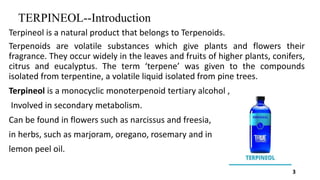
Terpineol is a monocyclic monoterpenoid tertiary alcohol ,
Involved in secondary metabolism.
Can be found in flowers such as narcissus and freesia,
in herbs, such as marjoram, oregano, rosemary and in
lemon peel oil.
3
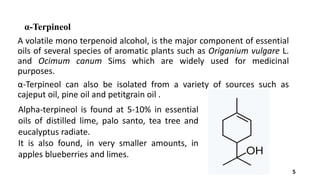
There are five isomers, alpha-, beta-, gamma-, delta- terpineol and
terpinen-4-ol. Terpineol is usually a mixture of these isomers with
alpha-terpineol as the major constituent.
Terpineol has a pleasant odor similar to lilac and is a common ingredient in
perfumes, cosmetics, and flavors.
4
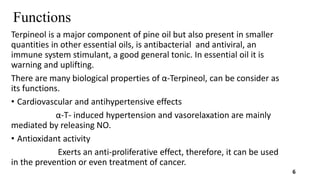
α-Terpineol
A volatile mono terpenoid alcohol, is the major component of essential
oils of several species of aromatic plants such as Origanium vulgare L.
and Ocimum canum Sims which are widely used for medicinal
purposes.
α-Terpineol can also be isolated from a variety of sources such as
cajeput oil, pine oil and petitgrain oil .
Alpha-terpineol is found at 5-10% in essential
oils of distilled lime, palo santo, tea tree and
eucalyptus radiate.
It is also found, in very smaller amounts, in
apples blueberries and limes.
5
Functions
Terpineol is a major component of pine oil but also present in smaller
quantities in other essential oils, is antibacterial and antiviral, an
immune system stimulant, a good general tonic. In essential oil it is
warning and uplifting.
There are many biological properties of α-Terpineol, can be consider as
its functions.
• Cardiovascular and antihypertensive effects
α-T- induced hypertension and vasorelaxation are mainly
mediated by releasing NO.
• Antioxidant activity
Exerts an anti-proliferative effect, therefore, it can be used
in the prevention or even treatment of cancer.
6
Likewise there are more properties of Terpineol such as,
• Anti-nociceptive activity
• Antiulcer activity
• Anticonvulsant and sedative activity
• Anti-bronchitis activity
• Skin penetration enhancing activity
• Insecticidal activity
7
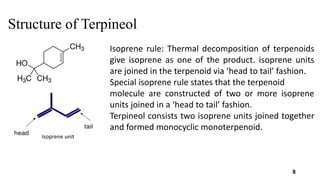
Structure of Terpineol
Isoprene rule: Thermal decomposition of terpenoids
give isoprene as one of the product. isoprene units
are joined in the terpenoid via ‘head to tail’ fashion.
Special isoprene rule states that the terpenoid
molecule are constructed of two or more isoprene
units joined in a ‘head to tail’ fashion.
Terpineol consists two isoprene units joined together
and formed monocyclic monoterpenoid.
Isoprene unit
8
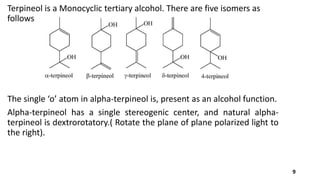
Terpineol is a Monocyclic tertiary alcohol. There are five isomers as
follows
The single ‘o’ atom in alpha-terpineol is, present as an alcohol function.
Alpha-terpineol has a single stereogenic center, and natural alpha-
terpineol is dextrorotatory.( Rotate the plane of plane polarized light to
the right).
9
Applications
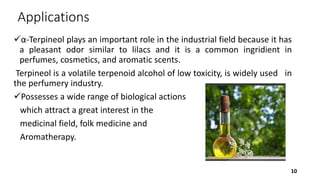
α-Terpineol plays an important role in the industrial field because it has
a pleasant odor similar to lilacs and it is a common ingridient in
perfumes, cosmetics, and aromatic scents.
Terpineol is a volatile terpenoid alcohol of low toxicity, is widely used in
the perfumery industry.
Possesses a wide range of biological actions
which attract a great interest in the
medicinal field, folk medicine and
Aromatherapy.
10
Antibacterial properties and potential applications in foods.
activity of essential oils against Listeria monocytogenes,
Salmonella typhimurium, Escherichia coli.
Enhanced colloidal properties of single-wall carbon nanotubes in alpha-
terpineol and Texanol
Used as solvents to disperse single-wall carbon nanotubes
 Industrial applications of supercritical-fluid chromatography-mass
spectrometry involving oligometric materials of low volatility and
thermally labile materials.
11
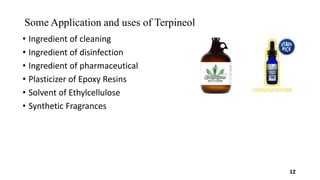
Some Application and uses of Terpineol
• Ingredient of cleaning
• Ingredient of disinfection
• Ingredient of pharmaceutical
• Plasticizer of Epoxy Resins
• Solvent of Ethylcellulose
• Synthetic Fragrances
12
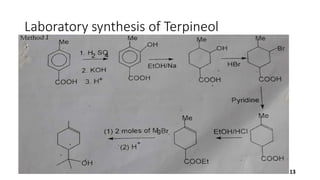
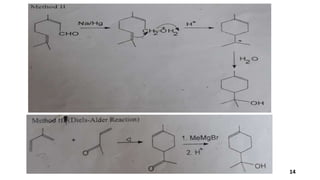
Laboratory synthesis of Terpineol
13
14
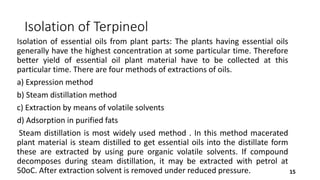
Isolation of Terpineol
Isolation of essential oils from plant parts: The plants having essential oils
generally have the highest concentration at some particular time. Therefore
better yield of essential oil plant material have to be collected at this
particular time. There are four methods of extractions of oils.
a) Expression method
b) Steam distillation method
c) Extraction by means of volatile solvents
d) Adsorption in purified fats
Steam distillation is most widely used method . In this method macerated
plant material is steam distilled to get essential oils into the distillate form
these are extracted by using pure organic volatile solvents. If compound
decomposes during steam distillation, it may be extracted with petrol at
50oC. After extraction solvent is removed under reduced pressure. 15
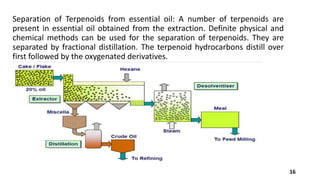
Separation of Terpenoids from essential oil: A number of terpenoids are
present in essential oil obtained from the extraction. Definite physical and
chemical methods can be used for the separation of terpenoids. They are
separated by fractional distillation. The terpenoid hydrocarbons distill over
first followed by the oxygenated derivatives.
16
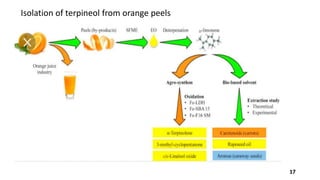
Isolation of terpineol from orange peels
17
References
• Organic Chemistry by I. L. Finar, vol. 2, 6thedition
• Chemistry of Natural Products by S. V. Bhat, B. A. Nagasampagi and M. Siva
Kumar
• https:/study.com>Terpineol
• https:/pubchem.ncbi.nlm.nih.gov.
• https://en.m.wikipedia.org>wiki>terpineol
18
THANK YOU

Terpineol

  • 1.
  • 2.
    CONTENTS • Introduction • Functionin the natural source • Structure of terpineol • Applications • Laboratory synthesis • Isolation 2
  • 3.
    TERPINEOL--Introduction Terpineol is anatural product that belongs to Terpenoids. Terpenoids are volatile substances which give plants and flowers their fragrance. They occur widely in the leaves and fruits of higher plants, conifers, citrus and eucalyptus. The term ‘terpene’ was given to the compounds isolated from terpentine, a volatile liquid isolated from pine trees. Terpineol is a monocyclic monoterpenoid tertiary alcohol , Involved in secondary metabolism. Can be found in flowers such as narcissus and freesia, in herbs, such as marjoram, oregano, rosemary and in lemon peel oil. 3
  • 4.
    There are fiveisomers, alpha-, beta-, gamma-, delta- terpineol and terpinen-4-ol. Terpineol is usually a mixture of these isomers with alpha-terpineol as the major constituent. Terpineol has a pleasant odor similar to lilac and is a common ingredient in perfumes, cosmetics, and flavors. 4
  • 5.
    α-Terpineol A volatile monoterpenoid alcohol, is the major component of essential oils of several species of aromatic plants such as Origanium vulgare L. and Ocimum canum Sims which are widely used for medicinal purposes. α-Terpineol can also be isolated from a variety of sources such as cajeput oil, pine oil and petitgrain oil . Alpha-terpineol is found at 5-10% in essential oils of distilled lime, palo santo, tea tree and eucalyptus radiate. It is also found, in very smaller amounts, in apples blueberries and limes. 5
  • 6.
    Functions Terpineol is amajor component of pine oil but also present in smaller quantities in other essential oils, is antibacterial and antiviral, an immune system stimulant, a good general tonic. In essential oil it is warning and uplifting. There are many biological properties of α-Terpineol, can be consider as its functions. • Cardiovascular and antihypertensive effects α-T- induced hypertension and vasorelaxation are mainly mediated by releasing NO. • Antioxidant activity Exerts an anti-proliferative effect, therefore, it can be used in the prevention or even treatment of cancer. 6
  • 7.
    Likewise there aremore properties of Terpineol such as, • Anti-nociceptive activity • Antiulcer activity • Anticonvulsant and sedative activity • Anti-bronchitis activity • Skin penetration enhancing activity • Insecticidal activity 7
  • 8.
    Structure of Terpineol Isoprenerule: Thermal decomposition of terpenoids give isoprene as one of the product. isoprene units are joined in the terpenoid via ‘head to tail’ fashion. Special isoprene rule states that the terpenoid molecule are constructed of two or more isoprene units joined in a ‘head to tail’ fashion. Terpineol consists two isoprene units joined together and formed monocyclic monoterpenoid. Isoprene unit 8
  • 9.
    Terpineol is aMonocyclic tertiary alcohol. There are five isomers as follows The single ‘o’ atom in alpha-terpineol is, present as an alcohol function. Alpha-terpineol has a single stereogenic center, and natural alpha- terpineol is dextrorotatory.( Rotate the plane of plane polarized light to the right). 9
  • 10.
    Applications α-Terpineol plays animportant role in the industrial field because it has a pleasant odor similar to lilacs and it is a common ingridient in perfumes, cosmetics, and aromatic scents. Terpineol is a volatile terpenoid alcohol of low toxicity, is widely used in the perfumery industry. Possesses a wide range of biological actions which attract a great interest in the medicinal field, folk medicine and Aromatherapy. 10
  • 11.
    Antibacterial properties andpotential applications in foods. activity of essential oils against Listeria monocytogenes, Salmonella typhimurium, Escherichia coli. Enhanced colloidal properties of single-wall carbon nanotubes in alpha- terpineol and Texanol Used as solvents to disperse single-wall carbon nanotubes  Industrial applications of supercritical-fluid chromatography-mass spectrometry involving oligometric materials of low volatility and thermally labile materials. 11
  • 12.
    Some Application anduses of Terpineol • Ingredient of cleaning • Ingredient of disinfection • Ingredient of pharmaceutical • Plasticizer of Epoxy Resins • Solvent of Ethylcellulose • Synthetic Fragrances 12
  • 13.
  • 14.
  • 15.
    Isolation of Terpineol Isolationof essential oils from plant parts: The plants having essential oils generally have the highest concentration at some particular time. Therefore better yield of essential oil plant material have to be collected at this particular time. There are four methods of extractions of oils. a) Expression method b) Steam distillation method c) Extraction by means of volatile solvents d) Adsorption in purified fats Steam distillation is most widely used method . In this method macerated plant material is steam distilled to get essential oils into the distillate form these are extracted by using pure organic volatile solvents. If compound decomposes during steam distillation, it may be extracted with petrol at 50oC. After extraction solvent is removed under reduced pressure. 15
  • 16.
    Separation of Terpenoidsfrom essential oil: A number of terpenoids are present in essential oil obtained from the extraction. Definite physical and chemical methods can be used for the separation of terpenoids. They are separated by fractional distillation. The terpenoid hydrocarbons distill over first followed by the oxygenated derivatives. 16
  • 17.
    Isolation of terpineolfrom orange peels 17
  • 18.
    References • Organic Chemistryby I. L. Finar, vol. 2, 6thedition • Chemistry of Natural Products by S. V. Bhat, B. A. Nagasampagi and M. Siva Kumar • https:/study.com>Terpineol • https:/pubchem.ncbi.nlm.nih.gov. • https://en.m.wikipedia.org>wiki>terpineol 18
  • 19.